← Radiolab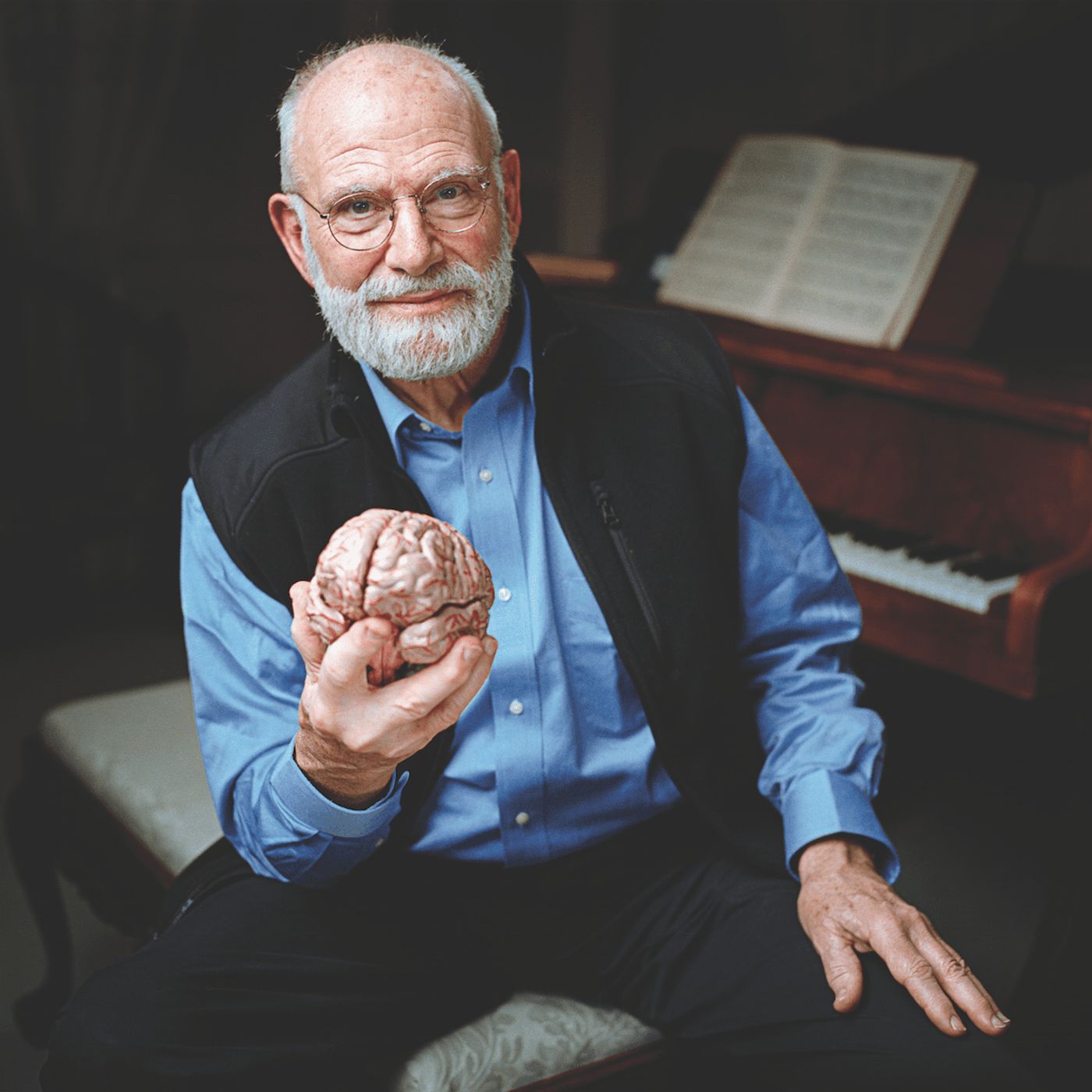
Radiolab
Oliver Sacks: A Journey From Where to Where
00:37:25
There’s nothing quite like the sound of someone thinking out loud, struggling to find words and ideas to match what’s in their head. Today, we are allowed to dip into the unfiltered thoughts of Oliver Sacks, one of our heroes, in the last months of his life. Oliver died in 2015, but before he passed he and his partner Bill Hayes, in an effort to preserve some of Oliver’s thoughts on his work and his life, bought a little tape recorder. Over a year and half after Oliver’s death, Bill dug up the recorder and turned it on. Through snippets of conversation with Bill, and in moments Oliver recorded whispering to himself as he wrote, we get a peek inside the head, and the life, of one of the greatest science essayists of all time. The passages read in this piece all come from Oliver’s recently released, posthumous book, The River of Consciousness. Special thanks to Billy Hayes for letting us use Oliver’s tapes, you can check out his work at http://www.billhayes.com/
Loading summary
Transcript180 lines
- [00:00]
Bill Hayes
Hey, Fidelity.
- [00:02]
Listener/Caller
How can I remember to invest every month?
- [00:05]
Narrator/Voice Actor
With the Fidelity app, you can choose a schedule and set up recurring investments.
- [00:10]
Molly Webster
In stocks and ETFs.
- [00:12]
Listener/Caller
Huh. That sounds easier than I thought.
- [00:14]
Oliver Sacks
You got this? Yeah, I do. Now, where did I put my keys?
- [00:19]
Narrator/Voice Actor
You will find them where you left them.
- [00:23]
Oliver Sacks
Investing involves risk, including risk of loss. Fidelity Brokerage Services, llc. Member nyse, SIPC.
- [00:33]
Bill Hayes
Get ready to shop Lowes Black Friday Doorbuster deals to save $150 on a 30 inch blackstone griddle. Now $299. Plus choose a whirlpool top load washer or Midea top freezer refrigerator for just $398. These limited time door buster deals go.
- [00:50]
Oliver Sacks
Fast, so get holiday ready. Today at Lowe's, we help you save.
- [00:56]
Bill Hayes
Valid 1128 through 12. One selection varies by location while supplies last.
- [00:59]
Oliver Sacks
See Lowes.com for more details. Oh, wait, you're listening.
- [01:04]
Jad Abumrad
Okay.
- [01:06]
Oliver Sacks
All right.
- [01:07]
Jad Abumrad
Okay. All right.
- [01:10]
Oliver Sacks
You're listening to Radio Lab Radio from wny. See y.
- [01:21]
Jad Abumrad
Hey, I'm Jad Abumrad.
- [01:23]
Oliver Sacks
I'm Robert Krulwich.
- [01:24]
Jad Abumrad
This is Radiolab. So, Robert, one of my favorite sounds of all time is the sound of hearing people think, you know, of hearing a mind kind of formulate a thought that wasn't there until it clicks in. Yeah. And that's just a beautiful sound. Especially when the mind that you're listening to is a person who has shaped you, has shaped the show.
- [01:46]
Oliver Sacks
Sure.
- [01:47]
Jad Abumrad
So today, a little bit of a departure. A couple of months ago, I got connected to a guy named Bill Hayes. A mutual friend sort of put us in touch.
- [01:56]
Oliver Sacks
He wrote a really good book actually, about anatomy. Really good. I gave it to my son.
- [02:00]
Jad Abumrad
Really?
- [02:01]
Oliver Sacks
Yeah.
- [02:02]
Jad Abumrad
He is a writer and a photographer.
- [02:04]
Bill Hayes
And I was the partner of the late Oliver Sacks, and together we made tapes or recordings of conversations in the last year of his life.
- [02:14]
Jad Abumrad
Now, Oliver Sacks, one of the great, great writers of science.
- [02:18]
Oliver Sacks
Yeah, masterful. Masterful writer.
- [02:21]
Jad Abumrad
You know, we here at Radiolab have grown up with him and his style of combining sort of clinical scientific observation with deep humanity and poetry. I feel like we're always trying to walk in his footsteps in some way.
- [02:36]
Oliver Sacks
We do, we do.
- [02:37]
Jad Abumrad
And certainly we know we've had him on the show many, many, many times. So his voice will be familiar to a lot of you. But what you hear on these tapes is an altogether different portrait. And why, why did you start these recordings?
- [02:51]
Bill Hayes
Well, Oliver got his diagnosis of a terminal cancer in mid January 2015.
- [02:59]
Jad Abumrad
He had had cancer about nine years earlier, dealt with It. But it was back and spreading through his body.
- [03:04]
Bill Hayes
The prognosis was 6 to 18 months, and it was shattering.
- [03:10]
Jad Abumrad
Shortly after, Bill says they were sitting at the kitchen table talking.
- [03:14]
Bill Hayes
Like, I knew that he had things on his mind that he wanted to write. And I said, well, what are you thinking about writing? This is about four days after he got his diagnosis. And he paused, and then he looked at me and he said something like a month ago, I felt that I was in good health, even robust health. At 81, I still swim a mile a day, but my luck has run out. And I said, stop right there. And I grabbed a pad and a pen and I said, start over. And I began writing as fast as I could as he dictated virtually the entire essay.
- [03:51]
Oliver Sacks
Wow.
- [03:52]
Jad Abumrad
Just sort of spilled out like that.
- [03:53]
Bill Hayes
Yeah. And so we had the idea of getting a little audio recorder, a digital recorder, so that it could be on hand at any time whether to record what he wanted to write or reminisce or to collect stories after his death. I put the recorder in a drawer and didn't pull it out again until over a year and a half after his death. I didn't even listen to it, any of it. To write my own memoir. I had been kind of very nervous about listening to them because I thought it would be very sad and just. That it would just make me depressed and sad. But I took it. I took the recorder out of the drawer where it had sat for 18 months, and I pushed play. And of course it didn't work because the batteries were dead. So I had to scramble to find batteries. And when I did. And then play, pushed play.
- [04:44]
Oliver Sacks
Okay. This is a recorded conversation between OWS and Billy Hayes.
- [04:53]
Bill Hayes
I mean.
- [04:56]
Oliver Sacks
On February 6th, the hairs.
- [04:58]
Bill Hayes
On my arms went up. It was as if he was alive.
- [05:02]
Jad Abumrad
This is the first recording you made with him.
- [05:04]
Bill Hayes
It was during dinner. We were eating at the time, and he began telling me about his dreams.
- [05:10]
Oliver Sacks
Dreams. I've been having a lot of strangely archetypal dreams of a journey I have to make. Getting lost and getting found full of surprises. Maybe going through a door, which I think will be adorned to another room, but is a door into a. A mountain landscape. Sometimes frightening ravines or having to edge along very narrow ledges, but then finally coming to some gracious heavenly mountain meadow. And then waking dreams about journeys and approaching end. And it's a journey from where to Where?
- [06:05]
Bill Hayes
This was February 6, 2015. So about three weeks after Oliver got his diagnosis of a terminal cancer.
- [06:15]
Listener/Caller
And.
- [06:16]
Bill Hayes
His immediate impulse was to write.
- [06:19]
Oliver Sacks
And yet again, this Balance has been forced into my mind by the events of the past two weeks.
- [06:34]
Bill Hayes
Oliver was quite deaf. Even louder than he realized. He would whisper words to himself as he wrote them down on the pad. And he wrote with a fountain pen. For Oliver, writing was a form of thinking and the primary activity for a human being.
- [07:01]
Oliver Sacks
My normal. My normal health. Normal state of health and energy. At least such health and energy as a fit. As a fit and active 81 year.
- [07:20]
Narrator/Voice Actor
Old.
- [07:23]
Oliver Sacks
Can hope to enjoy. And this despite having I know in the previous month a liver full melanoma metastases.
- [07:39]
Bill Hayes
Do you have new pages?
- [07:40]
Oliver Sacks
Yeah. I hear right. Things are out. This is from there out.
- [07:47]
Bill Hayes
What I'm going to do is just leave that all there so you can look at it again.
- [07:52]
Oliver Sacks
Good. Yes.
- [07:52]
Jad Abumrad
No, no.
- [07:53]
Oliver Sacks
Nothing must be destroyed. And I'm a creature of multiple draughts, as you know. Other specific symptoms perhaps of the general feeling. The general feeling of disorder which goes with them. Which goes with them and which may be tolerably severe. Tolerably severe. Intolerably me. So severe. So severe. Patience. So patience. Patience. Patience. Being long for death. Be known for death. Now, what happened to my other magnifying glass?
- [08:59]
Bill Hayes
Yeah, I haven't had. Oliver was the kind of guy who would take dictionaries to bed to read with a magnifying glass.
- [09:04]
Oliver Sacks
Can you bring my chambers dictionary or look up a word for me?
- [09:08]
Bill Hayes
Sure.
- [09:09]
Oliver Sacks
You may need a magnifying glass and I have one here. Aha. I also feel the missing magnifying glass. There it is. Can you see if there's a word recipicence? Oh, yes, I.
- [09:28]
Bill Hayes
Yes, there is change to a better frame of mind to be wise.
- [09:34]
Oliver Sacks
To be wise. Can you pull out the big dictionary and see if you can find any examples in particular? I want to know whether a return to health.
- [09:46]
Bill Hayes
Here is a man with a huge vocabulary and love of writing. But still every day he would be struck by a word that he wanted to look up. Well, it immediately says repentance for misconduct.
- [09:59]
Oliver Sacks
What did you say?
- [10:00]
Bill Hayes
Repentance for misconduct. Recognition of errors committed. Return to a better mind or opinion. What's the origin of the word to recover one's senses. Come to oneself again.
- [10:18]
Oliver Sacks
Come to one senses. I think that's not quite the word I want. Debilitating. Debilitating Tiredness disappeared. I felt a little return of energy. Homeostasis is coming back. It's coming back. The fucking body. My fucking body which I had so cursed.
- [10:49]
Bill Hayes
Kristen Ginseng.
- [10:50]
Oliver Sacks
Well, thank you very much. He said gratitude pours forth continually. The unexpected had Happened. The hope for health. The hope for health of a rewind and faith in tomorrow awakened faith tomorrow after tomorrow. Okay. Billy?
- [11:21]
Bill Hayes
Yeah?
- [11:22]
Oliver Sacks
Shall I read something to you?
- [11:23]
Bill Hayes
Yes.
- [11:25]
Narrator/Voice Actor
A general feeling of disorder. It is, especially when things are going wrong internally, when homeostasis is not being maintained, when the autonomic balance starts listening heavily to one side or the other, that this core consciousness, the feeling of how one is, takes on an intrusive, unpleasant quality. And now one will say, I feel ill. Something is amiss at such times. Indeed, everything comes and goes. And if one could take a scan or inner photograph of the body at such times, one would see vascular beds opening and closing, peristalsis accelerating or stopping, viscera squirming or tightening in spasms, secretions suddenly increasing or decreasing, as if the nervous system itself were in a state of indecision. Instability, fluctuation and oscillation are of the essence. In the unsettled state, this feeling of disorder, we lose. The normal feeling of the procedure, though relatively benign, would lead to the death of a huge mass of melanoma cells. These, in dying, would give off a variety of unpleasant and pain producing substances. Soon after waking from the embolization, I was to be assailed by feelings of excruciating tiredness, in paroxysms of sleep so abrupt they could pole axe me in the middle of a sentence or a mouthful. Delirium would seize me within seconds. Even in the middle of handwriting, I felt extremely weak and inert. On day 10, I turned a corner. I felt awful as usual in the morning, but a completely different person in the afternoon. This was delightful and wholly unexpected. I suddenly found myself full of physical and creative energy and euphoria almost akin to hypomania. Exuberant thoughts rushed through my mind. How much of this was a re establishment of balance in the body? How much an autonomic rebound after a profound autonomic depression. How much other physiological factors and how much the sheer joy of writing I do not know. But my transformed state and feeling were, I suspect, very close to what Nietzsche experienced after a period of illness and expressed so lyrically in the gay science. Gratitude pours forth continually, as if the unexpected had just happened. The gratitude of a convalescent for convalescence was unexpected. The rejoicing of strength that is returning, of a reawakened faith in a tomorrow and the day after tomorrow, of a sudden sense and anticipation of a future, of impending adventures, of seas that are open again.
- [14:12]
Oliver Sacks
Where's the microphone on this bloody thing? Well, okay, you're Recording this. Right. The time is 9:20. In New York, it would be five hours difference with Greenwich Mean Time. And it is Monday the 9th. That's to say, the 20th day after my embolization. And just 48 hours till the next one. End of recording. Pause.
- [14:40]
Bill Hayes
On March 11th, Oliver had the second embolization surgery which would cut off blood supply to the tumors growing in his liver. With the idea that it would give Oliver more time, more energy.
- [15:06]
Oliver Sacks
Question.
- [15:08]
Bill Hayes
We'd been together six years. I knew him well, and yet I'd never seen him with such focus.
- [15:20]
Oliver Sacks
Billy finds a question just constantly writing. I don't know what to call this piece. They can title it 9th Avenue and the Glorious Forest.
- [15:37]
Bill Hayes
Well, I like the Future I Shall Never Know.
- [15:38]
Oliver Sacks
Yes, I. Oh, that's excellent. Yeah, that's it. And I think I need to put in otherwise, just to indicate why I.
- [15:48]
Bill Hayes
Should have some insurance.
- [15:50]
Oliver Sacks
And I say to Billy, who is a good deal younger. Who is younger than. Who is a good deal younger than I am. Originally, I put who was two thirds my age. Because I have to be precise.
- [16:03]
Bill Hayes
I like that.
- [16:04]
Oliver Sacks
Okay, okay. Who is exactly two thirds my age. Okay, so that's that. A little piece for the New Yorker. Yes.
- [16:16]
Bill Hayes
Okay. Have some insurance. I'll heat your suit.
- [16:19]
Oliver Sacks
Thank you.
- [16:20]
Narrator/Voice Actor
Sure.
- [16:24]
Oliver Sacks
I like the idea of saying billy, who's exactly two thirds of my age? It's not. Not a fraction you expect to see three quarters, yes. Half, yes. But not two thirds. I like the idea of putting a tiny arithmetical conundrum.
- [16:44]
Listener/Caller
Ninth Avenue Reverie, published March 20, 2015. Driving down Ninth Avenue, choking on diesel fumes from a truck just ahead of us, I say to my friend Billy, he is exactly two thirds my age. I wonder whether you will see the end of internal combustion engines, the end of oil, a cleaner world. The thought zooms me away from ninth Avenue to a forest world, in particular to the one described in that Glorious Forest, Sir Gillian Prance's book about his 39 visits to the Amazon in the past 50 years. He sees what we are doing to the Amazon and its many peoples. He speaks for conservation, sanity, reason, before we destroy it all. I went to that glorious forest in 1996. Eleven days of botany, study and hiking, seeing hundreds of different species of trees in a single acre. I had planned, before I became ill, to go to Madagascar to see its forests and its unique fauna and other wildlife, especially the lemurs. I love lemurs. One has to see them, study them, to grasp the origin of our primate nature. But most of the forests on Madagascar have already been obliterated. And not unnaturally. The lemurs are dying. Honking horns bring me back to 9th Avenue. I seem to have spent hours lost in reverie thinking about the Amazonian and Madagascan forests. Lemurs, the time machine, but we have scarcely moved. Are still behind the stinking lung destroying truck. Not in my life. Billy answers.
- [18:29]
Oliver Sacks
Yes, I've been reading a lot of it aloud to Billy.
- [18:34]
Bill Hayes
This is a recording where Oliver is talking on the phone to Lawrence Weschler or Ren Weschler.
- [18:40]
Oliver Sacks
But anyhow, I was doing to have a CAT scan follow up on Thursday. I was terrified of this. In fact, what it did show was that 80% of the metastases in the liver had been destroyed by the embolization. With luck, I should have two or three good months after this. Well, I don't know. Hope that I can see friends and write and maybe travel a little. Yeah, and I think next month, if I'm up to it, I'm going to go to London to say hello and possibly farewell to friends and family. And I can't think ahead beyond that. Six, seven. It's still one short. Oh, well. So. Semantics. Semantics. Use of elementary units. Furnace and its inseparability. Intimate relation.
- [20:24]
Bill Hayes
Oh, I want to hear.
- [20:26]
Listener/Caller
Want to hear.
- [20:27]
Oliver Sacks
Over the years I filled upwards of a thousand notebooks. Their contents are very various, but three of them have had a special function to record abnormalities of perception during times of sensory impairment or deprivation. The current notebook is a very modest affair. It is quite small and slips easily into a pocket. Crucial, because I need to have it with me at all times. With increasing deafness, I am more and more prone to mishearing what people say. But mishearings deceive one entirely. You accept what you hear, you accept what you see. Every mishearing is a novel surprising concoction. One never gets used to them. The hundredth is as fresh, as absurd and as thought provoking as the first. Mishearing became. Mishearing take the car for spin became take the car for a swim. I've noted that Johannes became your highness. Therapist, invertebrate, tarot cards, terror pods. Big time publisher was heard as a big time cuttlefish. I said, did you say a poetry bag? And you said no, I said a grocery bag.
- [21:41]
Bill Hayes
I love the idea of a poetry bag.
- [21:43]
Oliver Sacks
Yes. I'm inclined almost to put them all in.
- [21:46]
Bill Hayes
I think they should all be in.
- [21:47]
Oliver Sacks
Yeah. I mean the sheer mess will make the point that sound trumps everything.
- [21:59]
Robert Krulwich
One's surroundings, one's wishes and Expectations, conscious and unconscious, can certainly be co determinants in mishearing. But the real mischief lies at lower levels in those parts of the brain involved in phonological analysis and decoding. Doing what they can with distorted or deficient signals from our ears, these parts of the brain manage to construct real words or phrases, even if they are absurd. And yet there is often a sort of style or wit, a dash, in these instantaneous inventions. They reflect to some extent one's own interests and experiences. And I rather enjoy them only in the realm of mishearing. At least my mishearings can a biography of cancer become a biography of Cantor, one of my favorite mathematicians. Tarot cards can turn into taropods, a grocery bag into a poetry bag, all or nonness into oral numbness and a mere mention of Christmas Eve, a command to kiss my feet.
- [23:00]
Oliver Sacks
Oops. No wonder I couldn't write anymore. I must get more cartridges. I'm going through these. These too quickly.
- [23:11]
Bill Hayes
I want to reassure you, all of these thoughts are already in the draft.
- [23:16]
Oliver Sacks
Oh, are they? Good?
- [23:17]
Bill Hayes
Okay, so I think it's time to let your weary mind rest.
- [23:22]
Oliver Sacks
Yes. Okay. We'll see each other in the morning.
- [23:28]
Bill Hayes
Okay.
- [23:34]
Oliver Sacks
If you could just kiss me whenever I had a dry mouth, I'd be in heaven.
- [23:39]
Bill Hayes
Do you want some more water?
- [23:41]
Narrator/Voice Actor
Yes.
- [23:41]
Oliver Sacks
I better raise my head a little. Hello, this is David from Berlin. Radiolab is supported in part by the Alfred P. Sloan foundation, enhancing public understanding of science and technology in the modern world. More information about Sloan@www.sloan.org.
- [24:01]
Narrator/Voice Actor
Radiolab is supported by BILT. Nobody wants to pay rent, but if you have to, Bilt works to make it more worthwhile. By paying rent through Built, you can earn flexible points that can be redeemed toward hundreds of hotels and airlines, a future rent payment, your next lift ride, and more. But it doesn't stop there. You can dine out at your favorite local restaurants and earn additional points, get VIP treatment at certain fitness studios and enjoy exclusive experiences just for Built members. Every month, earn points on rent and around your neighborhood, wherever you call home, by going to joinbuilt.com Radiolab that's J-O-I-N-B-I-L-T.com Radiolab.
- [24:38]
Molly Webster
Hey, I'm Molly Webster, and this is an ad by BetterHelp. So it happens every year. The seasons are changing, the days are getting shorter, and basically, once it becomes dark outside of my window, I feel like the rest of the world disappears and I'm just alone and there's nothing left to do but watch television. This November, BetterHelp is asking everyone to reach out to our people. That could be your family, your friends, your neighbors, and to resist this call of the cocoon. And yeah, reaching out can take some courage. I've got text messages from January I haven't responded to. And you know what? I'm gonna write them back right now. Hi, sorry I've been missing. How are you? Why don't we all do this sooner? Therapy is the same way. BetterHelp makes it easier to take that first step. You just fill out a short questionnaire and they find a license therapist who they think you'll like. Our listeners get 10% off their first month at betterhelp.com Radiolab that's betterhelp.com Radiolab.
- [25:45]
Jad Abumrad
Radiolab is supported by Planet Visionaries, the podcast created in partnership with the Rolex Perpetual Planet Initiative. Stay tuned for a trailer and subscribe.
- [25:56]
Oliver Sacks
Wherever you get your podcasts. I'm Alex Honnl, professional rock climber and founder of the Honl Foundation. I wanted to let you know about a brand new season of the Planet Visionaries podcast in partnership with the Rolex Perpetual Planet Initiative. This is the podcast exploring bold ideas and big solutions from the people leading the way in conservation. Join me in conversation with the likes of climate champion Mark Ruffalo, biologist and photographer Christina Mittermeier, and one of the most successful conservationists of our time, Chris Tompkins. Join us on Planet Visionaries. Wherever you get your podcasts, you should.
- [26:29]
Bill Hayes
Tell the people who we are and what our new show is.
- [26:31]
Oliver Sacks
I'm Robert Smith and this is Jacob Goldstein, and we used to host a.
- [26:34]
Bill Hayes
Show called Planet Money. And now we're back making this new podcast about the best ideas and people and businesses in history and some of the worst people, horrible ideas and destructive companies in the history of business. We struggled to come up with a name, decided to call it business History.
- [26:51]
Oliver Sacks
You know why? Why?
- [26:53]
Bill Hayes
Because it's a show about the history.
- [26:53]
Jad Abumrad
Of business, available everywhere.
- [26:56]
Oliver Sacks
You get your podcast, I think. Would you like to pour out some wine for your. Your elderly lover?
- [27:25]
Listener/Caller
Sure.
- [27:32]
Bill Hayes
You want some of this?
- [27:33]
Oliver Sacks
Okay.
- [27:43]
Bill Hayes
You look very happy. Which one of these jackets appeals to you? If you're going to pick one, let's go to the start.
- [27:53]
Oliver Sacks
Yeah, well, of course I have to take my own unfortunate shape. No, no, no, no.
- [27:58]
Bill Hayes
I want you to respond to them. Which one?
- [28:00]
Oliver Sacks
Oh, I see. Do you like this? I'm not, I think, as fond of this sort of routine jackets with its pockets and flaps, functional though it is. I don't Know where I got that jacket?
- [28:15]
Bill Hayes
It's so hot.
- [28:15]
Jad Abumrad
Oliver.
- [28:17]
Oliver Sacks
Sorry?
- [28:17]
Bill Hayes
It's so hot.
- [28:19]
Oliver Sacks
Hot, Hot.
- [28:20]
Bill Hayes
Do you know that word?
- [28:22]
Oliver Sacks
Sexy? Oh, yes. Right.
- [28:24]
Bill Hayes
You're very handsome.
- [28:28]
Oliver Sacks
You haven't had anything to eat. You should have something to eat.
- [28:33]
Bill Hayes
I might go out. I sort of enjoy that on Sunday night.
- [28:39]
Oliver Sacks
Yes, I know.
- [28:40]
Bill Hayes
I get a little stoned and I go out into the neighborhood. Do you mind?
- [28:45]
Oliver Sacks
No, I am. I don't know that I'm good for much company anyhow at the moment. Go. Rejoice. I wasn't counting. How many did you hear?
- [29:05]
Bill Hayes
I didn't count either. Oliver had enjoyed a couple of really good months. Of feeling well and fit. And getting lots of writing done. He had completed not only A General Feeling of Disorder. The short piece Mishearings. His autobiography, on the Moon, was published. He worked on a piece on the evolution of the eye. And he'd completed a major case history on the performer Spalding Gray. We'd made this wonderful trip to London. For 10 days after we returned from the trip. He knew that he would have to get another CAT scan. To see how things were going. And I would say that we kind of had a feeling, an optimistic feeling. He seemed to be doing well. So he went into that hoping for the best. But it was exactly the opposite. The cancer had spread beyond the liver to other organs. That it was looking very bad indeed. Oliver, more than anyone, I think, knew that time was running out.
- [30:26]
Oliver Sacks
Billy, I wonder if I could ask you to look up something on the little box. Sure. The Ten Commandments. Yeah. In particular, the one about keeping is Sabbath day holy. I'm not sure what his exact exact wording is.
- [30:49]
Bill Hayes
Remember the Sabbath Day. To keep it holy.
- [30:51]
Oliver Sacks
That's right. Let me just write that down. Exactly what I want. Surgical identity. The tile. And the delicacy is shoulders.
- [31:15]
Bill Hayes
He was having a lot of discomfort. And had to have a catheter implanted in his abdomen. To drain off fluid that was accumulating from the tumors. Which was around August 4th or 5th. It was really the only solution. And it was quite uncomfortable. And it had to be drained daily. And it also, unfortunately, ended his swimming. He was a great swimmer and he loved to swim. But he didn't complain. Swimming had come to an end. So he put his head down, basically. And began working on this essay. Sabbath.
- [32:04]
Oliver Sacks
Earlier in the day.
- [32:44]
Bill Hayes
What you doing?
- [32:45]
Oliver Sacks
Feeling my pin. What do they think I was doing?
- [32:53]
Bill Hayes
I knew what you were doing. I just wanted to talk to you. Good morning. Good morning. Did I miss a dramatic reading? It just started a little While ago. How are you?
- [33:09]
Oliver Sacks
Weak.
- [33:11]
Bill Hayes
His longtime assistant editor, Kate. What are you writing about?
- [33:15]
Oliver Sacks
About the Sabbath. Yeah, it's going to be quite a long piece. It's going to fill an entire pad. My mother. Why don't you get a chair? I don't like you looming.
- [33:28]
Bill Hayes
I just. I like standing.
- [33:30]
Narrator/Voice Actor
It's better.
- [33:30]
Oliver Sacks
Okay, fine. Stand then.
- [33:33]
Bill Hayes
Should I loom over here?
- [33:34]
Oliver Sacks
Okay. Okay. My mother and her 17 brothers and sisters had an Orthodox. All photographs of their father show him wearing a yamo cap. And I was told that he woke up if it fell off during the night. Isn't that funny? I love that my father too came from the Orthodox background, but they were very conscious of the sixth commandment, remember the Sabbath day, to keep it holy. And Shoddas, as we call the oldest brown bitfat way, was entirely different from the rest of the week. When Shabbos came in, my mother would light candles, cupping their flames with her hands and murmuring a prayer. I gradually became more distant or indifferent, just more indifferent to Jewish life, the civilization, synagogue, the Sabbath and the synagogue in particular. Though there was no particular point of rupture or alienation until I was 18. It was then that my father, inquiring into my sexual feelings, compelled me to admit if I liked Voyas. I haven't done anything. I stand. It's just a feeling. But don't tell Ma. She won't be able to take it. He did tell her at the next ward. She came down with a look of horror on her face and shrieked, you are an abomination. I wish you had never been broken. The matter was never mentioned again.
- [35:23]
Bill Hayes
And.
- [35:23]
Oliver Sacks
Her cordiality, even love, was rebuilt. But her brutal, hateful words, her curse, made me hate Judaism, all religions in their capacity for inhuman bigotry and cruelty. And it turned me in part to a self hating, self accusing, closet homosexual. I'd felt a little fearful visiting my Orthodox family with my lover Billy. My mother's words still echoed in my mind, but Billy too was warmly received. And there was no hint at the terrible bigotry of 60 years earlier. This was made clear by Robert John, and he invited Billy and Lee to share a Friday evening with him and his family. The peace of the Sabbath of a stopped world, a time obstinate side type, was culpable, infused everything. And Billy, I think, was as consciousness as I was. That I'd been able for the first time in my life to make a full and frank declaration of bisexuality, that I was finally out of the closet, facing the world openly again. Guilty secrets Locked up inside me and now weak, short of breath, my what's full muscles melted away by cancer. And my thoughts increasingly not of the supernatural, which has never been said to be, but on what is meant by living a good and worthwhile life, achieving a sense of peace within oneself. I find my thoughts gifted. The Sabbath, the day of rest, the seventh day of the week, and perhaps the seventh day of one's life, when one can feel one's work has done and one may in good conscience. Wrist.
- [38:03]
Bill Hayes
On August 14, Sabbath was published in the New York Times. That same day, he began to dictate the table of contents for the river of Consciousness, a collection of essays which he knew would be published posthumously. It was getting his house in order.
- [38:25]
Oliver Sacks
I don't know that I'm capable of much writing, nor that I want to do any writing, but I hope I can, as it were, think aloud to you and to Kate, the Recorder, Home hospice. I think that I will require an opportunity amount of care, including intravenous nursing. Things beyond what you and Kate can provide or should. And this in turn should release you, you know, to be just my friends and comforter. Um, Now, one last go at tempting my appetite. Can you bring me in a little bit of Cadgeree?
- [39:26]
Bill Hayes
Um, just to mention, there is also chicken soup.
- [39:30]
Oliver Sacks
Yes, I probably should have some liquid.
- [39:35]
Bill Hayes
I'll just do a little of each.
- [39:38]
Oliver Sacks
It.
- [40:09]
Jad Abumrad
Two weeks later, on August 30, 2015, Oliver Sacks died at home. In the last seven months of his life, he wrote and published nine pieces. And there were many, many more that he started but wasn't able to finish.
- [40:26]
Oliver Sacks
And some of the essays he wrote are now in a new collection published after he died called the river of Consciousness. And that's just out.
- [40:33]
Jad Abumrad
The readers that you heard in the story were Radiolabbers Anna McKeown, Simon Adler and Bethel Hobte. Thanks also to Mike Pashkash for engineering help. And this piece was produced by Carla Murthy.
- [40:47]
Oliver Sacks
This is Emily calling from Houston. Radiolab was created by Jad Ebemrod and.
- [40:51]
Robert Krulwich
Is produced by Soren Wheeler.
- [40:53]
Oliver Sacks
Dylan Keefe is our director of sound design. Maria Matissar Padilla is our managing director. Our staff includes Simon Adler, Rachel Cusick, David Gebel, Bethel Hobte, Tracy Hunt, Matt.
- [41:04]
Robert Krulwich
Kilty, Robert Krulwich, Annie McKeown, Latif Nasser.
- [41:08]
Oliver Sacks
Melissa O', Donnell, Arian Wack, and Molly.
- [41:10]
Narrator/Voice Actor
Webster, with help from Amanda Oronchik, Shima.
- [41:13]
Robert Krulwich
Olioli, David Fox, Nydra Vitaly, Phoebe Wang and Katie Ferguson.
- [41:18]
Narrator/Voice Actor
Our fact checker is Michelle Harris.