← Radiolab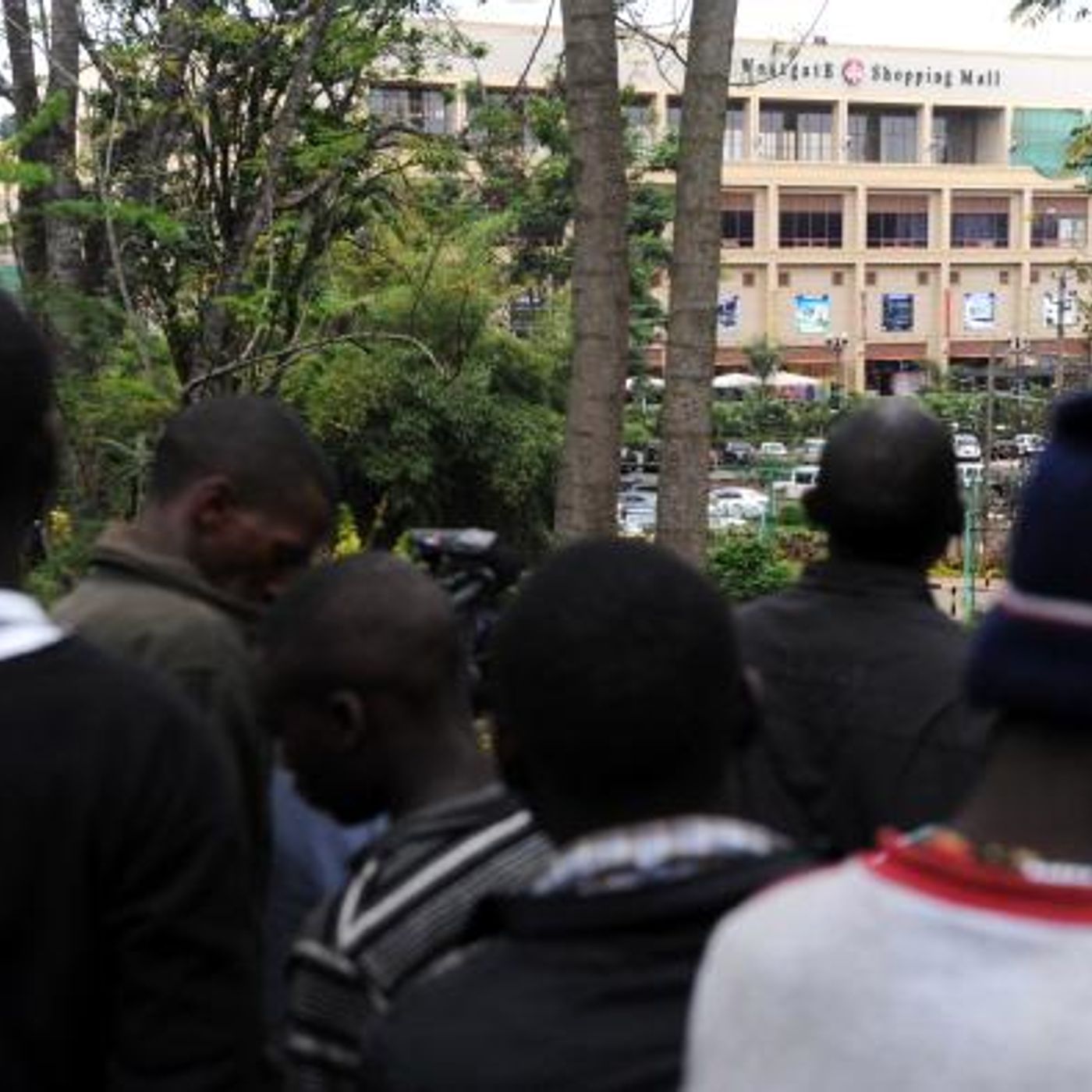
Radiolab
Outside Westgate
00:36:29
In the wake of public tragedy there is a space between the official narrative and the stories of the people who experienced it. Today, we crawl inside that space and question the role of journalists in helping us move on from a traumatic event. NPR's East Africa correspondent Gregory Warner takes us back to the 2013 terrorist attacks on the Westgate Mall in Nairobi, Kenya. Warner reported on the attack as it happened, listening to eyewitness accounts, sorting out the facts, establishing the truth. But he's been been wrestling with it ever since as his friends and neighbors try not only to put their lives back together, but also try to piece together what really happened that day. Special thanks to Jason Straziuso, Heidi Vogt, Robert Alai, Didi Schanche and Edith Chapin.
Loading summary
Transcript205 lines
- [00:00]
Robert Krulwich
For delicious meals, you could go out to eat or you could just make a Marie Callender's meal. Marie Callender's classic Chicken Parmigiano bowl is so good. It has marinara sauce that's made from scratch and creamy mozzarella cheese over pasta. It's delicious with no artificial flavors, colors or preservatives and 30 grams of protein. You can find it in the frozen aisle. Marie Callender's what having it all tastes like.
- [00:25]
Lowe's Advertiser
Get ready to shop Lowe's Black Friday doorbuster deals to save $150 on a 30 inch Blackstone GR now $299 plus choose a whirlpool top load washer or Midea top freezer refrigerator for just $398. These limited time doorbuster deals go fast, so get holiday ready. Today at Lowe's, we help you save valid 1128 through 12. One selection varies by location while supplies last. See Lowes.com for more details.
- [00:56]
Robert Krulwich
Wait, you're listening.
- [00:57]
Puni (Eyewitness)
Okay.
- [00:59]
Jad Abumrad
All right.
- [01:00]
Robert Krulwich
Okay. All right. I'm listening to Radiolab Radio Lab from WNY.
- [01:11]
Puni (Eyewitness)
And npr.
- [01:13]
Robert Krulwich
An upscale mall in Nairobi has turned into a battleground. Armed men stormed Westgate Mall in the Kenyan capital just before lunchtime, firing weapons and throwing grenades. What appears to witnesses to be at least a dozen gunmen have taken hostages inside. Others have reported that the. There have been reports. There have been unsubstantiated reports. No, no, let me not do those ones. Kenyan police and counterterrorism officers are on the scene. I almost feel like I need to start with a caveat that all these other stories that we've, you know, gotten to do together, there's been frequent gunfire, have been me telling you a story. As a journalist, I feel like this story, it's going to be a story where I'm going to have to stop being a journalist. It's a some point.
- [02:00]
Jad Abumrad
Hey, I'm Jad Abumrad.
- [02:02]
Robert Krulwich
I am Robert Krulwich.
- [02:03]
Jad Abumrad
This is Radiolab. Oh, I keep waiting for you to say the podcast, but we don't do that anymore. We don't say that anymore. The guy you just heard that was NPR's East Africa correspondent Greg Warner, who's done a bunch of stories with us recently. He came to us with another one. It was all about a struggle he was having trying to figure out how to tell a story that is true. I'll just leave it at that.
- [02:24]
Robert Krulwich
It's actually a story about the aftermath of an event that probably got more media coverage than almost any event in East Africa last year, and that is the terrorist attack on Westgate Mall in Nairobi. This was September 21, 2013. It was a kind of balmy Saturday afternoon. Westgate Shopping mall crowded with more than a thousand shoppers. Even more families than usual were there that day because there was a children's cooking competition. In fact, the kids were just setting up their ingredients. Parents had just taking their seats when shortly after noon, gunmen entered the building shooting AK47s, going floor to floor, killing people. And the siege would last for four days. Now, for four days, essentially, I and dozens of international and local journalists are outside the mall listening to the sounds of gunfire, trying to guess what's happening inside because the press is of course, not allowed in while this, while this battle is ongoing. Meanwhile, I'm getting on the air every hour, sometimes trying to just piece things together. Once they were inside, they continued to shoot. I'm mentioning there's a plume of tear gas coming my way, so I'm gonna have to try not to cough as I'm answering this question. Gregory, move as you need to move. But my point is that there was no information at the scene other than this gunfire. What there was were a whole bunch of survivors. How do you feel? You know, Helpless. Helpless, yeah. In fact, all the journalists, myself included, were racing around interviewing eyewitnesses.
- [04:11]
Farouk (Eyewitness)
Everybody was. I mean, everybody was really running for.
- [04:16]
Robert Krulwich
Their lives, talking to them and also to Kenyan officials to get a picture of what happened. And the story that emerges from those interviews is basically this, that the number of terrorists inside that mall, or at least in the beginning, was 10 to 15 gunmen.
- [04:31]
Dan Reed
Between 10 and 15 gunmen, 10 to.
- [04:34]
Robert Krulwich
15 attackers, up to 15 armed militants. The profile is multi ethnic.
- [04:38]
Puni (Eyewitness)
Came from Kenya, the United Kingdom, and, you know, Arab origin.
- [04:42]
Robert Krulwich
This is like a rainbow coalition of Somalis, Kenyans, Arabs, mostly men, but also including a British woman, a young British woman they called the White Widow. Eyewitnesses, eyewitnesses on different floors of the mall all talking about their gunmen, the people they saw. And it's this multi ethnic group. And then, of course, perhaps most alarmingly, for those of us living in Nairobi, there's reports that at least one gunman had, after shooting some people, thrown away his gun and actually escaped with the fleeing shoppers. We hear that from a couple witnesses. So that's the initial story, but it's not really until eight weeks later in November that U.S. officials invite about a dozen British and American journalists into a conference room in the US Embassy. And we meet an official there from the FBI now we had known that the FBI was involved in the postmortem analysis. Forensic teams from the United States and.
- [05:46]
Farouk (Eyewitness)
Europe joined the investigation.
- [05:48]
Robert Krulwich
This is like a global terrorism event. So Kenya had invited Scotland Yard and the FBI to figure out who these terrorists were. But the FBI had not actually said anything officially. And this meeting inside the US Embassy was on what's called deep background, which isn't even off the record. It's, it's a, it's a deeper level of secrecy. We weren't at that time even allowed to say that a US official had said any of this stuff. This was just information for us to know. Since then I can talk about this meeting because everything that was revealed there has now become a part of the public record. In fact, the FBI has, has come out publicly and said all these things. But at the time this was new. And what the FBI person said at the time was that his team had access to all the closed circuit camera footage. Remember this is, this is a mall. It's a modern mall. So there's cameras everywhere. He's seen it from the beginning to the end of the attack from all those different perspectives. And that according to that footage, everything that we had reported in those first few days was wrong.
- [06:52]
Jad Abumrad
Wrong, wrong in what way?
- [06:54]
Robert Krulwich
Well for instance, 10 to 15 terrorists. No, there weren't 10 to 15 terrorists. There were four.
- [06:59]
Dan Reed
Four.
- [06:59]
Robert Krulwich
They also said, okay, you've been reporting this multi ethnic coalition of Arabs, Kenyans and Somalis that so many eyewitnesses told you. No, they're all Somalis. They're all Somali ethnicity, all four of them. And there was also no evidence that any of the gunmen escaped.
- [07:16]
Jad Abumrad
I'm just curious from his perspective, where.
- [07:18]
Robert Krulwich
Is he trying to.
- [07:20]
Jad Abumrad
I don't know. What was your read on this meeting?
- [07:22]
Robert Krulwich
You know I actually felt, and I know other people in that room felt a huge sense of relief because you know, here we are all are trying to do the work of journalism, you know, trying to get credible testimony and suddenly here's a guy saying, okay, take away all that speculation, all those contradictory stories, all those different reports, here's some objective evidence. You can't see this tape because it's secret for various anti terrorism reasons, but this is solid. And after that time details tonight about the. Everybody was reporting the same thing.
- [07:58]
Jad Abumrad
Unreleased surveillance video shows four armed assailants.
- [08:02]
Farouk (Eyewitness)
Only four terrorists.
- [08:03]
Robert Krulwich
Four terrorists. Security cameras show four armed assailants.
- [08:06]
Puni (Eyewitness)
All four suspects are believed to be from Somali or.
- [08:09]
Robert Krulwich
All Somalis confirmed that all four were killed and none escaped.
- [08:13]
Puni (Eyewitness)
Attackers are now dead.
- [08:14]
Robert Krulwich
So it Kind of put a cap on all those conspiracy theories and speculations that were really filling the media. You weren't the slightest bit curious about why, what might have been left out? Well, I mean, what I guess I really felt was, was sort of empty because I'm, you know, I'm not only a reporter in Nairobi, I'm also a person living in Nairobi. I mean, I mean, I live here, you know, I go to dinner parties, I take my kid to birthday parties. And you know, I remember especially then in the first months after Westgate, were so many people in that mall, invariably somebody would be there at the party who had their own survivor story. And you know, it's one thing to say, oh, well, that was all this eyewitness testimony, you know, it's not accurate. But it's another thing to look into the eyes of somebody who's sitting there with a paper plate of cake in their hand telling you that the terrorist that they saw is not the terrorist that they saw. On this bit of footage that had been released and was playing on heavy rotation on Kenyan television, did that happen more than once? It was, yeah, it happened much more than once. I mean, do you want me to use your only your first name?
- [09:24]
Puni (Eyewitness)
I can say Puni, My nickname.
- [09:26]
Robert Krulwich
I'll give you an example. My friend Puni, a former neighbor of mine in Nairobi, that Saturday morning she went into the Westgate mall to get a present for her friend's daughter.
- [09:35]
Puni (Eyewitness)
I think it was a puzzle, a little puzzle for a four year old girl. And I'm standing there, I'm just about to pay, and then boom. Explosion.
- [09:46]
Robert Krulwich
Automatic weapons.
- [09:48]
Puni (Eyewitness)
You know, they were shooting. You could hear the grenades.
- [09:51]
Robert Krulwich
She says she ran out of the store, passing a bunch of chairs and tables that had been set up for that cooking competition.
- [09:56]
Puni (Eyewitness)
I didn't have much time to think. I just ducked under one of those tables. And then it got quiet. You could hear people praying, muttering prayers.
- [10:09]
Robert Krulwich
She said she heard a man gasping for breath. And she says at one point another woman was under the table with her.
- [10:15]
Puni (Eyewitness)
Her and I were literally, yeah, squeezed together. She was pregnant.
- [10:20]
Robert Krulwich
She was pregnant, yeah.
- [10:22]
Puni (Eyewitness)
And that's the first thing she said. She was like, I'm pregnant and I'm shot. I didn't have the presence of mind to help her. She basically took one of those drapes and wrapped it around her leg to stop the bleeding. Later on, I mean, because we were there for quite some time, she said to me, I'm dying. And at that point I was stroking her hair saying, no, you're not you're fine, it's just your leg. It's just your leg.
- [10:49]
Robert Krulwich
And Puni says that while she was under that table, she would try to.
- [10:52]
Puni (Eyewitness)
Peek up through the cloth. And for the longest time, I couldn't see anything. Finally, I see the guys. There was two young boys, cute little, young, innocent looking boys, you know? Yeah, it's hard to imagine. You can't reconcile what they're doing with how they look. One of them was kind of, I don't know, maybe a 17, 18 year old kid and cute. I mean, he's just. I could just see him as being the son of one of my friends. This particular one who was closest to us was wearing a red T shirt.
- [11:28]
Robert Krulwich
And here's where you get to a small but significant discrepancy that still haunts Puni. She says she is sure that the two guys she saw, and they're just a few feet away from her, were wearing short sleeve shirts.
- [11:41]
Puni (Eyewitness)
And afterwards, keep seeing these images of four guys, none of whom were wearing short sleeve. I mean, at the beginning, if you remember, they were saying there were 15 guys. So then it kind of made sense that, well, the two guys that I saw were different from the four that we're seeing on tv.
- [11:56]
Robert Krulwich
But then when people like me started to report that there were only four.
- [12:00]
Puni (Eyewitness)
Categorically only four guys, then I started to say, wait, wait a minute, I saw their arms. I know I saw short sleeved T shirts. You know, it just does not make sense. Nothing adds up. You start to think, am I crazy? Is my mind playing tricks on me? I think I saw one thing and then I didn't. But I'm quite sure I saw this. I mean, every day, every moment of the day, you're thinking about what happened, what happened that day.
- [12:28]
Robert Krulwich
You know, at these parties, I would hear all these stories like Puni's that weren't the official narrative. And yet they felt real. All the details seemed weird enough to be true, surreal enough to be true. You know, another person was talking about this powerful story where this man was shooting, and then he got a phone call and stopped shooting long enough to answer the phone and then hang up and start shooting again. I mean, it's like, you don't make details like that up. And this is what I think made things so awkward at those conversations, because they knew that the terrorist they saw was different than on the video. And what that left them was two things. One is that I might think that they were lying, and that too, that the terrorist that haunts them is still out there.
- [13:25]
Puni (Eyewitness)
You know, that guy could just be around, he could see me again.
- [13:36]
Robert Krulwich
And here's where things get a little weird. Okay, so this is four months later, definitely. The news cycle has kind of moved on. As a journalist, I don't really have to report on Westgate anymore. It's Saturday afternoon again, actually, just at home with my kid and I get a phone call.
- [13:56]
Jad Abumrad
It's a call that kind of upended the whole story for him. And that's after the break.
- [14:02]
Puni (Eyewitness)
This is Darlene calling from Kampala, Uganda. Radiolab is supported in part by the Alfred P. Sloan foundation, enhancing public understanding of science and technology in the modern world. More information About Sloan@www.sloan.org.
- [14:21]
Radiolab Sponsor Announcer
Radiolab is sponsored by omgs.com There is new research on pleasure that's actually fascinating and the site OMG yes. Makes it accessible to everyone. OMG yes. Shares findings from the largest ever study into women's pleasure and intimacy in partnership with researchers at Yale and Indiana University. They asked tens of thousands of couples what they wished they'd discovered sooner. They found the patterns in those discoveries and all that wisdom and pleasure and intimacy is organized as hundreds of short videos, animations and how tos on omgs.com and guess what? Half of OMGS users are men. Hooray for generous lovers, right? You'll find specific research backed techniques. It's the science of sexual generosity in action. See what they discovered today@omgs.com that's OMGS.
- [15:15]
Jad Abumrad
Radiolab is supported by Planet Visionaries, the podcast created in partnership with the Rolex Perpetual Planet Initiative. Stay tuned for a trailer and subscribe wherever you get your podcasts.
- [15:30]
Robert Krulwich
I'm Alex Honl, professional rock climber and founder of the Honl Foundation. I wanted to let you know about a brand new season of the Planet Visionaries podcast in partnership with the Rolex Perpetual Planet Initiative. This is the podcast exploring bold ideas and big solutions from the people leading the way in conservation. Join me in conversation with the likes of climate champion Mark Ruffalo, biologist and photographer Christina Mittermeier, and one of the most successful conservationists of our time, Chris Tompkins. Join us on Planet Visionaries wherever you get your podcasts.
- [16:00]
Lowe's Advertiser
One day only Thanksgiving Day deals are coming to Lowes.com/members get early access to online Black Friday doorbuster deals on gifting favorites like the still trending Cobalt Mini toolbox for just $14.98. Don't miss up to 50% off for one day only at lowe's.com we help you save bowed 1127 only on lowe's.com, member only. Doorbusters and Midnight Eastern loyalty programs subject to terms and conditions. See lowe's.com terms for details. Subject to change while supplies last.
- [16:29]
Robert Krulwich
I'm Eric Glass. On this American Life. We tell real life stories, really good ones. My mother said, I'm sorry you weren't.
- [16:37]
Jad Abumrad
Here because Father Sager was here visiting.
- [16:42]
Robert Krulwich
And he found a very nice orphanage for you. And I said, but I'm not an orphan, Ma. Surprising stories every week. This American Life. Listen, wherever you get your podcasts.
- [17:03]
Jad Abumrad
Hey, I'm Jad Abumrad.
- [17:04]
Robert Krulwich
I'm Robert Krulovich.
- [17:05]
Jad Abumrad
This is Radiolab. And we'll get back to reporter Greg Warner's story of the aftermath of the Westgate terror attack in Nairobi, Kenya. You just heard the beginning.
- [17:13]
Robert Krulwich
We're now going to tell you the end. If there is an end.
- [17:16]
Jad Abumrad
Yeah, we'll pick things up with Greg getting a phone call.
- [17:21]
Robert Krulwich
I get a phone call from a.
- [17:22]
Jad Abumrad
Guy we haven't met yet, a guy named Farouk. Now, Farouk is not his real name. He asks Greg to change his name for the story. It'll become clear why a bit later.
- [17:32]
Robert Krulwich
Now, Farouk, can we go further up, please, please?
- [17:35]
Dan Reed
Because we're right in the line of.
- [17:36]
Robert Krulwich
Firefighter Farouk is one of the first people I met in the parking lot on that first day of the attack.
- [17:41]
Farouk (Eyewitness)
Everybody was. I mean, I just heard gunshots and I was just. Everybody was running away.
- [17:48]
Robert Krulwich
When I met him, he was actually trying to reach his fiance.
- [17:51]
Farouk (Eyewitness)
She's stuck in there.
- [17:53]
Robert Krulwich
Still in there?
- [17:54]
Farouk (Eyewitness)
Yeah. She's not picking the phone. I've even written the message. I wrote the message that I'm okay, how are you? But she's not responded yet. Even I lost my specs.
- [18:04]
Robert Krulwich
He had lost his eyeglasses as he was fleeing. So let me see if you want me. What name are you looking for? I had to read. He hadn't gotten a text from her.
- [18:15]
Farouk (Eyewitness)
I wrote her messages. No reply. Then I called her. No reply.
- [18:21]
Jad Abumrad
What happened?
- [18:21]
Dan Reed
What happened to us?
- [18:22]
Jad Abumrad
Was she killed?
- [18:23]
Robert Krulwich
Yeah. She was later found among the bodies at the morgue. Oh, gosh. But then a week later, I met back up with Farouk. And he told me some things that he had not told me that morning.
- [18:34]
Farouk (Eyewitness)
From first floor, everybody was going to second floor.
- [18:37]
Robert Krulwich
He says there was this moment in the mall, utter panic, where a bunch of people were running up the escalator and one of the terrorists came down the opposite way, down the escalator.
- [18:47]
Farouk (Eyewitness)
And this guy was pushing everybody down.
- [18:49]
Robert Krulwich
The shootings somehow Farouk says he got spun around in the opposite direction of the crowd.
- [18:54]
Farouk (Eyewitness)
And then I saw him.
- [18:56]
Robert Krulwich
He gets a good look at this guy.
- [18:57]
Farouk (Eyewitness)
I saw the person very clearly. This person, he was an Arab guy.
- [19:02]
Robert Krulwich
He says he's sure of it.
- [19:04]
Farouk (Eyewitness)
Yes.
- [19:04]
Robert Krulwich
And then he says that he ran and found a hiding spot.
- [19:07]
Farouk (Eyewitness)
And after some time, he pokes his.
- [19:09]
Robert Krulwich
Head out and he saw him again.
- [19:11]
Farouk (Eyewitness)
When I saw this guy, he was changing his clothes into. He had clothes on him? No, but he removed those clothes. Then he was wearing another clothes inside. Another clothes inside.
- [19:24]
Robert Krulwich
Basically, he says that after that first part of the siege, the guy changed his clothes, dropped his gun, and then insinuated himself into the crowd.
- [19:32]
Farouk (Eyewitness)
And when we came out, this guy joined us. He joined us. So when I saw him outside, and I was telling everybody, he's one of them, he was one of them, but everybody was in shock. Nobody could see what I'm saying.
- [19:47]
Robert Krulwich
And do you know what happened to him?
- [19:49]
Farouk (Eyewitness)
No, I don't know. No idea.
- [19:53]
Robert Krulwich
Okay, so back to that phone call in January that I was telling you about, Farouk. He calls me out of the blue. He says, hey, I'm sitting at a bar at a place called Diamond Plaza, which is interesting because Diamond Plaza happens to be one of the prospective terrorist targets in Nairobi, a known terrorist target besides Westgate Mall. And he says, across from him, a few tables away, is the fifth gunman, the guy who got away. Who. I see him, he's at the next table, and he says, can you come?
- [20:31]
Jad Abumrad
And you actually went.
- [20:33]
Robert Krulwich
Well, at first they told him, you should just finish your beer and go home. I actually hung up, but then I thought, I probably shouldn't blow this guy off. If this were happening in the United States, I could have just said to the guy, look, if you're so sure about this, why don't you just call 911? But there is no 911 in Kenya. And so he called me, and I basically said to him, well, what do you want me to do? And he said, just let the police know. And then I did. I called the source that I know in the police department, and he called his people, and they said, okay, we're going to be right there. Where's his location? You know, they treated it seriously, so I took it seriously. Plus, there was this small but amazing possibility of this being an incredible scoop. Yeah, okay, this is my plan. Basically, I figured, like, okay, I'm going to wait downstairs until the police show up, and then, you know, cops style, I'm gonna race up with them and sort of Be behind the police. So I'll be able to witness it, but I'll be safe, right? But I get there and the police are like, not there yet. So I'm waiting downstairs at this bar. Farouk is calling me like, where are you, man? And I said, well, I'm downstairs. And he's like, okay, come up. Come on, come on, come on.
- [21:46]
Farouk (Eyewitness)
Don't be scared. What are you scared of?
- [21:48]
Robert Krulwich
I don't think I should go upstairs.
- [21:50]
Dan Reed
Come on.
- [21:51]
Robert Krulwich
I'm like, I don't think this is a good idea. Stay down here.
- [21:53]
Farouk (Eyewitness)
No, come on.
- [21:58]
Robert Krulwich
And as I'm sitting there arguing with him, he says, we have to hurry because I've invited this guy, this but supposed terrorist, to sit with me at my table. What?
- [22:09]
Farouk (Eyewitness)
He told him to sit with me.
- [22:12]
Robert Krulwich
He told me to sit with me. Yeah, I guess the guy was about to leave and Farouk didn't want him to leave. So he jumped up and somehow convinced me, this guy, this stranger, to sit and have a drink with him at the table.
- [22:26]
Farouk (Eyewitness)
And he's. He's really scared now.
- [22:29]
Robert Krulwich
He's scared. Hold on.
- [22:32]
Farouk (Eyewitness)
Don't be scared, man.
- [22:33]
Robert Krulwich
I think it's going to alert him.
- [22:36]
Farouk (Eyewitness)
No, it's okay. Even though the hospital are here. Let's go. You come. You are a friend of mine.
- [22:42]
Robert Krulwich
The police are about to come.
- [22:43]
Farouk (Eyewitness)
No, no, no.
- [22:47]
Robert Krulwich
So I come up, walk into this bar, past the pool table to this outdoor bar. We bring me to the table.
- [22:53]
Farouk (Eyewitness)
And this is from Yemen.
- [22:55]
Robert Krulwich
Oh, from Yemen.
- [22:56]
Farouk (Eyewitness)
Yeah, yeah.
- [22:56]
Robert Krulwich
There's this guy, English, no sway, late 20s, fairly slender. He was wearing a T shirt, black jeans. One odd detail that stood out to me was that he was wearing two watches. Really?
- [23:10]
Farouk (Eyewitness)
What are you taking?
- [23:12]
Robert Krulwich
Tusker. Tusker. So I sit down, order a beer, make up this terribly lame story about why I'm there.
- [23:19]
Dan Reed
I've been alright.
- [23:20]
Robert Krulwich
I was just getting phone case from my wife.
- [23:25]
Jad Abumrad
Were you able to talk to the guy?
- [23:26]
Robert Krulwich
Yeah, well, the guy didn't speak English, so. Do you like Nairobi?
- [23:31]
Farouk (Eyewitness)
No, he doesn't know English.
- [23:34]
Robert Krulwich
I did try to engage this guy in conversation. He didn't really understand what I was saying except for very basic stuff. But within a few minutes of my sitting down, the police finally arrive.
- [23:46]
Farouk (Eyewitness)
Yeah, these are the officers. This is the OCS for you.
- [23:51]
Robert Krulwich
Hi, Gregory. Right away. Farouk jumps up. IDs the guy who is completely confused about what's going on.
- [23:57]
Farouk (Eyewitness)
I saw this person.
- [23:59]
Robert Krulwich
That's what you explained that he was at the mall the day of the attack.
- [24:03]
Farouk (Eyewitness)
I told you, my wife got three.
- [24:04]
Robert Krulwich
Bullets and so the police start to question the guy, and the interaction is very suspicious. They ask him where he's from. He says, Nairobi, even though he had told us that he's from Yemen. And then they ask him for a passport. And then he says, oh, I don't have my passport. But then he does. And then he says, oh, I'm from Yemen. So anyway, so that's enough for the police. They put the rubber handcuffs on him and they take him away.
- [24:31]
Jad Abumrad
Well, how did the guy react?
- [24:32]
Robert Krulwich
He didn't. He seemed kind of. Well, he seemed high, actually. Something I hadn't mentioned was that the guy had been chewing a narcotic leaf. It's called mira or khat. And so he seemed, you know, like a scared high person. You know, where you're scared, but you're kind of numb to whatever. Everything that's happening. It all seems like a dream. I mean, this is like, very conjectural. But what was not conjectural was that as the police were leading him out, Farouk just loses it. He says, you killed my wife, you mother. He starts cursing at the guy, you.
- [25:15]
Farouk (Eyewitness)
Know, and I don't give a about anyone.
- [25:17]
Robert Krulwich
And then he starts just shouting so that anyone at the bar can hear him.
- [25:21]
Jad Abumrad
He is.
- [25:21]
Farouk (Eyewitness)
The person who was shooting him is the one.
- [25:26]
Robert Krulwich
Like, it's. It's all we could do to kind of calm him down.
- [25:29]
Farouk (Eyewitness)
I mentioned something four months back, didn't I? You know, my family saying, you are putting your life in risk. I said, I don't have a life. I lost my life, so why should I care? I saw him and he was watching me. He showed my love, man. How can I let it go? This is the guy under 10%.
- [26:02]
Robert Krulwich
And that's when the call to prayer comes out of the speakers from a nearby mosque.
- [26:06]
Farouk (Eyewitness)
This guy is the one.
- [26:07]
Robert Krulwich
And Farouk ranted all the way through it. He then left directly from the bar to get go to the police station to give his statement. And I felt really bad, actually. I never felt like I was doing something wrong per se, but I felt that harm had come to this person. And actually at that point, I didn't feel that he was a terrorist. And I just hoped that the system to which I had helped commit him would treat him fairly. After that, I kept calling the police station every few days. About 10 days later, I found out the guy was released and he hadn't been charged with anything. And at that point, I was like, all right, great. This all worked out fine. Poor guy was in the wrong place at the wrong time and got falsely ID'd, possibly. But look, everything is done. Everything kind of worked out the way it was supposed to. And that's what I assumed, you know, for months, basically, and kind of like went off to do other kinds of reporting, other stories. But a few months later, I was talking to that police source again and I happened to mention we were talking about a different story. I said, yeah, whatever happened to that, to that guy from Yemen, that fellow that was picked up at Diamond Plaza? And he said, oh, you know, it's funny, the witness that you told us about, he did not show up. He never showed up. He didn't show up? He didn't show up.
- [27:40]
Farouk (Eyewitness)
They called him for three consecutive days, but our man never showed up.
- [27:44]
Robert Krulwich
I said, what? Farouk never showed up to give his testimony. Like you can hear from the tape.
- [27:48]
Farouk (Eyewitness)
I'm going right now.
- [27:50]
Robert Krulwich
The one thing, this is the way that's so clear is that he's on his way over to the police station, full barrels blazing. And so I call Farouk, sorry, the mobile subscriber will not be reached. And his phone is off. And then I call him a week later, his phone is still off. It's giving this like, this phone number is no longer in service kind of thing. So it's actually not until close to the year anniversary of Westgate that I get a call. Yeah, are you okay? I've been trying your number and it hasn't worked for weeks. No, I'm just coming. And it's Farouk. And he's very nervous. He says, are you alone? Asking me not to record this conversation. And he tells me he had gone to the police station, just as I suspected. He marched right over to the police station and they told him, oh, well, no, this is being handled by the anti terrorism police. So you leave your phone number and the anti terrorism police will give you a call. A week later, he started getting calls, several calls from unknown numbers where people who did not identify themselves threatened him, told him not to say anything about this guy he had arrested, not to talk to the press or he'd be sorry and his family would be sorry. He was extremely rattled by these phone calls and ultimately actually turned off his phone. That's why I couldn't get a hold of him. Had left the country for a short bit, had come back and was laying very low. And that's why I'm using an assumed name for him, why I'm not telling his full name, because he doesn't want that.
- [29:35]
Jad Abumrad
And do you believe the stories about the threats?
- [29:37]
Robert Krulwich
And I have absolutely no Way of knowing for sure. That part of his story, though, seemed the most likely to be true. The fact that the anti terrorism police had called him allegedly and made threats, that does not sound strange. Unfortunately, to me, I've heard that story from lots of very credible people. Does this make what he saw truer or untrue? I don't know. Suddenly, I found myself less willing to discount the story, and I was less comfortable with the official narrative than I wanted to be at that point. So I called up one more guy. A guy who was not a government official, who was not the FBI, and yet who had seen all the videotapes from the mall. Okay, so can you just give me your name and your title?
- [30:32]
Dan Reed
My name's Dan Reed. I'm a producer and director of documentaries. Most recently Terror at the Mall, which was made for HBO and the BBC.
- [30:39]
Robert Krulwich
And for that documentary, Dan got exclusive access to all the surveillance footage inside that mall.
- [30:47]
Dan Reed
Right.
- [30:47]
Robert Krulwich
I figured if there were more to this story, he could tell me. So how much footage did you get, if I can ask? I mean, how many hours are out there?
- [30:55]
Dan Reed
The footage we obtained added up to about more than 2,000 hours.
- [30:59]
Robert Krulwich
Wow.
- [30:59]
Dan Reed
And we analyzed the timeline where the cameras were, and we figured out the offsets between different cameras. We really did a huge forensic job. It's mind numbingly tedious to watch a lot of it, but if you do go through it, you do get the key to a lot of the mysteries of Westgate.
- [31:18]
Robert Krulwich
Like me, he had gone into this project open minded.
- [31:21]
Dan Reed
There were some very kind of, you know, sober, sensible people who said, yeah, there were seven terrorists. I saw seven terrorists. I mean, you dream of being able to confirm that there were seven gunmen. You dream of being able to confirm that they all escaped. What if that were true? What if we could find evidence, some evidence that that were true.
- [31:41]
Robert Krulwich
But in the end, he didn't.
- [31:43]
Dan Reed
No. As. As we progressed further and further with our forensic analysis, it became harder and harder to give any credit to some of the wilder pieces of eyewitness.
- [31:53]
Robert Krulwich
He says what you see on those tapes is what the FBI said you'd see. Four guys, all Somali, no evidence they escaped.
- [32:00]
Dan Reed
Exactly.
- [32:01]
Jad Abumrad
Well, then how does he square the stories you were hearing with the stories you were reporting?
- [32:06]
Robert Krulwich
Well, that part was actually quite interesting.
- [32:09]
Dan Reed
We had a lot of people say, yeah, there was a woman, young British.
- [32:12]
Robert Krulwich
Woman they called the White Widow.
- [32:13]
Dan Reed
And it's interesting because when I was going through this footage, my wife looked.
- [32:17]
Robert Krulwich
Over my shoulder, pointed to one of the four terrorists on the screen, and.
- [32:20]
Dan Reed
At one point, she said, oh, is that a girl? And we came to the conclusion that one of the gunmen was, you know, very slender. And he actually does sashay along in what is frankly quite an effeminate way.
- [32:30]
Robert Krulwich
And similarly, he says, you can justify some of the reports that one of the gunmen was an Arab because one of them did, in fact, have lighter skin than your average Somali. And you can explain that people thought that there were more gunmen, 10 or 15 gunmen, because there were a lot of guys with guns running around, including security guards and later policemen.
- [32:51]
Dan Reed
There were a lot more policemen than there were gunmen.
- [32:53]
Robert Krulwich
I did speak with one eyewitness who said that he saw one of the terrorists, excuse me, change clothes and escape.
- [33:01]
Dan Reed
Well, is it a story you've heard a lot? No, that doesn't match anything that we saw. I think the thing. The question to ask your eyewitness is, how do you know this person with a weapon who changed clothes was a terrorist? It may have been a policeman. We certainly heard stories of policemen taking off changing clothes or taking off any distinctive clothing. I don't know if those stories were true, but we heard stories.
- [33:23]
Robert Krulwich
But people were saying that uniform policemen took off their uniform because they didn't wanna fight.
- [33:29]
Dan Reed
I guess, yeah. I mean, but that's pure. Greg. That's pure. I mean, right?
- [33:33]
Robert Krulwich
Totally speculation. And you did not see that on any of the security.
- [33:37]
Dan Reed
We certainly didn't. I mean, I've just had so many conversations, like people saying to me, no, they escaped. And I'm like, why do you think they escaped? You know, these guys don't come to escape. If you escape, you fail.
- [33:47]
Robert Krulwich
He says, take the 2008 terrorist attack in Mumbai. They had murdered 35 people at the hotel. This is another film that he made. There's a moment in that film where one of the gunmen, one of the last remaining gunmen, the guy is trapped.
- [33:59]
Dan Reed
In a hotel room, and he's in the bathtub next to his comrade who's dead, who's dying.
- [34:06]
Robert Krulwich
He's talking to one of his handlers on the cell phone. Dan was able to get a recording of that call.
- [34:15]
Dan Reed
And the handlers very calmly say to him, you know, your mission will not be a success until you are killed. And then they say to him, please leave your phone on switched on. Leave the line open in your pocket so that we can hear when you go out and are killed by the enemy security forces. So there is a whole script for this kind of operation, and it ends with the death of the gunman at the hands of the enemy.
- [34:56]
Robert Krulwich
Wow, that's how he knows they didn't escape, he says, not just because there's no evidence on the film, but because it's the last thing they would have wanted.
- [35:07]
Dan Reed
And yet, I mean, these. The rumors that the terrorists escaped, the rumors that there was a woman amongst them, the rumors that they got changed, the rumors, they don't seem to go away. Even when confronted by quite solid evidence. It's almost as if the facts don't matter.
- [35:27]
Robert Krulwich
So I called Farouk. He's still sticking to his story. He says he saw what he saw, though he's really too nervous to go on tape. But I did run it by Puni, my former neighbor in Nairobi, who's still pretty sure that the guy she saw in the mall hasn't been accounted for.
- [35:45]
Puni (Eyewitness)
I think I'm sure about it.
- [35:47]
Robert Krulwich
But what if the government said, here's the bodies, here's the DNA evidence, here's the four. They all died. They died on the second day or third day or whatever it was. This is how they died. And here's the DNA proof.
- [36:01]
Jad Abumrad
Proof.
- [36:02]
Puni (Eyewitness)
You know what would really make me happy is if they even asked the questions, be it the media, be it the government. Why did we go from 15 to 4?
- [36:13]
Robert Krulwich
So I told I could quickly tell you how we arrived at 4. I told her about the meeting with the FBI and how we got this information. Then I told her about dan Reed watching 2000 hours of videotape. And I told her about how I investigated Farouk's story and mostly came up empty. I told her not just everything that I know, all these facts, but how I got to them. Because in the end, maybe the facts aren't enough. The facts need to make sense, especially for people who are there.
- [36:44]
Puni (Eyewitness)
But I can imagine for anybody who was not there, anybody who's reading it, yeah, the evidence says, and then you move on.
- [36:50]
Robert Krulwich
Listen to you. I feel like I'm learning much more about my job and being a journalist. And maybe it's not so pretty, because I feel like that day, coming out of that meeting with the FBI and feeling like, okay, now we have some solid evidence that can be reported and we can move on. Felt good. I mean, it felt like offering instead of offering, shaky as testimony, we could offer truth at least as best we could understand it. But it feels like maybe that was too sudden and too. Too uninquisitive in a way to match the emotions that were still in the air in Nairobi at that time. Maybe it felt like abandonment. Even though it was meant to feel.
- [37:40]
Puni (Eyewitness)
Like clarity, for me, it's still there's a little glimmer of maybe that's not the full story. I'm inclined to believe that there were four. But then it's like what I saw does not make sense and that I'll never be able to really reconcile, and I just kind of have to leave it at that.
- [38:37]
Robert Krulwich
It.
- [39:04]
Jad Abumrad
A lot of people to thank for the story, of course, Greg Warner, first and foremost, NPR's East Africa correspondent. And also thanks very much to Jason.
- [39:12]
Robert Krulwich
Straziuso, blogger Robert Alai, Heidi Vogt, NPR.
- [39:16]
Jad Abumrad
International editor Dede Schenke and senior international editor Edith Chapin for allowing us to borrow Greg on our show. I'm Jed Abumrad.
- [39:25]
Robert Krulwich
I'm Robert Krulwich.
- [39:26]
Jad Abumrad
Thanks for listening.