← Radiolab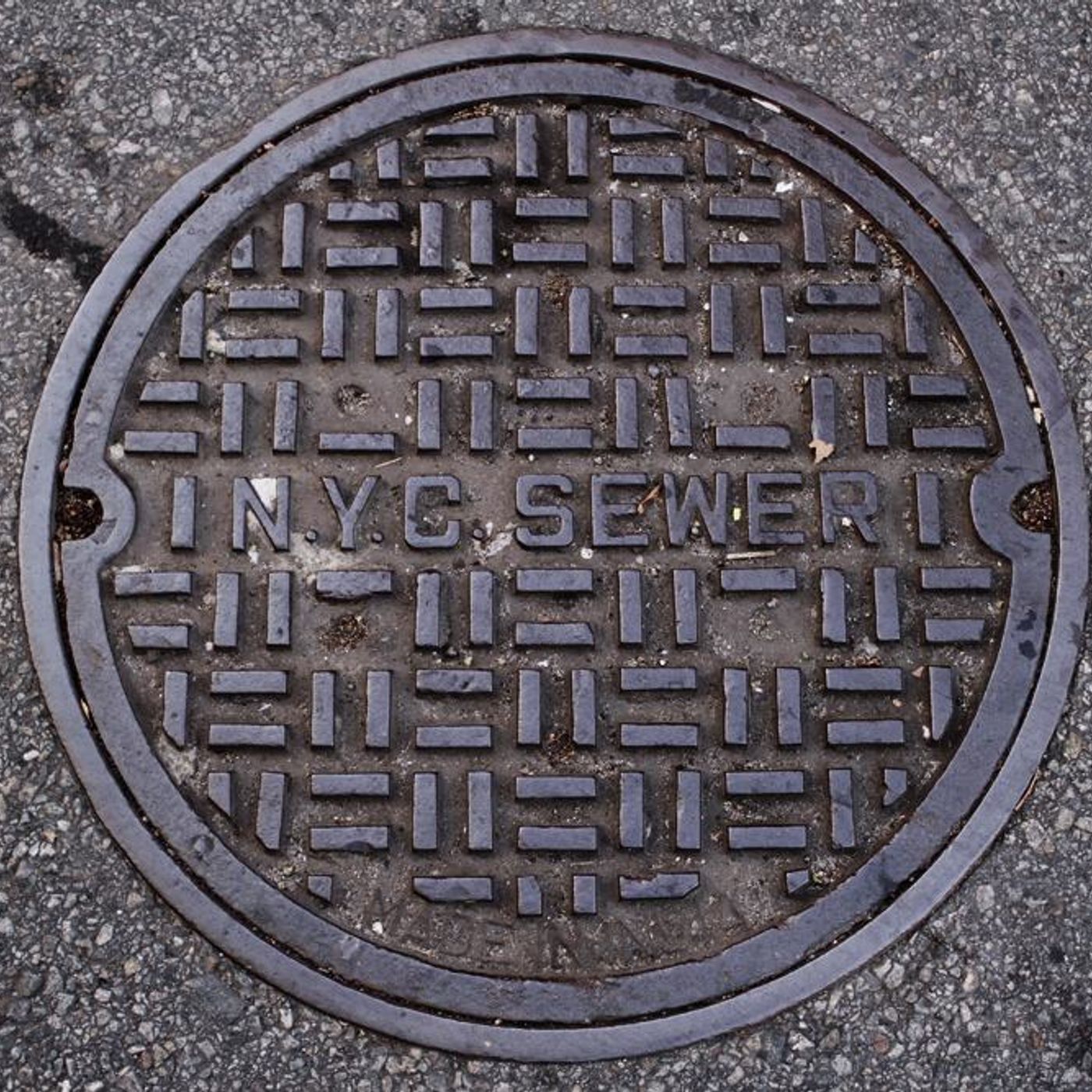
Radiolab
Poop Train
00:22:56
You may not give a second thought (or backward glance) to what the toilet whisks away after you do your business. But we got wondering -- where would we wind up if we thought of flushing as the start, and not the end, of a journey? In this short, we head out to trace the trail of sludge...from Manhattan, to wherever poop leads us.
Loading summary
Transcript305 lines
- [00:00]
A
Vrbo's last minute deals make chasing fresh mountain powder incredibly easy. With thousands of homes close to the slopes, you can get epic pow freshies, first tracks and more. Find last minute deals with the last minute filter on the app. Book a private vacation rental now@vrbo.com Limu Emo and Doug.
- [00:18]
B
Here we have the Limu imu in its natural habitat, helping people customize their car insurance and save hundreds with Liberty Mutual. Fascinating. It's accompanied by his natural ally, Doug.
- [00:33]
A
Uh, Limu is that guy with the binoculars watching us.
- [00:36]
B
Cut the camera. They see us.
- [00:37]
C
Only pay for what you need@libertymutual.com Liberty.
- [00:40]
B
Liberty Liberty Liberty Savings Ferry Unwritten by.
- [00:43]
C
Liberty Mutual Insurance company and affiliates. Excludes Massachusetts.
- [00:45]
D
When it comes to gifting, everyone on your list deserves something special. Luckily, Marshall's buyers travel far and wide, hustling for great deals on amazing gifts so you don't have to. That means your mom gets that cashmere sweater, your best friend that Italian leather bag. Your co workers unwrap their favorite beauty brands, and your nephews the coolest new toys. Go ahead. At prices this good, you can grab something for yourself too. Marshalls, we get the deals. You gift the good stuff. Shop now@marshalls.com or find a store near you.
- [01:17]
C
Wait, you're listening.
- [01:18]
B
Okay.
- [01:19]
E
All right.
- [01:20]
A
Okay.
- [01:22]
E
All right.
- [01:23]
A
You're listening to Radiolab Radio Lab from wnyc. Yes, and npr. Hey, I'm Jad Abumrad.
- [01:37]
B
I'm Robert Krulwich.
- [01:38]
A
This is Radiolab, the podcast. And before we get to the podcast part of the podcast, we should just say that Robert and I, by the time you hear this, we're gonna be like seconds away from the beginning of our live show tour.
- [01:49]
B
It is called apocalyptical.
- [01:51]
A
Yeah, it's like apocalypse on an elliptical. That's how I like to think of it.
- [01:54]
B
It's got monsters and explosions, great stories.
- [01:57]
A
Great Glenn Koche, Darren Gray, Sarah Lipstate, amazing comedians. Depending on the city, you might see Reggie Watts, Simon Amstel, Kurt Brownoller, Ophira Eisenberg, Patton Oswalt. And we're gonna be performing in 21 cities.
- [02:11]
B
And the first show is in Hartford, Connecticut.
- [02:13]
A
Yes. Wednesday of the week that this podcast comes out, and Thursday of that week we're gonna be in Hartford, Connecticut.
- [02:19]
B
And then we go from city to city to city to city to city during the months of October and November. Right. And you can find out what cities we're gonna be in and what times we're gonna be there and how to buy the tickets@radiolab.org live.
- [02:33]
A
Okay. Now the podcast.
- [02:34]
B
Okay.
- [02:34]
A
Take it away. Kay.
- [02:37]
B
It's something you do every day. You don't think about it very much, but when you do it in New York City, strange things happen.
- [02:48]
A
What is the it? What are you talking about?
- [02:49]
B
I know it's a teeth.
- [02:51]
A
Are you gonna tell me what it is?
- [02:52]
B
Well, I can tell you that it all started with this guy.
- [02:55]
C
I'll go like this. That's good.
- [02:56]
B
A writer who's been on the show a few times.
- [02:57]
C
I'm Frederick Kaufman, the author of Bet the How Food Stopped Being Food.
- [03:02]
B
We brought him in to tell us a story about the human gut. This was a while back. Remember we were doing the gut show.
- [03:07]
A
A year or two.
- [03:07]
B
This is a while ago. It was during the Occupy Wall street protest.
- [03:10]
C
So, you know, I've been occupying Wall street for about 30 years now.
- [03:13]
B
Fred actually lives right near Wall street.
- [03:15]
C
And somebody took a shit right on my doorstep the other morning.
- [03:18]
B
Really?
- [03:19]
C
Yeah. Yeah. I had an Occupy Wall street turd on my doorstep.
- [03:22]
B
How do you know that it wasn't, you know, some right wing.
- [03:25]
C
It could have been a tea party turd. It could have been a tea party turd. I sent it to the lab for analysis.
- [03:30]
B
It came out blue as opposed to red. And this whole poop on the stoop.
- [03:34]
C
Story, this reminds me of a whole other series of stories that I think.
- [03:36]
B
It sent Fred off on a significant rant.
- [03:40]
C
You don't get even the beginning of what's going on here about poop?
- [03:47]
B
I frequently go to the fetoria. So Fred told us that the first thing we had to do about North.
- [03:53]
C
River Sewage Treatment Plant was we had.
- [03:55]
B
To go to North River Wastewater Treatment Plant. Huh. Let's go there and cross over.
- [03:59]
C
It's just over on the Upper west side of Manhattan usually. How often do you come here?
- [04:04]
B
So our producer Pat Walters and I, we went up there.
- [04:06]
E
Yeah.
- [04:06]
A
Why was I included in this invention?
- [04:08]
B
You weren't. I don't know. Walters just muscled his play into position.
- [04:12]
A
Walters again.
- [04:13]
F
Oi. How you doing?
- [04:14]
A
All right? Good, good.
- [04:15]
F
How are you?
- [04:15]
C
Any. We went up there and we ended up talking to this guy Steve.
- [04:18]
A
Pat.
- [04:19]
C
Hi, Pat.
- [04:19]
F
How you doing? Steve Askew. How you doing? Hi, Rob.
- [04:21]
B
How are you?
- [04:22]
F
Have a seat, Have a seat.
- [04:23]
C
He's like the.
- [04:24]
F
I've been on camera before.
- [04:25]
C
Superintendent of the plan up there.
- [04:28]
B
Steve is basically the eliminator. He eliminates a very significant portion of New York City's poop.
- [04:33]
F
We have. I think it's a really neat job.
- [04:35]
B
Consider the glory of this Position.
- [04:37]
F
It's pretty exciting because, again, you really get to see this.
- [04:40]
C
Cause Steve's at the beginning of a process that I think we all kind of know the outline of. But the details and the places that New York City's poop in particular, end up taking you are truly astonishing. So the first thing that we learned is that in New York City, this whole wastewater treatment thing, it happens on an almost unbelievable scale.
- [04:59]
B
How many gallons do we.
- [05:00]
F
About citywide, about 1.3 billion gallons every. Every single day. That 7.45 pounds per gallon, that's, you know, 7 billion pounds, which is actually.
- [05:13]
B
More than the weight of all the elephants on the planet.
- [05:16]
G
What?
- [05:16]
B
Yes.
- [05:17]
A
Come on.
- [05:18]
B
We counted. We know. We interviewed the elephants. But until 1986, we dumped pretty much all of it into the ocean or straight into the Hudson River.
- [05:25]
F
1986. And that's, like, yesterday, you know, can imagine the west side of Manhattan. Before 1986, all the sewage went into the river unprocessed.
- [05:33]
B
Unprocessed.
- [05:34]
F
Just went straight into the river untreated.
- [05:36]
A
That blows my mind.
- [05:37]
C
Yeah. It was not a good situation. But by 1986, the city had built several treatment plants, including this one, which happens to be the biggest.
- [05:44]
B
It's a very impressive building with trees on top and soccer fields. And I watched it get built. It's right near my neighborhood. So kids played soccer up there.
- [05:53]
A
They played soccer on top of the poo place.
- [05:55]
E
Yeah.
- [05:55]
A
Did you have any sense of what lies inside that building?
- [05:59]
B
No, I had no. Oh, no.
- [06:03]
F
We're gonna walk according to the process.
- [06:06]
E
All right.
- [06:06]
B
In the walking tours I've had of New York City, this beats everything. Yeah.
- [06:15]
F
What are you doing?
- [06:16]
B
So we're gonna enter through the doors marked exit. That's always a good way.
- [06:19]
F
That's always a good one.
- [06:20]
B
So imagine parkland on top and a kind of open framework, sort of like a parking garage.
- [06:26]
C
And we're, like, up on the top level with the treatment plant itself underneath us. And Steve walks us over to this manhole cover, opens it up here, and.
- [06:34]
F
Look down and see, and we look down. That's where the water comes in.
- [06:37]
B
Well, the highways. I mean, there's this river of everything.
- [06:42]
C
It's this boiling brown torrent way below us.
- [06:46]
F
The bottom of that channel is 100ft down.
- [06:48]
C
And so the first thing Steve has to do is, like, get it up out of there.
- [06:51]
F
We pump it up 100ft, and it cascades down through the rest of the process, ultimately back to the river.
- [06:57]
B
And at this point, it becomes a series of waterfalls.
- [07:04]
G
That was Like Niagara.
- [07:05]
F
Yeah, that's exactly right.
- [07:07]
C
Pouring down below us through this eight story staircase of pools, almost like terraced lakes.
- [07:12]
F
Look how high that is. Each part of the process is lower.
- [07:15]
C
And each pool has its own job. Starting from the top. There's like one room where they just skim the oil off the surface.
- [07:21]
F
Fats, oils and greases float to the top, and we skim them off so.
- [07:25]
C
It flows down again.
- [07:26]
F
So we're gonna walk down into this.
- [07:28]
C
Enormous, wide open space. This is impressive. This feels.
- [07:32]
F
It's a big, long gallery here.
- [07:34]
C
Yeah, like a huge rectangular lake. An indoor lake, kind of.
- [07:38]
F
That's correct.
- [07:38]
C
Of warm sewage.
- [07:40]
F
So if the air temperature is cold enough, the vapor condenses on the cold concrete and it rains inside the building.
- [07:48]
B
Really?
- [07:48]
F
If it's really cold. If it rains, or you mean drips, cold, whatever. It condenses and comes down to droplets. That's the definition of rain. And it's all be soaking wet in here because it's raining. And if it's really cold, that vapor freezes and we'll have snow on the floor.
- [08:05]
B
All right. Real climate.
- [08:07]
C
Meanwhile, in the lake, the sludgy stuff kind of settles down to the bottom and gets sent along down to another level to the next step. And as you go down deeper and deeper, eventually you get to this one room that's like weirdly kind of beautiful.
- [08:22]
B
It had a kind of dome, and there was a big pond in front of you.
- [08:28]
F
It's frothy, it's alive. Got a nice light tan color to it.
- [08:31]
B
The pond was brimming with life.
- [08:33]
F
So now it becomes a biological process.
- [08:35]
C
One that is spookily similar to what happens in our own stomachs.
- [08:38]
F
We heat it to 98 degrees. Lo and behold, it's coming from humans.
- [08:42]
C
And this is where they add a bunch of bacteria to the sewage.
- [08:45]
F
The sewage is actually food to this bacteria.
- [08:48]
C
And then Steve adds other bacteria to eat those bacteria before eating each other.
- [08:52]
F
The acid formers eat the complex proteins and carbohydrates, and the method formers eat the acid formers. And then huge cannibal fest. Everyone's eating everything's eating everything else.
- [09:02]
C
Go from bugs and not just bacteria.
- [09:04]
B
There were little mayflies and bugs crawling on the surface. And everywhere around the room, there were enormous populations of spiders or spiders.
- [09:14]
C
Spiders.
- [09:15]
B
They're all over the place.
- [09:16]
F
Spiders eat the midges, the midges eat the sludge, the spiders eat the midges. And if this was an outdoor plant, we have birds eating the spiders. It's a whole ecosystem. It's exactly right.
- [09:28]
B
So New York City has in its waste treatment plant a rainforest filled with animals.
- [09:36]
C
But of course, the product of all this.
- [09:39]
B
Go through that door, which says.
- [09:41]
C
Is disgusting.
- [09:43]
B
Oh, yeah. Oh.
- [09:46]
H
It'S so bad.
- [09:47]
C
I just want to smell more of it. Because what you're left with is this thick soup of, like, super concentrated sewage.
- [09:54]
B
How much do you smell? Do you smell it on?
- [09:56]
F
I have it on. Oh, yeah, it smells.
- [09:57]
E
Yeah.
- [09:58]
F
Oh, no, it smells. Let's get out of here.
- [09:59]
C
I smell it.
- [10:00]
B
Yeah.
- [10:01]
C
And once you have that soup, you.
- [10:02]
F
Take that, we put it through a centrifuge where we mechanically spin it.
- [10:06]
B
A salad spinner.
- [10:07]
F
Well, it's kind of like the spin cycle in your washing machine.
- [10:11]
B
And it basically sweats out all the additional moisture.
- [10:14]
F
And what I'm left with is I got real concentrated, like, 30% solids, like moist soil, a ton of it. There's 125 million gallons of it.
- [10:23]
C
And if you want to, like, try to picture that in your mind, I did. That much sludge, that's what this stuff is called, would fill the Rose Bowl. I'm not even a football fan, but just, like, picture a big college football stadium filled with this concentrated sewage sludge. And that's what Steve's left with at the end of every single single day. Which leads to the obvious question, what.
- [10:45]
F
Do I do with that stuff? All right, I'll go ahead and place the microphone.
- [10:50]
C
This is where the story takes a really strange turn.
- [10:52]
B
This is where things got a little. How would you put it?
- [10:55]
C
A little emotional.
- [10:56]
B
Emotional.
- [10:57]
C
Mike, can you hear me?
- [10:57]
H
Yeah, I can hear you, Pat.
- [10:58]
C
I ended up tracking down this guy named Mike, Mike Sharp, who was hired to answer this question, like, what do we do with New York City's processed sewage sludge? He says, for a while, they hauled.
- [11:07]
H
It 103 miles out in the ocean.
- [11:09]
C
And dumped it, just like before.
- [11:11]
H
But eventually what happened was in 1988, the government banned all ocean disposal of waste.
- [11:17]
C
And because New York City had been dumping so much of this stuff in the ocean for so long, the EPA said not only do you have to stop dumping it in the ocean, you have to find something good to do with some of it.
- [11:26]
F
Beneficial reuse of biosolids.
- [11:29]
C
This is our sewage guy, Steve, again, and he says, you can use the sludge as fertilizer.
- [11:33]
F
You can use it as fertilizer.
- [11:34]
C
Steve told us that lots of cities do this.
- [11:36]
F
Just a product. You can go to Home Depot and buy a bag of milorganites. Milorganite is biosolids from Milwaukee.
- [11:43]
C
So when you Buy a bag of Milorganite and spread it over your tomatoes. You're actually using treated poop from the people of Milwaukee.
- [11:50]
F
They've marketed it for a retail sale.
- [11:52]
C
And this is basically where Mike comes in. It was his job to sell our.
- [11:56]
H
Sludge, so off I went.
- [11:59]
A
Is this like a thing he does?
- [12:00]
B
Yeah.
- [12:01]
C
He'd done it in other places for other towns, but this time start spreading. It didn't go the way it usually does. He doesn't remember exactly who he approached.
- [12:10]
H
First, but state Alabama after state, Ohio after state, Indiana said, no, I can remember one state. I won't even mention who. But, you know, the comment was made. You're not going to get New York City here. Don't even think about it.
- [12:24]
F
There were towns that would accept biosolids from every city on the planet except New York City.
- [12:31]
H
Texas, Oklahoma, Arkansas, Alabama.
- [12:34]
F
We don't want New York City biosolids.
- [12:37]
C
Oh, like ours is worse.
- [12:38]
F
We don't want cities slick of biosolids.
- [12:40]
C
The objections were all over the map. The sludge will have toxins in it or disease or like, who knows, you know, it'll have the city in it. Even though technically, when they tested it, it was no different than the sludge from anywhere else.
- [12:53]
F
It's the same stuff.
- [12:54]
H
But Illinois, over Kansas and over again.
- [12:58]
C
Kentucky hear the same thing.
- [13:00]
H
Don't think you're ever gonna get New York City permitted here.
- [13:02]
A
I feel.
- [13:03]
C
I haven't even lived here that long, and I'm feeling.
- [13:05]
E
So.
- [13:05]
F
Yeah. No, so it's. It's. You're a residency in New York. It's us. This is a collective effort here. You know, I mean, that's.
- [13:12]
H
There was a prejudice against New York City versus almost any other sludge in the country.
- [13:17]
C
And I should mention that at a certain point, Mike started offering to give this stuff away for free, and still nobody wants it.
- [13:25]
H
Until it was kind of just one of those flukes of life.
- [13:30]
C
He got to Colorado.
- [13:31]
H
I got lost coming out of the airport, huge thunderstorm. Thought I was going north, ended up going south.
- [13:36]
C
And all of a sudden he's about.
- [13:38]
H
75 miles east of Denver.
- [13:40]
C
You went pretty far south.
- [13:42]
H
Like I said, I was lost in a big thunderstorm and went to the first town I found a hotel.
- [13:47]
C
Anyway, next morning, he wanders down to the coffee shop, gets to talking with some guy and telling him, I've got all of this sludge in New York City and I just want to put it on a train and bring it out to the farms in Colorado.
- [13:58]
H
His response is, you're going to do what?
- [14:01]
C
Typical reaction.
- [14:02]
H
You're gonna put something from New York City on a rail car and haul it all the way here.
- [14:06]
C
But then he paused and said, keep talking.
- [14:10]
H
And we talked about the concept.
- [14:12]
C
And before Mike knew it, he'd found a place that would accept New York City's unwanted sludge.
- [14:17]
G
Fertilizer's fertilizer. That plant doesn't care what it comes from.
- [14:22]
C
This is Wayne.
- [14:23]
G
Wayne Schultz.
- [14:24]
C
He ended up running the operation in Colorado.
- [14:26]
G
Our track out there would hold 17 train cars.
- [14:31]
C
And this is how the New York City poop train began. A couple days before Earth Day 1992, several thousand tons of New York City sludge left the Big Apple, headed for Lamar, Colorado, 1600 miles away. But it wasn't exactly an immediate success. Well, I think the whole thing started out pretty small.
- [14:57]
E
Initially, there was just three or four farms that were using it.
- [15:00]
C
This guy's one of the first farmers to start using it. Sure.
- [15:02]
E
My name's John Stulp, and John says.
- [15:04]
C
He remembers early on, the public was.
- [15:06]
E
Invited to come out and comment on.
- [15:08]
C
What they thought about the biosolids.
- [15:09]
E
And it conjured up some very strong emotions. One person said something that they were concerned if any of this got spilled out of the trucks transporting it onto the highway, that it would probably eat a hole in the asphalt and have to be treated like a nuclear disaster site.
- [15:26]
H
And there were people who said their horse had died from bile. Solid.
- [15:30]
G
I never heard the horse story, but I can tell you one about a cow.
- [15:34]
E
You know, I think it's typical that people are always suspicious of something that's from far away. There was a salsa commercial about that time. Hey, cookie, more pecani sauce. The cowboys threw the cook out of camp basically because they were upset because the salsa he was serving was made in New York City.
- [15:53]
C
This stuff's made in New York City.
- [15:56]
B
New York City.
- [15:57]
C
Get a rope. And that's kind of how it was. But then the farmers who were using it started to notice that it was kind of awesome.
- [16:06]
G
I remember going to a farmer's field.
- [16:09]
C
Not long after he'd started using biosolids.
- [16:11]
G
The previous wheat crop was 40 bushel.
- [16:14]
C
But after using the biosolids, he cut 66 bushel wheat. This crop increased by a third.
- [16:19]
G
You Never hear a 66 bushel.
- [16:21]
C
John says they started to notice other little things about it, too.
- [16:24]
E
We had a lot of trouble with an aphid called the Russian wheat aphid. But we saw an interesting thing with a couple neighbors east of me when.
- [16:32]
C
They put the biosolids in their field it kept the aphids away. It wasn't just aphids.
- [16:37]
G
We have a big prairie dog problem out here.
- [16:40]
C
One farmer told Wayne, when he put the biosolids in his field, they packed.
- [16:43]
G
Up and moved across to the neighbor, and he thought it was the human.
- [16:48]
C
And as word got out, Wayne started getting calls from all over the county.
- [16:51]
G
Well, put me on the list. Put me on the list. I want some of that.
- [16:54]
E
There was a waiting list, because as.
- [16:56]
C
The New York City biosolids had gained acceptance in Colorado, other states had started picking them up too.
- [17:01]
G
I had a list of 50 farmers wanting the product.
- [17:04]
C
And after a few years, they were getting a train load pretty much every.
- [17:07]
G
Week, the most in a month. Sometimes two was 153 train cars.
- [17:12]
C
One was quite that much.
- [17:13]
E
It would ebb and flow depending on the flow of biosolids.
- [17:17]
C
But Mike says on average, we covered.
- [17:19]
H
Maybe 10,000 acres a year. And we had enough demand to cover, I mean, farmer demand, that we could easily cover 50 to 75,000 acres a year.
- [17:29]
C
And here is what I think is the most amazing part of this whole story. You take a farmer like John, who accounts for a big chunk of those acres. John's growing wheat, yes, the hard bread, winter wheat.
- [17:40]
E
And the wheat goes primarily into bread.
- [17:42]
C
Type of products, a lot of bread.
- [17:44]
E
Type products, with a pound of wheat, roughly. Just a rule of thumb is you get about a loaf of bread.
- [17:50]
C
And if you do some quick math, he said you get about 2,000 pounds of wheat from each acre that you farm. So that's 2,000 loaves of bread per acre, times the 10,000 acres that the biosolids were on.
- [18:00]
E
So just keep adding zeros. And so we're up into the around 20 million loaves of bread or something like that.
- [18:06]
C
And that's each year. So we're talking hundreds of millions of loaves of bread, which means John says.
- [18:10]
E
You may well have eaten a slice of bread that had a grain or two of wheat come from our farm.
- [18:17]
C
And so, like, in some small but very real sense, that's a slice of bread that we helped make with the stuff that we, like, make.
- [18:27]
E
Biosolids from New York come from the bread that they ate that went into their sewer system and ended up in their wastewater treatment plant and ended up in Colorado. And then, you know, the cycle begins again. Was ultimate in recycling.
- [18:45]
C
This is a magical thing. That's Fred again, the writer from the beginning of the story.
- [18:48]
B
It's really going from a straight line. Make it go away and never return to a circle.
- [18:56]
C
The end is in the beginning.
- [19:02]
H
I.
- [19:02]
G
Was standing by my window.
- [19:06]
C
It turns out that's not the end.
- [19:07]
G
Of this story since I turned off utilities and locked the doors.
- [19:12]
C
A couple weeks ago, we sent a reporter out to Colorado to hang out with Wayne. All I'm seeing here is a bunch of empty buildings.
- [19:18]
G
These are our buildings.
- [19:20]
C
Empty. Everything shut down.
- [19:21]
G
Everything's shut down.
- [19:22]
C
And what you found is that the circle had become a straight line again.
- [19:28]
G
At least I could have shown it when it was in operation.
- [19:32]
C
We told her that for a long time things were great.
- [19:34]
G
At one time, summer 07, I had 26 employees, everybody hopping. And it was slowly New York had come in and well, you got to cheapen up your price. We've got somebody else will do this cheaper. And the economy, prices of diesel fuel, the railroad, cost of transportation, just slowly it got down to four employees and myself. And all they have to do is send you a 30 day written notice and your contract's gone. That's what happened. But, you know, everything's bottom line.
- [20:14]
H
I remember the last day, our last load, which happened to be 20 years the day of our first load showing up. Our first load showed up on Earth Day 1992. And our last load showed up April 22, 2012. And we sat there and watched the last load be spread across the farm ground there.
- [20:36]
G
They have asked me, if something happens, would I be interested in managing it. I of course told them yes, but I'm not sitting around holding my breath. What New York does with it now, they go to landfills. They mix it with garbage and they bury in landfills. Like I said, it's kind of sad to come in here and see it now. Nothing.
- [21:21]
A
Hold on a second. I mean, I obviously feel for Wayne and all those people who lost their jobs, but it sounded to me a little nuts from the beginning that we would put our bio, whatever it's called, on a train and put it all the way to Colorado. That must cost a lot of money.
- [21:38]
C
Yeah, it's kind of nuts. I mean, it's costing like millions of dollars and we've always put some of it in a landfill. It's just that now we put about half of it into a landfill and half of it into abandoned strip mines and none of it goes to Colorado.
- [21:52]
B
How much are we saving by not putting it on trains and sending it across the country?
- [21:58]
C
Well, according to Mike and Wayne, it's about half as expensive to put it in a landfill as it was to send it to Colorado. Which sounds like a lot, but if you add it up, if you add up the cost of sending all this stuff that we were sending to Colorado, and you add up the cost of the landfill, and you do the subtraction and you divide it across, let's just say, like 8 million people. It would cost you, Robert Krulwich, about 25 cents a month to send it back.
- [22:29]
A
That's it.
- [22:30]
B
For a quarter.
- [22:31]
C
For a quarter?
- [22:32]
A
God, that's nothing. I would have expected the answer to be a lot more than that.
- [22:36]
C
Me, too.
- [22:36]
A
Come on, New York. Do the right thing.
- [22:38]
B
Can restore our own pride.
- [22:43]
A
Integrity, you know, and integrity.
- [22:44]
B
Integrity in the fields of Colorado.
- [22:47]
C
Yeah. We could close the circle again.
- [22:48]
B
Close the.
- [22:49]
C
The circle. Well, usually Jad and Robert would say, thank you and we'll see you next time, but they're not here because they're on tour. You can find more information about the tour@radiolab.org live. Thanks for listening. See you in a couple weeks.
- [23:14]
F
By my window on one cold and.
- [23:19]
G
Cloudy day When I saw that hers come rolling for to carry my mother away when the circle beyond broken by.
- [23:36]
C
And by the.
- [23:40]
B
Way.
- [23:40]
A
Hey, this is Chelsea from Atlanta, Georgia, where the cicadas are singing. Radiolab is supported in part by the National Science foundation and by the Alfred P. Sloan foundation, enhancing public understanding of science and technology in the modern world. More information about Sloan@www.sloan.org.
- [24:05]
C
The ear. Go.
- [24:08]
B
Will the circle be unbroken?