← Radiolab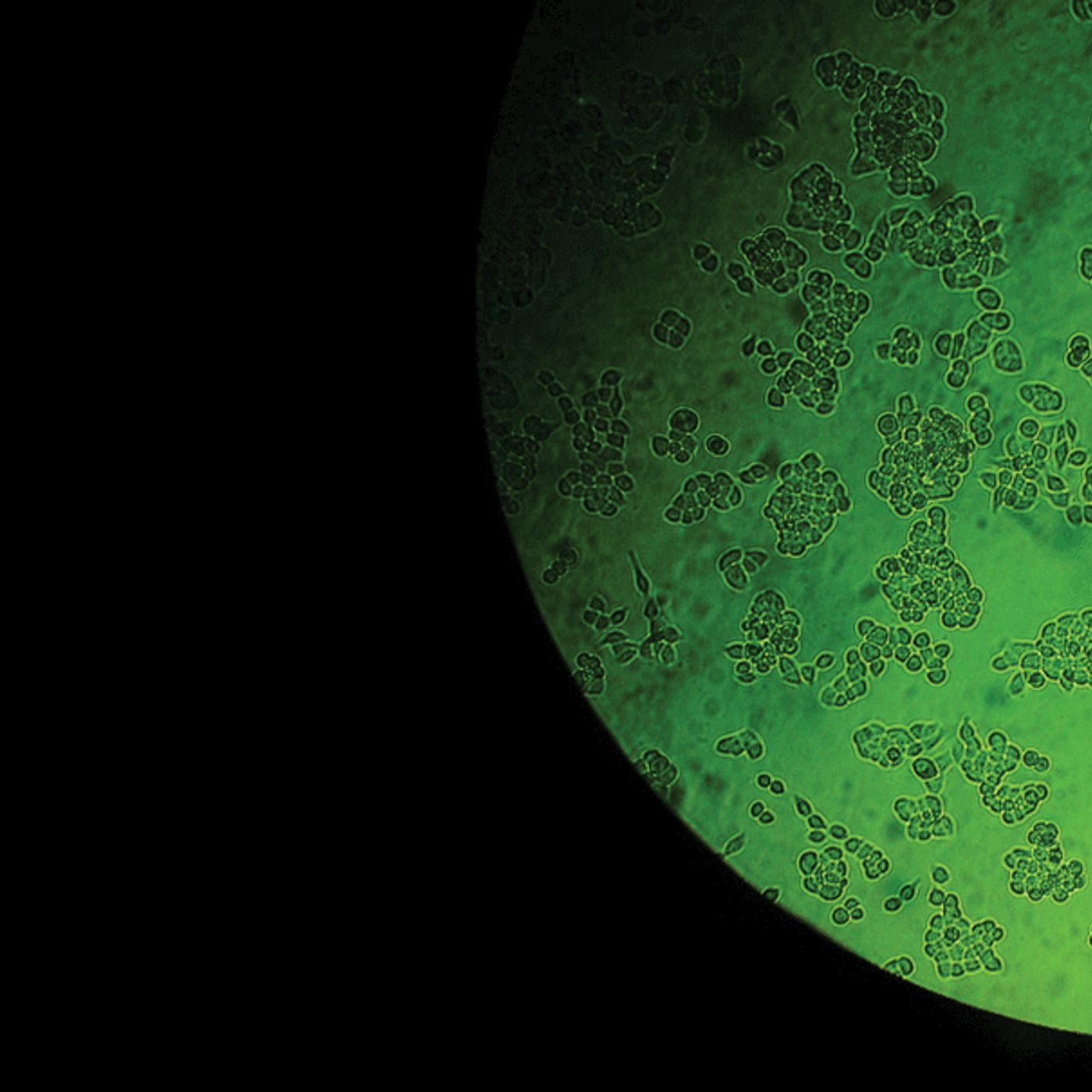
Radiolab
Radiolab Extra: Henrietta Lacks
00:35:18
With all the recent talk about HBO's upcoming film, we decided it would be good time to re-run our story of one woman's medically miraculous cancer cells, and how Henrietta Lacks changed modern science and, eventually, her family's understanding of itself. Support Radiolab by becoming a member today at Radiolab.org/donate.
Loading summary
Transcript309 lines
- [00:00]
Narrator/Announcer
With Venmo stash a taco in one hand and ordering a ride in the other means you're stacking cash back. Nice. Get up to 5% cash back with Venmo stash on your favorite brands when you pay with your Venmo debit card. From takeout to ride shares, entertainment and more, pick a bundle with your go tos and start earning cash back at those brands. Earn more cash when you do more with stash. Venmo stash terms and exclusions apply. Max $100 cash back per month. See terms at Venmo Me Stash terms.
- [00:32]
Mary Kubichak
Big news.
- [00:33]
Rebecca Skloot
Way Bears Black Friday sale is here right now. Score up to 80% off everything home. These are our best deals of the year. Shop Wayfair's Black Friday sale now@waybear.com Wayfair Every style, every home.
- [00:47]
Jad Abumrad
Hey, this is Jad. We just wanted to throw in an extra episode into our feed in honor of a movie that we're really excited about. But first, a couple weeks ago, I stepped in here and I sort of laid out a challenge grant that we had gotten from the Tao Foundation. And the deal was, if you remember that, if 700 of you guys listening stepped forward, agreed to kick in $7 a month to support the making of Radiolab, then the Tao foundation would give us 70 grand to help make the show. So again, 700 people decide to donate $7 a month, we get 70 grand. That was the deal. All right. So how did, how did you do? You crushed it. Just crushed it. Okay. We needed 700 people. As of right now, I think we're at somewhere over 3,000. You did so well. We did so well. The Tao foundation just came back to us and upped the ante. Full on stretch goal. Because here's the thing, 3,000 people is amazing, but that is just a tiny percentage of the people who actually listen to this podcast. So their thinking is, let's capitalize on this momentum, get the other 99.9% involved. So their new stretch goal is that they have agreed to match any donation that comes to Radiolab right now, up to 10 grand. So if you decide to make the 7 bucks a month deal, that becomes $14 a month. If you decide to do a one time donation of 60 bucks, that's now 120, Tao will match it. And this just as a reminder, this is how we're able to do, you know, the year long investigations in the police shooting or the nuclear chain of comm. To name the last three that we've done. This is how we pay for it. And this challenge grant will allow us to go farther. So if you're down, go to Radiolab.org match or you can text the word match to the number 69866. Again, text the word match to the number 69866. A little form will pop up and you can donate in a matter of seconds. And thank you. All right, so tonight is the premiere of a movie we're really excited about. It's called the Immortal Life of Henrietta Lacks. It stars a an up and coming actress, maybe you've heard her Oprah Winfrey. And it is based on the book of a very, very dear friend, Rebecca Skloot. Best selling book. You'll be able to watch the movie in a couple days on hbo. But in the meantime, we're just so proud of Rebecca, thrilled that this movie is getting out to a wider audience because everyone should know the story. So in honor of that, we're gonna play for you a documentary we produced with Rebecca. We worked on it for a few years with her while she was sort of formulating the book. And it includes tape you won't hear anywhere else.
- [03:47]
Rebecca Skloot
We can Move me closer.
- [03:48]
Jad Abumrad
Hello? Hello, Hello. Now, the story is about a tumor that expands and never stops. Begins in 1950. A black woman in Baltimore is in her bathroom and she discovers, pretty much all on her own, that she has cancer.
- [04:04]
Rebecca Skloot
It's all a bit of a mystery how she initially knew this, but she knew it was there. A knot, she called it. She had told her cousins for a while that she thought there was something wrong with her, with her womb. And she climbed into her bathtub and she slid her fingers up inside of herself and found this lump.
- [04:28]
Jad Abumrad
Chapter one.
- [04:29]
Rebecca Skloot
First, she went into her local doctor.
- [04:30]
Dr. Howard Jones
By chance, I happened to be an attending at that time.
- [04:35]
Jad Abumrad
The guy she eventually ended up seeing at Johns Hopkins University was this fellow, Dr. Howard Jones.
- [04:41]
Dr. Howard Jones
I'm 98. Next month I'll be 99.
- [04:43]
Jad Abumrad
Wow. So when she came in to see you, can you tell me anything about what she was like?
- [04:48]
Dr. Howard Jones
Well, she was a.
- [04:53]
Jad Abumrad
You don't remember anything?
- [04:54]
Dr. Howard Jones
No, I really don't.
- [04:55]
Jad Abumrad
But you remember her tumor, right?
- [04:56]
Dr. Howard Jones
Oh, absolutely. I never saw anything like it before or after.
- [05:02]
Rebecca Skloot
This didn't look like a normal tumor. It was deep purple and about as.
- [05:07]
Dr. Howard Jones
Big as a quarter, sort of shiny, very soft. That was another thing about it. On examination, slightly raised when you touched it. You might think it was red jello.
- [05:17]
Rebecca Skloot
There was something very strange about the way it looked.
- [05:18]
Dr. Howard Jones
There was something weird about it.
- [05:21]
Jad Abumrad
So doctors took a Sample?
- [05:23]
Rebecca Skloot
Yeah. So they would cut off these little teeny tiny pieces. Really small, teeny tiny.
- [05:27]
Dr. Howard Jones
A bite or two.
- [05:28]
Rebecca Skloot
They would take a piece, put it in a tube, and one would go to the lab for diagnosis.
- [05:31]
Jad Abumrad
And in this case, since it was.
- [05:32]
Rebecca Skloot
Hopkins, they would take an extra piece and give it to a man named George Geye 2.
- [05:39]
Jad Abumrad
So George Guy was a researcher who worked at Hopkins. He had a deal with the clinic that anytime they got a patient with cervical cancer, they'd give him a tiny piece of the tumor. What he really wanted to do, his main mission, actually, not just his scientists everywhere were trying to do this. They wanted to find a way to grow human cells outside of a human being in a dish. In a dish.
- [06:01]
Rebecca Skloot
George Guy had been trying to do this, working on this for decades.
- [06:04]
Jad Abumrad
And why exactly?
- [06:07]
Rebecca Skloot
It's sort of like having a little tiny bit of a person in a lab that's detached from them so that you can do whatever you want with them. You know, you can't bombard some person with a bunch of drugs and just wait to see how much they can tolerate before their cells all explode. But you can do that in cell culture, so.
- [06:23]
Jad Abumrad
Oh, so this is like. This is like the basic thing you need to study human biology. You need cells in a dish.
- [06:28]
Rebecca Skloot
Yes.
- [06:30]
Jad Abumrad
Problem was, anytime they tried to grow human cells in a dish.
- [06:37]
Mary Kubichak
My darlings could die.
- [06:39]
Jad Abumrad
They would die.
- [06:39]
Mary Kubichak
Yeah, they died.
- [06:41]
Jad Abumrad
This is George Guy's former lab assistant. Can you just tell me your name? You know, my name is so and so.
- [06:45]
Mary Kubichak
My name is Mary. I'll put my maiden name in there.
- [06:48]
Jad Abumrad
Oh, sure.
- [06:49]
Mary Kubichak
Toy Kubichak.
- [06:51]
Jad Abumrad
Mary lives just outside of Baltimore, about an hour from where she used to work with George Guy.
- [06:55]
Mary Kubichak
This is it. This is Dr.
- [06:56]
Jad Abumrad
Guy.
- [06:57]
Mary Kubichak
She showed me some pictures, and he's sitting at. At a microscope.
- [07:01]
Jad Abumrad
Look at him. He looks. He's. He seems like a really big guy, like a really tall guy.
- [07:04]
Mary Kubichak
He was a big guy.
- [07:05]
Jad Abumrad
At least 6, 5, judging from the picture.
- [07:07]
Mary Kubichak
Yeah, he was.
- [07:08]
Jad Abumrad
And in every slide that she showed me, he had kind of a crazy smile on his face. Like he's got a. Like he's having a.
- [07:12]
Mary Kubichak
He's like a big bear of a man is what I always thought of.
- [07:15]
Jad Abumrad
Oh, yeah. In any case, Mary says they were completely stumped at why the human cells always died, but they just did.
- [07:21]
Mary Kubichak
Yeah.
- [07:23]
Jad Abumrad
So on the day that George Guy walked in, handed Mary a tube with a little chunk of a nameless woman. Cervical cancer inside, I knew nothing about her. No one expected anything.
- [07:32]
Mary Kubichak
No, he was doing the. Well, he probably ever Hopeful. But, you know, I was eating lunch and I thought, oh, the heck with it. You know, it's not going to grow. I'm going to finish a sandwich. And that's what I did.
- [07:45]
Jad Abumrad
3.
- [07:46]
Mary Kubichak
Then I went in, and she gave.
- [07:48]
Jad Abumrad
The cells some food, did my usual, turned on all the machines, and left. Came back the next day. They hadn't died. So she came back the next day, and they were growing. And then the next day, still growing.
- [08:03]
Mary Kubichak
They just kept plugging along.
- [08:05]
Jad Abumrad
And the next.
- [08:05]
Rebecca Skloot
They grew a lot.
- [08:07]
Jad Abumrad
Rebecca says they doubled in size every 24 hours.
- [08:10]
Rebecca Skloot
Yeah, they just grew all of a.
- [08:12]
Mary Kubichak
Sudden, you know, I kept transferring them and making more tubes, transferring them, making more tubes, transferring.
- [08:18]
Rebecca Skloot
They were very reliable and stronger.
- [08:21]
Mary Kubichak
They just kept plugging along.
- [08:23]
Jad Abumrad
Meanwhile, the woman who had spawned all these cells died.
- [08:26]
Rebecca Skloot
Right. Officially, she died of uremia, which is like toxicity of the blood because she wasn't able to get rid of the toxic waste that usually goes out in.
- [08:35]
Jad Abumrad
Your urine, but not her cells.
- [08:38]
Narrator/Announcer
And to tell us this story is a privilege to introduce Dr. George Guy.
- [08:42]
Jad Abumrad
It wasn't long after that George Guy appeared on TV holding in his hand a little bottle.
- [08:47]
Deborah Lacks
Now, let me show you a bottle.
- [08:49]
Narrator/Announcer
In which we have grown massive quantity of cancer cells.
- [08:54]
Rebecca Skloot
So did you want to look at the photos?
- [08:56]
Jad Abumrad
You can't really get a sense of how aggressive this tumor was until you go to the Hopkins archives and look at George Guy's pictures and videos. Okay, this is the film can here.
- [09:06]
Rebecca Skloot
The HeLa cell film.
- [09:07]
Jad Abumrad
Then it hits you.
- [09:07]
Narrator/Announcer
These are enlarged 10,000 times.
- [09:10]
Jad Abumrad
Oh, my God. Swirling hurricanes of cells, just like thousands of little pots, sometimes small and some very large, clumped together.
- [09:19]
Mary Kubichak
Kept transferring them and making more t.
- [09:21]
Narrator/Announcer
See them under the microscope.
- [09:23]
Jad Abumrad
Looks like something has just exploded.
- [09:25]
Narrator/Announcer
Undergoing division.
- [09:26]
Jad Abumrad
That's amazing.
- [09:28]
Mary Kubichak
They just kept.
- [09:29]
Narrator/Announcer
Keeps getting bigger and bigger, stronger. It's indestructible. It's indescribable.
- [09:34]
Rebecca Skloot
Nothing can stop it. Why hers just sort of took off and grew, and the other ones that they had tried before didn't is just a little bit of a mystery. Nobody really knows.
- [09:46]
Jad Abumrad
4. Nonetheless, George Guy knew what he had. This new cell line was what they'd all been waiting for. So early on, right after this woman died, George Guy sent Mary back down to get more cancer cells from the corpse.
- [10:00]
Mary Kubichak
Oh, he sent me down to the morgue. Yeah.
- [10:02]
Jad Abumrad
Really?
- [10:03]
Mary Kubichak
Oh, yeah. So I went down there, and the coroner, I don't know who he was. Dr. Guy was there too, and they were standing down at her feet sort of. Meanwhile, she's like, she's lying out there. She's already open. I got some samples. Coroner would take them out and give them to me.
- [10:23]
Jad Abumrad
What'd she look like?
- [10:25]
Mary Kubichak
I couldn't look at her face. I couldn't look at her. The only thing I looked at were her toes, and they had chipped nail polish on them. And that was really like, oh, this is a real person.
- [10:39]
Jad Abumrad
What was it about the nail polish that hit you?
- [10:41]
Mary Kubichak
Oh, because it was chipped because, you know that she hadn't been able to take care of her nails for a long time if they got chipped like that. And it showed that she was proud of herself. Not everyone wears nail polish on their toes.
- [10:55]
Jad Abumrad
Yeah. Yeah. Over the next several months, while this woman's body lay decomposing in the ground, George Guy and Mary produced hundreds of thousands of her cells, her tumor cells. And he named them the HeLa strain.
- [11:09]
Narrator/Announcer
HeLa.
- [11:10]
Jad Abumrad
Like HeLa. H E L A Mm. No one would actually know why he had named them that for about two decades. But what he did with these cells, you know, would be unusual nowadays. Like, if somebody now found a cell that was special, they'd run off to the patent office and then sell it to Merck for a billion bucks.
- [11:26]
Mary Kubichak
But George Guy, he just passed them out freely.
- [11:29]
Jad Abumrad
Didn't try and make any money off. He was just.
- [11:31]
Mary Kubichak
Because it was a nice, nice new thing that could help science.
- [11:34]
Jad Abumrad
Mary says that George Guy began to send HeLa all over the world.
- [11:38]
Jerry Lacks
Yep.
- [11:38]
Jad Abumrad
And pretty soon she was in hundreds of labs.
- [11:40]
Rebecca Skloot
And, you know, this was in the midst of the polio epidemic.
- [11:43]
Narrator/Announcer
This is the season when polio is at its worst.
- [11:45]
Jad Abumrad
We're talking early 50s, right?
- [11:47]
Rebecca Skloot
Yeah. So this is 1951, 52. You know, schools are being closed. Kids are being kept inside to this cruel disease.
- [11:54]
Narrator/Announcer
Medical science still has no complete answer.
- [11:56]
Rebecca Skloot
There was this enormous effort to develop a polio vaccine.
- [12:00]
Jad Abumrad
Problem was, in order to develop a vaccine, you had to have enough polio virus, you know, enough quantity to be able to study it in a lab. And they had no way of making enough.
- [12:08]
Narrator/Announcer
So what did they do?
- [12:09]
Jad Abumrad
Well, one of the guys, that Guy, one of the guys that Guy had sent the cells to his collaborator, friend of Guy's discovered something kind of amazing, which was that polio loved the HeLa cell. Put polio inside a HeLa cell, HeLa would copy and in the process, make more polio.
- [12:25]
Narrator/Announcer
So it's the super Xerox cell. No matter what you want to do, it'll be like, make a copy, make a copy. Make a copy.
- [12:30]
Jad Abumrad
Yeah. So now they had polio.
- [12:32]
Rebecca Skloot
ELA could just be a polio factory.
- [12:35]
Jad Abumrad
And so the government made a factory.
- [12:37]
Rebecca Skloot
At the Tuskegee Institute, a real one, literally a factory. So they had these big, you know, stainless steel vats of culture medium that were sort of rotated constantly. Autoclaves for sterilizing all their equipment, a row with, you know, four or five microscopes, crazy Frankensteinish gizmos. They had this machine that was like an automatic cell dispenser, and it had this long mechanical arm. And squirt a certain amount of this culture medium filled with HELA cells into a tube.
- [13:08]
Jad Abumrad
Wow. This is, like the beauty of industry right here.
- [13:10]
Rebecca Skloot
Yeah, it is, absolutely.
- [13:11]
Jad Abumrad
The cells that were produced at this factory, she says, were used to test.
- [13:14]
Narrator/Announcer
The polio vaccine, potent vaccine to prevent the dreaded disease.
- [13:18]
Rebecca Skloot
The tests that they were doing were enormous. It was the largest field trial ever done. At its peak, the Tuskegee Gila production center was producing about 6 trillion cells a week.
- [13:30]
Jad Abumrad
Wow.
- [13:31]
Rebecca Skloot
Which is kind of inconceivable.
- [13:33]
Jad Abumrad
But that was actually only the beginning, says Rebecca, because this factory led to an even bigger one that was for profit.
- [13:39]
Rebecca Skloot
Right.
- [13:39]
Jad Abumrad
And that second factory was the first.
- [13:41]
Rebecca Skloot
Time any human biological material was commercialized.
- [13:45]
Jad Abumrad
So this was the first biotech company.
- [13:47]
Rebecca Skloot
Yeah, basically.
- [13:48]
Jad Abumrad
Okay. But when they first started mass producing gila, what sorts of things were done to these cells? What sorts of problems were investigated?
- [13:55]
Rebecca Skloot
Like, anything you can imagine. So they infected HELA cells with every kind of virus. Hepatitis, equine encephalitis virus, yellow fever, herpes, measles, mumps, rabies, whatever. Like, you just. Any. Any vaccine. And this was just. This was a revolution for scientists. There was research on chemotherapy drugs. HeLa cells went up in some of the first space missions.
- [14:17]
Jad Abumrad
Really?
- [14:18]
Rebecca Skloot
Yeah. So they were.
- [14:19]
Jad Abumrad
HELA went into space.
- [14:20]
Rebecca Skloot
HELA went into space, which every time I hear about, I think it was like HELA in space.
- [14:27]
Jad Abumrad
And why? I mean, just because the premise was.
- [14:30]
Rebecca Skloot
To see what happens to human cells in zero gravity. You know, if we're going to be sending people up into space, what's going to happen to them up there? So HELA went up before any humans did. And then she eventually went up.
- [14:40]
Jad Abumrad
She.
- [14:41]
Rebecca Skloot
The cells. There was actually.
- [14:42]
Jad Abumrad
That was an interesting little slip up there.
- [14:43]
Rebecca Skloot
Yeah, I know.
- [14:47]
Jad Abumrad
Okay, so let's actually skip forward in the story to the point where that. That slip up. You just heard that pronoun confusion gets personal. Okay. It's the late 60s, and Hela has led to a revolution in science. And now there are hundreds of cell lines, not just HELA but hundreds. And somewhere along the way, scientists discover that HELA is so aggressive that she's actually been contaminating and taking over all of these other cell lines.
- [15:16]
Narrator/Announcer
Well, you just said she, but I get your point.
- [15:20]
Jad Abumrad
And she does it in the. It does it in the strangest way.
- [15:24]
Rebecca Skloot
HeLa cells can, you know, they can float on dust particles. They can ride on.
- [15:29]
Jad Abumrad
They can what? They can float on dust particles?
- [15:34]
Rebecca Skloot
Yeah. So they can.
- [15:34]
Jad Abumrad
You mean they can hop out of a dish and just get on a particle and just float?
- [15:38]
Rebecca Skloot
Mm. Out the door, up the stairs, down the hall. One HELA cell into a lab, drops into a dish, cell culture where there's other cells growing. And because HeLa cells are sort of powerful cells, they take over.
- [15:57]
Jad Abumrad
So on the heels of this catastrophe, someone at Hopkins decides to make a test. Let's make a test that will allow us to genetically determine if a cell is HELA or if it isn't. And to make a long story short, this desire for a genetic test led scientists and then journalists to ask a question which, amazingly, for 25 years had not been asked. Who was this woman? And that's when we found out her name. Henrietta Lacks. This is the sound of Rebecca reading Henrietta's medical records for the first time.
- [16:36]
Rebecca Skloot
This is a 30 year old colored woman.
- [16:41]
Jad Abumrad
She's sitting with Henrietta's youngest daughter, Deborah.
- [16:43]
Rebecca Skloot
This is 2nd of November.
- [16:44]
Deborah Lacks
So this is again when she was pregnant with you.
- [16:47]
Jad Abumrad
Henrietta had five kids when she died at the age of 31. Most have no memory of her because they were too young. That's especially true of Deborah.
- [16:55]
Deborah Lacks
I was only 15 months old and I don't remember anything about my mother.
- [16:59]
Rebecca Skloot
Yeah, so she, you know, she had spent her entire life just sort of longing to know who her mother was. And did she like dancing?
- [17:07]
Deborah Lacks
You know, I always wanted to know what she liked to do, where she went, where she liked to eat.
- [17:13]
Rebecca Skloot
Did she breastfeed Deborah? She was really sort of almost fixated on that idea. She wanted to know if she was breastfed.
- [17:20]
Deborah Lacks
Oh, you know, I don't know what I would give up just to have her hair, I tell you, just to see her and hold her.
- [17:30]
Jad Abumrad
So in 1973, when a scientist calls the Lacks family and Deborah hears that little bits of the mother that she never knew are still alive and, oh, by the way, can we take a blood test from you and your family? Because we're having some contamination problem, we need these genetic markers, blah, blah, blah. Well, as you can imagine, took me by surprise.
- [17:49]
Deborah Lacks
It really did.
- [17:50]
Jad Abumrad
It was really confusing.
- [17:51]
Deborah Lacks
I Mean, how much of ourselves is out there? You know?
- [17:54]
Jad Abumrad
Eventually she went online, did some searches.
- [17:57]
Rebecca Skloot
And found thousands and thousands of hits.
- [17:59]
Jad Abumrad
Like, for instance, on HELA clones.
- [18:01]
Rebecca Skloot
And Deborah had heard, you know, various journalists in the past had come to her and mentioned, you know, Dolly, the cloned sheep, and said, you know, your mom, they did this with your mom too. Meaning that's actually where the technology started. The first cells ever cloned were HELA cells, but that was just cloning a cell, not cloning an entire being. But that distinction is very complicated, particularly for somebody who doesn't know what a cell is.
- [18:24]
Jad Abumrad
Yeah.
- [18:25]
Rebecca Skloot
So Deborah, between what journalists had told her and Googling Henrietta Lacks and clone, thought there were thousands of clones of her mother around.
- [18:33]
Jad Abumrad
And really, you mean like a bunch of Henriettas?
- [18:35]
Rebecca Skloot
Thousands walking the streets, walking around.
- [18:37]
Jad Abumrad
And Rebecca says that one of Deborah's biggest fears was bumping into one of these clones.
- [18:41]
Rebecca Skloot
She said, you know, she would say, I would have to go talk to her, and she wouldn't know that I was her daughter. And I don't know that I could handle that. It sounds so fantastical. Like, how could someone believe that there are copies of her mother walking around? But at one point, 25 years after their mother died, someone called and said, hey, part of her is still alive. And, you know, we've grown enough of her so that it could wrap around the earth several times.
- [19:02]
Jad Abumrad
At that point, all bets are off.
- [19:03]
Rebecca Skloot
Yeah, right, exactly.
- [19:07]
Jad Abumrad
Not to mention that it's actually not that crazy, because your DNA is in your cells. So if your cells are taken out of you and they still grow, well, isn't that still you alive?
- [19:19]
Narrator/Announcer
It's of you, but it's clearly not you. And yet it's going on and on. That's. It's a funny middle space, that's for sure.
- [19:27]
Jad Abumrad
Yeah. So here's what happened as Rebecca went off in search of Henrietta Lacks. Every so often, Deborah would come along and sit with her as they interviewed, you know, anyone they could find, friends, family. And eventually, over many, many years, a picture does emerge of who this woman was.
- [19:49]
Rebecca Skloot
She was born in Roanoke, 1920, Virginia, and I think she was the 10th of the 11 children.
- [19:57]
Jad Abumrad
But apparently she was the one that stood out.
- [19:58]
Rebecca Skloot
Everybody talked about her as just being, you know, she was the catch.
- [20:03]
Deborah Lacks
Oh, my goodness.
- [20:04]
Rebecca Skloot
I don't think I could top her.
- [20:06]
Jad Abumrad
This is Sadie Sturtevan, Henrietta's cousin.
- [20:08]
Deborah Lacks
Henny was a beautiful girl. I was beautiful myself.
- [20:11]
Rebecca Skloot
But Henny was very pretty.
- [20:13]
Deborah Lacks
Brown eyes, long hair.
- [20:15]
Jad Abumrad
And this is Henrietta's sister, Gladys. That tanned complexion Everyone that they spoke with zeroed in on the same few points.
- [20:22]
Rebecca Skloot
Like, first, she was really meticulous about her nails.
- [20:26]
Jad Abumrad
Always painted them red.
- [20:27]
Rebecca Skloot
This very deep red.
- [20:28]
Jad Abumrad
And second, Henrietta just had this.
- [20:31]
Rebecca Skloot
She was very strength, forthright, very sassy.
- [20:37]
Jad Abumrad
Like her cells. Now, the unfortunate thing is that when it comes to her life, you know, how she lived, there's not a ton of detail.
- [20:46]
Rebecca Skloot
Right.
- [20:46]
Deborah Lacks
October, so this is when she first.
- [20:48]
Rebecca Skloot
Went in with her cancer.
- [20:49]
Jad Abumrad
But in that hotel room, when the two of them were flipping through the medical records, they did start to get some detail.
- [20:54]
Mary Kubichak
Okay.
- [20:55]
Deborah Lacks
Now, here's her autonomy, right?
- [20:57]
Jad Abumrad
About how she died.
- [20:59]
Rebecca Skloot
Things I want to take notes about.
- [21:00]
Jad Abumrad
Was she in a lot of pain when she died?
- [21:02]
Rebecca Skloot
Yeah, this was the hardest thing. She was eventually in an unbelievable amount of pain.
- [21:07]
Deborah Lacks
She complained of pain in the right lower quadrant.
- [21:10]
Rebecca Skloot
Wailing and crying and, you know, moaning for the Lord to help her.
- [21:14]
Jad Abumrad
According to the records, doctors tried everything.
- [21:17]
Rebecca Skloot
Morphine. They injected 100% alcohol straight into her spine.
- [21:21]
Deborah Lacks
Complains of pain in spite of the alcohol injection last week.
- [21:24]
Rebecca Skloot
She would have these fits of pain through spasms where these waves of pain would hit her and she would rise up out of the bed and thrash around. So they strapped her to the bed and her sister, along with one of her friends. You know, one of them would tighten the straps and the other one would put a pillow in her mouth so that she wouldn't bite her tongue.
- [21:51]
Deborah Lacks
If I only just had the chance to take care of her.
- [21:57]
Jad Abumrad
Now, dealing with how her mother died was one thing, but the cells made it more complicated for Deborah.
- [22:03]
Rebecca Skloot
Her mother was alive in these cells somehow. So if that's true, that left very big questions. And the first of them for Deborah was how can Henrietta rest in peace if part of her, with part of her soul is being shot up to the moon and injected with all these chemicals and irradiated and bombarded.
- [22:20]
Deborah Lacks
It was just so painful knowing. Had her cells on the back of a donkey going to turkey, you know, in the airplane, just going all over the world. I just don't know.
- [22:36]
Rebecca Skloot
You know, she worried about them. She worried that it hurt her mother. When you infect the cells with Ebola, does somehow her mother feel the pain that comes with Ebola?
- [22:46]
Jad Abumrad
And had a scientist ever, like, sat down with her. No mean, just explain to her, like, this is.
- [22:52]
Rebecca Skloot
No, never nothing.
- [22:55]
Jad Abumrad
Because it just strikes me that it wouldn't be that hard to explain that, like, when you take cells out of a body, it's kind of like when you cut your fingernail off.
- [23:02]
Rebecca Skloot
It just doesn't but your fingernail doesn't keep growing and living after you cut it off. It's really hard. There is no other example of some way that you can take something from someone's body and have it keep living and not have a person feel it.
- [23:15]
Jad Abumrad
And all these worries, says Rebecca, began to build in Deborah's mind, and build and build.
- [23:23]
Rebecca Skloot
There came at this point. So we were at her cousin's house.
- [23:26]
Jad Abumrad
This is her cousin Gary.
- [23:28]
Rebecca Skloot
She was broken out in hives. And she was telling him all the stuff that she'd recently learned.
- [23:33]
Jad Abumrad
You can almost hear it on the tape. She says to him, she can't carry the burden of these cells anymore. She can't do it.
- [23:40]
Jerry Lacks
I can't cry, Okay?
- [23:42]
Deborah Lacks
I don't want to cry.
- [23:44]
Rebecca Skloot
And I had been sort of trying to talk her down, and he was trying to talk her down. And then just out of nowhere, he just started singing.
- [23:54]
Deborah Lacks
And though the love been good. Yo, I know the love been good. He put food on my table. I know the Lord.
- [24:14]
Rebecca Skloot
And he started preaching.
- [24:16]
Deborah Lacks
There are some things that doctors cannot do.
- [24:19]
Rebecca Skloot
He held her head in his hands.
- [24:21]
Deborah Lacks
And we come to you tonight the author and the finisher of our faith, and we thank you for being a waymaker. You make a path in the mighty waters you call the mountains that skip like rams and the little hills like lambs.
- [24:40]
Mary Kubichak
We thank you tonight.
- [24:42]
Deborah Lacks
Thank you, Lord. Thank you for that. Thank you, Lord. Thank you. Thank you. Thank you. Thank you, Jesus. Hallelujah. Hallelujah.
- [24:52]
Jerry Lacks
Hallelujah.
- [24:53]
Deborah Lacks
Amen. Amen. Amen. Amen. Thank you, dear. Thank you. Amen. Thank you.
- [25:03]
Rebecca Skloot
And she just relaxed.
- [25:05]
Deborah Lacks
I feel light, Aunt Mary. I feel light.
- [25:12]
Jad Abumrad
She didn't realize it then, but that night, Deborah was on the verge of a stroke.
- [25:17]
Rebecca Skloot
Want to walk up and see the building?
- [25:19]
Deborah Lacks
You want to walk?
- [25:20]
Mary Kubichak
Okay.
- [25:20]
Deborah Lacks
You mean, he said he's just up this hill?
- [25:22]
Jad Abumrad
One of the most striking moments of the story is when the two of them visit Hopkins.
- [25:26]
Rebecca Skloot
So how do you feel?
- [25:29]
Jad Abumrad
And Deborah meets her mother's cells for the first time. Because the scientists had finally contacted her.
- [25:39]
Rebecca Skloot
Christoph Lingauer, the scientist who invited us into his lab to see the cells. He had projected them onto a screen.
- [25:45]
Narrator/Announcer
Don't be confused.
- [25:46]
Rebecca Skloot
They look green here.
- [25:47]
Dr. Howard Jones
Okay.
- [25:47]
Rebecca Skloot
They're sort of neon green in this particular case because of the way they were stained and projected. So they're very ethereal looking. They're very sort of. They glow, you know? I mean, when you think about angels, right, you think of something glowing. Kristoff turned on this screen, and she just, you know, I Mean, Deborah just gasped.
- [26:08]
Deborah Lacks
She just, oh, my God.
- [26:13]
Rebecca Skloot
This is about 200 times bigger than.
- [26:17]
Jad Abumrad
What they really are. A swirling hurricane of cells.
- [26:21]
Rebecca Skloot
Did you say, oh, that's my mother?
- [26:23]
Mary Kubichak
Yeah.
- [26:24]
Rebecca Skloot
Pretty good for you. Kristof gave. He gave her a vial of these cells that she could hold in her hand. And they came out of a. Out of a freezer, so they were very cold. And she sort of rubbed her hands together with the vial in her hand to sort of warm them up and sort of blew on them to keep them warm. And then she just sort of whispered to the cells. It was sort of incredible. She just raised them up to her lips and she said, you're famous. But nobody knows.
- [27:10]
Jad Abumrad
Just a week before Rebecca and I spoke in the studio, she got a call that Deborah had died.
- [27:17]
Rebecca Skloot
She had a heart attack and died in her sleep.
- [27:36]
Jad Abumrad
Okay, so as you may know at this point, that segment was based on Rebecca Skloot's book, the Immortal Life of Henrietta Lacks. It's an amazing book. It came out right when we released that piece. It's been a couple years now, and recently we met up with Rebecca in Chicago just to get an update.
- [27:56]
Rebecca Skloot
It's like the book came out because.
- [27:58]
Jad Abumrad
Since the publication of that book, the.
- [27:59]
Rebecca Skloot
Whole story just sort of exploded.
- [28:01]
Jad Abumrad
It just took off. Scholarships were named after Henrietta.
- [28:03]
Rebecca Skloot
Henrietta was given an honorary doctorate. Monuments, highway placards, and historical landmarks and buildings named after her. There's a high school called Henrietta Lacks High, Gila High for short.
- [28:14]
Jad Abumrad
Meanwhile, the book is exploding. She went on this, like, insane book tour. Members of the Lacks family began to join her.
- [28:21]
Rebecca Skloot
It started off with just Sonny Lacks would go and do a sort of onstage Q and A. And people started cheering and scientists standing up saying, I want to tell you what I did with these cells, and I want to tell you why this was important for me. And I'm sorry it was hard for you and people reaching out. I'm alive today because of this drug that your mother. Cells help develop. Or, you know, I do this in my lab. I mean, they just. It never stopped. It was just a flood, which is.
- [28:44]
Jad Abumrad
In a way, what Deborah always wanted.
- [28:46]
Rebecca Skloot
She wanted to go to every event. She wanted to be on every television show. She had her dress picked out for Oprah, like, you know, eight years before the book came out. You know, she was. Deborah wanted this. This is exactly what she always dreamed of.
- [29:00]
Jad Abumrad
But then, just last year, something interesting happens. Interesting and troubling.
- [29:04]
Rebecca Skloot
So, yeah, so March 2013, this group of scientists from Germany sequenced the HELA genome and published it Online, where anyone can download it, you just click a button. I downloaded it. It was just there. And they did not ask the family. And my initial reaction when I said, saw this press coverage was, they did what? Because within the HeLa genome, there was also Henrietta's genome. And some of that was 50% of that was passed on to her kids and 25%, potentially to her grandkids. But one of the things. So when they put out a press release, when this genome was sequenced and on it, it had a little, you know, frequently asked questions that the press might wonder about. And one of them was, can you learn anything about Henrietta or her children from this genome? And the answer was, no, can't learn anything about them. And I believe that they believe this, but this is a misconception. You can, in fact, learn about people, and in fact, you cannot even hide people's private information if you try. And so one researcher took the genome and created essentially a report on Henrietta's genes. You have x percent chance of bipartisan bipolar disorder, alcoholism, obesity, you know, just has this huge range of things. And some of it is, yes, there's some real potential privacy violation, like with the Alzheimer's genes and things like that. Bits of information about your family. I will not tell you.
- [30:27]
Jad Abumrad
Well, this report that this dude made, did he list all of these things you're describing?
- [30:32]
Rebecca Skloot
So. And he sent it to me. So I called the LAX and said, you know, did you know this, anything about this? And Rebecca had called, you know, they did not.
- [30:42]
Jerry Lacks
And it kind of bothered us because we're saying, okay, why wasn't the family involved with this decision making?
- [30:48]
Jad Abumrad
That was Jerry Lacks.
- [30:49]
Jerry Lacks
Jerry Lacks, Why?
- [30:51]
Jad Abumrad
Henrietta Lacks, granddaughter.
- [30:53]
Jerry Lacks
Back in the 50s, you had Henrietta Lacks. Her cells were removed without her family's knowledge. Then you go, in the 70s, my dad and his siblings, they took blood samples, used it for research. They didn't give consent. Then you come 2013 and you have Henrietta's. I felt as though it was her medical records being published publicly.
- [31:19]
Rebecca Skloot
You know, their first question was, can you get them to take it down so we can figure out what it is, what it means? So I reached out to the scientists and said, the Lacks family has asked that you take this down. And they replied immediately. They took it offline immediately. And then I contacted Francis Collins, who's the head of the nih. I also reached out to Kathy Hudson, who used to run the Genetics and Public Policy center at Hopkins and is now over at the NIH dealing with a lot of these issues. So I reached out to them and said, somebody needs to try to just help the last family get consent. Somebody needs to just go back, pretend like this is starting now, and just do what probably should have happened in the first place.
- [32:00]
Jerry Lacks
And I say it might have been like a couple of weeks after that, several weeks after that, that we had a meeting with nih. It was my mom, myself, my sister, my dad, my uncle, my brother David, my sister Kim, my cousin Ron, Rebecca Skloot. She was actually on a conference call.
- [32:17]
Rebecca Skloot
All the NIH folks drove up to Baltimore.
- [32:19]
Jerry Lacks
We googled their names. Dr. Collins and Kathy got sitting there, was like, oh, we were kind of. We was excited. Like, okay, yeah, we sitting in a room with the director. They all met just to listen to everybody, you know, listen to our concerns, listen to our questions. What can be done? What can't be done?
- [32:36]
Rebecca Skloot
The Lacks family asked about everything you could possibly imagine, went over, you know.
- [32:40]
Jerry Lacks
The information about genome gene mapping, sequencing.
- [32:44]
Rebecca Skloot
Just the basic science of genomes, to.
- [32:45]
Jerry Lacks
Get a clear understanding of what the genome meant to science. We don't want to stop science, but yet we don't want certain information to be just broadly available publicly.
- [32:57]
Rebecca Skloot
So they laid out three options. One was, we don't release any of them at all. And then there was a second option which was release it with no restrictions. Just put it out there like the Germans did. And then there was a third option which was release it with restrictions. So the NIH would house it on their own servers. And that in order to get access to it, you would have to send an application that said, this is the research we're going to do. There would be a committee formed that was a group of scientists and then.
- [33:24]
Jerry Lacks
Some members of the Lacks family, the Hela Geno committee.
- [33:27]
Rebecca Skloot
One grandchild and one great grandchild.
- [33:29]
Jerry Lacks
My brother David and my cousin Veronica.
- [33:32]
Rebecca Skloot
And obviously this is the option they picked. So, yeah, there's this committee and they just a few weeks ago, saw their first batch of applications and then the news hit. And it was the first time that they were part of the news.
- [33:46]
Jad Abumrad
They the third generation.
- [33:47]
Rebecca Skloot
Yeah, the Lacks family, like Jerry Lacks was on MSNBC Live doing an interview about this. And like, she'd never done this before. And, you know, they were in every newspaper. I mean, it was everywhere.
- [34:00]
Jerry Lacks
Yeah, it's pretty exciting. Yeah. We are stepping into the spotlight.
- [34:03]
Rebecca Skloot
It's the grandchildren, the third and fourth generation of Laxis.
- [34:07]
Jerry Lacks
It's the great grandchildren.
- [34:09]
Rebecca Skloot
This is their story now. And that's, you know, the other thing that is an undercurrent through all this is Deborah's gone.
- [34:14]
Jerry Lacks
She was the one who was just so forceful and so dedicated with getting the information out there about her mom.
- [34:23]
Rebecca Skloot
And you know, when I look at the four years since the book came out, you know, there are a few moments that stand out as incredibly emotional ones for me having to do with Deborah. But this, the first meeting, sitting on this speakerphone, listening to this meeting, these.
- [34:40]
Jerry Lacks
High officials sitting at the table and have sincere concern about our questions.
- [34:47]
Rebecca Skloot
If she could have said, what do I dream might someday happen? That would be what she would have done.
- [34:52]
Jad Abumrad
Describe.
- [34:53]
Jerry Lacks
I can, I can just imagine her just sitting there and she had just laughing, rocking back and forth, twiddling her tongue, her fingers, saying yay. Just absorbing all of this, this excitement.
- [35:21]
Jad Abumrad
Before we close, I want to thank Rebecca Skloot for giving us her raw tapes. Her book, the Immortal Life of Henrietta Lacks, is truly spellbinding. You can get more information@radiolab.org sign up for our podcast there.
- [35:32]
Rebecca Skloot
Radiolab.org hello, this is Rebecca Skloot. Radiolab is produced by Jad Abumrad. Our staff includes Ellen Horn, Michael Raphael, Zorin Wheeler, Lulu Miller, Tim Howard and Pat Walters, with help from Adi Narayan, Erin sand and Sharon Shattuck. Special thanks to Tim Clark and Timothy Wozniewski. With a name like Skloot, I'm allowed to stumble on people's last names. NYC now delivers breaking news, top headlines and in depth coverage from WNYC and Gothamist every morning, midday and evening. By sponsoring our programming, you'll reach a community of passionate listeners in an uncluttered audio experience. Visit sponsorship wnyc.org to learn more.