← Radiolab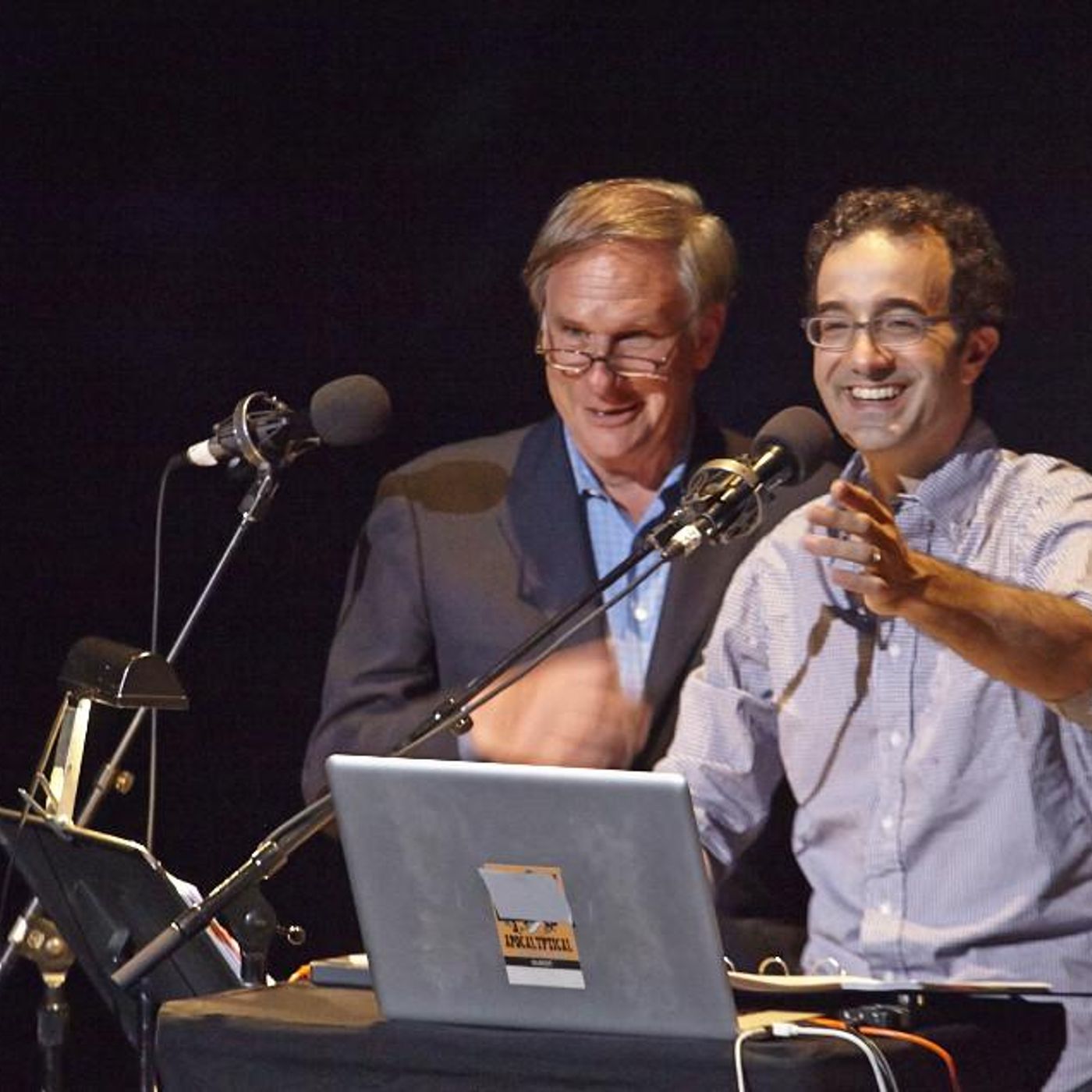
Radiolab
Radiolab Live: Tell-Tale Hearts featuring Oliver Sacks
00:58:17
A few days ago Radiolab performed a live show and this episode we're bringing you a few of the highlights. They were stories of what motivates us, our drives, our loves and losses. Producer Molly Webster tells us the story of life, near-death and what happens when your heart starts to work against you. And we visit with Dr. Oliver Sacks one last time to reflect on his life, his loves and his endless sense of wonder. Special thanks to our musical guests, SO Percussion and Sarah Lipstate
Loading summary
Transcript335 lines
- [00:00]
A
Hey, it's Austin James. If you're like me, trying to live.
- [00:02]
B
Your best life while living with diabetes.
- [00:04]
A
You can relate to worrying if you're doing a good job managing your diabetes. I use the Freestyle Libre 3 Plus sensor to get real time glucose readings and see the impact of every meal and activity to make better decisions. The Freestyle Libre 3 sensor can help.
- [00:16]
B
Me live life with diabetes on my.
- [00:18]
A
Own terms and it gives me more time for the things I love, like being a dad and a musician. Now this is progress. Learn more @freestyleibre us for prescription only.
- [00:27]
B
Safety info found @freestyleibre us.
- [00:31]
A
Hey Fidelity, how can I remember to invest every month?
- [00:36]
C
With the Fidelity app, you can choose.
- [00:38]
A
A schedule and set up recurring investments.
- [00:40]
D
In stocks and ETFs.
- [00:43]
B
Oh, that sounds easier than I thought.
- [00:45]
A
You got this? Yeah, I do. Now where did I put my keys? You will find them where you left them.
- [00:54]
B
Investing involves risk, including risk of loss. Fidelity Brokerage Services LLC Member and NYSE SIPC.
- [01:02]
A
For delicious meals, you could go out to eat, or you could just make a Marie Callender's meal. Marie Callender's classic Chicken Parmigiano bowl is so good. It has marinara sauce that's made from scratch and creamy mozzarella cheese over pasta. It's delicious with no artificial flavors, colors or preservatives and 30 grams of protein. You can find it in the frozen aisle. Marie Callender's what Having It All Tastes like.
- [01:28]
C
Oh, wait, you're listening. Okay. All right. Okay. All right.
- [01:35]
A
You're listening to Radio Lab Radio from WNYC.
- [01:43]
C
And npr.
- [01:49]
A
Hey, I'm Jad Abumrad.
- [01:51]
B
I'm Robert Krulwich.
- [01:52]
A
This is Radiolab. And a couple days ago, as in, like, we were on stage at the Brooklyn Academy of Music, the big opera house there.
- [02:00]
B
It's a really beautiful theater and it was full of more than 2,000 people. We were part of something called Radio Love Fest.
- [02:10]
A
Radio Love Fest is a big public radio podcasting Radio Lovey thing that WNYC station here puts on. Basically, it's a parade of all these amazing public radio shows and podcasts. We opened the festival and since it was called Radio Love Fest, we figured we would use the opportunity to basically talk about the community of people around Radiolab that we love. The producers, the musicians we featured, amazing acts like so percussion, who you're hearing. A lot of stuff happened and we told a lot of stories. Today we're just on this podcast. We're going to play two stories for you. These are both Stories about love and about heart.
- [02:49]
B
The last one, which you'll hear is an exclusive interview with Oliver Sacks, basically giving a kind of valedictory interview. It's pretty wonderful. But first, we decided to do, literally, a look at a heart.
- [03:03]
A
This comes from our producer, Molly Webster. It was scored live by soap percussion, which is Eric Chabic, Josh Quillen, Jason Truding, and Adam Slowinski.
- [03:12]
B
Oh, and some people in the audience, in the theater audience had a pretty strong reaction to what you were about to hear. And we are not so sure that that might not also be the case if you're just listening. So if you are driving or you're operating machinery, maybe this isn't the best piece to listen to because it can get a little intense, which we'll talk.
- [03:29]
A
About a little bit afterwards. In the meantime, here's producer Molly Webster.
- [03:33]
D
So this is a story about a friend, Summer Ash. We used to work together, and I think it's fair to say that Summer has a complicated relationship with her heart.
- [03:43]
C
You know, my heart was not beating for three hours, which is a really crazy thought. Yeah, I was technically heart dead. I don't know.
- [04:01]
D
So a couple of things to know about Summer. She's, like, wicked smart. She's an astrophysicist. She uses a lot of big words.
- [04:06]
C
Propulsion, center of gravity, and moment of inertia. X and Y, Z axis. Do you remember that original radial keratotomy?
- [04:13]
D
No, I don't even know what that word is. The other thing to know is she's an engineer, right. So she loves to like, take things apart and sort of, like, poke around, rewire. Ratchet. You got a ratchet? And so the thing to know is, when she found out she had to get heart surgery, she made sure there was someone in the operating room with a camera taking pictures of my open.
- [04:40]
C
Chest cavity and the valve and when things were cut and when things were being sewn in. What? Yeah, I totally approached this completely as a scientist. I want to know what's happening. I want to know why. I want to know what you're doing. I want to know what's going on around me.
- [04:54]
D
And in any case, to sort of back up and explain, Summer was just following up on, like, a heart diagnosis that had happened about 15 years earlier. And so she had been diagnosed with a murmur, which is basically just like, a funny sound in your heart, and that's the. Like, a whoosh in between the thump, thumps. Like, thump, whoosh, thump. And in Summer's case, she had been told it's no big deal. And so this was just a follow up appointment to make sure nothing had changed. And so she goes to the doctor, they run a few tests, and then they send her on her way. And a few weeks later, she gets an email saying, don't panic.
- [05:34]
C
But I think you should see a heart surgeon.
- [05:40]
D
It turns out the situation with her heart had changed her aorta, which is like the largest artery coming out of her heart, it was larger than it should have been. So it's supposed to be about 2 centimeters in diameter. And in Summer's case, it was 5.
- [05:54]
C
Yeah.
- [05:55]
D
What does that mean for your body?
- [05:56]
C
So that's the thing. It's asymptomatic. It's not actively harming you, but it's a threat to your life because if it ruptures, it's your main blood vessel. And if it goes, you bleed out internally so fast that no ER can help you.
- [06:15]
D
Her doctor says, go find a heart surgeon. And in the meantime, no heavy lifting or contact sports. And Summer's like, what?
- [06:22]
C
I live in New York? Like, living in New York is the contact sport?
- [06:25]
D
Yeah, I was gonna say people crash into you all the time.
- [06:27]
C
Yeah.
- [06:32]
D
Six months later, Summer finds herself on the operating table.
- [06:35]
C
They actually, I think, I'm not sure the exact order of operations, but they.
- [06:42]
D
They cut open her sternum from the bottom all the way up to the top, and then they just like pull. They pull back her rib cage so they can get at her heart.
- [06:52]
C
They put some sort of fluid on it that stops it from beating, and.
- [06:56]
D
They actually sort of disintegrate, inject that fluid into the heart, and that short.
- [07:00]
C
Circuits it so your heart actually stops. And then they hook you up to a bypass, a heart lung bypass machine.
- [07:10]
D
And one of the things that does is it drains the heart of all its blood so it's like flat, like a pancake. And you can see pictures of all of this on her blog. You can even see pictures. It's true. You can even see pictures of the surgeon cutting 4 inches out of her aorta and replacing. Replacing it with a synthetic tube. And the entire time, Summer's heart is just limp and quiet. Eight hours later, she wakes up. What do you remember about your first conversation with your doctors?
- [07:45]
C
Oh, I don't remember my first conversation much, but I do vividly remember my first thought. Part of my French was, this hurts.
- [07:59]
D
Just mind altering pain.
- [08:02]
C
Oh my God, eight hours ago, I felt so much better than this. Can we just go back to that now? Like, no, I don't want this. You know, everything pulls on your torso and so when your sternum's been cut open and then reconnected, everything that pulls on that hurts. You can't move anything or lift anything.
- [08:21]
D
It hurt to talk. It even hurt to breathe.
- [08:24]
C
But literally, from day one, they make you stand up and start walking.
- [08:34]
A
Really?
- [08:35]
C
I was like. She was like, we're gonna get you.
- [08:36]
D
To sit in the chair.
- [08:37]
C
I was like, no, no, we're not. What are you talking? What are you smoking?
- [08:40]
D
And that's just to. That's just to.
- [08:43]
C
Basically, you just gotta get the heart going again, you know, just get it healing.
- [08:49]
D
But here's the thing. When it came back, it came back with a vengeance. So to be fair, her recovery went really well. About two months in, she's in cardiac rehab. The pain is fading. She's thinking about sending her mother home. Her mom had been staying with her for a while. And then one day, she's in cardiac rehab on the elliptical machine.
- [09:11]
C
And so I remember stopping, and I had this white T shirt that would literally, like, just be fluttering with my heartbeat, like it was blowing in high wind or something. And I was like, well, that's interesting.
- [09:31]
A
You mean that you could see it?
- [09:33]
C
Oh, yeah, yeah. Even the physical therapist there could see it.
- [09:37]
E
Wait, wait, wait, wait.
- [09:38]
A
You mean, like, you would look down and you would see the thing, Your heart beating through your chest while pushing your shirt off your chest?
- [09:46]
C
Well, because I'm a lady, there was a gap here. So, like, that sort of. There's a space for that vibration to happen, so to speak.
- [09:57]
D
But then she goes home, and it was still happening. Like, just sitting on her couch, not even working out, and she's like, whoa, my heart is strong.
- [10:07]
C
It just felt so strong that I. Part of me was like, am I going crazy?
- [10:12]
D
Like, is it as strong as it seems like it is?
- [10:14]
C
Because if it is, surely this is making a noise.
- [10:17]
D
So one day, a few months after surgery, she goes to upstate New York. She's visiting some family friends, and she's hanging out with their daughter, Julia.
- [10:26]
C
She walked in, and we were standing in my room.
- [10:31]
D
They're just chatting. And then suddenly, Julia's eyes get really wide.
- [10:35]
C
And I was standing there, just, oh, my gosh.
- [10:38]
B
I just heard it.
- [10:40]
D
She could hear Summer's heart out loud, two feet away from her in the room.
- [10:45]
C
And I was like, okay, this is happening.
- [10:48]
D
So I guess in typical summer fashion, she's kind of like, let's engineer this.
- [10:53]
C
If a friend of mine can hear it with their ear, what could a studio pick up?
- [10:56]
D
So she grabs a radio producer friend, they go to A studio. And he sticks a mic about 6 inches in front of her chest. And this is what they recorded. This is not a stethoscope. This is what it sounds like if you were standing in a quiet room next to Summer. God, that's strong. What does that feel like?
- [11:30]
C
It just feels as if my entire rib cage, my clavicle, my sternum, my whole chest cavity is acting like an amp and is sort of transmitting the vibrations of each heartbeat in physically in my body.
- [11:50]
A
So you feel each heartbeat?
- [11:52]
C
Yeah.
- [11:52]
A
Do you feel it right now?
- [11:53]
C
Yeah.
- [11:54]
A
You can just feel the thump, thump, thump, thump?
- [11:56]
C
Yep. It feels like somebody has a rubber mallet and is banging on the inside of my sternum. And it's very staccato.
- [12:18]
D
When she goes back to the doctor, she's like, dude, my heart.
- [12:22]
C
So he sort of just did some, like, listening and some feeling, you know? And his reaction, too, was like, yeah, that's strong.
- [12:30]
D
So he runs some tests and he's like, listen, your blood pressure's fine. All of your stats are fine. So I guess I did a really good job.
- [12:38]
C
Yay. Good for you. But. But okay, I guess I have a strong heart.
- [12:42]
D
Yay.
- [12:43]
C
Strong heart. But I don't want to feel this all the time.
- [12:45]
D
The doctor was like, whoa, whoa, whoa. Don't freak out. This will go away. It's probably just that there's scar tissue on your sternum and it's transmitting the vibration. And as that goes away, the sensation should fade.
- [12:59]
C
He said sometimes six to nine months is when maybe the scar tissue heals more, thins out.
- [13:07]
D
So she's like, all right, nine months.
- [13:09]
C
Oh, I can get to that. That's no problem.
- [13:11]
D
So she sort of just settled in and treated it like a scientific curiosity.
- [13:15]
C
Like a party trick. If I went to a restaurant where they had like, tables for two, but they weren't like, the sturdiest of tables. If we had water glasses on them and I sort of leaned on the table, like the water glass would look like Jurassic Park. Like my heartbeat would be like the footsteps of the Tyrannosaurus rex. Yeah. So that was like my party strike.
- [13:41]
D
So you had six months of elation. Party trick. And then.
- [13:44]
C
Yeah.
- [13:44]
D
And then it stopped being a party trick. It sounds like.
- [13:47]
C
Yeah.
- [13:47]
D
What happened?
- [13:48]
C
And I'm not really sure, like, you know, incident wise. I think for me it was just time passing.
- [13:57]
D
Because that nine month mark.
- [13:59]
C
Just came and went and it was still there.
- [14:02]
D
And when she asks her doctor, he.
- [14:03]
C
Has no idea why.
- [14:06]
D
So 12 months, still there. 15 months, it's still there. And she says it just started getting really annoying.
- [14:18]
C
It was distracting. The funny thing was, the more active I was then, the less aware of it I was.
- [14:24]
D
But she says when she was at her office, trying to be still, be.
- [14:28]
C
Still, to either be writing something, writing emails, planning lectures, that's when it would.
- [14:35]
D
Be, like.
- [14:40]
C
Really loud. That's when it would become the most dominant thing. Like, I couldn't go to work because it just kept drawing my focus.
- [14:49]
D
And when it did, it would just fill her with anxiety. It was sort of this, like, automatic response. And I'll try and explain it, but it's basically like when you get scared, it goes into your brain, and then the signal goes down into your body. So you step on a snake, and your brain is like, oh, my God, it's a snake. Run, body, run. And then your heart pounds. In Summer's case, it was just the opposite. There was no snake, but her heart was pounding, so her brain would be like, whoa, why is my heart pounding? Oh, my God, is there a snake? There must be a snake. Run, body, run. And her heart would pound.
- [15:23]
C
My brain keeps thinking something must be wrong because we're already doing this, so something must be wrong. So I guess something's wrong, so let's freak out.
- [15:31]
D
She was caught in this feedback loop, and then she was, like, rightly so edgy and primed that any emotion on top of that, like, even if it was happiness, was just too much.
- [15:42]
C
Oh, my gosh. Yeah. At nights, it would keep me awake. I would focus on it. I would get into hearing the rhythm, feeling the rhythm, you know, sort of with the expectation of just. Next 1. Next 1. Next 1. Next 1, next 1, next 1, next one, next one. One. Next 1, next 1. One. Next 1, next one. One. Next One, next one. One. Next one, next one. One. Next One, next one. One. Next one.
- [16:34]
D
With every beat, our hearts are just literally tapping out time. And, I mean, researchers have actually thought about this, and there was this idea that was proposed, like, right before the dawn of sort of modern heart surgery, that we each get 1 billion beats in our lifetime, and then that's it. And most of us don't notice them going by. But in Summer's case, she can't not notice it.
- [16:58]
C
Yeah, I'm aware of it always. It's never not there. It's never not noticeable, that beat.
- [17:08]
D
I mean, it's just like this constant awareness of the future that Summer is endlessly meditating on.
- [17:14]
C
My heart takes over, and I can't do the things that I want to do. And not knowing if that's going to last forever, or if it's going to end suddenly or if it's just going to peter out. The not knowing gets to me.
- [17:31]
D
So she stopped going out as much. She stopped returning phone calls. Except for, like a few close group of friends.
- [17:37]
C
The worst times were just being curled up in bed and just crying. They really wanted to yell at my heart, shut up. Stop.
- [17:48]
A
Would you really talk to your heart?
- [17:50]
C
Well, I mean, I would never had conversations, but I would be like, shut the upper.
- [17:57]
D
But it wouldn't. And as time went on, like, the constant pounding just became unbearable. She describes it as like this alien creature is like trying to just claw.
- [18:15]
C
Its way out the bottom of my neck. Sam.
- [18:52]
D
But there was this one moment right in the middle of all of this. She had her two year checkup post surgery, and for that they had to take a picture of her heart.
- [19:03]
C
So I schedule my two year appointment.
- [19:05]
D
And to look at her heart, they do an echocardiogram, which is basically, you.
- [19:09]
C
Know, like the ultrasound, like that you get for the pregnant.
- [19:12]
D
Oh, it's like a wand.
- [19:13]
C
Yeah, it's like a little wand and you get the jelly and they basically go all over your upper, you know, the area around your heart and from all different angles. So what ended up happening is I'm lying on my left side and I'm facing the wall and the technician's behind me.
- [19:30]
D
And the technician is sort of like reaching around her, waving the wand over her heart. And the monitor for the echocardiogram is behind Summer, so she can't see it. But she's wearing eyeglasses.
- [19:41]
C
So you know how you can sometimes like see a reflection peripherally on your glasses of something that's like behind you? Like, if you were in a somewhat darker room and there was a window, like, you would totally see the reflection. So the room's a little bit darkened.
- [19:54]
D
Summer's lying there on her side and she sees the reflection of the screen on my glasses. And it catches her eye because it's moving.
- [20:03]
C
And then I realize what it is that I'm seeing.
- [20:06]
D
A tiny reflection of her heart beating.
- [20:09]
C
And I have this, like, moment. I have this moment where I'm like, oh, my gosh, you're. I'm like talking to my heart in my head going, oh, my God. You're working hard. Like you're trying your hardest. You're doing the best that you can. I'm. I'm doing the best that I can. You're in there and you're working and you are working for me. And we are on the same team. And I just totally, like, I just silently start crying.
- [20:41]
D
Like, what do you think spurred that on? Like, what was it about seeing it?
- [20:45]
C
Or there's just something about physically seeing it pump, but feeling it at the same time. Like, knowing that I'm seeing what's happening inside me that somehow just, like, clicked this understanding into place.
- [21:03]
D
She said there was something about seeing it in real time, like, feeling this thing in her chest just pulsing in rhythm with what was happening on the screen. And then suddenly it just. It didn't seem separate from her anymore. And all those worries about the future and what was going to happen and wasn't going to go away and everything, she just stopped. She was just like, no, you are just beating, and that beating is me.
- [21:28]
C
It was sort of. It was sort of like this moment of recognition of its purpose and its work and sort of this. So it's kind of like that whole idea of when you feel like you see somebody not just physically, like, you see who they are, you see what they are, but you see who they are. Like, I had that. Like, I felt like, I see you, heart. Like, I see what you're doing. I see what your purpose is. I see you.
- [22:00]
D
On the one hand, what she sees, like, with her engineer's brain is, oh, I get you. You're just a pump. And it's that same, you know, realization that essentially led to modern medicine. Right? Like, the minute we took the soul out of the heart, we were willing to touch it, to cut it open, to stitch it up, to start fixing things. And now we have lifespans that, by Some estimates, are 2.95 billion beats. But on the other hand, like, when you hear someone's heartbeat, your parents or your child's, like, in that beat is an entire lifetime. It's a history of beats. It's a series of beats yet to come. And I don't know, thinking about all that, I just sort of got walloped at the end of this interview when Summer asked us if we wanted to try and listen to her heart.
- [22:55]
C
Can we try that to see?
- [22:56]
D
Do you want to.
- [22:57]
C
Yeah, just move the mic or I'll stand up or something.
- [23:01]
D
So she stood up from her chair and she sort of put her chest right in front of the mic, and then we all just got really quiet.
- [23:08]
C
Okay.
- [23:10]
A
Oh, my God.
- [23:12]
D
Oh, my God.
- [23:13]
B
You can hear it.
- [23:26]
A
Oh, my God.
- [23:26]
C
Wow.
- [23:27]
D
It just makes me really emotional every time I hear it. It makes my eyes well with tears.
- [23:33]
A
It's really amazing.
- [23:36]
C
I guess I still got.
- [23:42]
A
Good job Hart, you go.
- [23:45]
C
Yeah.
- [23:48]
A
So give it up for Radiolab producer Molly Webster. And give it up for.
- [23:58]
D
So percussion.
- [24:01]
A
Now, when we said earlier that a lot of people in the audience had strong reactions, here's what we meant. I mean, I don't know if you could in tune this in, but, like, when we were doing that story, I was definitely seeing, like, something's going on out there.
- [24:12]
B
Well, I couldn't tell because we were on stage. I couldn't. You know, it says there are 23.
- [24:15]
A
I definitely was tuning in. There's something going on in the audience, something going on side stage, but I didn't really know what it was. We were in the middle of it. Walk off stage. And the first thing we hear is that numerous people had fainted, even vomited during that piece. We were like, what? Seriously?
- [24:31]
D
I did not see it coming.
- [24:33]
A
No, we were really, really scared at first.
- [24:36]
D
And I thought, oh, my God, am I. Am I killing people? What just happen? Oh, my. Like, it was just like. I was like, were they old? Were they young? Like, what? Like what?
- [24:44]
B
They were young, right?
- [24:45]
D
They were young. And that made me like, oh, okay. They feel, like, weirdly, a little bit better.
- [24:49]
A
Cause maybe they can handle it.
- [24:50]
D
Yeah, I just was. And then I was kind of weirdly mortified. Terrified.
- [24:55]
A
Yeah. But after we figured out that no one was hurt, we were like. We got. We were like. We started putting out and we started making some calls. Cause we were like, what was that? What do we make of that?
- [25:05]
B
Wait a second. I didn't know you. So you. So the show is over and we all go home.
- [25:08]
A
This is days after.
- [25:09]
B
This is days after. And you're thinking, oh, my God, we're going.
- [25:12]
D
Yeah.
- [25:12]
A
Because I'm thinking, we've got a podcast. This damn thing. Right? We have to understand this and say something.
- [25:17]
B
That's completely right.
- [25:18]
A
So the first person we called was.
- [25:20]
B
A psychiatrist, Rachel Yehuda, Mount Sinai School of Medicine, Department of Psychiatry, explained to.
- [25:26]
A
Her the basic situation that some people had fainted and felt woozy. We weren't quite sure how many.
- [25:31]
B
5 or 6 people out of 2200.
- [25:34]
A
Somewhere between 5 and 12. We don't have a clear number just yet.
- [25:40]
B
That's very interesting.
- [25:41]
A
Do you have any sense of what might have caused this? Just like a guess.
- [25:45]
B
So my best guess about that would be that they have activated their parasympathetic nervous system in response to hearing the heartbeat.
- [25:54]
A
Now, just to explain, our autonomic nervous system is divided into a bunch of different parts. You've got your sympathetic nervous system, which is sort of your fight or flight.
- [26:01]
B
Right.
- [26:02]
A
It's what turns on when you're scared. And then you got your parasympathetic nervous system, which is sort of the opposite. Rather than getting you ready to fight or run, it makes you calm. And Dr. Yehuda says that in certain people, that parasympathetic response can actually kind of go overboard, and their blood pressure can drop quickly, too quickly, and they end up fainting.
- [26:23]
B
Now, the most common stimulus for this to happen in. In real life is fainting at the sight of blood. Some people just do that, and it's not that common. About 2 to 4% of the population have this kind of a response, and we don't exactly know why it happens. There is some opinion that the idea of fainting when you see blood is an adaptive evolutionary response that, you know.
- [26:53]
A
Maybe back in the day when we were being chased by predators, it would have been a good idea to faint.
- [26:57]
B
Because maybe the animal will think you're.
- [26:58]
A
Dead, then he'll skip you.
- [27:00]
B
He wants live meat and you're dead meat.
- [27:02]
A
Exactly. He sees you lying there, and he's like, I don't want to eat that.
- [27:04]
B
Don't eat that.
- [27:05]
A
Another theory is this is also an evolutionary one, is that if your blood pressure drops like it does when you faint, well, that kind of protects you a little bit because you'll have less blood in your arms and legs. So if your arms and legs get bitten by a lion, say, then you're less likely to bleed out.
- [27:22]
B
I see. So there's nothing. There's nothing juicy to suck on if your blood is not in your wing or your limb?
- [27:28]
A
Yeah, basically. I mean, who knows? These are just stories. But going back to the 2 or 4% thing, we got to thinking 2 to 4% of our audience that night would be. What do we decide? Molly was like, 40 people.
- [27:42]
D
It was 44 to 88.
- [27:44]
A
44 to 88 people out of 2200. So we put out some emails, looked at the incident reports, and I think now we have identified how many. What do we got?
- [27:54]
D
So, for us, we've heard of maybe 10 or 11 at this point.
- [27:58]
A
10 or 11. But I think that based on some of the stories that are coming in, that the number might actually be much higher than that.
- [28:05]
C
It was, for example, it just manifested itself physically in a way that I could not have imagined would be the case.
- [28:14]
A
This is Mareia Chiveco, who actually works down the street from us for the company that makes Latino usa.
- [28:21]
C
I was sitting in the front against one of the Walls, but not right at the wall.
- [28:27]
A
She says she was listening to the story. Everything was fine at first. But then, she says, as the beat kept going, she began to worry. What if it never stops? What if summer never gets away from it?
- [28:39]
C
And then the drumming got more intense, and it was just like, oh, no. Oh, no. And it was definitely the sense of being trapped, that the thing that was giving her life, which was absolutely necessary, was also the thing that was tormenting her.
- [28:54]
A
And she says as she was thinking about that, she just kind of got short of breath.
- [28:58]
C
And so I looked at my husband and put my hands up, like, I gotta go. And he looked at me. He was like, are you all right? And I was like. I shook my head, like, no. And then I had the talk in my brain, like, okay, this is an intimate radio moment. You are right in the front area. If you get up, six people have to get up with you. What are you doing? You're ruining this for everybody. Just breathe, and it'll be fine. And then the deeper I tried to breathe, the more anxious I sort of got, like, oh. And I had this fantasy of, like, standing up and doing, like, a kind of look to wiggle it out of me, but I was like, that's just as disruptive. I just gotta suck it up. And so. Oh, geez, look at that. I'm having trouble breathing just thinking about it.
- [29:48]
A
Gosh, I don't want to put. I don't want to put you back there.
- [29:49]
D
No, no, no, no.
- [29:50]
C
I'm fine. I'm fine. I'm fine.
- [29:52]
A
That's why my hunch is that there might be a lot more than 10, because maybe a lot of people just sort of pushed through and didn't get up. It still felt weird. In any case, one of the most interesting things that we bumped into is that Dr. Yehuda told us it's very possible that the fainting and the wooziness.
- [30:06]
B
Could be some kind of an empathy response.
- [30:10]
A
Really? In what sense?
- [30:12]
B
Well, if you hear somebody's heart beating and you're aware that that's what you're hearing, it might arouse a tremendous connection within you of hearing the very source of their life.
- [30:25]
C
Yeah, I became her. I did. I just. I was there with her, and it can really be a lot to take.
- [30:31]
B
In, and you feel a little faint or emotional.
- [30:34]
C
I just identified so much with somebody being trapped in their own body. It's like she couldn't escape. It was beating in my chest. The drums I felt were beating in my chest. And in my crazy fantasy you know, maybe they were beating at the same rhythm.
- [30:53]
D
One of the people that emailed after the live show said that he felt like his heart was trying to match her beat and he couldn't catch his breath.
- [31:02]
C
I don't know. I haven't. I don't know. It's never happened to me before. No. Wow.
- [31:07]
A
I asked her in the end if she'd ever want to hear Summer's heartbeat again, and she said, oh, yeah. In fact, she said she was gonna listen to the story as soon as it was podcast, which is now. Cause now she's got all these questions, like, was it the acoustics of the space or the fact that she was with so many people? Or maybe it was the volume, because it was pretty loud.
- [31:24]
C
And will I feel the same when I hear it, you know, with my headphones on or, you know, while I'm driving? Will I have that feeling? So I had already decided that I was definitely gonna listen to it again.
- [31:35]
A
We'll let you know what happens. Before we go to break. Just want to say the Soap Recussion, who provided all the music so far, they've just released an album called Music for Wood and Strings, written by Bryce Desner of the National. This is what you're hearing. It's. It's kind of an amazing piece. If you want to check it out, go to soappercussion.com we'll also link to it from radiolab.org this is Charlie from Brooklyn. Radiolab is supported in part by the.
- [32:13]
C
Alfred P. Sloan foundation, enhancing public understanding of science and technology in the modern world. More information about Sloan@www.sloan.org. radiolab is supported by BILT. Nobody wants to pay rent, but if you have to, BILT works to make it more worthwhile by paying rent. Through Bilt, you can earn flexible points that can be redeemed toward hundreds of hotels and airlines, a future rent payment, your next Lyft ride, and more. But it doesn't stop there. You can dine out at your favorite local restaurants and earn additional points, get VIP treatment at certain fitness studios, and enjoy exclusive experiences just for BILT members. Every month, earn points on rent and around your neighborhood, wherever you call home, by going to joinbuilt.com Radiolab that's J-O-I-N-B-I-L-T.com.
- [32:58]
D
Radiolab.
- [33:01]
A
Radiolab is supported by Planet Visionaries, the podcast created in partnership with the Rolex Perpetual Planet Initiative. The show is hosted by Alex Honnold, who you may recognize from Free Solo, where he climbed El Capitan without ropes. Now he's turning his focus to the biggest challenge of all, protecting the only planet we've got. Every episode brings you stories that prove climate optimism isn't naive, it's a strategy. The episodes span the globe, from Arctic scientists and Amazon forest guardians to entrepreneurs reimagining fashion and food systems. You'll hear from explorers, scientists, activists and storytellers who are working to reshape the future in practical, human, human ways. In one episode, Alex sits down with wildlife photographer Birdie Gregory to discuss how animals can teach humans resiliency, empathy and hope in partnership with the Rolex Perpetual Planet Initiative. Check out Planet Visionaries Listen or watch on Apple, Spotify, YouTube, or wherever you get your podcasts.
- [34:06]
B
Hey, it's Austin James.
- [34:08]
A
Yes, I'm living with diabetes, but it doesn't have to define me. Thanks to the freestyle libre 3 plus sensor, I get real time glucose readings throughout the day. The freestyle Libre 3 Plus sensor is small and easy to wear, giving me the freedom to focus on my life as a parent and a musician. Now this is progress. You can get a free sensor at FreeStyleibre US offer available for people who qualify. Visit MyFreestyle US to see all terms and conditions.
- [34:30]
B
Certain exclusions apply.
- [34:31]
A
Data on file Avid Diabetes care or prescription only Safety info found at Freestyle Libre Us. Hey, it's Christopher Kimball from Milk Street Radio. Sounds like I'm bragging, and I am. We're the number one most downloaded food podcast in America. You know, Milk Street Radio travels the world in search of the very best food stories. You'll hear about smuggling eels on the black market, the secret intelligence of plants, and insider tips to eating in Paris. And every week, listeners call in with.
- [34:59]
C
Their toughest culinary mysteries. Discover a world of food stories by.
- [35:03]
A
Searching your podcast app for Milk Street Radio. Hey, I'm Jad Abumrad.
- [35:12]
B
I'm Robert Krulwich.
- [35:13]
A
This is Radiolab.
- [35:14]
B
And we're back now going to take you back live on stage at the Brooklyn Academy of Music.
- [35:18]
A
In this next story, you'll hear some references to some pictures which obviously you won't be able to see, but we've got them for you@radiolab.org so we want.
- [35:27]
B
To finish the night with a salute to a guy who's been on our program and part of our family pretty much from the beginning. I have known him for more than 35 years. Early on, when Radiolab started, I asked him if he'd help us out and send us a few story ideas. He didn't send us a Few. He sent us bushels, tales of chemistry and medicine, hallucinations, music, people. So many extraordinary people that he knew or found or helped, because the guy just doesn't run out. Dr. Oliver Sacks, neurologist, author.
- [36:03]
C
Is a.
- [36:03]
B
Guy who notices everything. He's deeply interested in everything that happens around him and to him. And tonight, we're bringing him back on tape for what alas, may be his final offering for us. As many of you know, Dr. Sacks recently was diagnosed with liver cancer, and he wrote about this in the New York Times. He said he plans to spend the time that he has left writing, being with friends, not doing interviews. But he did agree to share his thoughts exclusively with us tonight. For you gathered here because he's one of our family. So, as I've done for decades now, I went over to his house in Manhattan with my mic, and I said to him, I just need to know, like, what. What just happened? A month and a half ago, you were fine. And then what?
- [36:48]
E
At the beginning of the year, I was fine. On 3 January, I felt a little queer, and I passed some dark urine. I thought I had a little gallbladder attack and didn't pay that much attention, but thought I'd better get things checked. And the X ray, which was expected only to show a couple of gallstones, showed hundreds of cysts in my liver. Although my doctor said he didn't know what these were and I would need further tests, I knew what they were. I said, it's happened.
- [37:30]
B
And he was right. The doctors eventually confirmed that a cancer that had been found in his eye nine years ago had spread to his liver. Were you frightened or relieved or consoled or.
- [37:46]
C
No.
- [37:49]
E
I think my first feeling was one of overwhelming sadness. There are all sorts of things I won't see and I won't do. One or two people have written to me, you know, consoling me, and said, well, you know, we all die, but fuck it, it's not like we all die. It's like you have four months.
- [38:15]
B
Has that. Has your. What is your prognosis at this moment? Because I know you had an.
- [38:19]
E
Well, it gets revised.
- [38:21]
B
It depends, of course, on how the cancer responds to treatments and. Or how quickly it spreads.
- [38:27]
E
So far, the metastases from my eye are only in my liver. I'm told they love liver. Actually, I love liver as well. And one of the magical things I did was to go and have liver and onions soon after the diagnosis.
- [38:43]
B
Oh, wow.
- [38:45]
E
And thinking that liver looks better than mine, probably.
- [38:48]
B
See, this is what he's like, instead of being frightened by the thing that's trying to kill him, he's thinking about loving liver and liver lovers and looking for connections and wondering. And he doesn't stop. He just notices it. Case in point, a few months ago, his doctor said to him, we're going to run a line up your liver and in effect, we're going to try to shave off or starve some of the cancer cells, first on one side, then on the other, to see if we can give you a little more time.
- [39:11]
E
But they warned him, as the metastases die, they put out various unpleasant chemicals.
- [39:18]
B
That may exhaust you, tax your system badly.
- [39:21]
E
And at one point, shortly after the procedures, I started talking a little strangely. And as I was talking, I was also writing. You will be the first person to see this.
- [39:35]
B
So he showed me a notebook, and we're showing it to you in just a moment. You can see there's sort of writing there on the left. He's writing a book, actually, a children's book about the elementary table. But as he was writing, if you look to the next page, if you can see that it gets a little bit wobbly, the letters.
- [39:55]
E
And then there was some crossing out there.
- [39:59]
B
Yes, I see.
- [39:59]
E
And then rather dramatically, the writing changes it actually.
- [40:05]
B
There's a large slash across it and then it seems a little incoherent at the bottom.
- [40:10]
E
Yes. Okay.
- [40:11]
B
Then it turns to pure scribble.
- [40:14]
E
That is delirium. It crept up on me. All this happened in the course of 10 minutes.
- [40:21]
B
See what he's doing here? He's figuring, okay, I'm writing at a constant, constant speed. I know pretty much how fast I write. And so I can time this out, I can figure out exactly how long it took me to slip into delirium. And then out of this delirium and he's doing this very, very sick man. It's science all the time.
- [40:37]
E
To write it out in a more medical way. I think this would form a lovely illustration. You put in a timeline of delirium just coming like that.
- [40:47]
B
Why aren't you more fragile? Like, unusual for any doctor and a man of science. You don't seem to worry at all when things become incoherent or strange. You're now showing it to me as if like, woo, how interesting. I was crazy here for a little bit.
- [41:02]
E
Yeah.
- [41:03]
B
The truth is, Oliver is fascinated by what goes on in the human mind, no matter how strange it gets up there. At one time, when he was a young resident in California driving his bike. And by the way, I should show you what he looked like back then when he was driving his bike. This, I think, is him in New York kind of, you know, in the 60s. He was also a champion weightlifter. They called him Dr. Squat. And in this picture that you're showing you here, that's him raising 600 pounds in order to win a trophy. Like this is a. He was a champ. And you can see more pictures like these because we have signed copies of Oliver's new memoir out for sale in the lobby. It's a pretty good book, too, by the way. So, in any case, at this time in the 1960s, in addition to being all muscled out, Oliver was a serious recreational drug taker. And because he's Oliver, he was extremely curious about his highs, no matter how weird they were. One time, for example, he took 20 pills that he shouldn't have.
- [42:03]
E
And then, to my surprise, there was a spider on the wall which said hello.
- [42:12]
B
It had a voice like Bertrand Russell, famous mathematician.
- [42:15]
E
And it asked me a rather technical question as to whether Russell had exploded Frege's Paradox. And we had this conversation.
- [42:26]
B
You answered the spider.
- [42:28]
E
Sure, I answered the spider.
- [42:29]
B
You discussed Frege's paradox with a spider?
- [42:31]
E
I did indeed, because you tried. Trust your perceptions.
- [42:34]
C
Okay.
- [42:35]
E
Many years later, when I mentioned this to an entomologist friend at Cornell, the philosophical spider, he said, yes. He said, I know the species.
- [42:47]
B
So, thinking Oliver's way, taking it all in, talking spiders, whatever the generosity of his curiosity, becomes profoundly moving and transformative when he's treating his patients. I want to tell you one story here really quickly to demonstrate what I mean. Oliver once had a patient whom he called Mrs. O.C. she was an old woman. She was 88 years old, living in a nursing home. And one night, she was awakened, jarred awake by a loud sound.
- [43:16]
C
I wish I were on yonder.
- [43:21]
B
It was a song. And she thought, well, somebody's left the radio on. But when she looked, the radio in the room was off. Her roommate sound asleep, which was odd because the song was really loud. And after that, there was another song and then another song. And Mrs. O.C. thought, well, maybe my roommate can't hear these songs because the songs are. Are coming through the fillings in my teeth. I've heard that's possible, but no. Her doctors told her, this is something in your head. You need to see a neurologist. Which led her to Dr. Sacks. Now, when he met Mrs. O.C. he could barely hear him. The songs sung by the female voice were coming and coming. She was frightened and justifiably worried. That she was going crazy. But Oliver said, no, no, no. I'm going to do some tests. And when he was done, he. He said he'd found a slight stroke or condition that had triggered musical epilepsy, the sudden production of music in her brain. Now, a normal doctor might say, okay, we've got the diagnosis. And he thought that the songs would probably fade and it'll pass, so they would be done. But Oliver did not stop. He doesn't stop. He kept talking to her. She told him she was born in Ireland in the 1890s. Her father died before she was born. Her mother, when she was only five.
- [44:45]
E
Orphaned alone, she was sent to America to live with a rather forbidding maiden aunt. She had no conscious memory of the first five years of her life, no memory of her mother of Ireland. She had always felt this as a keen and painful sadness, this lack of forgetting of the earliest, most precious years of her. Her life.
- [45:08]
B
So he asked her about the songs. What are they like? And Mrs. O.C. said, well, I think they're lullabies. Can you sing them for me? She did. And then, after checking with I'm not sure who, Oliver figured out that these songs happened to be popular Irish ballads from the 1890s, when Mrs. O.C. was a little baby. And that gave him an idea. Now, what he does next isn't science. It isn't, in any traditional way, medicine. He just told her a story. And it goes like this. You know how nobody remembers anything that happens to you when you're one or two or three? Well, there was a theory once, not honored much today. But it's sad that those earliest memories get locked away deep in our brains in a special safe that we can never open. So let's suppose, Mrs. O.C. that your stroke, by some crazy chance, opened the lock that none of us can break and release those first memories in you just for a little while. So that the voice you're listening to, Maybe that isn't a radio voice. Let's say that it's your mother's voice. That's your missing mother. And so, at the ripe old age of 88, you finally get to be back in your mother's arms. You get to be a baby again. And Mrs. O.C. thought about that and said, okay, it sort of fits.
- [46:29]
E
I'm an old woman with a stroke in an old people's home. But I feel I'm a child in Ireland again. I feel my mother's arms. I see her. I hear her voice singing.
- [46:40]
C
The green ivy clings round the door and the bird swings.
- [46:48]
B
Shortly thereafter, the songs began to fade. The part pauses, widened. Mrs. Oc, who'd been so frightened by this music in her head, was now sorry to see the songs go. But it was Oliver who noticed how those songs had touched her, who noticed that the songs might become a comfort to her. Because that's what he does. He listens closely. He can hear another person's heart. And this is really the profound puzzle for me of Oliver. Because reading the new autobiography, you see that while he was still so full of heart as a doctor in his own life and in the relationships that really mattered, it turns out he didn't get a whole lot of affection. He was for a long time, a lonely guy. I'd say he was very lonely. And he's talking about that now for the first time. Let me talk about love for a minute. In this book, you tell the story of your very first love, a fellow by the name of Richard Selig. Can you just tell me what happened with him?
- [47:47]
E
Yeah. He was a Rhodes scholar at Oxford and a poet and handsome, beautiful beyond belief. And I sort of fell for him, although I didn't say anything because I was very haunted by my mother's accusations.
- [48:09]
B
What did your mother?
- [48:11]
E
Well, to go. A couple of years back then, my father had opened a conversation. I was about to go to Oxford, and a sort of father son conversation. And he said, you don't seem to have many girlfriends. And I said, no, wishing the conversation would stop. He said, something wrong with girls? I. I said, no, they're fine. Perhaps you prefer boys. And I said, well, yes, I do. I said, I've never done anything, but I do.
- [48:45]
B
And you knew that then.
- [48:46]
E
I knew that then. I'd known it for six years, probably since I was 12. And I said, don't tell Ma. She won't be able to take it. But my father did tell my mother in the night. And the next morning she came down with. I somehow want to say, a face of thunder, and raged at me and among other things, said, you're an abomination. I wish you had never been born. And then she suddenly shut up and said nothing for three days.
- [49:21]
A
And.
- [49:25]
E
The matter was never mentioned again in her lifetime. And then two years later, I found myself, for the first time in my life, falling in love.
- [49:35]
B
This was the young guy, Richard. Oliver, at the time, was in college.
- [49:39]
E
It was a very positive feeling, though I didn't know whether it was one which I dared express. But I did say so with my heart and my mouth to Richard.
- [49:47]
B
What did you Remember what you said?
- [49:50]
E
I. I said, I'm in love with you. And Richard gripped me by the shoulders, and he said, I know, he said, but I'm not that way. But I love you in my own way. And I was glad I had said it and glad that it had been received in such a warm, friendly way. I thought we might be friends for the rest of our lives. But then one day he came in to me, said he'd been bothered by finding a lump in his groin.
- [50:17]
B
And he was worried, could I have.
- [50:20]
E
A look at it? And I looked at it, and I felt it. And it was hard and tethered. It turned out to be a particularly malignant form of lymphoid tumor. What was called a lymphosarcoma. And he never spoke to me again after that. I don't know whether, since I'd been the first to recognize. Recognize the ominous import. I don't know whether he saw me as a harbinger of death or messenger of death, whatever.
- [50:48]
B
But you were left with that silence.
- [50:52]
A
Yeah.
- [50:52]
B
Yeah. A few years later, Oliver met a man named Mel. He was young. He was a sailor like Oliver. He was into weightlifting. They became close friends, and they began living together.
- [51:03]
E
I adored him and was in love with him and loved physical contact with him.
- [51:08]
B
And they'd work out, and they'd wrestle and ride motorcycles kind of tightly. And they never talked about what might or might not be happening between them. But one day they were together, and Oliver was giving Mel a back massage, which Mel often asked him to do.
- [51:22]
E
And I love doing that.
- [51:24]
B
And Oliver says sometimes he'd get a little, you know, excited.
- [51:28]
E
And so long as I gave no explicit indication it was okay. But. But one day things went a bit too far, and I got sort of. I went over the brink instead of just before the brink. Mel immediately sort of got up and had a shower and said, I can't stay with you anymore. And I found that very cruel and upsetting and heartbreaking. And it made me feel. I don't want to have anything to do with people. I mustn't fall in love. I cannot share lives with anyone again.
- [52:05]
B
And he didn't share his life with anyone for a long, long time. In fact, he told me a story about something that happened to him maybe eight years ago.
- [52:18]
E
I was just joining the faculty at Columbia, and I was having a sort of an interview. And at one point. Point the interviewer said to me. She said, I have something rather private to ask you. Would you like Miss Edgar, your assistant, to leave? And I Said, no, she's privy to all my affairs. And I then said, thinking she was going to ask me about sex, I said, I haven't had any sex for 35 years. In fact, she was going to ask me my Social Security number. And she burst into laughter. She said, oh, you poor thing. She said, we must do something about it.
- [52:58]
B
Well, the truth is, Oliver didn't do anything about it because he didn't think he could. I mean, he'd chosen Richard, lost Richard, chosen Mel, lost Mel. It was the point he was thinking. And then finally, and who knows when or why these things happen to people, but a man came along who, for the first time, chose Oliver.
- [53:17]
E
I had met Billy, as I meet a number of people, because I'd been sent a manuscript or proof for book. And an intimacy grew between us. I don't think I quite realized how deep it was. But then there was a particular episode in Christmas of 09 when he came up, and in a sort of serious way, he has, a serious, careful way, he said, I have conceived a deep love for you.
- [53:49]
B
I have conceived a deep love for you.
- [53:51]
E
Yeah, that is a sort of a.
- [53:54]
B
That's like. Got a few extra words.
- [53:55]
E
I have conceived a deep love for you. Right, okay.
- [53:59]
B
Was he scared to say I love you?
- [54:03]
E
No, he likes the English language. I. I think it couldn't have been put more cautiously and yet more strongly, I think was a beautiful way of putting it. And then I realized at that moment, with his saying that, that I had conceived a deep love for him. And I. Among other things, I thought, good God, it's happened again. And I'm in my 77th year, 77, and what next? And things basically have gone happily ever since, And surprisingly guiltlessly, because then again, I'm not dealing with a what, I'm dealing with a who. I'm dealing with an individual. I'm not dealing with a condition defined by medicine or law.
- [55:18]
B
So Oliver still doesn't know how much time he has left, but for the moment, as you can hear, his mind is totally intact. He's still writing. He has two books in addition to the one you'll find in the lobby that he's writing. Then the children's book, bunch of New Yorker stories in the last few months, and a New York Review of book story. He's got energy to spare. So I want to do one last thing before we close. And this comes from yet another conversation I had with him. And it's a story I know Oliver would hate because he's not a capital R, religious kind of guy. But he is somebody who definitely embraces mystery. And for a long time he's been mystified by a color called indigo.
- [55:56]
E
Indigo which Newton had inserted between blue and violet. And no two people seem to agree as to what indigo was like. And so I built up a sort of chemical launch pad, meaning he took a line of drugs, base of amphetamine, general arousal, then some acid and a little cannabis. And when I was sufficiently stoned, I said, I want to see indigo now. As if in reply, and as if thrown by a giant paintbrush, there appeared a huge trembling, pear shaped blob of, of what I instantly realized was pure indigo on the white wall in front of me. It had a wonderful luminosity. And in particular, although I'm not a religious person, I thought this is the color of heaven. And I leant towards it in a sort of ecstasy. And then it suddenly disappeared.
- [57:06]
B
And he says he had one more moment like that. This time no drugs. He was in a museum staring at an Egyptian artifact. He sees this radiant color back again, just for a beat.
- [57:16]
E
I was given five tantalizing seconds of radiant, ineffable beauty.
- [57:22]
B
And then again it vanished.
- [57:24]
E
And that was in 1965. And I've never seen indigo since.
- [57:29]
B
But who knows, you know? Someday I like to think Dr. Sachs may get to see that color again.
- [59:18]
C
Sam. Sa. Sam.
- [61:30]
B
That was the remarkable Sarah Lipstick. Also calls herself Noveller. That was her own composition. Special thanks also to Josh Higison and Keith Skretch, who mounted this whole show with no time and extraordinary ingenuity.
- [61:46]
A
Yeah, and certainly a huge, huge, huge thanks to Ellen Horne who. Who carried the load on this thing, man.
- [61:54]
B
Mickey Capper and Kate Edgar, Ben Cohen and Nadia Sirota.
- [61:58]
A
Everybody at bam, especially Nick Schwartz Hall, Barbara Wahlstein, Tess James and all the folks at Soap Percussion. Eric Chubicz, Jason Troiding, Adam Slowinski, Josh Quillen.
- [62:08]
B
Special thanks to Yumi Tamishiro.
- [62:10]
A
She's a production manager. Thanks also to WNYC's recording engineers, Edward Haver, George Wellington and Noriko Okabe. And thanks also to Eva Dasher. I'm Jad Abumrad.
- [62:21]
B
I'm Robert Grillwich.
- [62:22]
A
Thanks for listening.