← Radiolab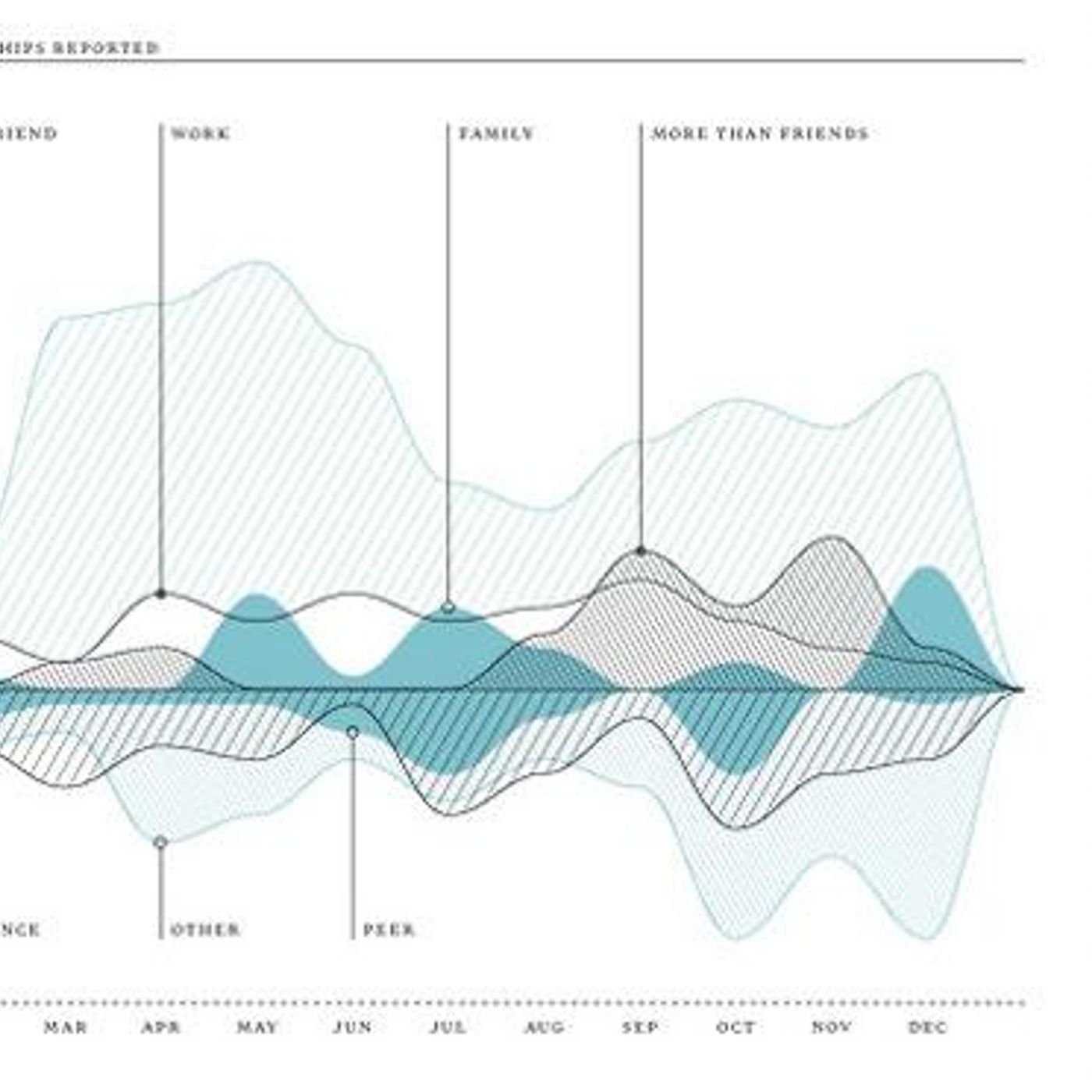
Radiolab
Radiolab Presents: 99% Invisible
00:25:28
Roman Mars loves to spotlight the seams and joints that make up the world around us. He's the host of an irresistible podcast called 99% Invisible--a series of tiny radio stories that provoke enormous questions. Roman joins Jad and Robert to play a few favorites, and to chat about the hidden language of design that shapes our lives--from sound effects to stuff that’s more ... concrete.
Loading summary
Transcript1 lines
- [00:00]
A
Your new home is now ready. Dr. Horton, America's builder has new homes that are ready today with new construction communities in Ellensburg and throughout the Greater Seattle area. Dr. Horton has the right home for you. @ Dr. Horton. We're still building with flexible living spaces, smart home technology and two and three car garages. More communities and more homes available every day. Find your new home in Ellensburg now ready at Dr. Horton.com Dr. Horton America's builder and Equal Housing Opportunity Builder Building a portfolio with Fidelity Basket Portfolios is kind of like making a sandwich. It's as simple as picking your stocks and ETFs, sort of like your meats and other topics and managing it as one big juicy investment. Mmm. Now that's pretty good. Learn more@fidelity.com baskets Investing involves risks, including risk of loss. Fidelity Brokerage Services LLC Member NYSE SIPC Member. One day only Thanksgiving Day deals are coming to Lowes.com/members get early access to online Black Friday doorbuster deals on gifting favorites like the still trending Cobalt mini toolbox for just $14.98. Don't miss up to 50% off for one day only at Lowes.com we help you save Battle 1127 only on Lowe's.com, member only Doorbusters and Midnight Eastern loyalty programs subject to terms and conditions. See lowe's.com terms for details. Subject to change while supplies last. Oh, wait, you're listening. Okay. All right. Okay. All right. You're listening to Radio Lab. Radio Lab shorts from wnyc. Yes, and npr. Hello. Hello, San Francisco. Hey, I'm Jad Abumrad. And I'm Robert Krulwich. This is Radiolab, the podcast. And today on the podcast, you know, we consider it our professional duty to try and bring you things that are interesting that make you see the world in a different way. And sometimes that's an idea or a story. Today, are we gonna listen to these things and comment on them? Are we gonna let them assume we're gonna listen in real time? Today it's a guy. Hey, Jed. Hey, it's Robert here too. Hey, Robert. His name is Roman Mars. He is a radio story making guy and we think what he's doing is inspiring. It has kind of a rhythm and musicality that you don't normally find in radio or podcast story. So we wanted you to know about him if you don't already. He makes a podcast called 99% invisible and we asked him to come into the studio and present some of his work. So what is 99% invisible. It's a tiny radio program about design and architecture and all the thought that goes into the things that people don't think about. You know, it could be just about buildings. But the way that I was interested in it is that if you take a look carefully at the entire built world, you know, and the key word here is built. It's the key. Yeah. I mean, I have. That's my sort of strict. I have one strict line, and that is that it's about, you know, human thought and invention, like, stuff we make. Exactly. And the goal of the show, it's worked on me. I don't know if it's worked on, you know, anybody else, but it's to notice more things. And if you can find stories in every little tiny thing and recognize that every corner, every seam, every curve was a point of decision by a really deliberate and probably very smart person, you can recognize a story in every little thing. Well, let's just. Let's jump in. Let's listen to three of these pieces. Yeah. And then we'll just ask you questions. Yeah, sounds great. So what are we going to start with? This one is called Sounds of the Artificial World, about sound design of gadgets. All right. Without all the beeps, without sonic feedback, all of your modern conveniences would be very hard to use. I mean, try using your telephone without the beeps, and it's really confusing. You're lost immediately. Did I get it? No, I didn't get it. The number's there, but I didn't hear it. You used to get it physically with the rotary. S for sound. This whole world is artificial. When I started, I was working with this guy at the Advanced Product Group at Apple, and he had a case for a Walkman, I think, and he opened it up and he closed it, and you heard it click. And he said, somebody worked really hard to make that click sound that way. That was an acoustical element on a mechanical device. Well, there aren't a lot of moving parts and mechanical bits in today's devices, but Jim McKee still has to make them sound right. My name is Jim McKee, and I have a company called Earwax Productions. We do sound for film, radio, Internet, and product sound design. Quite simply, a product sound designer looks at a product and thinks, what kind of sound should this thing make when it does a particular thing? So typically, what I do is I create a bunch of button sounds. These are. Would be buttons for a Yahoo widget. Say, okay, you guys, tell me which ones are the closest, and then you end up with, what, 38 sounds here. I love that. I could listen to that all day. In fact, let's hear it again. Oh, yeah. The best sounds are not completely synthesized. They come from the everyday world. My top drawer, my dresser drawer at home. Over the years, I've been collecting all these little things. You know, just. I would like, oh, cool, a marble. And I would leave it there. Oh, cool. There's this little tiny Chinese ceramic bowl or, you know, some kind of funky clip. And I realized that all these things are very kind of intimate to me, very close to me, but they make sounds. And the one cool one was dropping a small marble into this china bowl. And it has a dynamic to it, which everybody's familiar with. It bounces, but then it bounce, bounce, bounce, bounce. That's the marble sped up and compressed and EQ'd and who knows what. All sorts of things. Actually, the funniest one, the one that everybody loved and it seems to have stuck more or less across the board, is the sound of a vice grip opening up because it's got the click in the spring. And for some reason, it just. It really works, and people like the way it sounds. I think you can hear almost the same sound when you plug in your iPhone to get powered. You know that? Oh, no. When you turn it on, Hear it, hello? Yeah, I do. If the device and its sounds are designed correctly, it creates a special theater of the mind that you completely buy into. Electronic things feel mechanical. It's the feeling of movement, texture, and articulation where none exists. On Jim McKee's most recent phone project, the sounds that worked best were the ones you felt resonating. Quality of the sound in relationship to the chassis itself is what sold it. It's like, oh, that feels. That really feels like it's part of this thing. And once you find those frequencies that resonate in a device, you keep exploring that space. Almost got to the point where I didn't even have to ask them which one they were going to select, because I would give them. Typically, I would give them half a dozen ones to pick from, varying in volume, varying slightly in pitch. And I go, okay, it's going to be 46B. And they'd come back. I don't know why, but that seems to work a lot better. You take any actor and put them in a room, and they're immediately going to find the size of the room with their voice, Right? It's just human nature. And so why can't we expect the same thing out of our devices? You know, it needs to feel like it's indigenous to this piece of plastic. Oh, see, I can see that's cool. Yes. You know, this is like. I find this very morally ambiguous, by the way. How? Well, here's a set of devices that are soundless. They are naturally soundless. They don't make any sound. Yeah. They're lifeless. So they have to be animated through sound. Lied to through art. No, it's not lied to. It's a series of metaphors. Like vice grip becomes. Click on your iPhone. Less beauty. That's poetry, man. But see, what's happening here is that you are being biologically enslaved to a set of artful decisions that you could, if you are trained to be a surgeon. You're taking this into weirdly moral territory. I just. Dramatic Robert. So the two of you, Roman and Jed, you feel that this is absolutely just about beauty. You're just creating gorgeousness and you think it's about lies, Is that what you're saying? Yes, gorgeous lies. I think it's also about functionality, though. So if you press the buttons on a smartphone and you didn't see the number come up like you do now, you would not know you hit those buttons. Totally. You'll just press buttons all day and not think you're actually doing the job. It works perfectly well silently. It's just that when you add the sound, it works pleasingly well. Have you ever been on hold? Without hold music, you feel lost. Right. You feel like you're stranded. Words ahead, doctor. Exactly. Why are we arguing about this? So do you have other things you want to play for us? Yeah, I think I have a couple others. So what's next? So this is a story by a local journalist named Delphine Vigil. And this one's called Neko Concrete Commando. How to make a concrete stylus. Take a large nail, heat the tip red hot in a blue gas flame. Drop it in ice water. Now it will resist abrasion as it cuts through the sand, cement, and rock particles in concrete not yet hardened from the abstract to the concrete. Signed, a friend. I first found Niko by staring at the sidewalks. Delphine Vigil is a journalist from San Francisco. One of my favorite things was always to kind of get lost in San Francisco and stare at things that I normally might have looked past. And then I saw his name written in the sidewalk. Nico. And I thought it was interesting. And then a block later, I found his name again. Nico turned a corner through Chinatown into North beach, and I found another one. You know, I would find them not Just in North beach, but Chinatown, Russian Hill, Telegraph Hill. They would be references to the street name, like Nico on Filbert, Nico on Knight, or Niko downtown. And then the personality of me was really coy. It was like Niko was here. Niko gets it all. Niko concrete, compulsive. And I remember once I was just saying to myself, damn, Niko is everywhere. And then I looked down and it said, Niko is everywhere. I know I felt like a duty. And I remember thinking that this is my duty to write the story. And then, coincidentally, I'd run across a clue that said Niko on duty. So Delphine decided to track Niko down. You know, I wanted to know this guy alive. Why did he do it? It was the first time I'd ever felt like I was the one paying attention in class. Attack started in 1967. Because I saw the date 1967, I figured, well, he must have been about, I don't know, 12 years old. In some ways, I got to watch him grow up because I felt like his personality kind of got a little more bolder through the years. Earliest stuff made you say Niko. And later on he would call himself Niko, concrete Artist. I figured he went to school in the neighborhood. So I went to the high school, Galileo, and I went to Francisco Middle School. And so I would start photocopying yearbook pictures from the 60s and 70s. And I would base this on guys who looked like they just had that kind of artful Dodger look in their eye. What you staring at? And this investigation went on through years of dead ends, knocking on strangers doors and getting nowhere. And if right now you're thinking, I love this Nico kid, he's my hero, too. Wait for it. Here it comes. It was by the north beach playground. I believe it was rainy day. And rainy days were always the best days to read the concrete because it washed away a lot of the dirt. And you could read things that on other days, you probably couldn't see. And I saw this etching that was the longest that I'd ever seen. It took up an entire sidewalk block. It was like a paragraph. And at first I thought, no, it can't be him. I think it said, america is a great country, built by the white man, owned by the Jews, ruined by the. And then the first word began with an N, but I can't actually say for sure. I mean, I can presume what it said, and you probably can, too, but those letters were actually washed away from foot traffic. And then I'd found quite a few Others. And it was, you know, we're talking 10, 15, 20. Oh, man. As far as I could tell from the handwriting, it was Nico. I didn't want to believe it because it didn't go with what I identified with. I mean, to some extent, I wanted to identify as the kind of loner kid in the city, too. And this happened right before I finally found him. One of the leads finally panned out, and after a long email courtship, Delphine Vigil grabbed his notebook and microcassette recorder and met Nico. How did you never get caught? Pretend like you're tying your shoes. Pretend like you're tying your shoes. See all this tricking the book and pretend like you dropped something. How many do you think you've done? A thousand. A thousand, huh? I'm just picking a thousand out of the air. At least a thousand. At least a thousand, yeah. Niko described all the places he tagged in detail, and Delphine believes that the vast majority of them are from this one guy. My thoughts were that if I do this really deep and do it right, this stuff will last way into the future. And it'll be like the concrete will be all washed away with the pebbles poking up. My name will still be there. It's kind of like any story you get into when you have a hunch about it. A lot of it was very close to what I had imagined, and a lot of it was completely different. He did have a very artful dodger lifestyle. His father was out of the picture, and he had a very bohemian upbringing with kind of like a real carefree parenting style. He was just this kid who was sort of, in some ways, forgotten. And after a few meetings, Delphine finally found the opportunity to ask the hard questions. I would see a ban all non white immigration over by the Stockton Tunnel. And then I'd see it over on Russian Hill. How about white race consciousness? Keep America white. About 12 or 13 of them in the same block of cement. I also saw the name Nico. Let's jump ahead. You probably want to know, did I write that stuff? Well, I'll be straight up honest with you. I think you did. I can pick out about 15 to 20 that seem to me would be the same guy who did Nico, who would be you. But if I'm wrong, here's the deal. Look, when I was a kid growing up in the city. Yeah, I'm talking a little kid. On Sunday, we would go to march in Oakland for civil rights, for peace. March on Monday, I'd go to school and I'd get the Kicked out of me by the very people that we were out beautifully trying to help. And this sounds absurd now, but it was all in my mind. It was all put together. If you get right down to it, how is a boring suburban kid rebel against their parents? They go to the opposite extreme of what the parents believe in. Right. But I repent totally. I understand. I'm a hardcore green activist now, man. Have some more achievement. Thanks. And that explanation would sit better if the past wasn't written in concrete. I've not written my name, but I've written his name in wet concrete. In fact, that was the first line I wrote for the story was in the sidewalk. Walk up Montgomery street toward the Union street steps and make a right at Green Street. And right there, unless someone's double parked on top of it, it should still say, I found Nico. I found Nico. But wait a second. I don't feel like he can just repent. I feel like you let him off the hook there. Yeah. What'd you want him to do? Well, I wanted to hear more of that confrontation. I don't know. I mean, you probably heard the tape. Do you feel like the dude was truly sorry? No, I think he's sorry. And, I mean, I talked to Delphine about this, and Delphine buys it, and he's the person in the room and. And that's the best I can go with. Yeah, I think that where he, you know, he says, I'm a hardcore green activist now. Have some more cheese. That feeling that you have of being unsettled is the feeling that I relish in that moment, actually. It's that he has no explanation. And there's no explanation that would be good. Pass. The cheese is not what you say. When you're not. It is not what you say. I mean, I definitely don't. I don't feel like that the piece exonerates him at all. Does have some more cheese mean let's move on? I don't want to. I think it does mean have. Let's move on. All right, so let's move on. One more. Let's hear one more. What's next? So this is. This guy is Nicholas Felton, who does these really fantastic. They're kind of like corporate quarterly reports, but they're about the little minutiae of his life, and they're beautiful. So this is graphics describing the things he's been up to in the last two months or that sort of thing. Exactly. The whole year. The 2009 Feltron Annual Report. From this moment on, I want you to record every encounter you have with another person. Total encounters, each mode of transportation, methods of transportation. 23. Like if I walk through the door, I'm writing down the name of that store. Total locations reported 258I just want to know every single place that I go. That's Nicholas Felton AKA Beltran. I'm just trying to build a super rich data set. Data sets that he will interrogate at the end of the year. Designing pie charts and bar graphs that are used to create a concise infographic that tells the story of Nicholas Felton's year. Is it going to be through the lens of like my favorite atm, or is it going to be through the person I spend the most time with? Most encounters with one person 226 he calls the beautifully designed result the Feltron Annual Report. Well, the thing that's really relatable about this report that is the voice of freelance journalist Nate Berg. He interviewed Felton in New York for us. Not only is it clear and kind of easy to understand in the sort of graphs and pie charts that we've all gotten used to seeing all over the place, but I mean, it's presenting stuff directly. Kind of out of my own life too. New York restaurants visited 111. How many restaurants did I go to last year? How many beers did I drink? Ice cream flavors consumed? These are all things that I do. And having the data and the ability to present it helps draw that connection between two essentially strangers. All the easy, dismissive criticisms about Foursquare check ins and Twitter should be popping into your mind right now. They all boil down to why do I care about what you had for breakfast this morning? And I get that. But a funny thing happens when you take what you had for breakfast this morning and multiply it by a hundred of its quotidian equivalents and multiply that times 365. He's doing exactly what everyone else is doing, but he's just doing it in a more purposeful way. It's not only that he wants to track what's happening and kind of see how his life changes over time, but present it in a way that's digestible to himself and to other people, even strangers. What Nicholas Felton creates with all that sprawling information superficially resembles a corporate quarterly report, but it's the most beautiful version of that that you could possibly imagine. A true work of art. Most consecutive exclamation marks used 8. 2008 was a pretty boring year. I didn't travel very much, so the highlights were like first Ice cream of the year. But you know, it's this elaborate piece of design work that took weeks to create. Cost thousands of dollars to produce to document this like one tiny memory that would have been totally lost otherwise. It's my favorite way of telling stories now. It's this way of making things that are either invisible or too large to be comprehended, making them visible rather than the abstractions of looking at tables of numbers. These are pretty compelling and memorable ways of revealing invisible stories. It puts more focus on. On the little things that make up most of your time. Your life isn't really that trip that you took last summer. It's, you know, like the countable times that you kind of walk down the same way to get to your office. That one house on the corner with that crazy dog. You know, how many hours of your life have you spent listening to like Hotel California on the radio? I have to break in here to say this is where a normal public radio show would play the song Hotel California. But I am your friend and I would never do that to you. That's the beauty of this kind of representation is you can take something that represents millions or even billions of actions and reduce it to something that's consumable. Average waters per day 0.24. Average beers per day 0.99. Felton has been doing this in depth self reporting since 2005. But at the end of 2010, his father died. And so the 2010 annual report took on a whole new scope. He took kind of that same approach, but applied it, you know, on a much grander scale to someone's entire life, the life of his father. The 2010 feltron annual report. I didn't want my 2010 report to be the story of my father's death. I think his death is the least interesting part of his life story. Items cataloged 4348. So I wanted to make something that talked about his life. Passport stamps 239. It's like writing a biography about someone who's just in a different format, I think, and perhaps a more valid one. One that's more rooted in the facts. Right? It is like a direct translation. There's very little, very little of my opinion that shows up in here. It's further back, it's in the editing, it's in the curation that my opinion shows up. Postcards received 169 photos of Gordon in record 93. Percentage of photos of Gordon wearing a tie 18%. It's his life story, so it's bookended by his birth and sadly by his death. But, you know, that's one of the things I want to remember about him and I think is part of his story, is that's the day he died and that was what the weather was like, is the next statistic. I'm not trying to be shocking about it, but it needs to be in there. And I wanted to have a little repose at the end where you could sort of just absorb the end of his narrative. Last day, September 12, 2010 I didn't want to dwell on sickness or his spirit fading. I think that's in there. If you look at a lot of the graphs, you can see a decline in Meals Out. It's kind of foreshadowed throughout the document that the spring in his step was diminished in his last few years. My challenge was to try and take that idea of a biography and put it in a new form that I hadn't seen before. And, you know, you have to give up on not seeing him smile, like not seeing him in motion, not hearing his voice or listening to one of his jokes. But that's part of the aggregate view. That's the part of. Part of this grander scope that I was going for. Weather on September 12, 2010. 49.8 degrees Fahrenheit and overcast. Wow. Wow. So this raises an interesting question for me, which is when you have somebody who's in flow, who. Who wakes up in the morning, eats, walks, laughs, talks, there's a kind of a. There's a motion there. If you were to divide it into tiny little slivers, how many ice creams, what minute, what was the temperature? Then you're just getting the static version of the flow. And it's exactly the opposite, I think, in the way that I would ever appreciate somebody. But to see someone do it so differently and is so fast, it's so interesting. But there's this moment where you see this little piece of fact that hangs the way that a kind of incomplete narrative sort of tickles your brain. And it is more interesting than a complete one. And I just. My favorite statistic is this, the one where he has all these pictures of his dad and then the percentage of pictures where his dad is wearing a tie. 18%. Yeah. I think that that tells you something about him. I like those things. And he's probably completing a picture for me that isn't his dad. It's, you know, it's something that I'm creating, but for it. But in that story. Right. I mean, because I didn't smell. I didn't smell his dad anywhere at all. I mean, I couldn't. I don't know what he looked like. I don't know what he felt like. I don't know what humors he was in or never in. All I know is these things, but the things have a funny resonance. Yeah, but there's something that you absorb in this aggregate view that tells a different type of story. And as soon as he said the line, this is the way we tell invisible stories, I was like, okay, we got it. That's 99% invisible. You said the magic words. We could probably leave it right there. Thank you. Cool. Well, thank you. This is really fun. I really appreciate it. This is so great. I hope it works out for you. Sounds good. We should also say before we close, thank you to the awesome radio program Snap Judgment. The Nico Story aired there first produced with Roman by Stephanie Fu. And if you want to hear more of Roman's work, go to our website Radiolab.org or his website. 99 P E R C E N T invisible.org. I am Leah Zaroff, a Radiolab listener from San Francisco. Radiolab is supported in part by the Alfred P. Soan foundation foundation, enhancing public understanding of science and technology in the modern world. More information about Sloan@www.sloan.org. end of message. Your new home is now ready. Dr. Horton, America's builder, has new homes that are ready today with new construction communities in Ellensburg and throughout the Greater Seattle area. Dr. Horton has the right home for you. At Dr. Horton, we're still building with flexible living space, smart home technology and two and three car garages. More communities and more homes available every day. Find your new home in Ellensburg now ready@doctor Horton.com Dr. Horton, America's builder and equal housing opportunity builder. When the flu is keeping you up at night, don't try to tough it out. Knock out your flu symptoms with NYQUIL Intense Flu. You got this. It provides powerful relief of your flu symptoms so you can sleep well through the night. NYQUIL Intense Flu the nighttime Sniffling, aching, aching fever. Best sleep with a flu medicine. Use as directed. Keep out of reach of children.