← Radiolab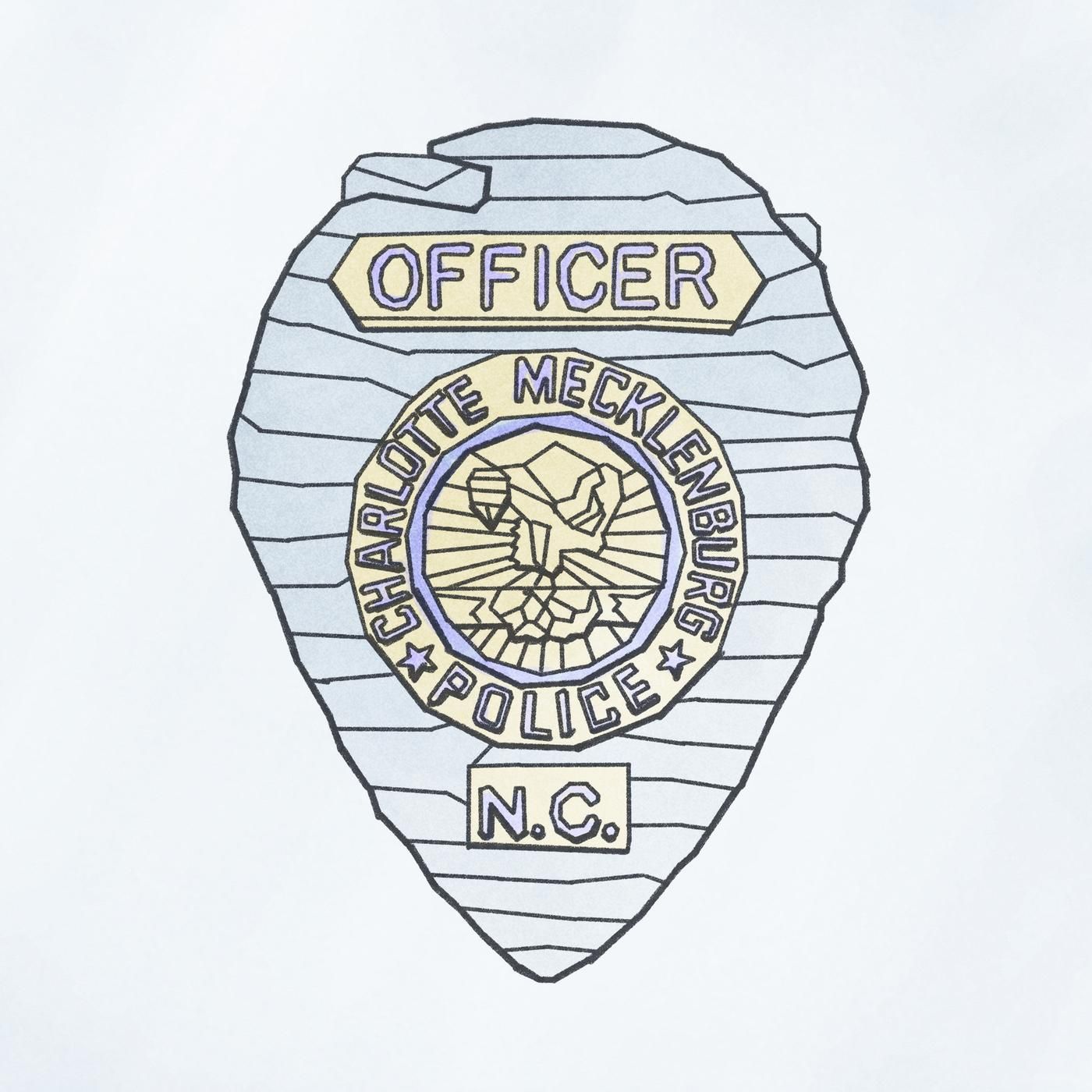
Radiolab
Radiolab Presents: More Perfect - Mr. Graham and the Reasonable Man
01:08:24
This story comes from the second season of Radiolab's spin-off podcast, More Perfect. To hear more, subscribe here. On a fall afternoon in 1984, Dethorne Graham ran into a convenience store for a bottle of orange juice. Minutes later he was unconscious, injured, and in police handcuffs. In this episode, we explore a case that sent two Charlotte lawyers on a quest for true objectivity, and changed the face of policing in the US. The key voices: Dethorne Graham Jr., son of Dethorne Graham, appellant in Graham v. Connor Edward G. (Woody) Connette, lawyer who represented Graham in the lower courts Gerald Beaver, lawyer who represented Graham at the Supreme Court Kelly McEvers, host of Embedded and All Things Considered The key case: 1989: Graham v. Connor Additional production for this episode by Dylan Keefe and Derek John; additional music by Matt Kielty and Nicolas Carter. Special thanks to Cynthia Lee, Frank B. Aycock III, Josh Rosenkrantz, Leonard Feldman, and Ben Mont...
Loading summary
Transcript1 lines
- [00:00]
A
With ThreatLocker Zero Trust Protection, you can stop breaches before they happen. The result? No stress about the latest malware or zero day attacks because with Threat Locker you block them by default. Gain more control over Your environment with ThreatLocker Zero Trust Protection with Mstash A taco in one hand and ordering a ride in the other means you're stacking cash back. Nice. Get up to 5% cash back with Venmo stash on your favorite brands when you pay with your Venmo debit card. From takeout to ride shares, you can entertainment and more. Pick a bundle with your go tos and start earning cash back at those brands. Earn more cash when you do more with Stash. Venmo stash terms and exclusions apply. Max $100 cash back per month. See terms@venmo me stashterms one day only Thanksgiving Day deals are coming to Lowes.com +members get early access to online Black Friday doorbuster deals on gifting favorites like the still trending Cobalt Mini toolbox for just $14.98. Or don't miss up to 50% off for one day only at lowe's.com we help you save bowed 1127 only on lowe's.com member only doorbusters and Midnight Eastern loyalty programs subject to terms and conditions. See lowe's.com terms for details. Subject to change while supplies last before we get going, just a quick warning. This podcast contains some descriptions of graphic violence and also some strong language, so be warned. Oh wait, you're listening. Okay. All right. Okay. All right, you're listening. I'm listening to Radiolab Radio Lab from wnyc. Yep. So nice to see you again, Jed. Why did you say that with some venom? What was that all about? It's just you've been away for a while. The only way I can see you is when I come visit you with your other family. Okay, so this is Radiolab producer Matt Kielty. Yeah, we're talking about. What are we talking about? We're talking about a Supreme court case from 1989, and today Matt has a story that he's been reporting for about two years that we are going to play both here on More Perfect and also here on Radiolab. So buckle up. Where. Where should we start? I think we might as well just start. Should I try to sound Southern with a guy named Woody Knitt? I'm a lawyer with Essex Richards, a law Charlotte, North Carolina. We'll pick it up in 1985. Back in 1985, I was a very young lawyer. I was 32 years old. I just started my own law firm, and I was taken about anything that came through the door. And one day, says Woody, this guy walked in, late 30s, fairly thin, 5 foot 9, 5 foot 10, on crutches. And he's a black man. He is or was. He's passed away. Mr. Graham. The man's name is Dethorne Graham. And what he says, well, you know, like what happened to your leg? What's with the crutches? And Dethorne lays everything out for him. Here we go. So he was pulled over on West Boulevard in Charlotte, which is a four lane road. Dethorne told Woody he worked for the city of Charlotte in the Department of Transportation, owned road crews doing road repairs. It was a Monday afternoon, and on that day, one of Dethorne's friends and co workers stopped by his place. And after talking for a bit, Mr. Graham asked to be taken to a nearby convenience store that was only two or three blocks from his house. He needed some orange juice because he was suffering the onset of a diabetic insulin reaction. So Dethorne hopped in his friend's car. They drove over to this convenience store. Dethorne got out, got a bottle of orange juice, got to the checkout counter, but there's a line there. So he puts the bottle down and hurries out, gets back in his friend's car, they take off. Now this is where the problems started. Turns out at the same time, all that's happening, there's actually an officer who was African American sitting in his squad car. And what that officer observed was a man hurrying out of the store, jumping into a waiting car and quickly driving off. So he starts to tail Dethorne and his friend, and after a couple of blocks, pulled him over just to determine what was going on there. So he goes up to the driver's side, presumably gets Dethorne's buddy's driver's license, goes back to his squad car, starts radioing to get a hold of the convenience store to see if anything had happened. And it's right around that moment that Dethorne, who's in the passenger seat of the car, suddenly opened his door, got out of the car, circled the car once or twice, like sort of stumbled around it. Then he sat down on the curb and he started going into shock, almost like a seizure. He would have. Oh, really? Yeah. And it was terrifying. This is Dethorne Graham Jr. He was a type 1 diabetic. What is type 1 diabetes? Because I know it's 1 and 2, from what I understand, the type 1 diabetes is when your body just doesn't produce enough insulin. And what would that seizure look like? Well, you know, one incident in particular, I can remember us being in church, and he got, like, this blank stare on his face, and you see the beads of sweat come on his forehead. His body would siege up, and he would shake, and he would bite his tongue up. And so I can remember my mother trying to, you know, force a spoon into his mouth to keep him from biting his tongue up. And the main thing was try to get some orange juice in him. That way, it would raise his blood sugar. And once you got the orange juice in him, he'd sleep for a couple hours, and he'd wake up, and he'd be exhausted, but he'd be alive. All right, so Charlotte City Street. At this point, four other officers arrived. Dethorne has actually passed out on the curb. One of the officers rolled Mr. Graham over on the sidewalk and cuffed his hands behind his back. At one point, one of the officers grabs Dethorne by the handcuffs and picks him up off the curb from behind. Oh, wow. Dethorne was sort of in and out at this point. I guess he tries to tell the officers that he was a diabetic, that he had a medical card, and his wife asked the officer to pull the wallet out of his back pocket. And one of the officers said, ain't nothing wrong with the motherfucker, but he's drunk. At some point around here, the details are a little unclear. A pretty nasty scuffle ensued. According to what is known as case syllabus, Dethorne was resisting the officers, and apparently one of the officers slammed Dethorne's head into his friend's car. He suffered head and shoulder injuries. He also ended up with a broken foot, cuts around his wrists, and. And eventually the officers pick him up, one on each arm, one on each leg, and just throw him into the back of a squad car. While this was going on, a few people gathered around. Not long after that, the officers learned that nothing at all had happened at the convenience store. There was no crime, there was no robbery, there was no shoplifting. So they drove him back to his house, still in handcuffs, pulled him out of the car. A friend at Dethorn's house got him some oj, and the officers laid him out in his front yard, took the handcuffs off, and then just drove away. Huh. Was there an apology? Oh, no. Now, what came out of that day in Charlotte would end up becoming one of the most important supreme Court cases in our history when it comes to policing. And what drew me in about this case is how something like he needed some orange juice, that something so seemingly small would eventually become tied to this and all the shootings we've seen in the past years mostly of young black men. Every time we hear one of these shootings, every time there is an outcry, every time the cop gets off. This incident is looming in the shadows, shaping the outcome in many ways. It is quietly defined the era that we're living in. And I wanted to know how, how did that happen? The honorable, the Chief justice and the associate justices of the Supreme Court of the United States. Oyea oh yea o yea. All persons having business before the honorable the Supreme Court of the United States are admonished to be draw near and give their attention for the court is now sitting, God save the United States in this honorable court. All right, to wind back the clock a little bit, I will say this about my dad. Now he wasn't someone that would, would just lay down and roll over Talking to Thorne Jr. I asked him a little bit about his dad and he told me that Thorne Sr. Grew up in the south eastern North Carolina, owned a tobacco farm. He was a hard worker, good student. His sisters told me that he was the first black or African American accepted to Duke University. But my grandmother, she wouldn't let him go because of, you know, during the civil rights era that she didn't want him to have to experience all that, all that mess. This is a CBS news special report just for a little bit of context here. I mean like the civil rights movement was a lot of things but there was this big part of it that was about police brutality. Last night there was open war. In 1965 you had the infamous Watts riots in Los Angeles. Snipers make the streets of battlefield also what was known as the long hot summer of 1967. Are we gonna die for our freedom? Where there were more than 150 race riots across the country. I was getting tired of being pushed around by you white people, that's all. A lot of which were sparked by accusations of police brutality. Stopping us on the street, kicking in the doors, taking down the police station, you're kicking your teeth in. I will not accept charges against policemen. I will not accept charges against policemen. This is a judge, not some wild eyed cracker that made this statement. Although there might not be any difference. There might not be any difference. If you can think on that, you understand that if we cannot bring charges against the policemen who have murdered us and destroyed our homes and businesses. Where will we go? Where will we go? She didn't want him to have to experience all that. All that mess. So he ended up. I think he ended up going to Fayetteville State, a historically black college in North Carolina. And when Dethorne Sr. Graduated, actually one of the first jobs that he had, he worked for an employer called Precision Springs. This was a steel company that specialized in making springs. But at a certain point, he ended up actually suing the company for discrimination based on how they were treating, you know, people of color. So after that day with the officers in Charlotte, the one thing I do remember dad saying was that it wasn't right, that Thorne was gonna fight. Right. And that is how he ends up walking into Woody's office on crutches in 1985, and he tells Woody, I want to sue the Charlotte Police Department. So we went ahead and just filed our lawsuit in federal court. Woody takes it to trial, and basically his argument is that the police, they had used excessive force that was totally unnecessary under the circumstances. Like, they roughed up a diabetic who. Telling them that he was a diabetic. And eventually the judge presiding over the case ruled that these officers did not use excessive force. And if you were gonna claim that they did, we had to show that the police officers had acted maliciously for the purpose of causing harm. Huh. So they had to prove that the officers actually meant to hurt him. Yeah, that Woody and Dethorne had to prove that the officers had it out for Dethorne and we simply couldn't do. Yeah, that seems like a really hard thing to prove. It's an almost impossible standard to meet. And I think it's important to zoom in on this for a second, because this is really kind of like the crux of the story. If the question is, what should the standard be for holding a cop accountable for their use of force? Then, in the mid-80s, malicious intent was sort of the prevailing standard. If you were going to claim that a police officer used excessive force against you, then the standard was that you had to prove that the officer did so with malice in their heart. Why was that the standard? This is kind of hard to explain. I don't have the 14th Amendment in front of me, but it essentially says, all you really need to know is that it was connected to the 14th Amendment, to a particular clause in the 14th Amendment, and this is why Woody and Dethorne lost that case. Okay. All right. So loses at federal court, loses at federal, makes its way up to The Fourth Circuit Court of Appeals. That went nowhere. The Court of Appeals ruled against us. Same thing, same thing. But then not long after that ruling, Woody gets a phone call. Ready to go. Can you hear me from this guy? Yep. Jerry Beaver, a known civil rights lawyer in the area in Fayetteville, North Carolina. Gerald was older and wiser than me. That's your wording, not mine. Jerry had caught wind of the circuit decision and was just like, oh, no, no, no, no, no, no, no. You should not have to require that the police officer had it in for you and just wanted to beat the crap out of you just cause it made him feel better. So I called Woody and said, are you guys planning on taking this case to the Supreme Court? And Woody was like, no, my client can't really afford that. I said, tell him he doesn't have to worry about that. We will be glad to take it on pro bono and see if we can get this ruling overturned. When he heard that, Woody said, sure, let's go. So Jerry and Woody get together, and they start looking around like, what's out there? What cases can we draw on to argue that there should be a different standard? And this just so happened. This is the mid-80s, and there was this swell of police use of force cases kind of bubbling up in the courts, and you had lawyers trying out all these different ideas. Now, most of the courts were using the 14th Amendment malicious intent standard that Jerry and Woody didn't like. But then there was also, in a number of cases, the 8th Amendment. What's the 8th? Cruel and unusual punishment. Hey, Justice Breyer, the 8th is cruel and unusual punishment. Problem there, which doesn't totally explain itself. What is cruel? What is unusual? Like, take the word cruel. Cruel seems to imply bad intent, that you're trying to hurt somebody. Which means if you're gonna prove anything, you still have to crawl inside somebody's head. Right. But there was this other amendment that some of the courts were using that Woody and Jerry look to as their sort of like, redeemer. The Fourth Amendment. The Fourth Amendment. The Fourth Amendment, which is. Well, which is the government cannot subject citizens to unreasonable search and seizure. I have it on my legal pad. The Fourth Amendment is the right of the people to be secure in their persons, houses, papers, and effects against unreasonable searches and seizures shall not be violated. And is seizure just another word for force? Like, I have the right not to be, like, beaten or shot by my government? Yeah, yeah. It's not just that, but yes, it also includes that. And to Jerry and Woody, what they like so much about the Fourth Amendment is that in there is this one important word. Unreasonable. Reasonable. Reasonable. The concept of reasonableness. What is reasonable and what is not reasonable? In law, reasonable is supposed to be objective. You look at the case from the facts of the case. You look at the who, what, where, when, not the why. Correct. And then you ask, was this person's behavior reasonable or not? They have to act with objective reasonableness. Wait a second. I mean, reasonableness is a slippery thing. What you find reasonable, what I find reasonable. Could very well be different. Could be completely different. Yes and no. It can feel slippery. But legally, the whole concept of reasonableness had hundreds of years of precedent. I mean, I. I find this very fascinating. And I don't know if you want me to give you, like, a little bit of a backstory. Well, do you want to give me a little bit. I don't know. I think it's kind of. It's. It's interesting how it came to be and how popular it is. Yeah, take me. Take me on the ride. Okay. All right. So we go back to, like, the 1830s. Is that Andrew Jackson area? No, he's 18. No, no, no. Actually, we're over in Europe. We're in Belgium. This is gonna be, like, a little windy, but I think it kind of makes sense. So in the 1830s, there's this guy, Adolph Quetelet. Adolf Quetelet is a mathematician. He's an astronomer. If you want to picture something. He had hollow cheeks, these big sideburns, looked a little bit like David Strathearn, the guy from the Edward Murrow movie, the Jason Bourne movies, if that helps you at all. Yeah, yeah, totally. He's great. Anyhow, he was a super smart guy. And in the 1830s, the Belgian government wanted to set up an observatory, but astronomers had this issue that they had trouble pinpointing the location of stars because their telescopes were just so bad. But Ketterly was one of these astronomers who knew you could use statistics to figure these things out. You could take an average of all the different measurements, an average of the meteorological data, and that could help you pinpoint where stars were actually going to be in the sky so that they could make predictions. That's interesting to know that. Yeah. The statistical average thing was, like, revolutionizing astronomy. And so what happened is Quetelet became fascinated by this idea of averages. And what he did is he kind of took that idea, like, took it down from the heavens, from the sky, and started applying it to humans. So he began combing through data in medical journals Trying to determine the average height of a person, the average weight, the circumference of somebody's chest. Was he trying to, like, come up with these sort of proto man kind of thing? Yeah, totally. And it would have a huge impact on public health. But he ends up actually going beyond this and it's beyond just like physical traits. And he starts to, like, push into man's morality. And he's looking, looking at crime rates, suicide rates, marriage rates. And in the 1830s he starts laying out this concept, what is in French? L' homme moyen, which translates into the average man. The average man. So this is like big data, 1830 style. Yeah. And this idea, lom moyen the average man. It became very useful in law, English law. Really? How exactly? Let me explain. In Victorian England, there was much ado about people who wanted to sue for damages or left in bandages. There was a need for constant averages, a way to take measure in stock to see if a person had strayed from the flock. This surely seemed like the best way to determine if the accused had to pay. What are you doing? Oh, that's stanza one. All right, on to two English judges. They decreed, here's how he will fill this. Put a man on the stand, have him raise his right hand. Let's say he stacks some hay in a terribly negligent way. Much more like a funeral pyre. Caught his neighbor's home totally on fire. But he says the days are hot and long, that he did nothing wrong. So, jury, I ask of you, what is it that we shall do? How about think of ordinary folk, your average, typical, reasonable bloke. And then, juror, take a look at the accused at hand and ask yourself this one question. Did he behave like your ordinary, average, reasonable man? Wow. What? I didn't even know you had that in you, Kilty. Okay, so you're saying that judges and juries begin to use these averages as a way to sort of like figure out, like, if you're suing somebody else, that the somebody else. Did they act out of the ordinary? Were they unreasonable? Yeah. And it was just a few years after Quetelet and this whole average man thing that English law started developing this idea. This standard, known initially as the reasonable man standard, eventually switches to person to be a little bit more gender inclusive. But this reasonable person, it's one of the longest established fictional characters that exists in what is known as the legal village, where you have these other little characters. It starts with the reasonable person and then you get a slew of these other. These other characters. That come out of that, which is. I have a little list. There's the ordinary, prudent man of business, the officious bystander. There is the fair minded and informed observer. There's the reasonable juror. There's the reasonable parent. There's the reasonable landlord. There's a reasonable neurosurgeon, a reasonable civil engineer. There's also a reasonable hairdresser. Really, it's sort of like. It's like in any sort of trade or craft where there's business being done or you have the ability within your craft to harm somebody legally, it became very useful to have an average archetypal person doing that craft so that the jury or the judge would have something to use as a measurement when rendering judgment. That's interesting. So, like in the hairdresser example, whatever it was that led to that phrase probably was a Ketillian survey, at least an imagined one, of hairdresser behavior. Yeah. Like maybe you went in to get a haircut and you walked out and half your ear's gone. Right. And you're just like, where'd half my year go? And then it's just. You go to court and you're like, any reasonable hairdresser would not have made that cut. Right. It's so interesting. So it starts with this astronomer and ends up with this village of reasonableness. Can I chime in with a funny thing about the village thing, please? This is producer Kelly Prime. So, like, in English law, like Matt said, there's like this village of people, but in England at the time, they had this idea that it wasn't like a village, it was people on a bus. It was called the man on the Clapham Omnibus, which is roughly. I looked up London bus route 88. Wait, so this is like a bus full of regional people. All those people, where are they going? I don't know. They just ride all day. All those people just waiting for a case to come up and be like, oh, that's you, hairdresser. And then like, that concept moved and like, Australia was like, okay, we should use that. And so one part called it the man on the Bondi Tram. And another park called it the man on the Bourke Street Tram. And then Hong Kong got it and they said, it's the man on the Shankiwan Tram. So the bus is just a convenient vessel to hold all these reasonable people. Yeah, yeah. So England said, all these people are on a bus because you didn't want someone who's like, so lowly that they are like, they're not riding the bus. They're, like holed up in a cave somewhere or someone that is, like, high up on their castle. It's like the common man. Yeah, exactly. So it said. It was described as reasonably educated, intelligent, but nondescript. And I think, like, what Woody and Jerry, to bring it all the way back, were essentially trying to do is to say we need to use the fourth amendment and this idea of unreasonable search and seizure to create a reasonable officer. Oh, so we need to add a reasonable officer to the village, right. Or the bus. So, Riley, the case is submitted in 1989, almost five years after everything happened to Dethorne Graham that one day in Charlotte. We'll hear argument next to number 87 65, 71. His case went before the supreme court. D. Thorne Graham vs. Ms. Connor. Now, Thorne wasn't there for the arguments. What? He was there as a spectator to watch. Jerry was actually arguing the case. Did you have butterflies? Of course. You may proceed whenever you're ready, Mr. Chief Justice. May it please the court. And pretty quickly, these arguments, you don't know, it's beginning of the unreasonable. What the subjective intent of the officers are turn into like this word soup. Some objective standard where you got Jerry, objective. The lawyer for the officers, subjective. The justices the objective subject dichotomy, but all getting super meta about what constitutes objectivity. Objectively unreasonable subjectivity, subjective factor has analysis tests and standards. Severe objective tests. The objective analysis, bad intent, no intent, subjective intent. I think we're playing with words there. Until, well, one justice Thurgood Marshall, the lone African American on the court, comes in and just asks what reason was there for handcuffing a diabetic in a coma? At the time, the officers didn't know that he was a diabetic in a coma. What was he doing that was so violent that he had to be handcuffed? He had to go back one step. Even before that, officer Connor saw a petitioner act in a very suspicious and unusual manner. Hurry. Well, it wasn't clear. He saw him hurry into a convenience store. What did he do that was violent? Excuse me. What did he do that was violent? Mr. Barry's testimony, his petitioner's own witness said that petitioner was throwing his hands around that Barry had asked for officer Connor. What was he doing? I'm talking about before they put the handcuffs on him. What was he doing before they tried to put the handcuffs on? He was acting in a very bizarre manner. He ran out of the car, circled around it twice, and then sat down. The district court Was that threatening anybody? Did he strike anybody? Well, the officers didn't have to wait until he was. Did he strike anybody? I don't believe the record indicates that he struck. Did he threaten to strike anybody? He was acting in an unpredictable and potentially dangerous manner. Can you answer? Did he threaten to strike anybody? He did not overtly threaten to strike anyone. Did he have a weapon of any kind? The record doesn't indicate. I don't believe the record didn't show he had a weapon of any kind. That's correct, but the record. Why was he handcuffed? The record shows that he was properly stopped as a suspect for a criminal investigation, that he was acting suspiciously, that he was acting in a bizarre manner. Indeed, even after he was handcuffed and the officers wanted to put him in the car, the undisputed record shows that he was vigorously fighting and kicking. Or shouldn't a diabetic object to being arrested rather than given treatment? He wasn't arrested. He was never arrested. Why was he handcuffed? He was handcuffed because the officers were concerned that he was a criminal suspect. He was acting in a very unusual and erratic way. He was throwing his hands around. Indeed. The district court stated from the record that he was handcuffed in part to protect himself as well as the officers. And to protect him, sir. That's. The district court summarized the record as indicating that that's correct. Now, may I differ? When Justice Marshall said that, suddenly I heard a judge who understood our point of view. Somebody gets it. And all of a sudden I felt like I was not an idiot after all. The court eventually puts out their opinion. It's written by the Chief Justice, William Rehnquist. And in that opinion, Rehnquist says, skipping down here a little bit, claims that law enforcement officials have used excessive force in the course of an arrest, investigatory stop or other, quote, unquote, seizure of a free citizen are most properly characterized as. As invoking the protections of the Fourth Amendment, which guarantees citizens the right to be secure in their persons against unreasonable seizures and must be judged by reference to the Fourth Amendment's reasonableness standard. So they get their reasonable officer standard. They get it, and they get it unanimously. The nine nothing opinion. Whoa. It was a breakthrough. I don't think it'd be a stretch to say that at the time, to a lot of people who were concerned about police brutality, police use of force, it felt like this was the beginning of a new era that favored plaintiffs and claimants. Because now if you were a victim of police violence and you wanted Some justice. You had this new universal standard, an objective standard. We no longer had to show that the officers acted maliciously or sadistically. You don't have to get inside the officer's head. You don't have to prove that they had bad intent. You just look at the case from the facts of the case, and you say, would a reasonable officer do the same thing or not? And you could establish, like, what a reasonable officer is, what they would do by calling experts, looking at data about age and rank and experience, all sorts of things. But the thought was that this would be objective. For the first time in hundreds of years, maybe they would have an objective standard. That was a breakthrough. So after winning, did the case get kicked back down to the circuit? Like, what happens to Dethorne? After we won in the Supreme Court, the case went back to the trial court level for another trial. That was the effect of it. And so Mr. Graham had another day in court, another trial. We picked another jury. The facts were presented. Diabetic, insulin reaction, bottle of orange juice, pulled him over. Unconscious, handcuffed, physical altercation, broken foot, lacerations, wrists, bruised forehead. Squad, essentially, here was a guy who did nothing wrong and was beaten up. The case was given to the jury, and the jury was told, okay, knowing what you now know, take this standard, this reasonableness standard, and ask yourself, is what happened to Dethorne Graham reasonable? The jury deliberated, came back out, and they decided in favor of the police officers. Mr. Graham lost. Now, whether you think this is reasonable or not, the jury really focused in on the police officer's perspective. And from the officer's perspective, all they saw was a black man running in and out of convenience store. They thought he might be stealing something. They had no idea he was a diabetic. And when the police picked him up, he was a little bit out of control. He's acting weird. He's running around the car, creating trouble. Not because he's a diabetic, but he's a drunk, might be dangerous. A reasonable officer would subdue that person. Excuse me. I'm so sorry. Oh, is that a doorbell again? There goes the dogs again. Oh, the dogs. So when I talked to Thorne Graham Jr. He was actually moving from his home in St. Louis. Ryan, I'm just gonna open the garage up for this guy back to where he still had a lot of family in Charlotte. Okay, I'm back, hopefully. All right, cool. We're okay now. I was just wondering, did your dad talk about the. About what happened that day, or did he talk about the court case? At all. No, he didn't. It wasn't something that he talked about. Dethorne Jr. Says that his dad was just kind of trying to get on with his life. He started making furniture in his spare time, going to church a lot. But he had his, he had his troubles. He had, he ended up having substance abuse issues, so. And which fortunately he was able to overcome that. And that was after the Supreme Court case. After the. That's correct. That's correct. And so, I mean, I don't know if his, his way of trying to deal with that was through substance abuse. I don't know. You know, you know, when you are dehumanized like that, when, when another individual, whether they, it's, you know, it's, it's kind of hard to explain, Matt, but when, when someone who has authority just, it's, it's, it's like, it's, they, it's like they take something away from you. When someone does something like that to you, it strikes at your core, it strikes at your very being. And I think you lose a part of yourself that you can't get back. Dethrone Graham Sr. Died in the year 2000. He was 54 years old. But after his death, his name lived on in this case in this very weird way. So 2014. There is growing outrage tonight after an unarmed African American teenager was shot, shot and killed by Police in the St. Louis suburb of Ferguson, Missouri, not far from where Dethorne Jr. Lives. A white officer, Darren Wilson, shot and killed a black teenager. Michael Brown. A reporter from CNN contacted me and he talked about how they were going to use my dad's case during that trial as a defense for the officer. The CNN reporter informed me, do you know about this? No, I had no idea. The grand jury deliberated over two days making their final decision. One of the questions posed to the jury was did Officer Darren Wilson act reasonably when he shot Michael Brown? They determined that no probable cause exists to file any charge against Officer Wilson and returned a no true bill on each of the five indictments. And the jury was basically like, yeah, that was reasonable. They killed her baby man. Later that same year, the 12 year old boy shot and killed by two officers while holding a pellet gun to me. Rice. We are instructed to ask what a reasonable police officer would do in this particular situation. The jury found that the officer who shot and killed the 12 year old boy, Tamir Rice, acted reasonably. And then Eric Garner. A grand jury in New York City has refused to indict yet another white police officer said to have killed an unarmed black man. His death was reasonable. John Crawford, 22 year old black man killed last month, Reasonable. Carrying around a BB gun. Judge declared a mistrial today. Samuel DeBose in the case of a white police officer who killed an unarmed black man. Reasonable. With Sterling on his back. Alton Sterling One officer pulls his gun. Reasonable. Sterling lay dying on the street. Terence Crutcher an unarmed black man. Reasonable. Shot and killed by police in Oklahoma. Charlotte police Keith Lamont Scott Jamar Clark this city kill my son. Philander Castile Reasonable. Are you kidding me right now? We're not evolving as a civilization. We're devolving. We're going back down to 1969. Damn. And in almost every one of Those cases, Graham vs. Connor, the Supreme Court decision that many people felt was supposed to establish a new universal standard that would deliver justice for victims of police violence. In almost every one of those cases, it ended up doing the exact opposite. It prevented the victims from getting relief and instead protected the cops. One person, my colleague who covers cops, describes it as like cops see it as like their First Amendment. After the break, we'll ask how did that happen? And we'll watch it happen. More. Perfect. Will continue in a moment. Radiolab will continue in a moment. This is Christopher calling from South Florida. Radiolab is supported in part by the Alfred P. Sloan foundation, enhancing public understanding of science and technology in the modern world. More information about Sloan@www.sloan.org. radiolab is supported by Bilt. Nobody wants to pay rent, but if you have to, Bilt works to make it more worthwhile. By paying rent. Through Bilt, you can earn flexible points that can be redeemed toward hundreds of hotels and airlines, a future rent payment, your next Lyft ride, and more. But it doesn't stop there. You can dine out at your favorite local restaurants and earn additional points, get VIP treatment at certain fitness studios and enjoy exclusive experiences just for Bilt members. Every month, earn points on rent and around your neighborhood, wherever you call home, by going to joinbuilt.com Radiolab that's J-O-I-N-B-I-L-T.com Radiolab Radiolab is supported by Planet Visionaries, the podcast created in partnership with the Rolex Perpetual Planet Initiative. Stay tuned for a trailer and subscribe wherever you get your podcasts. I'm Alex Honl, professional rock climber and founder of the Honl Foundation. I wanted to let you know about a brand new season of the Planet Visionaries podcast in partnership with the Rolex Perpetual Planet Initiative. This is the podcast exploring bold ideas and big solutions from the people leading the way in conservation. Join me in conversation with the likes of climate champion Mark Ruffalo, biologist and photographer Christina Mittermeier, and one of the most successful conservationists of our time, Chris Tompkins. Join us on Planet Visionaries wherever you get your podcasts. The holidays mean more travel, more shopping, more time online and more personal info in more places that could expose you more to identity theft. But LifeLock monitors millions of data points per second. If your identity is stolen, our US based restoration specialists will fix it, guaranteed your money back. Don't face drained accounts, fraudulent loans or financial losses alone. Get more holiday fun and less Holiday worry with LifeLock. Save up to 40% your first year. Visit LifeLock.com SpecialOffer terms apply. This is Tonya Moseley, co host of Fresh Air. You'll see your favorite actors, directors and comedians on late night TV shows or YouTube, but what you get with Fresh Air is a deep dive. Spend some quality time with people like Billie Eilish, Questlove, Ariana Grande, Stephen Colbert, and so many more. We ask questions you won't hear asked anywhere else. Listen to the Fresh Air podcast from NPR and whyy. This is More Perfect. I'm Jad Abumrad. We're featuring More Perfect on Radiolab today. And let me just say a few words for context. Police officers have dangerous jobs, I think we can all agree, and on occasion they do have to use force. And we should say that the majority of the people who are killed by police every year are white. But if you look at the number of black people who are killed and you balance that against the fact that black people only make up about 12% of the overall population, what you end up with is that an unarmed black man is roughly about seven times more likely to be killed by police than an unarmed white man. That's according to one study. Now, these numbers are very disputed and argued about, but what is clear is most police officers who use deadly force are never charged and the even smaller percentage serve jail time. So, Matt, Matt Kielty, let me just ask you, like all the cases we heard about before the break, that litany of cases from the past few years, in every single one of those, the jury was asked, did this officer behave like a reasonable officer should? And in every single one, the jury said yes. Yeah. Yeah. Why? Well, that's, it's because the reasonable officer standard, like from the moment that it was created, it was actually kind of, it was constrained in a few very Important ways. Yeah. And actually, like I have here, the jury instructions from the Ninth Circuit. And this is what jury members are told to think about when they have to assess this kind of use of force. Oh, sweet. You just want to read those. Yeah, yeah. And so this is what the jurors are actually told. This is your job. Yeah, exactly. Just a bag id. Primetime Kelly Prime. Yeah. So it says, under the Fourth Amendment, a police officer may use only such force as is objectively reasonable. You must judge the reasonableness of a particular use of force from the perspective of a reasonable officer on the scene and not with 2020 vision of hindsight. Those. Those are a couple really crucial phrases, which is perspective of an officer on the scene. So you have to look at it through the eyes of the officer on the scene, and then you can't look at it through the 2020 vision of hindsight. So you have to put yourself in the shoes of an officer in the moment and look at the world through their eyes. And that's how you have to understand these things. Right. And where did that idea come from? So that comes from Graham. Like, that comes from the Chief Justice William Rehnquist's opinion, which I have right here. The reasonableness of a particular use of force must be judged from the perspective of a reasonable officer on the scene rather than with the 2020 vision of hindsight. And its calculus must embody an allowance for the fact, and this is extremely important, that police officers are often forced to make split second decisions about the amount of force necessary in a particular situation. And so, as you can see, this. This idea of reasonableness is circumscribed very tightly by time. It's not asking, like, what a reasonable officer would do here in general during a moment where they have to use force. Instead, what it's asking is, what would a reasonable officer do in this split second, in this little tiniest sliver of time where the force actually occurred? And in fact, that moment legally has come to be known as a superseding event. Meaning what? What does that mean? Meaning, this is. I find this kind of crazy. Meaning that that moment, that superseding event, essentially, it breaks the chain of causation. So if you think of time as just this, like, continuous flow, this is like. No, you break that, you stop that, and you take this one little moment and you pluck it out and you're like, this moment, this is the one moment that you look at. That's all they can think about, the jurors. Right. And it turns out if you ask a Jury, the question about use of force that way, about this one little moment. The Graham standard that many people thought and hoped would help victims of police violence does the exact opposite. One person, my colleague who covers cops, describes it as like. Cops see it as like their First Amendment. They just think of it like as a shield. Yeah. Okay, so this is NPR reporter Kelly McEvers, host of Embedded Podcast and All Things Considered. So Kelly's actually, she's covered police shootings for the past year for npr and we've sort of been comparing notes with her as we've been producing our story. And a little while back she sent us an email basically saying that she had this opportunity to go and see something that most people don't get to see, to sort of see how cops are actually trained to understand Graham. And so she asked us, do you want in? And we were like, yeah, let's go. Okay, so I went to Cleveland. All right, all you hungover cops, let's get this shit started. For this two day training course called Street Survival. It was in a hotel ballroom, one of those hotel ballrooms where you have like a big conference. And how many people do you remember? There's somewhere just under 200 cops. Lots of really jacked dudes with tats, mostly white. There were some serges, some lieutenants, rookies right out of the academy, some mid career guys from all over Ohio, Pennsylvania, and they were not super happy about me being there. Did you get like angry stares? I mean, in the beginning there's just like a lot of side eye. Nice. Good morning, Cleveland. How's everybody doing? How many of you have been to a Caliber Press seminar before? Please show hands. Let's do it this way. Who's never been here before? Never been to a Caliber Press class. Oh, wow. Good, good deal. Kelly said the whole thing is put on by this company called Caliber Press. It's a company that's actually been around for a really long time. And they teach classes, classes that are aimed at police departments. They offer them all across the country. In this particular one, we're going to talk a lot about stress, survival instincts. The general idea is how to survive and like make it to retirement. I mentioned heart attacks, emotional health, suicide, you know, how to basically do this job. And it's really about 24, 7 survival and live, living and lasting a 25, 30 year career. They talk a lot about self care. What do you eat about sleep and exercise. My wife and I talk about this. If I start getting crabby or there's something else there. Making sure that Your spouse and your family like understand the stresses of your job. And they talk about going to therapy. I mean it's like there's times when it's this really touchy feely kind of thing. I started getting overwhelmed. I didn't know what was happening with me. There was even a moment, she says, when an officer got up, talked about contemplating suicide. My wife kept on telling me I needed to get home. I started secluding myself, I started alienating myself, was fucking hating everybody. Everyone was like crying. So I mean it's a really intense couple of days. But for our purposes, the reason we were there or the reason we were excited for Kelly to be there, is that a big chunk of the class. So. All right, let's talk about the is devoted to Graham, about Graham versus Connor and us actually use his force about teaching these cops how to understand Graham and, and how it impacts their lives. By the way, this is the instructor, the like Graham instructor, his name is Jim Glennon. He himself was a cop for years and years and years. I was in charge of use of Force for 18 years, was a lieutenant outside of Chicago. And I tell you, we talked about Graham versus Connor and our use of force policies on a regular basis. I don't mean I got up four times a year and just read what I would do is show a video and then let's talk about Gramber's Connor based on this video. So fired at the projector. Come on. It is really interesting to see these videos from their perspective. Like this one video of a pressed on police. September 2015. A guy named Freddie Centeno. 40 year old Freddie Centeno, he's gone to a woman's house, like to a woman's front door and threatened her and says he has a gun. And the cops pull up, get out of their car. They're just like 20ft away from Centeno who's walking to on the sidewalk. Hey Fre. Get on the ground. Get on the ground. Ten shots, seven of them hit. The sequence was 47 frames long. That translated about 1.566 seconds. Jim's claims it happens in 1.566 seconds. Four year old mentally disabled man is hit seven times and dies in the hospital 23 days later. And in one of these news clips that Jim shows the lawyer for Freddy Centeno's family is basically just like, this is a bad shooting. It's an atrocity. Like this was an atrocity. Nothing about this use of force should be considered reasonable because the cops in this situation, they rolled right up on Freddie Centeno. They didn't create any space. They didn't give Freddie Centeno any time. Hey, Jonathan, get on the ground. He didn't have a chance to get on the ground one second before he began to fire. In Gizar's view, the video shows the officers did not give Centeno a chance to respond, respond to their commands. So Jim plays all these reaction clips, and then here's what happens. It's real quick. He plays the original body cam video again. You see Freddy Centeno, they tell him to get on the ground. He doesn't. And then Jim slows the video down. And when he does, you can see Centeno's right hand reaches into his pocket. Jim pauses and he's like, take a look at this right here. This. And up on the screen, Jim has this frozen moment where you can see that Freddy Centeno's hand has started to move. The movement of a hand a couple of inches, just starting to come up out of his pocket. This moment from the pocket to the. Out of the pocket, this, to Jim, was the moment. The moment. Remember that word, Jim's like, this is the only moment that matters. Like, forget what happened before. Forget that the officers rolled right up on Centeno. Forget that they weren't giving him much time or space. It's this moment right here when Centeno starts pulling his hand out of his pocket. This is the moment where you ask the question, what would a reasonable officer do? Right now, this man appears to be pulling out an object from his pocket. I can't tell what it is, and you probably can't either without outside information. Turns out he had a nozzle from a garden hose. What was the call? Man with a gunshot. However, you see this. Whether he's starting to move it up or down, he doesn't go to the ground. He goes into his pocket and pulls something out. They think it's a gun. Any reasonable person would think it's a gun. And so does this work under Grant? Yeah, it's sad. Yeah. But yes, yes, under Grant, it's fine. I believe for him, he's just like over and over and over, stresses. What would a reasonable police officer do? The moment you use force in that moment, what did you know? Not what you could have known. Not when you should have known. What did you know? What was going on? Look what it says up there. He talks about Rehnquist and the decision. He's like, what Rehnquist said is, allowance must be made for the fact. Police officers are often forced to make split second judgments in circumstances that are Tense, uncertain, rapidly evolving about the amount of force that is necessary in a particular situation. This is fast, it's dynamic. It's nothing like television. There's no five cameras on it. There's no change in the music. There's no upswell in the music. It's fast. And the court recognizes that. This is an Albuquerque case. Jim plays another example, this one of a guy drop the gun. A white guy who police officers shot because they thought he had a gun. Guy did not have a gun. Guy had a knife, but the cops had gotten a call that he had a gun. And in this split second, he raised his arm like he was raising a gun up, and so the cops shot him. Does this work underground? Yeah. Another one, I talked to this officer. He gets a call to a domestic, showed another video of a police officer shooting an unarmed white man in the head. And again, he walked through it beat by beat. With Grant, you gotta put yourself in that officer's position. Right. Said, you gotta look at just the superseding moment. Forget everything else. And what you realize if you do that, if you force someone, say a jury to look at just that one moment, forgetting everything else. Just look at this one sliced through the eyes of an officer, Then the whole concept of what is reasonable shifts. And the only real question you can ask when the moment is so confined is did the officer feel threatened? Like, was the fear that that officer had a reasonable fear in that moment? And that is a very different standard than what Woody and Jerry into Thorn Graham had intended. Yeah. So Kelly actually told us a story that she reported for her podcast Embedded, that actually gets at some of this stuff. In this particular case, who was Jonathan Ferrell and what happened? Jonathan Ferrell was a football player. He's from Florida. Is he a big dude? Yes. Okay. He looks like a football player. So this was September of 2013. Jonathan Ferrell is living in Charlotte, North Carolina. He's a black man, 24 years old. And one night, it was a Friday night, he goes out with some friends, goes out to a bar. He has a couple drinks, makes his way home. You know, we don't exactly know what happened, but while Jonathan Ferrell was making his way back home, at some point, his car was. He lost control of his car, crashed in the woods off this road in suburban Charlotte. He didn't have his phone, but he's in, like, this little suburban neighborhood. So he gets out of his car, goes up to the house of this woman, is knocking on her door. The woman inside, she's a white woman, new mom, she comes to the door thinking it's her husband who works nights. So she just comes to the door, and she's, like, about to let him in, and then she's like, whoa, wait a second. Who's this person? Apparently, she opens the door, sees Jonathan Ferrell, and quickly closes it. 911. Hello? So she calls, 9, 1, 1, I need help. What's going on there? There's a guy breaking in my front door. There's a guy breaking in your front door? Yeah, he's trying to take it down. The woman tells the dispatcher that she doesn't know who the guy is. You show you the blackmail? Yes. Okay. Oh, my God. Okay. Her alarm system's going off. All right, good day. I'm right here. And you can hear Jonathan Ferrell screaming, turn off the alarm. Turn off the alarm. In the background. And you can hear him in the 911 tape. You can, like, hear him banging on the door. Where's he? At my house. He's still there yelling, oh, my God. Do you have your baby with you? No, he's in his bed. I don't know what to do. Okay. I'm right here. Police are on their way. Okay. Now, we don't know why Jonathan Ferrell was banging on the door, but very possible, very likely it was just because he wrecked his car and needed some help. So three officers get called to the scene thinking that they are going to the scene of a breaking and entering. There's a dash cam video from the squad car of one of the officers. They've gotten a description. It's an African American man with a green shirt and light pants. So this officer is driving down this road, driving, driving, driving, until finally you see an African American man with a green shirt and light pants walking on the side of the road. He's walking towards the squad cars. You see the red light of a taser on his. His chest. And then frell. Just, like, takes off. One of the officers is yelling at him to get on the ground, but Farell keeps running, runs off camera, can't see what happens next. But then. One of the officers fires. 12 shots, 10 of them strike John Farrell. He falls to the ground, fired. Don't move. Don't move. And he dies. The facts of this case are that here's a guy who was unarmed, who did nothing wrong, and then he was killed. Like, plain and simple. If you. If you ask, was that reasonable? Well, on some basic level, no, it was not reasonable. This man should not have died. But in the trial, this case did go To a trial, a jury trial. The jury was instructed, forget everything but that moment of force, like no 2020 hindsight. Look at just the superseding moment. And then ask the question again. Was it reasonable for the officer to pull the trigger? That is, was it reasonable for that officer to be afraid? And the officer who shot and killed Jonathan Ferrell, who was facing charges, his name was Randall Carrick. He was being tried for voluntary manslaughter. The suspect began aggressively coming towards me. And during the course of this trial, Officer Kerrick took the stand. And could you tell the jury about what pace he was coming at you? At first? It was a pretty rapid pace, more of a fast walk. I gave loud verbal commands for him to stop and get on the ground. How loud were your verbal commands? Very loud. Show the jury how loud you were yelling to the suspect and what you were yelling to the suspect. Get on the ground. Get on the ground. Get on the ground. So he says he was running at him. And this is a huge question. Was he running at him or was he running away from him? Like, trying to run past him, by him? Yeah. Like, if you sort of diagram the whole thing out, the way the cop cars were parked, the way Kerrick was standing, it is possible that Jonathan Ferrell was trying to sort of run between them all. That's what the prosecution was saying. The defense was like, no, no, no, no. He was running at the cops. Did the suspect say anything to you? No, sir. What did you interpret his body language to mean? He was going to attack me. He was going to assault me. He was going to take my gun from me. Did you have time to holster your weapon? No, sir. And here I was. Suspect matched the description, and he just ran through a Taser, which at the time I thought was. Had. Had worked. I thought the Taser had struck and made contact, and I had absolutely no idea if he had a weapon on him or not. And was he ever. Was the suspect ever. Still. No, sir. Did he continue to advance on you? Yes, sir. No matter what I did, he wouldn't stop. I wasn't sure how many rounds I had fired. None of them affected him in any way. I didn't think my gun was working. I thought I was gonna die because nothing I would do would stop him. What was the reason that you continued to fire your weapon? Because he wouldn't stop. He kept trying to get to my gun. To boil it down, the question was, was it reasonable for Officer Kerrick to feel afraid? And after 11 days of testimony, the question was put to the Jury. There were six opinions one way. There were six another. When they first go into the jury room, it was six to six. On one side, a white guy named Bruce Raffi. We were sitting in that courtroom, and we were sitting in that. That jury deliberation room was no bigger than this living room, okay? And it's hot. We're arguing. It's going nowhere. And so the more it went on, this went on for days. And he's sort of the leading the charge on the we have to acquit Kerik side. He felt that Officer Kerik had every right to be afraid. And he told Kelly that Jonathan Ferrell, the guy who Carrick shot. So what Bruce Raffi's saying to me, like, you know, he was a young man, distraught, disheveled, confused, angry, if you will. He made a very aggressive move towards these police officers after disobeying commands. You had many choices in this video. And it was clear from the very first time I viewed it. Stop, sit down, put your hands up. Do any of those things other than what you chose to do, which was to charge Officer Kerrick. And so there's no other way around what I saw. And I kept coming back to that. And this is exactly how the defense painted it, right? This case is not about race. This case is about choices. And that stuck in Bruce Raffrey's mind. So that when he was asked, was it reasonable for a Kerrick to shoot him, it's like, well, yeah, because Jonathan Ferrell made all these bad choices. This is an old trick from defense attorneys. This is another one of the jurors that Kelly spoke to named Moses Wilson, an African American man. He wasn't supposed to be here. He might have had a few drinks where he was. The police responded to what he caused. This was early in the morning. This was far from where he lived. This was this. This was that which caused me at the end to write on the board, just what did he do to deserve to be shot so many times? In the jury room? In the jury room, I wrote this on the board. What did he. Well, so what happens with the jury? It splits. Bunch of. The tally is eight to acquit, four to convict. Eight jurors, most of them white, side with acquitting Kerrick, and four jurors, most of them people of color, side with convicting Kerrick. Breaking news in the trial of officer Randall Kerrick. The judge has just declared a mistrial. In 2015, the City of Charlotte settled a lawsuit with John Farrell's family for $2.25 million later that same year, Officer Kerik resigned from the Charlotte Police Department. The city paid out $179,989.59. The money was for back pay, Kerik, Social Security and retirement, and an attorney that represented him in a separate civil suit. Yeah, there's something interesting about listening to Moses talk. Just what did he do to deserve to be shot so many times? Because it feels like this Fourth amendment reasonableness standard, this reasonable officer standard. Like what? From what I understand, is that it was an attempt to really kind of look at these situations, these shootings, these uses of force cases through this sort of objective lens where you're just looking at all the facts on the ground, and yet the cases don't seem to be tied to any sort of objectivity. Yeah. And there's something about hearing Moses where you're like, oh, that's actually. Like. That feels like a pure sort of objectivity. Like, what had this guy done? He hadn't actually done anything. He ran at somebody, maybe, but that was it. And, like, this is the thing. Like, if you're white, are you more likely to say, yes, that was reasonable because he's white and he was afraid of a black person? Right. Like, that is the question. I don't know. Given the history of our country, I'd say in many cases, that's not even a question. Right. But I guess the question I'm actually left with is if this is where the reasonableness standard has led us. Is there another standard? I think that's right. This is Woody Knett again. He represented Dethorne Graham in that original case. When you see it applied, you wonder whether or not this is the best standard or there might be something better. I just don't have an answer to that. I would suggest the whole more radical standard, then. This is Elie Mistahl Moore, Perfect's legal editor. We ended up talking with him about this shortly after the Philando Castile verdict came out. So he was. Well, that was a tough pill for him and many people to swallow. I would suggest that they have to be. The cops have to be right, in fact, which is something we usually do not apply to the law. What does that mean? Like, from a. In a. In the scenario of a police person who's. Does that mean, like, I need to be right? That you don't have a toy gun? Yeah. Is that. That's what you mean? Yeah. So if you shoot me because you think I have a gun, I had best have a gun, and if I don't have a gun, your ass is going to jail because you were wrong. I don't care if you really thought so. I don't care if I was telling you I had a gun. If I. If you are not right, in fact, then you have to go to jail. I think that is. That would be a standard that would allow us to prosecute these police officers. But then a police person's gonna just gonna argue that like you don't understand the pressures that are under. It's a split second decision. Monday morning quarterbacking. If you do what you just said, we're not gonna be able to do our jobs. And I would say, you, police officer. I'm sick of you. I would say, screw you. You have had your chance. You have had your chance to police my community without murdering us. And you have failed for 300 years. Enough. That's what I would say to that. More people might get hurt if I wasn't. I'm willing to risk that. I'm willing to try it that way. Then. Gotcha. I'd rather 10 illegal shoplifting people go free than one illegal shoplifting person get shot in the street like an animal. Gotcha. If you want to talk about changing the standards, that is a standard change that could help. Now, that is, as Ellie said, radical and probably not realistic, given that most Americans, according to polls, respect the police, have confidence in the police, perceive police to be the enforcers of the law. But there are other ideas out there that are starting to bubble up. And if what's constraining us, if what's keeping us stuck where we are are the words of Graham, then what offers us a way out could actually also be hiding in there. What do you mean? Okay, so you know how Chief Justice Rehnquist, when he wrote the decision in 89, he put in all these phrases that took the idea of a reasonable officer and constrained it. So these were like, it's constrained only to this little moment in time. It's constrained to the perspective of the officers. Constrained that there's no 2020 hindsight, all of that stuff. Well, in the decision, he also. He slipped in this other phrase. He was actually calling back to an earlier decision. And what he wrote was, the question is whether the totality of circumstances justifies a particular sort of seizure. The totality of circumstances. Totality of circumstances. Which seems to be at odds with all of the. The other stuff. Right. Which is all about, like, little slivers and moments. Yeah, it's about all these little tiny little bits of time where totality seems to be suggesting that this is like this is the whole thing. So he had both. Both ideas in there at once. Yeah, which is why right now, you see, the lower courts are arguing about what this phrase actually means. And so half of the circuits are saying kind of like everything that we've already talked about, which is that all the time, totality of circumstances means is that you look at everything to answer the question, was the officer scared? You look at everything that the officer would have known, everything the officer would have seen, perceived, and then you ask, okay, knowing all that, was it reasonable for the officer to be scared in the moment? The other half of the circuit say, no, no, no. Totality of circumstances isn't just about what the officer knew, what the officer saw, and how it answers the moment. Totality means, like, totality. Like, what did the officer do leading up to the moment? Did the officer try to get a search warrant? Did the officer try to de. Escalate the situation before using force? Did the officer try to subdue the person before using deadly force? Like, suddenly all those things that are usually kept out of the frame maybe can be let back in? Supreme Court so far, has shown no interest in ruling on this, in trying to sort this out, but they might, because the argument is happening in the lower courts. So in. In a way, we're kind of living at a time very much like 1984, when Dethorne Graham got pulled over outside a convenience store in Charlotte, waiting to see whether it matters that Dethorne Graham wasn't trying to steal anything, that he was just a diabetic trying to get some orange juice. Did what happened to your dad affect how you thought of police, how you thought of police being a black man? Well, you know, believe it or not, it didn't. Why's that? I like to base my opinions based on my own experiences. My dad. I can say this. Kelly and Matt. I can remember my dad telling me stories of where he grew up in eastern North Carolina on a tobacco farm in that small town. I can remember him telling me a story of a black man who had been accused of being inappropriate with a white woman and how the whites got him in broad daylight and castrated him in broad daylight. And. And. And I say that in saying that although he experienced all that stuff growing up and the racism that he experienced growing up, he didn't teach that to us. He didn't teach that to us. He taught us to. To love people for people. So even now, myself, I base my experience of a person. I base my experience of the police based on my dealings with the Police. And not that I won't, but I have yet to encounter a police officer who's been mean to me, who's been rude to me, who's mistreated me. And that's the God's honest truth. But in being completely honest, when I see on the news like the kid and the 12 year old and that had the BB gun. Oh, Tamir Rice. Yeah, yeah, yeah. You know, examples like this, that, that, that does affect me and that does make me. Does that make you think of your own children? Have you talked to your own kids? Of course I've got, of course I've got a 12 year old at home. He's got BB guns that look just like real guns and you know, but he, he knows that, hey, they don't leave the house. What's your 12 year old's name? My son's name is Tanner. Tanner. And when you talk to Tanner about the fact that the BB gun doesn't leave the house, I mean, what is that conversation like with Tamir Rice when he was shot and killed? When the news story came on, I paused it and you could do it with live tv. Now say, come here, I want you to watch this right now. Tanner's 12 years old. He's cute, he's this, he's that. But the fact of the matter is in a few, few short years he would be considered a black man. Unfortunately, he's going to have a target on himself. So hey, those BB guns you got, See this is why you can't take these out of the house. I don't want you to take these out of the house. Even if you're outside in the yard, plane and a police should happen to come down the road. Hey, drop it. Drop it immediately. This story was produced and reported by Matt Kilty with a big assist from co producer Kelly Prime. Whether objectively unreasonable behavior alone, they have to know. They have to know. Do you think that would be reasonable execution of a woman? Objectively unreasonable? Whether objective and reasonable behavior alone is enough. It's saying how would a reasonable person have felt? Why does that make it an unreasonable search? Because if you just burst in the person they reasonably think this is a bursley Once underneath the that is not what a reasonable person believes. Definitely check out the other more perfect episodes. There are Many more@radiolab.org MorePerfect or search for more perfect. Wherever you get your podcasts, definitely check it out. Spread the word. More Perfect is produced by me, Jad Abumrad, Susie Lechtenberg, Jenny Lawton, Julia Longoriak and Kelly Prime, Alex Overington and Sarah Sara Khari with Ellie Mistahl, Christian Ferris, Linda Hirschman, David Gable and Michelle Harris. We had production support this week from Derek, John and Dylan Keefe. Thanks to Kelly McEvers and Tom Dreisbach. From NPR's embedded Ben Montgomery at the Tampa Bay Times, Frank Acock, Leonard Feldman, Cynthia Lee and Joshua Rosenkrantz. Supreme Court audio is from Oye, A Free Law project in collaboration with the Legal Information Institute at Cornell. Leadership support from Our Perfect is provided by the Joyce Foundation. Additional funding is provided by the Charles Evans Hughes Memorial Foundation. Seizure do you think that would be reason.