← Radiolab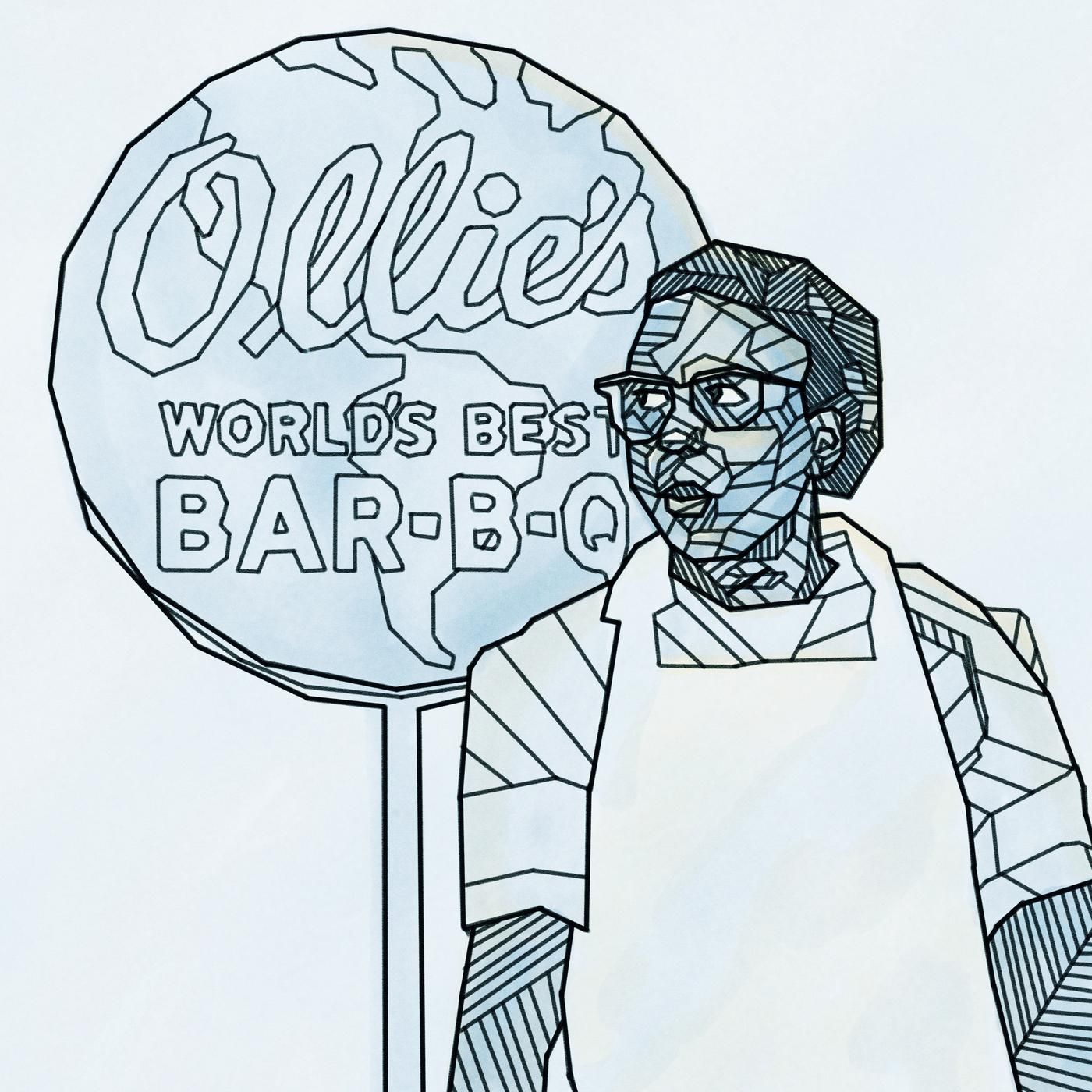
Radiolab
Radiolab Presents: More Perfect - One Nation, Under Money
00:55:12
An unassuming string of 16 words tucked into the Constitution grants Congress extensive power to make laws that impact the entire nation. The Commerce Clause has allowed Congress to intervene in all kinds of situations — from penalizing one man for growing too much wheat on his farm, to enforcing the end of racial segregation nationwide. That is, if the federal government can make an economic case for it. This seemingly all-powerful tool has the potential to unite the 50 states into one nation and protect the civil liberties of all. But it also challenges us to consider: when we make everything about money, what does it cost us?
Loading summary
Transcript391 lines
- [00:00]
Vrbo Announcer
Vrbo Last minute deals make chasing fresh.
- [00:03]
Jad Abumrad
Mountain powder incredibly easy. With thousands of homes close to the slopes, you can easily get epic pow freshies, first tracks and more. No need for months of planning.
- [00:13]
Vrbo Announcer
In fact, you can't even plan.
- [00:14]
Jad Abumrad
Pow Pow is on its own schedule.
- [00:18]
Vrbo Announcer
Thankfully, somewhere in the world, it's always snowing.
- [00:21]
Jad Abumrad
All you have to do is use the last minute filter on the app.
- [00:24]
Vrbo Announcer
To book a last minute deal on.
- [00:26]
Jad Abumrad
A slope side private rental home.
- [00:28]
James Chen
Book now@vrbo.com with ThreatLocker Zero Trust Protection, you can stop breaches before they happen. The result? No stress about the latest malware or zero day attacks because with ThreatLocker you block them by default.
- [00:41]
Jad Abumrad
Gain more control over your environment with.
- [00:43]
James Chen
ThreatLocker Zero Trust protection. Lowe's early Black Friday deals are going fast. Don't miss. Up to 50% off. Select major appliances. Plus up to an extra 25% off when you bundle. Select major appliances. And with Christmas around the corner, you're going to need more string lights.
- [01:01]
Jad Abumrad
Right?
- [01:01]
James Chen
Save $4 on GE LED 100 count string lights now just $5.98 Lowes we help you save. Valid through 12. 3 selection varies by location. Select locations only while supplies last. See Lowes.com for more details.
- [01:18]
Jad Abumrad
Wait, you're listening.
- [01:18]
Ari Savitsky
Okay. All right. Okay. All right.
- [01:24]
Jad Abumrad
You're listening.
- [01:25]
James Chen
I'm listening to Radiolab Radio Lab from wnyc.
- [01:30]
Jad Abumrad
Yep. All right. Sorry, Robert. I trying to. I'm gathering my thoughts as I'm speaking.
- [01:39]
Ollie McClung Jr.
Yes.
- [01:39]
Jad Abumrad
Okay. All right, Robert. Season 2 finale of More Perfect.
- [01:44]
Robert Krulwich
Long overdue, but much anticipated.
- [01:47]
Jad Abumrad
Maybe. Yeah, maybe.
- [01:48]
Robert Krulwich
Well, among those who care. Among those who care, a growing number.
- [01:51]
Jad Abumrad
One can hope.
- [01:53]
Robert Krulwich
You're having a modest day today.
- [01:54]
Jad Abumrad
You know, it's Tuesday.
- [01:56]
Robert Krulwich
It's Tuesday.
- [01:57]
Jad Abumrad
Modesty Tuesday.
- [01:58]
Robert Krulwich
Yes, Modesty Tuesday.
- [01:59]
Jad Abumrad
Okay, so I want to bring you a story from the More Perfect, the final story of season two. Because this story fulfills a promise I made to myself at the very beginning of More Perfect.
- [02:09]
Robert Krulwich
Oh, my God. This question of yours is that old and that deep.
- [02:13]
Jad Abumrad
It's only two years old. It's just a two year old show.
- [02:15]
Robert Krulwich
But when people hear what the question is, eyeballs will be rubbed. No, no, no. All right, go ahead, tell them.
- [02:21]
Jad Abumrad
It's Modesty Tuesday.
- [02:21]
Robert Krulwich
What was it two years ago that struck you a question you have never been able to let go?
- [02:26]
Jad Abumrad
Question I've never been able to let go. One of the first questions I bumped into when learning about the Supreme Court was, why does everybody keep talking about this thing called the commerce clause?
- [02:37]
Robert Krulwich
Commerce clause.
- [02:38]
Ollie McClung Jr.
Commerce.
- [02:38]
Jad Abumrad
Commerce clause.
- [02:43]
Robert Krulwich
The Commerce Clause.
- [02:44]
Jad Abumrad
Yes.
- [02:45]
Robert Krulwich
That had a dazzle for you.
- [02:46]
Jad Abumrad
No, I just wanted to know, what the hell is it?
- [02:48]
Jamie Floyd
Well, it's Article 1, Section 8, Clause 3 of the Constitution.
- [02:52]
Jad Abumrad
Sixteen words, two commas.
- [02:54]
Jamie Floyd
Congress shall have the power to regulate commerce with foreign nations and among the several states and with the Indian tribes.
- [03:02]
Ari Savitsky
The power to regulate commerce with foreign nations and among the several states and with the Indian tribes.
- [03:07]
Jad Abumrad
There are no more sexier words in the English language.
- [03:09]
Ari Savitsky
Yes. Better words for wooing were never written.
- [03:13]
Jad Abumrad
That's Jamie Floyd and Ari Savitsky. We'll meet them properly in just a second. Okay, so turns out that question of, like, what is it? Is pretty easy to answer. It's just these 16 words in the Constitution that say Congress has the power to regulate commerce from one state to another. Like, as soon as it goes between states, across state borders, the feds can regulate.
- [03:33]
Robert Krulwich
I think that there would. The sigh would begin and end, and that would be the end of it.
- [03:36]
Jad Abumrad
Okay, well, yes, but here's the thing. Within that shell of boring.
- [03:47]
Robert Krulwich
I'm politely silent.
- [03:48]
Jad Abumrad
Here is an amazing story of a kind of cosmic power that develops from very humble beginnings to something truly extraordinary and maybe troubling, depending on who you are.
- [03:59]
Robert Krulwich
A cosmic power? You mean this phrase from the Constitution has had consequences that surprised you?
- [04:05]
Jad Abumrad
Oh, boy. Oh, boy. Here's how I've been thinking about it in the More Perfect Story. Like, for me, the experience I had learning about the Commerce Clause was a little bit like watching the X Men movies. Like, initially, I was like, my name is Magneto. Why is Magneto the head of the bad guys? Will you join my brotherhood and fight? Why would they follow him? He has the most boring power. Who will you stand with? I mean, he can control metal. Okay, well, like, Mystique can shift into any shape she wants. Storm can control lightning. Initially, his powers seem like, you have the worst one.
- [04:38]
Robert Krulwich
So we start with the Commerce Clause, and we ask the riddle of Magneto.
- [04:42]
Jad Abumrad
No, no.
- [04:43]
Robert Krulwich
I am trying to cross the bridge.
- [04:44]
Jad Abumrad
I'm getting. I'm getting there. All I'm saying is that, like, initially, I didn't understand. Understand the true deep nature of his power. But then you see these scenes where he's, like, being attacked by a thousand policemen, and he just kind of makes their bullets freeze in midair. Or he picks up a whole bridge by just pointing at it and then hits you. Oh, he. He has the best power because the whole world is made of metal. He can control the world. If we built the world a different way, maybe not. But in this world. Let's just say I'm Frankenstein's monster.
- [05:33]
Robert Krulwich
Periodic table, baby. Periodic table, baby.
- [05:37]
Jad Abumrad
So that's for me, what it was like to learn about the Commerce Clause. What initially seemed stupid, stupid and boring becomes extraordinarily powerful once you understand the world in which it is situated.
- [05:49]
Robert Krulwich
Does that mean you're about to take us on a journey which begins with something that feels utterly trivial and ends up with being something enormously powerful?
- [06:00]
Jad Abumrad
Wow. That is a question to which I simply must answer. Yes, The question laid it all out there. I didn't do any work on that.
- [06:14]
Robert Krulwich
I guess we can get on with it then.
- [06:15]
Jad Abumrad
Yeah. I'm gonna tell you the story of the Commerce Clause. Everything we fight about in America is in these 16 words. The honorable, the chief justice, and the associate justices of the Supreme Court of the United States. Oyea. Oh, yay. Oye. All persons having business before the honorable, the Supreme Court of the United States are admonished to draw near and give their attention, for the court is now sitting. O ye God, save the United States in this honorable part. All right, I'm gonna. I'm gonna start you. Good?
- [07:09]
Robert Krulwich
Yep.
- [07:10]
Jad Abumrad
To even explain why something like the commerce clause exists, just pull out a dollar bill.
- [07:16]
James Chen
Go ahead and pull it out. Right. It's issued by a central bank.
- [07:21]
Jad Abumrad
Are you looking at a dollar bill right now?
- [07:22]
James Chen
I'm looking at a dollar bill, Federal Reserve note, United States of America.
- [07:26]
Jad Abumrad
That is. James Chen, professor of law at Michigan State University. Now, the thing about a dollar bill, the awesome obvious thing is that you can take that dollar bill and buy some Sour Patch Kids or whatever a dollar buys these days anywhere in America. Right.
- [07:42]
James Chen
But in the late 18th century, in fact, all the way through to the.
- [07:47]
Jad Abumrad
20Th century, it wasn't like that.
- [07:49]
James Chen
No, no, no, no, no.
- [07:50]
Jad Abumrad
All the states had their own banks and their own bills, different sizes, colors. For example, there was a moment when South Carolina has this pretty little green South Carolina bill. Same time Rhode island has this giant pink square thing. And if you are a South Carolinian in Rhode island trying to buy some carrots and potatoes, let's say.
- [08:10]
James Chen
Let's say that. And you've got to make payments somehow.
- [08:12]
Jad Abumrad
What do you do? Well, you hand them your South Carolina bill.
- [08:15]
James Chen
Well, the Rhode Islanders would look at that and say, well, I don't know what this is. Who's to trust this bank? Right. And so they would discount the note based on the distance from their own home. They would discount the note based on how it looked, how professionally drawn up it was.
- [08:32]
Jad Abumrad
They might look at that $10 and say, that's only worth eight to me.
- [08:36]
James Chen
That's a horrible, horrible way to do business.
- [08:40]
Jad Abumrad
That sucks for the person holding the note.
- [08:42]
James Chen
Right?
- [08:42]
Jad Abumrad
And so what the government decided to do is to say, hey, we're just gonna use one bill, just one bill. It's gonna be so much easier. This is one of the ways the government was gonna pull all these different states together. They were gonna regulate the currency and not just the currency itself. They were gonna regulate the flow of that currency.
- [09:01]
Jamie Floyd
And this is where the commerce clause comes in.
- [09:09]
Jad Abumrad
This is Jamie Floyd, journalist, sometimes legal analyst, host of All Things considered here at WMYC.
- [09:15]
Jamie Floyd
It's early in the Republic now. We're at 1820s now, just to hit.
- [09:19]
Jad Abumrad
Pause for one second. So the commerce clause was a pre existing thing?
- [09:23]
Roscoe Philbrun Jr.
Oh, yeah, okay.
- [09:24]
Ari Savitsky
Oh, yeah.
- [09:24]
Jamie Floyd
It's in the U.S. constitution.
- [09:25]
Jad Abumrad
It's in the Constitution, but it's never been really, like, thought about or where. Where is it in the minds of people at 18 24?
- [09:31]
Jamie Floyd
Nowhere.
- [09:32]
Jad Abumrad
Nowhere.
- [09:32]
Jamie Floyd
Pretty much where it is right now. It's nowhere in the minds of people.
- [09:39]
Jad Abumrad
But she says 1824, two steamboat operators get into a thing.
- [09:42]
Jamie Floyd
It's a business dispute.
- [09:43]
Jad Abumrad
They're each going back and forth between New York and New Jersey. They each think they should be the only one allowed to do that.
- [09:48]
Jamie Floyd
And it makes its way, as we say, all the way to the U.S. supreme Court. And who's sitting up there? Well, a big bad dude named John Marshall. Marshall is the sort of Rambo of the court. He looks at those 16 words. Congress shall have the power to regulate commerce with foreign nations and among the several states. He looks at those 16 words and a couple of commas and a period.
- [10:17]
Jad Abumrad
And he decides pretty much for the first time that those words give Congress.
- [10:22]
Jamie Floyd
The power to regulate commerce between and among states. This boat is going from one state to the other. The only way to resolve that is for the federal government to come in and control it again.
- [10:36]
Jad Abumrad
The idea is that this is the only way for the country to function as a unified thing. And John Marshall, when he writes his.
- [10:45]
Jamie Floyd
Decision, he says, look, we have a United States of America. We don't have a divided States of America or independent States of America or New Jersey and New York existing separately. We decided to organize as a United States. And so what John Marshall says is because of that, there has to be a power to regulate trade between those states and amongst those states when there are disputes. Otherwise it's all going to fall apart.
- [11:23]
Jad Abumrad
It was at that point that the commerce clause Began to glow, but very faintly. For the next hundred years, the government would experiment with the commerce clause in cases involving trade with the Native American tribes or navigation. But if you want to talk about power, like real raw, weird power, that power got unleashed at a very specific moment around 1941 in a wheat field.
- [11:55]
Robert Krulwich
Well, what happened in the wheat field?
- [11:56]
Jad Abumrad
Okay, well, let me introduce you to someone.
- [12:01]
Roscoe Philbrun Jr.
My father was a farmer. I'd like to say all of his life. Took pride in the fact that he never worked for another man. He would tell me that.
- [12:10]
Jad Abumrad
Can you introduce yourself?
- [12:12]
Roscoe Philbrun Jr.
Well, my name is the same as my father. It's Roscoe Curtis Philbrun. I'm a junior.
- [12:18]
James Chen
Roscoe Phil Burn, as he was known at the time.
- [12:21]
Jad Abumrad
He was a fifth generation farmer in Montgomery, Ohio.
- [12:25]
Roscoe Philbrun Jr.
Our farm was just right next to Dayton, Ohio.
- [12:30]
James Chen
Roscoe is about a 40 year old man at this point.
- [12:34]
Jad Abumrad
Again, we're talking about 1941. 42, good looking, sturdy, fiercely independent.
- [12:40]
James Chen
I never worked for another man in my life.
- [12:44]
Jad Abumrad
Apparently. That was his motto.
- [12:45]
Roscoe Philbrun Jr.
He would tell me that many times over the years if you had to.
- [12:49]
James Chen
Put like Captain America with a pitchfork, this is him.
- [12:56]
Jad Abumrad
So Roscoe's got this farm, more than 100 cows on it.
- [13:00]
Roscoe Philbrun Jr.
He would milk cows until both of his arms went practically numb. Had chickens, 2,000 chickens. And we had a very big garden. He would plant things, you know, like string beans, lima beans, peas, sweet corn, potatoes, carrots, radishes, a couple different kinds of fruit trees, apples, cherry trees, peach trees, pears, strawberries and raspberries.
- [13:22]
Jad Abumrad
Oh, and of course they had crops.
- [13:24]
Roscoe Philbrun Jr.
We would grow corn, couple different kinds of hay, oats, and of course, wheat.
- [13:29]
James Chen
Wheat.
- [13:30]
Jad Abumrad
Okay, setup out of the way. Here's what happened. It's 1941. Roscoe Sr. My dad was out in.
- [13:39]
Roscoe Philbrun Jr.
The field, I think on his tractor that day.
- [13:43]
Jad Abumrad
He was plowing the wheat or something.
- [13:44]
Roscoe Philbrun Jr.
And there apparently must have been some guy from the Department of Agriculture, locally, I guess, going around to various farmers in our community, wanting the farmers to answer several pages, I think, of questions. And this particular day, this government gentleman came out into the field.
- [14:10]
Jad Abumrad
He looked around and he said, roscoe, by my calculations, you've got 22 acres.
- [14:18]
James Chen
Of wheat on this farm.
- [14:20]
Jad Abumrad
You're over your quota.
- [14:21]
Jamie Floyd
He was 11.1 acres over what was permitted, roughly.
- [14:25]
Jad Abumrad
And so the guy tells him, you.
- [14:27]
Jamie Floyd
Have to pay a fine.
- [14:30]
Jad Abumrad
A really big fine.
- [14:34]
Roscoe Philbrun Jr.
My dad looked over and he was just as sober as a judge in a courtroom on a murder case.
- [14:41]
Jad Abumrad
And what happened next would change the country forever in ways that we are still literally living with. But let me just sort of fill in the gaps here, tell you what you need to know about why they were even having this conversation. And to help me with that, my.
- [14:56]
Ari Savitsky
Name is Ari Savitsky and I'm an attorney.
- [14:58]
Jad Abumrad
Let me bring in a friend of the show, man of the law.
- [15:00]
Ari Savitsky
You know, an important thing to understand is that, you know, when our story starts with Roscoe Filburn. Agriculture is a huge percentage of the economy. The Great Depression is happening.
- [15:12]
Jad Abumrad
A financial panic grips the world.
- [15:14]
Ari Savitsky
And the dust bowl, the great dust.
- [15:16]
Jad Abumrad
Storms of the mid-1930s has happened too, wreaked havoc through America's great plains.
- [15:20]
Ari Savitsky
And so you have a lot of people who rely on selling crops and buying crops. And so wheat prices, it's a matter of life and death for millions of Americans.
- [15:29]
Jad Abumrad
This nation is asking for action and action now.
- [15:34]
Ari Savitsky
So look, so 1938, Congress enacts what's called the Agricultural Adjustment act to reboot the economy.
- [15:43]
James Chen
So the 1938 Agricultural Adjustment act got the federal government into the business of regulating wheat.
- [15:50]
Jad Abumrad
Basically what the government did was they said to the farmers of America, we are going to give you essentially a loan. We're gonna guarantee you a certain minimum price for wheat. We're gonna give you X number of dollars per bushel or whatever it is, and that will help lift you out of poverty. In exchange for that, you have to promise us to only grow a certain amount because. So the big fear was that if they grew too much, there'd be this flood of supply on the wheat market. Prices would crash, and that would be bad for everyone.
- [16:22]
Ari Savitsky
You know, wheat is sort of a collective action problem, right? Everyone's going to sell as much wheat as they can, but that means prices go down and everyone makes less.
- [16:29]
Jad Abumrad
So what the government decided to do, in addition to giving out loans, is.
- [16:33]
Ari Savitsky
That they placed a cap on how much wheat a person could grow. So quota, straight up quota.
- [16:38]
Jad Abumrad
That way you ensure that the supply of wheat is steady and you ensure.
- [16:42]
Ari Savitsky
That the prices don't crash.
- [16:45]
Jad Abumrad
And the whole reason the government could do this, regulate the entire wheat market was by hinging it on the commerce clause. Those 16 words basically said that when something like wheat is bought and sold and moved from one place to another, one state to another, cross state lines, well, that's interstate commerce, and that's something that Congress can regulate.
- [17:08]
Roscoe Philbrun Jr.
So my father having this, and this.
- [17:10]
Jad Abumrad
Brings us back to Roscoe Filburn with that inspector on his farm. Inspector says, look, Roscoe, you've grown too much wheat.
- [17:17]
Roscoe Philbrun Jr.
My dad looked over and he was just as sober as a judge in a courtroom on a murder case.
- [17:23]
Jamie Floyd
And what do you think he says back? He says, wait a minute.
- [17:26]
Roscoe Philbrun Jr.
I'm gonna tell you just exactly how I feel about that.
- [17:29]
Jad Abumrad
No. That's how I feel. No. You. Government.
- [17:33]
Jamie Floyd
I don't know. He might have been a family guy.
- [17:34]
Jad Abumrad
Yeah.
- [17:35]
Jamie Floyd
He says, I don't get it. I'm not. I have nothing to do with interstate commerce. And this is the key.
- [17:45]
Jad Abumrad
He explains to the inspector that, yes, according to the government quota, I am only supposed to grow about 11 acres of wheat, and I am growing 23. But that extra 12, I'm not selling it to anybody.
- [17:57]
Jamie Floyd
He doesn't sell the wheat. He doesn't trade the wheat.
- [18:00]
Jad Abumrad
What's he doing with his wheat?
- [18:01]
Jamie Floyd
He uses all the wheat to feed his animals.
- [18:04]
James Chen
He is feeding it to the farm animals, the wheat.
- [18:07]
Roscoe Philbrun Jr.
He fed some of the wheat to the steers.
- [18:11]
Jad Abumrad
So she's just keeping it on the farm?
- [18:12]
Jamie Floyd
Well, yes. So it's in a completely internal operation. Do I sound biased here? I mean, I feel like the poor guy gets kind of dragged into a national case.
- [18:21]
Jad Abumrad
In any case, he tells the inspector.
- [18:22]
Jamie Floyd
I have nothing to do with interstate commerce.
- [18:25]
Jad Abumrad
I'm just growing a little extra wheat to feed my cows.
- [18:27]
Jamie Floyd
I'm on my farm. I'm doing my business. Big brother leave me alone.
- [18:31]
Jad Abumrad
But big brother does not leave him alone. The inspector says, we're the government.
- [18:36]
James Chen
That's the law. Please uphold it.
- [18:39]
Jad Abumrad
Pay the fine.
- [18:41]
Ari Savitsky
50 cents for every excess bushel. I think it is. He had 239 excess bushels of wheat for which he was, you know, fined about 117 bucks.
- [18:52]
Jad Abumrad
In today's dollars, it's about two grand. Two grand.
- [18:59]
Roscoe Philbrun Jr.
My father, apparently, he wasn't real crazy about that. And I guess he didn't like that too much. If I'd have been 20 or 25 years old, I would have probably advised my father not to do what he did. But I guess he sued the federal government, huh?
- [19:15]
Jad Abumrad
His argument was like, look, I'm just trying to feed my cows. Come on.
- [19:19]
Roscoe Philbrun Jr.
I guess it went to our court in Dayton, Ohio.
- [19:23]
Jad Abumrad
That was the first stop.
- [19:24]
Roscoe Philbrun Jr.
And I believe that he won.
- [19:29]
Jad Abumrad
Round one to Roscoe. The Ohio court agreed.
- [19:31]
Jamie Floyd
There's no commerce of any kind going on here, unlike the original case with the boat.
- [19:37]
Roscoe Philbrun Jr.
I believe I even remember him, my sister, telling me that he came home and he was just delighted that he did win.
- [19:48]
Jad Abumrad
But then the government appeals the case.
- [19:51]
Roscoe Philbrun Jr.
And of course, when it got to the Supreme Court of the United States, he lost.
- [20:03]
Jad Abumrad
He Lost in a decision that I think it's fair to say still drives conservatives and libertarians bonkers. And I am neither one of those things, but I get it. What the Supreme Court said is that Roscoe Filburn growing that extra wheat and not selling it still counts as interstate commerce because having that extra wheat causes him to not buy it on the market. He needs less wheat from the market. And if all the farmers of America did that, then that would be really bad for the market.
- [20:39]
Ari Savitsky
The idea is that if you need more wheat than the quota, you go on the market and buy it.
- [20:45]
Jad Abumrad
Even though you can grow it yourself, you gotta buy it.
- [20:47]
Ari Savitsky
Because if everyone can produce their quota and then whatever extra they need, I mean, pretty soon the regulation breaks down.
- [20:54]
James Chen
Which means that the government intervention in the wheat market will have failed. You will have defeated our attempt to regulate this market. Therefore we have to regulate even the things you don't do.
- [21:09]
Jad Abumrad
See, that is so weird. It's such a mind, frankly. It's like he's not doing anything. We're gonna. Alright, well this is literally non behavior.
- [21:17]
James Chen
This is, this is Obamacare.
- [21:18]
Jamie Floyd
It's very much like the health care case.
- [21:22]
Jad Abumrad
It's getting heated over healthcare. Today's issue, the individual mandate. Just to explain that's a reference to Barack Obama's health care plan that was hotly debated couple years ago. Still hotly debated. One of the key ideas of that plan is that in order for health care to be affordable for everyone, everyone should have to buy it.
- [21:40]
Ari Savitsky
So we're going to require people to buy insurance or else you pay a penalty.
- [21:45]
Jad Abumrad
Which made a lot of people mad because they're like, hey, the government's forcing me to buy something I don't want.
- [21:49]
Ari Savitsky
My decision not to get health care is not participation in interstate commerce. It's not even economic activity. I'm sitting here on my couch not buying health care. I'm just sitting here.
- [22:00]
Jad Abumrad
From the individual perspective, that makes perfect sense. But if you pan out, and Justice Kagan said this in court, it's not so simple. And the aggregate of all these uninsured people are increasing the normal family premium, Congress says by $1,000 a year. Those people are in commerce. They're making decisions that are affecting the price that everybody for this service. Obamacare makes sense to me in some spiritual way. But getting back to Roscoe, like we're regulating the things you're not doing.
- [22:36]
James Chen
No farmer is an island.
- [22:38]
Jamie Floyd
This is the case in which Congress receives a tremendous amount of power from the US Supreme Court. Essentially this case says that Congress can regulate almost anything. And that is the single most significant precedent in the area of the commerce Clause, the big bang.
- [23:15]
Jad Abumrad
Did anyone sort of raise their hand in the middle? This would be like, whoa, if you can regulate the non behavior of this American farmer, then that's not even a slippery slope. That's like a cliff that goes right down. Like, there's no slope to that. Yeah.
- [23:28]
Ari Savitsky
A New York Times editorial from November 13, 1942 said, if the farmer who grows feed for consumption on his own farm competes with commerce, would not the housewife who makes herself a dress do so equally? The net of the ruling, in short, seems to be that Congress can regulate every form of economic activity if it so decides.
- [23:48]
Jad Abumrad
Would not the housewife who makes herself a dress do so? Yeah, it's like if you make something like, shoot, my wife and I with our kids made these little, like, miniature stuffed animals for them to play with the other day, are we then in violation of some. Oh, my God, that seems crazy to me.
- [24:03]
Ari Savitsky
You made your kids do it and now you violate some child labor laws even.
- [24:08]
Jad Abumrad
So, like, what happened here essentially, Robert, is that the. The definition of commerce changed in a sneaky but really powerful way, because now it wasn't just like the buying and selling of stuff.
- [24:21]
Robert Krulwich
It was the not buying and selling of stuff.
- [24:24]
Jad Abumrad
Yeah. It was your negative commercial activity.
- [24:27]
Robert Krulwich
All the things you don't do is a much bigger territory than the things you do do. So it's a massive extension of power.
- [24:34]
Jad Abumrad
And that expansion would continue over the next few decades, and it would move from just wheat to something much deeper, to, like, beyond markets, into the. Into matters of the heart.
- [24:46]
Robert Krulwich
You mean like people hating on each other? People trusting each other, People being brave people?
- [24:52]
Jad Abumrad
All will become clear after the break, my friend. After the break.
- [25:00]
Robert Krulwich
Excuse me while I get myself a sizzling drink and settle down in my black leather couch. Ooh, yeah.
- [25:07]
Jad Abumrad
All right, Season two finale of More Perfect here on Radiolab. We'll continue in a moment. This is Nicole From Corning, N.Y. radiolab is supported in part by the Alfred P. Sloan foundation, enhancing public understanding of science and technology in the modern world. More information about Sloan@www.sloan loan.org.
- [25:33]
Jamie Floyd
Radiolab is supported by BILT. Nobody wants to pay rent, but if you have to, Bilt works to make it more worthwhile. By paying rent through built, you can earn flexible points that can be redeemed toward hundreds of hotels and airlines, a future rent payment, your next Lyft ride, and more. But it doesn't stop there. You can dine out at your favorite local restaurants and earn additional points, get VIP treatment at certain fitness studios and enjoy exclusive experiences just for built members. Every month earn points on rent and around your neighborhood, wherever you call home, by going to joinbuilt.com Radiolab that's J-O-I-N-B-I-L-T.com Radiolab.
- [26:10]
Vrbo Announcer
Hey, I'm Molly Webster and this is an ad by BetterHelp. So it happens every year. The seasons are changing, the days are getting shorter, and basically once it becomes dark outside of my window, I feel like the rest of the world disappears and I'm just alone and there's nothing left to do but watch television. This November, BetterHelp is asking everyone to reach out to our people. That could be your family, your friends, your neighbors, and to resist this call of the cocoon. And yeah, reaching out can take some courage. I've got text messages from January I haven't responded to and you know what? I'm gonna write em back right now. Hi, sorry I've been missing. How are you? Why don't we all do this sooner? Therapy is the same way. BetterHelp makes it easier to take that first step. You just fill out a short questionnaire and they find a licensed therapist who they think you'll like. Our listeners get 10% off their first month at betterhelp.com Radiolab that's betterhelp.com Radiolab.
- [27:17]
Rippling Announcer
Radiolab is supported by Rippling Finance teams often spend weeks chasing receipts, reconciling spreadsheets and fixing errors across disconnected spend tools. This can be frustrating, and that's not software as a service. That's sad software as a disservice. If you've been thinking about replacing stitched together tech stacks with one platform for all departments, Rippling can help. Rippling is a unified platform for global hr, payroll, IT and finance, helping people replace their mess of cobbled together tools with one system designed to help give leaders clarity, speed and control. By uniting employees, teams and departments in one system, Rippling works to remove the bottlenecks, busywork and silos in business software. With Rippling, you can choose to run hr, IT and finance operations as one, or pick and choose the products that best fill the gaps. Right now you can get 6 months free when you go to rippling.com Radiolab learn more at R-I P P L-I-N-G.com Radiolab terms and conditions apply. Radiolab is supported by Planet Visionaries, the podcast created in partnership with the Rolex Perpetual Planet Initiative. The show is hosted by Alex Honnold, who you may recognize from Free Solo, where he climbed El Capitan without ropes. Now he's turning his focus to the biggest challenge of protecting the only planet we've got. Every episode brings you stories that prove climate optimism and isn't naive. It's a strategy. The episodes span the globe, from Arctic scientists and Amazon forest guardians to entrepreneurs reimagining fashion and food systems. You'll hear from explorers, scientists, activists, and storytellers who are working to reshape the future in practical human ways. In one episode, Alex sits down with wildlife photographer Bertie Gregory to discuss how animals can teach humans resiliency, empathy, and hope in partnership with the Rolex Perpetual Planet Initiative. Check out Planet Visionaries Listen or watch on Apple, Spotify, YouTube, or wherever you get your podcasts.
- [29:32]
Jad Abumrad
I'm Jad Abumrad.
- [29:33]
Robert Krulwich
I'm Robert Krulwich.
- [29:34]
Jad Abumrad
This is. Well, we're featuring the final episode of More Perfect season two here on Radiolab.
- [29:40]
Robert Krulwich
A strange and heartfelt salute to the commerce clause of the U.S. constitution.
- [29:44]
Jad Abumrad
Yes, and previously, we. We had the big bang in the wheat field, but that was still about markets and commerce and all that, right?
- [29:51]
Robert Krulwich
Yep.
- [29:52]
Jad Abumrad
There was a moment about two decades after the wheat case where you might say the commerce clause got weaponized. Hmm.
- [30:04]
Ollie McClung Jr.
Hello?
- [30:05]
Jad Abumrad
Hey, can you hear me? Yes, this is Jad from Radiolab in More Perfect in New York.
- [30:10]
Ollie McClung Jr.
Jack.
- [30:11]
Jad Abumrad
Jad.
- [30:11]
Ollie McClung Jr.
J A D. Jad J A D. Okay, well, Andrew is here and he's recording.
- [30:15]
Jad Abumrad
To really understand what I mean, you have to meet this guy. Can you introduce yourself? Tell me who you are? Your name?
- [30:21]
Ollie McClung Jr.
Yes, it's Ollie McClung Jr. And how old are you? 77.
- [30:25]
Jad Abumrad
And where are you speaking to us from right now?
- [30:28]
Ollie McClung Jr.
I'm in Birmingham, Alabama.
- [30:29]
Jad Abumrad
You were born in Birmingham?
- [30:31]
Ollie McClung Jr.
Yes.
- [30:32]
Jad Abumrad
Aside from some time at college in Florida and a stint in the coast guard, Ollie Jr. Was. Has lived in Birmingham his entire life. And the reason we call him up is that for 75 years, his family ran a famous barbecue joint named Ollie's. So this is your dad's business from what I understand, right.
- [30:50]
Ollie McClung Jr.
Yes. My grandfather actually had founded it.
- [30:52]
Jad Abumrad
Oh, really? When was that?
- [30:54]
Ollie McClung Jr.
1926.
- [30:55]
Jad Abumrad
So this was passed to your dad, who passed it to you?
- [30:57]
Robert Krulwich
Yes.
- [30:58]
Ollie McClung Jr.
Okay. We were in business together until he died.
- [31:01]
Jad Abumrad
Ollie's barbecue was located on Birmingham's south side.
- [31:04]
Ollie McClung Jr.
The building we were in at the time. You're talking about.
- [31:06]
Robert Krulwich
About.
- [31:06]
Ollie McClung Jr.
From 1949 till 68, it was concrete block.
- [31:11]
Jad Abumrad
Big sign outside said world's best Barbecue. Pretty good for Its day, apparently during lunch, the line would stretch out the door. Ollie's was famous for its slow cooked pork and chicken and for its spicy vinegar barbecue sauce and the pie baking chocolate pies.
- [31:27]
Ollie McClung Jr.
We always did a lot of pies.
- [31:29]
Jad Abumrad
But Ollie's was also famous or would become famous for something else entirely.
- [31:36]
Ollie McClung Jr.
Because of the times and the way things were at that time. Of course, throughout the south in Birmingham, we had carry out business as well as sit down business. And those of our black customers came in and ordered from the carryout counter and took their food out and you know, truth, fact, history, they would take it on with them to eat as opposed to sitting down and eating.
- [32:07]
Jad Abumrad
What he's saying is that Ollie's barbecue was segregated. If you were white, you could eat inside. If you were black, you couldn't.
- [32:13]
Ollie McClung Jr.
I mean, that was the way it worked.
- [32:19]
Jad Abumrad
So what does this have to do with the commerce clause? Okay, so the federal government at the time, this would be the Kennedy administration, then lbj, they wanted to come down on places like Ali's barbecue, but their hands were sort of tied. I mean, we have this thing called the 14th amendment which says no state.
- [32:38]
James Chen
Shall deprive any person of life, liberty or property without due press of law, nor shall any state deny equal protection of the laws to any person.
- [32:47]
Jad Abumrad
James Chenigan, those words, he says, which were ratified right after the Civil War, were written to basically outlaw things like segregation. Of course it didn't work. We'd have another 80 plus years of Jim Crow. And the reason for that is that the supreme Court, Shortly after the 14th Amendment was passed, kind of neutered it. Well, not kind of. They did. And one of the ways they did was by insisting that we read the 14th amendment as being targeted only at states.
- [33:17]
James Chen
If you look at that sentence, the second sentence of the 14th Amendment, it says no state, no state shall deprive any person of life, liberty or property without due press. The problem is, is when a restaurant owner like Ollie McClung denies service to black patrons, it's not Alabama doing the.
- [33:36]
Jad Abumrad
Damage, just a private business.
- [33:38]
James Chen
It's not as if Alabama ordered the McClung for to discriminate against black patrons. They just did it.
- [33:44]
Jad Abumrad
So if the 14th amendment can only get to states here, it has no.
- [33:48]
James Chen
Reach because there's no state action. There is nothing to regulate at the state level.
- [33:53]
Jad Abumrad
So what the feds decided to do in a fascinating bit of legal gymnastics is they decided to use the commerce clause.
- [34:07]
Robert Krulwich
Congress passes the most sweeping civil rights bill ever to be written in giving.
- [34:12]
Jad Abumrad
All Americans the Right to be served in facilities which are open to the public. July 2, 1964, Congress passes a sweeping civil rights bill that was hinged on those 16 words. And I will explain to you how, because it's kind of fascinating in just a second. But first, just to get us to that point. So, 1964 Civil Rights act is passed. Did you desegregate right away?
- [34:37]
Ollie McClung Jr.
No.
- [34:38]
Jad Abumrad
No.
- [34:41]
Ollie McClung Jr.
Well, we were. We were not happy with it, obviously.
- [34:45]
Jad Abumrad
I want to read to you something that you said in 1964. I believe these are. This is sort of your account of something that happened in. In your restaurant. Day after the Civil rights act was passed, A black man comes into the restaurant asking to be served and. And you Turn him away. 45 minutes later, comes back with a young girl. Four other black people, they sit down at the counter. They want to know why you. Why Ollies wouldn't serve them. And they were taking notes. And you're quoted as saying they seemed like agitators.
- [35:16]
Ollie McClung Jr.
Yeah. In fact, they were. They were folks that came and went around several places just to test the law, basically. Yeah.
- [35:27]
Jad Abumrad
And you were. And you were turning those folks away.
- [35:29]
Robert Krulwich
Yes.
- [35:30]
Jad Abumrad
You kicked them out. Why?
- [35:33]
Ollie McClung Jr.
Just because that's the way we had always done. That's the way until the law got adjudicated. We weren't going to unilaterally change things.
- [35:46]
Jad Abumrad
But you know, from their perspective, they're there because the law's been changed.
- [35:51]
Ari Savitsky
Yeah.
- [35:55]
Ollie McClung Jr.
Yes.
- [35:59]
Jad Abumrad
Ollie says right after the Civil Rights act was passed, sort of an emergency meeting was called of the Birmingham Restaurants association. And he and his dad went and.
- [36:08]
Ollie McClung Jr.
We discussed with the. With them and with the executive of it that this was going to be such a. Potentially harmful to the restaurant businesses, like.
- [36:19]
Jad Abumrad
You would lose all your white customers. Is that what you worried about?
- [36:22]
Ollie McClung Jr.
I mean, that was a possibility and somebody ought to do something. And so we kind of ended up being the ones to do something that is file the suit.
- [36:36]
Jad Abumrad
So they filed the suit basically saying to the federal government, you have no right to barge into our small independent local business.
- [36:45]
Ollie McClung Jr.
Thought was they can't really tell us what to do because we're not an interstate business. And that's all that the federal government regulates. And up until that point, that was all they had regulated.
- [36:57]
Jad Abumrad
The case went to the U.S. district Court for the northern district of Alabama.
- [37:01]
Ollie McClung Jr.
At the lower court level, the three judge special panel, we had a unanimous decision in our favor.
- [37:08]
Jad Abumrad
The Alabama court agreed that there was no interstate commerce happening here and that Ollies did not have to desegregate. They could Sell their ribs to whoever they wanted.
- [37:17]
Ollie McClung Jr.
And we were optimistic about that.
- [37:20]
Jad Abumrad
The government then appeals, and the case, as they say, goes all the way to the Supreme Court. All right, let me now explain to you how the government made this argument, because they made it in court. Chief Justice October 5, 1964, second case involving solicitor General Archibald Cox gets up the and lays it out why the government should be allowed to use the commerce clause, of all things, to desegregate Ali's Barbecue. Appley's operate a restaurant in Birmingham, Alabama.
- [37:54]
Robert Krulwich
Specializing in barbecued meats.
- [37:57]
Jad Abumrad
He says this is a business that sells and buys a lot of meat. In the 12 month period prior to July 1, 1964, the Appalachian purchased about $70,000 worth of meat, $69,683 to be exact. And where do you think all that meat came from? It was purchased from the Hormel Company at its Birmingham, Alabama plant. All the meat sold at that plant came from other states so that it moved in interstate. In other words, you think you're a local business, but you're not.
- [38:30]
James Chen
The meat is sourced from places other than Alabama.
- [38:33]
Jad Abumrad
And what about your ketchup? Hypothetically, do you grow all your tomatoes in Alabama?
- [38:37]
Ollie McClung Jr.
No, the salt. Salt, not mine. In Alabama. So even though we bought it from.
- [38:42]
Jad Abumrad
A local vendor, that local vendor probably bought it from somebody who bought it from somebody that got it from out of state.
- [38:48]
Ollie McClung Jr.
They were reaching beyond what had ever been done before.
- [38:51]
Jad Abumrad
Basically, government was basically telling the McClungs the same thing. They told Roscoe Philbrand, you are not an island. And that was only the government's first argument. They had another argument. Now there's a second and still more directly that was even more radical between racial discrimination in restaurants and interstate commerce, which is caused by the artificial narrowing of the consumer market resulting from the exclusion of Negro patronage.
- [39:22]
James Chen
So here's the argument, okay? If you deny black people access to restaurants and hotels, you are effectively shutting down interstate travel by them them. In parts of the country where this practice is commonplace, the entire Deep south.
- [39:38]
Jad Abumrad
You'Re limiting their ability to cross state lines and, and travel. The essential argument, says James Chen, is that when you discriminate against someone, you create downstream negative commercial effects. Like you create a chilling effect because the person you're discriminating against is then less likely to travel across state lines and spend money. So in effect, you are depressing their future interstate commerce.
- [40:10]
James Chen
If you ask black people with this experience from this time period, they will universally say, we never left home unless every tire was triple checked, every belt Was triple checked in the car because we did not want to have the car break down in a hostile southern town and get lynched.
- [40:37]
Jad Abumrad
Right, right.
- [40:38]
James Chen
It is an entire system of travel and commerce that's at stake here.
- [40:46]
Jad Abumrad
Essentially, the argument was discrimination is bad for business. It's expensive. And ultimately, in a unanimous decision, the supreme court, same court that 100 years earlier had basically gutted the 14th Amendment, the Supreme court agreed that discrimination in restaurants posed significant burdens on the, quote, interstate flow of food and upon the movement of products generally. Do you remember that decision coming down?
- [41:16]
Ollie McClung Jr.
Oh, certainly.
- [41:17]
Jad Abumrad
Where were you?
- [41:18]
Ollie McClung Jr.
I was at work.
- [41:20]
Jad Abumrad
Can you tell me a little bit about how you and your dad processed that decision?
- [41:26]
Ollie McClung Jr.
We simply served anyone who came in after that, no problem. And there were. The very next day, there was a group of local civil rights leaders who came in and ate lunch. I knew some of them by having seen them in the news, that sort of thing. They were not our regular customers before then, nor after, frankly. But they celebrated or whatever you want to say, tested. I don't know what their motive was, but they came in and ate lunch. They got served just like anybody else.
- [41:58]
Jad Abumrad
They came in and it was fine.
- [42:00]
Robert Krulwich
Sure.
- [42:01]
Ollie McClung Jr.
The law was decided. So that was it.
- [42:05]
Jad Abumrad
Was it tense?
- [42:08]
Ollie McClung Jr.
No. Other than the waitress who was waiting on them was. She was a little antsy about it.
- [42:15]
Jad Abumrad
And was this waitress, was she a black woman?
- [42:17]
Ollie McClung Jr.
Yes. I forget who it was now, but she was like most of our employees had been there a very long time and had never served other black folks in a sit down situation. And of course, it was a little.
- [42:34]
Robert Krulwich
Bit.
- [42:37]
Ollie McClung Jr.
I won't say upsetting, but different. She was a little hesitant at first, Told her, just go right ahead and serve them. And she did and we did, and that was not a problem.
- [42:48]
Jad Abumrad
After the ruling, it's not as if a lot of black customers suddenly started coming into Ollie's barbecue. They didn't. Here's how a guy named Nathan Turner Jr. Put it. In 2014, he was interviewed for an NPR piece. He grew up nearby Ollie's. Just the fact that Ollie's pushed it that far to take it to the.
- [43:06]
Ari Savitsky
Supreme court, it left a bad taste.
- [43:10]
Jad Abumrad
Pun intended, in the mouths of a lot of black people in Birmingham. Now, 53 years later, how do you think about that supreme court decision?
- [43:24]
Ollie McClung Jr.
Well, if you're asking me about segregation, that's one thing. If you're asking about the supreme court and the decision in the commerce clause, I still disagree with. Let me put it real, real succinctly. I think what you had in that decision was that rather than. And I think my civics is correct, but I don't know, rather than 3/4 of the Congress and 3/5 of the states, I believe it is having to. Or maybe 2/3 of Congress, whichever it is, having to vote to repeal an amendment to the Constitution. You had basically nine appointees who repealed the 10th Amendment to the Constitution.
- [44:10]
Jad Abumrad
The 10th Amendment basically says that the powers not given to the feds are reserved for the states and for the people.
- [44:16]
Ollie McClung Jr.
And that's about as succinct as I can say it.
- [44:19]
Jad Abumrad
But do you understand how this is going to sound to a lot of our listeners? I mean, that you are making a states rights argument as a not so veiled way to continue to discriminate, that really, in the end, this is not about states rights. I think that's how it's going to sound to a lot of people.
- [44:34]
Ollie McClung Jr.
Well, it may very well, but it's not the case. Was there segregation? Yes. Were we going to voluntarily end that? Probably not. Would we go back and reinstate if we could? No, absolutely not. But the issue that you're talking about with the commerce clause and the constitutional issue is still just what I said.
- [45:05]
Jad Abumrad
So you still believe 53 years later that the supreme court got it wrong, that they should have never used the commerce clause to make you desegregate? Ollies?
- [45:15]
Ollie McClung Jr.
Yeah, that is correct. But don't hear me say that I don't want to go back and have segregation again. That's a separate issue.
- [45:22]
Jad Abumrad
But is it separate? I guess is my question. You know, like I grant you, if you think of it in the abstract, a federal government being able to regulate commerce across all boundaries is an enormous power, and it could be a scary power. So I grant you that at the same time, you have a civil rights act that speaks to a different amendment in the constitution and that you and your father were not willing to follow. So how is the government going to get you to pay attention and to get in line? They've got to use the commerce clause. So on some level, isn't the power present because the other principles that would otherwise regulate your behavior just aren't working?
- [46:08]
Ollie McClung Jr.
Well, that's. That's the point. You choose which is the priority, basically.
- [46:17]
Jad Abumrad
I don't understand. Which is the priority?
- [46:20]
Ollie McClung Jr.
Well, which is the priority of those amendments?
- [46:26]
Jad Abumrad
And so for you, the 10th Amendment that grants states rights for everything not enumerated outweighs the dignity of black people.
- [46:35]
Ollie McClung Jr.
No, no, no.
- [46:37]
Jad Abumrad
So say it to me differently then.
- [46:40]
Ollie McClung Jr.
Well, the 10th Amendment left that to the states. The 4th Amendment. Yes.
- [46:51]
Jad Abumrad
I think you meant to say the.
- [46:52]
Ollie McClung Jr.
14Th Amendment gives people rights, everyone rights. But here's the thing about rights. It's kind of like the first law of thermodynamics. There's only a. And people don't realize this a lot of times, there are only so many rights. There are only a finite number of rights. If you take some, give some to someone, they come from someone else or somewhere else. Now, it's very well to say that the end of segregation was a higher right and more important right than the misuse of the commerce clause or whatever you want to say, but there's still a balance. And just which one you think is most important? Today's parlance, we call it zero sum.
- [47:53]
Jad Abumrad
Ollie's basic point, and we talked about this for another hour, was that in achieving desegregation that way. And by the way, the Civil Rights act of 64 dramatically altered the South. It desegregated huge parts of the South. But by doing it that way, he says with the commerce clause, something was sacrificed. He calls it a zero sum. I wouldn't call it that. I don't think most people would call it that. Treating people with dignity. Inequality is a net win, period. But it is legitimately strange that the government had to take such a roundabout ass, backward way to fix this, to fix this grave injustice.
- [48:40]
Jamie Floyd
What you would think would be the obvious, that you would go right to those civil rights parts of the Constitution, but it wasn't. It was the commerce clause.
- [48:48]
Jad Abumrad
That's what's weird. Is it? Yeah. We have the 14th amendment, and yet we go to the commerce clause for something that is so clearly stated in one of the amendments. So why?
- [48:59]
Jamie Floyd
Well, lawyers are very tricky.
- [49:02]
Jad Abumrad
This is Jamie Floyd again, by the way.
- [49:04]
Jamie Floyd
And the lawyers in those cases that want. They wanted to win, they wanted to win more than they wanted to make a social statement about equal justice, equal rights, the 14th Amendment, I mean, those things mattered. But most of all, they wanted to win. They wanted to shut down discrimination at those lunch counters. And if Congress could shut them down or require them to open their doors to all Americans using those 16 words, I'm okay with that.
- [49:35]
Jad Abumrad
Yeah, yeah. No, I mean, obviously the ends do justify the means in that case, but it does make you. If you sort of put that case and the weak case in your mind as a kind of split screen. Yeah, it's a little strange because I do think, okay, we have. I mean, hopefully we're Americans with principles that matter, you know, that we believe in equality. We believe in racial justice. But really we just believe in money, and we can do all the other stuff by bootstrapping it to commerce. But somehow, as pure principles, they what, don't have teeth.
- [50:11]
Jamie Floyd
Well, it's deeply troubling that we have to use commerce to achieve our higher values.
- [50:17]
Jad Abumrad
That is weird to me. That is fundamentally weird to me. And it's kind of cynical.
- [50:22]
Jamie Floyd
Well, yeah, I mean, you are right. We are at least in large part about commerce in this country. But if that's who we are, then we should embrace it and use it to our advantage. And if we can use it to our advantage, perhaps it does take us to our higher principles.
- [50:43]
Jad Abumrad
That's an interesting way of looking at it.
- [50:44]
Jamie Floyd
Yeah, it's not all bad.
- [50:51]
Jad Abumrad
One of Jamie's points, which I hadn't actually thought of, Was that legislating morality, legislating what is good and what is bad, doesn't always go well because we very often don't agree. I mean, obviously there have been times where people kept slaves and thought that was just fine, but that was right. And for a hundred years, you had the 14th amendment in place, but it couldn't solve Ollie's barbecue. And here was a way for the government without going at the moral questions head on. Government could reach its hand all the way into the barbecue joints and the hotels and the restaurants and the houses and now the cake shops of America reach its hand all the way down into the local. And it was because of this increasingly expansive idea of commerce that was now no longer the buying and selling of things or the not buying and selling of things. It was now any behavior that could create a kind of butterfly effect that might one day, many steps downstream, have a future effect on the buying and selling of things. So in that sense, Ollie mcclung was right.
- [52:07]
Ollie McClung Jr.
His case, that was a massive shift. It shifted totally the federal government's role beyond business. Even if you think it's good, then that's fine and it's for the better. But just has to be realized that it was a massive shift from the way that the country had been up before that time.
- [52:38]
Jad Abumrad
After the mcclung case, James Chen says the government's use of the commerce clause pretty much went wild.
- [52:45]
James Chen
Yeah, there was just no real limit.
- [52:50]
Jad Abumrad
They began to wave those 16 words sort of like a magic wand. To pass laws on everything from fair labor standards to marijuana is a Schedule 1 drugs.
- [53:00]
Jamie Floyd
The Gun Control act of 1968, guns.
- [53:03]
Jad Abumrad
The justice for victims of trafficking acts, sex trafficking, 19,000 African lions in the wild, endangered species, 1992, professional and amateur Sports Sports Protection act, which forbids state authorized sports gambling, all kinds of things.
- [53:19]
James Chen
And in fact, the only, the only question was whether the government even had to make the argument itself, whether the government even has to defend itself.
- [53:27]
Jad Abumrad
James Chen says there were times when the government would pass a law, it'd get taken to court and the government would basically not show up and they would still win.
- [53:36]
James Chen
That's where we were. So we're arguing whether the government even has to argue.
- [53:41]
Jad Abumrad
So you can see the McClung case as sort of a second big bang. But then you get to the mid-90s. At this point in 1994, you have a Democratic president, Bill Clinton, Democratic majorities in both houses of Congress, and together they pass the Violence Against Women Act. Today is the first day of spring, and I think it's appropriate that we begin a new season of hope in the fight against domestic violence. I thank you all for being here. This is an important day. The act was sort of a sweeping rethink of the federal government's role in trying to prevent violence against women. It beefed up investigations of violent crimes against women prosecutions. It allowed women to sue their alleged attackers in federal court. We had to take responsibility. Domestic violence is now the number one.
- [54:35]
James Chen
Health risk for women between the ages of, of 15 and 44 in our country.
- [54:39]
Jad Abumrad
And the law was hinged on the commerce clause. Same essential argument as in the barbecue case that same fall. My name is Christy Brancala. I am 19 years old and I have lived in Fairfax, Virginia most of my life. A woman named Christy Broncala starts her freshman year at Virginia Tech. And just weeks in, in mid September 1994, I was raped by two football players in my own dorm. I had met them for the first time just 15 minutes before they assaulted me.
- [55:05]
Jamie Floyd
These two football players, she alleged, had.
- [55:07]
Jad Abumrad
Raped her repeatedly on a single night in 1994. I was raped three times.
- [55:11]
Jamie Floyd
She went to the local campus authorities. She told her story.
- [55:16]
Jad Abumrad
College held their own hearings, didn't go to the police. They suspended one of the two students. He appealed one, and when he returned.
- [55:23]
Jamie Floyd
Christy Brancala dropped out of school.
- [55:28]
Jad Abumrad
Christy Brancala ultimately decides to sue her alleged attackers and the school under this new law, the Violence Against Women Act. And the case ultimately makes it to the Supreme Court. We'll hear argument now. Number 95, Christy Brancala versus Antonio Morrison. When Christie's case got to the supreme court, her lawyer, Mr. Chief justice, may it please. The court made the same argument about women that the government had made in the Ollie's barbecue case about black people, that discrimination, or in this case, outright violence, has a huge downstream effect on the economy.
- [56:04]
Jamie Floyd
A bipartisan Congress concluded that gender based.
- [56:07]
Jad Abumrad
Violence substantially affects the national economy. Gender based violence and the fear of.
- [56:14]
Jamie Floyd
That discriminatory violence deters women's travel, interstate, restricts women's choice of jobs and ability.
- [56:20]
Jad Abumrad
To perform those two jobs, reduces national productivity and increases medical and other costs. And again, the court was given tons of evidence about the economic effects. Example, Congress heard from women whose batterers kept their partners from working. They're showing data that every year this costs the country billions of dollars. And that economic downstream effect was not hard to prove in this case. She dropped out.
- [56:45]
James Chen
Well, especially if you aggregate it right. It's not just her, it's everyone else who's sinnally situated.
- [56:50]
Jad Abumrad
But in this case, as I understand.
- [56:52]
Ollie McClung Jr.
It, this law doesn't apply to any.
- [56:54]
Jad Abumrad
The argument was happening at a very different time in the country, very different mood, and in front of an increasingly conservative Supreme Court that just wasn't buying it anymore. Petitioner Burzonkala's complaint alleges that she was the victim of a brutal assault. This is Chief Justice Rehnquist reading the majority opinion. If the allegations are true, no civilized system of justice could fail to provide her a remedy for Morrison's conduct. But gender motivated crimes of violence are not, in any sense of the phrase, economic activity. In other words, we're very sorry for what may have happened to Christine Brancala, but this is not commerce. This is violence. The suggestion was, at least in the Ollies case, there was something being bought and sold here. They felt like the link to commerce was too thin. We accordingly reject the argument that Congress may regulate non economic violent criminal conduct based solely on that conduct's remote effect on interstate commerce.
- [57:58]
Jamie Floyd
Chief Justice Rehnquist got his majority to start to chip away at the commerce power. Just a tiny, teeny, teeny weeny little bit.
- [58:09]
Jad Abumrad
And Jamie Floyd says that attempt to roll it back continues.
- [58:15]
Jamie Floyd
It's rolling back. It is rolling back.
- [58:18]
Jad Abumrad
Still pretty powerful, don't get us wrong. But where we're left at the end of the day is in a really confusing place.
- [58:27]
James Chen
Ollie McClung excluding black people from his dining room. Yeah, it's a commercial act. We consider it reprehensible. But I would like to think that raping Christine would be at least as bad.
- [58:42]
Robert Krulwich
Totally.
- [58:43]
James Chen
I mean, do you see it? This is what this kind of like absurd abstraction gets us to and in a coherent ideal world can't be right.
- [59:05]
Robert Krulwich
I don't know when the reasoning behind something gets a little rocky, then the soul of things gets called into question. Like, what are you doing, judges?
- [59:17]
Jad Abumrad
Yeah, for me, that's what happens when you make everything about money. Things get a little bit rotten at their core. All right, so I'm gonna. Before I. Before I read the credits. Robert, thank you for being a party to this adventure.
- [59:37]
Robert Krulwich
Always my pleasure.
- [59:38]
Jad Abumrad
All right, so this episode was produced by Sara Khari. More Perfect is produced by me, Jad Abumrad, and an amazing team. Susie Lechtenberg, Jenny Lawton, Julia Longoria, Kelly Prime, Alex Overington, and Sara Kari. With Ellie Mistahl, Christian Farias, Linda Hirschman, David Gable, and Michelle Harris. We had production help from Derek, John, and Louis Mitchell. Supreme Court audio is from Oye, a free law project in collaboration with the Legal Information Institute at Cornell. Leadership support for More Perfect is provided by the Joyce Foundation. Additional funding is provided by the Charles Evans Hughes Memorial Foundation.
- [60:13]
Robert Krulwich
Time to say goodbye.
- [60:14]
Jad Abumrad
Time to say goodbye. I'm Jad Abumrad.
- [60:16]
Robert Krulwich
I'm Robert Krulwich.
- [60:17]
Jad Abumrad
Thanks for listening.