← Radiolab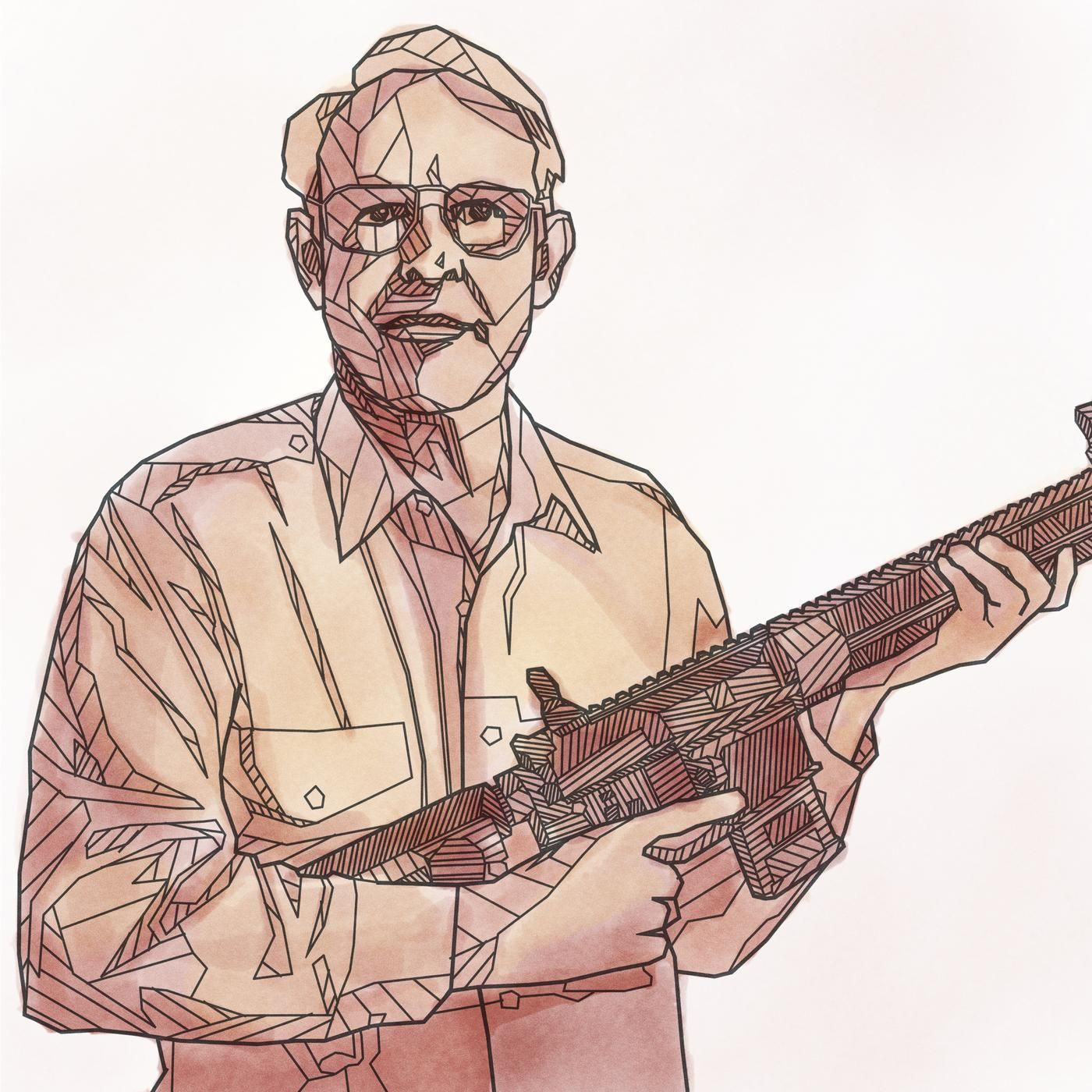
Radiolab
Radiolab Presents: More Perfect - The Gun Show
01:09:15
The shooting in Parkland, Florida on February 14, 2018, reignited an increasingly familiar debate about guns in this country. Today, we’re re-releasing a More Perfect episode that aired just after the Las Vegas shooting last year that attempts to make sense of our country’s fraught relationship with the Second Amendment. For nearly 200 years of our nation’s history, the Second Amendment was an all-but-forgotten rule about the importance of militias. But in the 1960s and 70s, a movement emerged — led by Black Panthers and a recently-repositioned NRA — that insisted owning a firearm was the right of each and every American. So began a constitutional debate that only the Supreme Court could solve. That didn’t happen until 2008, when a Washington, D.C. security guard named Dick Heller made a compelling case.
Loading summary
Transcript1 lines
- [00:00]
A
VRBO helps you swap gift wrap time for quality time. Go to VRBO now and book a last minute week long stay and save over $390 this holiday season. Book your next vacation rental home on VRBO. Average savings $396. Select homes only. Oh, wait, you're listening. Okay. All right. Okay. All right. I'm listening to Radiolab Radio Lab from wnyc. This is Radiolab. I'm Jad Abumrad. A couple months ago, the more perfect team and I released a doc called the Gun show, which was sort of an off angle look at the history that underlies how we talk about guns in this country. It landed right after the mass shooting in Vegas, unfortunately. Here we are again. We noticed that a lot of more perfect listeners were sharing this doc in the wake of what happened in Florida. So we thought we would share it with Radiolab listeners who haven't heard it yet. It's reported by a guy named Shawn Romsvoor. At the time, Sean was a producer at MorePerfect. He's since gone on to start a daily podcast at Vox called Today Explained. I encourage you to check out that show. Sean is amazing. In the meantime, here's the gun show. I think we should start with one of the most confusing sentences in the Constitution in the Bill of Rights. Not we the people. Not that one. No, I got a different one. A well regulated militia, comma, being necessary to the security of a free state, comma, the right of the people to keep and bear arms shall not be infringed. Say it one more time. Say it. Sorry. Okay, from the top. And do it with the commas again. Sure. A well regulated militia, comma, being necessary to the security of a free state, comma, the right of the people to keep and bear arms, totally unnecessary, comma, shall not be infringed. Is that the one that's about guns? Adam Winkler, who wrote the book on the second Amendment and that book is called Gunfight, he's a journalist, he's a professor of law at ucla. He said it's almost as if James Madison, the author of the amendment, had just discovered this wonderful new thing, the comma, and wanted to put it in there as many times as possible, which is like a nerdy professorial joke. But like, seriously, what is it? And like, it had to be this one. Couldn't it have been the amendment about like quartering soldiers in your house that was really confusing? Yeah, no, it's the one about guns that they made, like just indecipherable. And ever since Generations of Americans have been confused by the language of the second Amendment. So when this thing was written, we had just fought this war with the British, this Revolutionary war, and they tried to win it right from the get go by coming for our guns. So these new states are looking at this new federal government. They're going like, meh, we don't know if we want to trust you quite yet. So there's this second amendment that says you guys can fight back, like the feds aren't gonna disarm you, your militias can keep your guns. That's, I think, what we agree on. But then after that, you just look at the sentence. Then it's not just the commas that are confusing. If you look at the sentence as a whole, the pieces don't seem to fit together. There's some noun confusion. I mean, it's obvious that this sentence is about someone's right to bear arms. But who, who gets that right? At the beginning of the sentence you get a well regulated militia. The militia states have a right to form militias, to assemble groups of people, and those people gotta have their guns. That's easy enough. But then later in the sentence, there's comma, the right of the people to keep and bear arms shall not be infringed. The people? Which people? Those people over there in the militia. All people. If you mean all people, why did you say militia? It's like the first clause seems to point to some sort of collective right to bear arms, and the second clause seems to point to some individual right to bear arms. Like this is supposed to be a popularly ratified document. It's actually not that easy to read. It's really not that easy to read. And it wasn't that easy to read then. This is Jill Lepore, a staff writer at the New Yorker magazine. She's also a professor of American history. I study the 18th century. I'm really trained as a 17th and 18th century American political historian. And Jill says from the beginning, when people thought about the second Amendment, they tended to just focus on the first part. That the primary motivation for the amendment is about militias, a well regulated militia. That this confusing sentence was widely read as this collective militia right, not an individual one. And this truth, that the second Amendment in fact guarantees the right of an individual to bear arms and that the government, federal government, can't limit that in any fashion. Jill says that just didn't exist. It wasn't a thing. I disagree with the way you've characterized that. Although what you've said is stated in the media frequently. This is Stephen Holbrook. He's represented the anarchist in several cases. I've written several books on Second Amendment issues. He actually thinks, A, the sentence is just fine as is. I don't think it's complicated at all. B, the framers were thinking about an individual right to bear arms. The Second Amendment refers to the right of the people to keep and bear arms. First Amendment refers to the right of the people peaceably to assemble. I mean, who is that? It's individuals. They're not some kind of collective that doesn't exist in reality. So which was it? That's a really good question, Jad. I mean, it's a complicated one, too. What I can tell you is that people I spoke to for this story said, at least in the 20th century, when the Second Amendment was taught in law schools, it was taught as this sort of antiquated, outdated thing that had to do with militias. Not so much individual rights. But Jalapora, Steven Holbrook, and their respective side, something they can both agree on, is that this super sacred Second Amendment, this third rail of our American politics today, that just was not a thing. It was not like that. It was utterly ignored. People ignored this amendment. When I was an undergraduate undergrad at Florida State University, I went to the Florida Supreme Court and started looking up law review articles on constitutional law issues. And I found that there was hardly anything written about the Second Amendment. No one ever wrote about that except for the Third Amendment. There was no amendment that was less written about, less legislated, less debated, less the subject of Supreme Court conversation than the Second Amendment. Don't get me wrong. This is not to say people didn't think about guns. People had guns, states regulated guns. But for most of our history, the Second Amendment, it was like. It was like sort of the runt of the Bill of Rights litter. Like no one argued about it. It's a striking thing to think about. There was no fight. No fight. How surprising that is given its centrality to our political conversation today. What an extraordinary transformation because there was this window of time where all of this changes. The script just flips. There's 200 years of everything being chill, and then suddenly you get this. I want to say those fighting words. From my cold, dead hands. From my cold, dead hands. Cold patriots. So basically, in just a flash, the Second Amendment goes from being ignored to being, you will not disarm me explosive to being radioactive. And in the process, we start to read the thing totally differently. All of a sudden, it's this hotly debated thing that's got nothing to do with that first part and everything to do with the second part. If she gets to pick her judges. Nothing you can do, folks. Everything to do with my personal right and me. Although the second amendment people. Maybe there is, I don't know, but. And what I want to know is how did that happen? How do we start reading the second Amendment the way we do now? And what I found out is that in the modern history of the gun rights movement and how we read the second amendment can be boiled down to these three totally unrelated, disjointed, seeming revolutionary events. Am I under arrest? Am I under arrest? One, an invasion in Sacramento. Then I'll be damned. Let me. What in the hell. Two, a revolt in Cincinnati. What credential do you have to tell me? I'm wrong. And finally. Bam. Number three, a reckoning at the Supreme Court of the United States. Unbelievable. What is that sound? Can you imagine that? So you're gonna tell me the story in three chapters. Yeah. The honorable, the Chief justice and the associate justices of the Supreme Court of the United States. Oyea oy. Oh yea. All persons having business before the honorable the Supreme Court of the United States are admonished to draw near and give their attention. For the court is now sitting. God save the United States. In this honorable court. Chapter one, the invasion. I'm a carpenter, I'm a builder. I'm a stand up comedian, jazz drummer, structural repairman, high performance aircraft. I did electromagnetic field black light non destruct testing for the Gemini missile program. And I'm an expert shot with guns. I was an expert shot with guns when I was 12 years old. I was raised a hunter and a fisherman. Besides being a carpenter and a builder. When I'm 12 years old, my father buys me a high powered rifle, holotip ammo. I can knock an elephant down with that shit. You see what I'm getting at? Can I get you to tell me we had to start at some point. Can I have you tell me just your name and where we are and who you are? Is that cool? Can we do that first? Is that cool? I know it seems pretty obvious. My name is Bobby Thiel. I created the Black Panther Party. I'm the founding chairman and national organizer of the Black Panther Party. Where are we standing right now? We're in Oakland, California. The Black Panthers. Yeah. So this transition from the militia to the individual, my right to bear arms. You could argue that that whole individual gun rights movement started in the 1960s with the black Panthers in Oakland. It's an unlikely and kind of surprising origin for what's known as the individual rights interpretation of the second Amendment. We were a different breed here. I mean we some well read guys. We knew our shit, we know our history. Just to give some Context, this is 1966. It's been an exceptionally bad time for race relations all over the country. More than 1500 people were in the streets. Protesters are being beaten at sit inside, there's attack dogs and hoses. And in particular, tensions between police and Negroes throughout the country are getting worse. There was major tension between the black community and the police. One of the cities most troubled by animosity between police and negroes is Oakland, California. In the late 60s, there were several high profile incidents of officers shooting unarmed black men. This is what was happening, you know, and what we did is that, yeah, we took a position. October 1966, Bobby Seale and his friend Huey P. Newton, they start this organization called the Black Panthers, the Black Panther Party for Self Defense. Now, Huey, Bobby's co founder, Huey was two years in law school. He was going to the University of San Francisco School of Law. And one day he's sitting there, as you do in law school, thinking about the law, thinking about Malcolm X, thinking about what he can do in Oakland. And it hits him. The second Amendment of the Constitution guarantees the citizen a right to bear arms on public property. That they could argue that the second amendment gave them a right to have a gun. He said, that's a constitutional, democratic, civil, human right. And no one had ever said that before. Well, there's always been those who claim that the Second amendment protected an individual right to bear arms. But Adam Winkler says people who argued that were in the minority, they weren't taken too seriously. This was one of the first times that the individual rights reading was forced into the mainstream because coming out of law school class, Huey tells Bobby, if we have a right to bear arms, we individuals, then we can patrol the police, observe the police. Tell him if we. I said, you're talking about patrolling the police. What legal. You're in law school. So what legal status do we have? Huey pointed to that second half of the second Amendment. The right of the people to bear arms, to possess and bear arms. Okay. He also pointed to a California state law that said you could carry a gun as long as it wasn't concealed. If the gun is not concealed, it's not illegal. So the Black Panther started policing the police. We did. They would go out in armed patrols and follow police cars on 7th Street. Bobby told me about the first time they did it in West Oakland, California, a nightlife district. He says it was a weekend night. A police officer had pulled over some guy, and they started watching from down the street and. And a crowd starts to gather and. Is Huey holding a gun? Yes, he's holding a shotgun. What kind of gun is a shotgun? It's a shotgun. A shotgun that I bought him. That gun, you see, when it had. It's a high standard gun. It cost 89 or $79. I bought the damn gun. I says, here, Huey, you got you a shotgun now. So you've got this white cop on one side of the street arresting somebody, and on the other side of the street, you got a dozen black guys holding shotguns strictly for observation. I was standing in a line. I had everybody standing in line. He told me the moment the cop noticed, he immediately stopped what he was doing with the guy. He had pulled over and walked over to them and said, you have no right to observe me. And Huey says, no. California State Supreme Court ruling states that every citizen has the right to stand and observe a police officer carrying out their duty as long as they stand a reasonable distance away. A reasonable distance cost you is 8 to 10ft. I'm standing approximately 20ft from you, and I'll observe you whether you like it or not. He said, man, what kind of Negroes are these? Let me see that gun. No, you cannot touch my weapon. The cop says, are you a Marxist? And he would say, are you a fascist? Are you a Marxist? Are you a fascist? Then the cops say, well, I asked you first. And you say, and I asked you second, are you a fascist? So, I mean, it's like a standoff. And this is where the dominoes start to fall. The standoff resolves itself peacefully, but the cops in Oakland are not happy, and they. They immediately start running this up the chain. Next thing we know, we've got to protect society from nuts with guns. And I think we should act, and we intend to act. Mulford. State Assemblyman Mulford, who represented Oakland, is trying to put a bill in Stop the Black Panthers. It's my intention to make it a mystery to have loaded rifles and shotguns and weapons in public places. So, Bill. The Mulford act is up for debate at the California State Capitol in Sacramento. And Bobby Seale decides the Panthers should be there for the debate and that they should take their guns. I took a delegation, an armed delegation to the California state legislature, May 2, 1967. I had six women and 24 males. And how many guns? 23 guns. And were they loaded? Yes. So they roll up to the assembly in Sacramento, and guess who happens to be waiting for them right there on the front lawn of the Assembly. What are we talking? What year are we talking now? Guess who's governor? I don't know. Who was the governor? Guy by the name of win one for the giver, Mr. Ronald Reagan. I went up there. When we got there, Ronald Reagan happened to be on the front line. Reagan. Reagan. I did not know he was going to be there on the front lawn. That's insane. He was on the front Lawn talking to 200 future leaders of America. Kids. Kids. So you got Ronald Reagan 50, 60ft from us and a bunch of white kids in 1112 hanging out on the front lawn of the State building in Sacramento. And this is like the 1960s. This would be insane now, but some of the kids saw us with our shotguns on our shoulders. And he says, some of the kids come running over where we are. They thought we were a gun club of some kind. And then the press followed. So Reagan's like, what's going on? The press is like, what's going on? And Bobby Seale, I says, I'm gonna read a statement. The Black Panther Party for self defense calls upon the American people in general. And that's when I read the statement and the black people in particular to take careful note of the racist California legislature, which is now considering legislation aimed at keeping the black people disarmed and powerless at the very same time. Racist police agencies throughout the country are intensifying the terror, brutality, murder, and repression of black people, et cetera. And he says while he was reading that, uniformed Capitol guards come running out, grabbed Ronald Reagan, took him in the opposite direction from us, away from the kids. Okay? And so we decided to go inside because the assembly was in session at the time. Next thing I know, we're all loading on three elevators. Here's shotgun, rifles pointing up, cameras, and it's crowded. Body touching body crowded. When they got off the elevator, he asked someone, which way to the spectator section so the Panthers could watch the legislature debate the bill. Somebody says, this way to the right. And so I walk into this door, and as I walk into the door, the president pro temp in the state Assembly. We're on the actual floor of the Assembly. This is not the goddamn spectator section. I said, come on, get the hell out of here, man. We in the wrong goddamn place. They walked into the state Capitol with shotguns. Wait a minute. Am I under arrest? Am I under arrest? You place him under arrest. And then all hell breaks loose. Am I under arrest? Take your hands off me. If I'm not under arrest, am I under arrest? I'm telling you to take your hands off me. I turn around and I see state assembly, white state assemblymen ducking down behind their desks. If I'm under arrest, I'll come. If I'm not, don't put your hands. Is this the way the racist government works? Don't let a man exercise his constitutional rights. If my sweater's ripped, you will get. You can point to this forgotten, unknown moment here in the State building in Sacramento as like the game changer for the conversation about guns in America. Because suddenly overnight, we were on the front pages of newspapers around the world. We were a ragtag organization with this profound international notoriety. But in being introduced to the world, you had a lot of people going, wait, what? Like there's a bunch of black men rolling around with guns walking into the Capitol building when there's kids around? What came of that? That protest? By the end of that month, the Mulford act passed. The law said no one could carry a loaded weapon inside city limits, within 150ft of police public property. This was directed at the Black Panthers. We know it was. Now people have all kinds of opinions about the Black Panthers and what they did, particularly after Huey Newton. The shooting happened at 5am later that same year was arrested for shooting and killing a CO. A pool of blood marks the spot where 23 year old officer John Fry was found fatally wounded. The case was eventually dismissed. But what seems clear is that the Black Panther's decision to use the second Amendment to arm themselves to show up armed at the state Capitol in California inspired a vigorous backlash. FBI director J. Edgar Hoover today asserted that the Black Panthers represent the greatest internal threat to the nation. Americans thought a revolution was about to break out right here at home. This led to a whole new wave of gun control laws in California, but also federal gun control, many of which seemed to be targeted towards African Americans rather than just reducing gun violence. Suddenly America was like, we've got to get guns off the streets. But the irony was that even though those laws were designed to disarm left leaning black radicals, many white rural conservatives thought that they were next, that government was going to take their guns next. Every action creates a reaction. And at the same time that this Panthers thing is hitting front pages of newspapers around the world, you've got assassinations, you've got race riots, you've got Vietnam protests. All of a sudden everyone's clamoring for gun control, Democrats and Republicans. In fact, there is absolutely no reason why out on the street today a civilian should be carrying a loaded weap. Reagan. Reagan. That was the exact same day as the Black Panthers showed up at the state Capitol in Sacramento with their shotguns. So Reagan, Reagan was into gun control. Reagan's got his fingerprints all over this thing. What's happening here is the Black Panthers show up in the Capitol, Sacramento and Ronald Reagan react. They create some gun control, then there's even more gun control, even federal gun control. And a lot of people are sitting at home watching this, and they start to get very upset. Which brings us to chapter two, the Revolt. And I'm sitting there going, you know, we can't allow this to happen. Oh no, I can buy the damn pistol that I want to buy these two guys. John Aquilino, I live in Rockport, Texas. Joseph Tartarow, Buffalo, New York. They get us there. And they've both been into guns pretty much their entire lives. My father was a veteran of World War I. Did some recreational shooting with my mother. I used to love to go to the amusement park and spend all day shooting 22s at little things that moved in the shooting gallery. But neither one of them was particularly hardcore about their gun beliefs until around the time the Black Panthers came along. You mean the fact that here are a bunch of people who were slightly darker complected than New England Ivy League grads running around with firearms? Did that scare people? Hell, yes. Did it scare you? No, it didn't scare me. John told me, Joe, as well, that it wasn't the Panthers themselves that were the problem. I don't like anybody that tells me I can't do something. It was all the gun control laws that came in the wake of the Panthers when the Gun Control act was passed in 1968. Today we begin to disarm the criminals and the careless and the insane. A lot of things disappeared that I had been used to. Joe says he starts to see gun shops in his neighborhood close. Like the furniture store in Buffalo that used to have a shotgun for $5. They stopped selling them. And he says that just really bothered him because the reason you have a gun is for protection. Yeah, it's like another form of insurance, which wasn't an abstract idea for him. Buffalo in the 60s and 70s, not the safest place in the world. His house was even broken into. I can only describe it as a home invasion. I mean, these guys actually battered their way through two doors. Joe says he and his wife and his dog huddled in one room with a gun while these two guys stormed through his house and robbed him. I think they grabbed my wife's purse, maybe some other money and they left. I mean, by the time the police got there, they want. Joe's whole relationship with firearms is sort of predicated upon that, this idea that it's for self defense. And here he's got people breaking into his house, he's got the cops not being there for him, he's got the government trying to take his gun away. So what do you do? You join the NRA then? I join to fight this gun control stuff. But this came at a moment where the NRA was at this point, crossroads unlike any it had seen before or since. Back when Joe joined In the early 70s, the NRA was not the die hard supporter of gun rights that we know today because according to Adam Winkler, it was never meant to be. The idea behind the NRA, marksmanship continues to be fundamental right down to this day, was to increase civilian marksmanship training so that the next time there's a war, Americans would be capable of fighting it. And you know, you don't hear much about the NRA's founders, but the NRA was formed in the 1870s, right after the Civil War by a reporter for the New York Times who thought that the union soldiers had been so ineffective in the Civil War because they were not familiar with firearms. Really? Yeah, for like 100 years their main focus was like teaching boy scouts how to shoot straight, not the second amendment. And apparently if you go back through issues of American riflemen in the 40s and 50s, it's like the NRA's version of Playboy guns instead of girls. You'll be amazed that you can't find a single mention of the second amendment anywhere in those magazines. The NRA at that point was sort of like a gun trade group. They were not super political. And the people who ran it, they were hunters, gentlemen, hunters. They were just like these wealthy businessmen who like to hunt, according to Joe, rich guys who, you know, they were hobbyists. But you had all these people coming in, like Joe and like John, who were convinced that guns weren't about shooting ducks, they were about self defense, protecting yourself against criminals in a time of starkly rising crime rates. And this would lead to this straight up head on collision at the nra. Now right when Joe and John joined the nra, the organization had just for the first time sort of set up this lobbying army. Yeah, it was the brand new institute for Legislative Action. John actually got hired to work there in 1976. And the institute for Legislative Action was supposed to fight for gun rights on Capitol Hill. That's what they both wanted it to do. But let's put it this way. We were the. If you would, the bastard stepchildren of the National Rifle Association. Really? Yeah. When the Institute for Legislative Action was formed in 1975, the NRA refused the institute any office space in the building. In the mid-70s, the part of the NRA that lobbied politicians had to rent office space from the hotel next door to the nra. I mean, it was crazy. And then right after he was hired, 78 people fired. Very interestingly, there was a big firing. And then there was word that the NRA wanted to move, leave Washington, D.C. sell the headquarters there and move to Colorado Springs. And what's in Colorado Springs? Well, the Olympic camp. They were going to move to headquarters and put it near this, the Olympic sports training group, so that they could then start writing all the magazines about all the Olympic sports. They really didn't know what the hell they were doing. They wanted to turned the NRA from organization of firearms owners to a publishing company. They wanted to get out of the politics business. The older guard didn't seem to have the stomach for whatever gunfight some members wanted to have. They were very moderate. They thought, like, maybe we should try and kind of get out of this whole gun business thing. Well, hey, not just kind of getting out. John says there was even a moment when a report surfaced that suggested that we should change the name of the association. Really? Yeah. They were gonna take Rifle out. Tell me more. Tell me everything. Nra, do you remember what any of those proposed names were? No, but they were considering at least taking Rifle out. Oh, yeah, huh? Yeah. And it bridled. I mean, I was just so pissed off. And that's when the seeds of revolt were planted. A few months later. I'd like to call to order the 129th annual members meeting. This is from one of those meetings. Cincinnati, Ohio, 1977. The annual NRA meeting of members. I think it was May, but I'm not sure. May 22, they had a big auditorium, the Cincinnati Convention Center. A thousand people showed up. Somewhere between 1,000 and 1,500, ladies and gentlemen. Oh. Now, prior to this big meeting, there had been little meetings, secret meetings. Joe and a few other guys from Illinois, Texas, Arizona. They've been going back and forth by phone, by mail. At one point, they even met up at a motel in Florence, Kentucky. And they decided to form a small but fierce faction within The NRA and your secret group, did you have a name? Did you call it something? We were called Federation for the nra. Called ourselves the Federation for nra. And this tiny group planned a couple honorary life. It was a hot, steamy night in Cincinnati. The Federation members were all wearing buttons that said National Rifle association with the word rifle underlined. We wore orange hats. We had walkie talkies to connect with each other. How many people were there? Somewhere between 10 and 15 of us. They spread out through the crowd. How does the meeting start? Do you remember? Well, basically. Please remain. You know, they did all the niceties. I pledge allegiance to the flag. Pledge of allegiance. Would you bow your heads with me, please? Opening prayer. Lord, you are awesome. Blah, blah, blah, blah, blah. And then to a little business. There are four microphones on the floor. If there are any items you'd like placed in the. On this agenda now is the. When it came time for the members, part of the meeting, where members submit proposals, which happens in, like, this super parliamentary sort of way. This guy, Neil Knox, he was part of their group, he kind of bull. Rushed the microphone and he said the gathered members have a list of bylaws that they would like to have voted on. Translation, we've got these 15 demands, these shifting demands. I'm not sure if that's more or less than Martin Luther. The demands are basically number one. We demand that the NRA not move its headquarters. Cancel that. We demand the Institute for Legislative Action, which you want to kill, should have more power. Do Hell yes. Hell yes. And we demand that the current NRA leadership be replaced. We wanted to take over. So the Federation guy's making all these demands. What was crazy was that the leadership of the NRA that was running the meeting, they just sat there. They were, like, dumbfounded. But every time the federation guy would make a motion, Judge Porter would say the agenda. Are there seconds? You know, do I have a second? There are many. Okay, the motion has been made. And the floor debate would begin. People would start to speak for and against each amendment. The Federation members would use their walkie talkies to coordinate. Who. Who spoke at what microphone? How many votes did you need that day? I think at least 600 votes. And how many votes did you think you had? If you needed 600 or so, how many did you think in? We had the slightest idea going in. We anticipated 50, 50 support. So as each of the 15amendments are being debated, the insurrectionists are running around in their orange caps with their walkie talkies trying to rally support from everyone. That discussion debate lasted eight hours. It went from 7:00pm til close to 4:00am yeah. And nobody left. They were all there. There were tense moments. I mean, we really didn't know where we could pull this off. But Joe says one of the big turning points is when a guy named Bob Kukla gets up to the mic. He was at the time the head of the Institute for Legislative Action. He gets up to the mic and he played a tape. You remember cassette tapes, right? This was one that Bob Kukla secretly recorded. I don't know how he did it, but what you hear on this tape is Bob Kukla talking to his bosses at the NRA and they're yelling at him, berating him for going to war. Every time somebody talks about gun control, they're basically like, bob, shut up. He had the tape there and he played it over the. And of course that electrified the audience. You could actually hear people gasping. So the rank and file was audibly. This was evidence that the other side was going to deep six gun control fights. These people on the tape, they're all in the room. Oh yeah, they're sitting next to him at the table. Over the course of this one nine hour meeting on a hot, steamy night in Cincinnati, every single one of those 15 proposals was passed. We stopped the building in Colorado, ensured the NRA wouldn't change its name. They fired the leadership. You know, just like the political savants that figured that Hillary's going to get the presidency. They just absolutely took it in their shorts. And maybe the biggest change, the most important change was that the Institute for Legislative Action, this political lobbying arm of the nra, it was given the keys to the car. They were not the bastard stepchild anymore. They were the nra. You know what? We won. They had essentially staged a coup. What do they call 1776? It's the same thing. And when the sun rose the very next day, the NRA had a whole new board committed to a new no compromises view of the Second Amendment in which individuals have a right not only to have a gun, but to have almost any gun that they want and have as many of them as they want and can take those guns almost any place they want. American gun politics literally changed overnight. And just shortly after this coup, the NRA bolts this abridged version of the Second Amendment right on the wall, front and center in its headquarters. The right of the people to keep and bear arms shall not be infringed. Nice, clean, totally uncomplicated sentence conveniently Left out was the part that talked about a well regulated militia being necessary for the security of a free state. I asked John, like, what about the militia? Part of the sentence? Why doesn't the NRA ever talk about that? The militia. Okay, now you get me back to asking you. And Sean, I love you dearly, trust me, but it's only been in the last, what, 30 years that if you'll pardon the expression, the bullshit media has turned the militia into a four letter word. The militia is you and me, Sean. Post coup, the NRA took a very hard line on gun control and became an irrepressible political force in America. Friend and FOE Agree. The NRA's power to scare congressmen lies in its ability to to mobilize its members in any congressional district at the touch of a computer button. They start pouring millions of dollars into lobbying. And just a few years after that Cincinnati revolt, the NRA endorses its first presidential candidate. The Constitution does not say that government shall decree the right to keep and bear arms. Reagan. Reagan. The Constitution says the right of the people to keep and bear arms shall not be infringed. At this point, everyone and their uncle leaves out the militia part of the Second Amendment, which is why Americans eventually start to forget that the militia clause, or whatever you want to call it, even exists. I wish I'd saved that and said it last. One of the things that most surprised me when I was doing this research. This is Jill Lepore again. I think by the 1990s, the new interpretation of the Second Amendment had so penetrated popular opinion that people were more familiar with the Second Amendment than with the First. By 1991, the First Amendment, that eclipse really kind of shocks me. But even if the Panthers and the President and the American people are all down to sort of forget about this militia clause of the Second Amendment, it didn't mean a lot without the courts. And the courts, particularly the Supreme Court, weren't buying it. Chief justice of the US Supreme Court from 1969 to 1986, Warren Berger, I think he's on giving a television interview and he says that this new interpretation of the Second Amendment was one of the greatest pieces of fraud. One of the greatest pieces of fraud, I repeat the word fraud on the American public by special interest groups that I have ever seen in my lifetime. And this was a Republican appointed by Richard Nixon. No. Yeah, yeah, yeah. So the Supreme Court, obviously not dying to have this conversation at the moment, but it's not just the Supreme Court. If you look at the federal courts, the entire federal court system in America. There has not once in our history, at this point, over 200 years, been a single instance of some gun law, some state, local gun law, getting up to a court and the court going, you know what? You can't do this. It violates the Second Amendment. That's just not even happening. Really, not even. There wasn't a Second Amendment smackdown anywhere in federal court. This isn't. This isn't a thing. Wow. And getting the Supreme Court to weigh in on it, that doesn't even look like it could be a thing. It doesn't even look like much more than a fantasy. Until. For gun owners, there are few names that have become synonymous with protecting our rights. Ladies and gentlemen, please welcome a true patriot, Dick Heller. Dick Heller showed up. Freedom, Freedom. Let's hear it. Freedom. And changed everything. Well, hello, freedom lovers everywhere out there. Freedom, freedom, freedom. Wow. Let's hear it. Wow. Wow. One, two, three. This is the gun show for more perfect featured here on Radiolab. We'll continue in a moment. Hi, this is Aaron Majors from Austin, Texas. Radiolab is supported in part by the Alfred P. Sloan foundation, enhancing public understanding of science and technology in the modern world. More information about Sloan@www.sloan.org. radiolab is supported by Bilt. Nobody wants to pay rent. But if you have to, Bilt works to make it more worthwhile. By paying rent, through Bilt, you can earn flexible points that can be redeemed toward hundreds of hotels and airlines, a future rent payment, your next Lyft ride, and more. But it doesn't stop there. You can dine out at your favorite local restaurants and earn additional points, get VIP treatment at certain fitness studios and enjoy exclusive, exclusive experiences just for built Members. Every month earn points on rent and around your neighborhood, wherever you call home, by going to joinbuilt.com Radiolab. That's J-O-I-N-B-I-L-T.com Radiolab. Hey, I'm Molly Webster, and this is an ad by BetterHelp. So it happens every year. The seasons are changing, the days are getting shorter, and basically, once it becomes dark outside of my window, I feel like the rest of the world disappears and I'm just alone and there's nothing left to do but watch just television. This November, Better Help is asking everyone to reach out to our people. That could be your family, your friends, your neighbors, and to resist this call of the cocoon. And, yeah, reaching out can take some courage. I've got text messages from January I haven't responded to and you know what? I'm gonna write em back right now. Hi, sorry I've been missing. How are you? Why don't we all do this sooner? Therapy is the same way. BetterHelp makes it easier to take that first step. You just fill out a short questionnaire and they find a licensed therapist who they think you'll like. Our listeners get 10% off their first month at betterhelp.com Radiolab that's betterhelp.com Radiolab Radiolab is supported by Rippling Finance. Teams often spend weeks chasing receipts, reconciling spreadsheets and fixing errors across disconnected spend tools. This can be frustrating. And that's not software as a service. That's sad software as a disservice. If you've been thinking about replacing stitched together tech stacks with one platform for all departments, Rippling can help. Rippling is a unified platform for global hr, payroll, IT and finance, helping people replace their mess of cobbled together tools with one system designed to help help give leaders clarity, speed and control. By uniting employees, teams and departments in one system, Rippling works to remove the bottlenecks, busy work and silos in business software. With Rippling you can choose to run hr, IT and finance operations as one, or pick and choose the products that best fill the gaps. Right now you can get 6 months free when you go to rippling.com Radiolab learn more at R I P P l I n g.com Radiolab terms and conditions apply. Radiolab is supported by Planet Visionaries, the podcast created in partnership with the Rolex Perpetual Planet Initiative. Stay tuned for a trailer and subscribe wherever you get your podcasts. I'm Alex Honl, professional rock climber and founder of the Honl Foundation. I wanted to let you know about a brand new season of the Planet Visionaries podcast in partnership with the Rolex Perpetual Planet Initiative. This is the podcast exploring bold ideas and big solutions from the people leading the way in conservation. Join me in conversation with the likes of climate champion Mark Ruffalo, biologist and photographer Christina Mittermeier, and one of the most successful conservationists of our time, Chris Tompkins. Join us on Planet Visionaries wherever you get your podcasts. God save the United States in this honorable court Heller in 2008 revives the Second Amendment. Or you could even say breathes life into the Second Amendment because the second Amendment had never been taken truly seriously by federal courts until 2008. Oh yay. Oh yay. That's Sandy Levinson, professor at the University of Texas Law School. Jad Abumrad here with Sean Ramiswerm. Alright, so Sean, Jad, I guess now it's time for chapter three. Dick Heller. Right? Yeah, we're gonna get to Dick. But first, here's what's going on in America. The Second Amendment has become one of those issues that can get you elected. Academics have begun to have a vigorous debate about its meaning, but the Supreme Court is still staying out of it. They're leaving this up to the states. We which already have all sorts of gun laws of their own to deal with. But then December 12, 2000, Republican George W. Bush becomes president elect after a divided U.S. supreme Court effectively halts recounts in Florida's contested presidential vote tally. But then George W. Bush is elected. The NRA likes George W. Bush. The National Rifle association and he likes them, has a proud history of protecting the Second Amendment to the United States Constitution. And in 2001, the Bush administration declared that the Second Amendment protected an individual right to own guns. UCLA law professor Adam Winkler, again, a right that was not limited as most courts had held, to service in the militia. And almost right after he gets into office, Bush's Attorney General John Ashcroft put out a letter, this public letter to the NRA announcing that the Department of Justice had adopted a new interpretation of the Second Amendment. And then right around the same time as the Bush administration memo came out, a court in Texas ruled that the Second Amendment did protect an individual right to bear arms. And that was a first. It's a big deal. Before this, all the decisions had kind of veered in the other direction. And because of that court ruling and John Ashcroft's letter, these three libertarian lawyers, Alan Gura, constitutional attorney Bob Levy, I chair the board at the Cato Institute. And Clark Neely, he's at Cato too. Thought the timing was right. We thought that was a good time for some litigation. Now, one thing you need to know about these guys is that they weren't necessarily doing it for the guns. They had no association with the NRA or the gun rights movement. For them, it was more about getting the government to back off. In our country, when the government wants to restrict our liberty, it is incumbent on the government to make the case for it. It's incumbent on the government to say, here's why you shouldn't be permitted to exercise that right. So that was their angle. That is interesting. I've always wondered why the gun rights movement has become such a proxy war for like anti government ism. Yeah, well, I mean, if you think about it, and this is something Professor Sandy Levinson told me, is that sort of embedded in this amendment is the very idea that you can take up arms against a government to protect yourself and your fellow man from tyranny. On the far right, or occasionally on the far left, you find people who are willing to say this, that this is really what's terrific about the second Amendment. But mainstream conservatives and mainstream liberals are not very happy with those arguments. They are embarrassed by them. And so mainstream conservatives want to talk about self defense against burglars, and mainstream liberals want to talk about how the second amendment protects state organized militias and almost nothing else. Anyway, getting back to the story, these three libertarian lawyers, they decide to put together a case. And their idea was to target this really restrictive gun law. In D.C. all handguns were banned. You could own a shotgun or a rifle, but the law specifically made it illegal to ever put a round in the chamber, even in self defense. So there was really fun. We described it as a ban on all functional firearms. But in order to challenge that law, they needed to find a plaintiff. Interesting. How do you find a plaintiff? You look for somebody who got robbed. What do you do? Well, we can actually instigate litigation. We can take out a full page ad in the New York Times saying, you want to vindicate your second Amendment rights, give us a ring. We just essentially got the word out. Talked to, I would say between two and three dozen people. They all had really interesting stories. They found a guy who was gay, gentleman named Tom Palmer, who had previously been assaulted when he lived in California because he was gay, was almost murdered by a skinhead mob, homophobic thugs, and he wanted a gun to protect himself. Our lead plaintiff was an African American woman named Shelley Parker. She was trying to protect herself against local drug dealers and the cops actually told her she should get a gun, which was illegal. Weird. So they had this whole group. So we ended up with three men, three women, mid-20s to their early 60s. Four of them were white, two of them were African American. And the problem they ran into was that all of these super sympathetic plaintiffs didn't have this very special thing they needed to bring a case. Standing. Standing, which is just a legal term, meaning they didn't have a sufficient grievance to be in court. Like if you're gonna bring a case, you have to show that you've been actually harmed by not being able to get a gun. You have to show some physical, concrete proof that harm has been done, that you've been denied a gun. And none of the plaintiffs had that. Except for one guy, Dick. Are You Sean? I am. That's me. Great to meet you. And you. Dick Heller. What does your hat say, Sean? This is my favorite hat. Make America free again. So he actually gets paid by the freedom with a big western handgun in the center. And it looks like you drew a trigger out there. Is that what you did? Well, it was missing a trigger, so we had to update it. Who's we? Me. Okay. I met Dick right outside the Supreme Court, the building where he became famous. He's a slim 75 year old white guy, sports glasses that look straight out of the 70s. Got a situation here you want to cross? Sure. What's the situation? The anti Trump protesters are here. I actually happened to meet him in D.C. the day after Trump won the election. They hate freedom. Apparently the President elect was visiting the White House. There were protesters everywhere. Pull out your knife. Not my president. They're out. Anti Trump protesters. Don't you like freedom? What about freedom? What about freedom? Most of the protesters that were passing us were white, but just as a few young black men pass us by, he says, see you on the plantation. Love Trump's. Hey, freedom. Make America drums again. Freedom. See you on the plantation. Yeah. Why'd you say that? We in Washington, we call it the government plantation. You didn't mean you kids are about to be slaves or something? Cause that's how I interpreted it. Well, yeah, the more power government has, the less freedom you have. The closer you get to ball and chain of a plantation. There's a pretty good place to eat right there if you're here for a couple of days. Have you been in there? I have not. Yeah, pretty good. Okay. Hyatt Regency. This is good for you. We can do this. Sure, yeah. Great. We ended up talking at the Hyatt, which is just down the street from the Supreme Court, and Dick explained to me that his journey with guns like John and Joe began pretty casually, like 1976. He's living in D.C. and one day he's sitting at home. I was watching my hero, Matt Dillon gun smoke Michael. Different Matt Dillon. You ain't going nowhere. And he had this long barreled handgun. I was about 30 years old and I figured, golly, I should own my first gun. So I went and bought my, what I call my Matt Dillon Special High standard.22 revolver. Matt Dillon Buntline. And it was just, I live in America, We're a cowboy society. I should have a cowboy gun. There was just nothing, no really deep thought to it. But then just a few months after he got that gun in October of 1976, a trend that started with the Mulford act and the Black Panthers back in Sacramento hits Washington dc. DC Gun control regulations outlawed firearms ownership. You get that? Gun law, which outlawed all handguns. So I had some choices. I could turn it into the government. Not gonna happen. I can throw it in the Dipsty dumpster. Not gonna happen. Or there was another option. I could go to jail. Not gonna happen. Eventually, he decides on option D. Give the gun to his brother. Well, my brother lived in Maryland, so that made it very convenient. Did you just go visit your gun in Maryland? What did you do? Yes, I would go visit and caress and use my gun. What did you use it for? Target practice, of course. Dick made his gun visitation situation sound functional. But I think like any long distance relationship, it mostly sucked because more and more he didn't feel safe where he lived. I lived about 10 blocks from the Capitol building, Right across the street from the number one most infamous drug dealer den in the city called Kentucky Courts. Every night at 2am the chief drug dealer would fire a 9 millimeter into the air, empty the clip and that was the signal every night at 2 o' clock that drug dealing was over for the day. It's clear that living through the crack epidemic in D.C. really shaped a lot of Dick's views on guns. So in the years after the handgun ban, Dick starts the very long process of finding a way to get his gun back to D.C. and he eventually even quits his desk job to pursue getting his gun back full time. I'm all over Capitol Hill and I see security guards have guns. Well, golly, why can't I be a security guard? Golly, maybe that would help me have a gun that I can't have on my own. Golly. Let's see how easy or not easy this is. Golly. One step leads to another. Golly. Just like that, Dick was able to have a gun in D.C. but only during the day and only while he was working. Like Barney Fife. At the end of my shift, I have to turn in my gun and my bullet. And they kept it there. And they kept it on site in the safe. Yes. He finally starts looking for some help, some legal help. I knew Washington because I'd lived here and I'd gone to some think tanks, Cato and Heritage and some others, I knew they existed. And right around the time Dick's out there looking for some help, turns out these lawyers are out there looking for some. Dick. No, no. He actually wasn't their ideal sympathetic guy. I was told repeatedly, and it was in print that I was the worst choice, was less than optimal, you know, because of that plantation thing, he said. Or he would always talk smack about the federal government in interviews. One day, Clark Neely put a note in my hand and said, dick Heller, this is what you say, I just wanted a gun to protect my house. Shut up. So he wasn't their favorite plaintiff, but Dick did one thing that no one else had done, which is besides just wanting an illegal handgun in dc, he actually filled out an application to register a gun that he already possessed again in Virginia and had that application denied. And he had this denial slip or whatever it's called. He, like, literally had this physical proof of his grievance, and this simple, technical, arbitrary, little stupid piece of paper gave him what's known as standing to bring the case. Dick Heller ended up being kind of the last man standing. That was nothing to do. That was not our choice. Regardless, he became their guy. And these three lawyers, they take the case to the D.C. court. And the judge, after inspecting it, said, the case can go forward. Magic moment, This magic moment. The Supreme Court is entering the debate over the Second Amendment right to bear arms. Today's case has aroused huge interest among citizens and politicians alike, and it has divided even the President and Vice President. Chapter 3 the Reckoning. March 18, 2008. The Day the Heller case was argued at the Supreme Court, everyone understood how high the stakes were. Outside in front of the Supreme Court, protesters by the hundreds were marching and chanting in favor of gun rights and in favor of gun control. Journalists from all over the world descended upon the Supreme Court that day. And inside the Supreme Courthouse, not a creature was stirring, not even a mouse. You could have heard a mouse, I say. And everybody is just quiet. And you could hear your heart beating. And suddenly, bam. And then, oye, oye, oye. The clerk yelled at the top of his lungs. And then there's a strange sound. What can that be? It was the swishing of the robes of the justices as they ascended the steps to the bench. Unbelievable. We will hear argument Today in case 07290, District of Columbia v. Heller. This was the first time in our history the Supreme Court would directly try to figure out what the Second Amendment means. Mr. Dellinger. And immediately. Good morning, Mr. Chief Justice. It may please the court. DC's lawyer, Walter Dellinger, gets up and jumps right into it. The Second Amendment was a direct response. And he sort of begins with the central question, like, what was James Madison thinking when he wrote this super confusing sentence, like, 200 years ago? Was he thinking about the individual people and the right to own a gun, or was he thinking about the collective right of the militia to own a gun? And the first text to consider is the phrase protecting a right to keep and bear arms. And he says, if you look at the phrase, the phrase keep and bear arms, how it was used at the time, every person who used the phrase bear arms used it to refer to the use of arms in connection with militia service. Dillinger says that if you look at some of Madison's rough drafts of the Second Amendment, it's pretty clear that when he says people have a right to bear arms, all he really means is like report for duty. Even if the language of keeping and bearing arms were ambiguous, the amendment's first clause confirms that the right is militia related. It's essential if you're right, Mr. Dellinger. Chief Justice Roberts jumps in, is like, whoa, whoa, whoa, whoa, whoa. Why would they say the right of the people to keep arms if they meant just the people in the state militias? Why wouldn't they say state militias have the right to keep arms? Mr. Chief Justice, I believe that the phrase the people and the phrase the militia were really in sync with each other. The Federalist Farmer uses the phrase the people are the militia, the militia are the people. If that's right, doesn't that cut against you? If the militia included all the people? It includes all the people. Yes, I do believe it includes all the people. At this point, everyone sort of jumps in, a bunch of justices start interrupting each other. It's kind of like a scrum. And they're all trying to figure out, okay, so when Madison wrote the phrase the right of the people to keep it bare arm shall not be infringed. Like, who were the people he was talking about? Thinking of the people, what those words meant was the people. Just the militia or everyone, all the people. What is the relationship between the second part of the sentence, the people part, and the first part of the sentence, the militia part? They go into, like, Smithsonian common law. Right. He speaks of common law. Scottish highlanders. Scottish highlanders for some reason at one point. Well, the subject is arms. In both clauses. They even sort of start to diagram Madison's sentence, I think, as this court. And the net result, according to Adam Winkler, was the four liberals, Steven Souter, Breyer, Ginsburg, seemed to want to emphasize the militia part of the sentence. And then you had the four conservative justices, Scalia, Thomas, Alito, Roberts, who seem to want to emphasize the people part of the sentence. The second part, I don't See how there's any contradiction and team people's team captain, the quarterback. The first chair that day was without a doubt, Justice Antonin Scalia. Why isn't it perfectly plausible, indeed reasonable to assume that since the framers knew that the way militias were destroyed by tyrants in the past was not by passing a law against militias, but by taking away the people's weapons? Justice Scalia, of course, was a very conservative justice, grew up in Queens. This is Joan Biskupic, longtime reporter covering the Supreme Court. She's also written a biography of Justice Scalia. He was an avid hunter, and he grew up at a time when young men were trained in firearms in high school. Marksmanship has played a vital role in our crime even from the time he was a kid at school in Queens. He said he used to carry his gun for rifle practice at school on the subways of New York. Can you imagine doing that today in New York City? You're being unrealistic in thinking that the second clause is not broader than the first. The principal purpose here is the militia. The second clause goes beyond the militia and says the right of the people to keep and bear arms. Why have the first clause? I mean, what's it doing? I mean, what help is it going to be? What you hear throughout the arguments is that Scalia is very, very forwardly pressing. This sort of individual rights argument speaks of the right of the people. And justices like David Souter are arguing back, saying, what about the collective, the militia? This goes on for well over an hour. The justices sort of grilling the lawyers, arguing amongst themselves, everybody trying to figure out what was in James Madison's head, until finally, Justice Breyer, one of the liberal justices, is like, you're saying that this is unreasonable. Hold the phone. And that really is my question. Forget what Madison intended. There's no way for us to know. Let's talk about now let's talk about gun violence. This sentence was most definitely written about muskets. What about handguns and assault rifles? What is reasonable now? 80 to 100,000 people every year in the United States are either killed or wounded in gun related homicides or crimes or accidents or suicides. But suicides are more questionable. That's why I say 80 to 100,000. Now, in light of that, why isn't a ban on handguns a reasonable or a proportionate response on behalf of the District of Columbia? Because, your honor, for the same reason that was offered by numerous military officers at the highest levels of the US Military at all branches of service. Writing in two Briefs, they agree with us that the handgun ban serves to weaken America's military preparedness because Alan Gordon Gura basically argues when you take away people's guns, they're going to be less prepared if and when they enlist in the army, to which Justice Breyer's like, they can still practice shooting with their rifles, which weren't banned in D.C. they can go to gun ranges, I guess, in neighboring states. But does that make it unreasonable for a city with a very high crime rate, assuming that the objective is what the military people say, to keep us ready for the draft if necessary, is it unreasonable for a city with that high crime rate to say no handguns here? You want to say yes, that's. That's your answer? Well, you want to say, yes, that's correct, but I want to hear what the reasoning is, because there's a big crime problem. I'm simply getting you to focus on that. That, by the way, was Justice Scalia to telling Alan Gura how to answer Justice Breyer's question. The answer is yes, as Justice Scalia noted. And it's unreasonable, and it actually fails any standard of review that might be offered under such a construction of the individual right, because proficiency with handguns as read. Anyway, the oral arguments last 97 minutes, far longer than most other cases. And going into the arguments, many Supreme Court watchers figured the case would be a close 54 decision, and it could go either way. And as with all of these close cases, the question was, what would Anthony Kennedy, the swing justice, do? As in so many issues in America, it comes down to what does Anthony Kennedy believe? So at the oral argument, and I had the good fortune to be at the oral argument in the Heller case, everyone was looking to hear, what would he say about the Second Amendment? His was really the vote that counted. And the very first comment he made, it had nothing to do with the concern of this remote settler to defend himself and his family against hostile Indian tribes and outlaws, wolves and bears and grizzlies and things like that? One of the first things he said was about bears, like, not bear arms, but grizzly bears. And the point Kennedy was trying to make was clear. Don't you think the framers had other reasons that they wanted people to have guns other than just being in a militia? What about people being in their homes and just needing to defend themselves? And that's when I silently screamed at the top of my lungs so nobody could hear me, yes, we win something. We return now to the historic Supreme Court decision handed down this morning. Justice Scalia has our opinion this morning. In case 07290 District of Columbia versus Heller. We hold the the Second Amendment guarantees an individual right to have and use arms for self defense in the home and that the District's handgun ban, as well as its requirement that firearms in the home be rendered inoperative, violates that right. It was a groundbreaking reading of the Second Amendment. Scalia minimized that clause referring to a well regulated militia and put the stress on the second clause that referred to the right of the people. The people will not be deprived of the right to keep and bear arms. This was as good as it got for him on the bench, I think. So rip the militia clause December 15, 1791 to June 26, 2008 a pretty good run if I'm being honest. For the first time in the history of these United States, the courts definitively declared that the Second Amendment gives every American the right to a gun for self defense. It was a great day for freedom in America. It was a great day for the Constitution, a great day for citizens. It was a great day for gun owners. It was a great day for fearful people. Of course, not everyone agreed. I mean, to me it's a travesty. This is Jack Rakove, professor of history and political science at Stanford University. He filed a brief for the Court and he says Scalia's reading of the history is just wrong. The Second Amendment was not about individual right. You could argue that we shouldn't even be talking about history because the nature of firearms has changed so radically from the 18th century to our own time. And that ultimately. And here he echoed Justice Stevens in his dissent. The Court has decided to enter today into a political thicket. I think it's all politics, to be honest. I mean, I don't really believe in constitutional law anymore. I think constitutional law is a fiction. You know, it's become so highly politicized in so many areas. I think constitutional law is bunk. Wow. I just, you know, I'm a historian, I'm not a lawyer, so I don't have any professional stake in defending the judiciary. But there's a very big but he did have a major caveat. The next section of our opinion points out that like most rights, the Second Amendment right is not unlimited. He said like all rights, it's not absolute. It is not a right to keep and carry any weapon whatsoever, in any manner whatsoever, and for whatever purpose, which is very important to keep in mind. Our opinion should not be taken to cast doubt on long standing prohibitions on the possession of Firearms by felons and the mentally ill, or laws forbidding the carrying of firearms in sensitive places such as schools and government buildings. This is another thing that we tend to forget. The decision says every individual has a right to bear arms. But most interestingly, like, the decision also says, of course we need gun control. The word Heller has come to represent, like, Second Amendment rights. Like, are you for Heller? Are you against Heller? Even though being for Heller is being for gun control. That's confusing. Yeah, it is. I mean, after all this time, it's still just totally confusing. You have a right to a gun, but the government has a right to regulate it. Dick Heller gets his gun back in D.C. but D.C. still also has all sorts of gun regulations. And you see the same pattern all over the country. Some states are lenient, some are super strict, and both approaches seem to comply with Heller. In a way, the Heller decision is. Is just like all those commas and clauses that we started with in James Madison's sentence. It's this confusing declaration that leaves the door wide open for interpretation, which obviously sucks. We could have used a little more clarity on how to live with this Second Amendment right to bear arms. But that door being open, it gives us an opportunity, I think. An opportunity to get it right, to fix it. And it seems like now would be a pretty good time. That was the gun show from More Perfect and producer Sean Ramsfurm. Huge thanks to him. Check out his show today explained on Vox. Thanks to Adam Winkler. We drew a lot of the information from this episode from his book Gunfight. Thanks also to Susie Lechtenberg, Kelly Prime, Julia Longoria, Sara Kari, Jenny Lawton, Alex Overington, and the full More Perfect team, which includes, you know, Christian Farius, Linda Hirshman, Ellie Mistile, David Gable and Michelle Harris. Thank you to Oye for all the Supreme Court audio. They're a free law project in collaboration with the Legal Information Institute at Cornell. Leadership support for More Perfect is provided by the Joyce Foundation. Additional funding is provided by the Charles Evans Hughes Memorial Foundation. I'm Chad Abumrad. Thanks for listening.