← Radiolab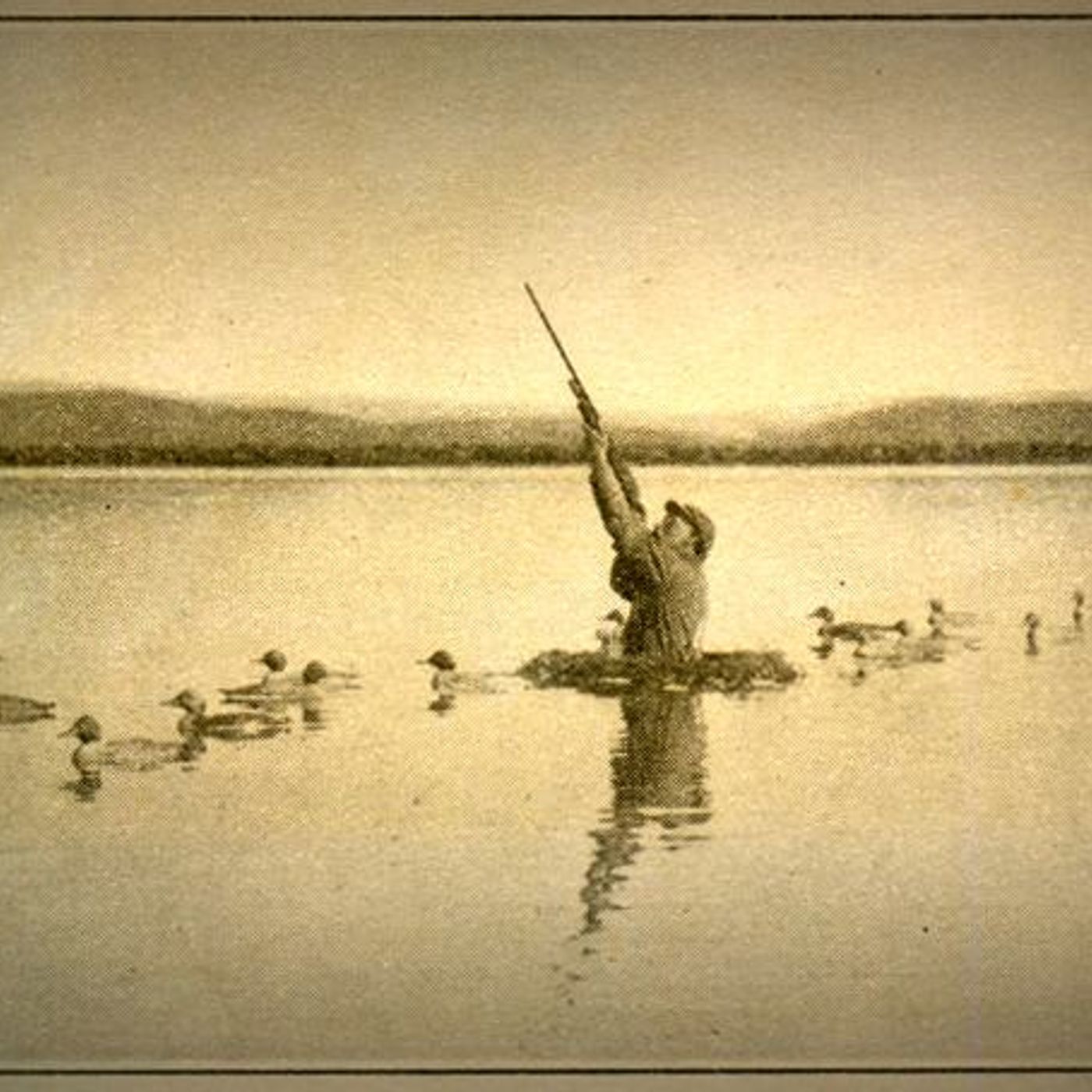
Radiolab
Sex, Ducks, and The Founding Feud
00:21:56
Jilted lovers and disrupted duck hunts provide a very odd look into the soul of the US Constitution.
Loading summary
Transcript207 lines
- [00:02]
Robert Krulwich
Oh, wait, you're listening.
- [00:03]
Jad Abumrad
Okay.
- [00:04]
Joseph J. Ellis
All right.
- [00:06]
Kelsey Padgett
Okay.
- [00:07]
Robert Krulwich
All right.
- [00:09]
Nick Rosenkranz
You're listening to Radiolab.
- [00:11]
Duncan Hollis
Radio Lab shorts from wnyc.
- [00:17]
Robert Krulwich
Yes.
- [00:18]
Jad Abumrad
And npr.
- [00:22]
Robert Krulwich
Today on the podcast, Robert, we're going to talk constitutional law, federalism, and the intricacies of international treaty practice.
- [00:32]
Jad Abumrad
Oh, God.
- [00:33]
Robert Krulwich
You ready? No, it's gonna be good. It's gonna be good. It's gonna be good. Cause I have help.
- [00:38]
Jad Abumrad
Hey, guys.
- [00:38]
Kelsey Padgett
Hi, Kelsey.
- [00:39]
Jad Abumrad
Hello.
- [00:40]
Robert Krulwich
Kelsey Padgett has reported this segment and just listen to how it starts.
- [00:45]
Jad Abumrad
So this story starts with a betrayed spouse.
- [00:49]
Robert Krulwich
Oh, you see?
- [00:50]
Kelsey Padgett
Oh, it's much better. I'm coming back to my seat.
- [00:52]
Robert Krulwich
Get some popcorn.
- [00:54]
Duncan Hollis
My name's Duncan Hollis.
- [00:56]
Jad Abumrad
He's not the betrayed spouse.
- [00:57]
Kelsey Padgett
Nope.
- [00:57]
Duncan Hollis
I'm a professor of international law here at Temple University in Philadelphia.
- [01:02]
Nick Rosenkranz
And I'm Nick Rosenkranz.
- [01:03]
Jad Abumrad
And not.
- [01:04]
Nick Rosenkranz
I'm a professor of law at Georgetown. I'm also a senior fellow in constitutional studies at the cato institute. So Mrs. Bond.
- [01:14]
Jad Abumrad
That's her. That's our betrayed spouse. Carol Ann Bond, 36, lives in a suburb of Philly.
- [01:19]
Nick Rosenkranz
Discovered that her husband was having an affair with her neighbor.
- [01:22]
Jad Abumrad
Actually, it was worse than that. This woman was her best friend.
- [01:27]
Duncan Hollis
Not only that, she finds out that her friend is pregnant via her husband.
- [01:32]
Jad Abumrad
He got her pregnant.
- [01:35]
Kelsey Padgett
Oh.
- [01:36]
Jad Abumrad
Oh, my God. Yeah. And this is her best friend and her husband of 14 years.
- [01:40]
Duncan Hollis
You know, she was quite upset, distraught.
- [01:44]
Robert Krulwich
Enraged, I would imagine. Yeah.
- [01:45]
Jad Abumrad
Carol made threats. There were confrontations. The other woman is named Merlinda Haynes, by the way. And eventually, Carol Anne Bond, she did.
- [01:55]
Nick Rosenkranz
What anyone would do. She got a bunch of toxic chemicals, and I do it all the time.
- [01:59]
Jad Abumrad
And she tried to poison her best friend repeatedly.
- [02:03]
Robert Krulwich
Oh, back up for a second. Where would she have gotten the chemicals from?
- [02:06]
Nick Rosenkranz
She worked, I believe, at a lab.
- [02:08]
Duncan Hollis
She works for a chemical company. I think it's Roman Haas.
- [02:11]
Kelsey Padgett
So she's a biochemist.
- [02:12]
Jad Abumrad
She's actually a microbiologist. But she grabs some chemicals from her office.
- [02:16]
Duncan Hollis
I think she also orders some off the Internet, Amazon.com, but they're pretty serious chemicals.
- [02:20]
Robert Krulwich
Like what?
- [02:21]
Duncan Hollis
Well, one was arsenic based, and in large enough doses. And when I say large doses, I'm talking teaspoons, not gallons. It can, you know, cause serious injury and can be fatal.
- [02:32]
Jad Abumrad
So anyway, she took these chemicals, she went over to her best friend's, or, well, her former best friend's house, and.
- [02:37]
Nick Rosenkranz
She spread them on the doorknob and on the mailbox, the door to her.
- [02:43]
Duncan Hollis
Car, and they're visible, I guess. I guess you can see them.
- [02:47]
Robert Krulwich
So the best Friend isn't fooled. Nope.
- [02:48]
Duncan Hollis
She calls actually, the local police. The local police tell her to take her car to a car wash. They said, oh, you know, it could be drugs. Get the car washed off.
- [02:56]
Jad Abumrad
They kind of just blow her off. But it keeps happening. Over the course of, like, half a year. This happens 24 times. 24 powder attacks, according to the court briefs. You know, the police were just not being very responsive. She called them over a dozen times, and they tested it to see if it was cocaine. But once they figured out it wasn't, they didn't really do anything. So finally she tells the post office.
- [03:22]
Duncan Hollis
And it was the post office that actually sent out postal inspectors, and they set up a hidden camera, and they.
- [03:27]
Jad Abumrad
Videotaped Carol Anne Bond in the act.
- [03:30]
Kelsey Padgett
They get it on tape.
- [03:31]
Robert Krulwich
Mm.
- [03:31]
Duncan Hollis
That's how they identify her as the person putting the chemicals, you know, on the mailbox.
- [03:36]
Robert Krulwich
I didn't know the post office did stuff like that.
- [03:38]
Duncan Hollis
To be honest, I didn't either.
- [03:40]
Robert Krulwich
That's so. I think of them so differently now.
- [03:43]
Nick Rosenkranz
Yes. And I think if there's a moral to the story, it is do not mess with the males. They take that very seriously.
- [03:52]
Jad Abumrad
Actually, there's a whole lot more going on than just messing with the mail because of what happens next. So according to Nick Rosenkrantz, generally things.
- [04:01]
Nick Rosenkranz
Like assault or attempted murder, those are state crimes.
- [04:04]
Jad Abumrad
In most circumstances, the federal government can't charge you with murder. The post office, that's a federal institution. So when they caught Carol Anne Bond, they kicked this up to the federal.
- [04:14]
Nick Rosenkranz
Attorney, who then went ahead and brought a federal case.
- [04:18]
Jad Abumrad
And here's the thing. They ended up charging Carol Ann Bond with violating the International Chemical Weapons Treaty.
- [04:27]
Joseph J. Ellis
What?
- [04:27]
Nick Rosenkranz
We should be clear. The victim got a tiny thumb burn and ran cold water on it and was fine. So this is. We're not. This is not murder.
- [04:38]
Kelsey Padgett
Well, that makes this all the more odd.
- [04:40]
Nick Rosenkranz
Very odd.
- [04:41]
Kelsey Padgett
When I poison someone, the last thing I'm thinking about is violating an international treaty.
- [04:45]
Robert Krulwich
We should never have you over for lunch.
- [04:48]
Kelsey Padgett
But, no, really, why would they charge you with that? I don't understand.
- [04:51]
Jad Abumrad
Well, if you actually read the treaty.
- [04:53]
John Bellinger
The statute simply says that it's a crime to use a toxic chemical for other than a peaceful purpose.
- [04:59]
Jad Abumrad
That's the exact language. And that guy, That's John Bellinger.
- [05:02]
John Bellinger
I served as the legal adviser for the Department of State under Secretary Condoleezza Rice.
- [05:07]
Jad Abumrad
And John says that even though it sounds a little weird, this is exactly what this treaty was meant for.
- [05:12]
John Bellinger
For people using chemicals, highly toxic chemicals.
- [05:15]
Jad Abumrad
For Non peaceful purposes.
- [05:17]
John Bellinger
Exactly right.
- [05:18]
Robert Krulwich
And that's what happened here.
- [05:19]
Jad Abumrad
Imagine if she had killed a bunch of postal workers.
- [05:22]
John Bellinger
Then I don't think anybody would complain.
- [05:24]
Kelsey Padgett
But to charge her with an international treaty violation, it just seems. It seems too big for the little lady.
- [05:29]
Jad Abumrad
It was really odd to her lawyers too. I bet they're like, look, in the Constitution you have laid out what the federal government could do. This is not one of those things. You can't just take a treaty and use it to reach into the very local life of a normal person. That's a huge overreach.
- [05:47]
Kelsey Padgett
Sneaky, frankly.
- [05:49]
Jad Abumrad
And now this case is before the Supreme Court and it's become an ideological battle that goes way beyond Carol Anne Bond, her cheating husband, or her adulterous best friend.
- [05:58]
Robert Krulwich
And I would argue that this case, as weird as it is, raises some really important issues about how the world is changing and about one of the most fundamental questions that is at the heart of America. I really believe that.
- [06:12]
Kelsey Padgett
Well, you have to defend that position. What do you mean?
- [06:15]
Robert Krulwich
Let me take you back to the beginning. Okay, sure.
- [06:20]
Joseph J. Ellis
My name is Joseph J. Ellis. I am a historian. I've written the book called Founding Brothers and my most recent book is called, what's it called? Revolutionary Summer.
- [06:30]
Kelsey Padgett
You are a modest man.
- [06:32]
Robert Krulwich
So Joseph Ellis has written a. He's Pulitzer Prize winning author, has written a bunch of books about the founding of our country, the Revolutionary War. And there is a scene in one of his books.
- [06:42]
Joseph J. Ellis
Book called American Creation didn't sell as many as Founding Brothers.
- [06:46]
Robert Krulwich
Doesn't matter to me because it has this one passage that when I read it, I was like, wow, I've never thought of this country that way.
- [06:53]
Joseph J. Ellis
To set the scene, you want to be real specific.
- [06:56]
Robert Krulwich
It's September, September 1787. Philadelphia.
- [06:59]
Joseph J. Ellis
You know, it's abominably hot, yet all.
- [07:02]
Robert Krulwich
These great men crammed into a state house. I mean, George Washington, this guy is a stud. Six foot three war hero.
- [07:09]
Joseph J. Ellis
This guy is overwhelming.
- [07:11]
Robert Krulwich
Alexander Hamilton was there.
- [07:13]
Joseph J. Ellis
Hamilton. He would have got the highest grades on the LSATs. I'm telling you, this guy was really smart.
- [07:18]
Robert Krulwich
Even Ben Franklin.
- [07:19]
Joseph J. Ellis
Yeah.
- [07:19]
Robert Krulwich
Who's pushing 81 at this point.
- [07:21]
Joseph J. Ellis
Franklin's there.
- [07:22]
Kelsey Padgett
Oh.
- [07:22]
Robert Krulwich
They all came together to try and figure out, like, how do we do this? Like, if you think about it, it was a puzzle because you've got these 13 colonies which are really like sovereign nations. They were loosely organized into a federation that was about to go bankrupt. So they had to do something. So they're like, okay, let's bring them together into A union. But how do we do that without a king? It was a crazy experiment.
- [07:45]
Joseph J. Ellis
Well, I mean, one thing you gotta realize that at that time in American history, the average person was born, lived out his or her life and died within a 30 mile radius. They don't have cell phones and they don't think about themselves as Americans.
- [07:57]
Robert Krulwich
They thought of themselves as Pennsylvanians, South Carolinians, Bostonians.
- [08:01]
Joseph J. Ellis
There is no real national ethos.
- [08:04]
Robert Krulwich
So that's one problem. Second problem, the founding fathers could not agree, could not agree on the most basic question. If there's not a king, who's in charge? Right. The so called sovereignty question. And on the one hand you had a guy like Alexander Hamilton who got up there and was like, why do we even need states? What's a state? All right, what we need is a federal government that is big and strong and powerful.
- [08:28]
Joseph J. Ellis
That's Hamilton, baby. Hamilton wants a president elected for life. Hamilton wants a senator elected for life.
- [08:33]
Robert Krulwich
On the other hand you had the Thomas Jefferson school of thought which was like, no, no, we just got out of a monarchy for Christ's sake. And the only way we're not gonna get back in one is if we keep the government small, restricted, and all.
- [08:45]
Joseph J. Ellis
Domestic policy belongs in the hands of the states.
- [08:48]
Robert Krulwich
Sound familiar?
- [08:49]
Joseph J. Ellis
Jefferson likes anything in which the government's not gonna be doing much.
- [08:53]
Robert Krulwich
So you had these two very different philosophies. And the way Joe sees it, if.
- [08:56]
Joseph J. Ellis
You let Jefferson have total power, we end up at anarchy. If you let Hamilton have total power, you're gonna end up with a totalitarian state.
- [09:02]
Robert Krulwich
At the convention, the two sides went back and forth and anytime a Hamiltonian type proposal hit the floor, some of the states would say no and they'd shoot it down because they did not want some big government telling them what to do. Especially when the 800 pound gorilla in the room was slavery. So they couldn't agree at all. And into this mess walks our hero, James Madison.
- [09:29]
Joseph J. Ellis
Madison, you know, like Madison's 52120 Madison. He's the kind of guy that, you know, stands in the corners during a dance. He's, you would call him a nerd.
- [09:39]
Robert Krulwich
Madison or you might call him a pragmatist.
- [09:43]
Joseph J. Ellis
Madison wants a clear decision about sovereignty.
- [09:46]
Robert Krulwich
Yeah. Like for example, on local matters, who gets the final say, the states or the federal government? Just give me some clarity.
- [09:52]
Joseph J. Ellis
And he's not going to get it. And he comes to that realization at the very end.
- [09:57]
Robert Krulwich
Because at the end of the convention they have this document. I mean he wrote the original blueprint now there's this new document so riddled with compromises that according to Joe, the basic question he wanted answered wasn't the who's in charge? Question was left kind of vague on all sorts of matters. I mean, who regulates money in banks? Who gets to tax what. Who decides whether new states will be slave states or free states? It was vague. And initially, according to Joe, in a letter that Madison wrote to Thomas Jefferson, he's like, come on.
- [10:30]
Joseph J. Ellis
He's very disappointed.
- [10:31]
Robert Krulwich
He thinks the document's gonna fail and the country's gonna fail.
- [10:34]
Joseph J. Ellis
He doesn't think this is going to last.
- [10:37]
Robert Krulwich
But then Joe says in his writings, you start to see a shift.
- [10:41]
Joseph J. Ellis
He starts to think differently. He starts to say, oh, yeah, wait a second, this could work, precisely because it's unclear. And we found what he calls a.
- [10:54]
Robert Krulwich
Middle station where everyone can see what they want to see.
- [10:57]
Joseph J. Ellis
People come out of the convention, go back to their states, and the guy in South Carolina says, don't worry about slavery. The 10th amendment's going to tell us that they can't do that. The guy in Pennsylvania says, it's just a matter of time before we end slavery. The Constitution becomes successful because the people don't agree on what it means.
- [11:15]
Robert Krulwich
That, according to Joe, was Madison's epiphany.
- [11:18]
Joseph J. Ellis
That the Constitution isn't a set of answers. It's a framework for argument. This is a document which allows us to continue to discuss and debate the core issues that we face. The powers of the presidency, the sovereignty question. The real resolution of the sovereignty question is never achieved, and it eventually leads to the Civil War.
- [11:44]
Robert Krulwich
What I find kind of neat about this is that, like that argument that happens in modern politics all the time about states rights or the size of the government, which can feel like a random argument for me at times, suddenly to know this. I mean, if you buy what Joe's saying, it's not random at all. This is an argument that was actually literally written into our founding document. In some sense, we as a country are the product of that argument.
- [12:09]
Kelsey Padgett
Of course, not everybody agrees with Joseph Ellis. There are people who. Who think that the Founding Fathers had a very specific thing in mind. And if you just go back to their debates and to what they said to each other, that you can find the real, only deep logic for the Constitution.
- [12:24]
Robert Krulwich
But the fact that they disagree with Joe in some sense, doesn't that kind of make Joe's point that you can read this document in 10 different ways?
- [12:30]
Kelsey Padgett
Yes, everyone always argues, always, just to.
- [12:34]
Robert Krulwich
Pick up the thread. I mean, after the Civil War. The argument changes. It gets centered.
- [12:37]
Kelsey Padgett
But the union is still an experiment.
- [12:41]
Robert Krulwich
Yeah. Massachusetts can still do their business differently than Colorado, differently than Vermont.
- [12:47]
Kelsey Padgett
And the jostling between the federal government and the state government doesn't end. It just gets a little quieter. Thank heavens. Because you don't want.
- [12:54]
Jad Abumrad
Unless you're a duck. And our next stop is.
- [12:58]
Robert Krulwich
And this one has everything to do with our poisoner.
- [13:03]
Jad Abumrad
So it's spring of 1919, rural Missouri. You've got Frank McAllister, the Attorney General of Missouri. He's out there with a bunch of friends, and they're pointing their guns at the sky and shooting ducks one after another, after another. And they end up shooting, all in all, 76. He knows he can do this because, you know, he's the attorney general of the state, he knows all the laws of the state, and he knows it's his right to shoot whatever duck is flying in the sky of Missouri.
- [13:38]
Robert Krulwich
It's the state law that you have.
- [13:39]
Jad Abumrad
That's the state law. You can shoot the ducks. So they're out there, they're having this great time, they're having this great haul. They've gotten all these ducks. And then out of nowhere, Ray Holland, the federal game warden, shows up and he says, no, you can't do this. You can't shoot these birds. They're not your property. McAllister says, you, you're wrong.
- [13:59]
Duncan Hollis
This is a matter for the state. You know, it's our sovereignty. We never gave this over to the federal government.
- [14:04]
Kelsey Padgett
So he must have been like, I don't think the federal government does anything to say to me about a duck that was born here. At least I look, I found it in the sky here, I shot it here, it died here, and I'm gonna eat it here. This is my duck.
- [14:14]
Jad Abumrad
But the game warden says, no, it's not York duck. And he arrests them all, setting up a landmark confrontation. Because here's what had happened two years earlier. The administration of Woodrow Wilson was sitting there wringing their hands, thinking, all these people are killing birds at like a non stop pace. And if this didn't stop, you know.
- [14:34]
Duncan Hollis
There was some concern at this period that we were gonna, you know, we were gonna hunt these things to extinction. You know, we might not have any migratory birds at all.
- [14:42]
Jad Abumrad
Problem is, the courts had already told the federal government, this is purely a local matter. You can't make federal hunting laws. But then somebody in the administration has this really great idea, or a really evil idea, depending on how you look at it.
- [14:58]
Duncan Hollis
Maybe if we can get Canada to Cooperate with us. We can do this by a treaty.
- [15:02]
Jad Abumrad
Because there's this clause in the Constitution that says treaties are the supreme law of the land. So maybe if we make an international treaty, then the states will have to go along. Frank McAllister, he sues. And this goes all the way up to the Supreme Court.
- [15:17]
Duncan Hollis
It lands before Oliver Wendell Holmes, one of the more famous justices of the Supreme Court. And he basically says the treaty power is something that was given to the federal government. Don't limit this. This treaty is good. And the treaty and the legislation are upheld.
- [15:34]
Robert Krulwich
So score one for the federal government.
- [15:36]
Duncan Hollis
Score one for the federal government. And in there, you actually have Holmes talking about what the Constitution is. He was this, what, thrice wounded Civil War veteran, and he actually invokes the language of the Civil War, saying, we spent all this sweat and blood to figure out what kind of nation we were going to become for birds. He invokes this language and basically says, whatever we had debated in the past, could the states regulate slavery without federal interference? And Holmes says, no. The side who fought that argument, they lost.
- [16:24]
Jad Abumrad
All this talk about birds and, you know, state versus federal has everything to do with our poisoner, Carol Anne Bond. This case is the precedent upon which the federal government says that they can prosecute Carol Anne Bond, because Oliver Wendell Holmes said that treaties are the Supreme Court law of the land.
- [16:41]
Kelsey Padgett
I don't know. I'm still of the mind that this is a sneaky bit of business by the federal government.
- [16:49]
Robert Krulwich
I mean, it's not sneaky if you're a duck. I feel I must speak on behalf of the ducks here.
- [16:56]
Kelsey Padgett
But no, forget your ducks. This is a Pennsylvania lady doing a Pennsylvania adultery in a Pennsylvania mailbox with a Pennsylvania mood. I mean, there's nothing. There's no birds flying overhead. This is an all Pennsylvania crime.
- [17:10]
Jad Abumrad
But you know, who wasn't doing a about that Pennsylvania? But just to take your side for a second, Robert, please. If you really think about it, you know, and the way that Nick Rosenkrantz thinks about it, this is really troubling. This decision seems to say that theoretically.
- [17:30]
Nick Rosenkranz
The federal government's power is potentially infinite.
- [17:37]
Jad Abumrad
Cause like, say, John Kerry, who's our Secretary of State right now, he goes and makes treaties, say he's talking to Zimbabwe, and we agree that we want to have a treaty about educational standards for children. So we come home and we write a law that says all children must go to public schools. But then that would outlaw homeschooling for children, which is a clear local state matter. But now Suddenly the federal government has a power to do that.
- [18:02]
Nick Rosenkranz
Just seems odd, the idea that the President, the Senate, and Zimbabwe can increase Congress's legislative powers.
- [18:10]
Jad Abumrad
Here's how John Bellinger responds.
- [18:12]
John Bellinger
Is it a theoretical possibility that the federal government might try to go and do that? I suppose it's theoretically possible, but there's no evidence that that happened here. There's no evidence that that has happened in the hundred years since Missouri versus Holland.
- [18:25]
Jad Abumrad
He would say, look, consider the practical.
- [18:28]
John Bellinger
Impact that a decision might have that would cut back on the President's treaty power. Other countries are already highly suspicious of the United States ability to deliver on its treaty commitments anyway.
- [18:41]
Jad Abumrad
John would say, why would any other country want to make a treaty with us if Kansas could back out at any time?
- [18:48]
Robert Krulwich
And like, how do you deal with a question like global warming if everybody is allowed to be left to their own devices?
- [18:54]
Kelsey Padgett
Well, that's a tough one.
- [18:57]
Duncan Hollis
I mean, the reality is that's Duck and Hollis again. We live in a globalized world. Whether it's, you know, dealing with things like climate change, terrorism, shipwrecks, cybercrime, increasingly, these are things we can no longer regulate just within a particular local community or a local society.
- [19:16]
Robert Krulwich
And like, on some level, if we now find ourselves in this world where, like, I can get on the Internet and spend hours and hours playing World of Warcraft with people in Yugoslavia, and yet I've never really talked to my neighbor that's just down the street, like, why wouldn't we all have the same laws?
- [19:30]
Nick Rosenkranz
But, you know, I think the flip side of your question is, fine, the world is very interconnected, but are there still some things that are local? Are there some things left where we could say the federal government doesn't need to be able to reach this?
- [19:43]
Jad Abumrad
And more than that, Nick says that having a bunch of different communities that are governed by different rules, all under the same nation, actually has a bunch of benefits.
- [19:54]
Nick Rosenkranz
Competition, this, the idea of laboratories of democracy, that the 50 states will all try different things as to regulating guns near schools, as to regulating whatever it is, and maybe some state will hit on something brilliant. And if they do, then it will spread and be replicated. And, you know, that theory has been borne out in a lot of different areas. When the feds decide that they're going to come up with a one size fits all national solution, that's the end of the experiment.
- [20:33]
Kelsey Padgett
So, by the way, what happened to Carolyn Bond?
- [20:35]
Jad Abumrad
Well, she went to jail.
- [20:36]
Kelsey Padgett
She's in jail. She's still in jail?
- [20:38]
Jad Abumrad
No, she's out now.
- [20:39]
Kelsey Padgett
So she could go to court and find out whether this thing was. That's cool.
- [20:43]
Jad Abumrad
She could show up.
- [20:45]
Robert Krulwich
What about the poison E?
- [20:47]
Jad Abumrad
What happened to her poison E? She changed her name. She moved away. She's unsearchable now.
- [20:51]
Robert Krulwich
Good. But I hope she moved to Zimbabwe.
- [20:53]
Kelsey Padgett
Is she still living with the guy that gave. Gave her the baby or.
- [20:56]
Jad Abumrad
No, no, no, no. You see. You see, Carol, even though she went to jail for six years, she stayed with her husband.
- [21:03]
Nick Rosenkranz
No way.
- [21:04]
Kelsey Padgett
Really?
- [21:04]
Jad Abumrad
Yeah.
- [21:05]
Kelsey Padgett
She stayed with the man who had a baby with the other lady.
- [21:08]
Jad Abumrad
Yeah, that she tried to poison that lady about. She stayed with that guy.
- [21:11]
Kelsey Padgett
See, that's the thing. Law is interesting, but love, that's complicated. Love is greater than treaties.
- [21:20]
Robert Krulwich
Thank you, Kelsey.
- [21:21]
Jad Abumrad
Thank you.
- [21:22]
Robert Krulwich
Kelsey Padgett, Robert Krulwich, Jada Boomerad.
- [21:25]
Kelsey Padgett
Yeah, that's all of us. I think you've mentioned all of us.
- [21:28]
Robert Krulwich
Yeah. Let's go.
- [21:29]
Kelsey Padgett
So we have to say goodbye to all of you. Bye.
- [21:32]
Robert Krulwich
Happy Christmas.
- [21:34]
Jad Abumrad
This is Bonnie calling from Boston, Massachusetts. Radiolab is supported in part by the National Science foundation and by the Alfred P. Sloan Foundation. Enhancing public understanding of science and technology.
- [21:47]
Robert Krulwich
In the modern world.
- [21:48]
Jad Abumrad
More information about Sloan@www.sloan.org.