← Radiolab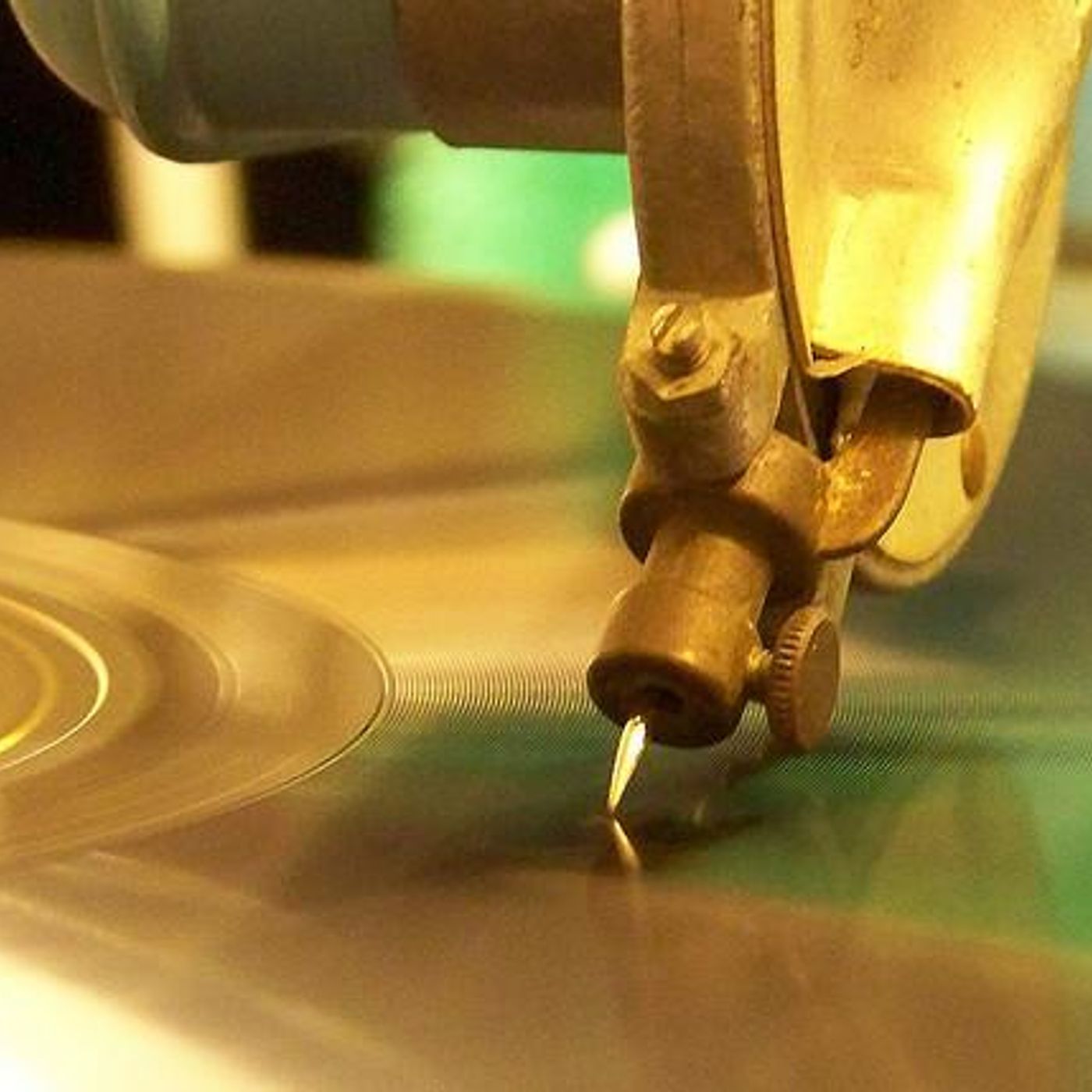
Radiolab
Space Capsules
00:18:25
How would you describe life on Earth to an alien? In 1977, the Voyager spacecraft launched into space. And with it, went the Golden Record-- a sort time capsule, a collection of sounds and images that would describe life on Earth to whomever or whatever might find it.
Loading summary
Transcript69 lines
- [00:00]
Radio Lab Announcer
Your new home is now ready. Dr. Horton, America's Builder has new homes that are ready today with new construction communities in Ellensburg and throughout the Greater Seattle area. Dr. Horton has the right home for you. At Dr. Horton, we're still building with flexible living spaces, smart home technology and two and three car garages. More communities and more homes available every day. Find your new home in Ellensburg now ready@drhorton.com Dr. Horton, America's builder and Equal Housing Opportunity Builder Introducing Fidelity Trader plus, the next generation of advanced trading from Fidelity. Customize your tools and charts and access them seamlessly across desktop, web and mobile for faster trades anywhere you go. Try the all new Fidelity Trader Plus. Learn more about our most powerful trading platform yet@fidelity.com TraderPlus investing involves risk, including risk of loss Fidelity Brokerage Services LLC Member NYSE SIPC member.
- [01:02]
Commercial Narrator
At Lowe's, loyalty is royalty. With Christmas right around the corner, treat yourself for less during the holiday season Rewards members get early online only access to Black Friday doorbuster deals on Thanksgiving Day like the Hisense Side by side fridge. Just $799. Not a member. Join for free today. Lowe's we help you save bow at 11:27 only on Lowes.com, member only doorbusters and Midnight Eastern loyalty programs subject to terms and conditions. See lowe's.com terms for details. Subject to change.
- [01:32]
Radiolab Host or Guest
I quite you're listening to Radio Lab.
- [01:36]
Radio Lab Announcer
The podcast from New York Public Radio.
- [01:38]
Margaret Cho
Public Radio, WNYC.
- [01:43]
Jad Abumrad
And npr. Hello everyone. Jad here from Radiolab. This is the Radiolab podcast. Something a little different this week. A while back we did a program on the Romance of Spirit, and as part of that program I interviewed Ann Druyan, who is Carl Sagan's widow, about how they made the gold record that went aboard the Voyager space capsule. On that record was a kind of mixtape of the human experience. All of these different sounds, music, natural sounds, heartbeats, all kinds of different sounds which represent life on earth so that it would go on this record, go into a capsule, get shot into space, and one day, billions of years from now, be discovered by some alien life form who then play the record and then know about us? That's the idea. We thought, what a cool, somewhat naive, but amazing idea. And it got us thinking, what would we do if we could put stuff on that record? So then we began to ask people around us and eventually tracked down some writers, chefs, artists, different kinds of folks who are out there in the public eye and asked them, what would you put on the record we got a bunch of answers back. We put a few on the show that we broadcast, and a couple we weren't able to include for time. So we're gonna play them for you now. Five space capsules, okay, from five different people, starting with Chef Alice Waters.
- [03:14]
Radiolab Host or Guest
When are they coming?
- [03:15]
Jad Abumrad
No, they're coming.
- [03:16]
Alice Waters
Second Stadium.
- [03:17]
Jad Abumrad
Yeah.
- [03:17]
Alice Waters
9:15. I'm Alice Waters, and I run Chez Panisse restaurant in Berkeley, California.
- [03:25]
Jad Abumrad
Who's the other one?
- [03:26]
Alice Waters
The Ravinians.
- [03:28]
Philip Glass
Six people.
- [03:32]
Alice Waters
When I thought about this, the first thing that came to my mind was a table, because that's a place where people come together to eat. Everyone has to eat. And normally, people of all cultures have gathered around a table of sorts. Maybe not a table that had chairs all around, maybe a fabric that was laid out on the floor. It's a place where we communicate to each other. I absolutely imagine food on the table. We're in a moment of spirit here at the restaurant. So we're serving the first peas. Certainly would have a salad made with all these little young shoots of scallions and little radishes scattered with mustard flowers at this moment in time. And maybe we could have some fish soup with fennel and some grilled toasts. Well, we're drinking a little white wine to begin, and then probably we're going to have some red wine with some cheese at the end. I want the experience of being connected sitting at that table. I love to talk at the table. It's not simply about the food. Yes, I think the food should be delicious, but it's really about communicating, sharing that moment in time. My vision is really about opening people's senses and educating their senses so that they can experience this world in the fullest possible way. Food is a way of doing that. It's an everyday experience that engages your sense of smell and your touch and taste, and it can be a beautiful experience.
- [06:04]
Jad Abumrad
All right, that was Chef Alice Waters. Next up, this you may remember from the space show. We played a part of it. Composer Philip Glass. As you listen, think about what you would put onto that capsule. A song, piece of writing, maybe a photograph. How would you want an alien to best see you and us? Here's Philip Glass.
- [06:26]
Philip Glass
This is Philip Glass speaking. The reason I've chosen Bach is that he had the ability to do two things at once. One was to deal concretely with the language of music. Almost, you can say grammar of music at the same time. While he was doing that, let's say with one part of his brain, he was able to create music that we empathize with. He takes you by the hand, as it were, and walks you into states of being that you didn't even know existed. Bach goes out in the spaceship, whether anybody can hear it or not. We'll put it in the spaceship. But I would also recommend strongly that we bring music in from other world traditions, whether it's from Africa or whether it's kind of a throat singing that you might hear in Siberia or in the Arctic, or a wonderful flute playing that you might hear in South India. I was in India in 1966 or 67, and I was in a small village in the Himalayas called Kalimpong on the border of Bhutan and Tibet. And a friend of mine, a rug dealer, I had been in his shop numerous times to look at his rugs, ran over the shop and said, oh, Mr. Glass, come with me. I want to show you a picture. And he had gotten a hold of a film clip of Gandhi. It was a march he took in the 30s called the. It was known as the Salt March. English had put a tax on the use of salt. Thousands and thousands of people joined him, and they walked into the sea and they took their garments, put them into the water, and harvested the salt.
- [08:26]
Margaret Cho
There is an indefinable, mysterious power that pervades everything.
- [08:32]
Jad Abumrad
I feel it, though I do not see it.
- [08:36]
Philip Glass
And I saw the picture of this tiny little man, really, surrounded by thousands upon thousands of people leading this march, and it was so moving. I think what you'd have to do is get that piece of footage. It articulates in this very simple act how societies change, how people that appear to be powerless and insignificant can bring about huge changes.
- [09:11]
Jad Abumrad
Okay, that was Philip Glass. Now for our third space capsule from author Michael Cunningham.
- [09:16]
Radiolab Host or Guest
My name is Michael Cunningham, and I wrote the novel the Hours. If it were up to me, there are a few things that I would absolutely send into space. I would send a Chopin nocturne. I am always envious of music. Every minute I'm trying to commit a sentence to paper. What I'm thinking is, oh, if only this could be music. My favorite love song is probably Joni Mitchell's Blue. Joni Mitchell is the. Is the voice of our transcendent sorrows. It's remarkable to me that I could listen to Joni Mitchell at 15, before I quite knew what love was, and think, oh, yeah. And I can listen to her at 50 as a scarred veteran of the love wars and think, oh, yeah. One of the things I would. That I find that I listen to over and over again. Bernard Herman soundtrack From Vertigo. I think great Hollywood music is stirring to us because we want to be swept away. It's particular to our species. Emma Bovary wanted to be swept away. Anna Karenini wanted to be swept away. Huck Finn did. And Hollywood at its best best gives us 30 foot tall people who actually feel equal to the passions that we harbor in our tiny little breasts.
- [11:34]
Margaret Cho
She's my daughter.
- [11:36]
Radiolab Host or Guest
Faye Dunaway in Chinatown saying to Jack.
- [11:39]
Commercial Narrator
Nicholson, my sister, my daughter.
- [11:42]
Radiolab Host or Guest
She's my sister. She's my daughter.
- [11:43]
Commercial Narrator
I said, I want the truth.
- [11:45]
Radiolab Host or Guest
She's my sister. She's my daughter.
- [11:47]
Margaret Cho
She's my sister and my daughter.
- [11:51]
Philip Glass
Get it?
- [11:52]
Jad Abumrad
Understand?
- [11:57]
Radiolab Host or Guest
Or is it too tough for you?
- [12:00]
Margaret Cho
Or is it too tough for you?
- [12:05]
Commercial Narrator
We've got some difficult days ahead. But it really doesn't matter with me now because I've been to the mountaintop.
- [12:14]
Radiolab Host or Guest
I couldn't tell you when I first heard that speech by Martin Luther King. It has always seemed to me one of the most more remarkable human instances of faith and love and belief in the face of the worst that can happen.
- [12:34]
Commercial Narrator
And I've seen the promised land. I may not get there with you, but I want you to know the night that we as a people will get to the promised land. So I'm happy tonight. I'm not worried about anything. I'm not fearing any man. Mine eyes have seen the glory of the coming of the Lord.
- [13:13]
Jad Abumrad
Okay, now for our last two capsules. These kind of got lost at space themselves. The audio is a bit crappy. Any case, just imagine you're an alien. You're out there in the ether and you bump into into this capsule, you open it up, find the record, you pop it open, you understand English and this is what you hear. Two space capsules from Margaret Cho, the comedian and author Neil Gaiman.
- [13:35]
Margaret Cho
My name is Margaret Cho. I am a stand up comedian. I'm a fashion designer, an author, a political activist. I'm a filmmaker, I sing and I'm a political commentator on television shows where I get in fights with other pundits. Well, let's see. I would send some people who are eternally beautiful and perfect to me, like Elvis Costello and Bjork, who's also somewhat of an alien. And Tristan and Isolde by Wagner, which is my favorite opera and should be heard by everyone in the universe. I think that my favorite sounds I would send are when a dog hears a siren and then purses his dog lips and tries to replicate the siren. It's a. And we almost never see the dogs on our planet make that o shape with their mouths. I love that sound. I would put up a photograph of the first lesbian couple to be married. We've been over 50 years together and were married in Gavin Newsom's office, secretly in San Francisco just a couple of months ago. I now pronounce you spouses for life. The image of these two women who have been fighting for acceptance and truth and equality for their entire lives and finally getting it for a moment is just so spectacular and heartbreaking and heart exploding at the same time. Let's see. Mandarin oranges canned in heavy syrup. I love them. They're delicious. I mean, they are dangerous. They're not fresh. They are an aberration of nature. They don't taste like that in nature, but they're so tender and delicate and tart and almost like a kiss. I would never, ever want any alien to be deprived of the joy of a geisha. Canned mandarin orange and heavy syrup.
- [16:28]
Neil Gaiman
My name is Neil Gaiman. I'm a writer of things and a storyteller. What would I like to send into space? What would I like to preserve? All right, now you can open them. We'll gaze into the crystal. The wizard of Oz.
- [16:41]
Commercial Narrator
What's this I see? A house with a picket fence.
- [16:44]
Neil Gaiman
The original weatherman.
- [16:47]
Margaret Cho
That's our farm.
- [16:49]
Neil Gaiman
It's an incredibly peculiar movie. I like the idea that an alien race could try and figure out what we were like by watching the wizard of Oz. Her name is, yes, the Munchkins.
- [17:03]
Philip Glass
But there's a.
- [17:04]
Neil Gaiman
There's a strangeness and a hope and an oddness to that film. And some really cool songs.
- [17:10]
Commercial Narrator
Follow the yellow brick road Follow the.
- [17:12]
Alice Waters
Yellow brick road Follow the yellow brick road.
- [17:15]
Neil Gaiman
One thing I'd love to send the aliens, just because I love the idea of thousands upon thousands of brilliant alien social scientists trying to decode it, is the English television series the Office.
- [17:29]
Radio Lab Announcer
Hiya.
- [17:30]
Philip Glass
Come in.
- [17:31]
Neil Gaiman
Which is the kind of comedy that.
- [17:34]
Philip Glass
Just want to know why you think they're leaving.
- [17:35]
Neil Gaiman
Mate. Has no laugh track.
- [17:37]
Philip Glass
I'm not. I'm not thinking of leaving. I am leaving. Sure, sure.
- [17:40]
Neil Gaiman
Some people never quite notice that it's a comedy.
- [17:43]
Philip Glass
It's nothing I've said or done. No, not at all. Definitely not.
- [17:46]
Neil Gaiman
And I would love to send them that because I don't put words in your mouth, but what sort of a boss would you say I am?
- [17:53]
Philip Glass
I'm a good boss.
- [17:54]
Neil Gaiman
I'd love to see what the aliens make of it.
- [17:56]
Philip Glass
Okay, David, listen to me, all right?
- [17:58]
Neil Gaiman
No, you listen to me, Tim. I like depressing art sometimes. I mean, I like the range, the whole chromatic range of art. I'd love to send Lou Reed's street hassle sort of 18 minute song about horrible urban grunge and death and prostitution.
- [18:16]
Radio Lab Announcer
And murder and stuff was in Matilda.
- [18:20]
Jad Abumrad
Ripped out her wallet.
- [18:21]
Radio Lab Announcer
The sex report.
- [18:22]
Alice Waters
You smiled in dismay.
- [18:24]
Neil Gaiman
I'd love to send the aliens that as well. It's like, hey, we do this too. I like the idea of pointing out to them that we come in an awful lot of flavors. I was thinking perhaps I'd send them the Arabian Nights. The complete giant 2000 page Arabian Nights. Just because there are so many stories. It would give them a very skewed view of the world as this place that's based in and around 11th century Baghdad. But that may not be a bad thing. The joy of books is there is nothing that encapsulates humanity. You'd want to send them Shakespeare. I think if I had to send just one line, it would be we are such stuff as dreams are made of.
- [19:10]
Jad Abumrad
Well, that is it for the Radiolab podcast this week. These space capsules were made with the crew from back in the day. Alice Waters was produced by Jocelyn Gonzalez. Neil Gaiman was produced by Muki Yorki, Ranta. Margaret Cho produced by Trent Wolby. Who else should I thank? Lulu Miller, our current producer, Ellen Horn, our executive producer and of course our funders, the Alfred P. Sloan foundation, the Corporation for Public Broadcasting and the National Science Foundation. I'm Jad Abumrad. Thanks for listening.
- [19:56]
Radio Lab Announcer
Your new home is now ready. Dr. Horton, America's builder has new homes that are ready today. With new construction communities in Ellensburg and throughout the Greater Seattle area. Dr. Horton has the right home for you. At Dr. Horton, we're still building with flexible living spaces, smart home technology and two and three car garages. More communities and more homes available every Find your new home in Ellensburg now ready@drhorton.com Dr. Horton, America's builder and equal housing opportunity builder.
- [20:29]
Commercial Narrator
When the flu is keeping you up at night, don't try to tough it out. Knock out your flu symptoms with NYQUIL Intense Flu. You got this. It provides powerful relief of your flu symptoms so you can sleep well through the night. NYQUIL Intense Flu the nighttime sniffling, aching, aching fever. Best sleep with a flu medicine. Use as directed. Keep out of reach of.