← Radiolab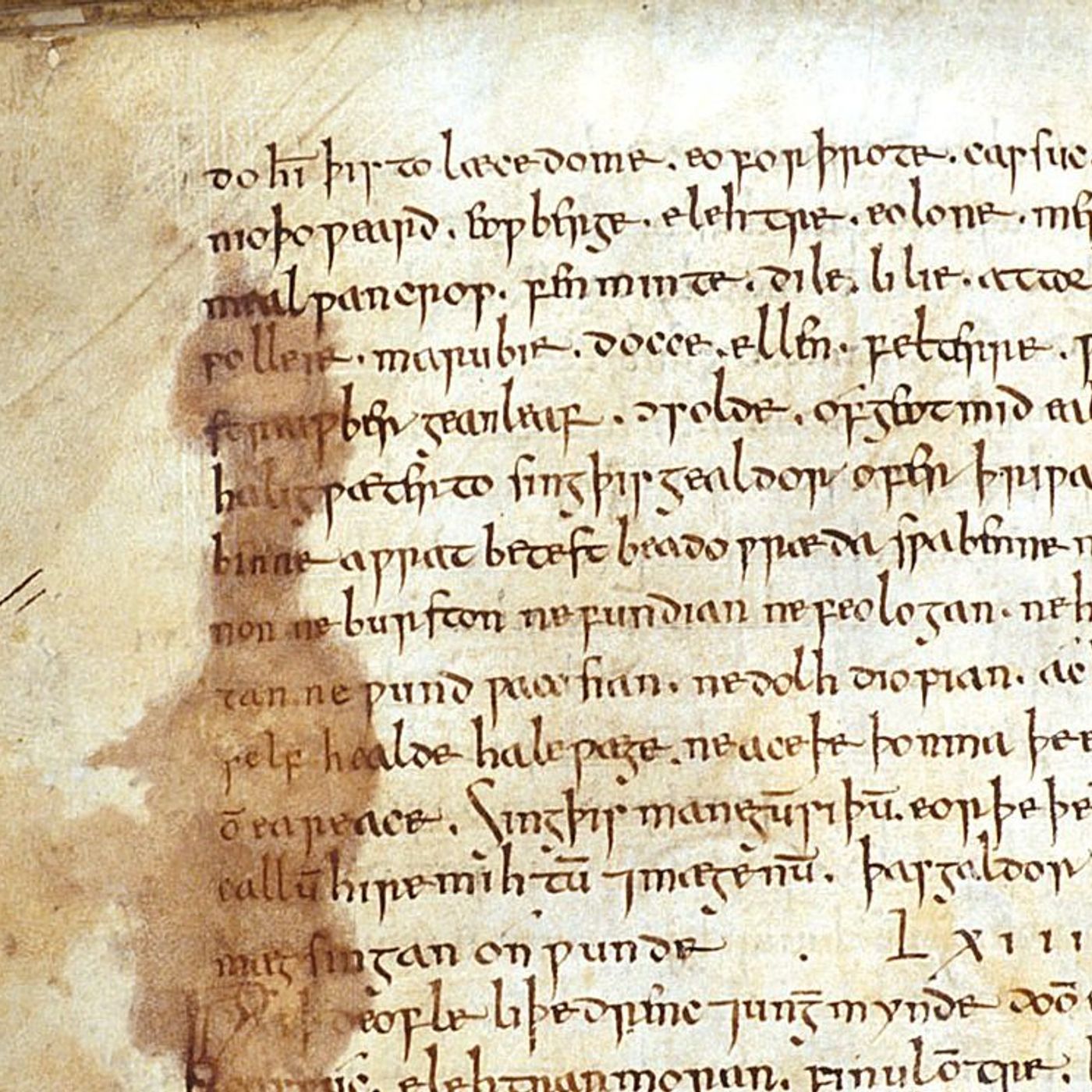
Radiolab
Staph Retreat
00:29:54
What happens when you combine an axe-wielding microbiologist and a disease-obsessed historian? A strange brew that's hard to resist, even for a modern day microbe. In the war on devilish microbes, our weapons are starting to fail us. The antibiotics we once wielded like miraculous flaming swords seem more like lukewarm butter knives. But today we follow an odd couple to a storied land of elves and dragons. There, they uncover a 1000-year-old secret that makes us reconsider our most basic assumptions about human progress and wonder: What if the only way forward is backward? Reported by Latif Nasser. Produced by Matt Kielty and Soren Wheeler. Special thanks to Steve Diggle, Professor Roberta Frank, Alexandra Reider and Justin Park (our Old English readers), Gene Murrow from Gotham Early Music Scene, Marcia Young for her performance on the medieval harp and Collin Monro of Tadcaster and the rest of the Barony of Iron Bog.
Loading summary
Transcript337 lines
- [00:02]
Latif Nasser
Oh, wait, you're listening.
- [00:03]
Freya Harrison
Okay. All right.
- [00:06]
Jad Abumrad
Okay.
- [00:07]
Latif Nasser
All right.
- [00:09]
Soren Wheeler
You're listening to Radiolab radio from wny.
- [00:15]
Maren McKenna
See y.
- [00:19]
Jad Abumrad
I'm Jad Abumrad.
- [00:21]
Robert Krulwich
I'm Robert Krulwich.
- [00:22]
Jad Abumrad
This is Radiolab.
- [00:22]
Robert Krulwich
And today, well, today, yes, the story of an axe wielding nun coming through a window to smack some staphylococcus and take you back to the future.
- [00:32]
Latif Nasser
Exactly.
- [00:33]
Jad Abumrad
The story comes.
- [00:34]
Robert Krulwich
Does that make any sense? I don't know.
- [00:35]
Jad Abumrad
Well, it will. Okay, the story comes in two parts, both from our producer Latif Nasser. And here's part one.
- [00:42]
Latif Nasser
So the way the story goes, it starts in 1928.
- [00:47]
Maren McKenna
1928. Alexander Fleming, the story goes, who knows if it's apocryphal or not, is growing staph, staphylococcus in his lab.
- [00:57]
Latif Nasser
That's Maren McKenna, she's a science WR. And Staph is a bacterium.
- [01:01]
Maren McKenna
It lives on our skin and it especially likes parts of the body that are warm and damp.
- [01:08]
Latif Nasser
So it likes to be just up our noses or in our genitals or.
- [01:12]
Maren McKenna
In our armpits, places like that.
- [01:13]
Latif Nasser
And generally it's no big deal, doesn't really do us any harm. But if it gets into a scratch or a cut and makes its way.
- [01:21]
Maren McKenna
Inside our bodies, staph goes from being this benign companion to being potentially deadly.
- [01:31]
Latif Nasser
Anyway, London, 1928.
- [01:33]
Maren McKenna
Fleming is growing staff in his lab.
- [01:35]
Latif Nasser
In these little petri dishes. And he was a slob, basically, and he goes on a vacation, leaves his petri dishes covered in bacteria just around, leaves his window open and something blows.
- [01:52]
Maren McKenna
Across his lab plates.
- [01:54]
Latif Nasser
Some tiny little speck of a thing just floats in through the window and comes to a rest on one of those petri dishes.
- [02:00]
Maren McKenna
And so a few weeks later, Fleming.
- [02:02]
Latif Nasser
Finally back from vacation, he needs to.
- [02:04]
Maren McKenna
Use those lab plates again. And he and his assistant go to clean them off.
- [02:08]
Latif Nasser
I mean, you'd imagine that he would seed some real lush, nice furry lawn of staff just overflowing right out of the plate because it's been sitting there for so long, it's been a staff party.
- [02:22]
Maren McKenna
But on one of the plates that they pick up, they realize that.
- [02:28]
Freya Harrison
It'S.
- [02:28]
Maren McKenna
Almost polka dot, it's got little dead.
- [02:30]
Latif Nasser
Zones all over it, little patches where the staff is dead, dead patches.
- [02:37]
Robert Krulwich
So something blew through the window, landed in the dish and starts killing the bacteria.
- [02:43]
Latif Nasser
Yeah. And so when Fleming looks down at his plate, he sees that at the center of these, you know, staff dead zones, there's a tiny speck of natural mold, of mold.
- [02:55]
Maren McKenna
And they realize that that mold is expressing a compound that is killing the staph around it.
- [03:00]
Latif Nasser
It's like emanating rays of death.
- [03:03]
Jad Abumrad
What was the compound?
- [03:04]
Latif Nasser
That compound was called.
- [03:07]
Maren McKenna
Penicillin.
- [03:09]
Latif Nasser
The first true antibiotic.
- [03:11]
Maren McKenna
Infectious diseases that had been killing people for as long as we had been people suddenly could be stopped and it.
- [03:17]
Jad Abumrad
Just blew in through the window.
- [03:20]
Maren McKenna
That is the story that's always been told.
- [03:21]
Latif Nasser
However it got there, it was amazing. It was a miracle.
- [03:25]
Robert Krulwich
It was called a miracle drug. Right.
- [03:27]
Maren McKenna
I mean, it was just. It really was a moment when the world changed. When Fleming was put on the COVID of Time magazine.
- [03:34]
Latif Nasser
This was 1944, height of World War II.
- [03:36]
Maren McKenna
It was a picture of his face and the banner on the COVID said, his penicillin will save more lives than war can spend.
- [03:52]
Latif Nasser
But. And this is. I had no idea about this. Virtually at the exact same time, when Fleming's face is on the COVID of Time magazine, like two months later, this Stanford researcher publishes that he has found five different strains of staph that do not respond to penicillin. Really? Yeah.
- [04:14]
Jad Abumrad
This is happening while he's on the.
- [04:16]
Latif Nasser
COVID Virtually the exact same moment.
- [04:17]
Maren McKenna
And it's the first sign that staff has responded to the penicillin in the world by developing resistance.
- [04:26]
Soren Wheeler
It's almost like separate.
- [04:28]
Jad Abumrad
Sir Soren Wheeler.
- [04:28]
Soren Wheeler
The era of penicillin was over before.
- [04:31]
Maren McKenna
It began, almost before it began, before.
- [04:33]
Latif Nasser
It'S even released to the general public.
- [04:35]
Christina Lee
Wow.
- [04:35]
Maren McKenna
And that penicillin resistant staph moves across the globe.
- [04:41]
Latif Nasser
And in 1957, in Cleveland, some scientists gather together and they are in a panic.
- [04:47]
Maren McKenna
They have no idea why they've lost the antibiotic miracle so quickly.
- [04:51]
Latif Nasser
So scientists across the globe put their brains together and try to come up with a new drug.
- [04:55]
Maren McKenna
The next amazing thing.
- [04:57]
Latif Nasser
And in 1960, they get it.
- [04:59]
Maren McKenna
Methicillin. And it works for about 11 months.
- [05:05]
Soren Wheeler
11 months.
- [05:07]
Latif Nasser
And so we started this arms race.
- [05:10]
Maren McKenna
There was a bug and then there was a drug that took care of it, and then there was a better bug.
- [05:14]
Soren Wheeler
Drug, bug, drug, bug.
- [05:15]
Maren McKenna
Right, exactly.
- [05:16]
Latif Nasser
I actually found this list. Do you want to hear it? Yeah. Okay, so streptomycin, 1943, resistance, 1948. Methicillin, 1960, resistance, 1961. Clindamycin, 1969, resistance, 1970.
- [05:31]
Soren Wheeler
Wow.
- [05:32]
Maren McKenna
You can think of it as leapfrog or you can think of it as a game of whack a mole.
- [05:36]
Latif Nasser
Ampicillin, 1961, then 1973. So that's a little Carbenicillin released 1964, resistance 1974.
- [05:43]
Jad Abumrad
They're getting better. They're getting better.
- [05:45]
Maren McKenna
There were always more drugs. You know, drug development was doing really well for a really long time.
- [05:50]
Latif Nasser
Hyperacillin introduced 1947, 1980. Resistance 1981.
- [05:54]
Maren McKenna
But after the year 2000, drug companies begin to realize it's not really in their best interest to make antibiotics anymore.
- [06:02]
Latif Nasser
And the end I have on this list is Lineizolid, which is introduced 2000. Resistance 2002.
- [06:09]
Old English Reader
Wow.
- [06:10]
Latif Nasser
There are a few more, but you get the idea.
- [06:11]
Maren McKenna
Antibiotic approvals, the entry of new drugs to the market just kind of fell off a cliff.
- [06:17]
Soren Wheeler
Why?
- [06:17]
Maren McKenna
Well, it takes 10 years and a billion dollars to get to the point where the drug is marketable.
- [06:21]
Latif Nasser
But as soon as you get the drug on the market, the res clock is running, so you probably won't make your money back. And as you've probably heard, we now have these situations.
- [06:32]
Maren McKenna
A frightening new warning from the Centers for Disease Control about the spread of a string of germs where literally nothing works. So called superbugs are now turning up in hospitals in and the patient dies.
- [06:44]
Latif Nasser
There are now bugs that can resist all of our drugs.
- [06:47]
Maren McKenna
I have seen physicians break down weeping over this. It's not the way that medicine is supposed to fail anymore, but it does.
- [06:56]
Soren Wheeler
I mean, I know that possibly the origin story of penicillin is apocryphal, so this is all a little suspect. But you know, just to enjoy imaginings for a moment, like it just seems like if that happened, let's just open up a bunch more windows. Something ought to blow in.
- [07:13]
Maren McKenna
But we could wait a long time, right? I mean, we had staff had been around for millennia before 1928.
- [07:21]
Latif Nasser
But you know, the whole reason that I wanted to do this story is because kind of there is a new window. It's a different kind of window, though.
- [07:31]
Jad Abumrad
Not a window next to some petri dishes.
- [07:33]
Latif Nasser
Not a window next to some petri dishes. Kind of a window next to some petri dishes, but a totally different kind of window.
- [07:39]
Jad Abumrad
What kind of window is it?
- [07:40]
Latif Nasser
Well, I'm about to tell you that.
- [07:41]
Jad Abumrad
Is something blow into the window?
- [07:43]
Latif Nasser
Yeah, but it's not mold. It's way more fun than mold. It carries an axe. How about that?
- [07:49]
Jad Abumrad
So it's a person.
- [07:50]
Latif Nasser
Maybe. I don't know what. I don't even know what I'm referring to anymore.
- [07:56]
Isabel
Hello, this is Isabel and the birds calling all the way from Montevideo, Uruguay. Radiolab is supported in part by the Alfred P. Sloan Foundation. Enhancing public understanding of science and technology in the modern world. More information about Sloan at www dot.sloan.
- [08:14]
Robert Krulwich
Dot.
- [08:16]
Isabel
All right, guys, ciao.
- [08:22]
Jad Abumrad
Part two.
- [08:23]
Robert Krulwich
Yep.
- [08:23]
Jad Abumrad
Okay. Hey, I'm Jad Abumrad.
- [08:25]
Robert Krulwich
I'm Robert Krulwich.
- [08:26]
Jad Abumrad
This is Radiolab.
- [08:27]
Robert Krulwich
We're ready now for part two. Now, remember when part one ended, there was a window open and something was going to come through. We don't know what.
- [08:34]
Jad Abumrad
We know it's not mold.
- [08:35]
Robert Krulwich
Yeah, we know it's not mold. So whatever it is, whatever it was, whatever it will be, we will hear about it now from our reporter. Lot of Nasser.
- [08:42]
Latif Nasser
Well, actually, there is this story about these two women who did open a window to an alien and distant land. And actually, in a way, it's a story about reimagining the past, but to me, it's a story about a friendship. Hey, everybody.
- [09:01]
Freya Harrison
Hello again. Hello again.
- [09:03]
Latif Nasser
It's a story about an unlikely friendship.
- [09:06]
Jad Abumrad
It's a buddy film.
- [09:07]
Latif Nasser
It's a buddy. Yeah, it's a buddy movie.
- [09:09]
Jad Abumrad
Okay, so, yeah, maybe just walk us through it.
- [09:11]
Latif Nasser
Right, so. Okay, so you have.
- [09:13]
Christina Lee
Hello, I'm Dr. Christina Lee.
- [09:15]
Latif Nasser
Christina.
- [09:15]
Christina Lee
And I'm an associate professor in Viking Studies at the School of English at the University of Nottingham.
- [09:21]
Latif Nasser
She's a historian. And then you also have.
- [09:25]
Freya Harrison
Hi, I'm Freya Harrison.
- [09:26]
Latif Nasser
Freya.
- [09:27]
Freya Harrison
I'm a research fellow in the center for Biomolecular Sciences at the University of Nottingham.
- [09:32]
Latif Nasser
And Freya, Freya's a microbiologist. She studies bacteria. We'll start with her.
- [09:37]
Freya Harrison
Okay. So most of my work is about sort of looking at how bacteria evolve during very, very long lived infections. But my big hobby is Anglo Saxon and Viking reenactment. So I had purely sort of amateur interest in the history and mainly in dressing up as a warrior and going to fight club every Wednesday night and learning to use the weapons.
- [10:02]
Latif Nasser
Really?
- [10:03]
Freya Harrison
Yeah.
- [10:04]
Latif Nasser
So this is actually not Freya's group. This is a group in New Jersey. But basically they do the same thing. Hundreds of people go out into, you know, some field with some dulled weapons.
- [10:14]
Freya Harrison
Everything from swords, spears, axes, and we give each other a jolly good bashing and have a good time.
- [10:24]
Latif Nasser
I only mention this because it, it actually plays into the story.
- [10:27]
Freya Harrison
Well, it was a really nice sort of coincidence, really. So I.
- [10:31]
Latif Nasser
2012, a few years after finishing her doctorate, Freya goes off to work at the University of Nottingham.
- [10:36]
Freya Harrison
Nottingham's one of the places in the UK not only for microbiology, but for Anglo Saxon and Viking history.
- [10:44]
Latif Nasser
And she goes there to study microbes, but she figures, hey, why not while I'm here, brush up on my old English.
- [10:54]
Freya Harrison
I studied some old English to a level where I could sort of read and speak a little bit.
- [11:01]
Latif Nasser
But she figured, hey, she could be better, and if she did, she would get deeper into the whole reenactment thing.
- [11:08]
Freya Harrison
So I rather cheekily emailed the School of English's Old English reading group.
- [11:12]
Latif Nasser
That's where she met Christina the historian. At one point, Christina the historian asks Freya, like, what do you do? And Freya said, you know, my day job is that I'm a microbiologist, but on evenings and weekends, I'm a history nerd. And Christina said the moment she heard.
- [11:29]
Christina Lee
That, I just kind of thought, I've found my kindred spirit here.
- [11:32]
Latif Nasser
Because she was like, wow, I'm like your mirror image because I'm a historian by day, but by night, I'm a microbiology nerd.
- [11:40]
Christina Lee
I've been interested in infectious disease for quite a long time, which I don't find any kind of friends in my department.
- [11:48]
Latif Nasser
She told me she's the kind of person who would, you know, watch Ebola coverage on the news and not be able to stop watching. So eventually they start talking about historical diseases. So, like, how would people back then have treated something like, you know, Ebola? Freya is especially interested in this because she, for her historical reenactment, is developing this nun character who goes off and heals people. But anyway, so they're talking back and forth, and then to cut a long story short, they find themselves both interested in this one particular book.
- [12:23]
Freya Harrison
It's known as Bald's Leech Book. So this is about 1100 years old.
- [12:27]
Robert Krulwich
What's it called? Bald's What?
- [12:29]
Christina Lee
Bald's Leech Book. It's nothing to do with no hair.
- [12:32]
Robert Krulwich
Oh.
- [12:33]
Christina Lee
Even though it is spelled bald.
- [12:34]
Robert Krulwich
Is it B, A, L, D?
- [12:37]
Christina Lee
It is indeed.
- [12:38]
Robert Krulwich
And leech like leech like a leech, like a little worm that grabs onto your and sucks your blood?
- [12:42]
Freya Harrison
No, no.
- [12:43]
Christina Lee
It comes from the old English word leche, which is actually a healer or a doctor.
- [12:47]
Freya Harrison
So the little squiggly animals are called leeches because they're medicinal, not the other way around.
- [12:52]
Latif Nasser
Oh, so the doctor wasn't named for the leech, the leech was named for the doctor.
- [12:56]
Freya Harrison
Exactly. Yeah.
- [12:57]
Jad Abumrad
And bald is the. Is a man. The guy wrote the book.
- [13:00]
Freya Harrison
We think it's a guy. We think it's a guy's name.
- [13:01]
Jad Abumrad
And what is this book?
- [13:02]
Latif Nasser
So it's kind of like this old healer's handbook. It's filled with these potions and cures.
- [13:07]
Christina Lee
The original manuscript is in the British.
- [13:09]
Freya Harrison
Library, locked away, but 21st century. Very kind. People have digitized the original Old English text and put it online.
- [13:17]
Latif Nasser
So Christina and Freya bring it up and they start going through all the.
- [13:20]
Christina Lee
Remedies and, you know, it describes to you remedies for stuff that is a little bit different.
- [13:27]
Old English Reader
You know, things like thone devor thone.
- [13:30]
Latif Nasser
Manon, possession by the devil, which, according to this leech book, the remedy for someone who is possessed by the devil.
- [13:35]
Old English Reader
Is you spew a drink, ellutre, make.
- [13:38]
Latif Nasser
This kind of like foul brew. You make them drink it and it'll make them vomit out the devil. And then there's another remedy for warts. And all I'm going to say about that one is that it involves hound's urine and mouse blood and then things.
- [13:57]
Old English Reader
Like yifmon seah torana, how shall we.
- [14:00]
Freya Harrison
Say, make your husband more physically attentive or less physically attentive. Whichever you. Whichever direction you need to moderate it.
- [14:08]
Robert Krulwich
Pig's blood, I hope, or toad blood.
- [14:10]
Old English Reader
Drink on neoct Nestia.
- [14:12]
Latif Nasser
Actually, it's just you boil a plant in some water and give it to the guy. Oh, yeah. Anyway, so Frey and Christina are going through this leech book looking for some kind of wound, something that was clearly an infection, some pussy, something we could.
- [14:28]
Freya Harrison
Clearly say that's bacterial.
- [14:30]
Latif Nasser
And eventually they find an entry where.
- [14:33]
Freya Harrison
At the end of the recipe, it.
- [14:35]
Old English Reader
Says in Old English say, betsta la.
- [14:38]
Freya Harrison
Sebetz de la schdom. The best medicine.
- [14:42]
Latif Nasser
The best medicine. Yeah.
- [14:44]
Old English Reader
Move over.
- [14:45]
Latif Nasser
LAUGHTER yeah.
- [14:46]
Freya Harrison
And we thought, how can we not try this one?
- [14:49]
Latif Nasser
What was the best medicine for?
- [14:51]
Freya Harrison
So it said it was for a lump in the eye.
- [14:54]
Christina Lee
It's actually called wen in Old English.
- [14:56]
Freya Harrison
These days, if you get a course, that could be something like a wart. Right.
- [15:00]
Christina Lee
But there is a suggestion by archaeologists that eye infection was rife amongst the Anglo Saxons because you lived in buildings where you had smoke going on, you lived cramped together.
- [15:13]
Freya Harrison
So it could also be a stye.
- [15:15]
Latif Nasser
What is a stye?
- [15:16]
Freya Harrison
It's an infection of an eyelash follicle.
- [15:18]
Robert Krulwich
You rub it and it itches and then it gets swollen.
- [15:21]
Freya Harrison
It causes quite a nasty red lump.
- [15:22]
Robert Krulwich
It's a stye in your eye.
- [15:24]
Latif Nasser
Stye in your eye. Now, it just so happens that the bacteria that causes the stye in your.
- [15:28]
Freya Harrison
Eye is staphylococcus aureus.
- [15:31]
Latif Nasser
Staph.
- [15:31]
Jad Abumrad
Oh, the same stuff as the Mr. Window Man. Penicillin man.
- [15:35]
Latif Nasser
Exactly.
- [15:36]
Freya Harrison
And we just thought, wouldn't it be nice to have a bit of spare time and earn a couple of hundred quid to buy the ingredients and Just give this a go.
- [15:43]
Christina Lee
Yes, let's give it a try.
- [15:45]
Freya Harrison
You know, why the hell not?
- [15:46]
Latif Nasser
And matter of fact, look at this place. We thought that too.
- [15:52]
Robert Krulwich
Studio.
- [15:52]
Latif Nasser
Not bad at all. Recently, producer Matt Kielty and I went to my tiny apartment in the city and we tried to cook it up, too. Are you ready to cook? Oh, I'm ready to cook.
- [16:02]
Freya Harrison
I've got this recipe here if you'd like it.
- [16:04]
Latif Nasser
Yeah, yeah, yeah. Please read it. Go for it.
- [16:06]
Freya Harrison
Okay. It goes like this.
- [16:13]
Latif Nasser
That's the first line of the recipe. And right off the bat for Christina and Freya, there's a problem. That first ingredient, the word kropliac.
- [16:20]
Freya Harrison
Kristina said it was quite difficult to translate.
- [16:23]
Christina Lee
Nobody quite knows, you know, what it.
- [16:24]
Latif Nasser
Is, but luckily, just a couple words over was a clue.
- [16:27]
Old English Reader
Then Garliak.
- [16:29]
Latif Nasser
Second ingredient.
- [16:30]
Christina Lee
Garlic, which is an allium species and crop. Liach.
- [16:34]
Freya Harrison
We know this was another allium.
- [16:35]
Christina Lee
That's what the dictionary of Old English tells us.
- [16:38]
Latif Nasser
So they figured probably what they were dealing with was an onion or a.
- [16:41]
Freya Harrison
Leek, but we didn't know which one, so we thought, okay, we'll try one that has onion and one that has leek.
- [16:48]
Latif Nasser
Now, the recipe doesn't call for this, but we did it anyway. Peel the onion, chop it up the same for the garlic.
- [16:56]
Christina Lee
And the recipe doesn't tell you how much. It just tells you equal amounts of.
- [17:02]
Latif Nasser
So you take out the measuring cups. You measure out equal amounts. Yeah, Equal amounts into the pestle. And then after that. Okay, it says tosomne pounded well together.
- [17:14]
Jad Abumrad
Okay.
- [17:15]
Christina Lee
To be really pounded and pounded. Freya did.
- [17:19]
Freya Harrison
Yeah, yeah. So lots of. Lots of time with the mortar and pestle muscles built up from wielding a sword for pounding the ingredients.
- [17:27]
Latif Nasser
Look, it's starting to be more of a mush. Third ingredient.
- [17:29]
Freya Harrison
The next one was definitely something you wouldn't have knocking around in your kitchen.
- [17:32]
Old English Reader
And Fearland. Baya Em fela.
- [17:36]
Freya Harrison
Ox gall.
- [17:37]
Latif Nasser
Ox gall.
- [17:38]
Freya Harrison
Bovine bile from a cow's gallbladder.
- [17:40]
Robert Krulwich
What do you do? Have to kill the cow and then go reach?
- [17:42]
Freya Harrison
No, it's actually a very standard ingredient in microbiology labs.
- [17:46]
Soren Wheeler
Ox bile.
- [17:47]
Latif Nasser
Today in 2015, you can, but should not just buy it on the Internet. Here we go. Here we go. And so you take the ox bile, add it to the onion and garlic.
- [17:53]
Freya Harrison
And then the fourth ingredient, Ye neem. Wine.
- [17:57]
Latif Nasser
Wine time. Red wine, white wine. Like, what kind of wine are we talking about here?
- [18:00]
Freya Harrison
This is the thing. So we had quite a discussion about what type of wine should we use, and we don't know really did they have red wine? Did they have white wine? What was the alcohol content? But I did a bit of detective.
- [18:11]
Latif Nasser
Work and she figured out that the monastery where this leech book was written, well, they, she figured out where their vineyard was.
- [18:17]
Freya Harrison
And just down the road there's this modern organic vineyard.
- [18:20]
Latif Nasser
So they used that wine. I just want to point out how difficult it is to find English wine. We had to use Italian.
- [18:28]
Old English Reader
But thou lace do sone on arfat.
- [18:32]
Latif Nasser
Once you get all that stuff together, you're onto the final ingredient.
- [18:35]
Freya Harrison
The fifth ingredient was actually that you're specifically told that you have to mix these ingredients together in a brass or a bronze pot. I don't have one. So we had to sort of add pieces of copper that would have been available to people, people at the time.
- [18:50]
Latif Nasser
So they had to do some research. But they figured out that the copper of today, that is most like the copper of a millennium ago, was actually.
- [18:57]
Freya Harrison
Cartridge brass, which is what's used as standard in plumbing fittings.
- [19:01]
Latif Nasser
Dropped a few pennies in there. We actually use pennies. Do I stir it? I think I stir it. It's like a world's worst cooking show.
- [19:08]
Freya Harrison
It looks and smells like quite a nice, quite a nice summer soup.
- [19:13]
Latif Nasser
Oh. Oh, it looks awful. Oh, that's so gross. Clearly we botched this whole thing. Let us stand the neonicht on them arfate and finally. So we're gonna cover it. Okay, we're covering it. The directions say we have to let the whole thing sit for a while.
- [19:28]
Freya Harrison
It has to be stored for nine days and nights.
- [19:32]
Latif Nasser
Okay, that's it.
- [19:35]
Robert Krulwich
One day goes by two days.
- [19:36]
Latif Nasser
3, 4, 5, 6, 7, 8, 9. Alright, nine days later. All right, here we go. You ready?
- [19:44]
Freya Harrison
Mm.
- [19:45]
Latif Nasser
All right, here we go.
- [19:49]
Old English Reader
And on them, Arafat, a ring through cloth.
- [19:53]
Freya Harrison
Then you have to strain it through a cloth. The liquid that comes off you apply to the person's eye.
- [20:03]
Christina Lee
With a feather.
- [20:07]
Latif Nasser
Now clearly we didn't have any staff to try this out on, but Freya in her lab, she made these mock.
- [20:13]
Freya Harrison
Wounds with these little plugs of collagen. So it's a bit like jelly basically.
- [20:17]
Latif Nasser
It's like a goopy substance made to be kind of like a flesh wound.
- [20:21]
Freya Harrison
And we infect these wounds with bacteria with the staph.
- [20:24]
Latif Nasser
Then they put this thousand year old recipe that had been standing there for nine days, they put it on the bacteria that was in the fake wound.
- [20:31]
Freya Harrison
Obviously we didn't think this was going to work. No, we thought, you know, well, given the ingredients, we might see some small killing effect on the bacteria. But it won't be anything to write home about.
- [20:42]
Latif Nasser
They thought Maybe it'd kill 10%, 20% of the bacteria. But then when they came back the.
- [20:46]
Freya Harrison
Next day, it was a staph massacre.
- [20:49]
Latif Nasser
It went on a rampage. It went on a staph rampage.
- [20:54]
Freya Harrison
It was killing, you know, 99.9999% of these bacterial cells.
- [21:00]
Latif Nasser
What?
- [21:01]
Freya Harrison
Yeah. First we thought we'd made some sort of mistake and this was some kind of fluke, you know, we'd accidentally mixed up our plates or mislabeled something.
- [21:09]
Latif Nasser
So they run the entire experiment again, they grab the ingredients, mash them up, put them on some bacteria and it happens again.
- [21:17]
Freya Harrison
Just absolutely wiped out the bacteria, killed them dead.
- [21:21]
Latif Nasser
Then they tried a third time and a fourth and a fifth, and it works every time.
- [21:24]
Freya Harrison
This is, this, this is just something you, you really don't see in your career as a microbiologist.
- [21:30]
Latif Nasser
And eventually they escalated from just regular staff to MRSA to the methicillin resistant staff. And this is one of the bad ones, the superbug.
- [21:42]
Maren McKenna
New government data estimate that about 2,000.
- [21:45]
Christina Lee
People are dying of community based MRSA every year.
- [21:48]
Latif Nasser
This one is very dangerous. So Christina and Freya, they sent some of Bald's brew to one of their collaborators in the States, our collaborator, Kendra.
- [21:58]
Freya Harrison
Rumbaugh in Lubbock in Texas.
- [22:00]
Latif Nasser
Kendra took the stuff, put it on some MRSA bacteria, and then a week later sent Freya and Christina an email.
- [22:07]
Freya Harrison
And I think it was actually a three word response. I think she just simply said, what the fook?
- [22:12]
Latif Nasser
What?
- [22:12]
Freya Harrison
The.
- [22:15]
Latif Nasser
Bald's best medicine had just wreaked Havoc on the MRSA. It killed 90% of them.
- [22:21]
Freya Harrison
This is beyond our wildest dreams.
- [22:24]
Latif Nasser
Now Frey and Christina made very clear that this is not yet a miracle drug. I mean, it's not, not even being tested in humans.
- [22:31]
Christina Lee
So absolutely do not do this at home.
- [22:35]
Latif Nasser
They don't even know if this is safe.
- [22:37]
Freya Harrison
It might be that if you don't do it in exactly the way we did, nasty fungus could grow in it, give you a worse infection.
- [22:43]
Latif Nasser
So we should not have done this. Matt and I, we dumped ours down the drain. But the thing about this whole story that is so intriguing and so cool to me is this time travel thing, which is so strange. Like, it's like the idea that something a thousand years ago, like a bullet forged a thousand years ago, we could, we could use it now and then it could work. That, that the time travel dimension of that is so weird to. It kind of makes you think differently about, I don't know, progress.
- [23:30]
Christina Lee
So without Much further ado, Dr. Christina Lee and Dr. Freya Harrison, and they're going to talk to us about some ancient biotics.
- [23:40]
Latif Nasser
For example, just a few weeks ago, Freya and Christina got up in front of the Royal Society of Chemists.
- [23:48]
Christina Lee
Thank you very much. And it is an absolute pleasure to be here.
- [23:52]
Latif Nasser
Large hotel, conference room, 100 or so people. Frey actually got up on stage dressed as a nun.
- [23:58]
Freya Harrison
Okay, so this is one interpretation of what an Anglo Saxon scientist may have looked like.
- [24:04]
Latif Nasser
And they presented the results.
- [24:06]
Freya Harrison
Next ingredient is particularly the cooking demo.
- [24:10]
Latif Nasser
And then at some point, Christina said something really interesting. She was like, okay, sure, we want to write this off because it has demons and dragons and elves in it, but are we sure that we know what they meant by those words? Like, for example, there are remedies which.
- [24:26]
Christina Lee
Ask you sing for Ave Marias.
- [24:29]
Latif Nasser
And we would say, oh, that's so superstitious. This is all in their heads.
- [24:32]
Christina Lee
But there again, we should also remember this is a period when people do not have watches. You do not have your nurse, you know, so that's got the watch. Everybody knows the Ave Maria. Everybody knows the length of an Ave Maria.
- [24:45]
Latif Nasser
So maybe it's. Maybe it's take this medicine and wait 20 minutes. And I know how to standardize 20 minutes, which is 3 Ave Marias. 4 Ave Marias may actually, it may appear one way and it in fact could be a totally different way.
- [25:00]
Jad Abumrad
It suggests that in order to time travel, you have to somehow. God, it's like we don't even have the language to be able to understand.
- [25:08]
Latif Nasser
What they were doing, how effective. There's a phrase, the past is a foreign country.
- [25:15]
Christina Lee
We need to learn the language of the doctors of that time. We need to kind of be a little bit less dismissive and learn a little bit more, you know, stuff from them. I learned a bit of humility this way.
- [25:30]
Latif Nasser
But here's the reason why this is so confusing to me. So 1100 years is a crazy long time for humans and for bacteria. That's like an exponentially crazy long time.
- [25:45]
Freya Harrison
Yeah.
- [25:46]
Latif Nasser
How is it that something that this man bald was doing to these bacteria, then. It's not even the same bacteria. How could that even work?
- [25:59]
Freya Harrison
That's an awesome question. So one thing we've got to think about is, well, why did these medicines drop out of use? And maybe it's because when they were used, the bacteria evolved resistance. But now, a thousand years later, when these medicines have not been used, you would expect that resistance to be lost.
- [26:18]
Latif Nasser
This is something that Maren McKenna mentioned to Soren and I, that sometimes when you take a drug out of circulation.
- [26:25]
Maren McKenna
Sometimes resistance will decline. That doesn't always work, but sometimes resistance does decline. So if we had been using this compound through the ensuing thousand years, then maybe it wouldn't work.
- [26:39]
Robert Krulwich
So there's an interesting discovery there like that. What worked once and then was resisted. You give it a rest and it can work again. And it will be resisted. And you put it to rest. And if you had enough different. If you could go to different places in the different paths. Did you go to China, where they now got all these people studying Chinese cures and Arab cures? You could come up with a. With a rich curse, historical cocktail of armamentariums that will work. If you bring them in, take them out, bring them in, take them out, and the whole world, the whole world of the past then becomes the fruit of your future, sort of.
- [27:19]
Soren Wheeler
So it's also possible, like now I have suddenly an image that it's possible.
- [27:22]
Jad Abumrad
That this is Thorn Wheeler, by the way, in conversation with Marion McKenna Latif.
- [27:26]
Soren Wheeler
That a thousand years ago, these folks went through what we went through with penicillin in that they. This guy wrote something in the book and it's actually called the Best Medicine. He probably got on the COVID of whatever their version of time was. He got their Nobel Prize and everybody celebrated. And then years later, styes were coming back and the garlic wine didn't work anymore and they stopped using it and it got put away. And then here we are and we discover it and it's been put away long enough that, like, now I'm thinking about future. Some future civilization digs up an old medical textbook that was in some dusty whatever and discovers penicillin. And it works. Did we. Did I lose you on that, Marin?
- [28:09]
Freya Harrison
No, no, I'm still with you.
- [28:10]
Maren McKenna
I'm just.
- [28:11]
Freya Harrison
I don't know how.
- [28:12]
Maren McKenna
It just seemed like. It seemed like such a great hypothetical construction. I just didn't really know what I.
- [28:16]
Christina Lee
Could add to it.
- [28:18]
Robert Krulwich
Sorry.
- [28:18]
Soren Wheeler
I took.
- [28:26]
Jad Abumrad
Producer Latif Nasser with help from Soren Wheeler and produced by Matthew Kielty. Special thanks this hour to Steve Diggle.
- [28:33]
Robert Krulwich
And to Alexandra Ryder and Justin park, who came down from Yale to be our Old English readers.
- [28:37]
Jad Abumrad
To Gene Murrow from the Gotham early music scene.
- [28:40]
Robert Krulwich
And to Marcia Young on the medieval.
- [28:41]
Jad Abumrad
Harp, Colin Monroe of Tadcaster and the.
- [28:44]
Robert Krulwich
Rest of the Barony of Iron Bog.
- [28:46]
Jad Abumrad
Not totally sure what that is, but I know they helped us out. And I guess we should help ourselves out.
- [28:50]
Latif Nasser
Yes.
- [28:50]
Jad Abumrad
Of the door quickly or through the window. I'm Jedi Murad.
- [28:53]
Robert Krulwich
I'm Robert Kulwich.
- [28:54]
Jad Abumrad
Thanks for listening.
- [29:04]
Justin Park
Message 5 new this is marin mckenna. Hi, this is justin park from the english department at yale. Okay, sunny fox, and I'm reading the appointed message. Radiolab is produced by jad abumrad. Our staff includes brenna farrell, david gable, dylan keith, matt kilty, robert crow, andy mills, latif nasser, kelsey padgett, ariana adrienne, arianne wack, molly webster, soren wheeler, and jamie york. With help from mid u to me, hoff, simon adler, alexander lee young, abigail keel and alexandra brennan. Our fact checkers are ure salt, isa dasher and michelle harris.
- [29:48]
Christina Lee
End of message.