← Radiolab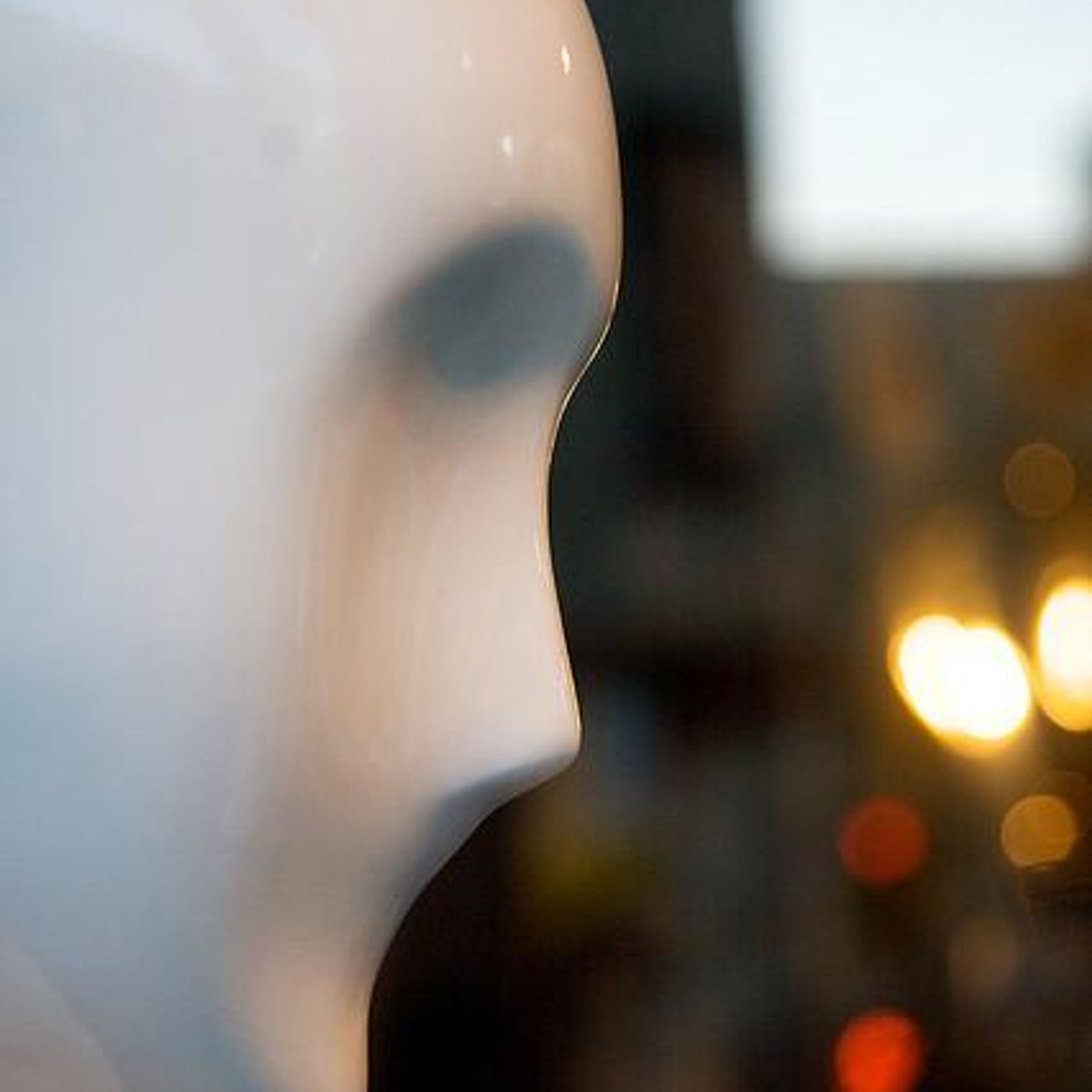
Radiolab
Strangers in the Mirror
00:25:30
Oliver Sacks, the famous neuroscientist and author, can't recognize faces. Neither can Chuck Close, the great artist known for his enormous paintings of ... that's right, faces.
Loading summary
Transcript188 lines
- [00:00]
Dr. Horton Announcer
Your new home is now ready. Dr. Horton, America's builder, has new homes that are ready today with new construction communities in Ellensburg and throughout the Greater Seattle area. Dr. Horton has the right home for you. At Dr. Horton, we're still building with flexible living spaces, smart home technology, and two and three car garages. More communities and more homes available every day. Find your new home in Ellensburg now ready at Dr. Horton.com Dr. Horton America's builder and equal Housing opportunity Builder.
- [00:31]
Jad Abumrad
A Sapphire Reserve story from David Chang.
- [00:33]
Robert Krulwich
So I was at a Chase Sapphire lounge and I saw a burger on the menu. I took a bite and I was blown away. Took another bite and I was like, whoa, this is really special.
- [00:40]
Chuck Close
And I couldn't figure out why.
- [00:42]
Robert Krulwich
Was it the bun? Was it the sauce? The blend of meat? I want to find delicious things in places where you would never think it was going to be. I would do a layover for that burger.
- [00:51]
Jad Abumrad
Access to Sapphire airport lounges with Chase Sapphire Reserve now even more rewarding. See more rewards@chase.com Reserve it. Cards issued by JPMorgan Chase bank and a member of DIC subject to credit approval terms apply.
- [01:02]
Robert Krulwich
Lowe's early Black Friday deals are going fast. Don't miss. Up to 50% off. Select major appliances. Plus up to an extra 25% off when you bundle. Select major appliances. And with Christmas around the corner, you're gonna need more string lights, right? Save $4 on GE LED 100 count string lights now just $5.98 Lowes we help you save. Valid through 12.
- [01:25]
Jad Abumrad
3.
- [01:25]
Robert Krulwich
Selection varies by location. Select locations only while supplies last. See Lowes.com for more details.
- [01:31]
Oliver Sacks
Oh, wait, you're listening.
- [01:32]
Jad Abumrad
Okay. All right. Okay. All right. You're listening to Radio Lab.
- [01:40]
Robert Krulwich
Radio Lab shorts from WNYC.
- [01:47]
Jad Abumrad
And npr. You have a good sense of what to. What you want to tell me?
- [01:53]
Robert Krulwich
Yeah.
- [01:53]
Jad Abumrad
All right. Hey, I'm Jad.
- [01:55]
Robert Krulwich
I am Robert.
- [01:55]
Jad Abumrad
This is Radiolab, the podcast my. Can I just start us off with a moment of appreciation? I'm very excited for what you're gonna play for us today because sometimes, you know, you talk to people on stage, smart people, and you did one recently for the World Science Festival.
- [02:10]
Robert Krulwich
Yes.
- [02:10]
Jad Abumrad
And we put it on every so often on the podcast, but we don't do it enough.
- [02:14]
Robert Krulwich
Well, we're gonna do it now.
- [02:15]
Jad Abumrad
Let's do it.
- [02:17]
Robert Krulwich
So in. In just a moment, I'm gonna introduce you to two gentlemen who are nothing short of remarkable. But before I do, I just. And so we go now to the Danny and Sylvia Kay Auditorium at The campus of Hunter College in Manhattan.
- [02:29]
Jad Abumrad
Wa just set it up for us a little bit. Like, what are we about to do?
- [02:33]
Robert Krulwich
Well, so the idea of this World Science Festival evening, there are people who wander around the world who have a problem which is called face blindness. Weirdly, both these men are face blind. So when they look at a face for 10, 20, 60 minutes, the other guy's face just doesn't get in or stick into their heads. I chose two people. One of them is Oliver Sacks, our regular Oliver. He's a neuroscientist, and he's like.
- [03:02]
Jad Abumrad
Oliver is face blind.
- [03:03]
Robert Krulwich
Oh, boy, is he face blind. I mean, he.
- [03:05]
Jad Abumrad
He can't recognize faces.
- [03:06]
Robert Krulwich
But you'll see the other guy, who we're going to call Chuck. The other guy is one of the greatest portrait artists in the world. He has, as many of you know, for decades now, created art. Big paintings. Some little, but usually huge paintings, mostly of faces. Here he is, Chuck.
- [03:23]
Chuck Close
Close.
- [03:26]
Robert Krulwich
I thought it would be interesting to bring these two people together. Face blind Oliver. Face blind, Chuck. And discuss what many people think of as a very rare situation.
- [03:37]
Chuck Close
Who are you guys? Again.
- [03:40]
Robert Krulwich
We don't know who you are either. All right, so the both of you, how long ago did you discover, if indeed that's the right word, that you were unusual in this regard? Oliver?
- [03:52]
Oliver Sacks
I think probably when I. Hi to everyone.
- [03:55]
Robert Krulwich
Oh, you can't hear. Okay, so tell you what. I'll just stick this thing in front of you and say something.
- [04:00]
Oliver Sacks
Say something.
- [04:01]
Robert Krulwich
That's better. So you missed the first part of the program, but Oliver was saying, so you were in a class with other kids. If you had a friend who was like a pal, would you take a beat to know who it was?
- [04:18]
Oliver Sacks
Yeah. So say Jonathan Miller became a good friend. He's tall and gangly. He has red hair, and his movements are fluid and evocative and wonderful.
- [04:30]
Robert Krulwich
But if Jonathan Miller was brought in paralyzed and totally straight, would you know it was Jonathan Miller? Do you have to see the hair and the movements?
- [04:36]
Oliver Sacks
No. When I have got to know someone, well, then I will recognize the face. But it takes a long while, and.
- [04:47]
Chuck Close
Even then it has to be reinforced. Right? You have to keep seeing them.
- [04:49]
Robert Krulwich
So if you've spent four minutes with the person and then you walk away and come back two minutes later. Do you know who the person is? Does 20 minutes with the person Time make a difference?
- [05:00]
Oliver Sacks
I tend to lose it within minutes.
- [05:03]
Robert Krulwich
You? Same problem.
- [05:04]
Chuck Close
Same problem. I can spend an evening talking to someone, looking at them across a table, and I see them the Next day, I'd have no idea I'd ever seen them, nor do I remember their name.
- [05:15]
Robert Krulwich
But when they open their mouth, would you say, oh, that's the one, or not even?
- [05:19]
Chuck Close
No. And a lot of it's context. If they walk into my studio, I figured they'd walked into my studio because they're supposed to be there. Then I interview them for a while to find out who they are.
- [05:32]
Robert Krulwich
Are you just trying to subtly find like, so who is this person?
- [05:34]
Chuck Close
Who the hell is this person? And why are they in my studio?
- [05:37]
Robert Krulwich
Now, in your case, if that person were to suddenly flatten out and work and be still on a page.
- [05:44]
Chuck Close
Well, everything in my work is determined by my learning disabilities. So face blind. I'm sure I was driven to paint portraits by being face blind. That is, I know now that if I can flatten an image out and scan it the way I work, I can commit it to memory. And I have almost photographic memory for things that are flat and still. Still, yeah.
- [06:15]
Robert Krulwich
So being in space and moving around makes the face invisible. Fixing it makes the face memorable.
- [06:22]
Chuck Close
You move your head a half an inch, to me, it's a whole new face I've never seen before.
- [06:25]
Robert Krulwich
Wow. Have you ever not recognized yourself?
- [06:31]
Oliver Sacks
Yeah, I'm always. Well, several times I have started apologizing to large, clumsy, bearded people and realize that it's a mirror.
- [06:42]
Robert Krulwich
That's a mirror.
- [06:43]
Oliver Sacks
It's a mirror, but it's even gone a stage further than that. Fairly recently, I was in a cafe in Chelsea Market with tables outside. And while I was waiting for my food, I do what people with beards often do. I started to preen myself. And then I realized that my reflection was. Was not doing the same thing. And that inside there was a man with a beard, possibly you, you know, who wondered why I was sort of, you know, making faces at him. So I may take other people to be myself as well as recognize myself.
- [07:33]
Robert Krulwich
Well, I just. I was wondering how you. Once you realized that you were preening your beard in front of a bearded. Did you, like, look down?
- [07:43]
Oliver Sacks
Yeah, I did look abashed. I often look abashed.
- [07:47]
Robert Krulwich
Well, now let me just ask about. Is this just a face problem? What about emotional? Can you. If you can't see a face, can you ever read sadness? Happiness?
- [07:58]
Chuck Close
Yeah, I don't think I have any trouble reading how someone is feeling. I think I'm actually pretty good at that. You know, the way I work is to make this kind of brobdagnalian world in which I make the face into a landscape and I journey across that landscape like Gulliver's Lilliputians crawling over the face of a giant, not knowing that they were on the face of a giant, but knowing everything about that face. And then what I do is I put all that information together, the kind of nose and nostril, the corners of the mouth, whatever, and I can commit it to memory. So I know that it's no accident that I was driven to make portraits of people who matter to me.
- [08:48]
Robert Krulwich
But if the person whose face you can't read lips are trembling, or if they have a downcast look in the eye, or if they're being brave, can you assign emotion to a facet of a face?
- [09:00]
Chuck Close
Yeah.
- [09:01]
Robert Krulwich
And you too?
- [09:03]
Oliver Sacks
Well, I look.
- [09:04]
Robert Krulwich
Talk to the mic.
- [09:06]
Oliver Sacks
Well, I can't paint or whatever, but I think I'm a sensitive to emotion as you know, and little things, including little grimaces which indicate that someone is lying.
- [09:19]
Robert Krulwich
Here's a difference I sense just to complete this sort of look of what you can and can't do. Oliver can remember. When I ask you about things you've written 22 years ago, a lot of times if you talk to an author about something they wrote 22 years ago, they give you a sad look of, you know, well, that was a long time ago. But you seem to remember much of what you have learned. You seem to remember very little of what you have learned. Well, let me be gentler about that. Like when you were in high school, it was time to take the test you once described to me. An all night bathtub?
- [09:55]
Chuck Close
No, I used a kind of sensory deprivation tank in order to memorize things. And it's very hard for me. I don't know how to add or subtract without using the spots on dominoes. A visual system. I still don't know the multiplication tables. I didn't take algebra, geometry, physics or chemistry. If the junior college in my hometown had not taken every taxpayer, son or daughter, I could never have gone to college.
- [10:23]
Robert Krulwich
Wow, so you're a wreck. But the coping part of this for both of you has been kind of interesting because both of you are very, very smart. So you just put your intelligence where you have to.
- [10:36]
Chuck Close
One of the great quotes I've ever heard is from the great painter Robert Rauschenberg, who was about the most learning disabled, dyslexic person I've ever known. And he said when you're this way, you have to find other venues for your intelligence. You have to prove to your teachers that even though you're not going to be able to spit back the names or dates that you care about the material. And we have to prove to the people who we see that we care about them, even though we're not going to recognize their faces and maybe remember their names. So you have to be charming. You have to be a bull. You have to be fast on your feet and figure out how you're going to explain your way out of the fash, that you don't know who they are or remember them.
- [11:28]
Robert Krulwich
Do you find people calling you, like, a snob or. I mean, like. What do you mean, you don't know me? I'm the host of this dinner party kind of thing.
- [11:39]
Oliver Sacks
Yes. Usually my assistant Kate will say to people beforehand, before they come in, don't ask if he remembers you, because he'll say no. And to me, she says, don't just say no. Say, I'm awful with faces. I wouldn't recognize my own mother. But I'm not good at bull. I tend to withdraw.
- [12:09]
Robert Krulwich
You withdraw. So you solve it by going into a corner and not talking to anybody?
- [12:13]
Oliver Sacks
Well, it doesn't solve it. It often makes it worse.
- [12:16]
Chuck Close
But my approach is to be more outgoing, more friendly, whatever, and to try and charm my way through things. And I also lecture and talk all the time about face blindness and my other problems so that people are aware that I have them and they'll cut me some slack.
- [12:38]
Robert Krulwich
But you go out, like, every chance you can, right? And you stay in every chance you can, right?
- [12:45]
Oliver Sacks
Well, more or less. I don't stay in. But there are other things beside human beings. And when, for example, I first visited Australia, I came back with hundreds of photos, and people looked through them and said, yes, but didn't you meet any human beings? Because all my photos were of scenery and plants where I'm very at home.
- [13:12]
Robert Krulwich
And I noticed that when you get in the elevator in your apartment, you don't have any idea who the neighbors are, but you do look down, right?
- [13:19]
Oliver Sacks
Oh, I know. They're dogs.
- [13:26]
Robert Krulwich
So if they were to switch dogs, you'd just be.
- [13:31]
Oliver Sacks
Well, I wouldn't notice.
- [13:32]
Chuck Close
Yeah, but if you see them without the dog, you don't know who they are, right?
- [13:37]
Oliver Sacks
No, I don't know.
- [13:40]
Robert Krulwich
So this charm offensive that you go on, what does that like how if you have no idea who you're talking to, what are the charm moves?
- [13:49]
Chuck Close
Well, not always. Is it charming? I didn't recognize a woman I'd lived with for a year. Two years later. And there's no amount of charm that is going to get you through a Mistake like that.
- [14:06]
Robert Krulwich
Do you just. Do you make fun of yourself?
- [14:08]
Chuck Close
Oh yeah. Self deprecating humor will cover a great deal. And if you laugh at yourself, you're giving permission for other people to see it as less than the most tragic condition. It is funny, you know, it's funny. I wish I didn't have it, but it's funny. What about.
- [14:32]
Oliver Sacks
Lots of neurological conditions are comic. They can be both awful and comic. And it's important.
- [14:39]
Chuck Close
Well, there's a gallows humor in rehabilitation hospitals for that very reason.
- [14:45]
Robert Krulwich
What about. Let's narrow down the techniques here. Can you sometimes not see the face but see the hair, the ears, something?
- [14:57]
Oliver Sacks
Absolutely. If someone has large out sticking ears or hooked nose or a little triangular beard, or if the glass is of a particular sort. I'm better at recognizing caricatures than portraits because in a caricature salient features are exaggerated. And for me it's to some extent I have to make an inventory of salient features.
- [15:20]
Robert Krulwich
You talk about Gulliver and that process. Do you think of what you do as an expression of the situation you find yourself in?
- [15:29]
Chuck Close
Sure, in every way. I mean, I have trouble in a global sense with the whole. But if you break it down into small enough bite size units, incremental units, then I make this big overwhelming problem into thousands of little more solvable problems. I've just found a way to, you know, take my deficits and use them rather than banging my head against the wall.
- [16:00]
Robert Krulwich
Let me show you Lyle. This is Chuck 15 and then we'll do Chuck 16. So in Chuck 15 it's going to be a person, you know, named who is Lyle?
- [16:09]
Jad Abumrad
Wait now what's happening? What is this right here?
- [16:12]
Robert Krulwich
So, Jan, what you should do is you should imagine a. It's a detailed slide and what you see is lots of boxes with almost like mirror like shiny nuggets in each box.
- [16:25]
Jad Abumrad
Is this when you're looking at a Chuck Close painting, really close, is that what you're describing?
- [16:29]
Robert Krulwich
Yes, it's a detail. So it's the lower lip and chin of somebody. Somebody who he calls Lyle. When people stand right in front of Lyle's mouth, there's a little bit of confusion. You can't quite read it right away.
- [16:41]
Chuck Close
Well, the closer you get to something, normally the more information you. But the closer you get to one of mine, the less information you have. You have information, but when you step.
- [16:49]
Robert Krulwich
Back, these very abstract flat little cells suddenly turn into a very interesting face.
- [16:58]
Jad Abumrad
Well, here's what I don't understand though. If he's blind to the face. How do you even build it up? Like, don't you have to be able to see the thing that you're building to.
- [17:07]
Robert Krulwich
If he can fix it, which the photograph does.
- [17:10]
Jad Abumrad
Oh, he takes a picture first.
- [17:11]
Robert Krulwich
He takes a picture first, and then what? Then he graphs it so he makes it into lots of little boxes. It looks like a giant checkerboard. And then he goes into each checkerboard, and he then repaints it magically. When you step away, there is the thing that you can't see.
- [17:26]
Jad Abumrad
It's pretty interesting. So he's able to see the details within those boxes well enough to be able to construct them and then trust that what will emerge is a face.
- [17:34]
Robert Krulwich
Yep. And the magical part is not only do you suddenly get the reveal of the face, but. But with the reveal comes a sense of the person. Okay, so let's go back to the situation. So now, Oliver, you have been losing your depth perception. So he. He's now go. He takes the world in 3D and puts it into 2D in all these fleshy and interesting ways. You have always been, all your life, a 3D man.
- [18:03]
Oliver Sacks
Passionately.
- [18:04]
Robert Krulwich
Passionately. What's happening to you? You now?
- [18:07]
Oliver Sacks
Well, now I've lost the sight of one eye. Everything for me is on a plane and on a flat surface.
- [18:15]
Robert Krulwich
Does that mean that when you look at art, that things that used to bore you, now the flat things get better and spatial things get worse?
- [18:24]
Oliver Sacks
Well, there has been a paradox in that. For me, previously, until a few months ago, the world consisted of solid objects residing in space and with space between them. Now the objects are, as it were, painted on a flat plane. And I think that the sense of visual composition, which is not a word I ever use, a concept I ever had, strongly, I think that is stronger. Unfortunately, I can't paint, but I do, in fact, find myself enjoying paintings more, especially sort of rather flat medieval ones. I partly feel I'm in a sort of 13th century world, and I'm sitting.
- [19:08]
Chuck Close
Here with one eye closed, which is what I've done my whole life. Well, because I have double vision. If I have both eyes open and, you know, so I close one eye and I flatten the world out, and I have a much better chance of getting around in it. So you see the wrinkles on this eye?
- [19:24]
Robert Krulwich
Yeah.
- [19:24]
Oliver Sacks
Yeah, you have.
- [19:25]
Chuck Close
Because it's been closed virtually my entire life.
- [19:33]
Robert Krulwich
By the way, is there any cure for this that we know that if you have this. If this facial blindness, does anyone get cured of it?
- [19:41]
Oliver Sacks
Not so far as I know.
- [19:43]
Robert Krulwich
Okay.
- [19:44]
Oliver Sacks
But, you know, I think it's important to say. And, you know, I put. Portrayed myself as sort of withdrawn or helpless, but I think I also have a vivid love of humanity, as Chuck has. But for me, the portraits take the form of narratives of stories.
- [20:02]
Chuck Close
Well, your words paint the most specific portraits of people's lives. And I always have identified your characters as vivid a portrait as anything thing anybody could do in any other art form. You celebrate your connectedness with humanity in a really important way. I mean, it's a way that we can identify with even if it's a problem we don't have. Empathy is the basis of, I think, the mortar that holds society together and telling stories in a riveting way that allows us to empathize and care about these people. My grandfather had Tourette syndrome, and reading about a character with Tourette syndrome in one of your books, I cried through the whole thing.
- [21:02]
Robert Krulwich
Can I ask about the cause of this condition? You can get face blindness from a stroke, right? Can you get it from a tumor?
- [21:10]
Oliver Sacks
Yes, yes. Or head injury or whatever affects a particular part of the brain, a small area in the visual cortex. People call it the fusiform gyrus, the fusiform face area. Actually, there are a number of different face areas, and normally these connect up with memories of faces and things. But something which was not recognized until very recently and is still very insufficiently recognized is what Chuck and I have, which has lifelong face blindness and which is often strongly familial.
- [21:45]
Robert Krulwich
And there, if you do strongly familial, meaning genetic, perhaps.
- [21:50]
Oliver Sacks
Yes.
- [21:51]
Robert Krulwich
How widespread is this condition? The two of you have it.
- [21:55]
Oliver Sacks
The best estimate is that fairly severe. I mean, there may well be a symmetrical curve. Chuck and I are in the worst 2 or 3%, but probably not the worst 1%. There are people who are far, far worse.
- [22:14]
Robert Krulwich
So you give me a guess. You think it's like 10% of the world? 1%.
- [22:19]
Oliver Sacks
The fairly severely affected people are 2 to 3%, which is what, 6 to 8 million people in this country.
- [22:26]
Robert Krulwich
Let's. Let's do a test to see whether this audience. Let's just see how. How good or bad you guys are. We're going to do a little fun test of your face. And the way it works is that 10 celebrity faces.
- [22:37]
Jad Abumrad
What is this?
- [22:37]
Robert Krulwich
So here's what's happening. We decided to give the whole audience a face test. 10 celebrity faces will be flashed on the screen for 15 seconds each. We took 10 very famous celebrities. They included the Prince of the United States of America, fabulous movie stars, from the past and the present.
- [22:56]
Jad Abumrad
You just put their face up and say, do you recognize them?
- [22:58]
Robert Krulwich
We put their faces up, but we erase their hair.
- [23:02]
Jad Abumrad
Oh, just the face?
- [23:03]
Robert Krulwich
Only the face.
- [23:04]
Jad Abumrad
That's interesting.
- [23:05]
Robert Krulwich
So imagine, like, Johnny Depp, but no hair.
- [23:07]
Jad Abumrad
Take away his hair. The question is, would they recognize.
- [23:10]
Robert Krulwich
Would you recognize this person?
- [23:11]
Jad Abumrad
I would think I would think people would recognize.
- [23:13]
Chuck Close
I mean, well, so would I.
- [23:15]
Robert Krulwich
But when I read out the names. Here I am reading out the names. Number six is Johnny Depp. Johnny Depp.
- [23:22]
Chuck Close
That's what he's like without hair.
- [23:24]
Robert Krulwich
That's what he's like without hair.
- [23:25]
Jad Abumrad
People sound surprised.
- [23:26]
Robert Krulwich
I'm going to ask for a show of hands.
- [23:28]
Chuck Close
All right, now.
- [23:28]
Robert Krulwich
And so then I said, well, I. Please raise your hand if you got any person right. Anyone at all? Almost everybody. Oh, me, me, me. Lower your hand if you only got one or two right. Okay, so now some hands go down. Lower your hand if you only got three, right. So now.
- [23:49]
Jad Abumrad
Yeah, we're beginning phrasing this in an odd way. Only got three, right.
- [23:52]
Robert Krulwich
Lower your hand if you only got four right.
- [23:55]
Chuck Close
Only is such a funny word.
- [23:57]
Robert Krulwich
Yeah, it's just a. Yeah.
- [23:58]
Jad Abumrad
Thank you, Chuck.
- [24:00]
Robert Krulwich
We keep going, please. Now lower your hand if you only got nine right. The remaining hands.
- [24:09]
Jad Abumrad
Wait, how many hands are up at this point? Point. That's six out of, like, a thousand.
- [24:13]
Robert Krulwich
Yep. How many the remaining hands are. I got 10. Could you stand if you got 10? I just like to see who you are. Could the number of people.
- [24:25]
Jad Abumrad
What?
- [24:26]
Robert Krulwich
They're all women.
- [24:28]
Chuck Close
Wow.
- [24:29]
Robert Krulwich
They're all women. That's interesting. All right, sit down. Sit down. Super people. How many people got none right? Could you please rise?
- [24:36]
Oliver Sacks
Absolutely.
- [24:36]
Robert Krulwich
Absolutely none. Let's see how they're more men. I wanted to know if anyone was just totally blind. And about 10 people were totally blind. Got none right at all. My wife got none right. Oh, my God.
- [24:51]
Chuck Close
Yeah. My wife.
- [24:54]
Robert Krulwich
She was amazed. So this is the thing. So the question then becomes, so, wow, a lot of people really do have this problem.
- [25:03]
Oliver Sacks
So there are a lot of people who may be leading lives of embarrassment and partial disability and secrecy and shame.
- [25:14]
Chuck Close
I evolved all sorts of coping mechanisms with dyslexia, many of which are now taught to people who have other problems. But there are unfortunately no real answers to coping with.
- [25:33]
Robert Krulwich
Well, you have some. Charm it out.
- [25:35]
Chuck Close
High. Well, I mean, you're not. You're not going to lessen the deficit by having a good attitude or trying harder or whatever. It is what it is.
- [25:56]
Robert Krulwich
I want to thank the World Science Festival to Brian Greene and Tracy Day, who run the thing. It comes every spring in New York City.
- [26:02]
Jad Abumrad
Lots of scientists, and boy, does it come. It comes like a comet. Yes.
- [26:07]
Robert Krulwich
And we over at Radiolab, Jan was there this year.
- [26:11]
Jad Abumrad
Animals.
- [26:11]
Robert Krulwich
Animals, yes.
- [26:13]
Jad Abumrad
Like we haven't done that enough.
- [26:15]
Robert Krulwich
Well, like, we don't know faces. But it's the World Science Festival, so we say hello to the world.
- [26:21]
Jad Abumrad
We say thank you to science, thank you to festivals.
- [26:23]
Robert Krulwich
We know how to party with the best of them.
- [26:26]
Jad Abumrad
And thank you to you for listening.
- [26:27]
Chuck Close
Thank you.
- [26:28]
Jad Abumrad
I'm Jad.
- [26:28]
Chuck Close
I'm Robert.
- [26:29]
Jad Abumrad
See you. There may be trouble ahead.
- [26:38]
Robert Krulwich
But while there's moonlight and music and love and. Hi, this is Alicia Sonsmo, Radiolab listener from Grinnell, Iowa. The Radiolab podcast is funded in part by the National Science foundation and the Sloan Foundation. Thank you.
- [27:00]
Oliver Sacks
End of message.
- [27:01]
Dr. Horton Announcer
Your new home is now ready. Dr. Horton, America's builder has new homes that are ready today with new construction communities in Ellensburg and throughout the Greater Seattle area. Dr. Horton has the right home for you. At Dr. Horton, we're still building with flexible living spaces, smart home technology, and two and three car garages. More communities and more homes available every day. Find your new home in Ellensburg now ready@drhorton.com Dr. Horton, America's builder and equal housing opportunity builder.
- [27:31]
Robert Krulwich
I was at a Chase Sapphire lounge and I saw a burger on the menu. I took a bite and I was like, whoa, I think this is one.
- [27:36]
Oliver Sacks
Of the best burgers ever.
- [27:37]
Jad Abumrad
Access to Sapphire Airport lounges with Chase Sapphire Reserve now even more rewarding. See More rewards@chase.com Reserve IT cards issued by JP Morgan Chase bank and a member of the IC, subject to credit approval, term supply.