← Radiolab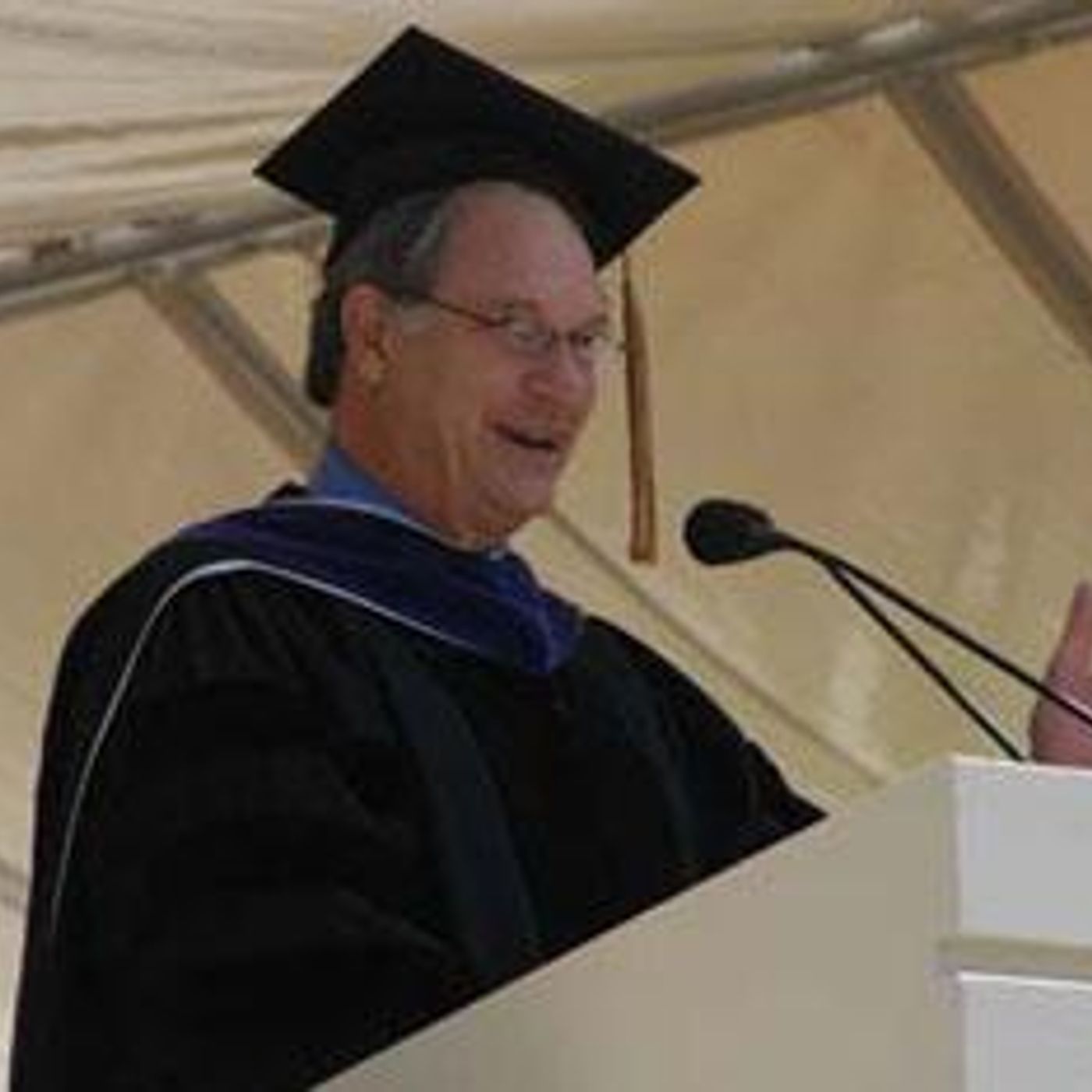
Radiolab
Tell Me A Story
00:26:36
Robert Krulwich's commencement speech at California Institute of Technology gets at the heart of what we do here at Radiolab.
Loading summary
Transcript13 lines
- [00:00]
A
As the daughter of immigrants, financial struggles were part of my everyday reality. In high school, I became homeless and had to live in a women's shelter. Thankfully, being an Apia McDonald's Scholar enabled me to attend college and begin a new chapter in my life. And now my reality is filled with endless possibilities.
- [00:22]
B
McDonald's has awarded nearly $4 million through Apia scholars to support students.
- [00:27]
C
Learn more at apanext.com with Venmo Stash a tag on one hand and ordering a ride in the other means you're stacking cash back with Venmo Stash. Get up to 5% cash back when you pick a bundle of your favorite brands. Earn more cash when you do more with Stash. Venmo Stash terms and exclusions apply. Max $100 cash back per month. See terms at Venmo Me Stashterms. Quiet. You're listening to radiolab, the podcast from New York Public Radio, Public Radio W N Y C.
- [00:58]
B
And npr.
- [01:00]
C
Hi, I'm Robert Krulwich. Jads, I'm not exactly sure where Jad is. I know he's at a meeting that I should be at too. So not being Exactly, America's number one meeting person, I got out of it so that I could be here with you, for which I thank you very, very much. So this podcast, today's podcast, is one of our in between season occasionals where we share with you, our regular listeners, an idea, a compelling conversation, a thought. In this case, what you're about to hear is a big thought. For me, anyway, I put it together for the graduating class at Caltech. I was invited to be the commencement speaker there this past June, and I wanted to make a case for talking about science to folks who may not be all that well versed or even all that interested in sciencey things. Because talking about this stuff, I argued, has very powerful consequences. So take a listen. Thank you, Ken Kressa. And thank you. And thank you, Judy Campbell. And thank you, Congressman Shift. And thank you, Mayor Bogart. And especially thank you to all 205 members of the Caltech Class of 2008, plus the extra 14 who are getting pretty close and allowed to sit here. Congratulations to all of you. It's a great, great honor to be here. Normally, if you're a science reporter at npr, at abc, a trip to Caltech means that you call ahead and you ask for a few precious moments with a world class intellectual, whatever, and you're ushered in and you furiously take notes all the time thinking, do I have any idea what this man is saying this woman, I'm sure you know the feeling. And when I got my invitation, asking me to give you guys a lecture, I thought, come on, like, what can I tell you? But I thought of something, so. And it's something that's going to happen to you. You sitting here with the black hats in the next hour or two, there you'll be in your cap and gown, surrounded by your family and by friends and by friends of friends. And somebody, you know, maybe an uncle or a buddy, somebody is going to turn to you and say, so, like, what were you doing at Caltech? I mean, what were you working on? Not that they really want to know, you know, but after all, you've been here for four years, so, you know, or even, you know, different number. If you're a grad student, you must have been doing something here. So it's only polite to ask. And I know that a lot of you have scientifically literate dads and moms and some brothers and some sisters. Not all of them, of course, but some. And let's assume that one of these people, let's say, to make it a relative, let's say that he will make it a he. He's not a scientist. He's not an engineer. And the last time he had a thought, a complex thought about biology or math, was back in 11th grade when he got a C minus in both subjects and vowed never ever to think about biology or math ever again. But because this is your day and because this person loves you, or because he can't really think of anything to say after, hey, he asks about your work. And to make it still more interesting, let's assume that if you explain to this person what you've been working on, you might have to use certain words like protein or quark or differential, or maybe hypotenuse. And, and, and if you do, they're going to listen to you very, very politely. But upstairs, those words are going to mean not a whole lot to them, you know, because science is not their thing. They can lip sync every word to instincts. Bye, bye. Bye. But, you know, hypotenuse is hard. So here's my question. When you are asked, what are you working on? Should you think, there's no way I can talk about my science with this guy because I don't have the talent, I don't have the words, I don't have the patience to do it. It's too hard. And anyway, what's the point? Which is, by the way, not an unusual position. No less than Isaac Newton, and I mean Sir Isaac Newton that one was. When asked, why did you make your Principia Mathematica, your earth shaking book about gravity and laws of motion, so impossibly hard to read, he said, well, I considered writing a popular version that people might understand, but, and I am quoting Newton here to avoid being baited by little smatterers in mathematics. That was his phrase, little smatterers. He intentionally wrote a book in dense scholarly Latin with lots of math so that only scholars could follow. And in other words, Isaac Newton didn't care to be understood by average folks. But here is the argument I want to make to you guys this morning. And you're not going to hear this advice often, I suggest you may never hear it again. When asked about your work, do not do what Isaac Newton did. No, no, no. When a cousin or an uncle or a buddy comes up and asks you, so what are you working on? Even if it's hard to explain, even if, you know they don't really want to hear it, not really, I urge you to give it a try. Because talking about science, telling stories to regular folks is not a trivial thing. Scientists need to tell stories to non scientists because science stories and you know, this, have to compete with other stories about how the universe works and how the universe came to be and some of those other stories, Bible stories, movie stories, myths can be very beautiful and very compelling. But to protect science and scientists, this is not a gentle competition. So you've got to get in there and tell yours your version of how things are and why things came to be. We all know about creationist science movements in America, but what you may not know is that movements are spreading all over the world. In Turkey, there's a group led by a man named Adnan Akhtar. He's a Muslim creationist. And his group produced a picture packed, 768 page quote, biology, unquote textbook that's priced very, very cheaply so schools can have it for next to nothing. And that textbook is now used all over Turkey. It's written in clear and simple language using fabulous pictures. And the pictures are designed to prove that fossils show no evidence of evolution. And this group's books and their CD ROMs and their grocery store magazines, they have grocery store magazines, their websites are so widespread and so inexpensive and so provocative with titles like the Bloody Ideology of Darwinism or the Evolution Deceit, that in Turkey's high schools, which are not religious schools, they have a long secular tradition there, evolution and Darwin are disappearing from the curriculum. In High schools in that country. In 2006, when Turks were polled and asked. I want you to listen to this statement and tell us if it's true or. Or false or you don't know. Here's the statement. Human beings as we know them developed from an earlier species of animals. In 2006, only 25% of the Turkish public said yes to that. That's a very low number. In Japan, 78% say humans evolved from a predecessor species. In the US it's 40%, but that's above Turkey. In Turkey, there was a debate, of course, and there's still one, sort of. Except Mr. Okhtar sued people who opposed his views, sued them for slander, managed to shut down their blogs. In Turkey, his followers attacked biology professors as Maoists. Maoists. As Maoists for teaching evolution, which they called nothing but a deception imposed upon us by the dominators of the world system. High school teachers in Istanbul were fired because they taught evolution and not creation science. And while Mr. Okhtar was recently arrested for his role in a sex ring operation, so he may be taking a break, creation science is now taught all over Turkey. And while Turkey may seem an ocean or more away, it is not. There are always Mr. Oktars who aim their stories right at you, right at the heart of a place like this, at the values that Caltech has always honored. And from the beginning, I know you spent long nights cramming and sweating under the weight of too many assignments and too many tests and too many favors from too many professors who didn't realize there were other professors that were making you do the same test and the so forth. But somewhere in that nightmare of work, you may have noticed that your teachers were giving you more than tension headaches. They were giving you values, a deep respect. For curiosity, for doubt, always doubt. For open mindedness, for going wherever the data leads, no matter how uncomfortable, for honesty, for discipline. And most of all, the belief that anybody, no matter where they're from, no matter what their language, no matter what their religion, no matter what their politics, no matter what their age or their temperament, I mean, this place has seen monstrous egos and bongo players and people who dress in Viking hats. But if you can learn how to sit down in a laboratory and think in an orderly way, and if you have the patience to stare and stare and stare and stare, looking for a pattern in nature, you're welcome here. It may be boring, it may be sometimes very exhausting, but there's a freedom, a freedom in this way of looking that is precious in the world, and that freedom can be attacked or defended with stories. Stories matter. After all, what is a science experiment? But you make up a story that may or may not be true, and then you test that story in the real world to see what happens. So, for example, let's say you're In Pisa, it's 1590, and a guy named Galileo comes up to you and says, hello there. He actually probably wouldn't say it that way. You see, I have a cannonball in my right hand. It's a very, very heavy thing, to be sure, but in my left hand, sir, I have a golf ball. It wouldn't be golf balls before golf. In my left hand, I have a musket ball which is lighter than the cannonball. Now, sir, if I told you that these two balls have dropped from the same high place at the same time, in spite of their five or tenfold difference in weight, that they would hit the ground simultaneously, the light one and the heavy one, dropping, landing at the exact same time. Would you like to see me try whether Galileo actually did this or not? If a guy named Galileo proposed this to you, wouldn't you stick around just to see how it comes out? Galileo, for my purposes, is the great un. Newton. Unlike Newton, he had a flair for narrative, a storyteller's sense. Unlike Newton, he wanted to tell people what was on his mind. Unlike Newton, he thought that people could understand him. That's why he got in so much trouble in his famous book, the Dialogues about the sun being the center of the Solar system. He didn't write it in Latin, he wrote it in Italian for a mass audience. And the writing was gorgeous. It was poetic, it was combative, it was funny. It was a running conversation between three good friends who spent four days together arguing and eating and boating through Venice in gondolas. The argument being, is the Earth the center of the solar system, or might it be the sun? And the text of that book has. Has little pictures, line drawings that he made, and he put in marginal headings to break up the text so you wouldn't have a big sheet of writing. And while there are numbers in his book, he doesn't get to them until two thirds through the book. And if you skip the numbers, you don't miss that much. So because Galileo's book was so easy to read and such a page turner, it so threatened the established order that Galileo, as you know, was put under house arrest. And it wasn't just his science that was alarming. I think it was the power of his storytelling that's what made him extra dangerous. Because stories have this power, people like them. E.O. wilson, the great scientist and the great storyteller, writes that science, like the rest of culture, is based on the manufacture of narrative. We all live by narrative. He doesn't know the half of it. I work on radio and TV and I've learned that I can go on prime time TV and I have and do an hour on string theory and talk about multiple dimensions and space time curvature and supersymmetry. This is very odd and very hard stuff. For grandma, for your brother, the cousin I was talking about before. And yet a whole lot of people, a few million people, will sit there the whole time. I mean, ABC clocks this kind of thing. And they sit and they watch. And apparently I like to assume they're pretty fascinated. But the program ends and then you have like a bunch of ads, like seven commercials and one network id and three and a half to five minutes pass and the next program comes on the very same channel. And it's about extraterrestrials landing in anti gravity machines to examine the breasts of innocent cocktail waitresses. And the same people who were watching the previous hour sit there with the same sense of awe and the same sense of fascination. And they think, wow. And they kind of believe it too. People are not scrupulous about stories, truths, fiction. It's like this endless back and forth between Ross and Phoebe and the TV show Friends. If you know the show. Ross is a paleontologist. He studies dinosaurs. Phoebe is his masseuse friend. She doesn't study anything, but she knows everything. And in a typical episode, Ross sits down and very carefully explains how opposable thumbs evolve slowly over time. And Phoebe listens very respectfully. And Ross finishes. So he says, you see how evolution explains opposable thumbs? Or, says Phoebe, maybe the overlords need them to steer their spacecrafts. So people can slip very easily from reason to fantasy. And they believe both. And they don't feel a need to be consistent. They just want to feel like they're absorbed, like they're swept away. And when you tell stories, boy, this hat is driving me nuts. I'm going to just. You can't do it. Only me. I don't know what's wrong with my hair. But just forgive me here. When you tell stories to Americans, really to anybody in the world, you have to remember there are lots of Phoebes stories with gripping visuals and good punchlines and stories that make intuitive sense, that make sensual sense to your eyes and to your ears and to Your touch, they can convince they have power. You may not believe that two balls, one heavy and one light dropped from the same high place, will drop together, but if you see it with your own eyes, that you remember. And as science gets harder, the metaphor becomes more useful and even necessary. I mean, more and more of what science teaches about the world is not intuitive that way. It makes no sensual sense. This starts early in high school, that if you slap your hand on a hard surface like. Like that, the outer electrons on my hands and the electron on this wood here are repelling each other. This is the electromagnetic forces, you know. But electrons just don't like being around other electrons. So the reason my hand didn't go through the surface then is that two platoons of electrons, mine and the tables on a line of scrimmage got in each other's face. Okay, that's harder, though, to add faces and motives and football analogies to electrons. And there's some of you sitting here, probably here, who say, you. You can't talk about nature that way. It distorts what's true. What's true is what you see in equations, in the math that points to these laws. But I go back to my man Galileo, who was maybe the first in Western tradition anyway, to honor mathematics as the primal force of knowledge, the logic of the universe, he said in his book the Assayer, is written in the language of mathematics, without which one is wandering around in a dark labyrinth. But having honored math, Galileo was very happy to create beautiful metaphors, to invent marvelous characters, to draw pictures. He knew how to light that labyrinth so the rest of us could see inside. Because the more abstract and mathematical science gets, the more we need to imagine something concrete. As the physicist Alan Lightman has said, we are blind people inventing what we don't see. And yet, 400 years later, many scientists are very wary of metaphors, of adjectives, of the active tense. It was observed that is much nicer for these people, for some reason than I saw. And I can tell you from personal experience, they do not like talking to reporters because they think whatever they say, this journalist person is going to turn it into something stupid and cartoony and wrong. And, yeah, you're applauding, but. And maybe it's true, but I was happy to learn that these people are just as nasty about each other. My favorite example is a pair of letters from Werner Heisenberg and Erwin Schrodinger, two of the 20th century's great physicists. Schrodinger liked to think in pictures. His most Famous one being the image of a cat in a box who paradoxically is both alive and dead at the same time. Don't ask. The point is, Schrodinger loved pictures. And Heisenberg, he loved numbers. And when Schrodinger read Heisenberg's papers, they were so mathematical, he wrote, I am repelled, his word. I am repelled by the methods of transcendental algebra that so lack visualizability. And Heisenberg answered back, oh, yeah, well, I mean, probably didn't say it that way. The more I reflect on Schrodinger's work, the more disgusting I find it. And disgusting is a quote. It's Heisenberg's word. So there is a tension here among scientists between two kinds of truth, math and narrative. But the job that we face, and I should come clean with you and tell you what's really on my mind here, is to put more stories out there about nature that are true and complex, not dumbed down, but still have the power to enthrall, to excite, to remind people there's a deep beauty, a many leveled beauty in the world. And what scientists say is not their offhand opinion. It's hard won information. It's carefully hewn from the world. It's not the bunch of ideas from a tribe of privileged intellectuals who look down on everybody even though they are indeed up here looking down on you. But it's my sense that if more scientists wanted to, they could learn how to tell their stories with words and pictures and metaphor. And people will hear and remember those stories and not be as willing to accept the other folks stories or at least there'll be a tug of war. And I think that the science stories will surprisingly win. I remember standing on the rim of the Grand Canyon, looking down at that enormous hole created by running water, endlessly running water, fed by a distant Colorado rain. And I thought, you know, how did this beautiful thing happen? And in my head I heard a line written by Loren Isley, a great, great scientist and writer, a line I read in college which describes the magnificent violence hidden in a raindrop. And when I looked back at the canyon, at the roaring river, there that's what I saw. Magnificent violence hidden in a torrent of old raindrops. Now, we can't all be that good. And even when we try, we don't always win. Again. I'm thinking of Ross again. Poor Ross from the show friends. He puts 200 fossils in front of Phoebe, brings them in a suitcase to show her how over time, fossils gradually change and evolve into recognizable forms. And he, he said, I'm going to lay them out for you to see. And you're going to see this with your own eyes because these fossils are from all over the world. And Phoebe says, really? You can actually see it? And Ross says, you bet. From the us, China, Africa, all over. And Phoebe says, well, you know, I didn't know that. And Ross says, well, there you go. And Phoebe says, huh? So now the real question is, who put those fossils there and why? So yes, science stories don't always win, but at the very least it, it should be a tug of war. And if you tell them right, they have power to change minds. On my way here, I read a story in Smithsonian magazine that's a good example of what I'm talking about. Imagine that you're sitting on your porch with a friend, a non science friend, and as you sit there, a robin, an ordinary robin, wanders onto the lawn. And you say to your friend, you see that robin? Did you know that robins, in fact all birds are directly descended from dinosaurs? And in a way, that robin is a small, feathery modern dinosaur. And if your friends are like my friends, she would say, what? Go away. But don't go away. Instead, you could tell them a story, which is how I'm going to conclude. Eight years ago, Bob Harmon, who works for the Museum of the Rockies, was having lunch in a canyon somewhere in Montana. And he looked up at a big rock face and he saw a bone sticking out of the wall just a bit. The bone turned out to be part of a Tyrannosaurus rex, one of the best preserved examples of a T. Rex found anywhere. And after three years of carefully, carefully, carefully chipping away, they got a 2,000 pound skeleton out of the wall and it was removed from the canyon. And the dinosaur was named Bob in honor of Mr. Harmon. And on the way out, for various logistical reasons, they had to break a leg bone. And some of the fragments were sent to laboratory scientists around the world, including to a scientist in North Carolina named Mary Schweitzer. So Mary Schweitzer gets a bone, a bone fragment in the mail and she opens it up and she looks at it. And although Bob the dinosaur was 68 million years old, almost immediately she said as soon as she looked, this is not a Bob. This dinosaur is a girl and she's a pregnant girl. And what Mary knew is that when women get pregnant, they use calcium from their bones to build the skeletons of their developing fetuses. And if the mother's a bird, mother well, birds form a very distinct structure in their bones when they're pregnant, and they need calcium to build eggs, eggshells. So Mary had studied birds, and when she looked at the dinosaur bone fragments, she saw just what pregnant birds have. But, you know, just to be sure, she looked up the most primitive birds, the emu and the ostrich. And she called a bunch of ostrich breeders in North Carolina and she said, anybody have a dead female? I need a, I need a leg bone here. And a few months pass and the phone rings and it's a farmer saying, y' all need that lady ostrich. And Mary and her two assistants drove to this farm to collect a dead ostrich, which was in a farmer's backhoe bucket, and drove it back to Raleigh. And what do you know, the former ostrich had been a pregnant former ostrich. And the next year, Mary published a paper in Science which shows the dinosaur bone right next to the ostrich bone, showing nearly identical features. And since then, another T. Rex, this one in Argentina, was found to have the same calcium structure. So there's more evidence here that when you look deep inside dinosaurs and deep inside birds, what you see is very, very similar. Which gives us yet another reason to think that the robin in your front yard is an itty bitty dinosaur. And then Mary went on to do many more interesting things about dinosaurs. But if your non science friend can listen to that story and lean in a little and hear how scientists work with bones and dead birds in buckets, patiently looking for patterns, you have just placed a sword in the hand of your friend. So the next time somebody tells her that scientists are know it alls who toss off opinions that scientists science is an elitist plot, she would think, well, but I did hear this story. And the scientific method gets a little more defense, a little protection. But better than that, the next time your friend sees a robin, she'll see, I hope, more than a robin. She'll glance at a little bird pecking for worms on the lawn, and she'll travel 60 million years back in time to a place which creationists say did not exist. But now, because of your story, your friend has a pregnant Tyrannosaurus in her head with the unfortunate name Bob, which makes robins and sparrows and chickadees and crows and all birds just a little more amazing and a little more delightful to look at. Which means you win. The creationists can't beat delight. You have smote them with your story. So, ladies and gentlemen of the class of 2008, mindful of the fact that this place, this institution, which is about to confer upon you a Bachelor's of Science degree and all you others here and there, who are getting your masters and your doctorates, knowing as you must, that places like this, with their culture of intellectual freedom and respect for truth and love of inquiry, not to mention illegal bonfires on city streets and basketball teams that lose 207 games in a row, but not the women's team. I heard they have their astonishing two game back to back winning streak. Yes, yes. You know. You know that when you receive your degree today, you are part of and you are celebrating something very rare and very precious and very fragile in our world. This place celebrates freedom. And because you are now free men and women, you have to protect what you've been given by helping others who haven't been here and who are never coming here to understand the value of what you do and what your teachers do and what their predecessors have done. Which is why an hour or so from now, when your brother or your aunt or your mom asks you, so what have you been up to while you've been here? Take a chance. Find the words, find the metaphor, share the beauty and tell them what's on your mind. Tell them a story. Thank you very, very much.
- [25:50]
D
Thank you very much, Robert, for sharing your stories and your challenges with us. I can't really imagine any more appropriate words for Caltech commencement. I'd like you all to turn to page 54 in your program to join the Caltech League club.
- [26:19]
C
So that's what I told the Caltechis. If you have any beef or any thoughts, any reaction, I'd love to hear what you think. You can write us at our website. And again, we'd like you to hang on to the fall when we have a whole new season of Radiolab.
- [26:34]
B
Wait, wait, wait. Podcast is not over. I'm Jad. I'm back from the meeting and Robert forgot to read the credits, so here I am to do. To do that for him. Thank you to Caltech for providing us with the audio and for choosing Crowley to give the talk. Radiolab is funded by the Alfred P. Sloan foundation, the Corporation for Public Broadcasting, the National Science Foundation. I'm Jad Abumrad. Thanks for listening.
- [27:04]
C
Your passion, your achievement, your triumph.
- [27:23]
D
Radiolab is supported by the National Forest Foundation, a nonprofit transforming America's love of nature into action for our forests. Did you know that national forests provide clean drinking water to 1 in 3Americans? And when forests struggle, so do we. The National Forest foundation creates lasting impact by restoring forests and watersheds, strengthening wildfire resilience, and expanding recreation access for all. Last year, they planted 5.3 million trees and led over 300 projects to protect nature and communities nationwide. Learn more at nationalforests.org Radiolab a Sapphire.
- [28:02]
B
Reserve story from Ella Langley.
- [28:04]
A
I kind of say my first concert ever was for cows. I would climb up to the top of the barn and just perform. Now I still do that listening to Apple music, which I get through my Sapphire Reserve card. And when moo can sound very close to boo, it toughens a girl up.
- [28:18]
B
Sapphire Reserve now comes with Apple Music. Chase Sapphire Reserve now even more rewarding. See More rewards@chase.com Reserve IT cards issued by JP Morgan Chase Bank NI member FDIC subject to credit approval terms apply. Apple and the Apple logo are trademarks of Apple Inc. Registered in the US and other countries.