← Radiolab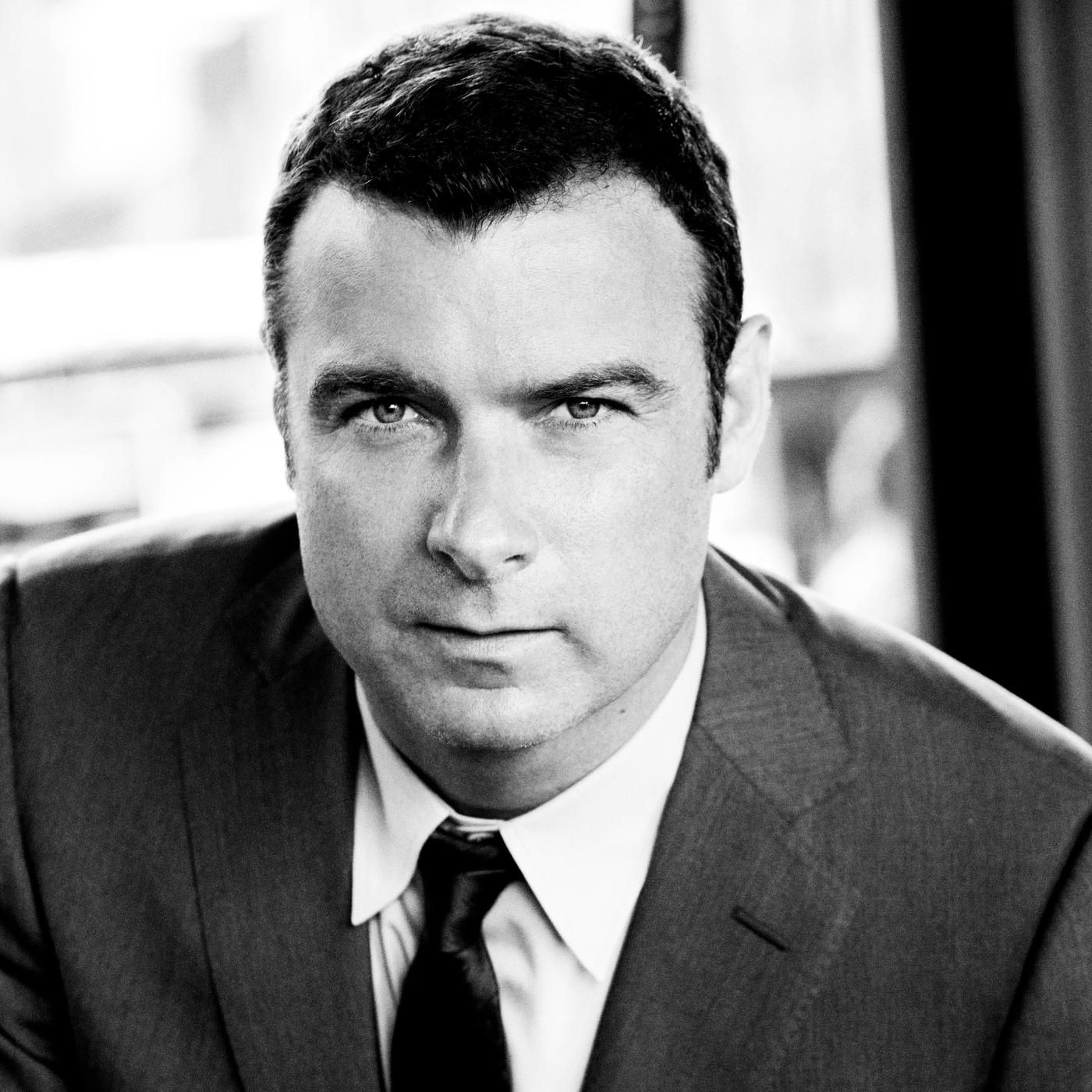
Radiolab
The Distance of the Moon
00:40:37
What if the moon were just a jump away? In this short, a beautiful answer to that question from Italo Calvino, read live by Liev Schreiber.
Loading summary
Transcript52 lines
- [00:00]
Narrator/Reader
Your new home is now ready. Dr. Horton, America's builder has new homes that are ready today with new construction communities in Ellensburg and throughout the Greater Seattle area. Dr. Horton has the right home for you. At Dr. Horton, we're still building with flexible living spaces, smart home technology and two and three car garages. More communities and more homes available every day. Find your new home in Ellensburg now ready@drhorton.com Dr. Horton, America's builder and equal housing opportunity builder for delicious meals, you could go out to eat or you could just make a Marie Callender's meal. Marie Callender's classic chicken Parmigiano bowl is so good. It has marinara sauce that's made from scratch and creamy mozzarella cheese over pasta. It's delicious with no artificial flavors, colors or preservatives and 30 grams of protein. You can find it in the frozen aisle. Marie Callender's what having it All Tastes.
- [00:54]
Robert Krulwich
Like.
- [00:56]
Narrator/Reader
At Lowe's Loyalty is royalty. With Christmas right around the corner, treat yourself for less during the holiday season. Rewards members get early online only access to Black Friday doorbuster deals on Thanksgiving Day like the Hisense side by side fridge. Just $799. Not a member. Join for free Today Lowes we help you save valid 1127 only on Lowes.com, member only doorbusters and midnight Eastern loyalty programs subject to terms and conditions. Seelowe's.com terms for details, subject to change.
- [01:25]
Robert Krulwich
Wait, you're listening. Okay.
- [01:27]
Jad Abumrad
All right.
- [01:29]
Narrator/Reader
Okay. All right. You're listening to Radiolab. Radiolab shorts from WNYC and npr.
- [01:44]
Jad Abumrad
Hey, I'm Jad Abumrad.
- [01:45]
Robert Krulwich
I'm Robert Krulwich.
- [01:46]
Jad Abumrad
This is Radiolab podcast. And today on the podcast, something a little different.
- [01:51]
Robert Krulwich
Yeah. A little while ago, we happened to find ourselves on the stage of Symphony Space, which is a theater in Manhattan in New York City.
- [01:58]
Jad Abumrad
And we were doing a show with selected shorts, which is a radio show that's produced out of our home station wnyc, you heard all across the country. And they had asked us very generously to curate an evening of stories. And so we chose a bunch of stories with the staff, got some really unbelievably wonderful actors. Like who? Who was there?
- [02:18]
Robert Krulwich
Jane Curtin was there.
- [02:19]
Jad Abumrad
Jane Curtin read a story.
- [02:21]
Robert Krulwich
Kira Cedric was there.
- [02:22]
Narrator/Reader
Yeah.
- [02:23]
Jad Abumrad
And Liev Shriver read a story which you're going to hear. So we just wanted to play you that story which made up the second half of the show for this podcast.
- [02:30]
Robert Krulwich
And here's how that One began. Hello.
- [02:37]
Jad Abumrad
Okay, we are back for part two. This next story could use a little bit of setup, we think. I don't know how many of you know this, but there is a theory about 25 years old now that explains how the Earth got a moon. And it goes like this.
- [02:54]
Robert Krulwich
So about four and a half billion years ago, the Earth was, you know, fresh new planet was going around the sun and the solar system was having a sort of a fiery sort of chaotic period and into the mix a very large planetoid about the size of Mars kind of went rogue and began bopping around and there was a head on collision between the Earth and this planet. And the two went, and the incoming one melted much of the Earth. The Earth became sort of vaporous and everything on the Earth just went to gas and sort of flew up. And then the Earth just became sort of an unsolid for a while. When it cooled, the Earth fell back into place and there was this extra thing very, very close by that we call the Moon.
- [03:38]
Jad Abumrad
But ever since that moment, these two celestial orbs, the Earth and the moon have been very gradually, very, very slowly drifting away from each other at a rate of, and this is interesting, 1nm per second, which is not a lot. It's about just for practical sort of analogy, that's about the speed that your fingernails grow. But imagine your fingernails growing for four and a half billion years and you've got a pretty long fingernail.
- [04:05]
Narrator/Reader
Yes.
- [04:06]
Robert Krulwich
Or there are further away moon. Yes. So this is a story from Italo Calvino. I'm just doing the FM radio version. I don't know how he released it. He's a Cuban born writer. He moved to Italy, grew up there. He fought the Nazis towards the end of World War II, wrote a book about that, then wrote many other books. And among them he created a series of stories called Cosmic Comics. They mostly have the same narrator, a mysterious character called.
- [04:31]
Jad Abumrad
Yes. What's he called?
- [04:34]
Narrator/Reader
Kiffwick. Kiffwick.
- [04:37]
Jad Abumrad
We were having a whole debate backstage.
- [04:39]
Narrator/Reader
About how to say this.
- [04:40]
Jad Abumrad
How do you spell it?
- [04:41]
Robert Krulwich
You spell it. Q, F, W, F, Q. Kifwick.
- [04:45]
Jad Abumrad
Yeah, Kifwick.
- [04:48]
Robert Krulwich
You have to wait for it.
- [04:50]
Jad Abumrad
He'll come out.
- [04:52]
Robert Krulwich
So this fellow, he's very ancient. He tells stories, the stories conclude the origin of the universe, the beginning of time.
- [05:01]
Jad Abumrad
And I should say it will be read for you today by an incredible actor, director, producer, screenwriter, and a man who for the last decade would you say has been Robert's unrequited boy crush.
- [05:15]
Robert Krulwich
Yeah, it's not one sided Bromance. It's not like sexual or anything, it's just like. But it is a thing because.
- [05:23]
Jad Abumrad
I.
- [05:27]
Robert Krulwich
Now at this moment, he just pops out. Liev comes out onto the stage and hands me this little piece of paper.
- [05:32]
Jad Abumrad
Sort of pretending like he's handing Robert his phone number.
- [05:34]
Robert Krulwich
But yeah, nothing on it. I was watching a play once, this is many years ago, called Don't Look Back and there was an actor in it named Jane Alexander, just amazing actor. And she walked onto the stage in this play and she just dropped some luggage on the stage and looked around and in that moment she hadn't said anything yet. There was like a. There was a history there. There was so much information before there was any sound. I never saw that again until a few years ago in A View from the Bridge. Liev Schreiber was a longshoreman. He was just sitting. The play begins and there's a guy sitting in a chair reading a newspaper. I think he turned a page and so I'm sitting there and I'm seeing an entire universe of a person and I don't know how he did it. You may know his work from Glengarry Ginroston on to the Mamet plays and he's on TV and stuff. I simply think he's. This is the crushy part. I think he's like the best living actor.
- [06:42]
Narrator/Reader
So, so.
- [06:46]
Jad Abumrad
No, no pressure or anything there.
- [06:49]
Robert Krulwich
But anyway, and he has to say.
- [06:53]
Jad Abumrad
It is a tall order. Here he is to read Italo Calvino's the Distance of the Moon. Liev Schreiber.
- [07:15]
Narrator/Reader
The Distance of the Moon by Talo Calvino. At one time, according to Sir George H. Darwin, the moon was very close to the Earth. Then the tides gradually pushed her far away. The tides that the moon herself causes in the Earth's waters where the Earth slowly loses energy. How well I know old cried. The rest of you can't remember, but I can. We had her on top of us all the time, that enormous moon. When she was full nights as bright as day, but with a butter colored light. It looked as if she were going to crush us. When she was new. She rolled around the sky like a black umbrella blown by the wind. And when she was waxing she came forward with her horn so low she seemed about to stick into the peak of a promontory and get caught there. But the whole business of the moon's phases worked in a different way then because the distances from the sun were different and the orbits and the angle of something or other, I forget what. As for eclipses with earth and moon stuck together the way they were. Why, we had eclipses every minute. Naturally, those two big monsters managed to put each other in the shade constantly. First one, then the other. Orbit. Oh, elliptical, of course. For a while it would huddle against us and then it would take flight. For a while, the tides, when the moon swung closer, rose so high nobody could hold them back. There were nights when the moon was full and very, very low and the tide was so high that the moon missed a dunking in the sea by a hair's breadth. Well, let's say a few yards anyway. Climb up on the moon. Of course we did. All you had to do was row out in a boat when you were underneath, prop a ladder against her and scramble up. The spot where the moon was lowest as she went by was off the zinc cliffs. We used to go out with those little rowboats they had in those days. Round and flat, made of cork. They held quite a few of us. Me, Captain Vhidd, his wife, my deaf cousin, and sometimes little exulthliks. She was 12 or so at the time. On those nights the water was very calm, so silvery it looked like mercury. And the fish in it violet colored, unable to resist the moon's attraction, rose to the surface, all of them, and so did the octopuses and the saffron medusas. There was always a flight of tiny creatures, little crabs, squid, and even some weeds, light and filmy. And coral plants that broke from the sea and ended up on the moon, hanging down from the lime white ceiling. Or else they stayed in midair, a phosphorescent swarm. We had to drive off, waving banana leaves at them. This is how we did the job. In the boat we had a ladder. One of us held it, another climbed to the top, and a third at the oars rowed until we were right under the moon. That's why there had to be so many of us. I only mentioned the main ones, the man at the top of the ladder. As the boat approached, the moon would become scared and start shouting, stop, stop. I'm going to bang my head. That was the impression you had seeing her on top of you. Immense and all rough, with sharp spikes and jagged saw tooth edges. It may be different now, but then the moon, or rather the bottom or the underbelly of the moon, the part that passed closest to the earth and almost scraped it, was covered with a crust of sharp scales. It had come to resemble the belly of a fish. And the smell too, as I recall, if not downright fishy, was Faintly similar, like smoked salmon in reality. From the top of the ladder, standing erect on the last rung, you could just touch the moon if you held your arms up. We had taken the measurements carefully. We didn't yet suspect that she was moving away from us. The only thing you had to be very careful about was where you put your hands. I always chose a scale that seemed fast. We climbed up in groups of five or six at a time. Then I would cling, first with one hand, then with both, and immediately I would feel ladder and boat drifting away from below me. And the motion of the moon would tear me from the Earth's attraction. Yes, the moon was so strong that she pulled you up. You realized this the moment you passed from one to the other. You had to swing up abruptly with a kind of somersault, grabbing the scales, throwing your legs over your head until your feet were on the moon's surface. Seen from the Earth, you looked as if you were hanging there with your head down. But for you, it was the normal position. And then the only odd thing was that when you raised your eyes, you saw the sea above you, glistening with the boat, and the others upside down, hanging like a bunch of grapes from the vine. My cousin, the deaf one, showed a special talent for making those leaps. His clumsy hands, as soon as they touched the lunar surface, he was always the first to jump from the ladder, suddenly became deft and sensitive. They found immediately the spot where he could hoist himself up. In fact, just the pressure of his palm seemed enough to make him stick to the satellite's crust. Once I even thought I saw the moon come toward him as he held out his hands. He was just as dexterous in coming back down to Earth, an operation still more difficult for us. It consisted in jumping as high as we could, our arms upraised. Seen from the moon, that is, because seen from the Earth, it looked more like a dive, or like swimming downwards, arms at our sides, like jumping up from the Earth. In other words, only now we were without the ladder, because there was nothing to prop it against on the Moon. But instead of jumping with his arms out, my cousin bent toward the moon's surface, his head down as if for a somersault, then made a leap, pushing with his hands from the boat, we watched him erect in the air, as if he were supporting the moon's enormous bowl and were tossing it, striking it with his palms. Then, when his legs came within reach, we managed to grab his ankles and pull him down on board. Now you will ask me what in the world we went up on the moon for. I'll explain it to you. We went to collect milk with a big spoon and a bucket. Moon milk was very thick, like a kind of cream cheese. It formed in the crevices between one scale and the next through the fermentation of various bodies and substances of terrestrial origin which had flown up from the prairies and forests and lakes as they moon sailed over them. It was composed chiefly of vegetable juices, tadpoles, bitumen, lentils, honey, starch crystals, sturgeon eggs, molds, pollens, gelatinous matter, worms, resins, pepper, mineral salts, combustion residue. You had only to dip the spoon under the scales that covered the moon's scabby terrain, and you brought it out filled with that precious muck. Not in the pure state, obviously. There was a lot of refuse in the fermentation, which took place as the moon passed over the expanses of hot air above the deserts. Not all the bodies melted. Some remained stuck in it. Fingernails and cartilage, bolts, seahorses, nuts and peduncles, shards of crockery, fish hooks, at times even a comb. So this paste, after it was collected, had to be refined, filtered. But that wasn't the difficulty. The hard part was transporting it down to the earth. This is how we did it. We hurled each spoonful into the air with both hands, using the spoon as a catapult. The cheese flew, and if we had thrown it hard enough, it stuck to the ceiling. I mean the surface of the sea. Once there, it floated, and it was easy enough to pull it into the boat. In this operation, too, my deaf cousin displayed a special gift. He had a strength and a good aim. With a single sharp throw, he could send the cheese straight into a bucket we held up to him from the boat. As for me, I occasionally misfired the contents of the spoon, would often fail to overcome the moon's attraction, and would fall back into my eyes. I still haven't told you everything about the things my cousin was good at. That job of extracting lunar milk from the moon's scales was child's play to him. Instead of the spoon, at times he had only to thrust his bare hand under the scales, or even one finger. He didn't proceed in any orderly way, but went to isolated places, jumping from one to the other, as if he were playing tricks on the moon, surprising her or perhaps tickling her. And wherever he put his hand, the milk spurted out as if from a nanny goat's tits. So the rest of us had only to follow him and collect with our spoons, the substance that he was pressing out first here, then there, but always as if by chance, since the deaf one's movements seem to have no clear practical sense. There are places, for example, that he touched merely for the fun of touching them. Gaps between two scales, naked and tender folds of lunar flesh. At times my cousin pressed not only his fingers, but, in a carefully gauged leap, his big toe. He climbed onto the moon barefoot, and this seemed to be the height of amusement for him, if we could judge by the chirping sounds that came from his throat as he went on leaping. The soil of the moon was not uniformly scaly, but revealed irregular, bare patches of pale, slippery clay. These soft areas inspired the deaf one to turn somersaults or to fly almost like a bird, as if he wanted to impress his whole body into the moon's pulp. As he ventured farther on his way, we lost sight of him at one point. On the Moon there were vast areas we had never had any reason or curiosity to explore, and that was where my cousin vanished. I suspected all those somersaults and nudges he indulged in before our eyes were only a preparation, a prelude to something secret meant to take place in the hidden zone. We fell into a special mood on those nights off the zinc cliffs, gay but with a touch of suspense, as if inside our skulls instead of the brain. We felt a fish floating, attracted by the moon, and so we navigated, playing and singing. The captain's wife played the harp. She had very long arms, silvery as eels on those nights, and armpits as dark and mysterious as sea urchins. And the sound of the harp was sweet and piercing, so sweet and piercing it was almost unbearable, and we were forced to let out long cries, not so much to accompany the music as to protect our hearing from it. Transparent medusas rose to the sea's surface, throbbed there a moment, then flew off, swaying toward the moon. Little Lexlix amused herself by catching them in midair, though it wasn't easy. Once, as she stretched her little arms out to catch one, she jumped up slightly and was also set free. Then, thin as she was, she was an ounce or two short of the weight necessary for the Earth's gravity to overcome the moon's attraction and bring her back. So she flew up among the medusas suspended over the sea. She took fright, cried, then laughed, and started playing, catching shellfish and minnows as they flew, sticking some into her mouth and chewing them. We rode hard to keep up with the child. The moon ran off in her lips, dragging that swarm of marine fauna through the sky, and a train of long entwined seaweeds and exalithics hanging there in the midst. Her two wispy braids seemed to be flying on their own, outstretched toward the moon. But all the while she kept wriggling and kicking at the air as if she wanted to fight that influence. And her socks, she had lost her shoes in the flight, slipped off her feet and swayed, attracted by the earth's force. On the latter, we tried to grab them. The idea of eating little animals in the air had been a good one. The more weight Exilis gained, the more she sank toward the earth. In fact, since among those hovering bodies hers was the largest, mollusks and seaweeds and plankton began to gravitate about her, and soon the child was covered with silicious little shells, chitinous carapaces and fibers of sea plants. And the farther she vanished into that tangle, the more she was freed of the moon's influence until she grazed the surface of the water and sank into the sea. We rode quickly to pull her out and save her. Her body had remained magnetized, and we had to work hard to scrape off all the things in crusted on her. Tender corals were wound about her head, and every time we ran the comb through her hair there was a shower of crayfish and sardines. Her eyes were sealed shut by limpets clinging to the lids with their suckers. Squids tentacles were coiled around her arms and her neck, and her little dress now seemed woven only of weeds and sponges. We got the worst of it off her, but for weeks afterwards she went on pulling out fins and shells, and her skin, dotted with little diatoms, remained affected forever, looking to someone who didn't observe her carefully, as if it were faintly dusted with freckles. This should give you an idea of how the influences of Earth and moon practically equal thought over the space between them. I'll tell you something else. A body that descended to the Earth from a satellite was still charged for a while with lunar force and rejected the attraction of our world. Even I, big and heavy as I was every time I had been up there, I took a while to get used to the Earth's ups and its downs, and the others would have to grab my arms and hold me, clinging in a bunch in the swaying boat while I still had my head hanging and my legs stretching up towards the sky. Hold on to us. Hold on to us. They shouted at me, and in all that groping sometimes I ended up by seizing one of Mrs. Vahidviz breasts, which were round and firm and the contact was good and secure and had an attraction as strong as the moon's, or even stronger, especially if I managed as I plunged down to put my other arm around her hips, and with this I passed back into our world and fell with a thud into the bottom of the boat, where Captain Vhd Vhid brought me around, throwing a bucket of water in my face. This is how the story of my love for the captain's wife began, and my suffering because it didn't take me long to realize whom the lady kept looking at insistently when my cousin's hands clasped the satellite. I watched Mrs. Vid, and in her eyes I could read the thoughts that the deaf man's familiarity with the moon were arousing in her. And when he disappeared in his mysterious lunar explorations, I. I saw her become restless, as if on pins and needles, and it was all clear to me how Mrs. Vhyd Vhid had become jealous of the moon and I was jealous of my cousin. Her eyes were made of diamonds, Mrs. Vhid Vahid's. They flared when she looked at the moon, almost challengingly, as if she were saying, you shan't have him. And I felt like an outsider. The one who least understood all of this was my deaf cousin. When we helped him down, pulling him, as I explained to you, by his legs, Mrs. Vhd Vahid lost all her self control, doing everything she could to take his weight against her own body, folding her long silvery arms around him, I felt a pang in my heart the times I clung to her. Her body was soft and kind, but not thrust forward the way it was with me. My cousin, while he was indifferent, still lost in his lunar bliss. I looked at the captain, wondering if he also noticed his wife's behavior, but there was never a trace of any expression on that face of his, eaten by brine, marked with tarry wrinkles. Since the deaf one was always the last to break away from the moon, his return was the signal for the boats to move off. Then, with an unusually polite gesture, Vhyd V. Hid, picked up the harp from the bottom of the boat and handed it to his wife, she was obliged to take it and play a few notes. Nothing could separate her more from the deaf one than the sound of the harp. I took to singing in a low voice that sad song that goes, Every shiny fish is floating, floating, and every dark fish is at the bottom, at the bottom of the sea, and all the others except my cousin echoed my words. Every month, once the satellite had moved on, the deaf one returned to his solitary detachment from the things of the world. Only the approach of the full moon aroused him again. That time I had arranged things so it wasn't my turn to go up. I could stay in the boat with the captain's wife. But then, as soon as my cousin had climbed the ladder, Mrs. Vhd said, this time I want to go up there too. This had never happened before. The captain's wife had never gone up on the moon. But Vahid. Vahid made no objection. In fact, he almost pushed her up the ladder bodily, exclaiming, go ahead, then. And we all started helping her, and I held her from behind and felt her round and soft on my arms and had to hold her up. I began to press my face and the palms of my hands against her, and when I felt her rising into the moon sphere, I was heartsick at that lost contact. So I started to rush after her, saying, I'm going to go up for a while too, to help out, as I was held back as if in a vise. You stay here. You have work to do later, the captain commanded without raising his voice. At that moment each one's intentions were already clear. And yet I couldn't figure things out. Even now I'm not sure I've interpreted it all correctly. Certainly the captain's wife had for a long time been cherishing the desire to go off privately with my cousin up there, or at least to prevent him from going off alone with the moon. But probably she had a still more ambitious plan, one that would have to be carried out in agreement with the deaf one. She wanted the two of them to hide up there together and stay on the moon for a month. But perhaps my cousin, deaf as he was, hadn't understood anything of what she had tried to explain to him. Or perhaps he hadn't even realized that he was the object of the lady's desires. And the captain. He wanted nothing better than to be rid of his wife. In fact, as soon as she was confined up there, we saw him give free rein to his inclinations and plunge into vice. And then we understood why he had done nothing to hold her back. But had he known from the beginning that the moon's orbit was widening, none of us could have suspected it. The deaf one, perhaps, but only he, in the shadowy way he knew things. He may have had a presentiment that it would be forced, that he would be forced to bid the moon farewell that night. This is why he hid in his secret places and reappeared only when it was time to come back down on board. It was no use for the captain's wife to try to follow him. We saw her cross the scaly zone various times, length and breadth. Then suddenly she stopped, looking at us in the boat, as if about to ask us whether we had seen him. Surely there was something strange about that night. The sea's surface, instead of being taut as it was during the full moon, or even arched a bit toward the sky, now seemed limp, sagging, as if the lunar magnet no longer exercised its full power. And the light, too, wasn't the same as the light of other full moons. The night's shadows seemed somehow to have thickened. Our friends up there must have realized what was happening. In fact, they looked up at us with frightened eyes, and from their mouths and ours at the same moment came a cry. The moon's going away. The cry hadn't died out when my cousin appeared on the moon, running. He didn't seem frightened or even amazed. He placed his hands on the terrain, flinging himself into his usual somersault. But this time, after he hurled himself into the air, he remained suspended as little Xilitus had. He hovered a moment between moon and earth upside down. Then, laboriously moving his arms like someone swimming against a current, he headed with unusual slowness toward our planet from the moon. The other sailors hastened to follow his example. Nobody gave a thought to getting the moon milk that had been collected into the boats. Nor did the captain scold them for this. They had already waited too long. The distance was difficult to cross by now. When they tried to imitate my cousin's leap or his swimming, they remained there, groping, suspended in midair. Cling together, idiots. Cling together. The captain yelled. At this command, the sailors tried to form a group, a mass, to push all together until they reached the zone of the Earth's attraction. All of a sudden, a cascade of bodies plunged into the sea with a loud splash. The boats were now rowing to pick them up. Wait. The captain's wife is missing. I shouted. The captain's wife had also tried to jump, but she was still floating, only a few yards from the moon, slowly moving her long silvery arms in the air. I climbed up the ladder, and in a vain attempt to give her something to grasp, I held the harp out toward her. I can't reach her. We have to go after her. And I started to jump up, brandishing the harp above me. The enormous lunar disk no longer seemed the same as before. It had become much smaller. It kept contracting as if my gaze were driving it away. And the emptied sky gaped like an abyss, where at the bottom the stars had begun multiplying, and the night poured a river of emptiness over me, drowned me in dizziness and alarm. I'm afraid, I thought. I'm too afraid to jump. I'm a coward. And at that moment I jumped. I swam furiously through the sky and held the harp out to her. And instead of coming toward me, she rolled over and over, showing me first her impassive face and then her backside. Hold tight to me. I shouted, and I was already overtaking her, entwining my limbs with hers. If we cling together, we can go down. And I was concentrating all my strength on uniting myself more closely with her, and I concentrated my sensations as I enjoyed the fullness of that embrace.
- [30:40]
Jad Abumrad
Embrace.
- [30:41]
Narrator/Reader
I was so absorbed I didn't realize at first that I was indeed tearing her from her weightless condition, but was making her fall back on the moon. Didn't I realize it? Or had that been my intention from the very beginning? Before I could think properly, a cry was already bursting from my throat. I'll be the one to stay with you for a month. Or rather, on you. I shouted in my excitement. On you for a month. And at that moment our embrace was broken by our fall to the moon's surface, where we rolled away from each other among those cold scales. I raised my eyes as I did every time I touched the moon's crust, sure that I would see above me the native sea like an endless ceiling. And I saw it. Yes, I saw it this time too, but much higher and much more narrow, bound by its borders of coasts and cliffs and promontories. And how small the boat seemed, how unfamiliar my friends faces, and how weak their cries. A sound reached me from nearby. Mrs. V.D. had discovered her harp and was caressing it, sketching out a chord as sad as weeping. A long month began. The moon turned slowly around the earth. On the suspended globe we no longer saw our familiar shore, but the passage of oceans as deep as abysses and deserts of glowing lapilli and continents of ice and forests writhing with reptiles, and the rocky walls of mountain chains gashed by swift rivers and swampy cities and stone graveyards and empires of clothes in mud. The distance spread a uniform color over everything. The alien perspectives made every image alien herds of elephants and swarms of locusts ran over the plains, so evenly vast and dense and thickly grown that there was no difference among them. I should have been happy, as I had dreamed. I was alone with her, that intimacy with the moon I had so often envied my cousin. And with Mrs. Vhid, Vhid was now my exclusive prerogative. A month of days and lunar nights stretched uninterrupted before us. The crust of the satellite nourished us with its milk, whose tart flavor was familiar to us. We raised our eyes up to the world where we had been born, finally traversed in all its various expanse, explored landscapes no Earth being had ever seen. Or. Or else we contemplated the stars beyond. The moon, big as pieces of fruit made of light, ripened on the curved branches of the sky. And everything exceeded my most luminous hopes. And yet. And yet it was instead exile. I thought only of the Earth. It was the Earth that caused each of us to be that someone he was, rather than someone else. Up there, wrested from the Earth, it was as if I were no longer that I, nor she that she for me. I was eager to return to the Earth, and I trembled at the fear of having lost it. The fulfillment of my dream of love had lasted only that instant when we had been united, spinning between Earth and moon. Torn from its earthly soil, my love now knew only the heartrending nostalgia for what it lacked aware, a surrounding, a before, an after. This is what I was feeling. But she, as I asked myself, I was torn by my fears. Because if she also thought only of the Earth, this could be a good sign, a sign that she had finally come to understand me. But it could also mean that everything had been useless, that her longings were directed still and only toward my deaf cousin. Instead, she felt nothing. She never raised her eyes to the old planet. She went off pale among those wastelands, mumbling dirges and stroping her harp, as if completely identified with her temporary, as I thought, lunar state. Did this mean I had won out over my rival? No. I had lost a hopeless defeat, because she had finally realized that my cousin loved only the moon, and the only thing she wanted now was to become the moon, to be assimilated into the object of that extra human love. When the moon had completed its circling of the planet, there we were again, over the zinc cliffs. I recognized them with this dismay. Not even in my darkest provisions had I thought the distance would have made them so tiny. In that mud puddle of the sea, my friends had set forth again without the now useless ladders. But from the boats rose a kind of forest of long poles. Everybody was brandishing one with a harpoon or a grappling hook. At the end, perhaps in the hope of scraping off a last bit of moon milk, or of lending some kind of help to us, than rather up there. But it was soon clear that no pole was long enough to reach the moon. And they dropped back, ridiculously short, humbled, floating on the sea. And in that confusion, some of the boats were thrown off balance and overturned. But just then, from another vessel, a longer pole, which till then had been dragged along on the water's surface, began to rise. It must have been made of bamboo, of many, many bamboo poles, stuck one into the other, and to raise it they had to go slowly, because, thin as it was, if they let it sway too much, it might break. Therefore they had to use it with great strength and skill so that the wholly vertical weight wouldn't rock the boat. Suddenly it was clear that the tip of that pole would touch the moon, and we saw it graze, then press against the scaly terrain, rest there a minute, give a kind of little push, or rather a strong push that made it bounce off again, then come back and strike that same spot as if on the rebound, then move away once more. And I recognized we both the captain's wife and I recognized my cousin. It couldn't have been anyone else. He was playing his last game with the moon. One of his tricks with the moon on the tip of his pole, as if he were juggling with her. And we realized that his virtuosity had no purpose aimed at no practical result. Indeed, you would have said he was driving the moon away, that he was helping her departure, that he wanted to show her to a more distant orbit. And this, too was just like him. He was unable to conceive desires that went against the moon's nature, the moon's course and destiny. And if the moon now tended to go away from him, then he would take delight in this separation, just as till now he had delighted in the moon's nearness. What could Mrs. VHD Vahid do in the face of this? It was only at this moment that she proved her passion for the deaf man hadn't been a frivolous whim, but an irrevocable vow. If what my cousin now loved was the distant moon, then she too would remain distant on the moon. I sensed this, seeing that she didn't take a step toward the bamboo pole, but simply turned her harp toward the earth high in the sky and plucked the strings. I say I saw her, but to tell the truth, I only caught a glimpse of her out of the corner of my eye, because the minute the pole had touched the lunar crust, I had sprung and grasped it. And now, fast as a snake, I was climbing up the bamboo knots, pushing myself along with jerks of my arms and knees, light in the rarefied space, driven by a natural power that ordered me to return to the earth, oblivious of the motive that had brought me here, or perhaps more aware of it than ever, and of its unfortunate outcome. And already my climb up the swaying pole had reached the point where I no longer had to make any effort, but could just allow myself to slide head first, attracted by the earth, until in my haste, the pole broke into a thousand pieces and I fell into the sea among the boats. My return was sweet, my home refound. But my thoughts were filled only with grief at having lost her, and my eyes gazed at the moon forever beyond my reach as I sought her. And I saw her. She was there where I had left her, lying on a beach directly over our heads. And she said nothing. She was the color of the moon. She held the harp at her side and moved one hand. Now and then in slow arpeggios, I could distinguish the shape of her bosom, her arms, her thighs, just as I remember them now, just as now, when the moon has become that flat, remote circle. I still look for her as soon as the first sliver appears in the sky, and the more it waxes, the more clearly I imagine I can see her, or something of her, but only her in a hundred, a thousand different vistas. She who makes the moon the moon, and whenever she is full, sets the dogs to howling all night long, and me with them.
- [40:35]
Robert Krulwich
Liev Schreiber reading the Distance of the Moon by Italo Calvino. And you can hear him reading it again, if you like, on the Selected shorts show.
- [40:43]
Jad Abumrad
Yes, selectedshorts.org is their web address. Ours is radiolab.org, you can hear it there too. We want to thank Sarah Montague, Katherine Minton and BD Wong for making that super fun evening possible.
- [40:55]
Robert Krulwich
And of course, to Lieb Schreiber. Call me.
- [40:59]
Jad Abumrad
And for you for listening. I'm Jad Abumrad.
- [41:01]
Robert Krulwich
I'm Robert Krulwich.
- [41:02]
Jad Abumrad
We'll see you next time.
- [41:10]
Narrator/Reader
My name is L. Laura Maxwell from Dallas, Texas. Radiolab is supported in part by the National Science foundation and by the Alfred P. Sloan foundation, enhancing public understanding of science and technology in the modern world. More information about Sloan@www.sloan.org SA.