← Radiolab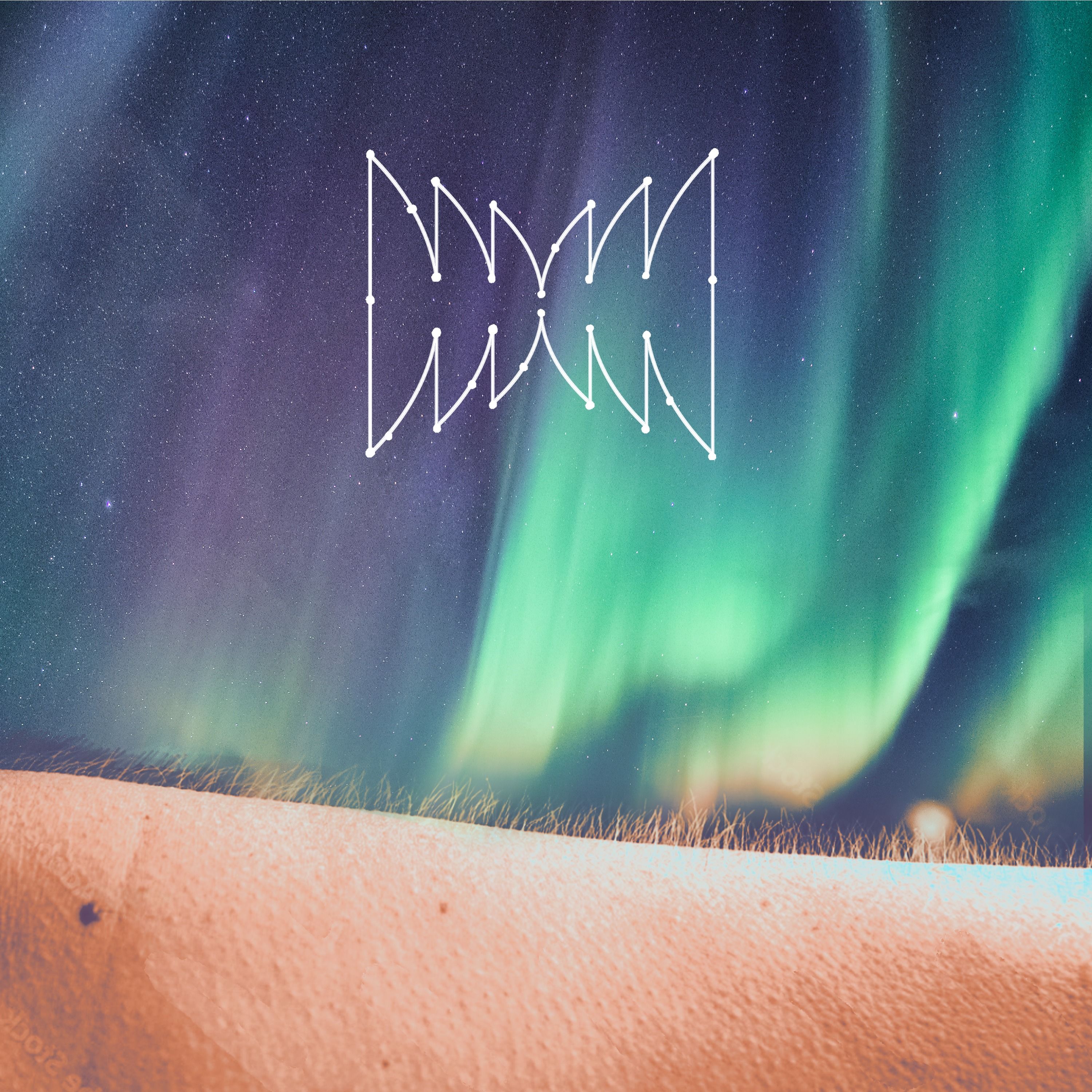
Loading summary
Transcript319 lines
- [00:01]
Lulu Miller
Radiolab is brought to you by Progressive Insurance. Insurance isn't one size fits all. That's why drivers have enjoyed Progressive's name your price tool for years. Now, with the name your price tool, you tell them what you want to pay, and they'll show you options that fit your budget. So whether you're picking out your first policy or just looking for something that works better for you and your family, they'll make it easy to see your options. Visit progressive.com, find a rate that works for you with the name your price tool. Progressive Casualty Insurance company and affiliates price and coverage match limited by state law. Oh, wait, you're listening. Okay.
- [00:34]
Soren Wheeler
All right.
- [00:35]
Carmen Maria Machado
Okay.
- [00:37]
Bonnie Tsoi
All right.
- [00:39]
Felix Schouler
You're listening to Radiolab Radio Lab from wnyc.
- [00:45]
Lauren Brown
See?
- [00:45]
Gabby Santis
Yep.
- [00:49]
Lulu Miller
Hey, it's Lulu. Gonna kick off today with a little ghost story for you. So there's this woman, and she's going through weight loss surgery, and when she gets home, she starts hearing these gurgles and creaks and realizes she is being stalked by the former bits of herself, her flesh, that she has cut away. Or there is a house that is maze like and haunted by quiet cruelties that occur in between you and your partner. And it feels like there is no way out. These are some of the stories of the prize winning writer, Carmen Maria Machado. Some of them are true, some of them are fiction. All of them are charged with this sense of spookiness. I have spent hours of my life being pleasantly spooked by her. And so I was totally delighted when she wrote into our show wondering about something that had happened with her partner of four years, Lauren Brown.
- [02:00]
Gabby Santis
You're rolling. Yes.
- [02:01]
Lulu Miller
That spooked her.
- [02:03]
Gabby Santis
Should I.
- [02:04]
Lulu Miller
Should I say.
- [02:05]
Lauren Brown
You can say.
- [02:07]
Gabby Santis
The first time Lauren and I hooked up with each other, I noticed goosebumps on her body right before she, like, had an orgasm. But the pattern was really unusual. Like, it wasn't just universal goosebumps. It was these kind of like, leopard spot goosebumps. Sometimes I'll, like, touch Lauren on the arm and, like, she'll get goosebumps, like, where I've touched her.
- [02:32]
Nico Rogenci
So it's like you leave a trace.
- [02:34]
Lulu Miller
Radiolab reporter Maria Paz Gutierrez.
- [02:36]
Lauren Brown
Yeah, yeah.
- [02:37]
Carmen Maria Machado
Wow.
- [02:38]
Lulu Miller
And editor Soren Wheeler, who sat in with Carmen and Lauren to hear the tale.
- [02:42]
Gabby Santis
Sometimes you have. You call them crispy ones, which is like, they're really, really, really pointy.
- [02:46]
Lauren Brown
Extra crispy is like, I say that you could, like, grate Parmesan or like, zest a lemon on me. Like, they just are, like, so intense and Feel really, like, sharp.
- [02:57]
Gabby Santis
Right. So, like, as soon as we started seeing each other, I think I was just like, really paying attention. Like, I was just like, I've never seen this and this has never happened to me. Like, I mean, you have goosebumps, like all day, like in some form or another.
- [03:06]
Lauren Brown
Yeah, I'm pretty consistently getting them.
- [03:08]
Lulu Miller
And what stuck out to Carmen wasn't just how often Lauren was getting goosebumps, but it seemed like they would prickle up in response to almost contradictory things.
- [03:17]
Lauren Brown
You know, watching a sports highlight and music.
- [03:21]
Gabby Santis
But then also, like, sometimes it's like moments that are like, sad or like it doesn't actually like the same emotion every time.
- [03:27]
Lauren Brown
Yeah.
- [03:27]
Gabby Santis
And so it was just sort of in my head and then I was like, even more closely watching Lauren and being like, what is this?
- [03:34]
Lauren Brown
Sometimes I think about it and I'm like, if I was a different kind of person, I would be like, I'm haunted.
- [03:46]
Lulu Miller
So Carmen started researching goosebumps and writing about them. She's now years deep into a novel with a title that comes from an old fashioned word for them.
- [03:58]
Gabby Santis
The Holy Shiver.
- [04:01]
Lulu Miller
The Holy Shiver, I like that.
- [04:05]
Lauren Brown
Yeah.
- [04:06]
Lulu Miller
It's a term that's been used by scientists to describe the kind of goosebumps a prey animal gets when it realizes it's being watched by a predator, but also that the predator gets just before it goes in for the kill.
- [04:21]
Gabby Santis
Like, it's arousal that, like, connects things like sex and fear and pleasure and excitement. And so thinking about that, like, it was just sort of in my head. And then I was like, what is actually happening in your brain that's moving from, like, for whatever the reason is, it's moving from this neurological impulse into your body and why. And then I was like, surely Radiolab has done an episode on Goosebumps. That feels like a very Radiolab thing
- [04:53]
Lulu Miller
to do, but it turns out we have not.
- [04:57]
Gabby Santis
And so, yeah, so here we are.
- [05:00]
Lulu Miller
So today on Radiolab, we right this wrong and bring you an episode all
- [05:05]
Felix Schouler
about Char de Poul or Frison in Spanish. Calo frio Goosebumps.
- [05:09]
Bonnie Tsoi
Sometimes they're called a skin orgasm.
- [05:12]
Lulu Miller
Really?
- [05:13]
Soren Wheeler
I've heard someone say, God bumps.
- [05:15]
Lulu Miller
We head out on a journey to find out why do we get them in these more mysterious situations. And what, if anything, are they trying to tell us?
- [05:27]
Bonnie Tsoi
We're not necessarily aware, but actually they're kind of magical.
- [05:32]
Lulu Miller
Some answers, some chills, and some, honestly, incredibly sci fi sounding science. Scientific experimentation coming your way. Pause. Soren, take us away.
- [05:46]
Nico Rogenci
Uh, okay, so reporting Journey.
- [05:49]
Carmen Maria Machado
Journey off on A journey.
- [05:50]
Nico Rogenci
Right, right, right.
- [05:51]
Felix Schouler
Hi.
- [05:51]
Nico Rogenci
Hi. So our first stop. Thank you so much for being here with us.
- [05:55]
Bonnie Tsoi
I'm so excited.
- [05:57]
Nico Rogenci
Was science writer Bonnie Tsoi.
- [06:00]
Bonnie Tsoi
Bonnie Tsoi, I'm a journalist. I have written a lot about activity like movement, like your body moving, what that actually does to your brain. And I've actually.
- [06:10]
Nico Rogenci
We called Bonnie up because she actually wrote this book. It's called On Muscle. And it's sort of like this journey through all the muscles of your body.
- [06:19]
Bonnie Tsoi
Your biceps, your butt, your heart and blood vessels and your gut.
- [06:25]
Nico Rogenci
And she told us that after writing this book, she became obsessed with this one particular muscle.
- [06:32]
Bonnie Tsoi
Arrector pili.
- [06:34]
Lulu Miller
Yes, arrector pili.
- [06:36]
Bonnie Tsoi
So erectus to raise and pili hair.
- [06:41]
Nico Rogenci
They're the muscle that give us our goosebumps. That would not. That was not what I would have expected. Like, you spend all this time writing a book.
- [06:51]
Carmen Maria Machado
Yeah. There's so many muscles out there, guys.
- [06:53]
Bonnie Tsoi
I know, I know. So many sexy muscles, so many very obvious muscles and big muscles. And I, of course, went for the smallest and the weirdest. And I. Why, I think the erector pili give us so much information. Right. About how we're doing and feeling. And I love that. I love that it's muscle as existential state, but backing up a little bit.
- [07:22]
Nico Rogenci
Okay, so just to quickly explain the history of this muscle. Around 200 million years ago or so, mammals evolved from reptiles. In the process, they evolved hair or, you know, fur. And then around the same time, mammals
- [07:41]
Bonnie Tsoi
evolved this little muscle fiber, little tiny muscle.
- [07:46]
Nico Rogenci
It's attached to the base of every hair follicle underneath the skin. That little muscles default is to kind of just chill.
- [07:57]
Bonnie Tsoi
Yeah, exactly. You can kind of think about it being relaxed against your skin. Unless the brain is registering, like something
- [08:05]
Nico Rogenci
dangerous, that animal feels a threat. Let's say that animal's hit with like a sudden cold wind or predators. It catches a predator or a competitor right at the corner of its eye.
- [08:19]
Bonnie Tsoi
In that moment, the brain triggers this automatic response.
- [08:25]
Nico Rogenci
It would send this immediate unconscious signal to all the different hair follicles all across the body. And then.
- [08:33]
Bonnie Tsoi
And then all those tiny muscles contract, you know, causing your hair to stand on end, giving you that goosebump appearance.
- [08:40]
Nico Rogenci
Now, that could be a really useful thing because raised hair traps air next to the skin, so there's like a
- [08:48]
Bonnie Tsoi
layer of warm air that's insulating, keeping
- [08:51]
Nico Rogenci
animals just a little bit warmer. Or it was also just useful if they were about to get into a fight.
- [08:56]
Bonnie Tsoi
You know, if you have a cat, you see, like when Your cat gets agitated. Like, the hair goes up, like, like, I'm bigger. I'm, you know, I'm dangerous.
- [09:07]
Nico Rogenci
But for us humans, you know, this
- [09:10]
Bonnie Tsoi
response is kind of vestigial because we don't have that much hair anymore.
- [09:14]
Nico Rogenci
Not very useful.
- [09:15]
Bonnie Tsoi
Or most of us don't have that much hair anymore. So, uh, it's not gonna really. It's not really effective.
- [09:21]
Nico Rogenci
And so we end up with little bumps on our mostly hairless skin. But the really weird thing is that
- [09:28]
Bonnie Tsoi
as we have evolved as a species,
- [09:32]
Nico Rogenci
we humans started using this automatic survival reflex for things that seem to have nothing to do with our survival.
- [09:42]
Bonnie Tsoi
So, music, right? A swelling music. Or like a really emotional scene in a movie, or like big places like the ocean or the Grand Canyon at the edge of a cliff, right? And for us as humans, again, it's like less about the cold and less about the fear and more about the way we experience the world.
- [10:05]
Carmen Maria Machado
But, I mean, I'm still working in my head to connect these different categories of things. Are the goosebumps that used to just make hair stand up for thermal reasons and the goosebumps that used to make hair stand up for physical appearance reasons now suddenly standing up for some. Or is there one reason behind it all? Or is there?
- [10:26]
Bonnie Tsoi
I think, I mean, I hear what you're saying, right? How is this hair standing up for cold and fear now giving us this emotional component? But I think that to me, it is intelligence. It is like body intelligence that I am, like, paying attention. I think it's about my body and my mind kind of coming together to try to figure out, like, what it is that I am feeling in that moment. What is it? I don't know what it is, but I'm paying attention.
- [10:56]
Nico Rogenci
Which, you know, it sort of made sense to us like, that the body is trying to tell us to pay attention, but just left us with this question. Like, what exactly is the body trying to tell us to. To pay attention to?
- [11:15]
Lulu Miller
We'll get to that right after this short break. Radiolab is supported by Capital One with no fees or minimums on checking accounts. It's no wonder the Capital One bank guy is so passionate about banking with Capital One. If he were here, he wouldn't just tell you about no fees or minimums. He'd also talk about how Capital One cafes are open seven days a week to assist with your banking needs, even on weekends. It's pretty much all he talks about in a good way. What's in your wallet terms apply. See capitalone.com bankeye capital1na member FDIC. This episode is supported by BetterHelp. Hey there, Lulu here. So, apparently every year, BetterHelp does a survey called the State of the Stigma Report, where they survey over 2,000Americans trying to figure out how people feel about seeking mental health support. Good news first, 85% of the people surveyed said that seeking mental health support is a good thing, which is significantly up from last year's result, which. Okay, small study, but still fabulous. Refreshing. Take that, Stigma. Boom. The only bummer is that 74% of those same people said society discourages people from seeking the mental health support that they need. Why is that society? I say let's all do what we can to destigmatize seeking professional help for mental health. I mean, I seek professional help for my teeth, for my hair. Why not get professional help for what's going on on the inside of the head? You know, iron out some worries, get a little support. But seriously, if a friend or loved one comes to you seeming a little more overwhelmed or blue or scared than usual, why not encourage them to seek help? Praise them for doing it. And if they don't know where to begin, one thing you could do is suggest betterhelp. A short questionnaire gets them matched with one of over 30,000 fully licensed therapists available at any time of day at the push of a button. And if they don't like the first one they try, remind them that they can switch therapists at any time, as many times as it takes to find the right fit. Because mental health is important and none of us can do it on our own. So for any of you listening to this who are curious about therapy but worried about judgment, I say don't let stigma stand in the way of support. Start therapy with BetterHelp. Sign up and get 10% off at betterhelp.com Radiolab that's betterhelp.com Radiolab
- [13:27]
Gabby Santis
the fatal shooting of a teenager at a protest in Seattle has gone unsolved for six years.
- [13:33]
Felix Schouler
This is open in your face.
- [13:35]
Nico Rogenci
How are there no answers?
- [13:37]
Gabby Santis
Our investigation has uncovered new evidence and witnesses who say they've never talked to police.
- [13:42]
Felix Schouler
Did police ever call you?
- [13:44]
Soren Wheeler
Not once.
- [13:45]
Gabby Santis
Listen to We Keep Us Safe, a new true crime series on the embedded podcast from npr.
- [13:54]
Lulu Miller
Lulu, Radiolab. Goosebumps. We are back with reporter Maria Paz Gutierrez, who has gotten a little slight stuck trying to figure out what exactly is going on with these special kind of goosebumps that humans get that have nothing to do with being cold or afraid.
- [14:11]
Nico Rogenci
But then, lucky for us, E is rolling.
- [14:14]
Soren Wheeler
Okay.
- [14:14]
Nico Rogenci
We ran to a couple scientists. Hello.
- [14:16]
Felix Schouler
Hello. Good morning. Hi.
- [14:18]
Nico Rogenci
Who have been studying this very particular kind of goosebumps, which scientists call aesthetic chills.
- [14:27]
Felix Schouler
You know, shivers of psychological origins.
- [14:30]
Soren Wheeler
I've heard someone say God bumps.
- [14:34]
Felix Schouler
God bumps.
- [14:35]
Soren Wheeler
Yeah. God bumps.
- [14:37]
Nico Rogenci
So anyway, these two guys.
- [14:39]
Soren Wheeler
I can go first. Yeah.
- [14:40]
Gabby Santis
Hi.
- [14:41]
Carmen Maria Machado
Are.
- [14:41]
Nico Rogenci
Nico.
- [14:42]
Soren Wheeler
I'm Nico Rogenci. I'm currently the research director at the Institute for Advanced Consciousness Studies.
- [14:47]
Lulu Miller
Ooh, okay.
- [14:48]
Nico Rogenci
And his partner in crime.
- [14:49]
Felix Schouler
Hi, I'm Felix. I'm a senior research scientist at the Institute for Advanced Consciousness Studies.
- [14:54]
Nico Rogenci
Neuroscientist Felix Schouler.
- [14:56]
Felix Schouler
Yeah, so.
- [14:57]
Nico Rogenci
So why goosebumps?
- [14:58]
Felix Schouler
So me, when I started my PhD,
- [15:00]
Nico Rogenci
Felix says back when he was starting out in grad school, I needed a
- [15:04]
Felix Schouler
problem to work on.
- [15:05]
Nico Rogenci
He'd been told that when it comes to these aesthetic chills, nobody really knows
- [15:10]
Felix Schouler
what they are and why they occur. And I thought that would be a good problem to work on.
- [15:16]
Nico Rogenci
So his first step was to try to figure out exactly what triggers these kinds of chills.
- [15:22]
Felix Schouler
First, I started asking everybody, what gives you chills? And building sort of this database of chill stimuli.
- [15:28]
Nico Rogenci
And he found things that a lot of us would expect.
- [15:32]
Felix Schouler
Giant sport games in the stadium.
- [15:34]
Nico Rogenci
People talk about being in the crowd when some impossible comeback happened.
- [15:39]
Bonnie Tsoi
Totally.
- [15:41]
Felix Schouler
Religion is a big thing.
- [15:43]
Nico Rogenci
Personal religious revelations, sudden acts of kindness from a stranger.
- [15:49]
Lulu Miller
That always gives me chills.
- [15:51]
Nico Rogenci
Yeah, totally.
- [15:51]
Felix Schouler
Very meaningful conversations with people on topics that you care deeply about, or even
- [15:56]
Nico Rogenci
these particular moments where you're experiencing music
- [15:58]
Felix Schouler
or poetry, art in general, but also science. A lot of physicists report that they experience chills when they discover concepts that allows them to make sense of a wide range of experiences.
- [16:16]
Lulu Miller
It's like the intellectual version of the holy shiver. Like someone coming upon the prey of their idea, and then, phew, like they're about to get it, you know?
- [16:25]
Nico Rogenci
Yeah, kinda. I mean, you know, after, like, years of doing this research, talking to a lot of people, reading a lot of
- [16:32]
Felix Schouler
books, and documenting moments where Felix says
- [16:34]
Nico Rogenci
he landed on a theory, it's when
- [16:36]
Felix Schouler
you sort of touch the limits of your knowledge. So I guess another way to think about chills is the limits of cognition.
- [16:43]
Lulu Miller
Oh, I love that. Like, the limits of cognition, like, cannot compute.
- [16:51]
Carmen Maria Machado
Wow.
- [16:52]
Felix Schouler
Yeah.
- [16:53]
Nico Rogenci
But the key is, Felix says, is when the thing that you cannot compute is a deeply held belief. The basic idea is that we all walk around carrying these very broad generalizations about how the world works. Anything from what goes up must come down to the world is a dangerous place, or humans are fundamentally good, or money equals power. We rely on these beliefs to help us navigate the world. And Felix says that when we run across some experience or feeling that challenges one of those deeply held beliefs, that's when we get the chills.
- [17:41]
Felix Schouler
Yeah.
- [17:41]
Soren Wheeler
Oh, yeah. So when I was exposed to some of Felix's work, it kind of clicked that it's like, oh, wow. Chills may very well be what it feels like to update your meaning making process on such a large scale.
- [17:55]
Nico Rogenci
Now, at the time, this was just an idea.
- [17:58]
Felix Schouler
An idea in Nico's brain.
- [18:00]
Carmen Maria Machado
And I.
- [18:01]
Nico Rogenci
So they started thinking, okay, how do
- [18:02]
Felix Schouler
we operationalize that idea and try to get empirical data so that we can do science?
- [18:07]
Nico Rogenci
So they decided what they needed to do was get people in a lab so they could give them chills.
- [18:13]
Lulu Miller
Induce it.
- [18:14]
Nico Rogenci
Induce it.
- [18:15]
Lulu Miller
But doesn't it feel like that's uninducible? Like it's such a private, spiritual thing?
- [18:20]
Nico Rogenci
Not on the Internet. So Felix created this algorithm that can
- [18:26]
Felix Schouler
span through YouTube networks and look at millions of videos and analyze all of the comments.
- [18:32]
Lulu Miller
Oh, I'm so sad right now. Okay, keep going.
- [18:35]
Nico Rogenci
Specifically, they were looking for when people
- [18:38]
Felix Schouler
mention chills, shivers, goosebumps.
- [18:40]
Nico Rogenci
So they gather up all these videos. There are these, like, very famous speeches from very famous people, like Mr. Rogers, Carl Sagan's, the Pale Blue Dot speech. Some of them are just straight up life coach inspirational talks and footage of whales breaching, stuff like that. And one that just completely I did not expect was
- [19:04]
Felix Schouler
commercials from Thailand.
- [19:05]
Carmen Maria Machado
Wow.
- [19:06]
Soren Wheeler
Yeah.
- [19:07]
Carmen Maria Machado
Whatever their Madison Avenue crew is has the finger on the pulse of chill.
- [19:12]
Felix Schouler
Seems like it.
- [19:13]
Lulu Miller
Okay, wait, I have seen one of these, I think, and it's about this guy who, like, helps all these strangers. And it totally worked. It totally gave me chills. It's a very good commercial.
- [19:22]
Nico Rogenci
What that probably means is that you've been walking around with this belief that people suck and that they're not generous or kind. So that's great. I mean, it's a pretty direct hit on your worldview. But they also said that a lot of these videos. Were just, like, straight up music,
- [19:47]
Felix Schouler
a lot of choral music.
- [19:50]
Nico Rogenci
Especially these moments where.
- [19:56]
Felix Schouler
The soprano singer suddenly takes over the entire orchestra.
- [20:03]
Lulu Miller
There is something, like, out of reach, you know, beyond in that sound.
- [20:08]
Nico Rogenci
Yeah. So they gather up all these videos from online, and they actually brought people into their lab and had them watch these videos so they could, like, see, like, which ones make the scale skin actually prickle. And they actually told us there's, like, one video that was, like, the number one trigger.
- [20:32]
Felix Schouler
Alleluia by Leonard Cohen, song by Rufus
- [20:36]
Soren Wheeler
Wainwright with a large collection of people
- [20:39]
Felix Schouler
that is sort of singing along.
- [20:40]
Soren Wheeler
Yeah.
- [20:44]
Felix Schouler
You know, this stimulus, for example, will give chills to 75 people out of 100.
- [20:50]
Nico Rogenci
Anyway, at the end of all this, Nico and Felix, we were able to
- [20:53]
Felix Schouler
identify 300 stimuli that reliably induced chills in hundreds of people.
- [21:00]
Lulu Miller
Oh, my God.
- [21:01]
Nico Rogenci
So then they started showing people these videos in their lab.
- [21:04]
Felix Schouler
3,000 participants in Southern California with one
- [21:08]
Nico Rogenci
extra little step in there.
- [21:10]
Felix Schouler
Before we show them the stimulus, we ask them a range of questions. Personality questions, demographics questions.
- [21:17]
Nico Rogenci
What are they?
- [21:18]
Felix Schouler
All right, so please rate the following in terms of how much you agree or disagree with each statement. It is important to take care of people who are vulnerable.
- [21:27]
Nico Rogenci
In particular, they were asking questions that sort of, like, help them zero in on some of those deeply held beliefs we just talked about.
- [21:35]
Felix Schouler
Some people think I'm selfish and egotistic.
- [21:38]
Soren Wheeler
What types of schemas are you running around with?
- [21:40]
Felix Schouler
I often notice people who need help.
- [21:41]
Soren Wheeler
Are you seeing everybody as connected ones or as independent players? And, you know, you need to get to the top.
- [21:46]
Felix Schouler
I'm not as dependable or reliable as I should be.
- [21:48]
Nico Rogenci
And based on how you answer these
- [21:51]
Felix Schouler
questions, I find humor in almost everything.
- [21:54]
Nico Rogenci
Nico and Felix can figure out what gives you chills.
- [21:59]
Lulu Miller
Oh, interesting. So, like, you. Oh, well, you answered yes to this, so the cross out the sports one. But, ooh, that hallelujah chorus.
- [22:06]
Carmen Maria Machado
Yeah.
- [22:07]
Lulu Miller
So now they're making, like, the survey helps them create, like, a bespoke chills induced chills playlist.
- [22:13]
Nico Rogenci
Yes.
- [22:13]
Felix Schouler
And I can predict with 73.5% accuracy which of the stimulus is the best one for you to look at right now so that I can give you chills in my laboratory and study it under controlled conditions.
- [22:24]
Nico Rogenci
And with their little bespoke chills machine, Nico and Felix have done a bunch of different studies. One of the coolest things for me was, like, they actually hooked people up to this, like, EEG machine so they could watch their brains while they get the chills.
- [22:41]
Soren Wheeler
And the moments when you have chills are almost indistinguishable from a psychedelic experience.
- [22:48]
Lulu Miller
Wait, what?
- [22:50]
Nico Rogenci
The way they described it, it's like the level of complexity and disorder in the brain signals look like someone who's tripping.
- [23:02]
Lulu Miller
Okay.
- [23:03]
Soren Wheeler
That.
- [23:03]
Lulu Miller
I mean, that really, really makes neurologically good on their limits of cognition thing. Like, they are watching a brain just go haywire.
- [23:10]
Nico Rogenci
Yeah. You know, maybe some other people would have been like, okay, we sort of figured this out. Job well done. But Felix and Nico were not done.
- [23:21]
Lauren Brown
Okay.
- [23:21]
Nico Rogenci
Because one of the things that Nico and Felix had heard about was that it wasn't just like you understood something or something changed inside you and then you got the chills, but rather that the chills came first. Like, the chills were this signal to the rest of your brain and body to notice something.
- [23:43]
Felix Schouler
A lot of physicists actually talk about how chills was instrumental in helping them understand the importance of some of the work that they were doing.
- [23:53]
Carmen Maria Machado
So not so much I understand it and then get chills. But you seem to be saying that, like, oh, the chills helped me know that I had understood something.
- [24:01]
Felix Schouler
Yeah.
- [24:02]
Soren Wheeler
It's almost as though when you do get chills, it's this moment of calibration and orientation.
- [24:08]
Nico Rogenci
So then they thought, well, if we can give people the chills, maybe we can use that to sort of hack the brain, reverse engineer someone into this moment where they're ready to rethink the way they think about the world.
- [24:25]
Felix Schouler
We have a funky term for this. We call it schema surgery.
- [24:31]
Lulu Miller
That sounds like something out of a dystopian novel.
- [24:34]
Nico Rogenci
Yeah.
- [24:34]
Soren Wheeler
I mean, a lot of terrorist recruitment videos leverage chills as this way of, like, showing this recognition of shared humanity and martyrdom for it. So this, like, full ego dissolution, that is a really dark underbelly of some of this. Right. Because it's so motivational. The behavioral activation that emerges after chills is really potent. But dystopian aspects aside. Right.
- [24:59]
Nico Rogenci
But fortunately for us, what Felix and Nico are trying to do is use
- [25:03]
Felix Schouler
chills as a novel form of treatment
- [25:05]
Nico Rogenci
for major depressive disorder to help people with depression. Because when.
- [25:10]
Lulu Miller
What?
- [25:11]
Nico Rogenci
Because if you think about people who are depressed, like, they're usually stuck in their worldview. You know, they have these. What Nico called, or Felix called, these maladaptive beliefs.
- [25:23]
Carmen Maria Machado
Right.
- [25:23]
Nico Rogenci
Like, I'm alone in the world or I am bad.
- [25:27]
Lulu Miller
Yeah.
- [25:28]
Felix Schouler
So negative self beliefs, negative beliefs about others, and then negative beliefs about the world in general. Like, the world is a dangerous place. You never know what's going to happen.
- [25:37]
Lulu Miller
Totally. Just these, like, calcified certainties.
- [25:40]
Nico Rogenci
Yeah.
- [25:40]
Felix Schouler
And what we've been doing is trying to use the chill stimuli that we've identified to try and open up people's minds, then gather evidence that will go against these dysfunctional beliefs so that they basically expand the scope of their perception.
- [26:02]
Nico Rogenci
This is early, early research, and they're trying to figure out a bunch of different things. But one of the studies that I thought was interesting focused on this one particular element of depression called anhedonia.
- [26:17]
Soren Wheeler
And anhedonia. Right. Anhedonic. Like, they Lack this subdivision to kind of feel pleasure. And that impacts their sensitivity to reward.
- [26:27]
Nico Rogenci
So let's say you ask them, hey,
- [26:29]
Soren Wheeler
I have $5 in this hand and $20 in this hand. Pick one. Right. People with anhedonia, they're indifferent.
- [26:35]
Nico Rogenci
They'd be like, I don't care. I really just don't care.
- [26:37]
Soren Wheeler
They'll choose the 5 and 20 with kind of equal likelihood.
- [26:40]
Lulu Miller
Huh.
- [26:41]
Nico Rogenci
And this, they said, is one of the main characteristics of treatment resistant depression
- [26:47]
Felix Schouler
for a simple reason is like, these are patients that are no longer motivated to take the necessary actions to get back to the business of life.
- [26:56]
Nico Rogenci
So Felix and Nico, they take these people one by one into a little room, sit them in front of a computer screen, have them take the survey.
- [27:04]
Lulu Miller
Yep.
- [27:05]
Nico Rogenci
And then they're given their Internet content to watch. They have some moment where their body's going swoop. And after this experience, they put them through that reward task again. Now, what do you think? $5 or $20?
- [27:41]
Soren Wheeler
They behave as if they were normal controls.
- [27:45]
Lulu Miller
They're like, I want my $20.
- [27:47]
Nico Rogenci
Yes, give me my 20 bucks.
- [27:48]
Soren Wheeler
And, you know, a great majority of the participants that, you know, even just experienced one chill, but even more so, if you experience three chills, these people go on to then not even be able to qualify for the study in the first place. Right. So it's like a clinically significant amelioration of some of their symptoms.
- [28:18]
Lulu Miller
Okay, can I. Let me un. Prickle my skin because I am feeling this. I am like, oh, my God. Like, you get the chills and your certainty melts. And then you could jump through this window to change your life and get your depression in remission. But then I'm also like, come on. No. You watch a couple videos a week of whales breaching and choruses singing, and then you're like, you can feel better from things that, like, full on meds and CBT therapy or whatever won't happen.
- [28:51]
Nico Rogenci
I mean, it is early work. They're still doing these studies, but in most cases with depression, I imagine it's probably the right combination of a bunch of different things. Although one of the things they do in one of these studies is, like, after people get the chills, like, they ask them, what did you think about when you were experiencing the chills? They'll sort of ask them about their goals, like, the things they. They want to do or achieve. And it does look like people after these chills, at least for a moment or a while or whatever, are sort of a little bit more motivated to just, like, get up or out or do something. Just engage with the world. That, to me, feels like sort of part of the mix of things that keep you alive.
- [29:49]
Lulu Miller
Suddenly makes me think, like, that this kind of chills is your. You know, it's maybe just as important as conserving warmth or looking bigger. Like it's pointing you almost like a compass toward. Toward where you need to go, what you need to engage with.
- [30:03]
Lauren Brown
Mm.
- [30:04]
Nico Rogenci
So in the midst of all of this, turns out Nico and Felix's experiment, where they give people chills, they actually have more recently turned this into, like, an app. I thought I should go and try this. I wanna see if you can actually give me chills.
- [30:23]
Lulu Miller
All right. And so what happened?
- [30:26]
Nico Rogenci
So I came into the studio. All right, here we are. Here we are. My friends and I opened the website. First question about you. What is your name? I took their little survey of questions. Would you describe yourself as someone who gets easily moved or touched? Not that very often.
- [30:46]
Gabby Santis
And then.
- [30:47]
Nico Rogenci
Okay, based on your answers, we've chosen. It served me this song. The Ushuaia alla Kyaka Gustavo. It's a song from a movie called Motorcycle Diaries. I've actually heard this song before, which, coincidentally, I had watched, like, two weeks before. And I was like, this is mid when I watched the movie. So to be honest, I wasn't feeling very optimistic about getting the chills. But then I was like, okay, I'm gonna actually sit with it. And I hit. It has this kind of, like, tinge of sadness and longing.
- [31:28]
Lauren Brown
And
- [31:32]
Nico Rogenci
then there's this part where this kind of, like, almost like a flute, like, instrument comes in. It almost sounds like a bird. And in that moment, it's so weird, I felt the goosebumps on my skin. I feel it in my legs making their way up to my arms. And then I was just, like, looking at my arm. And, yeah, they're nice and bumpy. That's so nice. And it happened again. I got, like, another wave. And I had just never had the experience of just, like, being, like, hit, like, woo, woo, woo.
- [32:33]
Felix Schouler
What?
- [32:34]
Lulu Miller
Do you remember at all what you were thinking about?
- [32:39]
Nico Rogenci
I think in that moment, I was thinking about a trip that I took to Chile. And it reminded me of this day where I was. I think I was doing some kind of, like. Kind of like field recording of some musician playing a harp and, like, in the street. And it was just, like, reminded me of that version of myself. Like, I used to just travel alone all the time, different places all over Latin America. But, like, as you get older, like, you're just not as Crazy as you used to be, and it's uncomfortable. And I think that, for me, so much of reading the news creates this, like, illusion that, like, the world is, like, a really dangerous place. But I've been to these places. A lot of these places that, like, are quote, unquote dangerous. And even on just, like, a random street corner, there's so much beauty. And I also just have felt really safe.
- [33:47]
Lulu Miller
So in that moment with, like, the prickled skin, the waves, was it sort of like those memories are in you, and those places might be out there?
- [33:56]
Nico Rogenci
Mm.
- [33:57]
Lulu Miller
And
- [34:00]
Lauren Brown
go.
- [34:00]
Gabby Santis
Just.
- [34:00]
Lulu Miller
Just kind of go.
- [34:01]
Nico Rogenci
Yeah, go. Go back out there.
- [34:04]
Gabby Santis
Just go.
- [34:05]
Nico Rogenci
And so regardless of how we label these goosebumps or exactly what triggers them, it does feel like if you do take the time to notice these moments, give your brain the space to catch up with your body, which is clearly saying something, I think there's value in that. It might just loosen you up and maybe even get you out the door in a slightly different way.
- [34:34]
Bonnie Tsoi
Yeah.
- [34:35]
Lulu Miller
Just like that alone. Don't just let them pass you by.
- [34:40]
Nico Rogenci
Anyway, I think there is one more thing that's worth saying about goosebumps.
- [34:47]
Lulu Miller
Hello.
- [34:48]
Lauren Brown
Hi.
- [34:49]
Carmen Maria Machado
We have now learned many different. I'm sure.
- [34:51]
Lauren Brown
I can't wait to hear.
- [34:52]
Lulu Miller
I'm so excited.
- [34:53]
Nico Rogenci
But, yeah, it's something that actually came up when we called Lauren and Carmen back to tell them about all the things we'd learned.
- [35:02]
Carmen Maria Machado
There's a little. A bunch of little muscles underneath our
- [35:06]
Nico Rogenci
skin about the cold fear, survival reflex. And then in that moment, they stand up.
- [35:10]
Gabby Santis
Got it.
- [35:11]
Nico Rogenci
Okay. And about Nico and Felix's work on aesthetic chills or whatever.
- [35:15]
Carmen Maria Machado
You answer these questions, and then they can deliver you the content that will get you to have the goosebumps.
- [35:21]
Gabby Santis
Oh, my God.
- [35:22]
Lauren Brown
Wow.
- [35:22]
Nico Rogenci
And of course, about how these goosebumps are sort of the unconscious brain and the body's way of telling you that something important is going on that's, like, worth pausing and thinking about.
- [35:36]
Gabby Santis
Right. You're, like, catching up to your body, basically. Yeah.
- [35:39]
Lauren Brown
Yeah, that. That makes sense to me too. Even, like, thinking about moments where I find myself just, like, completely covered in goosebumps. My whole body feels it.
- [35:48]
Gabby Santis
Yeah. It's almost like your body is, like, tapping on your brain and being like, hello? But I feel like, for me, it's, like this place where it's like.
- [35:54]
Nico Rogenci
But then Carmen told us that even though she doesn't get the goosebumps all that often, she does now find herself thinking about what Lauren's goosebumps are saying, not just to Lauren, but to her
- [36:08]
Gabby Santis
or, like, I'm assuming, when you saw, like, Alyssa Luke, I'm sure you had them then.
- [36:12]
Lauren Brown
Oh, my.
- [36:13]
Nico Rogenci
Yes, yes, yes.
- [36:15]
Gabby Santis
I was out of town, and Lauren was texting me, being like, you have to watch it.
- [36:18]
Lauren Brown
I am getting, like, patchy goosebumps right now. I have them on my legs, and I have some on my arms.
- [36:23]
Nico Rogenci
Okay, quick context. Alisa Leo was a star figure skater when she was very young. Several years ago, and at sort of the height of her game, under all this pressure to win, she just straight up quit. She took some time off, and a couple years later, she came back to participate in the Winter Olympics.
- [36:47]
Bonnie Tsoi
She said, I don't need a medal. I just need to be here and show you people what I can do.
- [36:53]
Lulu Miller
But what she doesn't know, if she
- [36:54]
Gabby Santis
does, that probably means a medal.
- [36:57]
Nico Rogenci
And when you see her, she's clearly there on her own terms. She straight up kills it. Like, she gives a nearly perfect performance.
- [37:10]
Lulu Miller
Once again, triple left, double action, double.
- [37:13]
Gabby Santis
She looks so relaxed, so genuinely happy.
- [37:16]
Nico Rogenci
Even the announcers are blown away.
- [37:18]
Lulu Miller
She stays so loose and completely.
- [37:20]
Nico Rogenci
The crowd is going wild.
- [37:23]
Lulu Miller
That's a secret every athlete wants to solve.
- [37:29]
Nico Rogenci
And when she finishes, she got off
- [37:32]
Gabby Santis
the ice, and she was like, that's what I'm talking about.
- [37:36]
Nico Rogenci
Get up.
- [37:37]
Gabby Santis
I was like, I love. I know this feeling. I recognize that feeling. I love that feeling where I've been. Like, I did it. I mean, I watched it, and I had, like, full body. Even now I have, like, full body chills talking about it. And so I feel like I do. I literally do. I don't. Oh, my God.
- [37:53]
Lauren Brown
She had texted me, I think, the next day after everything had happened and was like, I'm just watching clips of Alyssa Liu in the airport and, like, crying, and I'm like, yeah, I was doing that last night.
- [38:04]
Gabby Santis
Yeah. Like, I get to, like. It's like this sort of shared experience, and it, like, deepens my understanding of who Lauren is. Like, people are the same to me as, like, God, because it's, like, this unknown. It's actually fundamentally unknowable thing. But with Lauren, it's like I can get as physically close as humanly possible.
- [38:22]
Lauren Brown
Yeah. Even if it's not rational, I just feel a little bit more known in that way, I think.
- [38:39]
Lulu Miller
Maria Paz Gutierrez. Thank you. MPG Special thanks to Rachel Gross, Gregory Rupnick, and to Carmen and Lauren, who set us off on this whole journey. Carmen Maria Machado is currently hard at work on her novel, all about the Holy Shiver. But in the meantime, she's got a new book coming out fall of 2027 and it's called A Brief and Fearful Star. You can also find a link to Bonnie Tsoi's beautiful book on muscle on our website. It is not just about muscle, it's also a message in a bottle to her dad. If you want to see Elisa Leo's gold winning routine or the Thai commercial or performance of Hallelujah we mentioned, there are links on our website. This episode was reported and produced by Maria Paz Gutierrez with help from Sindhu Nyama Sambandam. Next, help from Jeremy Bloom and fact checking by Angeli Mercado.
- [39:33]
Nico Rogenci
Hi, I'm gabby. I'm from the bay area, california and here are the staff credits. Radiolab is hosted by lulu miller and latif nasser. Soren wheeler is our executive editor. Sarah sandbach is our executive director. Our managing editor is pat walters. Dylan keefe is our director of sound design. Our staff includes jeremy bloom, w. Harry fortuna, david gable, maria paz gutierrez, sindhu nainasambandan, matt kielty, mona maudgaukar, alex neeson, sara khari, natalia ramirez, joanna strogatz, anissa vitze, arian wack, molly webster, and jessica young, with help from gabby santis and maya appleby milamed. Our fact checkers are diane kelly, emily krieger, natalie middleton, angeli mercado, and sophie semay.
- [40:29]
Gabby Santis
Hi, I'm aubrey calling from salt lake city, utah. Leadership support for radiolab's science programming is
- [40:36]
Lulu Miller
provided by the simons foundation and the john templeton foundation.
- [40:40]
Gabby Santis
Foundational support for radiolab was provided by
- [40:42]
Lulu Miller
the alfred p. Sloan foundation.