← Radiolab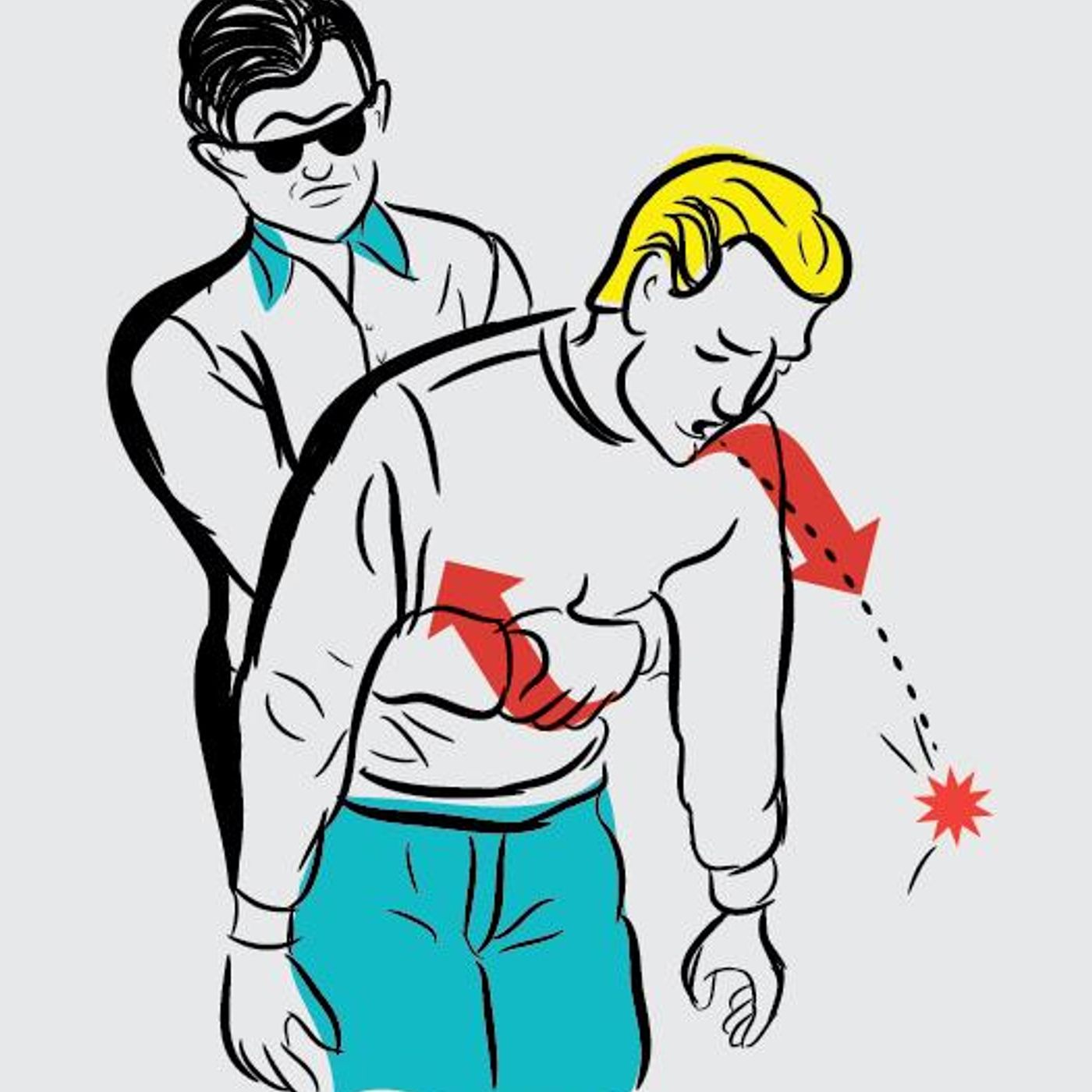
Radiolab
The Man Behind the Maneuver
00:24:50
In the 1970s, choking became national news: thousands were choking to death, leading to more accidental deaths than guns. Nobody knew what to do. Until a man named Henry Heimlich came along with a big idea. Since then, thousands and thousands -- maybe even millions -- have been rescued by the Heimlich maneuver. Yet the story of the man who invented it may not have such a happy ending.
Loading summary
Transcript263 lines
- [00:01]
Vanguard Advertiser
What are you doing in a meeting? That could have been an email. That's right. You're losing interest. Don't let it happen to your money, too. Vanguard's CashPlus account can't help you at work, but we can help with your savings because Vanguard believes in giving you more. So how much interest could you earn? Find out@vanguard.com cashplus offered by Vanguard Marketing Corporation, member FINRA and SIPC.
- [00:32]
Lowe's Advertiser
At Lowe's, loyalty is royalty. With Christmas right around the corner, treat yourself for less during the holiday season. Rewards members get early online only. Access to Black Friday doorbuster deals on Thanksgiving Day. Like the Hisense Side by side fridge. Just $799. Not a member. Join for free today. Lowes, we help you save. Valid 1127 only on Lowe's.com member only doorbusters and Midnight Eastern loyalty programs subject to terms and conditions. See lowe's.com terms for details. Subject to change.
- [01:02]
Patrick Walters
Wait, you're listening?
- [01:02]
Jad Abumrad
Okay.
- [01:04]
Dr. Henry Heimlich
All right.
- [01:05]
Jad Abumrad
Okay.
- [01:06]
Dr. Henry Heimlich
All right.
- [01:08]
Patrick Walters
You're listening to Radiolab. Radiolab shorts from WNYC.
- [01:18]
Dr. Henry Heimlich
And npr.
- [01:20]
Jad Abumrad
Hey, I'm Jad Abumrad.
- [01:22]
Robert Krulwich
I'm Robert Krulwich.
- [01:23]
Jad Abumrad
This is Radiolab.
- [01:24]
Robert Krulwich
This is our podcast. And we're going to be. We're gonna tell you a tale. It's actually about a person that we think we deeply admire. If, by the way, you even paused long enough to admire him at all.
- [01:35]
Jad Abumrad
Yeah.
- [01:36]
Robert Krulwich
And the story comes from our own Pat Walters.
- [01:41]
Patrick Walters
This one is kind of weird. I'm gonna start with just talking about myself.
- [01:45]
Robert Krulwich
Okay.
- [01:47]
Patrick Walters
I think this is the closest I've ever come to dying.
- [01:52]
Jad Abumrad
Really?
- [01:52]
Patrick Walters
It happened when I was 11. So I was in sixth grade. I was at lunch in the cafeteria, lots of kids milling about, and I was sitting at the table with my best, eating my little packed lunch that my mom had made for me. And I was eating an apple, and all of a sudden I couldn't breathe.
- [02:13]
Jad Abumrad
You were choking?
- [02:14]
Patrick Walters
Yeah. And I put my hand up in the air. None of the cafeteria ladies came over and I put both my hands in the air, and they finally came over and dragged me across the hall to the nurses office.
- [02:26]
Robert Krulwich
You're choking all the way to the nurse?
- [02:28]
Patrick Walters
All the way to the nurse's office? Yeah.
- [02:29]
Robert Krulwich
Gasping for air. Kind of choking?
- [02:31]
Patrick Walters
No, just totally clogged up. Clogged up. And I get over there and someone calls the paramedics.
- [02:37]
Jad Abumrad
Wait, how much time has passed since you. Since you breathed?
- [02:41]
Patrick Walters
Like two, two and a half minutes, I think.
- [02:44]
Jad Abumrad
That long?
- [02:45]
Patrick Walters
Yeah.
- [02:46]
Dr. Henry Heimlich
Wow.
- [02:47]
Patrick Walters
But then the nurse grabs me Wraps her arms around me, jerks me really hard under the ribcage, and this apple peel shoots right across the room.
- [02:57]
Jad Abumrad
Nice.
- [02:58]
Robert Krulwich
Like a projectile kind of. Kind of thing.
- [03:01]
Patrick Walters
Yeah, it was like a cartoon. I mean, I don't actually remember. I have a terrible mem. But I'll piece this together from, you know, talking to my mom. And this story is just this thing that's been around, you know, I've told it a million times. It comes up at family gatherings, and I don't know, maybe a year ago, I was reading some things online about the Heimlich maneuver. I don't even know how I ended up there. And I realized I didn't know who actually is Heimlich. I didn't know anything about him. Like, who is this guy who invented this maneuver that saved my life? And that's when I discovered a story I totally did not expect.
- [03:38]
Dr. Henry Heimlich
Hello? Hello?
- [03:39]
Patrick Walters
It's Patrick.
- [03:39]
Cindy Ennis
You downstairs?
- [03:41]
Dr. Henry Heimlich
I am.
- [03:41]
Jad Abumrad
Who's that?
- [03:42]
Patrick Walters
That's Dr. Heimlich.
- [03:44]
Jad Abumrad
What?
- [03:44]
Johnny Carson
I thought you wouldn't.
- [03:45]
Dr. Henry Heimlich
Take the elevator to 4 and turn left.
- [03:48]
Jad Abumrad
He's alive? Yeah, I just would have assumed. He died, like, 100 years ago.
- [03:52]
Patrick Walters
Yeah. So he lives in Cincinnati, and I went to see him because.
- [03:55]
Dr. Henry Heimlich
You went to see.
- [03:56]
Robert Krulwich
Does that happen to you every time you, like if I told you this.
- [03:59]
Patrick Walters
Is what's cool about our job, right?
- [04:01]
Dr. Henry Heimlich
I guess.
- [04:01]
Patrick Walters
Oh, I've heard of him.
- [04:02]
Robert Krulwich
I guess I'll go meet him.
- [04:03]
Patrick Walters
I kind of wanted to say thanks.
- [04:05]
Dr. Henry Heimlich
Hello, Carter. Tripp.
- [04:08]
Patrick Walters
Good to meet you. And I wanted to find out, you know, the story of how he came up with this thing. Can you just say who you are? So we have it on tape.
- [04:16]
Dr. Henry Heimlich
Dr. Henry Heimlich, of the Heimlich maneuver.
- [04:21]
Patrick Walters
And many other things that we'll talk about later.
- [04:24]
Dr. Henry Heimlich
And each of them is saving many, many lives.
- [04:27]
Patrick Walters
That's a matter of some debate. But let's just start the story at the beginning, and for our purposes. The story starts in the summer of 1941.
- [04:37]
Dr. Henry Heimlich
Yes.
- [04:37]
Patrick Walters
Hemlich was 21 years old, and he was on a train heading back to New York City from a summer camp that he worked at upstate. And as the train is going along the shore of this lake, the front end of it jumped the tracks.
- [04:49]
Dr. Henry Heimlich
The whole engine jumped into the middle of the lake. I jumped off and walked up the front to see if anyone was hurt.
- [04:58]
Patrick Walters
And as he approached the front of the train, which was sort of sticking in the water, he saw this guy.
- [05:02]
Dr. Henry Heimlich
Trapped under the water with his feet under the train wheel.
- [05:07]
Patrick Walters
Like his feet were stuck, and he was Kind of hanging down into the water.
- [05:10]
Dr. Henry Heimlich
Correct.
- [05:10]
Patrick Walters
The guy's head was bobbing up and down. He was desperately trying to keep it above the water.
- [05:14]
Dr. Henry Heimlich
So I jumped in the water and I held him up, kind of hooked.
- [05:17]
Patrick Walters
His arms under the guy's armpits and lifted his head and shoulders out of the water.
- [05:23]
Dr. Henry Heimlich
And I hung for a long time.
- [05:25]
Patrick Walters
For an hour or so.
- [05:26]
Dr. Henry Heimlich
And.
- [05:27]
Patrick Walters
And by the time the paramedics arrived and freed the man, a crowd had formed.
- [05:30]
Dr. Henry Heimlich
Yeah.
- [05:31]
Patrick Walters
And as Heimlich crawled out of the.
- [05:32]
Dr. Henry Heimlich
Water, a couple of them. You know, you saved your life. You saved a life.
- [05:39]
Patrick Walters
That was the first time. After college, Heimlich went to medical school.
- [05:46]
Dr. Henry Heimlich
And became a thoracic surgeon, a chest surgeon.
- [05:50]
Patrick Walters
Started saving lives for a living. Then he joined the military.
- [05:52]
Dr. Henry Heimlich
I was in the Navy.
- [05:53]
Patrick Walters
Navy surgeon.
- [05:54]
Dr. Henry Heimlich
Because I like ships in the sea.
- [05:56]
Patrick Walters
Where he saved more lives. And while he was overseas, he noticed that many times soldiers who got shot died, not necessarily because they bled out, but because the bleeding from the wound would fill their chest and crush their lungs. I'm thinking, there must be a way to solve this.
- [06:12]
Dr. Henry Heimlich
And one day, it hit him. Why not a valve? So I ran to the 5 and 10 cent store, bought a few simple.
- [06:22]
Patrick Walters
Parts, and actually made this tube device that you could slip into a wound.
- [06:26]
Dr. Henry Heimlich
That takes the air out and blood and lets nothing in.
- [06:30]
Patrick Walters
It's called the Heimlich chest drain valve.
- [06:33]
Dr. Henry Heimlich
This is a tube, and this is the photo valve.
- [06:36]
Patrick Walters
He showed me one of them. It's just a small 6 inch tube with a little plastic flap that only lets air go one way. Really simple. But During Vietnam, the US army bought 20,000 of these valves, distributed them to infantrymen.
- [06:50]
Dr. Henry Heimlich
When your buddy got shot in the chest, you slipped the tube into the chest and it saved his life.
- [06:55]
Patrick Walters
And they're still around today. I called the company that makes them, and they told me that 4 million have sold since the 1970s, which translates to, like, who knows how many lives saved?
- [07:07]
Jad Abumrad
Wow. So this dude's amazing.
- [07:09]
Patrick Walters
Wait, we haven't even gotten to the good part yet. One morning in the winter of 1972 set the scene for me. So you were at that time, you were living. You were living here?
- [07:17]
Dr. Henry Heimlich
Yes, I was living here.
- [07:18]
Patrick Walters
Heimlich, he's drinking his coffee, reading the paper, and he happens upon this one article about people who die in restaurants.
- [07:25]
Dr. Henry Heimlich
In those days, many people who died in restaurants, they were thought to be having heart attacks until an autopsy was done.
- [07:34]
Patrick Walters
And the article quoted a coroner who'd done a bunch of these autopsies and had Found that actually, no, these people had choked. The article went on to explain that more than 2,500 people, thousands of people, were dying every year from choking.
- [07:48]
Dr. Henry Heimlich
Yes. I think it was the sixth leading.
- [07:50]
Patrick Walters
Cause of accidental death, higher on the list than guns.
- [07:53]
Dr. Henry Heimlich
And the worst thing was that the great majority were in children, and nobody.
- [07:58]
Patrick Walters
Knew what to do about it. You could, like, thump a person on the back, but some doctors warned that.
- [08:05]
Dr. Henry Heimlich
If you hit them on the back, the choking object would go deeper into the airway.
- [08:11]
Patrick Walters
Do you remember if there were people trying to come up with, like, devices? I feel like I read something about.
- [08:17]
Dr. Henry Heimlich
Yes, there was one who had, like.
- [08:20]
Patrick Walters
A pair of plastic pliers.
- [08:22]
Dr. Henry Heimlich
You would jam that in.
- [08:23]
Patrick Walters
Paw down my throat. Apparently, another guy invented a sort of vacuum that you would use to suck the food out. Not surprisingly, these things just weren't effective. People were getting desperate. I found this little clip from the New York Times, which described this guy whose wife choked on a piece of food in a restaurant. And not knowing what else to do, this guy who happened to be a surgeon, grabbed a steak knife off the table and tried to perform an emergency tracheotomy on her neck. Like, on her?
- [08:53]
Jad Abumrad
Yeah.
- [08:54]
Robert Krulwich
And what happened?
- [08:55]
Patrick Walters
She died in the restaurant. Wow. So Heimlich was reading about all this and being a thoracic surgeon, a chest surgeon, he had an idea.
- [09:05]
Dr. Henry Heimlich
I realized there was enough air in the lungs. If you could compress that air, push.
- [09:12]
Patrick Walters
It up against whatever was clogging the.
- [09:14]
Dr. Henry Heimlich
Windpipe, you could carry the object out of the mouth.
- [09:17]
Patrick Walters
So he gets a dog.
- [09:20]
Robert Krulwich
He got a dog.
- [09:21]
Dr. Henry Heimlich
Yes.
- [09:22]
Patrick Walters
Where'd you get it?
- [09:23]
Dr. Henry Heimlich
Oh, we had a laboratory that had some dogs there.
- [09:26]
Patrick Walters
This wasn't like Fido, the Heimlich family pet.
- [09:30]
Dr. Henry Heimlich
No, no.
- [09:30]
Patrick Walters
Laid the dog down on the operating table, and then he jams this piece of meat, probably beef, down the dog's throat.
- [09:36]
Jad Abumrad
Did he at least sedate the dog.
- [09:37]
Patrick Walters
Before this dog is anesthetized? And. And he ties a piece of string around the beef in case he needs to pull it out.
- [09:42]
Robert Krulwich
Okay.
- [09:43]
Jad Abumrad
Oh.
- [09:44]
Patrick Walters
But anyway, the clock is ticking. He gets behind the dog.
- [09:47]
Dr. Henry Heimlich
Took my fist just above the belly button and pressed nothing.
- [09:55]
Patrick Walters
So he tried again, repeated it.
- [09:58]
Dr. Henry Heimlich
Nothing.
- [10:01]
Patrick Walters
And then on the third try, that.
- [10:05]
Dr. Henry Heimlich
Beef ball flew right across the room. I knew he had it.
- [10:15]
Patrick Walters
So in 1974, Heimlich wrote up a little description of his maneuver and sent it to a medical journal. Pretty soon, that got picked up by.
- [10:21]
Dr. Henry Heimlich
A national paper, the Chicago Daily News. And not quite a week later, a.
- [10:27]
Patrick Walters
Retiree named Isaac Piha, who had just Read about the Heimlich maneuver in the paper.
- [10:31]
Dr. Henry Heimlich
Came out on his porch, and his neighbor started screaming for help.
- [10:35]
Patrick Walters
Guy runs over to his neighbor's house, finds his neighbor's wife with her face.
- [10:38]
Dr. Henry Heimlich
Down on the food.
- [10:40]
Patrick Walters
And just like he'd read in the.
- [10:42]
Dr. Henry Heimlich
Newspaper, he did the method, and a big piece of meat flew out of her mouth, and she fully recovered. And so he was recorded as the first one to use the procedure. Pretty soon, stories from around the country.
- [10:59]
Patrick Walters
Began pouring into Heimlich's mailbox. Los Angeles, California. Fresno, California.
- [11:05]
Dr. Henry Heimlich
And it got out very quickly.
- [11:06]
Patrick Walters
There's one about a babysitter saving the kids. She was looking after the whole country. Bangor, Maine. Clearwater, Florida. Here's one about a custodian who saved an 8th grader choking on a ravioli.
- [11:17]
Dr. Henry Heimlich
You know, they just kept coming in.
- [11:19]
Patrick Walters
There were stories about celebrities being saved by the Heimlich maneuver.
- [11:21]
Dr. Henry Heimlich
Different actors and actresses.
- [11:23]
Patrick Walters
Cher, Goldie Hawn, Walter Matthau, Carrie Fisher, and Ronald Reagan.
- [11:33]
Johnny Carson
Okay, I am in. This is the symbol that you're choking, right?
- [11:36]
Patrick Walters
Right. This is Heimlich teaching Johnny Carson how to do the maneuver.
- [11:39]
Johnny Carson
I'm going to put my arms around your waist.
- [11:41]
Dr. Henry Heimlich
Oh, yes. Come on over here.
- [11:44]
Patrick Walters
And I guess you're going to demonstrate. He taught Letterman, too, how to do it. I just want to read you, Dr. Heinlich, one letter that you got from a third grader in Kentucky. This is him on Geraldo. Dear Dr. Heimlich, roses are red, violets are blue. I might be dead if it wasn't for you. Third grader saved from choking on an apple. And if you. And for most of us, I think, like, that's where the story seemed to end, with Heimlich as sort of a national hero. But the story goes on and gets kind of murkier.
- [12:21]
Robert Krulwich
What do you mean?
- [12:22]
Patrick Walters
Like, at the height of his fame, Heimlich starts going to medical conferences and claiming that the Heimlich maneuver can be used for more than just choking.
- [12:30]
Johnny Carson
Now we have a new use for the Heimlich maneuver, and that's its use to stop an asthma attack.
- [12:38]
Jad Abumrad
Asthma how?
- [12:39]
Patrick Walters
Because the way he explained it is that when you have an asthma attack, your lungs get filled with a lot of excess mucus, and that if you do the Heimlich maneuver, it will expel the mucus and stop the asthma attack.
- [12:48]
Johnny Carson
In addition, you can prevent an asthma attack by using the maneuver to keep the mucus out of the lungs. You use it maybe once every week or two.
- [12:57]
Jad Abumrad
I live with someone who suffers from bad asthma. I'm supposed to give her the Heimlich maneuver once a week to help her with her asthma. That just seems weird.
- [13:04]
Patrick Walters
Yeah, well, that's. Does that work? No, there's no proof that that works.
- [13:08]
Robert Krulwich
Huh.
- [13:09]
Patrick Walters
And at the time, asthma experts attacked him, saying the idea was dangerous and it wasn't just asthma. On tv, Heimlich began to argue that.
- [13:16]
Dr. Henry Heimlich
You can also save drowning victims with the Heimlich maneuver.
- [13:21]
Johnny Carson
Mouth to mouth resuscitation is not effective when the lungs are flooded with water. The way to save a drowning victim is to do the Heimlich maneuver first. The lungs will clear after four Heimlich maneuvers. The Heimlich maneuver expels the water from the lungs.
- [13:36]
Patrick Walters
Does it work? No.
- [13:38]
Jonathan Epstein
There are a lot of misconceptions about it when someone drowns that their lungs will be full of water.
- [13:43]
Patrick Walters
This is Jonathan Epstein.
- [13:45]
Jonathan Epstein
I'm the executive director of Northeast Emergency.
- [13:47]
Patrick Walters
Medical Services, also a member of the American Red Cross's scientific advisory board. And he says what actually happens in most drowning cases. I didn't know this at all.
- [13:55]
Jonathan Epstein
Is that the back of the throat will kind of spasm or close off.
- [13:58]
Patrick Walters
And keep water from getting into the lungs.
- [14:01]
Jonathan Epstein
It is so important to quickly start that CPR process to replace the oxygen that was lost.
- [14:06]
Patrick Walters
By giving the Heimlich maneuver, you're not only wasting time that you could be using to put oxygen back into the victim, but you also put them at risk of, like, a vomiting. You do the Heimlich maneuver, they might throw up and inhale their vomit, which could make things even worse.
- [14:22]
Jad Abumrad
But did people take this idea seriously?
- [14:25]
Patrick Walters
Yeah. Several major companies that train lifeguards started teaching their students to use the Heimlich maneuver before doing cpr. And for years, thousands of lifeguards were taught to do the Heimlich maneuver first. And as the years went on, Heimlich's ideas got increasingly radical. In the early 1980s, he announced that he might have found a cure for Lyme disease, cancer.
- [14:48]
Dr. Henry Heimlich
And I believe that I have a possible cure of aids.
- [14:56]
Jad Abumrad
Aids.
- [14:56]
Patrick Walters
How do people usually react when you say you have a cure to aids?
- [15:00]
Dr. Henry Heimlich
I don't say it to the wrong.
- [15:02]
Patrick Walters
People, because the secret to his cure. Malaria kills more than a million people every year.
- [15:08]
Dr. Henry Heimlich
Malaria therapy.
- [15:10]
Patrick Walters
This isn't Heimlich's idea. Originally, he got it from a guy.
- [15:13]
Dr. Henry Heimlich
Named Wagner of Austria, who, in the.
- [15:16]
Patrick Walters
Early 20th century, 1918, started treating victims of neurosyphilis by giving them malaria.
- [15:23]
Dr. Henry Heimlich
And he cured it because the fever.
- [15:27]
Patrick Walters
Was so severe that the fever from the malaria would kill the neurosyphilis. But not the person.
- [15:32]
Dr. Henry Heimlich
Correct.
- [15:33]
Patrick Walters
And based on this work, Quarreg, the guy who came up with this, in.
- [15:36]
Dr. Henry Heimlich
1927, he won a Nobel Prize for.
- [15:40]
Patrick Walters
It wasn't long, though, before antibiotics came along and malaria therapy disappeared. But in the early 1980s, Heimlich figured maybe this could work for seemingly intractable diseases like cancer and aids. First thing he tried it out on was Lyme disease. He raised some money, got some volunteers.
- [15:58]
Dr. Henry Heimlich
Went to the University of Mexico in.
- [16:00]
Patrick Walters
Mexico City, and he ran this small unregulated clinical trial in which he infected these volunteers with South American malaria. The CDC caught wind of what he was doing, denounced the treatment, called it unsafe. But that did not stop Heimlich. And through the 90s and into the early 2000s, he ran other unregulated trials on cancer and AIDS patients in South China and in Africa, Ethiopia. Dr. Anthony Fauci of the National Institutes of Health says Dr. Heimlich's theory about malaria therapy has been thoroughly debunked by medical science. This is from a report on ABC News that quoted one of the world's leading AIDS researchers saying, there's no scientific reason to believe malaria therapy would be effective against aids, and it does have the fundamental potential of actually killing you. That is a big risk to put a person through in an experiment in which there's no fundamental basis to even imagine that it would work. What happened with Peter, and the criticism wasn't just coming from medical experts.
- [17:01]
Phil Heimlich
I have absolutely no idea. Absolutely no idea.
- [17:04]
Patrick Walters
This is Heimlich's eldest son, Phil. He explained to me that several years ago, his little brother Peter came out and began publicly condemning his dad's ideas. He launched a website and started sending emails to reporters, leading eventually to dozens of articles, most of which were critical of his father.
- [17:21]
Phil Heimlich
Why does a son do that? I have no idea.
- [17:23]
Patrick Walters
When I called Peter, he told me that he didn't do it for any personal reasons, but because he felt his dad's ideas were dangerous, that they were putting people's lives at risk. And you told me, repeat for me. Phil didn't want his father to have to deal with questions about Peter, basically.
- [17:38]
Phil Heimlich
Because of the pain that this has caused my parents.
- [17:42]
Patrick Walters
In fact, he wouldn't even give us access to his father unless we agreed to that.
- [17:46]
Phil Heimlich
I just. I just don't want my parents to go through that.
- [17:48]
Patrick Walters
Phil also had another condition, that we not include Peter's voice. We thought he'd waived that condition in a subsequent interview, and therefore we did include Peter's voice in the original version of the story. But Phil didn't see it that way. Even though some ambiguity remains, we've decided to resolve the matter by respecting Phil's understanding of our agreement for accessing his dad and removing Peter's voice from the story. We should say, though, that even though we removed Peter's voice, this version of the story contains the same facts as the original. Anyway, the whole family drama aside, Heimlich was happy to address his other critics. He said, the way he sees it.
- [18:24]
Dr. Henry Heimlich
Creative ideas are often attacked because people oppose change or do not understand new concepts.
- [18:31]
Patrick Walters
This is from an article Heimlich wrote about his career for the Encyclopedia Britannica.
- [18:36]
Dr. Henry Heimlich
When a prominent discovery is revealed, particularly if it provides an obvious and simple answer to an important question, experts who have worked for years unsuccessfully on the same problem may lash out at the creator and the idea because they must themselves do not find the solution. Creativity requires courage.
- [19:02]
Phil Heimlich
People who have genius and great ideas often, often have to struggle to get their ideas out.
- [19:10]
Patrick Walters
That's Phil again. And he disagrees with his brother Peter when it comes to his dad's work.
- [19:14]
Jonathan Epstein
Yeah.
- [19:15]
Patrick Walters
In fact, they don't even really talk anymore.
- [19:17]
Phil Heimlich
I trust my father's judgment. I trust the way his mind works. And I trust his ability to find simple stories, solutions to very difficult problems.
- [19:27]
Patrick Walters
And everybody seems to agree that his most famous solution, the Heimlich maneuver itself, is an incredibly effective one. But lately, some people have started to question whether it's the best one. In the end of my conversation with.
- [19:43]
Jonathan Epstein
John Epstein and the American Red Cross.
- [19:45]
Patrick Walters
The Red Cross guy that we talked to before, he told me that every five years, all the major life saving organizations worldwide get together and review their guidelines for all different kinds of rescues.
- [19:56]
Jonathan Epstein
Exhaustive scientific research process. They look over case reports and case.
- [20:01]
Patrick Walters
Studies, controlled experiments on animals and cadavers. And Epstein told me that two reviews.
- [20:06]
Jonathan Epstein
Ago, in 2005, the report yielded some.
- [20:09]
Patrick Walters
New information about choking.
- [20:10]
Jonathan Epstein
It was very clear that back slaps.
- [20:12]
Patrick Walters
Or back blows, just thumping somebody on the back between their shoulder blades, appear to be equally effective as the Heimlich maneuver.
- [20:19]
Dr. Henry Heimlich
Really?
- [20:20]
Patrick Walters
In fact, the Red Cross, upon finding this out, went so far as to change their recommendation for what you should do when you find someone choking from just do the Heimlich maneuver to first hit someone in the back five times, then do the Heimlich maneuver.
- [20:36]
Jonathan Epstein
Yes.
- [20:38]
Dr. Henry Heimlich
Nonsense. It's unbelievable.
- [20:41]
Patrick Walters
And also, the Red Cross no longer calls it the Heimlich maneuver.
- [20:46]
Dr. Henry Heimlich
Whoa.
- [20:46]
Jad Abumrad
What do they call it?
- [20:47]
Robert Krulwich
What do they call it?
- [20:48]
Jonathan Epstein
Abdominal thrusts.
- [20:49]
Jad Abumrad
Abdominal thrusts.
- [20:50]
Dr. Henry Heimlich
This is wrong.
- [20:52]
Patrick Walters
And as I sat there With Heimlich, I did start to wonder, like, how will we remember this guy? Will we remember this guy? I mean, does do those bad things that he did later in his career in any way put his legacy as a lifesaver in jeopardy? When I told people I was coming here, a lot of people reacted with wonderment that you're still here. People thought you'd been dead for 100 years.
- [21:23]
Dr. Henry Heimlich
That makes me feel very good.
- [21:25]
Patrick Walters
Makes you feel good?
- [21:26]
Dr. Henry Heimlich
Yes. My name is something that they just know. They just know it so well that it is so fixed established that these handful of people who are trying to do harm really don't mean anything. I mean, to me right now, it's a great pleasure to know my name means saving lives. And when I'm gone, it's still going to be the Heimlich maneuver and it's still going to be saving lives. I could just pull up my Google alert with the name Heimlich on it.
- [22:14]
Patrick Walters
Yeah, could you? Heimlich has a Google alert that he checks pretty much every day here.
- [22:20]
Dr. Henry Heimlich
Sycamore boy saves life. A friend choking on atomic fireball. Custodian recognized for saving choking girl.
- [22:31]
Patrick Walters
You find dozens, hundreds of these stories of people being saved by the Heimlich maneuver.
- [22:36]
Dr. Henry Heimlich
Off duty police officer saves neighbors life.
- [22:41]
Patrick Walters
You don't find a lot of stories about the controversy surrounding drowning and malaria therapy or the Red Cross's new guidelines.
- [22:49]
Dr. Henry Heimlich
Oregon football player performs harm Work on Man at Beef Bowl.
- [22:56]
Patrick Walters
This is just from one week.
- [22:58]
Dr. Henry Heimlich
Yeah.
- [22:59]
Patrick Walters
And flipping through these stories, it does give you the sense that this guy and his maneuver have somehow become kind of immortal, which, on the one hand, I kind of get.
- [23:15]
Cindy Ennis
Hello?
- [23:16]
Patrick Walters
Hello, is this Mrs. Ennis?
- [23:17]
Cindy Ennis
Yep.
- [23:18]
Patrick Walters
This is Pat Walters. I don't. I don't know if you remember me, but just before I finished making the story, I found Mrs. Ennis, the nurse who gave me the Heimlich maneuver when I was 11.
- [23:28]
Cindy Ennis
That was lunchtime, wasn't it?
- [23:30]
Patrick Walters
It was lunchtime, yeah.
- [23:32]
Cindy Ennis
An apple.
- [23:32]
Patrick Walters
It was an apple, yeah.
- [23:34]
Cindy Ennis
Yeah.
- [23:34]
Patrick Walters
And after she gave me the Heimlich maneuver, I sent her a thank you note and she sent me back this letter.
- [23:41]
Cindy Ennis
All right, tell me when to start.
- [23:43]
Patrick Walters
Whenever you're ready.
- [23:45]
Cindy Ennis
Okay. Right now. Dear Patrick, when I accepted a job as a school nurse in the Wilson School District 33 years ago, I told myself that I would never allow anything to happen to. To children in my care. To my sorrow, I have watched Whitfield children I loved die of cystic fibrosis, AIDS accidents and cancer. I think when you said, I can breathe was one of the happiest moments of my life. I treasure yours and your parents letter and the privilege of being your school school nurse. Sincerely and with a big hug, Cindy Ennis, rn.
- [24:34]
Patrick Walters
I get a little choked up just listening to you read that to me. I feel.
- [24:40]
Cindy Ennis
I feel it very sincerely, Patrick. I truly do. It was from the heart.
- [24:49]
Patrick Walters
I think what I take away from this is that, like, I'll always think of that thing I call the Heimlich maneuver as the Heimlich maneuver, and so will Mrs. Ennis. But when I think about my kids, I don't have any kids. But like the kids I might have someday, when they learn this thing, it won't be called the Heimlich maneuver. And based on what I know now, I really don't think that I would tell them to call it that.
- [25:18]
Dr. Henry Heimlich
Even.
- [25:18]
Jad Abumrad
Though it saved your life.
- [25:20]
Dr. Henry Heimlich
Yeah.
- [25:24]
Robert Krulwich
Thank you, Patrick.
- [25:25]
Jad Abumrad
Thanks, Pat. Thank you guys for listening.
- [25:28]
Patrick Walters
Yeah.
- [25:30]
Jad Abumrad
Hello, world. This is Jamie from Glasgow in Scotland. Radiolab is supported in part by the National Science foundation and by the Alfred P. Sloan Foundation. Enhancing public understanding of science and technology in the modern world. More information about Sloan@www.sloan.org. thank you.