← Radiolab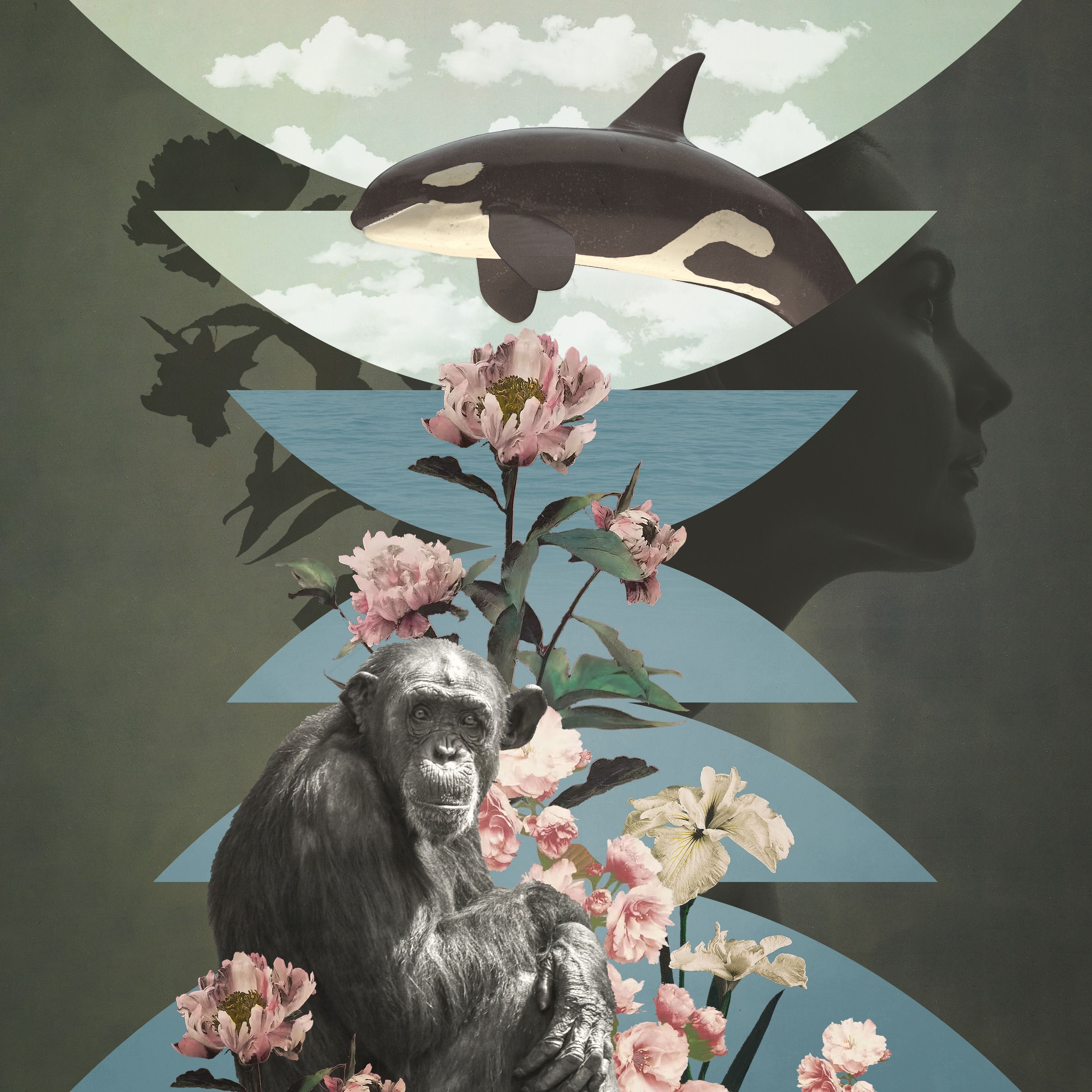
Radiolab
The Menopause Mystery
00:38:58
Until recently, scientists assumed humans were the only species in which females went through menopause, and lived a substantial part of their lives after they were no longer able to reproduce. And they had no idea why that happens, and why evolution wouldn’t push females to keep reproducing right up to the end of their lives. But after a close look at some whale poop, and a deep dive into chimp life, we find several new ways of thinking about menopause and the real purpose of this all too often overlooked second act of life. Special thanks to Danielle Friedman, Rachel Gross, and Kate Radke. EPISODE CREDITS: Reported by - Heather Radke and Becca BresslerProduced by - Sarah Qari and Becca BresslerFact-checking by - Emily Kriegerand Edited by - Becca Bressler EPISODE CITATIONS:Books - Check out everything Heather Radke writes, including Butts: A Backstory, cause it’s all that good, here: Heather Radke (www.heatherradke.com). Find any one of Lucy Cooke’s book, including Bitch:O...
Loading summary
Transcript406 lines
- [00:02]
Kevin Langegraver
Oh, wait, you're listening.
- [00:03]
Molly Webster
Okay.
- [00:04]
David
All right.
- [00:06]
Molly Webster
Okay.
- [00:07]
Heather Radke
All right.
- [00:09]
Molly Webster
You're listening to Radio Lab radio from wny.
- [00:20]
Heather Radke
Hey, this is Radiolab. I'm Molly Webster.
- [00:22]
Molly Webster
Hi. I feel like I haven't. I haven't seen you since, like, last year.
- [00:26]
Heather Radke
I'm sitting in for Lulu and Latif today, thank God. Since we were in Michigan with our contributing editor, Heather Radke.
- [00:32]
Molly Webster
I think that's right.
- [00:34]
Heather Radke
All right, Heather.
- [00:34]
Molly Webster
All right.
- [00:35]
Heather Radke
I'm gonna assume you have a story to tell us.
- [00:36]
Molly Webster
That's right.
- [00:37]
Heather Radke
That's why we're here.
- [00:38]
Molly Webster
I have something to tell you. Yay. So a little while back, I had a conversation with one of Radiolab's favorite science writers.
- [00:44]
Lucy Cook
I'm Lucy Cook. I'm the author of Bitch on the Female of the Species and got a background in zoology.
- [00:51]
Molly Webster
All right, Lucy.
- [00:51]
Heather Radke
We do love Lucy.
- [00:52]
Molly Webster
Yeah, she's like this globe trotting tracker of amazing animal stories. She's been to Pan to meet stoned dwarf sloths. She went to Sweden to track drunken moose.
- [01:02]
Heather Radke
All right.
- [01:03]
Molly Webster
And then a little while back, while she was working on her latest book.
- [01:07]
Lucy Cook
I was delighted to fly to Seattle and meet this population of orcas.
- [01:13]
Molly Webster
She got wind of a pretty amazing discovery in killer whales.
- [01:16]
Lucy Cook
Yeah, this felt like a really, really important story and one that I found inspirational.
- [01:23]
Molly Webster
It was a discovery that directly speaks to something that lots of humans are actually going to have to contend with at some in their lives, including Lucy herself. And me. And you. Me, you, Molly.
- [01:36]
Heather Radke
Okay.
- [01:36]
Molly Webster
So, yeah, so Lucy hopped on a plane, flew to Seattle, and then to get to the patch of the ocean north of Seattle where the whales actually.
- [01:45]
Lucy Cook
Live, you get a seaplane, you get to feel like you're in a 1970s, you know, adventure TV series. That's how everybody travels in the 1970s, was by seaplane to go and deal with emergencies, you know.
- [02:00]
Molly Webster
But the actual reason Lucy was there was to get on a boat with a woman named Deborah Giles.
- [02:09]
Deborah Giles
So my Name's Deborah Giles, Dr. Deborah Giles, but I just go by my last name, Giles.
- [02:14]
Lucy Cook
Yeah, I'd written to her, offering up my services to join her on her research boat. Cause I'd heard that she went out every day chasing orcas, trying to catch their poo in a net.
- [02:27]
Deborah Giles
That's what I do.
- [02:28]
Heather Radke
Okay.
- [02:28]
Deborah Giles
Yeah. My main job is poop collection.
- [02:31]
Lucy Cook
And the reason why is because, as she'll tell you, poop is a goldmine.
- [02:35]
Deborah Giles
Yeah, absolutely.
- [02:36]
Molly Webster
Apparently you can learn a lot about whales by looking at their poop.
- [02:40]
Deborah Giles
Everything you can imagine, anything that you can get From a blood sample you.
- [02:44]
Molly Webster
Can analyze through the feces, hormones, microbes, environmental chemicals.
- [02:48]
Deborah Giles
Yes.
- [02:50]
Molly Webster
So what they do is they go out in the boat until they spot this group of killer whales.
- [02:54]
Lucy Cook
And then you do what's called a distant poop follow.
- [02:59]
Heather Radke
Oh.
- [02:59]
Lucy Cook
And I believe that that is a scientific term. You form a little polite distance back.
- [03:05]
Molly Webster
Yeah. Everyone needs some privacy.
- [03:07]
Lucy Cook
Exactly. You don't want to overcrowd them.
- [03:09]
Molly Webster
And at some point, one of Giles.
- [03:11]
Lucy Cook
Assistants, a non human research assistant. Oh, Eber the dog. The former street dog from Sacramento.
- [03:19]
Molly Webster
We'll pick up the scent.
- [03:20]
Deborah Giles
Give us now.
- [03:21]
Lucy Cook
Oh, my goodness.
- [03:22]
Deborah Giles
She'll go to the front of the.
- [03:23]
Molly Webster
Boat, put her snout in the air.
- [03:25]
Deborah Giles
Stand up on the bow, and then.
- [03:26]
Molly Webster
Leads them to it.
- [03:29]
Heather Radke
Does the whale poop float at the surface?
- [03:31]
Deborah Giles
Yes.
- [03:32]
Lucy Cook
We're not talking a solid turd by any means.
- [03:35]
Deborah Giles
It's more of a thick pancake batter.
- [03:39]
Molly Webster
And then they just lean over the side of the boat with this plastic lab vial on the end of a.
- [03:43]
Deborah Giles
Stick and gently break the surface of.
- [03:45]
Molly Webster
The water and scoop up the poop.
- [03:48]
Heather Radke
Okay.
- [03:49]
Molly Webster
So the reason Lucy went to visit Giles and these whales is because the scientists who study them had noticed something odd.
- [03:56]
Deborah Giles
There comes a time when we don't see the females in this population giving birth.
- [04:02]
Molly Webster
When they got to be around like 40 or so, the female whales just stopped having babies, even though they lived to be 70, 80, even like 100 years old.
- [04:11]
Deborah Giles
So these females were living this long stretch of their life without having any new calves.
- [04:17]
Molly Webster
At first, the scientists thought they were having miscarriages maybe, or there was some kind of pollutant in the water or something that was causing these older females to stop having babies. But in 2017, Giles and this colleague of hers, Sam Wasser, published a poop analysis that confirmed a very different hypothesis that people had been considering for a couple decades. They wrote, and I quote here, the females in the population have undergone reproductive senescence. Oh, senescence, yeah. Which was like, not a word I knew, but. Yeah, but maybe you know it. I don't know. Well, it's like a fancy way of saying that at a certain age, the reproductive system of these whales started to physiologically shut down. And along with a lot of other observations about the whales and autopsies of beached whales, they were able to, like, confirm that these whales were going through menopause.
- [05:16]
Heather Radke
Okay.
- [05:19]
Molly Webster
That'S my big reveal, Molly.
- [05:23]
Heather Radke
I guess I maybe would have expected them to go through menopause.
- [05:27]
Molly Webster
You're not surprised? You're not surprised? I don't know. I'm like, well, you kind of should be surprised because actually, up until they figured this out about the whales, scientists widely believe that menopause was a uniquely human thing.
- [05:40]
Heather Radke
Really?
- [05:40]
Lucy Cook
Yeah. It was assumed that human females were the only species that went through it.
- [05:45]
Molly Webster
Out of, like 6,000 some species of mammals, they thought we were the only ones.
- [05:49]
Lucy Cook
So we were just. Yeah, we were just freaks and freaks.
- [05:52]
Molly Webster
Because if you think about it scientifically, menopause is actually very weird. Like, it doesn't.
- [05:59]
Heather Radke
Is this sort of you saying, like, this is weird, or do you think scientists are like, yo, this is weird?
- [06:03]
Molly Webster
I mean, they would probably say it a little bit more fancy.
- [06:05]
Kevin Langegraver
So I'm, you know, I would just come. Well, no, like, it is super weird, right? It is super weird.
- [06:12]
Molly Webster
Okay, so this is. His name is Kevin, and I have.
- [06:16]
Kevin Langegraver
A long last name. Langegraver. Kevin Langegraver. I'm an associate professor in the School of Human Evolution and Social Change at Arizona State University.
- [06:26]
Molly Webster
And Kevin says, from an evolutionary point of view, no animal should have what.
- [06:30]
Kevin Langegraver
He calls the substantial post reproductive lifespan.
- [06:34]
Heather Radke
Substantial post reproductive lifespan.
- [06:36]
Molly Webster
Fun phrase.
- [06:37]
Kevin Langegraver
Yeah.
- [06:38]
Molly Webster
I asked him if we could say something more fun, and he said, no.
- [06:40]
Kevin Langegraver
No.
- [06:41]
Molly Webster
So, anyway, the point is, it's the living for a long time after you can no longer reproduce. That's the weird part.
- [06:48]
Kevin Langegraver
It shouldn't be, because from the perspective of evolution. Right, What? Evolution favors traits that get more genes into the next generation.
- [06:57]
Molly Webster
And if you're not having babies, you're not sending your genes into the next generation.
- [07:01]
Lucy Cook
Natural selection takes a, you know, pretty dim view of a loss of fertility. And once you stop breeding, you die. That's the general story.
- [07:08]
Heather Radke
And is natural selection really that cut and dry that it's. If you're not contributing to the genetic pool, you should be out?
- [07:16]
Kevin Langegraver
Well, of course, natural selection isn't everything, right? Not every trait you look at in an organism has a functional reason. But, you know, like the vast majority of mammal species, you end up reproducing until you die. Then it's still super weird that a few don't.
- [07:34]
Molly Webster
Like, think about it this way. If there were a human woman who could keep having babies for her whole life until she dies, she would genetically at least outcompete the women who can't. So it sort of seems like there should be some evolutionary genetic reason for the reproductive system to kind of peter out before the human person does.
- [07:56]
Kevin Langegraver
That is the evolutionary puzzle, right? So it's not.
- [07:59]
Molly Webster
Now, one of the most common things people say when they hear about this is that in humans, this is Kind of like a fluke of modern life.
- [08:07]
Lucy Cook
So the idea was that perhaps human females were living beyond their reproductive shelf life because we were being propped up by regular meals and modern medicine.
- [08:18]
Heather Radke
So the idea being that in olden times, we used to die around menopause. And so this long post reproductive life is just because now we live longer than we used to.
- [08:31]
Molly Webster
Right. But it turns out actually that's not the case.
- [08:35]
Heather Radke
Which part?
- [08:37]
Molly Webster
Which part is not the case? Not true. None of that's true.
- [08:40]
Heather Radke
Okay.
- [08:41]
Molly Webster
In ancient times, people also lived to be about 70.
- [08:44]
Heather Radke
Really?
- [08:45]
Molly Webster
Yeah.
- [08:45]
Heather Radke
I just thought it was, like, the only people who did were, like, royals who were highly attended to.
- [08:49]
Molly Webster
No, the light. So there's this interesting thing where, like, we get these average life expectancy numbers, and the averages take into account the fact that people die before, like, the age of five because they die in childbirth, they die of infant diseases.
- [09:03]
Heather Radke
Oh, it's like a skewed average.
- [09:05]
Molly Webster
Yeah, exactly. So if you account for that, you see that many women were in fact living 20, 25 years, 30 years after they could no longer reproduce. So humans have been going through menopause, like, for the entire history of humans.
- [09:19]
Lucy Cook
And it's a thing, menopause, it's a rollercoaster, you know, it's an emotional and physical rollercoaster.
- [09:26]
Molly Webster
And back to Lucy. She says that going into menopause for her was pretty brutal.
- [09:30]
Lucy Cook
I mean, hot sweatshirt and furious moods.
- [09:33]
Molly Webster
And it's pretty brutal for a lot of women. But she also says once it.
- [09:37]
Heather Radke
It's.
- [09:37]
Lucy Cook
I was going to say it's icy fingers, but it's anything but icy. Once it's hot fingers got a hold of me.
- [09:43]
Molly Webster
She did have in the back of her mind this question, which was, why.
- [09:48]
Lucy Cook
Why was I still alive?
- [09:50]
Heather Radke
That's a question.
- [09:51]
Molly Webster
Yeah, it's a pretty intense way to put it. But the thing about menopause, you know, I mean, it's.
- [09:56]
Lucy Cook
I mean, I know it gets a lot of press now, and everybody's allowed to talk about it. My mother's generation.
- [10:01]
Molly Webster
No one did for such a long time. It's been completely ignored by science, by culture. And probably partly because of that, I do think a lot of women end up feeling invisible or useless, you know.
- [10:14]
Lucy Cook
You were just sort of irrelevant after going after your period stopped, you know, and you were kind of this sort of, you know, kind of gray puddle of purposelessness, you know?
- [10:24]
Molly Webster
Oh, God. So, Lucy.
- [10:26]
Lucy Cook
So when I heard that killer whales went through menopause, it felt like a.
- [10:32]
Molly Webster
Chance to ask, what is this time in her life for in a kind of different, more scientific way.
- [10:38]
Darren Croft
Yeah. So these are really big questions and there are a number.
- [10:42]
Molly Webster
So this is a scientist named Darren Croft.
- [10:44]
Darren Croft
I am professor of animal behavior at the University of Exeter.
- [10:48]
Molly Webster
He's part of this huge team that's been studying these killer whales for like decades now.
- [10:53]
Lucy Cook
And so there's this incredible rich amount of data on their behavior and their movements.
- [10:59]
Molly Webster
And so what the scientists watching these whales day in, day out have seen is that there's a lot of purpose.
- [11:05]
Deborah Giles
And we know that now these females have rich social lives, lives that could.
- [11:10]
Molly Webster
Make sense in like a cold, hard evolutionary logic kind of way. So, for example, Giles and Darren told us about this one particular female killer.
- [11:18]
Darren Croft
Whale named Granny, who's possibly the most famous wild killer whale in the world.
- [11:23]
Deborah Giles
Granny. She was just an ass astonishing whale who lived to be at least into her late 80s, possibly as old as 105.
- [11:32]
Molly Webster
And according to Darren and Giles, all the way up to the end she.
- [11:35]
Deborah Giles
Had this zest for life.
- [11:37]
Kevin Langegraver
Yeah.
- [11:38]
Molly Webster
What does that look like?
- [11:38]
Deborah Giles
Socializing, foraging, breaching, tail slapping.
- [11:42]
Molly Webster
It does sound zesty.
- [11:45]
Deborah Giles
Living life.
- [11:45]
Molly Webster
Yeah. And in particular, the scientists noticed she's.
- [11:48]
Deborah Giles
Actually a killer grandma, carried and played with and babysat brand new babies.
- [11:55]
Molly Webster
Because the way these groups of killer whales usually work is sons and daughters.
- [12:00]
Darren Croft
Stay in their mom's household.
- [12:02]
Molly Webster
So Granny's part of this sort of multi generational pod?
- [12:05]
Deborah Giles
Yes. Our colleagues capture drone imagery of Granny helping to corral a fish towards her great grand calf.
- [12:14]
Molly Webster
When Darren and his colleagues did a study of these killer whales, they found that the whales that had postmenopausal grandmas.
- [12:20]
Heather Radke
Around, like granny whales who aren't having babies of their own anymore. Right, okay.
- [12:25]
Molly Webster
When those ones were still around, the young had higher chances of survival than the whales who had no grandmas or even had grandmas who were premenopausal. Does that make sense?
- [12:37]
Heather Radke
So the grandmas who couldn't have babies anymore were more helpful than the grandmas who were still having babies.
- [12:43]
Molly Webster
Right. And this actually gave like a lot of support to an idea that people had been thinking about in terms of humans actually for a while, the grandmother hypothesis.
- [12:53]
Heather Radke
I feel like I hear a lot about the grandmother hypothesis, but I'm not even sure I know how it works.
- [12:58]
Molly Webster
Yeah, right. But it's basically what we just learned with the whales.
- [13:01]
Darren Croft
The hypothesis there is, what's important is that post reproductive females play an important role in the survival of their grand offspring.
- [13:10]
Molly Webster
There's something that makes a lot of, I'll just say as a person with a two year old child, like, makes a lot of sense to me. My mother is just incredibly helpful and useful. I mean, that's data point of one. It's not scientific, but we feel how this makes some amount of sense to be true.
- [13:27]
Darren Croft
Yes. Yeah.
- [13:29]
Heather Radke
So this hypothesis is just like your evolutionary purpose is to be a mom, even if you are no longer being a mom.
- [13:37]
Molly Webster
Yeah, I mean, that's kind of the cultural takeaway. That's like what most of us think of, if you've ever heard of this before. But when you look at the whales, it goes way beyond that. Like the older killer whale female, she's actually kind of running the show.
- [13:51]
Deborah Giles
I mean, it was clear that Granny was the one in charge, the matriarch of all matriarchs.
- [14:01]
Molly Webster
They played diplomat or keeper of the peace, especially with the younger male whales.
- [14:06]
Deborah Giles
Females, especially post reproductive females, are intervening in the lives of their adult sons, making sure that they're not roughhousing enough to get injured.
- [14:17]
Molly Webster
But also they're like hunter in chief.
- [14:19]
Lucy Cook
Leading the pod to find food to feed everybody.
- [14:23]
Molly Webster
Granny and her family have basically always exclusively eaten salmon, but those salmon are.
- [14:28]
Lucy Cook
Really hard to find now because they've been hunted by humans.
- [14:32]
Molly Webster
But Granny, with her 11 pounds, super intelligent brain, she can remember things from like 25 years ago. Yeah.
- [14:40]
Lucy Cook
You know, 25 years ago at this time of year, there was a bunch of salmon that did go up this random little tributary halfway up the coast.
- [14:48]
Molly Webster
And the scientists could like literally see this play out as they were watching the whales on these hunts.
- [14:56]
Deborah Giles
Granny would just start slapping her tail on the water and like all the whales would go like, whoop, Granny's calling. We're going to go in the direction that she wants us all to go. That was something that we used to get to see quite often. And even after she spent 45 minutes or even an hour trying to catch a fish, you know, continuing, even though she was most assuredly hungry herself, Giles.
- [15:19]
Molly Webster
Said she would see her bite the.
- [15:20]
Deborah Giles
Fish in half, or sometimes even in thirds, and have family members come over to grab that fish.
- [15:26]
Molly Webster
So the postmenopausal female whales, they might not be adding more of their genes to the gene pool, but they're not.
- [15:32]
Lucy Cook
Sitting around filing their nails and watching daytime soap operas.
- [15:36]
Molly Webster
They're like totally crucial to the survival of the group.
- [15:39]
Lucy Cook
These orca females are the repositories for ecological wisdom. They're keeping their hunting community alive.
- [15:49]
Molly Webster
Does it make you think about your experience as a woman? I mean, whenever I ask scientists this question, they're like, don't ask this question, so. But I guess did, like, looking the orca in the eye and thinking about Granny change anything for you?
- [16:04]
Lucy Cook
Do you know, I probably shouldn't answer this question, but I will. I'll give you an honest answer. Cause I did. I felt incredibly moved by them. I really did. I felt very. I was really pleased that I made the effort. And I went there and I spent time with Dr. Giles and, you know, understanding how evolution had granted these females these long lives with such purpose made me think differently about my loss of fertility. And I found the idea that my value now was in my wisdom and my brain and the things that I can teach other people really empowering.
- [16:58]
Heather Radke
As.
- [16:59]
Lucy Cook
Opposed to feeling like you're a gray puddle. That's, you know, decreasing relevance in the world. And, you know, it's the kind of. It's the opposite, you know, in every way. I was like, be more orca.
- [17:10]
Kevin Langegraver
Yeah.
- [17:16]
Lucy Cook
Plus the fact that the older females are having tons of sex.
- [17:20]
Molly Webster
Oh, my God.
- [17:26]
Heather Radke
I mean, that sounds great, right?
- [17:28]
Molly Webster
I love the idea of, like, being.
- [17:30]
Heather Radke
An orca, but there is something in me that, like, just sort of fundamentally chafes at the idea that I have to be useful in some way. Like, whether that's, like, being a caretaker or being, like, hunter in chief. Like, it's like, I always have to prove my worth if I'm not there to have babies.
- [17:50]
Molly Webster
I think you'll be kind of happy to hear that, you know, that's not the only idea that science has about menopause. When we come back from break, I'm going to tell you about another animal that's. I don't know. I think you might like this one.
- [18:11]
Heather Radke
All right, we're back for the second part of this episode.
- [18:13]
Molly Webster
Yep. Okay, so let's. Let's recap.
- [18:15]
Heather Radke
Love a recap.
- [18:16]
Molly Webster
We're talking about menopause and how it's super weird.
- [18:19]
Heather Radke
Totally weird.
- [18:20]
Molly Webster
We thought for a long time we're the only ones who did it. And then scientists learned about orcas, right? And scientists started watching them, and they sort of thought, oh, maybe we're solving this evolutionary puzzle of, like, why we have menopause. Of why we have menopause. But maybe not so much.
- [18:37]
Kevin Langegraver
So let me unpack that.
- [18:39]
Molly Webster
So, again, this is this guy, Kevin Langergraeber.
- [18:41]
Kevin Langegraver
We're really getting the weeds here for this.
- [18:44]
Molly Webster
One important detail I didn't mention before about Kevin is that every year for the past 25 years, Kevin has spent time living what he calls chimp life, working on this thing called the Ngogo.
- [18:56]
Kevin Langegraver
Chimpanzee project which is a long term study of this one community of chimpanzees.
- [19:01]
Molly Webster
It's in southwestern Uganda, pretty much smack.
- [19:04]
Kevin Langegraver
Dab in the middle of Kibali National Park.
- [19:06]
Molly Webster
So picture like huge, huge trees and.
- [19:09]
Kevin Langegraver
A wide open forest floor, like an open park where every single day, get up in the morning, have your breakfast and your coffee. The sun is just starting to come up. That's when you want to leave and go find the chimps.
- [19:25]
Molly Webster
And then he spends the rest of his day just watching them.
- [19:28]
Kevin Langegraver
Basically you're writing down what they do.
- [19:30]
Molly Webster
They're grooming, they're hunting, they're eating. So kind of right from the beginning of his time there, Kevin started to notice something interesting about the older female chimps.
- [19:39]
Kevin Langegraver
Okay, Like Garbo for example.
- [19:41]
Heather Radke
She's an old timey silent movie character.
- [19:44]
Molly Webster
Yeah, exactly, exactly.
- [19:45]
Kevin Langegraver
This female who now is about 72 years old.
- [19:49]
Heather Radke
No way. 72, that's like my mom's age.
- [19:55]
Molly Webster
Yeah. Kevin's actually known Garbo from the very beginning, since she was about 50.
- [19:59]
Heather Radke
Okay.
- [20:00]
Kevin Langegraver
At which point she already had adult kids.
- [20:03]
Molly Webster
But for the last 25 years he's never seen her have a baby.
- [20:07]
Kevin Langegraver
But here's the thing, you know, post reproductive individuals, they exist. You know, there's always like the occasional old female who doesn't reproduce anymore.
- [20:17]
Molly Webster
But the thing Kevin wanted to figure out was like, is Garbo an anomaly or is this something that's happening to more chimps than just her?
- [20:24]
Kevin Langegraver
Exactly.
- [20:25]
Molly Webster
And to get to the bottom of.
- [20:26]
Kevin Langegraver
That, he had to collect biological samples.
- [20:30]
Heather Radke
Okay, back to poop.
- [20:32]
Molly Webster
No, not poop, Pee.
- [20:34]
Kevin Langegraver
Yeah, urine, urine, urine.
- [20:36]
Molly Webster
No shade to poop samples.
- [20:37]
Kevin Langegraver
Obviously urine collection is actually easier than fecal sample collection because they a lot more than they poo.
- [20:44]
Molly Webster
I don't know about easy though, because what Kevin has to do is you.
- [20:48]
Kevin Langegraver
Get a stick from the forest. Picture a stick that's about three feet.
- [20:52]
Molly Webster
Long and it looks kind of like.
- [20:53]
Kevin Langegraver
A Y, sort of like a weird pitchfork or something.
- [20:56]
Molly Webster
And he puts a little plastic bag on the end of the Y.
- [20:59]
Kevin Langegraver
And then when the chimps are up in a tree, they're peeing down on you and you stick your stick out, you know, away from you so that you don't collect too much pee yourself, you know, on your head and stuff.
- [21:10]
Molly Webster
And you get the stream of pee to connect with your stick and then.
- [21:14]
Kevin Langegraver
It fills up that bag. This is highbrow science.
- [21:20]
Molly Webster
Now these pee samples, they're sort of like the whale poop. They can tell you a lot about what's happening in the bodies of individual chimps. Like Garbo, for example.
- [21:27]
Kevin Langegraver
You're just waiting for Garbo to pee, and then when she does, you'd better be ready.
- [21:32]
Molly Webster
So when Kevin analyzed her samples and the samples of the other older female.
- [21:36]
Kevin Langegraver
Chimps, we found, you know, smoking gun, sort of level of signs that we rarely get.
- [21:41]
Molly Webster
Because looking at the levels of reproductive.
- [21:43]
Kevin Langegraver
Hormones, it was really just easy to tell that. Yep, female chimps, Garbo and these other.
- [21:48]
Molly Webster
Old females go through menopause.
- [21:49]
Kevin Langegraver
Yes.
- [21:50]
Molly Webster
And I mean, like, they go through menopause. It's very similar to the human experience, or at least we think it is. Kevin was very careful to mention that. Like, I can't speak to hot flashes.
- [22:02]
Kevin Langegraver
No, Right.
- [22:03]
Heather Radke
Like, I can't speak to some of the physical symptoms or, like, the emotional swings.
- [22:07]
Molly Webster
Right.
- [22:08]
Heather Radke
But, like, there's a horrible hormone cessation. Right, right, right.
- [22:11]
Molly Webster
And that cessation, it's pretty similar to the pattern in humans. It's like a ramping down, basically.
- [22:16]
Heather Radke
Wow.
- [22:17]
Molly Webster
And after that, they just keep on living their lives for decades sometimes, just like humans and just like the whales.
- [22:24]
Heather Radke
And then there were three.
- [22:25]
Molly Webster
Yeah, exactly. Well, sort of. Actually, when they did all that orca research, they actually found out that there were a handful of other whales that are really similar to orcas that also go through menopause. So, like narwhals? Narwhals, yeah. But chimps are the third major animal group we know of that experience life after menopause.
- [22:43]
Heather Radke
Is Garbo also scratching her head, asking what life is for after menopause?
- [22:48]
Molly Webster
No, she's not, but Kevin definitely is.
- [22:51]
Kevin Langegraver
Let's think about it.
- [22:52]
Molly Webster
Okay, so I'm gonna, like, paint you a picture of what Garbo's life is like. Okay, so before she stopped having babies, she had three sons.
- [22:59]
Kevin Langegraver
Monk, Richmond, and Hutcherson.
- [23:02]
Molly Webster
By the way, why don't they name them, like, Steve or something?
- [23:04]
Heather Radke
It feels very, like, old money.
- [23:06]
Molly Webster
I know. Like, who came up with this? Okay, so Monk and Richmond actually aren't alive anymore. But let's just, like, imagine a time when they all were alive. Because, like, long story short, a big part of Garbo's day is hanging out with her sons.
- [23:19]
Kevin Langegraver
She had, like, you know, a good relationship with. With both Hutcherson and Richmond.
- [23:24]
Heather Radke
What about Monk?
- [23:25]
Kevin Langegraver
No. Monk. She hated Monk.
- [23:27]
Molly Webster
No, like, they didn't even know they were related until they did the genetic testing, and they were like, oh, I guess she had three sons, not just two.
- [23:34]
Heather Radke
Scandal.
- [23:35]
Molly Webster
Yeah. Dang Garbo.
- [23:36]
Heather Radke
Dang Garbo.
- [23:38]
Molly Webster
Anyway, so all day, Garbo, Hutcherson and Richmond would be together.
- [23:43]
Kevin Langegraver
Richman and Hutcherson would groom Garbo a.
- [23:45]
Molly Webster
Lot, like, kind of running their fingers through her hair and picking out bugs and, like, scratching her little back. Love it. And she would totally bliss out, like.
- [23:52]
Kevin Langegraver
Zone out in this really zen, like, state. It's like, you know, I'm bald now, but I remember when I used to go to the hairdresser and get my hair cut and you could feel, like the hairdresser running their hands through your scalp. I would just zone out and ah.
- [24:04]
Molly Webster
Also, Richman and Hutcherson would bring food.
- [24:06]
Kevin Langegraver
To Garbo, share meat with Garbo.
- [24:08]
Molly Webster
Monkey meat.
- [24:09]
Heather Radke
Chimps eat monkey meats?
- [24:11]
Molly Webster
Yeah, it's a chimp delicacy. They love a monkey meat.
- [24:14]
Heather Radke
Okay.
- [24:14]
Molly Webster
In the movie version of this, they would bring it to her on like, a silver platter and honor her.
- [24:19]
Heather Radke
I mean, that's what's happening in my head. So that. Does that mean she doesn't have to hunt for herself?
- [24:24]
Molly Webster
Right.
- [24:24]
Kevin Langegraver
Also, if someone would be aggressive to Garbo often, you know, Richmond and Hutcherson would, like, chase them off, you know, protecting their mother.
- [24:34]
Molly Webster
And that's it. That's all that Garbo does. So, like, kind of notice here what you're not hearing.
- [24:40]
Kevin Langegraver
No real grandmothering behavior.
- [24:43]
Molly Webster
So Garbo is not making Christmas cookies for her grandchildren.
- [24:47]
Kevin Langegraver
No, she's not.
- [24:48]
Heather Radke
She's not doing anything toward the youth.
- [24:52]
Molly Webster
Or really towards anyone.
- [24:54]
Heather Radke
Oh, really?
- [24:54]
Molly Webster
Okay. Yeah, she's not super helpful. Ha.
- [24:58]
Heather Radke
God, that's the dream.
- [25:00]
Molly Webster
I want to be old lady chimp. Yeah. And so, because the grandmother high poker.
- [25:06]
Kevin Langegraver
Doesn'T seem to apply to chimps, Kevin.
- [25:08]
Molly Webster
And a bunch of the other scientists started looking into, like, what is going on here.
- [25:12]
Kevin Langegraver
Yeah. The second most prominent hypothesis is called this reproductive conflict hypothesis.
- [25:17]
Molly Webster
The reproductive conflict hypothesis.
- [25:19]
Heather Radke
I love that we've gone from, like, the grandmother hypothesis, which feels so loving, to reproductive conflict.
- [25:26]
Molly Webster
Reproductive conflict. Well, bear with me, because in some ways it's maybe the opposite or it's maybe not quite what you think it's going to be.
- [25:35]
Heather Radke
I love that. I.
- [25:36]
Molly Webster
Okay. And the theory itself is, like, a little bit convoluted, but the big idea is that there's a sort of subtle evolutionary calculation hidden in the way chimpanzee females set up their families.
- [25:48]
Kevin Langegraver
In chimpanzees, males stay in their group.
- [25:51]
Molly Webster
For their whole lives, but the females, the daughters, when they hit puberty, they leave their family group to join another one.
- [25:57]
Kevin Langegraver
The general reason for this is, like, Avoid inbreeding. Right?
- [25:59]
Heather Radke
Right.
- [26:00]
Kevin Langegraver
So think of this, think of it. You're a female chimp, you're born in.
- [26:03]
Molly Webster
One group and you hit like 12 or 13, you disperse to a new.
- [26:07]
Kevin Langegraver
Group where you want to start having kids.
- [26:09]
Molly Webster
When you first get into that new family, you're not related to anybody around you. You don't share genes with anyone.
- [26:15]
Kevin Langegraver
But as you have your first kid, let's say you have a male, then.
- [26:19]
Molly Webster
You have one family member, your son, who does have your genes.
- [26:22]
Kevin Langegraver
It eventually grows up, it has its.
- [26:25]
Molly Webster
Own kids, those kids have your genes.
- [26:27]
Kevin Langegraver
So you're just getting more related to.
- [26:29]
Molly Webster
Group members as you grow into an older female channel. Okay, so now to zoom out a little bit.
- [26:35]
Kevin Langegraver
Now here's why is it called the reproductive conflict hypothesis?
- [26:38]
Molly Webster
If you look at the larger group that the chimp female is part of.
- [26:42]
Kevin Langegraver
There'S a limited amount of resources. And if you have a kid, that means that some other female in your group can't have a kid.
- [26:49]
Heather Radke
Yeah, it's just how basic ecology works.
- [26:51]
Molly Webster
Right.
- [26:52]
Kevin Langegraver
Reproduction is a zero sum game. So there's reproductive conflict between females.
- [26:57]
Molly Webster
And so if you're this older female chimp and you're looking around, maybe there are like new young females that have just joined your family and you're like.
- [27:04]
Kevin Langegraver
Who'S gonna have the next kid, me or this young female? If this young female has this kid, who's she gonna have it with? Well, it could be my son that has the kid with this young female. Right.
- [27:16]
Molly Webster
And my genes could get passed down that way.
- [27:18]
Kevin Langegraver
So I'm gonna get some indirect fitness benefits through this young female's reproduction.
- [27:25]
Molly Webster
On the other hand, can the young.
- [27:26]
Kevin Langegraver
Female say the same thing about the reproduction of this old female? No. She shares no genes with the hypothetical offspring of this old female.
- [27:37]
Molly Webster
So as the evolutionary math would have.
- [27:39]
Kevin Langegraver
It, old females are predicted to sort of cede these reproductive opportunities to the young females and stop reproducing.
- [27:46]
Heather Radke
Oh, so it's like Garbo and other older female chimps can contribute to the group and get a benefit themselves just by bowing out and doing their own thing. Right, that's cool.
- [27:59]
Molly Webster
Yeah, that makes sense. Right?
- [28:00]
Heather Radke
Good theory, good theory.
- [28:01]
Kevin Langegraver
But just like the grandmother hypothesis, it's not a perfect fit.
- [28:06]
Heather Radke
Why? Why? Why?
- [28:06]
Molly Webster
Well, apparently so this gets kind of like mathy and nitpicky. But Kevin says that the benefits of these older females bowing out, they like don't quite make up for the fact that they're like living these long, luxurious post reproductive lives, like painting their nails and eating monkey meat. So maybe it doesn't quite work.
- [28:26]
Heather Radke
Okay. Damn it. So is Kevin about to swoop in and be like, I've got my own hypothesis?
- [28:32]
Kevin Langegraver
No, I do not.
- [28:33]
Heather Radke
Oh. What?
- [28:34]
Kevin Langegraver
I do not.
- [28:35]
Heather Radke
Wait, so I'm just left hanging right.
- [28:37]
Kevin Langegraver
Right and left with, I don't know, just the magic and wonder of this world. Right.
- [28:45]
Molly Webster
There's like, not a grand universal theory of post reproductive females.
- [28:50]
Heather Radke
Okay.
- [28:51]
Molly Webster
And it's still just like a real open question of why we or orcas or chimps live this long post reproductive life.
- [28:58]
Heather Radke
Right. I mean, honestly, there's a part of me that's like, thank God. Because if we had actually found an answer, it would have felt so prescriptive. I don't know.
- [29:07]
Molly Webster
It makes me feel like it would have been kind of sad. I totally, like. I agree. I mean, I think it would be kind of limiting. And I think the thing is, one of the things I've loved about this reporting process of the story isn't really learning the theories, which are kind of confusing in a lot of ways, but actually learning about these specific animals like Granny and Garbo and just imagining their lives, like, what do they do during that time?
- [29:31]
Heather Radke
Yeah.
- [29:32]
Molly Webster
And I feel like I've gotten to a point in my reporting where I'm much more interested in the what they're doing than the why does this happen, if that makes any sense. And at some point, I also remembered that there's, of course, that third animal that goes through menopause and has a long post reproductive life. Everyone feels good, strong. Yes. And so I called up one of them. Yes.
- [29:55]
Caroline Paul
My name is Caroline Paul, and I'm a writer. And my expertise is that I am postmenopausal. I'm 61 years old.
- [30:05]
Molly Webster
I mean, to be fair, Caroline also wrote an entire book that's basically a study of how women live their lives after menopause called Tough Broad From Boogie.
- [30:15]
Caroline Paul
Boarding to Wing How Outdoor Adventure Improves Our Lives As We Age.
- [30:19]
Molly Webster
And so I went to her and I asked her, like, okay, there's Granny, there's Garbo. Now tell me about Caroline.
- [30:25]
Heather Radke
I love that.
- [30:26]
Caroline Paul
You know, I think when I was young, I was really interested in metrics, so I wanted to be the first.
- [30:31]
Molly Webster
She's specifically this, like, very adventure y kind of lady sometimes.
- [30:34]
Caroline Paul
I was the first down a river. I was the first to mountain bike through the Bolivian Andes.
- [30:39]
Heather Radke
I'm like, heather just got her driver's license.
- [30:41]
Molly Webster
Yeah. I didn't just get it, but I am learning how to. To drive alone on the road. So, you know, everyone's in a different moment of their life. To each their own adventure. Anyway, back to Caroline, when she started to have menopause symptoms, or really perimenopause symptoms.
- [30:55]
Caroline Paul
It was almost like someone had, like, killed your dog and given you a weird acid drug at the same time for extended periods.
- [31:04]
Molly Webster
Like, in what sense is that the case?
- [31:06]
Caroline Paul
I was crying all the time and eating at weird hours of the night. The other thing that kept happening is that I would go to parties and I wouldn't remember anybody's face.
- [31:16]
Heather Radke
Whoa.
- [31:17]
Molly Webster
And all of this went on for.
- [31:18]
Caroline Paul
Like, I think it was, like, four and a half years.
- [31:20]
Heather Radke
Geez.
- [31:21]
Molly Webster
But this all kind of tracked with what she was expecting to happen because she, like, kind of all of us had heard that this time in her life would be pretty brutal, right?
- [31:29]
Heather Radke
The only thing you hear it feels like is how dreadful it will be, right?
- [31:35]
Caroline Paul
But I just remember around 57, suddenly realizing that I felt really different.
- [31:40]
Molly Webster
She felt, like, a lot calmer and clearer.
- [31:42]
Caroline Paul
There was no more sudden crying jags. I remembered everybody's name, everybody's face.
- [31:47]
Molly Webster
And that's when she realized, oh, now I'm in menopause. And for this part of her life, she told me, really, the only messaging she was getting is what, like, not to do.
- [31:55]
Caroline Paul
Narrowing life, not opening it up.
- [31:57]
Molly Webster
Because women, as they get older, are getting told things like, we have to watch our bones.
- [32:02]
Caroline Paul
We have to watch our brain. Our cognitive health is on decline. We're told that as we age, we're losing things.
- [32:10]
Molly Webster
But beyond that, she kind of didn't.
- [32:12]
Caroline Paul
Have a roadmap for menopausal women. Women over 50, 60. We don't have a script anymore. There's a big gray area.
- [32:19]
Molly Webster
She felt kind of lost. Meanwhile, men her age, everywhere they look, they have tons of scripts, tons of icons.
- [32:25]
Caroline Paul
I mean, Harrison Ford is still running through tombs. Tom Cruise is jumping off some high building somewhere.
- [32:31]
Molly Webster
And she was like, why can't we have that? So she set out to write this book, which became the quest to understand.
- [32:38]
Caroline Paul
Whether I should have outdoor adventure in my life.
- [32:41]
Molly Webster
And she met all these different women in their 60s and 70s and eight that were doing, like, totally badass stuff.
- [32:47]
Caroline Paul
From base jumping as a grandmother to sea kayaking to BMX bike racing.
- [32:54]
Heather Radke
These are not women who are worried about bones breaking.
- [32:57]
Molly Webster
Not at all. And like, well, that's great. I'm all for it. But, you know, as somebody who's maybe not the most physically adventurous person, I also really appreciated some of the other stories she told me about women who were going on quieter but still very meaningful adventures.
- [33:12]
Caroline Paul
I went bird watching with someone in a wheelchair.
- [33:16]
Molly Webster
And she talked to this kind of amazing woman who learned how to swim in her 60s.
- [33:19]
Heather Radke
Oh, cool.
- [33:20]
Molly Webster
And it was very scary for her, but she still pushed herself to do it. So what she found was like, not just a bunch of role models for her, but she also found that for a lot of these women, instead of.
- [33:32]
Caroline Paul
Closing down their life, had found new aspects of themselves.
- [33:41]
Molly Webster
Finding new possibilities for their life. And they kind of had these new capacities for awe and wonder and bravery that they had never tapped into before.
- [33:49]
Caroline Paul
Yeah, I mean, I think that this is a time of great exploration that we should be grabbing hold of. There are new permutations and very valuable ones of us as we age.
- [34:01]
Heather Radke
It's like the minute hypothesis is just to flip the script or something, that no script is the script.
- [34:09]
Molly Webster
Yeah, right, exactly.
- [34:12]
Caroline Paul
And I wonder if one of the sort of uses of us, if we're going to be that, let's say, scientific about it, is simply to show the younger generation that life is going to get better. I have seen personally that when young people see how our lives are at this age, I think all that is of great value. So we don't really have to put a lot of work into that. We can just go and be a. Our best selves. We should be sitting in that tree, being fed delectable meats and doing whatever we want.
- [34:57]
Heather Radke
Thank you, Heather.
- [34:58]
Molly Webster
You too, Molly.
- [34:58]
Heather Radke
Good luck on your.
- [35:00]
Molly Webster
On my driving journey.
- [35:01]
Heather Radke
Not on the driving journey, the menopause journey.
- [35:03]
Molly Webster
Oh, yeah, right, our menopause.
- [35:04]
Heather Radke
You've got some time.
- [35:06]
Lucy Cook
Yeah.
- [35:06]
Heather Radke
Maybe we'll be holding hands and base jumping together.
- [35:09]
Molly Webster
I don't think so. People don't care. Let's go bird watching. Okay.
- [35:17]
Heather Radke
Heather might not have jumped out of planes, but she has done plenty of stories for us over the years. And one of them is a very delightful conversation with Lulu and Latif called Butt Stuff. And it is based on Heather's book called A Backstory. By the way, Lucy Cook's latest book has a bunch of other stories about the lives of females of many, many different species. It is well worth checking out. It is called Bitch. And when you are done with that, you can just move on over to Tough Broad by Caroline Paul. It is a book about the outdoors and aging and how those things go together. Special thanks to Daniel Friedman, Rachel Gross, Sam Wasser, Sam Ellis and Kate Radke. This episode was reported by Heather Radke with help from Becca Bressler. It was produced by Sara Kari and Becca Bressler. It was also edited by Becca Bressler and fact checked by Emily Krieger. I now have to do something on these credits that I don't really want to do, which is actually say goodbye to the Becca Bressler who you just heard a ton about. This is Becca's last episode at Radiolab. You may remember her for her on air hits about voter profiling and the economics of food delivery systems. And that one thing about the bug bite tool and whether or not it works on the inside of the show. We know her for all of that and also her just like crazy fast editing style, like her strategy brain, her sharp, sharp, sharp sense of humor and also her ability to sing Billy Joel at a level that is unbelievable and I hope you all get to hear at some point. Becca, we love you. We will miss you. It's been a really rad eight years. I can't believe it's been eight years. And yeah, I can't wait to see what you do next. All of us can't wait. We'll miss you. Bye.
- [37:20]
David
SA hi, I'm David and I'm in McMurdo Station, Antarctica. Here are the staff credits. Radiolab was created by Jad Abumrad and is edited by Soren Wheeler. Lulu Miller and Latif Nasser are our co hosts. Dylan Geith is our director of Sound design. Our staff includes Simon Adler, Jeremy Bloom, Becca Bressler, W. Harry Fortuna, David Gable, Maria Paz Gutierrez, Sindhu Nyanand, Samanthan, Matt Kielty, Annie McKeown, Alex Neeson, Sarah Kari, Sarah Sambach, Anisa Vitza, Arianne Wack, Pat Walters, Molly Webster, and Jessica Young, with help from Rebecca Rand. Our fact checkers are Diane Kelly, Emily Krieger, Anna Pujol, Mazzini, and Natalie the Middleton. Hi, I'm Aubrey calling from Salt Lake City, Utah. Leadership support for Radiolab's science programming is provided by the Simons foundation and the John Templeton Foundation. Foundational support for Radiolab was provided by the Alfred P. Sloan Foundation.