← Radiolab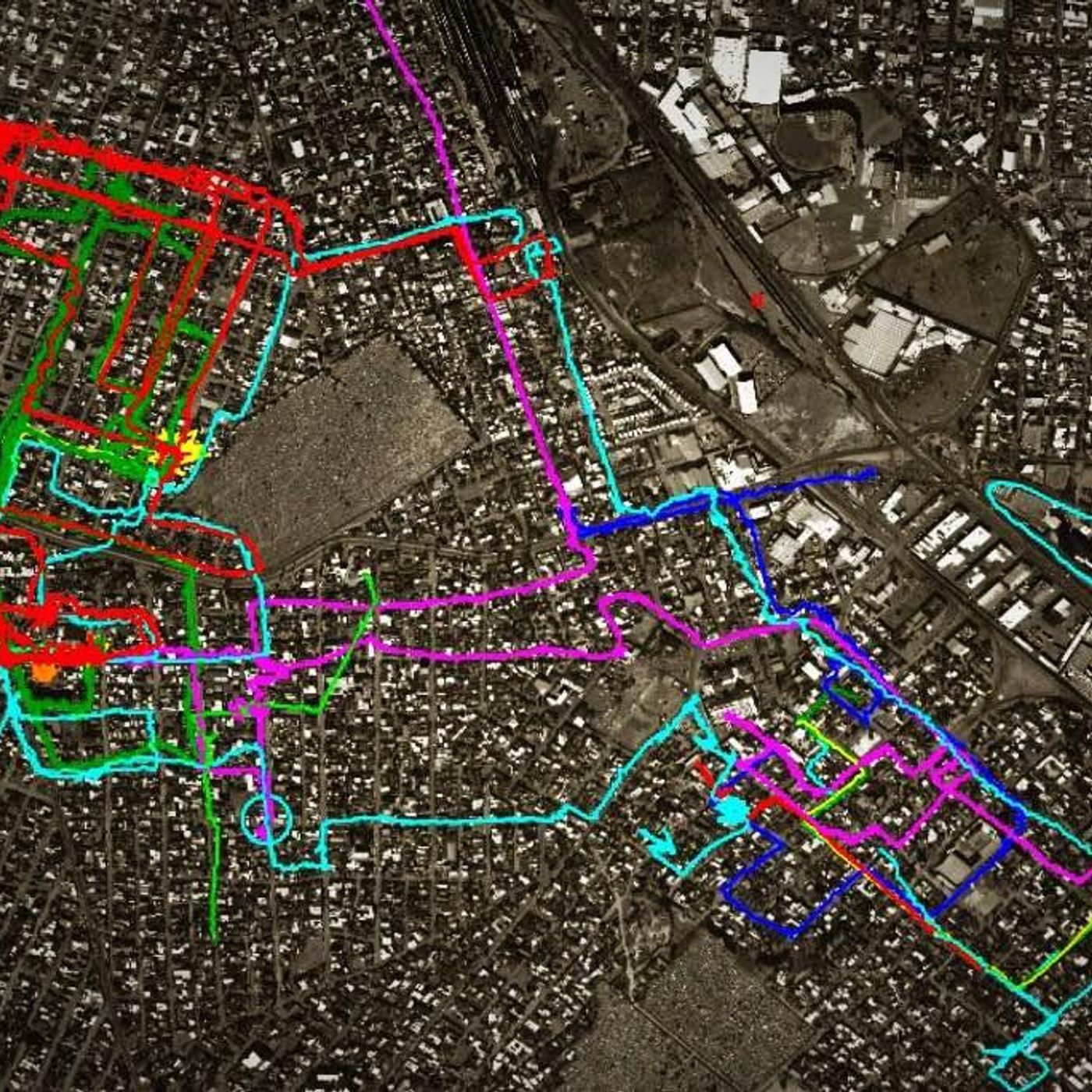
Radiolab
Update: Eye In the Sky
00:36:35
An update on Ross McNutt and his superpower — he can zoom in on everyday life, then rewind and fast-forward to solve crimes in a shutter-flash. But should he? In 2004, when casualties in Iraq were rising due to roadside bombs, Ross McNutt and his team came up with an idea. With a small plane and a 44 mega-pixel camera, they figured out how to watch an entire city all at once, all day long. Whenever a bomb detonated, they could zoom onto that spot and then, because this eye in the sky had been there all along, they could scroll back in time and see - literally see - who planted it. After the war, Ross McNutt retired from the Air Force, and brought this technology back home with him. Manoush Zomorodi and Alex Goldmark from the podcast “Note to Self” give us the lowdown on Ross’s unique brand of persistent surveillance, from Juarez, Mexico to Dayton, Ohio. Then, once we realize what we can do, we wonder whether we should. Produced by Andy Mills. Special thanks to Dan Tucker and George...
Loading summary
Transcript283 lines
- [00:00]
Manoush Zamorodi
Every holiday shopper's got a list. But Ross shoppers, you've got a mission like a gift run that turns into a disco, snow globe, throw pillows and.
- [00:07]
Ross McNutt
PJs for the whole family.
- [00:08]
Manoush Zamorodi
Dog included. At Ross holiday magic isn't about spending more. It's about giving more for less. Ross, work your magic.
- [00:16]
Jad Abumrad
Noches mas brigantes, momentos, mas intensos y tu aroma de vedesta Cartanto como tu la collection Azzaro wanted. Ofrese fragancias audaces calidas y sensuales. Prada tempurada the most wanted. Eau de parfum intense. Tenun aroma magnetico Deliciosamente seductor conotas de toff forever wanted. Elixir combina notas de cuero y frambuesas con elegancia. Esla confiance dos descubre Azaro y esta temporada be wanted. Compraya.
- [00:47]
Manoush Zamorodi
Wait, you're listening.
- [00:48]
Robert Krulwich
Okay.
- [00:50]
Manoush Zamorodi
All right.
- [00:51]
Jad Abumrad
Okay. All right. You're listening to Radiolab Radio Lab from wny.
- [01:00]
Ross McNutt
See?
- [01:00]
Manoush Zamorodi
Yep.
- [01:05]
Robert Krulwich
I'm Robert Krulwich, this is Radiolab, and I have the host of Note to Self with me. That's another WNYC podcast that comes outta here, a brilliant one. And the brilliant person who does it all, Manuj Zamorodi, is with me.
- [01:19]
Manoush Zamorodi
Hello, Robert.
- [01:20]
Robert Krulwich
And I asked you to come in just because I wanted you to sort of set this up, if you could.
- [01:25]
Manoush Zamorodi
Oh, happy to. So we did Radiolab and Note to Self did a joint episode last year called Eye in the Sky. It was disturbing story, but it's kind.
- [01:35]
Robert Krulwich
Of like a spy thriller. Actually.
- [01:37]
Manoush Zamorodi
Definitely a spy thriller. And it turns out a lot has happened since that episode was first put out.
- [01:43]
Robert Krulwich
Right. There have been developments which truly surprised me, and I don't want to give you any details. So just listen to what's about to happen, and then don't go away at the end. Stay. Okay, we'll begin.
- [01:55]
Jad Abumrad
So how did you guys find out about this? How'd you get into it?
- [01:58]
Manoush Zamorodi
I think it was somebody was reading about it.
- [02:00]
Jad Abumrad
This is Minouche Zamorodi.
- [02:02]
Manoush Zamorodi
It was you reading about it. Right.
- [02:03]
Robert Krulwich
And that's her producer, Alex Goldmark.
- [02:05]
Manoush Zamorodi
And I just said his name is McNutt. And I just wanted to do a show where I get to say that name at least 10 times, please. But then, like, we actually read it, and it was weird and interesting and brought up lots of issues.
- [02:21]
Robert Krulwich
Technology is remaking what is possible for.
- [02:23]
Ross McNutt
Individuals and for institutions and for the international order.
- [02:29]
Jad Abumrad
I'm Jad Abumrad.
- [02:31]
Robert Krulwich
I'm Robert Krulwich.
- [02:32]
Jad Abumrad
This is Radiolab. So here we are at this moment in time where we're faced with these decisions about what we want our future.
- [02:38]
Robert Krulwich
To look like be like.
- [02:41]
Jad Abumrad
There are fewer and fewer technical constraints.
- [02:44]
Robert Krulwich
On what we can do.
- [02:45]
Ross McNutt
That places a special obligation on us.
- [02:48]
Robert Krulwich
To ask tough questions about what we should do.
- [02:53]
Jad Abumrad
Today we're gonna look at the can and the should with our friends down the hall, Manoush Sammorodi and Alex Goldmark. They run a great podcast called Note to Sel. You will be our guides into the world of McNutt.
- [03:04]
Ross McNutt
Yes, my name's Ross McNutt.
- [03:06]
Manoush Zamorodi
So the McNutt, as I refer to him, he's an ex military guy, did.
- [03:10]
Ross McNutt
20 years in the Air Force. I enjoyed it. I did a lot of good.
- [03:13]
Jad Abumrad
Like, combat military.
- [03:14]
Manoush Zamorodi
He was an engineer in the military.
- [03:15]
Jad Abumrad
Yeah, I mean, I think he's actually special military.
- [03:18]
Ross McNutt
My background, I've got a PhD in rapid product development out of MIT. And what I do is I teach young people how to build new systems.
- [03:28]
Manoush Zamorodi
And the new system, that's the system that we want to talk about. That kind of began in 2004. Ross was teaching a course at a.
- [03:35]
Ross McNutt
Military college, was at the Air Force Institute of Technology here at Wright Patterson in Dayton.
- [03:40]
Manoush Zamorodi
He says one day in 2004, the whole school gathered together for a rally.
- [03:45]
Ross McNutt
And our commander got up in front of the whole school and said, we need to do something to help the war effort.
- [03:52]
Jad Abumrad
Terrible violence today in the Iraqi city of Basra.
- [03:56]
Manoush Zamorodi
So at that time in the Iraq war, before the surge, things were not going well. Suicide bombs ripped through police buildings and city streets.
- [04:03]
Ross McNutt
IEDs going all over the place.
- [04:06]
Manoush Zamorodi
Constant news about IEDs going off everywhere, soldiers being blown up.
- [04:10]
Jad Abumrad
In one week, I got blown up three times.
- [04:15]
Ross McNutt
And to be honest with you, in 2004, it looked like we were going to lose.
- [04:19]
Manoush Zamorodi
So Ross, he gets together some of his students, some of his colleagues, and they decide, you know, let's sit down and see if we can find a solution quickly. Find a solution to figuring out who is planting all these roadside bombs.
- [04:31]
Ross McNutt
Yeah, Bombs going off are pretty easy to detect in images. The problem is, how do you go from a bomb going off backwards in time to be able to figure out who planted it? So somehow it just came out.
- [04:47]
Jad Abumrad
Was it like you guys sitting around?
- [04:49]
Ross McNutt
It was at a bar. We were working on the back of a napkin and drawing out different ideas and throwing them around and seeing what happens.
- [04:56]
Jad Abumrad
They were just like, hey, let's Use planes. Let's try this, let's try that.
- [04:59]
Ross McNutt
And then they hit on it. This one stuck. And we sort of drew this out on the back of an envelope.
- [05:04]
Manoush Zamorodi
Making it took a little while.
- [05:06]
Ross McNutt
I had 38 students working for me for two years.
- [05:09]
Manoush Zamorodi
But eventually they developed what became known as Project Angelfire. And here's how it worked. They take a small plane and on the belly of the plane they hook up this array of cameras, sort of swivel around.
- [05:27]
Ross McNutt
It's a camera system we design and.
- [05:28]
Manoush Zamorodi
Build, super high end. And then the pilot, ready, he takes off, Flies the plane high over Fallujah.
- [05:41]
Ross McNutt
In the military, we were up at about 15 to 16,000ft to stay out of the missile range.
- [05:47]
Manoush Zamorodi
Let's say I'm an Iraqi on the ground in Fallujah and I look up, what would I see?
- [05:51]
Ross McNutt
You wouldn't see us. You wouldn't hear us or you wouldn't see us.
- [05:56]
Jad Abumrad
This plane flying just below the clouds, doing an orbit over Fallujah, circle, circle.
- [06:02]
Manoush Zamorodi
Circle for six hours at a time. And every second, click, click, click, click.
- [06:09]
Jad Abumrad
Every second it takes a still image of the entire city of Fallujah, 25 square miles, and then beams it down to an operator.
- [06:16]
Ross McNutt
We take a picture, process it, downlink it, process it, downlink it every single second.
- [06:23]
Manoush Zamorodi
So the plane is stamping picture after picture after picture. But here's what makes the system so powerful. The operator on the ground has, let's say, an entire day's worth of these high res pictures of the entire city of Fallujah. And then, let's say there's an explosion.
- [06:37]
Jad Abumrad
Officials say at least 20 people were.
- [06:40]
Robert Krulwich
Killed in explosions at a market and wounds 11 others.
- [06:43]
Manoush Zamorodi
First, the operator would pull up the most current image of the city, zoom into the place within Fallujah where it happened, and then click, Click, click in 1 second increments. Go back in time and see who was there, what happened.
- [06:57]
Jad Abumrad
When was the last time somebody fiddled around in that roadside. Yeah, and you're like, okay, I've gone back two hours and ah, it's that car.
- [07:06]
Manoush Zamorodi
Fast forward, click, click, click. They can now follow that car forward in time to see where it goes.
- [07:12]
Jad Abumrad
And you see that it went to a house in another neighborhood two miles away. Well, that's where you dispatch your troops to, right?
- [07:18]
Ross McNutt
Then basically we'd be able to send either the special forces in or the marines in and sort of take appropriate action.
- [07:29]
Manoush Zamorodi
Now look, the military doesn't release statistics on how well some of its military technology works, but there are officers who will be quoted saying that, yes, Project Angelfire saved lives, but the reason why we decided to do this story is because it's not just a military thing. Right. Like with a lot of these technologies, they maybe start in the military, but then they trickle down all the way down to all of us. And actually in this case, trickled down to Dayton, Ohio.
- [08:01]
Jad Abumrad
Ross Group Incorporated. You think that's it?
- [08:05]
Manoush Zamorodi
By his first name?
- [08:06]
Jad Abumrad
Yeah, it'd be weird.
- [08:07]
Manoush Zamorodi
Oh, you gotta go with the nut. Producer Andy Mills and I actually went to Dayton, Ohio to visit Ross at his business, Persistent Surveillance System.
- [08:17]
Jad Abumrad
There it is. Persistent Surveillance Systems. Right. That feels Orwellian.
- [08:22]
Robert Krulwich
Yep.
- [08:23]
Ross McNutt
These are the lenses and the motors here basically control it.
- [08:27]
Manoush Zamorodi
So first we went over to his workshop where he actually works and makes the cameras.
- [08:32]
Ross McNutt
These are more powerful than some of the best military systems.
- [08:36]
Manoush Zamorodi
Like we could see him actually making them. And how they get attached to the bottoms of the airplane.
- [08:41]
Ross McNutt
Whoa.
- [08:42]
Jad Abumrad
So many airplanes.
- [08:44]
Manoush Zamorodi
Then we went over to the hangar where he has all the airplanes. They're beautiful.
- [08:47]
Ross McNutt
So Overall, we've got 27 airplanes we operate.
- [08:50]
Manoush Zamorodi
He owns his own airport.
- [08:52]
Jad Abumrad
Ready? Yeah, after you guys.
- [08:54]
Manoush Zamorodi
Oh, my God, it's big. And then he showed us their command center. And this is where you have a bunch of people sitting in front of these enormous screens. This is like your viewing room.
- [09:04]
Jad Abumrad
Yeah.
- [09:04]
Manoush Zamorodi
And this is where all the plane pictures end up. Because Ross's basic idea in taking this technology from Fallujah to a city like Dayton, Ohio, is basically this.
- [09:17]
Ross McNutt
The US Cities has just as large a problem as we do in Afghanistan and Iraq. Only it's not IEDs, it's crime.
- [09:25]
Jad Abumrad
We've had a lot of major events this year. We've had four officer involved shootings so far this year. Our homicides are up this year.
- [09:32]
Manoush Zamorodi
So this is Dayton Police Chief Richard Biel.
- [09:34]
Jad Abumrad
B I E H L. I talked.
- [09:35]
Manoush Zamorodi
To him last summer. A couple years ago, Ross called him up and was like, look, a city.
- [09:40]
Ross McNutt
Like Dayton, Ohio, we've got 28,000 crimes a year. About 10,000 part one crimes.
- [09:46]
Manoush Zamorodi
Murder, rape, assault.
- [09:47]
Ross McNutt
10,000 part one crimes comes out to be $480 million a year.
- [09:53]
Manoush Zamorodi
But McNutt is like, for about the price of a police helicopter, we believe.
- [09:57]
Ross McNutt
That we would be able to decrease crime by 30 to 40%. 30% decrease in that is $155 million a year.
- [10:06]
Manoush Zamorodi
The Dayton police were like, all righty, let's give it a shot.
- [10:09]
Jad Abumrad
We basically set up a test in June of 2012 for a five day flight fair prop.
- [10:15]
Ross McNutt
Here we go.
- [10:16]
Jad Abumrad
Just see for ourselves. What it was capable of doing.
- [10:20]
Manoush Zamorodi
They sent the plane up in the air, started doing its thing, just like in Fallujah. And within just a few hours, there.
- [10:31]
Jad Abumrad
Is a call of this braking, entering in progress with a description of a van.
- [10:35]
Manoush Zamorodi
It was an older white box truck, just a regular random moving truck. This is Angie Horn. She's the one who called 91 1. She was just home on her lunch break, and she sees a moving van pull up in front of her neighbor's house. A guy gets out, breaks in, starts moving furniture out. So we, you know, we immediately called the police. They got there relatively quickly. From what I remember, that he had already taken off.
- [11:00]
Jad Abumrad
Now, normally in a case like this, the police would be like, well, how.
- [11:03]
Ross McNutt
Do we follow him? We don't know where he went.
- [11:06]
Jad Abumrad
But in this case, the police contact persistent surveillance systems, and ultimately they get connected to this guy. My name is Alex Blasingame. I'm the senior analyst for the company. Alex pulls up the image of Damon, zooms in, clicks backwards about five minutes.
- [11:22]
Manoush Zamorodi
Until he sees this little grainy white.
- [11:24]
Jad Abumrad
Dot appear in front of her neighbor's house. This is the vehicle here that we're wanting to track.
- [11:29]
Manoush Zamorodi
I'm sorry, what vehicle? I barely see anything.
- [11:31]
Jad Abumrad
Right. So the image looks real blurry. But the human brain and the human eyes are very, very evolved to pick out movement.
- [11:37]
Manoush Zamorodi
You gotta understand that from two miles up, a car looks just like a random shape. People, they look like pixels. Alex has trained himself to pick out movement.
- [11:46]
Jad Abumrad
I'm gonna put a tag down on where he's at.
- [11:48]
Manoush Zamorodi
He places an orange circle over that random little shape. And then click, click, click.
- [11:52]
Jad Abumrad
He moves forward, forward, forward to follow him to his real time location. Alex follows it up some roads, finds out that it has passed, parked in a parking lot six blocks away. He calls up the people in the field, goes, go over there. They get there, they see the guy, they see a truck full of stuff. They send a different cop over to pick up the witness. Witness goes, yep, that's the guy. Oh, the lady who called. Yeah. This is minutes later. No kidding. That could have been a murderer, right? That could have been an armed robber. It could have been a lot of things.
- [12:23]
Robert Krulwich
This is so weird. This is like having a superpower.
- [12:26]
Jad Abumrad
It is super power.
- [12:26]
Robert Krulwich
This is actually better than Batman. You can't go back forth in time if you're a superhero.
- [12:32]
Manoush Zamorodi
I just feel sad. It's like we're all just these little dots. It just seems like the antithesis of what a lot of police departments seem to be trying to do in the aftermath of Ferguson and Staten island and other horrific things that have happened, which is getting the police on the streets, making personal connections, creating relationships.
- [12:58]
Ross McNutt
There's nothing in this system that prevents you from having effective community policing at the same time. And oh, by the way, this may dramatically help that community relations. The reason they're putting body cams on police officers is try to get the police officers to be more respectful because they can be seen. Well, this lets us watch all the officers in a 25 square mile area all at once.
- [13:22]
Robert Krulwich
But then you can watch so many other people all at once. Here's other things that people in Dayton do, like Romeo and Juliet. They sometimes meet without their parents permission in the playground and smooch. There are going to be divorce lawyers who are going to be tracking Aaron's spouses. There are going to be traffic police who are watching who goes through the red light. There are going to be realtors who are wondering who are. How many tenants do you really have in that building? Right. And I guess the thought might be that if the information exists that will show what my pixel was actually doing, then I'm a little less free.
- [14:03]
Ross McNutt
There is a clear trade off between security and privacy. And in our major cities, where we have tens of thousands of major crimes, you are a lot less free when you can't leave your house at night.
- [14:17]
Robert Krulwich
There's obviously an. A huge advantage to knowing what you know, but then there's a huge thing to knowing what you know. Knowledge all by itself is sort of a. Is pregnant with, with funny.
- [14:32]
Jad Abumrad
You know, here's my problem with, with the, with this, with all of these privacy stories. It's like when you're talking about these technologies, the advantages are always so concrete and the trade offs always feel so abstract. I feel like there is. There's something being lost here, but I can never quite put my finger on it. It's weird.
- [14:52]
Manoush Zamorodi
Oh, Jad, that weirdness that you're feeling. Yes, it's gonna get a lot weirder.
- [14:59]
Jad Abumrad
We'll be right back.
- [15:05]
Manoush Zamorodi
Hey, this is Jenny Lanahan from Round Lake, New York. Radiolab is supported in part by the Alfred P. Sloan Foundation. Enhancing public understanding of science and technology in the modern world. More information about Sloan@www.sloan.org. radiolab is supported by BILT. Nobody wants to pay rent, but if you have to, BILT works to make it more worthwhile. By paying rent through Bilt, you can earn flexible points that can be redeemed toward hundreds of hotels and airlines. A future rent payment. Your next LYFT ride and more. But it doesn't stop there. You can dine out at your favorite local restaurants and earn additional points, get VIP treatment at certain fitness studios, and enjoy exclusive experiences just for built members. Every month, earn points on rent and around your neighborhood, wherever you call home, by going to joinbuilt.com Radiolab that's J-O-I-N-B-I-L-T.com Radiolab.
- [16:01]
Jad Abumrad
Radiolab is supported by Planet Visionaries, the podcast created in partnership with the Rolex Perpetual Planet Initiative. Stay tuned for a trailer and subscribe wherever you get your podcasts. I'm Alex Honnl, professional rock climber and founder of the Honl Foundation. I wanted to let you know about a brand new season of the Planet Visionaries podcast in partnership with the Rolex Perpetual Planet Initiative. This is the podcast exploring bold ideas and big solutions from the people leading the way in conservation. Join me in conversation with the likes of climate champion Mark Ruffalo, biologist and photographer Christina Mittermeier, and one of the most successful conservationists of our time, Chris Tompkins. Join us on Planet Visionaries wherever you get your podcasts. Noches mas brilliantes momentos mas intensos y tuaroma de vedesta cartanto como 2 la collection Azzaro wanted ofrese fragancias, calidas y sensuales Prada temporada the most wanted eau de parfum intense tenu noroma magnetico deliciosamente seductor conotas de toffee y madeira sambar forever wanted elixir combina notas de cuero y frambuesas con elegancia e intencidar es la comfiance Elijah to favorito or regala telos dos des cubre Azaro y esta tempurada be wanted Compraya.
- [17:15]
Manoush Zamorodi
You should tell the people who we.
- [17:16]
Jad Abumrad
Are and what our new show is. I'm Robert Smith and this is Jacob.
- [17:19]
Robert Krulwich
Goldstein and we used to host a.
- [17:20]
Ross McNutt
Show called Planet Money.
- [17:21]
Manoush Zamorodi
And now we're back making this new.
- [17:23]
Jad Abumrad
Podcast about the best ideas and people.
- [17:27]
Robert Krulwich
And businesses in history and some of.
- [17:29]
Manoush Zamorodi
The worst people, horrible ideas and destructive.
- [17:33]
Jad Abumrad
Companies in the history of business.
- [17:34]
Robert Krulwich
We struggled to come up with a.
- [17:35]
Manoush Zamorodi
Name, decided to call it business history.
- [17:38]
Jad Abumrad
You know why?
- [17:39]
Ross McNutt
Why?
- [17:39]
Robert Krulwich
Because it's a show about the history.
- [17:40]
Manoush Zamorodi
Of business available everywhere you get your podcasts.
- [17:50]
Jad Abumrad
Hey, I'm Jad Abumrad. I'm Robert Krulwich, this is Radiolab and we'll continue our collaboration with Manoush Samaroti And Alex Goldmark from Note to Self.
- [17:58]
Robert Krulwich
And our subject is and remains Eyes in the Sky.
- [18:02]
Jad Abumrad
And the situation when we left it is that Minouche and one of our producers, Andy Mills, had gone down to Dayton, Ohio, to Talk with Ross McNutt, check out his technology. And after the Dayton demo, how were you feeling about things?
- [18:14]
Manoush Zamorodi
Well, I was feeling like you have not convinced me. I am not going for this. And then I saw Juarez, Mexico. And that. Well, I mean, that's what made me start to think otherwise.
- [18:28]
Jad Abumrad
Juarez, especially at the time we did this, they averaged 300 murders a month and 52 kidnappings a week. 300 murders a month? Yeah.
- [18:37]
Manoush Zamorodi
McNutt and the gang, they got a contract. We've been asked not to say for whom. And they went down south, set themselves up in a hotel room, got the plane up in the sky, and then whoever the client was started bringing them crime reports.
- [18:50]
Jad Abumrad
So this is kind of what you never want to see happen, but this is kind of why the system was up.
- [18:56]
Manoush Zamorodi
Alex pulls up on the screen this very grainy aerial shot of Juarez.
- [19:01]
Jad Abumrad
This is Juarez, Mexico.
- [19:02]
Manoush Zamorodi
It looks like any city, right? You've got, like, grids of streets and cars and houses. And then, like, over on the left of the screen there, he points to this dark little square. It's a vehicle that's going down the street.
- [19:14]
Jad Abumrad
This is a female police officer. She was actually headed to work on this morning. So we'll kind of go through it here.
- [19:25]
Manoush Zamorodi
He starts at the beginning, and you see there's her house, and her car is parked outside. You see that, like, teeny little pixel gets in her car.
- [19:34]
Jad Abumrad
She pulls out of her driveway that.
- [19:35]
Manoush Zamorodi
Was her home, starts to drive to.
- [19:37]
Jad Abumrad
Work, and then right when she leaves, if you look up here, he points.
- [19:45]
Manoush Zamorodi
To the upper left of the screen.
- [19:47]
Jad Abumrad
Several cars were parked up on the corner. As soon as she left her driveway, those cars become active. So this is a stakeout. Yeah, they were waiting for her to leave.
- [19:58]
Manoush Zamorodi
He's so zoomed in that you can see it's like a Tic Tac moving down the street. And then two more Tic Tacs come.
- [20:05]
Jad Abumrad
Alongside until they get right about here.
- [20:08]
Manoush Zamorodi
He's clicking forward on the photo, and.
- [20:10]
Jad Abumrad
You see right there is a speed bump.
- [20:12]
Manoush Zamorodi
These cars just inch closer.
- [20:14]
Jad Abumrad
So she'll kind of hesitate there, which is unfortunate.
- [20:18]
Manoush Zamorodi
So she's driving down the street, and there's these cars following behind her. And then there's this car up ahead.
- [20:25]
Jad Abumrad
Of her, a vehicle that had been parked here for 15, 20, 30 minutes. All of a sudden, Backs out into traffic and seemingly slows them down. Almost gets in an accident right here, which gives these guys enough time to catch up. This is where they're gonna pull up beside her.
- [20:45]
Manoush Zamorodi
And then suddenly Alex says, this is the point.
- [20:55]
Jad Abumrad
Where here the first car pulls up and shoots her multiple times.
- [20:58]
Manoush Zamorodi
She was shot in the head multiple.
- [21:00]
Jad Abumrad
Times in the head. Right here. She's actually gonna roll through the intersection.
- [21:07]
Manoush Zamorodi
Her car continues to go even though she's been shot in the head.
- [21:10]
Jad Abumrad
There is a parked car behind this tree. And you'll actually see this parked car move when she runs into it and then these guys take off.
- [21:24]
Manoush Zamorodi
Yeah, it was not fun to watch. It was upsetting. But what happens next made me really start to understand what this technology is capable of.
- [21:38]
Ross McNutt
I just wanted to real quickly just show you some of the other.
- [21:41]
Manoush Zamorodi
Ross walks in, he takes that moment, horrible moment, and then he starts to, like, shoot back and forth in time.
- [21:47]
Ross McNutt
So suspect car one, here's his path before the murder, here's his path after the murder.
- [21:52]
Manoush Zamorodi
He actually takes the two cars from that murder. And you see, he draws on the map, you see that they meet up with two other cars.
- [21:59]
Ross McNutt
See that guy there that were involved.
- [22:01]
Manoush Zamorodi
In a different murder. Now, one murder becomes two, two cars.
- [22:04]
Ross McNutt
Become four car stops.
- [22:06]
Manoush Zamorodi
And if you follow all four of these cars drawing lines as they move through the city, you find out who they meet up with. 4 becomes 8, 8 becomes 16, so on and so on. And you have all these lines crisscrossing the city. And then you see that a whole bunch of those cars are headed to one place.
- [22:24]
Ross McNutt
This house, this house appears to be their cartel headquarters.
- [22:30]
Manoush Zamorodi
And that's when you start to think, well, that's how you have to take something like this down. It's not a one shot thing like solving the crime. It's about cracking an entire system.
- [22:46]
Jad Abumrad
In fact, this is Andy here. When I was doing some research into this, I made a bunch of calls. And I spoke with this one governmental source who told me that this information that Rasa just showed us, like it was one of the primary tools used to dismantle an entire cartel in Juarez. And that apparently the leader of that cartel was responsible for something like 1500 murders.
- [23:16]
Ross McNutt
Whoa.
- [23:19]
Jad Abumrad
So I got asked again. So how are you feeling at this point? Are you happy or scared or. I don't know.
- [23:26]
Manoush Zamorodi
I felt ashamed of myself because I thought, oh, the reason why I'm so excited about it is it's because it's in a country where I don't live and I'm an Outsider. And I think of it as being messed up. So it's okay for them, but it's still not okay for us. What did you think, Andy?
- [23:42]
Jad Abumrad
I mean, like, this is where I stopped being a good journalist because I picked a side. It feels wrong to not solve these crimes that we can solve. And what if this plane is on top of New York?
- [23:57]
Manoush Zamorodi
Good God, really?
- [24:00]
Jad Abumrad
For me, it became.
- [24:02]
Manoush Zamorodi
But do you remember, like, after 9, 11, when you'd walk down the street and you'd hear the F16 circling over the city? And I just remember the feeling in my stomach was like nausea. Like I felt sick. It felt gross. It felt like we had no autonomy over ourselves. And at that point, I was scared enough that I could live with it. But right now I don't feel that way. And look, it's a very privileged position to be able to say that we shouldn't have it. I get that.
- [24:29]
Jad Abumrad
I mean, that's what I'm saying. Like, I became a convert because somebody got kidnapped today. And if we had an eye in the sky, we might be able to get the kid back in a few minutes, hours compared to, like, you see the stats on Amber Alerts, they're not good.
- [24:45]
Manoush Zamorodi
Yeah, but what we're talking about is like. And I'm not saying that I'm like anti McNutt at all, but what I'm saying is, like, it's very easy to paint it as we're going to get bad guys. And I just don't think it's that simple. The McNutt and company, they seem like decent people. They have set limitations for themselves. They have said they will not use photography that could get any closer. They've made a moral choice with that. How do we know other people will make the same moral choice?
- [25:11]
Jad Abumrad
You're saying that even though this thing might solve a ton of crimes, might save lives, it's still not worth the risk because it just asks a level of trust in government that we shouldn't give. Is that what you're saying?
- [25:29]
Manoush Zamorodi
For now, yes.
- [25:30]
Robert Krulwich
So back to Dayton. What happened in Dayton?
- [25:33]
Jad Abumrad
Well, I was pretty impressed.
- [25:35]
Manoush Zamorodi
I was pretty impressed after that five day demo. The police chief, Richard Beale, I recommended.
- [25:41]
Jad Abumrad
That we enter into a contract with Persistence Valence Systems.
- [25:46]
Manoush Zamorodi
And so they took it to the City Commission.
- [25:50]
Jad Abumrad
Hi, this is Cary Gray.
- [25:51]
Manoush Zamorodi
Oh, hey, Kerry. It's Mnuchin, New York. And according to Cary Gray, director of.
- [25:55]
Jad Abumrad
The City Commission office for the City of Dayton, Ohio, committee saw the presentation.
- [25:59]
Manoush Zamorodi
And they liked it.
- [26:00]
Jad Abumrad
The City Commission was interested in the.
- [26:02]
Manoush Zamorodi
Presentation, but they decided that before they go forward, they should have a public so they could just, you know, sort of hear from the people.
- [26:08]
Jad Abumrad
There was about 75 or so people there.
- [26:11]
Manoush Zamorodi
And he says that the people of Dayton, like, much like the people of Radiolab and note to self, were very divided.
- [26:18]
Jad Abumrad
A quarter of the people were supportive of this technology and they were frustrated with the amount of crime. Their belief was, I'm not doing anything wrong, so I don't care what people see me doing. We want this implemented and we want it implemented very broadly.
- [26:32]
Manoush Zamorodi
So a quarter of them were like, you know, bring it on. They were basically in the Andy camp. Woo hoo. But then there was another group, slightly.
- [26:40]
Jad Abumrad
Smaller, but not by much, maybe 15%.
- [26:43]
Manoush Zamorodi
That was the Robert Minouche camp who.
- [26:44]
Jad Abumrad
Believed that this was a grotesque invasion of privacy. And some of the people spoke in very impassioned terms. So yay. I think calling it grotesque invasion of privacy would pretty much reflect the way this group was feeling. This group too, and that there was no way that you could trust government with this volume of information and this breadth of information.
- [27:10]
Manoush Zamorodi
So you had your pros and your cons. The rest of the people, like the.
- [27:13]
Jad Abumrad
Majority maybe had some feelings one way or another, but just didn't have enough information. And so they came and kind of.
- [27:21]
Manoush Zamorodi
Asked questions like, how long will persistent surveillance systems keep the images? 90 days. How far can they zoom in? Can they see my face? No. So they had a lot of questions, which Carrie seems to think that they could have answered. They could have gotten everybody on board. But in the end, even though the room was basically divided into three parts, the naysayers were so loud and so impassioned that they sort of defined the conversation as we do.
- [27:48]
Jad Abumrad
So we took that lesson to understand that there was going to be some significant education that was going to be needed and some significant hurdles that were going to have to be crossed. Before that we were able to do a broad based implementation. And based on the amount of time that was going to have to be spent, we decided there were other more immediate techniques that could be used that could be invested in. And we took the money that could have been spent on this and spent it on some other activities. It seems like what you're saying is that, like it was just going to be too hard to get people over the hurdle. So, like, it's not worth it. Yeah, I think that's probably accurate.
- [28:27]
Manoush Zamorodi
So the plane is off the table, so to speak.
- [28:30]
Jad Abumrad
It's off the table for right now, but that doesn't mean that it's never Coming back on the table, which I.
- [28:40]
Manoush Zamorodi
Think is fair to say is frustrating to him.
- [28:43]
Ross McNutt
Right now, we've got about $150 million worth of proposals sitting out there for a large number of cities. Baltimore, Philadelphia. We've been to Moscow, we've been to London that we're waiting for them to make decisions on. We've done Compton and to Rome.
- [28:54]
Jad Abumrad
So Compton. Newton's like, maybe. Juarez is like, maybe. Dayton is like maybe.
- [28:59]
Ross McNutt
There's a whole lot of maybes out there.
- [29:01]
Manoush Zamorodi
And what McNutt and his team are doing now, and this is actually what they were doing when we went to visit them, they're analyzing.
- [29:08]
Jad Abumrad
What we're doing here in Dayton is we are looking at a turnpike or something.
- [29:14]
Manoush Zamorodi
Yeah. Traffic in New Jersey, they're studying traffic problems.
- [29:18]
Jad Abumrad
We look at congested areas, which are typically, especially in that part of the country, exits and on ramps, any kind of junction in a highway.
- [29:27]
Ross McNutt
No. Sometimes you just want to scream.
- [29:36]
Robert Krulwich
Since we did that story, things have happened, Minouche.
- [29:40]
Manoush Zamorodi
Indeed they have.
- [29:41]
Robert Krulwich
And so I've invited you back here to fill us in on further developments, of which there have been gigantic ones very recently.
- [29:48]
Manoush Zamorodi
Yes. And McNutt says, not just since we aired that episode, but because we aired that episode.
- [29:55]
Robert Krulwich
What do you mean?
- [29:55]
Manoush Zamorodi
Well, after this episode first went out, it turns out that there were a couple very wealthy philanthropists listening to Radiolab, and they picked up the phone, they called him, and they said, we would like to be the people that bankroll you giving this a try in a. In an American city somewhere.
- [30:16]
Robert Krulwich
So they.
- [30:16]
Jad Abumrad
He.
- [30:16]
Robert Krulwich
They just said, we'll write you a check if you can land the city. We'll give you the money, pretty much. Wait a second. Who are these people?
- [30:22]
Manoush Zamorodi
They are Laura and John Arnold. They're young, they're in their early 40s, they're in Texas. And by the time that they contacted McNutt, he had already done, as we said, he'd already done, a very extensive look at cities across the nation, looking for the one that had the biggest crime issue and, as he puts it, the strongest political leadership, somebody who would be willing to put up with the firestorm that would inevitably ensue. Baltimore fit the bill. It had a mayor who said she was very tough on crime. Shootings were actually up in Baltimore by 72% last year. So he went back to Baltimore and said, if I can get the money for this, are you game? And they were like, sure.
- [31:06]
Robert Krulwich
So the rich folks were willing to give money to the mayor of Baltimore to put a plane in the sky to Take pictures of Baltimore for a discrete period?
- [31:14]
Manoush Zamorodi
No, not quite. So it didn't go to the government or any elected officials. Nobody needed to sign off on this in the city of Baltimore other than the police commissioner, which is why he was able to do it without telling any of the city council members or the mayor or.
- [31:31]
Jad Abumrad
Wait a second. Wait a second.
- [31:33]
Robert Krulwich
So Baltimore's police department, without telling the mayor or the city council or anybody, decides to contract with this fellow, supported by two people in Texas, to put a plane in the sky to gaze down at Baltimore and everyone in Baltimore, and they just don't mention this to the mayor.
- [31:49]
Manoush Zamorodi
Yeah.
- [31:50]
Robert Krulwich
Did McNutt move to Baltimore and do this?
- [31:52]
Manoush Zamorodi
Oh, yeah, he moved to Baltimore. And they set up across the street from the police station and had about a dozen analysts sitting there for two months looking at everything that was going on in Baltimore.
- [32:06]
Robert Krulwich
So they did see some stuff during this period. Like, give me an example of something bad that happened that they.
- [32:14]
Manoush Zamorodi
So here's one that we know about, which is that there was an elderly brother and sister. The woman is 90 years old, the brother is 82. And they were near this bus stop, and they actually got in the line of fire. They got gunned down by a shooter. And so they end up tracking a couple cars. But then later they think. The police say, actually, we think he got away on foot. I think it was a witness on the ground who said that they thought that he had left on foot.
- [32:40]
Jad Abumrad
Oh.
- [32:41]
Manoush Zamorodi
And so rewind, and they see a dot scrambling to get away from the scene. It goes down the street. It passes a Subway sandwich shop. It goes between these two houses, stops at a car that's parked, and then it ends up at. They later discover the home of a woman, and turns out her boyfriend is somebody who has a long criminal record. And so There are over 700 CCTV cameras on the streets in Baltimore. And so the idea is that it's sort of a support mechanism. Right. Like, they get the high level, then it goes to the street, then you've got the officers on the ground.
- [33:20]
Robert Krulwich
So if the shooter shoots and then gets into a car and goes down Elm street, you have cameras down on Elm street, and you can see maybe the car and then the driver's license and maybe even Peptor the face.
- [33:32]
Manoush Zamorodi
Exactly.
- [33:33]
Robert Krulwich
And did they eventually arrest this person?
- [33:36]
Manoush Zamorodi
So he crossed state lines and the feds picked him up.
- [33:40]
Robert Krulwich
Okay. So they've made the arrests. They go into court, and they say to the judge, okay, we obtained information about this suspect in part through a spy airplane. Does the stuff that they gathered during this few months, is that now going before judges and becoming evidence in arrests and in prosecutions?
- [33:58]
Manoush Zamorodi
Well, not yet. We talked to the state's Attorney's office. They got a briefing about a month ago from the police about what McNutt had been up to. And they also told us that there are five open and pending cases where this surveillance technology was used. Police are using it, and they say this is the State's Attorney's office, that they're looking forward to learning more about what McNutt actually does, and that they are trying to determine whether in fact all those pictures could be used in some way at trial. But they're not ready to say yes, this absolutely will pass legal muster in a trial.
- [34:35]
Robert Krulwich
God, this is. But the other objection that I guess I was thinking about was that the defense, as a matter of justice, as a matter of the fourth Amendment. Well, you know, this is gonna come up at some point.
- [34:46]
Manoush Zamorodi
Yeah.
- [34:47]
Robert Krulwich
Then the defense lawyers would say, wait a second. This evidence against my client was obtained without not only his or her permission, but without anybody's permission. And the entire town is now in effect, searchable during on sunny days. And did the founding fathers want that to happen?
- [35:10]
Manoush Zamorodi
To be honest, the Supreme Court hasn't seen a ton of these mass surveillance cases. But actually, Robert, I mean, I happen to have the fourth amendment here and I wanna read it to you.
- [35:19]
Robert Krulwich
It says you can't. The searches and seizures are prohibited.
- [35:22]
Manoush Zamorodi
Yeah. The right of the people to be secure in their persons, houses, papers and effects against unreasonable searches and seizures shall not be violated. And no warrants shall issue but upon probable cause supported by oath or affirmation, and particularly describing the place to be searched and the persons or things to be seized.
- [35:41]
Robert Krulwich
So by that token, it people to be searched, everyone in Baltimore, places to be looked at, every place in Baltimore, oaths to be obtained ahead of time. Blanket. That's a pretty radical thing.
- [35:57]
Manoush Zamorodi
Yeah, and when you put it like that, no wonder there's, there's very likely to be inevitable big legal public debate over whether this is the answer to Baltimore's crime problem. McNutt says he thinks very, very soon the police are going to release an evaluation report looking at the effectiveness of his planes. He thinks that whatever Baltimore decides, that's going to set a precedent for mid sized cities that are struggling across the United States.
- [36:36]
Robert Krulwich
I'm Robert Krulwich.
- [36:37]
Manoush Zamorodi
And I'm Anoush Samaroti. From Note to Self. You can go to radiolab.org for more information about the McNutt and also please, I hope you'll check out notetoselfradio.org special thanks to Alex Goldmark, also to Dan Tucker and George Scholz.
- [36:54]
Robert Krulwich
By the way, the piece that we just listened to was produced by Andy Mills. He has produced any number of Radiolab stories over the years and he has decided to move to the New York Times. He's been a tremendous boon to us over and over again. He's brought a worldview and a sensibility that we didn't have before he came. Not really. Now he's going to work for that obscure newspaper. But nevertheless, we wish him all, all the best. And thank you Andy, so much. And thanks of course, for listening.
- [37:31]
Jad Abumrad
My name is, I live on Van Avenue in Dayton. I'm here to register my concern regarding the airborne surveillance that was discussed earlier.
- [37:43]
Manoush Zamorodi
A great and I lidless breathed in flames. Do military contractors watch over the globe? I'd also like to register my concern with the so called surveillance program.
- [38:09]
Ross McNutt
This was the stuff of science fiction.
- [38:11]
Jad Abumrad
When Orwell wrote 1994. What policies does Dayton have in place to prevent using the data in a racially biased way?
- [38:40]
Manoush Zamorodi
To go to the next message, press 6. Hey guys, it's Minouche, the host of Note to Self, calling you from the 8th floor at WNYC studios and I just think you need me to tell everyone that Radiolab is produced by Jad Abumrad. Dylan Keith is our director of sound design. Soren Wheeler is senior editor. Jamie York is our senior producer. Our staff includes Simon Adler, Brenna Farrell, David Gebel, Max Guilty, Robert Krulwich, Annie McKeown, Latif Nasser, Melissa O', Donnell, Arianna Wack and Molly Webster, with help from Nigar Fatali, Alexandra Lee Young, Charu Sinha W, Harry Fortuna and Persia Berlin. Wow, they even make my name sound easy. Our fact checkers are Eva Dasher and Michelle Harris. Andy Mills, we will miss you. Bye. End of message.