← Radiolab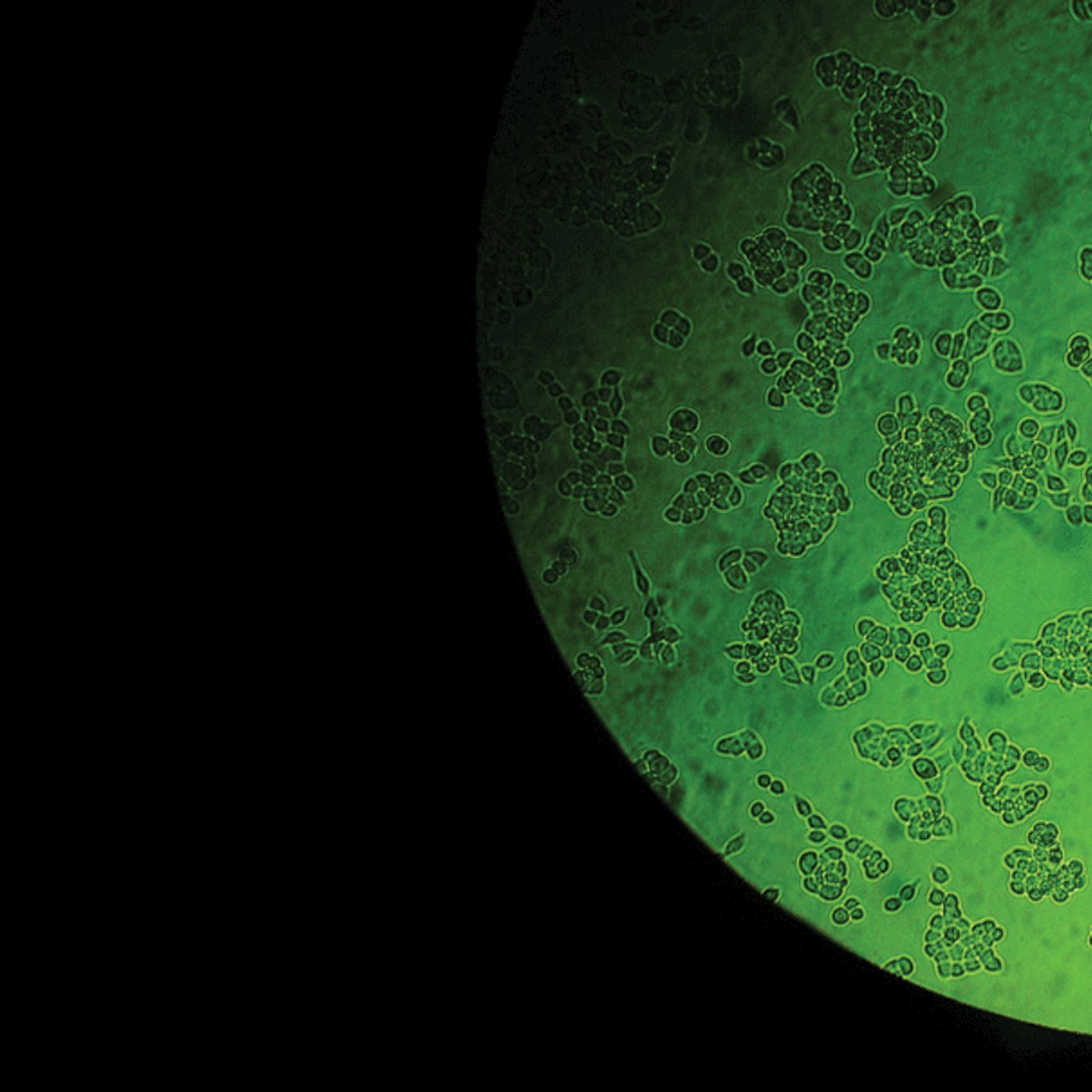
Radiolab
UPDATE: Famous Tumors
01:07:25
When we first released Famous Tumors, Rebecca Skloot's book about the life and legacy of Henrietta Lacks (and her famous cells) had just hit the shelves. Since then, some interesting things have happened to both Henrietta's cells and her family. So, 4 years later, we have a newly updated show!
Loading summary
Transcript634 lines
- [00:02]
Jad Abumrad
At Lowes before the holidays is the perfect time for upgrades and upkeep. During Black Friday, get up to 50%.
- [00:08]
Dr. Oren Davinsky
Off, select major appliances and buy more.
- [00:11]
Jad Abumrad
To save more with up to an additional 25% off when you bundle, select major appliances plus grab select Dewalt 20 volt max drill or impact driver kits for just $99. Lowes we help you save valid through 12. 3. Selection varies by location while supplies last. See Lowes.com for more details. Hey everybody, real quick. So this coming up is a rebroadcast, but if you stick around all the way through after the third segment, we have an update on the HELA story, one of our favorite stories that is pretty freaking fascinating. So definitely stick around for that. Wait, you're listening. Okay.
- [00:48]
Adrienne Noe
All right.
- [00:49]
Jad Abumrad
Okay. All right. You're listening to Radiolab Radio Lab from WNY.
- [00:59]
Adrienne Noe
And npr.
- [01:02]
Robert Krulwich
Hey.
- [01:02]
Adrienne Noe
Hi.
- [01:03]
Robert Krulwich
How are you?
- [01:04]
Adrienne Noe
I'm fine. How are you?
- [01:05]
Robert Krulwich
Robert, Nice to speak to you after all these years.
- [01:08]
Adrienne Noe
Yes, it's been quite a few years.
- [01:10]
Robert Krulwich
I should let you know that Jad Albumnot has just wandered in.
- [01:14]
Jad Abumrad
Hello.
- [01:14]
Adrienne Noe
Hi.
- [01:15]
Robert Krulwich
And Jad, this is Adrienne Noe, last.
- [01:17]
Adrienne Noe
Name is N O E, and I'm director of the National Museum of Health and Medicine.
- [01:22]
Robert Krulwich
So you know why we're calling you, right?
- [01:24]
Adrienne Noe
Yes.
- [01:25]
Robert Krulwich
Okay, so let's just spring it on the audience. I don't remember how I happened to bump into you. I don't even know how this came up.
- [01:32]
Adrienne Noe
I think you and I had been co presenters at a TED conference. Maybe that's what it was probably a decade ago. We may have been talking about important events in New York or civic architecture, but I do remember perking up at the phrase Grant's Tomb.
- [01:51]
Jad Abumrad
Grant's tomb. So Robert said something to you about Grant's tomb?
- [01:54]
Adrienne Noe
Yes.
- [01:55]
Robert Krulwich
And then you turn to me and say it again.
- [01:57]
Adrienne Noe
Well, you may know who's buried in Grant's tomb, but I know what's buried in Grant's tumor.
- [02:04]
Jad Abumrad
Tumor. Grant's tumor.
- [02:05]
Adrienne Noe
Yeah.
- [02:06]
Robert Krulwich
You see, it turns out that at the museum she works at, there is.
- [02:10]
Adrienne Noe
A tumor that had been excised from the throat of President grant in the 1880s.
- [02:16]
Jad Abumrad
Actual tissue from Grant's tumor.
- [02:20]
Adrienne Noe
Yes, that's right.
- [02:23]
Jad Abumrad
Yes. Here we are.
- [02:24]
Robert Krulwich
We're outside the National Museum of Health and Medicine.
- [02:27]
Jad Abumrad
Eh, Goi filmy.
- [02:29]
Adrienne Noe
It is kept behind several locked doors.
- [02:32]
Mark Salzman
So you guys don't have an inkling.
- [02:33]
Adrienne Noe
Of what you're about to see if.
- [02:35]
Jad Abumrad
We go in there?
- [02:35]
Adrienne Noe
No, but it's a privileged area.
- [02:38]
Jad Abumrad
This is Brian Spatola. He's the collections manager. And he led us down a long.
- [02:41]
Robert Krulwich
Hallway, through some doors into a back room.
- [02:46]
Jad Abumrad
Holy moly. Oh, my God. There's like they're twin babies in formaldehyde.
- [02:51]
Adrienne Noe
Look.
- [02:52]
Robert Krulwich
Brains, heads, torsos, and majority. We haven't even gotten to the tumors.
- [02:57]
Jad Abumrad
So he led us out of that room and into another one, and they.
- [03:00]
Robert Krulwich
Are sitting on a table and waiting for us.
- [03:02]
Jad Abumrad
Is this the thing about which we spoke? It is. Was President Ulysses Simpson Grant's tumor.
- [03:10]
Robert Krulwich
Oh, wow. It was resting in a box that looked, it happens, exactly like a cigar box.
- [03:16]
Adrienne Noe
Uh oh.
- [03:18]
Jad Abumrad
Which is a little ironic.
- [03:19]
Robert Krulwich
This was a guy who never, ever stopped having a cigar in his mouth.
- [03:22]
Adrienne Noe
He never stopped having cigars.
- [03:25]
Rebecca Skloot
He smoked as many as 12 cigars a day.
- [03:28]
Jad Abumrad
Wow.
- [03:30]
Robert Krulwich
So it was probably the cigars that made the tumor.
- [03:33]
Adrienne Noe
February of 1885, tissue was removed, examined, and his physicians concluded that he had a squamous cell carcinoma. And ultimately he was treated for pain and died in July of 1885, that same year.
- [03:53]
Jad Abumrad
Wow. That's pretty fast.
- [03:55]
Robert Krulwich
So that's what killed President Grant, then?
- [03:57]
Adrienne Noe
It was a tumor? Yes.
- [03:58]
Robert Krulwich
I didn't know that.
- [04:00]
Adrienne Noe
So you see the staining that they used to bring out the details in.
- [04:04]
Robert Krulwich
The cells is the darkness the tumor?
- [04:07]
Jad Abumrad
The darkness is the tumor. Wow.
- [04:09]
Robert Krulwich
The very stuff that even though President Grant got through Vicksburg and even though he came east and they tried to kill him here, they tried to kill him there, they tried to kill him, then he goes and becomes president. This is what actually killed him.
- [04:22]
Adrienne Noe
This is what killed him.
- [04:24]
Robert Krulwich
Can I touch it?
- [04:27]
Jad Abumrad
No.
- [04:29]
Robert Krulwich
We may not be able to touch the actual tumor of the President of the United States, but we can touch on this subject. We can grasp this subject, we can examine this subject. Coming up on Radiolab for the next hour. It's totally tumors.
- [04:43]
Jad Abumrad
Oh, come on, don't call it that. Cause really what we're gonna talk about are not just any tumors, but famous.
- [04:47]
Robert Krulwich
Tumors, immortal tumors, devil tumors, contagious tumors.
- [04:50]
Jad Abumrad
And tumors that speak in the voice of God.
- [04:55]
Robert Krulwich
I'm Robert Krulwich. I'm not to be confused with the big ones.
- [04:59]
Jad Abumrad
And I'm Jad Abumrad, and this is Radiolab. Stay with us. All right. To get things. To get things rolling. This first story is about something that we thought was not possible, that we hoped was not possible.
- [05:22]
Robert Krulwich
We learned it from.
- [05:24]
David Quammen
I'll make it work from this guy, David Quammen. I'm a science journalist.
- [05:29]
Robert Krulwich
He is, I think, my favorite in my generation. I think he is the best writer that writes about science.
- [05:34]
David Quammen
I specialize in evolutionary biology and travel on assignment to faraway places and interesting situations.
- [05:41]
Robert Krulwich
So first of all, where are you going to take us to? What part of the world?
- [05:44]
David Quammen
I'm going to take you to Tasmania, which is the island state off the south coast of Australia. You know, you go to Australia and you think of rock and deserts and red dirt and heat, but you keep going south, all the way off the south coast. Suddenly you have these rolling green countrysides, lots of wallabies, One of the species of kangaroo that are abundant like England.
- [06:09]
Robert Krulwich
Countryside with wallabies. Is that the.
- [06:11]
David Quammen
Exactly. With small kangaroos hopping around.
- [06:15]
Robert Krulwich
But our story does not actually begin in Tasmania.
- [06:19]
Jad Abumrad
Nope. It starts in Holland with a gentleman.
- [06:22]
Robert Krulwich
By the name of Christo Barsch.
- [06:25]
Jad Abumrad
Is that bar as in B A, A R bars with an S?
- [06:29]
David Quammen
Christo Bars is a wonderfully independent, spirited plumber.
- [06:34]
Jad Abumrad
A plumber?
- [06:35]
Adrienne Noe
Yes, Plumbing. I do to make a living and photographing is for me a big hobby.
- [06:40]
Robert Krulwich
We don't know just how great a plumber he is, but he's a very good wildlife photographer and he looks for interesting animals to shoot with the camera, I mean. So over the years, very often he puts down his wrench and he travels.
- [06:51]
Adrienne Noe
Yeah, well, we don't have that many animals here in Holland. A little bit of roe deer and sometimes a fox.
- [06:58]
Robert Krulwich
And in the early 90s, he goes.
- [07:00]
David Quammen
To take his latest photography sabbatical in Tasmania.
- [07:04]
Adrienne Noe
I went to Tasmania on boat.
- [07:06]
Jad Abumrad
Were you there to take pictures of wallabies or kangaroos?
- [07:10]
Adrienne Noe
No, no, no, no.
- [07:11]
David Quammen
He was there this time to photograph devils. Tasmanian devils, Yeah.
- [07:15]
Adrienne Noe
I quite like the animals.
- [07:17]
Jad Abumrad
What does. I mean, I know the cartoon, but what does a real Tasmanian devil actually look like?
- [07:21]
Adrienne Noe
Well, they're about as big as a little pit bull, but look a little.
- [07:24]
David Quammen
Bit more like white yoke on its chest. Big set of formidable teeth. They'll eat almost anything.
- [07:31]
Adrienne Noe
Anything? Anything they can find.
- [07:33]
David Quammen
Platypus, kelp, maggots and fish, snakes, garbage cans, the occasional rubber boot, you name it.
- [07:40]
Robert Krulwich
Anyway, when Christo gets to Tasmania, he drives up the coast. He finds dead animals on the road. You know, roadkill or roadkill from the road to use as bait.
- [07:48]
Jad Abumrad
What sort of roadkill?
- [07:49]
Adrienne Noe
Kangaroos.
- [07:50]
Jad Abumrad
A little devil can eat a kangaroo?
- [07:52]
Adrienne Noe
Oh, yeah. When there are three, four, five together, they eat a big kangaroo. In an hour, it's gone.
- [07:57]
Jad Abumrad
Wow.
- [07:57]
Robert Krulwich
So he takes the dead kangaroo, drags it to a clearing in the forest, sets up his photography equipment very close, and then what happens?
- [08:04]
Adrienne Noe
Well, you just wait.
- [08:08]
Robert Krulwich
So he waits, and as the night Falls. Little black shapes begin to creep out of the woods.
- [08:19]
Adrienne Noe
You can hear them sniffing. And they'll find the roadkill. And then they just start eating and fighting with each other. It's quite scary if you don't know what you're eating.
- [08:44]
Robert Krulwich
As they eat, Krisno, standing at a safe distance in the shadows, takes their pictures. Over the years, he's done this over and over and over. And he always sees lots of devils.
- [09:07]
David Quammen
Devils in front of his lenses, sometimes 20 devils running around, devils in his kitchen.
- [09:11]
Adrienne Noe
They'll come into your tent.
- [09:12]
David Quammen
Devils everywhere.
- [09:13]
Robert Krulwich
But after a bunch of trips, something happened. It was Easter 1996. He was in the park watching a dead kangaroo and waiting for the devils to show.
- [09:24]
Adrienne Noe
But only thing I saw was one devil.
- [09:27]
Jad Abumrad
Just one?
- [09:28]
Adrienne Noe
Yeah. So I thought, I'll try another spot at another spot. Tried it there. Two devils.
- [09:35]
David Quammen
They're not gone entirely, but they're scarce. And he notices something strange about one or two of the devils. There was something on the faces.
- [09:45]
Adrienne Noe
Face and on their back and on their mouth.
- [09:49]
David Quammen
And something that looked like a growth, a large, ugly growth.
- [09:55]
Adrienne Noe
Thought, oh, well, maybe they've been bitten or fighting with each other. A bit swollen up, but it was really big, you know, and blood coming out.
- [10:03]
David Quammen
And this was the first alarm bell.
- [10:07]
Jad Abumrad
So, Christo, you were the first to see it.
- [10:09]
Robert Krulwich
Yes, and this was just the beginning.
- [10:15]
Adrienne Noe
Like a plague out of hell, a dark death is sweeping Tasmania.
- [10:20]
Robert Krulwich
Television reporters got the story and began reporting that more and more Tasmanian devils had these lumps on their faces.
- [10:28]
David Quammen
They fill the eye sockets, they puff out the lips, they infect the gums. It's really sad and hideous.
- [10:33]
Robert Krulwich
And whatever they were, they turned out to be lethal.
- [10:36]
David Quammen
To jump ahead a little bit, the effect that had on the population, in.
- [10:39]
Robert Krulwich
Some cases, devil populations collapsed by 90%, died off very quickly. Scientists looked at the disease and determined that it was some kind of tumor. Cancer?
- [10:48]
David Quammen
A cancerous tumor.
- [10:50]
Robert Krulwich
And then the question was, what's causing them?
- [10:53]
Jad Abumrad
So what did they think?
- [10:54]
David Quammen
Well, the toxic chemical was guess number.
- [10:57]
Robert Krulwich
One, some poison or pesticide from the environment.
- [11:00]
David Quammen
Guess number two was a virus.
- [11:02]
Robert Krulwich
So they tested in places where the devils live, looking for something toxic or some virus, and they found nothing.
- [11:09]
David Quammen
And then along comes a woman named Ann Marie Pierce. She looked at some tumors close up, very close up from 11 different devils.
- [11:20]
Robert Krulwich
So she's looking at the first tumor.
- [11:22]
David Quammen
And she found that the chromosomes were.
- [11:25]
Jad Abumrad
Sort of mangled, which isn't really that strange because that's what cancer is. It's like your genetic stuff gone screwy.
- [11:31]
David Quammen
Right.
- [11:32]
Robert Krulwich
But then she looked at the tumor.
- [11:33]
David Quammen
From the next devil, and she found not just also mangled chromosomes, but chromosomes that were mangled in exactly the same way as they had been in the first devils.
- [11:42]
Robert Krulwich
So now she looks at a third identical and then a fourth identical, and then a fifth identical. All 11.
- [11:48]
David Quammen
Exactly the same pattern in each.
- [11:52]
Jad Abumrad
Does that. I. I feel the sensation of awe, but I don't quite have these understanding attached. Does that mean that these tumors are all brothers?
- [12:03]
David Quammen
What that meant was that these tumors were all genetically identical.
- [12:08]
Jad Abumrad
What?
- [12:09]
David Quammen
They were all the same tumor.
- [12:11]
Jad Abumrad
How can they all be the same tumor?
- [12:12]
Robert Krulwich
Well, they can't, because that would mean that these Tasmanian devils caught the cancer from some other Tasmanian devil.
- [12:20]
David Quammen
Exactly.
- [12:21]
Jad Abumrad
Wait, what do you mean exactly? You can't catch cancer.
- [12:23]
David Quammen
This epidemic of cancer in Tasmanian devils was a crazy, impossible tumor that was jumping. It was leaping from one devil to another.
- [12:40]
Jad Abumrad
A leaping tumor.
- [12:42]
David Quammen
Yeah, a leaping tumor.
- [12:45]
Jad Abumrad
And this is the point in this tale where we really have to question everything that we thought we knew about cancer. Now, most people think of cancer as.
- [12:56]
David Quammen
Like a situation in which one of your cells starts replicating and doesn't stop. It replicates uncontrollably until it destroys you.
- [13:16]
Jad Abumrad
Okay, so that's like the one cell theory, which is, frankly, how I thought cancer worked.
- [13:20]
Adrienne Noe
Oh, Peter, we have to go ahead to start.
- [13:22]
Jad Abumrad
But then we spoke with this fellow. Yep, his name's Carlo Mali, cancer biologist.
- [13:26]
Adrienne Noe
At the Wistar Institute.
- [13:27]
Jad Abumrad
And he told us, if you really want to understand what's happening with the devils, you got to toss out the one cell cell theory. Because cancer is not just.
- [13:32]
Adrienne Noe
It's not just a cell going haywire.
- [13:34]
Jad Abumrad
No, it's actually many cells competing, competing.
- [13:38]
Adrienne Noe
For space, competing for resources, and in.
- [13:40]
Jad Abumrad
The process, driving each other haywire. Like, if you were to somehow go into a tumor, he says, what you would find is between a billion and.
- [13:49]
Adrienne Noe
A trillion cells in there.
- [13:52]
Jad Abumrad
These are different cells, this huge clump of cells, and they're, they're all fighting it out because, you know, space is tight, food is scarce. And what'll happen is, in the middle of this melee, you know, as the cells are competing, each individual cell is trying to copy itself. Copy, copy, copy. And somewhere along the way, you get eventually a copying error. And every so often, says Carla, one of these mistakes will give the new cell a new talent. In the case of cancer, it usually starts with something pretty simple, like the ability to slurp up food faster, nutrients.
- [14:32]
Adrienne Noe
Like oxygen and glucose.
- [14:34]
Jad Abumrad
And now with this advantage, that mutant.
- [14:36]
Adrienne Noe
And all of its progeny will take over that area of the tissue.
- [14:41]
Jad Abumrad
But not for long, because now you got all these mutants, and they start to flex until random. Finally, again, you get another copying mistake. And maybe this second copying mistake gives the cell the ability to divide faster. Right? So there it is, proliferating faster than its neighbors, and it takes over, growing and displacing the other cells. But, yeah, it just keeps getting worse, because now you've got these double mutants. They can eat fast, they can divide quickly, and they start to fight until you get a third mutation, then a.
- [15:15]
Adrienne Noe
Force, and you just keep ratcheting it up. And eventually, roughly five to 20 mutations.
- [15:20]
Jad Abumrad
You end up with a cell that is so gnarled, so mutated, and so powerful that it can literally spit a kind of acid.
- [15:32]
Mark Salzman
Called a matrix metalloprotease.
- [15:34]
Adrienne Noe
That allows it to rip through the membrane barriers.
- [15:38]
Jad Abumrad
And this is when you're really in trouble, because now the cell can roam.
- [15:44]
Adrienne Noe
And so the cells leave the primary tumor. They've got to dissolve their way into a blood vessel.
- [15:51]
Jad Abumrad
That's a mutation.
- [15:52]
Adrienne Noe
Then they've got to survive in the blood.
- [15:54]
Jad Abumrad
Another mutation, Then they've got to stick somewhere else. Yet another.
- [15:58]
Adrienne Noe
Then they've got to dissolve back through the arteriola lining.
- [16:00]
Jad Abumrad
And another. Yeah. So it sounds like cancer is always evolving to be more cancerous. It totally is.
- [16:08]
Mark Salzman
This also explains why we haven't been.
- [16:10]
Jad Abumrad
Able to cure it. Why when a person takes chemotherapy drugs, the cancer will go away for a while, but then it'll come back stronger because the cells have evolved a resistance to those drugs.
- [16:24]
Adrienne Noe
When I first got into work on.
- [16:26]
Jad Abumrad
Cancer, I was impressed at how malevolent.
- [16:28]
Adrienne Noe
The disease seems, as if it's being designed to kill us.
- [16:32]
Jad Abumrad
So here's my question. This leaping tumor in the devils.
- [16:37]
Adrienne Noe
Mm.
- [16:38]
Jad Abumrad
Is this a case where the tumor is actually evolving into a new form, like after, say, the 50th mutation or whatever? Like now, it doesn't just have the ability to travel in a body, but it can somehow leap out of a body, through the air and into another body.
- [16:54]
Adrienne Noe
Sure.
- [16:56]
Jad Abumrad
I mean, but, I mean, that's really scary.
- [16:59]
Adrienne Noe
Yes, it is pretty scary.
- [17:02]
Jad Abumrad
But this is amazingly rare and according to Carlo, demands some pretty special circumstances.
- [17:08]
Robert Krulwich
How would, in a Tasmanian devil would some tumor get from one individual to another? How would that happen?
- [17:16]
David Quammen
Tasmanian devils, God bless them, bite one another in the face a lot. They're scrambling over carcasses. They're fighting and biting and swallowing and crunching. And the males also bite females during the mating period. He's a little bit of a rough lover. So you have the male and the female biting each other in the face.
- [17:43]
Jad Abumrad
So a devil with a tumor on its face, let's say it's mating with another devil and it bites that second devil in the face. What exactly happens at that point? Is it just rubbing its tumor against.
- [17:55]
David Quammen
When you think of these big, ugly tumors, think of feta cheese. And when one devil bites another, there's a tendency for the tumor to crumble and to shed tumor cells that then fall into the wounds on the second devil.
- [18:13]
Robert Krulwich
But there's something here I don't understand. Why wouldn't the immune system of the.
- [18:18]
David Quammen
Devils kill those cells, prevent those cells from taking root?
- [18:21]
Jad Abumrad
Yeah, because that's what immune systems do.
- [18:23]
David Quammen
And the latest answer is that, well, Tasmanian devils don't have as much genetic diversity as you would expect.
- [18:31]
Robert Krulwich
What that means, David explained to us, is that the Tasmanian devil population has gotten so inbred, they're so alike at a genetic level that their immune systems are now confused. They don't know the difference between their own cells and invading cells coming in from other devils.
- [18:46]
David Quammen
Exactly.
- [18:47]
Jad Abumrad
Which doesn't actually sound like the tumor is all that powerful. So I asked Carlo, is this really the story of a tumor evolving, more adaptive, or is it just the story of a tumor getting lucky?
- [18:59]
Adrienne Noe
I think those are the same story.
- [19:01]
Jad Abumrad
How do you mean? I mean, evolution is all about dumb luck. The way he explained it, it's dumb luck that the tumor was on the outside of the face. It's dumb luck that they bite each other a lot, that a cell could come along that could shed and fall into a wound. It's all dumb luck. But that, he says, is what makes evolution happen. That's natural selection right there.
- [19:24]
Robert Krulwich
And when you step back, sometimes the results are just.
- [19:30]
Jad Abumrad
Nuts. Yeah, just nuts.
- [19:32]
David Quammen
And this is the point where we need to talk about a transmissible tumor in dogs. Canine transmissible venereal tumor.
- [19:40]
Jad Abumrad
This is a tumor, he says, that's evolved way beyond the one in the devils and way longer.
- [19:45]
Robert Krulwich
How long has that been going on?
- [19:47]
David Quammen
Well, it's been going on for somewhere between 220500 years.
- [19:53]
Jad Abumrad
Whoa, whoa. Between 220500 years?
- [19:58]
David Quammen
Yeah.
- [19:59]
Jad Abumrad
Yes, over two millennia.
- [20:02]
David Quammen
Exactly. And if that's the case, then it's the oldest continuous animal cell line in existence on planet Earth.
- [20:10]
Jad Abumrad
You might need to say that again.
- [20:13]
Robert Krulwich
Okay.
- [20:15]
Jad Abumrad
Because that is just too strange.
- [20:16]
David Quammen
It is.
- [20:17]
Jad Abumrad
It is even stranger, says David Quammen. When a tumor lives this long, propagates itself for this long, you can only really call it one thing.
- [20:25]
David Quammen
This tumor is essentially an animal, a parasite, not a species of parasite, but one individual parasite that may never D.
- [20:53]
Robert Krulwich
David Quammen is the author of Song of the Dodo and Natural Acts.
- [20:57]
David Quammen
This is David Quammen calling from Tropical Bozeman. Radiolab is funded in part by the.
- [21:03]
Adrienne Noe
Alfred P. Sloan foundation and the National Science Foundation.
- [21:06]
Rebecca Skloot
Radiolab is produced by WNYC and distributed by npr.
- [21:11]
Adrienne Noe
End of message. This is Laura Docter from Manitowoc, Wisconsin. Radiolab is supported by Squarespace, the all.
- [21:22]
Rebecca Skloot
In one platform dedicated to providing a.
- [21:24]
Adrienne Noe
Simple way to create a website, portfolio or online store for business or personal use. Squarespace provides templates and drag and drop tools to create professional websites. Users create sites that are mobile ready, including 24, 7 support domain names and e commerce, all on the same platform. For free trial, visit squarespace.com Radiolab hello, my name is Kate and I am calling from Seattle, Washington. Radiolab is supported by Audible.com, a provider of digital audiobooks and more, with more than 150,000 downloadable titles across all types of literature, including fiction, nonfiction and periodicals. Audible selection includes Physics of the How Science Will Shape Human Destiny and Our Daily Lives by the year 2100 by Michio Kaku. To learn more about Audible and get a free audiobook of your choice, go to audiblepodcast.com Radiolab.
- [22:28]
Jad Abumrad
Hey, this is Radiolab. I'm Jad Abumrad.
- [22:30]
Robert Krulwich
I'm Robert Krulwich. The topic is totally tumor, of course.
- [22:33]
Jad Abumrad
That's my line, by the way. Oh no, no. So yeah, we've been talking about tumors this hour. Famous tumors. And thus far they've been really bad.
- [22:41]
Robert Krulwich
Terrible tumors.
- [22:42]
Jad Abumrad
Really bad.
- [22:42]
Robert Krulwich
Scary, horrible tumors. But because we are fair minded about everything, even tumors, let us consider the possibility that sometimes tumors can be rich, beautiful and desirable. For example, George Malley is an ordinary man who is about to become extraordinary.
- [23:02]
Jad Abumrad
Name as many mammals as you can in 60 seconds. How about alphabetical?
- [23:06]
Adrienne Noe
Aardvark, baboon, caribou, dolphin, Eohipdis. What is going on?
- [23:10]
Jad Abumrad
George? In this 1996 movie, John Travolta plays a guy who gets a brain tumor and the tumor makes him into a genius.
- [23:19]
Adrienne Noe
You learned the Portuguese language in 20 minutes. Not all of it.
- [23:23]
David Quammen
Phenomenon.
- [23:25]
Robert Krulwich
He didn't learn the accent though.
- [23:29]
Jad Abumrad
Tumor doesn't give accents. But.
- [23:32]
Robert Krulwich
But it does raise a real question, which is like, is it possible for a tumor to create something good? Yeah.
- [23:40]
Adrienne Noe
Jed. Nice to meet you.
- [23:40]
Jad Abumrad
Nice to meet you. So we paid a visit to a guy, a doctor, named Oren Davinsky.
- [23:44]
Dr. Oren Davinsky
I'm a neurologist at NYU Langone School of Medicine.
- [23:48]
Robert Krulwich
And Dr. Davinski has had a lifelong interest in the beneficial effects of certain kinds of brain conditions.
- [23:53]
Dr. Oren Davinsky
Right. I'll just tell you, I think one of the most fascinating cases in neurology.
- [23:58]
Jad Abumrad
Very quickly, and this one we were not prepared for.
- [24:01]
Dr. Oren Davinsky
A gentleman was described who, ever since he was a child, would look at safety pins and have an orgasm.
- [24:09]
Robert Krulwich
At safety pins?
- [24:10]
Dr. Oren Davinsky
At safety pins. The more shiny and the more numerous the safety pin, the stronger the sexual experience.
- [24:16]
Robert Krulwich
And this happened from his pubescent period. He just. Safety pins turned him on. Right.
- [24:19]
Dr. Oren Davinsky
At the time he made this association, when he looked at a safety pin, he had an orgasm.
- [24:24]
Robert Krulwich
He got to have been embarrassed by this. This is worse than being so.
- [24:27]
Adrienne Noe
Yeah.
- [24:28]
Dr. Oren Davinsky
So he would go into private. He realized this is not something most people do. He never talked about it, and he did it in private. And then he got married. After the war, he was honorably discharged and got married and then started having less sex with his wife because the safety pin was. Safety pins were much more enjoyable. Sometimes he just had to think about a safety pin, not even hold it up.
- [24:49]
Robert Krulwich
So are we seriously making the case that this guy is getting a benefit from his pin obsession?
- [24:54]
Jad Abumrad
But I think actually you could say that the experiences that this guy was having with those safety pins gave him a kind of pleasure that maybe is unavailable to the rest of us from.
- [25:03]
Robert Krulwich
An odd, odd source.
- [25:05]
Jad Abumrad
But, you know, pleasure is pleasure until, says Davinsky, this fellow began to have seizures.
- [25:11]
Dr. Oren Davinsky
He got admitted to a psychiatric hospital in London, the Maudsley, one of the big psychiatric units. They actually got an eeg. And to make a long story short, there was a benign tumor right in.
- [25:21]
Robert Krulwich
The part that's called the temporal lobe, sort of in the middle of your head, right behind your eyes.
- [25:25]
Dr. Oren Davinsky
But they took it out.
- [25:27]
Robert Krulwich
They took it out.
- [25:28]
Dr. Oren Davinsky
They took it out and they cured him of his wonderful experience. So he never was able to. He could look at safety pins all day long, but he would never again enjoy them the way he had for his whole life.
- [25:43]
Jad Abumrad
How did he feel about that?
- [25:45]
Dr. Oren Davinsky
I think it was a mixed blessing, as you would imagine.
- [25:54]
Robert Krulwich
And this idea that from a tumor you can get something not so good, but also something good. This is an idea that has. Well, there's been a novel written on this theme.
- [26:04]
Mark Salzman
The title of the book is Lying.
- [26:06]
Robert Krulwich
Awake by a friend of mine.
- [26:07]
Mark Salzman
My name is Mark Salzman.
- [26:09]
Robert Krulwich
Mark is a writer who lives out in California. And he thought, I'm going to imagine a nun.
- [26:15]
Mark Salzman
Our main character is Sister John of the Cross.
- [26:18]
Robert Krulwich
This is a woman who had joined a nunnery because she felt just lonely for a relationship with God.
- [26:25]
Mark Salzman
Yes. It's just not enough for her to tell herself, yes, God is there. What she longs for is a tangible sense of God's presence, a sense that she can really feel, feel God's presence in her life. And she begins having what she thinks are migraine headaches. The regular doctor that the sisters see tells her that she seems to be having migraine headaches. They're coming more and more frequently. And there comes a point when one of these headaches changes dramatically. And then everything is different.
- [27:00]
Robert Krulwich
Everything is different. What's different? What happens?
- [27:03]
Mark Salzman
Shall I read?
- [27:04]
Robert Krulwich
Yeah, go ahead.
- [27:05]
Mark Salzman
You kind of have to imagine this scene taking place in an environment of profound silence. She's in the cloister. She and one other sister, they're working on a sewing project. They're sewing an altar cloth. One of the pins slipped out of her hand, ringing like a miniature triangle as it bounced off the floor. She looked down to the floor and saw that it looked impossibly distant. When she reached down for the pin, her hand looked strangest of all, as if it belonged to someone else. The silence in the room came alive like the words left out of a poem. Something buried so deep inside her that she'd forgotten it was there, rose to the surface. Sister, are you not feeling well? God was present in Sister Anne's voice. He was present in her face. Nothing was changed, yet everything was changed. God is here, she answered. You were here all along.
- [28:17]
Robert Krulwich
Well, this is a field goal, isn't it, for someone who is seeking a spiritual connection? She has one.
- [28:25]
Mark Salzman
That's right. This is the moment she's been waiting for all her life.
- [28:29]
Robert Krulwich
But there is a problem, because when these feelings come.
- [28:32]
Jad Abumrad
I'm sorry, she has a tumor. Let's just get the non surprise out of the way.
- [28:37]
Robert Krulwich
The show is called Totally Tumor. She has, like, a cough.
- [28:40]
Jad Abumrad
First of all, it's famous tumors, okay?
- [28:42]
Mark Salzman
Yes, she has a meningioma, a benign tumor, small, about the size of a raisin, in the temporal lobe area of.
- [28:49]
Robert Krulwich
Her brain, right in the same spot where the safety pin fellow had his tumor.
- [28:52]
Mark Salzman
So the problem for her is, should I have the tumor removed, give up the most satisfying and fulfilling experience of my whole life, or should I sacrifice my health in order to share with others the experiences that I'm having?
- [29:10]
Jad Abumrad
So we thought, well, Oren Davinsky, the doctor we spoke with first, I think.
- [29:14]
Dr. Oren Davinsky
Every case is unique and individual.
- [29:16]
Jad Abumrad
He does see patients like this.
- [29:17]
Robert Krulwich
This is what he does for a little.
- [29:18]
Jad Abumrad
So we took the case to him.
- [29:20]
Robert Krulwich
Now, here's the question. If a person comes and says, I'm having what I want, and you are suspicious that what she also is having is a disease, what do you do about the patient?
- [29:35]
Dr. Oren Davinsky
If I knew for sure that the tumor, let's say, was benign and would never grow and the only thing that person experienced was this religious feeling that they found extremely enjoyable, I would say let's do nothing but do serial scans to make sure nothing grows and that you're safe.
- [29:51]
Robert Krulwich
But in the book, as it happens, the nun got a little worse. She had a few more headaches, more severe, and they took the tumor out.
- [29:59]
Mark Salzman
The seizure activity stops. These experiences stop coming. And she does feel afterwards a sense of.
- [30:10]
Jad Abumrad
Of blah.
- [30:14]
Mark Salzman
She feels as if she sort of tumbled out of a Himalayan mountain into a muddy village. This is common, apparently, in patients after they've been treated.
- [30:25]
Robert Krulwich
Right. So my last question then is really about the. Seems to me the deepest question of all in this case is that if someone has a very important and meaningful experience and you have a sense it may be a abnormality, a physical abnormality that is triggering that, do you regard them as delusional? Like, there's just the possibility here that maybe these people are having an actual conversation.
- [30:55]
Dr. Oren Davinsky
So, yeah.
- [30:55]
Robert Krulwich
There's no question or you not even consider that?
- [30:58]
Adrienne Noe
No.
- [30:58]
Dr. Oren Davinsky
I mean, so science. I think the question you ask and I think you're getting at is, could it truly be that this is God's avenue to speak to us? And people in the late 1800s thought it was through the right hemisphere, and that's often where these cases occur, in the right hemisphere. So it may be that. That's right. It's the more emotional hemisphere. And when things are in a perturbed state, you may be more receptive to experiencing spiritual things. And I think there probably is some physiologic basis that allows you to tune into a broader world, and maybe some states of neurologic dysfunction allow you to harmonize or tune in or receive those messages, so to speak.
- [31:40]
Robert Krulwich
In which case then your tumor or your epilepsy would be the.
- [31:45]
Dr. Oren Davinsky
The window or the conduit.
- [31:46]
Jad Abumrad
Right. I do feel like I need to place an asterisk right here, like we are talking about a tumor in the end.
- [31:52]
Robert Krulwich
Well, but understand that every feeling, every thought you have comes from cells in your brain. If any of those cells can produce a glorious experience, then the experience stands on its own. And sometimes, in very well documented cases, these are extraordinarily profound, desirable things.
- [32:14]
Dr. Oren Davinsky
They're often hard to put into words.
- [32:16]
Robert Krulwich
Have you tried, I mean, when you.
- [32:18]
Dr. Oren Davinsky
Yeah. I mean, people, you know, Dostoevsky's probably the most articulate person with epilepsy who's had a religious experience and who wrote down what he experienced. I don't have the quote in front of me, but it's, you know, this felicity, this, this feeling I get.
- [32:34]
Robert Krulwich
For several moments, he was quoted to say, I would experience such joy as would be inconceivable in ordinary life. I would feel the most complete harmony in myself and in the whole world. And this feeling was so strong and sweet that for a few seconds of such bliss, I would give 10 or more years of my life, even my whole life, perhaps.
- [33:09]
Adrienne Noe
This is Oren Davinski.
- [33:10]
Dr. Oren Davinsky
Support for NPR comes from NPR stations and the Wallace Foundation, a source of ideas for expanding learning opportunities beyond the school day.
- [33:19]
Robert Krulwich
At wallacefoundation.org the Ford Foundation, a resource.
- [33:22]
Mark Salzman
For innovative people and institutions worldwide.
- [33:25]
Adrienne Noe
On the web@fordfoundation.org and Kauffman, the foundation.
- [33:30]
Rebecca Skloot
Of entrepreneurship committed to growing economies and expanding human welfare.
- [33:34]
Adrienne Noe
On the web@kauffman.org this is nice. Hi, Radiolab. This is Kate from Toronto. Radiolab is supported by Warby Parker. Featuring the Home Try on program. Customers pick five pairs of glasses to try on from the Warby Parker collection with no shipping charges and no obligation to purchase and buy a pair. Give a pair for every pair of glasses purchased. A pair is provided to someone in need. More@warbyparker.com Radiolab and use promo code Radiolab during final checkout. Hi, this is Ann Marie Woodward from Arroyo Grande, California, and I'm recording this while my boys take a nap. Radiolab is supported by 23andMe. 23andMe provides a personal DNA kit so individuals can better understand how their genes impact health, which helps individuals and their doctors find health areas to keep an eye on. And 23andMe also gives ancestral information and helps discover personal global origins or perhaps find living relatives. The personal DNA kit designed to give individuals more control over their personal health. Available at 23andme.com Radiolab.
- [34:54]
Jad Abumrad
Hey, I'm Jada Bumrad.
- [34:56]
Robert Krulwich
I'm Robert Krulwich.
- [34:57]
Jad Abumrad
This is Radiolab. And our topic today is Totally tumors. Yeah, yeah, totally. Well, you call it what you want. Doesn't matter. Doesn't matter because the topic is tumors. Famous tumors. And our next and final tumor related tale is one I've been.
- [35:11]
Robert Krulwich
I've been wanting to do this particular tumor story for forever. Forever, like two years Ago, I think.
- [35:17]
Jad Abumrad
Oh, longer than that.
- [35:18]
Robert Krulwich
Yeah.
- [35:18]
Jad Abumrad
It's a story that comes from a friend of mine, Rebecca Skloot.
- [35:21]
Rebecca Skloot
You want me to talk? Make noise.
- [35:22]
Jad Abumrad
That's her.
- [35:22]
Rebecca Skloot
We can move me closer, probably.
- [35:23]
Jad Abumrad
She's a journalist.
- [35:24]
Rebecca Skloot
Is that better?
- [35:25]
Jad Abumrad
And she has been wanting to tell.
- [35:26]
Robert Krulwich
The story even longer.
- [35:28]
Jad Abumrad
Since she was in the womb. Yeah, I mean, she's been researching this story for 10 years.
- [35:31]
Adrienne Noe
Hello. Hello.
- [35:32]
Jad Abumrad
And she just wrote a book called the Immortal Life of Henrietta Lacks. Now, the story is about a tumor that expands and never stops. Begins in 1950. A black woman in Baltimore is in her bathroom, and she discovers, pretty much all on her own, that she has cancer.
- [35:50]
Rebecca Skloot
It's a little bit of a mystery how she initially knew this, but she knew it was there. A knot, she called it. She had told her cousins for a while that she thought there was something wrong with her, with her womb. And she climbed into her bathtub and she slid her fingers up inside of herself and found this lump.
- [36:14]
Jad Abumrad
Chapter one.
- [36:16]
Rebecca Skloot
First, she went into her local doctor.
- [36:17]
Adrienne Noe
By chance, I happened to be an attending at that time.
- [36:22]
Jad Abumrad
The guy she eventually ended up seeing at Johns Hopkins University was this fellow, Dr. Howard Jones.
- [36:27]
Adrienne Noe
I'm 98. Next month I'll be 99.
- [36:30]
Jad Abumrad
Wow. So when she came in to see you, can you tell me anything about what she was like?
- [36:34]
Adrienne Noe
Well, she was a.
- [36:40]
Jad Abumrad
You didn't remember anything?
- [36:41]
Adrienne Noe
No, I really don't.
- [36:42]
Jad Abumrad
But you remember her tumor, right?
- [36:43]
Adrienne Noe
Oh, absolutely. I never saw anything like it before or after.
- [36:49]
Rebecca Skloot
This didn't look like a normal tumor. It was. It was deep purple and about as.
- [36:54]
Adrienne Noe
Big as a quarter, sort of shiny, very soft. That was another thing about it. On examination, slightly raised. When you touched it, you might think it was red jello.
- [37:03]
Rebecca Skloot
There was something very strange about the way it looked.
- [37:05]
Adrienne Noe
There was something weird about it.
- [37:08]
Jad Abumrad
So doctors took a sample.
- [37:10]
Rebecca Skloot
Yeah, so they would cut off these little teeny tiny pieces. Really small, teeny tiny.
- [37:14]
Adrienne Noe
A bite or two.
- [37:15]
Rebecca Skloot
They would take a piece, put it in a tube, and one would go to the lab for diagnosis.
- [37:18]
Jad Abumrad
And in this case, since it was.
- [37:19]
Rebecca Skloot
Hopkins, they would take an extra piece and give it to a man named George Geye.
- [37:25]
Jad Abumrad
2. So George Guy was a researcher who worked at Hopkins. He had a deal with the clinic that anytime they got a patient with cervical cancer, they'd give him a tiny piece of the tumor. What he really wanted to do, his main mission, actually, not just his scientists everywhere, were trying to do this. They wanted to find a way to grow human cells outside of a human being in a dish in A dish.
- [37:48]
Rebecca Skloot
George Guy had been trying to do this, working on this, for decades.
- [37:51]
Jad Abumrad
And why exactly?
- [37:53]
Rebecca Skloot
It's sort of like. It's sort of like having a little tiny bit of a person in a lab that's detached from them so that you can do whatever you want with them. You know, you can't bombard some person with a bunch of drugs and just wait to see how much they can tolerate before their cells all explode. But you can do that in cell culture, so.
- [38:10]
Jad Abumrad
Oh. So this is like. This is like the basic thing you need to study human biology. You need cells in a dish.
- [38:15]
Rebecca Skloot
Yes.
- [38:17]
Jad Abumrad
Problem was, anytime they tried to grow human cells in a dish.
- [38:24]
Adrienne Noe
My dog.
- [38:25]
Jad Abumrad
They would die.
- [38:26]
Adrienne Noe
Yeah, they died.
- [38:28]
Jad Abumrad
This is George Guy's former lab assistant. Can you just tell me your name? You know, my name is so and so.
- [38:32]
Adrienne Noe
My name is Mary. I'll put my maiden name in there.
- [38:35]
Jad Abumrad
Oh, sure.
- [38:35]
Adrienne Noe
Toy Kubachak.
- [38:38]
Jad Abumrad
Mary lives just outside of Baltimore, about an hour from where she used to work with George guy.
- [38:42]
Adrienne Noe
This is Dr.
- [38:43]
David Quammen
Guy.
- [38:44]
Jad Abumrad
She showed me some pictures.
- [38:45]
Adrienne Noe
And he's sitting at. At a microscope.
- [38:47]
Jad Abumrad
Look at him. He looks. He seems like a really big guy, like a really tall guy.
- [38:51]
Adrienne Noe
He was a big guy.
- [38:52]
Jad Abumrad
At least 6, 5, judging from the picture.
- [38:53]
Adrienne Noe
Yeah, he was.
- [38:54]
Jad Abumrad
And in every slide that she showed me, he had kind of a crazy smile on his face. Like he's got a. Like he's having.
- [38:59]
Adrienne Noe
He's like a big bear of a man. That's what I always thought of.
- [39:02]
Jad Abumrad
Oh, yeah. In any case, Mary says they were completely stumped at why the human cells always died, but they just did.
- [39:08]
Adrienne Noe
Yeah.
- [39:10]
Jad Abumrad
So on the day that George Guy walked in, handed Mary a tube with a little chunk of a nameless woman's cervical cancer inside, I knew nothing about her. No one expected anything.
- [39:19]
Adrienne Noe
No, he was doing that. Well, he probably is ever hopeful. But, you know, I was eating lunch and I thought, oh, the heck with it. You know, it's not going to grow. I'm going to finish a sandwich. And that's what I did.
- [39:31]
Jad Abumrad
3.
- [39:33]
Adrienne Noe
Then I went in and she gave.
- [39:35]
Jad Abumrad
The cells some food, did my usual, turned on all the machines and left. Came back the next day. They hadn't died. So she came back the next day, and they were growing. And then the next day, still growing.
- [39:50]
Adrienne Noe
They just kept plugging along.
- [39:51]
Jad Abumrad
And the next.
- [39:52]
Rebecca Skloot
They grew a lot.
- [39:53]
Jad Abumrad
Rekka says they doubled in size every 24 hours.
- [39:57]
Rebecca Skloot
Yeah, they just grew all of a.
- [39:58]
Adrienne Noe
Sudden, you know, I kept transferring them and making more tubes, transferring them, making more tubes, transferring. They were very Reliable and stronger. They just kept plugging along.
- [40:10]
Jad Abumrad
Meanwhile, the woman who had spawned all these cells died, Right?
- [40:14]
Rebecca Skloot
Officially, she died of uremia, which is like toxicity of the blood because she wasn't able to get rid of the toxic waste that usually goes out in.
- [40:22]
Jad Abumrad
Your urine, but not her cells.
- [40:25]
Adrienne Noe
And to tell us this story is a privilege to introduce Dr. George Guy.
- [40:29]
Jad Abumrad
Wasn't long after that George Guy appeared on TV holding in his hand a little bottle.
- [40:34]
Adrienne Noe
Now, let me show you a bottle in which we have grown massive quantities of cancer cells. So did you want to look at the photos?
- [40:43]
Jad Abumrad
You can't really get a sense of how aggressive this tumor was. Was until you go to the Hopkins archives and look at George Guy's pictures and videos.
- [40:50]
Adrienne Noe
Okay, this is the film can here.
- [40:52]
Mark Salzman
The HeLa cell film.
- [40:53]
Jad Abumrad
Then it hits you.
- [40:54]
Robert Krulwich
These are enlarged 10,000 times.
- [40:57]
Jad Abumrad
Oh, my God. Swirling hurricanes of cells, just like thousands of little pots, some small and some very large, clumped together.
- [41:06]
Adrienne Noe
Kept transferring them and making more see.
- [41:09]
Robert Krulwich
Them under the microscope.
- [41:10]
Jad Abumrad
Looks like something has just exploded.
- [41:12]
Robert Krulwich
Undergoing division.
- [41:13]
Adrienne Noe
That's amazing. They just kept plugging on. Keeps getting bigger and bigger, stronger.
- [41:18]
Robert Krulwich
It's indestructible. It's indescribable.
- [41:21]
Adrienne Noe
Nothing can stop it.
- [41:25]
Rebecca Skloot
Why hers just sort of took off and grew and the other ones that they had tried before didn't is just a little bit of a mystery. Nobody really knows.
- [41:33]
Jad Abumrad
4. Nonetheless, George Guy knew what he had. This new cell line was what they'd all been waiting for. So early on, right after this woman died, George Guy sent Mary back down to get more cancer cells from the corpse.
- [41:47]
Adrienne Noe
Oh, he sent me down to the morgue. Yeah.
- [41:49]
Jad Abumrad
Really?
- [41:50]
Adrienne Noe
Oh, yeah. So I went down there, and the coroner, I don't know who he was. Dr. Guy was there too, and they were standing down at her feet, sort of. Meanwhile, she's like, she's lying out there. She's already open. I got some samples. Coroner would take them out and give them to me.
- [42:10]
Jad Abumrad
What'd she look like?
- [42:11]
Adrienne Noe
I couldn't look at her face. I couldn't look at her. The only thing I looked at were her toes. And they had chipped nail polish on them. And that was really like, oh, this is a real person.
- [42:25]
Jad Abumrad
What was it about the nail polish that hit you?
- [42:28]
Adrienne Noe
Oh. Cause it was chipped. Because, you know, that she hadn't been able to take care of her nails for a long time if they got chipped like that. And it showed that she was proud of herself. Not everyone wears nail polish on their toes.
- [42:43]
Jad Abumrad
Over the next several Months, while this woman's body lay decomposing in the ground, George Guy and Mary produced hundreds of thousands of her cells, her tumor cells. And he named them the HeLa strain. HeLa, like HeLa H E L A. No one would actually know why he had named them that for about two decades. But what he did with these cells, you know, would be unusual nowadays. Like, if somebody now found a cell that was special, they'd run off to the patent office and then sell it to Merck for a billion bucks. But George Guy, he just passed them out freely, didn't try and make any money off. He was just.
- [43:18]
Adrienne Noe
Because it was a nice, nice new thing that could help science.
- [43:21]
Jad Abumrad
Mary says that George Guy began to send HeLa all over the world.
- [43:25]
Adrienne Noe
Yep.
- [43:25]
Jad Abumrad
And pretty soon she was in hundreds of labs.
- [43:27]
Rebecca Skloot
And, you know, this was in the midst of the polio epidemic.
- [43:30]
Adrienne Noe
This is the season when polio is at its worst.
- [43:32]
Jad Abumrad
We're talking early 50s, right?
- [43:33]
Rebecca Skloot
Yeah. So this is 1951, 52. You know, schools are being closed. Kids are being kept inside to this cruel disease.
- [43:41]
Adrienne Noe
Medical science still has no complete answer.
- [43:43]
Rebecca Skloot
There was this enormous effort to develop a polio vaccine.
- [43:46]
Jad Abumrad
Problem was, in order to develop a vaccine, you had to have enough polio virus, you know, enough quantity to be able to study it in a lab. And they had no way of making enough.
- [43:55]
Robert Krulwich
So what do they do?
- [43:56]
Jad Abumrad
Well, one of the guys, that Guy. One of the guys that Guy had sent the cells to, this collaborator, friend of Guy's, discovered something kind of amazing, which was that polio loved the HeLa cell. Put polio inside a HeLa cell. HeLa would copy and in the process, make more polio.
- [44:12]
Robert Krulwich
So it's the super Xerox cell. No matter what you want to do, it'll be like, make a copy, Make a copy.
- [44:16]
Jad Abumrad
Make a copy. Yeah. So now they had a way of making polio.
- [44:19]
Rebecca Skloot
HeLa could just be a polio factory.
- [44:22]
Jad Abumrad
And so the government made a factory.
- [44:24]
Rebecca Skloot
But the Tesco Institute, a real one, literally a factory. So they had these big, you know, stainless steel vats of culture medium that were sort of rotated constantly. Autoclaves for sterilizing all their equipment. A row with four or five microscopes, crazy Frankensteinish gizmos. They had this machine that was like an automatic cell dispenser, and it had this long mechanical arm. Insquirt a certain amount of this culture medium filled with HeLa cells into a tube.
- [44:55]
Jad Abumrad
Wow. This is like the beauty of industry right here.
- [44:57]
Rebecca Skloot
Yeah, it is, absolutely.
- [44:58]
Jad Abumrad
The cells that were produced at this factory, she Says were used to test.
- [45:01]
Adrienne Noe
The polio vaccine, Potent vaccine to prevent the dreaded disease.
- [45:05]
Rebecca Skloot
The test that they were doing were enormous. It was the largest field trial ever done. At its peak, the Tuskegee Helo Production center was producing about 6 trillion cell cells a week, which is kind of.
- [45:19]
Jad Abumrad
Inconceivable, but that was actually only the beginning, says Rebecca, because this factory led to an even bigger one that was for profit. Right. And that second factory was the first.
- [45:28]
Rebecca Skloot
Time any human biological material was commercialized.
- [45:32]
Jad Abumrad
So this was the first biotech company.
- [45:34]
Rebecca Skloot
Yeah, basically.
- [45:35]
Jad Abumrad
Okay. But when they first started mass producing hela, what sorts of things were done to these cells? What sorts of problems were investigated?
- [45:42]
Rebecca Skloot
Like, anything you can imagine. So they infected HELA cells with every kind of virus. Hepatitis, equine encephalitis virus, yellow fever, herpes, measles, mumps, rabies, whatever. Like, you just. Any. Any vaccine. And this was just. And this was a revolution for scientists. There was research on chemotherapy drugs. HeLa cells went up in some of the first space missions.
- [46:04]
Jad Abumrad
Really?
- [46:05]
Rebecca Skloot
Yeah. So they were.
- [46:06]
Jad Abumrad
HELA went into space.
- [46:07]
Rebecca Skloot
HELA went into space. Which, every time I hear what I.
- [46:09]
Jad Abumrad
Think of, like, HELA in space. Why? I mean, just because the premise was.
- [46:17]
Rebecca Skloot
To see what happens to human cells in zero gravity. You know, if we're going to be sending people up into space, what's going to happen to them up there? So HELA went up before any humans did, and then she eventually went up. She. The cells. There was actually.
- [46:29]
Jad Abumrad
That was an interesting little slip up there.
- [46:30]
Rebecca Skloot
Yeah, I know.
- [46:34]
Jad Abumrad
Okay, so let's actually skip forward in the story to the point where that. That slip up. You just heard that pronoun confusion gets personal.
- [46:45]
Robert Krulwich
What happens?
- [46:46]
Jad Abumrad
Okay, it's the late 60s, and Hela has led to a revolution in science. And now there are hundreds of cell lines, not just hela, but hundreds. And somewhere along the way, scientists discover that HeLa is so aggressive that she's actually been contaminating and taking over all of these other cell lines.
- [47:03]
Robert Krulwich
Well, you just said she, but I get your point.
- [47:07]
Jad Abumrad
And she does it in the. It does it in the strangest way.
- [47:11]
Rebecca Skloot
HeLa cells can. You know, they can float on dust particles. They can ride on.
- [47:16]
Jad Abumrad
They can what? They can float on dust particles?
- [47:20]
Rebecca Skloot
Yeah. So they can.
- [47:21]
Jad Abumrad
You mean they can hop out of a dish and just get on a particle and just float?
- [47:25]
Rebecca Skloot
Mm. Out the door, up the stairs, down the hall. One HeLa cell into a lab, drops into a dish cell culture, where there's other cells growing. And because HELA cells are sort of powerful cells. They take over.
- [47:44]
Jad Abumrad
So on the heels of this catastrophe, someone at Hopkins decides to make a test. Let's make a test that will allow us to genetically determine if a cell is HELA or if it isn't. And to make a long story short, this desire for a genetic test led scientists and then journalists to ask a question which amazingly, for 25 years had not been asked. Who was this woman? And that's when we found out her name. Henrietta Lac. This is the sound of Rebecca reading Henrietta's medical records for the first time.
- [48:23]
Rebecca Skloot
This is a 30 year old colored woman.
- [48:27]
Jad Abumrad
She's sitting with Henrietta's youngest daughter, Deborah.
- [48:30]
Rebecca Skloot
This is 2nd of November. So this is again when she was pregnant with you.
- [48:34]
Jad Abumrad
Henrietta had five kids when she died at the age of 31. Most have no memory of her because they were too young. That's especially true of Deborah.
- [48:41]
Adrienne Noe
I was only 15 months old and I don't remember anything about my mother.
- [48:46]
Rebecca Skloot
Yeah, so she, you know, she, she had spent her entire life just sort of longing to know who her mother was. And did she like dancing?
- [48:54]
Adrienne Noe
You know, I always wanted to know what she liked to do, where she went, where she liked to eat.
- [49:00]
Rebecca Skloot
Did she breastfeed? Deborah, she was really sort of almost fixated on that idea. She wanted to know if she was breastfed.
- [49:06]
Adrienne Noe
Oh, I don't know. You know, I don't know what I would give up just to. Just to have her here, I tell you, just to see her and hold her.
- [49:17]
Jad Abumrad
So in 1973, when a scientist calls the Lacks family and Deborah hears that little bits of the mother that she never knew are still alive, and oh, by the way, can we take a blood test from you and your family? Because we're having some contamination problem. We need these genetic markers, blah, blah, blah.
- [49:33]
Rebecca Skloot
Well, as you can imagine, took me by surprise.
- [49:36]
Adrienne Noe
It really did.
- [49:37]
Jad Abumrad
It was really confusing.
- [49:38]
Adrienne Noe
I mean, how much of ourselves is out there, you know?
- [49:41]
Jad Abumrad
Eventually she went online, did some searches.
- [49:44]
Rebecca Skloot
And found thousands and thousands of hits.
- [49:46]
Jad Abumrad
Like for instance, on Gila clones.
- [49:48]
Rebecca Skloot
And Deborah had heard, you know, various journalists in the past had come to her and mentioned, you know, Dolly the cloned sheep, and said, you know, your mom, they did this with your mom too. Meaning that's actually where the technology started. The first cells ever cloned were HELA cells, but that was just cloning a cell, not cloning an entire being. But that distinction is very complicated, particularly for somebody who doesn't know what a cell is.
- [50:11]
Jad Abumrad
Yeah.
- [50:11]
Rebecca Skloot
So Deborah, between what journalists had told her and Googling Henrietta Lacks and clone thought there were thousands of clones of her mother around and.
- [50:20]
Jad Abumrad
Really? You mean like a bunch of Henriettas?
- [50:22]
Rebecca Skloot
Thousands.
- [50:23]
Jad Abumrad
Walking the streets, walking around. And Rebecca says that one of Deborah's biggest fears was bumping into one of these clones.
- [50:28]
Rebecca Skloot
She said, you know, she would say I would have to go talk to her, and she wouldn't know that I was her daughter. And I don't know that I could handle that. Wow, it sounds so fantastical. How could someone believe that there are copies of her mother walking around? But at one point, 25 years after their mother died, someone called and said, hey, part of her is still alive and we've grown enough of her so that it could wrap around the earth several times.
- [50:49]
Jad Abumrad
At that point, all bets are off.
- [50:50]
Rebecca Skloot
Yeah, right, exactly.
- [50:54]
Jad Abumrad
Not to mention that it's actually not that crazy because your DNA is in your cells. So if your cells are taken out of you and they still grow, well, isn't that still you alive?
- [51:06]
Robert Krulwich
It's of you, but it's clearly not you. And yet it's going on and on. That's. It's a funny middle space, that's for sure.
- [51:14]
Jad Abumrad
Yeah. So here's what happened as Rebecca went off in search of Henrietta Lacks. Every so often, Deborah would come along and sit with her as they intervene, you know, anyone they could find, friends, family. And eventually, over many, many years, a picture does emerge of who this woman was.
- [51:36]
Rebecca Skloot
She was born in Roanoke, 1920, Virginia. And I think she was the 10th of the 11 children, but apparently she.
- [51:44]
Jad Abumrad
Was the one that stood out.
- [51:45]
Rebecca Skloot
Everybody talked about her as just being. She was the catch.
- [51:50]
Adrienne Noe
Oh, my goodness. I don't think I could top her.
- [51:52]
Jad Abumrad
This is Sadie Sturtevan, Henrietta's cousin.
- [51:55]
Adrienne Noe
Henry was a beautiful girl. I was beautiful myself.
- [51:58]
Rebecca Skloot
But Henny was very pretty.
- [52:00]
Adrienne Noe
Brown eyes, long hair.
- [52:02]
Jad Abumrad
And this is Henrietta's sister, Gladys.
- [52:04]
Adrienne Noe
That tanned complexion.
- [52:06]
Jad Abumrad
Everyone they spoke with zeroed in on the same few points.
- [52:09]
Rebecca Skloot
Like, first, she was really meticulous about her nails.
- [52:13]
Jad Abumrad
Always painted them red.
- [52:14]
Rebecca Skloot
This very deep red.
- [52:15]
Jad Abumrad
And second, Henrietta just had this.
- [52:18]
Rebecca Skloot
She was very strength, forthright, very sassy.
- [52:24]
Jad Abumrad
Like her cells. Now, the unfortunate thing is that when it comes to her life, you know, how she lived, there's not a ton of detail. Right. October.
- [52:34]
Rebecca Skloot
So this is when she first went.
- [52:35]
Adrienne Noe
In with her cancer.
- [52:36]
Jad Abumrad
But in that hotel room, when the two of them were flipping through the medical records, they did start to get some detail.
- [52:41]
Adrienne Noe
Okay, now, here's her autarky, right.
- [52:44]
Jad Abumrad
About how she died.
- [52:46]
Rebecca Skloot
These are things I'm gonna take notes about.
- [52:47]
Jad Abumrad
Was she in A lot of pain when she died.
- [52:49]
Rebecca Skloot
Yeah, this was the hardest thing. She was eventually in a pretty unbelievable amount of pain.
- [52:54]
Adrienne Noe
She complains of pain in the right.
- [52:56]
Rebecca Skloot
Lower quadrant, wailing and crying and, you know, moaning for the Lord to help her.
- [53:01]
Jad Abumrad
According to the records, doctors tried everything.
- [53:04]
Rebecca Skloot
Morphine. They injected 100% alcohol straight into her.
- [53:07]
Jad Abumrad
Spirit.
- [53:09]
Adrienne Noe
In spite of the alcohol injection last week.
- [53:11]
Rebecca Skloot
She would have these fits of pain through spasms where this waves of pain would hit her and she would rise up out of the bed and thrash around. So they strapped her to the bed and her sister, along with one of her friends, you know, one of them would tighten the straps and the other one would put a pillow in her mouth so that she would. Wouldn't bite her tongue, just.
- [53:38]
Adrienne Noe
If I only just had the chance to take care of her.
- [53:44]
Jad Abumrad
Now, dealing with how her mother died was one thing, but the cells made it more complicated for Deborah.
- [53:50]
Rebecca Skloot
Her mother was alive in these cells somehow. So if that's true, that left very big questions. And the first of them for Deborah was how can Henrietta rest in peace if part of her, with part of her soul is being, you know, shot up to the moon and injected with all these chemicals and irradiated and bombarded.
- [54:07]
Adrienne Noe
It was just so painful knowing, you know, they had her cells on the back of a donkey going to Turkey, you know, in the airplanes, just going all over the world. I just don't know.
- [54:23]
Rebecca Skloot
She worried about them. She worried that it hurt her mother. When you infect the cells with Ebola, does somehow her mother feel the pain that comes with Ebola?
- [54:33]
Jad Abumrad
And had a scientist ever, like, sat down with her? No. I mean, just explain to her, like, this is.
- [54:39]
Rebecca Skloot
No, never. Nothing.
- [54:41]
Jad Abumrad
Because it just strikes me that it wouldn't be that hard to explain that, like, when you take cells out of a body, it's kind of like when you cut your fingernail off, it just doesn't.
- [54:50]
Rebecca Skloot
But your fingernail doesn't keep growing and living after you cut it off. It's really hard. There is no other example of some way that you can take something from someone's body and have it keep living and not have a person feel it.
- [55:02]
Jad Abumrad
And all these worries, says Rebecca, began to build in Deborah's mind, and build and build.
- [55:10]
Rebecca Skloot
There came at this point. So we were at her cousin's house.
- [55:13]
Jad Abumrad
This is her cousin Gary.
- [55:15]
Rebecca Skloot
She was broken out in hives. And she was telling him all the stuff that she'd recently learned.
- [55:20]
Jad Abumrad
You can almost hear it on the tape. She says to him, she can't carry the burden of these cells anymore. She can't do it.
- [55:31]
Rebecca Skloot
And I had been sort of trying to talk her down, and he was trying to talk her down. And then just out of nowhere, he just started sing.
- [55:44]
Adrienne Noe
God y. I know the.
- [55:54]
Jad Abumrad
Table.
- [55:58]
Adrienne Noe
I know the.
- [56:01]
Rebecca Skloot
And he started preaching.
- [56:03]
Adrienne Noe
There are some things that doctors cannot do.
- [56:06]
Rebecca Skloot
He held her head in his hands.
- [56:08]
Adrienne Noe
And we come to you tonight the author and the finisher of our faith, and we thank you for being a way maker. You make a path in the mighty waters you call the mountains that skip like rams and the little hills like lambs. We thank you tonight. Thank you, Lord. Thank you for that. Thank you, Lord. Thank you. Thank you. Thank you. Thank you, Jesus. Hallelujah. Hallelujah. Hallelujah. Amen. Amen. Amen. Thank you, Jesus.
- [56:50]
Rebecca Skloot
And she just relaxed.
- [56:52]
Adrienne Noe
I feel light. Amen. I feel light.
- [56:59]
Jad Abumrad
She didn't realize it then, but that night, Deborah was on the verge of a stroke.
- [57:04]
Rebecca Skloot
Want to walk up and see the building?
- [57:06]
Adrienne Noe
You want to walk? Okay, you may. He said, he's just up this hill.
- [57:09]
Jad Abumrad
One of the most striking moments of the story is when the two of them visit Hopkins, and Deborah meets her mother's cells for the first time.
- [57:20]
Adrienne Noe
I show you that room, and I can't show you the cells because the.
- [57:24]
Jad Abumrad
Scientist had finally contacted her.
- [57:26]
Rebecca Skloot
Christoph Linger, the scientist who invited us into his lab to see the cells. He had projected them onto a screen.
- [57:32]
Adrienne Noe
Don't be confused.
- [57:33]
Dr. Oren Davinsky
They look green here.
- [57:34]
Adrienne Noe
Okay.
- [57:34]
Rebecca Skloot
They're sort of neon green in this particular case because of the way they were stained and projected. So they're very ethereal looking. They're very sort of. They glow, you know? I mean, when you think about angels, right? You think of something glowing. Kristof turned on this screen, and she just, you know, I mean, Deborah just gasped.
- [57:55]
Adrienne Noe
She just, oh, my God. This is about 200 times bigger than what they really are.
- [58:05]
Jad Abumrad
A swirling hurricane of cells.
- [58:08]
Rebecca Skloot
Did you say, oh, that's my mother?
- [58:10]
Adrienne Noe
Yeah.
- [58:11]
Rebecca Skloot
Pretty good for you.
- [58:13]
Adrienne Noe
God leave. Yeah, you know. Oh, God. In.
- [58:21]
Rebecca Skloot
Kristof gave. He gave her a vial of these cells that she could hold in her hand. And they came out of a freezer so they were very cold. And she sort of rubbed her hands together with the vial in her hand to sort of warm them up and sort of blew on them to keep them warm. And then she just sort of whispered to the cells. It was sort of incredible. She just raised them up to her lips and she said, you're famous, but nobody knows it.
- [58:57]
Jad Abumrad
Just a week before Rebecca and I spoke in the studio, she Got a call that Deborah had died.
- [59:04]
Rebecca Skloot
She had a heart attack and died in her sleep.
- [59:22]
Jad Abumrad
Okay, so as you may know at this point, that segment was based on Rebecca Skloot's book, the Immortal Life of Henrietta Lacks. It's an amazing book. It came out right when we released that piece. It's been a couple years now, and recently we met up with Rebecca in Chicago just to get an update.
- [59:43]
Rebecca Skloot
It's like the book came out and then.
- [59:44]
Jad Abumrad
Because since the publication of that book.
- [59:46]
Rebecca Skloot
Story just sort of exploded.
- [59:47]
Jad Abumrad
It just took off. Scholarships were named after Henrietta.
- [59:50]
Rebecca Skloot
Henrietta was given an honorary doctorate. Monuments, highway placards, and historical landmarks and buildings named after her. There's a high school called Henrietta Lacks High keylethai for short.
- [60:01]
Jad Abumrad
Meanwhile, the book is exploding. She went on this, like, insane book tour. Members of the Lacks family began to join her.
- [60:07]
Rebecca Skloot
It started off with just Sonny Lacks would go and do a sort of onstage Q and A, and people started cheering and scientists standing up saying, I want to tell you what I did with these cells, and I want to tell you why this was important for me. And I'm sorry it was hard for you. And people reaching out. I'm alive today because of this drug that your mother sells. Developer. You know, I do this in my lab. I mean, they just. It never stopped. It was just a flood.
- [60:30]
Jad Abumrad
Which is, in a way, what Deborah always wanted.
- [60:33]
Rebecca Skloot
She wanted to go to every event. She wanted to be on every television show. She had her dress picked out for Oprah, like, you know, eight years before the book came out. You know, she was. Deborah wanted this. This is exactly what she always dreamed of.
- [60:47]
Jad Abumrad
But then just last year, something interesting happens. Interesting and troubling.
- [60:51]
Rebecca Skloot
So, yeah, so March 2013, this group of scientists from Germany sequenced the HELA genome and published it online. Where anyone can download it. You just click a button. I downloaded it. It was just there. And they did not ask the family. And my initial reaction when I saw this press coverage was, they did what? Because within the HELA genome, there was also Henrietta's genome. And some of that was 50% of that was passed on to her kids and 25% potentially turn her grandkids. But one of the things. So when they put out a press release, when this genome was sequenced and on it, it had a little, you know, frequently asked questions that the press might wonder about. And one of them was, can you learn anything about Henrietta or her children from this genome? And the answer was, no, can't learn anything about them. And I do. And I believe that they. That they believe this, but this is a misconception. You can, in fact, learn about people, and in fact, you cannot even hide people's private information if you try. And so one researcher took the genome and created essentially a report on Henrietta's genes. You have x percent chance of bipolar disorder, alcoholism, obesity. Just has this huge range of things. And some of it is, yes, there's some real potential privacy violation, like with the Alzheimer's genes and things like. Like that bits of information about your family. I will not tell you.
- [62:13]
Jad Abumrad
Well, this report that this dude made, did he list all of these things you're describing?
- [62:19]
Rebecca Skloot
And he sent it to me. So I called the Laxes and said, you know, did you know this, Anything about this? And Rebecca had called, you know, they did not.
- [62:29]
Adrienne Noe
And it kind of bothered us because we're saying, okay, why wasn't a family involved with this decision making?
- [62:35]
Jad Abumrad
That was Jerry Lacks.
- [62:36]
Adrienne Noe
Jerry Lacks.
- [62:37]
Jad Abumrad
Y. Henrietta Lacks, granddaughter.
- [62:40]
Adrienne Noe
Back in the 50s, you had Henrietta Lacks. Her cells were removed without her family's knowledge. Then you go, in the 70s, my dad and his siblings, they took blood samples, used it for research. They didn't give consent. Then you come 2013 and you have Henrietta's. I felt as though it was her medical records being published publicly.
- [63:06]
Rebecca Skloot
You know, their first question was, can you get them to take it down so we can figure out what it is, what it means? So I reached out to the scientists and said, the Lacks family, you know, has asked that you take this down. And they replied immediately. They took it offline immediately. And then I contacted Francis Collins, who's, you know, the head of the nih. I also reached out to Kathy Hudson, who used to run the Genetics and Public Policy center at Hopkins and is now over at the NIH dealing with a lot of these issues. So I reached out to them and said, somebody needs to try to just help the last family get consent. Somebody needs to just go back, pretend like this is starting now, and just do what probably should have happened in the first place.
- [63:47]
Adrienne Noe
And I say, might have been like a couple of weeks after that, several weeks after that, that we had a meeting with nih. It was my mom, myself, my sister, my dad, my uncle, my brother David, my sister Kim, my cousin Ron, Rebecca Skloot. She was actually on a conference call.
- [64:04]
Rebecca Skloot
All the NIH folks drove up to Baltimore.
- [64:06]
Adrienne Noe
We googled their names. Dr. Collins. And Kathy got sitting there, was like, oh, we were kind of. We was excited. Like, okay, yeah, we sitting in a room with the director. They all met just to listen to everybody. You Know, listen to our concerns, listen to our questions. What can be done? What can't be done?
- [64:23]
Rebecca Skloot
The Lacks family asked about everything you could possibly imagine, went over, you know.
- [64:27]
Adrienne Noe
The information about genome gene mapping, sequencing.
- [64:30]
Rebecca Skloot
Just the basic science of genomes, to.
- [64:32]
Adrienne Noe
Get a clear understanding of what the genome meant to science. We don't want to stop science, but yet we don't want certain information to be just broadly available publicly.
- [64:44]
Rebecca Skloot
So they laid out three options. One was, we don't release any of them at all. And then there was a second option which was release it with no restrictions, just put it out there like the Germans did. And then there was a third option which was release it with restrictions. So the NIH would house it on their own servers and then in order to get access to it, you would have to send an application that said, this is the research we're going to do. There would be a committee for formed that was a group of scientists and then some members of the Lacks family.
- [65:12]
Adrienne Noe
The Heal a Genome Committee, One grandchild.
- [65:15]
Rebecca Skloot
And one great grandchild.
- [65:16]
Adrienne Noe
My brother David and my cousin Veronica.
- [65:19]
Rebecca Skloot
And obviously this is the option they picked. So, yeah, there's this committee and they just a few weeks ago saw their first batch of applications and then the news hit and it was the first time that they were part of the news.
- [65:32]
Jad Abumrad
So they. The third generation.
- [65:33]
Rebecca Skloot
Yeah, the Lax family, like Jerry Lacks was on MSNBC Live doing an interview about this and like, she, you know, she'd never done this before and, you know, they were in every newspaper. I mean, it was everywhere.
- [65:46]
Adrienne Noe
Yeah, it's pretty exciting. Yeah. We are stepping into the spotlight.
- [65:50]
Rebecca Skloot
It's the grandchildren, the third and fourth generation of Laxus.
- [65:54]
Adrienne Noe
It's the great grandchildren.
- [65:56]
Rebecca Skloot
This is their story now. And that's, you know, the other thing that is an undercurrent through all this is Deborah's gone.
- [66:01]
Adrienne Noe
She was the one who was just so forceful and so dedicated with getting the information out there about her mom.
- [66:10]
Rebecca Skloot
And, you know, when I look at the four years since the book came out, you know, there are a few moments that stand out as incredibly emotional ones for me, having to do with Deborah. But this, the first meeting, sitting on this speakerphone, listening to this meeting, these.
- [66:27]
Adrienne Noe
High officials sitting at the table and have sincere concern about our questions.
- [66:34]
Rebecca Skloot
If she could have said, what do I dream might someday happen? That would be what she would have described.
- [66:40]
Adrienne Noe
I could just imagine her just sitting there and the chair just laughing, rocking back and forth, twiddling her fingers, saying, yay. Just absorbing all of this, this excitement.
- [67:08]
Jad Abumrad
Before we close I want to thank Rebecca Skloot for giving us her raw tapes. Her book, the Immortal Life of Henrietta Lacks, is truly spellbinding. You can get More information@radiolab.org Sign up for our podcast there. Radiolab.org I'm Jad Abumrad.
- [67:22]
Robert Krulwich
I'm Robert Krylwich.
- [67:23]
Jad Abumrad
Thanks for listening.
- [67:25]
Adrienne Noe
Hello, this is Rebecca Skloot.
- [67:26]
Rebecca Skloot
Radiolab is produced by Jad Abumrad. Our staff includes Ellen Horn, Michael Raphael, Zorin Wheeler, Lulu Miller, Tim Howard and Pat Walters, with help from Adi Narayan, Erin sand and Sharon Shattuck. Special thanks to Tim Clark and Timothy Wiseny. With a name like Skloot, I'm allowed to stumble on people's last names.