← Radiolab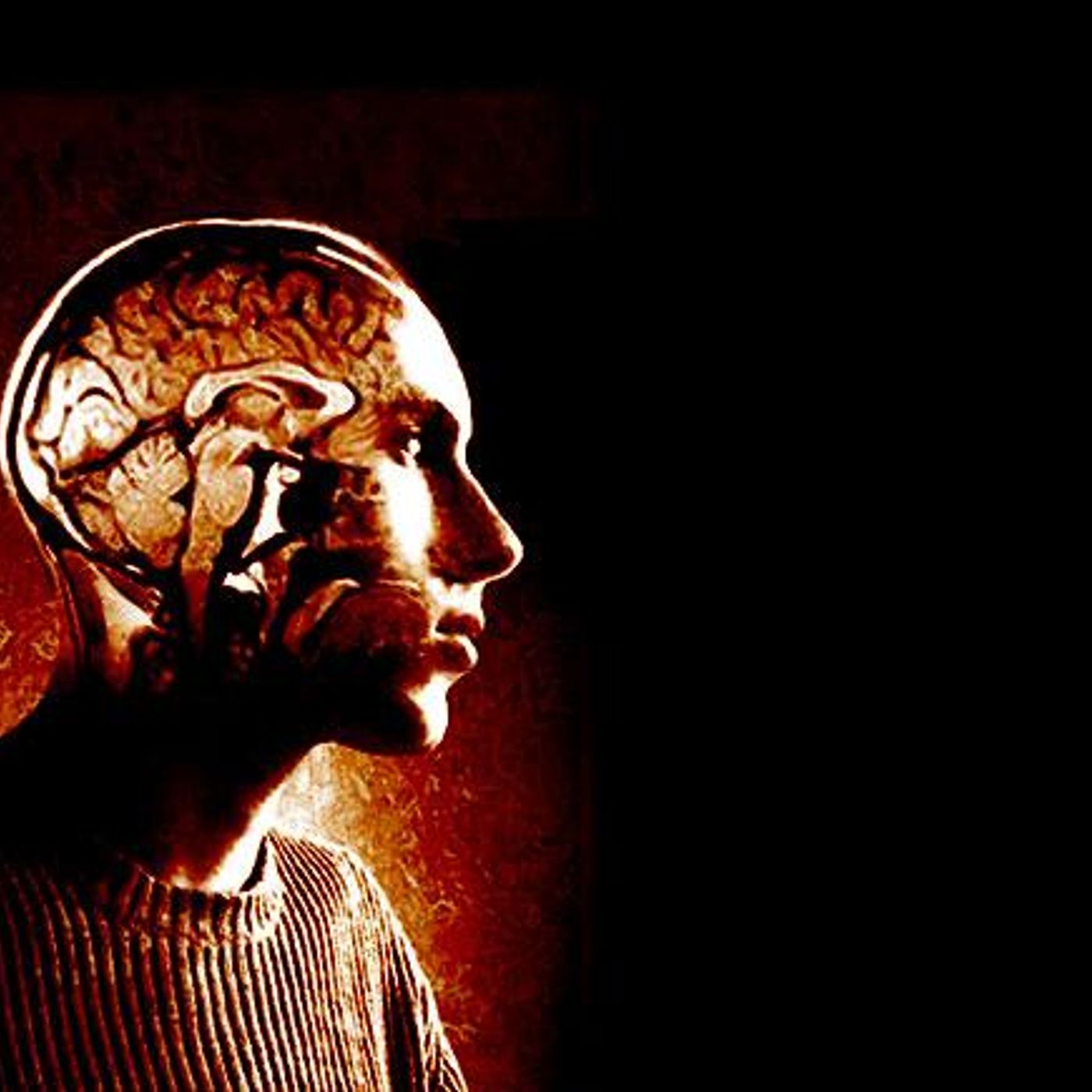
Radiolab
Voices in Your Head
00:13:28
Jad talks to Charles Fernyhough about the connection between thought, inner speech, and the voice in our heads.
Loading summary
Transcript73 lines
- [00:00]
Michaels Shop Announcer
Hey, crafters. You're invited to visit the new knit and sew shop at Michael's. Find hundreds of fabrics in over 800 stores and over 100,000 styles on michaels.com shop your favorite yarn brands, including Big Twist, Caron Cakes and Bernat in multiple styles and colors. You'll also find all the machines, tools and notions you need with top brands like Singer Brother and Pellon, plus essential thread and Floss. It's all new at Michaels.
- [00:26]
Jad Abumrad
Suffering from dry, tired, irritated eyes. Don't let dry eyes win. Use Sustain Pro. It hydrates, restores and protects dry eyes for up to 12 hours. Sustain Pro Triple Action Dry Eye Relief.
- [00:38]
Radiolab Audible Sponsor
Support for the Radiolab podcast comes from audible.com, provider of digital audiobooks and more. With over 75,000 downloadable titles across all types of literature, including fiction, nonfiction and periodicals, Audible suggests that Radiolab listeners might enjoy a modern classic like John Irving's A Prayer for Owen Meaney, Paul Harding's Tinkers, or Michael Lewis the Big Short. To learn more about Audible and get a free audiobook of your choice, go to audible.com Radiolab okay, wait, you're listening.
- [01:09]
Jad Abumrad
Okay. All right. Okay. All right. You're listening to Radiolab. Radiolab. Drum WNY T, C C npr. Hey, I'm Jan Abumra. This is Radiolab, the podcast. Robert. Robert is not here. He is away. So it's just me, unfortunately. But I will do my best. So in this podcast, I want to dig a little deeper into something that we ran into in our last new full episode, which was on words. Caper, eagle, clock, green barrel, Ca. I look at hat, colonel. Door. Door. So, yeah, we did an hour on the power of words, and we ended up talking with this guy. Hello? Hello, is this Dr. Fernyhough?
- [02:07]
Charles Fernyhough
Hi, can you hear me now?
- [02:08]
Jad Abumrad
Named Charles Fernyhough.
- [02:09]
Charles Fernyhough
I'm a writer and developmental psychologist from Durham University.
- [02:12]
Jad Abumrad
And we were having this conversation with him about what happens to young kids when they learn words. Orange juice, apple, doj. Thinking like that, you know, like what happens to the way they see the world? And in the middle of the chat, he said something kind of radical, which was that before they have words, I.
- [02:28]
Charles Fernyhough
Don'T think very young children do think.
- [02:34]
Jad Abumrad
Like think, period. Was there a period at the end of that sentence? You don't think that they think, period?
- [02:38]
Charles Fernyhough
I don't think they think in the way that I want to call thinking. Alright, which is a bit of a cheat.
- [02:43]
Jad Abumrad
But let me say, what he meant is that thinking, as he defines it, is basically just words sounding Silently in your head. And before you have those words in your head, you can't think. This is a controversial idea, which we debated back and forth. But for the next few minutes, we're not going to debate it. We're going to jump into it farther. Because whether or not you think it's true, if you follow the idea all the way through as we're about to do, it does lead you to some interesting places. So, first of all, this whole idea, says Charles, goes back to this Russian guy, Russian psychologist, named Vygotsky, Lev Vygotsk.
- [03:25]
Charles Fernyhough
Vygotsky.
- [03:25]
Jad Abumrad
And is he a contemporary dude?
- [03:27]
Charles Fernyhough
No, he died in the 30s. He was active.
- [03:30]
Jad Abumrad
Anyhow, he came up with this idea, this really interesting notion of how kids learn to think. And it all begins, he said, on the outside.
- [03:38]
Charles Fernyhough
Think about a small child who's sitting down solving a puzzle.
- [03:44]
Michaels Shop Announcer
Does that look like it goes somewhere?
- [03:46]
Jad Abumrad
It goes here.
- [03:49]
Charles Fernyhough
You're sitting down and you're working together on a puzzle, and all you've got to do is get these shapes into this board in the right kind of order. If you watch any kid with their parent anywhere in the world doing this kind of thing, you'll see them thinking together.
- [04:04]
Jad Abumrad
Now, that doesn't have an edge.
- [04:05]
Charles Fernyhough
The child, for example, picks up a picture of a boat and says, you know, where am I going to put this boat piece? And then the mum says, well, have a look at the shape. And then the kids looks at the shape and says, oh, it's got that pointy bit there. And the mum says, right, well, can you see anywhere on the board that.
- [04:22]
Michaels Shop Announcer
Has a pointy bit right there?
- [04:24]
Charles Fernyhough
And so on.
- [04:26]
Jad Abumrad
According to Vygotsky, this is the beginning of thinking, this kind of dialogue. And at this point, it's completely external. It's all happening in that space between the child and her mother.
- [04:38]
Michaels Shop Announcer
We don't know where it goes yet.
- [04:39]
Jad Abumrad
But if you put it together and.
- [04:40]
Charles Fernyhough
Only over time does it become internalized.
- [04:43]
Jad Abumrad
And how that happens, Vygotsky thought, is that as the child gets older, she'll start to take on the dialogue herself. She'll start to talk to herself.
- [04:51]
Charles Fernyhough
This is the stage we call private speech.
- [04:52]
Jad Abumrad
We've all seen kids do this, right, where they narrate every single thing they're doing. Put the ball in the box, take the ball out of the box.
- [05:01]
Charles Fernyhough
Now what then happens is a few years further down the line, these kids.
- [05:05]
Jad Abumrad
Who are narrating everything they're doing, then go to school, and the teachers tell them, shh, don't talk out loud.
- [05:11]
Charles Fernyhough
So they kind of get the message that they need to start doing this internally.
- [05:15]
Jad Abumrad
So they start to whisper to themselves out loud, and then eventually they whisper to themselves silently because the words are now in their head. And that.
- [05:26]
Charles Fernyhough
That, according to Vygotsky's theory, that is thinking.
- [05:29]
Jad Abumrad
Only then, he says, is the child having a thought. Now forgetting the particulars for a second. The main point here is that those thoughts that are humming along silently in your mind, those thoughts began as a duo with your mom, or a trio with your mom and your dad, or a quartet with your mom and your dad and your sister. In other words, those thoughts began as a crowd.
- [05:59]
Charles Fernyhough
The logic of it is that all our thinking is full of other people's voices.
- [06:09]
Jad Abumrad
Now, most of us know that the voices in our head are just us. But what got us interested in this whole Vygotsky thing is that maybe this idea has something to say to people who actually do hear other voices in their head.
- [06:22]
Charles Fernyhough
Yeah.
- [06:23]
Jad Abumrad
Molly. Hi. Nice to meet you. Thanks for coming up here. Yeah, no problem. As we were thinking about this, it just so happened that our producer, Pat Walters, had taken a trip to Denver, had a little time on his hands, did a little research, and ended up tracking down this lady.
- [06:38]
Molly Martin
And I'm Molly Martin, and I am a psychotherapist, and I run the Hearing Voices Network of Denver.
- [06:42]
Jad Abumrad
They met up at this hotel. Molly works with people who hear voices in their heads, and she runs a support group for people to share their experiences. The day Pat was there, she introduced him to a fellow named Marcus.
- [06:53]
Marcus Macias
Hi, I'm Marcus Macias. I'm a voice hearer myself. I hear voices so I could kind of share my experiences. And just.
- [07:01]
Molly Martin
Can you kind of tell me this story of.
- [07:04]
Marcus Macias
Well, yeah, you know, I first started hearing them 20 years ago, so I've been hearing them for 20 years. And so I'm 40 now. So it was when I was 20, when I first started hearing them.
- [07:15]
Jad Abumrad
When it started for him, he says the voices would kind of materialize out of background noise, like the hum of a refrigerator or the whir of a fan.
- [07:23]
Marcus Macias
When I first started hearing them, they were kind of guiding a little bit, you know, the guiding voices.
- [07:29]
Jad Abumrad
Like, he says, initially, the voices would help him out. Like if he was in an argument and about to say something mean, the.
- [07:34]
Marcus Macias
Voices would warn him, be careful, watch out. They say things like that, you know, kind of like they're helpful. But then there was, like, other negative ones.
- [07:44]
Jad Abumrad
He's had periods in his life, he says, where the voices have even turned deep demonic.
- [07:48]
Marcus Macias
Yeah. So it. That was intense. Things are a lot better now, though. See, I'm learning how to manage them, you know, because I'm taking care of myself, you know, so.
- [07:57]
Jad Abumrad
Okay, so why do we bring this up? Well, clearly, for a lot of people like Marcus, hearing voices involves some psychiatric issues, which sometimes for people can be serious, really serious. But here's the weird thing. The experience of hearing somebody else's voice in your own head is actually way more common than you would think. Surveys have been done about this, and the number seems to be between 5 and 10% of normal, healthy people have that experience or have had it at one time. Which brings us back to this Vygotsky situation. What might be happening in those cases, at least, if you ask Charles, is a kind of misattribution of your own inner voice. Those voices in your head, which are. You get mistaken to be from someone else.
- [08:46]
Charles Fernyhough
A nice, simple, elegant demonstration of this is that you take some people who are hearing voices, people with, in this case, a diagnosis of schizophrenia, who hear voices, and you sit them down at a microphone with some headphones on, and you show them some words on a screen, just flash up some words on a screen, and their task is to repeat the words, to read the words out loud.
- [09:09]
Jad Abumrad
Now, if you can imagine, these subjects are seeing these words on the screen, they're repeating them into the mic, and they've got headphones on, so they're actually hearing their own voices as they're doing. This trick is the researchers have rigged it so that the voice in their headphones, their voice actually gets lowered just a little bit right before they hear it. What that means is that if I were to say, hello, my name is Jad, what I'd hear in my headphones is, hello, my name is Jada.
- [09:35]
Charles Fernyhough
And as you know, if you lower the pitch of the voice by a few semitones, it becomes much harder to.
- [09:39]
Jad Abumrad
Recognize it, because when I'm speaking in this lowered voice, you can still kind of recognize it's me, but it's a little bit hard. Now, what the experimenters found is that most people, most non voice hearing, quote unquote, healthy people, when they were presented with the sound of their own voice lowered like this, and then asked, is this you? Is it a stranger, or are you not sure? They did make mistakes, Some mistakes.
- [10:05]
Charles Fernyhough
The voice hearers made considerably more mistakes.
- [10:10]
Jad Abumrad
Really?
- [10:10]
Charles Fernyhough
Yeah.
- [10:11]
Jad Abumrad
Not only that, when they heard their voices lowered, they would very, very often say, that voice is coming from a stranger.
- [10:18]
Charles Fernyhough
That's not me, that's not myself. That didn't come from me. Now, of course, that is potentially a frightening experience. That's potentially a very distressing experience.
- [10:27]
Jad Abumrad
But not always, because let's just imagine Vygotsky was right, that the internal voice of our thoughts is actually a blend of all of those external voices from our childhood. So in other words, our mom, our dad, our sisters, brothers, whatever, they're all in there in some way. And that can actually be a comfort. Back at that hotel in Denver, Molly Martin had told Pat about a woman who had seen her father murdered.
- [10:59]
Molly Martin
He was shot in front of her. She was, it was a robbery and it was, I believe, at a convenience store.
- [11:08]
Jad Abumrad
And for years afterwards, she says, this woman would hear her dad's voice.
- [11:12]
Molly Martin
She would tell us that every morning when she would wake up, he would tell her to make her bed and he would remind her throughout the day to do more positive things. And if she was doing something, for example, if she wanted, she was a drug addict and if she wanted to use drugs again, her father would say to her things like, don't do it, you know, it's bad for you. This is a horrible, you know, more looking after her. I think she might have been 11 when he was killed, but it was a good relationship during that time.
- [11:49]
Charles Fernyhough
Yeah.
- [11:49]
Molly Martin
And then it just kind of like stuck.
- [11:50]
Charles Fernyhough
Like frozen.
- [11:51]
Molly Martin
Yeah, I think so. I think so.
- [12:08]
Jad Abumrad
If you want to read some more about hearing voices, you can do that on our website, Radiolab.org thanks to Charles Fernie Ho, who wrote a great book called A Thousand Days of Wonder. Also thanks to Molly Martin, Marcus Macias, Stella Story and Carrie Donahue and Joanna and Alex Lau. They made the homemade sonic ID that you heard at the very beginning. Okay, so before we go, just want to let you know we have a new website@radiolab.org it's new design, it's all organized and if you go to the site, in fact, I'm gonna do it right now. Alright, here we go. Radiolab.org if you go there and you scroll down to the middle, you'll see a whole bunch of frightening looking people wearing T shirts. That is the Radiolab staff, myself and Robert included. And you will all see us wearing a T shirt depicting a goat standing on a cow's back. This is a very meaningful image to us, perhaps to some of you. And if you just click a little bit more and you just follow the link to chopshopstore.com you will see that we. Oh, what a cute baby. We have toddler sizes. I have a toddler, I'm gonna buy one. For my toddler. I'm gonna buy 70. In fact, here we go. Seven, zero. All right, I'm sorry. So I should sign off. I'm Jad Abumrad. Thanks for listening. Catch you in two weeks. Hello. My name is Christopher Caldwell from Chico, California. I'm a Radiolab listener, and the Radiolab podcast is funded in part by the Sloan Foundation. End of message.
- [14:08]
National Forest Foundation Announcer
Radiolab is supported by the National Forest Foundation, a nonprofit transforming America's love of nature into action for our forests. Did you know that national forests provide clean drinking water to 1 in 3Americans? And when forests struggle, so do we. The National Forest foundation creates lasting impact by restoring forests and watersheds, strengthening wildfire resilience, and expanding recreation access for all. Last year, they planted 5.3 million trees and led over 300 projects to protect nature and communities nationwide. Learn more@nationalforests.org Radiolab hey, crafters.
- [14:48]
Michaels Shop Announcer
You're invited to visit the new knit and sew shop at Michaels. Find hundreds of fabrics in over 800 stores and over 100,000 styles. On michaels.com shop your favorite yarn brands, including Big Twist, caron cakes and Bernat in multiple styles and colors. You'll also find all the machines, tools and notions you need with top brands like Singer, Brother and Pellon, plus essential thread and floss. It's all new at Michael's.