← Radiolab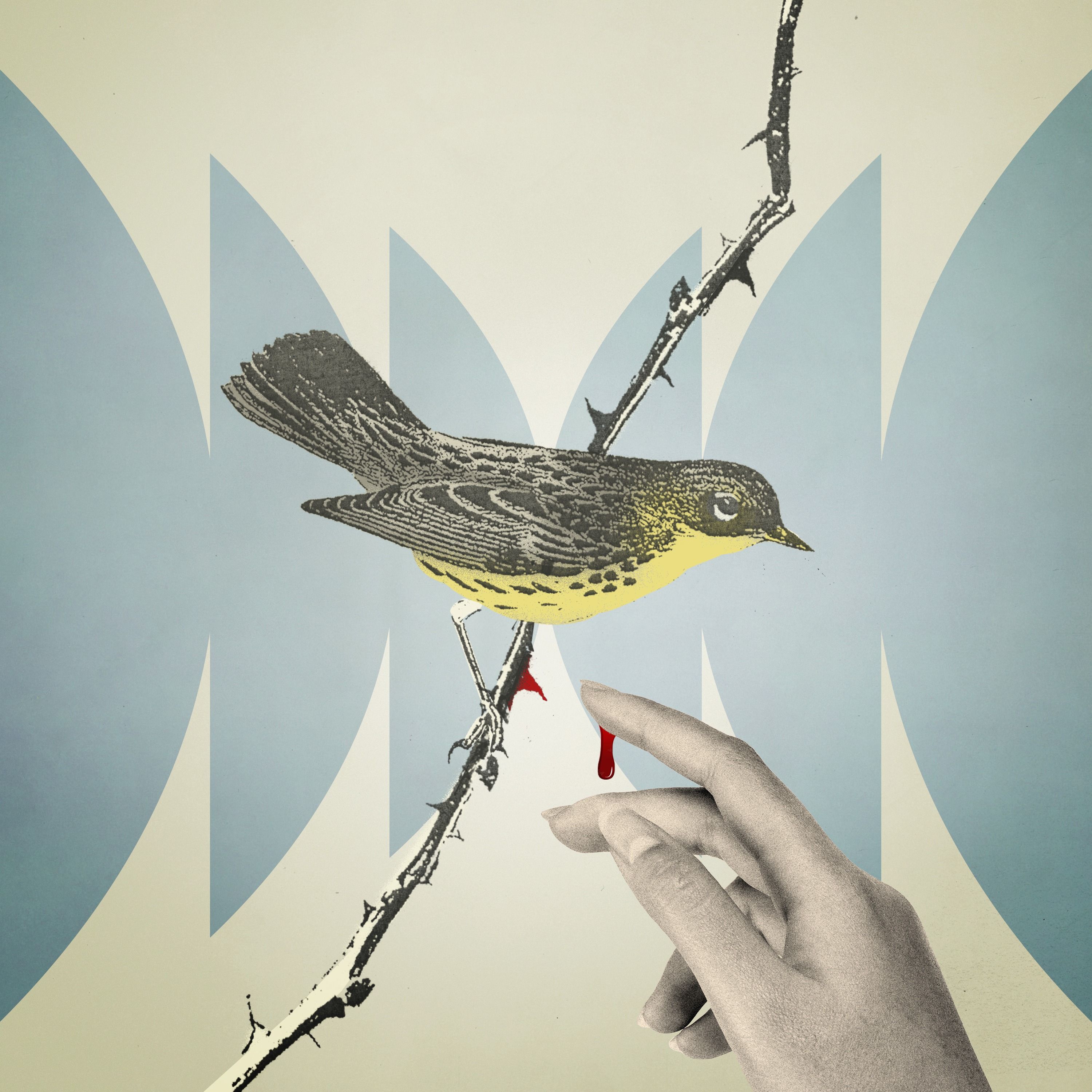
Radiolab
Weighing Good Intentions
00:25:29
In an episode first released in 2010, then-producer Lulu Miller drives to Michigan to track down the endangered Kirtland’s warbler. Efforts to protect the bird have lead to the killing of cowbirds (a species that commandeers warbler nests), and a prescribed burn aimed at creating a new habitat. Tragically, this burn led to the death of a 29-year-old wildlife technician who was dedicated to warbler restoration. Forest Service employee Rita Halbeisen, local Michiganders skeptical of the resources put toward protecting the warbler, and the family of James Swiderski (the man killed in the fire), weigh in on how far we should go to protect one species. EPISODE CREDITS:Reported by - Lulu MillerSignup for our newsletter!! It includes short essays, recommendations, and details about other ways to interact with the show. Sign up (https://radiolab.org/newsletter)! Radiolab is supported by listeners like you. Support Radiolab by becoming a member of The Lab (https://members.radiolab.org/) t...
Loading summary
Transcript239 lines
- [00:01]
Lulu Miller
This is Radiolab. I'm Lulu Miller. Over the last few months, as we've been watching public lands come under peril, massive cuts to the National Park Service, proposals to sell off millions of acres of public lands being debated. I keep thinking about this one moment in a piece I reported about 15 years ago in a kitchen in rural Michigan, I encountered one of the best defenses of conservation I've ever heard. And it came from such an unexpected person that it was almost like a jump scare. Anyway, I'm saying too much, so I'm going to turn it over now to og, host of this here program, Jad Abumrad, for a story we called Weighing Good Intentions.
- [00:43]
Jad Abumrad
Yeah, wait, you're listening. Okay. All right. Okay. All right.
- [00:50]
Lulu Miller
You're listening to Radiolab Radio Lab from wnyc.
- [00:58]
Jad Abumrad
Rewind. Okay, so set up this story. This story happens where it's in a.
- [01:08]
Lulu Miller
Little town in northern Michigan called Mayo. 7am Just drove through the Delaware Water Gap. That's me on my way out there from New York. The sun is rising and it's about an 800 mile drive and it's just gorgeous out here.
- [01:24]
Jad Abumrad
Listen to you. Lush and all into the outdoors.
- [01:28]
Lulu Miller
Yeah, I know, but I'm just one of the. When I get out into nature, I feel my place in the world. Anyway, just crossed into Mayo.
- [01:39]
Jad Abumrad
So you get there. What was the reason you were going again?
- [01:41]
Lulu Miller
To see a bird. A very. Not just rare, not just the kind of bird birders get obsessed about, but this is a bird. This is what they call a lifebird.
- [01:53]
Jad Abumrad
A life bird.
- [01:54]
Lulu Miller
Birders wait their life to see it.
- [01:56]
Jad Abumrad
Really?
- [01:56]
Lulu Miller
Yeah. Only found right here.
- [01:58]
Jad Abumrad
What's the bird called?
- [01:59]
Lulu Miller
The Kirtland warbler. So now, have you seen a Kirtland before?
- [02:03]
Jad Abumrad
No, I've never seen one. This is my first trip up here. This right here. Where are you?
- [02:07]
Lulu Miller
We're just outside of the town on the edge of the forest, about to go in, and I'm standing with about 15 people who've come from everywhere. Where are you folks coming from to see this bird? Toledo.
- [02:18]
Chris Mensing
I'm from South Carolina.
- [02:19]
Jad Abumrad
We're from Oregon, South Dakota. From Dayton, Ohio area, Wyoming.
- [02:24]
Lulu Miller
We'll walk out to a spot, try to stay safe, single file. Park ranger leads us down a path into a little clearing.
- [02:31]
Jad Abumrad
And pretty immediately in the background there.
- [02:34]
Lulu Miller
Way back there, a guy from Ohio spots a kirtland. There he is. Yeah, A tiny yellow bird back there, right there, up high in a jack. Pine tree. Oh, yeah.
- [02:46]
Jad Abumrad
Oh, great. It's singing like crazy.
- [02:49]
Lulu Miller
The lady from Dayton starts clapping. You Describe what you're seeing.
- [02:53]
Jad Abumrad
I see a lovely bird with a gray back.
- [02:56]
Lulu Miller
This is a guy from Oregon, Jim Coleman.
- [02:59]
Jad Abumrad
Blue gray back.
- [02:59]
Lulu Miller
And his wife Rita.
- [03:00]
Jad Abumrad
Smaller than a robin. Beautiful yellow throat and breast. Brilliant yellow. And so in the sunlight, it's just an absolutely radiant bird.
- [03:11]
Lulu Miller
Is this worth the trip to Morgan?
- [03:13]
Jad Abumrad
Oh, you bet. I don't know. It just makes me thankful that I'm here. It makes me grateful that my wife is here. I know this is something she's wanted to see for a long time.
- [03:26]
Lulu Miller
Jim actually starts to tear up.
- [03:30]
Jad Abumrad
This is a very special bird.
- [03:33]
Lulu Miller
Homo ham. And that's what this story is really about. How special is this bird?
- [03:41]
Jad Abumrad
Meaning?
- [03:42]
Lulu Miller
Well, how much is a species worth?
- [03:47]
Jad Abumrad
Um.
- [03:48]
Lulu Miller
Well, here's the backstory.
- [03:50]
Jad Abumrad
Okay.
- [03:50]
Lulu Miller
In the early 70s, the warbler almost went extinct.
- [03:54]
Chris Mensing
Want to go in?
- [03:54]
Lulu Miller
Okay. The reason why it was thought that's just the sound of them laughing, was because of a little creature called the cowbird.
- [04:03]
Chris Mensing
It's not doing anything good. It's just. It's a parasite, you know, and some.
- [04:07]
Jad Abumrad
And who is this guy?
- [04:08]
Lulu Miller
This is Chris Mensing, fish and wildlife.
- [04:10]
Chris Mensing
Biologist with the U.S. fish and Wildlife Service.
- [04:12]
Lulu Miller
And we're standing in this cage full of cowbirds.
- [04:15]
Chris Mensing
It looks like we've got six males and one female. Let me grab a couple.
- [04:20]
Lulu Miller
He just reached out and grabbed two of them. You're good at that.
- [04:24]
Chris Mensing
The males. Yeah, go ahead.
- [04:25]
Jad Abumrad
What do they look like?
- [04:26]
Lulu Miller
It's like imagine a tiny little gnarly crow, got really sharp little beaks, but with this curled beak, it has a.
- [04:34]
Chris Mensing
Very drab body, very dull.
- [04:36]
Lulu Miller
So here's what the cowbird does to the warbler while the warbler is out of its nest.
- [04:41]
Jad Abumrad
Like getting a worm or something.
- [04:43]
Lulu Miller
Yeah. The cowbird lays one of its own eggs in the nest to make room for it. So the warbler doesn't know anything is up. It pushes out one of the warbler's eggs.
- [04:52]
Jad Abumrad
Oh, get out of the nest.
- [04:54]
Chris Mensing
And the timing is such that the cowbird egg will hatch first and will double its size in 24 hours. So by the time that the host birds hatch, that cowbird may be up to four times the size. And when they start begging for food from the parents, the loudest, the most aggressive chick is going to get fed. The cowbird chick.
- [05:13]
Jad Abumrad
So the warbler mom ends up shoveling food into this cowbird chick. Yep.
- [05:17]
Lulu Miller
And oftentimes it gets so much food that another warbler chick will die.
- [05:21]
Jad Abumrad
Really?
- [05:22]
Lulu Miller
Yeah. So when the cowbirds first showed up.
- [05:24]
Chris Mensing
In this area in the late 1800s, early 1900s.
- [05:27]
Lulu Miller
The warbler population just started plummeting.
- [05:29]
Chris Mensing
This huge drop. By 1971, there are only 200 males on Earth.
- [05:34]
Jad Abumrad
Whoa.
- [05:35]
Lulu Miller
So what do you do?
- [05:38]
Jad Abumrad
Are you asking me? Mm. I guess you gotta kill the cowbirds.
- [05:43]
Lulu Miller
Exactly.
- [05:44]
Chris Mensing
This is one of 54 traps. It's a new one that we just.
- [05:47]
Lulu Miller
Built this year, which is why we're out in this cage. It's actually a cowbird trap.
- [05:51]
Jad Abumrad
Oh.
- [05:51]
Lulu Miller
Run, cowbird, run.
- [05:53]
Jad Abumrad
She just bite me.
- [05:53]
Chris Mensing
Yeah, she'd bite me just like anyone. If you get someone larger grabbing you, they don't appreciate it too much.
- [05:58]
Lulu Miller
Anyone know how they kill them?
- [05:59]
Jad Abumrad
I kind of do. Yeah.
- [06:00]
Chris Mensing
Thoracic compression is the term we use. We basically squeeze the bird, suffocating it, preventing it from breathing.
- [06:07]
Lulu Miller
Just with your hands. There's no.
- [06:08]
Jad Abumrad
Yep.
- [06:09]
Lulu Miller
Do you have to do that? Yeah, like, all the time.
- [06:12]
Jad Abumrad
Yeah. Did you see this?
- [06:13]
Lulu Miller
No, but. 1972, Fish and Wildlife Service sets up a bunch of traps. A few years and about 12,000 dead cowbirds later.
- [06:25]
Chris Mensing
It works.
- [06:32]
Lulu Miller
Kinda, Earl. The population stopped dying off, but then it didn't start bouncing back.
- [06:38]
Jad Abumrad
What's going on? Yeah. Why aren't we seeing bigger numbers now that we're catching the cowbirds?
- [06:43]
Lulu Miller
That's Rita Halbison. She worked with the Forest Service back in the 80s.
- [06:47]
Jad Abumrad
And we thought, well, we finally concluded it must be just. There is not enough habitat. Like, they don't have enough trees. Is that what you.
- [06:56]
Lulu Miller
Well, no, there are plenty of trees. But the thing about warblers is they like a specific kind of tree. They like them very young. That was weird. I could feel it as I was saying it. They like them young.
- [07:09]
Jad Abumrad
No, but they like young trees is what you're saying.
- [07:11]
Lulu Miller
Yep.
- [07:11]
Jad Abumrad
And there aren't young trees in this place?
- [07:14]
Lulu Miller
No. It's really weird when. When they started looking around this forest, they noticed all the trees were really, really old.
- [07:20]
Jad Abumrad
Why. Why wouldn't there be?
- [07:21]
Lulu Miller
Young trees can prevent forest fire, and it's trim. Hey, hey, Smokey Bear. See, when humans began to settle in this area of Michigan in about the 1880s, they brought with them that certain human disdain for fire.
- [07:40]
Jad Abumrad
Only you can prevent forest fires.
- [07:45]
Lulu Miller
But fire is exactly what's needed up there to make new trees.
- [07:49]
Jad Abumrad
Yeah.
- [07:49]
Chris Mensing
This ecosystem is a fire ecosystem, says Chris.
- [07:52]
Lulu Miller
It burns because when these trees burn, they release their seeds and make room for new trees to grow.
- [07:58]
Chris Mensing
It is a fire ecosystem. It is made to burn.
- [08:01]
Lulu Miller
So I ask you again, what do you do?
- [08:04]
Jad Abumrad
Do you start fires? Would that be the solution?
- [08:07]
Lulu Miller
That would be the solution. So the forestry started doing what we.
- [08:10]
Jad Abumrad
Call a prescribed burn.
- [08:11]
Lulu Miller
Basically says Rita. They burned down a little patch of forest, a few acres to regenerate it. And one windy spring day in 1980, at a place called Mack Lake, the forestry service started a fire that they probably shouldn't have.
- [08:24]
Jad Abumrad
Okay, my name is Dick Lord, and I, at the time of the Mack lake fire, I was part of the ignition crew for the prescribed burn.
- [08:34]
Lulu Miller
What is an ignition crew?
- [08:37]
Jad Abumrad
They light the fire.
- [08:39]
Lulu Miller
So at 10 in the morning, Dick and his crew go out into the.
- [08:41]
Jad Abumrad
Woods, went out with a plan, start.
- [08:43]
Lulu Miller
Setting up perimeters, and they begin lighting a few stands of shrub.
- [08:47]
Jad Abumrad
I was driving home.
- [08:48]
Lulu Miller
That's Bob Burner, Best name ever for a firefighter.
- [08:51]
Jad Abumrad
I could see forest service starting to do a burn, and I thought, this is not a good time. It was windy. They didn't have the manpower. And I said, we'll probably be getting called out here shortly. Basically, we did not realize that the weather was going to change as rapidly as it did. The wind came up suddenly, something nobody could predict. And it took the fire across the road into a stand of mature jack pine and took off. There are flames probably 100 to 150ft in the air. The sound is like a roaring train.
- [09:32]
Lulu Miller
The forest guys jump into their bulldozers, trying to plow trenches alongside the fire.
- [09:36]
Jad Abumrad
To pinch it off. And I mean, you could feel the heat. It was way out of our control, Hitting the tops of the trees, rolling. I knew at the rate it was traveling that it was going to be a major catastrophe.
- [09:53]
Lulu Miller
Within six hours, it had burned over 20,000 acres. It's one of the fastest moving fires ever documented.
- [10:01]
Jad Abumrad
Yeah, it went through here. Fire, as you can see, was all black.
- [10:04]
Lulu Miller
These are two guys.
- [10:05]
Jad Abumrad
Hi, Bob.
- [10:06]
Lulu Miller
Who own houses in the area that got burnt.
- [10:08]
Jad Abumrad
I remember the guy down there in the corner. Garage was all burned up, Black, charred.
- [10:11]
Lulu Miller
Their houses were okay, but 41 houses.
- [10:14]
Jad Abumrad
Were destroyed all the way up to.
- [10:16]
Lulu Miller
The lake, Just completely.
- [10:18]
Jad Abumrad
Yeah. Wasn't nothing green like something out of a moonscape as far as you could see, Everything gone. And the worst part about it for all of us.
- [10:28]
Lulu Miller
Let's read a Helbison again.
- [10:29]
Jad Abumrad
Was that it killed one of the forest service employees, A very young wildlife technician who was very well loved by.
- [10:36]
Lulu Miller
His co workers, a guy named Jim Swiderski.
- [10:40]
Jad Abumrad
You know, Jim was a good friend as well as an employee.
- [10:45]
Lulu Miller
Dick Lord again, Jim's boss, he told me that Jim had been a postman for a few years, but just loved birds so much that he took a huge pay cut to come and help Protect the warbler.
- [10:55]
Jad Abumrad
Basically what happened was the fire overran him. Oh, the press was having a heyday, just tearing into the Forest Service for what had happened. The townspeople were very angry at the Forest Service. How could you do this?
- [11:13]
Lulu Miller
Rita says they were told not to wear their Forest service uniforms in town.
- [11:16]
Jad Abumrad
Gosh, it was so terrible.
- [11:19]
Lulu Miller
And the forest itself, you know, there was nothing there. It was completely silent. But a year later, a little bit of green started to poke up. Then the next year, a little bit more.
- [11:36]
Jad Abumrad
Eight to ten years after that mack like burn just seemed like everywhere you turned around, you'd stop for listen. There were five or six birds, a tremendous number of warblers. That was the answer to the mystery, the fire.
- [11:52]
Chris Mensing
You know, if you look at a.
- [11:53]
Lulu Miller
Population graph, that's Chris Mensing again after.
- [11:56]
Chris Mensing
That Mac Lake burn, population went like that.
- [11:58]
Lulu Miller
He points his hand straight up.
- [12:00]
Chris Mensing
So it's pretty dramatic.
- [12:01]
Lulu Miller
And today the numbers are up to almost 4,000 birds. Ah, there he is. Yeah, and growing.
- [12:09]
Jad Abumrad
Singing like crazy.
- [12:12]
Lulu Miller
Now that the birds are back. But a man is gone. When you walk around this town, a question lingers in the air.
- [12:22]
Jad Abumrad
Is the life of a fireman worth the life of a bird?
- [12:30]
Lulu Miller
That question right after the break. You want in on a secret? All year it's been bro podcast this and bro podcast that. Here's what they're not telling you. Women are the fastest growing force in podcasts. I'm Brittany Luce, and on the It's Been a Minute podcast podcast, I create a space for curious and culturally savvy listeners like you. Come and share a laugh with me and hundreds of thousands of other listeners as we dissect the biggest trends of the day. Let's get smarter together. Listen to the It's Been a Minute podcast today. Lulu Radiolab. Just before the break, a well intentioned fire had turned deadly and it left a town wondering.
- [13:16]
Jad Abumrad
Is the life of a fireman worth the life of a bird? Oh, take a look. Take a look. Is it? That's incredible. Got him. I got him. No, in my opinion, it isn't.
- [13:32]
Lulu Miller
This is Ed Fawcett.
- [13:34]
Jad Abumrad
I wouldn't trade your life for a bird.
- [13:36]
Lulu Miller
I'm sitting with him and his wife Mary Jane.
- [13:38]
Jad Abumrad
Amen.
- [13:40]
Lulu Miller
In a diner. And no matter where you go in.
- [13:42]
Jad Abumrad
This town, what's the government doing?
- [13:45]
Lulu Miller
People don't tend to be huge fans of the warbler.
- [13:48]
Jad Abumrad
It's just a small bird and I've been up here since 68. I've never seen one.
- [13:52]
Lulu Miller
Did you ever see one?
- [13:53]
Jad Abumrad
No, never have I seen one. I'VE never seen one. No.
- [13:55]
Lulu Miller
And back to Ed.
- [13:56]
Jad Abumrad
I just gotta say to you, what would you think about it if your father or brother were killed in a useless fire for a bird? Be pretty hard to accept, wouldn't it?
- [14:09]
Lulu Miller
But if you zoom out one human life versus the end of a species.
- [14:14]
Jad Abumrad
You know how many warblers there are in the United States? I think there's something like 37 species of warblers.
- [14:22]
Lulu Miller
The real number's actually closer to 60.
- [14:25]
Jad Abumrad
That's kind of ridiculous.
- [14:27]
Lulu Miller
And that's not all they ask you.
- [14:29]
Chris Mensing
When are you done? And we really say never.
- [14:31]
Lulu Miller
Chris explained to me that they have to keep killing the cowbirds and they have to keep doing burns, smaller burns. But every single year, if we let.
- [14:39]
Chris Mensing
Things be, the bird would be extinct. That's the hard thing about this job, is knowing that we're never done.
- [14:46]
Lulu Miller
How many people are working? How much?
- [14:49]
Chris Mensing
You're probably looking at hundreds of people dollars. You know, we could be looking at, you know, well over a million dollars a year spent.
- [14:55]
Lulu Miller
And all this began to really sink in on one of my last mornings out there. All right, it is five in the morning. It was the annual Kirtland warbler census, where birders from all over the world show up to help count how many warblers there are out there.
- [15:15]
Jad Abumrad
Is it like there's a warbler? Step, step, step, step.
- [15:18]
Lulu Miller
There's a warbler. Yeah, that's actually exactly how it works. I was paired up with this guy, Dave Mendez.
- [15:24]
Jad Abumrad
We're gonna kind of walk through the middle of these transects. We're gonna come up.
- [15:27]
Lulu Miller
He's kind of a dude. Dude. He's an older guy, got a beard.
- [15:30]
Jad Abumrad
I work for an electrical contractor.
- [15:32]
Lulu Miller
Told me he's got a man room.
- [15:34]
Jad Abumrad
Man room. You know, most guys have got sports, but I've got Kirtland's warbler pictures up on the wall. Nice.
- [15:40]
Lulu Miller
So I went into it thinking, like, this will be really cool. We'll march along, we'll count em. I looked at the map. It was a mile, maybe of a walk. We'll be done in 20 minutes. Well, okay, maybe not. We're walking through the forest on our tops.
- [15:54]
Jad Abumrad
Hey, Dave.
- [15:55]
Lulu Miller
Oh, there you go. We set off. Dense, brambly forest. Still dark. Is that one.
- [16:02]
Jad Abumrad
That was a hermit thrush. Okay.
- [16:06]
Lulu Miller
And let me just play you a quick little time lapse.
- [16:09]
Jad Abumrad
20 to 7. Right now the sun's just coming up, and it's getting a little muggy out here. That was the Kirtlands.
- [16:16]
Lulu Miller
Oh, yeah.
- [16:16]
Jad Abumrad
Yep. We can't count him, though. He's not in our section. 707. I heard one way back. That way. Yeah, yeah, there he is again. Yeah, but I'm not gonna mark him in because I don't know exactly where he's at. 7:33. There he goes. Yeah, right there.
- [16:36]
Lulu Miller
So do you count him out?
- [16:37]
Jad Abumrad
No, no, no, no. We want to be a lot more accurate than just to say we know there's one up there. We want to triangulate them. 9:56. And all's well in the warbler woods.
- [16:47]
Lulu Miller
Hey, a couple of ants are biting me.
- [16:49]
Jad Abumrad
Yeah, they hurt, don't they?
- [16:50]
Lulu Miller
They do a little bit, yeah. Get out of there.
- [16:54]
Jad Abumrad
10:45Am I know that there's a bird out there. I can still hear that bird way back there.
- [17:03]
Lulu Miller
So we end up staying out there for seven and a half hours. We just marked one, right?
- [17:09]
Jad Abumrad
Yep. I've only marked one.
- [17:11]
Lulu Miller
And I don't mean to sound like I'm making fun of Dave. I mean, he's doing his job well. But at some point, in between the fire ants and taking four hours to confirm this one bird, he's gonna be.
- [17:23]
Jad Abumrad
Right off over here.
- [17:24]
Lulu Miller
I just started thinking about all the effort it takes.
- [17:26]
Jad Abumrad
Two rows of trees over from us and we can't see them.
- [17:29]
Lulu Miller
I just suddenly thought, it's this fussy, fragile little bird and it hasn't evolved. Who cares? I mean, this is not worth it. And so I started asking people who protect the bird, why do that with so much money? And it's all for a bird. And I could see it maybe if it was for some, but it's just one warbler of 18 million different kinds of warblers. Like, why do it?
- [17:56]
Chris Mensing
Well, we do it because we should, you know, we're stewards of the land.
- [18:00]
Lulu Miller
That's Chris Mensing again. Cowbird killer.
- [18:02]
Chris Mensing
It's for future generations.
- [18:04]
Lulu Miller
And here's the fire starter, Dick Lord.
- [18:07]
Jad Abumrad
You know, the Kirtland's warbler was listed under the Endangered Species act, and we had a charge under the law to do what we could to recover its existence. And that's the only thing that I can say that, you know, we had to do what the law required us.
- [18:26]
Lulu Miller
To do, so we should do it. And the law tells us we have to do it. Unconvincing. And that question, is the life of.
- [18:37]
Jad Abumrad
A fireman worth the life of a bird?
- [18:39]
Lulu Miller
And that guy Ed at the diner, it just stuck in my mind. And I realized I couldn't leave this town until I talked to the people who lost the most. Can I just get you to introduce yourselves. Yeah, sure.
- [18:51]
Jad Abumrad
Robert Swiderski, age 54. Kathleen Swiderski, Florence Swiderski, the mother. Mother. And the mother of James Swiderski, the guy who died.
- [19:03]
Lulu Miller
Yeah.
- [19:03]
Jad Abumrad
Okay. Want iced tea or water or anything?
- [19:06]
Lulu Miller
We're all sitting around the kitchen table.
- [19:07]
Jad Abumrad
There's a lot of hot dogs and beer over there.
- [19:09]
Lulu Miller
Jim's brother in law is there too.
- [19:11]
Jad Abumrad
So. I'm Calvin, Calvin Debris.
- [19:12]
Lulu Miller
And I asked them to tell me about Jim.
- [19:14]
Jad Abumrad
Quite a guy. Soft spoken, smart. Quite a character.
- [19:20]
Lulu Miller
Yup, they told me. At first they were furious.
- [19:24]
Jad Abumrad
They should have never ever sent him in there.
- [19:27]
Lulu Miller
Angry at the Forest Service, angry about this bird.
- [19:30]
Jad Abumrad
Very angry.
- [19:31]
Lulu Miller
Now, three decades later, I say, you.
- [19:34]
Jad Abumrad
Keep that little bird going. Exactly. Really?
- [19:37]
Lulu Miller
Then Jim's younger brother Robert said that the thing he wanted the most is for the Kirtlands warbler to become the state bird.
- [19:45]
Jad Abumrad
That would be the ultimate. That would be the biggest accomplishment ever, would be that being a state bird.
- [19:52]
Lulu Miller
Wow. I guess I'm. I'm. I guess in some ways I'm surprised. I didn't mean to come here with expectations, but in some ways I thought if it was my family, that I would hate that bird, but I would just hate that bird.
- [20:04]
Jad Abumrad
No, it's not the bird. I mean, that bird didn't do anything to any of us. You know, if we can keep it going, I mean, that's what he set out to do. Let's keep it going.
- [20:16]
Lulu Miller
They think about Jim's death, any of the military, like the death of a soldier.
- [20:20]
Jad Abumrad
Where would you be sitting right now if we wouldn't have lost all those soldiers in World War I, World War.
- [20:25]
Lulu Miller
II, that he died protecting us?
- [20:28]
Jad Abumrad
You know, it's only one species. Well, then it's going to be another species and another species and another species. Next thing you know, you walk out in the morning and it'll be quiet. Thank God for Teddy Roosevelt and the boys that made our national parks. Imagine. What if we didn't have those? It costs money, it's painful, blah, blah, blah. You gotta have the guts to do that. And Jim was really that kind of guy. Well, that is good.
- [20:59]
Lulu Miller
Yeah. But I mean, do you agree, Florence? Then I asked the mom, what can I say?
- [21:07]
Jad Abumrad
The birds are coming back, but the life is gone, so why bring it up again? It's done. You can't bring it back, so you have to live with it. But there's always a hole in your heart. Something it's none of us will ever forget forever. Don't ask me any more questions, please.
- [21:36]
Lulu Miller
And then if ever there was a sign to just turn off the darn mic.
- [21:41]
Jad Abumrad
There she goes again.
- [21:42]
Lulu Miller
Oh, the power goes out.
- [21:44]
Jad Abumrad
So beat. Give me a break. They go home, get the generator. I think we're done. Pretty dark.
- [22:12]
Lulu Miller
Okay, Lulu from 2025 here again. Since I reported this story in 2010, a couple things have changed for that little bird. The biggest thing is that in 2019, the US Fish and Wildlife Service officially removed the Kirtland's warbler from the endangered species list. That meant the bird had surpassed recovery goals. Since then, the population has begun to decline again. But the Michigan Department of Natural Resources say they feel confident they have the tools and resources to stabilize the population. And one more thing. A few years back, I called up Robert Swiderski just to check in and ask how everyone was doing. And he said that his mom, Florence, I remember this, he said, she ain't cooking, but she's still kicking. At that point, she was 92. Since then she has passed away. And a note on her obituary online suggested that in her memory, in lieu of flowers, you might plant a tree.
- [23:27]
Jad Abumrad
Hi, I'm Victor from Springfield, Missouri and here are the staff credits. Radiolab was created by Jad Abumrad and edited by Soren Wheeler. Lulu Miller and Lasa Nasser are our co hosts. Dylan Keefe is our director of sound design. Our staff includes Simon Adler, Jeremy Bloom, Becca Bresser, W. Harry Fortuna, David Gable, Maria Paz Gutierrez, Sanyu Nananzamandan, Matt Kilty, Annie McKeown, Alex Neeson, Sara Kari, Sarah Sandbeck, Anissa Ritsa, Arianne Wak, Pat Walters, Molly Webster and Jessica Young with help from Rebecca Grant. Our fact checkers are Diane Kelly, Emily Krieger, Ana Pujol, Mangini and Natalie Middleton. Hi, I'm Jerry and I'm calling from Kafsoar Kenya. Leadership support for Radiolab. Science programming is provided by the Simons foundation and the John Templeton Foundation. Foundational support for Radiolab was provided by the Alfred P. Sloan Foundation.
- [26:00]
Lulu Miller
Popsicles, sprinklers, a cool breeze. Talk about refreshing. You know what else is refreshing this summer? A brand new phone with Verizon. Yep. Get a new phone on any plan with select phone, trade in in MyPlan and lock down a low price for three years on any plan with MyPlan. This is a deal for everyone whether you're a new or existing customer. Swing by Verizon today for our best phone deals. 3 year price guarantee applies to then current based monthly rate only. Additional terms and conditions apply for all offers. NYC now delivers the most up to date local news from WNYC and Gothamist every morning, midday and evening with three updates a day. Listeners get breaking news, top headlines and in depth coverage from across New York City by sponsoring programming like NYC now. You'll reach our community of dedicated listeners with premium messaging and an uncluttered audio experience. Visit sponsorship.wnyc.org to get in touch and find out more.