Podcast
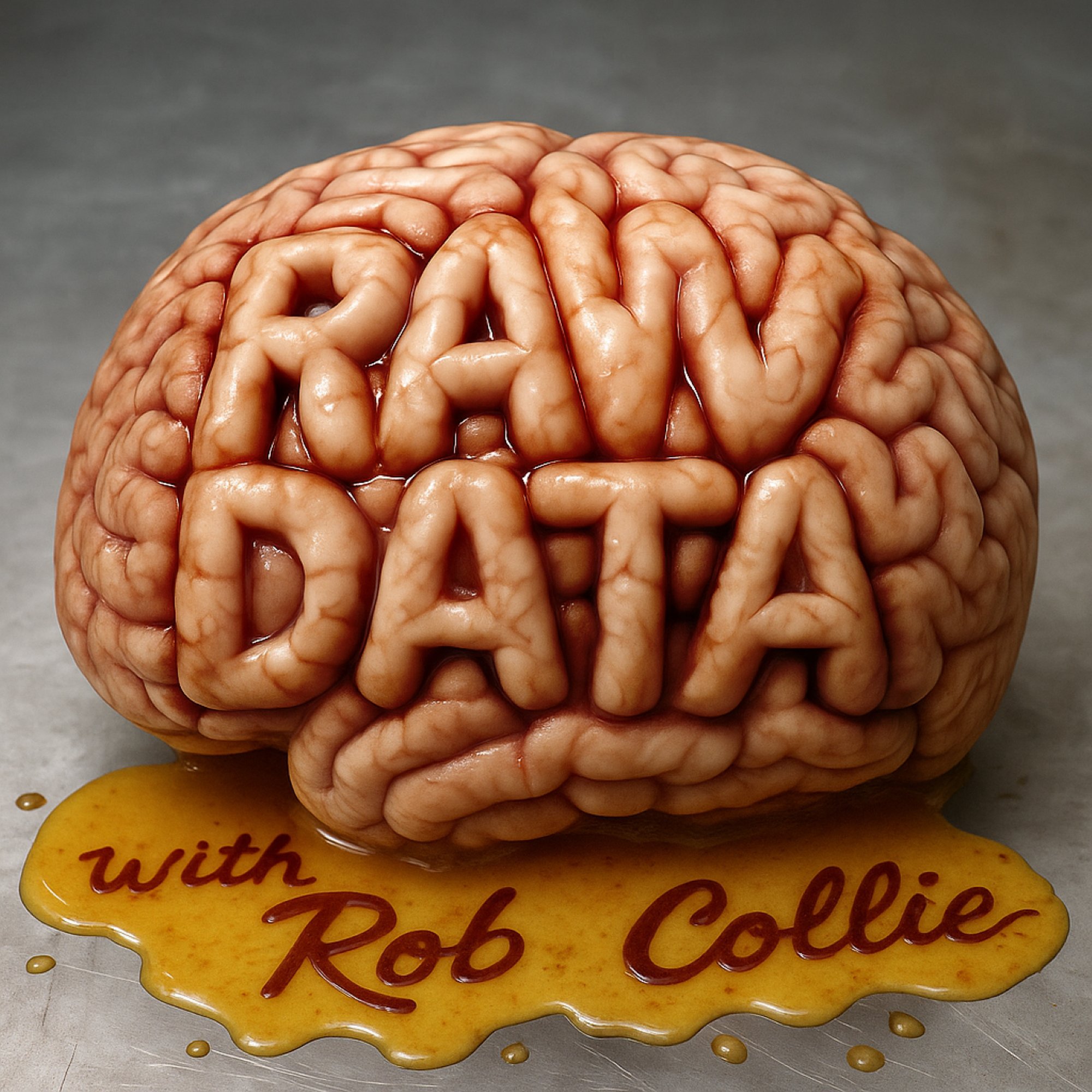
Raw Data with Rob Collie
Hosted by P3 Adaptive · EN
Raw Data with Rob Collie breaks down the complex world of AI into practical actions for modern business leaders. With co-host Justin Mannhardt and expert guests, the show uses real stories to deliver clarity and confidence to turn your data into real business value. Catering especially to mid-market leaders who know their size isn't a limitation but a competitive advantage, Raw Data cuts through the hype with straight talk from people who've actually built, deployed, and lived with these systems in high-stakes environments. Whether you're a business leader drowning in AI noise or a data practitioner ready to get off the starting line, you'll get accessible breakdowns of technology that drives actual impact, confidence-building roadmaps for modernizing data analytics, and practical wins you can apply immediately. This isn't theoretical frameworks or jargon wallpaper; it's honest guidance from leaders who've been in your shoes and figured out what actually works, so you can too.
37episodes
Episodes
Newest firstAll episodes
Claude Crumbs: The Little Book of Future Problems
2w ago00:28:35Tap to summarizeAI can write code faster than most of us can describe the problem. That's the good news. The catch is that building software has never just been about writing code. It's about making decisions today that won't come back to haunt you six months from now. In this episode, Rob and Justin unpack what happened after Justin and Kellan built a real application with AI. The code came together quickly. The architecture, the maintenance, and the "why on earth did we do it this way?" moments took a little longer. Along the way they discovered something that applies far beyond software development. AI can help you build almost anything, but it still depends on people to define the patterns, document the rules, and recognize when today's shortcut quietly becomes tomorrow's technical debt. Sometimes the smallest notes left behind become the biggest lessons later. If you're building with AI, or simply trying to understand where human judgment still matters, this episode is worth the time. It turns out the future has a funny way of leaving breadcrumbs.
Transcribe →Everyone's Priority. Nobody's Job
3w ago00:32:34Tap to summarizeAI headlines have already moved on to the deep end. Most businesses haven't. Every week brings another headline about what's next for AI. Build your own model. Train your own LLM. Customize everything. It's exciting, unless you're one of the thousands of companies still trying to answer a much simpler question: where does AI actually fit into the work we do every day? Here's the thing. AI has become everyone's priority and almost nobody's job. Leadership knows it matters but the real work still lives inside thousands of everyday workflows, where tribal knowledge, context, and experience drive the decisions. That's the gap, and it's a very different problem than the one the headlines are chasing. That's the conversation Rob and Justin have this week. Sparked by Satya Nadella's comment that every company should eventually have its own LLM, they make the case that the industry is getting ahead of itself. As Rob puts it, "Everyone's sitting poolside and Satya's talking about the deep end." Most organizations don't need a custom model. They need AI that understands their business, their data, and their workflows. That's where the biggest wins are happening today, and it's exactly where companies should be focused before they start worrying about building their own LLM. If AI has started to feel like an arms race you somehow missed, this episode is a welcome reminder that the biggest opportunities are still waiting in the shallow end.
Transcribe →The End of All You Can Eat AI
Jun 3000:24:07Tap to summarizeFor about two years, we've all been reaching for the biggest hammer on the wall because someone else was paying for the nails. If you were on a subscription, you grabbed the biggest, baddest model on the menu and used the crap out of it. Two hundred dollars a month for work that would have cost thousands on the meter. It rounded to free. Then a new model showed up for roughly fifteen minutes. It wasn't covered by anyone's subscription. It was priced by the token. And Rob immediately saw something much bigger than a product launch. The migration everyone assumed would be painful, moving millions of people away from all you can eat subscriptions, suddenly had a simple answer. Just make the newest, smartest model a premium experience. Checkmate. The buffet doesn't disappear. You just have to decide whether the lobster is worth paying for. Justin made the exact mistake he told himself he wouldn't make. He tried it anyway. He handed the model a sprawling request to audit an entire codebase and walked away. It came back with nearly twenty legitimate findings, from accessibility improvements to a legal disclosure that referred to the company as a corporation instead of an LLC. More importantly, it handled a level of independent work he wouldn't have trusted another model to do. His reaction afterward said everything: "I wish I hadn't tried it." Because once you've seen what the next generation can do, you can't unsee it. But if using it costs six or seven thousand dollars a month for one developer, "always use the best model" stops being a habit and starts becoming a business decision. Whether you're building with AI every day or just trying to make sense of where it's all headed, this conversation is a good reminder that the technology isn't the only thing changing. The business model is too. Give it a listen and see where Rob and Justin think it all leads.
Transcribe →Waiting Worked...Until AI
Jun 2300:15:24Tap to summarizeFor years, Rob had a pretty good system. When a new technology showed up, he didn't immediately declare it the next big thing. He wanted to understand why it mattered first. Sometimes that meant jumping in early, like he did with Power BI. Other times, it meant waiting until the signal was stronger than the hype. AI was different. It was the first technology that made Rob question whether his usual approach was enough. That's where Fair Game begins. In this special episode, Rob shares the foreword from the audiobook, along with his introduction to Eddie, the AI collaborator that helped shape the book from first draft to finished manuscript. More importantly, he tells the story behind the story. How someone who never considered himself an AI evangelist ended up writing a book about it, why fear became an unexpectedly good teacher, and why he came away convinced that AI success has far less to do with the models themselves than most people think. If you've been hearing Rob talk about Fair Game over the past several months, this is your first chance to hear how it all comes together. It's not Chapter One. It's the reason there had to be a Chapter One. Also in this episode: Fair Game Preorders
Transcribe →Why Bigger AI Isn't Always Better
Jun 1600:29:50Tap to summarizeMicrosoft just unveiled a monster of a machine built for local AI. More memory. More horsepower. More everything. Which led Rob and Justin to a question that has almost nothing to do with the hardware. Are we already using more AI than the job actually requires? This conversation starts with Microsoft's latest announcement but quickly turns into something much bigger. When do you actually need a frontier model? When is a smaller model just as good? And what happens when companies stop optimizing for the smartest AI and start optimizing for the right AI? It's a familiar pattern. New technology shows up, everyone assumes bigger is better, and eventually we learn that the best solution isn't the most powerful one. It's the one that's powerful enough. AI may be reaching that point faster than anyone expected. Along the way, Rob and Justin dig into the economics of tokens, why developers should think differently than everyday AI users, and why Microsoft's latest hardware announcement feels like it's missing a piece of the story. They don't pretend to have all the answers. Instead, they do what this podcast does best: pull on an interesting thread until a much better conversation emerges. If your first instinct has been to reach for the biggest model every time, this episode might convince you that the future belongs to the people who know when not to.
Transcribe →What Happens After the AI Works?
Jun 900:35:40Tap to summarizeFor the past few years, the conversation around AI has focused on the technology. Which model is best. Which tools to use. How fast everything is changing. But once you start building with it, a different challenge emerges. The technology is often the easy part. The hard part is everything else. The definitions that don't match. The documentation nobody trusts. The tribal knowledge living in someone's head. The processes that work only because a few key people know how to navigate around the mess. Business intelligence exposed some of these problems years ago. AI is exposing even more of them. For years, the people who cared about semantic models were mostly talking to each other. Everyone else had a simpler view: the dashboards worked, the BI nerds were overcomplicating things, and if a slightly different version of yesterday's question showed up, someone could always write more SQL. That worked well enough until AI agents became the ones asking the questions. Agents don't wait two weeks for a developer. They improvise. And the improvisation is different every time. That's the moment the semantic model stopped being a nice-to-have and started looking a lot more like a requirement. Every data quality problem that used to come home to roost the first time you built a dashboard is back, only now the list is longer. AI cares about policies, institutional knowledge, organizational context, and all the things that used to live quietly in people's heads. The one-version-of-the-truth problem just got a much bigger job description. Along the way, Rob and Justin compare notes from the front lines of building with AI, from multi-agent systems and knowledge management to the unexpected ways these tools behave once they leave the lab and meet real organizations. There's a book update in here too. Fair Game is officially available for pre-order, and Rob shares why the independent bookstore route matters more than most people realize. If you've been wondering what happens after the AI works, this episode is a pretty good place to start. Also in this episode: Pre-order Fair Game: Customizing AI to Your Business Is Easier Than You Think Fortune: Big Tech is laying off developers. My company just hired its first. We're both right about AI (By Rob Collie)
Transcribe →Absences, KPI Updates, Book Title and Pre-Order Bundle Reveal
Jun 200:06:52Tap to summarizeIf you've listened to the podcast over the past several months, you've probably heard Rob mention "the book" a few times. Well, it's finally done. In this solo episode, Rob reveals the title, shares the story behind it, and talks about the question that sent him down the AI rabbit hole in the first place: what does this technology actually mean for normal businesses? Not Silicon Valley. Not billion dollar tech companies. The rest of us. What he found was both simpler and more surprising than expected. The farther he got from the headlines and hot takes, the clearer it became that AI isn't some magical new category of technology. It's a lot closer to the data, software, and business problems companies have been wrestling with for years. Which raises an interesting question: if AI is more approachable than most people think, why are so many organizations still standing on the sidelines waiting for someone else to go first? As it turns out, that question became a book. And this episode is the story of how it got there. Also in this episode: Pre-order Fair Game: Customizing AI to Your Business Is Easier Than You Think Fortune: Big Tech is laying off developers. My company just hired its first. We're both right about AI (By Rob Collie)
Transcribe →It's Time to Start Looking Into Microsoft IQ
May 500:19:33Tap to summarizeRob was supposed to be finishing his book. Last chapter. Two days past deadline. Freedom was right there. Instead, he hit pause and recorded this. Because something from a few weeks ago wouldn't leave him alone. A Microsoft exec had dropped "Microsoft IQ" into a conversation weeks ago. At the time, it didn't fully land. Not unusual. There's been a steady firehose of new terms, new features, new promises. Most of them sound important. Not all of them are. Then he got deep into the data chapter. The one where you have to stop talking about what AI could do and deal with what it takes to make it work in a real company. And that's where this thing stopped sounding like a label and started looking like a plan. AI looks great right up until you ask it to do something that depends on your business. Your definitions. Your documents. Your people. That's where things usually start to wobble. Not because the model isn't capable, but because it doesn't have the context to land the answer. What Microsoft is doing with IQ is trying to meet that problem head on. · Fabric IQ is the structured side. Semantic models doing what they've always done, but now under a lot more pressure. · Foundry IQ is all the documents and content you forgot you had. · Work IQ is the human layer. Who's involved. Who needs to know. What you meant when you said "that thing." And yeah… if you've been doing Power BI the right way, this is where it gets interesting. Because those semantic models everyone else treated like optional homework? That's now the thing everything else leans on. We're not saying this episode is the key to your AI implementation, but it will make it clear why some of this is working and some of it isn't.
Transcribe →Cowork Builds Apps Now, and 'Acquired Skills Will Appear Here' w/ Garett Medlin
Apr 2800:56:10Tap to summarizeGarett Medlin just got the official title for the job he was already doing: AI Practice Lead at P3. He's also the person responsible for Rob trying Cowork in the first place, despite Rob's very reasonable question: "Why the hell would I want Cowork if I already have Claude Code?" Then Rob accidentally proved Garett right. He made an offhand comment about needing a better way to track feedback on book graphics. Nothing dramatic. Just the kind of annoying little process problem everyone complains about and nobody fixes. Two days later, there was a Slack bot reminding him to review images, a web app with approve buttons, surrounding context from the manuscript, and a clean way to send feedback without creating a Slack archaeology project. Built by a non developer. In Cowork. Which makes Microsoft's Copilot Cowork story… awkward. Garett came with the field report. Yes, it can make PowerPoints. Yes, it talks to OneDrive. No, it doesn't have memory. No, it doesn't have custom instructions. No, it doesn't have projects. The section where those capabilities are supposed to live is called "Acquired Skills," and it currently says they will appear here. Which is a choice. At the same time, companies are getting top down mandates to spend $20 million a year on AI with absolutely no idea what they're supposed to spend it on. IT gets handed the problem, Copilot gets treated like the answer, and somebody nearby is always trying to sell a very expensive fear of the tools that already work. This episode is really about that gap. Between what's shipping and what's still "coming soon." Between the people waiting for enterprise permission and the people already building useful things on a Tuesday afternoon. Turns out, the scariest part of AI might be realizing the non developers got there first.
Transcribe →AI "versus" the Medical Establishment, Rob's Sith Name, and the Death of Social Media?
Apr 2100:30:02Tap to summarizeRob didn't go looking for a fight with the medical system. He just showed up with receipts. Claude had already mapped the symptoms, suggested the tests, and summarized the situation better than any portal ever would. And instead of pushing back, the doctor basically said, "Yeah, this all checks out," added a few things, and moved on. No drama. No turf war. Just a quiet moment where you realize… the system didn't break. It just got leapfrogged. The next morning, sitting in an Uber on the way to the fasting lab, Rob had AI log into his medical portal, pull down test results, interpret them, suggest next steps, and tee up additional tests before the lab even opened. That's not "AI as a helper." That's AI running point. And when it catches an error in the doctor's AI-generated notes and fixes it by talking to their system directly… yeah. That's the moment. You don't unsee that. Which is great… until you zoom out. Because the same thing that lets you bulldoze friction in healthcare also bulldozes friction everywhere else. Social media. Identity. Trust. If AI can operate the interface better than you can, the whole idea of "who's actually doing what" starts to get fuzzy real fast. There's a version of this where everything gets more efficient. There's another version where everything gets a little… fake. This episode walks through both. It's worth knowing which one you're already in.
Transcribe →