Loading summary
Transcript27 lines
- [00:01]
A
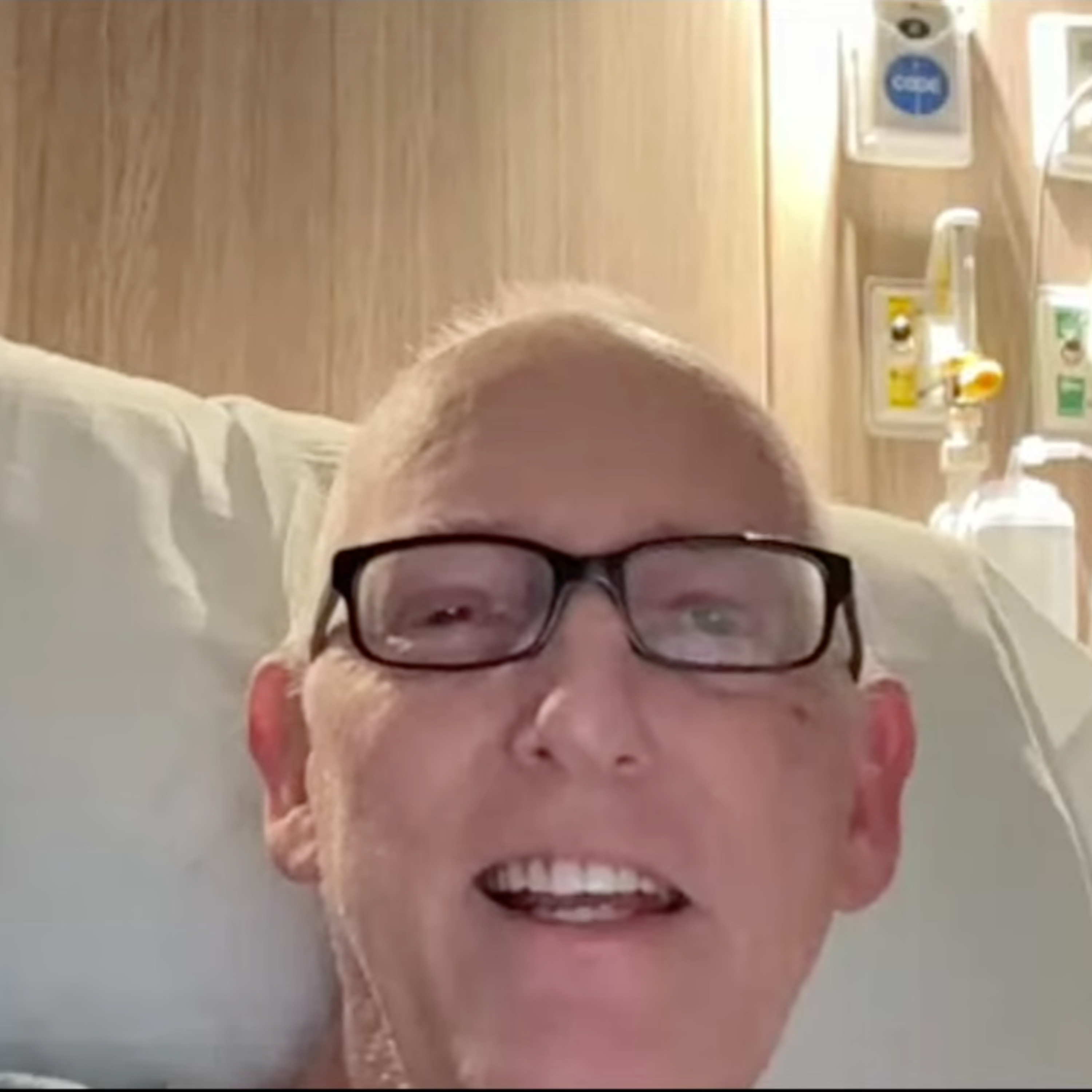
Well, let's see what happens. This morning, I'm using my phone to stream because all of my charging devices died at the same time. So I've got a little bit of power on my phone, and I'm using the Rumble Studio on the phone, which looks to me like he has stretched my image. Is that what's happening? And also, I can't see your comments for some reason. Why would I not be able to see your comments? How about this? How about this? Oh, there we go. Comments are working. I can't see myself. But is my image stretched? No sound. Huh? Does anybody else have a sound? I only see one person saying, no sound. Hello, I need an answer on. Do I have sound? Sound is good. All right. There are a couple of noisy devices running that I can't get turned off because my current nurse doesn't understand anything I say. So I'm having this misery kind of situation where for another half hour, the nurse on duty is a man who hears the opposite of everything I say. I don't know why, but if I say, could you bring me an apple? He will say, well, I would never ask for an apple, but if I did, he would say, okay, I won't bring you an apple. And then I would say, no, no, please bring me an apple. And then he would say, oh, oh, okay, no apple. No, no, listen to me. Anyway, so that's how my last eight hours has been. I can't quite get him to understand what I'm saying. No, he speaks perfect English. It's not a language problem. His English is perfect. He just hears the opposite. Or whatever I say. Don't know why. So all three of my devices stopped charging at the same time, so my laptop will not charge, and I've got two. Two bricks, two batteries, and both of them, for whatever reason, just don't charge. So I've got a little bit of juice left in my phone, so I thought I'd do a short one this morning. He's a man. Well, if somebody else comes in, I'll ask him to turn off my devices, but that is apparently not an option in my current situation. So I don't know if Owen Gregorian is going to do his spaces after, afterwards or at some point today, but I think so. So after the show, go to Owen Gregorian's. You go to his feed on X, and by then, he will either have the. The indicator up or not. But I think he will do a spaces, and then you can have some more fun this morning. In theory, I'll be going home today. But I don't know. All right, you go move. Company. Hello. Good morning. I'm live streaming.
- [04:28]
B
I just want to empty the.
- [04:30]
A
Yeah, yeah, go ahead. I'll just be talking.
- [04:35]
B
Okay.
- [04:37]
A
My. My catheter is being emptied. But you don't have to see that because that's in the other direction. You know, I had some coughing last night. I think I had an allergy. But it's all good this morning. So I'm good to go. I believe I'm good to go. All right. Want to check in on some stories? Well, it turns out that yesterday I met the first person at the hospital who has ever heard of Dilbert. Strangely enough, Trip to Bunny. Well, I. I tried all the outlets. Well, somebody tried them for me. All the outlets and all of the charge devices and all the charging cables, and they all appear to be. They all appear to be dead at the same time. So my laptop brick Dead is nor don't know why. Hey, we had a couple of earthquakes last night. Rob reiner. Or is your ride or die? All receptacles are dedicated. Well, they weren't for the last five days. So all the devices worked perfectly. They all charged until yesterday and today. None of the reciprocals. They'll work because they're all. They're all powering one thing or another. Are you really asking me my opinion of my work versus Garfield? All you do is a catheter cup or an Adam or stein. Yeah, it might have been a power surge that fried everything. Possibly. Wow. 2004 delivery. All right, anybody want to do the simultaneous step? No, no. All the powers on the. The outlets actually have lights on them. The earthquake happened after the problem with the power. I know. So by coincidence, I have a good friend who is in the same hospital waiting for his wife to give birth, so he might bring him. Bring me a charging brick after the show because it's a long day if you don't have a phone and you're sitting in a hospital bed. But if you do, perfectly entertained. All right, let's see if I can find the simultaneous sip because I certainly do not remember it. Oh, here we go, everybody. You ready? Waste your cup. All you need is a cup or mug glass A tank of chalicer stein A canteen jugger flask A vessel of any kind Fill it with your favorite liquid. I like coffee but I only have water. And join me now for the unparalleled pleasure the dopamine of the day. The base thing that makes everything better. It's called simultaneous step. Gross. I have to admit I love Isolater. I didn't always, but at the moment I do. All right, let's check in on the stories of the day. There's a story about a company that makes an exoskeleton for people like me. Might have to check that out. So apparently we made a. The United States made some major attack on Syria. Oh, that feels good. We were striking very strongly against ISIS struggles in Syria. Okay, well, so I guess we're at war with something. ISIS. 50 strikes on ISIS targets in Syria. This in the post Millennial. See. So I was going to do a show today, A mangled mess. I was thinking today of all the, I guess, conspiracy theories that are now considered just a fact. And I thought I'd catch you up on which ones I think are just a fact. I would say as of this week. Good morning, Owen. I would say that as of this week, there's no question that the 2020 election was rigged. Would you agree? Is there any question in your mind that the election was rigged? Probably not. Right for this. This crowd. Now, what's interesting is that forevermore, half of the country will believe that that's not the case. Would you. So half of the country is going to think there's no evidence that the election was rigged or that there was just some technical problem that doesn't matter. And the other half, which I am now solidly in, would call that a fact. I would say all doubt has been removed because of the Georgia discovery that there were so many, so many votes that should not have been counted. Likewise, I would say it's a fact that the Obama people and Rob Reiner and the heads of the CIA did, in fact run a plot to overthrow the country. I would say that's no longer any doubt. There's no way to spin it. There is 100% chance that we live through an actual coup. How many of you would agree with. So I. I moved those things into the Absolutely, definitely fact. No doubt about it. How about the. I don't. I don't want to talk about this, but I just has to. Would you agree that the COVID shot was probably the biggest crime against citizens that we've ever seen and that the people who were behind it had to know long before we knew that it wasn't just risky, it was a bad idea. So I'm moving that from, well, you know, maybe they didn't know or, you know, maybe. Maybe they got caught up in it or. I would say they definitely knew. Not everyone. Not. I'm not talking about regular doctors, but the, the only thing that I thought was still in dispute was whether it reduced the illness for people over 65 or had some bad, bad problem. But even they. Should at least should have been informed. So there was definitely no, no accurate information. So I'm moving the pandemic thing from maybe it was a bunch of people who up to, yeah, it was a crime and people should be executed for it because it's hard to imagine a bigger crime. So let's move that to the fact. No doubt about it. I'm not gonna, I'm not gonna have a complaint if somebody says that was fact. Well, we do know for sure that it did not stop transmission. I think there are still some open questions because if you didn't believe the data that it worked, why would you believe the data that it didn't work? Because they're both non credible data sets in my opinion. I heard on Joe Rogan, I heard somebody say, oh, I guess it was Brett Weinstein. Weinstein or Stein. God, I never get that right. But he was talking about how there was a natural experiment with ivermectin, so some people took it and some people didn't and they were in separate places. And you can see that the people who took it had a high survival rate and the people who didn't take it had a low survival rate, even if they did the other stuff. Now the way that was explained is that the odds of those two different outcomes being so stark is like a gazillion trillion to one. Yeah. How cheap Arden was for a reason. So it had to be true that the ivermectin worked because that natural experiment was so definitive. However, I'm going to add this little bit of skepticism. It goes like this. It's not just that that was a non controlled experiment because it was a natural experiment. Now they controlled placebo type of experiment. If it were true that the events happened as reported, then I would agree that the odds are a trillion trillion to one that it was an accident and that that would be quite definitive that ivermectin was a good solution. However, when it's not a controlled experiment, even if it is because a lot of controlled experiments turn out to be fraudulent, it's possible that it was simply reported wrong. Meaning that the people who said, oh, in my hospital we got this result could be lying. They don't think it made up the whole thing, or if it were only known because the press looked into it, somebody could be lying. So you can't rule out the fact that if it were A natural experiment and you got all the data correct, that would be very definitive. But if it was a natural experiment, and that's the very reason that you can't know for sure if somebody made up the data or lied to you or just came up with a story, you can never really know. And that actually is the reason that a lot of the scientific studies are debunked eventually is because if the data were true, it would tell you something, but you can't be sure it's true. So I would say the Ivermectin story, highly likely that it made a difference in a positive way, but not 100%. Can't really get to 100% on that one, in my opinion, because I don't trust whoever says it happened. Horse pace. Yeah, but if I were Joe Rogan, I'd sure be mad at the way they treated me. Are the Amish is fine. Yep. Never saw a horse with COVID All right, how about UAPs and UFOs? I do not believe that there are any aliens. I wouldn't rule it out. I mean, maybe. But I would say at this point we cannot convincingly say there are aliens. Yeah, Ivermectin has a good track record, but not obviously did not have a pandemic track record until recently. Anyway. So that's what I think at the moment. Let's see what other stories. But it's so weird that it's now just a fact that the election was stolen and that there was a coup attempt and the coup plotters are free and they will never be punished. So did you see my predictions yesterday about the. The Epstein files? So even as we had hours to go for the release of the files, I was posting on X skeptically, skeptically saying you're not going to see the files. And what happened? Sure enough, we got some files. And if you get some files and not all the files, it makes it worse, not better. Would you agree with that? Take. Would you agree that getting some of the. Some of the Epstein files but heavily redacted that it made it worse? It almost confirms that there's something that we should know that we don't know. So I always say I don't know who is the guilty party, but obviously the, the Thomas Massie and Ro Khanna bill had a big loophole in it which allowed somebody we don't trust to block out stuff to redact stuff. Yeah, but would you agree that the bill ultimately made things worse? Because if it allowed any redactions, you will never trust the redactions. True. You will never trust the redactions because you don't know who made them. And even if they told you, why, you wouldn't believe them, would you? So Massey and Kana, trying to do the right thing, genuinely trying to do the right thing, and also both of them, I would say, very capable and very bipartisan. But they made it worse. They did not mean to do that, but they made it worse. Now, here's the most surprising thing, and don't get mad at me, all right? If you're going to get mad at somebody, get mad at Alan Dershowitz. So I saw his reaction to the partial, partial release, and as usual, Dershowitz had the most interesting argument that I'd never heard. So he argued that there should be no redactions, including the victims. And his argument was that if you showed the people who were accused, but you didn't give the names of the people who were accusing them, that was not a fair situation. And I thought to myself, wait a minute, he's right. The argument is right. It doesn't mean I agree with him. Doesn't mean I agree with him. But his argument is solid, that it would be a crime to show the people accused but keep hidden the people who accused them. Would you agree? Imagine if Trump had been accused by Eugene Carroll of some sex crime and she was allowed to be anonymous forever, but he was not allowed to be anonymous. Would that be fair? No. In our system, you get to know who is accusing you, and ultimately, if it goes to trial or something, you would know who the accuser is. Then somebody got mad at me online because they said, you, you animal. Are you saying that you should throw the victims under the bus a second time? To which I say, what is the alternative? Keep in mind that everyone who is a underage victim is now in their probably 30s. So none of. None of them would be children. There'd be no children involved even if there were children when the crime happened. So forget about children. This would be adults being outed or not. Now, some of them might not care. Some of them might. But apparently Massey knows The names of 20 or so accused famous people. I think as soon as he said, we'll out everybody accused, but we won't out the people who accuse them, we can redact that. There is no chance, I think, this would work out. So I believe, unfortunately, as smart as Thomas Massie is, he created a system with Rokana that guarantees that we will never see the stuff that you think is important. So, unfortunately, yesterday I predicted that the bad people would resist, even at the risk of going to jail, even at the risk of jail, that we would not see the full stuff because it's just too easy to redact it. But I saw somebody ask online, why doesn't Thomas Massey release? If he knows the names, why doesn't he tell us? Apparently there are a number of people who know the names. However, you also don't know if there's some other reason they're not telling you stuff. Because imagine if what would happen if the CIA came in and said, all right, this is not protecting the guilty, but there's a whole bunch of stuff that you cannot know because it would be a national, national security problem. Let's say, and I don't believe this is true, but let's say Epstein was at least partially a CIA asset and he had done some things that we don't want our adversaries to know, or even the domestic audience to know. Yeah. So Bongino knows the names. Correct. Do you think that the Bongino quitting has anything to do with the non release of the Epstein files? What? Do you think. It could be a coincidence because it's the end of the year. So people make big changes at the end of years. So I know that Bungino wanted to quit, but we don't know why. So at the moment I would say that's a maybe. Maybe it has something to do with Epstein. Maybe. But it could be that he just hated the job, couldn't hack anymore. Seems likely. Too on the nose. Yeah, it's too on the nose to say that that's why he quit. I think family and end of the year, probably bunch of you quit in the summer. Well, I don't think he made it official in the summer, but I think he decided in the summer. That would be pretty tough on your marriage if you're just never home. All right. Yes, Stefanik. At least Stefanic is dropping out of politics and not running for governor. You saw why Elon saw. All right, what other stories are there? Let's see, there's new interceptor aircraft that can hunt and kill drones. Cool. While you do that, what's going to happen? The world's first humanoid robot LED EV battery production begins in China. So the exobi, if I'm saying right, it's a humanoid Robot, delivers over 99% connection success, matches skilled worker cycle times and detects wiring faults in real time. So I guess, I guess China is actually implementing some robots. We also. Now I'll add this into the definite fact. Some of you remember That I was speculating the only way our deficits could be so bad is if somebody was stealing trillions of dollars and somehow we were not stopping it. I now believe that's a fact. That the reason for our deficit, not 100% the reason, but a large part of our total deficit, is absolutely just crime. Would you agree that that's essentially a fact? Now you don't have to speculate. If our tax money is being stolen, it is being stolen at probably something in the half a trillion to a trillion dollar a year range. Would you buy that estimate that every year, probably for several years at least, when the deficits exploded, that probably half a trillion to a trillion is just pure fraud? And that is probably in most of the states. I'm pretty sure California has even more fraud than Minnesota. But there's no way it's just happening in Minnesota. Yeah, there might be a few states like Florida where it's not that bad. We can also say with confidence that the NGOs which are being dismantled at least a little bit, are primarily for the purpose of Democrat fraud. Primarily. So those are essentially just criminal organizations disguised as legitimate charities. So I would say we can move that to the fact that pile. Hey, Happy birthday. Happy birthday to you. Happy birthday to you. Yeah. Anything run by family members is some form of fraud, even if it's not technically illegal. All right, everybody say happy birthday to Owen. Yeah. The California bullet train. My God. Wow. Japan is trialing a. This is. This is also an Owens X feet Japan trials 100 kilowatt laser weapon that could cut through metal and drones mid flight. Oh, that's so cool. Do you remember the shadow ships from Babylon 5 and they had these cool laser weapons. It was a sci fi show many years ago. And the laser weapons would make this cool sound like. And slice through the other spaceships. Well, we're almost there with our laser defense of weapons. All right, so. So what do you think about the way Trump apparently used the threat of tariffs to get all the big pharma companies to drastically lower their prices so we had most favorable nation prices. Did you see that? Do you think any other president could have threatened the others didn't even have the tool. Trump created the tool, the tariffs and then threatened a big pharma unless they brought $150 billion of manufacturing back to this country and lowered their prices as much as 80 or 90% that otherwise they would get tariffed. So they didn't have any choice. And now he's going to call in the insurance companies and tell them they need to make less money. How would you do that except by threatening them? Maybe with also, I don't know. Can you tariff an insurance company? I don't know what it is you tariffs. You probably can't, but there's some way you can threaten them. So it looks like Trump is literally just going to bully and threaten the big farmer to lower the prices. So you can't tell me any other president could have pulled that off. Now we'll see. We'll see if it's real or, you know, the pharma companies just find some of the way to steal our money, but we'll see. Yeah, you replace their whole industry if they don't play ball. I think Trump is serious about lowering those costs and I would guess he's going to pull it off. So if he pulls it off, he would be successful in eggs, gasoline prices, except for California, but that's our fault. And pharma, that would be pretty big. But he still would not be successful in groceries. Oh, he would also be successful in rent because by doing mass deportations, he has decreased the, the demand for rental places. So I don't think people are feeling yet. By the way, if you haven't seen the all in Pod, the most recent all in Pod, you have to watch it because it's just a brilliant explanation of what's happening with AI and a good point counterpoint about what's happening with costs. So Jason from the all in POD was arguing that the average, the average consumer, average voter is now seeing lower prices. And that would be true. They see lower prices maybe in gas, but as long as there are other, their other costs are up, mostly groceries. I think groceries being the biggest problem, it's going to feel to them like nothing's happened. And it will feel to them that Trump did not do enough because groceries are up. And I would agree with that, that they would feel like they had not gotten enough from Trump. And what they feel will determine how they act in the midterms. Now, the other fascinating thing, David Sachs was explaining that there are a lot of beliefs about AI that the public has completely wrong and that they're basically hoaxes. So some of the, some of the AI hoaxes, and it might be premature to know that these are, that these are not true, but one of them is that AI will definitely lower employment. And Sachs was pointing out that the current evidence is that it doesn't. There's no evidence AI has lowered employment. But he also, to his, you know, to his credit, he also points out that it Might be too early to know for sure that that's a permanent situation. I would argue that the reason AI has not taken jobs yet is that AI doesn't work. So it's not about whether AI will take jobs, it's about whether it works, and it just doesn't work. And so a few companies are getting massively wealthy, mostly Nvidia, really, primarily one company, and they're just moving capital around. You know, the big companies are just finding reasons to pay each other big amounts of money, But that eventually, if AI actually starts working, it might have some impact on the number of workers. But here's the argument that it would never do that. The argument that it would not do that is that AI makes workers more productive. And if you can make workers more productive, then the employers would want more workers because every worker they got would be paired with AI and would be able to add more to the bottom line than a worker by himself or the AI by itself. Which is a very solid argument, I think, but we don't know if that's the way it'll turn out. The other thing is that people can't connect the potential benefits of AI to how their life will be better, but they can tell that it looks like AI might use up their water with data centers, which is a hoax. So apparently the data centers do not use up the local water supply. That's just something people believe. Also, what is this in all caps? I can't read it. Also, if Trump demands that the big data centers and the AI, the AI centers, if he demands that they build their own power plants, you might end up with a lot of clean energy that he didn't have before. And it wouldn't affect the locals because the data center would have its own power plant. I think that's what. We've already heard some announcements about that, right? Was it Google who is building combination? Maybe it was Amazon, but they'll all have to do it. So if you're in the AI business, you will have to be in the nuclear power business. And that's the only way that any of it will work, Really. You generated content that would have taken you a week manually, huh? Well, there you go. If. If hiring you once made sense, but you were 10 times more productive with AI, why wouldn't. Why wouldn't they want two of you? Because the AI didn't do the work on its own, right? I'm trying to think in the real world, if I put myself back in the cubicle, even if AI could do all the things that humans can't do fast enough or good enough. You still need a human to tell it to do it. You still need a human to say whether it's been done. And you still need a human to report to their boss and say, I could or could not do this. And, you know, so I feel like there's no legitimate way where an AI can just do what the boss wants. The boss will have to explain it to a human, threaten them with firing, and tell them to use AI as a tool, but that ultimately the human will be responsible. So I. And so I commented about the all in pod. Firstly. It was a great episode. One of the best. One of the best podcasts I've ever seen, actually. It was just so, so interesting. Those guys are so good at explaining complicated things. My voice is stronger, maybe. Yeah. So I wouldn't trust AI to do almost anything. I saw. I saw a lawyer. Some lawyer said that he spent a week preparing a, you know, legal argument or something, and then he tried to duplicate it with AI And AI did as good or better, but did it like him? Didn't. But you still need the lawyer because the AI isn't a lawyer. Right. You're not going to have a court case where the lawyer says, I will send a robot to do the closing argument. Yeah. No cough this morning. I had a. I had a pretty bad allergic reaction. I think it was last night. Give me a. Give me about six hours of coffee. But when it stopped, it just stopped. Yep. AI Information Dilution. I don't know what that is. You have to know how to prompt the AI Exactly. If the skill of using AI still resides in the person who's giving it the prompts, how are you going to replace the human. Anyway? We'll see what else is happening. Come in, Come in. Hi. I'm on a live stream right now, but that's okay. Yeah.
- [44:18]
B
I'm gonna put my name on the board.
- [44:20]
A
Okay.
- [44:21]
B
Is going home, so I'll be your nurse today.
- [44:23]
A
Okay, great. Just pay no attention to me.
- [44:28]
B
I'll just be anything I can have to.
- [44:31]
A
Well, breakfast is coming pretty soon.
- [44:33]
B
Sounds good.
- [44:38]
A
I put the number right there. Eric, just so you know, I'm live streaming, but you don't have to be careful. Yeah, you don't know. You don't have to be quiet. They. They know I'm in hospital, so just do what you need to do. They will. They will patiently wait. This is shift change, All right? In spirit. You're a teenager. I am. Would you write yes, please? Thank you. You know, I think my I think my problem is that there's something I'm eating in the hospital that I'm allergic to. All right, what else we got here? China builds the most advanced chip making machine and cracks the EUV barrier. Only one company in the world currently has functioning EUV machines, which I assume is Taiwan. And I assume it's the only way to make these advanced chips. Let me see. So this would be a very big deal if China could make the AI chips, but I think, I think the equally likely possibility is that all the big, the big nations will figure out how to make AI chips. They just haven't done it yet. A new laser could beam power midair to US aircrafts at 5,000ft or infinite range. Oh, wow. Did you see Elon Musk's estimate that SpaceX could become the first hundred trillion dollar value company? Hundred trillion dollar company, SpaceX? I feel like that is very possible. Oh, so you probably saw the news that Elon's $56 billion pay package got approved. So the force reversed. They reversed the reversal of it. So if you didn't know that story, I guess Tesla had a pay package deal with Elon from years ago that said if he reached certain targets, he would give as much as $56 billion is what it was worth by the time it exigun. But time has passed, so that $56 billion stock grant would now be worth closer to $140 billion. So while you were working yesterday, Elon made $140 billion in one day? Well, actually it was the sum total of all his work. But I do own some Tesla stock. I'm pretty happy about it at the moment. I also bought a Tesla yesterday, but for a family member who is very happy about. So let's. I guess we should talk about this. How many of you are interested in the, story of the, quote, civil war on the conservative side between Candace Owens and Tucker Carlson and Ben Shapiro and Erica Kirk and Tim Pool's wading into it a little bit. Megyn Kelly, she's into it a little bit. How many of you find that interesting? Because it's weirdly not interesting to me. I think I have the only useful opinion on Israel and all that stuff, which I'll reiterate, in case you haven't heard it. If you say you're for or against Israel, you're in trouble. Would you agree? Doesn't matter if you're conservative or pro Trump or non Trump. If you were to come out publicly as a podcaster or a pundit and say that you were against Israel, even against some things they're doing, or even against aipac. If you're against anything, you're going to come up to this brick wall that will be bad for you and your career. Likewise, if you say you're pro Israel, you will be accused of not being America first. So you can't be for Israel and you can't be against them without, you know, dividing everything and ruining your career, making enemies. So a while back, I landed on the only defensible position in my opinion. And it goes like this. I'm American, so I care about America first. I have complete respect for Israel being Israel first. Why wouldn't I? I think every country gets to try to maximize their national benefit. So if there are people who care more about Israel and they want to maximize Israel's benefit, that's just their. It's their privilege. Most of it is kind of public and transparent. So if you wanted to dislike the people in AIPAC Americans, you can find out who they are and you could dislike them. If you wanted to not vote for somebody who took APAC money, you could not vote for them. So I don't need to invest my reputation or my anything. My money or anything in Israel because Israel is its own country and they are pursuing what's best for Israel. Of course. Of course they are. Now, do I need to dislike Ben Shapiro if I think he is too pro Israel? I don't need to. I can simply observe that he has a set of preferences, he's very public about it, and if, you know, if somebody wants to agree with him, that would just be a different opinion. So personally, I would look at what's good for America in every situation. And if Israel is. If I thought that Israel was, let's say, guiding us in the wrong direction, I would have a dual opinion. One, are they doing a good job of it? Because it's their job to do a good job of it. The Israeli lobby and the pro Israel people should be doing whatever they can to maximize their preferred outcomes. And if you're American, you would quite reasonably prefer to maximize your American outcomes, even if Netanyahu doesn't want that to be the case, or even if Ben Shapiro doesn't want it to be the case. So I find myself able to like everybody in the conversation. Now, am. Am I required to have a negative opinion of Candace Owens if she's promoting some ideas that I don't think would prove out? Not really, because I see her as an entertainer and I can enjoy the entertainment and I could be amused by the. I'm just asking questions because I keep it in context. If you know that she's a podcaster, but you don't know what's in her mind, you can just look at the content. You can compare it to other people who might say, oh, that's B.S. some people are getting mad at it, some people believe it, but they're entitled to their opinions. They're not hurting me. So I find that I can just sort of observe this weird allegedly, you know, people calling each other anti Semitic. The thing I'm least interested in is who gets labeled antisemitic. Because I think that's like racism. Well, it's exactly like racism in the sense that it's a way to diminish people who don't agree with your preferred priorities. I don't think it usually means. Well, at least not with the. If we're talking about the famous podcaster types from. I won't even name names. But you know what I'm talking about. If you're talking about the famous podcast podcasters, I just see them for what they are. Some of them are, you know, virulent. Very, very lengthly anti Israel. I've tried to avoid any conversation about. What's his name? Fuentes. Nick Fuentes. His biggest problem is that he's good at what he does, meaning that he's interesting on camera, but I don't have to agree with anything he says. And I think it's useful to, you know, see all sides of this. So when he gives his opinion, I go, oh, you've got some opinions that are way too far for me, but those are his opinions. I don't believe he's harmful, but if I were. If I were less pro America and more pro Israel, I would want him to be quieter. So I understand why people have a problem with him, and I understand why he wouldn't be platformed everywhere. But it's not really my problem is. Feels like that's just between him and Israel. By the way, I heard. I heard Nick Fuentes explain why he's a virgin and can't find a girlfriend and that there's no. There's no practical way he could ever have a girlfriend. It was actually really hit home a little bit. He was saying, what if he got a girlfriend and things worked out, but then eventually she realized that if she left him and turned on him, she could get a lot of money from his enemies. So there's no real way he could just go to the dating app and meet a girl and have a normal Relationship and hope it works out. It basically, you know, nearly 100% of the time, it would likely turn into a disaster. It would be financially disastrous and relationship disastrous. And that even if it seemed like a good idea at the time, it would guaranteed to turn bad. And I thought to myself, man, you're so right, that in his particular situation, because he's so prominent and apparently he's rich, he says that there's no way a relation, a standard relationship would work out in his life. And it was kind of sad. But I have to tell you, I can relate to the fact that, that if you're rich, you have to worry about relationships that don't last forever. And in our current world, relationships don't last forever. So that he would. His odds of finding somebody he could trust forever are just not really good. It's just a bad cost benefit situation. Now, there might be things he's not telling us that would have an impact on that. But I do agree with the general, general concept that it would be completely impractical for him to get married or even have a serious girlfriend. Yeah. If you're not rich and you're not. If you're not also a provocative kind of character, then I can see how urge would work. But if you're. If you're. What's the word? Not provocative. Yeah. Went straight to prostitutes. Yeah. I don't. Don't think he did. Yeah. But anyway, so I don't have to have an opinion about all of those people. It's laboratory. That's close to what I'm looking for. No, not provocative. Not inflammatory. There's another word. Controversial, let's say controversial. That's good.
- [59:42]
B
Yeah.
- [59:43]
A
If you're controversial. Especially the things he says. He's controversial times 10. The odds that he would eventually get sold out by a. An angry divorcee, pretty high disgrace. We all need a relationship manager. He calls himself a revolutionary. Anyway, so my take on the. Wow, 40,000 people live. My take on the whole conservative social. What do you call it, Civil war, Is that it just seems unnecessary. No, prenup doesn't help you at all. So the prenup would not help him. Well, I could give you more details on that, of course, but if you think a prenup protects you, it does not. Now, I've not personally had any trouble in that regard, but if you start looking into what a prenup can and cannot do, it would not protect them in the way that you think it would because somebody could still throw them under a bus and of course would not the courts do not accept a prenup that is too one sided. So if, for example, if somebody signs a prenup and then was in a relationship for several years and then you said, aha, I'm going to divorce you and give you nothing because that's what you signed in the prenup, the judge would just throw that out and say, now it has to be fair. And is it fair that you could be together for five years and that the. That the spouse would get nothing or even a low amount? And the answer is the course would not allow you to give a low amount even if you had a prenup. They're non disclosure forms. Yeah, but you couldn't trust that anybody can talk to a reporter. And you wouldn't be able to. You wouldn't be able to claw it back even if they talked about you. Too many assets to get married. Yeah. So the system kind of guarantees that marriage is a bad idea for some people. I think if you came into it with essentially identical, you know, financial power, that it would work. So there are definitely situations where it would work, but not for famous people. Never worked for you. Oh, is Jason on here now? I see somebody up. Come in. Yes, come on in.
- [63:27]
B
Hello.
- [63:27]
A
Hi. I'm live streaming right now, but that's okay.
- [63:31]
B
Okay. Are you ready for breakfast?
- [63:33]
A
Yes, please.
- [63:34]
B
Okay. Your last name?
- [63:35]
A
Adams.
- [63:36]
B
Adams. And birthday?
- [63:40]
A
6-8-57.
- [63:46]
B
All right, I'll be back.
- [63:48]
A
Thank you. So my food will be here somewhat. Somewhat soon. So when my food gets here, I'll. I'll have to say bye. And that's going to happen soon. For the diversity lottery is going to be suspended. Ukraine's Baba Yaga drones are becoming Russia's latest nightmare. There's a Turkish tank killing drone. Okay. The deadly La Palisades Palisades inferno took hold in area fighter fighters were restricted by WOKE laws protecting endangered plant species. Of course there had to be some kind of WOKE problem in California that made the fires worse. Ukraine is making a thousand interceptor drones a day to fight Russia's shahid waves. Damn. Thousand drones a day. Oh. The Biden FBI and DOJ Wade campaign finance probe of Senator Kirsten Sinema after she left the Democratic party. I guess that didn't happen. Wow. There's an invisibility cloak for IT to know. Ridge, I want an invisibility cloak. Oh, wow. The new cloaking concept that shields sensitive tech from magnetic fields. Wait a minute. A magnetic cloak? I don't know if I believe that. Could a common spice help cure chronic back pain? All right. We have to find out what those spices. All right, what are those spices? Two drugs. Turmeric. Turmeric might cure your back pain. And Ovanolin. Never heard of them. All right, I'll be shutting down the feed as soon as my breakfast shows up, which will be any minute now. Testosterone alters how men respond to unfairness against women. Well, you could have just asked me that one. All right. US Firm gets funds for the first mass producible nuclear reactors. Wow. So Radiant remains on track for next year's startup of its first nuclear reactor at the Colitis demonstration unit. So it's a company named Radiant, has raised over 300 million for new funding, and they can apparently build a micro nuclear reactor. Isn't it weird that when AI Became a big thing and suddenly we needed all this power, that's exactly the time that the nuclear industry suddenly learned how to make portable little micro. Well, maybe they always did. It's kind of weird that the power plants became practical and economical at the same time as AI it might be because there's just so much more money to be made with AI that suddenly, you know you have the best of everything working in your favor. Let's see, what else. US Firm produces enriched rain or uranium for nuclear reactors. So there's all these breakthroughs in nuclear power that are happening at the same time. What? There's a vapor breakthrough. Okay, I don't know why we need a vapor breakthrough. Oh, look, it's me. So, did you hear about the North Korean hacker who had a job in some big American company, and the only way they caught him is that there was this tiny, tiny lag in the time from the keystroke to something happening. So they could finally figure out they knew that he was in North Korea and not just remote worker. It turns out that some Korean. North Korean. A North Korean. Had figured out how to fool an American company and get a job and work it for some time. All right, here's the food. All right, everybody, you can pause right here.
- [70:07]
B
And your nurse is bringing your black coffee for you.
- [70:10]
A
Thank you. All right, thanks. All right, everybody gotta eat. Yeah. The unsung Kodan sip is coming up now. All right, I've got a little bit of juice in my phone. I think I'll keep there. All right, bye. Coffee? Thank you. You put right there. Thank you. Let me just. I'm just ending the live stream.