← Real Cool History for Kids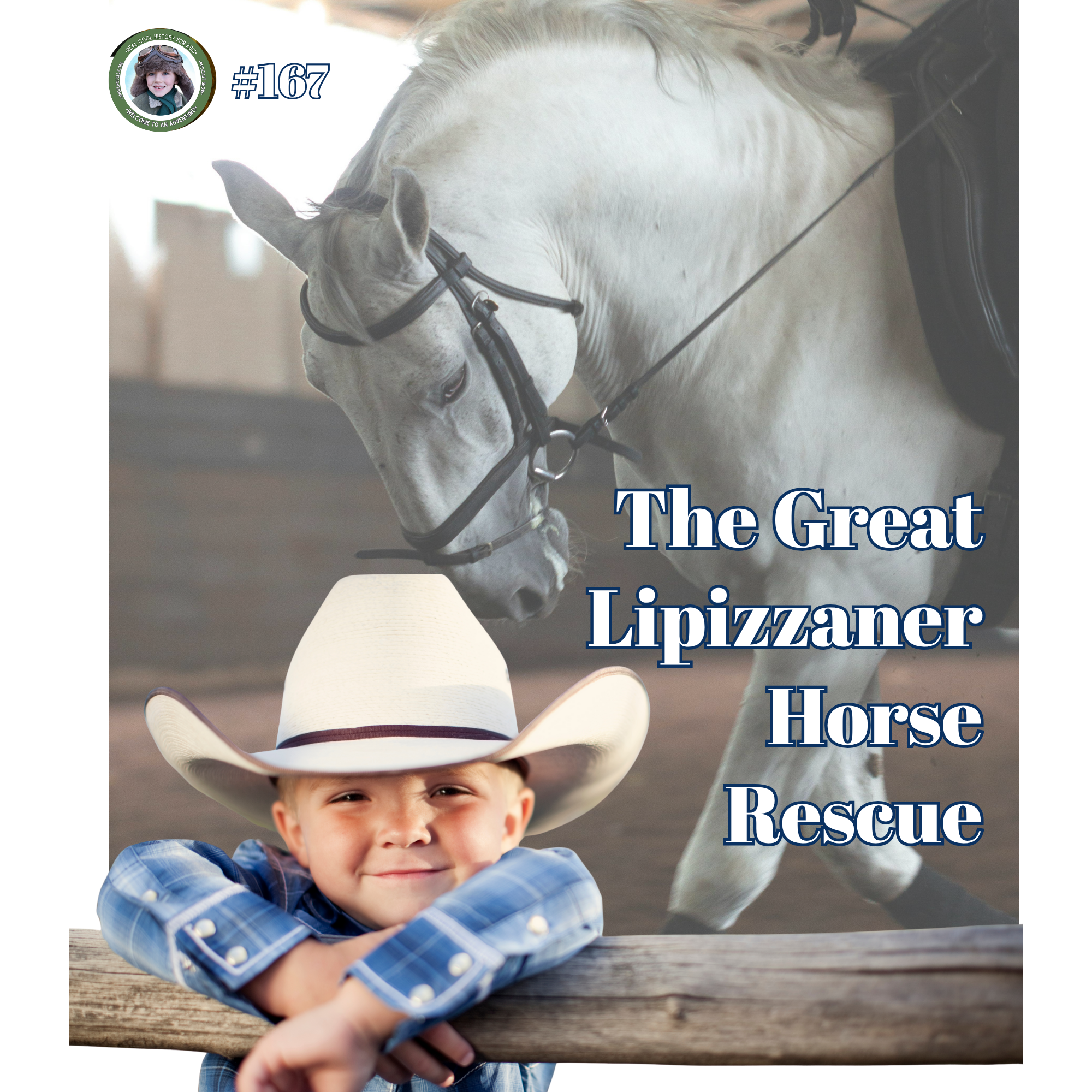
Real Cool History for Kids
The Great Lipizzaner Horse Rescue (a special episode for Eloise Grattan)
00:19:09
Loading summary
Transcript1 lines
- [00:00]
A
Foreign this is Angela Odell, and you are listening to Real Cool History for Kids, a podcast show featuring history told from a distinctly biblical worldview perspective. Welcome to an adventure. Foreign welcome to episode 167 of Real Cool History for Kids. This episode is for Eloise Grattan, who wanted to hear a story about the beautiful Lipizzaner stallions. Hey, Eloise, this one's for you. Oh, you guys, I'm so excited to tell you this story. I. I have always loved horses. I learned to ride when I was a very small child, and my connection with horses has always been. Well, just really, really strong. I just love them. One of my favorite books as a child was White Stallion of L Pizza by Marguerite Henry, the same one that did Misty of Cincoteek. So when I saw Eloise's request for this story, well, it just made me super happy. One of my favorite stories about the Lipizhonner horses actually took place towards the end of World War II. And you guys know me. You know I like to tell stories about World War II. So here's one that includes both World War II and horses. So get ready for an absolutely amazing story. Okay? But before we jump into that story, we need to understand where these horses came from and why they mattered so much. Many, many years before World War II, the powerful rulers in Europe loved horses. They especially wanted horses that were strong and brave and beautiful enough to carry knights and kings, but. But also graceful enough to perform in fancy riding schools. In the 1500s, the ruling Habsburg family in Austria began breeding a special kind of horse. They brought horses from Spain, strong, elegant Andalusians, as well as horses from Italy and Arabia. And then they bred them into their royal studs. One of these studs was at a place called Lipica, in what is now Slovenia. In 1580, Archduke Charles II brought in a group of stallions and mares and started a breeding farm there. Over time, the horses from this place became known as Lipizaners. At first, Lipizaner horses came in many colors, everything from bay and black and chestnut and even dun, which is a light color. But the Habsburg rulers loved the look of the gray horses, who turned into a stunning white when they were grown. So breeders began to choose these gray horses on purpose. Eventually, most of the Lipizanha horses were gray, which means they were born dark, but slowly lightened over the years. This was one of the most fascinating things about them. As foals, they were usually black or dark brown, running around on their wobbly little legs. Can you just imagine they're so cute. As they grew older, though, their coats became lighter and lighter until somewhere between 6 and 10 years old, they looked like the famous white stallions you might have seen in pictures. These horses had strong, high, arched necks and powerful backs and deep chests. And they were also known for being smart and willing to work, which made them perfect for careful training. In Vienna, Austria, the Spanish riding school became the most famous place to see the Lipizaner stallions. Riders there trained them in classic dressage, which is like ballet for horses. For hundreds of years, these stallions performed for emperors and kings and visitors from all over the world. But then, in the 1900s, the world changed. New machines and new kinds of war appeared, and horses were no longer needed in the same way for battle. But the Lipizaner stallions still performed in Vienna and were considered to be treasured, important parts of Austria's culture. When World War II began in 1939, danger spread across Europe. We've learned lots of stories about this time. Bombs fell on cities and armies marched across borders. And many, many priceless things, art and music and buildings and animals were suddenly at risk of being destroyed. By the early 1940s, Nazi Germany had taken control of many parts of Europe. And these evil people were not only trying to build a perfect human race, they also wanted what they thought would be the perfect horse. German forces gathered some of the best breeding horses from across Europe. Arabians, Thoroughbreds and Lipizaners. And they shipped them to a large stud farm near a small village called called Hosto in Czechoslovakia. Among these horses were the precious Lipizaner mares and some of the stallions that belonged to the Spanish riding school. At Hosto, there were around 1200 horses of many, many breeds. And of those, about 375 were Lipizaners. Back in Vienna, the director of the Spanish riding School, Colonel Alois Podeyski, knew his beloved horses were in danger. When bombing raids began to threaten the city in early 1945, he moved the performing stallions to a safer place in Austria. But the breeding horses were still far away, in hostel. Without those mares and stallions, the Lipizaner breed itself could have been lost. Meanwhile, the war was nearing its end. In April 1945, American soldiers from the 2nd Cavalry, part of General George Patton's 3rd army, were moving through the forest and hills not far from hostel. These soldiers no longer rode horses in battle. They used trucks and tanks. But many of them still loved and respected horses. One day, a German officer surrendered to the Americans. Over breakfast the next morning, he showed Colonel Charles H. Reed, the American commander, some photographs of beautiful horses, Arabians and Lipizaners that were being kept in hostel. He explained that more than 400 allied prisoners of war and even some deserters from the Soviet army were also working there caring for those horses. And he warned that the Red army, which was the Soviet army, was getting closer and when they arrived they might kill the horses for meat because they were hungry. Colonel Reed understood that these animals were more than just horses. They they represented centuries of careful breeding and training and really an integral part of the the Austrian culture. And he believed that they were worth saving. To rescue the horses at Hosto, the Americans needed permission to go into an area that was supposed to belong to the Soviets after the war. So Colonel Reed requested approval from his superiors. General George Patton, an experienced horseman himself, agreed that the horses should be protected and allowed the mission to go forward. Hey guys, I'm going to take a quick break right here in the middle of our story about the great Lipizonner horse rescue to give a shout out to a recent podcast reviewer, the Hernandez sisters, Luna, Cleo and Nina, who say this about Real Cool history for kids. Hi Mrs. O', Dell, we absolutely love your podcast. It is always so exciting and we learn a lot. We love listening to your podcast at home and on our long drives when we travel in our rv. Our favorite episode is Virginia Hall. Please keep podcasting. Thanks girls for such amazing feedback. I'm so happy to hear how much you guys are enjoying and the podcast show. Hey everyone. I wanted to give a huge, huge thank you to all of our Patreon members. You too can help us keep Real Cool history for kids on the air by joining our Patreon community. This episode is made possible in part by the World Story series written by me and published through Master Books, a leader in homeschool curriculum and written from a distinctly biblical worldview perspective and designed for everyday life. And now let's get back to our story about the rescue of the Lipizaner horses. An advanced mission was sent. First, Captain Thomas Stewart, an American officer who knew horses well, rode with a German veterinarian, Dr. Rudolf Lessing, to Hosto to arrange a surrender and make sure the plan would be possible to rescue the the horses. After some tense conversations and negotiations with German officers in hostel, including the local commander, the Americans and Germans agreed the horses and the prisoners would be handed over to the US army who would try to get them safely out before the Soviets arrived. While on April 28, 1945, about 350American soldiers from the 2nd Cavalry moved into Hosto. German snipers fired at them along the way, and there were small skirmishes, but the Americans pushed through and reached the stud farm. There they found more than 1200 horses. Lipizaners, Arabians, thoroughbreds and Russian horses crowded into the stables. The soldiers freed the Allied prisoners of war who had been caring for the animals. Together, the American soldiers, the former prisoners, and some of the German horsemen who had surrendered began the enormous job of preparing the horses to move. They knew they had to work quickly. If the Soviet army reached Hosto first, the horses might be taken or killed, and all of their effort would be for nothing. Moving that many horses was not easy. Many of the mares were pregnant, and some had very young foals at their sides. The horses were tired and nervous from the sounds of war, and some had never traveled long distances before. The Americans formed a plan. Some of the horses were loaded into trucks, and others were ridden by cavalrymen. And the rest were herded in a long column with vehicles in front and behind and riders moving among them to keep them calm and together. On May 12, 1945, they began driving the herd out of Czechoslovakia, heading toward safer territory in Germany. They traveled about 35 miles over the border to a town called Katzing. The trip took days. The faster group, made up of the strongest horses, arrived first, and then the slower group with the pregnant mares. And the foals followed more carefully and arrived safely a little later. When asked why they would risk their lives for horses, these brave men answered that they had been focusing on battles and fighting for so long, and they wanted to do something that focused on saving, something beautiful. And this is what the Lipizaners are, a beautiful form of art. On May 7, 1945, just about the time the German army officially surrendered, Colonel Podieski put on a special performance of the Spanish Riding school stallions at their temporary home in St. Martin, Austria. General Patton attended that performance. Podeisky asked him to place the school under American protection and to help find the lost breeding horses. Patton agreed, and neither man knew that the hostel herd had successfully been rescued and was already on its way to safety. Soon after, Podeisky was flown to see those rescued Lipizzaners. And over the following weeks, plans were made to return the horses to their rightful homes. On May 25, 1945, 244 Lippizaner horses were brought back to Austria. The breeding lines were safe, and the future of the Lippizaner stallions of the Spanish riding school was restored. And because of this rescue, later known as Operation Cowboy, the Lipizaner Stallions continued to perform in Vienna. Today, they still demonstrate the same classic dressage, the same moves, the same classic ballet for horses in the same historic riding hall where their ancestors performed centuries ago. And the story of Operation Cowboy and the Lipizzenter Stallions gives us some important things to think about. First, it shows that even in terrible war, people could choose to protect something beautiful and good instead of allowing it to be destroyed. The soldiers and the officers who risked their lives to save the horses knew that these animals represented hundreds of years of careful work and art and tradition. You know what their actions in this rescue mission remind me of? The truth in Philippians 4. 8, where Apostle Paul wrote, whatever is true, whatever is noble, whatever is right, whatever is pure, whatever is lovely, whatever is admirable, if anything is excellent or praiseworthy. Think about such things in the middle of all of the dark and frightening time of that war. The rescue of the Lipizaner Stallions was something lovely and admirable. It was a way of seeing that beauty and goodness still mattered even when the world was at war. And because of that choice, children and families today can still watch the Lipizaner Stallions leap and dance in Vienna. And you guys, I have created podcast episodes in the past about the brave men and women who rescued all artwork that had been stolen by the Nazis. You can find those episodes and listen to them. And it is just more about those brave, brave people who risked their lives to help save culture and art and beauty after a war that rocked the world. I will put links to those episodes in this episode's information. And now it is time for this episode's birthday shout outs. Happy Birthday to Judah murray, who turned seven on November 13th. Happy birthday to Reese Kelly, who turned eight on November 16th. Happy birthday to Tucker Hill who is turning eight on November 18th. Happy birthday to Sheldon Pope who is turning six on November 18th. Happy birthday To Carolina Valadez who is turning seven on November 18th. Happy birthday, Regan Williams, who is turning six on November 18. Happy birthday to Jori Sessa who is turning eight on November 19th. Happy birthday to Franklin Singer, who is turning eight on November 21st. Happy birthday to Bennett Hill, who is turning three on November 22nd. Happy birthday to William Lodwig, who is turning five on November 23rd. Happy birthday to Jeffrey Lundgren, who is turning four on November 23rd. Happy birthday To Sasha McDonald who is turning 12 on November 23rd. Happy birthday, Abigail Roberto, who is turning four on November 24th. Happy birthday to Hazel Roberto, who is turning two on November 25th. Happy birthday to Olivia Dinsmore, who is turning three on November 27th. And happy birthday to Rose Silva, who is turning 12 on November 30th. Happy birthday to all of you from the Real Cool History for Kids family. I hope you all have enjoyed this amazing adventure in history today. Remember to keep exploring and to keep asking questions. And always remember, history is full of real adventures and really, really cool stories. I'll meet you here soon for the next episode of Real Cool History for Kids. Until then, with the help and grace of Jesus our Savior, be the best you ever.