← Real English Conversations Podcast – Real English for Global Professionals | Speak Clearly & Confidently at Work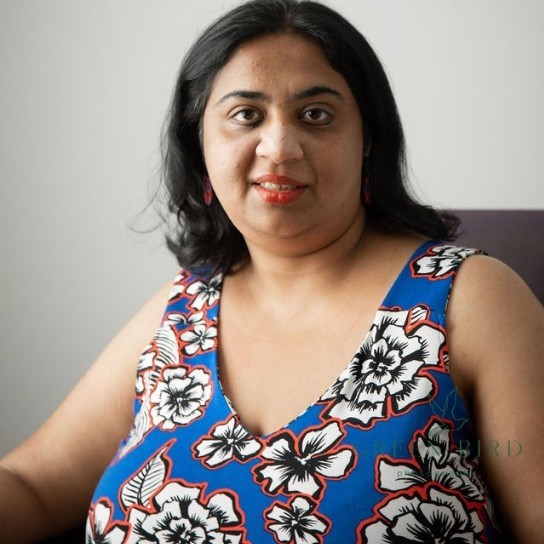
Real English Conversations Podcast – Real English for Global Professionals | Speak Clearly & Confidently at Work
🎙️How Shweta Ramkumar Helps Healthcare Professionals Speak English | Real English Conversations Podcast for Global Professionals
Loading summary
Transcript64 lines
- [00:00]
Ad Voice
Take the exit, turn right into the drive thru.
- [00:03]
Curtis
Nope, I'm making dinner tonight.
- [00:05]
Lingokids Advertiser
You don't have time.
- [00:06]
Ad Voice
Josh has practice.
- [00:07]
Curtis
Oh, that's right.
- [00:08]
Shweta Ramkumar
I'll just get a salad and fries.
- [00:10]
Curtis
No, just the salad.
- [00:11]
Ad Voice
But salad cancels. Fries.
- [00:13]
Shweta Ramkumar
Salad only.
- [00:14]
Ad Voice
Fries.
- [00:14]
Shweta Ramkumar
Salad, fries.
- [00:15]
Ad Voice
Food noise isn't fair, but Mochi Health is the affordable GLP one source that puts you on the road to successful weight loss.
- [00:22]
Shweta Ramkumar
Hey, can I get the fries?
- [00:23]
Curtis
Salad? Sorry.
- [00:25]
Ad Voice
Learn more@joinmochi.com Mochi members have access to licensed physicians and nutritionists. Results may vary. Spring clean that podcast feed and skip the doom scroll. The Newsworthy gets you caught up on the day's news in less than 15 minutes and gives you some fun conversation starters along the way. It's quick, friendly and informative. Search the Newsworthy wherever you're listening now and follow or subscribe to the Newsworthy Today.
- [00:46]
Libsyn Ads Narrator
Marketing is hard, but I'll tell you a little secret. It doesn't have to be. Let me point something out. You're listening to a podcast right now and it's great. You love the host. You seek it out and download it. You listen to it while driving, working out, cooking, even going to the bathroom. Podcasts are a pretty close companion. And this is a podcast ad. Did I get your attention? You can reach great listeners like yourself with podcast advertising from Libsyn Ads. Choose from hundreds of top podcasts offering host endorsements or run a pre produced ad like this one across thousands of shows. To reach your target audience in their favorite podcasts with Libsyn ads, go to Libsyn ads.com that's L I B S Y N ads.com today.
- [01:29]
Curtis
This is the Real English Conversations podcast where we help you to communicate clearly and confidently in the conversations that matter most in the workplace and your professional life. Hey everyone, it's Curtis here from the Real English Conversations Podcast. English that helps global professionals speak clearly and confidently at work. Today's episode is something a little different and something special. My guest is Shweta Ramkumar, a communications coach and ESL expert who specializes in helping healthcare professionals from non English speaking backgrounds develop the confidence and clarity they need to connect with patients and colleagues. Not just with the right words, but with empathy, trust and purpose. She's the founder of Healthy Dynamics and her story weaves together language, compassion and real world experience from both the medical and ESL fields. From growing up with a doctor mom to working directly with healthcare providers, Shweta has seen firsthand how communication can either build relationships or break them. I'm super excited to have this conversation with her. And please welcome to the show. Shweta Ramkumar. I'm glad you're here.
- [02:49]
Shweta Ramkumar
Thank you very much for having me. Curtis, it's a real honor and privilege to be part of your podcast and a member of your community.
- [02:57]
Curtis
Start from the beginning. Can you take us back to a moment as a child, you know, when you were watching your mom who's.
- [03:04]
Ad Voice
Who.
- [03:04]
Curtis
Who's a doctor, interact with her patients, Was there a particular moment that really shaped your understanding of what true communication looks like?
- [03:15]
Shweta Ramkumar
Sure. So the interesting thing is my mother is actually not trained as a clinical doctor, even though that's what she wanted to do at one point, and she was. She would have actually been really good at it, but for a lot of reasons, such as the working hours and because she was also having to balance motherhood, she didn't pursue that. But at the same time, during her spare time, which she had very limited of, when we were living in India, we used to get these people who were not very well off who would just. In the neighborhood, she was known as the doctor. So they would come and just get her advice and her help on health challenges that they were having or their family members or their children were having. And she would do anything from giving them prescriptions, obviously, because in India, she could still do that, even though she was not a clinical practitioner. But at the same time, she would also give them advice and recommendations. Now, bear in mind that these people were not only financially in the best position, but they also were not educated. So it was doubly challenging for anyone to get through to these people. And with my followers on LinkedIn, I also see this quite a lot of times because it's not just that they can't afford it, but also they are because of their lack of education. Education and awareness. Sometimes what can happen is they are very limited in whatever, what they know, and even hesitant to take on, you know, in general health recommendations and things like that. Now, if I were in her position, I would get really frustrated with that because. Because, you know, it's. Even though the evidence is very clear. But I. It would never struck me that these people are not educated. Whereas my mom was so patient and she was so kind to these people, at the same time, she would also tell them off when they're doing something wrong and hold them accountable. So in every way, when she was able to do this magically, you know, with these people who. Who had all these challenges, I just felt that that was really remarkable. Now, as a child, whilst I loved and Even till date. I love talking about the human body, the physiology, the anatomy, how everything works, how healthcare in general operates and all that. I did not want to be a doctor like her. Like I did not want to be in the trenches of medicine. I wanted to do something that was where I can educate people on all these things, which is kind of how this is, this all sort of came about. But going back to your original question, that is what that was. They were some of the most pivotal moments that got me to thinking that, okay, you know, she's able to do this so well. And you know, as at that time I would also when their kids would come, these people's children would come. I used to, just for free from now and again I would help them with their homework. So I was always been a teacher, you know, deep down and I, that's what I was good at. Well, while she would be talking, talking to the parents. So that's kind of how it sort of worked. But then again, when I was a patient myself as a child and there were times when I had to go to, I developed, I remember when I was about 10 years old, I developed very severe UTI urinary tract infection. So that obviously meant a lot of endless doctor's appointments and you know, going to healthcare facilities. And the way I was treated and my mom was treated when we were patients were completely different to how she was treating these patients. And then I realized, okay, in this case the people are coming to her home. It's not a high pressure, high stress environment. Whereas in a clinical setting now I look back, when I look back that I can understand why. But then that's when I realized that this is so vastly different. And then I realized, okay, so people who like me, who at that time, all these people who were challenged, they have, they are in a very vulnerable state, health wise or in any other way. And what they need at that time is not to just be treated as a number in the system or just like a cog in the machine. They need to be not only just go beyond the basics of just treated with respect. You know, their challenges have to be heard and acknowledged and validated. And you have to communicate with each of them in a way that is tailored to them as individuals and their individual challenges. So being observant of all these things is the earliest memory that I can recall of why eventually, 25 years later is what I'm doing right now.
- [07:37]
Curtis
Now you've worked in both healthcare and ESL education and I imagine those are two very different worlds. When did it really hit you that language alone wasn't enough and that something deeper was missing in how professionals communicate with each other?
- [07:57]
Shweta Ramkumar
I look at myself as a case on point as to why language is not necessarily going to make you the best communicator. So growing up, and this is a story for another time, I was a very, very shy, socially withdrawn, awkward kid. And I was never the type of person who was, who would openly express myself or say what's on my mind or. And I just kept to myself a lot of the time. So even though, when I first moved to Australia, everyone used to tell me in school that, oh, your English is amazing, even though you come from a country where English is not the first language. But then again, I had trouble making friends, I had trouble socializing, so. And that's when I realized that, oh my God, just because I speak good English, it doesn't mean that I am going to necessarily communicate in order to connect, because that is one of the reasons or one of the fundamental reasons why you communicate is to connect. And this sort of carried on when, again, when I was a patient in the healthcare system over here for a very long time, and I still am for various reasons. And I could just see that these healthcare professionals I was working with, obviously they are Caucasian, so their first language was English. But at the same time, every time there was a situation where we would communicate, I, nine times out of ten, I felt that I was not heard, I was not understood, I was dismissed, I was gaslit. And I did not, not only not receive the care that I yearned for and deserved, but also the treatment in general as a human being. I was not getting it. Not that the people who didn't speak English as the first language had this problem. In many ways, I think they, they were somewhat better, I would say. And my current gp, she doesn't speak English as her, it's not her first language, but she's absolutely amazing. So again, case on point, you know, just because she doesn't speak, you know, even though English is not her first language, she speaks it reasonably well, but she's amazing as a healthcare professional. So these are the reasons why I, I realized that, okay, you know, language, knowing a language is one thing, and I think a lot of ESL people, they get really stuck on, you know, I need to say, use the correct tense, I need to use the correct pronoun and I need to structure my sentences because I need to use the right word. I have to have. This is a huge misconception. I've got A video of this on my YouTube channel as well about have this type of accent and the accent reduction and all of that is not necessarily going to make you a good communicator because good communication, which is the end aim is for you to connect and collaborate is to do with a lot of the things that are not explicitly seen or, you know, so. And also you have to speak in a way that is true to yourself and that's authentic and it is a reflection of you. And that's really what I get clients to work on, not just. I don't just give them a script and say, okay, you know, just follow the script. And every time, next time you go and see a patient, just follow. That is not doing anyone a justice because they can do that from. Get that from ChatGPT. But that's. That's really defeats my purpose as a coach. And that's why I feel. I felt okay. Language has. Communication is much, much more nuanced and much more in depth. So it's to do with things like your body language and your. Recently I spoke about micro expressions and things like empathy and cultural sensitivity because a big component of my work is working in a multicultural setting where you're going to have patients from all walks of life and different cultures listening actively.
- [11:28]
Ad Voice
Are you noticing your car insurance rate creep up? Even without tickets or claims? You're not alone. That's why there's Jerry, your proactive insurance assistant. Jerry handles the legwork by comparing quotes side by side from over 50 top insurers so you can confidently hit buy. No spam calls, no hidden fees. Jerry even tracks rates and alerts you when it's best to shop. Drivers who save with Jerry could save over $1,300 a year. Don't settle for higher rates. Download the Jerry app or visit Jerry AI Libsyn today. That's J E R R Y AI Libsyn.
- [12:06]
Lingokids Advertiser
Are you a parent who feels guilty about screen time?
- [12:08]
Ad Voice
No.
- [12:09]
Lingokids Advertiser
Well, no, not you, sweetheart, but your mommy and daddy do.
- [12:12]
Child Voice
Why?
- [12:13]
Lingokids Advertiser
Because too many apps are filled with AI garbage, inappropriate videos and random content
- [12:18]
Child Voice
like a dancing potato or worse.
- [12:21]
Lingokids Advertiser
That's what parents worry about. We're Lingokids, and we're here to help parents out. Lingokids is the number one entertainment platform for young kids because kids love it and parents can trust it. They want something safe and fun. Yes, fun, but also something that actually
- [12:36]
Child Voice
teaches you big words like fomosynthesis. Fomosynthesis. Fomosynthesis.
- [12:44]
Lingokids Advertiser
Yeah, close enough. And they want fun songs, videos and Interactive games that help you grow, not
- [12:50]
Child Voice
turn you into a zombie that bites other zombies and then the zombies take over the world and then fly to space and live on the moon and fly in rocket ships on planets with loads of candy.
- [13:01]
Lingokids Advertiser
Yep.
- [13:02]
Child Voice
Mango kids.
- [13:04]
Shweta Ramkumar
Everything kids love. And these are the things that I really look at. And so just because you're fluent in a language, it doesn't mean that you have mastered all these things. And these are things that I had to learn as an individual and now I pass a gift on to my clients.
- [13:18]
Curtis
That is phenomenal how you put that. Because even as we're expressing ourselves right now, this is only an audio recording, but we're using body language, we're using facial expressions. I remember being a broadcasting school and having somebody say, you can always hear a smile. So. So it's more than just the sound of the words that come out of your mouth or the words that you're using. It's how you express yourself with your hands and smiling and how that plays into intonation and pronunciation as well. So I'm really glad that you pointed that out. Another thing that you mentioned that stuck with me in the information that you sent me before this interview was how you talk about a cycle of negativity that happens when there's a communication breakdown. Can you walk us through what that cycle might look like for both patients and healthcare providers and what's at stake when communication isn't working?
- [14:16]
Shweta Ramkumar
Yeah. Now, there are several examples of when this has happened, but I'll give you something that is not only recent, but also relevant in this day and age where, and it's very common in this day and age where this is happening in a big. In masses. So a couple of weeks ago I was on a zoom call with my. So I'm with a group of my girlfriends. So all of my girlfriends, this, this community I'm a part of, we're all women who have chosen not to have children. So child free by choice women. And the whole purpose of the zoom call was talking about how we have to advocate for ourselves as patients. And that's one thing that I really talk about in my coaching, how healthcare professionals should be doing that. So when I heard, and whilst I wouldn't say that I personally had that experience as such, but I was very curious to hear other people's experiences. So that's why I jumped on the call. And some of the examples that they gave are some things like, you know, someone goes to a. Let's just say many of my friends in this group are going through perimenopause and menopause. Now that's a huge area where even obgyns have little to no training about what, what it entails. And so these people, when they are experiencing the initial symptoms of perimenopause and menopause, they would go, their first resort obviously is to go to the gp. And instead of the GP or healthcare professional saying to them, okay, you know, these are your symptoms, let's look further into what it is that could be contributing to these things. So, you know, referring them for a scan or a test or whatever the case may be, what they are met with is things like this is just very normal for your age. So you are, and you know, say, for example, some of my friends who have endometriosis and that was very detected much later in life. This was again because of the gaslighting that the healthcare providers did in the very beginning. And I'm not putting the blame entirely on healthcare professionals because I'm very aware that they are working in a high stress environment where they are seeing hundreds and hundreds and thousands of patients every single day. But then again, to avoid all these problems from reoccurring, you know, the best way to go about it would be to get to the root of what the challenge is. So instead of doing that, and it's one of the reasons why, to cut a long story short, my friends, when they had these appointments with their healthcare providers, they left the consultation really completely distraught and also clueless that, you know, what about what to do. And in the future they had to go and supply the healthcare professional information about what perimenopause is and what menopause is, when that's their job, they have to know that now, specifically in the space of these reproductive healthcare challenges in reproductive health in women, this is a problem that has been, that has been very prevalent over years and there's a lot of work that's being done now to educate healthcare providers on these areas. But this is one very fundamental example of where, you know, when, when the dismissal and the gaslighting and the invalidating of a patient's challenge happens, that is what breaks down that trust. Because, you know, patients have nowhere to go to. Yes, you can go on, you know, TikTok, WebMD, whatever, or any social media and you can have, you have people over there, but if you want to get treatment, if you want to get solutions, you have to actually go and work with a local or any other healthcare professional. And it doesn't just happen in the women's reproductive health space. Even though it's most common, it happens to everybody. More so than women are more so amongst women, I would say. And so this is a cycle of negativity. So the trust really breaks down and they are hesitant, the patients are hesitant to go and see healthcare professionals and they're finding all these little hacks and little tricks that they have on social media now and they try to use that. And so they're stuck in a vicious cycle because they're not getting any better. This also can happen, I would say, in the space now. I've dealt with this personally as someone with mental health challenges. Like I'm someone who doesn't just believe in getting pills shoved down my throat, you know. And in the past when I've worked with psychiatrists, that was their absolute, not only their first resort, but their only resort. Take this medication and come back and see me in two weeks time. There was no, you know, asking me, okay, you know, let's get to the root of the issue. Let's dig deeper into what to do. So they just, it just became like they were just dispensing pills left, right and center. And that is why I personally lost trust among, with psychiatrists. And now, you know, I'm take, I'm, I've taken my own mental health into my own hands. I still work with a therapist, but I've gone off medication completely and I have to say I have not felt better. So these are some examples where the trust breaks down completely and it also doesn't. And also the, the patients get, you know, they write poor reviews and you know, the healthcare provider's reputation is jeopardized and things like that.
- [19:07]
Curtis
Exactly. Medication is not required in all situations. I'm completely off of medication and exercise, meditation, hydration and good sleep and a good diet, all of that stuff. If you line it up like Starz Align, it can totally work better than any medication in the world. I'm not against medication. It's necessary in some circumstances and you'll probably agree too, but, but no, yeah, it's good, it's great to point out and to, you know, really be open and honest about your opinions. And that was a great example of just giving your personal opinion in English that my listeners are going to thrive on just from hearing that. So let's talk more about the professionals that you work with. What are some of the most common mistakes non native English speaking healthcare workers make? Not because of their language, but because of like their mindset, confidence or some habits going on?
- [20:08]
Shweta Ramkumar
Yeah, like I mentioned at the very Beginning some of the things that I have over the years of working with healthcare, of with working with professionals from English to second language backgrounds, not just healthcare workers. It's this fixation on accent reduction rather than speaking clearly. Now I'm not saying that they can't go hand in hand, but the fixation on my accent has to sound American, my accent has to sound British in order for me to be taken seriously, that is. And they get so fixated on that that they get tongue tied when it comes to how to express themselves. And when I coach my clients, it's always, I always say, you have to be clear. I would rather you work on your pronunciation and delivering your message, your verbal message clearly with the tone, with the pacing, with all those things that have nothing to do with your accent because you can have XYZ accent, but if you're speaking clearly, the message gets across and you will get the response from the person who is hearing you. So that's a huge myth that people have and there's an entire video of it on my YouTube channel which you can share with your listeners. The other one would be as I said this. So, for example, this obsession with grammar because, and it's not entirely their fault because when they learn English, when they learn it in school or anywhere, what they always focus on is grammar rules. So when I work with, with a client, they can tell me the grammar rules better than me. So chapter and verse, they'll tell me exactly what it is, whereas I don't even know what them, what all of them are. And it happens subconsciously for me. They get fixated on that they are worried about. I want to get the tense right, I want to get. The sentence has to be structured correctly. And you know, so when they are in a situation, when they, when I say to them, okay, give me, I'm just going, just tell me, let me hear you out for five minutes or two or three minutes giving this presentation. So they more often than not they would pause and say, is the tense correct? Is the word correct? Is the sentence structured correctly? And I'm like, well, I'll give you feedback in the very end. Just, you know, deliver what you have for me and I'll tell you where you've gone wrong and when in the, when it reaches the end. I always tell them that it's to do with what you be. I have more of a problem with you being so self conscious that you're going to get things wrong than you actually getting it wrong. It's okay to make mistakes. You actually Learn from them. And this is another problem that I've seen, particularly with the Asian clients that I've worked with. So it's also a cultural thing because they want to, they don't want to lose face. And I get that. Because they are scared to make mistakes, because they are scared to get uncomfortable, comfortable and take risks more often than not to get a response out of them on anything. It's like pulling teeth. Because they are so scared to express, speak up and, you know, get it wrong. Even though I always make it very clear to them that it's. This is a non judgmental space. If you make a mistake, it is. Okay, I will point, point out that you made the mistake, but I'm not going to hold it again, hold it against you.
- [23:08]
Lingokids Advertiser
Are you a parent who feels guilty about screen time?
- [23:11]
Ad Voice
No.
- [23:11]
Lingokids Advertiser
Well, no, not you, sweetheart, but your mommy and daddy do.
- [23:15]
Child Voice
Why?
- [23:16]
Lingokids Advertiser
Because too many apps are filled with AI garbage, inappropriate videos and random content
- [23:21]
Child Voice
like a dancing potato or worse.
- [23:24]
Lingokids Advertiser
That's what parents worry about. We're Lingokids and we're here to help parents out. LingoKids is the number one entertainment platform for young kids because kids love it and parents can trust it. They want something safe and fun. Yes, fun, but also something that actually
- [23:39]
Child Voice
teaches you big words like fomosynthesis. Fomosynthesis. Fomosynthesis.
- [23:47]
Lingokids Advertiser
Yeah, close enough. And they want fun songs, videos and interactive games that help you grow, not
- [23:52]
Child Voice
turn you into a zombie that bites other zombies and then the zombies take over the world and then fly to space and live on the moon and fly in rocket ships on planets with loads of candy.
- [24:04]
Lingokids Advertiser
Yep.
- [24:05]
Child Voice
Mango kids.
- [24:06]
Shweta Ramkumar
Everything kids love. So I would say these are the three main factors, but also I would say. So a big part of my coaching is I get my clients to look into what were. How did you communicate as a child? How. How were you taught to express yourself, what sort of home environment you grew up in? And I get them to reflect a lot on these things. The very first module of my coaching program is about self awareness and I talk about this all the time. That going back will give you the answers as to why you are and how you can move forward with the tools and strategies that my coaching covers.
- [24:42]
Curtis
Yeah, we've got a lot in common as teachers. That's the, the first thing I work on is a, a confidence training, a couple modules during a 90 day challenge that I offer my students. So the very first thing is, yeah, it doesn't matter where you're from or what your voice sounds like. And eliminating perfectionism and being confident and just knowing that you'll be understood. Your accent is your verbal fingerprint. I tell my students of you know exactly where you're from. It creates curiosity and dialogue between people. Like if I hear a different accent, I'm like, wow, where are you from? If I was to meet you on the street, I'd hear, well, your accent is very unique because I can hear a mix between Indian, British and Australian. Because you live in Australia, so you're interacting with Australians on a daily basis and that sort of thing too. But it's really unique. You can't pinpoint. So really it's not about accent at all. It's about being understood and getting the message across. So that's great that we, we both put that as first for, for the people that you work with and the people I work with too. So that's great. Now empathy is a word that gets tossed around and used a lot, especially in healthcare. But putting it into practice, especially in a second language, is another story. How do you help your clients not just understand empathy, but actually use it in their daily interactions?
- [26:17]
Shweta Ramkumar
Yeah, I mean, one of the main reasons why people become healthcare professionals, you know, nine times out of 10 they don't do it for the money. You know, let's, let's be honest here. It's because they want to help the community, they want to serve people. And the fundamental reason why they do it is because they are empaths. But the issue is that also because of the way the healthcare system is set up, unfortunately, it's because things have to be done in a fast paced manner and, you know, so you're pretty much working and operating like machines. When you do that, you know, you focus less on empathy and it becomes more about just getting through the day. And that's just unfortunate. It is what it is. The way I really frame empathy is that it is something that not everyone is born with it. Case on point, I'm one of them. And I find empathy does not come naturally to me. Towards humans, towards animals, different story. Yeah, but towards humans I struggle to be empathetic especially. And so for me, on the other hand, it takes a lot of work for me to feel empathy towards humans, but it's something that I work on every single day. It's like you, when you go to the gym and you do your reps and you build muscle, it's the exact, it's a habit, it's a practice that you put into your, your life every single day and it's, it's a non negotiable. If you're a healthcare professional. Some of the things that I would absolutely recommend in order to build this muscle, muscle of empathy, and this is a big part of my coaching as well, is it tries really well with be able to listen actively and be present with your patients and also be able to listen through their ears. So in other words, what are your patients hearing and how they are interpreting what you're saying? Because it's one thing to, you know, you're just telling them what you know that you know, you can just say, you know, you can have the script in your head and say, oh, I can't imagine how that feels for you, or, you know, I'm sorry to hear that, fine. But it's very cliched, it's not nuanced, it's not, it doesn't really reflect the fact that you are feeling any sort of empathy towards them. So you have to really not only put yourself in their shoes, that's the main definition of empathy, but it's also, you have to get into their head. So think about what might they be thinking, you know, and what might they, you know, what logic might they be using to interpret the situation. And so you have to really be present with your patient and not just focus on, you know, typing on the keyboard and, you know, having the million other distractions that you have when you're in consultation. You have to really be switched on and engaged and present with them and view things through you, through their eyes and also feel things through their heart and also look, look for their actions and their body language. And also a big part of empathy is to not confuse it with sympathy. And also not using empathy as an excuse to let patients do what they want. A big part of it is also you have to hold them accountable and set, set expectations of what you, you will accept from them and what you will not accept from them. So just because in a consultation, for example, you might have a patient who's very reactive or aggressive. So yes, you can experience empathy because there's a reason why they're doing it. But at the same time, no healthcare professional should allow that to be a part of their space. And that's where, even setting boundaries. I talk about this a lot on my, on my, on my, on my YouTube channel and everywhere else, many different elements to it, but it is a daily practice that you have to incorporate and you start small. Again, if you have, if you want to start with animals, if that comes very naturally to you, like it does to me, Fine. And I have to say veterinarians, case on point. A lot of my followers are veterinarians. I don't have a client. I would love to have a veterinarian client. Their job is twice as hard because they have to not only demonstrate empathy towards their patient, which is the animal, but also the. The their owner. So my absolute favorite healthcare professionals, hands down, are veterinarians, because their job is twice as hard and they get half as much pay and recognition for what they do. So they're my heroes. Absolutely, yeah.
- [30:23]
Curtis
You've named your business Healthy Dynamics, which I absolutely love. What does that phrase mean to you personally? And what does a healthy dynamic between, say, a provider and a patient actually look like?
- [30:36]
Shweta Ramkumar
It's interesting because the whole word healthy is a little bit of a pun because it is to do with healthcare professionals. So that's why there's the healthy thing. But also I want my clients to have healthy relationships with their patients and colleagues. A relationship where there's empowerment, there's accountability, there's collaboration, there's trust, there's influence, and there's impact, and there's service. So all of these make up for a healthy relationship between a service provider and a client or a patient. And relationships always have, whether it's relationships one on one or whether it's a team or whether it's a community, they all have a structure, they all have dynamics. So that means you need you. You see how people relate to one another. What is it that they have common ground on? What is it that they have things that make them tick, what are the things that make them build trust? What are the things that, what roles do they play in that relationship now? For example, in a partnership, for example, in my relationship with my partner of five years, you know, our dynamics are very different to the things that we do. How we interact, how we play is how we relate to one another is very different to what it would be say in another couple. So, and same story for married couples and in, say, a parent child relationship, whether you're an adult or a child. So the different elements that make up these relationships is what constitutes the word dynamic. And that is what I want to do with my coaching to not only have healthy relationships, but also these elements that, these fundamentals that you use to build that relationship, you are mastering that as well. So that, and also the word dynamic is something that means that it is ever evolving and it's innovative. So the approach that you have today is going to be 20 years, 20, 30 years from now. It's going to Be completely different. And let's not forget that everywhere I hear at the moment is AI is going to do this, AI is going to do that. And you know, AI has a place, don't get me wrong, but AI can never ever replace what these things in healthcare. It's just not going to happen because at the end of the day you will still need healthcare professionals to operate on you, to do scans for you. A machine cannot do that, plain and simple. And that is why having good people skills, these soft people say it's soft skills, but they're so important. And these skills will evolve as communication evolves. And you use tools like AI as a resource to communicate, but not make it the be all and end all. That's the reason why, I mean it just came into, for me, the word healthy dynamics just came into it. But now when I look back I'm like, oh, these are the different elements. That's the reason why it makes sense why I've named this is the way it is.
- [33:29]
Curtis
I think the same applies for the ESL industry too. You know, you can have your AI teacher or an AI support assistant, but engaging with a real life human, you know, either online on a zoom call like I do one on one or in groups. That's where the, there's more connection. You get the, the cultural aspects, cultural differences, insights, that sort of thing. You get some sort of different dynamic from working with a human, whether it's in healthcare or in ESL as teachers like us. Is AI and robotics gonna take over the education, healthcare industries? Not 100% I don't think, in my opinion, because there's always going to be a need for, for good specialists like you and I that can give the people that we work with, whether they're students or clients or professionals, that different dynamic. There's that word again that AI probably won't unless somebody really programs it to or something. But no, it's never going to match that same, that same impact that a human can, can bring to healthcare or the ESL industry as well. So I think it rings true for, for both. Now you've coached professionals in some high pressure situations. Is there a transformation story or a success moment that really stands out for you? Specifically where a client or somebody made a big shift in how they communicate.
- [35:11]
Shweta Ramkumar
So at the start of the year I was working with an ophthalmologist named Farida and she is, she lives in France, but she's of Algerian background. So she speaks Arabic, French and English. And what she wanted to really work on me with was getting her presentation skills really well. So make that up to scratch. And she also wanted to relocate to Dubai to, you know, further her career. And so she, a lot of her, she would travel to Dubai a lot to give these presentations and talks. So it was beyond just English fluency and she wanted to get, get exactly, you know, how to give these presentations. So obviously we worked on doing these presentations, you know, how to structure them and all that. And her biggest challenge was during the Q and A sessions. So to put it shortly, Farida was suggesting a, a treatment method that is very innovative, that she has worked with her patients, that has worked at, been amazingly successful. It's very different to the traditional method of, because she's an ophthalmologist, is to do with the eye and, you know, an eye operation basically. And when the Q&As would, she would get, she would get challenged by a lot of people who are in the audience. They're like, you know, give us success stories, you know, how can you be so confident about this? And you know, that to handle that was something that. She found it very challenging. And she was not very clear about this when we first started working together. And then when she came and said this to me, I'm like, okay, so this seems to be a problem that we can really work on. So you're, this, it's one thing that you're structuring your presentations, which you're getting better at, but now it's being a good communicator is going to really help you answer these questions that you get from the audience and in the future from your patients as well. Not only advocating for your method, but also providing evidence and also being transparent about what the method is, why it's better, but also its limitations and what, you know, the future is going to look like in the field of ophthalmology. So these are the things that we had to really work on. Now whilst, you know, I'm not an ophthalmologist, I'm not a doctor, but still I learned a lot about that method and then it was more about, you know, her conveying that information to her patients and the people who are watching her presentations. Keep, in the case of patience to keep it in a simpler, simple, digestible and easy to understand manner, but with the other audience to make it to be, to really assert herself and be clear about why she stands by something like this and, you know, as if you're building an influence, an influence on LinkedIn, something that I've had to learn, you know, because I have to advocate for my methods all the time. I. That's something that I had to really coach her on. And you know, in a month's time, not only was she getting more presentations, I think that she got much better at handling those pushbacks that she would get from patients and her and the people who were listening to her presentations. So it was not just that, you know, her English had improved, obviously, but at the same time, you know, she was very good at empathy and, but her main issue was that, you know, how can I be more assertive, how can I set boundaries, how can I advocate for myself and my methods without freezing on the spot when I have to do it? So when I. Without having to justify or really look for validation, I think. And because she got better at that. And just a testimonial of her on my YouTube channel and on my LinkedIn page, you can check that out. And yeah, it was an absolute pleasure working with her and I'm very, very proud of what we achieved together for sure.
- [38:48]
Curtis
Beautiful. Before we wrap up, I want to ask you if you could give one piece of advice to a professional that's working with and has English as a second language, maybe even a healthcare professional, what would that piece of advice be?
- [39:02]
Shweta Ramkumar
I would definitely say hone more into who you are as an individual and what is it that makes, it makes you, as an individual, develop more self awareness. Because that is the fundamental of everything. It's one thing that you have to do your job every day and you work with patients and all that, but also at the end of the day, reflect on, you know, because we as teachers do it all the time. We, we reflect on what, you know, what we did well in our sessions, what about our little success stories, you know, and what is it that we can improve on and how can we improve upon it. And sometimes that means that you may have to go back in time and say, okay, I was unconsciously saying this or doing this because of what I learned as a child about communication, what I learned about expressing myself or how I was not allowed to do that or I was allowed to do say this or say that and how can I do better? So being reflective and being self aware. Yes. I'm not saying that you shouldn't worry about your grammar, your, your pronunciation and all that, but if you don't have these things working just on the surface level of those aspects, it's not really going to get you very far. So go back to the very basics, which is being reflective and being self aware.
- [40:08]
Curtis
Shweta Ramkumar this has been an incredible conversation. You've given us so much to think about. Not just as an English English learner or English teacher, but as people who want to communicate with more care, confidence and clarity. The way you connect with empathy, listening and trust building with language is really powerful and I know a lot of our listeners are going to benefit from what you share today. If you want to learn more about Shweta and where she does her coaching work through Healthy Dynamics, check out the show links in the notes in this episode and I'll link to her YouTube channel and all her social media. She's doing something really important in the world and I encourage you to follow her work. If you're a healthcare professional or you know someone who's working in an English speaking environment professionally and wants to improve their communication, definitely connect with her. If you're ready to take your English to the next level and start speaking with confidence at work, whether it's in meetings, job interviews, presentations, or important conversations with your boss, co workers or clients, I can help you. You don't have to feel nervous about finding the right words, worrying about your accent, or struggling to keep up in fast paced conversations. With the right practice and guidance, you'll be able to express your ideas and yourself clearly and naturally. Let's start with a trial lesson. We'll go over what you want to improve, do a quick evaluation and map out a plan to help you feel strong and in control when you speak English. I only have a few trial spots available each month, so if you see an opening in my calendar, grab it. While you can, click the link below to book your trial lesson with me now.