← Real English Conversations Podcast – Real English for Global Professionals | Speak Clearly & Confidently at Work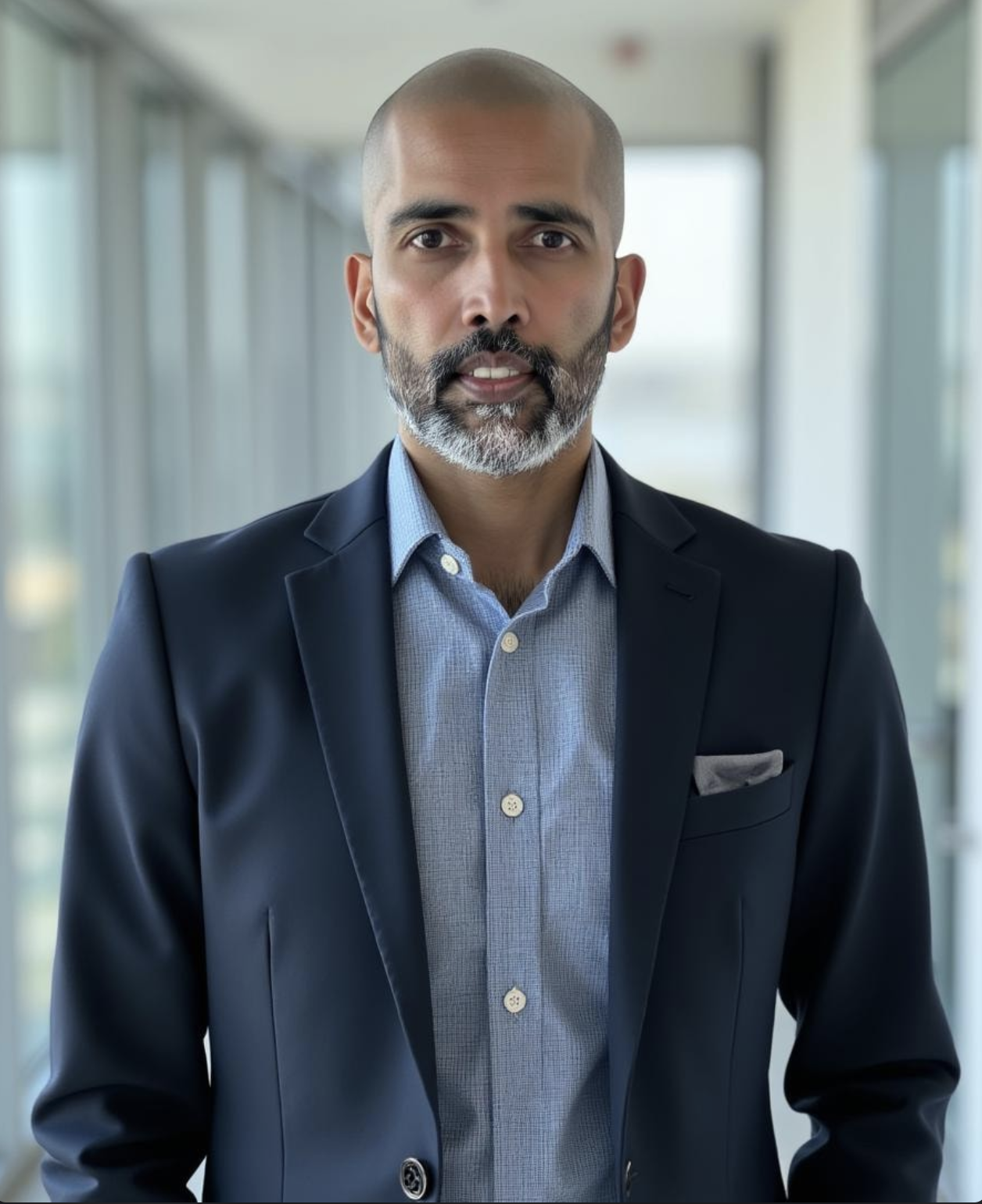
Real English Conversations Podcast – Real English for Global Professionals | Speak Clearly & Confidently at Work
🎙️Mastering Mindset with Kam Knight | Real English Conversations Podcast for Global Professionals
Loading summary
Transcript74 lines
- [00:00]
Cam Knight
Look at him eating whatever he wants, never gaining a pound. Well, I'm stuck with the boring special and can't lose an ounce. How's your lunch, man? Amazing. Yours? So good. Oh, I'm so happy for you. Cool, buddy.
- [00:14]
Advertisement/Announcer
Weight loss isn't fair, but Mochi Health is the affordable GLP1 source that can fix your frustration with food.
- [00:20]
Curtis Davies
So same time next week?
- [00:22]
Cam Knight
No.
- [00:23]
Advertisement/Announcer
Definitely.
- [00:24]
And your friends learn more@joinmochi.com Mochi members have access to licensed physicians and nutritionists. Results may vary. It's about time you have an easier, more efficient way to get caught up on the news. The Newsworthy breaks down the day's top stories in less than 15 minutes and gives you some lighter conversation starters along the way. Search the Newsworthy wherever you're listening now and follow or subscribe to the Newsworthy Today. A text says you're on my mind. A bouquet from 1-800-Flowers says you're my everything. Heartfelt moments belong in the real world, not just your phone. For 50 years, 1-800-Flowers has helped millions of people make memories that'll last a lifetime with gifts they'll cherish forever. Their expertly curated arrangements and gift baskets shipped nationwide with a 100% satisfaction guarantee. Don't wait for the next big moment. Make it when you visit 1-800-FLowers.com podcast. That's 1-800-FLowers.COM podcast.
- [01:16]
Curtis Davies
This is the Real English Conversations podcast where we help you to communicate clearly and confidently in the conversations that matter most in the workplace and your professional life. Hey everyone, it's Curtis Davies here from the Real English Conversations podcast, helping global professionals to speak clearly and confidently at work. This week's guest is Cam Knight, coach, international speaker and best selling author of a dozen books on mental, emotional and physical performance. Cam is known for bringing fresh out of the box solutions that break away from traditional thinking. His books have become the gold standard in their fields, reaching over half a million people worldwide. So he's no rookie. On top of his writing and coaching, Cam is a world traveler, having explored more than 100 countries gathering insights and perspectives that shape his unique approach to performance and personal growth. Cam, welcome to the show. I'm looking forward to hearing your unique perspective.
- [02:23]
Cam Knight
Thank you very much Curtis for that awesome introduction. I'm really happy to be here and thank you for having me on.
- [02:28]
Curtis Davies
Let's start here. You've written over a dozen books, best selling books on performance. What first inspired you to explore the connection between mind, emotions and physical body?
- [02:40]
Cam Knight
Well, Curtis, it all started after I got laid off from my first job, graduating college. So it took me a long time to get my first job. And about three to four months into it, the economy went down and I got laid off. And it took me as much, if not more effort to get my next job. I went through countless recruiters as well as interviewing with over 15 companies. And when I got the offer, I had about three weeks before I was going to start. And I tell you, I was nervous, I had a lot of anxiety, I was stressed. I just like, I just felt this need to make sure things went well. And I happened to be at Barnes and Noble's in the audio section. And back then the audio section was in tapes. And, and I saw a couple tapes that said, overcome fear or reduce anxiety. And I'm like, I need that.
- [03:33]
Curtis Davies
In fact, I still, he's, he's reaching behind him here.
- [03:37]
Cam Knight
I still have those tapes here. And what's interesting is they turned out to be affirmation tapes with a series of self talk and guided visualization. And interestingly enough, they were extremely helpful. And then shortly after I started getting into personal development, some of my first books that I read was Susan Jeffers, Feel the Fear and Do It Anyway, Napoleon Hill's book Think and Grow Rich. And they talked about the concept of self talk and affirmations. And I was like, oh, wow, this is actually a thing. And it's been talked about really since the beginning of personal development with the thinkers like Napoleon Hill back in the day. And so that really kind of got me started on this journey. But what I realized is that a lot of the material I was coming across at that time, they stayed very surface level, they didn't have a lot of depth. And I felt like I could fill in the gaps, which is why I kind of stepped in to become a writer.
- [04:32]
Curtis Davies
Nice to bring that inspiration, that other level, to the perspective that wasn't being reached at the time. That's a fantastic book. The Napoleon Hill Think and Grow Rich book I've read as well. I've actually read it twice now. So it's, yeah, very inspirational to any, anyone listening right now. If, if you just want some peace of information and knowledge, it's like not only just read it, but take, take action on the words that are written in those books and your books as well. But you have to go a step further. Not just read it. You might have to read it once or twice. Keep going back to a certain chapter. If you need guidance or support in any area, you've been described as offering a rare departure from traditional ideas. Can you share an example of a common belief in personal development that you challenge and what your alternative perspective is.
- [05:29]
Cam Knight
Yeah. So one common belief that I think is really big right now. And to illustrate, I'm going to share a quick story. So several years ago, I had an opportunity to give my first keynote speech. So I decided to go to a couple Toastmasters clubs. For those who don't know, Toastmasters is an organization where you actually learn and train to become a better speaker. And I wanted to go to a couple of clubs and practice and get feedback. And I remember one guy saying, why are you talking about that stuff? What people really need is like motivation and inspiration. And I think this is one of the big things in personal development right now that isn't as effective as we think we are. There is a lot of motivation and there is a lot of inspiration of you can do it, you're the shining light and things of that nature. Though, as soon as we want to do something, we hit up against something that I call internal resistance. And so there's a part of our brain designed to hold us back and it's actively working to hold us back. And if we don't address resistance, it doesn't matter how much motivation and inspiration we have, we will make either very little progress to no progress or the progress will be much more difficult than it needs to be. In fact, I will go as far as to say right now, I think personal development may be doing more harm because it creates all of this overwhelming feelings of like, yes, I need to go out and do something big and yes, I'm capable, but then people aren't able to achieve it and it creates these negative feelings of like, something's wrong with me, I can't do things right. And more importantly, there's, I think it's kind of creating also burnout. So that's one of the ideas, if I can just share another one. You know, in my memory book I talk about the concept that in order to remember information, you have to present information in ways that the brain is built to and designed to receive. But unfortunately there's a lot of talk around, you know, you're limitless and you can do anything you want. And it's true. But there are still limits to what we can do and we have to work within those limitations. And only when we understand that and how the brain is built to receive and process information and work within it can we become limitless. Does that make sense?
- [07:44]
Curtis Davies
Yeah. Be careful with the self help stuff, you know. Know what? Don't put too Much pressure on your yourself.
- [07:51]
Cam Knight
Yeah.
- [07:51]
Curtis Davies
Take the information, go with it, be comfortable with it. But yeah, I see the, that it's interesting because you bring up that perspective that no other guest has that self help can actually harm you in a way if you put too much pressure on yourself to be the best you can be. So there's a balance there, a fine line, right?
- [08:12]
Cam Knight
Yeah. So the brain works is the more we want something, the more the resistance kicks in. So a lot of times it can be harder to get it. I know it's very counterintuitive, but I think we've all experienced moments where we wanted something really badly and things weren't moving for us or things weren't moving at all. But as soon as we let it go, it started to fall in place. So that's kind of what I'm talking about. And sometimes too much inspiration can create a very out of aligned thinking or mindset or a belief that's not grounded in reality. So it really helps to stay in ground in reality. It doesn't mean you can't achieve those things. It just means taking it one day, one step at a time. But more importantly, working through the internal resistance and understand why your own brain is holding you back and putting more attention on that versus thinking. Just because I have the desire that I'll be able to do it.
- [09:11]
Curtis Davies
Your brain can be a tricky thing. It can trick you, it can try to steer you in the wrong direction. Even though you think you're in the right direction, you really have to slow down and take your time.
- [09:21]
Cam Knight
Yeah. And this is actually an amazing point you brought up. So I talk about a concept of internal resistance, which I said answers a question I had my whole life, which is why is it if I want to do something, I know what to do, I know how to do it, and I have the motivation desire to do it, but for some reason I can't do it. And it comes down to the fact that there is a part of our brain that is designed to hold us back and is actively working to hold us back. And there's all sorts of reasons why it does that. You know, if we're hitting up against limiting beliefs or old habits or comfort zones, and even deeper reasons like core needs and authority issues, as well as avoiding something bigger that finishing a task activity will lead to our brain. But what's really fascinating is when our brain holds us back, it doesn't tell us that it's holding us back. It uses manipulative tricks and it has all sorts of tricks up its sleeve to keep us from creating progress in our lives. And so it's really important to be aware that the mind can be tricky and can lead us astray in a lot of ways. And if we're not careful, it can make moving in a certain direction or getting what we want more challenging.
- [10:29]
Curtis Davies
And for that, awareness of that is key, for sure. You have to tap into the inner workings of your mind and your brain. Now your books have reached over half a million people. That just blows me away.
- [10:42]
Cam Knight
Camp yeah.
- [10:43]
Curtis Davies
What's the most surprising or memorable piece of feedback that you've received from a reader?
- [10:49]
Cam Knight
Well, I have been fortunate that I've gotten a lot of feedback. You know, just on Amazon alone I have over 10,000 ratings. So it's really nice and empowering to get feedback, especially when the feedback is positive and especially when it's, you know, something that where someone says, wow, this is life changing and you made a difference on someone's life. And one of the more positive one of the types of feedback I really love is when somebody says it's me.
- [11:17]
Advertisement/Announcer
Your sense of adventure calling. I'm not just calling, I'm insisting. Insisting you stop daydreaming and start planning to get you and me out there. Out to Southwest Idaho during secret Season, that time of year in March and April when snow stops dropping and flowers start popping. A perfect time for hiking, fishing, kayaking. And the food. Phenomenal. The only thing missing? The crowds. Start in Boise, then explore beyond the city. Let's Visit Idaho. Visit SouthwestIdaho.org this week with digital coupons
- [11:47]
at Safeway and Albertsons. Get beef rib roast for 7.97 per pound member price with minimum purchase of $50 or more in a single transaction. Exclusions apply. See store for details and Broccoli, cauliflower or russet potatoes are $0.97 per pound member price limit £6 plus selected sizes and varieties of Lucerne butter cheese or Philadelphia cream cheese are 197 each member price. Visit safeway or albertsons.com for more deals and ways to save.
- [12:16]
Cam Knight
Wow, Cam, like I've tried everything else. I've done Tony Robbins, I've studied Maxwell Waltz and Richard Bandler and all the great Jim Rohn. But your content is a cut above. A cut above. And it really, really makes me feel good because I spend a lot of time in developing my content. You know, I don't just try to take what's already been said and rehash it. I really go deeper than that and look at it in different ways and see how it can't work in certain situations and why it wouldn't work in certain situations and really go at a level that's not out there. So the effort I put in, I do like that. But there's one particular comment that stood out more than everything else, and it would be kind of surprising, was several years ago I said, I have a customary email that I send out every new year. So on January 1, I give out one advice, which is, if you want to start your New Year's right, and you want to make sure you stick to your resolutions, make sure to do it on the first day of the year. I'd heard this advice, like, 30 years ago, and I always make sure to do what it is, what it is that I want or to accomplish to make sure I do it on the first day. And I got a reply from one person who said some really mean things like, f you photo, you know where. And I mean, it was pretty raw. And why I'm bringing that up is because there was a part of me at one point that was afraid of that. Like, I was afraid of receiving that kind of feedback or people perceiving my content that way. And once I got that, it was like, okay, I didn't die. Everything is fine. There was one person who didn't like it, and all I did, all I could do is unsubscribe him, and I moved on. So it was cool because there, a lot of times we're like, dreading the word dread is really what resonates. Doing something or approaching a certain success. Maybe it's getting on stage or maybe it's getting on a podcast or, you know, putting their book out there. And there's this, like, huge dread of what people are going to think and the feedback we're going to get. And sure, not everyone's going to like it, and there's going to be some who are going to maybe dislike it a lot, and it doesn't really matter. Like, you'll. You're. You'll still go on. Because what's important is to focus on the people who do like and resonate with it.
- [14:37]
Curtis Davies
Yeah, you're going to receive two different types, multiple different types of feedback, and they're all stepping stones to your greatness.
- [14:45]
Cam Knight
Yeah.
- [14:46]
Curtis Davies
So there. There's going to be the haters out there.
- [14:48]
Cam Knight
There are.
- [14:49]
Curtis Davies
There are going to be the lovers out there that are going to eat everything up that you write and talk about, but you can take away one little bit from each piece of feedback to make you greater. So many of my Students are, you know, English is a second language, they're at a intermediate to advanced level and they're working for international companies where the communication language is in English. But their confidence in what they're telling themselves in their own heads are, what are they going to think about me? Are they going to analyze my English? But they're not there for that. They're there for the topic at hand and they're not the English police. Right.
- [15:28]
Cam Knight
Yeah.
- [15:29]
Curtis Davies
They're not going to be judging you.
- [15:31]
Cam Knight
They're.
- [15:31]
Curtis Davies
They want to know what you want, what you're trying to communicate.
- [15:35]
Cam Knight
Yeah.
- [15:35]
Curtis Davies
And if somebody doesn't like it, if somebody's a hater, don't hang out with them. Yeah. Delete them, Block them, Move on and find the people that embrace you. So from that explanation, it sounds like you found a missing part. You know, there's tons of inspirational leaders out there and self help gurus, if you want to call them that.
- [15:57]
Cam Knight
Yeah.
- [15:57]
Curtis Davies
That offer their advice and they're really good at it. But if you found within your niche and within your books and your business a way to go that extra step to say something, offer a piece of advice to a reader or a listener to get them to the next level that they've never heard before, that is going to make all the difference.
- [16:20]
Cam Knight
Yeah, yeah. It's huge. And I want to reiterate, you know, for every one hater there is, there's like nine people who are genuinely nice and want to see you succeed. And this might seem surprising because it was to me, you know, when I was first starting out, for some reason my mind assumed most of the people were haters and they were going to be critical of my work. And in the beginning, I didn't want people that I knew to know about what I was doing, that I was an author and I didn't even want to read it because I just assumed they weren't going to like it or they were going to not be supportive of it. And when I started getting out, I found surprisingly how it's really the opposite. You know, people are very supportive of others. They want to do what they can to help you grow and get to the next level. And if you're not around that, know that there are a lot of circles that do exist now. Of course, you're always going to get those people who tend to be jealous and try to bring you down, or worse, they try to make it seem like they're helping you when unconsciously they are trying to bring you down. And those exist, but don't focus on them when you come across them and just put your attention and shift it to the direction of where there's a lot of positivity. And to my surprise, I found there's a lot of, lot of masterminds or networking groups and communities where people are literally just there to support you. And if a person can tap into one of those groups, especially a group that they resonate with, where they connect with all the other members and everyone's on the same page or on the same vibrational frequency, it can be really powerful for a person's growth and really help them get over their lack of confidence and some of the self defeating thoughts that they might have.
- [18:07]
Curtis Davies
For sure, because your brain can trick you. You have to be aware, you have to listen to the voice in your head, identify specifically what you're telling yourself, find the opposite or a better way to do, to think about it, and then try again. And then, you know, your worries about the haters go away. So yeah, your, your brain was almost tricking you in that aspect when you first started out, where it's like, there's going to be more haters than lovers or likers of what I do. And that's not true. So you have to identify that to be like, that's a limiting belief. And most limiting beliefs are lies. You can try to push that away and say, shut up, other voice in my head go away. No, that's not true. You're. You're trying to trick me.
- [18:52]
Cam Knight
So, Curtis, this is a really huge point that you brought up. So I want people to understand that when we hear the voices in our head, it seems like we're thinking them because we are thinking, because we think we're thinking them. We think they're true. But the reality is a lot of the voices in our head is in our own voice. It actually comes from the resistance. So we have the voice of our desires and our inspirations, and then we also have voices of resistance. And they're both our voice, but one of them is holding us back, even though it's giving the illusion that it's moving us forward. So one of the toughest things, or one can say even the easiest things, is to question your voice. Like, is that really my true voice or is that just a voice of resistance? But more importantly, know that just because you're thinking or feeling something doesn't mean it's real. And if a person can get to a point where they can just naturally always be in the knowing of, hey, these are the thoughts that are coming in my head. This is what I'm feeling. Could this actually not be true? And oftentimes, like you said, with limiting thinking and beliefs, it often isn't. So this is a really good place to start is knowing that, knowing the difference between the voice of your desires and your higher self and your higher power and the voice of resistance.
- [20:13]
Curtis Davies
High level Advice there from Cam, you've traveled to over 100 countries. How has traveling shaped your approach of coaching, performance and even communication with people from different cultures?
- [20:25]
Cam Knight
It has been huge. I think it's been one of my number one asset is my experiences that I have gained from travel, especially as extensively I've traveled, as you had mentioned, a hundred countries. And there's many reason, but none more important than when we're living in a specific place, a city, a town. We think that's just the way life is. That's the way people talk and interact with each other. Those are just the options that we have on what we can and cannot do, as well as how to behave and act and more importantly, what we can expect. And it's kind of like fish. Fish spend their whole life in water, so they don't know that they're wet. They don't realize that there's another medium outside of water and wetness, like being in dry air and things of that nature. And so when a person can travel, they experience something completely different. A different way of thinking, a different way of people are living, different way people are interacting. And it's a huge shift to know that there is a lot more and there is a lot more depth into other humans. And my experience in travels has been quite extensive. So I didn't just travel, travel to tourist destinations like the Eiffel Tower or the Big Ben. I did that. But I also, a lot of people who follow my travels were like, wow, Cam, you leave no stone unturned. So also I've been to some of the most isolated places in the world, like the jungles of Amazon. I've hiked the ice sheets of Greenland, hiked the tallest mountain range in Africa, slept in the oldest rainforest in Malaysia. And I have interacted with people from all walks, life of life, including indigenous from all continents, whether the Kuna in Panama, Inuits in Greenland, Maasai in Africa, Aboriginals in Australia, as well as in various indigenous cultures in Asia. And through this, I feel like it's given me the opportunity to really connect into the human experience.
- [22:19]
Advertisement/Announcer
With verbocare.
- [22:21]
Cam Knight
Help is always ready before, during and after your stay. We've planned for the plot twists, so
- [22:28]
Advertisement/Announcer
support is always available because a great
- [22:31]
Cam Knight
trip starts with peace of mind.
- [22:34]
Advertisement/Announcer
This week with digital coupons at Safeway and Albertsons. Get beef rib roast for $7.97 per pound member price with minimum purchase of $50 or more in a single transaction. Exclusions apply. See Store for details and broccoli, cauliflower or russet potatoes are $0.97 per pound member price limit £6 plus selected sizes and varieties of Lucerne butter cheese or Philadelphia cream cheese are 197 each member price. Visit safewayralbertsons.com for more deals and ways to save.
- [23:04]
Cam Knight
And because of that, I've been able to be much more effective in my content as well as communication. In fact, a lot of my content, although it seems pretty surface level, like improving memory or concentration or speed reading, it goes much deeper. And my goal is to help people connect to the human experience and you can resonate with it when you read it or learn it. And I think that's what people really like about it because there is something there that they're not getting elsewhere. And I personally believe we humans, especially living in western culture and an industrialized culture, in a lot of ways we become disconnected to the human experience and by reconnecting there's like a fulfillment that just isn't possible any other way.
- [23:50]
Curtis Davies
Important Information Many of my listeners, like I said, are global professionals who struggle with confidence, stress, self doubt in their work. Doing a business presentation in a second language is a real challenge for them. From your experience, what's one technique that they can start practicing today to manage those challenges?
- [24:11]
Cam Knight
Okay, so those are some pretty tall orders working through doubt and stress and some of the other things you mentioned. And if there was a simple solution, you know, I'd be a millionaire. So would anybody who had it. I mean a billionaire. Because the way the model of resistance works is every time the we have a want or desire, that want or desire gets evaluated by resistance using a whole host of criteria. And if the desire is not in line with any of the criteria, resistance will prevent action. So it really helps to think about standing before a panel of judges or board of directors. Every decision that comes up must go through them. So what are some of these criteria? Well, like I mentioned, some of the more obvious ones include limiting beliefs. They include not having habits or comfort zones. But then they go even deeper into having the right identity and self image. Does it fit in with a core need that we have? And you know, goes into how painful a mistake is for people. It gets quite deep. Long answer short, it really Helps to work on what the resistance is for you. And the answer to one cause of resistance may be completely different than another cause of resistance. So there is no one cookie cutter solution or one thing that addresses all of it. But there actually is one thing that is more helpful than anything else and can work on all the aspects of resistance, and that is self talk. For those who don't know, self talk are simply statements that you say or repeat to yourself of the changes that you want to have or have happen in life. For example, if I wanted to become a more confident person, I would repeat statements like, I'm a calm, confident communicator. I easily communicate my thoughts and ideas. And it may not seem like repeating such statements could be all that useful, but it's huge. It's one of the most simplest things a person can do to create the shifts that they want. And this is important because when we're dealing with resistance, it's really important to focus on small things that lead to big results, Little actions that you can take that lead to maximum result in our life. And there isn't anything more simple than self talk is literally just repeating some statements. So what I would recommend is have your listeners figure out what is it that they're seeking? What is the outcome that they want? Do they want to be more confident? Do they want to communicate better? Do they want better results? And just turn it into a simple self talk statement that you repeat on a regular basis. If a person can do that, those statements will start to seep into the unconscious and rewire their brain to act that out. And it'll do it in a way where it reduces the other resistance they have in their life. So long story short, there's many causes of resistance and there is no one fit all solution. Like one thing we need to work on for one. And what we work, what we use for, to help us move through one form of resistance can't really be used on another. But if we want something that is simple and easy that does help us on various challenges, it's all talk. And I have a very special statement for your audience that took me nearly 15 years and traveling to over 100 countries to narrow down to that really addresses, in my personal opinion, the many challenges we humans experience and what it is that we're seeking. Do you think your audience would want to hear this?
- [27:50]
Curtis Davies
Yeah, for sure. All right. Absolutely they would.
- [27:53]
Cam Knight
Yeah. So it's two statements. The first is I'm a do it now person. I easily do things now. I easily accomplish my goals right away. And I'm going to break down the psychology of that statement. The first part of the statement is I'm a do it not person. That's creating the identity and self image that we're a person that does things now. So instead of we want we have something to do and going into procrastination or trying to figure out how to get the motivation, we naturally start doing it now. Doing things isn't always easy. It can be painful and strainful. And so that's why I have the second part of the statement that says I easily do things now. It makes it so our actions are a lot more easy. And then the last part of the statement is I easily accomplish my goals right away. That's because it's easier to do a lot of things and spin in circles and not move in any one direction. And so when a person starts repeating the last part of the statement, it's more focused on tasks and activities that are going to get them towards a specific goal. So I'm going to repeat that again. I'm a do it now person. I easily do things now. I easily accomplish my goals right away. The second part of the statement is I'm deserving, have permission, and I'm having good things. This is extremely important because a lot of our doubt and stress and other challenges usually comes down to undeserving. Like a deep down undeserving where unconsciously we don't feel deserving of good things. And that endures deserving, makes things more challenging. So by saying I deserve, we kind of neutralize and counteract it. And then the second part is I have permission. And this is important because since we were kids, we were always being told what to do, how not to do it, when to do it, and so on. So the brain learned. Yeah, that we need permission to do things. And it's waiting for permission. And what's fascinating, Curtis, is, you know, when I'm working with clients, I go to seminars and all sorts of stuff. What I found is most of the people who are paying big money for coaching and seminars are really going out there for somebody to give them permission to do things. And so by repeating that statement, it helps you give permission to yourself. And the last part is the action of receiving good things. If you say I'm having good things, you start attracting good things. So if a person can repeat these two statements, I'm a do it now person. I easily do things now. I easily accomplish my goals right away with I deserve have permission and I'm having good things. It can start creating the changes that they're seeking naturally. And one thing I really want to stress about self talk is that self talk isn't about writing it down, putting it on a note card or on a fridge and looking at it. It's the talking of it. You have to talk out the statement. You can do it out loud or you can do it in your head, but you have to go through the emotion of doing it for these statements to start going into your mind to create the outcome you want.
- [30:48]
Curtis Davies
I love that is specific, it's positive, and it's authentic.
- [30:53]
Cam Knight
Yes.
- [30:54]
Curtis Davies
And anybody can do it. Anybody can do it. Anyone.
- [30:58]
Cam Knight
And I've already started them off with the statements. Yeah. Because these are very universal. Everyone's seeking this, but then they can add their own. So if they're shy around people, they could say, I am a calm, confident communicator and things of that nature.
- [31:11]
Curtis Davies
The more you tell yourself who you really are, the more you become that person that you want to be. You've spoken internationally and coach people from all walks of life. Are there certain struggles or questions you hear again and again and again, no matter the culture or background?
- [31:28]
Cam Knight
Yes. My, my tagline for my business is do more, live more. What I realized is at the core level, like everyone I've seen, everyone I come across, especially with my client, is deep down, they're wanting two things. They're wanting two things. It's to do more and live more. Whether that's to do more to make more money, do more to get people to like them, doing more to get better health, or to do more to get their own self acceptance. And they want to do more so they can live a better life to live more. So that's really fundamentally what I feel like most everyone is seeking. And on top of that, another thing I've noticed is that people aren't necessarily looking for tips and techniques. They're just trying to get to a space where things just happen for them easily. I'll give you an example. So in my memory book, I have a lot of great techniques to help people quickly improve their memory and remember things better and longer, though it requires using a technique. So whatever it is they want to learn and remember, they have to use a technique to do it. What people are wanting is just ability to remember better and longer without having to use a technique or take that extra step. Same thing with concentration. Same thing with speed reading. People just want to become a better speed reader. People just want to have. Have longer focus. And unfortunately, that's just not the way things work, like if there is something we need to develop, we need to put in the effort into it. And hoping. Yeah, and hoping that there's going to be a way to get to a point where you just are a being that doesn't have to use techniques or apply systems or apply information and just have the results. It's surprisingly. But a lot of people are in that space and they're holding themselves back without realizing it. That's really the two main things that I. I have noticed from people. One is at the core level, they want to do more and live more. And more importantly, that they're hoping there's some sort of magic cure that allows them to do that without using tips, techniques, systems, processes, and things like that.
- [33:36]
Curtis Davies
Which brings me to the next question. How do you help people go beyond just knowing something, knowing what to do, to actually applying it and making that change stick?
- [33:46]
Cam Knight
Yeah. So again, it's not easy. As I mentioned, anytime we want to do something, whether it's something that's a passion or just a task activity, that option or course of action gets filtered through resistance using a whole host of criteria. And so again, no one fit all solution that's gonna work on all of them. But I do have a framework that I use for taking action that could be very helpful to your audience. That is looking at how people take action. And what I found is that there's people fall into four categories. The first is there's people who get inspired to do things. They get inspired to have a goal they have, they get inspired to achieve something, but they don't take action. That's the first level. Second level is there's people who get inspired and they take action, but then they fall off very quickly. The third level is some people take action and they make good progress, but then they stop right before reaching the end or before getting to the finish. And the fourth is some people will make it to the finish, but then they'll stop doing what got them to the finish. And so there's different ways to handle each one. For a person who gets excited about a lot of stuff, but they never start, what's really important for them is to pick one want or desire and stick with it until the end before they think about anything else. No matter what other desires their brain is creating or producing, don't think about, worry about, or consider them until that first one is finished. For the people who are good at starting, but they fall off, I have them use a technique for meditation. So meditation kind of falls into two categories. Where you're trying to hold a certain thought or you're trying to keep your mind from having any thoughts. Now it's impossible to be in a state of either for an extended period. You're going to fall off. But the trick to meditation isn't not to fall off, but to jump right back in when you do do. Same thing for the people who start things, but they fall off. As soon as you fall off, just jump right back in. Don't go into self beat up like, oh, I can't do anything right, I can't stick with anything. Notice that you're falling off and then just jump back in. And you could have fallen off for a day, a week or a month. It doesn't matter how long it is, you just jump back in for the third. People who are good at sticking with things but for some reason don't get it to the finish, it's really important for them to understand that the way the body works, we need to build muscle for things, we need to build muscle for starting things, we need to build muscles to sticking with things. But more importantly, we need to build muscles to getting to the finish. And so for them it's going to be really important that when they're, when they're starting to get to the finish or they're making good progress, that they do whatever they can to get to the finish just to build the muscle for it. Sometimes it'll take sheer will to get to the finish, but as soon as they get started building the muscle, it'll be easier to get to the finish with other things they're trying to do. And the last one, people who do get to the end but they fall off or they stop doing what got them there. It's really important to understand that success is more difficult to keep than it is to achieve. So it's already hard work to get to success. But once we get there, a lot of times we think we made it, now we can relax and let go. But as soon as we do, we start falling back. This is why people fall into a pattern of yo yo dieting and yo yoing everything. Because they get to the finish and think they don't have to put any effort, when in reality a lot of times you have to put in more effort to continue the momentum. So this is a really good model to help people depending on what stage they are at. And I know it's not a one off fix solution. Again, those things don't exist. And for the people who are seeking that are usually the people that tend to not make much progress because they're seeking something that doesn't really exist.
- [37:38]
Curtis Davies
Consistency is key there. And awareness again. And it's like going to the gym, you know, if you want to strengthen any type of muscle, you have to, first of all, do it the right way so you don't hurt yourself.
- [37:50]
Cam Knight
Yeah.
- [37:50]
Curtis Davies
And second of all, be consistent about it. Don't give up, even when your brain is trying to say, oh, yeah, okay, I've reached this level I'm going to.
- [38:00]
Cam Knight
Or I could take a break. I can relax. No, those are the trick. The voices that we talked about, of our resistance that seem like they're our voice, but it's just a voice of resistance that are pulling us away.
- [38:12]
Curtis Davies
Wow. Some great insights there. Looking back, with all you've achieved as a writer, an author, a coach, a podcaster, a traveler, what's the legacy you hope your work leaves for future generations?
- [38:24]
Cam Knight
I think there's two main legacies. So you did mention. I've done all of that. And it's kind of interesting. When you're on one end of it, it's like, before you've even written a book, writing a book seems like, wow, if I could do that, like, my life would be great. And. But, you know, once you do it, it's like, after a while, it's like, okay, I've done that. Now what next? So I'm at a. I'm really fortunate to be at this point where I can go beyond my books and a lot of the stuff I've done. And the two legacies I want to leave is the concept of internal resistance. Because I think a lot of times people assume when they can't do something that they want, want, or they can't move forward with a desire, they think there's something wrong with them. They think that they're not cut out for it, and things of that nature. I want. And in a lot of ways, personal development kind of conditions this because they're. They say, yes, you can do everything, and it pumps them with all these positive feelings where they feel like they really can, but then when they don't see the results, it can, you know, reduce our thinking of ourselves. We start. Start thinking poorly of ourselves. But I want people to understand that there's a part of their brain designed to hold them back, and it's actively working to hold them back. And if they don't prepare to deal with the resistance that can come up, of course it's going to hold them back. But if they can be aware of it, they can make much further progress much quicker. And more importantly, there's a lot of disagreement in psychology, you know, like explaining our behaviors and why we can or can do certain things. In fact, a lot of disagreements, heated. You know, some people say it's like say family systems, others say it's beliefs and all of that. And I truly believe this concept of internal resistance integrates and unifies all the different models in a very simple way. So that's one legacy I want to leave. The other is I have developed a technique that helps people quickly overcome trauma, ptsd, codependency, bad breakup, and I. And it's very different from what's out there because it goes deep into the unconscious and it works on the emotional level, a level that's not being talked about too much. And I think it could really change a person in positive and amazing ways. And I really want to get this out to more people. So those are the two. Cam.
- [40:35]
Curtis Davies
This has been one of the most inspirational and impactful interviews I've ever had with any one of my guests in the 10 years I've been podcasting. All of my guests have been inspirational and they're all great guests, but you've been, you've touched a nerve here that can make a real, true difference. Just as we wrap up here, where can my listeners connect with you? Find your books, courses, coaching, find you online? Where, where can they find you?
- [41:01]
Cam Knight
Yeah, so they can find me@camknight.com they can get access to all of my books there. I do have a course called Concurrent Trend of Resistance which goes much deeper into the topic than we were able to talk about in this short time. You know, it talks about all the different reasons for resistance. We didn't really touch too much on the wants, but it goes into all of our wants and how our own wants can be a hindrance to achieving it. But more importantly, it goes into the tricks of resistance. And there is over 30 tricks that our brain brain plays on us on a regular basis. So they can get that@camnight.com as well. If they want to do one on one work with me. This is the work that we do is not available anywhere else. It's a method I've developed to help people go into their unconscious and like work at the unconscious level, which is really profound to give, give huge breakthroughs to people. And they can get all that information@camnight.com too at the end. I have a free gift for your listeners. It's called 5 Ways to End Procrastination and Sabotage. And they can get that by texting the word flow flow to the number 26786 and I want to say thank you for that awesome compliment. That means a lot and I put a lot of effort to the work I've done. So I'm really happy that that resonated with you at a at such a core level.
- [42:21]
Curtis Davies
Yeah, thank you so much. I'll put those links in the show notes in the description of this podcast episode where people can find you easily and including the free gift. Thank you so much. So thanks once again for joining me and I look forward to speaking with you again in the future.
- [42:38]
Cam Knight
All right, thank you again, Curtis. This is fantastic.
- [42:41]
Curtis Davies
If you're ready to take your English to the next level and start speaking with confidence at work, whether it's in meetings, job interviews, presentations, or important conversations with your boss, co workers or clients, I can help you. You don't have to feel nervous about finding the right words, worrying about your accent, or struggling to keep up in fast paced conversations. With the right practice and guidance, you'll be able to express your ideas and yourself clearly and naturally. Let's start with a trial lesson. We'll go over what you want to improve, do a quick evaluation, and map out a plan to help you feel strong and in control when you speak English. I only have a few trial spots available each month, so if you see an opening in my calendar, grab it. While you can. Click the link below to book your trial lesson with me now.