Podcast
Rebel Intrapreneur
Hosted by Bill Cushard · EN
Rebel Intrapreneur is a podcast about a new category of high performing employee. Rebel intrapreneurs further the mission of an organization while simultaneous challenging the system from within. Founders and entrepreneurs are thirsty to find people who believe in their mission as much as they do, and pursue that mission relentlessly. Rebel Intrapreneur is hosted by Bill Cushard, who has reported directly to founder/CEOs four times in his career, which makes him an ideal guide on your intrapreneurial journey.
www.rebelintrapreneur.com
www.rebelintrapreneur.com
10episodes
Episodes
Newest firstAll episodes
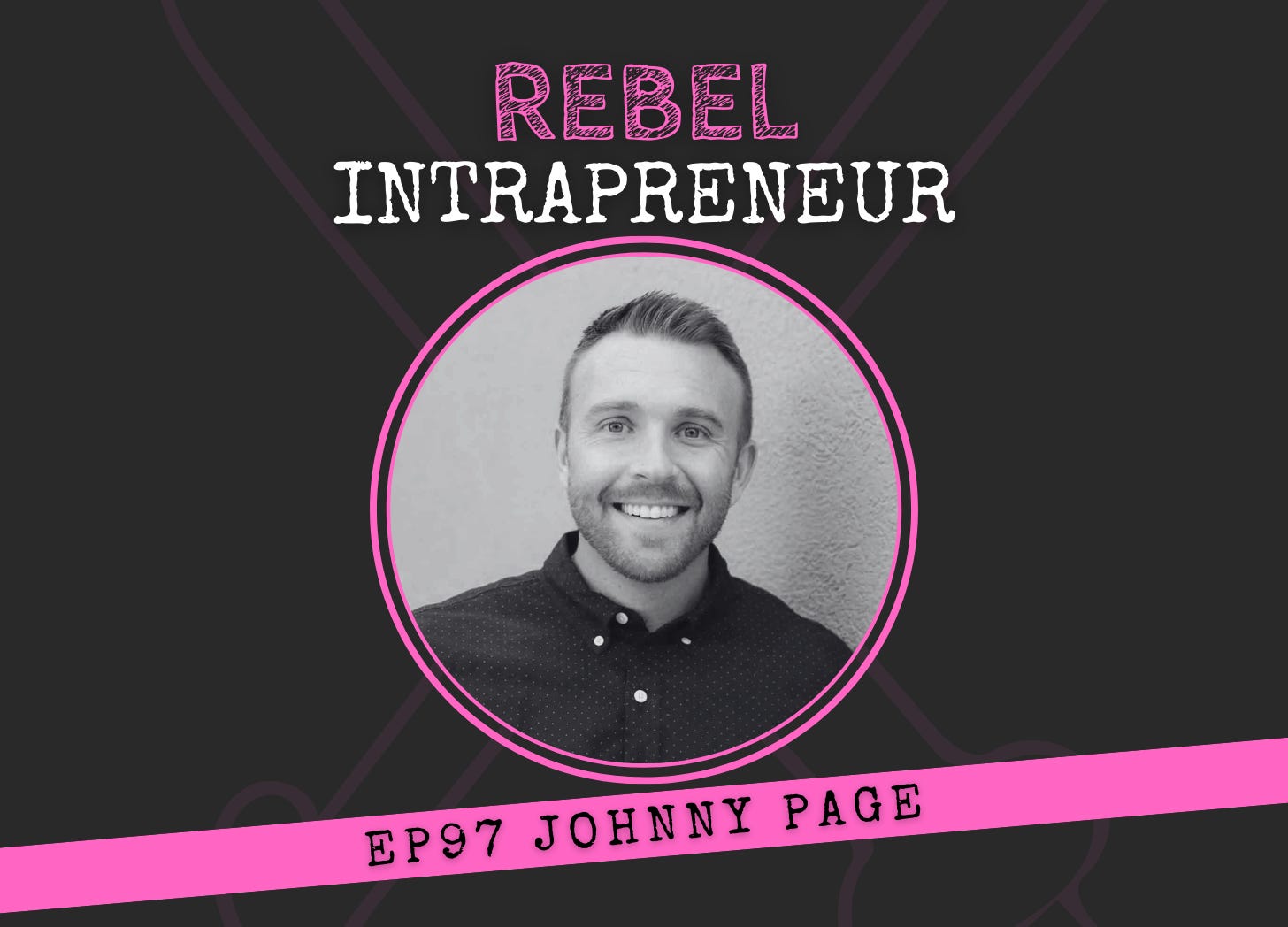
Johnny Page 2X CEO, “I’m the definition of intrapreneur”
Aug 27, 202400:54:43Tap to summarizeRebel intrapreneurs can make a huge impact in any function or any role. There are no constraints, other than one’s creativity and passion for making a difference. One rebel intrapreneur path is to CEO. Johnny Page, CEO of SaaS Academy is a self-described intrapreneur who pursued and became CEO two different times in his career. “I am the definition of an intrapreneur.”We talked to Johnny about how he became CEO. And how he did it twice.Johnny has been thinking a lot about his journey and designed a set of stages to describe how he did it. I’d like to think that by listening to this conversation, you can learn from what Johnny did to pursue his intrapreneur journey, and design your own path.A short summary of Johnny Page’s Intrapreneurial Journey:Stage 1 - Mastering Customer Empathy* Deep Understanding of the Customer* Grasping the Problem Landscape* Client Success Expert* In the TrenchesStage 2 - Operationalizing Success through a Team * Team Building* Process Design* Team Leadership* Scaling Excellence Stage 3 - Amplifying Your Authority & Influence in the Market* Leverage Customer Knowledge* Develop an Inbound Marketing Strategy* Build Personal Authority* Generate Leads* Foster Market AffinityStage 4 - Operationalizing Sales & Marketing* Choose Your First Focus* Demonstrate Your Value* Hire the Right Team* Build Processes and Playbooks* Continual GrowthStage 5 - Securing Ownership Stake* Assess Your Value* Prepare Your Case* Negotiate for Ownership* Be Prepared to WalkMore about Johnny Page: SaaS Academy SaaS Academy Podcastthejohnnypage.com LinkedinInstagram How to become CEOWe have covered the topic of how a rebel intrepreneur can become a CEO in several episodes. So if you’d like to listen to a companion episodes to this conversation with Johnny, you can dive deeper here: Episode 39: From intern to CEOEpisode 40: How to become CEOEpisode 41: How I learned to be a baby CEOEpisode 53: I took the CEO Genome assessment and it’s not goodMore about Bill:Bill Cushard on LinkedinBill Cushard on TwitterRebel Intrapreneur podcast websiteBill’s book: The Art of Agile Marketing: A Practical Roadmap for Implementing Kanban and Scrum in Jira and Confluence Get the show on:Apple Podcasts Spotify Audible Get full access to Rebel Intrapreneur at www.rebelintrapreneur.com/subscribe
Transcribe →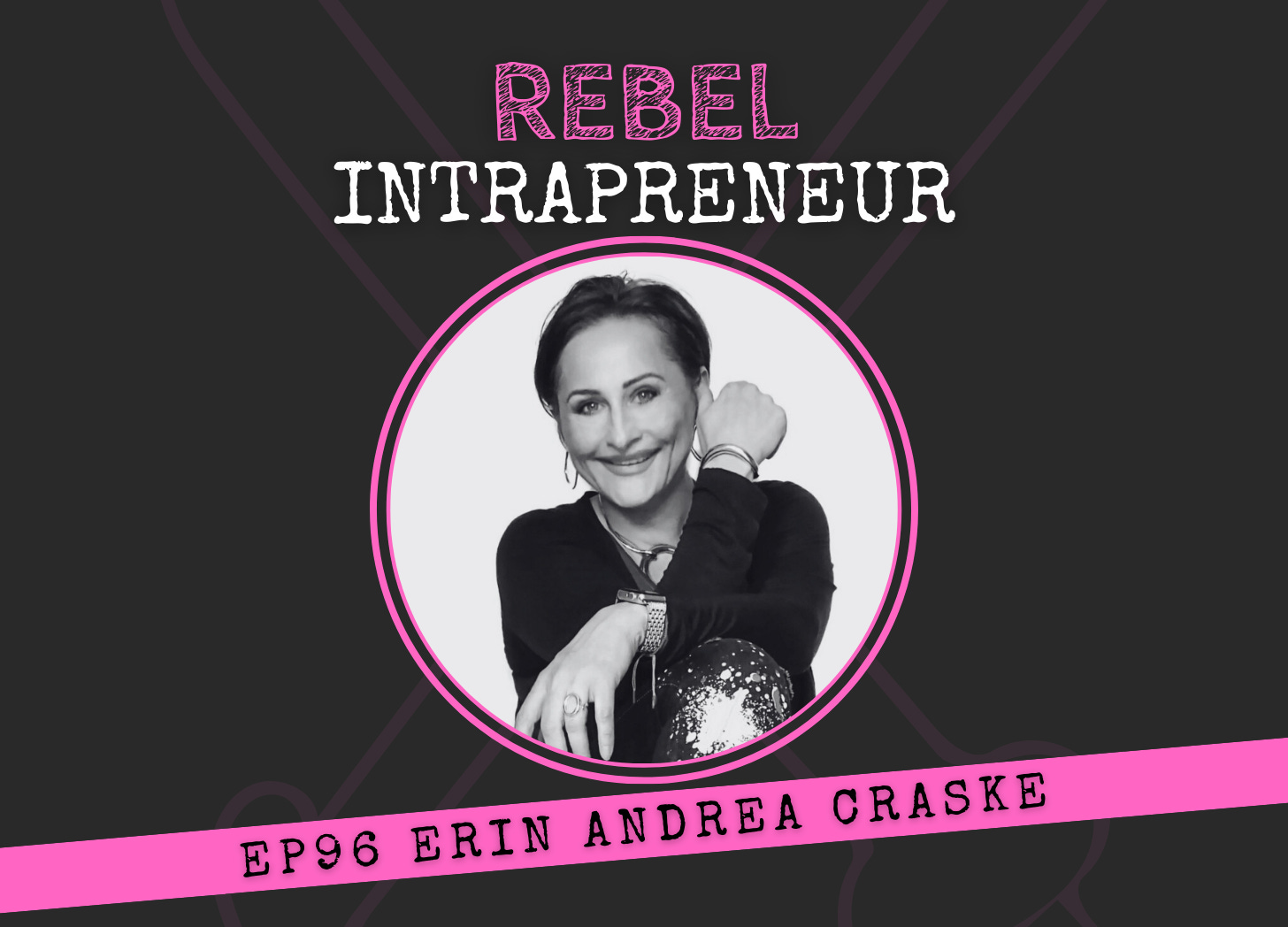
096 Erin Andrea Craske Why you shouldn’t be a rebel intrapreneur
Aug 2, 202400:46:10Tap to summarizeThe one question we have not explored on this podcast, for obvious reasons, is whether one should be a rebel intrapreneur in the first place? Maybe we shouldn’t. Erin Andrea Craske makes the case that pursuing a rebel intrapreneurial career is a recipe for stress and disillusionment. In one part of our conversation, Erin talks about three types of people at work. Those who: * Blend in.* Do their best, even though they don’t really accept or believe what is going on in the organization. Those people eventually burn out.* Disagree and quit.None of these are rebel intrapreneurs. So, does this mean we should not pursue intrapreneurship? That is what we discuss. Prepare to be challenged.More about Erin Andrea Craske: Erin’s LinktreeHer websiteBook: From purpose to profit: How to avoid costly mistakes, build a self-selling brand, & achieve effortless business profitabilityOn LinkedinMore about Bill:Bill Cushard on LinkedinBill Cushard on TwitterRebel Intrapreneur podcast websiteBill’s book: The Art of Agile Marketing: A Practical Roadmap for Implementing Kanban and Scrum in Jira and Confluence Get the show on:Apple Podcasts Spotify Audible Get full access to Rebel Intrapreneur at www.rebelintrapreneur.com/subscribe
Transcribe →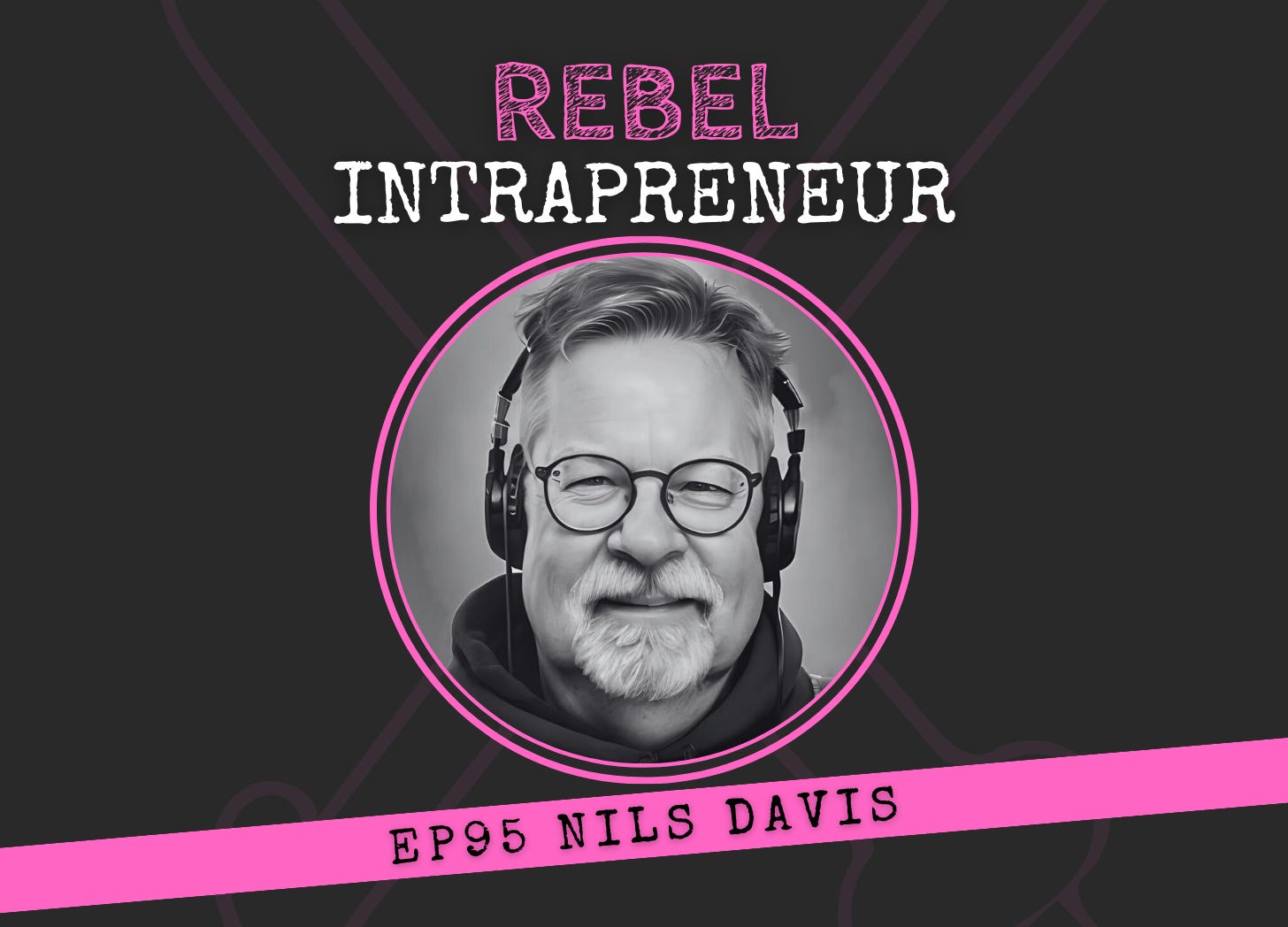
095 Nils Davis Your resume should show how amazing you are
Mar 14, 202401:00:45Tap to summarizeRebel Intrapreneurs use the Strategyzer Business Model Canvas FigJam template to turn possibilities into plans. Learn about the business model canvas FigJam template here and Try FigJam for free: https://psxid.figma.com/d8auy7In one Linkedin post, Nils Davis showed me how my resume (all of ours) should tell the story I want the hiring manager to know. Primarily that I am the role they are looking for. Let’s face it, we have 6-10 seconds to get the hiring manager to know we are the one for them. How?Redesign our summary section. Nils suggests the following format: * I am a … * I have … * I have a reputation for … This seems one heck of a lot better than a summary section with a bullet point list of skills. Rebel Intrapreneurs are good at positioning themselves in their areas of expertise and selling themselves and their ideas. Nils and I discuss the importance of treating our resume as a sales letter. More about Nils Davis: His Linkedin post that we talked about Nils Davis on Linkedin The Perfect PM ResumeThe Secrets of Product Management Podcast His Book: The Secret Product Manager Handbook Today’s episode is brought to you by Figma. Two important tools of the Rebel Intrapreneur are the business model canvas and the value proposition canvas. Figma has templates for both, so you can design your innovation projects fast. I used the value proposition canvas template to design the listener profile and value map for this show. Try Figma for free. More about Bill:Bill Cushard on LinkedinBill Cushard on TwitterRebel Intrapreneur podcast websiteBill’s book: The Art of Agile Marketing: A Practical Roadmap for Implementing Kanban and Scrum in Jira and Confluence Get the show on:Apple Podcasts SpotifyAudible Get full access to Rebel Intrapreneur at www.rebelintrapreneur.com/subscribe
Transcribe →
094 Gus Bessalel Should you work for a startup?
Feb 29, 202400:57:25Tap to summarizeRebel Intrapreneurs use the Strategyzer Business Model Canvas FigJam template to turn possibilities into plans. Learn about the business model canvas FigJam template here and Try FigJam for free: https://psxid.figma.com/d8auy7People join startups thinking they will strike it rich, but successful startup opportunities like this are the exception, not the rule. As Gus Bessalel, author of “The Startup Lottery: Your Guide to Navigating Risk and Reward,” tells me on Rebel Intrapreneur, “Don’t go into a startup, thinking you’re going to become an instant millionaire. You go into startups because of all of the experiences that you gain from being in that environment.” Startups are intense. And it takes a certain personality type and risk profile to make the experience of working at a startup worthwhile. Bessalel wrote The Startup Lottery to help Rebel Intrapreneurs like us evaluate start up opportunities. The evaluation has essentially three parts: A self evaluation: Should I work for a startup? A financial evaluation: What will it take for my equity to pay off? A progress evaluation: Should I stay or have this startup? A Rebel Intrapreneur should put all of these parts together before deciding on joining any startup. Bessalel’s book will help us do that. I learned a lot from reading The Startup Lottery and my conversation with Gus. I hope you find it useful. More about Gus Bessalel: Gus Bessalel’s book, The Startup Lottery: Your Guide to Navigating Risk and RewardOn LinkedinToday’s episode is brought to you by Figma. Two important tools of the Rebel Intrapreneur are the business model canvas and the value proposition canvas. Figma has templates for both, so you can design your innovation projects fast. I used the value proposition canvas template to design the listener profile and value map for this show. Try Figma for free. More about Bill:Bill Cushard on LinkedinBill Cushard on TwitterRebel Intrapreneur podcast websiteBill’s book: The Art of Agile Marketing: A Practical Roadmap for Implementing Kanban and Scrum in Jira and Confluence Get the show on:Apple Podcasts SpotifyAudible Get full access to Rebel Intrapreneur at www.rebelintrapreneur.com/subscribe
Transcribe →
093 Robyn Bolton People decide with their hearts and justify with their heads
Feb 27, 202400:58:20Tap to summarizeRebel Intrapreneurs use the Strategyzer Business Model Canvas FigJam template to turn possibilities into plans. Learn about the business model canvas FigJam template here and Try FigJam for free: https://psxid.figma.com/d8auy7I admit that I do not have a codified set of core beliefs, values, principles, or whatever else you want to call them. I know that I should have them, but I don’t. It’s something I’ve procrastinated. Successful people I know have told me that they procrastinated it too, but when they finally put in the work to write out their core beliefs, everything changed for the better. So when I had the opportunity to talk to Robyn Bolton, founder & chief navigator at MileZero, about innovation, I wanted to spend time talking about her 5 core beliefs because her short list says a ton about how she views innovation and how she helps her clients do great things. Robyn Bolton’s 5 core beliefs: * Innovation is something different that creates value.* Innovation requires curiosity, courage, and commitment.* Any organization can innovate, and any person can be an innovator.* People (even your customers and your boss) decide with their hearts and justify with their heads.* Ideas are a dime a dozen. Decisions are priceless. Action is perfection. To me, this list tells me much of what I need to know about Robyn and her innovation approach. The lesson here for Rebel Intrapreneurs (and me personally) is this: written core beliefs clarify what we think about a topic and how we approach it. All of us should write down our core beliefs. More about Robyn Bolton: Robyn’s 5 Core BeliefsHer company, MileZeroRobyn’s Innovation AssessmentThe Adobe Kickbox story blogOn LinkedinOn X Today’s episode is brought to you by Figma. Two important tools of the Rebel Intrapreneur are the business model canvas and the value proposition canvas. Figma has templates for both, so you can design your innovation projects fast. I used the value proposition canvas template to design the listener profile and value map for this show. Try Figma for free. More about Bill:Bill Cushard on LinkedinBill Cushard on TwitterRebel Intrapreneur podcast websiteBill’s book: The Art of Agile Marketing: A Practical Roadmap for Implementing Kanban and Scrum in Jira and Confluence Get the show on:Apple Podcasts SpotifyAudible Get full access to Rebel Intrapreneur at www.rebelintrapreneur.com/subscribe
Transcribe →
092 Emily Sander The Chief of Staff is the plastic rings on the six pack
Feb 23, 202401:00:56Tap to summarizeRebel Intrapreneurs use the Strategyzer Business Model Canvas FigJam template to turn possibilities into plans. Learn about the business model canvas FigJam template here and Try FigJam for free: https://psxid.figma.com/d8auy7When most of us hear “Chief of Staff,” we think of the president’s chief of staff. We think of that role as a government (or public sector) role. That might have been true in the olden days, but the chief of staff has been growing in the private sector, especially in tech companies. As I am writing this, I searched job listings on Linkedin and found 626 openings for chiefs of staff. I don’t know about you, but it’s blowing my mind. It looks like a perfect role for rebel intrapreneurs who want to make an outsized contribution to an organization. I think to myself, “Where has this role been my whole life?” I had to learn more. Then I discovered Emily Sander. She has been a chief of staff. She coaches chiefs of staff. And she wrote the book on chiefs of staff. After reading Emily’s book and talking to her, I am coming to believe that the chief of staff role is made for Rebel Intrapreneurs like us. After you listen to this conversation, I wonder if you agree. More about Emily Sander: Her book: An Insider’s Perspective on the Chief of Staff: Why You Need One and How to Be a Great OneHer company: Next Level CoachingHer podcast: Leveraging LeadershipOn LinkedinToday’s episode is brought to you by Figma. Two important tools of the Rebel Intrapreneur are the business model canvas and the value proposition canvas. Figma has templates for both, so you can design your innovation projects fast. I used the value proposition canvas template to design the listener profile and value map for this show. Try Figma for free. More about Bill:Bill Cushard on LinkedinBill Cushard on TwitterRebel Intrapreneur podcast websiteBill’s book: The Art of Agile Marketing: A Practical Roadmap for Implementing Kanban and Scrum in Jira and Confluence Get the show on:Apple Podcasts SpotifyAudible Get full access to Rebel Intrapreneur at www.rebelintrapreneur.com/subscribe
Transcribe →
091 Lori Sussle Bonanni is a non-traditional publicist
Jan 23, 202400:52:59Tap to summarizeRebel Intrapreneurs use the Strategyzer Business Model Canvas FigJam template to turn possibilities into plans. Learn about the business model canvas FigJam template here and Try FigJam for free: https://psxid.figma.com/d8auy7Anytime someone comes to us at the Rebel Intrapreneur podcast using the term non-traditional, our ears stand up. Our guest today is no different.Lori Sussle Bonanni is the founder of elssus, a multi-disciplinary communications consultancy. She is also a self-described non-traditional publicist. She helps her clients go beyond press releases about announcements and launches and helps them communicate with their ideal customers in a more sustainable way. In this episode we talked about: * Lori’s rebel intrapreneur career journey in communications * The career transitions she made across multiple disciplines and how she did it* Starting her own company* Lesson about sustaining communications to our markets and ideal customers beyond our launches and announcementsAnd no…it is not OK to find a press release template from a Google search, alter the company name and middle paragraph, and then send it out. That’s not gonna work. More about Lori Sussle Bonanni: Her company, elssusLori on LinkedinLori’s Ask Me Anything sessionsNeed a plan but can execute on your own? Lori has you coveredLori speaking engagementsLori’s Funding Announcement servicesLori can ghostwrite for youAll of elssus servicesToday’s episode is brought to you by Figma. Two important tools of the Rebel Intrapreneur are the business model canvas and the value proposition canvas. Figma has templates for both, so you can design your innovation projects fast. I used the value proposition canvas template to design the listener profile and value map for this show. Try Figma for free. More about Bill:Bill Cushard on LinkedinBill Cushard on TwitterRebel Intrapreneur podcast websiteBill’s book: The Art of Agile Marketing: A Practical Roadmap for Implementing Kanban and Scrum in Jira and Confluence Get the show on:Apple Podcasts SpotifyAudible Get full access to Rebel Intrapreneur at www.rebelintrapreneur.com/subscribe
Transcribe →
090 Team Anywhere: The Atlassian approach to distributed work
Jan 19, 202401:05:25Tap to summarizeRebel Intrapreneurs use the Strategyzer Business Model Canvas FigJam template to turn possibilities into plans. Learn about the business model canvas FigJam template here and Try FigJam for free: https://psxid.figma.com/d8auy7 Atlassian just released a report based on over three years of its official location policy that says employees can choose where they work. They call it Team Anywhere. Atlassians, as people who work at Atlassian are known, have been able to choose to work from home, in one of their 12 global offices, a mix of both, or somewhere else entirely (within some stated parameters). This report documents Atlassian’s experience, results, and a copy of its location policy. In this episode, I share four main takeaways that Rebel Intrapreneurs can use to influence the cultures in their organizations.Takeaway #1: The RTO crowd is analog native. The distributed crowd is digital nativeBorrowing a concept from Christopher Lochhead, analog natives and digital natives have a fundamental difference in worldview. Analog natives want people to come back to the office because in-person means in the office. Digital natives don’t want to come back to the office because in person means any means by which people communicate with each other; online or off. The best example of this tension is manifested in a corporate video released by a company called Internet Brands, which is the parent company of WebMD. It is a video of the analog natives communicating with the digital natives and the conflict that has yet to be resolved. Time will tell. Takeaway #2: As Atlassian says, teams are already distributedLet’s face it, many companies and teams are already distributed and have been for a long time. Companies like Accenture have largely been distributed for decades and have grown to multi-billion businesses. So the question is not, where do we get our best work done, but HOW! Companies that prioritize where are fighting an inevitable wave washing distributed work architectures onto the beach.Takeaway #3: We should also admit that it’s easier to be distributed when our product is digital It is difficult to work remotely when a company has factories and inventory and physical products and warehouses and retail stories. You cannot make or serve coffee remotely. So let’s admit: For some types of businesses, distributed work works. For others it does not. Of course that does not mean digital product companies automatically choose remote work. Notion, which makes collaboration software, hires people (On-Site) and makes this clear in their job postings. Atlassian, which makes similar software, has distributed location policy. Different strokes for different folks. Takeaway #4: Rebel Intrapreneurs can use this report to both influence their company culture and to evaluate new work opportunitiesHow can a rebel intrapreneur use this report? I think of this in two ways:* As a leader running teams and culture (distributed or centralized); AND* As a high performing employee seeking places to work. As a leader running teamsWhether you work in a distributed workplace already or want to make the case for being more distributed, understanding the data in this report can help you 1) make your case for a distributed work culture; and 2) design a work culture that improves performance and engagement. As a rebel intrapreneur seeking a new opportunityYou can use this report, combined with your personal preferences, to analyze opportunities asking questions about flexibility, work culture, location policy, focus on where versus how work gets done, and how the company and the hiring manager operates its work culture. Rebel Intrapreneurs should look for contrasts between written company policies and what hiring managers say. A fundamental principle of the Rebel Intrapreneur is to further the mission of the organization. Finding a culture and mission to further is critical to our success. Use this Atlassian report to ask questions and find the fit for you.Resources and more about 1,000 Days of Distributed at Atlassian: * Atlassian Report: 1,000 Days of Distributed at Atlassian * Annie Dean’s post on Linkedin * Annie Dean on Linkedin* Annie Dean on X* The Internet Brand’s (Parent company of WebMD) Return to Office (RTO) video Today’s episode is brought to you by Figma. Two important tools of the Rebel Intrapreneur are the business model canvas and the value proposition canvas. Figma has templates for both, so you can design your innovation projects fast. I used the value proposition canvas template to design the listener profile and value map for this show. Try Figma for free. More about Bill:Bill Cushard on LinkedinBill Cushard on TwitterRebel Intrapreneur podcast websiteBill’s book: The Art of Agile Marketing: A Practical Roadmap for Implementing Kanban and Scrum in Jira and Confluence Get the show on:Apple Podcasts SpotifyGoogle Podcasts Get full access to Rebel Intrapreneur at www.rebelintrapreneur.com/subscribe
Transcribe →
089 Jeff Ernst The Customer-Led Growth Manifesto
Jan 16, 202400:51:18Tap to summarizeRebel Intrapreneurs use the Strategyzer Business Model Canvas FigJam template to turn possibilities into plans. Learn about the business model canvas FigJam template here and Try FigJam for free: https://psxid.figma.com/d8auy7Buyers don’t trust us. They tell us that every day when they do research on their own, delay speaking with vendors as long as possible, and make up their minds when they finally talk to us. Traditional sales and marketing is not solving this problem. It might be causing it. So what are rebel intrapreneurs to do? Learn customer marketing and customer-led growth. Jeff Ernst, co-founder and CEO of SlapFive, has an ethos: Anything that a company can do with its sales, marketing, and customer success people, customers can do better; with more authority, more trustworthiness, more authenticity, and more believability. When I heard that all I could say was, “How is that possible?” It’s the trust gap between buyers and sellers. Buyers want to hear from our customers. The real stories. Not the standard hero’s journey which makes the vendor the hero. Cringe.Jeff Ernt started SlapFive and wrote the customer-led manifesto to close this gap and bring buyers and sellers together. More about Jeff Ernst:The Customer-Led ManifestoJeff’s company: SlapFiveJeff on Linkedin Today’s episode is brought to you by Figma. Two important tools of the Rebel Intrapreneur are the business model canvas and the value proposition canvas. Figma has templates for both, so you can design your innovation projects fast. I used the value proposition canvas template to design the listener profile and value map for this show. Try Figma for free. More about Bill:Bill Cushard on LinkedinBill Cushard on TwitterRebel Intrapreneur podcast websiteBill’s book: The Art of Agile Marketing: A Practical Roadmap for Implementing Kanban and Scrum in Jira and Confluence Get the show on:Apple Podcasts SpotifyGoogle Podcasts Get full access to Rebel Intrapreneur at www.rebelintrapreneur.com/subscribe
Transcribe →
088 Tools of the Rebel Intrapreneur
Jan 12, 202400:25:07Tap to summarizeRebel Intrapreneurs use the Strategyzer Business Model Canvas FigJam template to turn possibilities into plans. Learn about the business model canvas FigJam template here and Try FigJam for free: https://psxid.figma.com/d8auy7As I was doing some research around career planning tools, I came across this article from Indeed called, 7 Tools to Plan Your Career the Right Way. The article lists 7 useful tools: * SWOT Analysis* Career testing* Self-assessment* Research* Community resources* Personality tests* Career planning processNot bad. Not great either. I look at this list and find myself asking, “How is this list useful?” I do a SWOT Analysis on myself. Then what? I think of career tools a bit differently. Tools that are useful, specific to my needs, and appropriate for the right stage in my career. Most careers progress through four stages. Phase 1: Landing a jobPhase 2: Progressing in a jobPhase 3: Getting promotedPhase 4: Transitioning to new career or functionWe could add a fifth phase for people who start their own business, but those people then become entrepreneurs and have no further need for Rebel Intrapreneur. So we will leave that phase out. In each of the above four phases, there is some level of career planning and execution that occurs with varying degrees. Some planning is deliberate, intentional, and in-depth. Some planning is a lot more spontaneous and opportunistic. Both work. The main point I want to make is that at each stage of our careers, we have different decisions to make and these decisions require different levels of thinking. Let me show you what I mean. Here is a list of tools that I think is useful:* Business Model Canvas* 90-day plan* Goal setting framework* Cadence system* Leadership style* Decision-making framework* Personal productivity system* Customer value / research toolEach of the tools are useful in the context of a specific need and career stage. Some are useful in multiple career stages. For example, for starting anything new, one should use the business model canvas and the 90-day plan. For progressing in a current role, a goal setting framework, cadence system, and personal productivity system are necessary. Just two examples. The point is that you need a tool for the job, so you are always ready. Let’s go through each of these tools in summary, so you can figure out what tools you need to learn. Business model canvasInstead of doing a generic SWOT analysis, a business model canvas is a specific way to design a career (or a new program, product, or project at work) because it considers what you do, the value you deliver, who it's for, and how you deliver that value. It is also useful in re-designing a career. I have used it to both redesign my career and make career transitions. It is quite useful. In fact, I think it’s a required tool for Rebel Intrapreneurs in all four stages of a career. 90-day planEveryone needs a 90-day plan template. Period. For starting a new job. New project. New anything. We need a way to plan out the first 90 days of any new endeavor. Why? Two reasons: 1) to think through the first 90 days and provide clarity for ourselves on what we should do; and 2) establish the quick wins we need to deliver in those critical first 90 days. Go find a 90-day plan template. Deb Liu, CEO of Ancestry has a good one on her Substack newsletter, Perspectives. The popular book, The First 90 Days (affiliate link, if you’d like to support the show). I found The New Leader’s 100-Day Action Plan (affiliate link) more useful. Search for “90-Day Plan template” and find one that you like.Goal setting frameworkDon’t take this for granted. Find, learn, and use a goal setting framework that works for you. There are many. Get one. Even if you have to use the goal setting process that your company uses, if you use the one you are most comfortable with, you will be more confident in your goals and it will certainly help you use the process at work. Cadence systemThis is especially important for rebel intrapreneurs who lead teams. A cadence system is a way of setting up a team on an operating system of predictable and scheduled ceremonies. To over simplify this, a cadence system would define what team events to do and when to do them. Publicly traded companies have this built into the business because every quarter, earnings reports must be delivered. So everything in the company needs to occur at specific intervals in order to deliver on the earning reports. Cadence systems could be SCRUM, EOS Traction, or David Sack’s process. Figure this one out. It might be the most under-valued tool and skill you can develop to level up your executive presence and effectiveness.Leadership styleRebel intrapreneurs need to be able to answer the question, “What is your leadership style?” And your answer cannot be vague (not that I’ve ever had a vague, meaningless answer). Your leadership style needs to be specific and describe the way you lead (people, teams, projects, etc). Your ability to articulate your leadership style establishes credibility and instills confidence in others. There are many leadership frameworks. Find one. Pick one. Make it your own.Decision-making framework Rebel intrapreneurs need a tool for how we evaluate questions, options, and opportunities, so that when something comes up, we can lead ourselves and our teams through a decision making process. Above all, using a decision-making tool demonstrates to others that we know what we are doing, even when we don’t. Of course, there are limitless ways to make decisions; Cost/Benefit analysis, OODA loop, principles, Vroom-Yetton decision-making model (yes, that’s a real thing), etc. Find one that works for you. Personal Productivity SystemNo matter what tools and processes exist at your company, rebel intrapreneurs need to have a personal productivity system. One that grounds them, keeps them organized, focused on priorities, and doesn’t let things fall through the cracks. This is not about software. This is about having a system (as simple or complex as necessary) to make sure you stay on track. A productivity system could be as simple as just putting everything you need to do on your calendar or just making a to do list every day. OR it could be implementing David Allen’s Getting Things Done (GTD) or Brian Tracy’s Eat that Frog. Search on YouTube for “personal productivity system” and see what happens. Whatever. Find one that works for you. Customer value / research toolYou need a way to find out what customers actually want, what they value, and what they need, so you can figure out what product or service they are willing to pay for. There are many tools that do this. OR you can use the simple processes of just plain talking to as many customers/prospects/people as you can to figure this out. Either way, when the question comes up, “What should we work on next?” OR “What else do our customers need?” OR “Why aren’t our customers buying this or that?” You have an answer. Some examples, Customer Value Mapper, from Dave Martin (Ep 70) and Andrea Saez (Ep 74), the Value Proposition Canvas, the Customer-led Growth Framework Claire Sullentrop (Ep 56), the Value Creation Matrix from Grant Hunter (Ep 50). And this is a shirt list.I don’t claim this to be a complete list, but I do claim this to be an essential list. Add these to your quiver. It’s possible you already use some of these tools. To acquire the rest, just start with one and build up to this entire list over time. It’s better to learn one of these well, internalize it, and make it a habit, before moving on to the next one. What other tools do you use? What did I miss? Today’s episode is brought to you by Figma. Two important tools of the Rebel Intrapreneur are the business model canvas and the value proposition canvas. Figma has templates for both, so you can design your innovation projects fast. I used the value proposition canvas template to design the listener profile and value map for this show. Try Figma for free. More about Bill:<a target="_blank" href="https://www.l...
Transcribe →