← Rebel News Podcast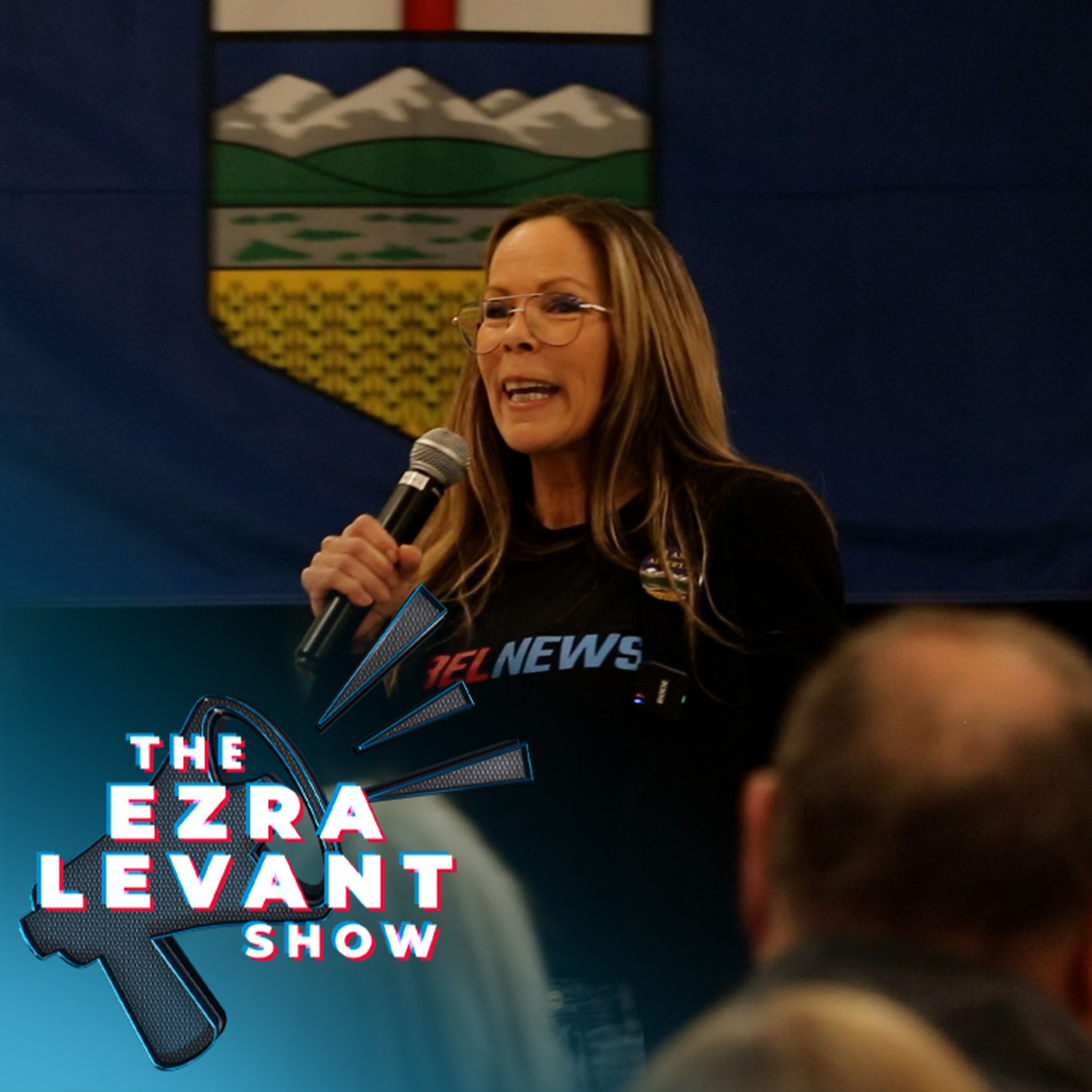
Rebel News Podcast
Alberta independence is coming — and Eastern Canada has no idea
01:05:09
Alberta independence isn’t a fringe idea anymore. As the October 19 referendum approaches, watch highlights from last night’s packed Calgary rally — and see what Eastern Canada isn’t noticing.
Loading summary
Transcript8 lines
- [00:00]
A
Tonight, the latest on Alberta independence. It's February 27th and this is the Ezra Levant Show. Shame on you, you censorious bug. Oh, hi everybody. Bit of a snowstorm, the usual for Canada in February. I was in Edmonton last week, it was minus 27. I'm southeast of Calgary now, making my way to Medicine Hat for the latest in our Alberta Independence tour featuring Sheila Gunn Reed, Corey Morgan and Tamara Leach. Behind me you can see a new high tech grain elevator, the kind that replaced the old wooden ones decades ago. You know, driving through these bald prairies, it reminds me of my childhood. I actually grew up in west of Calgary. I wasn't in Calgary proper until I was in high school. And just the loneliness of being in the prairies, the only sound being passing trucks and maybe a propeller airplane far away. That's sort of the memories of my youth. And driving by those, it's almost like you were going by a monument or a kind of cathedral or something. An homage to the people who work these lands. Anyways, these are the sort of people that don't like what Mark Carney is doing either to Canada or how he's portraying Canada to the world. People here. If you said, did you hear Mark Carney wants to put Canada in a new world order with China at the center. He wants to break away from the United States and pivot towards Qatar, the World Economic Forum in China, they'd say, what? But these people aren't listened to. And not just here in Southern Alberta. I mean in Edmonton a week or so ago, when a duly elected conservative MP who was told by his voters, go and represent Alberta the conservative way, by the way, he's been off work for months. No one knows where he's been. He has a behind closed doors meeting with Mark Carney and poof, suddenly the election is undone. It's like if you play by the rules and lose, the liberals will take it. If you play by the rules and win, as happened in Edmonton, we. Well, they'll just come up with some way to cheat in the back room. But don't you dare call it cheating because you can't prove there was a bribe. It's demoralizing for folks out here. And the referendum is indeed coming. It's coming. It'll be coming on October 19th. And I think it's gonna be the story of the year. I think it's sneaking up on eastern Canada that's so focused on hating Donald Trump and now hating the American hockey team. All this weird anti Americanism that, you know, the bread and circuses by which the Toronto Star and the CBC and CTB and the Global Mail keep their people entertained. I think something bad is coming to them and they don't realize that Albertans are going to say, hey, you know what? If the choice is between going it ourselves and following Mark Carney, we'll go it ourselves. I think that they haven't quite realized what's coming in. Like Brexit, the referendum a decade ago by which the UK decided to remove itself from the European Union's political system. All the institutions, all the powerful people, all the money, all the officials are going to be for Remain but the people, and not just rural people here. But I think a lot of city people are going to say, you know what, we can't do any worse. And at least if we were independent we could work. We could develop our oil and gas without having Mark Carney say, well no, our major projects office needs to approve that and you need to pay bribe money in the form of carbon cat like it just wouldn't be any of that BS and so much other wokeness would evaporate with it. I'm on tour with the aforementioned speakers as we go from town to town in Alberta. We had a sold out event in Calgary yesterday. We'll be in Medicine Hat tonight, Lethbridge the day after, and then I'll be back out in Toronto where I'm in exile. I think that this is going to sneak up on people sort of the way the trucker convoy sneaked up on the Laurentian elites. They didn't really know what hit him. Who knows, maybe they'll try the same thing in the form of martial law. Anyhow, without further ado, let me invite you to take in a sampling of the remarks from last night's event in Calgary. Here, take a look. In Canada we're going to get Project Fear, but we're also getting something I call Project Sneer. I would say that the majority of response to Alberta's independence instincts have been personal attacks, condescension, how dare you. At best they're an appeal to nostalgia. Okay, at least I can value that and you're not trying to browbeat me. But the vast majority of the responses, especially from Toronto based commentators, is how dare you. Who do you think you are? You are not allowed to and you are not allowed to ask for the same things that Quebec asked for either in a referendum or even within Canada. And I think that our little province of Alberta is in for a choppy ride because I think you are going to see just like In Brexit, where all the major powers and institutions came hurtling down on ordinary Brits. I think you're going to see that in Canada too. But in the UK you had people who were secret Brexiteers, they were secret leavers. They didn't talk about it a lot loudly. They just said, you know what, when all is said and done, we're all going into the ballot box and we're all equal there. We're all leveled. You can be a billionaire or you can be a student and we all have one vote. And they marked the ballot in a way that the establishment has never forgotten. I think that we are in similar times and it's only eight months away. Without further ado, let me hand over the microphone to my dear friend, someone whose new book is really worth reading and I know there's a bunch of copies out there, Sheila Gunn Reid.
- [06:17]
B
I'll give you sort of the run of the show tonight if that help. We have Corey Morgan, he'll come up next and he'll talk about his book, but also the challenges that you might face as a pro independence minded person and how you can have those difficult conversations with Project Sneer, but also how you can have those difficult conversations with people you know, have maybe had a little bit too much CBC in their life. You know, after that I'll come up and then of course we've got our headliner, Tamara Leach after that and then we'll give you the opportunity to ask us some questions. So I will invite Corey up. For those of you who don't know, Corey has been one of the most consistent, clear eyed voices on Alberta autonomy long before now, long before it was trendy, long before or fun or meme worthy and before it was safe. So he's a columnist and a political commentator with our friends over at the Western Standard and he's really done some deep dives into the structural issues that Alberta faces within confederation and on the issues the other side loves to throw at us. What are you going to do about the treaties? What are you going to do about your pension? He's thought about all of that energy policy and he's really given, I think all of us some tools to confront the emotion and nostalgia on the other side. So whether you're sovereignty curious, fully committed or just trying to understand what comes next, Corey and his book the Sovereignties Handbook bring the kind of clarity I think the conversations before us really do demand. So please welcome up my friend Corey Morgan.
- [08:24]
C
Just gotta pin this on. Oh, what a great time to be Albertan, as if there's ever been a bad time, has there? And this, as Sheila said, I've been stubbornly at this for quite some time, measured in decades, and I've seen it surge. I've seen it go back, you know, support for independence, and then it cools down. I've never seen anything like we've seen in this last year. This is singular. This is unique. These rooms are packed, so it's great seeing rebels hitting these up and other groups. I'm not seeing empty rooms. I was involved way back in the Wild Rose organizing as well, and I can't remember just how many events I attended where we had maybe a dozen people or a couple dozen, and it evolved into something more, but never a consistent eight months of just people wanting to come out and get moving on this. This movement now has momentum, determination, and it's got holding power. It's sticking. I'm going to use a bit of an analogy. Those are familiar with me on social media. I live in an acreage south of town in a town like named Prius, and I like to post a lot about the wildlife in my backyard and the crazy rescue dogs. We have the collection of them, and there's one of them who runs every time a snowplow comes by with all he's worth, down that fence, tries to catch it, hits the end of the fence box, his head comes back. Well, he's got momentum and determination, which is good. Those are powerful things. But if he ever got over that fence and caught that plow, he wouldn't have a bloody clue what to do with it. So that's kind of the stage we're at now. I'm not saying you're all dumb dogs that are going to run into a fence, but we need to go further now and into a plan. And that's where Sheila's book is so brilliant, where she talks much, much more about what we would do the day after a yes vote. You know, we're chasing that plow, but we get that yes vote. Have we got our affairs in order? Have we got a plan? Do we know what we're going to do the day after? We have a lot of things we talk about, absolutely. But, boy, there's a lot. And, you know, I'll let Sheila speak more to that book, but it's brilliant because a lot of it comes from what the partico equa kindly already laid out and studied and checked into back in the early 90s on our behalf, even if they didn't know it all. We gotta do is scratch out Quebec and put Alberta to a whole lot of those things in there. And, hey, it's not plagiarism. We already bought it many times over. So at these meetings and with my own book, that's what I like to focus a lot on is the how. Because this is unique. This is a first time. We've never had an independence referendum in Alberta. A lot of us are ready to roll, but we're not necessarily experienced campaigners. We haven't done this before. And we don't have the mechanisms that Quebec or political parties have. We don't have that structure, that training, that hierarchy. So we've got to do it ourselves, which is great, because Albertans love doing things ourselves. But it does make it a little more challenging. Sometimes we're doing it with each other, and that's why we're in a room tonight. And somebody had asked on social media a little while back when I posted from one of these rebel meetings, you know, it's great. Full house, and everybody says it's great. Well, but you're all there preaching to the converted. What else is happening? You know, you guys are just talking with each other, and I'm glad they asked because I could answer and say no, no, it's much, much more than that. These are the people ready to roll. These are the people with that momentum, with that ambition. But we're coming away from every one of these meetings stronger. And I'm not just meeting a social bond. We're learning from each other. We're asking. The Q and A's are great. I say at every one of these, and I'm not kidding, somebody will always hit me with a question I never even thought of at one of these. And often I might not even have a great answer. But you can bet I'll study it and think about it, and the next time I get that one, I will have an answer. So I come away from these as a better advocate for independence than when I came in. Likewise. Everybody else in the room listens to that Q and A. They listen to us. We share what we've got going on. Because it's not just a room full of people expressing gripes or just wanting to bond with their shared dislike of the Federation right now. It's people planning and determining how they can make this happen, how a yes vote will happen this fall. It looks like there's pretty much no doubt that date's going to be held on October 19th. So I know there's been a lot of people I want to address It Premier Smith came up and put a whole bunch of other referendum questions packed into that day, and people were worried. It's going to be a distraction. I tell you what, with eight months of this campaign going on, you could put 50 questions there. People are going to scroll down because there's only one they're really interested in. It's stay or go. But it's our job to make sure they pick to go. And we've got a ways to go yet. The polls are coming out, and as I said, they're showing momentum, they're showing it's growing, but we're talking growth getting into the mid-30s, maybe up to 40%. As Ezra said, there's a lot of almost, you know, closet independent supporters, and they'll come out with encouragement and support like any other person in the closet. But we have to hit the undecideds. That's a large group, and they're reticent. They understand that the system's not serving them well. I mean, if we want to look at a comparison, that referendum that was held by Jason Kenney on equalization, you know, over 60% of Albertans said, yeah, we want to get rid of it. And of course, Ottawa told us to, well, that's cool. Roll it up and stick it back where you got it in the first place. It was a waste of time. It was just a poll on Albertans, and that's fine. I see the referenda questions that Premier Smith is packing on some of them, too. You know, saying, oh, we want to abolish the Senate or we want to choose our own judges. Those constitutional questions are there. We can all vote yes, all we like on those without the rest of the country jumping on board with it. We're not going to get them. But that's fine. Let's have the discussion in this next eight months. So those people who are on the fence, those people who are undecided, realize that we are wasting time trying to fix this system from within. You know, over 60% of Albertans were already discontent enough at least to recognize that they wanted to go up and make a mark against equalization. That same 60% can make a mark saying, it's time to move on from the Federation, but we have to get to them. Something I talk about is the emotional aspect. It's real. You know, I'm cold, cynical, calculating. That's my nature. But that doesn't sell sometimes, you know, so I can go through all of the misdeeds and the problems and everything else, but it doesn't Cut through a person's emotions sometimes when they just say, dammit, I just love Canada. And I just can't let it go. You know, you have to approach people like that. It doesn't mean they're immobile. But barraging them with stats and facts or even getting in their face is not going to help. And it doesn't matter what reason a person might vote no to independence, whether it was emotionally based or if they felt it was based on some sort of facts, it's still a no. So we have to think on how we're going to win them. And that's where we have so much more power in these rooms than political parties do. Because this is personal. This is something people feel a real attachment to. And the way to move it away from that is with another person, with somebody they trust, with somebody they like, with somebody they converse with. And it can take multiple conversations, it can take a few touches, because where do you, you know, when you look and anybody. I'm sure a lot of people here volunteered on campaigns, even the largest and most organized campaigns. What do they always rely on locally to win the votes? They get the candidate to the door knocking, because that candidate speaking even 30 seconds of that person at that door is going to have more impact than a thousand flyers or signs on the road or paid advertisements or columnists online. They know that, and that's why they do it with us. We're the candidates. There's no candidate. This is a different structure. It's a concept we're selling and part of it, too. Now we have to shift a bit. We can't just talk about what's wrong. I think most Albertans already understand it. We got to convince the undecided why it's right to vote yes. How is it going to be better the day after? Because people want to vote for something, not just against. They want to know that we're not just doing it out of spite. We're building something bigger. We're building something better. I'm convinced of that. I think most of the people in here are convinced of that as well. But we've got to take it on ourselves. That responsibility of getting out and convincing all of those other people about that. And it takes diplomacy. It takes patience. I mean, we're crabby, straight speaking Albertans. I love that. But diplomacy, part of diplomacy means smiling at somebody when you know they're full of crap, or at least nodding and saying, I appreciate your opinion, when you think they're a moron, because the moron's vote's still worth as much as yours. And we've got to watch it. When we get in people's faces, we can inspire somebody who would have sat at home to go out and vote against us. That's part of it too. Part of the skill we have to learn is when not to engage, when it's a lost cause. There's lots of people, you see them all the time. They make it very clear to you it'll never happen. You're wasting time, you're a traitor, whatever, fine, disengage. They're just sucking energy and time and thought from you. I know a lot of our instinct is, well, I got to debate this person, I got to argue why. Why? The 10 minutes you spend debating with that person who's never going to change their vote could have been dedicated to somebody who's undecided. So politely disengage, Move on. If this is at a family dinner or something like that, that's the place to disengage too. This is something that I like to remind people in campaigns. We do have to keep them fun. It's going to be an eight month slog. And this is a serious personal subject. And getting back to Covid and some of the horrible things that happened because of it, and some of the worst stuff that was done was splitting families up. Some of the fights we had between each other over vaccination and quarantining and all that crap. Just bear in mind, don't rip your family or friendships apart over the independence thing too. You know, friends, family, they're important. If you got one who is never going to shift over to the yes side, just avoid that conversation with them. It's not worth it. But you can keep seeking out those ones who are flexible and they're there, they're there, they're at the hockey game, they're at the bar. When you're out somewhere, they're at your workplace, you know, the stereotypical water cooler. Look for those opportunities and arm yourself to talk with them and listen. One of the things that's important with somebody, and that's hard for a blowhard like me, but the truth of it is, if you want to move somebody, they want to be heard first. And you ask them questions, genuine questions. We're Albertans. Even the ones against independence, they got good BS detectors. Ask them what their concerns are and people become a lot more receptive to a discussion once you've started on their turf. And then you can start working it towards the independence thing. Because when we have these conversations long Enough. All roads tend to lead to independence anyways. You know when they're saying, oh, well, we can fix this, and then you talk long enough, oh, maybe I can't. Oh, we could change that. Crap. That throws a dead end, too. Eventually they'll get to the same end of the road that you have and they'll get to the yes. So part of that's educating ourselves, though, and being able to answer and being able to say, I don't know when we don't, and coming back to it later and doing things like buying Sheila's magnificent book that fills in so many of those gaps so that you can answer those questions for them. So you can make that case diplomatically. Leave the swearing and belligerence to me on X. I've got it down. But here is. This is our training session as Albertans. It's not a particular party, it's not a group. We're here as Albertans for an event that Alberta has never seen before. And we're making history. But let's make sure it's a positive vote in history and not just a footnote of a time that Alberta got really uppity and crabby and then blew a referendum and then went back into the Federation. We can do better than that. We will. So with that, I'll leave off and get on to those other speakers. And I'm looking forward to the question and answer and talking to you guys afterwards in the back as well. So thank you.
- [21:36]
B
Well, I don't see a lot of young people here. Right. You're gonna ask that. There are some young people in the crowd, but young people don't come to stuff like this. That doesn't mean they're not independence minded. If you've gone to a petition signing, particularly right after work, like 5 o', clock, 5:30, you're gonna see young moms and dads still in their coveralls, hauling car seats with babies in them fresh out of daycare to sign that petition. They just don't come to stuff like this. Like, my kids are weaponized for independence, but I couldn't pay them to come here at all. They already know that independence is their way forward in the future. Now, I guess I'll start by telling you how I come by my Western separatism honestly, and it's a bit of a tough story, but like Ezra, my family settled on the same chunk of land that I now farm in 1903. I still freehold the mineral rights. That's how long we've been around. And the land was passed down through generations. I have it now. I'm the fifth generation. God willing, my kids will be the sixth. But unlike a lot of people's earliest memories, mine is of my parents being worried about money. Who knows about jingle mail? Do you guys know about jingle mail? You do? So that's what happened during the National Energy Program. Interest rates skyrocketed. People were underwater on their house and the mail in this province jingled with keys being mailed back to the bank. I never want to see that again. We came close during Rachel Notley's time, so we almost had a jingle mail experience of our own in my family. So my dad worked in the high Arctic for Imperial Oil. And then the National Energy Program came. He had just financed some equipment against the farm. Interest rates shot up, and then he lost his job. And it took years and years for my family to recover. And my family isn't unique. It happened to thousands of families just like mine because of a bad decision or decisions that were right for eastern Canada and they didn't care one damn bit what it did to the rest of us. And it's always been that way, hasn't it? They're still doing it today. So. Yes. So in 1995, I was. Oh, I was 16 and I was inundated with federalist propaganda. And I think it might have even worked on me. Back then we only had three channels on the TV and not social media, so I wasn't able to get the news the way that I should have. But I was fully aware of a referendum happening in Quebec and how it would be a terrible, terrible thing if they left. And we just absolutely had to stop it now being little more long in the tooth and a die hard sovereign test, I thought, what can I learn from what they nearly did? Because they really nearly did it and they were very prepared. So if Alberta is ever going to talk seriously about sovereignty, and that can look different ways for different people. So it might be leverage within confederation or something completely different. We need to have a real adult conversation about what happens when a jurisdiction threatens to leave. And that has really only ever happened with Quebec in the Western world. When people say, as Ezra mentioned, Project Fear, it can sound dramatic and conspiratorial, but that's what they called themselves. And it is what institutions do when they're slipping. They tighten up. They start deploying credible voices like Jason Kenny, who had him as member of Project fear, and then they shorten the timeline, they raise the stakes, and then they focus on the wobbly middle and that's what they're going to do. They start asking questions like, are you prepared to risk your pension? Are you comfortable with market instability and fluctuating interest rates? What happens to your mortgage if those rates spike? And who will pay the debt? We saw this in Quebec in 1995. Quebec didn't wake up one morning and decide to roll the dice. They created a National Commission on the future of Quebec. It was 10 weeks long, 18 traveling commissions all across the province. 435 public hearings were held in that time. More than 55,000 people participated in those public hearings. 3,000 written briefs. I went through so many of them. They deployed separate commissions for seniors and youth. They employed economists and lawyers, indigenous leaders, business owners and civil servants. They wanted to hear from everybody and they wanted to hear the concerns. Because when you hear from people who are anti separation, they're asking those questions. And in Quebec, they didn't treat sovereignty like an anti Canada slogan. They treated it like replacing a state. What can we shuffle out and put in our own place? They asked the public, who pays the pensions? How is the federal debt divided? What happens to the federal courts? What happens to those civil servants? And what happens to the territory itself? Even in that level of preparation, this is a warning for us. They still lost by 54,000 votes. Now that number should stay in your head because it tells you how narrow the line is between confidence, between winning and losing. But it does tell you that preparation narrows the fear gap. And the thing is, we know the questions now. We know what people are worried about. Quebec did the homework for us. Now we just have to have the real credible answers in the final stretch. And this will happen to us. The banks warned of instability. Corporate leaders floated relocation. We're going to move from Montreal. There was a unite rally that applied the nostalgia and the emotional pressure. And that's when the middle people hesitated. And that hesitation was enough to stop the momentum. And if we look at Brexit, as Ezra mentioned, the United Kingdom was further down the road. They had years and years and years of being fully independent. It already had its own currency, central bank, military, global trade presence. It wasn't inventing sovereignty from scratch. And still, when the leave surged, guess what they did? Project Fear. Recession forecasts didn't happen, by the way. Emergency budgets also didn't happen, by the way. They said the housing market would collapse. That didn't happen. The pound dipped overnight slightly after the vote. And for that that was held up as proof of disaster. And yet this is what we should point to. The state Continued functioning just fine. Negotiations were hard, they were difficult, they were unnecessarily emotional, if you ask me. But the markets adjusted, institutions adapted. The fear shaped the landscape, but it didn't erase the decision. And they came out the other side. Is there a buzzing that's driving everybody crazy? Where is that coming from? Is that me? I think it's feedback from that. I'll move that down. Okay. I think it was me. I'm very sorry for that. So if Alberta ever moves beyond just this conversation that we're having in the room today, and I believe that it will, we have to start actually planning. Because again, the biggest question was, what happens to my pension? We have to come up with a pension transition model, a debt apportionment doctrine, a currency framework, an indigenous sovereignty framework, legal contingency plans for clarity, act challenges, because that will come. Charter litigation will descend on us like a flock of vultures. Treaty injunctions, that will happen. There will be pre drafted legislation waiting for us on the other side. And we need to have our best and brightest ready to fight it. So we have to have a litigation strategy and timelines because we only get one shot at this. And I think we all know that we're closer than we've ever been. I can see the momentum, but there will be no rehearsal for this. There's no, let's test it, we'll refine it, we'll get close, we'll try again. Quebec is trying to do that. But if Alberta runs a sloppy sovereignty campaign and loses decisively, that stigma will linger for a generation. And then what happens? It becomes evidence in the minds of cautious voters that the project before us, this great new Alberta, we plan to pioneer that it was never viable. And then they will change the laws to prevent us from ever trying again. So Quebec really narrowed the fear with preparation and they still fell short by 1%. That is the task before us now. But that doesn't make me pessimistic, honestly, because we are most definitely, most definitely not Quebec. Alberta is not structurally weak. It's young, it's strong. We build, we produce. We attract capital and people every day by the billions of dollars. We have economic gravity that Quebec never had. Those are our advantages. But gravity is not governance. Even though we have all those things, we still need to convince people that things will be fine. Maybe a little shaky for 18 months, but a better Alberta lies on the other side. If Alberta can sit across from the most skeptical voter in the room, the retiree, the small business owner, the cautious parent, and calmly answer every Question without flinching. All that fear just dies on the vine. And I know that we can do that. We need to be prepared. Project Fear is going to come. The banks are going to scare everybody. The media, Good Lord, the media. They're going to amplify and then they're going to attack. It's already happening. The courts will intervene. Political allies amongst us will hesitate. You know who's going to be some of the harshest critics of the separatist movement? The Federal Conservatives. They will never win again if we leave and then shortly after Saskatchewan follows. There will never be a Conservative prime minister in the Prime Minister's office without us. And they know that the outcome before us will depend on whether Alberta looks like a protest or a government in waiting. And that's what we have to create. So if that day ever comes, it won't be just the campaign before us, it'll be the year before us. Of quiet, disciplined, hard work. Not in outrage, but in readiness. Thank you. All right, I'll call up the next speaker. You know her, you love her. She brought the government to its knees. And she knows a lot about Project Fear because Project Fear was most definitely unleashed on the convoy. She was Russian funded, she was a seditionist, she was running an insurrection. Wouldn't you know, she was lied about, maligned, and then incarcerated. And all she did was stand up to the government. And I fear that if we are not steel willed enough that they will do the same to us. So I think she's got a lot of advice to give on how to maintain cool heads while that honestly hate comes our way. So please welcome up my friend and colleague now, Tamara Lee. Down lower.
- [35:15]
D
Thank you.
- [35:16]
C
Thank you.
- [35:19]
D
Hi everybody. Thank you so much. Oh my gosh, I'll just never get used to that. First of all, I was hoping that what we'd be showing was not just my face. This is not my tour, but I haven't been technologically inclined since the late 90s, so I haven't actually used PowerPoint since probably the late 90s, so I didn't want to touch anything once I got it up here. But thank you all for coming and welcome to our independence. It is an honor for me to be going around Alberta with Sheila and Corey. As I've said, I feel like I've spent most of the last four years in eastern Canada, so it's really a treat for me to get to travel around my own province for a change. So thank you. And of course, Sheila Gunn Reed. So my other conditions, I'm allowed out for necessity of necessities of life. So basically just things that will allow me to continue to breathe and work. Community service. My community service is completed. I did get my hundred hours in. I'm still volunteering at the food bank though. I was pretty happy that they're going to let me continue to do that. And of course religious services. So those are my conditions. I'm let out of the house for that. It is a bit of a process to get out of the house. Obviously everything has to be meticulously scheduled, but the joke's on them. I'm a logistics expert, self proclaimed. So anyways, so yeah, there's a little bit more to just getting oops out of the house, but it's really not. I don't feel like I'm suffering, put it that way. So as most of you know, I worked in oil and gas for a lot of my time here in Alberta. I moved to Alberta in the late 90s and very proudly worked for organizations like Schlumberger. That was my first job in oil and gas. Really, really loved that company. Learned a lot from that company and just really started to love what I did. What I did. I mean, I got into the oil and gas industry and logistics and realized that I was good at it. You know, when you just, you don't know sometimes and then you just find that thing that you seem like. I worked well under pressure. I was great with deadlines. I loved organizing frat crews and cement crews and the equipment and the chemicals. And I just, I felt like I'd found my place. And so I was really confused when I sort of started paying more attention to some of the policies that were coming out from Ottawa, 3500 km away regarding our oil and gas industry. And so with things, policies and laws like Bill C69 and Bill C48, Medicine Hat. My community, much like a lot of Alberta communities, are predominantly oil and gas related or supported in somehow some way, shape or form. And I mean, I just couldn't believe it because I mean, I see the policies and procedures and the safety factors and the environmental factors and, and stuff that we had to follow and I couldn't believe that I was watching our politicians in Ottawa vilifying and condemning what was happening out here. Like in my opinion we should have been shouting it from the rooftops. Alberta has the most environmentally friendly, efficient energy industries in the world. Like we really should be streaming this from the rooftops. Instead they're trying to thank you. Yes, it's something to be proud of. And I mean I will always be be proud of my time in oil and gas. I had the best time. I met the best people, worked with the best guys and gals, and I was really lucky to have some really good managers. So I was pretty confused that the things that I was seeing happening in my workplace and in my industry were being vilified by the government that the way that they were. And so of course, as you can see here, that Quebec picture will come up later. But this is right in the beginning of my sort of advocacy days when we, I joined the local yellow vest rally group in Medicine Hat. And so we used to, you know, put on our yellow vests and take our signs and our flags and go stand on the road and think we were really doing something, you know, holding our signs when we get some honks and some Trudeau salutes at the same time. And that was fun. But I made some really great friends along the way here. And it was really my first, my first introduction into sort of the advocacy. I don't like calling myself an activist, but my advocacy and sort of my eye opening to what was really going on with our federal government. So, yeah, I did that for a little while, went to rallies every week and had a great time, met some great people. We had lots of flags, lots of signs back then. We were, like I said, protesting Bill C69, Bill C48, the M103, Islamophobia. Hate speech. I mean, hate speech is hate speech. So, yeah, we had a great time. So anyways, it's about also the same time when I decided that I need to quit talking and just mean tweeting and actually get off my butt and do something about helping my province. So in 2019, I hopped on board my local MLA, Drew Barnes. I joined his campaign to volunteer to help door knock and help in the campaign office and everything. And at that point, I got to meet Mr. Jason Kenny. And by the way, I'm just going to. Hang on, I got some photos from that day and I'm keeping them because there's going to be a tweet one day. He's going to. He's not going to be very happy, but I got proof. But anyways, you know, and to be honest, when I first heard that Jason Kenney was coming back to Alberta, I was. I mean, I thought that felt a little weird. I thought it was kind of strange that this member of Parliament was just going to give everything up and come back to Alberta to save us all. And I mean, let's be honest, we could have ran a cardboard box against Rachel Notley, and it would have won. So, but I, you know, I got working on the campaign. I met Jason Kenney this day, and I actually. He started to convince me that he was actually here for the benefit of Albertans. And so I threw my heart into it. I threw my heart and soul into helping with this campaign, because I still believed in the process. I still believed in the democratic process, and I still believed politicians when they look me in the eyes and talk to me. So that was April of 2019, and I believe it was within. Well, the federal election was in October, and by then I'd already decided that this wasn't working. And October 19th was the federal election, and Justin Trudeau won. And I watched before our polls closed as the numbers came, and we already knew that we had lost. And that's when I really knew for sure that we don't have a say out here. I mean, like, so many things that have to do with Canadian politics, it's just another dog and pony show to make you think that you're living in a democracy, to give the illusion that you have a choice and a voice. And so October 20th, I woke up and I messaged Peter Downing, who had invited my husband and I to go perform at a pro gun rally here in Calgary. And so I reached out to him as I knew that he was starting this Wexit movement and organization. And so I reached out to him and I just said, what can I do? I'm happy to volunteer. I'll be your Southeast Alberta coordinator. Let's do town halls. We got to start talking seriously about how we can fix confederation and our place in it, or we need to seriously start talking about leaving. And, of course, the Wexit movement itself morphed into the Maverick Party, as you know. And, I mean, I'm really, really proud of my time there. I met some wonderful people. I got to work on some great committees, and it really actually helped set the stage for what was to come, even though I didn't really realize it yet. I mean, all the organization that has to go into creating a party. And when Wexit, when I first joined, I was a part of. There was the Wexit provincial parties, bc, Alberta, Saskatchewan, Manitoba, and then there was the federal one. So in the beginning, I sat on the Wexit Alberta board, the provincial board, as well as the Federal board. And then when the pandemic hit, my husband and I lost our jobs, got laid off. So I gave up the Alberta position because we went to stay with Our family, my daughter, Manitoba. So I took over the province of Manitoba. I was helping set up EDAs and trying to find candidates and stuff. And it was such a great experience. And I had quite a few different positions within there. Obviously, as you know, I started off as a volunteer coordinator and then I went into communications and then I ended up being the secretary by the end. But I mean, I love the platform. I love the stuff that we came up with that I really agreed with because. Because I don't think there's too many people in this room that just want to leave so bad. Just despise Canada. I mean, I think most of in this room are reluctant, but I mean, if you feel like I do. We've tried and we've tried and we've tried and we've tried. And at what point do you stop just trying and actually try to find a real solution to the problem instead of just hoping that this time, like every federal election, I think this is the time. Or every scandal that Justin Trudeau had. I would tell my husband, I said, this is it. He's buried now. I know it, like he can't get out of this. And Dwayne would be like, oh no, you watch. And he was right every single time. Now he's got Katy Perry. So I'm not too sure that he's a real winner there anyways there. Astronaut meets rocket scientist. I'm sure they're interested in going versus conversations. So. Yeah, anyways, I mean, basically with the Maverick Party, what we set it up to do was to have a two track system. So the first option was to try and get some changes to confederation for Alberta to give us greater autonomy in the west to, you know, access to our resources, just to get a fair say in confederation and feel like we have a say. And barring those changes, which we were pretty sure we weren't going to get anyways, then we were going to seek independence, which is what we're all doing here now. And I loved it. I actually, lots of people hated the name. I kind of liked it. But that's because I'm like a Tom Cruise fan from way back. But the one thing, the reason I really love this logo is because we actually literally had freedom in our name. So it's just, it's funny looking back now on my experience doing this and how, like I said, how it came to help me later on with the convoy, I just want to throw this out there. I am so proud that this picture is going to be in the history books for all of Time me sitting in a courtroom with a mask, but with my. I love Canadian oil and gas. Too bad I didn't say Alberta oil and gas. But yeah, as I was saying, as you know, I do have some experience with the project fear mongering that we faced. It was. It was when we were on our way to Ottawa that Chris and I. Which is funny, Chris and I actually didn't have a lot of time to talk on the way to Ottawa because he was either busy or I was busy. And like, I remember, you know, Chris Barber's first world problem. It was the cutest thing because he was, you know, Sean Hannity and Tucker Carlson fan back then, and he was doing an interview with Tucker Carlson and Sean Hannity was on hold and he was just like, you know, the king of the world. It was really, really cute. But I remember having the conversation with him about how I felt, you know, everything was. So many things were being exposed. Just before we even got there. We were still on our way and a lot of things were being exposed. And I said, you know, I feel like now that a lot of this is coming up and people are starting to have their eyes opened, I feel like everything that they have planned for us is going to be expedited because the jig is up. And what I mean by that is the censorship bills that we're seeing right now. You know, a lot of things that are happening right now, I feel, have been expedited because they got caught, they didn't expect it, and they were exposed. And as you can see, I mean, it was one of the most beautiful, beautiful things ever. And it's too bad that the government didn't. I feel like the government and the mainstream media had a golden opportunity here to really unite Canadians, like in a Terry Fox moment or an Olympic gold medal win, sorry, probably too soon moment. But, you know, they blew it. And it's just still, to this day, shocks me, the amount of fear. Like I said, they were telling people that we were setting apartment buildings on fire, that there was threats of rape, that we were stealing from homeless people. What were some of the other ones? Oh, yeah. Funded by Russians, of course. I mean, that's always. That's. I saw that out again on Twitter today. Did you know it's the Freedom Convoy? And now Alberta separatists are backed by Vladimir Putin. So just so you know, Putin's got your back here, I guess. And, I mean, obviously when we got there, we worked very, very, very diligently. So I guess my point here is that, you know, I went from being a proud Canadian to, you know, we have to leave and we have to seek an opportunity to get out of here, to this experience. And it changed my life. Whoops. Obviously, I went from. I went from wanting to leave or feeling like Alberta needed to leave Canada to feeling like, we can do this. This is the Canada that I grew up in. You know, if you guys could have seen the reefers full of donations that were at all, not just one outpost. I mean, all of them, that was Canadians looking after each other. And that is the country that I grew up in. I mean, I lived in some pretty desolate places growing up in Saskatchewan, where, you know, if there was a snowstorm, we didn't get out of our yard. It was our neighbors that came and helped us, or vice versa. I grew up in a home where my family would, you know, if people were stranded on the highway or hitchhikers, my parents would pick them up and bring them home and feed them. And I can't tell you how many times I woke up to strange people on our couch. But that's just what we did back then. And so my perspective changed. So we got into Ottawa, and a couple days later, for more than just this reason alone. But a couple days later, I got an email from the chair of the board, who was in lovely Palm Springs, Florida, who emailed me to say, you guys have proved your point. It's time for you to turn around and come home. And this was Tuesday morning after we just landed, and I said, come home. I said, we just got here. I said, nobody's even came to talk to us yet. Like, what point have we made? And so sometimes I lose my temperature. But still, even still, I'm so grateful for my experience there and the people that I got to meet. And, you know, it taught me a lot, like I said, of what was to come. So, of course, when the convoy started and immediately, you know, when we started seeing the kind of support we were getting, I mean, I knew exactly. I needed a finance committee, I needed a social committee. We need to set up spokespeople like we had to, basically. So I don't want to see, like a political party because that'll just start a bunch of conspiracy theorists. But we had to set up a grassroots, loosely run some kind of organization, or it would have been complete chaos. But I also recognized what happens because, of course, the Wexit movement and the Maverick Party, we were all once again, can you imagine how many times I've been called a white supremacist or a Domestic terrorist, a traitor, a seditionist. I don't think wanting to exercise your democratic rights makes you a traitor. I think trying to stifle those rights is what makes you and not even a traitor. I'm not even going to use that rhetoric, but you know what I mean. And so I completely changed my mind and I thought Canada is totally worth saving. And I walked away basically from the independence movement because I thought we got this, you know, we're going to do this. And then, you know, I didn't want to give up hope and I still haven't given up hope. I'm always going to have hope, I guess just because of my experience. But I also know if you're, if you're being, if you're in a terrible relationship, you need to eventually leave. Like if you don't help yourself, no one else is going to help you. And I said this the other day, there's a reason when you get on a plane that they tell you if there's something happens to put your mask on first. Because if you are not strong and stable, you are no good to anybody else. And I personally feel like Albertans are generous and kind. I don't think we mind helping other parts of the country but a little appreciation would be nice, maybe a little encouragement to help us with our resources, you know. But that said, again, we can't help other people unless we're coming from a position of strength and stability or. And much like myself, I mean, I feel like Alberta has been shackled, they've got leg shackles on and we can't do anything because we're vilified, we're cancelled, we can't move our resources, etc. Etc. But as you know, seeing how obviously my treatment in the Ottawa Court, Ontario court system was very eye opening for someone that's never been through the legal system before. I was absolutely stunned at how they even spoke about me in court. I mean, one of my charges was intimidation, you guys. I mean, come on, in what realm of reality am I intimidating to anyone? And so I guess, you know, I started to just get a little bit disappointed and a little bit disappointed. And then of course the POEC came, the Public Order Emergency Inquiry into the invocation of the Emergencies Act. And I went into that with a lot of hope too because I still believed, I still believed that we were going to have some justice and some accountability. And you know, when I stopped believing, I believed that right up until about the sixth or seventh week when the bureaucrats and MPs started coming in to testify. And I realized in very short order that I was watching a dog and pony show. And that was really disappointing to me because I learned lessons the hard way too. That's always been my way. If there was an easy way and a hard way, I always pick the hard way. I don't know why, it's just what I like to do. But you know, I left there first of all feeling very disappointed and losing faith in, more faith in democracy. But also I left there with the realization that out of all the organizations, out of all the law enforcement agencies, out of the government, municipal, all levels of government, all of these organizations that I came in and watched testify, the most professional and well organized of them all was the Ontario Provincial Police and the Freedom Convoy. Everybody else was a shit show. I'm just gonna say it. They were all, just all. I mean, one hand doesn't know what the other hand is doing. And I mean that's concerning. Especially when you look at the size of our current government. Nobody has a clue. I mean, let's face it, they've just sealed the vaccine intern documents for 15 years. Why? Because there was so many. There was over 3 million documents. Well, if you have a job and you can't do it, then you need to get the heck out of there and let people in that can come, come and do your job. Not being able to do your job or not being able to go into work, I mean I can't. As an Albertan or somebody that grew up on the West, I think it's absolutely laughable that we have federal government employees that are fighting, going back to work, going into an office. They're not going to sit on a drilling rig in minus 30, they're not digging a pipeline in minus 25. They have to drive to their office and they're taking the government to court. I mean, let's just get back to some common sense. That's all I want. And then of course, I mean my whole experience through the justice system itself, I mean this is pretty concerning when we quite clearly have a two tier justice system in Canada. The first headline that you see that says Ottawa Pro Palestinian protesters claim legal victory after all the charges are dropped. This happened just before May 12th. I think that was our, it was the hearing we had just prior to our conviction. So it would have been like final arguments and stuff. The interesting thing about this particular case is that the Crown prosecutor who if you have had my book and read my book, his name is Moyes Craig, he was the original Crown prosecutor on our case and had to quit after my book came out because he said in an interview that I mentioned his name 60 times, some of them defamatory. You called me a terrorist. Dude, I'm just making fun of you in my book. And you're going to call that defamation. Anyways, he was legit. He was the Crown prosecutor on this case. Case. So we get into Ottawa to go to the hearing prior to our, our verdict and find out that this particular Crown Prosecutor who wanted 10 years in jail originally for Chris and myself, let off five pro Palestinian protesters with the exact same charges as me and Chris. And all they had to do was donate money to a charity and write a letter to the. So tell me how that works. It's obviously very clearly two tier justice system. Also, not long ago, as you will know, well, we were Both sentenced to 18 months house arrest. I have already done just about 50 days in remand, which is not jail. Actual jail would be Disneyland compared to a remand center. This gentleman here was trying to buy sex from an underage 15 year old girl or who he thought was that. He got a conditional discharge so that the charges and a conviction would not hurt the process for his immigration into Canada. And then there's me. Very scary. I have my bail revoked twice. Yeah. So I mean, I've obviously come full circle. I'm sad. I don't want to. I would, I hate to leave Canada, you know, But I mean, it's not what it was. Sometimes I now look back and I wonder if it ever was what I thought it was. I mean, we've had problems. I mean, I've read about Metis people, the history of the Metis people. I mean, how the government's run all along and. But it's the people, it's the Canadians, right, that I love, that I hate that this is happening to. But like I said, we have to come from a place of strength and stability and prosperity before we can really help anybody else. And I don't think that makes us selfish. I don't think that makes us treasonous. Traitor. Seditionists. We are literally, literally exercising our democratic right to hold a referendum to leave the confederation of Canada. And we may lose. I mean, we might lose. We don't know. It's not going to be easy. As Sheila was saying, it's a long road ahead. And then after the referendum we still have all the negotiating to do after that. But one thing that I'm going to say is that I'm so proud. Just like the convoy. I hope this doesn't make me cry. I see a lot of name calling, I see a lot of dismissiveness, I see a lot of mocking. But I don't see any of that coming from our side. I'm seeing that all coming from the other side. I left Medicine Hat the other day to drive to Red Deer for one of these tour stops and as I was leaving I heard about, I don't know if it was the Free Canada petition, but anyways it was one of those let's all stay in Canada and love one another events that was happening in Medicine Hat and I didn't see one letter to the editor asking them to shut down the event. I didn't see one post on Facebook calling any of them names. Have your event come and have your say. This is what we're here for, to have discussions and this is the way to do it. Have discussions like Corey was saying. Have these very positive discussions with people. The pros of leaving, I mean as opposed to just the cons. I mean there's lots of pros. And be mindful of the fear mongering, you know, the sun, the morning after the referendum, the sun is still going to come up and we're still all going to get up and go to work. The world is not going to end and we're just going to figure it out. When we left for Ottawa, we didn't have a hot clue what was going to happen. We hoped, we prayed, but we didn't know. But it's going to work out and you have to be brave. You have to be brave and you have to be willing to understand that there might be sacrifices. This is maybe isn't going to be the easiest thing ever. But if you're not willing to make the sacrifices then you know this isn't going to work. It is a risk but what I will tell you is if you don't risk change, you know what changes? Nothing. You're right. So it's worth a shot in my opinion and I think we can do it the right way and I think we got the great heads here. Oh yeah, and this book is. Oh, this is not a plug for my old book but I'm starting a new book so we're gonna have a part two coming out pretty soon which I'm really excited about. That one ends up at the end of the public Order emergency commission and I feel like I've lived three lifetimes since then. Before I finish off, there's one person I meant to thank which is my husband in the back there. I was gonna Try. In the. You know, as far as the. Well, I feel like he sort of won the jackpot in the. Honey, I didn't sign up for this lottery. We thought we were just going to play cover tunes and rock bands in the bars till we died, basically. But last week he drove me up to Mira in a blizzard. Today he drove me up in a dust storm. And he does so much more than just that. And I just. Thank you. Thank you to Duane for having my back. And lastly. Sorry, I know I'm talking a lot. I'll wrap it up. I could literally stand here and talk to you all night. When I was in prison, the second time, when I was in jail, a good friend of mine sent me this poem, and I had a lot of time on my hands, so I committed to learning it, to memorizing it. So, you know, Alberta, I feel, has been shackled, just like I have been shackled. We have all these. We have all these resources. We have of all these things that we could be doing, but we're being governed by a place on the other side of the country. And so I feel that there is some similarities here, and so I'm going to read it to you. It's called Invictus by William Ernst Henley. Pardon me. Out of the night that covers me Black is the pit from pole to pole I thank whatever gods may be for my encouragement. Unconquerable soul in the fell clutch of circumstance I have not winced nor cried aloud. Under the bludgeoning of chance My head is bloody but unbowed. Beyond this place of wrath and tears Looms but the horror of the shade and yet the menace of the years Finds and shall find me unafraid. It matters not how straight the gate how charged with punishments the scroll. I am the master of my fate. I am the captain of my soul and, Alberta, you are the masters of your fate. You are the captains of your soul. Get out and talk to your friends, because we can do this. We got one shot, and we can do this, and we're gonna do it the right way. So get out there, sign the petition, tell all your friends and my deepest, sincere, sincere thank you for coming out the night. Thank you.
- [64:40]
A
Well, it's pretty chilly out here. I'd better get back in my vehicle and keep going down to Madison. Hat, on behalf of all of us at Rebel News in Alberta and around the world, to you at home, good night and keep fighting for freedom.