← Rebel News Podcast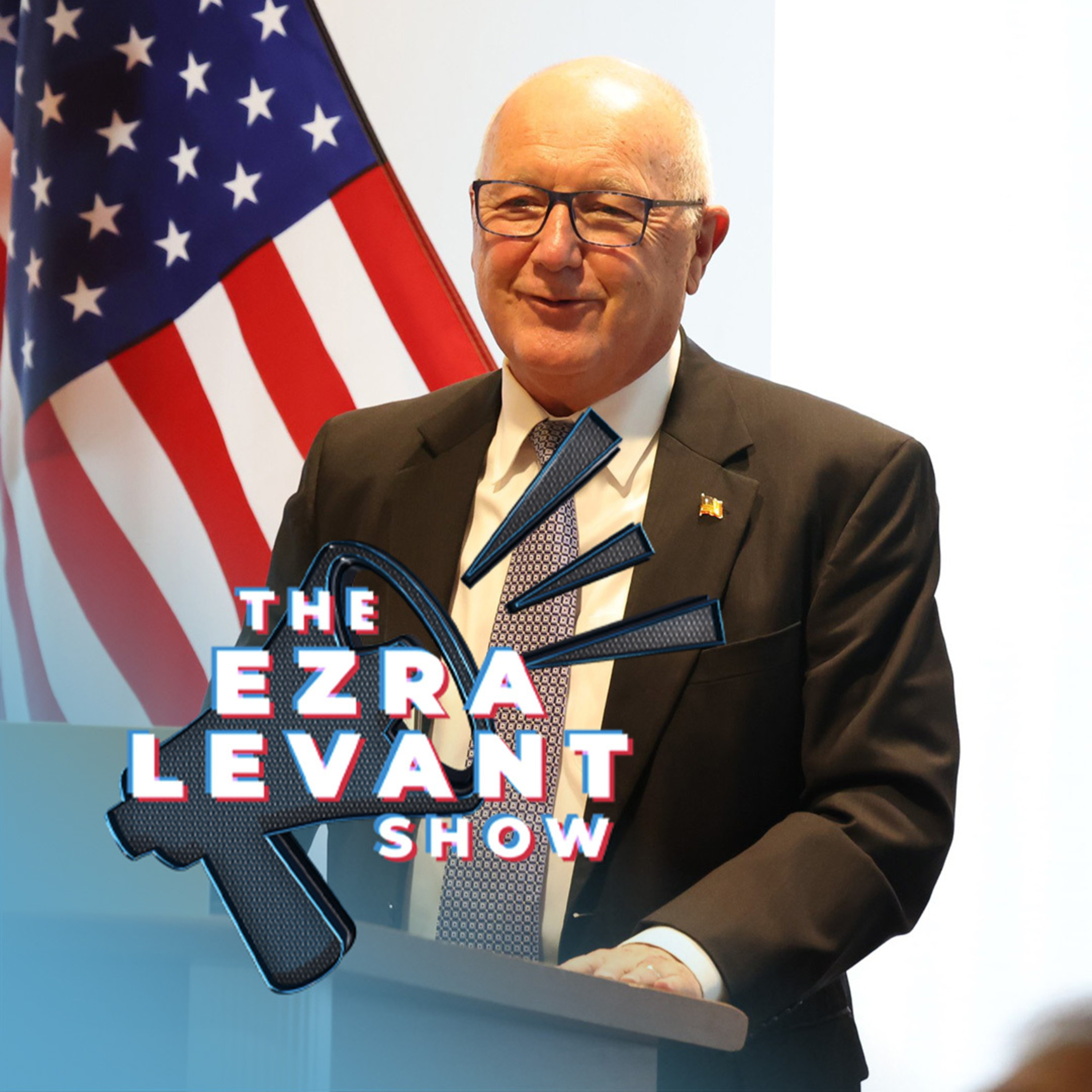
Rebel News Podcast
Exclusive: U.S. Ambassador Pete Hoekstra on Canada’s anti-American turn
01:07:05
In a wide-ranging one-hour interview, Hoekstra addresses rising tensions, trade disputes, anti-Semitic violence, Alberta independence — and whether the Canada–U.S. relationship can be repaired.
Loading summary
Transcript234 lines
- [00:00]
A
Hello, my friends.
- [00:01]
B
What a spectacular show today, if I
- [00:03]
A
may say so myself.
- [00:04]
B
A one hour exclusive interview with Pete Hoekstra, the US Ambassador to Canada. Imagine that, an invitation to his residence where we talked for an hour.
- [00:15]
A
And I put to him as many
- [00:16]
B
questions as I could. I hope you enjoy it and I would really encourage you to get the video version of this podcast. Just go to rebelnews plus.com click subscribe. It's eight bucks a month, which may not sound like a lot to you,
- [00:29]
A
but it sure adds up for us.
- [00:31]
B
Tonight, an exclusive interview with U.S. ambassador to Canada, Pete Hoekstra. It's March 27th and this is the Ezra Levant Show. Shame on you, you censorious bug.
- [00:55]
A
Oh, hi everybody.
- [00:56]
B
It's great to be back in the studio. Yesterday I away along with Lincoln J. Our videographer. I was in Ottawa where I had a one hour exclusive interview with the US Ambassador to Canada. His name is Pete Hoekstra, he's a former congressman from Michigan. He did some diplomacy and he was Trump's pick to be the US Representative up here. Now normally that's a pretty plum job. It's, you know, being ambassador to the best friend of America and vice versa. But these days it's a very difficult position because of the trade negotiations and frankly the barbs going both ways. Unfortunately, polls show that anti Americanism in Canada is at a new high. And I don't think that's accidental. I think that Mark Carney and other politicians like Doug Ford have made a decision based on polling that it's very politically profitable to be anti American to attack America.
- [01:51]
A
I think it's gotten out of hand
- [01:53]
B
where even Canadian sports heroes in the United States are condemned for affiliating with Americans. I've never in my life seen this sort of American anti Americanism. How can it be overcome? What are the grievances between the two countries? Is there a path to success? Can the auto industry, for example, be saved? Is there a way that Canada and the United States can cooperate on defense? So many questions that, you know, had a slam dunk answer a few years ago are in the air. I enjoyed my visit with the ambassador and I found a touch of sorrow that he is facing such a hostile political class and a media that is not just hostile, but on an anti American mission. So I was delighted that we had a chance to have a heart to heart with him. We covered the waterfront of issues, everything from the anti Semitic crime wave and terrorism, including the shooting of the US Consulate to the auto sector to Alberta and independence and Pipeline. We really managed to get into so many subjects, including his thoughts on Pierre Poliev and Poliev's recent goodwill tour through the United States. So without any more ado, let me show for you the unedited interview, the full show, one hour with us.
- [03:15]
A
Ambassador Hoekstra. Take a look. Ambassador, thanks so much for having us over to your beautiful home.
- [03:26]
C
Government's home. It's not mine. It's. We get to live here for a little while, but, you know, it's government housing at its finest.
- [03:34]
A
Well, that's the right attitude.
- [03:35]
C
Yeah.
- [03:37]
A
I want to just ask about how
- [03:38]
C
I can ask whatever you want.
- [03:40]
A
Well, here's.
- [03:40]
C
And the ground rules are you ask whatever you want, I'll answer whatever I want.
- [03:44]
A
That's fair enough. I mean, the first thing is, how did I get to be here? I mean, in Canada, only government approved journalists are allowed into government press conferences were barred.
- [03:56]
C
You're not government approved?
- [03:57]
A
No.
- [03:58]
C
How did he get in here? I only usually talk to government approved. That's not true.
- [04:04]
A
You know what?
- [04:05]
B
That's.
- [04:05]
A
Because almost every journalist in Canada is government approved. Some of our reporters have even been arrested for asking questions of government officials. I understand you've talked to other citizen journalists, too, like Jasmine Lane, for example. What is your thinking towards independent citizen journalists? Because it's obviously different than Canada's thinking.
- [04:29]
C
Yeah, well, when, you know, I've been here almost 11 months now, not that anybody's counting, but, you know, you start out, you talk to traditional media. I put it in question marks whether it's mainstream media. And my experience was some of it was very good and some of it was not. And, you know, I had this experience when I was in the House of Representatives. And I'm not saying this is how all Canadian media works, but I think some of it. And, you know, in the House, it's. I think it's probably similar to Parliament. There's a place where the. The press hangs out and, you know, the members of Parliament, or in our case, members of Congress, walk by these folks and they start yelling at you, hey, come talk to me. Come talk to me. I went over to a guy who had called me over and I said, you know, who are you? Who are you with? He says, the New York Times. And I said, oh, I don't talk to you guys. And he said, why not? I just. Because I typically give you about 20 minutes. You ask lots of questions. I give you 20 minutes and then I read the story the next day. And you've taken my quote correctly. The words Are right. But you've taken them totally out of context and you know, and stick them somewhere where it has no relevance, but it makes it look like I'm either trashing or supporting a policy. It's an unfair characterization of what I said. And so why would I waste my time? And I've had too many cases with some of the Main street mainstream media where that's been closer to my experience than not here in Canada. Here in Canada. And it's like, why waste my time? Okay? I mean, if they're going to take your comments, put them out of context, in some cases, you know, actually change them. And, you know, why would I go talk to media that. That says the American hockey team, they are monkeys. Is that professional journalism? And, you know, we asked for a retraction or an apology and it's kind of like no. It's kind of like, okay, but do I expect those same folks to give the U.S. america or me, a fair shake? And the answer is no. So in most cases, we look for other ways for people that at least give me a fair shake, give America a fair shake to tell our story. So someone must have said, this Ezra guy, he'll give us a fair shake. He may or may not agree with what you say, but at least he'll give you a fair shake and provide you with the opportunity to tell America's story the way we want it told. And then he can react to it whatever way he wants. You don't need to agree. I don't care. I spent 18 years in Congress, you know, debating and arguing with people who disagreed with me. And, you know, and sometimes we'd reach resolutions, sometimes not. But, you know, that's why, that's why you're here.
- [07:48]
A
Well, I'm glad to be here. And our motto is telling the other side of the story. So we'll try and do that today. There's always been anti Americanism in Canada. I think it goes back to the United Empire loyalists who lost in the American Revolutionary War and all came up to Canada. So there was a bit of an antipathy even 250 years ago, but I've
- [08:06]
B
never seen it this acute.
- [08:07]
A
I've never seen it this vicious. You mentioned some, some of the personal insults towards any Canadians who might be
- [08:14]
B
on a US Sports team or something.
- [08:17]
A
Why is anti Americanism at an all time high? That's just not my opinion. There's polls that show.
- [08:21]
C
Oh, no, I think the polls show that it's. 90% of Canadians have a negative opinion of the US I don't know if
- [08:29]
A
it's that high, but I'd be willing to believe it. And it's actually higher in some pools than antipathy towards China. Communist China. What's going on?
- [08:38]
C
I don't know. You'll have to ask the Canadian people
- [08:40]
B
continue to observe for 11 months.
- [08:42]
A
What is it? Is it natural? Is it part of a.
- [08:46]
C
It's not natural at all. I mean, you know, the good thing, I mean, that's the public opinion. So you're here for 11 months. You know, you've got a couple of groups that are very, very, very consistently pro American. And you say, who is that?
- [09:04]
A
I'm just trying to think, who on earth could you be talking about?
- [09:06]
C
Anybody who touches the def. Okay. If you're in the Canadian defense, if you're in the Canadian military or whatever, if you're, you know, working with your equivalent of nsa, I think it's csis. You're working at norad. You go there. I mean, they're working side by side, and it's kind of like they're totally pro American because they see what they're doing every day. They're keeping America and Canada, North America. They're keeping America safe. You talk about the, you know, the relationship between your Coast Guard and our Coast Guard. You know, a couple of weeks ago, there were a couple of crazy Canadians. I'll probably get sued. Right. But they were out on Lake St. Clair and they looked behind them and they kind of like, where'd the ice bridge go? The ice broke off and. Yeah. So Canadian Coast Guard called US Coast Guard, and they said, hey, who's got a helicopter? Go pick these guys up. There's an American helicopter. We'll go pick them up and we'll drop them off in Windsor. Worked perfect. We had a US Coast Guard guy that was being lowered in a basket to a ship off of the coast of Washington and the cable broke. He fell down, I think 50, 60ft and severely injured.
- [10:32]
D
He.
- [10:32]
C
He did end up dying, but, you know, so there's a mad rush of people calling and saying, hey, who can pick this guy up and get him to a hospital? It was the Canadians. Canadians come pick him up, they take him to Victoria. They recognize he's in severe. You know, this is really a bad. They go the extra mile. They go and they fly. They get his family, they get him to Victoria. Awesome. You know, close cooperation. He passes away. But the Canadians went over and above what they really needed to do because it was, hey, we're helping in America. And so. But the other group Gotta let me finish.
- [11:13]
A
Okay.
- [11:14]
C
I give longer.
- [11:16]
A
Yeah, go ahead.
- [11:17]
C
But the other group is the business community.
- [11:19]
D
Right, okay.
- [11:20]
C
The business community. I don't run into, I've not yet run into a business that has said, oh man, we don't, we hate doing business with the United States. We are absolutely thrilled that Canada's new direction is, you know, forget about the USA and you know, we're going to go sell to Europe, we're going to go sell to Asia and all of that. It's like, phew, boy, is that, that's going to be a great deal for us. And they come back and say, now we actually love doing business with America. We've, we've grown our business people on both sides of the border and they, we've made it, you know, we've created a lot of wealth and a lot of jobs on both sides of the border. You know, we, we want to take and build this relationship. We've been trying for years to sell into Europe. You think you, you think we don't recognize that diversity and of a customer base is a, a positive thing? But, you know, we've gone to Europe and we found that to be a very closed market. Asia is just a tough market to enter, enter into. You know, so we're expanding our market. Yeah, we'll do business in New York. We've now expanded. You know, we're doing business in, in Michigan, we're doing it in Texas, we're doing it in Florida and those kinds of things. So, yeah, we're diversifying our markets, but, you know, we really like doing business with the U.S. so those, those are, I think, two pillars of the relationship that have really, really stayed in place. And they want that relationship to stay in place. It's in, it's in the media and it's in the, the political class that are kind of bringing that all into question. The relationship with America for the long term.
- [13:11]
A
I want to come back to the business part a little later, but you talked about military cooperation, and it's true that NORAD is close working relationship between the two countries, but overwhelmingly, the equipment, the fighter jets, it's American. And recently Prime Minister Carney has talked about breaking away from American F35s, for example, and looking at Swedish fighter jets. And he's talking about a European military bank, he's calling it. And I'm wondering how much of that is anti American posturing. How much is for real. Is he really pivoting away from the NORAD partnership? What do you make of him treating with other countries besides the U.S. he's.
- [13:59]
C
Yeah, that.
- [14:01]
D
It's fine. Okay.
- [14:03]
C
The. That's a Canadian decision.
- [14:06]
D
All right.
- [14:06]
C
I think we think they're going to buy F35. Okay. It just makes for the whole mission of NORAD, for the whole mission of protecting North America and those types of things. You know, if you're flying an F35 and it's got a Canadian, you know, logo on it, the flag, Canadian flag on it, and something happens and it needs to land, it lands at a military base in the U.S. great. We can service it. It'll be back up in the air. Right. If you're flying. If you're flying someone else's plane, same kind of issue. You got to land, you know, hey, yeah, landed.
- [14:49]
D
Of course, we host you at an American military base, you know, help you and all of that.
- [14:55]
C
Then put your plane on a truck and we'll truck it back to Canada and, you know, figure out how to get it under the overpasses and all of that and across the bridges. And when you get it back to Canada, you guys can fix it. But, you know, they got it.
- [15:07]
D
We got to integrate it.
- [15:08]
C
It's the model of Norit. But, you know, we're concerned about it as well. And I'll give you the most recent example, the. The reinvestment of, I think, like, $32 billion in the Arctic. And we're going, yes, that's money that needs to be spent and invested in the Arctic. And the statement coming out is, and we're going to defend the Arctic on our own.
- [15:32]
A
Okay, that's the statement from Canada, you're saying?
- [15:34]
C
Yeah, from Canada in the press release. Read it. You know, we're going to defend the Arctic by ourselves. And it's kind of like, you look
- [15:40]
D
at the map and it's like, wow, that's a big area to defend.
- [15:46]
C
Canada's a big country. If you want to defend it on your own, that's okay. And then they went over to. Went over to Greenland. Now they went over to Norway, right? And it's kind of like they signed an agreement and said, okay, for that part of the Arctic, we're going to. We're going to defend it with, you know, Canada plus the Nordic five. It's kind of like, okay, we don't play a role in that. And we don't know. We thought that defending the Arctic would be something that we could all do together. But if it's Canada and the Nordic 5 or Canada doesn't want us to be part of defending the Canadian part of the Arctic. That's a Canadian decision. We will defend our northern borders from Alaska down to the lower 48. We'll defend our northern border. We think the most effective place to defend Canada and the U.S. is to do it together. But if Canada wants to go another direction, they're free to do that.
- [16:52]
A
I'm maybe my antenna are very sensitive for anti Americanism, but I see Mark Carney doing things that you just described. Setting up a Canadian consulate in Greenland. There's only 16 Canadians who live in Greenland. We don't need a consulate.
- [17:07]
C
I bet they're going to get really good service.
- [17:09]
A
Well, like little things that I think are designed just to prick and poke at the US Partly for the enjoyment of anti American voters. But I don't know. Sometimes I think it's more than just symbolic. Like, what did you understand Mark Carney to mean when he went to China and his friend Xi Jinping, who he's done business with when he ran Brookfield? He says, we want to be part of a new World Order. His words a pivot to China. What does that mean to you as an American in terms of defense and security and espionage and industrial espionage? What did that mean to you when you saw that clip?
- [17:50]
C
New World orders is a. You know, in the US it, especially among conservatives, raises a lot of red flags. Okay. But, you know, Mark Carney, from our perspective, it's not my. It's not our job to evaluate Mark Carney on, you know, the words he says and those types of things.
- [18:11]
D
It's.
- [18:11]
C
It's going to be on, you know, this is the decisions that are made by this government in Canada and the decisions that are made in the US by this administration, that will define the relationship for a period of time. Okay. And some of the decisions, obviously, if they're going for a new World Order, which is Canada starts moving in direction of China, which I do not think will happen. Okay.
- [18:45]
A
I mean, it might not happen in terms of trade, but what if it happens in terms of, you know, just expressing an affinity for a totalitarian regime or an authoritarian regime?
- [18:59]
D
I don't believe that's where the Canadians are.
- [19:01]
A
Okay, what about when Carney says the relationship with the United States is ruptured? I mean.
- [19:07]
C
I mean, I've said all along for 11 months that I've been here. Again, if this government views it as a rupture, they will make certain kinds of decisions. We don't view it as a rupture, as we've. We had issues that we needed to
- [19:31]
D
take care of the United States.
- [19:32]
C
We have to reindust. We, you know, in some parts of the country, especially in Michigan and the Rust belt and some of our core industries and manufacturing capabilities have been hollowed out. President Donald Trump has said we are going to reestablish those core capabilities in the United States and we need to do that to keep America strong and safe. We as we have some budget issues and so for a whole set of reasons we said we've got to change our approach to trade and we change that approach to trade for every single country in the world. Okay. I mean sometimes I, you know, you listen here and you know, you're attacking Canada, attacking Canada, attacking Canada. It's kind of like, no, we changed our approach on trade and we did it for everybody in the whole world. And you know, Canada has responded in such a way that it says that it's ruptured and that they are, you know, that's leading them to diversify the countries that they want to do business with, which includes Europe, which includes China and those types of things. And as we read it, in some cases it's, it's like, okay, and you're gonna, you know, they keep talking about doubling trade with, you know, doubling exports to non U S markets and in reality even if they do that, they're still going to be doing a lot of business with, with the U.S. but you know, we don't, we, we welcome a strong Canada is good for the United States. So if you double your exports to other countries that's okay. But I don't know why you can't do both.
- [21:34]
A
I think because you're from Michigan, the auto state of America, you understand those issues at the top of mind and you deal with businessmen a lot. But I want to talk for a minute about the other piece of President Trump's concern about the northern border, which is security, not just drugs but terrorism. Just a few days ago the United States put sanctions on a Canadian based company that was allegedly affront for an enormous amount of funds being diverted to Hezbollah, the terrorist group. There are terrorist style shootings of synagogues and Jewish schools almost every week. The U.S. consulate in Toronto was hit with a hail of gunfire. Now we don't know who perpetrated these, but we know from reports that there are 700 Islamic Revolutionary Guard Corps agents in Canada, which tells me that we probably know who they are.
- [22:33]
C
If we can count them, we can count them.
- [22:34]
D
Yeah.
- [22:35]
A
And then there's the China factor interfering according to CSIS in 11 different electoral districts. And I wonder if we are as reliable on the security and intelligence and counterterrorism side as we need to be to maintain the trust that you would expect from a fellow five eyes country.
- [22:58]
C
Yeah. And you got to remember that some of the folks that may be on your watch list or whatever may be our problem because we had an open border for four years, all right. Where people like that could easily cross the border. So some of those people may have actually crossed the border, you know, on our southern border and made their way to this place up north that has five and six month winters. I'm not quite sure why they, you know. So one thing that surprises, you know, we've gone now through a five or six month winter with no thaw.
- [23:34]
D
We don't have that in Michigan.
- [23:36]
C
We're used to winter now. Our upper Peninsula is used to that. But I can tell you that on
- [23:45]
D
a lot of these fronts, you know, on the security thing, Canada is awesome.
- [23:52]
A
Okay, I'm glad to hear it. Certainly that's happening beneath the radar then because I don't see it in the public domain. Yeah, it suppose that's the nature of espionage.
- [24:01]
D
Yeah. The, you know, I spent 10 years on our intel committee. I chaired it for a while. Canada is a very, very reliable partner
- [24:12]
C
and we all have our strengths. Canada is not good at everything. Okay.
- [24:17]
D
Because the intelligence world is a huge thing space. But the Canadians are awesome.
- [24:24]
A
I'm glad to hear that.
- [24:26]
D
At some of the stuff that we, that complement our skills and capabilities. And so we're very appreciative for what in that space, for what Canadians do and continue to do.
- [24:42]
A
You referred to the open southern US border from which who knows came. Right. But Canada by some measures has an open border too. Reports show that so called asylum seekers are not vetted at all in many cases. And I mentioned the 700 Iranian agents. It seems to me that the problem that President Trump was trying to solve at the borders is a problem in Canada. I mean, I'm sure you saw the news that in Toronto there will now be paramilitary style police guards at places like Jewish synagogues because the violence is so bad. And I'm wondering if you have any thoughts about the deterioration of Canada into what appears to be foreign motivated violence. I don't know if that's a, that's a guess on my part because none of these people have been caught.
- [25:39]
C
Yeah.
- [25:40]
A
Who shot up the U.S. consulate? Do you know?
- [25:43]
C
No, no, I, you know, again, the, that's a Canadian policing responsibility.
- [25:49]
A
All I know is looking into it too because that, that sure feels like a active international, you know, an international State based action.
- [26:00]
D
Let's wait and see what's all right until we get more, I mean, it's been a while.
- [26:04]
C
Okay. It's been three, four weeks. You would think we might have wanted, would have hoped that we would have had more information. We don't have. I, I, I'm not ready to go
- [26:14]
D
there yet and say this was state sponsored terrorism. Okay. Against the U.S. what do you make
- [26:19]
A
of European style paramilitary guards necessary in front of Jewish institutions? That's very un Canadian.
- [26:26]
D
The, that's for the Canadian. I, it's not my opinion to make judgments about the Canadian. Okay.
- [26:32]
C
What we will do at, at the embassy and what our administration will do is we'll look at what the, the threat environment evolves to in Canada to determine whether we need to, whether we need to beef up our border security. Because those folks might, that's, that's our responsibility. Who comes into the US who comes into Canada is a Canadian issue. But if the threat environment, you know, goes one way or the other, you know, then it becomes our responsibility in terms of how we respond to that. The threat environment from Canada goes up. Maybe we put in some more precautions on the border going into the U.S. i think in many ways we try to get, you know, we have discussions with Canada. It's kind of like it'd be better for both of us if who we allowed into our countries we were more aligned. It doesn't mean we have to be perfect, but we were more aligned so that we, you know, being receptive to
- [27:36]
D
refugees and those types of things, that
- [27:41]
C
we were more aligned so that the threat environment is relatively the same so that we can continue a relatively free flow across our borders. We don't want to toughen our borders with Canada unless we have to.
- [27:57]
A
I saw the announcement by the US Government that in terms of foreign asylum seekers. Foreign asylum seekers, it will pretty much be restricted to the Boers of South Africa, the white Dutch farmers who have been targeted with racially motivated hate laws. Really. And I know that the first flights of the Boer farmers have landed in America. I know that there's a lot of Jews in Toronto who feel like it's untenable to continue to live there. Obviously it's not the same as what's happening to the Boers. But if this anti Semitic crime wave in Canada continues, do you think the US Government would be open to having a category for Canadian Jews who are like the Boers? They're employable. They're not going to be a burden on the state. Would the US consider giving Asylum to Canadian Jews who are afraid of the anti Semitic crime wave.
- [28:52]
D
I don't think in the current environment, I think to reach that level, you know, and to equate the Jewish population in Canada to what the Boers are facing in South Africa, that's a pretty tough, that's a pretty tough, you know, place to equate the two. Okay.
- [29:15]
A
I hope it doesn't accelerate in Canada.
- [29:17]
D
Yeah, so do we, we hope that, you know, the commitments from the government to protect the Jewish population and, you know, and make sure that they feel safe and secure and the most important thing that, you know, because I've met with a lot of folks in the Jewish community and they don't worry about themselves. They worry about. And they, they want Canada to continue to be the place where their kids and grandkids can live. Okay. And I, you know, I can't see,
- [29:54]
C
I don't, I don't envision Canada getting
- [29:57]
D
to that point where, you know, I'm not Jewish.
- [30:01]
C
I don't live in that environment. I don't live in those. I'm not, you know, I'm not living in the community. I live in this government housing. Okay. So I'm really not the best person
- [30:11]
D
to talk about that. And, but I, at this point, I don't think that's anything that's even close to being on the radar screen in Washington.
- [30:20]
A
Okay, I'm glad to hear it. Now, you have mentioned before, you come from Michigan. You were for two decades, you were a congressman there. And my understanding is the auto industry is pretty integrated between Canada and the U.S. like, the same car might go back and forth across the bridge.
- [30:36]
C
Yeah.
- [30:37]
A
So it really is connected. And that's been to Canada's great benefit for decades. I mean, to have that kind of access under the auto pact for really the better part of a century. But as you said, President Trump wants the jobs to repatriate. He wants those heavy industries back in America. And to look at it another way, there are no electoral college votes in Ontario. I wonder if you can answer this for Canadians who love those jobs and love the industry and love how it's been for so long. Is there a future for car factories on the Canadian side or is it inevitable that they become repatriated down to Michigan, Ohio, other places?
- [31:18]
D
It's not inevitable. Okay. It's, you know, we get, depending on the year, I think it's like 4 to 600,000 cars more from, imported in, from Canada than what we export to Canada.
- [31:34]
C
Okay.
- [31:35]
D
Canada is not our problem with autos. Okay.
- [31:40]
C
You, you've, you, you have a phenomenal
- [31:43]
D
story to tell to, you know, our U. S. Trade rep about. Here's why Canada deserves to be in the lowest tariff bucket in terms of doing trade with the United States. You know, we're awesome at making car parts. You know, we, we have similar labor laws, similar wage scales, you know, technology and all of that. You know, so we can integrate with,
- [32:18]
C
with your, with your auto industry, which you've done. Okay.
- [32:24]
D
You know, for, for rebuilding the auto industry.
- [32:31]
C
You don't start with Canada.
- [32:34]
D
Okay? Cars going across the border, 50, 75% U.S. content.
- [32:38]
C
Those are the kind of cars we like coming in. Okay. To fix the car issue in the US and the reason we got it, we want a car industry is because it was the car industry that mobilized for World War II. It was a car industry that actually mobilized. Ford I think, started making these ventilators during COVID You need the heavy industry. Yeah. And you know, so they, you know, they're making cars one day and the next day they've taken a line or I'm sure it's not a line, but they've taken a lot of their engineering capability and all that and said, okay, instead of building a, you know, an escape tomorrow you're building a ventilator. And you know, they figured it out. That's why you need, and why the president is so insistent on having that capability. But to maintain that capability, our biggest threats are from Korea, Japan, Mexico. So we've got to work on. Those are the places where you really can move some numbers and getting car production here back into the US and then we've got to figure out what we're going to do with China because that's, that's the biggest threat.
- [33:52]
A
Well, in his visit, his New World order visit to Beijing, Prime Minister Mark Carney conceded something that had never been done. Allowing 49,000 Chinese made vehicles into the Canadian market every year.
- [34:08]
C
I think it goes up to 70 some thousand, but whatever.
- [34:11]
A
Yeah, I'd like your thoughts on that. From a trade point of view, from a negotiations point of view and from a security point of view.
- [34:20]
C
The, I think it's those cars can come in from China, come up, come into Canada. They're not going to cross the border into the U.S. you know, China's imports brought to you through Canada into the U.S. chinese airports or imports, you know, that ain't going to happen. Okay. The Canadians are going to buy, you know, if anybody buys those cars, it's
- [34:46]
D
going to be Canadians
- [34:49]
C
and they'll, you know, you guys will have to take a look at it. I'm rather a simple guy on some of this stuff. It's kind of like, okay, if you're buying 49,000 cars that are made in China, that means that you're probably not going to be buying 49,000 cars that were built in Ontario. Okay? That, that's a Canadian decision. 49,000 cars is not enough cars to build a factory. Again, I'm a marketing guy, I'm not an engineer. But my understanding in talking to folks in the auto industry that if you really want to build, to scale a car plant where the efficiencies and all of that, you got to be at least at a quarter of a million cars. Okay, you're not gonna, you're not gonna build a factory for. Maybe the Chinese will, but you're not gonna build a factory to build 49, 000 cars. But those are, those are decisions that Canada has to make. You had other factors in play, like, you know, exports of granola or canola. Canola that played into this and other tariffs so that, you know, but we're not going to get involved in that. But we know that we're not going to open, you know, the, we're not going to open the floodgates to have Chinese cars coming into the US From Canada. That ain't going to happen. And so, you know, security standpoint, you know, with the technology that they now have built into cars, you know, and I think the, you know, some insurance companies or some states are looking at, you know, when you go out and buy your license plates, it's going to be dependent on how many miles you drive per year. And that number is not going to be, you know, derived from a form that you fill out that says, oh, I drove 11,500 miles last year. It'll come from some data that they're getting that has tracked your car for the last year. And they said, yeah, you said you drove 11,500. We're tracking it. You drove 13,321 miles, and here's exactly where you went. And so, you know, I, I would
- [37:10]
D
expect coming out of the intelligence world
- [37:13]
C
that, that, that little, that car driving around from China, it's a great gobbler of data and information, and it's consuming and getting information. And you know, at times it will be sending information.
- [37:42]
A
I think some people were surprised that the prime minister gave that concession to China, given that the auto industry is negotiating hard to maintain its position with the United States and to, to throw that bone to China. With the security aspect you refer to, but just plain old buying 49,000 cars. It felt like a diplomatic, not a provocation, but just sort of a jab. And I'm worried that some of the anti Americanism that we've talked about before is being expressed from our political leaders. Doug Ford and his ad, and he would say he's standing up for the industry, but I said, how's that working when you're negotiating with the guy you're pricking at? And is that going to impact Canada's ability to get a renewed trade agreement or to protect the auto sector bringing in 49,000 plus cars? The constant pricking of the American president, who's a fighter, he's not going to take that lying down. I'm worried that we're, you know, President Trump can throw around some words himself, but if you throw words back, he's going to respond. I'm worried that there's a vicious circle and, and those car factories are going to move south.
- [39:03]
C
I don't know. I mean, no. What would be your advice?
- [39:09]
A
Give advice to Doug Ford, to Premier Ford. I bet you've spoken with him. I bet you've given him private advice. Is there anything you would say to other premiers? There was another premier in western Canada who said outrageous things about the president. And all I could think of is, I hope the president does not spend a lot of time reading news clippings from Canada because what was just said about the president is unhelpful. If Canada's trying to get a deal, what would your advice be to a Canadian premier?
- [39:34]
C
I mean, I just spoke to. My advice is Canada from industry to industry to industry to industry, can make compelling cases as to why Canada is the best partner for the United States to do business.
- [39:59]
A
And have we been doing that?
- [40:00]
C
Well, the.
- [40:03]
A
In your view.
- [40:04]
C
So, like, who's the best partner for
- [40:07]
D
us to do business with?
- [40:08]
C
On.
- [40:08]
D
On oil and gas?
- [40:09]
C
If we need more oil and gas, where do we go? We go to Alberta.
- [40:13]
A
Yeah.
- [40:13]
C
Okay. We've got a. We had a phenomenal relationship with them for years. You know, Danielle Smith recognizes it. She talks about it. I think she just put out a post this week from Ciro Week. Great conversation with our Secretary of the Interior and our Secretary of Energy. You know, we want to ship 2 million more barrels of oil per day to the U.S. well, okay. She's creating, she's putting out the narrative. You know, America's been a very reliable and positive partner for Alberta and we think that's a great relationship and we should Continue that relationship and grow it. It's a very interesting approach to the Trump administration. Here's why we're really, really good and why you should consider us moving forward. That's a pretty. From our perspective, that's a pretty good approach to our trade team and to the president.
- [41:15]
A
I should tell you, she's been called a traitor for having that kind of a constructive rapport with the U.S. a lot of authoritative pundits and even other politicians have said by not pricking back at President Trump, by trying to be constructive, she has sold the country out. What would you say to them?
- [41:39]
C
That they can say whatever they want. My view on this is Danielle Smith is standing up for her constituents. She's going to bring more wealth, more jobs, and more prosperity to Alberta. And I think when you bring jobs and prosperity and wealth to Alberta, I think what we. I think they're what we would call a donor province. They send more money to Ottawa than they would. Than what they get back. Okay. So I, you know, we got to get away from the rhetoric trader and all of this. It's kind of like, what are the end results that you're going to see as Canadian citizens?
- [42:20]
D
Okay.
- [42:20]
C
And what Danielle Smith is doing is because at. At the same Sierra meeting that she was at down in Houston, there was somebody else pitching oil.
- [42:31]
A
Let me guess, the Venezuelans.
- [42:34]
C
The current president of Venezuela was there.
- [42:37]
A
That's our competitor, isn't it?
- [42:39]
C
Well,
- [42:42]
A
to get heavy oil to those Texas refineries, it's either coming from Venezuela or Canada. And we're in a race now.
- [42:47]
C
And Danielle has, and people before her have positioned Alberta to be a preferred supplier.
- [42:57]
A
So When Ethical Oil vs Conflict Oil. Have you ever heard that phrase?
- [43:00]
C
Oh, yeah. And so, but, you know, the president from Venezuela was at Cira Week, made a major presentation. And what was her message?
- [43:10]
A
I don't know.
- [43:11]
C
Very simple. We want to become the preferred supplier. I don't know if those are the exact words, but we want to become a preferred supplier of oil to the United States of America.
- [43:22]
A
And they're. They're ramping up that you. That's a starter pistol. There's a race on now, but it's
- [43:28]
C
a race that, because of your history and our history together and the infrastructure together, that Canada would be poised to win. Okay. Same thing with autos. All right? Canada can make a compelling case that you've got, and we talked about it already. You, you know, you are integrated. You have personal relationships between suppliers and, you know, and customers in Canada, from Canada into the US And Vice Versa. Okay. And you're reliable. You know, there's people talking about harmonizing standards and all of these types of things. And it's like, that's a really, really compelling case as to why we should be doing business. Americans should be doing business with Canada. And what we hear from Canada is, you know, we're at war with the United States. Okay. We don't, you know, we're banning your alcohol.
- [44:30]
A
Yeah.
- [44:31]
C
Okay. We're banning you from procurement. Okay. For provincial product or projects you can't bid. I heard that in British Columbia and I hear that in Ottawa, and it's in a lot of provinces around the country. And so you say, okay, well, that's an approach to negotiating with the US
- [44:54]
A
that's become the brand of the governing Liberal Party, in my view. I'm a critic of theirs, but I think they actually talk up anti Americanism. I think they found it. Vote rich.
- [45:04]
C
There is a reason why, you know, where we are in the polls. Sure. Some people don't like that.
- [45:12]
B
You mean American Americans.
- [45:13]
A
Yeah, the eyes of Canadians.
- [45:14]
C
In the eyes of Canadians. But, you know, the, yeah. And the. And don't travel to the US and all these kinds of things. And it's like, okay, that's an approach you can take. But, you know, I, you know, I've been in the meetings and it's kind of like when we talk with the prime minister and the prime minister is talking about delivering more oil to Canada, from Canada to the U.S. we know that's going through Alberta, most likely, and we're eager for that. We know we have alternatives, but we love doing business with Alberta. We, you know, I'm not sure that can be said that that is true for all provinces. Okay. Because some of them have really, really been tough with the United States. Okay. But they've looked at it from, what does this do for. For our people, for our economy and those kinds of things, which is, you know, our national security and these kinds of things. The. Which as a congressman is, are the things that I used to worry about political leaders in Canada maybe were, you know, maybe are thinking about other things. But those are the kinds of things, you know, what's this going to do for my district when I was on the Intel Committee and, you know, I got a lot more background into national security and these kinds of things. Is this going to make us safer or less safe? You know, so the question is here in Canada is defending the Arctic and doing it by ourselves, does that make us more safe or less safe?
- [46:55]
A
I don't know.
- [46:59]
C
We think NORAD, I know where we are. We think NORAD's really a really good idea. And yeah, we do want more Canadian investment. But as Canadian invests in that, to protect Canada, to protect North America, to protect the Arctic, we think let's build off the NORAD model and, you know, expand it because it's got greater missions now. But, you know, again, if Canada doesn't, doesn't believe that's in their national security interest, they can't go another way. We're not going to tell Canada what to do. That, you know,
- [47:40]
D
so.
- [47:45]
C
Think about.
- [47:46]
A
That's very ominous. Let me ask you about a statement that Treasury Secretary Scott Bessant made in January.
- [47:53]
E
Look, Alberta is a wealth of natural resources, but they won't let them build a pipeline to the Pacific. I think we should let them come down into the U.S. and Alberta is a natural partner for the U.S. they have great resources. The Albertans are very independent people. Rumors that they may have a referendum on whether they want to stay in Canada or not.
- [48:20]
C
Sounds like you may know something up there.
- [48:23]
E
Look, people are saying, people, people, people are talking. People are talking. People want sovereignty. They want what the US has got.
- [48:33]
A
And putting aside the independence part, do you think that the US Would permit a pipeline that came down into, into the States and then went to the west coast to get to the Pacific? Because that seems to be blocked right now by the British Columbia provincial government and Indian bands. The treasury secretary was fairly bold, I think, in his language. What do you think? Was that a, do you have any thoughts on that? Can you expand on that? Is that us?
- [49:02]
C
I think, number one, is a very positive statement about Alberta, but I think it's how Americans generally feel about Canada. Okay. You, you could get us saying lots of positive things about lots of, of the provinces in the, how we've developed our ecosystems together. I know that Besant, Secretary Wright, Secretary Burgum, President Trump, you know, it's kind of like, yeah, pump a bunch. Put a pipeline down to the border. Our responsibility then to put pipelines on our side of the border that will take whatever oil Canada decides that they want to ship to the United States and the, you know, again, there's lots of uses that we would have for it in terms of processing it and those kinds of things. We want more oil. It. It. If Alberta wanted us to build a pipeline to the west coast because they said, hey, we want, you know, we've got another 2 million barrels of oil per day that we want to ship to Asia and Japan, I would think that we'd be very open to having that discussion.
- [50:19]
D
Okay.
- [50:20]
C
It's kind of like, okay, it's, it's an economic decision. All right. Can we make money building a pipeline, pumping oil through it to go to Asia? And we have a, you know, we've got a seller on the other end. We're just going to be a transporter and they want to use the US to transport that oil through because they can't get it anywhere else. We're fine with that. Because, you know, one of the things that, you know is if you talk to Alberta or you talk to Canada in general, they've got enough natural resources to pump oil west, south, north, east, wherever. So we're not worried about that. It's kind of like, you know, if you're pumping, if you're pumping 2 million barrels a day and it's going through the US and it's going to Japan, that's just an economic decision. Okay.
- [51:14]
A
Better than to China.
- [51:16]
C
Yeah. Right. But, you know, the good thing is the oil's going out. 60 billion is coming back, depending on what the oil might be. More than that now with the price of oil. But, you know, when the, when this, when it settles down, it's 60 billion is coming back to Canada. Right. Roughly.
- [51:39]
A
Are you talking about revenues?
- [51:40]
C
Revenues. And we like a rich Canada, we like a wealthy neighbor.
- [51:50]
A
The allusion there by the Treasury Secretary to a referendum. It's not for sure that the referendum will happen, but it looks likely. And again, it's not for sure that it would be a yes vote. That would be quite a dramatic moment. But I think reading between the lines, a lot of Albertans saw that, and I'm formerly from Alberta myself, what they saw was not a provocation, not a provocative comment like 51st state or something like that, but they saw that if Alberta were to be independent, it could pretty much be assured that America would still want to buy all that oil. No matter whether Alberta was independent, Sovereignty association remained a province that just felt like a gentle encouragement, like, don't worry, America's not going to meddle. I don't know. Am I over interpreting the secretary?
- [52:41]
C
The. Yeah, I mean, yeah, we're not, we're
- [52:45]
D
not going to meddle.
- [52:46]
A
Okay, but let's say the vote is a yes vote, which, I mean, we. It came in 100% in Quebec. Quebec, 1994.
- [52:55]
C
We track this not because we want to influence, but because it's our job to report to Washington what's happening in Canada. But, you know, it's also very uncertain, at least from, again, Our understanding, our limited understanding of how this all works. And I think some of it's new to Canadians because they've never had a yes vote.
- [53:11]
A
Right.
- [53:12]
C
But the yes vote triggers a negotiation between the province and the federal government about the relationship between the province and the. The federal government. It doesn't necessarily mean it becomes independent.
- [53:26]
D
So, you know, so we're just.
- [53:29]
C
We observe and, you know, you know, we're just watching.
- [53:34]
A
You talked about how there's so many different institutions that are anti American. The Conservative Party of Canada has historically been very friendly towards the United States. Under Brian Mulroney, it negotiated the first free trade agreement. And I think there's something pro American in nature about the Conservative Party. But Pierre Poliev, the leader of the Conservatives, was sort of on the back foot in the general election because he had to be seen to be tough on Trump. And I'm not sure if he articulated that well. He recently went on.
- [54:02]
C
He didn't articulate it well in Canada because he didn't win well.
- [54:05]
A
He recently did sort of a friendship tour in the States. He went on the big podcast and he gave some speeches. Did you follow that? What's your observation on the Conservative Party? I know you're nonpartisan, but, you know, you always have to be thinking, who could be the next government? Give me your thoughts on Pierre Poliev and the Conservatives.
- [54:23]
C
Yeah, I mean, the. I binge watched Pierre over the weekend.
- [54:28]
A
Oh, you did?
- [54:29]
C
Yeah. I don't recommend that to anybody. Okay. And I know Pierre, and I like Pierre, and. But, you know, the, The Rogan thing was a lot about mixed martial arts and all of that.
- [54:42]
D
I know nothing. I know nothing. Okay. So.
- [54:45]
A
Well, that's the, that's the audience. I mean, that's.
- [54:47]
C
That's his audience. All right. That's why I don't listen to Rogan a lot.
- [54:50]
A
But there was some substance there, too.
- [54:52]
C
Yeah, there was. Oh, yeah, there were some. The, you know, I thought the. I listened to his speech in New York. I watch that. What I'm, what, what I'm seeing is a slightly positive development is that, you know, Canadians may have. May finally be doing a deep dive or will evolve into doing a deep dive in discussing the pros and the cons of the American relationship. Like I said, I see the defense thing is historically and currently and in the future, as we get more threats, being very, very valuable to both countries. Okay. I see the business relationship. Okay. Being very, very valuable in the past, in the current and in the future. Okay. And I, you know, when you get to the kinds of numbers that, that you see with people trusting China more than the United States. It's kind of like, all right, Canadians, have that debate. Is, is partnering with China really the best way for you to go forward? Have the debate and if you decide, yes, great. I mean, I was in Congress in 2000 when we voted for, to allow China into the WTO. W. Yeah, thank you, WTO. And give them most favored nations. Right. And I got that one right. I voted no.
- [56:31]
A
Good for you.
- [56:32]
C
And a lot of my business community, because, you know, in the US the business community was all in favor of the chamber. The, the U.S. chamber of Commerce actually ran ads in my district. You know, call, call Congressman Hoekstra and tell him to vote in favor of, you know, of China.
- [56:51]
A
That's a crazy pitch in an industrial heartland.
- [56:54]
C
Like, yeah, and I voted no. And I look back now and say, wow, I got that one right. Because what did you know, because the pro people were, what were they saying? Oh, you know, just integrate China into the rules based organization wto and they're going to become just like us. And what we experienced over 13, 14, 15 years was that now they came in, they stole our technology, they stole our jobs. You know, they didn't respect intellectual property and all of these types of things. And they, how, you know, part of what we're doing is we're repairing what they hollowed out. Okay? And there are, you know, when I was in Europe and was working in Europe, there it's the same story, okay, Europe is getting hollowed out by China. And if, you know, but that, that debate is a worthwhile debate to take place in China, in Canada, okay, take a look at what happened in the U.S. take a look at what happened in Europe. Okay, what do we want to do? Do we want to partner more closely with the U.S. partner more closely with, you know, with the U.S. and Europe, or we're going to make our bed with China and you guys will reach a conclusion? I think, although, you know, in 2000 and in 2000, the US reached the conclusion we're going to get in bed with China. And it turned out very, very badly for us. And by 2014, 15, there was a bipartisan consensus that we've got to confront China and change the relationship.
- [58:44]
A
President Trump has focused on that so much.
- [58:46]
C
And President Trump recognized what happened and is now trying to figure out, okay, what is the path forward? That's what a lot of this is for, is number one, to strengthen the US to strengthen the west against the threats from China. And you Know, but at the same time, you know, we're going to work through that process. You know, Europe has to work through that process and Canada has to work through that process. And I think, you know, the recent comments by Pierre, which are much more pro US but it's not pro us, it's not pro Donald Trump. It's pro the trade relationship.
- [59:32]
A
Yeah.
- [59:32]
C
Saying take a look at this, this, you know, what has happened over the last 20 years as we become more integrated with the United States. You know, we've created, you know, tens of thousands, millions of jobs. We've created prosperity and wealth. I mean, you go down the list of the companies that, you know, that are, you know, have a strong base and a strong foundation here in Canada and in the U.S. okay. And they were, they're the first ones that come out and say, we need this relationship and actually we want to build it. But it's also the foundation to do something that's very, very difficult, which is diversify our customer base. You know, if you want to go into a new market. And I came out of the marketing side of business, getting new customers is really, really, really hard. And if that's going to be a focus, it's nice to have in place a good, strong business relationship that can help fund those efforts. And you know, the, you guys haven't really been harmed by the tariffs. You know, it's your Prime Minister that says, hey, we've got the one of, I think it's the second best deal in the world. That's not a bad place to be. And is that a reason to be mad at America? I don't know. That's for the Canadians to decide. But that's not a bad deal.
- [61:05]
A
I'm very grateful for your time. I have one last question that's a little bit self indulgent because it's been something that's affected me and my company, Rebel News and other independent media. And I ask you because I know that one of your colleagues in the State Department, Under Secretary Ste. Sarah Rogers, who's been in charge of this anti censorship file, and Vice President J.D. vance have raised it. They have looked at European countries like the UK that have brought in online censorship bills, online harms bills. They all have similar names. In the UK they arrest on average 30 people a day for social media posts. It's really a dramatic move towards censorship. Canada has introduced some of those bills. Some of them died on the order paper when Justin Trudeau resigned. But some of them are coming back. The Prime Minister has pledged that they come Back the moral persuasion of having JD Vance and Ambassador Rogers criticize the UK I think as being profound. There's been no sanctions, really, but just speaking morally has really put the UK on notice. Is the US Watching the introduction of similar censorship bills in Canada? The U.S. has not spoken out about it like it has in the uk but are you attentive to it? Because it may reach a point where we need the bully pulpit of an ambassador or even a vice president to bring us back to the free speech that is one of our bonds with America.
- [62:43]
C
Yeah, but I mean, as an embassy, we've got responsibilities and we file reports back to Washington every year on human rights, antisemitism, free speech, these whole range. So, yeah, it's our responsibility to track that and report back to Washington what's going on. You know, the. And as you can tell with this administration, they believe it's one of the fundamental pillars of.
- [63:15]
D
Of having strong democracies is. Is the whole right for free speech across a range of mediums. Okay.
- [63:24]
C
And when I was in Congress, I was at a strange place for a lot of Republicans. I, I voted. You know, we would, we would, you know, once every year. Yeah, once a year, or maybe once every election year, there would be a vote on whether, you know, we should prosecute people who wanted to burn the flag. And I consistently voted to allow people
- [63:51]
D
to burn the flag.
- [63:53]
C
It's a horrific thing to do. People have died, you know, defending that flag. They've died defending the Canadian flag and those types of things. And, you know, it's. It's. As I drive around here and see all the Canadian flags, it is a point of pride for Canada. It's a point of pride for the United States. And I think anybody who would think about burning either one of those flags is despicable. It's a despicable act. But in societies like ours, we're strong enough that we can. We can. We can allow that to be. Happen. We can allow that to happen and
- [64:34]
A
respond with speech of our own.
- [64:36]
C
Respond with speech of our own.
- [64:38]
D
Yeah, So I, you know. Yeah. So again, I don't.
- [64:44]
C
I'm hoping that's not a place that we see Canada devolving to or, you
- [64:51]
D
know, and we're not anywhere close to that. You know, the.
- [64:58]
C
We're working on trying to get, you know, a phenomenal trade deal that's good for the United States, that's good for Canada. We're working on trying to get a phenomenal security arrangement between the United States and Canada so that our countries are safe. And we're, you know, what we haven't talked about. We're talking. We're also working on, you know, the president's third priority, which is, you know, the whole law enforcement thing, to go after the drug issues and those types of things to keep our people safe from internal threats. We both lose way too many people to fentanyl. And I think, you know, in the current environment, that probably also extends to, you know, cooperating as much as we can to protect ourselves from the threat of terrorism, which is, you know, which is.
- [65:47]
D
Which is a global. Has to be a global effort.
- [65:50]
C
But, you know, they're going to target
- [65:52]
D
the US and they're going to target, you know, most likely if, if they start reaching out, you know, Canada has to worry as well.
- [66:02]
A
Ambassador, I could talk with you forever, but, alas, our time is up. Thank you so much for your hospitality and for your frank discussion.
- [66:08]
C
Yeah, great. Thanks. Enjoyed it.
- [66:10]
A
Thank you so much.
- [66:11]
C
Yes.
- [66:15]
B
Well, what do you think? Was I too easy on the ambassador or too hard? What would you do if you were in charge of representing America's interests in Canada? What would you do if you were in charge of representing Canada's interests in America? Have the media poisoned the relationship? Can we get it back on track? Let me know your thoughts in the comments below. Until next time, on behalf of all of us at Rebel World headquarters, to
- [66:40]
A
you at home, good night and keep fighting for freedom.
- [66:47]
B
Shame on you, you censorious bug.