← Rebel News Podcast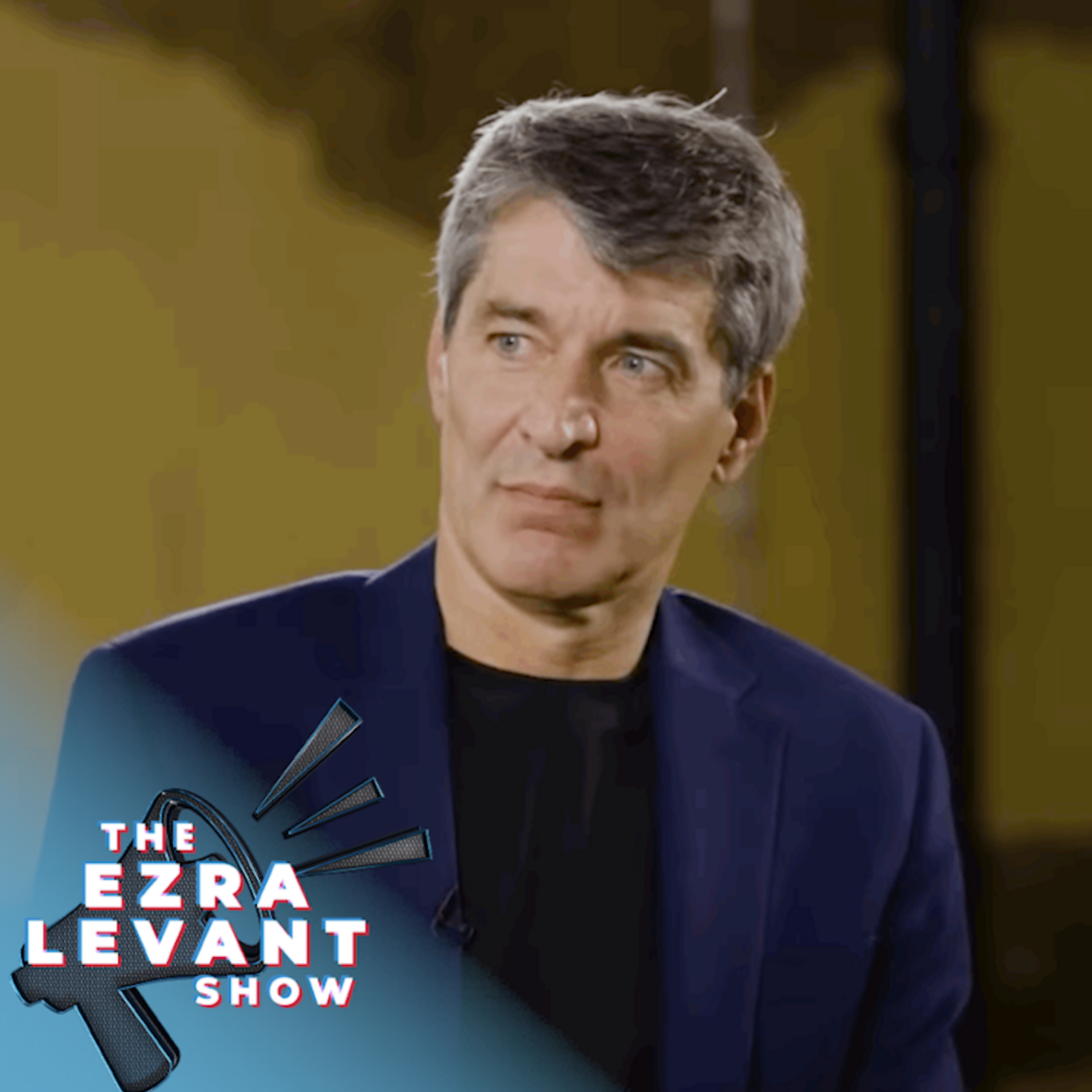
Rebel News Podcast
EZRA LEVANT | Bruce Pardy on the state of civil liberties and property rights in Canada
00:52:52
Dr. Bruce Pardy joins Ezra Levant to discuss the organization Rights Probe, their important work, and the key civil liberties issues facing Canadians today.
Loading summary
Transcript49 lines
- [00:00]
A
You fighting for freedom? Shame on you, you censorious bug. Tonight, which is more rare, a unicorn or a freedom loving law professor actually hired by a university in Canada? You probably know who I'm talking about. A feature interview with Bruce Pardy. You're watching the Ezra Levant Show. Well, when I was growing up, the civil liberties public interest law firm to watch in Canada was called the Canadian Civil Liberties Association. There was a minor offshoot of it in British Columbia, but the big one was in Toronto and it was run by a very, I don't know, progressive man who was an old school, sort of Berkeley style civil libertarian. And you could tell that he deeply loved it in his bones. But that generation is long gone. The left, I think, has chosen to walk away from its admirable legacy as a free speech movement because the speech they don't like, they don't want to debate it anymore, they want to shut it down. Now obviously there are still a few civil libertarians on the left, but not too many. And they seem to be quite selective with who whose freedom they support. I remember reading about in the 60s and 70s when they were, for example, in a very Jewish neighborhood in Chicago when neo Nazis and KKK members marched through Skokie, Illinois, it was called, and the aclu, the American version of this would send Jewish and black lawyers to defend the Nazis. And they sent Jews and blacks on purpose to make the point. We, we hate what these guys say, but you've got to support free speech for people you despise if you want it for yourself. Alas, that is gone and it has taken a little bit of time. But in the void left by the decline and fall of the Canadian Civil Liberties association and others, other civil liberties groups have come. The Canadian Constitution foundation, the justice center for Constitutional Freedoms, my favorite, the Democracy Fund, the Free Speech Union of Canada, and a group that we haven't talked about before that we're going to talk about today called Rights Probe. And right there, there's almost half a dozen new civil liberties movements that I'm not going to say they're on the right because I don't even know what that means sometimes. If you were skeptical of forced vaccines, are you right wing or left wing? If you were against lockdowns, are you right wing or left wing? I don't know. I just know that liberty was in the balance. And I'm glad that a movement has arose to fill the gap left on the left by the left. Joining me now to talk about all these things is the leader of Rights Probe. We've talked to him before, but not in this capacity. His name is Dr. Bruce Pardy. He's a professor of law at Queen's University, and he joins us today via Zoom. Great to see you again, Dr. Pardi.
- [03:14]
B
Great to see you too, Ezra. Thanks for having me on.
- [03:17]
A
Well, it's our pleasure. Our viewers love civil liberties. It's one of the main themes of Rebel News, and it's what motivated us to get involved in the Democracy Fund, which, as you know, I know you're familiar with the Democracy Fund. We really went to battle during the lockdowns when the Canadian Civil Liberties association, they went on leave. I'm not even kidding. They really just turned off their lights during the worst civil liberties inferno in a century. Tell me about Rights Probe. I know a little bit about it, but I'm guessing a lot of our viewers don't know anything about it.
- [03:50]
B
Right. Thank you. Thank you for asking. Rights Probe is a project of the Energy Probe Research foundation. And Energy Probe has been around for decades. It's one of Canada's leading think tanks, advocating for things like free markets and good policy. But Rights Probe itself is a. I like to describe it as a law and liberty think tank. We're smaller than some of the other organizations that you mentioned, but we do our best to put our 2 cents worth in regularly on these questions. And I think the message that the Canadian Civil Liberties association lived by early on, which is more important now than ever, was that the greatest threat to our liberties is not from without, but from within. You know, it's not evil dictators trying to do us harm. It's parochial bureaucrats claiming to do good, people who have too much power inside our own governing system that is the greatest threat. And it's when we ignore the enemy within that we get into real trouble.
- [05:02]
A
Now, you say the enemy within, and I think a lot of the enemy infringements of liberties are done by appealing to other values. Sure, free speech is important, but we have to have community cohesion. We don't want to divide people, Jews versus Muslims versus Christians. So don't talk about certain issues. And so there's always another value that like, no one typically comes in and says, I am going to destroy your rights. They say, no, no, we're just gonna shift the balance a little bit because we have to protect multiculturalism. Cause we have to protect hurt feelings. Cause we have to stop hate. How much of the infringements do you think are people who say, no, there is too much freedom. We wanna turn out the lights versus people who say, no, no, we just. There's other values that are more important. What would you say the breakdown is? Is there anyone out there who truly thinks we have too much freedom and is just authoritarian, or would they all have that excuse of being a do gooder?
- [06:04]
B
I think a lot of people, if you push them, if you offer up a model, and this has happened to me, if you offer up a model that is actually free, if you use this system, you would actually be free. And some people recoil from it in the sense that, well, we said we want it to be free, but not that free. We still want our own values to be enforced. And if you want your own values to be enforced, then you're just playing the same game as the rest of them just because your constituency is not ascendant at the moment. I've put it this way in the past. In a way, free speech is for losers. And by that I mean losers of the culture war. If you're losing the culture war, then the other side is infringing upon your speech. Yes, that's going to happen. But the funny thing is what you want to do is exactly the reverse. It's free speech until you become ascendant. And then your kind of speech is going to be enforced. Now that will not do.
- [07:11]
A
That's exactly what I'm talking about. I mentioned the old Canadian civil liberties boss. His name was Alan Borovoy. And he when I say Berkeley, you know, students sit ins that kind of thing. And I think it's because the left felt powerless and free speech was a tool they used to get power. But now that the left is not powerless, now that it dominates the institutions, they want to pull up the ladder so no one else can do the same move. There's nothing as powerful as an idea whose time has come. But if you can't elocute that idea, if you can't prosecute the idea, it's not powerful at all. I just see it's sort of like the book Animal Farm by George Orwell where the pig sort of transform into the farmer at the end. I think that's what's happened to the left. They have become everything that they railed against a genera or two generations ago and they don't care.
- [08:09]
B
No question, no question. That has absolutely happened. I am still am a great fan of Alan Borovoy and Alan Borovoy. I went to see him speak at various places, including at Queens years ago. And he was the one who said the greatest threat to our liberties is not from without, but from within. But see this happens on both ends of the political spectrum. Right. It is the left that championed free speech for a good while, and that's because at the time, the left was not in power. But you can see the same thing happening today. I mean, a great many conservatives are now free speech people because the speech that is being imposed upon them is from the left. And the left has abandoned its actual. Well, its claim to believe in free speech. But if you scratch beneath the surface on the right, there is a desire to again, do the reverse, to achieve the freedom for the kind of speech that they think is proper, but to impose restrictions on speech that they think is not. And so you go round and round and round.
- [09:15]
A
You know, let me just quote Alan Bourvoy one more time before we move on. He was quite. I mean, he was civil liberties personified in my mind. And I remember him saying to me, I had never heard it before, but I instantly knew it was a powerful idea. He said, freedom of speech is a strategic freedom upon which the other freedoms depend. For example, what use is a public meeting? Freedom of association, freedom of assembly. What use is a free. You know, if you can't say an idea freely, what use is an election? You know, it would be like an election without campaign platforms. And so, you know, there were a lot of great civil liberties thinkers, I forget who originally said, take away all my freedoms, but leave me with freedom of speech, and with it I'll win back the ones that you've stolen. It really is the linchpin of them all. And I think that's why censorship has always been such a top priority. When I go to Davos every year to cover the World Economic Forum, they're always talking about censorship. They don't use that word, by the way. They say misinformation, disinformation, fake news, fact checkers, they use all these euphemisms, but they are obsessed with censorship at Davos, and they really link it. I remember a couple years ago, I was there. Public enemy number one, of course, was Donald Trump. But public enemy number two, very close behind, was Elon Musk, precisely because he bought Twitter and freed it. I mean, they have other beefs with him too, but they so clearly understand that free speech leads to power for people they don't like.
- [10:53]
B
Sure. Well, absolutely. And I think free speech has quite rightly been identified as the most important of the important rights and freedoms. But on the other hand, it's also a little bit artificial. One of the consequences of our constitutional architecture is that we think of our rights and Freedoms as distinct things. You know, there's freedom of speech here and there's the freedom to associate here, and freedom of religion here. Well, actually those, those are just instances of a bigger single thing which is being free. You know, the state of being free. Now, when are you free? And, and my definition has always been that you are free when you are not subject to the coercion that is the force of other people, including the state. And if we started to think of freedom in that singular way instead of carving off these exceptions. See, part of our problem is our constitutional architecture. And not just in Canada, but across the western world, including the United States, you have our constitutions that are designed this way. The state has unlimited power except. And the exceptions are the Bill of Rights or the Charter of Rights. And one of those rights is freedom of speech. But we need the exception because we set up the general rule. The general rule is unlimited power on the part of the state.
- [12:16]
A
Right.
- [12:17]
B
And one of the ways to think about this differently is to think about how that could be reversed. As in the state can do nothing except what are the exceptions? What kinds of things do you want the state to do? But then you're not carving out these small little exceptions because freedom of speech is, should be part of the state of being free. And we are long way away from that, even in the way we talk about it.
- [12:41]
A
You know, I think it. I mean, I grew up in Calgary where a large number of Soviet refuseniks went in the brief period of detente. 7980. I don't know if you remember that, but when Jimmy Carter warmed up diplomacy with Brezhnev, they let some people out. So all these Russians came to Calgary and I got to know some of them and, and it was pretty clear that in the Soviet Union, if it wasn't specifically permitted, it was banned. Whereas our mindset is if it's not specifically banned, it's permitted. And it's a totally different way of seeing the world. I won't go into some of the anecdotes my friends told me, but even walking on a lawn at a university, you would be terrified that someone would come and make a report about you. I'll tell those stories another day. But. But it's a different in mindset. They really had a slave mentality. Even the freedom fighters, they grew up so careful about it. I wanna talk about one more generic thing and then I've got four different articles here that you've recently written and there's one I really wanna talk to you about. About the B.C. property rights case, which is so terrifying. But before I do that, I wanna ask you just one last question about the limits of freedom and democracy. And I think about this when I look at Australia and what happened with the Bondi shooting and I look at the mass immigration there in the uk, in Canada, it's even more disproportionate. And there comes a time, I think demographically when people start to act in a clannish way as opposed to an individualistic way. And Lee Kuan Yew, who was sort of the, the godfather or the grandfather of Singapore, took a very interesting approach. Singapore is, I'm not going to call it a liberal democracy because it's really not either. It's sort of a managed, modern, light touch, authoritarian place with the rule of law. I'll give them that. They have the rule of law, they have property rights, they have capitalism, but they're limited in their civil liberties. And Lee Kuan Yew would say that that was absolutely essential. And one of the things I learned they recently is even in their neighborhoods, they would ensure that the different ethnicities of Singapore were mixed. So you couldn't just be in a Muslim neighborhood, you couldn't just be in an ethnic Chinese neighborhood. Lee Kuan Yew realized, or at least he said, that if left to their own devices, a multi racial, multi ethnic society like that would become clannish and would splinter. And I found that compelling coming from him in that part of the world. And I wonder if we reach a point in the civil liberties loving west that if you bring in enough people of certain cultures that don't value freedom of speech and you give them the tools of a liberal democracy, you give them free speech, you give them electoral democracy if you're not at a certain point slitting your throat. Hitler used democracy, he was elected in 33. Now, there was a lot of shenanigans, but if you give illiberal people the tools of liberal democracy, maybe they can take it over. And that's, I think, one of the things that worried Lee Kuan Yew and I think it's something maybe we have to worry about in the West. If you bring in an enormous number of illiberal people, do you give them the tools of liberalism? What do you think?
- [16:26]
B
Well, I wouldn't want to go down that path myself, but I want to. I mean, he has a point. And let me put the point this way. There are actually two bad choices. Number one is to be ruled by a powerful elite that can decide, you know, what it is that you shall do and how you speak and so on in the general welfare in their judgments. That's a bad situation. The other bad situation is to be ruled by the mob, which is democracy. And sometimes those things overlap. So, for example, some people say, well, in order to reform our system, we should be ruled by referendum. Every time there's an important policy question to come up, we should put that to the people. Well, that sounds great in theory, but it's a terrible thing in practice because imagine, for example, if you. If you had that system in place during COVID and you put to the people the question, you know, should everybody be required to get a vaccine? You know, and you got 75% of the people saying, well, absolutely. Well, you end up with a system of law that says you get a vaccine or you go to jail. Yeah, that won't do either. Right. So the mob is a bad idea. Yes, I grant you that. But you don't want your elites to be so powerful to be dictating what the general welfare is either, because that's the situation that we're railing against right now. So you've got to have a different kind of architectural system that provides every single person with the space to decide for themselves how to be. As long as. The bottom line for me is always, and we've come to a place in this culture where it's a very weak belief, but the bottom line is you cannot use force or the threats of force against other people, period. It cannot be done. If you have that as your foundational idea, then you can have a lot of freedom without trouble. It doesn't mean everybody's going to think the same thing, and it doesn't mean people are not going to gather in tribes, but it means that you're going to have a peaceful society where people make their own way. And Singapore is full of accomplishments. But I'm not sure that I would want to reproduce their system. Exactly.
- [18:36]
A
You know, it's fascinating to me to look at the UK, where five MPs contesting the general election last year won on an explicitly sectarian campaign. Their slogan was lend your vote to Gaza. They were running in Birmingham. They were running in the UK and they elected five MPs.
- [18:57]
B
Right, right.
- [18:59]
A
You know, to me, that's terrifying because I think that unlocks all sorts of new systems of rule and power that I don't think the west is used to. We'll leave that aside because there's so many things I want to talk to you about that you have issued from Rights Probe. You're not Just a member of Rights Probe. You're an author and researcher and professor. And I want to talk about something that I think is not being sufficiently covered across the country. And I know it's really started to shock British Columbians who have been sort of woken up, who were sleepwalking past this. Let me read the headline of a recent essay. You wrote, courts and governments caused BC's property crisis. They're not about to fix it. And let me, I'll just read the first sentence just so people know what we're talking about and then I'll hand it over to you. You said in British Columbia, property rights are in turmoil. The B.C. supreme Court recently declared that aboriginal title exists on 800 acres of land in Richmond, a suburb of Vancouver. Aboriginal Title said the court is quote, senior and prior unquote to fee simple interests in the shadow of the decision. Given the implications, Aboriginal title claims are receiving more attention. Kamloops and Sun Peaks ski resort are targets in one such claim. Meanwhile, the B.C. government has been conferring Aboriginal Title across the province too. It continues to make agreements, such as on Haida Gwaii, to transfer control over land use in the province. That has totally spooked people. Richmond, by the way, demographically, there's a lot of new Canadians. There are a lot of Chinese speaking Canadians. And this is. It was very interesting to me to see new political fault lines there. People are shocked at the house. They work their whole. For a lot of people, a house is their total life savings. And now they're being told, well, you don't even own the land under it. Terrifying. Take it away, Professor.
- [21:03]
B
Right. But you see, this is a consequence of bad ideas. Bad ideas that have been with us for a while. They're coming home to roost now. And people are surprised because they weren't at the surface before, but they really shouldn't have been surprised if they've been paying attention. One of those bad ideas is that the law should be different for people of different races and backgrounds and cultures and lineage. That's a bad idea. And the second bad idea, and there are lots of them, but the second bad idea is that governments and courts have the power to decide what's proper with respect to your property. Your property in Canada has never been secure. It's more insecure now than it's ever been. But our property has always been held subject to the Crown. The Crown. Our governments have always had the power to expropriate property and to compensate you. Well, our statutes say they must compensate you, but they have always been able to legislate your property away if they have chosen to do so, they've just mostly chosen not to do so. But we are now in an era where the idea that aboriginal groups have essentially the right to claim any territory that they've ever occupied or used or can show through oral evidence they have a claim to, and that is undermining the security of property, especially in B.C. because B.C. is largely unceded, so to speak, without treaties, but is not the only area by any means. There are lots of land claims around in Ontario and New Brunswick and in Quebec and and so on. So people should not be satisfied by the claim that this is a B.C. problem. It's not, but it's especially acute in B.C. and as you alluded to this decision, the Coachant decision relating to Richmond has declared Aboriginal title to be senior and prior to fee simple interest. Now the New Brunswick Court of Appeal recently with respect to a New Brunswick land claim basically came out and said, well, not quite so fast. Aboriginal title is not able to supplant fee simple interest, but a claim for compensation can be made against the Crown, which is better. But it's still not a full answer because any claim against the Crown for a huge swath of land, of course is going to be paid for by tax dollars, meaning the, the residents will pay one way or the other. Right. So the foundational problem is this idea that if you have a certain kind of dissent, then you are a different legal category than everybody else. And that is the idea that in this country we have to do away with.
- [23:56]
A
You know, I go to the UK quite a bit because I'm riveted by their debates over immigration. And one of the things that the establishment always says is we can't stop the boats because. Because why? Because of the European Convention on Human Rights. Even though the UK left the European Union in a Brexit vote a dozen years ago, 10 years ago, they still stayed in this legal, you know, superficial, like infrastructure, superstructure riveted on top of. You've got centuries of British law, which many would say is the finest source of liberty of any legal system. I mean, that's what we inherited. That's what the Americans inherited. I mean, they've got their problems, but they've been thinking about freedom since the Magna Carta. They've riveted onto that, this European law, and they say, oh, what can we do? It's a foreign law and we have to abide by it because we're part of the convention. Well, get out of it. Is the short answer, I think there's something similar here in Canada, but we never were in it as officially as like everyone in the UK knows they were in the European Union. In Canada we have something called Undrip, which immediately puts everyone to sleep because. What's that? It sounds like a leaky faucet or something. The UN Declaration on the Rights of Indigenous Peoples and even that. It's so foggy and like, you know, I'm worried people are turning off our show right now because they're so bored by it. But that's the trouble with it. We've signed onto this treaty that was not drafted by Canadians. In our Parliament. We agreed to something that bureaucrats cooked up at the un. I bet you not one in a thousand Canadians has read it. Let me change that. Not one in a hundred thousand Canadians. Not one in 100 journalists, not one in a. You think there's more than a hundred? 1 in 100 MPs who have read it. And yet that is the fountain of so much of this communist property rights destroying ideas. Why don't you talk about Undrip? What is it? Where did it come from? How do we get out of it? What does it say? I think it's like this eternal excuse in the uk. Sorry, we can't do anything about it because we're part of this foreign treaty.
- [26:19]
B
Right, so I'll go into Undrip, but let me just observe first that these are all tools, the European Convention on Human Rights, Undrip, all kinds of other things are tools and part of the thing that we are doing. Those of us who oppose all of.
- [26:38]
A
This.
- [26:41]
B
Are playing a bit of whack a mole. There's this and there's that and there's the next thing. And we're quite right to point out all these issues that arise coming down the pike like never before, but they're all of a piece of. Right, so Undrip is part of the peace. And Undrip is a UN General assembly resolution that lists pages and pages and pages of rights and entitlements for indigenous groups. Now, as a UN General assembly resolution, that is not binding. It's not a treaty, it's certainly not a law. It couldn't take Undrip.
- [27:15]
A
It's like a press release. It's a press release.
- [27:17]
B
It's like a press release. It's an aspirational document put together largely by countries that don't have, quote, aboriginal peoples in them in the first place. Right, but what happened after that is important. So at the time that Undrip appeared, the Stephen Harper government Voted no, along with the us, Australia, New Zealand and so on. And that position was reversed when the Trudeau Liberals came into power. But that still wouldn't have changed anything except for the fact that in 2019 the BC legislature passed a statute saying that the BC government was responsible for making sure that BC laws were consistent with the declaration. And so one of the things that the declaration says is essentially that aboriginal peoples have the right to the territory that they ever occupied or used. It says that in black and white. And so what's happened since then is that the B.C. government, the NDP government, has taken that as a literal mandate to go ahead and make agreements with various groups for various territories, either acknowledging Aboriginal collider or handing over management rights. And also recently what has happened is the B.C. court of Appeal has said, actually yes, that's what it means. This means this statute dripa, the Declaration on the Rights of Indigenous Peoples act, the B.C. statute, the effect of that statute is to incorporate undrip into British Columbian law. And it means that the government has an obligation to do these things. So this is a self made problem. It's a self inflicted problem. It's part of the, you know, sort of the cultural suicide of the West. This happens to be a British Columbia instance. But you mentioned what was happening in Great Britain. It's happening all over the place. And it is a function of the fact that our leaders have the power to make decisions, make policy decisions in the general welfare, to do things that they shouldn't have the power to do. So a lot of people, the angle that they're taking in all these problems is the wrong people are in power, we have the wrong rulers, and we had better rulers then we'd be in a better situation. And so our task is to replace these people with those people. And I think that is entirely wrong. Now I grant you we have a lot of bad rulers, no question about that. But if you simply substitute some people for other people, you're going to get the same kinds of problems. Because the problem is the power, right? People want to have policy discussions about whether this policy is right or wrong. That's not the point. The point is that the government has the power to make policy about these things. That power shouldn't exist and that requires a serious rethink of the way we are governed.
- [30:11]
A
Yeah, well, you know, I'm glad you clarified for me that it's not a treaty. I should have known better. But so thank you for the refresher. And a simple act of the B.C. legislature. It sounds like it's almost a constitutional amendment if it impacts every other law in such a massive way. I think of the United States where yes, the executive can sign a treaty with anyone in the world, but it has to be ratified in the US Senate, if I understand their law correctly. So there's. Go ahead.
- [30:39]
B
No, well that's true, but it's very interesting way this is happening and this is happening incrementally like so many of our other problems. This is happening incrementally bit by bit by bit by bit. Right, so. So you're right, this DRIPA thing sounds like a fundamental change to all the laws in B.C. and this is what the B.C. court of Appeal has said that it is. But on the other hand, it is just a statute and a statute can be amended or repealed. So if a new government got into power, they could come along and say this hasn't worked out, let's get rid of it. Okay, but what has happened in the meantime is that the bc, the NDP BC government has been making these agreements with various aboriginal groups, like for example over Haida Gwai, they made an agreement with the Haida Council to acknowledge Aboriginal title over Haida Gwaii in spite of the fact that a whole lot of private individuals own fee simple property on Haida Gwai. Okay, that's still just an agreement. If you get a new government in power, you could change the agreement. Well, you could certainly legislate a change to the agreement. You could legislate change or repeal of dripa. But what happened is that the Haida council and the B.C. government and the federal government went together to the B.C. supreme Court to ask for a consent order, a consent declaration saying that the aboriginal title as acknowledged by the Haida Y agreement was Now a Section 35 protected constitutional right. And the court granted the request so that no future government can now go back and fix it. So what is happening incrementally is constitutional change in an indirect way.
- [32:26]
A
It's crazy and it shows how bad ideas when repeated can become like the Overton window. And it's almost like they're spoken into reality. I'm in Toronto and everywhere I go I hear land acknowledgments in places, by the way, where if you read any treaty, and I've read several of the treaties with Indians, you know, a century and a half ago or so, they use language like surrender. I mean these, these treaties could not be clearer what they are. It's like when the Japanese surrendered to the US Pacific Fleet in 1945. It was an unconditional surrender. I mean, maybe they had some, they mentioned, you know, an Indian reserve. And there were certain things that they would be granted, but there was, it was extinguishing the title. At least that's my read of these documents. But every single public assembly at a school, every sports event, every government function starts with a land acknowledgement even in place. And people have started to treat that as like some holy sacrament. I mean, we used to say the Lord's Prayer opening an event or the anthem. And in Toronto now on Remembrance Day, not only did they have a land acknowledgement, but then they had an acknowledgement about black slavery. There's never been slavery in Canada. I did some research on this. The other day, when slavery was abolished, the sale of slaves, the slave trade, there was a grand total of 16, 16 black people in Toronto, according to the census. And I don't think they were slaves, but it was, this was not, this was not a thing. But if you repeat it often enough, if you say it often enough, you speak it into existence because the, you know, a high school student today is a law school student tomorrow is a judge the next day. And I think we are speaking our way into an insanity.
- [34:34]
B
I agree, I agree. It's a kind of social psychosis. I don't know how else to describe it. I'm not a psychologist, but there is something strange going on that way. And it is, of course, these land acknowledgments are the height of hypocrisy. You know, it's, it's when the people, I'm sure some of the people in B.C. who are now concerned about their property interests were the ones declaring these land acknowledgments and then turning around and thinking, oh, my goodness, my, you're taking my fee simple title away. I mean, how can you do that? Well, because you've been saying so for the past little while. Why now are you concerned? Did you not know what you were saying? You know, what did you mean? Which version of things did you mean? Did you mean you were actually on aboriginal land or do you mean that you own fee simple title? I mean, pick one, and people are not able to think through the implications of what it is that they think and believe.
- [35:31]
A
You know, it reminds me of global warming ideology. I mean, if you really do say, and bend the knee to carbon dioxide is evil and bad. You know, you say that long enough. And when oil companies started saying it to greenwash themselves, thinking, oh, I'll just, you know, spend 1% of our revenues on some distractions to, to appease the left. You, you haven't. You know, it's like that line in Hamlet. You know, the appetite is grown by the eating. It's not a word for word quote. But these groups don't get full when you feed them, they get hungrier. And when you make concessions to them about global warming, sooner or later they're going to say, well, we thought you meant it. You've said it a hundred times. And so time to turn off gasoline cars, time to put carbon taxes on everything. Time to shut down farms as they tried to do in the Netherlands and how they're doing in France today. You know, people repeat these pieties of the left, sooner or later someone's going to hold them to it.
- [36:37]
B
But this is exactly the story with Undrip. I mean, the story about Undrip was always, you know, this is an aspirational document. You know, they can't be serious. If you read the document, the reaction that you probably have is you can't. Well, you can't be serious. And then they passed Undrip, sorry Dripa, in the statute in B.C. and by the way, in 2019, that statute was passed unanimously in the B.C. legislature by all the MLAs who were there of every party, I suppose, on the theory that, well, you can't be serious. This is just a symbolic kind of.
- [37:12]
A
Thing and you can't be against it because only a race, only a racist would be against it.
- [37:16]
B
Right, right. But the thing is these things are all serious. Like take them literally. People are the powers that be are telling you what they intend and you are going along on the basis that they're not really serious. They are serious. And if you don't believe what it is that you're reading, then think again.
- [37:35]
A
You know what? I shouldn't say it, but Lee Kuan Yew wouldn't let that happen.
- [37:40]
B
Well, maybe so, but the problem is that he won't be in power forever. And once you get somebody you don't like in power, then they have all the power. Like a Nicholas Maduro.
- [37:48]
A
You're right. I'm just making a wry comment. Hey, I want to just touch on a couple of other your publications and I really appreciate you bringing me up to speed on Undrip and Drip. And thanks for the clarification. This is such an important issue and our BC reporter, Drea Humphrey is really. She went to a town hall meeting that was completely packed. I don't know if you saw any of that. I did that told me, holy smokes. Regular people, people who didn't do anything bad to anyone are now being asked to compensate people who nothing bad has happened to. So this is a transaction in 2025 that takes from some people that did nothing wrong and gives to other people who have not been wronged.
- [38:32]
B
Right?
- [38:33]
A
And I tell you, there's, there's something. There's a giant waking up in B.C. and it crosses ethnic lines and it crosses all other boundaries because when you start messing with someone's house, that's their home, that's their castle, that's their future. That's where that's everything to them. And I think that, I think that is going to be a huge issue in 2026. Let me quickly go through some of your other posts on rights probe, if you don't mind, and maybe just give me a word on each of them. I got three more here. Then we have this is something I've talked about a little bit, C9, which is a bill in Parliament that would declare a standalone hate crime and would also remove the defense of religious belief for hate speech. Let me read a little bit from this. And this is a reference to fsu, the Free Speech Union that I referred to at the beginning of our conversation. What bills C8 and C9 mean for your freedom of expression, which is of interest to me. A panel discussion held by Free Speech Union of Canada on November 4th with directors Bruce Pardi, Lisa Bilde and Hannah Park Roche on the table. Bill C9 and its potential to create a thought police scenario where citizens mired in a legal minefield run the risk of severe consequences for what used to be considered civil liberties in the fabric of Canadian democracy. At stake is our freedom to think, say and believe as we choose. Yes, even the right to hate. Let me pause there. And I always say this hate is a human emotion and it often comes from a feeling of grievance. And someone who feels aggrieved is going to be hateful. Now you can try and fix the underlying grievance. You can try and logically convince them they're wrong. That works. Sometimes it's like telling your spouse, don't be mad. It usually doesn't work. It makes them madder. I think if all it took to turn off the human emotion of hate was a law, we would have passed the love each other act a long time ago and it would be done. But you can't turn off love. You can't turn off hate. These are emotions. You have to deal with the facts that cause it. And by the way, it would be weird to have a person who never felt hate in their Heart. There's certain things that you see in life that if you don't feel hate, what's wrong with you? If you don't feel sorrow, what's wrong with you? If you don't feel love, what's wrong with you? I mean, to have this range of human emotions in a civilized democracy, we don't want people to act out on hate in a violent way. But you can transmogrify that hate into something positive. Don't tell me that people who build enormous positive movements aren't motivated occasionally by the hate for the lack of what they're calling for. Don't tell me that Martin Luther King didn't hate, you know, racial discrimination. He probably wouldn't use that word. He transformed it into something positive. All right, that's my intro, Professor. Take it away. Tell me about C8. I know a bit about C9, and we've talked to our people about it. Touch on C9, but help me with C8, because I haven't read it yet.
- [41:35]
B
Well, C8 is a very different kind of bill. It basically gives the power to the minister to require Internet service providers to stop providing you with service and even if you haven't committed a criminal offense or the like. So it's a bureaucratic kind of bill that gives too much power to the administrative state to do whatever it thinks is right without justification. And an order can be issued under that statute whose existence and details can be hidden from you. So you could theoretically lose your Internet ordered by the government without knowing what the heck happened. Right. So it is. It is, you know, very different bill from the. From C9, which is the. Which is the hate bill. And, and the C9 is very explicit in terms of the criminal code offenses it's creating and so on. C8 is, if you like, more insidious because it's giving power that can be exercised without explanation, without transparency, and if anything, maybe that one is the one that will end up proving to be a more serious violation or potential violation of civil liberties. But C9, as you have been alluding to, is a bill that is essentially, and this is not the first step down this road, but is essentially criminalizing the emotion, an emotion of hate. It's distinguishing between criminal offenses that are equally violent and saying one is worse than the other because the first one was done with hate and the other one was done with indifference or the like, or with greed or whatever the case may be. Right. So it is getting away from the idea that a criminal offense should consist of an act. The act is Reus and intent, the mens rea. This is going further and saying, we're going to punish an emotion. An emotion. If you're in a free country, you're allowed to feel whatever you feel. And if you have free speech, you're allowed to express what you feel. That doesn't mean you're allowed to use violence. That's the lie in the sand. But we've gotten away from that. And now words are violence, and hate is an emotion that is criminal in nature and so on. We're completely lost.
- [43:52]
A
You know, I live in Toronto, near intersection called Bathurst and Shepherd, which is a very Jewish neighborhood. And yet every week for about a year, pro Hamas. And I say pro Hamas because they're not just pro Palestinian, they support Hamas, they say, so they drive in from miles away to come into the heart of the Jewish neighborhood. They have amplification, and they shout hateful things at Jewish residents like, there's no embassy there. There's no consulate, there's no military factory. It's just Jews. And they've been abused every week for a year. Now, I'm for free speech. And so I have a different objection. I think they're harassing people. They're uttering threats. There's assaults, traffic violations that would get any trucker locked up. So I have my quarrel with real laws. Section 1762 of the Criminal code says you cannot disturb a synagogue or a church, and there have been protests outside synagogue. So these are all on the books. But I've never seen more hate in Canada in my 53 years of life than I have every Sunday at that intersection. So don't tell me the government is interested in legislating against hate because they're not enforcing any of the existing laws. We've had more hatred shown in this country than certainly in my lifetime. I mean, I wasn't in Canada in the 30s and 40s. There's probably some roiling debates then. But I do not believe that this law is about tackling hate, because they don't. This law is about opportunistically using the discomfort of the Jews to say, oh, so you don't like things? Well, we'll bring in a new law. And who do you think the law is going to be used against? As far as I know, there hasn't been a single hate crime prosecution of any of these Hamas activists. After two years of the most outrageous at Bathurst and Shepherd, they literally built some sort of reenactment of the last moments of the terrorist leader Yahya Sinwar. I was arrested when I went to take a picture of it. The people who made that were not arrested. Don't tell me they need more laws. They need more laws and they're going to use them against people like me.
- [46:05]
B
Yeah, and this is a message that I try to persuade people about. Every time you see something that you don't like, if you say, well, there ought to be a law, what you're doing is you're creating tools for the powers that be to choose between laws and between situations and between people. You are empowering, you know, unequal application of the law. You're encouraging or facilitating two tier justice. Those laws will be turned against you. If the powers that be have so many laws on the shelf and the discretion to decide when and where to enforce those laws, that means you do not have the rule of law. That means you have the rule of discretion. And that means that the power is held by individual people, which is exactly the opposite of what the rule of law was supposed to be. If you are in a situation where you cannot depend upon the law being enforced in a neutral, even handed way, then creating more laws does not fix anything. In fact, it sends you in the wrong direction.
- [47:07]
A
Yeah. You know, there's so many examples of authoritarian regimes where it's actually impossible to live without violating some law. And so all the authorities have to do is to choose to enforce against you because you've already done it. I mean, Lavrenti Beria used to say, show me the man, I'll find you the crime. Which is, I got something on everyone. Just tell me who the bad guy is today.
- [47:30]
B
That's right, that's right, that's right. And you get into a situation that has been called, and I like the term, it's called anarcho tyranny. Anarcho tyranny. What they mean is, they mean the tyranny of the small rule imposed against law abiding people. You know, where the authorities have lots of tools at their disposal to decide in a particular moment where they're going to come, you know, and attack or prosecute, punish someone for a small, you know, minor violation of some minor rule at the same. That's the tyranny part. The anarchy part is in the meantime, violent crimes and political corruption and foreign interference all go untouched because the powers that be don't want to touch it. Anarcho tyranny. Anarchy alongside tyranny. The tyranny of the petty bureaucrat alongside the anarchy of the non policing of serious matters.
- [48:24]
A
Yeah, you know, I'm thinking you Made me think of China's richest man and Russia's richest man. Russia's richest man, I don't think he has that title anymore, was named Mikhail Khodorkovsky, and he was very Western oriented. And he was in charge of Yukos, which was a huge oil and gas company. And then one day his private jet landed in Siberia, was stormed by Russian special forces, and he was taken to jail on some. I mean, listen, I'm sure he had some dodgy dealings. You can't succeed in Russia without it. But it was like you say a minute. And he was thrown straight in jail for years. And they basically nationalized Yukos and took all his money because he was getting a little too liberal in his thinking. Same thing with Jack Ma, the richest man in China. Sort of a pro Western face to China. Arrested, disappeared, literally disappeared from the world. Who knows? And again, I'm not saying that these men were lily white in their conduct, but I think they actually were some of the cleanest operators in their countries. They had Western accounting and audits. I'm not here to vouch for them, but I'm just here to say they got too powerful. And so the powers to be said, get them on something, I don't care, whatever. And you know, they tried that against Trump in their own way, but Trump, the system in America, Trump actually beat it or is in the process of beating it. But you can see that impulses there in Russia, in China, I guess that goes to your earlier point is whatever powerful laws there are, imagine your enemy wielding that same law. How do you feel about that? And one of my favorite things to do is whenever there's some media regulation in Canada, whether it's grants to journalists or censorships or this or that, my favorite is when people say, if the conservatives win, how would you feel about Ezra Levant being appointed the of the cbc? I mean, the point is being made. If you're fine with your partisan there, you should accept the opposite partisan. By the way, I would have a lot of things I would do with the CBC just in case anyone ever does want to appoint me to chair there. Listen, professors, great to catch up with you. We don't have time to dig into your other essays, but they are available@rightsprobe.org, rightsprobe.com before we go though, what are you looking at 2026 for? Is there some thing that you. Is there some moment, some court case, some election, some. Some bubbling issue that's going to spill over when you look ahead the next year? What's flashing on your radar screen.
- [51:09]
B
Well, there are lots, but there. But let's, let's mention two. The first one is this Aboriginal title versus fee simple property problem, especially in BC, but not just. And the other one for 2026, of course, is Alberta Independence.
- [51:23]
A
Right.
- [51:24]
B
Because the situation is now cleared away in the sense that the app, the Alberta Prosperity Project, is now collecting signatures for a new question. The court obstacle has been cleared away and there are people who are hopeful that there might be indeed a referendum possibly before, before the end of 2026. So there's going to be a lot of bumps in that road, a lot of risks, a lot of dangers, but who knows? Let's cross our fingers and see what happens.
- [51:54]
A
Yeah. Well, it's really great to catch up with you. You do so many things. You teach law to students at school. You're on the board of the Free Speech Union, you're with Rights Probe, and you're just really fighting for civil liberties all the time. It's great to see. Thank you for your public service and have a great Christmas break. Hopefully you can get a bit of a break and we'll see you in the new year.
- [52:17]
B
Great to talk to you, Ezra. Thanks for having me on.
- [52:19]
A
Likewise. Well, there you have it. One of Canada's top freedom fighters. Until next time, on behalf of all of us here at Rebel World Headquarters, to you at home, Good night. And keep fighting for freedom. Keep fighting for freedom. Shame on you, you censorious bug.