← Rebel News Podcast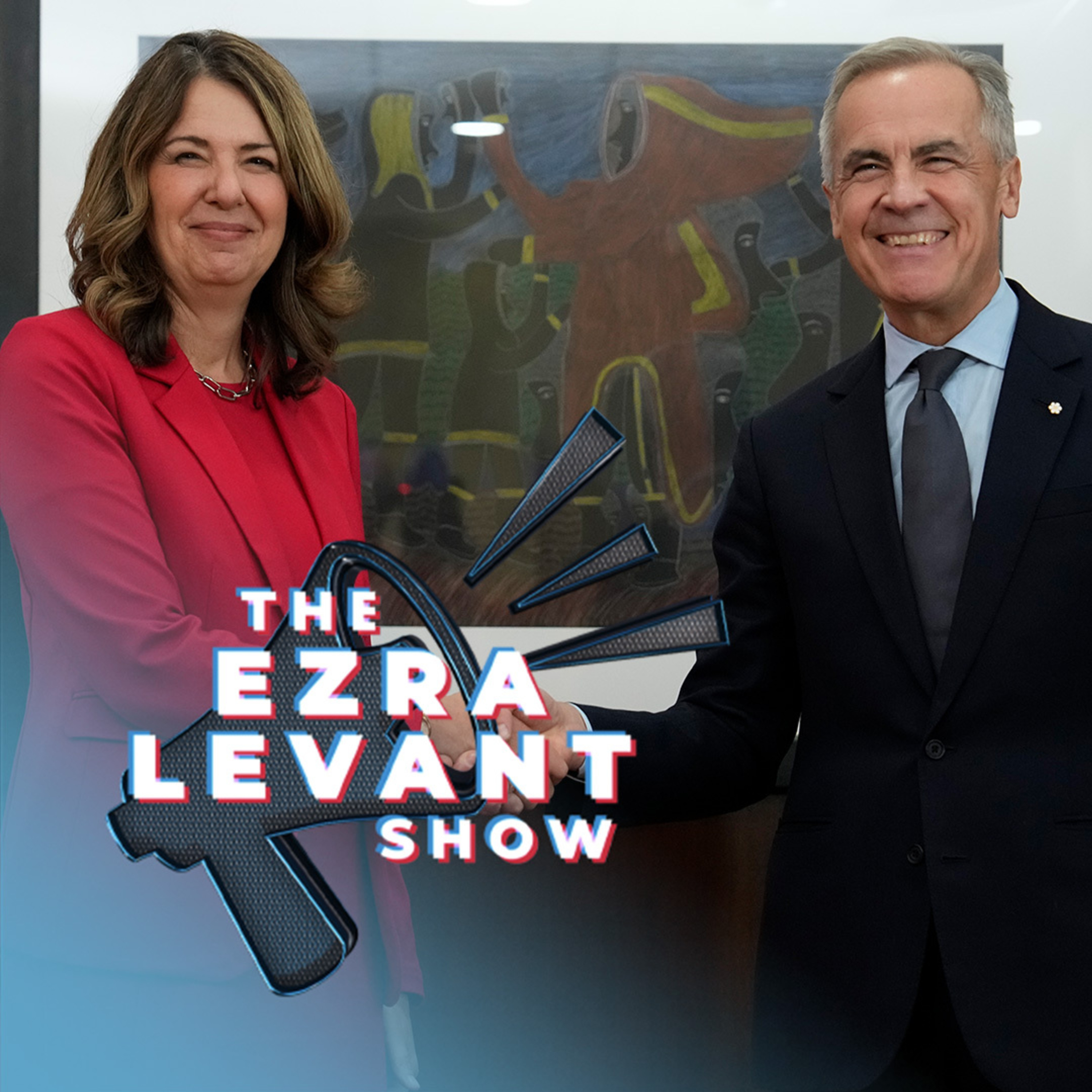
Rebel News Podcast
EZRA LEVANT | Could judges jeopardize independence? Keith Wilson on Alberta's next steps
00:53:47
Constitutional lawyer Keith Wilson joins Ezra Levant for a feature interview on the future of the Alberta independence movement.
Loading summary
Transcript113 lines
- [00:00]
A
Hello, my friends. Today, a feature interview with Keith Wilson. You may know him as the lawyer for the Freedom Convoy of Truckers, but he's also deeply involved in the Alberta independence movement. We'll talk to him about the latest, including a dramatic court case and new legislation touching on an independence referendum. But first, let me invite you to become a subscriber to Rebel News Plus. That's the video version of this podcast. Just go to rebelnewsplus.com, click subscribe. It's eight bucks a month, which might not sound like a lot to you, but boy, it sure adds up for us. You, it's really the reason we're allowed to operate, because we refuse to take government money. It's just you, my friend. So please help us out.
- [00:41]
You're listening. Tonight, is Alberta independence going to be thwarted by judges? It's December 5th, and this is the Ezra Le Vance Show.
- [01:03]
Shame on you, you Sensorious.
- [01:15]
So much is happening in Alberta now. Sometimes I think I over sample Alberta news because I'm from Alberta myself. I feel like I'm sort of in exile here in Toronto. But no, I think Alberta genuinely, objectively, is one of the newsiest provinces out there. I mean, I know Ontario is larger both in terms of population and economy, but proportionately, would you object to me saying that Alberta is the idea champion of the country economically, pound for pound person per person, it has a very high GDP because of the oil and gas industry. It. It's the most free market of places and it has something in the air. I mean, think of all the political movements that have started in Alberta and all the political champions, whether it's Preston Manning, Stephen Harper, or going back to Social Credit or even the ndp, could accurately be said to have emerged from the Alberta soil. It is a laboratory for ideas. And so we have to treat it seriously, I think, disproportionately. I mean, yes, things are happening in British Columbia and yes, they're happening in Quebec, but Alberta, I think, is the most interesting of provinces. What do you think of that? Well, as you know, last week I went to Alberta. I went for two reasons. First, I went to see the memorandum of understanding unveiled between Mark Carney and Danielle Smith. Here's a quick clip of how that looked. And that was just over a week ago.
- [02:52]
B
All right, so have done this before.
- [02:57]
Sign and then look up.
- [02:58]
A
Okay, you want to sign and look up. They won't be able to tell if it's just a photo.
- [03:11]
All right.
- [03:27]
B
Is that how he does it?
- [03:30]
C
I think he got a little thumbs up.
- [03:37]
B
Do you want to stand and do?
- [03:45]
A
Well, I was immediately skeptical. As you know, Sheila Gun Reed and I put some questions to Premier Smith. We're sympathetic to the Premier. I've known her for quite a while and I really, really thinks she's doing the right thing. She's fighting for freedom. She says it's a grand bargain to be done with Mark Carney. Oh, that may be. And in a bargain, in a compromise, you always have to put some water in your wine. But in my questions, I was worried that Mark Carney gets all the goodies up front. The increasing of the carbon tax and the proposed pipeline, well, if it comes at all, comes as late as 2040. Here's my question to the pre. The first deadline in the MoU, if I'm reading it right, is April.
- [04:26]
Where the duty is on Alberta to jack up carbon taxes. And the last date in the MoU, if I'm reading it right, correct me if I'm not, is 2040. That's when this pipeline, you know, that's sort of the end date. It can't be any later than that. In terms of building trust with the anti oil Liberals, they're asking Alberta to raise carbon taxes now for a promise of an oil pipeline years or even more than a decade in the future. Does that really build trust?
- [04:59]
B
Well, you have to start somewhere. And one thing I would say is that we did have the Supreme Court of Canada rule on the federal government's ability to set a price on emissions. So the Supreme Court has ruled on that. It's part of the reason why we negotiated a stringency agreement that would have seen the carbon tax price go up to $170 a barrel by 2030.
- [05:24]
We've demonstrated and I think the prime Minister agrees that's too high, too fast. So that's why we understand that there was always going to be a negotiation around that. We froze the carbon tax at $95 pending consultation with the industry and greater work with the product. Prime Minister. But remember, Alberta was the first to have an industrial carbon price. They did in 20. We implemented that in 2007. It's generated revenues that allowed us to invest billions of dollars in new technologies, including carbon capture. So there is a commitment on the part of the industry to have a carbon price and we did do some consultation on that. We're just glad that we have the means to manage it our way in Alberta under our tier program. And you'll see as of April 1st and no, that wasn't a joke. April 1st is going to be the date that we have an agreement on that front. When it comes to the building of a bitumen pipeline to Asian markets to the B.C. coast. If you read the MOU, those two things have to happen in tandem. That we have to see the Pathways project proceeding at the same time as an agreement to build. That one is dependent on the other. I don't know that the Prime Minister would have agreed to a new bitumen pipeline without Pathways and we wouldn't have agreed to pathways without a new bitumen pipeline. So they are going to be staged, they are going to go on together. We've already had a meeting with Pathways about how we're going to do that. That will require a trilateral negotiation as well. But I'm very hopeful since we have used carbon capture technology before for enhanced oil recovery. That's another part of this announcement is that CO2 will be able to be used for enhanced oil recovery, which should allow us to generate more revenue.
- [07:07]
So I would say that you don't always get 100% of what you want. But we addressed seven out of the nine bad laws that I'd put on the table to I think what will be the satisfaction of Albertans And I think that this will allow us to see some substantial investments.
- [07:22]
A
Well, a couple days later, the Alberta government had the convention of its party, the ucp, the United Conservative Party. You might recall that for a while there, the Wild Rose Party broke off from the PCs and the new Democrats shockingly came up the middle. It was a huge conference, about 4,000 people. Rebel News was there in force. Sheila Gunn Reed, Sid Fizard, Angelica Toy, we were there. Lise Merle came in from Saskatchewan. I want to show you a couple of clips from the Premier's speech. She didn't just talk about things like oil and gas. She talked also, I thought interestingly about immigration. Take a look.
- [08:04]
B
Alberta has had a history of healthy levels of primarily economic immigrants able to easily integrate into Alberta's economy and culture. But that was upended by the last 10 years of what was effectively an open borders policy by Ottawa and Albertans of all ages. Ethnicities and immigration history have had quite enough. We need an immigration policy that puts Albertans first.
- [08:36]
And that is why our government will be taking primary control over our immigration system in the coming months and years ahead.
- [08:47]
Using our constitutionally protected provincial rights, Alberta will return to a more stable number of primarily economic migrants so that newcomers come here to work and contribute as they have historically done. While Canadian citizens living in Alberta are given first priority to the jobs and the opportunities our economy creates.
- [09:07]
A
Of course, one of her strongest points, I think, supported by ordinary people, is to fight for women's places in bathrooms, in changing rooms, in sports, in prisons. Things where transgender extremism is out of control. That got some applause too.
- [09:23]
B
He's taken a hands on approach to ensuring the new teachers and EAs we are hiring are placed where they are needed most, whether that be in regular classrooms or special classrooms suited for children with complex needs. And because I see the NDP and their union allies are now organizing against parental choice in education, let me be very clear. Our government will continue to support and protect all options parents enjoy in the education system.
- [09:57]
That includes public and Catholic and charter and independent and homeschooling. Because unlike the NDP and their allies.
- [10:07]
We in the UCP know and believe that parental choice in education is of paramount importance. And that is not going to change so long as the UCP is in government.
- [10:17]
A
So there's a lot cooking there. But there's also trouble in paradise. The chief opponent to Daniel Smith and the UCP is, is the opposition ndp. But more to the point, the public sector unions, which are basically surrogates for the ndp. There's a lot of legal shenanigans. And remember, all of this is with the fact that next year there will most likely be a referendum on Alberta independence. So there's a lot cooking. And I'm out here in Toronto, so I'm not there every day. So I rely on our Alberta eyes and ears, Sheila Gunn Reed and the Calgary team. But there is someone who I go to who I know is going to have a deep understanding of what's going on, because he's focused not just on the politics and the journalism, but on the underlying law, which is so important when you're dealing with things like referendums and recalls and what can the province do and what does the MoU really mean? You'll know our next guest. He's our guest for the course of today's show. His name is Keith Wilson, King's Counsel. We really got to know him well during the Trucker convoy when he was the lead lawyer for the Freedom Convoy and the Truckers and for Tamara Leach. He's also very interested in the independence movement. Keith Wilson joins us now via Zoom. Keith, great to see you again.
- [11:40]
C
Good to see you, Ezra.
- [11:42]
A
I rattled off about 10 things there because I'm just trying to make the point that Alberta is cooking. There is a lot going on and I wouldn't mind having you take us through a few of these things. I know you're focused like a laser on a new court ruling and a new bill in the legislature. I promise we'll get to that. But just really quickly, I'd like your thoughts on that mou, that memorandum of understanding, or as both Carney and Smith call it, the grand bargain. Do you think there will be a pipeline built to the West Coast?
- [12:13]
C
No.
- [12:16]
A
Okay, message received. Tell me why you think there will not be one.
- [12:21]
C
Well, I mean, under our constitution starting in 1867, you know what's one of the great accomplishments of Canada when you look back at our early history? It's the railway inter provincial works. Well, how did that happen? It happened because under the constitution, exclusive jurisdiction authority, exclusive approval making power vests in the federal government for interprovincial works which include highways, pipelines and so on, as well as ports and matters of coastal waters. Exclusive jurisdiction of the federal government. Well, the Prime Minister has made clear, as has his minister, his new Minister of Environment, as has other ministers, that.
- [13:14]
This pipeline will only go ahead if British Columbia consents and first nations consent. Well, under the constitution, they do not have those individual, those entities, rather those entities BC and the first nations do not have a veto and the Prime Minister's given them one. And that's the word veto does not appear in the mou. But that doesn't matter because the Prime Minister has to approve the pipeline and he said he'll only basically do it if B.C. and the first nations are on side. So I just think it's. And the timelines are too long. We have an urgent need to grow our economy, to build prosperity, to undo the harmful ways of the federal government. So I just, I don't think. And from what I've been told by oil industry people, there's just not a business case for it. I think the MoU is a very important advancement in some respects though, in that the government, the Carney government has committed to not move ahead with its emissions cap, which was really an unconstitutional production cap designed to keep Alberta's oil and gas in the ground, which is the greatest generator of wealth in our country.
- [14:26]
And the net zero electricity regulation, which is making our grids less stable and preventing us from all provinces from capitalizing on the growth of the new market for AI data centers.
- [14:42]
But I think.
- [14:45]
The premier, it's an important accomplishment. It is nowhere close to a grand bargain because it doesn't deal with the other core issues of equalization out of control immigration. It doesn't deal with the reckless spending and the deficits. It doesn't deal with the Failure to have a criminal law system or killer justice system to keep us safe and the other things that are driving the independence movement. So it's a step in the right direction. It has some positive features, but it's not, you know, it's a good thing. I don't dispute that. But I think the error that was made, unfortunately by the government here was they oversold it.
- [15:23]
A
Now let me do something I don't think I've ever done. I'm going to play devil's advocate for the Liberal Party.
- [15:30]
C
Awesome.
- [15:30]
A
This is new territory for me, I should tell you. Let me throw a couple things at you and you deal with them. The first is Stephen Guilbeault, the former environment minister, the author of so many bad ideas quit and quit and made a fuss and quit and did the interview Circuit and other Liberals sort of chimed in. I saw Tlaib noor Mohammed from BC.
- [15:58]
Former Liberals too. Jody Wilson Raybould, Catherine McKenna, the former environment minister. I don't. At first I thought, oh, that's just, that's just orchestrated to make Westerners think that this was a big deal. I thought that Stephen Gilbel, because we knew he was thinking of stepping down anyways. But I've heard that this is actually causing a schism in the Liberal Party, that it is turning the Liberals more towards the center than the far left under which they cruised that way for 10 years. What do you say to the fact that maybe Mark Carney is pulling back from the craziness and all these ultra left, like Elizabeth May said, oh, I regret voting for this government. You can never take a politician at face value. But maybe this is some real reality here, that maybe they are open to an oil pipeline. And again, this is me pretending to be a liberal.
- [16:58]
C
Agreed. I was wondering the same thing, that this was some kind of showmanship. But I talked to a number of people that persuaded me that that's not the right assessment. I think Gabo and others are livid. And the reason they're livid and the reason they had their temper tantrum and stomped out of the room, you know.
- [17:21]
Notionally, is because they're eco evangelists. And to move away from anything that's not climate alarmism, that's not net zero, 100% is blasphemy. And so the eco evangelists of Gabo must protest. But this is where I come to a disturbing conclusion. I believe Carney is well and his wife are eco evangelists too. But I think Carney sees himself in a different class where he wants to get to the same goals that Gabot had. He just sees a more sophisticated, more nefarious way of getting there, which is through carbon taxes and other tools, things that aren't as obvious. He said openly when he notion, when he suspended the consumer carbon tax, he said something to the fact that it was too visible, that we need to do these things where the voter can't see them.
- [18:25]
A
Yeah, he said it was too divisive.
- [18:27]
C
You don't know why. So the reaction. That's my answer to that one.
- [18:30]
A
Yeah. I remember when he nixed it. It's not that he said he was against it inherently, it just was dividing people. So it was the reaction to it he didn't like. He's still fine with carbon taxes. Let me ask you about the new minister, Tim Hodgson. I think he's a bit of a newbie. I can see him making some messaging mistakes. And so again, let me play devil's advocate for the liberals. This is not my safe place, Keith. But when he said veto or you need the consent of the bc, you need the consent of the first nations, maybe he was speaking imprecisely because I saw yesterday he was moving back to the we need to consult with them. We don't need their consent, which would be a veto. We need to consult, which would be to have some conversations. So what if we said, well, maybe Tim Hodgson, he's fairly new to politics. Maybe he misspoke a little bit there. The MOU doesn't say consent. And.
- [19:33]
I didn't know much about Tim Hodgson. I don't think anyone in politics did. Because you know what he came from? He came from Goldman Sachs. I think he was the CEO of Goldman Sachs Canada, who, which is where back in the day Mark Carney came from. These are all, you know, Goldman Sachs is known as sort of the Darth Vader of bankers. You know, they got their tentacles everywhere. They're the most nefarious, they're the richest, they're the most powerful. So it's no surprise that that's where Carney reached. But you know, this guy is tight with Carney. No one else in caucus has heard of him. But maybe he actually has some power. And I don't see that he's an eco radical. I don't know. I mean, in fact, he sort of comes from an energy background. Again, this is me outside of my safe place trying to make the case for the liberals that maybe this is how liberals go about making pipelines. I can't believe I'm saying these things, but I want to see your Answer to them.
- [20:30]
C
Well, you know, watch. He's often on camera in question, period, because of the camera angle. Watch it. You will see. He always looks like the guy who just, you know, was pulled out of off the street, out off of Wellington and said, hey, come sit here for a minute. He's always doing this.
- [20:49]
Like, what's going on here? He has this dumbfounded look. I don't think he's going to last in politics. He's trying to be a politician. He's a hardcore hedge fund type business guy. And so.
- [21:07]
I just, you know, is he a sign of hope that the eco evangelists are losing their grip? No, I think Carney's using him as a device, as a tool to.
- [21:22]
Achieve these eco evangelist goals through a different means, through a more sophisticated sleight of hand technique, you know, through all of this gobbledygook that we hear from Carney. So he, Hodgson does not give me hope. I see him more symptomatic and as evidence of a more sinister way in which Carney's conducting himself.
- [21:45]
A
All right, I got one last question about this and again, I'm just, I mean, I think you and I overlap almost completely on issues like this, like the Venn diagram of what you think and what I think. It's like a perfect circle. But, but I do want to keep open the possibility that I've missed something, that I'm in my own echo chamber and so I want to test my own beliefs. And I know you do also that I mean you're always testing your own beliefs, improving your understanding the world, checking your hypothesis. When you think back about the great nation building projects of this country, and I think the cpr, the Canadian Pacific Railway is probably the biggest and most important. It really did keep the country together. It dealt with whether it's a military.
- [22:36]
C
Facilitated the migration, the settling of the prairies, resource development, protected us from spread of the United States into Canada. Absolutely.
- [22:44]
A
Probably the single most important thing that this country has achieved that was done by great men, adventurous entrepreneurs and capitalists. Yes, but at the end of the day it had the political muscle behind it of being a government project that was facilitated, legislated, funded, financed and any problems were like the CPR blasted through the rock, but the government blasted through 19th century red tape as much as there was. And the reason I say that is when the government owns the project, the government gives itself the permits. The government, like the government, can make something happen for itself perhaps in a way it wouldn't do for a private sector project. So let me Throw this at you.
- [23:36]
I hate to say it, but the only oil pipeline built in the last 15 years was the Trans Mountain Pipeline, which was done atrociously, poorly, awful, by the Trudeau government, which botched the private sector pipeline, bought it, completed it at like five times the price, but they actually did complete that Trans Mountain pipeline. It's actually operating. What if a government or even the federal government were a part of a project that was proposed? I don't know if that could happen, but if that happened, I think that that would.
- [24:22]
C
De.
- [24:22]
A
Risk the political risk here, because I think when you have oil companies say, I'd rather operate in Kazakhstan, I'd rather operate in dictatorships than Alberta, that's what they mean. It's the political risk. Do you think there's any prospect of having a government partnership, as much as I hate that, in a new proposed Northern pipeline?
- [24:46]
C
Let me say a few things. First of all, if Carney was truly interested in. In helping.
- [24:54]
Deal reset and redirect the country from the lowest GDP growth from, you know, you've seen that these different charts that show Canada is just in such terrible shape in terms of our economy, poorer than Alabama economic growth, we're.
- [25:11]
A
Poorer than Mississippi, many of our Canadian provinces are poor.
- [25:14]
C
One of the. And there are problems, Ezra, that you can appreciate, your listeners will appreciate that are actually hard to fix. And then there's problems that are easy to fix. Some of the stuff that Carney can fix is actually very easy. And let me illustrate that prior, we had. We have had for a very many decades, we have had a federal statute called the Impact Assessment Act. Okay. And. But under Trudeau, they brought in Bill C69, which added all kinds of provisions, gender, to that statute. He could simply remove them. Right. Because then it will just operate like it did before they screwed it up.
- [26:02]
A
Right?
- [26:03]
C
Right. It's not like he has to. This has to be complicated. And in fact, the courts have struck down many of the provisions of C69 as unconstitutional quite properly. So he has a very simple remedy. He could instruct the justice drafters to go back to the version that existed before, which facilitated growth in projects of all kinds across this country. Investment, job creation, economic development. It's that easy. Just restore it to the act that was before. It would literally take 5 minutes. Just bring up the version that existed before B69. He hasn't done it. He hasn't moved a wheel on that. But what he did do is he created this special office that he controls where if you get yourself on a special list, five or six projects can go ahead. We need 5,000 projects to go ahead of all sizes to create jobs. We need the people who are fleeing with their investment dollars to come back. And he hasn't done that. He's chosen not to. I could give other examples. So I don't think he is any different than Trudeau, other than he's much more sophisticated and maniacal. I think he sees himself as an eco evangelist, but he's going to do it in a more discreet way and cause the masses to see the greatness. And I think he wants to demonstrate to the rest of the world, other countries in Europe, that he's going to show them how you can implement green policies and save the planet. And unfortunately, we're all going to be the victims of that failure. But you use the example of the TMX pipeline when it was originally proposed as a private sector project and I was involved in representing some of the landowners along the route and involved in some of the hearing processes. So I'm very familiar with it right down to a technical level. And I still remember the day when it got they announced, the company announced they were pulling out. They were at about $7 billion for their budget and estimate at that time. And then the government had to step in and save face and took it over. Well, what did they end up spending? Was it $30 billion?
- [28:16]
A
Yeah. Crazy.
- [28:17]
C
So the problem is now, well, it's not full. And Hodgson and others say, well, it's not full. The reason it's not full, imagine what the toll would be. The charge for you and I to run a barrel of oil through that pipeline if it costs $7 billion to build versus how much the company running the pipeline is going to charge us to run a barrel of oil through it when it costs 30 billion. The tolls are so high, it's like they're off the scale. So the estimates are that if the government were to build the new Northern Gateway pipeline, a new pipeline from Alberta to the coast, that it would cost 50 billion. Well, no oil company's going to be able to afford to put the dill bit in it, especially when they got to transport the diluent back after it's stripped out in the Asian market. So the economics aren't there. Yeah, they could build it, but they're going to build a pipeline that no one oil company can afford to put oil through, especially when on top of that they're going to have to spend five or ten dollars a barrel on carbon taxes.
- [29:24]
A
I find this very depressing. And you know, I did My show yesterday on what I think is a very real prospect that Donald Trump will topple Venezuela's dictator, Nicolas Maduro. I mean, you can see him wobbling back and forth right now. The country's in a crisis. They used to produce 3 million barrels of oil a day. They're down to 1 million barrel. Like, IMA. Like, they are so poor. The average Venezuelan has lost 24 pounds from just lack of food. It's. It's actually a human crisis. I think Trump's going to topple him. I think. I don't.
- [29:59]
C
And if that happens, you know, it's going to happen. So Venezuela was supplying all this oil, and then here was Alberta, and then Venezuela went down. It went like this, right?
- [30:08]
A
Yeah.
- [30:09]
C
So now.
- [30:11]
Trump, Venice, you know, Chevron will go in there the day after.
- [30:16]
A
Trump, get their old refinery back. They, they were expropriated along with that.
- [30:21]
C
Refineries up. They'll do their re. They'll do. They'll do shutdowns and get everything working. They'll get the pipelines fixed up, they'll get the wells pumping again, and then those tankers will be flowing through the Gulf of America to Houston and they'll be displacing. So then the American buyers will say, yeah, to Alberta. Like, oh, do you want some of our, our, our. Our oil from Fort McMurray? Yeah, we're actually good right now. We got a whole bunch of. And then it'll be like, well, how about $30 a barrel? Will you buy it from us then? Yeah. Okay. You know, so we're. I'm very concerned about that prospect. It shows why we shouldn't have been messing around. We should have right away developed access to other markets, you know, the rest of Canada, in my view, with all due respect, lives in this fantasy world that the wealth will always be there and we can just, you know, send hundreds of millions of dollars to foreign conflicts and hundreds of millions of dollars to climate agencies and programs in Africa. I'm sorry, we just don't have that wealth and.
- [31:26]
We need to change course. Carney has the ability to fix these laws. They're. They're not complex problems to solve. Many problems he faces are complex and difficult. Yeah, but some of them are not. It's just a simple matter of repealing the bad laws. If he repealed the bad laws, he wouldn't even need his bill. C5, you know, major Projects Office. The Major Projects Office. Its very existence is a glaring admission of failure that you have to get the. The king. King Carney's personal blessing to build anything. It doesn't matter whether an entrepreneur, an investor, wants to start a business, a mine that's going to employ a thousand people, or someone's going to do a project that's going to employ 100 people or 500 people or 10 people. We need every one of those people to stay in Canada with their investment dollars and create jobs for our friends, our neighbors and our kids. And Carney's blown it, Trudeau blew it, and the MOU doesn't solve it.
- [32:30]
A
Yeah, I mean, it's an added. It reminds me of Goss Plan, which was the name of the Soviet Planning Office, the Economic Planning Office. It added no value to anything. It had no technical knowledge. It was simply politicians trying to choose winners and losers, trying to orchestrate the economy. I've talked before about. I think it was Frederick Bastiat and his wonderful essay, which is, oh, my God, how do we know where all the bread should go every day in Paris? Who's in charge? There's no Minister of bread. How is it that we're not all starving? Who knows how to get the right amount of bread to every bakery, to every restaurant? Oh, my God. No one's in charge. The answer is spontaneous order. People can figure it out on their own. In fact, if you had a Minister of bread, that's when you would have shortages, starvation, famine. Because no one person, no one king or commissar is smart enough to know where the million loaves of bread go every day. And the idea that Mark, I'm sure he's a smart man, and I'm sure he has a good education, but there is no one person who can be the king of the economy and run things better than the experts in the industry. And I don't know, I just find it very Soviet that we have to meet. Meet the Commissar's approval, and we don't even know what the rules are in there. It's just, if he likes you, it's. It's more like a Roman emperor than even a Communist planner.
- [34:07]
C
There's an arrogance with this government, and there was an arrogance with the previous government, Liberal government, that. That they know better what I need for me and my family than I do. And they're better at providing it. And history has shown that that doesn't result in my family being better off. It's just remarkable. There's such narcissism in that line of thinking. And that's what we see on display out of Ottawa at the same. Continually. But at the same time, we see their glaring Incompetence. They couldn't even plant trees in Canada.
- [34:45]
A
One useful thing.
- [34:46]
C
No, you're not. Carney appeared this week before the assembly of First Nations. And I watched. I tortured myself. I punished myself by watching the whole thing. And he said, and just, you know, think of the tragedy on the reserves throughout Canada. If you've traveled through any yourself and seen the despicable, terrible housing conditions. And Carney announced that the federal government's going to partner with first nations to build houses for Canadians. I'm like, could you start with the reserves, please? You know, so these guys are completely delusional. They're drunk on power. They're drunk on their own sense of brilliance and we're suffering for it.
- [35:34]
A
Yeah. Well, the timing of the MOU is interesting. Like I say, it was just a day before the UCP conference in Alberta started. And I think the most dramatic moment in the conference was when an activist, a grassroots activist, and we've had him on the show before, Jeffrey Rath is his name, got to the microphone and expressed his views. He was not pleased with the moe. He was not pleased with Ottawa and he very much believed in independence. And.
- [36:06]
It showed that. I believe my sense of the conference was that members of the party very much like Danielle Smith and are happy with her. Remember just a year ago she got than 90% of the vote in a ratification. But they do not like the MOU and they're very much in the back of their mind thinking that independence may still be an option here. Let me show you a couple of moments from the conference showing the booing of the Premier's MoU and the cheers for Jeffrey Rath. Take a look.
- [36:32]
C
Hello, my name is Jeffrey Rath.
- [36:35]
B
I'm from Foothill, California.
- [36:42]
C
My question is for everybody in this room after that so called MOU U was signed yesterday. The ink wasn't dry on the paper.
- [36:51]
A
And Mark Carney went out and gleefully.
- [36:54]
C
Announced a 600% increase to the industrial.
- [36:58]
B
Carbon tax in Alberta. Now my question to the how many.
- [37:05]
C
Of all of us favor a free and independent Alberta.
- [37:19]
B
Sa.
- [37:51]
Independent Alberta within the united Canada?
- [37:59]
I just ask everybody to be mindful that this party is a merger of two parties with different cultural traditions. And sometimes the way we solve disputes is by solving them through referendum.
- [38:15]
A
I think that a lot of Albertans are hoping, hopeful that this might work, but I don't think they would bet on it. I don't think. I mean, they would like it to work, but all the things you've described are reasons it won't happen. And I keep thinking if you like you mentioned ConocoPhillips or Chevron, Exxon, these were all companies who were kicked out of Venezuela if they had $10 billion to kick around. Which is the likelier path to a quick.
- [38:43]
Rate of return? Throwing in a Mark Carney's Goss plan or going to Venezuela? So I'm worried that a proponent won't come forward if that happens. And my very first question to you was, will a pipeline be built? And you just said no. At what point in time does Alberta declare defeat? Do people who propose a pipe want a pipeline? Say this didn't work, it was just a PR exercise. In fact, the only thing we have now is a higher carbon tax. When do people stop believing? Is there a drop dead date in this thing? I think maybe it is in July or something. Is that right?
- [39:23]
C
Yeah. Well, let me just comment on why I thought there was booze because, you know, you and I were both in the room.
- [39:29]
B
Is.
- [39:31]
C
I don't think that it's. People were disappointed in the MoU per se. I mean, it's obviously I've criticized elements of it. What I think they were disappointed in it was it was almost presented to the UCP members, particularly those who are strong supporters of independence. Sort of like here, see, I fixed Canada. Alberta doesn't have to separate now. Right, right. And, and of course it doesn't. And that's where I think the booze came from.
- [40:08]
A
Right, right, right.
- [40:09]
C
That, that's type of a sentiment that there's so much more that needs to be done.
- [40:14]
A
Right.
- [40:15]
C
This MoU does not resolve the fact that the Trudeau Liberals, now with the Carney Liberals have created more debt. And then all of the previous governments of Canada combined, that they have condemned my children, my grandchildren and my great grandchildren to this burden of debt that they have continually increasing the cost of living. They're making life unaffordable. They're depriving our children of a prosperous future. They are not keeping us safe with their crazy two tier justice system. You know, Tamara Leach is under house arrest for mischief and then they're letting rapists out and not giving them a sentence because they're worried they'll get deported and not be able to stay in Canada. I could go on the gun grab. What a misplaced priority. The immigration out of control, all of these different things. The MoU does not address that. Something that addresses those things would be a grand bargain.
- [41:17]
A
Right, right, Good point. I mean, even I think back to the two issues that I thought were interesting in her speech. Were transgenderism and immigration. Those are not obviously even touched by the MoU. There are many things on a hundred different issues, firearms being one of them. Well, let me talk about independence with you because I know that's on your mind.
- [41:40]
There's been battles going on. There have been other people in Alberta who said, well, we're going to get a referendum too, and it'll be a We Love Canada referendum. There's dueling referendums, and then there's recall initiatives where the NDP are gonna try and get MLAs recalled, which is a great thing. I wish every politician lived in some fear that they could be recalled before the end of their term. I don't want us to be in perpetual elections, but the threat should be real. Give me an update. What's going on? Cause I know there was a new bill in the legislature in a court case today, and I know these are all slightly different things, but tell me the state of direct democracy in Alberta.
- [42:23]
C
Sure. So in Alberta, we have what's called the Citizens Initiative act. And there was a. A clause in it. It's. It's paragraph 2D, I believe.
- [42:37]
In any event, or 2sub4.
- [42:42]
It's a clause in the statute that evolved over time. It had a big, whole bunch of words in it, and it was brought in for a specific purpose many, many years ago. And then in some recent versions of legislation, they amended it out and they just left the last bit in. And the last bit basically says that you can't have a citizens initiative petition, a petition to compel the government to hold a referendum on independence. For example, if the nature of your petition question is going to contravene the chart of rights and freedoms in certain parts of the Constitution.
- [43:20]
And it gives authority to the chief electoral officer to submit to the court.
- [43:28]
A reference case to decide whether or not a proposed question, petition, question, or referendum will offend that provision. So, first of all, that clause should have never been there to begin with. It's really strange that it is. But secondly, the Alberta Prosperity Project proposed a charter question or a referendum question about Alberta independence, filed it with the chief electoral office, and then he decided to send it to the court for a review. Justice Feesbe was tasked with hearing submissions on it. That process has been ongoing. And on its face, this is all nonsensical because if the Supreme Court of Canada said in the Quebec case, the 1998 reference case, that if a province votes to succeed, to secede, to become independent on a clear question, and a clear majority say, yes, we want to become independent, then that triggers a mandatory obligation for all parties to enter into good faith negotiations as to the details and the terms upon which the divorce will occur. Okay, so. And that's first nations, all the other provinces in the federal government. So a successful referendum doesn't mean you're out, doesn't mean. Doesn't define the rights that first nations will have in Alberta, doesn't define the rights and privileges of Albertans. All that has to be negotiated in the future and agreed to. So it just really makes no sense to even have this provision in there in any event. All it does is creates an opportunity for judicial intervention and the judiciary to go out of its lane and potentially override the legislature. So as this case has been evolving before the courts, before justice fees be on whether or not the question posed by the Alberta Prosperity Project for an independence referendum in Alberta contravenes the constitution and the charter, the Alberta government stepped in yesterday and said this was never the legislative intent. The legislative intent of our legislation, the Citizens Initiative act, was that citizens would come together and they would decide if there was an important question. And if enough citizens sign 177,000, that then triggers an obligation for the provincial government to hold a referendum. This is as democratic as you can get. This is democracy on steroids. Right? So now the legislature goes, what, now a court's controlling this. That was never the intent. The intent was for the people to control it. So yesterday afternoon, the Alberta government. So On Thursday afternoon, December 4, the Smith government introduced Bill 14. And Bill 14 clarifies the legislative intention, which is absolutely open for a legislature to do. In fact, they have an obligation to do that under the principles of parliamentary supremacy. And they have clarified through Bill 14, they've removed that section. So the judges are not supposed to step in. This is a democratic process. And they have made it retroactive, which they're legally allowed to do. It happens quite frequently where legislation is retroactive, particularly if it's correcting a problem. And said, this case must now come to an end. It should have never happened. It's not consistent with the legislative intention. So I think that's very good. And someone, you know, the lefties quickly. Oh, this is authoritarian. This is fashion. No, it's not. It's the opposite of that. In our Westminster model of government, the parliament is supreme in lawmaking. They make the policies, they make the laws. If we don't like what they do, we unelect them. We don't elect them again. Right. And here we have recall. So when the legislature discovers that its legislative intention is not being achieved, it's incumbent upon them and they have the full legal authority and obligation to amend their legislation to clarify their legislative intention. That's what the government's done through Bill 14. However, today, mere hours ago, Justice Feesbe, despite the legislature bringing in a law that says this case is to end now because it should have never begun in the first place, which is perfectly proper and permissible under our system in the Constitution, Justice Feesbee thumbed his nose at the rule of law and issued a decision anyway.
- [48:19]
Remarkable. Absolutely remarkable.
- [48:22]
A
Well, I'm worried about. Go ahead. Sorry.
- [48:25]
C
No, that's fine. The so what, what? And what he ruled was that the Alberta Prosperity Project can't have a petition and can't trigger a referendum on independence.
- [48:45]
Now, what's interesting is, you know, that sounds pretty dramatic on its face, but actually his decision is actually, with all due respect to the judge, a nothing burger. And the reason it's a nothing burger is he only decided on the effect of that 1, section 2 sub 4 about whether or not the petition question could potentially contravene the charter.
- [49:15]
His decision clearly in no way restricts or limits the authority as set by the Supreme Court of Canada in the 1998 reference case or the federal government through the Clarity act for the Alberta government to call a referendum. So his decision is exceptionally narrow and only applies to the functioning of that one oddball section that the legislature and the premier have said from the get go. That was never the intention of the law. This is bad drafting. If it's being interpreted that way, we're going to fix it. So yesterday they fixed it. Justice Phoebe should have just closed his file and said in view of the statute, the direction from the legislature, they are supreme. The judge is to interpret the law, the legislature is to make the law. And that obviously upset Justice Feasby. So he decided today that he was going to try and make some law. It's of no force in effect. It's a very narrow scope because it only deals with that subsection. The new reality in Alberta with the passage of Bill 14 will be that the Alberta Prosperity Project will have 30 days to resubmit their petition question.
- [50:40]
The chief electoral officer will have 30 days to review and approve it. And then the Alberta Prosperity project will have 120 days to mobilize their 20,000 volunteers to get the 200,000 Albertans who have already pledged to sign to secure the 177,000 signatures that will then obligate the Alberta government to hold a referendum on independence in 2026. And I expect that that referendum would occur in the fall, probably October of 2026. It's the most logical timing given all the steps that have to occur. And then Albertans will get to decide whether or not.
- [51:26]
They feel that they will have a better future for themselves and their children by being independent or whether things will be better.
- [51:35]
Converting to the eco evangelism and the despair that that will bring.
- [51:44]
A
I think I understand your description of the legal events. And what I'm left with is a premonition that this is the first of many attempts by judges. It reminds me a little bit of what Donald Trump is going through, whether it's tariffs or appointments or foreign policy or like, there's almost nothing that Trump does where a judge, often a Democrat activist appointee, at least temporarily derails it. And I'm not that familiar with the US System, but like, it seems like any judge from any state can paralyze a national project. It's like whack a mole. And I fear that what you've just described, which I think I understand, but what I do understand for sure is that it's illegal. It's a judge throwing a spanner in the works. And I fear that's the first of a dozen before. I mean, why wouldn't they? I mean, they would do anything they could to stop this from happening. But it's very interesting to get the update. Listen, Keith, stay in touch with us on this and so many other things. And we haven't even talked about Tamara Leach today, really. And of course, she is appealing her conviction. So that battle continues, and you're at the heart of that. It's great to catch up with you. We love Alberta. And, you know, we talked a lot about legal trickery today and technicalities. That's how it is in whoops. In modern political fights. Great to catch up with you, my friend.
- [53:14]
C
Good to see you. Thanks for having me on.
- [53:16]
A
All right. There he is, Keith Wilson, KC the lawyer for the Freedom Convoy and someone who is deeply following the independence movement. That's our show for today until Monday, on behalf of all of us here at Rebel World headquarters, to you at home. Good night. And keep fighting for freedom.