← Rebel News Podcast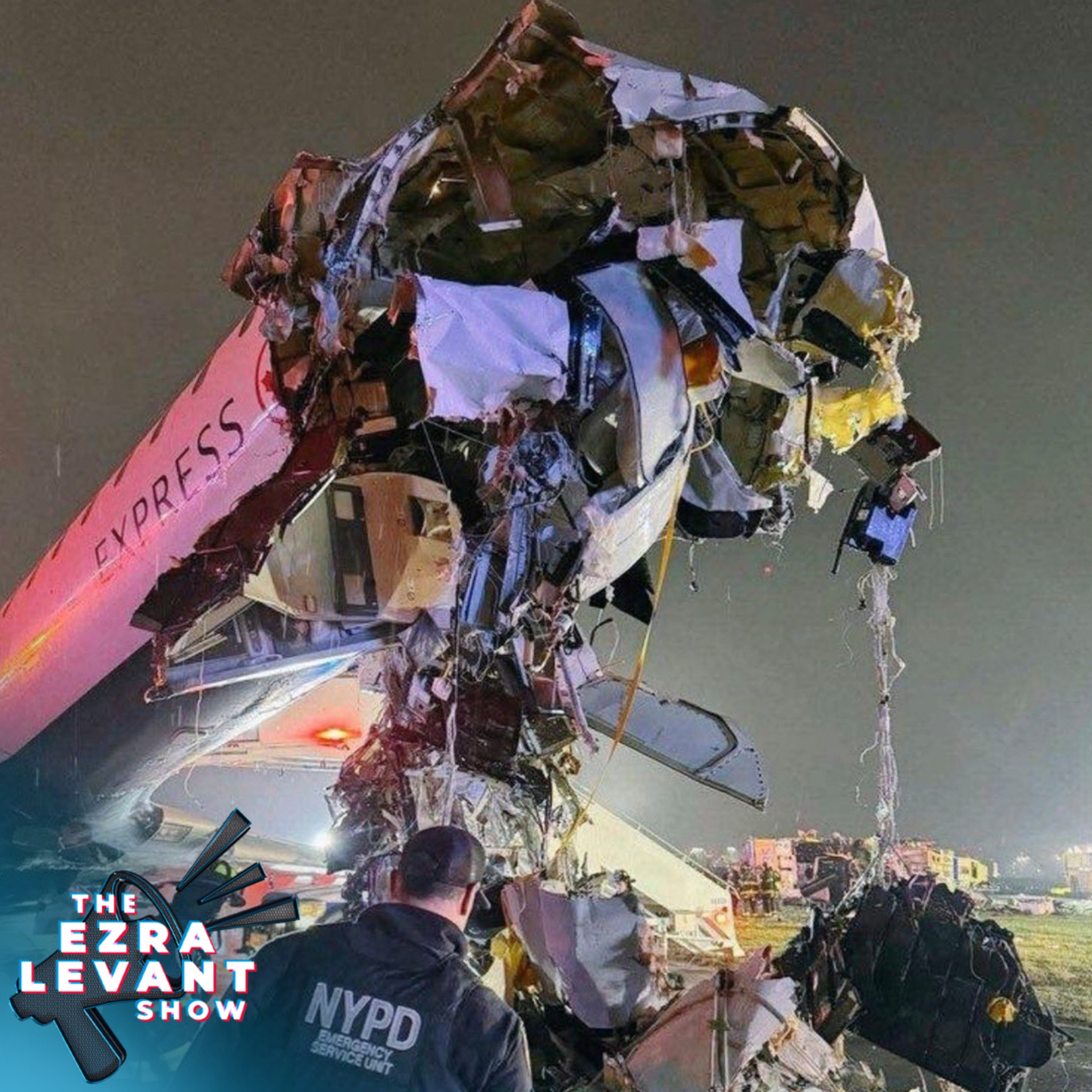
Rebel News Podcast
EZRA LEVANT | Deadly crash hijacked by elites obsessed with optics
00:53:37
Canada deserves better than politicians who confuse compassion with compliance and leadership with linguistic performance. Listen to audio-only versions of RebelNews+ exclusive shows like the daily Ezra Levant Show, the Gunn Show, and audio versions of our DAILY livestreams along with other Rebel News long-form videos and interviews.
Loading summary
Transcript68 lines
- [00:01]
A
Hello, my friends. I'm so grossed out by the reaction to the terrible and tragic accident when a Air Canada jet smashed into a fire truck at LaGuardia Airport in New York. Two pilots were killed, many others injured. And the number one thing on the minds of Ottawa politicians and pundits is why did the Air Canada CEO only give his remarks in English? How dare he? And they're summoning him to Ottawa. I'll give you my thoughts on that super gross reaction. As if that is the tragedy of this crash. It's just so awful. But first, let me invite you to become a subscriber to Rebel News Plus. It's the video version of this podcast. Just go to rebelnewsplus.com, click subscribe. Eight bucks a month. And you know, that might not sound like a lot of money to you, but I tell you, it adds up for us. That's how we pay our bills, so please consider it. Oh yeah, one more thing.
- [00:54]
B
Are you wondering how you can support your favorite independent news outlet while also sharing your opinions in a unique way? Head over to revenuestore.com and check out our merch. We have got incredible T shirts, hoodies, mugs and winter gear we ship internationally. And if you use the code ALEX10, you will get 10% off your order. Go and take a look today.
- [01:44]
A
Tonight, the Ottawa Elite attacks a grieving manager for not speaking French. It's March 25th and this is the Ezra Levant Show. Fighting for freedom. Shame on you, you Sen. A few days ago, there was a terrible tragedy in New York city at the LaGuardia Airport. Here I'll let you listen to the terrible recording of the air traffic control agent directing a large fire truck to enter a Runway and then realizing that an Air Canada plane was landing on that same Runway and desperately trying to get the truck to stop entering the Runway. Here, take a look.
- [02:40]
C
Grant, Anna 2384 is declaring an emergency. Flight attendants in the back are feeling ill because of the odor. We will need to go into any available gate at this time.
- [02:49]
D
Okay, roger that. Hey, did that again. Do you guys have any gate for United? Because now he's declaring an emergency. They want to get out.
- [02:58]
E
Yeah, let me ask them. Give me.
- [03:01]
D
I'll call you right back. Okay, ready. Jet 646 the border with you. For dials four for Jetta 646. 646, number two, clear to lane four.
- [03:14]
C
2384, do you have a gate available at this time? Otherwise we will be probably requesting airstairs.
- [03:19]
D
Give me one second 2384 Standby United. Who is the vehicle needed to cross the Runway? Emergency vehicles calling on ground or are you calling on Tower? Truck 1 Company. LaGuardia Tower. Truck 1 Company. Truck 1 Company, LaGuardia Tower. Request me to cross four at Delta Truck 1 Company. Cross four at Delta Truck 1 Company. Crossing four at Delta Frontier 4195. Just stop there please. Stop. Stop Truck 1. Stop. Stop. Stop. Start Truck 1. Stop Truck 1. Stop. Stop Truck 1. Stop.
- [04:01]
C
4195 we're staying here.
- [04:05]
D
Del 2603 go around Runway heading 2000. Just 646. Chest 646 I see collide with vehicle agents. Hold position. I know you can't move. The vehicles are responding to you now.
- [04:17]
F
Is the Runway closed?
- [04:19]
D
Dell 263 go around Runway heading 2000.
- [04:21]
C
Right 2000 go around 2603.
- [04:24]
A
LaGuardia tower.
- [04:27]
D
Tower caring there to reiterate, LaGuardia Air Fort is closed at this time. No aircraft in or out.
- [04:32]
A
Oh, just so terrible. Absolutely terrible. And I'm going to show you something, you may wish to look away. Here's a video of the actual impact of the plane traveling very quickly on the ground smashing into the large fire tract. As you can still see by this still photo, the whole front of the plane was destroyed and the pilots obviously died immediately. Many others were injured. One flight attendant who was strapped into a seat was flown thrown hundreds of feet away. Absolute shocking. And it happened very late at night and I actually was boarding a plane and you may recall I went to Fredericton very briefly and I was getting on the plane at around 5am so all the staff had just heard about what had happened and it was funereal on the plane everyone was just ashes, the pilots, the crew, everyone had by that time heard what was going on in New York City. Just absolutely devastating. I can imagine that the Air Canada CEO was woken from his sleep. If this accident happened, it was around 11:30pm at night. I don't doubt that someone would have called the CEO from probably by midnight or 1am, not any later than that. So he would have been woken up to get on, starting to do things. The horrible job of informing the families, figuring out who was on the plane, what medical help, what other help do they need. Letting you can imagine there's so many things that would need to be done. So he probably only had one hours of sleep. And one of the things that he was told to do obviously by his communication staff was to put out A statement, which he did on Twitter. And he gave the statement. And I don't know, I watched it almost immediately when it went live. And you can tell that he's not a showboat. He's not, you know, a type A personality, big guy. I mean, in fact, I'd never seen him before. I didn't even know his name. He's low key compared to past CEOs of airlines or other CEOs of airlines who sometimes attract real personalities. This guy seems to be very modest by comparison. I want you to watch this a couple minutes long. I watched it and I thought it was heartfelt. I thought he showed. He was obviously tired and sad. It was very genuine. He wasn't a showboat at all. I found it a little bit touching. I mean, the content was fairly dry. See for yourself. This is the CEO of Air Canada. Michael Russo is his name. Take a look.
- [07:09]
G
Hello. Bonjour. I'm Michael Russo, President and CEO of Air Canada. Today is a very somber day at Air Canada. I'm here to provide information on an accident that occurred involving an Air Canada Express aircraft. The aircraft was operated by Jazz Aviation lp, which operates flights on behalf of Air Canada. First and most importantly, I want to express our deepest sorrow for everyone affected. Our efforts are focused on the needs of our passengers and crew members, along with their families and loved ones. We know this is a difficult day for everyone, including all of us at Air Canada. We know that there are many questions, but at this early stage, we do not have all the answers as the circumstances are still being assessed. However, I do want to share the information I have at this time. The event happened at LaGuardia Airport after Air Canada Flight AC8646, operated by Jazz Aviation. A CRJ900 aircraft traveling from Montreal to New York has landed. Flight AC8646 was carrying 72 passengers and four crew members for a total of 76 people on board. We now know that the captain and the first officer were killed in this accident. We are deeply saddened by the loss of two Jazz employees, and our deepest condolences go out to the entire Jazz community and their families. We are working with the authorities to confirm the number of injuries and if there are any other fatalities. We are actively working with all relevant authorities on emergency response efforts. The Air Canada Special Assistance Team has been activated to assist our customers and their families. We're fully supporting the relevant investigative authorities in their investigation to learn everything we can about these events. While that work will take time, anything we can do now we're doing. And right now, that means focusing on taking care of those impacted by this incident, including their families. Members of our specialized team will be on their way to New York. We know that many people are concerned about the welfare of their loved ones, and we've set up a special helpline. Friends and family can call 1-800-961-7099. That's 1-800-961-7099. If you believe you've had friends or family on board air Canada Flight 8646. We understand and appreciate that people are seeking information. Please know that we will provide information as it is verified and cleared by the authorities for release. All our official statements and updates will be posted to our website, aircanada.com and to air Canada's official social media channels. Our team of highly trained professionals will work around the clock to support our customers, their families, and our crew and their families in every way. We can and will update you regularly as soon as information becomes available. Thank you. Merci.
- [10:49]
A
Well, as you can see, despite his name, Rousseau, he is not French. And so what they did is they had French subtitles underneath, which obviously does the job. But it was not translated. There was. I mean, Rousseau himself did not attempt to speak it in French, and they didn't have someone else doing it in French. And I think, frankly, either. Either would have been a bad idea. Having someone else doing it in French doesn't quite make sense because there were French subtitles and you want it to come from the CEO. And apparently his French is very weak, and it would have been a disaster had he tried. But let me say the obvious. That's not what was going through his mind at the time. He was thinking of a plane where two pilots are dead, many more were injured, and he didn't have all the facts, and he had to do his job. That was what's on his mind. And the U.S. department of Transportation, they were shocked by this as well. They weighed in. The Secretary of Transport immediately said he was getting involved. They actually shut down LaGuardia Airport, which is one of the largest airports in New York City, was shut down for quite a while. There's going to be lots of questions, mainly for the US Side, because as you heard in the audio, it sounds certainly like an air traffic control error. There may have been other errors as well. I heard that there may have been some transponder issue, as in some identifier where the truck was. There may have been other problems. I understand that there was another aircraft, a United Aircraft that had a possible emergency that they were responding to. The whole airport system has been under strain because of a budget dispute in Washington. So the TSA had huge lineups. Obviously, that's irrelevant here. They say there's an air traffic control shortage in America. I believe it, but I don't know if that was a factor here. It sounds like the man who was on duty was overtaxed. And I'm sure we'll get a exhaustive report of what happened in due course. But from what we can see already, this is a tragedy. It's an accident. Maybe it's more than that, maybe it's negligence, but it's pretty obvious that it's not Air Canada's fault. And it's certainly, obviously, it's not the fault of Air Canada's CEO. But look at this reaction. Look at who is using this tragedy to swan for the cameras. Look at Melanie Jolie. It's always about her, isn't it? She can't stand the fact that there's an emotional moment where she's not at the center of it. Look at her just making this all about her. Melanie Jolie.
- [13:29]
F
But when it comes also to the fact that the president of Air Canada didn't speak French at the time, where we know that a lot of the victims and their families are francophone, knowing also that Air Canada has duties obligations under the Official Languages Act, I just thought it showed the lack of empathy and a lack of sensitivity. And in that sense, I think it's a question of moral leadership. And I think that in those circumstances, the president of Air Canada needs to show that he understood the message and that he needs to make sure that himself and also the entire company abides by its obligations.
- [14:20]
A
Another just disgusting. She really is a disgusting woman. Imagine trying to get headlines off of this personal tragedy. Here's Mark Carney, who obviously was told that this would be a good chance to shore up his support in Quebec, especially with that one Quebec by election coming up in a few weeks. Here's Mark Carney.
- [14:44]
H
We live, as I just said, in. In a bilingual country. We proudly live in a bilingual country. And companies like Air Canada particularly have a responsibility to always communicate in both official languages, regardless of the situation. I'm very disappointed, as others are, rightly so, in this unilingual message of the CEO of Air Canada. It doesn't matter the circumstance, but particularly in these circumstances, lack of judgment and lack of compassion. Lack of compassion. And as you know, the Committee of Official Languages has summoned the CEO to appear before it. I will follow his comments closely and comments which I would expect in due course from the board of directors.
- [15:37]
A
Yeah, his French is not much better than mine or, let's say, Preston Manning's. If I had French as bad as his, I'm not sure if I would be pointing fingers at someone else. And what was that he said the other day when he was asked about the fact that he hid Iran's attack on our soldiers in Kuwait? What was that again? Here, take a look.
- [16:00]
H
Well, I mean, I'm not the only spokesperson for the government.
- [16:04]
A
Oh, right. He had himself said he's not the only spokesman for Canada. I guess that works to get him off the hook. But he wouldn't let that apply to the Air Canada CEO. Carney said that there was a lack of compassion on the part of the CEO. Do you think that's true? Do you think that CEO was showing a lack of compassion? Didn't sound like it to me. I think it's outrageous. I think that Mark Carney and Melanie Jolie and a lot of other politicians, and I even saw one conservative do it, too. They were effectively standing on the dead bodies to score points in Quebec. It reminded me a little bit. Remember that thing? It was a bigger deal about 20 years ago. The Westboro Baptist Church, it was sort of a very extremist splinter group church. And they had this belief, and I don't really understand it. They would have protests at funerals against the family at the funeral. Especially if there was a military casualty. They would go to the military funerals with placards, with big signs denouncing the soldiers and saying crazy things. I mean, I'm just going to say one of their lines was, God hates fags. That's one of the things they said in their posters. Like, it's just shocking behavior turning funerals into a political moment for themselves. How is Melanie Jolie and Mark Carney doing anything different than a Westboro Baptist Church turning someone else's grief into a political moment for themselves? Super gross. I see. The Montreal Gazette. Montreal is the headquarters for Air Canada. They had a story about this. Let me quote a little bit. Christophe Annabel, vice president of corporate communications at Air Canada, said despite many hours of courses, Rousseau's proficiency in French did not allow him to convey such a sense and message to customers and employees and those affected by the tragedy. In French, obviously, quote. Unfortunately, he has not reached the level of French he would like. Hanabel said, adding, Rousseau has taken 350 hours of language courses and spent another 250 hours in practice situations to improve his skill since taking the job, 600 hours. That is an astonishing commitment of time to learn French. And obviously he has French staff, including Hannibal himself. I can't believe that the CEO has spent that much time on it. Hannibal said. Of course Rousseau isn't resigning. That's what a politician might demand. Could you imagine, in the middle of a crisis, demanding that the chief executive, the chief decider, the chief doer, just quit because some politician is mad at him? Rousseau is actually quarterbacking Air Canada's entire response. He's the man who knows all the assets and the strengths and the personnel in the company, knows all the systems, and he's the one calling the shots. Imagine taking him out because he didn't try and speak broken French. How unserious is our country? And how gross is the fact that politicians know they can do this and be praised by the media, including the CBC itself. You know, this bilingualist extremism seeps into everything in Canada. You know you can't get a job as a senior RCMP officer if you. If you're not bilingual, don't bother aiming to be senior brass in the Canadian military if you're not bilingual or a senior person, really, in any government bureaucracy, once you're past a certain point, if you're not bilingual, French, English, you have no chance. That's how it is effectively for our Supreme Court now, even though they have the finest interpreters in the world. If you are not part of the only part of Canada that builds bilingual people, namely some parts of Montreal, the Montreal elite, no one else in this country has the ability to learn French naturally. I mean, listen, this CEO tried 600 hours and he just couldn't get it. It's only if you grow up at a truly bilingual place, and there's only a very few places like that. It is a form of DEI protection just for one particular group. No one else has a chance to be bilingual, including, by the way, foreign immigrants to Canada. If you come to Canada from China or India or anywhere else, learning your first language, whether it's French or English, is tough enough to learn your second extra language. So now three languages at a level enough to be considered bilingual, it's almost impossible. It really is a way to keep up foreign migrants, isn't it, this demand for extreme bilingualism. And I think it's just so gross, all these people standing on dead bodies, mugging for the cameras. The only thing grosser is the media that loves it. Stay with us. More ahead, including for my discussion with two leading Alberta independence activists, two lawyers at that. That's next. Absolutely right.
- [21:28]
E
When we have two of the most prominent faces of the independence movement sitting with us for at least the next, let's just say 20 minutes or so, we should pick their brains. So before we came on air, Jeffrey was hinting to us that he was going through some 400 ish pages of documents that are being leveled at the independence movement from the indigenous bands.
- [21:52]
I
Yeah, and it's pretty remarkable when you read what their lawyers are doing. They're effectively applying for an injunction or a stay by way of judicial review of the decision of the chief electoral officer to certify Mitch Sylvester's petition to go forward. So, in effect, they're trying to undo, you know, months and months of very hard work by hundreds of thousands of Albertans who are interested in independence. And these briefs, like hundreds of pages of briefs. And it's based on a complete misconception of the law. I think, as most people know, like Keith knows, I've spent 34 years of my life pioneering the law in and around Indigenous consultation in Canada. And these lawyers seem to think that you can just wave the word treaty rights and wave the word consultation in the air like some sort of magical invocation or magical wand, and somehow or other, it'll force citizens or stop citizens from. From being able to communicate with their elected representatives in a manner prescribed by the legislature. I mean, these briefs are some of the most ludicrous things that I've ever read. And they ignore. I mean, the early consultation cases dealt with actual infringements of actual rights, like somebody tying a serving ribbon on somebody's corral rail marked center of road, and they're going to come in with bulldozers and bulldoze, you know, a road through the middle of 100-year-old indigenous hunting camp that, you know, that has been there basically since time immemorial. You know, that's a clear infringement of an existing right that could easily be addressed by moving the road a kilometer or two down the road, or, you know, down, you know, you know, east or west or whatever it is. I mean, there's solutions to these. These problems that can be addressed through consultation. But these lawyers and these chiefs, I think, have been misadvised by these lawyers to think that all they have to do is the government has an obligation to consult with us, and therefore, the government wanting to consult with its own citizens by way of a legislatively mandated process should stop because we have a veto and we say so. I mean, it's like none of these people went to Law school. I'm just baffled when I read these briefs to try to figure out where the hell they're coming from.
- [24:07]
E
Keith, I want to ask. Sorry, Ezra, you go ahead.
- [24:09]
A
No, you go ahead. I was going to. No, I know that has spent a lot of time addressing indigenous concerns and I'd love to hear his reaction. I'm not sure what written documents you're referring to, Jeff, if these are a legal factum or affidavits, but I don't know. Keith. Yeah, these are legal briefs as well.
- [24:29]
I
These are legal briefs that have been filed in these judicial review applications and
- [24:34]
J
then a very misconceived injunction application being brought by a lawyer by the name of Orla Kelly in Edmonton. Everybody should remember that Orla o' Kelly was the same lawyer along with another lawyer by the name of Sharon Roberts who thought it was a good idea to run into court to get a court order remasking children in Alberta. You know, after the pandemic emergency had been declared to an end. You know, the Alberta Teachers association and lawyers thought it was a good idea try to have every child in the province ordered by a judge against their parents will to be remasped in schools. And of course that injunction was round rejected by the court and you know, we were hoping, you know, this is heading in the same direction.
- [25:16]
K
Well, what I would say Ezra, is
- [25:18]
I
that
- [25:20]
K
Jeff and I have a great deal of respect for one another and we decided that only one of us was going to have to suffer through reading these things. There is no point in. But what I can say with confidence is that every level this application by a few of the chiefs is frivolous and vexatious and politically motivated. There is no fact pattern under which that's before the court or that's contemplated where either treaty rights or traditional First Nation aboriginal rights would be in any way abrogated, in any way breached, in any way compromised. The idea of citizens engaging in the process of petition is the oldest form of democracy. It's an essential element of democracy that citizens are able to petition their government. And as Jeff's pointed out, if the court gets an injunction, it would be equivalent to getting an issues an injunction. It would be equivalent of issuing injunction to citizens saying you can't write to your mla. It's a perfect analogy. This is absolutely outrageous. If we vote, you know, the. Each first nation citizen gets the right to sign the petition just like anyone else. They have nothing special there. Each First Nation after the vote for independence on October 19, if we're successful, each First Nation will have a decision to make. Do they want the status quo where their treaty is respected and their treaty lands are continue to be administered just like they are today? There's no requirement, there's no necessity for change. If they want the status quo, if that's what they decide, they can have it. If they want Alberta to step into the shoes of the federal government and administer the treaties, they can ask for that and the parties can agree only if the first nations agree and ask. Or some of the First Nations, I suspect, are going to say, these are really old documents. We want a more modern relationship. So there's nothing threatening here. This is pure politics. And I certainly hope the court realizes how improper it would be for a court to interfere in the democratic process of petition.
- [27:32]
A
I got one more question. Okay, sorry, go ahead.
- [27:34]
I
No, I just wanted to add to that. You know, one of the things I'd like all of the chiefs to internalize is why do they think that they're going to be so much worse off when Alberta is no longer sending $15 billion a year to Quebec and that
- [27:49]
J
that money could be staying in Alberta, you know, to assist in coming to a renewed relationship with the indigenous communities of Alberta to help lift them out of the pocket poverty that, you know, that Ottawa has left them in. You know, and then the other thing is too, getting back to these court applications and following up on Keys point, that's what's been bothering me about this whole application. It's this idea that somehow, and again, it's just bad lawyering, as far as I'm concerned, that lawyers would suggest to a client that, you know, that they could succeed in getting an injunction to prevent a citizen from communicating with their elected representative. And again, the judge, the judge actually said in a case management meeting, she said, look, the odds of me stopping the gathering of petition signatures is slim to none. So, you know, we should be focusing on what happens after, you know, the chief electoral officer, you know, receives the petition and the petition signature. But now at this point, it's almost the equivalent of saying, oh, yeah, we're not going to stop citizens from mailing
- [28:49]
I
a letter to their MLA or to the premier.
- [28:52]
J
But we want a mandatory injunction to place sensors in all of the MLAs
- [28:57]
I
office and all of the premier's office to open all of the mail. And if there's any communication coming in
- [29:03]
J
in the mail that's offensive to the
- [29:05]
I
chiefs, it should not be forwarded on
- [29:07]
J
to the MLA or the premier. It's, you know, an absolute abrogation of the democratic process. And quite frankly, one of the most nonsensical court applications that I've ever witnessed as a lawyer going on 35 years of practice.
- [29:20]
K
Keith,
- [29:22]
A
what is the nature of this? Is it an emergency application before a judge? Has the judge been chosen yet? Do we know which judge is going to hear this? Is there room for interveners to come in? Because I would be curious if other people would want to give a representation as a friend of the court to the judge.
- [29:43]
I
No, justice.
- [29:45]
K
It's an ordinary course judicial review with the. It's a special chambers application. You know, this is. It's the normal process you follow when you're challenging a governmental decision. The parties are pretty much established and it's subject to case management. So it's going to hearing, I believe. I think there's a first hearing on the 7th of April and then there's the main two day here.
- [30:14]
I
No, it's a four day. It's a four day hearing. 7th, 8th, 9th and 10th in Edmonton. And so there's no. No interveners. I mean, you have two separate judicial review applications, one by the chiefs of the Blackfoot confederacy, one by the Athabasca Chipwean First Nation. And then we have this bizarre lawsuit filed by Orla o' Kelly seeking the injunction which has been filed on behalf of Sturgeon Lake Cree nation, where in effect, you know, they're seeking declarations and seeking court orders to say that the legislature of Alberta, by mandating a process by which citizens can communicate their wishes to the government by petition, has somehow infringed or abrogated treaty and aboriginal rights. And, you know, and I have to say, as you know, a lawyer who's, you know, the only lawyer in that courtroom, and quite frankly, a lawyer in Canada who's won more treaty and aboriginal rights cases than any other lawyer in the country that, you know, this whole notion that they're pursuing makes absolutely no sense. I know the Alberta treaties backwards and forwards. The Micasu case I won at the Supreme Court of Canada, I won the point that even the oral promises actually form part of the treaty, not an interpretive aid of the treaties. I know the oral promises of all of these treaties backwards and forwards. I've won consultation cases under every treaty in Alberta. And, you know, there's nothing in any of those treaties or oral promises that says, you know, that first nations will have a treaty right to prevent citizens of Alberta from communicating with their government. You know, it's. It's ridiculous.
- [31:54]
A
Keith, let me go to you about the politics, because it sounds like this case Well, I. I tell you one thing. If these injunctions are granted and Albertans are told they can't have a referendum. Quebec had two referendums. But if Alberta is not allowed to have its referendum because of a judge, I think that will actually make independence ferocious, especially if the judge is a federal appointee. But can I ask about my old friend Jason Kenney, who I think has fallen into being the advocate for the Remain side of this referendum. I'd like your thoughts on him. Keith, first of all, I understand that you may have been invited to debate him. Has that invitation happened as a think tank or something asked you to go head to head with him? What do you make of his energetic activism for the Remain side?
- [32:51]
K
Well, I'm glad there's someone trying to make the case for staying in Canada because it's one of the things Jeff and I have struggles with is finding someone who can at least make a cogent argument as to why there's even one reason that it would be in my kids and grandkids best interest to do that. Yes, I did receive two invitations. Been negotiating the details over the last month. So I have agreed to two public debates with Mr. Kenney, the former premier. One will be at the Civitas conference in early May in Edmonton. And the second one will be a wide open public event put on by the Aristotle Society, Mark Mielke's group in Calgary. I think around the 21st of May. I think there'll be some public announcements coming out. You know, and what I keep coming back to is each time I ask myself, you know, why am I doing this? Why am I so supportive of independence? It's because by every single measure that I can think of, every practical aspect, every economic viewpoint, social, political, it just makes sense. There's no good reason for Alberta to stay in Canada. You know, right now we have this MOU controversy. The mou. You know, I try to think of analogy. Imagine you and I are trying to get out of a room and there's. And there's a person holding. There's two people in a room and one person's holding the door closed from the inside. And you're both standing there and then they look at you and go, we need to do an MOU so we can get out of this room. And I'm like, well, why don't you just move away from the door? What am I Getting at? The MoU is to get around the tanker ban that the same people impose. The MoU is to get around Bill C69, approve no project law that they imposed bills. The MoU is to see whether or not the oil industry can afford to spend 10 or 15 or more dollars a barrel on green fairy dust. And so the people who are responsible for creating these barriers to our growth and our prosperity and releasing to the world that which we're now seeing because the Strait of Hormuze they desperately need are the same people we're negotiating the MOU with. It's just baffling to me. It makes no sense. By every measure, Albertans will be better off to, to, to move forward through independence. And more and more Albertans are waking up to that reality.
- [35:44]
E
Gentlemen, I know that we probably only have you for a few more minutes. I think that was the deal that we made with you. But before we let you go, I need an update. Either one of you can jump in on the status of great separatist leader Thomas Lucas forever Canada efforts to get his question approved onto the, the potential referendum ballot. While I guess it's a, it's a done deal in October, I know that he was crying and moaning about, you know, a panel not being convened quickly enough to address his question. What do we know about where, where they're at?
- [36:25]
I
My understanding is it's still stuck in committee and you know, and Mr. Nancy is beating his breast and you know, is most upset that the UCP aren't moving, you know, Mr. Lucas question, you know, forward quickly enough. But I mean, there's still a huge amount of confusion arising because the question went to the legislature and Mr. Lucas said that he didn't want a referendum and he just wanted the question dealt with by the referee, by, by the legislature. So, you know, and then, then we have the other issue too. That Mr. Lucas question is merely a policy question that wouldn't actually pass the smell test with the Clarity Act. So I don't know why the government of Alberta would be spending a bunch of Money to put Mr. Lucas question on the ballot when his question as justice fees be explained in court was a pure nothing burger. And those, you know, nothing burger to remind everybody. Those were the judge's words for that, you know, for that question, not mine.
- [37:24]
E
Keith?
- [37:25]
K
Well, it's either that or it means something. And what the actual wording of the actual form that I've reposted many times, including I think yesterday that Lucasic signed and filled out himself, was calling on the Alberta government to hold a referendum. Not, it doesn't say I want the Alberta government, the legislature to decide anything. It says he wants a province wide referendum. It says by Signing this petition, his petition. You are calling on the Alberta government to hold a province wide referendum on whether or not Alberta should stay or leave Canada. So, yeah, there's a procedural defect there, but that's a pretty strong signal to the premier and to her government that Albertans want to vote on this. I expect what's going to happen. She's been pretty clear that there will be an independence question on the ballot on October 19th. It'll be a separate ballot. It will be the first in the stack and it'll have a standalone independence question on it. I think clearly stay free Alberta and Mitch Sylvester's petition is going to be successful. It's going to hit the. Hit the target and exceed it. And then that will give the mandate to Premier Smith in her cabinet to formulate which precise wording they're going to use. And hopefully they'll use ours because Jeff and I were very careful to mimic the actual legal test from the Clarity act right into the question. So we're going to be voting on independence in October and it's an exciting time because I think we can actually achieve this and I don't see the negotiations that would follow as being drawn out. My expectation is that we could complete the negotiation process and know where the parties stand within 90 days. The limited functions that Alberta needs to take over from the federal government are all known. There's no mystery here. It's like a passport office. Yeah, we think we can do better. Oh, we'll need border guards at the airports and the borders. Okay, yeah, we'll just hire those guys. Like it's really. Actually, when compared to some of the other complex agreements I've been involved in and mergers and acquisitions, this one's actually pretty straightforward. I think we can lay out a term sheet and get the deal done and have Alberta a free, independent country in January.
- [39:46]
I
And more, more important, more importantly too, in accordance with the secession reference, the federal government and the other provinces have an obligation to negotiate in good faith. And as Keith, as Keith says, we'll have a term sheet for them. We'll put it on the table. Here's, you know, here are our proposed terms. If they don't want to negotiate in good faith, that then takes Alberta directly into paragraph 155 of the Secession reference, which would allow Alberta, in good conscience, with good reason, to unilaterally declare independence from Canada and seek international recognition, which I am very confident would be forthcoming very quickly from the United States and a number of other US Western allies that want to see Alberta freed from the clutches of Communist Chinese Ottawa.
- [40:29]
E
Okay, gentlemen, I know we agreed to keep you for just half an hour and we're over that. But I have one more question for you that came up repeatedly on our independence tour and that is okay, so let's say that the referendum passes, Albertans vote to leave. The negotiations start. Guys, who does those negotiations?
- [40:51]
K
Well, what I would expect would happen is this, and I've talked about this publicly is, you know, there is work going on behind the scenes and no announcements have been made, but they'll be coming soon by a group to detail the transition plan and the term sheets for both Ottawa and Washington and to have all that ready to go and briefed on and presented to the Premier and her group and her team in advance of the vote so that it's go time once the votes are counted, you know, which would probably come out on the 20th or 21st October, because it will take a day or two because we do manual counts here in Alberta. We don't trust machines anymore. And I support that. And so the Premier is going to have two choices. She's going to either have to agree to lead the province into independence and lead those negotiations or she's going to have to resign and say she just can't do it and have someone take over who can. And the reason I say that is the Supreme Court of Canada was clear in the 1998 reference case that if a clear majority of Albertans vote on a clear question, the parties shall enter into good faith negotiations as the terms of, of independence. It the Supreme Court of Canada didn't say unless the sitting premier doesn't want to do it. Okay? So the Premier's hands will be tied to by law that if she continues to be premier, she will lead those negotiations with Ottawa towards Alberta becoming independent.
- [42:37]
I
You know, and let's, let's be clear too. I mean, Danielle's in a very hard spot right now because a super majority of the UCP membership support independence. And you know, so, you know, she's the leader of a party continuing to, you know, put forward federalist noises, you know, and trying to pretend to continue to be a federalist when her entire party is heading in a separate direction. So, you know, she's either going to have to get to the head of this parade and internalize the fact that she's going to have to lead Alberta independence, or as Keith says, she's going to have to go the route of David Cameron and resign.
- [43:10]
A
I got one more question for you guys and if you got to Run. Don't be shy. I've been studying the rules of these campaigns and there's the first period which expires on May 2nd. That's sort of the petition gathering phase. And then I guess on May 3rd, if it's successful, then it's the campaign that goes until October 19th. And I mean Rebel News is very interested in this and I think we might actually register as a third party because we want to be our typical rambunctious selves and we don't want to have to worry that Elections Alberta will say we're being too political. But I, in my research, I've spent some time on the Elections Alberta website and I'm surprised at how few groups there are putting their oar in the water on what I think is going to be the most important issue of 2026. Just like the trucker convoy was by far the biggest political and news story of 2022. Alberta independence. How could that not be the biggest story of. Not just of the year, but if, I mean imagine if it were to succeed. Biggest story of the century. And yet I see very few groups that are weighing in yet. Is that just people waiting till May 3rd before they pop up and, and declare themselves and show their colors? Because I don't see the pro and the con engaging in debate yet. It seems pretty calm before the storm. Any thoughts? Am I. Maybe I'm getting this wrong.
- [44:41]
K
I'll go first. Jeff. I think they're going to show up. I mean it's early, right? I. I know of. I was at a meeting last night and there was a number of people there that talked about the third party groups they're organizing and that was the first I had heard of it. So I think there's going to be a whole multitude of them. Albertans realize this is, this is an existential decision. They, they see it that way. It's an existential decision for the future of where they want to spend the rest of their lives. The.
- [45:15]
J
For where.
- [45:16]
K
For the future of their children and their grandchildren. So no, I think we're gonna have no shortage of a third party groups. The. The rules, as all of the four of us will know and the listeners or watchers probably don't, the viewers. The rules are so convoluted and awkward and difficult to. To navigate for third party advertisers. And the fact that they even have to be one to take a position on a policy or a political issue is disappointing in my view. But those. That's the reality. We'll all play by the Rules and, and, and I think many, many groups are going to come forward, coming at this from multiple different angles because it's so important and it's such a huge, huge opportunity. You know, I just want to point this out. Look what's happening in Australia right now. They're running out of fuel, they're running out of food. The farmers aren't going to be able to get their crops off right and remember their season. They have three refineries. Alberta has bites. Alberta produces twice as much refined product, diesel bunker, aircraft fuel, gasoline than Australia because we haven't shut down our refineries, we've grown them. The farmers in the US are worried about their ability to seed their crops because of all the fertilizers that's tied
- [46:48]
J
up,
- [46:51]
K
tied up in the ships research, the number of ships stuck behind the Strait of Hormuze right now. It will blow your mind. How many ships? I think it's 1200 ships are stuck. And so all the shipments of urea nitrogen fertilizer are not going to make it to the Mississippi. And so guess one of the places in the world that's a net exporter of urea fertilizer. Alberta. I could keep going all of these different things that there's a shortage of right now and going to bring economies to a halt. Sulfuric acid and so on. We are net exporters of this stuff. It really, the acute shortages that are occurring around the world really demonstrate the superpower of Alberta. And so I'm optimistic we're gonna, we're gonna win this.
- [47:48]
E
And sorry, I, I know Ezra said one last question, but what happens if we don't?
- [47:54]
I
Well, I don't think we want to contemplate that. I think at that point, you know, you know, we're going, you know, we're into Plan B territory. But one thing, you know, one thing I wanted to jump back to and this sort of gets into Plan Plan B was, you know, this whole, the whole discussion of third party advertisers. Why do you think Elections Canada shut down that Independence Party that was trying to register from Alberta as an Independence Party? The reason is under the third party advertising statute in Alberta, federal political parties are exempt from the third party advertising requirements. They can raise as much money as they want, they can advertise as much as they want. So what I actually predict is that we could see a whole bunch of different federal political parties popping up in and around Alberta. Independence, which is going to give Pierre Polyev absolute fits. Because of course, Pierre Poliev has already said on Rogan that he's going to basically going to be campaigning against Alberta independence. He doesn't believe it's going to happen. I've been saying repeatedly that he's suffering from aids. Alberta independence denial syndrome. Right. And you know, and he's not going to be on our side, Danielle. You know, we'll see whether she's going to to be on our side or not. That remains to be seen. I personally believe that she's going to stay on the federalist side. So, you know, we're going to have a whole bunch of potentially federal political parties now forming. It's not that hard to do. And you know, it's with a view towards getting around the third party advertising rooms. So I think that's something that's, you know, a potential, you know, for this summer, you know, that it's going to be, it's going to become pretty interesting on the Alberta landscape.
- [49:32]
C
Foreign.
- [49:41]
A
Hey, welcome back. Your letters to me on the live stream that we did today. Saddle act says yes, Pierre Poliev was against Alberta separation because after separation becomes pm, he will have no income to fix the Canadian deficit. And really a divided Canada will not be able to board because there's no revenue coming from Alberta. Well, there's a whole bunch of reasons why Pierre Poliev would be a federalist. I mean, that is the nature of the party. He got into politics really when Preston Manning was still the dominant political force in conservative movement with his motto the west wants in. I mean, I'm not sure if Preston Manning is a separatist these days, but he certainly was the anti separatist 30 years ago. And if you took out those Alberta votes that tend to go conservative, what are the odds that a conservative MP is going to become a prime minister in the future with the all Alberta ridings out of the country? Jim Allen says I wouldn't be surprised if Trump tries to force Canada's hand to start producing the resources the world desperately needs. Alberta needs to leave as soon as possible. Well, I wrote a short book about this called Deal of the Century. Let me see. I think it's on the shelf behind me there. Oh, there it is. I think that's it. My point, I'm looking at it backwards. My point is that under our Canada U.S. free Trade Agreement, the United States has really preferential access to our oil sands and Canada actually sort of has to sell it to the US at the most favorable basis. It cannot keep some for ourselves that we don't sell to the Americans at the same basis. So they have Full access to our oil sands. Many of the Canadian companies working the oil sands have been American investors. And then there's some outright American companies in the oil sands. So they are in a de facto kind of way American already. And the trouble is that they don't have enough pipelines. The Keystone XL pipeline was canceled by Barack Obama and all the pipelines that could go to other customers were canceled by Justin Trudeau. And Mark Carney is in particularly proponing pipelines now, is he? Next letter from Annette Valstar who says, I'm not for separation. I think it's a cowardly thing to run when things are tough. If we are in such a strong position, we should just declare what we will do for the good of our province and do it. We will have just as much trouble with corruption and foreign interference one way or the other. Where is the reassurance that the separatist groups aren't influenced wrongly? There are too many foreign groups trying to divide Canadians. We are living in too much certainty and chaos. Now, I'm okay with the referendum, but what's the short and long term plan if we separate or if we don't? You know, those are fair questions, every single one of them. Actually, one of the things Sheila did in Sheila Gunn Reed in her new book was looked at a Quebec commission that tried to answer some of these questions. What happens the day after a referendum? Everything from currency to stamps to passports to airport to who gets the military bases? Who gets the military equipment? Not that we have much anymore. How would it work for embassies? How would the pension plan work? How would the debt work? And it just calmly and methodically set about answering all those questions in the form of a province wide consultation. So every one of those questions could be answered. Yes, you're right, it would be chaotic. But I put it to you that the number one source of chaos in Alberta was Justin Trudeau and now Mark Carney. And after a while you have to say, you know, it's been going on for a while like this. Maybe it's the system itself. Well, that's our show for the day. Until tomorrow, on behalf of all of us here at Rebel World headquarters, see you at home and good night and keep fighting for freedom.