← Rebel News Podcast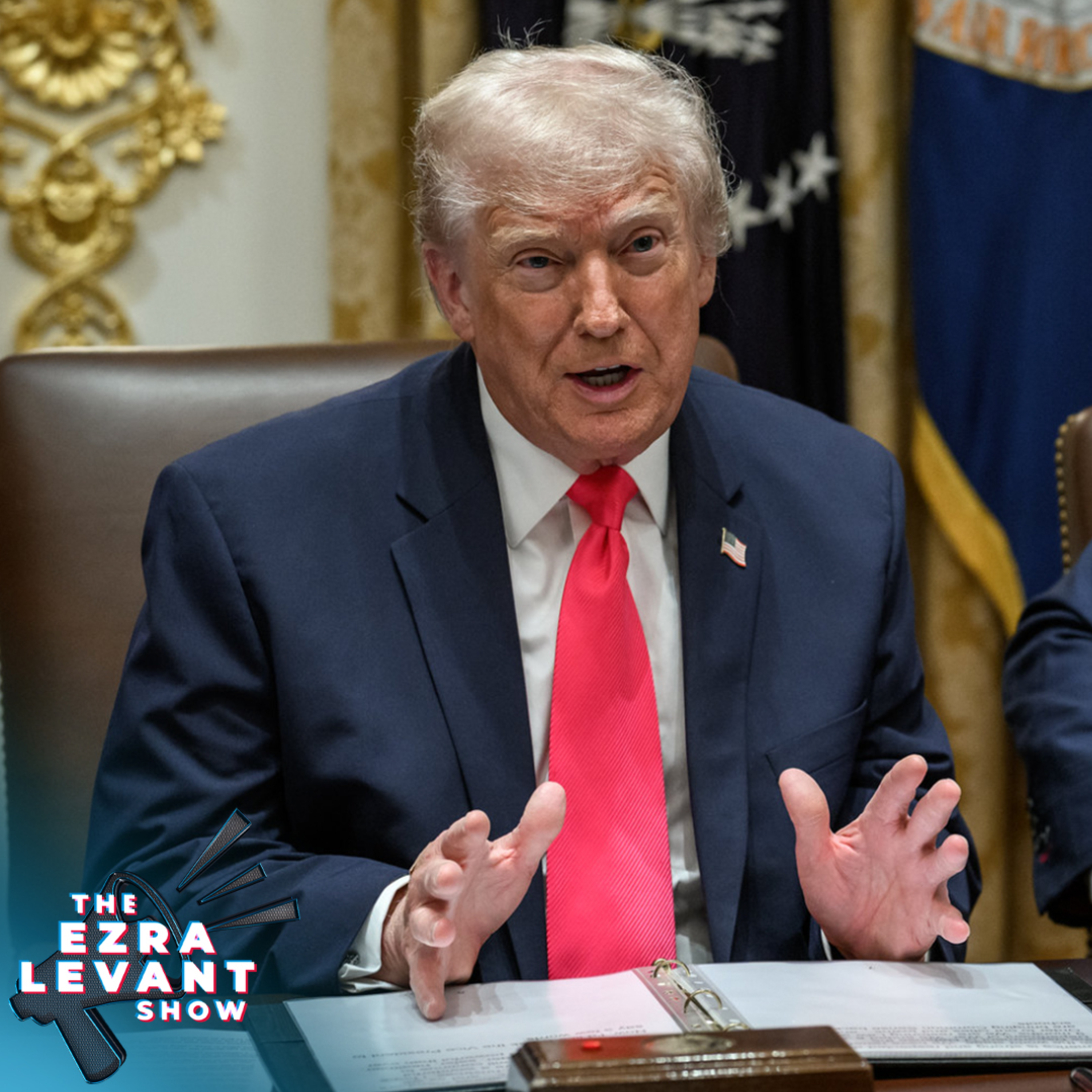
Rebel News Podcast
EZRA LEVANT | I think Trump is going to topple the Venezuelan dictator
00:34:07
Tonight, on The Ezra Levant Show, Ezra unpacks how for months, Donald Trump has talked tough about Venezuela. But his latest comments, paired with the massive U.S. military deployment now positioned in Puerto Rico, feel different. At a recent press conference, Trump’s tone was unmistakably forceful, and the visuals of American air power staging just offshore made clear this isn’t a theoretical exercise.
Loading summary
Transcript53 lines
- [00:01]
A
Hello, my friends. I talked about Venezuela the other day, but I am certain that Donald Trump is going to invade. Not invade in the traditional sense of 100,000 men and tanks, but I think they're going to try and topple Nicolas Maduro. And I really do think the leftist cliche. Well, in this case, I think it works. I think this is about oil. I'll explain to you my thinking, but first let me invite you to get a subscription of what we call Rebel News Plus. That's the video version of this podcast. Just go to rebel news plus.com click subscribe. Eight bucks a month, but you get all the video content with this podcast and the satisfaction of keeping Rebel News strong.
- [00:55]
Tonight. I think Trump is going to topple the Venezuelan dictator. It's December 4th and this is the Ezra Levant Show.
- [01:05]
Shame on you, you sensorian bug.
- [01:17]
I really think Donald Trump is going to topple Nicholas Maduro, the head of Venezuela. I think it could actually happen as soon as this weekend. I don't know if you saw they had a press conference the other day where Trump was talking very tough and he was talking about boots on the ground.
- [01:32]
B
Can you tell us more about why the airspace above Venezuela should be considered?
- [01:37]
C
Because we consider Venezuela to be not a very friendly country. They sent millions of people, really, and probably a number in excess of that. And a lot of those people shouldn't be in our country from jails, from gangs, from drug dealers, from all of the people that came into our country shouldn't have been in our country causing a lot of problems. Does your warning and drugs, does your.
- [02:00]
B
Warning mean that an airstrike is imminent or should we not read it that way?
- [02:04]
C
Don't read anything into it.
- [02:05]
B
The New York Times reported that you had a phone call with Maduro. Did you?
- [02:09]
C
I don't want to comment on it. The answer is yes.
- [02:12]
B
And can you tell us a little bit?
- [02:13]
C
No, I can't do that.
- [02:14]
B
Mr. Maduro, would you say it went well?
- [02:18]
C
I wouldn't say it went well or badly. It was a phone call. Yeah.
- [02:22]
B
You've been so talked a little bit about the strikes and the controversy around Secretary Defense Keith.
- [02:28]
C
Hank said I don't know anything about it. He said, he said he did not say that. And I believe him 100%. You're talking about the two men, the.
- [02:35]
B
Second strike to kill the two men.
- [02:37]
C
No, I, I, he said he didn't do it. He said he never said.
- [02:40]
B
Would you be okay with that if he did?
- [02:42]
C
He said he didn't do it. So I don't have to make that decision right now.
- [02:45]
A
Off the coast of Venezuela, which is, of course, on the north part of South America, the Caribbean Sea, there's an enormous flotilla of US Navy ships, including the Gerald R. Ford, the largest ship in the world. It's the newest aircraft carrier in the American arsenal. There's other equipment, too, and there are thousands. I've heard between 10 and 15,000 troops. So it's not just boats. It's a huge deployment. And not only is there that navy and the, of course, the floating air base that is an aircraft carrier off the coast of Venezuela, but Puerto Rico, which is the US Territory, a little bit further north, they have an old air force base that has been recommissioned. And AFP was actually there just on the road, taking pictures of F35s and C130s and B22s. All this heavy equipment coming and going like this is not a drill. At least it sure doesn't seem like one. I'm going to make a prediction that war will come, but when I say war, I think it's going to be more surgical than mass. Nicolas Maduro seems nervous. Here he is. He actually speaks less English than I thought he might. Here he is talking about. He wants peace. He wants dialogue. Take a look.
- [04:44]
Bienvenido el dialo. Bienvenido la diplomacia.
- [04:53]
Welcome the orocs. Welcome diplomats. Welcome the pits. Pits.
- [05:00]
B
Yes, Gordon.
- [05:03]
A
Never, never in the life. He also is trying to be as tough as possible, saying he's mobilized grassroots defense. I saw some images of men and women marching with guns. I noticed that there were no bullets in those guns. I don't know if they're either out of bullets or they're afraid to arm the people because they might turn their guns against the government. Maduro has asked for amnesty. Apparently he had a phone call from with Donald Trump where he basically said, if I leave, will you let me be? Will I have amnesty for various crimes? And Trump apparently said no, which is slightly surprising. You'd think Trump, the dealmaker, would say, oh, sure, you can leave. The same way that Bashar al Assad, the former dictator of Syria, just sort of left, and he's living in Moscow now, and no one's tried to chase him for anything. He's gone.
- [05:55]
In the meantime, this naval flotilla is keeping busy, attacking little drug boats. You've probably seen some of the footage of these little boats. I've seen a submarine as well, but it's mainly speedboats, but they're pretty little. You don't need a mighty aircraft carrier. Task force to take out these little boats. Now, they say they're making a difference, though, and I believe it. I've heard reports that the market is so distorted now because the supply is shrinking and demand, I mean, there's obviously supply and demand and price for anything, including illegal drugs, but they're taking out a lot of these boats. That's not. You don't need a B52 or, or aircraft like that to take out these boats. Now, in the United States, some left wing media are opposed to the shooting of these drug boats, if you can believe it. Some of them even claim that it's illegal. I don't know how that could be argued, given that Barack Obama actually had more drone attacks than any other American president and the media was fine with it. But I'm not an expert in the law of war, but I do know that a few months ago, in fact, I think it was actually the very first day of his inauguration, Donald Trump declared that the drug cartels to be terrorist groups. And I'm not sure if you know this, but Canada listed the same groups as terrorists up here. And there's this phrase, it's a Latin phrase, which there are in law. There's a lot of Latin phrases, hostis humanae generis, and you may have heard me talk about them before. That's this concept of being an outlaw, of being an enemy of all mankind. It's typically terrorists and pirates. Isn't that interesting? And a terrorist or a pirate is entitled to a drop of legal process, but not much more. In the old British Navy, the Royal Navy, they would have called that a drumhead trial. Are you a terrorist? Yes. Are you a pirate? Yes. Off with your head, you know, walk the plank. They didn't bring pirates all the way back to London for a trial. Same thing with terrorists in the war on terror. They used drones, they used snipers. They didn't arrest them, put them in handcuffs, bring them back to America and have a trial in front of a jury. That's not how it works. Trump legally declared them terrorists and there is no rule that you can't shoot a terrorist. Recently there's been some chatter. Well, what about a second shot? There's no rule that you can't shoot a boat once and then shoot it again to sink it. That's just not a thing. I know the left would love criminal trials for terrorists and drug dealers. They would love that because they would take forever. There were some trials in America for Khalid Sheikh Mohammed and a few other terrorists, but that's. I think that Take a decade. So, yeah, Trump is following the law. And it's the same law that Obama followed, by the way, when he would drone anything that moved. But put that aside, it is a fact, getting back to Venezuela, that Nicolas Maduro is a tyrant, he's a dictator, he's brutal to his own people. He stole the election. And it's universally regarded as stolen. I mean, I suppose North Korea, China and Russia and Iran, I think they, they supported Maduro. But the rest of the world, even countries that don't much, like the United States, said Maduro stole the election, like Hugo Chavez did before him. And things have gone from bad to worse. I saw a little video on X the other day of a family that looked quite stylish eating what looked at first glance to be a nice dinner. And this was a propaganda video designed to show that, oh, no, we're not starving. But if you look carefully, you can see it's fake food, it's plastic food. That's how desperate things are there. Here's a story from Reuters. A few years old now, but it's gotten even worse. The average Venezuelan average has lost 24 pounds. It's basically a famine. And you can make jokes about how I could. Yeah, I'm fat. But, you know, the average Venezuelan is not fat. They're undernourished, they're malnourished, they're practically starving. The average person has lost 24 pounds. That's how miserable it is under socialism. Now, it shouldn't be this way. This should be really one of the richest countries in the world. Largest oil reserves, as I mentioned the other day. But then they went ahead and nationalized it like tyrants do, and production fell by 70%. They produce about a million barrels a day. It used to be 3 million barrels a day. So if you do the math, at current prices, that's about $43 billion a year. That's just not happening. The entire GDP of Venezuela is only about 100 billion. That would be 50% more. It would be like, you know that old joke, if you put the government in charge of the Sahara desert, they'd run out of sand. Incredibly, you put the government in charge of oil in Venezuela, the largest oil reserves in the world, and they're running out of oil. They're down to just a million barrels a day. I mentioned before the other day that US companies like Exxon, ConocoPhillips, Chevron, they were all part of the foreign companies that were pumping oil, getting that huge production. They were all kicked out, expropriated Their assets were stolen. But the funny thing about terrorist tyrant dictators is they don't know how to do anything. They don't actually know how to create wealth, they just know how to steal it. That's the reason why Venezuelans are so poor. They're practically starving.
- [11:44]
B
Now.
- [11:44]
A
In the past, Venezuela had allies. Russia was a key ally for them. But Russia is completely dictated, sorry, dedicated to its Ukraine war. And even if they had some military assets to spare for Venezuela, they would never do so. Right now they're trying so hard to be on Donald Trump's good side. In the final strokes of the peace negotiation with Ukraine, believe it or not, Iran was a major supporter of Venezuela, even though it was half a world away. But Iran has been clipped by both Israel and the US And Iran's proxy group Hezbollah has been absolutely decapitated and decimated in Lebanon and Syria. Frankly, their Venezuelan Hezbollah operatives might be the last one standing. China probably doesn't want to get involved with this right now. And Cuba, the only regional ally of importance, is of little help. You know, there was an agreement between Venezuela and Cuba that Venezuela, Venezuela would provide 100,000 barrels of oil a day to Cuba as socialist allies. Well, you can't do that when you're only pumping a million barrels a day. Sometimes Venezuela can only spare 10, 10,000 barrels a day. Cuba is in their worst economic crisis in decades, in part because Venezuela is faltering and Russia can no longer prop the place up. My point, if you're looking for it, is this.
- [13:12]
I think Trump is for real. I think he wants to do a Trump style. Remember how he got involved in Iran? He let Israel do the heavy duty work of eliminating a lot of the ballistic missiles and the anti aircraft missiles. And after 12 days he sent in the B2s to take out the nuclear program. No shots were fired at Americans, no casualties. I think Trump would like it to go that way too. He's offered the $50 million reward for anyone to topple Maduro, and that's got to be tempting to his inner circles. But I say again, you don't need that mighty flotilla just to take out dread boats. I think they are going to put boots on the ground and topple the regime. Now, I don't think it's going to be an invasion in the typical sense. I don't think Trump wants that. I don't think America would support that. I don't think that would have the support of the America first movement. But with CIA or special ops on the ground, I think it's A brittle regiment. They're starving over there. Nothing's working over there. They're making propaganda videos with plastic food and guns with no bullets in them. I think they're brittle. And I think that decapitation exercises like Israel used when Israel would take out the military leadership around the region. I think that the United States will have a similar approach in Venezuela. I think you'll see regime change, not really nation building. You're not going to see the mass occupation of, of the country with Americans like you had in Iraq. You're not going to see that. You're going to see knock out the big guy and welcome the country into the West.
- [14:47]
I think this was not about oil when it started, but I think it's very much about oil now. I hate to use a left wing cliche, no war for oil. And I don't think oil is what sparked this, but I think that will be the final outcome. I mean, think about how Trump operates. He's a businessman by nature, he's a real estate man by nature. And there's always that element to what he does. Look at the Abraham Accords. I mean, Trump is thinking about business, not just about peace. Look at his Gaza plan. It's about peace and disarmament for sure, but it's about rebuilding, it's about real estate. Who's going to get those contracts. Look at the Ukraine plan. A major part of the negotiations is who gets access to the rebuilding of Ukraine with what money, what companies, what countries. So of course, oil is top of mind here. And why wouldn't it be? Why shouldn't it be? Oil was the key to Venezuela's importance when it was a large producer and exporter, including to Cuba. It's an important thing. And I tell you all this because it's happening. And I think this is underreported. I think this is going to happen perhaps as soon as this weekend. And I think it's going to catch some people by surprise because they're distracted by Ukraine or here in Canada. We're obsessed with, with a thousand trivialities that are so important to us, but the rest of the world doesn't care. In Canada, we're obsessed right now with this MOU memorandum of understanding between the federal government and Alberta about possibly maybe building an oil pipeline to the west coast sometime before 2040. That's literally what the MOU said, 2040. That's 15 years from now. But the rest of the world sometimes ignores our shenanigans and, and focuses on themselves. You know, we have competitors here in Canada and not just traditional oil producers. I think that it could be the case that within months you see the return of U.S. oil producers to Venezuela. And it could be that while we're still debating carbon capture and the industrial carbon levy and arguing with the coastal first nations and negotiating with the socialist Premier David Eby, while we're still navel gazing like that, don't be surprised if Venezuela goes from a million barrels a day to 2 million to 3 million and more and that's going to the United States. That's a market that we currently have a chunk of. But I don't know how long we will.
- [17:21]
D
Because it's day where we see CAFE regulation reconcile with real customers demand. That's why as Stellantis, we decided to invest to Jeep, Ram, Dodge and Chrysler. $13 billion in the next four years, increasing production by 50%, delivering to the market five new vehicles and creating 5,000 additional jobs. That's because we believe in what you see and all your team is doing in this country. We believe in growth and we are ready to invest even more. So thank you very much. Thank you very much also for this great news of the key cars which you are very interested in and we are really looking forward to work with Secretary Duffe, your team in the future for the next tax. Thank you very much.
- [18:04]
C
Well get ready for those cars because we've already cleared the way. You could start right away.
- [18:09]
D
We will, thank you very much.
- [18:10]
A
Well, how exciting is that? Imagine being the CEO of a company in the Oval Office surrounding by other cabinet ministers. That was the Secretary of Transportation back there and announcing to Trump that you're plowing $13 billion into new auto plants. That CEO was Antonio Filosa, who is the boss of a company called Stellantis, a major automobile manufacturer. Trouble is, the name Stellantis might ring a bell for you. 13 billion US that's almost exactly the same as 15 billion Canadian that the Canadian government just gave to Stellantis. And they're shutting down shifts in Canada by building new plants in America with that Canadian money, or at least money is fungible, as they say. You put it in your left pocket or your right pocket, it's still yours. Joining us now to talk about this recipient of corporate welfare, just take the money and run is our friend Franco Tarazano from the Canadian Taxpayers Federation. Franco, on the one hand, you gotta love the chutzpah, you gotta love the brazen. Take the money and run. I think that Algoma did something very similar just a few days ago. They just took half A billion dollars from the feds in the province and then announced layoffs. These guys are so brazen. But I guess if you're a shareholder, you're loving it. Free money, right?
- [19:42]
B
Well, the real, the real issue is the politicians and the bureaucrats spending taxpayers money, right? It's the Prime Minister, it's the ministers, it's the Members of Parliament, it's the provincial politicians. Those are the ones that are answerable to Canadian taxpayers, right? It's the politicians that are at fault here. You mentioned the, the Algoma Steel incident. Well, let's not forget that back in 2021, the federal government also announced $420 million for Algoma Steel. And it's not just these two companies, right? I mean, look, the total corporate welfare from the federal government to EV battery plants and also the EV supply chain is like $30 billion. So we're talking about billions and billions of dollars that these politicians are taking from the pockets of Canadians and Canadian small businesses and then turning around and handing buckets of cash to these multinational corporations. Or just these corporations in general. Ezra, you know what I think we need here in Canada?
- [20:41]
A
What?
- [20:42]
B
A no more business boondoggles law.
- [20:45]
A
You know, it's, it's so frustrating. And the craziest thing was when Melanie Jolie said she signed the contract with Stellantis without reading it. I mean, I, I at least try to read even a car rental contract because I want to make sure I know what I'm paying. I mean, I think everyone who's a, you know, in charge of their own money or working for a company would review a contract. The bigger the contract, the more they'd review it. Melanie Jolie admitted she did not read the contract. $15 billion. Probably the most important decision she's ever made. And I don't know if that's true. I sort of believe it. But I think even if she did read the contract, she'd want to plead ignorance because it lets Stellantis take the money and run. You're right. I, I don't blame Stellantis for being self interested. I blame our politicians for giving them free money.
- [21:38]
B
But Ezra, you know what I. Look, here's the real problem. No matter how good of a contract, it could have been the best contract in the world, right? It's still taxpayers money. It's still a waste of money. It's still corporate welfare. It should not happen. Right? When these politicians are spending your money, not their own, you might as well send them to the casino. Okay? They are thinking about the political Incentives. Oh, smile for the camera. Get those big scissors out. Let's cut that big red ribbon, right? They do not have skin in the game because they're spending other people's money. They're not spending their own. I mean, look, all of this money, none of it is falling from the sky. The only way these governments are getting the money to hand out through corporate welfare is by taking money first from individual Canadians and from the small business right across the corner. Okay? This is awful economic policy. I mean, it's worse than awful economic policy. The government is taking money from Canadians and turning around and handing buckets of cash to businesses. Now, look, we do have to grow the economy. We do got to support capitalism per se. But you do that not through corporate welfare, not through taxpayer subsidies. You do that by cutting taxes and cutting regulation and government bureaucracy.
- [22:54]
A
Franco. It's very rare to find an executive in Canada who is not. Who has not succumbed to this corporate welfare because it's free money. Right? But I want to tell you my favorite thing that I've read in the last week. It's by Toby Lutke, who's really the leader of Canada's second largest company, which is not a bank, it's not an oil company. It's a tech company called Shopify. It's really Canada's only high tech champion company. In fact, it's pretty much worth the same as the Royal Bank. Anyhow, let me just read a little bit of it. Melanie Jolie announced that she was giving a grant to Nokia to hire some workers in Canada. And she was so proud. And she writes, Canada's leading the global tech race. Today's milestone strengthens our digital infrastructure. So she was doing this, blah, blah, blah. We're investing in the future. And here's what the top tech executive in Canada wrote. Let me. It's just so refreshing. Let me read it to you and I'd love your view on him. He said, writing to Melanie Jolie, so that takes guts to challenge to the government. If you're an executive, he wrote, what you're actually doing here is to bribe Nokia to put these jobs into Canada by paying hundreds of thousands of dollars per job from taxpayer money. What this does is to lower the cost basis of Nokia per employee. This has been going on for decades called foreign direct investment, which all civil servants think is a good thing. I spent a lot of time explaining to civil servants in Ottawa that it's not good for our economy, that American and overseas branch offices can employ Canadians at half the cost to all the Canadian companies around them, due to these subsidies, we should not do them at all. They are toxic, at least in the tech sector. It's never meant to be this way, but the situation that very often arises is it's strictly worse inside of Canada to be a Canadian company compared to a company headquartered everywhere else. Last paragraph. It's just so good. I don't want to leave it out. Here's the last paragraph, Franco. This is a bad situation because the fruits of the subsidized labor will accrue to the wealth of other countries and not Canada. It's taxpayer money invested into locking up scarce high tech talent in jobs where they no longer contribute to the Canadian economy directly. Why? I tell you, Franco, that could have been written by you, but it was written by a top executive saying, do not artificially prop up any company, especially our foreign competitors. That was such a beautiful thing. It was seen millions of times. People loved that. It was the hottest tweet of the week.
- [25:36]
B
And that does take guts, right? From an executive. Because when I mentioned earlier skin in the game, I mean that. That's skin in the game. So it takes guts for, you know, a business leader to. To write a public letter like that. You know, there's a couple things that come to mind, right? This idea of stop the corporate welfare, cut taxes and cut regulations. You know, we started this whole segment off with that press conference with Trump and Stellantis there. Well, I wonder why you have investors or businesses deciding to set up shop in other places. Hmm? Is it maybe because our Canadian government taxes and regulates companies into oblivion up here, Right? Like, let's look, let's talk about tax competitiveness, right? I know that sounds boring, but let's spice it up a little bit. Okay, well, our corporate tax system, we're ranked 28 or 22nd out of 38 OECD countries on business tax competitiveness. That's awful. Okay? On income taxes, we're ranked 27th out of 38 OECD countries. Okay? Guess who is more competitive than us on both the United States, okay? So if we really want prosperity here in Canada, I want prosperity here in Canada. I want a flourishing business community that hires our neighbors, our friends, and our families. Then we've got to cut taxes, cut regulations, and get these government bureaucrats and politicians out of the way. Hey, Ezra, one last thing, because I couldn't help but think about this when you're reading me that letter to. Was it Melanie Jolie? Yeah, and she was bragging about the tech sector and how the government is helping the tech sector. You know, I'm old enough to remember because it happened just last year when the government tried to hammer tech entrepreneurs with capital gains tax increases. Yeah, Remember that? Isn't that funny, right? Where the government brings in this capital or proposed capital gains tax hike. A total sucker punch to many entrepreneurs, including in the tech sector. And now the government is trying to pretend like is this champion of the tech sector.
- [27:37]
A
You know, I wrote back to Toby Lutke publicly. I wrote a small comment, I said, I explained how they're a champion and they're trying to make the go over in Canada, but it's got to be hard. And then I ended, I said, I hate to predict it, but I wouldn't be surprised if this great company Shopify moves to Austin, Texas or Miami. That's where all the tech companies are. And I wrote it sort of as a lament. Now Toby Lucky wrote back and said, no, we love Canada. And that's, that was pretty cool to see. But there reaches a certain point where it's not about love or sentimentality or nostalgia. It's about what's best for shareholder interests. And I love the fact that Shopify is a Canadian company. I think it's pretty cool, but pretty cool and sentimental. And while we love the that that only cuts so much ice. And I'm worried if we keep going down the road of taxes and regulations that maybe one day the executive team of this company will say, look, we're going to stay up here, but we're going to move our headquarters, our reporting, our taxes. We're going to move to America just because we can't afford not to. I don't know, I just have this fear that we're watching a great company being chased away.
- [28:50]
B
You know what the saddest part of all this is, Ezra? We should be the freest, most prosperous country in the entire world. And we could be. And we can be. Like, we have so many abundant and diverse natural resources all, all throughout Canada, right? We have such talented people, right, who come through the system, they want to work hard. I mean, right now I'm in Calgary, Alberta, where while we have this conversation, I mean this is an entrepreneurial city. We like, we are Canadians. Like, we like, we are entrepreneurial, we're very hard working and we've had, we have all these resources. There's absolutely no reason why we shouldn't be the most free and prosperous country in the entire world. Our biggest problem is the federal government is government regulations, right? Strangling our natural resource sector, taking money from Successful entrepreneurs. Right. Who did it themselves. Who got our neighbors, friends and families into the, you know, got them jobs and then taking their money and giving it to select multinational corporations like Stellantis or Volkswagen or Honda. Yeah, I mean, we should be, we should be. We should be booming.
- [30:01]
A
Yeah, it's crazy to give this such large companies. You know, let me close on this. I was doing a show yesterday on, on the subject of Algoma. Their CEO, Mike Garcia was just named CEO of the Year by the Globe and Mail. And what has he achieved other than like he hasn't grown the size of the company. It's not his fault the tariffs are doing a number on him. He's just had a thousand layoffs. He just took, as you said, 400 and something million a few years ago, another 500. He's into us for a billion dollars. And that's who the Globe and Mail says to see over the year. Whereas Toby Lutke, who's saying, stop with government meddling, he's not the CEO of the Year. I think that shows a corporate culture. I wish we had a more entrepreneurial, risk taking, Silicon Valley type culture. Alas, I don't know if we do. Last word to you, Franco.
- [30:55]
B
Well, at least the CEO of the Year wasn't Catherine Tate.
- [30:58]
A
Yeah, that's right. That's the former head of the cbc. Well, Lyss Frago, great to see you keep up the fight. And I'm sort of jealous that you're in Calgary, which is a much freer city than some others. Thanks for joining us today.
- [31:12]
B
Thanks, Ezra. Yeah, I love it here.
- [31:14]
A
All right, there he is, Franco Tarazano, the boss of the Canadian Taxpayers Federation. Stay with us. Your letters to me.
- [31:20]
B
Next.
- [31:30]
A
Hey, welcome back. Your letters to me. These are all from premium subscribers like you. Here's one. It starts from Arta Withers, who says carbon in steel is necessary. Dropping carbon content 70 to 80% will make it more brittle and not suitable for some projects. Would you build a bridge in northern Canada where the steel will expand and contract with temperature change? Not to mention the stress involved already involved with the bridge. I would like to see the study for possible risks involved with the change. Keep up the good work, Alberta. Dawn, I'm not an expert on how to make steel, but I do know that this is an ideological attempt to push a technology that the market is not adopting on its own. The United Kingdom is trying to to do this too. Their steel companies are fleeing, all because of their net zero approach. And that's what's going on here. You know, it's sort of ironic that you cannot make a wind turbine without steel, and you cannot make steel without carbon, without coal. You just need it to get things hot enough. That's just a fact. Mark Gabori says in his speeches, Carney uses the word scaling capital. I look this term up in simple speech. It means corporate welfare. That's what's going on at Algoma Steel. Capital is being scaled. It's getting scaled from the taxpayer to Algorma. Mark, I really appreciate you writing that. I'm trying to wrap my head around all the funny things that Mark Carney just can't help saying in every single speech. It's almost like a mannerism or a tick. You know, some people always say, you know, you know, you know, or aa. It's just a matter of speaking. They don't even know they're doing it. I think that Mark Carney is similar. He says this is a generational investment. It's transformative. It's catalytic. Like, he's got about half a dozen phrases he uses, like salt and pepper, but they're also like other people would say, or, ah, they're sort of fillers. They're time killers. They're distractors. They're. When he doesn't really know what he has to say, he throws in a word like. But for him, it's transformative investment. This is a catalytic investment. This is a generational. Like, he just has a bunch of words that I don't think have any meaning other than baffle Gab. Well, that's it.
- [33:44]
B
Sure.
- [33:44]
A
For the day. Until tomorrow, on behalf of all us here at Rebel World headquarters, to you at home, good night and keep fighting for freedom.
- [33:56]
Sam.