← Rebel News Podcast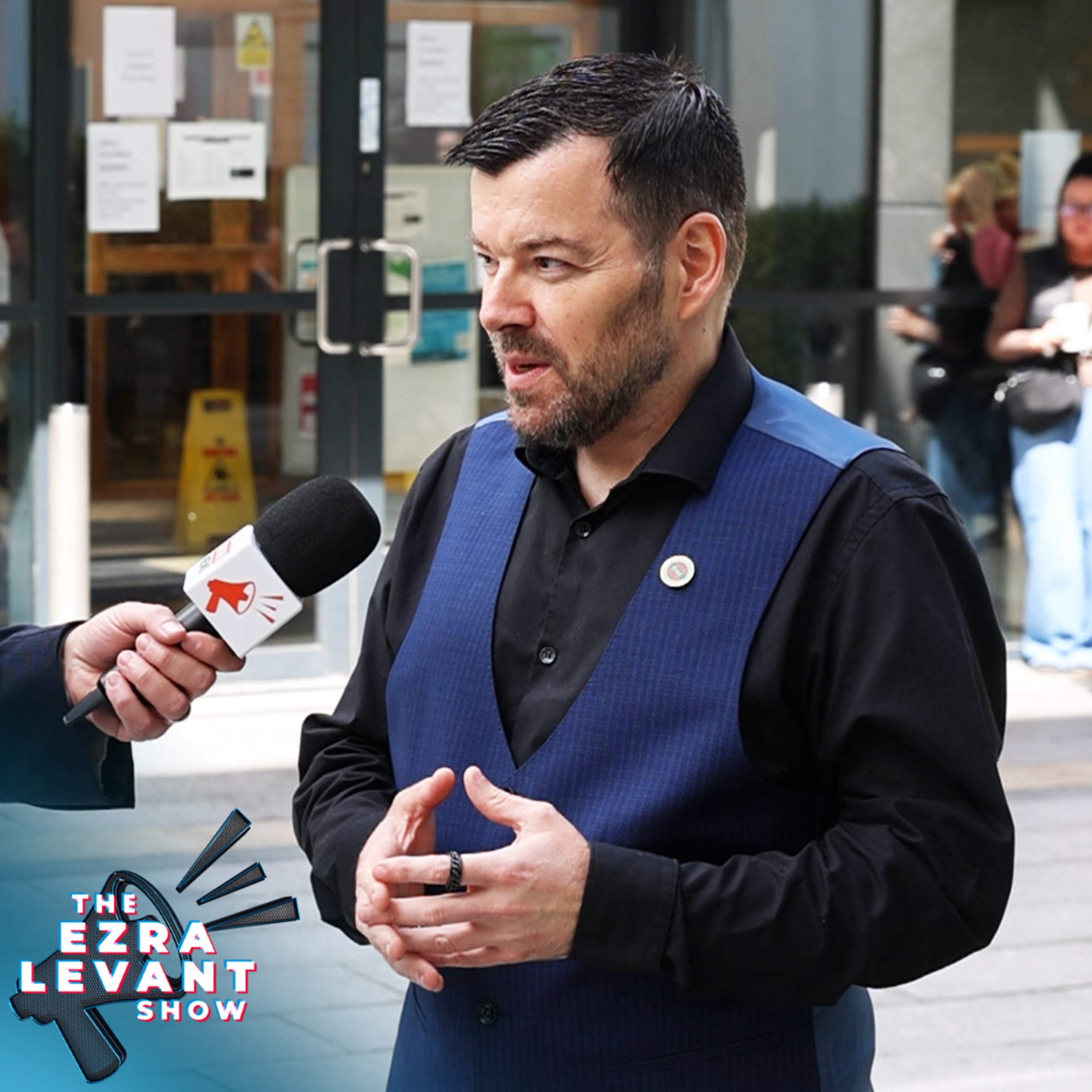
Rebel News Podcast
EZRA LEVANT | Ireland’s free speech crackdown: A stark warning for Canada
00:22:40
As Ireland prosecutes citizens over social media posts and tightens limits on dissent around immigration and public safety, Canadians are being warned about growing censorship at home. Irish local Kirk Loco shares his firsthand experience in the fight for free speech.
Loading summary
Transcript51 lines
- [00:00]
A
Being a rebel today is simply being normal. So why not support normal news and look cool while doing it by buying yourself some rebel merch and more@rebelnewstore.com and you can save by using coupon code DREA10 when you do.
- [00:21]
B
You're listening to Rebel News podcast.
- [00:31]
C
Tonight, fighting for freedom across Ireland. It's May 21st and this is the Ezra Levant Show. Shame on you, you sensorious. Ezra Levant here for Rebel News. I'm in a beautiful town called Wexford. It's in Ireland behind me, an abbey that goes back to the 12th century. Incredible history. And Ireland and the United Kingdom. These are places from which Canada came. In fact, there's 3 million Irish Canadians. I've fallen in love with Ireland over the last few years as I've come here to report on politics, including the populist rebellion against mass immigration and how the empire strikes back. What I mean by that is the government to stop criticism of government policies, especially on mass immigration, have brought in more and more censorship and we're concerned about that. We believe everyone should have freedom of speech. And we also know that if a precedent is set in a place like Ireland or the United Kingdom or God forbid, the United States, it will reverberate back home in Canada, too. One of the things we hear from Mark Carney, besides his desire for us to be more European, is that his censorship bills are in lockstep with those from other countries, from New Zealand to the United Kingdom. And we have to keep an eye on what those other countries are like. And in Ireland, it's a small country and there isn't a well developed independent media. And the Freedom Parties are few, far between and divided. The dominant establishment, politically and journalistically in Ireland is left wing, globalist and censorious. So we come here because we like to tell the other side of the story. Not just for Canadians and Americans to learn what's going on in Ireland, but also for Irish people to learn what's going on in their own country. Today's been a very interesting day. Today we met three different Irishmen who are being prosecuted by the government and who face the possibility of prison time. All for words, not deeds, not for harming anyone, just for mean tweets. I'll tell you more about two other cases on another occasion, but today's focus is the case of Kirk Loco, a man who was part of a neighborhood watch group and retweeted someone else's post about a danger that a 14 year old girl faced on a public bus. A migrant man allegedly exposed himself to her. This caused a shock to the girl. The bus driver was asked to stop the bus. The police were called, there were witnesses to it. And what Kirk did is he simply retweeted the sister's post about what happened while he was charged. And he's being prosecuted for a kind of fake news crime, even though what he said seems to be the truth enough from me here in beautiful Wexford. Here's my interview with Kirk Loco after court today in the town of Bray. Ezra Levant here for Rebel News. I'm back in Ireland, one of my favorite places. I'm in Bray, but I'm not here for tourism. I'm here outside the court because Kirk Loco has been charged with fake news. He's being prosecuted. He could theoretically end up in prison. And this is your eighth time in court already and the trial hasn't even begun.
- [04:09]
B
Yeah, I believe so. I've been in so many times, I think I'm starting to lose count. So I was arrested twice. They also asked me for a voluntary interview, which I actually did as well. And they've conveniently left that out of the evidence book. Today was the first time that we saw a little bit of action, if you will, in the courtroom. My barrister, Lisa de Bruyne, done an absolutely fantastic job there.
- [04:33]
C
I watched it and I'll get into that. But first, just give our viewers a little bit of a refresher. What did you do that has caused you to being hauled to court eight times? You did something that I think all of us do, just almost without thinking. But the police decided to make a federal case out of it. Tell us what you did that's got you into the soup.
- [04:52]
B
Yeah. So I got involved with the protests down in Newtown, Mount Kennedy, which you've attended previously yourself. We had a brief chop down there as well. There was an illegal migrant center that was being set up and they were going to essentially push up to 160 illegal migrants into tents.
- [05:09]
C
And these are all military age migrant men, like it's all men.
- [05:13]
B
That's it exactly. It was all men. You were on site as well. You've got the footage there. You tried to interview them. They wouldn't. They wouldn't talk to you at all. But yeah, the community set up a watchdog kind of a group, a WhatsApp group. And one of the residents there put some information into a WhatsApp group and it was already out in the matrix, shall we say? It was already put out on social media. There was an accusation that her younger sister was on a bus and One of the migrants there allegedly exposed themselves on a bus going towards her hometown of Newtown Mount Kennedy.
- [05:43]
C
And she was just a teenage girl.
- [05:45]
B
Teenage girl. She was 14 years old at the time, or two years on now. She's approximately 16 now. And I essentially took a screenshot of that accusation that was already out in the matrix, if you will, online. And an image of this guy. No, it wasn't indecent or intimate. It was a image of the guy fully clothed and, yeah, it was already out there. I essentially just retweeted information and so
- [06:07]
C
you didn't make this up, you didn't confect it, you didn't cook this up. You saw this being reported by someone who said, my sister has had this happen. So it reads to me like a very credible accusation. You didn't. You didn't rev it up, you didn't exaggerate it. You. Like you said, it's a community watch. You. It was basically a warning to other women. Be careful of this bus.
- [06:31]
B
That's exactly it. We acted together, you know, in the sense of a community watch, and we thought we were doing the right thing now.
- [06:39]
C
I think you were. But the police disagreed, didn't they?
- [06:43]
B
They do at the moment, hopefully. When this goes to. It is due for hearing now in October 16th and my legal team of Leash de Bruyne and Paulanksh are doing an absolutely amazing job. We're going to fight this all the way. We believe we've done the right thing here. Now, today in court, my barrister, Leesh de Bruyne, she raised two issues. So the first issue was around bail conditions, which we believe they were very, very.
- [07:07]
C
They were banning you from any political activity, any protest of any sort. What that has to do with your tweet or getting you to show up in court, I do not know. I mean, the primary purpose of a bail condition is to make sure you show up. You've shown up eight times and yet they had this weird ban that you couldn't attend any political. Anything, any protest of any sort. That's weird.
- [07:29]
B
Yeah, it's complete overreach as far as we're concerned. It's political persecution. I'm a political dissident to them and they just want to shut me down.
- [07:37]
C
You're a citizen journalist, too? That's how we first met, basically.
- [07:39]
B
That's it exactly. I've got a big mouth, basically, and I speak out.
- [07:42]
C
Well, it's the Irish way. You got a touch of the blarney in you.
- [07:45]
B
Yeah, I suppose so, yeah. I. When I see something that I feel is an injustice. I feel I have to speak out. And that's exactly what I've done. On the back of my work down the news Kennedy, my account just exploded, like in the week of the riots back there in April of 2024. Like, my account had about 10 million views on it. Like, I think there's, you know, national broadcasters that would be very happy with those numbers.
- [08:06]
C
I think that's why the police came for you, is they wanted to scare you, silence you, hassle you. The process is the punishment. But there's a little bit of good news. Today. The jud agreed to relax the bail restrictions. You're not allowed near a refugee center, an iPad center, as they're called here in Ireland, but you are now allowed to go to any other protest in another location. So I think that's a bit of a win.
- [08:28]
B
Absolutely. I'm delighted with that. And bit of breeding room there. The foot is off the neck just a little bit. So, yeah, they put it into wording on my bail conditions that I cannot attend protest. Full stop. Now we've got a little bit. Bit of breeding room. If it was a protest, as we've had recently had fuel protests here in
- [08:46]
C
Ireland, we were there for that. That was amazing.
- [08:48]
B
Absolutely amazing. And now I'd be allowed to go to something like that and I wouldn't be breaking my bail conditions, I wouldn't be in breach of them. So I have a little bit of leeway.
- [08:55]
C
Now. Here's what I thought was so riveting today. And I've been following this case. I read about it in the mainstream media and then I was here for your court case a few months ago. Today, your lawyer made another application as well for further and better disclosure. Because, and here's why I think this is so important. You've been charged with basically publishing fake news, even though, as you've just described, it was a good faith republication of someone else. You didn't make this up. You saw something, it looked credible. There was a photo. Someone said, my sister. So it was very credible. Well, it's not just a theory that it's credible. Apparently the police came because someone complained to the bus driver. The bus driver stopped the bus, went back and this is all on. There was a video camera in the bus. There was a security camera, camera in the bus. And the driver stopped and went to talk to the migrant man. And that closed circuit TV is evidence. And there were five people there, a couple of women. A couple who was there was. But the police did not follow up with any of these witnesses, it's as if they don't want a corroboration. Not only do I think you didn't make fake news, I think the underlying story is actually worse than you described. That's. Now, listen, we haven't had the trial yet. I'm just speculating here, I'm speculating, but the police so vigorously reacted and rejected your lawyer's request for more disclosure. Why would they do that? Why wouldn't they want all these facts to come out? Why wouldn't they want the witnesses to be named? Because they didn't even name them. But we know they were there.
- [10:40]
B
Well, you use an interesting word that you said. They don't want to corroborate it. They don't want the truth. That's what they don't want.
- [10:47]
C
And they're the ones with the fake news narrative. It sounds like you actually caught a big fish here.
- [10:53]
B
Possibly. We wait and see, as you say, when we go to the hearing. Now, I don't. I'm of the opinion that they don't want the truth to come out. So today, Lisa de Bruyne mentioned the CCTV and people that were mentioned in that. There's at least six people, a minimum of six people, possibly seven, that have not been identified. Now, I was going to the Guardi.
- [11:14]
C
The police know who they are.
- [11:16]
B
They. They're claiming that they don't, that they haven't been identified. Now, I'm going to rewind a little bit back here. So this is my seventh appearance, if not possibly my eight. So my very first court appearance here on December 8th, they tried to put fear into me and to take a plea deal instantly of guilty.
- [11:33]
C
Well, that's really what they want to do. They want to get you to renege your own views.
- [11:38]
B
So on December 8th, there's a very infamous word that was used on that court appearance. They said that the evidence book was excessive. And, you know, here we are now, what, six, seven, eight months later, and we're pleading, we're begging for a full, proper disclosure.
- [11:54]
C
It's so excessive. Show it, show it.
- [11:57]
B
Could it be excessive when. How could it be excessive when we're looking for people to be identified and they're still refusing us? That's what happened today. We're looking for these extra people that are really, really important in this situation to identify, to get down to the truth of exactly what happen. And they're refusing to identify them. And that, to me doesn't sound like it's like an excessive or, you know, evidence book. There at all. That sounds very nefarious if you ask me. In my opinion.
- [12:23]
C
You know, Kirk, when I first heard of charges about fake news, I thought, oh, maybe this is artificial intelligence. Someone you know AI images that are fake, you know, a really good hoax. It's none of that. It was. It's the opposite of that. It's a teenage girl saying what happened to her, her sister publishing it. A photo, clothing circuit TV showing something dramatically wrong on that bus. The police intervening, I mean, inspecting, reviewing, investigating. But instead of charging the migrant man, they charged you. That is so upside down. And I think this case is bigger than just you. Obviously, you're the one in jeopardy. You're the one whose freedom is at risk. You've already been living under these bail conditions, you see, your eighth visit. But I think people around the world should know that the Irish government is abusing its laws to silence citizen journalists. My God, that's what it looks like to me.
- [13:19]
B
I would agree. Yes. And I, I'm certainly not the only one. I have mentioned other cases as well. There's a lot of lawfare cases against ordinary, decent, hard working Irish citizens that are happening across this country. You know, we've had people, I'll just drop some names like Angela Ray, Lisa Temple is another one recently. There's just so many. Poor Graham Carey as well, who's recently convicted as well. This is a rinse and repeat situation, you know, that's happening day in and day out across Irish courts. And I just want to say thank you again for reaching out, you know, and trying to help me with this situation and setting up a crowdfund and trying to help out some of, some of these Irish citizens like myself and getting us out of this spot of butterfly. But yeah, I just can't believe, like I'm eight appearances in for a retweet
- [14:09]
C
and you're not even half done. I mean, the trial isn't here. Well, listen, we are crowdfunding your lawyers and it was a pleasure to watch Leesha de Bruyne in action today. We sat in the courtroom as case after case came forward. And it was very different when Lisha stood up. She had a charisma, she had a strong command of the law. She was referring to important precedents and got your bail review and adjusted. I was actually quite enthused by that. I was frustrated that the judge didn't give you more disclosure now, but it sounds like that's something you can ask for at trial. I'm hopeful this is not a lost cause. And I think that it's important to fight with strong lawyers because when you said they were trying to press you to get a plea deal, that's what they want. Not just to get another win because they want you to recant your views,
- [15:02]
B
they want the headline. That's ultimately what they want. You know, it's not just being guilty in a court of law. Okay, that's absolutely horrifying. But then you've got the court of public opinion and once they get, you know, your name, your image out there in the red top tabloids, that's it, you're done for in the court of public opinion. And just to make a point on the disclosure as well, you, you mentioned there about the 14 year old girl. Girl, be perfectly honest about this. Here We've got a 14 year old girl that you know, has made a claim and she has not been identified in the, in the evidence. The guardi have not gone and sought out her opinion.
- [15:41]
C
Really? They're so incurious. They want, they're deliberately, they deliberately are not asking the right questions. That's crazy.
- [15:50]
B
So you've got a 14 year old, you know, who allegedly was exposed by this migrant or to this migrant and they've gone straight to the migrants and they've got his statement there.
- [16:02]
C
Do we know if he's been charged at all? As far as we know, it's not,
- [16:06]
B
obviously not before hearing, but yeah. So you've got this 14 year old girl that makes this claim and they've gone rushing to this migrant and it feels very much like a rehash, if you will, to a lot of cases that happened in the UK and we've got things like the grooming gangs and things like that nature where young girls that were very vulnerable, they were not,
- [16:26]
C
they were not trusted. Yeah.
- [16:27]
B
They have not been listened to and it's still ongoing now with the likes of Rupert Lowe, who had the rape gang inquiry recently, and Sammy Woodhouse.
- [16:36]
C
You know, obviously this was not of that degree, it was an alleged exposure as opposed to a rape. But, but I understand your analogy that those girls were told shut up for community cohesion reasons. Do not talk about. And that's why they're trying to shut you up. I want to get your case crowdfunded. I really like your lawyers and it was a pleasure to see Leisha in action today. She's your barrister and I met your solicitor Patrick as well. It costs money though to hire quality lawyers and that's why we thought, well, this is what we do. You know, we've done this for people in Other countries, folks, if you want to chip in, go to Irish Free speech dot com. Kirk is the first person we're helping, but there's other people we're actually going to meet on this trip after we say goodbye to Kirk. I don't want to talk about their cases yet. I want to meet with them and make sure we can agree on what we're going to do. But it's my hope that Ireland can push back against censorship. Censorship in the UK gets a lot of publicity because the UK is so big and Donald Trump and JD Vance are really poking at. At the censorship in the uk, but in some ways, Ireland is. Is just as bad.
- [17:49]
B
I personally think it's worse because it's. Obviously you're saying the UK is a lot bigger. We actually have to rely on you. You're coming from the other side of the world, you know, in Canada, and we're having to reach out to places in the UK across Europe to get our stories out. You know, I've got two guys here that are supporting me here today. Tom McDonnell, who's a councillor in Kildare, and John Wilson. They went over to Tommy Robinson's United Kingdom protest at the weekend and they're getting serious heat for att. Well, I was banned and you were banned. Yes. And they went there, you know, to highlight the issues that are happening here in Ireland. We don't have a voice. There's very, very little media outlets. We have GRIP Media, which is a very small, funded and relies on subscriptions to get our stories out there. All the wrongs that are being done for political dissenters, it's very difficult for us to have a legitimate voice, to have it amplified in this tiny little island.
- [18:44]
C
Well, I should tell you, I mean, I've been doing the same sort of thing in the UK for a decade and a decade ago, there were very few citizen journalists in the UK. Now there are dozens, maybe even 100. And I know Phil Dwyer is a citizen journalist and I. And I love the team at Gripped, so there is little seeds, little shoots. And you're a citizen journalist, too. I think that is a big part of the answer. We're based in Canada, but we care about this theme around the world. So this is something we want to tell the world about, and Irish people, too. You know, I agree with you. A lot of people in Ireland would like to know the other side of the story. Kirk, we're going to stand with you. We've come to terms with your lawyers about paying the bill. Your job is to stand with your conscience now, don't take the plea bargains if they require you to recant your views. Follow the truth. The guardi. That's what they call the police here. They should be seeking the truth. I believe that you and your team are, and that's why you have to be supportive, folks. This is a crazy case. You could go to jail. Am I right?
- [19:47]
B
Yeah. The sentencing, I don't think it would,
- [19:49]
C
but, I mean, the law permits it. Am I right?
- [19:52]
B
100%. It permits us. I believe now I stand to be corrected. I could face up to two years in prison for essentially resharing information that was already out in the public sphere, which is just absolutely insane. And that's something. A crime, you know, that I think everybody is guilty of. Now, I say that, you know, tongue in cheek. We've all taken information and reshared it. There is more stuff as well. Obviously I can't say it now, but, yeah, I took that in good faith that that was entirely true. And there is evidence there to prove that. I.
- [20:21]
C
So you had no mental intent? Intention. One of the things about criminal law, did you intend, like, it's not just a physical act. Like, if you brush up against someone by accident, that's not assault. You retweeted something because you thought in your heart it was real. You didn't. You had no malafides, no bad faith in you. This is an important. It's great to see you again. We will come back in October for your next hearing and we will continue to report on this case all the way to trial. And God forbid, if you're convicted, and I hope that doesn't happen, we'll continue all the way to appeal. I think that this case is something that the Irish government, they made a conscious decision to silence you for political reasons. And you must stand strong, and we'll stand strong with you folks. Go to irishfreespeech.com and we'll have more clients ahead with your support. You're the only reason we can do this. I'm not personally in a position where I can pay for Kirk's legal fees myself, but with the support of grassroots people, we can get it done as we've done in other countries, including with Tommy Robinson. That's it for now from the Bray courthouse for Rebel News, I'm Ezra Levant. Well, that's our show for today. Today, the story, the focus was Kirk Loco and his prosecution under Ireland's fake news law. His eighth court appearance. His ninth court appearance. The process is the punishment. We'll have two other stories that we've recorded in Ireland today. We'll show them to you in the days and weeks ahead. We're starting something called irishfreespeech.com and I know our main focus as Canadians remains Canada, but we're also involved in fighting for freedom around the world because we know how to crowdfund and we know how to tell the stories of freedom. If you believe in helping to defend Kirk Loco, and we'll tell you about the other two cases in the days ahead, do me a favor and go to irishfreespeech.com I keep thinking of that poem by John Donne, do not ask for whom the bell tolls, it tolls for thee. We do owe our first loyalty and our first priority to our home country and our families and our communities. But I think it behooves us from time to time to help fight for freedom around the world, especially in a cousin country like Ireland. Good night. Keep fighting for freedom.