← Rebel News Podcast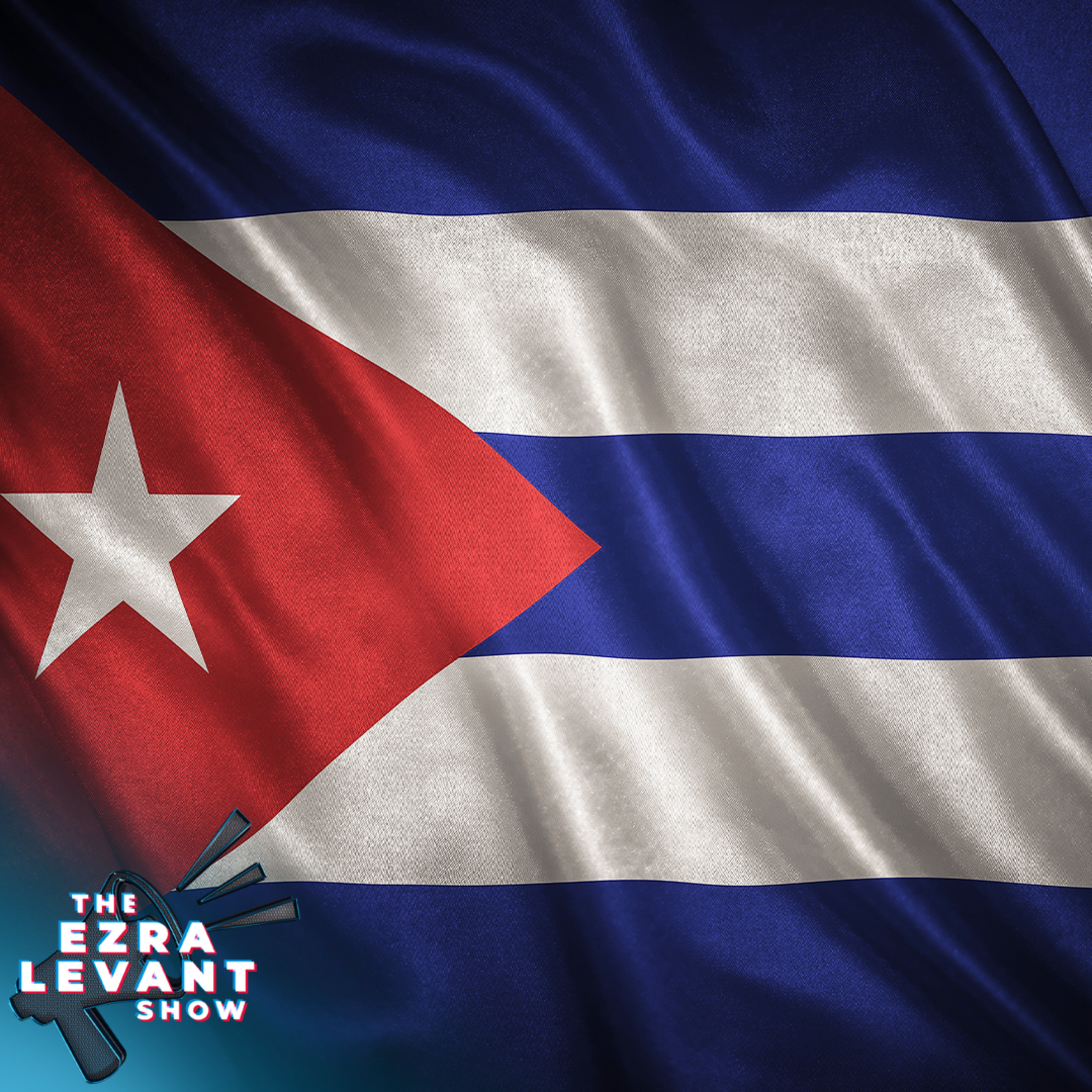
Rebel News Podcast
EZRA LEVANT | Is Cuba finally going to be free?
00:35:25
Today’s actions by the United States may signal that Cuba’s long communist nightmare is nearing its end.
Loading summary
Transcript24 lines
- [00:00]
A
Hello, my friends. Oh, boy. An amazing thing happened in the United States today. They indicted Raul Castro, the brother of Fidel Castro, for murdering Americans. Well, you know what that means, right? Because they indicted Nicolas Maduro before they seized him, handcuffed him, arrested him and brought him to New York jail. Will they be doing the same thing with brother Raul Castro? Holy smokes, it's happening. That's ahead. And a great interview with the Taxpayers Federation. But first, let me invite you to become a subscriber to what we call Rebel News. Plus the video version of this show. Just go to rebelnewsplus.com and click subscribe. You'll love the content and you'll love supporting Rebel News because we don't get any money from the government and it shows one more thing.
- [00:46]
B
Being a rebel today is simply being normal. So why not support Normal News and look cool while doing it by buying yourself some rebel merch and more@rebelnewstore.com and you could save by using coupon code DREA10 when you do.
- [01:07]
C
You're listening to Real News podcast.
- [01:17]
A
Tonight. Is Cuba finally going to be free? It's May 20th, and this is the Ezra Levant Show. Shame on you, you censori.
- [01:37]
D
We have Cuba on our mind. Very important. A lot of problem for a lot of years, and this was a big, I think it was a very big moment for people that, not only Cuban Americans, but people that came from Cuba that want to go back to Cuba, people that want to see their family in Cuba. I think this is a very big day, very important day.
- [01:58]
A
You know, it's possible to care only about your own country, only about your own province, your own city, your own neighborhood, even just your own family. In fact, I think that's a good way to live. I think it's normal. But we can't live totally hermetically sealed lives, especially in an age of globalization. The world comes to find us, even if we hide from the world. We have to prioritize our own families, our own cities first. But it behooves us to look around the world, even if it's just to learn. Even it's just to learn how nice we have it here at home.
- [02:32]
C
Here.
- [02:33]
A
Can I read a poem to you? It's a beautiful poem written by John donne back in 1624. It's written in a more archaic English, but let me just read it as we would today. You probably know this from school. No man is an island entire of itself. Every man is a piece of the continent, a part of the main. If A clod be washed away by the sea. Europe is the less as well as if a promontory were as well as any manner of thy friends or of thine own were. Any man's death diminishes me because I am involved in mankind and therefore never send to know for whom the bell tolls. It tolls for thee. Isn't that great? It's so brotherly, isn't it? It's really a call to be part of society. I feel that way sometimes, especially when people in other parts of the world are yearning to be free. I just feel a sympathy for them. Of course, we can't ignore what happens here at home. We have to prioritize that before we think about other parts of the world. I think foreign aid, for example, is out of control. We have to help people here first. And we've broken down our own borders and we've been swamped with people who shouldn't even be here. But still, let me tell you a hopeful story of freedom not too far away. It's overseas, or at least overseas, in fact, maybe you've been there yourself. I'm talking about the communist prison island called Cuba. Now, as you may recall, we sent a couple of journalists a few months ago, undercover. They went there posing as tourists, but they actually brought cameras. And they went around interviewing as many actual Cubans as possible, not on any resort. We sent our people to Havana itself, where a block away from the hotel. They were in real life Cuba, and they went there to talk. This was fairly recent, after the United States snatched Nicolas Maduro, the tyrant of Caracas, Venezuela. And our journalists asked ordinary Cubans about Maduro, about the Castros, about Donald Trump. And it was very interesting answers. Then we. We scrambled the video to hide the identity of the people talking to us, because they could be thrown in jail talking that way about the Castros. We saw the wreckage of Cuba, not from any war, but from more than 60 years of communist neglect. We saw the awful poverty. We saw the result of their shortages, including shortages of gasoline and diesel. There's no more garbage trucks picking up garbage. The streets of Havana are piled high. We blurred people, but many were very brave. Now, I mentioned Nicolas Maduro, the dictator of Venezuela, the chief enabler of Cuba in many ways, including by supplying them with cheap oil. But in one of the most stunning military special operations ever in history, he was simply snatched out of the military base upon which he had lived. Like he was so scared of things. He lived on a military base. Didn't stop the U.S. they snatched him Took him to the United States to face charges as a drug cartel boss. And in this whole raid, not a single American life was lost. Just incredible. Now, there were some deaths of Maduro's bodyguards, but I should tell you, they were Cuban. 32 Cuban bodyguards were killed, according to Cuba. Now what were Cuban bodyguards doing guarding the body of a Venezuelan? Now, in a way, Cuba was the colonizer of Venezuela. It was the boss of Venezuela. Because if you have Cuban nationals reporting to the Cuban army being Maduro's bodyguard. Yeah, maybe. But another way of looking at it is that they were more his prison guards. They made sure he didn't do anything contrary to Cuba's interests. Anyways, it took less than two hours for them to swoop in, get him, get his wife, get him on a ship, and then sail back to New York where he now sits in prison. They put him in cuffs, they put him in a ship. It was a policing exercise. Even though they had a lot of help from the military special ops. He's in New York awaiting trial. It's sort of incredible to me. And now Venezuela is normalizing. It's released most of its political prisoners. It's liberal, liberalizing its economy. The US and others are coming in to revive the oil industry. The. The US has reactivated its embassy. There's now direct floods back and forth to Miami. It's working a nearly bloodless coup, you could say Venezuelans are so optimistic right now. It's a miracle, really. And I don't think we talk about it enough because we're distracted by everything else. But I bet they talk about that raid and what has happened in places like Iran, Moscow and Pyongyang and Beijing and Ankara, Turkey. What America can do, what America could do. And it just got through all the Russian and Cuban and Chinese air defenses and just snatched them. And it all started with a criminal indictment, which in the States basically means charges being issued. Criminal charges. A policing matter, not a military matter. Keep that in mind. I'll come back to that a second. You see, the US Never recognized Maduro as the legitimate president of Venezuela. It was pretty much universally acknowledged that he stole the elections. And even Canada believes that. Even the US Democrats say so. So he was a fake, a usurper. And so when he was indicted as a drug cartel boss, it was sort of normal for the police to arrest him, even if they needed hundreds of military troops to assist with the arrest. Well, I tell you all of this because I'm so full of hope for Venezuela and their people. And so miraculously, how Trump just did it. He didn't ask anyone, he didn't tell anyone, he didn't go to the un. He didn't ask Mark Carney in advance. He just did it. And what are you going to do? But look at this. And I'm going to play this all five minutes of it. I'm going to play a five minute video for you, okay? And it's En Espanol, but there's translation on the screen. I'm sorry, if you don't have the video version, get the video version. This is US Secretary of State Marco Rubio speaking fluent Spanish, as you might imagine, as he talks to the Cuban people. Now, maybe I won't play all five minutes of it, but. But here he is talking about the reality of Cuba today and who is stealing from them. I bet you most people don't know what's in this video. Take a look.
- [12:06]
E
Y medicinas paroutedes el pueblo perotienque. De la musica atalo de porte lo cubano anegado a la sima de practicamente todo las industrias entolo pais, except. En la Republica Dominicana en Jamaica y incluso at Anzolo noventa millas in Florida.
- [14:21]
A
So what is he talking about? He's talking about a proposed new relationship between the United States and Cuba. The truth that Cuba is run as a kleptocracy where all the foreign money is stolen by a corporation called Gaisa, a super conglomerate that literally owns everything of value in the Cuban economy. All the tourism, it's owned by this corporation. All the retail stores, all wholesale trade, the entire financial sector. Imagine if there was one company in Canada that had every store, every wholesale supplier, all the tourism, every hotel, every airport, every spa, every resort and every bank. One company. It is the majority of Cuba's gdp. It is a corporation run by the military. Tens of billions of dollars a year. Hey, where's Alexandria Ocasio Cortez and Bernie Sanders? And Canada's J. Magnet Singh and Abby Lewis? Where are all those communists to denounce billionaire monopolies when you need them, eh? But here is the part that. Oh, it's Chef's kiss. Raul Castro, that's Fidel Castro's surviving brother, has now been indicted in the United States. And what did I just tell you about being indicted? That is the legal basis upon which the United States snatched Nicolas Maduro. Put him in handcuffs from Bronwyn, New York. Well, now Raul Castro has been indicted. The figurehead of the regime has been indicted. Here's the charge. Raul Castro directed Cuban fighter jets to shoot down little Cessna airplanes flown by Americans in international waters. And they were doing this to look for Cubans so desperate to flee Cuba that they would get on little homemade rafts made of anything. Just so desperate to cross the 90 miles to Florida to escape from the prison island. And there are sharks in those waters. That is a dangerous stretch of water. So Cubans would make anything, just a homemade raft and start paddling towards Miami. Well, these American civilians in Cessna airplanes in international airspace were looking for people, and then they would call the Coast Guard to rescue them. Well, Raul Castro sent a fighter jet to shoot down the American rescuers. This was a few decades ago. He murdered them. Here's a Cuban American congressman describing the history.
- [16:54]
F
Just want to follow up on what my colleague Mario Diasballart has said and reiterate again what this is really all about. The number one job of a government is the protection of its citizens. And for far too long this incident has gone without any repercussions for any of the people, or at least the person most responsible for this act, which was Raul Castro. And so, to reiterate again, exactly what this was. This was a flight of three civilian aircraft, Cessnas. They were on a humanitarian mission. They were looking for Cuban rafters in the Florida Straits. Now, mind you, we don't know how many hundreds, if not thousands of Cubans actually died in the Florida Straits trying to make the crossing from Cuba to Florida to find freedom. Now think about that. These Cubans that were fleeing the island would get on anything that would float and inner tube makeshift rafts, some even converted pickup trucks into boats to get away from this murderous regime. And all these gentlemen and women in one of the planes that she was lucky it wasn't shot down, were doing, was just looking for these rafters in the middle of the Florida Straits so that they wouldn't die. And then they report the position to the Coast Guard. That's all they were doing. They were carrying any drugs, they weren't doing anything illicit. And they were international waters and they were American citizens. Why, it's taken 30 years. I don't know why. But again, the number one job of any government is to protect its citizens. And finally this administration, the Trump administration, has finally taken notice of that and said, yes, we will protect American citizens. And yes, maybe justice comes a little late in this case, but justice will be served and there will be consequences to pay if you harm American citizens in international waters, international airspace, for no reason at all. And Believe me, this was no reason at all. And so Mario de la Pena, Pablo Morales, Carlos Costa, Armando Alejandra Jr. Their families, you know, can get a sense of justice today if in fact, Raul Castro is indicted for murder down in Miami, which is what we expect. I'm very proud to have signed the letter on February 13, along with Mario and Maria Salazar and Nicole Maliatakis, asking the Trump administration to do exactly what we expect is going to happen this morning. You know, it is justice delayed, but at least it's justice. And it's something that we've been looking for, you know, a long time in my community down in South Florida. The people I represent have been looking for this day and praying for this day for a very, very long time.
- [20:06]
A
One of the pieces of evidence against Raul Castro is a recording of him talking about ordering the hit. I won't play the whole thing. It's in Spanish, but apparently it's damning. Here's just a moment, just to. You can hear the quality of the recording. What is exciting about this isn't just that justice might finally come. It's that this is so clearly an echo of how they went after Maduro. In my speculation, this is really a way to telegraph to the Cuban regime itself that either they do a deal right now or Raul Castro gets snatched like Maduro was snatched. And how are you going to stop that, buddy? Here's Acting Attorney General Todd Blanch. He put this on Twitter. He said, over the three decades later, we are committed to holding those accountable for the murder of four brave Americans. Carlos Costa Alamando, Alejandro Jr. Mario de la Pena and Pablo Morales. For the first time in nearly 70 years, senior leadership of the Cuban regime has been charged in the United States for alleged acts of violence resulting in the deaths of American citizens. President of the United States and this Justice Department are committed to restoring a simple principle. If you kill Americans, we will pursue you no matter who you are, no matter what title you hold. That is so awesome. It's interesting that it's been that long. And then it's under Trump, isn't it? So what's going to happen next? Well, I remember a couple weeks ago when the CIA director himself flew down to Cuba for a meeting. And he flew in an enormous jet. Not Air Force One, but a pretty big jet. And he landed right there in Havana just so everyone could see he didn't go in in some tiny plane. Low profile. He wanted everyone to see that the CIA boss was coming. And you're darn right he's going to show off his big plane and he met with the leadership of Cuba. Now, he didn't say what he told them, but that's a real signal, isn't it? And now the indictment of Raul Castro. I think the CIA director went down there to basically outline the different paths things could go. The full Maduro model, the Iran model, a military campaign. I think Cuba doesn't have much military left. I don't know the Greenland model. I don't know what the other models are, but it looks like Cuba has chosen the Maduro approach. All right. That's very exciting and good luck to them. We'll see how it goes. The Cuban Americans in Congress seem thrilled. I mean, Trump would pick up a quick win, especially to contrast the slower pace of Iran, which is now almost at 90 days now. I like it. Of course I care about Canada and of course we've got plenty of problems here at home. I care about free speech in countries like the UK And Ireland. I look for trends around the world. But wow, wow, wow. Wouldn't it be wonderful if the last Stalinist regime in the Western hemisphere went for freedom, especially if all it took was arresting some old fascist fossil who just wouldn't get with the program. Stay with us. More ahead. Well, there's lots of different kinds of entertainment. Some of it in the world is subsidized. Symphonies, ballets, they're sometimes subsidized by the government, but you often find philanthropists who are willing to close the gap between what they want and what the market can bear. I guess my point is there have always been patrons of the arts because if you relied on ordinary people to spend their own money, maybe they wouldn't make a ballet or an opera. That's where philanthropy comes in for more street level taste. Movies are profit making in the main. Hollywood was built not on philanthropy or patrons of the arts, but on the fact that people genuinely felt entertained enough that they were willing to pay for the movies. And some movie makers became very wealthy. Which brings me to sports. Soccer or football as it's called in most of the world, is the most popular sport around because all you need is a ball. It's just in terms of equipment and where you can play. It's a lot easier to find a patch of land or grass to kick a ball around than to have a skating rink and an ice hockey rink. Which brings me to the World cup, which is coming in part to Canada. And here's the shocking news. The world's most popular sport that requires less infrastructure than, say, a frozen rink needs 1 billion with a B. $1 billion of government money to make it go. How on earth is that possible? Joining me to talk about this now is Carson Binda of the Canadian Taxpayers Federation. He's out there in British Columbia. Carson, great to see you.
- [25:15]
C
Ezra, thank you so much for having me on today.
- [25:17]
A
I mean just one word. How, just how? How do you have a billion dollar shortfall in the world's largest sporting event for the world's largest sport? How? How, how, how, how?
- [25:31]
C
Well the formula to wasting money is always the same, Esther. You just sprinkle in some bureaucrats and politic payer money to blow. Thirteen soccer games are coming at a taxpayer funded price tag of more than a billion dollars. When you do the math, that works out to about 82 million for each soccer game or about a million dollars per minute of regulation play time. This is an outrageous amount of money coming right from your pocket going out the door on these soccer games.
- [26:07]
A
I don't get it. What's the payoff? I mean sometimes. I was just watching some of the debate over a large data center that's being proposed for Utah. And the reason these different jurisdictions want the data center to be in their turf is because of the construction jobs, the ongoing jobs and the taxes that these companies will pay. Property taxes. And so let's say if there is a lifetime of a billion dollars worth of taxes from a data center, maybe the local town would say, well we'll give you a five year holiday on taxes, we want you to build here. Like there's a bit of a competition government saying well we'll reduce our taxes, we'll reduce more. In the one hand it's sort of a targeted subsidy, it's true, but the reason they do it at least they would say is net. This is billions coming into our economy. Here's my question to you. Where's the payoff? Like if you're losing a billion dollars for a short term entertainment, you're not investing, you're not allowing some major project to come in that will give you returns over 10, 20, 30 years. These guys are coming in for a few games and going with a billion stuffed in their pocket. What is the rationale, Carson?
- [27:26]
C
Yeah, Ezra, this is coming with massive pocketbook pain despite the promised economic gain, simply not materializing. Let me give you an example here. Hotel bookings in Vancouver are down about 20% this summer compared to last summer. That means FIFA isn't drawing in hordes of tourists, rather it's repelling them. You don't get to take my word for it. Look at the B.C. government's own fiscal data on hosting the World Cup. Even after all the tax revenue that's coming in, even after all those tourist dollars, the B.C. government is still projecting this is going to come at a net cost of up to $145 million for Vancouver's seven games alone, not including the big cost to taxpayers for Toronto's games. So we're seeing it with the tourism numbers, we're seeing it with the provincial government's own forecasts. This is coming at a huge cost without that promised economic gain.
- [28:31]
A
You know, I saw news the other day that the big Saudi backed golf world, like they were trying to compete with the pga, they were building a rival league, they were paying premier players huge signing bonuses to go play in Saudi. And I thought, okay, well I mean, good for them. They are a OPEC trillion dollar country with, you know, it's run by a authoritarian regime. Maybe they think this is good PR or whatever reason. I mean they just abandoned that $5 billion into it. And the thing is they have so much oil, they have these huge sovereign wealth funds because they're just pumping more oil than they know what to do with. Even the rich Saudi princes can't afford it. But at least the 5 billion that they spent, their hope was it would be an ongoing asset, a league, it would eventually grow on its own like they were trying to incubate a permanent thing. It wasn't. Oh man, wasn't that a great game? That's it. Even the Saudis, it was too rich for them and they got out of it. But at least they had some sort of a plan to own a valuable asset.
- [29:47]
C
Yeah, no, and that's not what's happening here with these Canadian World cup games. A lot of the money that's being taken from taxpayers and spent hosting these 13 international soccer games, a tiny fraction of the overall tournament is money that's being spent and not coming back to taxpayers. It's one off costs. Things like road closures and security escorts for FIFA VIPs and dignitaries. Here in Vancouver, they're tearing up the artificial turf field at BC Place, replacing it with a temporary grass field per FIFA's regulations, only to tear that up and re roll the turf out once the FIFA executives go back to Switzerland. So we're not seeing those kinds of investments, as government likes to say. We're just seeing a lot of money wasted on one offs that won't benefit the taxpayers being left with the bill.
- [30:43]
A
It just makes no sense. I mean just the sheer quantum of the number, like if it was 100 million, it would still be a disaster. If it was 10 million, it would be a terrible mistake. But I just can't believe. A billion dollars, it's just unfathomable. I mean, it goes back to my earlier point. This is the most popular sport in the world, watched and played by more people than any other. And for it to lose. It takes a PhD to figure out how to lose that much. Wow. Hey, Carson, what are you working on at the Taxpayer Federation? We normally have some of your colleagues on. Franco Tarrazano, great guy. Chris Sims, great guy. Noah Jarvis. We love to meet you. Give me 30 seconds about your beat. What are you working on these days besides this soccer scandal?
- [31:30]
C
Well, one of the things I love doing at the Taxpayers Federation is digging into government spending through freedom of information requests. I spend a whole lot of time asking government for documents showing how it spends your money. And let me give you a rundown of some of the stories we've caught really quickly here, Ezra. We caught BC bureaucrats giving themselves hundreds of thousands of dollars worth of secret gift card bonuses. We caught David Eby secret gift card bonuses. We caught David Eby spending $300,000 on wood leather soccer balls for a photo op in Japan. So we're keeping government's feet to the fire, digging through those records and finding out exactly how politicians and bureaucrats are spending your hard earned tax stones.
- [32:17]
A
Well, you're doing great. And you know what? You got to laugh because the alternative is to cry. I mean, holy smokes. Well, keep up the great work. Thanks for coming on the show today. I just can't believe. I just can't believe. A billion dollars. I mean, that's like bringing the Olympics to town. I. But just. Oh my God. But just one sport. All right, I gotta go, Carson, or I'll just start ranting again. Great to see you. Thank you for coming on the show.
- [32:43]
C
Thank you so much for having me on.
- [32:44]
A
There he is, from the B.C. wing of the Canadian Taxpayers Federation, Carson Binda. Stay with us. Your letters to me. Next. Foreign. Hey, welcome back. Your letters to me with my chat with the good professor and author from Ireland. I. I find that a very interesting place. 4606. James says much of the wealth that shows up in Ireland is fictional corporate tax strategy planning that allows corporation to report profits that get taxed at 12 and a half percent and shift it back to countries like the USA. This GPD will never really trickle down or GDP will never really trickle down to ordinary Irish people. Well, that's sort of what Howard Lutnick was saying. It's sort of a trick. I mean, there's no massive manufacturing in Ireland. The iPhones are made in China. It's just a tax loophole that listen, Apple and a whole bunch of tech companies and other companies take advantage of. But you're right, it's not actually work. It's more accounting. And there is some work there, of course, but not as much as the money would suggest. Canadian samurai says why can't they just follow Poland's example? Poland and Hungary and other Eastern European countries are fighting so hard against the forced immigration, they're being bullied by the EU that fines them hundreds of millions of dollars. But many of them say it's worth it. We're going to spend that money. We don't care because we want to preserve our country. And I think that's the right path. Romulus 3345 says a new political party in Ireland led by someone like Maria Steen, that's the lady who wanted to run for president but was shut out, would receive a huge percentage of votes and completely change the political landscape for the better on the emerald aisle. Well, all these questions and points about Ireland makes me want to tell you that I am going to Ireland tonight for a free speech battle and a political battle. I'm just going to be gone for two days, but I'll be reporting to you from there. And you know, we were talking earlier today, but we have to care about Canada first. We have to care about our home first. But I think we can also look at freedom trends around the world. And there's two battles for freedom in Ireland this week. One is the trial of someone for fake news, but it wasn't fake news. He's on trial anyways. It's an interesting story. And the other is a special by election where an anti immigration trucker advocate is running and I think he might win. Anyways, that's what's coming up for the rest of the week. Until next time, on behalf of all of us here at Rebel World headquarters, see you at home. Good night and keep fighting for freedom.