← Rebel News Podcast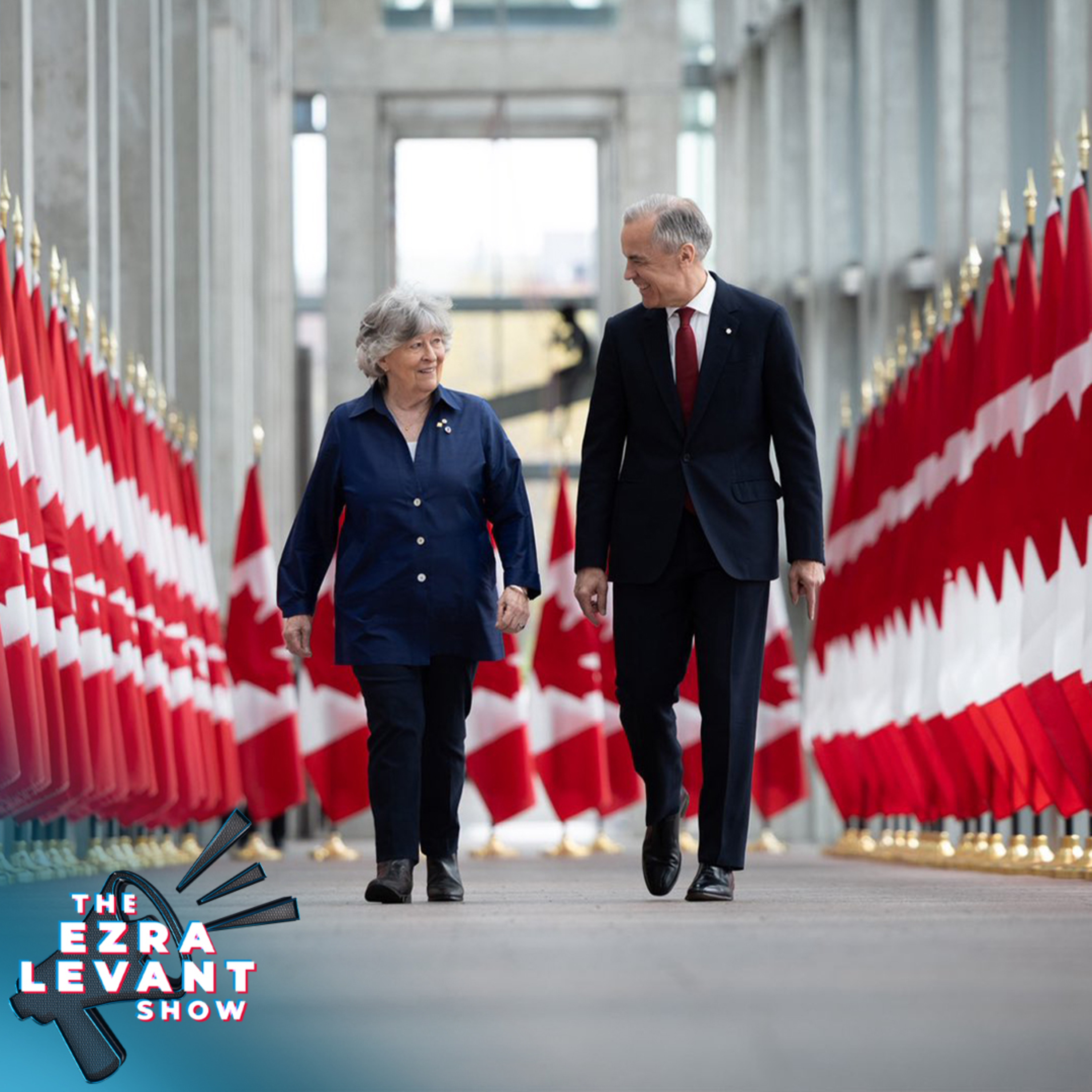
Rebel News Podcast
EZRA LEVANT | Mark Carney somehow found an even worse Governor General
00:49:06
Is Canada moving toward a more openly politicized interpretation of traditionally neutral institutions? Listen to audio-only versions of RebelNews+ exclusive shows like the daily Ezra Levant Show, the Gunn Show, and audio versions of our DAILY livestreams along with other Rebel News long-form videos and interviews.
Loading summary
Transcript55 lines
- [00:00]
A
Hello my friends. Big show today. We're going to talk all about our new Governor General, Louise Arbour, and how radical she is. It'll make you miss Mary Simon, the outgoing Governor General and a feature interview with Keith Wilson, the lawyer for the Freedom Convoy who's watching the Alberta Independence movement quite carefully. That's all ahead, but first let me invite you to become a subscriber to Rebel News plus the video version of this podcast. Go to rebel news plus.com, click subscribe and Bob's your uncle. You'll get the video content and you'll support Rebel News because we take no government money. We rely on you. One more thing. Being a rebel today is simply being normal.
- [00:38]
B
So why not support normal news and look cool while doing it by buying
- [00:42]
A
yourself some rebel merch and more@rebelnewstore.com and
- [00:47]
B
you can save by using coupon code
- [00:50]
A
DREA10 when you do.
- [00:56]
C
You're listening to Rebel News podcast.
- [01:06]
A
Tonight. Believe it or not, Mark Carney found a worse person to be our next Governor General. It's May 5th and this is the Ezra Levant Show. Shame on you, you sensorious. Well, Mary Simon is retiring as the Governor General and Mark Carney picked the ultimate woke Ottawa insider to succeed her. An activist, a far left wing judge, a third worldist. We're going to come to Ms. Mary Simon, the incumbent Governor General who was merely financially profligate in the odd I suppose anti Canadian jab, but holy smokes. Louise R. Boer is the new Governor General for those my vintage and older. You'll recall that she was a Supreme Court of Canada judge for about five years, which is the apex of most people's career. But she actually quit. She resigned as a Supreme Court of Canada judge for what she considered a better and bigger offer for most people, being the ultimate shaper of laws for the country you were born in would be the tip top. I suppose the only thing more appealing might be to be Prime Minister itself. But of course Prime Ministers come and go, but judges stay till age 75. Louise Arbor quit the Supreme Court for something she thought was more important. She of course is a globalist. She doesn't really believe in borders, so she joined the UN as a High Commissioner on Human Rights. Now before you laugh, that is a thing. The United nations is probably the most human rights abusing group of nations in the world. Countries like Iran, North Korea, they sit on the UN commissions or Councils for Human Rights. So the High Commissioner on Human Rights has a choice to make very early on to succeed in the job to be successful, to have a happy and long career there, means you must go through the fiction of blessing and absolving North Korea, China, Russia, and the world's worst human rights abusers or, and this has never been tried before, actually be a High Commissioner for human Rights and promote human rights. But that wouldn't last long at all. You wouldn't get the appointment because, of course, appointments would have to win the approval of, let's say, China, which would never allow someone who would criticize their treatment, say, of Uyghur Muslims. Really, the only countries that you're free to criticize at the United nations are Israel, the United States and Taiwan. South Africa used to be on that list, too, until the end of apartheid. So, yeah, Louise Arbour was a perfect fit. And now she's the Governor General. She's the ultimate Ottawa insider who doesn't think Ottawa is as important, as important as Geneva. I haven't thought about Louise Arbour in a long time. Frankly, if you would have asked me, I wouldn't have known she was still around. She's 79. Good for her. Graham Hamilton wrote an interesting piece in the National Post about her some 18 years ago. She had a massive career even by then. What was so interesting is even then, it was so clear what she stood for. And the fact that it's so clear and so public. I mean, she's not a private person. Everything she did was in the public scrutiny. Mark Carney knows exactly who he's getting. For example, she praised Cuba, and this was again in 2008. There was no inkling of reforms. This was the most repressive regime in the Western Hemisphere. But she praised Cuba publicly, saying it, quote, showed unprecedented positive engagement on human rights after it invited a UN official to visit and signed a few PR papers on civil rights. So, of course, that fits right in, you would think. I mean, by any objective measure, Cuba is the most repressive regime in the Western Hemisphere. I mean, Venezuela was perhaps closing in on it, but that's over. And she praised them. Like I say, she knew how to succeed at the UN at the same moment, of course, she called the United States a torturing country for its use of waterboarding, even though the procedure was approved on two occasions by the US Supreme Court under two different governments, under a Republican and a Democrat government. So again, the perfect Mark Carney candidate, blessing Cuba, praising Cuba, but accusing America of torture. Of course, the Middle east has always been hot. Not as hot as it is now, but she praised an Arab Human Rights Charter. Now, I think Arabia Needs some human rights charters. But again, like I say, just a piece of paper is meaningless. But I think the reason this was particularly odious and not just a joke is because it called Zionism, which is the belief that Israel can have a nation, called that racism. And she praised that document. No surprise there. Mark Carney has gone on to declare Palestine a sovereign state to be carved out of Israel with no preconditions at all. So, yeah, like I say, perfect fit. In Another report, in 2007, there was a report by UN Watch on antisemitism and the UN and UN Watch found that other than one passing reference in a speech about attacks on synagogues, churches and mosques, there wasn't a single mention or reference of anti Semitism in the world, even though it's by far the leading focus of discrimination. I mean, now it's that way even in Canada, the United States, the UK and Britain too. But she couldn't find any. She was like Mr. Magoo with the big magnifying glass and in only one passing reference in her entire career. And you know, it's just she, like I say, perfect fit for Mark Carney. Like I said, we're going to miss Mary Simon because other than spending a hundred thousand dollars per flight on food, I'm not kidding when I say that she really kept to herself and knew that the job of a governor, you know, the job of a Governor General is right. It's, it's not to be the head of government. That's Mark Carney. He was elected in an election. The Governor General is not the head of state either. That's the king, King Charles. But King Charles is, is busy. He's the King of Australia also. He's the King of the Commonwealth. He's a busy guy and he lives overseas. So he deputizes someone. He would have had to have approved Louise Arbour's selection to be his eyes and ears on the ground here, to be his servant. So Louise Arbour is the agent for the king here. She was not elected to anything and she's not a political personality in her own right. I predict that she will not be able to keep it corked that she will mouth off on everything and consider herself to be a political actor rather than the quiet member of the really the court of King Charles. You know, what's the funny thing is Iran is in the news now very hotly. Well, Iran was in the news when she was Human Rights Commissioner as well. And she actually attended a conference in Iran and praised it. And while the President of Iran spoke and said that Israel needed to be, quote, wiped off the map. So imagine going to Iran, like being so comfortable with that totalitarian regime and knowing absolutely that they would take good care of you because you were on their side and they knew, not just in Iran, in the uk. I mean, this is early days when there was an academic boycott of Israel proposed. I mean, that's just the way it is now. But she was a very early adopter. She didn't criticize it. She said that, quote, public debate, particularly coming from informed communities, is from a human rights perspective, a good thing. So she said banning Israeli academics is public debate, but not all public debate. You might recall that the Danish cartoons were published in a newspaper in Denmark called the Jillensposten and I republished them in Canada. So debating anti Semitism is free speech. But she said, quote, I find alarming any behaviors that disregard the beliefs of others. So she's fine with banning Jews from coming to academic conferences in the uk but she didn't have any time for people like myself publishing the Danish cartoons of Mohammed. So, ladies and gentlemen, I present to you your new Governor General. And it's a reminder that things can always get worse. Mary Simon was atrocious. Is atrociouser a word. Stay with us. More ahead with Keith Wilson.
- [10:20]
D
So let me read you the letter that I have for Peter Smith. Dear Premier Smith, on behalf of the Stay Free Alberta campaign, I'm pleased to advise you today that we delivered TO Elections Alberta 301,456. Independence petition initiated under the Citizens Initiative act, well surpassing the required threshold set by Elections Alberta. This process shows that Albertans are engaged and this is an issue people want to have a say on from all perspectives. There's been significant interest, discussion and participation demonstrating that this is a matter of province wide importance. It also reflects the role of direct democracy with citizens engaging the legislative process in a lawful and meaningful way. This effort was about participation in democracy, plain and simple. It was not easy. As you are aware, there were significant administrative and legal hurdles that delayed the process and increased the cost. Despite these obstacles, we remain focused on the goal and continue to push ahead in good faith. Amen. This effort would not have been possible without the dedication of thousands of volunteers, including over 7,000 campuses. Many stood for hours in harsh Alberta weather in freezing temperatures, rain, snow and blizzard conditions to give their fellow citizens the opportunity to sign. At the same time, we must bring to your attention one of the most common concerns we heard across the province. Many Albertans expressed support for the petition and in many cases wanted to sign, but they said they could not out of fear repercussions. Some were concerned that having their names recorded could expose them to government penalties or financial consequences, such as frozen bank accounts. In addition, canvasses frequently faced harassment while carrying out this lawful activity, often without any meaningful consequence. Regardless of one's position, hesitation to participate in lawful democratic process raises serious concerns about confidence in civic freedoms. No Albertan should feel intimidated or at risk for engaging in a lawful process. While the court has for now directed that the formal signature count be delayed, we trust the government understands the significant effort, time, and cost incurred by everyday Albertans simply to have their voices heard. That is the purpose of this process, why we participated, and why we have prepared the statutory declaration confirming the final signature count. We understand approximately 1500 extra signatures remain in transit due to delays that gallop post. We look forward to your government receiving this clear expression of the democratic will of Albertans and advancing the next steps to include this important question on the referendum ballot on October 19, 2026. Respectfully, Mitch Sylvester.
- [13:52]
A
There he is, Mitch Sylvester. He's the boss of Stay Free Alberta, which is the new structure, used to be an entity called Alberta Prosperity Project. And Mitch Sylvester was really the chief organizer of the petition. You heard him describe it. 7,000 volunteers going out and canvassing, and it was brutally cold. I have to say, they had no political part supporting them, no large institutions of any sort. And I did see plenty of homemade video on cell phones of the canvassers being abused. And I did hear myself, when I was on part of Sheila Gunn Reed and Tamara Leach's book tour, Corey Morgan's book tour, that people were afraid because they remember what happened when they signed up in any way for the trucker convoy four years ago. That list, when they signed up in that case to donate, that list was hacked by an RCMP adjacent hacker who then published the names. And that is how the government seized and froze bank accounts illegally and unconstitutionally. And so when he says people are afraid of signing because of repercussions, he's not saying it lightly and he's not saying it without a basis. You heard his statistic. Slightly more than 300,000 people signed, whereas the legal requirement was just over 177,000. So almost double. And I happened to look up the number of Albertans who voted for Mark Carney in the last general election, and it was just less. It was about 299,000 by coincidence. Very interesting times. And you heard a letter. Mitch Sylvester was actually reading a letter that he filed or rather served on the Alberta government, saying essentially this was a very challenging democratic effort, but it was a success. It's up to you now, Premier, which I think is a way of saying, look, there is some lawfare going on by some extremist Indian chiefs bankrolled by whatever NGOs, don't let them stop this process. That's what I interpreted that comment to me. Joining me now via Zoom from northern Alberta is Keith Wilson, King's counsel, a lawyer who has focused on this campaign. He also has experience with the truckers as their lawyer. Keith, great to see you again.
- [16:13]
B
Thanks for having me on, Ezra.
- [16:15]
A
Well, it really was an enormous effort and it was in many ways new elections, Alberta, I have to say, from dealing with them with our own third party campaign. They're atrocious, they are disorganized. They have extreme rules like weekly filings. Their laws are vague and make no sense. So for Mitch Sylvester, who is not a lawyer, to muster 7,000 volunteers, get 300,000 names and do it all on deadline, that is an enormous effort, which I think shows a substantial support for his project.
- [16:52]
B
Agreed. And you know, under one of the worst, harshest winters we've had in several years, record snowfall, you know, even the first two weeks of April there was, or the last two weeks of April, rather, there was hope that we would have the spring weather that we get here where people are out cleaning up their lawns and getting ready for flowers and farmers are getting ready to seed their crops. And then we got two blizzards. You know, one of our highways was shut down for 20 hours with people stranded. So incredibly different conditions. And as you pointed out, I had so many people talk to me, Ezra, and it's just disturbing about how afraid they were to sign. They said, I want to sign, but I'm afraid that my name's going to get out that I signed and then the government is going to, in Ottawa is going to freeze their bank account or interfere with their business like happened to so many of my clients in the Freedom Convoy. And they would then immediately follow that up. With shame and sadness. Shame that they felt afraid and, and that it was influencing their decision making and their actions. And sadness that Canada is so lost and has changed so much that you have to fear your government.
- [18:16]
A
Well, let me say one more thing on that. The federal court ruled that the seizing and freezing of bank accounts was illegal and unconstitutional. The government appealed that to the Federal Court of Appeal, where three more judges unanimously upheld it. So now four judges in a row at the Federal Court. So these are Ottawa appointed judges. These are fairly senior judges. Four judges in a row said no, that seizing and freezing was illegal. And yet the Liberal government is appealing, which means they insist that what they did was actually lawful. Think of how terrifying that is. And I don't know if you remember, I was in January, I was in Davos, and by chance I bumped into both Justin Trudeau and Chrystia Freeland. And one of my questions I put to each of them was, do you have any regrets on seizing and freezing bank accounts? Especially Christia Freeland. And she had the honesty at least to say no. Here, take a quick look at me accosting the former Deputy Prime Minister on the streets of Davos. And it was a slow motion chase. Neither of us was particularly fit. Keith, as we waddled down the streets, me asking her questions. But I did get an answer. Here, take a listen.
- [19:31]
D
Why did you freeze bank accounts of Canadians?
- [19:33]
A
Well, that's a good question that I don't think you've ever answered. The Federal Court of appeal recently ruled 3, 0 that your decision was unconstitutional. Do you regret that you seized and froze bank accounts? The Federal Court of Appeals said that was unconstitutional. Any regrets? No regrets. Do you have an apology for the people whose bank accounts you illegally seized? Are you still happy about standing up for Canadians? Are you proud of breaking the law? That's the charter you broke, ma'. Am. That's not just any old law. Four judges in a row have agreed you broke the law. You're a law breaker. That's weird.
- [20:23]
B
I've answered your question.
- [20:24]
A
You should be really proud. You should be really proud.
- [20:26]
B
And I think you should be ashamed of yourself.
- [20:28]
A
For what?
- [20:28]
B
For doing Putin's work.
- [20:30]
A
You froze Canadians bank accounts. Well, I. I think the point of Christopher Freeland and Justin Trudeau saying they did nothing wrong, the appeal to the Supreme Court, which implies they believe they did nothing wrong and they think the Supreme Court will say they did nothing wrong. That is a very good reason for people to be afraid. Now, I'm glad 300,000 were not. But it is not an irrational fear to think there will be punishments coming from Mark Carney. And I shouldn't propagate that. I shouldn't whip that up. But I can't take any other meaning apart from the fact they're appealing. They're obstinate and they think they did nothing wrong.
- [21:06]
B
Well, there's a whole nother layer to this which just happened this week as well. Ezra, which is one of the parties in that appeal, wrote a formal and properly Framed application that Chief Justice Wagner recuse himself because as you may recall, he made several public remarks on two different occasions during the Freedom Convoy protest In Ottawa in February 2020, two
- [21:38]
D
quite
- [21:38]
B
alarmist comments which were clear that he'd formulated an opinion. And not only that, it was also clear from his comments that he was relying on CBC or other legacy media reports that were subsequently debunked as completely false. So it's very concerning for me as a citizen, as a father, but also especially as a lawyer and a lawyer who has been representing Freedom Convoy participants, including in lawsuits for the illegal freezing of their bank accounts, that this week the Chief justice decided not to recuse himself and cited as a reason that the cases about the Emergencies act or something was kind of obscure. But no, the case is about whether or not the federal government had the requisite factual circumstance on the ground in the protest in Ottawa to justify the invocation. And at that time, the majority of the. The residential areas in downtown had been cleared out. There was a deal with the mayor to move the remaining trucks onto Wellington. And Sir John A. All of the borders were reopened across the country. And instead, on the Monday, the Prime Minister, then Trudeau and his cabinet decided to invoke the Emergencies Act. So the question before the court, as it was before the previous ones, the Federal Court and the Federal Court of Appeals said the factual situation on the ground in Canada was not requisite, did not meet the legal threshold to justify invoking martial law against Canadians freezing their bank accounts and doing all the other terrible things.
- [23:26]
A
I want to bring it back to the referendum, although theoretically, I remember one of the tests of Is it in the CSIS Act? Is that where the test for if there's a national crisis tantamount to a war, there's a definition of an emergency effort. It's in a different law.
- [23:47]
B
Yeah, there's a cross reference in the Emergencies act to the CSIS Act.
- [23:52]
A
That's right.
- [23:53]
B
How this relates to the independence movement is when Albertans see the Chief justice not recusing himself, when they see the federal government barreling full steam ahead and not acknowledging their tyrannical authoritarian action, it's unsettling and it causes fear, like people not wanting to sign a petition. And it. It just reaffirms in people's minds why the proper thing for Alberta to do is to leave Canada to recognize its institutions are failing and that Albertans need to chart their own path through an independent country.
- [24:34]
A
And what I was alluding to is I don't think that the regime has ruled out using the Emergencies act again, because actually it would be a crisis that I suppose could be called an emergency if Alberta were to secede. Now, it's completely lawful and it's not an unlawful secession. It's not a war, it's not a civil war. But it would not shock me if Mark Carney, who is appealing the Emergencies act case, if he would apply it again. And I don't think he's ruled it out. But let's bring it back to next steps here. I mean, I don't want to go too far down that road of fear because I don't want to magnify the fear, but people are afraid. I think one of the meanings of Mitch Sylvester's letter that he read out there was. He was saying to the premier, we did the work, we followed the law. We exceeded the quota by almost 100%. We did it in an uphill way. And he sort of nudge, nudge, wink, wink was suggesting that she officially called the by election rather than having the vote counted, that these petitions counted in elections. Alberta process it because they are tied up in a court case. Is that what you take away from the letter? Was that what he meant by his letter?
- [25:53]
B
I think so. And. But I just don't want to leave the fear thing hanging. And I'll just say something about the Emergencies act and how it could apply, and then we'll. I'll answer your question head on, if I might, which is I'm not afraid of the federal government invoking the Emergencies act against Albertans exercising their rights because there's no functional tool they can use. It's just not how it works. Albertans will carry on with their ordinary day the day after the vote, and they will carry on with their ordinary day a life and business as the steps unfold. I think it's a bluff and it's a fear bluff. So I'm not afraid. In this context, it's very different than the context of what we had where we had protesters on the ground in Ottawa the last time it was invoked. So. But, but what I really liked about what Mitch Sylvester had to say in his letter to the premier is it affirms the. The current state of the law of Alberta and Canada, which is the Supreme Court of Canada, was clear that if a provincial government decides to hold a referendum on a clear question for separation, and there's a majority, clear majority, that votes in favor of it, that creates a positive legal duty for the, the federal government and the other provinces to negotiate the separation. What, what, what Mr. Sylvester's letter to the premier and I read the attached statutory declaration is it confirms for the premier and gives her evidence that over 300 Albertans have signed this petition.
- [27:23]
A
Right.
- [27:24]
B
We also have another petition from Thomas Lucasic which was in the other direction about staying in Alberta. So now we're in a situation where in Alberta, regardless of what happens with the court on this really obscure legal challenge from a couple of first nations chiefs is the premier has a clear signal from voters in Alberta that this is an issue they want to have a referendum on and there's no prerequisite that there be first a petition. It's just one pathway.
- [27:55]
A
Right.
- [27:56]
B
Even the first nations lawyers in the court case were clear that there's nothing precluding the Alberta government from whatever it wants or the Saskatchewan government or the Quebec government from holding a referendum on independence. So I think this clears the way for Premier Smith to soon announce that there will be what the independence question will be and confirm that it will be on the referendum ballot on the 19th of October.
- [28:20]
A
Yeah. One of the interesting things, and I think you and I have talked about this before, is in the United Kingdom, when they had their Brexit referendum, there clearly was a boss of the pro Brexit side. Nigel Farage had been the leader of the UKIP Party, the UK Independence Party, for years. He had sat in the European Union, the European Parliament in Brussels. So there was no doubt whatsoever that he was the guy who caused it. He was the spokesman, he spoke with great authority. And now he leads a party called Reform UK that will go to the next phase here in Alberta. I guess I'm not in Alberta right now, but in Alberta there's no such thing. There's something called the Republican Party, but it's very minor. It's never won an election or a seat. There are other small parties, but none of the parties with seats in the legislature are for independents. The reigning United Conservative Party is pretty neutral. The NDP are harshly against it. I think those are the only two parties with seats federally. Both the Federal Conservatives and the Federal Liberals and the Federal NDP are against it and the bloc doesn't really care. So who is going to be the. I don't know if that person has identified themselves yet who will be the authoritative speaker. I mean, Mitch Sylvester is very well spoken. Jeffrey Rath I think, has probably done more media than anyone else, though I think he comes across as harsh and may not appeal to all markets. I think the base is already on side, but you've got to grow that thing by 20%. Last point and then I'd love your answer. There are these different registered third parties, but none of them are allowed to spend or operate in the same way as a registered political party can. So I'm just wondering how this vote is going to happen when you have no boss of the yes side and even the most successful yes side third party group can only raise and spend a fraction of the no side political party. So I'm just trying to think about how the mechanics of this referendum will go.
- [30:26]
B
So let's start with the last point first that you make. We just concluded. So Alberta has extremely restrictive, complex, convoluted, onerous campaign type laws that apply not only to political campaigns, but referendum campaigns and petition campaigns. Well, we just finished the petition campaign as of Saturday night, and there is no cabinet order setting down under the referendum act an independence question yet. So that puts us in an in between period for the next number of weeks, potentially months, where there are no restrictions. We're in a period of free political expression and free political advocacy, which is. It's remarkable that we even have to have these restrictions, but we do. And so over the next number of weeks, it's open to any groups to do whatever they want or any individuals to do whatever they want because there are no restrictions on free expression and free political advocacy. So I think it's important that all Albertans and all the different groups take advantage of that legal opportunity and express themselves and organize themselves. But I do not believe that success will necessarily follow. Actually, not even I'm stronger than that. I think it would be a bad idea for the independence movement to rally around a political party. I really believe that this needs to be a grassroots initiative. I've been involved in a number of grassroots initiatives over the years, including the freedom movement coming out of the government overreach of the COVID mandates. And I think it's very important that it be citizen initiated and it be grassroots. It not become partisan through a political party. I think it just changes the dynamics fundamentally. I think in time in Alberta, voices will become more prominent than others. I think voices will become just like we saw with Tamara Leach and the Freedom Convoy. There was many voices, but the crowd, the Canadians, gravitated to her voice. And I think that same dynamic is likely to occur here. But it's going to be really important because as your polling's revealed, Ezra, this idea that there was a big soft, mushy middle is not the truth. And it's a wake up call for the independence movement in Alberta that they're going to have to get much more sophisticated and use much more sophisticated approaches to reach those who are strongly opposed to independence, to cause them to see the importance of a yes vote to improve the future for their kids and grandkids.
- [33:08]
A
Yeah, I mean I think the most striking divide in Alberta is rural versus urban. If it was just the rural parts, Alberta would be independent in a heartbeat. It's overwhelming, but it's less so in the cities, even in Calgary. And it's less so with women. And there's different demographics that have to be reached and I think perhaps with different messenger messages and different messengers.
- [33:32]
B
Yes.
- [33:32]
A
I want to play for you a clip of Jason Kenny and this is him speaking at a Globe and Mail conference a couple weeks ago. Jason Kenny along with with disgraced former cabinet minister Thomas Lukashuk have become the two, I think leading remain in Canada spokesman with Nahid Nancy probably trailing in third. Let me play for you a clip of Jason Kenney where he, where I mean he's taken to calling independence supporters kooks. Like he's fallen back to what he did during COVID times when he was premier. He started to name call Albertans yahoos, kooks, fringe whack a doodles like whatever, like I don't know if that works. I know that would work at a Globe and Mail forum, which is what he was speaking at. It's delightful to them to see an Al Burton crap all over other Albertans. I just don't know if that message works as well on the ground in Alberta. But here's a clip of Jason Kenney and I think he gets his polling correct so far. But listen, listen to what he says about if the independents vote gets about 30 or 35% which is where it would come out now I think if the vote were held. Just take a listen for a second.
- [34:42]
C
The hardcore separatists in Alberta are in the single digits but you'll see in some polls sympathy for separation and a possible separatist yes vote could be in the 30 to 40% range. So how do you account for that huge difference? Well, the balance is made up. The increment is made up of what I call frustrated federalists, generally traditional Tory voters, center right Albertans who are still patriotically Canadian. They single Canada at the hockey games and they many of them moved from other provinces and someone in their family's been in the Mounties or the military and they know rationally that it makes it's no solution to the problem of coastal access for pipelines to become a landlocked statelet. And that our problems really won't be solved through separation. But their observation is that Quebec has successfully secured everything. Asymmetric federalism, $13 billion of equalization and virtually zero interference from Ottawa through a six decade long knife to the throat strategy. So my message to Albertans is like, is this really what we want to emulate? Is this impoverishment becoming a have not province, becoming a net recipient of equalization? Is that the model we want to follow? Because that's what this sterile, pointless political civil war has created in Quebec. And here's my concern. If they get enough of these like frustrated federalists voting for leverage and you get, I don't know, 20, 30, 35%, yes, that creates a permanent divisive fact in our politics. It will turn the separatist movement from a marginal fringe into a real factor in our politics that will be disruptive for a long time to come. And I think that's bad for investor confidence and all sorts of other things.
- [36:27]
A
So I think he's totally incorrect where he says an independence oriented, a permanent independence movement in Alberta would be whiny and a beggar. That makes no sense because Alberta is a super surplus province that's being held back by Ottawa's restrictions. So Alberta would not become a beggar province. It's not rent seeking like Quebec politics has become. But it's interesting to me that he is worried about a perpetual independence movement being born here. And, and that gives me a flicker of hope that even if it's a no vote, there could be a permanent vanguard of Alberta frsts that command Ottawa's attention in a way that Alberta has never had before. I mean, there is no denying that the Quebec separatist movement has been an enormous success. Even though they have not got a yes vote, they have transferred $100 billion worth of wealth to them. They have three out of nine Supreme Court judges, they have their own immigration policy, their own pension, their own police force, their own, you know, they rule the school and they haven't won a vote. And I think Jason Kenney, who is disparaging and I think some of what he says can be discounted, I think he's spot on that even if it's a no, if there's a perpetual independence movement, it could be a tremendous boon to Alberta and a hound dog growling in Ottawa. What do you think?
- [37:55]
B
Well, you know, I, I am struck by the number of Albertans who I've met in the last year who were never politically active, who had never imagined in their wildest dreams that they would support Alberta independence. But the more they looked at what's happening in Canada, what's happening in Alberta, where the more they understood and have come to reach conclusions on their own, how, how dysfunctional Canadian institutions have become, from our courts to our police to our political parties and so on. And they. You can't put that genie back in the bottle. So there's going to be a large segment of the Alberta population, regardless of what happens in October, that is not going to take it anymore and is going to say, no, we're not playing like this anymore. You're taking advantage of us, you're exploiting us, you're holding us back, you're harming the future of our children and our grandchildren. And so I think we're in a whole new era in Canada. Albertans are tired of being shackled by Ottawa. And even if they don't fully support independence, they're going to be more proactive and more politically engaged in sending a message to Ottawa that things have to change.
- [39:13]
A
Yeah, Let me give you one last thought. I was meeting with an oil man in Alberta a couple weeks ago, and you know, Mark Carney and Tim Hodgson, their memorandum of understanding, their MOU to the oil patch, which said, hey, pay a bunch of taxes right now and maybe by the year 2040, you can have a pipeline. Like, it's just such a crazy deal. And I know Danielle Smith tried to get some constructive things happening, but it. There's no company that's going to invest with those risks and uncertainties afoot. And this oil man, I'm not going to name him, was really excited about doing business in Venezuela. Venezuela, that's as close as a communist regime comes, other than Cuba, I guess, in the Western Hemisphere. And it's still. The bulk of the people working the machine are from the old regime, like Trump knocked out Maduro and he sort of colonized the executive. But that is still a very wild place. And it's still like, it's not rock solid yet. And this oil man was so excited about doing business in Venezuela with his investments, and he laughed at the idea he would put any money into anything under Mark Carney's supervision. If you have oil men who love Alberta, who are based in Alberta, who are saying, I'm not expanding in this province, I'm going to expand in Venezuela, there's a better risk adjusted rate of return, I don't know. I think that when the price of oil comes back down after this Iran thing is over, I think it's going to reveal some of the Inequalities again. And I think the anger level is going to go back up. I think $100 oil has made Albertans happier for the last few months. But I think the reality is Mark Carney will not allow Alberta to thrive.
- [41:01]
B
Something occurred to me the other day that I hadn't thought of, which is that here's the deal that's currently before Alberta. It's not agree to 15 to $25 a barrel added cost for carbon sequestration and pathways project and net zero and carbon taxes in return for getting oil to Asia and through a new pipeline to the Pacific and only applying that increased cost to that oil. The deal is the federal government will bless and allow a pipeline to go in concept to the Pacific if Alberta agrees to impose that increased cost on all of our production, including the existing massive amount of daily production that flows to the United States.
- [41:58]
A
Right.
- [41:58]
B
So, you know, the, the complaint is we need to get to international markets because we have a discount on the huge volumes that we sell to the US every day. Well, this proposal will make that discount greater by a very significant amount. So significant that CNRL a month ago canceled an $8 billion upgrade to their oil sands production. All of the other companies have said recently and even all the oil sands group, we cannot afford to increase production if all of our production is going to be subject to a 10 or $15 or even $20 additional cost in addition to our costs getting out of the ground. So the fear of many, and the fear that I have is that by agreeing to carbon taxes net zero pathways project, we're actually condemning the future of our production. And as some experts have recently written in reports that reported on in the legacy media that Alberta's third largest reserve of oil in the world will actually become a stranded asset. And the cynic in me believes that that's Carney's goal. That's what he wrote in his book of values. And more and more Albertans are waking up. The oil companies are finally waking up that this net zero stuff is dangerous and bad. So we're in interesting times.
- [43:21]
A
We'll never forget that Mark Carney's last job, besides his official job at Brookfield, was to be the head of the Glasgow Financial alliance for net zero, which basically tried to get a capital strike on oil. And his goal was always to phase out oil. So a guy does that for a decade and then suddenly he says, oh, to become prime minister, I gotta nix the retail carbon tax. Sure, yeah, I'll do anything, say anything, but the man is inherently more of an enemy to the oil sands than David Suzuki, because David Suzuki was a showboat. He was a storyteller. He was an entertainer as much as anything. But Mark Carney is the silent, never see him coming killer. He's wearing a suit like a capitalist, but he's actually a kind of eco communist underneath it. That hasn't changed and we'll see that in the months ahead. Mr. Keith, great to catch up with you. Hopefully the premier will help clear the path to letting Albertans speak. And any Canadian who doesn't want this referendum should reexamine their own beliefs about democracy because every once in a while Canadians get to speak. I remember the Charlottetown accord of some 30 odd years ago. That was a wonderful moment where severely normal people told the political class to get stuffed. And I think that at the very least giving Albertans the right to speak and maybe someone in Ottawa actually listening, even if it's not a successful vote, I think that'll be the most healthy thing for democracy in years. Last word to you, Keith.
- [44:57]
B
Well, just today the prime minister held a press conference that I saw first on Rebel News and with the appointment of the new governor General and he was asked about independence in Alberta and separation and he made some cryptic comments. But he did talk about the rule of law and the Clarity act in the Supreme Court of Canada decision. Alberta separatists say they have more than
- [45:19]
A
300,000 signatures to potentially trigger a referendum vote.
- [45:23]
B
What will you do to stop that referendum from winning?
- [45:26]
E
Well, there's a couple of things. One is there's again keeping with the discussion today. There is, there's the rule of law, there's the Clarity act which has been opined upon by the Supreme Court, not the same time when Madame Obor was sitting on the Supreme Court, but has been the judgment passed there. And any referenda in any part of Canada need to, need to be consistent with that. As you know as well, there's a judicial, you may know, there's a judicial challenge separately but relatedly by indigenous nations in Alberta regarding the question. So those processes have to be, have to be followed through. But if you bring it into, so I'm observing that because of the solemnity of the moment that we're observing today and celebrating today. But if you bring it into my day to day responsibilities and those of the government, it's to continue to act as we have from the start, which is in the spirit of cooperative federalism, making the country work, making it work for Albertans, making it work for the, for indigenous peoples, making it work for all Canadians.
- [46:34]
B
My fear is that the prime minister is not going to follow the rule of law. The rule of law in Canada is clear. The Supreme Court of Canada said when a clear majority vote on a clear question in a province, the federal government has a duty to enter into good faith negotiations, not to run interference through the courts, not to obstruct negotiations, but good faith, duty and failure of which the Supreme Court of Canada recognized that a province may have the right to a unilateral declaration of independence. I hope that Albertans vote for independence and I hope that the prime minister follows the rule of law and the direction from the Supreme Court of Canada enters into good faith negotiations. And if he doesn't, Alberta has options.
- [47:13]
A
Yeah, well, I mean, remember, Mark Carney set the precedent for unilaterally declaring the state of Palestine exists. So if it's good for the Palestinians, it's good for the Albertans. Keith, keep in touch. Thanks for your time.
- [47:26]
B
Thank you very much.
- [47:27]
A
There he is. Keith Wilson, KC Lawyer for the Freedom Convoy in Ottawa and a lawyer following this independence movement quite closely. Stay with us. Your letters to me. Hey, welcome back. Your letters to me. On King Charles. Arlene Irving says anyone remember when Carney was elected and Charles flew in for the throne speech, Canada flew a plane to Britain, flew him to Canada, flew him back to Britain and flew back to Canada, four flights in total. They are so full of it. You know, I think that was sort of an attempt to warn off Donald Trump and his talk about annexing Canada. I don't know. I don't know what that was about. Mark Carney, I don't think he's a booster of the monarchy, but we do know he's a British citizen. Then again, he's also an Irish citizen and they don't have a king over there. Jerry John says many of the elites and tech billionaires have been retreating from their climate doomsaying agenda over the past couple of years. I guess they're moving on to the next scam. Or maybe it's more like repackaging the current scams. Yeah, I think some of them believed in it. Some of them it was virtue signaling. Some of them it was sort of a luxury belief. But for others, it was just a way to make money. I mean, I think for Bill Gates it was a way to make money. And they found other ways, including AI data centers, so they moved on. Well, that's our show for the day. Until tomorrow, on behalf of all of us here at Rebel World headquarters, to you at home, good night and keep fighting for freedom.