← Rebel News Podcast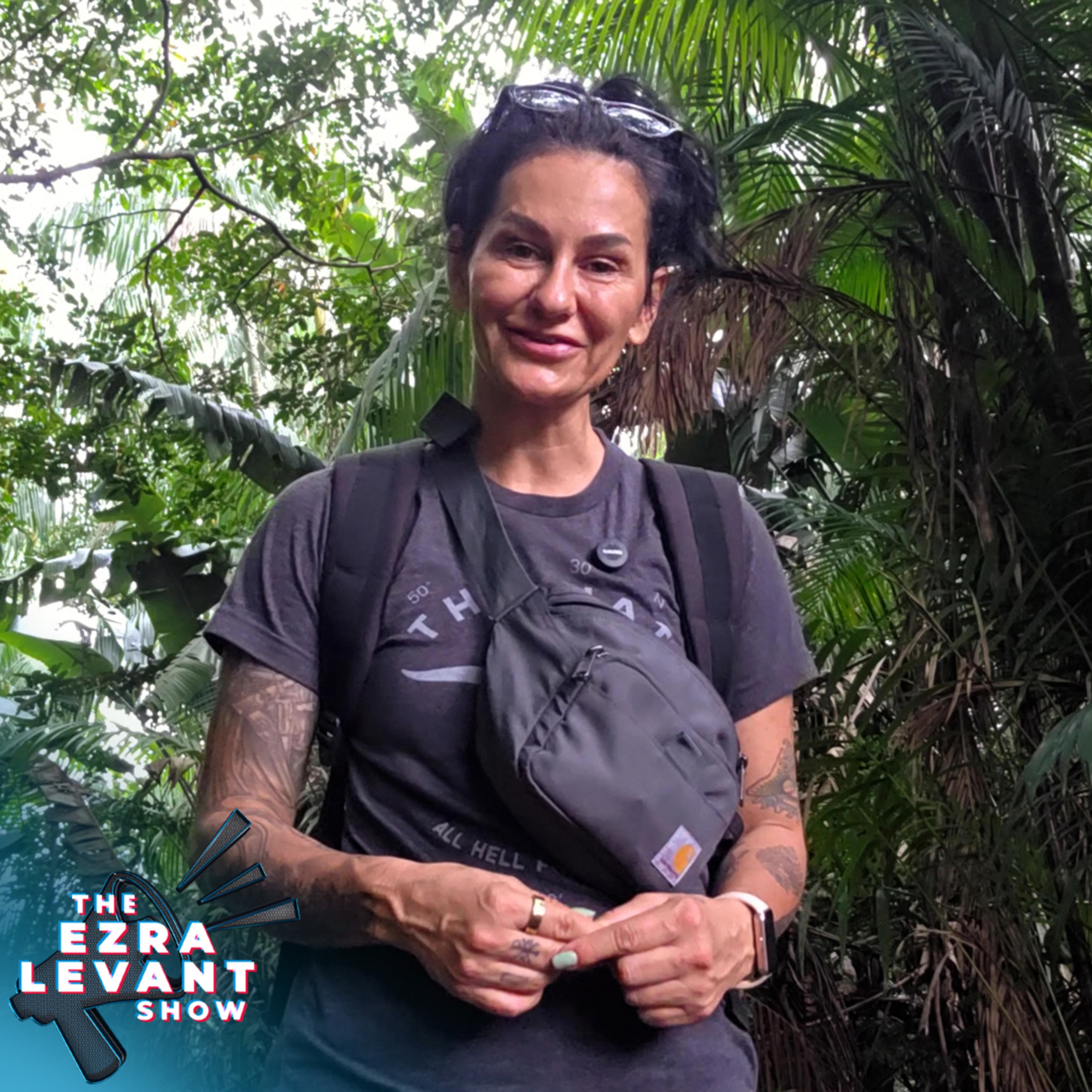
Rebel News Podcast
EZRA LEVANT | Rebel News EXPOSES UN 'climate cult' in Brazil
00:36:12
The climate cult descends Belém, Brazil—where the sewage flows into the Amazon and UN hypocrisy flows even faster.
Loading summary
Transcript1 lines
- [00:00]
A
Foreign. The climate cult has descended on the Brazilian city named after Bethlehem. I'm Sheila Gunn Reed. But you're watching the Ezra Levant show. Shame on you, you Sen. This week, I've been reporting from the UN's climate conference city, where the sewage flows into the Amazon and the hypocrisy flows even faster. Actually, I'm in the rainforest because I thought I should see it before the UN wrecks it. I'm filling in for Ezra tonight because he's back in Canada on a special mission. And I'm here in Belem, Brazil, stranded for most of the day because to save money on flights, my videographer, Kian Simone, had to leave hours before I did. So while Ezra's off doing something important, you've got me killing time in the Amazon heat and humidity, my deodorant hanging on for dear life, wading through UN spin and showing you what this conference actually looks like from on the ground. Now, let me start with this. The people of Belem have been incredible. Warm, generous, hard working, and they deserve far better than what the UN has done to this city. Because for all the UN's endless lecturing about protecting the rainforest, they'd been dumping their garbage into a local favela. Now, the UN didn't choose to set up beside the favela. They don't want the world to see how 60% of the city actually lives. But their trash ended up there anyway. We found it in a neighborhood that locals warned us was too dangerous to enter. And in the backdrop to all of this, Belem almost has no sanitation system. Over 95% of the wastewater, including raw sewage, just flows straight into the Amazon basin into the same river system delegates will pose in front of as they lecture the world about sustainability. It's environmental colonialism at its finest. The Amazon as a prop, locals as an afterthought. Now, every penny spent making it easier for the United nations should have been spent making life better for the people here. And the delegates, well, they haven't been arriving on cruise ships, but they've been living on cruise ships because local accommodations aren't good enough for them. Floating hotels running full power, full air conditioning, full luxury, all so that the climate activists never actually have to stay in the city. They're here to help. Oh, and the rivers of sewage, well, they just run right out past the luxury cruise ships. We caught it all on camera. And then we did what thousands of journalists who came to the city just didn't feel like doing. And that was actual journalism. We found the highway carved through the rainforest meant to alleviate UN related traffic in this host city. And then there's the UN's treatment of skeptical media. They finally accredited Rebel News after a nine year ban, officially on paper. And then when we showed up with that accreditation, well, they refused to let us in. With no explanation, no due process, just another locked door for journalists who ask real questions that people actually care about. Now, in the midst of all of this, I'll tell you the thought that kept coming back to me. The next time I'm in Canada trying to sip through a government mandated soggy paper straw or buying my 6000th reusable bag of the year to get my groceries home, I'll picture the actual environmental disaster the UN is hosting at this conference. Rivers of garbage and sewage in the streets in the showcase city. Now, Ezra will be back soon from his special mission, but for today from Belem, you've got me sweaty, frizzy haired by humidity, marooned by airline schedules, and reporting the truth the climate establishment doesn't want the to see. Now, coming up, I've got a couple of reports, actually three, that you don't want to miss. First, the moment we discovered the UN's garbage dumped in a dangerous favela and the conditions the global climate elite claim don't exist. Second, how Rebel News was accredited and then just rebanned by the United nations, slammed out of the venue they claimed we were allowed to enter. And finally, my closing thoughts from here on the ground in Belem after days of witnessing the gap between the UN's rhetoric and the reality. See all of my reports@rebelun.com and thank you to all of those of you who chipped in to get us here. And as Ezra always says, good night and keep fighting for freedom. Sheila Gun Reid for Rebel News. And I'm here at the port of Utero in Belem, Brazil. This is the site of the United Nations Climate Change Conference. To see all of our coverage and to support our trip and our journalism here, please go to rebelun.com so why am I standing here drenched? Well, I had a story to get and the story is those two cruise ships behind me, they were actually brought in as floating hotels. They're the MSCC Sea View and the Costa Diadema. They're here docked at the port of Otero to house some of the 55,000 plus delegates that have converged on Belem, Brazil to tell us that our summer road trips are the real problem with climate change. Now, when walking up to get the shot of the cruise ships, we went up to the terminal that was specially built for the climate change conference for these two ships specifically. And it is a high security affair. There was no getting down to the port. However, we did notice a sewage outflow. You see, Belem, Brazil, processes roughly 4% of its sewage. Only 20% of the wastewater is even really captured. 20% of households here have access to the sewage system. So the sewage just flows everywhere and you can smell it. And it is flowing into the port behind me, which is known as the mouth of the Amazon or the gateway to the Amazon, and right past the cruise ships, not that these hypocrites will ever notice. We had to hop an Uber to get to the port of Otero. And I was curious how long it actually takes to get from the port to the climate change conference. And wouldn't you know it, it's directly on the United nations website. 33 minutes one way. So well over an hour in heavy traffic in a car or a bus to get to the climate change conference. Now, friends, we found it. It was hard. They don't want you to see this. It's very difficult to find where we are on Google Maps. We actually had to find somewhere close. Close and then Uber there. What's behind me is what's called Avienda Liberdad. Now, that means Freedom highway. But it is the highway, the 13 kilometer highway that the government cut through the rainforest to alleviate the traffic, if you can believe that, for the United Nations Climate Change Conference. Now, this highway was first proposed in 2012, but it was put on the shelf back then because they said cutting a highway through the Amazon rainforest would be too environmentally precarious. But it's not environmentally precarious when the world's elites need a shortcut to their climate change conference. We would love to show you what this highway looks like from above as it carves its way through the Amazon rainforest. But we can't. And that's not because we don't have the equipment. We brought a drone with us, but because this project is so embarrassing to the government, they are not allowing drones to go up. In fact, last night in the city, we met a man who works security on this highway, and he said part of his job is shooting the drones down. So we could put our drone up, but we would never get the footage because we would never have the drone ever again. And I've got to be honest with you, I'm not against highways. I love highways. But cutting a highway through the rainforest, it could be problematic. But it's the least problematic thing I saw in the Amazon today because right beside this highway construction site is, I think, what they might deem a resort. But the stench of garbage piled up here in the 32 degree heat was horrific. It's right in front of me, it's right along this little stream that flows into the Amazon behind me. As a Western Canadian, I think I live in one of the most beautiful, cleanest parts of the entire world. And I've traveled a fair bit in the course of my job. We are constantly being told that we're the ones that are destroying the environment, that we need to step up, that we need to triple and quadruple our efforts to fight climate change and keep the environment clean, whatever that means. But I don't know how someone could travel here for an environmentalist conference and not see that the rest of the world needs to step up first. I'm standing here in front of the Belem International Airport. Now, normally when we go to these conferences of hypocrites like the World Economic Forum, we're able to go to the local private airstrip where we can watch the elites of the world fly into the event. We aren't able to do that here because there is no private airstrip. In fact, fact, in advance of the climate change conference, the Belem International Airport was upgraded to accommodate all those private and charter flights that are flying in and out of this Amazonian City. Now, 55,000 delegates, and then again more activists and protesters have flown into the city. And I did the math. I ballparked the flights for 55,000 people at about 165,000 tons of CO2. Again, if you care about those sorts of things, I really don't. Now that's roughly about the same annual emissions as the Cook Islands and other equatorial small countries. But to put it in terms of the Western world and specifically in the terms of Canada, so it's the equivalent of about 9,000 Canadians annual emissions. These are people just trying to survive in our extreme climate, in a huge spread out country, heating their homes at minus 30, driving to work because there's no subway across the prairies moving food and freight thousands of kilometers. Meanwhile, these climate elites burn the same carbon budget in a week for their selfies in the Amazon. You might be wondering about all the police cars and security staff behind me. This is where the world's elites will park their private private jets, drive past unironically all the AV gas storage tankers and then come out the fence right there where all the police are there. As I pointed out in a previous VIDEO the climate change delegates are greeted by lectures for fossil fuel executives. But they come out of the heavily air conditioned airport and are greeted by rows and rows of idling diesel buses. Again, heavily air conditioned, just sitting there waiting for the climate school to jump in and head off to the heavily air conditioned conference. It's plus 33 outside where we're working right now. Now, right now I'm standing in one of the first revitalization projects that the city of Belem underwent. It's called Nova Doka. That's the park name. It's a long linear park and it goes along a canal. Now, the canal is one of those untreated sewage canals, but the city has done its best to disguise it by planting flowers in the untreated sewage. And just in time for the United Nations Climate Change Conference, the sewage is actually claiming the lives of the flowers. It's called Novodoka, but I'm calling it Fart Park. We were in this park initially on the lookout for the infamous fiberglass trees that were made by a Brazilian artist and erected in place of the trees that were slashed down to create the facility for the climate change conference and the highway through the Amazon for the climate change conference. I think roughly $5 million Canadian were spent on the fiberglass trees. I have yet to find them. I will though, before I go home. Instead, I found what they're calling an eco tree again because they cut down a bunch of trees in the place of the real trees. They've erected these rebar structures and then put fast growing vines up the the structure again in lieu of actual trees. And let me remind you, we are in the Amazon rainforest. Look, people who watch my work know that I am by no means an animal rights activist. I realize that animals and humans are all part of the circle of life. And of course, you know, I eat animals. But there was something very tragic and heartbreaking about seeing these little birds plucking around in the raw untreated sewage in a park that is here to mask the environmental damage that took place for the environmentalists to have their week long party in the Amazon. Environmentalists love a good climate march. Until the climate march comes for them and busts up their big annual climate party. That's exactly what happened here in Belem, Brazil at the United Nations Climate Change Conference. I'm Sheila Gunn Reed and I'm actually here on the grounds to see all of our reports and to support our independent journalism. Please go to rebel. Um, now I want to show you behind me the fortification of the what they call the COP facility. It means Conference of the Parties. It's the 30th one. It's where they meet and get together and decide that you need a low flow shower head in your house and that you need carbon tax and, and industrial carbon taxes and you need to never use a plastic straw in your life ever again. This is where those decisions are made. And they've completely fortified the area. Now, I've got to be fair. That is because indigenous activists broke into this conference earlier in the week and caused a fair bit of chaos. So now we have, I think, an increased priority presence of riot cops. But they've got ambulances, fire trucks, helicopters. You can't put a drone up or they'll shoot it down. Military police, regular police. We have to remember these are the same people who say that no one is illegal, that we need no borders because of climate, migration, whatever that is. They viciously hate President Donald Trump for enforcing borders and deportations. And yet these are the people hiding behind the fence and they're keeping out their own activists and, well, disruptive journalists like me. Disruptive only insofar that I have dangerous ideas that disagree with the things being said and done inside the conference. Sheila Gunn Reed for Rebel News. I'm in Belem, Brazil for the United Nations Climate Change Conference. To see, to see all of our reports and to support our independent journalism from here on the ground, please go to rebelun.com now. I am in a venue right now that's open to the public. It's called the Green Zone. And it's like a trade show where activist groups, companies, organizations, NGOs, they can buy space and then promote their program, product wares, ideas. And we took a little tour and the first thing I noticed was that the drink box, water bottle sort of thing, if you know, you know we have recently switched to drinking water bottles out of water out of. When we have water bottles out of a. Plastic, Sorry, away from plastic towards paper is the preferred beverage of the United Nations. But that's not the only thing that I learned here today. For example, I learned about my carbon footprint and how if I feel real bad and pay about 22 bucks Canadian to offset my climate guilt, a company can make money selling electricity to poor people. Look at this. You would want me to feel bad enough to give $117,018, approximately $22 Canadian to this company. So at the end of it all they can actually sell the electricity and make money for themselves. I think I cannot give you sure that they are selling the Energy. You. You think they're giving it away for free? But, but I know the. The energy is going to the. The program. Then they use the fuel, gas, like energy into fuel for the trips. Sure. But that facility obviously produces more biodiesel than they use. And then they use biogas, whatever. It's all the same. And then they sell it to create electricity. And then somebody makes money there, too. Somebody making money. Look, I'm not against capitalism, but let's be honest about it. Yeah. Yes, yes. Oh, but that's not the only thing that I learned. For example, I learned many of these trees here are not real at all. I stuck my hand in the dirt to find out for sure. I don't think they're real now, just like me, I think a lot of the people here are not actually here because they care about climate change. They're here, like me, for the air conditioning, and, boy, there's a lot of it. And they're here for the coffee. There are nine, maybe ten coffee shops in here. I mean, it's like six minutes to the back and then back to the front. Nine coffee shops. I think we missed one. And nobody here is really here to take in the venue, to get information. They're literally just sitting in the chairs enjoying the air conditioning. You know what else I learned here? That Jews are bad for the environment. If you believe the United nations and the people they allow to exhibit in here, because we found the pro Iranian regime exhibit and it had a healthy dose of Free Palestine, obviously. But they had these little displays on the wall noting that the Ayatollah and his mullah friends are real climateers and that the Jews, in their bombing of Iranian nuclear facilities, actually, they called them peaceful. Iranian nuclear facilities are causing environmental carnage. They've allowed the local indigenous people to come into the venue and set up basically a little flea market. Now, I don't actually see a lot of people buying, buying from the indigenous people. I think it's a nice test to see if the environmentalists who claim to care about the indigenous people will actually put their money where their mouth is. And so far, I don't see it. One thing I will add about the public zone for the United Nations Climate Change Conference is that the food wasn't frightening. I've been to these things before, and I'm usually corralled in the public spaces because we don't get accredited with the regular journalists. And the food wasn't terrible this year. I know that my boss, Ezra Levant, is going to want a full report on the Food here, lots of sweets, tons of coffee, lots of vegan options if you're into that. I'm definitely not, but it didn't terrify me. So there's that. Al Gore says the world is using the atmosphere as an open sewer. What we found where the sea, the city of Belem and the United nations are using a poor community here as their own open sewer. A real garbage dump. I'm Sheila Gunn Reid for Rebel News. I'm here in Belem, Brazil. I'm covering the United Nations Climate Change Conference. If you'd like to see and support our important independent journalism, please go to rebelun.com now. Right now, I'm standing beside something I've been calling for the entire week. A digital rape whistle. These are in the touristy areas of Belem, Brazil, and there's a button here that you can press if you need help. Why? Because this is actually one of the most dangerous cities in the world. And today, my videographer behind the camera, Kian Simone and I, we did something pretty dangerous. We went into a community called the Favela. They are what the left might call irregular communities. There's no sanitation, there's very little electricity. They're not hooked to the sewer system, and they really don't own the land. So if the city wants to come in and bulldoze the land to build something, well, that's just how it goes. We went to a community called Villa de Barca. Why? Because we saw local Instagram videos where the locals were complaining about the United nations using this community as their own personal garbage dump. Now, there have been complaints for years that the richer parts of Belem have been routing their sewage through this community and out into the bay, making the water completely unusable and dangerous for the people that live there. We did definitely see evidence of that, but we were looking for something else. We heard that the United nations had been dumping their construction garbage in this community. Wouldn't you know it, we found the dump site that the United nations is using. Now, I'm not somebody who believes in the term environmental racism, or I haven't been, actually. You know, it's usually used to describe oil and gas companies trying to give indigenous people, well, paying oil and gas jobs in their communities. But I think this is real environmental racism. This is a poor community. It's largely mulatto, it's mixed race, and they don't have any power. And the very powerful world's elites have decided to hide their environmental carnage inside of their community. And they don't have any Power to stop them. I was just very briefly in that excessively air conditioned venue with my videographer behind the camera, who is suffering in the blazing Brazilian heat. We were in there to pick up our media accreditation because as you know, for the first time in nine years, we were allowed back inside. But wouldn't you know it, there was a problem with our media accreditation. They said, well, we could not attend inside the venue where they just have like national pavilions and little displays and then the meeting rooms and the media rooms. Instead, they said we were more than welcome to attend the leaders summit, which was two weeks ago, so too dangerous to go inside there and look at little distance displays of different countries and what they're doing to combat climate change, but perfectly fine to attend with the world leaders. Two weeks ago now at the media help desk, where we didn't get very much help at all, they did tell us that we would be welcome to come in if we were affiliated with an ngo, if we knew some sort of environmental NGO that would allow us to tag along, or if we were attached to an official country delegation like Canada. But I know that will never be the case because we are independent media, but also because the Canadian delegation back in 2016 meddled with my accreditation, they actually complained to the United nations because I asked some skeptical questions of the official delegates inside. And then they had the UN ban me for nine years. And that ban is ongoing. The United Nations Article 19 and their declaration of Human Rights is actually the right to free expression, which includes the right to the free press. And it means that you have the right to express your opinion in any way that you see fit and then to distribute it in any way that you see fit. And yet these people don't even defend their own Declaration on Human Rights because for nine years we have been banned from this venue simply because we're skeptics. Because we don't think that taxes change the weather, because we think that cities like Belem have bigger problems than climate change. When we have raw sewage flowing in to the Amazon rainforest, when we think that money here spent on this conference could be better spent making the lives of the people of Belem better, cleaner and more hygienic. Well, I guess then we are heretics and we're not allowed in their stupid little conference. But rest assured, for the last nine years we've been doing excellent journalism from outside of these venues. And this year is no different. We made a very expensive and very long and arduous trip here. We have a very expensive Airbnb not Because it's luxurious, it's actually quite modest. But because there's 55,000 plus climate active here, wasting the greenhouse gas emissions of 9,000 Canadians that they would spend in a year to get back and forth to work to heat their homes. Because we hold those opinions, we don't get to go inside the UN this year along with the signatory countries like Canada. Well, they're actually codifying their climate change censorship. Let me read this to you. It's from the UN's Global Declaration for Information Integrity on Climate Change. It's part of the Global Initiative for Information Integrity on Climate Change that Antonio Gutierrez, that's the leader of the United nations, launched ahead of this climate change conference. It's a political declaration urging governments, civil society, academia and funders to counter misinformation and disinformation, combat climate denialism. I guess that's me. Target online harassment and so called greenwashing. That's a law we have in place already in Canada. They changed the rules around the competition laws to make it impossible for oil and gas companies to talk about their achievements in reducing greenhouse gas emissions. And it also calls on countries to support journalists and researchers who push the UN climate line. Now this is the first time that a UN climate conference is promoting an agenda to police information integrity. It's a framework to pressure governments to censor climate misinformation, label dissenting views like mine as denialism, direct funding only toward approved narratives. We're seeing that in Canada already. And marginalized journalists who challenge climate policy. I guess that's me too. We're already seeing the effects of this Declaration in action today before this conference in Belem even wraps up. Sheila Gun Reid for Rebel News. I'm here in Belem, Brazil. We're covering the United Nations Climate Change Conference. This is our final day on the ground. If you'd like to see and support our independent journalism, please go to Rebel UN this mission to Belem, Brazil started off hopeful and different than our trips to the United nations conferences over the last nine years because we were once again accredited. We haven't been accredited for a United nations summit of any sort since 2016, when I did some dangerous journalism by asking a question to a Canadian delegate. We've been banned since then. They occur accredited us this time, so we thought we would do some work from inside of the venue. But when we went to get our accreditation, there was some sort of problem, wouldn't you know? They said that we could come in only if we were attached to an official governmental delegation, which will never be the case because we protect our independence fiercely. Or if we were attached to an ngo, which is not the case. We are media, we're not an ngo, we're not an activist group. They did, however, say that we could come to the leaders summit, which happened two weeks ago, but not to be deterred. I think we did some great journalism from outside the venue, on the ground, the way we always do, because I think that's where the real story is. We showed you something none of the other journalists dared to show you. We showed you the highway that the municipality here, along with the provincial government, carved through the rainforest to alleviate the traffic congestion caused by the climate change conference. And it wasn't easy to find. We couldn't find it on Google Maps. You could sort of see it on Google Earth. And we had to find a way to get a ride to a place, place close, and then walk in so that we could show you what it was all about. We could not put a drone up because the government is very embarrassed by the highway that they carved through an environmentally sensitive area to support the climate change conference. But we showed you something that a city full of international journalists failed to do. We also showed you the cruise ships, again, something a city full of international journalists just didn't want to do. And I bet some of those international journalists were on the cruise ships brought in by the United nations at a special multi million dollar dock built just for them, because some of the international delegates just weren't satisfied with the local accommodations. And while we were there, we were able to show you the sewage outflows, the untreated sewage outflows, which are every everywhere in Belem, because the majority of the Sewage here, like 97% of it, is never treated and most of the wastewater is never captured. We could show you the sewage outflow that was flowing out into the bay right past the cruise ships for the fancy climate activists. We also were able to show you, well, where I'm standing right now, I called it Fart park, but it's called Novodoka Park. It's one of those sewage canals that has been beautified, but it's still gross. It's 32 degrees here, the humidity is 100% and it smells terrible. But in an effort to hide their, I think, real environmental crimes, the city has planted flowers and built a linear park on either side. But you can see the garbage, you can smell the sewage, and you can see the little animals poking around in the sewage, looking for something to eat, just struggling to survive. And in this park, we found the designer eco trees, and I'm old enough to remember when real trees were called eco. But these eco trees are made with rebar and then they have vines in them. And they are to replace all the trees cut down to accommodate the climate change conference. We also saw the rows and rows of idling cars and buses meant for the climate change activists, these climate scolds who tell you that your summer road trip is somehow the end of the earth, and yet they can fly, basically circumnavigating the globe and then hop in an idling diesel bus back and forth all day to lecture you. And these idling armies of vehicles were everywhere. They were at the airport, they were at the climate change venue, outside of the green zone, outside of the blue zone, where the official delegates are. They were everywhere. And yet these are the same people who lecture us about our carbon footprint. By the way, I did learn about my carbon footprint. If I feel bad enough about taking a trip here, which I definitely don't, I only care. I feel bad about the expense to come here, but I don't care about my climate footprint, I could pay somebody $22 to alleviate my climate remorse. And inside the public venue where I could alleviate my climate remorse, I noticed something that nobody was actually there for the climate change. They were there for the climate control, as in the air conditioning, coffee bars everywhere, like high end little coffee bars everywhere, and nobody actually paying attention to the climate trade show around them. They were literally just there to sit in the chairs, maybe charge their phones and catch a little ac. And who could blame them? I did the same thing. And then just earlier this morning, I think we did one of our best pieces of journalism from here on the ground. We went into a favela, sort of a slum. We went there because we saw in Portuguese language Brazilian Instagram stories that the locals had been complaining that the United nations had been using this little impoverished community, favela, really, as a dumping ground for their construction garbage. It's a dangerous place. This is one of the most dangerous cities in the world. We kept a ride waiting for us. We ran through with our eyes peeled and we found it. This is something that the international media could have done. They have the resources to do it. They just don't want to because they're sitting in the air conditioning in the blue zone, being true believers and parroting the official United nations line. What I saw was actual in environmental racism, poor people not able to fight back against the powerful global elites who are treating them like less than human. And I think that's the real story here. Every penny that was spent on this climate change conference could have been used to make the city of Belem safer and cleaner for the people left behind when this flock of climate locusts finally flies back to where they came from. For Rebel News here in Belem, I'm Sheila Gunn Reed. Well, that's it. It's a wrap. From here in Belem, Brazil. If you thought our journalism was valuable, if it was important, if it showed you something that you would not see anywhere else in the media, please consider supporting our trip here. Here. It was so expensive. Please go to rebelun.com.