← Rebel News Podcast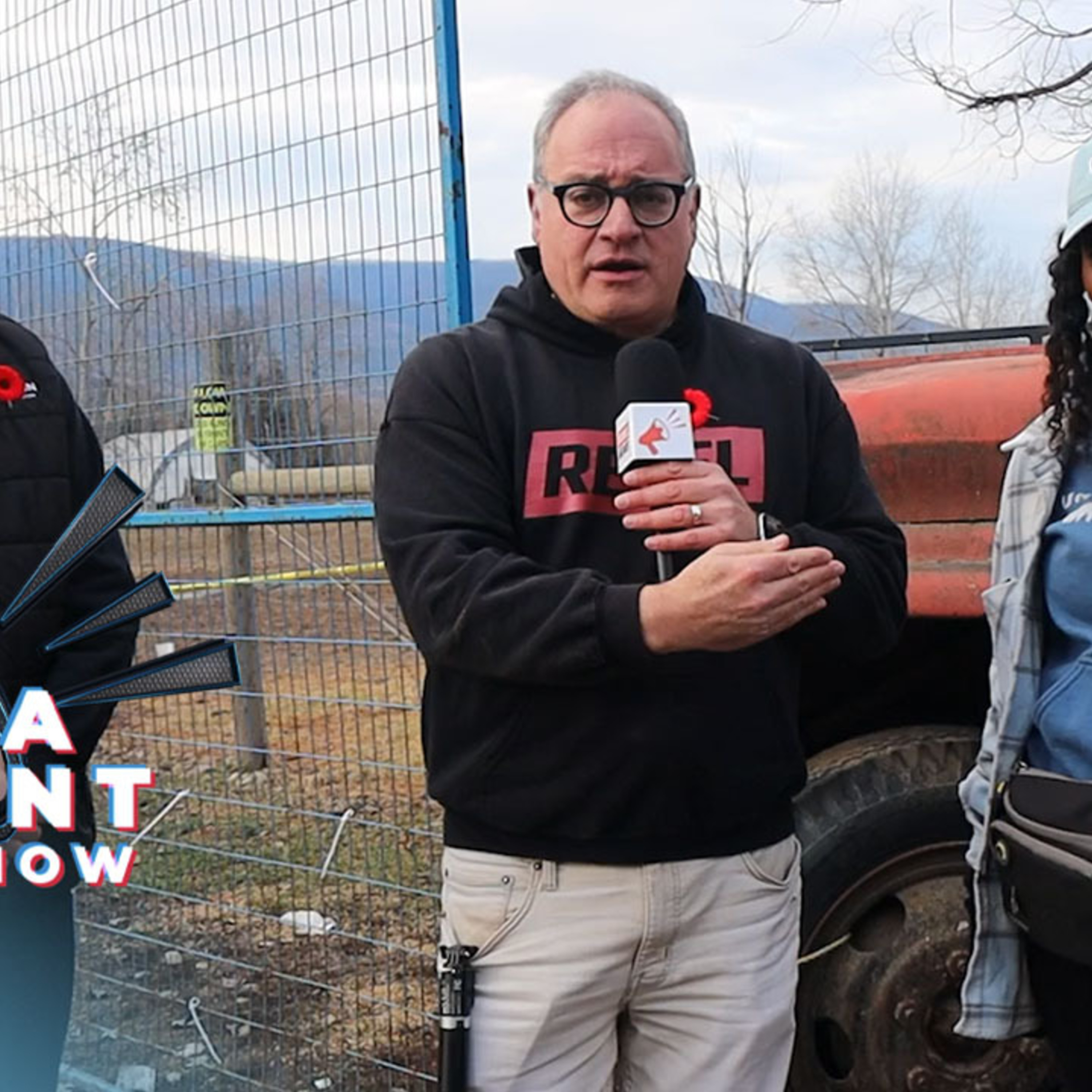
Rebel News Podcast
EZRA LEVANT | Reuters just admitted something about Rebel News they REALLY didn’t want to
01:07:04
Tonight on The Ezra Levant Show, Ezra highlights how Reuters, an organisation that so often positions itself as the sober priesthood of journalism, has a funny habit of stepping on its own sermons. Listen to audio-only versions of RebelNews+ exclusive shows like the daily Ezra Levant Show, the Gunn Show, and audio versions of our DAILY livestreams along with other Rebel News long-form videos and interviews.
Loading summary
Transcript345 lines
- [00:00]
Ezra Levant
Hello, my friends. I'm back in Toronto after visiting the ostrich farm. I'll give you an update from there, but first I want to tell you about an interesting story from Reuters. The Reuters Institute did a study about the biggest journalistic brands in Canada, and they said Rebel News was in the top five ahead of Global News. I'll take you through their study. I don't like Reuters much, but boy, they must have hated saying this about us. I'll take you through them, but first let me invite you to become a subscriber to Rebel News. Plus, it's the video version of this podcast. You absolutely need that to watch the ostrich part of today's story. So please, if you're not yet a member, go to rebelnewsplus.com, click subscribe. It's eight bucks a month. And in addition to seeing amazing things, you'll also support Rebel News because we take no money from the government and it shows.
- [00:53]
Sid
You're listening to Rebel News podcast.
- [01:05]
Ezra Levant
Tonight. Reuters and Oxford University say Rebel News is the number five news company in Canada, ahead of Global News. What do you think about that? It's November 10th and this is the Ezra Levant Show. You fighting for freedom. Shame on you, you censorious th. You've heard of Reuters, right? It's one of the world's largest news agencies. Started more than 150 years ago. They have about 2500 reporters all around the world, and newspapers everywhere pay for the right to republish Reuters stories. It's a great idea. It allows small newspapers around the world to publish news stories from anywhere in the world without having to deploy their own journalists there. You can imagine some of the problems though, too. Thousands of different newspapers and radio stations and TV stations all regurgitating literally the same words written by someone that none of us know. It's a huge factor in the ideological conformity of the news media. It was particularly apparent during the COVID lockdowns when Reuters took an extremist line supporting forced vaccinations, lockdowns, vaccine passports, no fly lists, the whole thing. Not only did Reuters spread that government propaganda across the world, but they set themselves up as fact checkers trying to destroy any non Reuters journalists who disagreed with them. I don't know if you remember this. We showed it at the time a Pfizer director, you know Pfizer, one of the big vaccine makers. Their director, Jim Smith, was literally the chairman of the Thomson Reuters Foundation. Imagine having a vaccine executive in charge of fact checking critical stories about vaccines. Do you see my point about Reuters actually being a global force for propaganda and censorship? Reuters has always leaned left. I don't know if you know this, but its founder, Paul Reuter, was actually a communist. My point is, you can't trust Reuters. Today it's owned by Canada's richest man. Did you know that? David Thompson is his name. He also owns the Globe and Mail. Now, I'm not against someone being Canada's richest man. I mean, statistically, someone has to be the richest man, and it's not going to be me. But I find it really gross that Thompson still wrings out taxpayers for millions of dollars every year in government subsidies for the Globe and Mail. Seriously, what a mooch. Thompson is worth an estimated $54 billion. Not quite Elon Musk level, but he's in that zone. And he still snorts up taxpayers handouts for the Globe and Mail. I mean, when you think about it, he really is the perfect owner of Reuters, isn't he? Well, the Thompson family needs the money, you see. Check out this amazing story. Just a crazy story. Let me read the headline. Thompson family heiress sues ex friend after crypto investment recommended by a psych loses millions. Thompson claims in her lawsuit that she lost $80 million in backing the doomed crypto coin. What a story. I guess if you're worth $54 billion blowing $80 million on some crypto scheme recommended by a psychic. I don't know. It would be like a regular person losing $100 on lottery tickets. Not something to be proud of, but not going to put you in the poor house. Especially, like I say, given the taxpayer subsidies will cover the Thompson shortfall pretty quickly. Anyways, that's Reuters. Pretty gross. Next time you read a newspaper or a news website and you see the word Reuters at the top, just be aware that you're reading propaganda. It still might be interesting, and sometimes it might actually be accurate. But always know who's secretly spinning the news at you. I tell you all this because the Reuters foundation, same one that that Pfizer guy runs, just published a study about journalism in Canada. And of course, they are obsessed with rebel news. So this is their country. Study on Canada. Let me read it to you. They say US commentators dominate the Canadian lists alongside a small number of homegrown personalities such as Jordan Peterson, mostly from the political right. The top 15 list is made up exclusively of men, so they're ranking how important different journalists are. Let me stop for a second, though. I mean, this is completely based on who Canadians choose to watch. I don't agree with their methodology, but this wasn't some top down list here. No one hired this list or curated this list. It's literally asking Canadians, who do you like? Who do you follow? Who are you interested in? And just listening to what people say. So men and women answered. Reuters doesn't like the fact that men and women in Canada have named men as the people they listen to. I mean, could have been women, could have been men. Reuters is mad about that. It's a weird comment, especially since Reuters is owned by a man. Reuters was founded by a man. I mean, if you're into politics, the Liberal and NDP leaders in Canada are men also. It's just a weird passive aggressive gripe, but it shows you how they put DEI diversity into everything, don't they? All right, back to their story. They say, quote, the main networks used for accessing creators are similar to the United States, namely YouTube and X. Facebook and Instagram, owned by Meta, have restricted access to news content on their platforms in response to the Online News act. And this is likely to have affected the popularity of some creator content on these networks in addition to news brands. That's true, isn't it? Trudeau and now Carney effectively ban Canadians from reading about our own country's news on Facebook and Instagram, which are huge. And we've just all accepted this as normal. I mean, who does that other than China, North Korea and Iran? I'll read some more. The most mentioned Canadian online personality in our data is psychologist and author Jordan Peterson. Originally a University of Toronto professor, Peterson rose to international prominence through viral lectures and his book 12 Rules for Life. He is known for his critiques of political correctness and for providing a conservative intellectual perspective on social and cultural debates. With around 9 million followers on YouTube and 6 million on X, Peterson's influence is also felt across multiple countries, with a number of mentions in Australia, the uk, South Africa and Norway. All right, that's, that's fair enough to me. I mean, sort of balanced. Now, I do note that Dr. Peterson has moved to the United States. I think he did that for freedom of speech reasons, actually, and maybe for business reasons, but I don't think this is a particularly meticulous report, as I'll show you in a minute. I mean, sure, he's a Canadian. I think he's still a Canadian citizen, but he is an American in terms of his residence. But let me keep reading some more. News anchors from the main networks cbc, ctv, Global News and Radio Canada are widely cited in our survey, along with the branded accounts for these networks. Rebel News, a network that has been associated with the alt right. Says who, says who, also gained significant attention in social media. 1.1 million followers on YouTube, as does one of its co founders, Brian Lilly, who now works for The Toronto Sun. Two things there, 1.1 million subscribers on YouTube. We crossed the million subscribers line way back, I don't know, in 2017 or something. And despite being throttled by YouTube, we're now at just under 2 million. I don't really care and I really don't care that Reuters, the fact checkers, don't know that. I'm not that vain about it. I'm just pointing out that the expert fact checkers haven't even bothered to look at our YouTube page in more than half a decade when they're talking about it. And these are the experts telling you about Canadian preferences. Never trust these so called experts. But look at this, this is true. Reuters, run by a Pfizer executive, showing through. This is what they say. Ready? Rebel News was accused of spreading misinformation around the COVID 19 pandemic, among other issues. Yeah, accused by you. No one cares, mate. You lost that debate. Unfortunately, you've done eternal damage to people's trust in public health and even in their own doctors. I mean, I know a lot of people and I'm one of them who are much more skeptical of their own doctors because of all the lies during COVID And the whole lockdowns will be remembered a long time. And I don't think we'll even know the full damage that Pfizer and the government lockdowns did. Not just in terms of physical health, but mental health and suicide and the social effects of kicking kids out of school for two years and drug use and loneliness, but also any trust in any institution. Shame on Reuters and Pfizer and the rest of them. But let me show you one last thing. And again, as you can see, I don't really respect Reuters and I don't respect the methodology of this report, which doesn't even make sense and is based on factual errors as I shown you. But look at this. Look at this chart. This is what Reuters says. They say that the biggest news brands are, well, in first place, the CBC. Well now you'd hope so. You, given the $1.5 billion a year they get. But look at who's in second. CNN. That's a huge black eye for the Globe and Mail, the Toronto Star, ctv. Imagine being beaten by a foreign network that very rarely even mentions Canada. Next is ctv. I'm surprised they're that high, frankly. And then another foreign brand, the BBC, the British Broadcasting Corporation. Again, I don't actually believe that the methodology just really checks name recognition. Have you heard of the BBC? Well, I'm sure people have heard of the BBC, but I don't think anyone in Canada actually watches the BBC. I'm sorry, I just don't believe it. But I do believe that we came in next, as you can see, because, you know, it pained Reuters to say we did. And if they had any way, any excuse not to blow our horn, they would. But there you have it. Rebel News is the fifth most watched or most known news company in Canada. I don't know, but most watched probably are too. We're bigger than Quebec's CBC called Radio Canada. We're bigger than Quebec's private broadcaster tva. And most deliciously, we are way ahead of Global news. You know, Global news is owned by a company called Chorus. They also own some radio stations. Have you ever heard them? Of course. I checked the stock market. They're trading at about a penny a share. They're a penny stock. The total market capitalization, of course, is less than $8 million. I joked on Twitter last night, should Revolu buy some shares? Should we try and raise some money to buy a majority of the stock? Wouldn't that be something I ask people is, would that be a Twitter? Would that be a terrible idea given that global news loses so much money? Or is it a great idea, sort of like a work of performance art? Especially if, say, my good friend David Menzies, the Menzoid, were installed as the next CEO. I wonder what Reuters would have to say about that. Stay with us for more. Hey, welcome back. And I'm glad to be back in Toronto. Over the weekend I was in British Columbia at the ostrich farm where I spent some time with the family, the remaining protesters. I saw how aggressive the RCMP were. I got a little bit aggressive myself. I hate to say not, not physically, but I hollered at them. What a weird and bizarre story. International story all over the world. A real black eye for the Canadian government. But I really enjoyed my time with the family and I really have a tremendous sympathy for them. And I didn't realize that ostriches live so long. An ostrich can live 30, 35 years. I mean, people truly grow to love their dogs. And dogs are not with us for 30 years, are they? But ostriches are. And they named the ostriches and they had their different personalities and you know, to kill all the ostriches because a year ago some of them were sick is so senseless. Anyways, I recorded a lot of videos out there. Here's one where I sort of summed up the work we've done over these past months with Sidney Fizard, who's been out there for a few weeks, and our key reporter on this file, Drea Humphrey, who I think has done a wonderful job. She's probably published a hundred stories over the last six months about this farm. So without further ado, the video I recorded with my colleagues in Edgewood, bc Ezra here in Edgewood, British Columbia, at the site of the ostrich farm that has gripped so much attention not just across Canada, but around the world. It's been an important story for a number of reasons, and I thought I would take a huddle with Dre Humphrey, who's been leading our coverage on this file for months. And over the course of time, we've actually had six different Rebel news reporters rotate through here. And you might be thinking, why? Why is this an important. And I didn't catch on right away either, until I saw some of Drea's work. Drea, why has this turned into a massive international story?
- [15:00]
Chris Dacey
It actually starts back to the minks. Many people don't realize that during COVID a mink farming industry was completely wiped out by unelected bureaucrats in the name of COVID 19. Now they, unlike these farmers, chose not to publicly stand up. It all happened quietly and in the dark. These farmers were different. These farmers were special, and so were the herd that they wanted to save. And so when I saw that there were farmers that were willing to say no to the Canadian Food Inspection Agency and say they should live because they're healthy, I knew it was going to be an important story.
- [15:38]
Ezra Levant
Wow. I estimate you've done maybe 100 reports from here.
- [15:42]
Chris Dacey
It's very close. You know, like you said, the team has started to help. So that's added to the close to 100 reports that I would say we've done.
- [15:51]
Ezra Levant
And you've built a level of trust with the family. I was talking to one of the neighbors who said that her entire worldview has been changed. She doesn't believe she can trust the mainstream media anymore, and this is a new thing for her because she just can't reconcile what is actually happening with. With what CTV and CBC are having. I thought that was an incredible thing. You, on the other hand, have built trust.
- [16:15]
Chris Dacey
Absolutely. They have welcomed me to be in there sometimes behind the scenes, while they're trying to figure out their next step. And they are just the most welcoming people. They are exactly who you would expect farmers to be. Hard working. They were going out early mornings doing the chores. Now the state has robbed them of that. But then still inviting all of these. I don't know how they've done it for 10 months to be a part of this fight. They've been eating with them, crying with them, rejoicing with them on the wins they had along the way. And now they're preparing to fight back in a new way.
- [16:49]
Ezra Levant
Wow. Well, I know, I know. Even though the ostriches were massacred in the last few days, the rebel news will stay committed to this story. Now, Sid, you have an interesting contrast because you were at the Coutts blockade. That was the main convoy for the truckers was in Ottawa. That was the big show. But in Alberta, truckers, farmers, grassroots people said we've got to do something about Alberta's lockdown. You were embedded in that for two weeks. Almost. Compare, if you would, the people's sort of peaceful revolution you've seen here where with what you saw in Coutts.
- [17:29]
Unnamed Supporter/Protester
It is actually there are many similarities. I guess the one difference would be I was inside the security zone in Coutts and a lot of the supporters were stuck outside. Like these people are stuck outside from coming to these animals. But there is actually quite a bit of overlay. And these people, obviously, they strongly care about this story and so much so they've been staying here for weeks.
- [17:53]
Ezra Levant
If you try to kill the ostrich with a shot, is it a shot to the head?
- [17:58]
Unnamed Supporter/Protester
Yes.
- [17:59]
Ezra Levant
So were they shooting the heads? Yep.
- [18:01]
Unnamed Supporter/Protester
We had asked for a plan.
- [18:04]
Chris Dacey
And.
- [18:04]
Unnamed Supporter/Protester
The way they did it, every one of those animals would have suffered and they would have known. They would have seen it. They would have been so agonizing, they would have been trying to get out. They just suffered. That was just so wrong on every level. That was so question period, you know.
- [18:25]
Ezra Levant
And it was a really kind of softball question. Like it, wasn't it? I don't know. Very frustrating.
- [18:34]
Sid
And the smirks you got out of them. Oh, yeah, the smiles and all.
- [18:38]
Ezra Levant
We don't give a. I thought to myself, what's. What's such a soft way of doing this that maybe she'll give some thing. But she was obviously instructed, do not answer.
- [18:50]
Unnamed Supporter/Protester
Yeah, that way too. It was nicely said.
- [18:56]
Yeah, very nice.
- [18:58]
Chris Dacey
It was like Mr. Rogers.
- [19:00]
Ezra Levant
I've never been that nice in my life.
- [19:02]
Chris Dacey
Yeah, that was the nicest I've ever seen you. And she still didn't respond.
- [19:07]
Unnamed Supporter/Protester
Oh, man.
- [19:08]
Ezra Levant
You know, what is the RCMP supposed to hear name? Because I got some questions for. For Tommy.
- [19:14]
Sid
They'll arrest you. They need their quota today.
- [19:16]
Ezra Levant
Well, it seems like they're trying to take fights there. Is that what you're feeling?
- [19:19]
Unnamed Supporter/Protester
They need an arrest to make us look back.
- [19:21]
Ezra Levant
That's the thing.
- [19:23]
Sid
They need four or five.
- [19:25]
Unnamed Supporter/Protester
Yeah.
- [19:25]
Ezra Levant
You know, I was saying to Chris outside, there's a phrase in psychological, typically sexually abuse cases called darvo. Have you ever heard that word, darvo? Deny, accuse, Reverse victim and offender. So it's when someone who's done something awful like a sexual abuse case, it's a psychological gaslighting move. So they say, I didn't do anything wrong. You did something wrong. I'm going to reverse. Who the victim and offender are here. Darbo. I think they're trying to do Darvill. I think they're trying to Darwin this thing. I think they're trying to find an excuse to arrest someone so they could say, oh, violent or something. They have such a black eye. They need to flip the screen. It feels like a trucker convoy that way.
- [20:13]
Unnamed Supporter/Protester
And they even had their one dude every time there was yelling at the front line with his GoPro. Yeah, right in the corner trying to get that guy.
- [20:21]
Ezra Levant
I saw that guy.
- [20:23]
Unnamed Supporter/Protester
They need to show that we're terrible.
- [20:25]
Ezra Levant
One of my cops is, are you building a database with that facial recognition? And did you database all the license plates of the cars here? I know the answer before I ask it, but I want to have them give them a chance to answer.
- [20:42]
Sid
Thank you.
- [20:43]
Ezra Levant
I got another question. Did the military participate? We know that during the trucker convoy, the military deployed some of those drones, even though they denied it at the time. I want to know. And I got a lot of questions about the police.
- [20:57]
Unnamed Supporter/Protester
There is one drone that we haven't been able to see because it is so big and so high up.
- [21:04]
Ezra Levant
I don't believe the police.
- [21:05]
Unnamed Supporter/Protester
Some people keep mistaking it as a plane, but it's not a plane.
- [21:09]
Ezra Levant
That sounds military to me.
- [21:10]
Unnamed Supporter/Protester
Yeah, it's. There's only one of them.
- [21:12]
Ezra Levant
Yeah, but that's not going to be something that a regular police for. Even the RCMP has.
- [21:17]
Sid
Yeah, and they're not above that, Ezra. I mean, we've seen here that even our liaisons, they're just trying to. They're strong. They're trying to get us.
- [21:24]
Ezra Levant
Oh, I saw them interact with Chris Dacey and I tell you, I. I can't believe his self control there. I would have I would have lost it.
- [21:31]
Chris Dacey
Wait till you see what they did to your husband Trevor, who lives next door, and what they did while they were killing the birds. They were enticing him for sure.
- [21:44]
Unnamed Supporter/Protester
Where were your protesters when you were killing them? Really?
- [21:48]
He said it like seven times.
- [21:50]
Yes.
- [21:50]
Ezra Levant
He just kept repeating, that's an op. That is an operation. That's a psychological operation that is designed to.
- [21:58]
Sid
Not to.
- [21:58]
Ezra Levant
That's to provoke. It reminds me of the end hours. Of what? Just before Trudeau brought in the Emergencies act, he needed something. He needed some Reichstag fire. And they. That's what.
- [22:13]
Unnamed Supporter/Protester
You know what?
- [22:14]
Ezra Levant
I never thought that would be going on here, but that's exactly what's going on. What you just described.
- [22:19]
Sid
Very dirty.
- [22:20]
Ezra Levant
Yeah. Wow.
- [22:21]
Unnamed Supporter/Protester
So is it coincidence that durable sounds so similar to Davos?
- [22:27]
Ezra Levant
That is a cliche instance. But you know what? I take your point, though. But they're. But they're trying to flip it around.
- [22:32]
Unnamed Supporter/Protester
Boy.
- [22:33]
Ezra Levant
You know, Let me ask you a candid question. Ctv, cbc, Global. Have any of them given you fair reportage?
- [22:46]
Unnamed Supporter/Protester
Not really.
- [22:46]
Sid
I think Global's been good.
- [22:49]
Unnamed Supporter/Protester
Global's been good. But then they. They move on to right after us. Avian flu detected everywhere. It's like they're trying to segue.
- [22:59]
There's no avian flu.
- [23:01]
Ezra Levant
It's the kind of thing that you can just at any time say it.
- [23:05]
Unnamed Supporter/Protester
There hasn't really been fair reporting other than you guys.
- [23:09]
Ezra Levant
Honestly, you know what I've seen on social media, CTV and cbc, and they always try and make it sound like the avian flu is a presence. Like, they never clarify that. That was over almost a year ago.
- [23:23]
Unnamed Supporter/Protester
Yeah.
- [23:24]
And what's so funny is once they were all dead, all the PPE came off.
- [23:27]
Ezra Levant
Yeah.
- [23:28]
Unnamed Supporter/Protester
And then all of a sudden, they're all in their street clothes.
- [23:29]
Yeah.
- [23:30]
And as they're laying there dead.
- [23:34]
Chris Dacey
Even.
- [23:34]
Unnamed Supporter/Protester
Before, though, they were out.
- [23:38]
Putting out in the field for the trucks to come in, drive over it so that they wouldn't get stuck, and then drive out and go to Vancouver. All the way to Vancouver.
- [23:49]
But there is footage of them before they did the slaughter, and they were not wearing ppe. But the day we lost a supporter here on the farm a few days before, they actually sent us an email in the afternoon and said, what are you going to do? We want a complete SOP plan for when we are done disposal, what you're doing to clean up, basically. And I thought the same day that somebody passed away and they knew that all the time Farm. And I thought, I want to talk about the most cold hearted evil bastards there is.
- [24:23]
Don't forget about the email that you got so that we could go in to see the birds one last time. And they're not wearing any PPE at all. And they quoted. It's still a quarantine.
- [24:34]
Yeah.
- [24:35]
One of the biggest reasons why we couldn't go in and even just say goodbye to them was that it was still a quarantine and they weren't even wearing PPE at all. I have a video taking of the, the email that they sent immediately and then right up zoomed in on them. No PB at all.
- [24:52]
Ezra Levant
It was public health theater.
- [24:54]
Unnamed Supporter/Protester
Yeah, it was, it was a showcase for the world.
- [24:57]
Sid
It's so gross. And that's why they need a rush.
- [25:01]
Unnamed Supporter/Protester
The biggest thing is this was done so it could never have been more inhumanely done. And they, they said a bed had to be on site and we had asked for a plan. And the way they did it, every one of those animals would have suffered and they would have known, they would have seen it.
- [25:25]
Ezra Levant
Did they do it all in the night? Yeah.
- [25:27]
Unnamed Supporter/Protester
And they would quit, turn the light so they were running practically. They would have been hit the bills trying to get out.
- [25:37]
And over 900 shots right now. And our count was only what 250 in. In both of those pens that they have. Even if you want to go with their 330 that they say was there, that's, that's at least three shots or close to three shots per bird. That's not humane. And all of them have to watch their, their loved ones get killed.
- [26:02]
Sid
When you shoot a bird in the head from that distance down, you're going to hit one or two more birds after it goes through that head. And all those shots, there was so much maiming going on. It was horrifying.
- [26:14]
Unnamed Supporter/Protester
And that's why even after we sent five emails begging them to say a prayer over the dad, we said you had done your job and they refused.
- [26:25]
Ezra Levant
Was there a vet on site during the killing? Do we know her?
- [26:30]
Unnamed Supporter/Protester
They said there was, but I don't.
- [26:32]
Ezra Levant
Believe doing it at night. So what, what time did it start? 4:20am.
- [26:39]
Sid
It just started getting dark, you.
- [26:42]
Ezra Levant
Know, getting dark there. The only reason to do it in the dark is to hide it from public transparency.
- [26:49]
Unnamed Supporter/Protester
Absolutely.
- [26:49]
Ezra Levant
Doing in the dark complicates everything. Makes it more dangerous, makes it more likely to make miss a bird and injure it rather than kill it. Makes it more likely more dangerous. There's literally no medical or public health reason to do it in the dark. Other than to hide.
- [27:04]
Sid
Well, then if you would come out at night, you'd see what happens here. They've got big lights right on us. They put lights on the bales shining toward us.
- [27:12]
Ezra Levant
So the lights were shining on.
- [27:13]
Unnamed Supporter/Protester
You see, initially they.
- [27:16]
Sid
Initially, then they had 10 or 20 big double triple lights around the outside into the pens. And they were up there as a shooting gallery.
- [27:25]
Ezra Levant
So how many shooters do you think there were?
- [27:26]
Sid
At least five.
- [27:27]
Ezra Levant
Five? At least. Do you have any information about who they were?
- [27:32]
Sid
No. They were all white dudes and they were army. I won't say army, but retired army. Age from my binocular.
- [27:40]
Ezra Levant
Do you think they were British Columbians or do you think they were brought in from maybe the States?
- [27:46]
Unnamed Supporter/Protester
No, but the RCMP shut down our road and removed everyone off of the highway while this was happening. And my wife had to go get baby stuff from the store, like some diapers and more formula. And they wouldn't allow her to leave, they said, for threat of not being able to get back in.
- [28:07]
Sid
No, for your safety. Yeah, it was for your safety where you're not allowed back in the campground because that's where you live. You don't have a vehicle. You're just gonna stay out on the road and fend for yourself. And that's for your safety.
- [28:20]
Chris Dacey
And they also blacked out everything here so the supporters couldn't see where they were walking. I walked into a pole as a journalist trying to cover it.
- [28:28]
Ezra Levant
Did you see what's up?
- [28:29]
Unnamed Supporter/Protester
The power?
- [28:30]
Chris Dacey
They just had the lights on previously and then it all blacked out.
- [28:34]
Unnamed Supporter/Protester
They had the lights on for a month on everybody. It was so bright. But initially out at the pan, those lights were. Were just in the pen till they saw that we were filming them. At night.
- [28:45]
Sid
No, that's.
- [28:46]
Unnamed Supporter/Protester
The only time they worked was that night.
- [28:48]
Then they turned those lights onto the highway.
- [28:51]
Ezra Levant
No one could see.
- [28:52]
Sid
And that's for a month.
- [28:54]
Ezra Levant
What kind of firearms did they use?
- [28:55]
Unnamed Supporter/Protester
You know, 15.
- [28:56]
Sid
No, there's M ones. Yeah, they sound like M1.
- [28:59]
Ezra Levant
Yeah. Okay, that's a restrict.
- [29:00]
Sid
That's a rig gun.
- [29:02]
Ezra Levant
And that's a.
- [29:03]
Sid
An automatic or semi automatic. You pull it.
- [29:06]
Unnamed Supporter/Protester
So it's prohibited, but we can't say for sure either. It's in that same.
- [29:09]
Until we get out. I look for some.
- [29:14]
Sid
What was that?
- [29:16]
Ezra Levant
I have a question, Andrew.
- [29:17]
Sid
Age Too loud for that?
- [29:18]
Unnamed Supporter/Protester
There was a few loud ones.
- [29:20]
Sid
There's loud ones too.
- [29:22]
Unnamed Supporter/Protester
Just so the voices come over. Well, on the video here, we shouldn't all talk at once.
- [29:29]
Ezra Levant
I have a question and I Don't mean to be gruesome. I'm just trying to find information that I think a lot of people would want to know. So I'm going to ask a question. I hope it's not too.
- [29:39]
Sid
You can't gross us out at this point.
- [29:45]
Ezra Levant
Ostrich has a small head and a large body. If you try to kill the ostrich with a shot. Is it a shot to the head?
- [29:54]
Sid
Yeah.
- [29:55]
Ezra Levant
So were they shooting the heads?
- [29:56]
Sid
Yep. And that's what I was saying with. A lot of them have washed their clothes.
- [30:01]
Unnamed Supporter/Protester
Right.
- [30:02]
They came back the next morning and I heard there was no birds alive.
- [30:07]
Ezra Levant
And they have tissue on, so. So there were birds that were injured.
- [30:13]
Unnamed Supporter/Protester
Yeah, yeah.
- [30:14]
Ezra Levant
And were likely twitching in pain. And because they, because they did it at night, that would. Would likely have not been easily visible at night.
- [30:23]
Sid
Where was the.
- [30:25]
Unnamed Supporter/Protester
Where was the vet going over everybody.
- [30:27]
To make sure that because they did.
- [30:29]
Ezra Levant
It at night, they couldn't see if they killed the animals. So they were in agony for 15 hours.
- [30:36]
Unnamed Supporter/Protester
I want to tell you something that Karen told me that I was new to me. Ostriches cry when they're hurt. So there were birds crying through the night.
- [30:47]
And there's no way, the only way you can do it humanely with a firearm is to the head. And, and it's for me because like growing up with them, I. I was.
- [31:00]
The only one who.
- [31:03]
Had to put them down when they got broken legs and stuff. And the only humane way is a shotgun blast to the head. And that's the only way any other way. And they have a huge, really tough breastplate. You can't shoot through that. Like you're just gonna hurt them.
- [31:21]
Yeah. We came out and aggressively had taken a swipe off of two birds chunks and they were still standing there waiting for us to fix them.
- [31:30]
Ezra Levant
Wow, there's.
- [31:32]
Unnamed Supporter/Protester
They are amazing.
- [31:33]
They would have died so slow. They would have been so agonizing, they would have been trying to get out. They just suffered. There was just so wrong at every level.
- [31:45]
Ezra Levant
So let me ask you a firearms question because I'm not an expert. You think you heard rifle shots as opposed to shotgun shots?
- [31:54]
Sid
Well, some were a little bit louder, but I can't see them. I mean, you and me, we wouldn't use a 30 odd six at 40 and 20 yards.
- [32:01]
Unnamed Supporter/Protester
No, those were absolutely.
- [32:03]
Sid
It had to be maybe 12 gauge, but that's too loud.
- [32:06]
Unnamed Supporter/Protester
No, no, that wasn't. That was not a shotgun.
- [32:09]
Sid
Most of them were M1s. I'm saying.
- [32:11]
Ezra Levant
Yeah, it's a rifle.
- [32:13]
Sid
No, it's a. It's one of those assault rifles.
- [32:15]
Unnamed Supporter/Protester
It's an assault rifle. They are.
- [32:17]
Ezra Levant
And you're saying that the. The only humane way to. To put down an ostrich is with a shotgun.
- [32:23]
Unnamed Supporter/Protester
Yeah. To the head.
- [32:24]
Ezra Levant
Yeah.
- [32:25]
Chris Dacey
There's a reason why.
- [32:29]
Unnamed Supporter/Protester
Cases.
- [32:29]
Chris Dacey
But yet that's exactly what they did. They created a pen and hunted them while they're running back and forth.
- [32:37]
Ezra Levant
In your estimation there were two shooters or three or five.
- [32:41]
Sid
There's minimum five.
- [32:42]
Ezra Levant
Minimum five.
- [32:43]
Unnamed Supporter/Protester
We have no idea.
- [32:44]
Ezra Levant
And. And you estimate there were 900 shots?
- [32:47]
Sid
I couldn't say.
- [32:48]
Unnamed Supporter/Protester
We had people on YouTube and watching lives counting every single shot. And it was between some people at 750 but there was a lot that had like 900 and a little above.
- [33:01]
Ezra Levant
And. And what were the RCMP doing at this point?
- [33:05]
Sid
Trying to arrest us.
- [33:06]
Unnamed Supporter/Protester
Yeah.
- [33:06]
Ezra Levant
So they were.
- [33:07]
Unnamed Supporter/Protester
They're antagonizing us.
- [33:09]
Ezra Levant
We don't know.
- [33:10]
Unnamed Supporter/Protester
We could only see the ones that are here. Yeah but they were antagonizing us.
- [33:14]
Yeah.
- [33:15]
Chris Dacey
And they blocked. They separated. They separated them from their supporters too. Half on the highway and then they blocked it. And they tried to prevent me from coming in too.
- [33:24]
Ezra Levant
And what are they doing now? Because I. I saw they still have the anti drone machinery. There's still a lot of cops.
- [33:32]
Sid
They need some arrest.
- [33:33]
Ezra Levant
Do you think they're trying to pick up shells? That was a theory.
- [33:38]
Unnamed Supporter/Protester
There's a video and they were documenting it and they were on Ferry Road and they have it on film. Which we downloaded a shot that came really close to them and hit a trail. The tree. They were looking for the shell because they said it was right by the vehicle because they were shooting back Vanessa.
- [33:56]
Ezra Levant
And they were shooting in the dark. They were shooting at night.
- [34:01]
Unnamed Supporter/Protester
Are not like. They are not a backstop to firearms. That's not a trusted source.
- [34:08]
Ezra Levant
Right.
- [34:09]
Unnamed Supporter/Protester
You know the air pockets throughout them. That is not you. You shouldn't be using that. Like the only real way to start off a bullet in a safe way is sand or steel or you know, I mean water it too. But not hay bales. So any. Any of those like bouncing off could easily go through those hay bales. And they would. Those bullets would be going right through ahead through the hay bales and into the neighboring properties.
- [34:38]
Sid
Yeah.
- [34:39]
Unnamed Supporter/Protester
We'll find those. We have the video too. Metal detector hearing the ricochet.
- [34:45]
Yeah.
- [34:46]
Chris Dacey
Have.
- [34:47]
Ezra Levant
How does. How do the police communicate with you? Or do they not.
- [34:51]
Unnamed Supporter/Protester
They don't anymore.
- [34:52]
They don't anymore.
- [34:53]
Sid
They.
- [34:54]
Unnamed Supporter/Protester
They brought in kind of a goon squad for this last.
- [34:58]
Ezra Levant
So were they different people that you.
- [34:59]
Unnamed Supporter/Protester
Hadn'T seen before, and they were all very disrespectful.
- [35:06]
Ezra Levant
I saw some of the videos of Chris, Stacy and others too. So it really felt like they were trying to provoke an incident.
- [35:12]
Sid
Absolutely.
- [35:12]
Ezra Levant
So you're saying you didn't see those people? So they had like, how many weeks or months total were the RCMP?
- [35:19]
Sid
Six weeks.
- [35:20]
Ezra Levant
Six weeks.
- [35:25]
Unnamed Supporter/Protester
20 seconds, 20 seconds.
- [35:31]
Before.
- [35:31]
Chris Dacey
And you guys obviously were like, oh, no, it's happening.
- [35:34]
Ezra Levant
Have you ever had a community communication from the CFIA since the court order letting them in? Have they talked to you in any way, liaisons?
- [35:45]
Unnamed Supporter/Protester
And even when we wanted to treat spirit the head first, I said, your drones had hurt a bird. I've left medication in and I told them where, but I told the police because they wouldn't let us talk to the cfia. Then the next they said, okay, we'll put it in writing. So the next day we put it in writing because that's. I came back and I said, have you treated? They said, put it in writing. So then we put it in. Right. Then they said, the next day I said, so is she treated? I kept saying, see if I ignored me. And then they said, no, now you need to send them an email. It was day five that we finally got Dave in to check her. And that point, that's where the video is.
- [36:24]
Ezra Levant
So that's you, you talking to the cfia, but have they ever proactively spoken to you?
- [36:30]
Unnamed Supporter/Protester
No, no, never once on email.
- [36:34]
And it's the same generic answer. I would list a whole list of things, concerns health, welfare. And their generic thing is under the. The law, the quarantine, we have control of your birds and we have a veterinarian on site, but they told us they would not treat and any of our animals with that veterinarian. Even though in the court order where it says they have to maintain custody through this, the interim order, stay order, which means maintain, leave them status quo. Now, what they did the day after the intern stay order came on, they. They chased all the hurt birds out of the hurt bird pen into the general public immediately. They were breach of the quarantine.
- [37:18]
Ezra Levant
Let me ask you one more question about the cfia. Were any of their emails signed by a person or was it just generic CFIA?
- [37:25]
Unnamed Supporter/Protester
Oh, it's called West AI7 and they said it goes to seven people. And they do that. They only have it West AI7 to protect, so they don't get death threats.
- [37:35]
Ezra Levant
Got it. So literally not a single time has a CFIA individual met with you in person on. On the phone or in an email at all. It's just a generic.
- [37:46]
Sid
When they busted in here.
- [37:47]
Ezra Levant
Yeah.
- [37:47]
Sid
When they first busted in, there was two males.
- [37:49]
Ezra Levant
Oh yeah.
- [37:50]
Sid
One older gentleman. One. One other one. And they were. Remember you could look through their eyes and they were black, just black.
- [37:57]
Unnamed Supporter/Protester
One guy smiling.
- [37:58]
Smiled all the way through it.
- [38:00]
Sid
That was when they first come down bus.
- [38:02]
Ezra Levant
So since the first contact, they literally have not had any human contact. No phone calls, no. Let alone an in person conversation. That's astonishing.
- [38:13]
Unnamed Supporter/Protester
February 26th was the last real contact.
- [38:16]
Ezra Levant
That we had with February 26th. It's more than. It's almost a year.
- [38:19]
Sid
And Karen, Karen's been over the top kind, peaceful. We've offered them. We. We're cooking them Thanksgiving dinner. They're cops. They wouldn't accept it. We did everything. This is the kindest human being you can imagine. They just treat it like dog. The whole family entire even. As for.
- [38:36]
Ezra Levant
Do you have any sense of whether this operation is being run out of Ottawa or from bc?
- [38:43]
Sid
It's out of this country either. It's not in this country.
- [38:45]
Unnamed Supporter/Protester
It's run from overseas.
- [38:47]
Ezra Levant
United Nations Y.
- [38:51]
Unnamed Supporter/Protester
Through Ottawa, definitely Ottawa Organizational Health.
- [38:54]
Ezra Levant
Are you. I thought you were. What's it called?
- [38:58]
Chris Dacey
That's the policy.
- [38:59]
Ezra Levant
So the policy comes from.
- [39:00]
Sid
From a World Health Organization or Big Pharma. It's all the same. Get out of the way.
- [39:06]
Chris Dacey
The World Organization.
- [39:09]
Ezra Levant
Have they referred to that at all in any documents? No. Yeah.
- [39:12]
Sid
Yes.
- [39:13]
Unnamed Supporter/Protester
Yes, they have the World Health that they referred to. They go beyond what the World Health said. There is exceptions in the World Health. If they had followed that entirely, this wouldn't have happened. Yeah, because there is exceptions in the World Health. The CFIA has gone beyond what the World Health was saying.
- [39:33]
Ezra Levant
You're right.
- [39:34]
Unnamed Supporter/Protester
And Waa actually said @ one point that the calling is not a long term. Like it's, it's. It's. Yeah, it's just not a long term thing. It doesn't.
- [39:49]
Chris Dacey
Convenient in the courts. The CFIA points to and says we are practicing what they say and what is normalized internationally. But then they supersede it as well and go beyond what that calls them to do.
- [40:03]
Ezra Levant
What do you think? Is there a political motive here? I mean the high handedness, the taunting, the provocations, the refusal to deal with you directly, the refusal of the minister to answer my friendly question, the stonewalling, the massive police presence, the shock and awe of the firearms massacre. All of this seems so irregular. It's almost like it's trying to send A message. At least that's how I feel.
- [40:36]
Unnamed Supporter/Protester
Setting presidents is what they think we're an example to the world because we, we stood up. But what they really are doing is they're stealing our science. They absolutely have stolen our science.
- [40:50]
Ezra Levant
Have you been in touch with Robert F. Kennedy Jr. I saw one of his letters. I understand he sent us another one. I thought that letter was eminently reasonable, friendly, neighborly, moderate.
- [41:02]
Unnamed Supporter/Protester
Came from John Cass, Dr. Oz, Emmett Oz. And since this has all happened, they all want now evidence. They all want to see what's happened.
- [41:14]
Ezra Levant
This feels like, like I. My question to the minister. I don't want to talk too much about my question, but it was designed to say, look, here's a thoughtful man who thinks about viruses. He says there's scientific value here. Why don't. You've got nothing to lose. Let. Let him investigate. And I don't know what private message they sent him, but in public, they've given him, you know, the back in the back of their hand. Do you think that RFK Jr. Will have something to say about the way this ended?
- [41:44]
Unnamed Supporter/Protester
Oh, absolutely. Absolutely. They all will. Same with John Casama, Diaz. They're all very upset right now. And that's what we are in touch with them still. But the biggest thing here is, like we said, it's the science that they wanted. We found out, they say they're in the news, that they. There's no evidence of what our science was. We gave them every evidence, including an actual program to follow, something that we could all do together and with our scientists in collaboration to give a natural cure. We offered to work to mitigate the problem right at the source of the ducks. They said we don't work with wildlife. We gave them every piece of information for diagnostic tools or to do a therapeutic, for a treatment, a natural cure. Yet in March, they turn us down, they give us an exemption, they take it away a week later and they tell us there's not enough manpower or resources to do this.
- [42:39]
Ezra Levant
Let me ask you a question about. I mean, here's what I saw with my own eyes. I saw the imagery of CFIA personnel disabling your cameras. And as far as I can tell, that is not contemplated in the court order, that they have the ability to do things like that they didn't have. They did it like all the things that my decision to do this at night, the refusal to engage with you.
- [43:06]
Sid
They do everything they want to do.
- [43:09]
Ezra Levant
And even animal cruelty, which is in the criminal code. Have you made any complaints to the RCMP? About this. CFIA's conduct, including possibly animal cruelty, opened.
- [43:23]
Unnamed Supporter/Protester
With the RCMP and Animal Abuse case investigation. And we've been handing them stuff and they say every time we talk to them, oh, it's an ongoing investigation. Ongoing.
- [43:36]
Ezra Levant
Okay, let me ask you, because that could be true or that could be just blowing you up. Have they told you which officer is in charge of that investigation? Has that. Has any officer contacted you and say, I'd like to take a statement from you?
- [43:50]
Unnamed Supporter/Protester
No, they just keep saying that they're going to hand it to their investigative team and that's all we get. There's any.
- [43:56]
Ezra Levant
Any stuff.
- [43:57]
Unnamed Supporter/Protester
Some. Some stuff they won't even take, they refuse to take as evidence. And then. And other stuff they. At one point they did give a file number or something like that, but we could. Couldn't figure out where that would lead us.
- [44:13]
I asked many times where the investigation was going, and they just kept saying, it's ongoing. We all said at the gate, what do you do when you have a problem? Who do you call? We said, you're right here and we're asking you to do the right thing. I want to add one thing to this. When. When the birds were slowly disappearing, they were using. Using a crane to remove the bin from inside the. Their kill pen. A crane. Now, if it's. If it's as they say, which was PPE and the trash from their food, you don't need a crane to take that out.
- [44:50]
Sid
You actually do. Because it was a flat dead truck. They didn't have a sock pole or anything. So they had. Those are big bins. You have to pick them up and put. And we've dumpster dove lots. But I'm not saying you're wrong, but.
- [45:03]
Unnamed Supporter/Protester
Dumpster diving, there was always two dumpsters that always drove around the back that you never got to dumpster dive, locked ones.
- [45:10]
Sid
But I think what they did was set those over. They didn't dump them and they just set them over there. So when we were dumpster diving, like they thought we were gonna do, we didn't find anything. The next day, those two bins were gone.
- [45:22]
Chris Dacey
I think the bottom line here is you guys were cut off from the herd, which is not normal. To see if FIA usually allows farmers to be a part of the process. Up until the call, they sat here while you guys were dealing with Supreme Court for 40 days and blocked you from your herd. Obviously, you have no trust. You saw actual evidence of neglect. And furthermore, the other hen who was injured, and you guys can't even get a Count, you can't get your vet in. That's concerning. I want to go back to what you said about the science because they didn't just slaughter the herd, they slaughtered the science with it. And the manipulative framing we're seeing in the media now to shift public support against you guys, the framing is the claim that you brought up and you said they're trying to say you're not even involved in science. And when you look at the cfia, how they do that is they word it in a way where they say they saw no evidence of the science on the property. So I want you to explain, explain why that is manipulative for them to be saying and the media.
- [46:24]
Unnamed Supporter/Protester
Because we're a farm. We're a farm. Struthial Biosciences. Dr. Tsukamoto in Japan, Dr. Stu Greenberg in the U. S. We were about to build a lab this year in the Okanagan, but we're not the lab, we are the farm. We're the producer of the antibodies. So sure, we don't look like we're a researcher research facility, but we very much are. And we've been doing it for four years. And we had 98% effective antibodies for COVID 19, which they also knew. And like Dave said, February 26, they said, we'll be coming for those too. And we, they asked us where they were and we said. And they said, don't worry, we're coming for all of them too. They knew we had in the older birds would have had H5N1 pseudonymus and COVID19. So those hands were very valuable to them, very valuable.
- [47:15]
Chris Dacey
And they also know you had expert scientists, witnesses and their testimonies or their statements were rejected from your cases. So they know very well you guys are involved in science, but they put out a different message to make you guys look crazy.
- [47:30]
Unnamed Supporter/Protester
Everything from the record from day one. And the biggest thing is are the virus that was here. And Steve Pelik told us this when we. I had to put in the freedom of information to get the genome sequencing. It finally came in just before court and Steve Pelik right away took it apart and he said, oh my goodness, you guys, there's eight chromosomes. He said five of them were high path, but three were low. And he said the minute you have that, he said, and they would have known this, he said, it becomes a hybrid so it can never have the effectiveness of a high path. So he said it wasn't even really reportable. He said so. But every time we tried to get that evidence into court. They would strike it from the record. Strike it from the record. All four of Steve Palak's reports got stricken from the record. And that's what we say today. We've never had a day in court. We have never had. And then we asked for a ministerial reconsideration of the true facts to date, our facts, that they've been healthy for 10 months and we've been denied, dismissed. We've never had our day in court. And yet the day they showed up here on the farm, Courtney herself wrote us a letter denying that. She said, the reconsideration of our facts from cfia. But at the bottom of that paper was what's so important. She said, but you're allowed to stay on your property, please, and feed your birds and take care of care of them. And she said, but stay away from the areas that we're working on. So we showed it right away to cfia. We showed it right away to the police. They walked away for a few minutes. They came back and they said, that means nothing now. Then they promised us we could go feed our animals. And the minute we're out of camera view, even though they promised us we could, they didn't even let us pour out the last two buckets on one side. They didn't even finish our choice, which I said, we're handcuffed. You have us, we're not resisting. I said, let me finish the chores. And they wouldn't even let us finish. And they didn't even finish the chores that day.
- [49:28]
Chris Dacey
And what they do here, they handcuffed us.
- [49:30]
Unnamed Supporter/Protester
They threw us in a paddy wagon, they drove us out. They didn't disinfect nothing. They wore PPE up there. And then the guy holding the camera, we're like, is he allowed to do that? And they're like, he's like, come. And he hands off his stick with the gloves still on. He goes and strips, comes back and grabs it. Then they bring us out. They don't disinfect us at all from coming off the place. Then they hand us their phone to talk to our lawyer. Just everything that was done is if you want to spread a virus, if this was, it would have been spread. But they have no problem because they all knew there was never a virus here.
- [50:08]
Chris Dacey
The other thing I'm seeing in the media, that's what I've been doing this morning, morning is seeing what the mainstream is trying to put out there. And the other thing is they keep talking about John Katum, mega conservative billionaire who's been helping you Guys. And trying to somehow act like. Because a billionaire helped you guys. It's an issue. But I want the public to know the significance. Especially since we are in a trade war where Mark Carney is supposed to be getting us a deal. And what was on the table here with the highest medical professionals in the United States. Could you explain one of John Catherine Kexon Medidas businesses and why it's important to Canada?
- [50:48]
Unnamed Supporter/Protester
The Red Apple investment group. And that's what he said. He's one of the number one importers of Canadian oil. And he wrote a beautiful letter and. And couldn't even. Nobody. They just ignored it. And he said isn't that something. He said you could be a multi billionaire and be an importer of the. One of the number one importers of Canadian oil into the U.S. and he said, you can't make a difference. He goes, this is much bigger than you think.
- [51:16]
And what are they hiding from? Yeah, like they've been hiding behind lights. No fly zones. Rcmp. What are they hiding from?
- [51:24]
They put the no tab zone. And that's very important too. The no watch on the no fly zone. They actually put that over there. That wasn't.
- [51:31]
Ezra Levant
That was after you and Tamara went up and Chopper. Let me ask you two more questions. And by the way, thanks very much. I. I know you've talked. You've said these things before. But I'm fairly new to it. But I'm so delighted that Dre has been here so much and Sid and we've had a couple others rotate through Sheila and. And others. When. When do you think they're going to leave? Because I, I looked at the order today. I don't think there's an end date to it. Do you have any information about when the CFIA and the RCMP are going to go?
- [52:06]
Unnamed Supporter/Protester
They say it is written that as soon as they are done their operations, which I would imagine that's the bodies have left the property. They're supposed to be off your property within 12 hours. If they're not whatever after 12 hours becomes your property. They said they have 12 hours to leave.
- [52:23]
And that's why they. They went under that guise of. That is because it's endless. As long as they stay there, it's endless. And that's what we've been.
- [52:31]
Right.
- [52:32]
Ezra Levant
I mean, how do you know when that 12 hours starts?
- [52:34]
Unnamed Supporter/Protester
Yeah.
- [52:35]
Ezra Levant
They could be searching for their own shell cases.
- [52:38]
Unnamed Supporter/Protester
Absolutely.
- [52:38]
Which could be operations.
- [52:44]
Sid
And also fluids. Also fluids of these animals. It takes like 22 days for that to die off with. With herbals.
- [52:51]
Ezra Levant
So how many hours has it been since the bodies have been removed?
- [52:54]
Unnamed Supporter/Protester
Not even.
- [52:56]
Ezra Levant
Pardon me, last night is when the bodies were removed.
- [52:59]
Sid
Yeah, probably the last one was around midnight.
- [53:05]
Ezra Levant
I sometimes think legally. And I know you guys had that legal case that went all the way up to the Supreme Court and they refused to hear it. That treated certain issues. But we've talked about other issues today including possible crimes being committed by the CFIA in terms of animal abuse. There may be mischief altering your surveillance cameras. By what authority? There may be other things. Have you contemplated instead of playing defense, going on the offense and lawyering up even to help with access to information requests to help follow up? Because I understand that you've made some complaints. But I think if you have a lawyer doing that it might be taken more seriously and the lawyer might know if there's certain way to appeal certain decisions. A lawyer might even be able to help with a private prosecution. I don't know.
- [54:11]
Unnamed Supporter/Protester
Maybe I absolutely have. We've got Omar Sheikh is this is his specialty now. And that's what he said is we're offense 100%. You know what? They've created nothing but time and a bigger vision. They've created the strength of a village and. And bloodshed and voices that need to be heard and will not die. And I have nothing but time to dismantle this organization. To put one with a proper response that will treat animals properly. They should be wearing cameras like the police. They should be accountable for what they do. And we have nothing but time now. And we have a lot of people that the strength behind us and we. This is just the beginning.
- [54:58]
Sid
We need some heavy hitters.
- [54:59]
Ezra Levant
I'm glad to hear that you're thinking that way because I think they're brushing you off. I think they're not showing you the respect the way they've rejected your complaints so far. I think there's a lot of information you might be able to get just through privacy requests or information requests. And I think that I think you need a lawyer to help be the pointy edge of the sphere. That's just. That's my unsolicited opinion.
- [55:32]
Sid
Forgive me for sharing the farm house. We've got evidence that's higher than this house. We've got intelligence everywhere. We just need. We need some heavy hitters.
- [55:43]
Unnamed Supporter/Protester
Need someone that's going to actually a.
- [55:45]
Ezra Levant
Lot of the problem is we don't know the truth because they've literally kept you in the dark. They've shut down planes and drones. They did it at night. They won't Answer your questions. They have created, they've done this in the dark.
- [56:03]
Unnamed Supporter/Protester
Zero transparency.
- [56:05]
Ezra Levant
I think that's one of the things that upsets people because it's like when the government sees truckers, bank accounts, surprise, no explanation, no proper legal processes. And it made people afraid of their own government. The fact that there's no transparency, no accountability, high handed, abusive, won't even sign their names. That's not how a government is supposed to work in a democracy.
- [56:30]
Sid
Where do you go with this? So the guy, we're at the highest court now and they refuse us the one below that. Three of them all said no. Everything else. This has to be something like a tribunal.
- [56:42]
Ezra Levant
Well, I mean there's different, different battlegrounds, right? There's the access to information battleground, there's the complaints about animal cruelty. So those are different court cases, different causes of action, different legal tools.
- [56:56]
Sid
They took this out of the country and when it done the German thing, why can't we do this somewhere else like Brussels or something?
- [57:03]
Ezra Levant
And I think there's a political angle too. I think that the people in the United States who cared about that, medical research, you know, I tell you one thing, RFK Jr. Anyone from Trump's cabinet is going to get going to get their phone call answered in Ottawa, I think. I mean if not, I mean that would be. We're trying to have trade negotiations with America.
- [57:25]
Sid
We didn't get them before though, Andrew. We got nothing from Ottawa saying Carney didn't even stick his head up.
- [57:31]
Ezra Levant
Yeah, you're right. Well, listen, I appreciate you answering my questions, some of which were good questions, some of which, some of which were sort of dumb questions. I feel a lot smarter now than I did before. Thanks for showing so much hospitality to Drea Humphrey and her family and my friend Sid and the other journalists. I mean this is a really important story to rebel news viewers across the country and even overseas. I was overseas and people saying what's up with those ostriches? You know, it's such an unusual thing. But people, either their love for animals kicks in or they're, or they don't understand the Kafka esque rules. Like there's something here that has caught the attention of millions of people and I think telling the story is the first step. So thank you to Drea and all the other citizen journalists. I mean that's been amazing to me and we'll try and keep it on the story. Even though a lot of the reporting is coming to an end on location. I think some of these battles will continue possibly for years to come.
- [58:37]
Chris Dacey
That's absolutely right. I haven't told you guys all formally, but just because the ostriches lives and your livelihoods were lost yesterday, you know, the battle isn't over journalistically, it's certainly far from over for me too. That's why we're shifting reports about Save the Ostriches to Avenge the ostriches@avengetheostridges.com.
- [59:00]
Ezra Levant
All right, well, thank you for briefing me. Thank you for giving me so much information. We'll share that Sid recorded that, so we'll edit that up a bit. And I think that a lot of people would find this conversation very illuminating.
- [59:13]
Sid
Especially in the kitchen. This is where we do it.
- [59:15]
Chris Dacey
This is where it all goes down.
- [59:22]
Sid
There hasn't been one person that's walked through that door that hasn't been welcome and tried to feed. This woman's totally amazing.
- [59:30]
Chris Dacey
Katie's done a lot too. I don't know where she is.
- [59:35]
Unnamed Supporter/Protester
Without Katie. That's right. She has been so dedicated. Oh, my gosh.
- [59:41]
I'd like to make one more statement and maybe I shouldn't.
- [59:43]
Sid
Oh, no.
- [59:47]
Unnamed Supporter/Protester
The hardest thing that we've had to do as all the supporters come forward. Many supporters have wanted to take physical action to save those birds. And the hardest thing for us has.
- [60:01]
Ezra Levant
Been to say, no, we can't.
- [60:08]
Unnamed Supporter/Protester
Because if we take the physical action, that's what they've been trying to provoke us all the time. But now with those birds dead out there, it's just eating us up alive.
- [60:18]
Ezra Levant
Well, I look forward to seeing the strategy you choose to go forward. You know that Drea is deeply engrossed in this story. She has a mastery of so many details. And I know that you can brief her either in person or by phone or by email. I'm sure you have all her contact info. You know, I don't know a lot about ostriches, but to me, they're a symbol for a government that is abusive, high handed, secretive, vengeful, unreasonable, authoritarian. And we still don't even know who the shock caller was. We don't know who the boss of this was. And I need to understand a little bit more about this international organization. I mean, because that's. That's the craziest of all things. Imagine if this really is being directed by some global public health.
- [61:12]
Sid
Do you remember when Covid first came out? It took months and the whole. The whole world was infected by it. It's pre planned. This is the same thing with these antibodies.
- [61:23]
Ezra Levant
It feels very similar, as does. We don't Want it. Unthinking response and the maximalist response to it and the refusal to see any contrary evidence, the refusal to hear any contrary voices. I really feel like we're reliving the worst of the COVID mania.
- [61:43]
Sid
Yeah, but you're gonna.
- [61:44]
Ezra Levant
And I think it's motivated in some parts by controlling turf. And I think there's big, big bucks in the vaccine side of things. And I think RFK Jr. Was correct. These birds had medical value. And the fact that they were killed, I can't help but wonder if it was because they had medical value and the secrecy with which the government killed them. You know, I think the government is coming to this without clean hands. Everything they did was not what you would expect from a democracy doing it at night. No fly zone drone trackers, police attempts to provoke. No one's signing their name, not answering.
- [62:25]
Chris Dacey
A journalist's question, shutting down surveillance.
- [62:29]
Ezra Levant
You don't turn off a camera unless you're doing something untoward.
- [62:33]
Sid
Follow the money.
- [62:34]
Ezra Levant
There's so much here. Thank you for letting me pepper you with questions for this past hour. And I'm going to talk to some other great journalists here. Chris Dacey, I think, has done a really good job.
- [62:45]
Unnamed Supporter/Protester
Katie.
- [62:46]
Ezra Levant
Katie.
- [62:46]
Sid
I think there's some great people here, Katie, for sure. And thank you for showing up.
- [62:52]
Ezra Levant
You know, this is, this is what rebel news is about. You know our motto, telling the other side of the story. You got your CTV and your cbc, the real story. But you know, one of our mottos is follow the facts wherever they lead. That's what we tell our team. And that's what Dre has been doing. Yes, and, and also there's a respect here. I think there's been a bit of snobbery aimed at the farm. I think that, I think that, I mean, I don't want to use the word classism, but there's a bit of that. You're, you're just farmers.
- [63:25]
Sid
What do you know, included.
- [63:27]
Ezra Levant
Yeah, I think there's a. I think there's a condescension there. And, and by the way, there's some ideas so stupid only an expert will believe them.
- [63:35]
Sid
And we're not, we're not protesters. We are supporting.
- [63:38]
Ezra Levant
Oh, I know. I mean, how's it only a PhD would say kill a herd because 10 months ago they were sick? You gotta be stupid to believe that. But these so called experts, that's the flashback I'm having, Covid.
- [63:54]
Unnamed Supporter/Protester
We're 35 years of experts with the ostrich in the industry and not once did they Ask us a question for the ostrich.
- [64:02]
Ezra Levant
Well, thank you again for hosting Drea and so Sid and others. And thanks for being so candid.
- [64:09]
Unnamed Supporter/Protester
Thank you, thank you, thank you, thank you, thank you.
- [64:14]
Ju has been amazing. Yeah, you have. We love you so much.
- [64:20]
Ezra Levant
I believe that he said even you've.
- [64:23]
Unnamed Supporter/Protester
Been even fun that time.
- [64:26]
Chris Dacey
They gave me a glass of wine.
- [64:36]
Ezra Levant
I tell you, it was very emotional out there. And the feeling of disappointment and frustration and anger in our government was palpable. Here, let me read your letters to me about the ostriches. Tickster123 says this is outrageous and give him hell, Ezra. I'm so ashamed of this country. Well, the rcmp, I think they really torched their credibility. Why were they even there? Why did they let themselves be used by these food inspectors? Like, seriously, what are they for? Rent Infosec Strategic said, is it. It is illegal in Canada to shoot at night. Any hunter would likely end up in jail if he shoots animals at night. Very interesting. I'm not a hunter myself, but that. That sounds plausible to me. Isn't that an interesting point? They waited till nightfall so they could do it in the dark. Just crazy. Gene Splice said, cruelty isn't only pain. Animals witnessing the demise and cries and screaming of other animals, as they are called, and experiencing the intense fear is cruel in itself. You are exactly right. And they were all there together as they were killed one after the other. I don't want to anthropomorphize too much. I don't want to pretend that the ostriches were human beings. I don't want to go that far. But there was a bitter cruelty, and animals have, you know, they have certain faculties. I don't know if feelings is the words, but, you know, there are some emotions in animals, and they have knowledge of what's going around, and they do form bonds and family and friendship in their own animal way. And to have them be exposed to this must mean an extremely stressful end. And I think the worst thing I heard when I was out there was there was over 900 shots that were heard in the night. But I heard that there were shots in the morning, which to me means that in the daylight, some of the ostriches must still have been alive and twitching or moving. And then only then did the shooters finish them off. So they were in agony overnight. That was the worst part of my trip. What do you think? Dre is going to continue on this story? We set up a new website at Avenge the Ostriches Dot com. Check it out. That's our show for today. Until tomorrow, on behalf of all of us here at Rebel world headquarters, see you at home. Good night. And keep fighting for freedom.