← Rebel News Podcast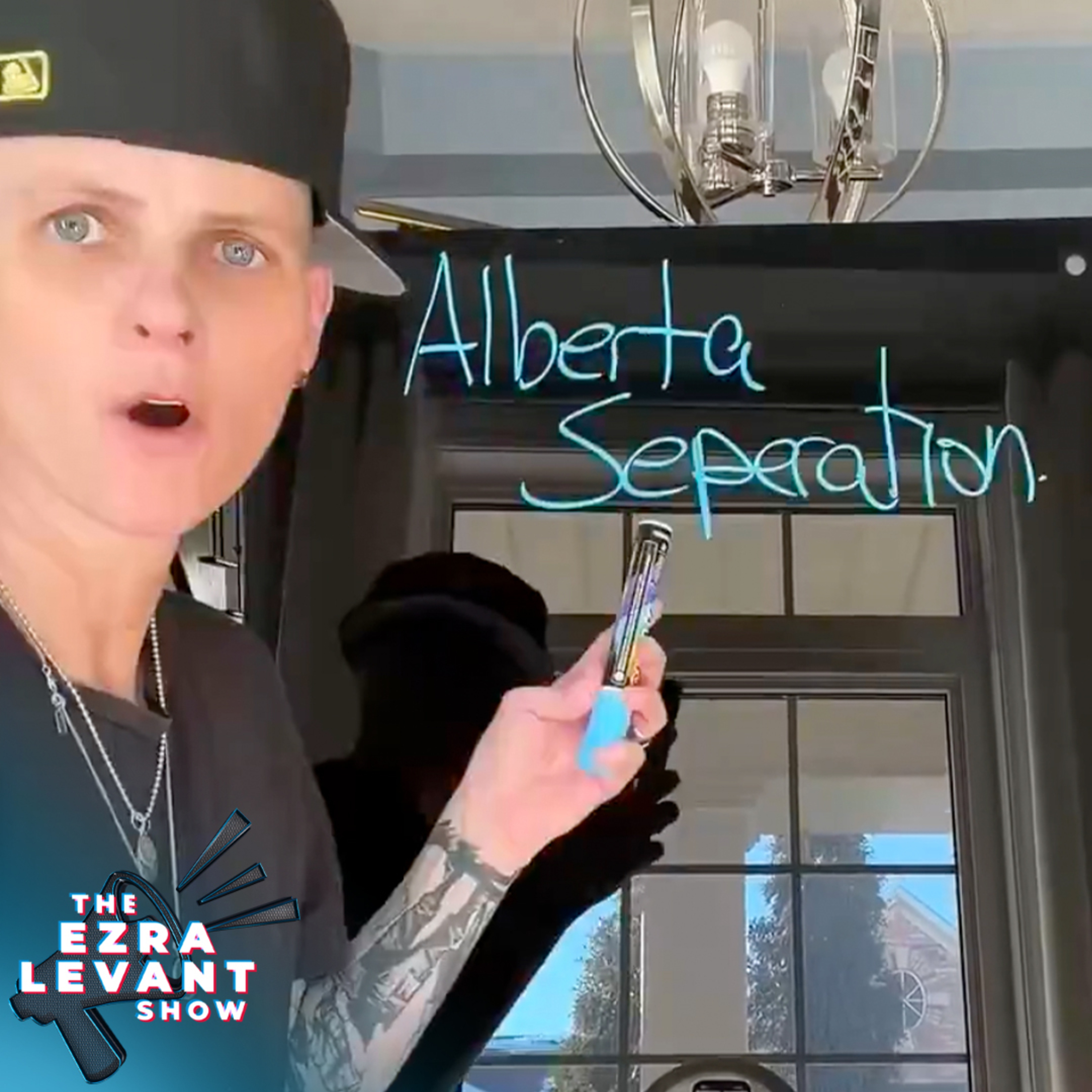
Rebel News Podcast
EZRA LEVANT | The case against the case against Alberta independence
00:50:22
While the media fawns over Mark Carney’s "central banker" aesthetic and his promises to "whisper" to Donald Trump, Albertans see a different reality: a return to the same globalist policies that have long suppressed Western interests. This growing divide was perfectly captured in a recent viral video from an Eastern "educator" who crudely attempted to lecture Albertans on why independence is a "stupid" idea. It was a masterclass in the very condescension that fuels separatism. Mocking Premier Danielle Smith and calling Albertans "potato men," the wannabe critic relied on a series of debunked scare tactics that fall apart under the slightest scrutiny. Listen to audio-only versions of RebelNews+ exclusive shows like the daily Ezra Levant Show, the Gunn Show, and audio versions of our DAILY livestreams along with other Rebel News long-form videos and interviews.
Loading summary
Transcript77 lines
- [00:00]
A
Hello, my friends. I saw this viral video of some. I think she's a teacher. They them style teacher. Just smashing Alberta independence with seven rebuttals, seven zingers. And I thought, I think she got all seven of them wrong. Anyway, I'll take you through them and you tell me, but first I want to invite you to become a subscriber to Revill News Plus. It's the video version of this podcast, which would help because I want you to see this teacher. You really have to see her to get the full feeling of what she's saying. Go to rebel news plus.com click subscribe. It's eight bucks a month and not only do you get the fun vids, but you help us stay strong because we take no money from the government. And it shows. Tonight, the case against the case against Alberta independence. It's February 3rd and this is the Ezra Levant show. Shame on you, you censorious thug. Oh, hi everybody. It's great to be back in in our world headquarters after an interesting time in Calgary at the Conservative Party of Canada. It was a very large convention. In some ways it felt anticlimactic. I mean, the one live question was, what would the support for Pierre Poliev be in the party given that he lost the last election? I mean, he was leading by up to 20 or more points for so long. And then it all evaporated. Mark Carney was very clever. He abandoned the carbon tax, at least on the consumer side, at least for now. And that was enough to take a lot of the stinger out. People were sick of Justin Trudeau, but they're not yet sick of Mark Carney. And he just generally came across as less radical and more grown up. He wears suits well and he looks like a central banker. Of course, the key issue was Donald Trump. And Mark Carney promised that he could finesse, he could whisper into Donald Trump's ear, he could handle it. I don't think Pierre Polyv quite figured out how to position the Conservative Party on that. Aided by the media whipping up anti Americanism, which has long been a inherent congenital disease in Canada, Mark Carney pulled it off. Pierre Poly have had an excellent showing, but excellent doesn't count if someone gets even excellenter. The total disappearance of the ndp, of course, was a factor, as always. So the fact that Pierre Polyethyle have got 87.4% of the People's support I think is encouraging. And it also reflects the fact that no one was challenging him. You can't beat someone with no one. And even for The Polyev critics out there, I challenge you. Who would be better? Who is a better policy wonk, who is a better debater, who is more energetic, Who's a better campaigner, who is better known? I put it to you, no one is. The only name that might come to mind would be Jason Kenney. But I think he is so discredited from the way he handled Covid in Alberta that he would have a very difficult time becoming the leader of the party. I saw that he was there at the conference as a kind of pundit, and I would say he was fairly supportive of Pierre Poliev, which I suppose was good enough. But I saw something just today in the newspaper. It was two old prime ministers. Stephen Harper, who's not that old, but he's a former prime minister now, two prime ministers ago, and Jean Chretien, who of course hasn't been in office in more than 20 years. He's basically been working for China since then. And you know, when two old lions like that get together, they. They reminisce and it feels sentimental, nostalgic. And in a way, I would take either of them as prime minister again. I mean, Stephen Harper was quite a good prime minister. He had some blind spots. He did not appoint Conservatives to the judiciary, and he allowed not only the CBC to survive, but he presided over the euthanization of Sun News Network, which to this day, I think has caused enormous damage in this country. Not having a Conservative counterweight to CBC and cdb. I don't know why Stephen Harper let it die those 10 years ago, but he did. Obviously, Stephen Harper would be a great prime minister to have. And Jean Kretjen, despite the fact that I was a Reform Party youth and I worked for Preston Manning, we fought against Kretjen every day. When you think back on it, he would be a. He would be totally at home in the Conservative Party today. He was for balanced budgets. He said Canada should be part of the Kyoto Protocol on global warming, but he never actually did anything about it. He didn't bring in a carbon tax. He just said, yes, I like carbon, yes, I like fighting global warming. But he didn't actually do anything about it. In fact, it's fair to say that he presided over the birth of the oil sands. He himself didn't do the investing or the hard work, but he put in place the regulatory framework and he kept the more extremist environmentalists like Sheila Cops out of the way. I put it to you that even on issues like immigration, Jean Kretshin is more Modest than either the Liberals or the Conservative Party today. Yeah, I would take Jean Kretshen as a prime minister. Again, he had a blind spot when it comes to Communist China, but, you know, again, he's a Taiwan loving, anti communist hawk when you compare him to Mark Carney or Justin Trudeau. So, yeah, two old prime ministers getting together. And the headline that the Globe and Mail chose, which I think is a fair enough headline, was that the two men thought that there should be a united front against Donald Trump. And I read that and I thought that's what two retired aging millionaires on huge pensions who are in a jet set. That's what they think about. That's what they think is important. We have to defend Canada's honor. We need a united front. We need to stare down Donald Trump. That's what old men who used to be prime ministers can say. But why wouldn't you instead say, we need a united front to save Ontario's auto sector, if you care about that. And I sort of do. You know, I want those auto workers to work. I want the steel factory, steel plant to work. Why wouldn't I? Why? Why wouldn't they say, let's stand with Canadian auto workers in a unified front? Why wouldn't they say, let's be a unified front to get a pipeline built to the ocean so we can sell our oil to other customers besides the United States? Isn't that interesting that what they chose to agree on was in a form virtue? Signally, Jean Claire Chen and Stephen Harper both agreed that what Canada really needs is to fight harder against Donald Trump. Hey, I have a question. Does that actually work? I mean, I know it feels good and you have your dignity, I suppose, but does it actually work? Do you actually get the trade deals you need? Do you actually save jobs? Because when you are a retired prime minister, I don't know what the size of their pension is. They probably get a quarter million bucks a year just as a pension, let alone all their business deals. I mean, these guys are millionaires. And fair enough. It's pretty easy to say, well, we want to sacrifice thousands and maybe, God forbid, millions of jobs so we can show that we're super tough. And boy, if I was Prime Minister, I'd take on Donald Trump this way. And if I was Prime Minister, I'd take him on that way. Yeah, no, you wouldn't, because you would understand that 80% of our exports go to the United States. And so you would have to be a diplomat. And by the way, Stephen harbor knows that he was the prime minister when Barack Obama was president. And the two men couldn't be more different in every everything, ideologically, aesthetically, historically, culturally, economically. But they both managed to keep it together and they worked with each other because part of being a president or a prime minister sometimes is to be diplomatic. So, yeah, they, they agree that we need to talk tough to put Donald Trump in his place. Thank you very little. But you would destroy our economy even worse than this being destroyed. And I think that this whole bizarre battle that the Canadian soft left anti Americanists led by Mark Carney are having and just cheered on by the media, I think it's one of the reasons why Albertans are more separatist now than they were a year ago. Obviously Pierre Polly of losing and Mark Carney winning was an awful sign. And it was a sign that confederation just doesn't work for the west and you just can't get rid of the liberals and they can demonize the west and to the delight of Eastern voters and win. But it's gotten worse over time. And I think it's Westerners watching the absolute comedy, the absolute circus of Mark Carney being unable to get anywhere with Donald Trump and instead pledging a new world order led by China and flying to Qatar, another human rights abuser, and going to the World Economic Forum. And I think Albertans are saying that whole circus, that's what you want us to stick around for? We were contemplating independence anyways. And what you're offering instead of this beautiful independent Alberta that would instantly be one of the richest countries in the world, what you're offering instead is to be trapped in this runaway freight train with Mark Carney disparaging America every day and realigning with Qatar and China and the World Economic Forum. So I think actually the incompetence of the federal government, the increasing taxes and debt and spending, I think it's just making things worse in the so called MOU with Alberta that might permit a pipeline in the future. I don't think that convinced anybody. Anyways, that's my preamble. I came across a video on Twitter. The last I looked at had about 150,000 views on it. And it's someone who, I'm not sure if they're really a teacher, feels like a teacher who is giving a little lecture to Albertans on why they're really stupid for considering independence. And I should tell you, the new ecos poll puts the number of people contemplating independence at 41%. Now the thing is with 41% is it's not 50%. It's not a majority. But you can better believe that those 41% are extremely motivated. And I think there will be a referendum in Alberta this year. So here is an attempt by an Eastern woke sneerer. I don't know their pronouns. I'm guessing they. Them. Let me play it for you. And I'm doing this because I'm noticing the number one response to people in Alberta who are talking about independence is to mock them, sneer them, insult them, and basically say, we don't care what you decide. You're not leaving. As if they actually love Albertans instead of just the money they extract every year. So I want to play this video for you and I'm going to have a little. We'll pause it along the way and I'll just give you a few of my reactions. And I'm calling my comments today the case against. The case against Alberta. So go ahead and click play. I think this is a gal. Go ahead.
- [11:40]
B
So Danielle Smith, premier of Alberta, is leading about 275 Albertans to think that separation from Canada. Canada is really a plausible idea. Time to get the board.
- [11:51]
A
Okay.
- [11:52]
B
Smith would just sit in on my grade eight class. All of this would actually be easier for her to understand.
- [11:58]
A
Yeah, she's so dumb, isn't she?
- [12:00]
B
Ignore the glare. It's gonna work out. Don't worry. Don't worry. It's new. But I like the picture in picture thing we got going on here. Stand by for the markers. This could be messy. Nobody really knows. Alberta separation.
- [12:15]
C
Oh, that's pretty.
- [12:16]
A
Okay, stop for a second there. You notice anything there? Oh, just move it so her head's not in the way. This teacher, this scholar who's. Who's already mocking Danielle Smith for not being the sharpest knife in the drawer. She spelled separation wrong. Now that's okay. It's a tricky word to spell. But when you're mocking a premier as stupid as she just did to Daniel Smith and she's about to call Albertans stupid potatoes like they're ugly and fat and dumb potatoes, it's best to make sure that you yourself don't come across as stupid. But let's listen to her points. Why Alberta separation? Separation is a bad idea. Go ahead, play the rest.
- [12:58]
B
That's pretty. Come a little bit closer so you can get a front row seat. I'm going to give this little band of potato men trying to make deals with down south 7 legitimate significant reasons why secession is a bad idea. Oh, can somebody explain to them what secession means? I Don't have time.
- [13:15]
A
Okay, stop right there. You're so stupid, you Albertans. You don't even know what secession means. You know what? I think that most Canadians probably wouldn't know what secession means had we not been put through the 50 year psychodrama of Quebec talking about secession. The two referendums, including one in 1995, that came within half a point. And not just the secession referendums, but the response by the political system in Canada to give Quebec tens or hundreds of billions of dollars to placate them. So in that regard, she is right. If we had never been forced to watch and then buy off Quebec separatism, we probably wouldn't know what the word secession means. Although anyone who knows the US Civil War would know the word. But you see what I'm talking about here. We haven't even got into the substance of it. And she's called Danielle Smith stupid. She's talked about potato man. Maybe she's talking about Jeffrey Rath. By the way, if I looked like this person, I wouldn't be criticizing people's appearance as my first point. And she spelled separate separation incorrectly. And she's saying we don't know what secession means. There is a commonality here. There's a theme here, if you haven't noticed. It's called sneering at condescending to mocking Albertans. I don't think that persuades anyone. Just a theory. In fact, I think it makes people angrier. And it confirms a stereotype that many Albertans have that the rest of the country looks down on it, sneers at it, treats it as second class, but demands the money, don't they? Anyhow, keep playing.
- [14:54]
B
Economic devastation. Capital will leave, corporations will leave, people will leave. This will devastate your tax base and in all fairness, collapse your housing market. Is that what you were going for?
- [15:09]
A
Stop for a second there. You do know that Alberta is by far the largest net contributor to confederation. Over time, it's in the hundreds of billions of dollars. Every year, it's in the tens of billions of dollars. That's money that leaves Alberta, goes to Ottawa and is redistributed, partly pays for Ottawa's successes and is redistributed to other provinces through redistribution and transfer payments. The idea that Alberta, unhooked from its obligations to bail out Ottawa, would be economically devastated is precisely the opposite of what so obviously will happen. I have no doubt that there would be some dislocation and discombobulation. But all the oil companies in Alberta, they're not going to Move. Because the oil is still there. Suncor, Syncrude. I'm. There's 100 oil and gas companies to name. They're gonna stay where the oil is. They're not gonna. The day after a referendum, they're not gonna stop drilling. People aren't gonna suddenly stop buying Alberta oil or gas. It's just not gonna happen. I would worry for the Canadian dollar the next day because if Alberta voted to separate, I would imagine the Canadian dollar would lose 5 cents in a single day. There would be economic devastation, but I don't think it would be for Alberta here. Keep playing.
- [16:33]
B
You think taxes are bad? You're gonna try the whole tariff thing as well. Are you gonna explain to the people it's still them paying the tax?
- [16:42]
A
Okay, stop for a second about that whole tariff thing. Alberta's a massive exporter. That tariff argument doesn't make any sense. Donald Trump uses tariffs on companies that want to. On countries that want to ship goods to America. He says you can only do that if. If we charge a tariff on them. Alberta's not going to charge tariffs. Alberta is actually a very free trading kind of place. Alberta, though, has an enormous amount of oil and gas that it sells to the United States. And the tariff is already on. I think it's 5% or 10%. Something very modest because you can't really tariff oil because it's a global commodity that's priced globally. Donald Trump knows that. And actually, Alberta and America are very strongly connected through the free trade agreement that Trump obviously negotiated and wants the idea that tariffs. That Alberta would put tariffs on its export. I just don't even understand what she was saying, but she sure sounded certain about it and certain that everyone else was pretty dopey. Keep playing.
- [17:50]
B
Land locked vulnerability as a land law. Newly independent Alberta, you're gonna lose guaranteed access to pipelines and tidewaters instantaneously.
- [18:06]
C
Oh, oh, oh.
- [18:07]
B
Were you gonna rely on the rest of Canada to pick up the slack and make you guys economically solvent? Interesting. Or were you gonna rely on the potato down south to swoop up and save you and rescue you and build you up to a sover that you wish to be? Are you that dense? Number three, let's stop for a second.
- [18:31]
A
I mean, maybe I am dense, but the way I see it is Alberta's landlocked now, as she says, and the other provinces block Alberta's access to the sea right now, as she says. I mean, isn't that the entire problem? We've been talking about the proposed pipeline from Alberta to New Brunswick. Called Energy east, blocked by Trudeau. The northern gateway pipeline to the North B.C. coast block. There is no access within Canada to Tidewater. And I mean, I suppose she's not from Alberta, so she doesn't know that. That's the whole thing is we're being. Alberta is being extorted by Premier Eby and this ngo, this US funded NGO called Coastal First Nations. Mark Carney met with Coastal first nations and said he met with First Nations. That's the brand name. That's the name of the corporation funded. It's not an Indian band. There's not an Indian band called Coastal First Nations. It's a lobby group that he met with. They currently have a veto. And you've heard that EB and Coastal first nations lobby groups say they have a veto. It's not true in law, but politically it's de facto. And Mark Carney has said, yeah, in this mou, he's offered Alberta. It's a de facto veto. So the answer is Alberta would probably get better access to the sea as an independent country because there is a concept of international law in allowing landlocked countries access to the sea. But I say again, do you doubt for a second that the United States wouldn't take all that Alberta oil? You saw Secretary of Treasury Scott Besant say that just the other day. Remember this, with all the oil and the natural resources coming out of Canada, Texas still larger. Well, look, Alberta is a wealth, wealth of natural resources. But they, they won't let them build a pipeline to the Pacific. I think we should let them come down into the U.S. and Alberta is a natural partner for the U.S. they have great resources. The Albertans are very independent people. Rumors that they may have a referendum on whether they want to stay in Canada or not. Sounds like you may know something up there. Look, people are saying, people, people, people are talking. People are talking. People want sovereignty. And Trump himself has said he wants to revive the Keystone XL pipeline. Remember this?
- [21:00]
C
He says our country is doing very well.
- [21:03]
B
And he was just thinking about the company that was shooed away and canceled.
- [21:07]
C
By the Biden administration who wanted to build the Keystone XL pipeline. He is inviting them back. We want the Keystone XL pipeline built.
- [21:15]
B
He wants a pipeline built in the Northeast, in New England, where I am from, where we have some of the.
- [21:19]
C
Highest electricity and utility rates in the country.
- [21:23]
A
So I think she inadvertently makes the point. There is no access to Tidewater for Alberta. Now, Mark Carney's offer in the MOU to Alberta doesn't guarantee, in fact, throws problems and blockades in front of it. Whereas Donald Trump and his cabinet have. Have each said that they would love a southbound pipeline. Yeah, I just don't think this person knows much other than how to be condescending. And I don't know, but maybe I'm dense.
- [21:49]
B
Keep playing this in the brochure. Massive transition costs. You're a brand new country, guys. You're gonna need a military, you're gonna need a currency, you're gonna need passports, you're gonna need trade relationships. You're going to need everything. You have been depending on the rest of Canada, we four. Oh, and you're definitely going to need border security because, you know, somebody from down south is just going to swoop up and take you over anyways.
- [22:18]
A
Number four, if you stop that for a second. A bit of a comedy there about an army. Canada as a whole needs an army. We really don't have one that's able to defend our country. As I've mentioned on various shows, whenever there's something incurring an incursion in Canadian airspace, it's a US jet from Alaska or Washington that scrambles to get it. When that Chinese hot air balloon came over, Canada's air force was unable to stop it. It was Americans that were scrambled, saying that Alberta wouldn't have a military because Canada is sort of funny because Canada doesn't have much of a military, but there would be soldiers. There is a military base in Alberta. And if those. If there was a question about who those soldiers would work for, well, you could just recruit new ones. There's no threat of an invasion to Alberta, but that is one of the things that has to be negotiated. That's probably one of the biggest ones. Getting passports is pretty easy. And I think anyone who has tried to get a passport in the last five years and knows how slow and expensive it is wouldn't exactly say that Ottawa is giving us great service there. There are some things that would change, but they're so modest. Trade agreements. Alberta does the vast majority of our trade with the United States, and we just heard from Trump that he wants that oil to keep coming and he's got a very light tariff on it, which is practically zero. I think this person doesn't understand that Alberta is very integrated with the United States right now, over oil and gas, mainly, and agriculture to a degree. But why would that change just because the rest of Canada is so hostile and condescending to Alberta? I think America would be so welcoming. It would be incredible. Here, let's keep watching. She's about to get desperate with her points. Take a look at this.
- [24:07]
B
Fiscal challenges. I know Danielle knows this, but for her base that's so easily convinced and manipulated, Fiscal is about money, fellas. So with your newly found independence, you're losing all federal support systems. There goes any money for health care, education, social services of any kind. And I realize you're trying to privatize everything already so nobody has access to anything. Do the people of Alberta know that's what you're planning, or is that just in your head? Number five.
- [24:40]
A
Okay, stop for a second. Those three things that she outlined, healthcare, education and social services, those are all under the provincial jurisdiction. As you know, in our constitution, there's certain things that the federal government does. The criminal code, the army, and certain things the province does. Hospitals and schools are really the two biggest ones. I don't think she actually knows what a provincial budget looks like. It's not just Alberta, it's every province by far. The massive budgets in provinces are healthcare, education is beneath them. Beneath that, that's already taxed and paid for by the province. The government of Canada does not pay for schools in Calgary. There may be some transfer payments, but they're rounding errors compared to how much is spent. And by the way, how much Alberta sends to the rest of the country. I just don't think this gal really knows how it works. But she's extremely certain of herself, isn't she? Keep playing.
- [25:35]
B
Indigenous rights. The first nations community within Alberta was there long before you. Now, we're not just talking about who is there first. We're talking about an indigenous community that has established treaty rights with the Crown. Before Alberta's inception as a province, not only were they first, but they have legal right to the land that you think you can just pull out from under them. Now, I realize Danielle and her ilk really don't care about Indigenous rights, but I would really like you to push this to the limit so they could take you to court and wipe the floor with you. It would make my heart grow three sizes. 6.
- [26:19]
A
Stop for a second there. Can I invite you to do something that I think you would find very interesting? Can I invite you to read one of the many treaties with Indian bands signed in Canada in Alberta? Treaties 6, 7, and 8? You can Google them very quickly. I think one of the reasons why they're not, in common parlance, why people don't talk about them a lot is they're actually. I mean, they're very gentle and cordial. But in the very first sentence, what these treaties are is outlined And I'm sorry to break it to you. They are treaties of surrender. The word surrender is right in there. These Indian bands surrender their rights and in return they get a small Indian reserve and they get certain annual benefits, health and education. They were described usually in the language of the 19th century. Those are their. They have certain rights under the treaty that would continue. As this person actually noted, the treaties were signed before Alberta was technically a province. Alberta becoming a province didn't interfere with that. If Alberta became some other entity, it would respect those treaties and so would the Indian bands that surrendered. I'm not trying to be mean, but it was a surrender of a militarily weak society to a dominant military society. We don't like to use words like conquer because we want to be respectful and generous to our indigenous friends. But those treaties cannot and will not stop the destiny of Alberta. Not legally, not constitutionally. And by the way, implying that Daniel Smith is a racist or something is just simply a cheap shot. And I'm surprised it actually took this long for her to make it. Keep playing the video.
- [28:07]
B
Pension complications. Oh, were you under the assumption that Canada was going to pay for your CPP when you left? And number seven.
- [28:17]
A
Okay, stop for a second right there. Right now, the federal government is hiding from Alberta the. The accounting breakdown of how much money Albertans contribute versus other Canadians. And the reason they're doing that is because Alberta has so much higher GDP and they have a high labor participation rate and their workers are younger. It's such an economic tent pole for the whole country. It's so obvious. The reason why the federal government is literally hiding these numbers and the province of Alberta may have to go to court to get them is because Alberta is a massive over subsidizer of the Canada pension plan compared to say, and again, I don't want to pick on them, but let's say Newfoundland or Quebec. But here's the thing, and it's an interesting question. I first thought about last year when someone said, would you still be able to keep your Canadian passport if Alberta separated? Would you still be able to get your pension? Well, why wouldn't you? I mean, you can keep your passport. If you live in Florida, you can keep your passport. I mean, would the federal government say, hey, everyone who is a resident of Alberta no longer has a. That just doesn't even make sense. And if you contributed in your pension for years, that's an individual thing. It's not a where you reside or it's certainly not a how you vote thing. Now I'm sure that the pension would be one of the big things that was negotiated right at the top. But as I say again, that's a massive subsidy from Albertans to the rest of the country. All right, I think we're almost done. Go ahead.
- [29:57]
B
Reduced trade leverage. Do you really think as a tiny little independent nation that you're going to have a better trade advantage to negotiate with the United States of America? Have you ever taken a class on power dynamics? Do you understand history at all? Do you understand, understand what that's going to do to your oil industry? Because let me tell you, folks, they're gonna walk in, they're gonna take what they want to take. They're gonna make you bend that knee and kiss that ring. And then he's gonna walk around telling everybody how he turned you into the 51st state with actually no political power whatsoever. Hey, Danielle, can you clean off my board? I don't have time for this.
- [30:49]
A
Yeah. Does Alberta have any political power within Canada right now? The election, the federal election is usually decided before the polls even close in Alberta. Alberta is grossly undercounted in terms of seats. I mean, compare the four seats that little P.E.I. has. The P.E.I. has about 140,000 citizens. It has four seats in Parliament. Alberta has over 5 million. Proportionately, it would have double the seats if it were on par with the. With the Atlantic Provinces, the Supreme Court. There's a set aside of three out of nine seats for Quebecers. There's so many things in which Alberta is underrepresented or completely absent from. Bilingualism is a way of keeping Albertans out of federal government jobs. To say that Alberta is an equal right now is not true. And to say that Alberta is. The entire implication of that hectoring, condescending speech is that Albertans don't know how good they have it and that Alberta would be desperate if it was disconnected from Canada. The only thing that's keeping Alberta going is Canada. It's just astonishing to me that this has 150,000 views, although they could be hate views, people watching it to laugh. I think every single fact in there is wrong, including how to spell separatism. But the idea that Alberta, the poor cousin that needs to take a raw deal within Canada, that it can continue to be smeared every day by the CBC. And this hour is 22 minutes, mocking Alberta and Danielle Smith in a way they would never do for any liberal or eastern politician, that Alberta has to be liberated of its money so much so that the government will hide how much they're taking. That Alberta's industry can be cut off from the coast in a way that would never happen for an industry like Ontario's automobile industry or Quebec's air industry. I think the fact that they're sneering and they're hating means they don't realize, or maybe they do realize that Albertans are more and more deciding they've just had it. I think the ones who are so angry and bitter and insulting, I think they're doing this to make themselves feel better. Because I really don't think a single Albertan would be persuaded by that presentation. Other than Albertans who are already anti Alberta and pro Mark Carney. There are a few of them. I tweeted that if that gal were put on a speaking tour in Alberta, going from town to town, from Red Deer to Pincher Creek to, you know, to actually small towns and the big cities, too, she would generate so much hatred, just like Mark Carney does, just like Justin Trudeau does. I think she would push independence over the top. What do you think? Stay with us. More ahead. Well, I'm back at our world headquarters, but I sure enjoyed our brief visit to the Conservative Party of Canada convention in Alberta. We had a really big team on the ground. We had five journalists, if my math is right. And then we had a party at a local pub, the James Joyce. It was packed. In fact, a couple of people, I think, were turned away for fire code reasons. I very much apologize for that. I don't know. We just jammed it, packed. I think Rebel was a hot ticket that night. One of my favorite parts about it was the deployment of Tamara Leach as a rebel journalist. Now she's been doing journalism for us here and there, including on the streets of Toronto, doing streeters at young Dundas Square. But it was amazing just watching her at the convention. She was being asked to take a selfie every five minutes. Here's a little snippet of how that looked. Well, she wasn't just saying hi to people and taking selfies. She was doing journalism. She was journalism ing, including interviewing members of Parliament. And here she is to talk to us about it, our dear friend, Tamara Leach. Great to see you.
- [35:02]
C
Nice to see you. Thanks so much for inviting me on tonight, Ezra.
- [35:06]
A
Well, you know what? It was a pleasure to watch you, and I'm glad you were working with some of our serious pros. I mean, Sheila Gunn Reed, our chief reporter, was there. Lise Merle came in from Saskatchewan. Sidney Fizard and Angelica Toy from Calgary. I thought it was pretty fun. I thought it was like the Whole gang was there. It was a big crew for Rebel News.
- [35:25]
C
It really was. And you know what? Look, I'm so grateful for all their help and their guidance. Obviously, I'm a rookie, and so, you know, to have all of them there, you know, with their experience and knowledge, was definitely invaluable to me. They provided me with a lot of really great tips and helped me, you know, go track down some mps for some stories. And it was a great team. I had a wonderful weekend.
- [35:46]
A
Well, it was a pleasure to see. Now, let me ask you. I got there a little bit late because I was a little under the weather, but when I arrived, you were in the thick of it. You were interviewing, in fact, your own mp. Give us a minute on who that is and then we'll throw to a sample of that clip.
- [36:02]
C
Yeah, you bet. I had the opportunity of running into and interviewing my own mp, Glenn Motz. Now, a lot of people will remember that Glenn was trying to be very helpful very early on in the convoy days. And, you know, he did try very hard behind the scenes to facilitate meetings between Freedom Convoy leadership and other members of cabinet like Omar Al Gabra, who was the transport Minister at that time, Marco Mendocino. There was. There was a few other ones that he really tried behind the scenes to facilitate those, but he was shut down at every turn. And then, of course, he was very instrumental in the committee meetings into the Emergencies act that took place shortly after the. The convoy ended. So it was really good to talk to him and get some of his thoughts on what he was doing behind the scenes both during and after the protest.
- [36:55]
A
I didn't know that. My esteem for him has just risen tremendously here. Let's throw to a clip of your interview. Take a look.
- [37:02]
C
Good afternoon, Glenn. It's so great to see you here today. So I've heard that this is the largest convention, Conservative convention that.
- [37:10]
D
Yes. I just talked to one of the party officials.
- [37:12]
C
Officials.
- [37:13]
D
And this is the largest one on record with largest number of delegates and the biggest number of people registered so far. Registration is still open, so it's fantastic.
- [37:22]
C
Yeah, good. Congratulations on that. So I've known you for quite a few years now, and I remember, you know, during the time of the Freedom Convoy that we connected there. And you gave me some very good advice when. What was the efforts that you took following the convoy to sort of get to the bottom of what happened?
- [37:43]
D
Well, I'm P. Larry Brock, and I served on what was called the Declaration of the Emergencies Act Committee. And so we spent the better Part of two and a half, three years following the invocation of the act to speak with government officials, we brought in Parent Beatty, who wrote the Emergencies act back, you know, back in the day, we tried to get to the bottom of what information does the government rely on. And it became very clear early on that they were less than transparent and they certainly didn't want to be accountable.
- [38:19]
C
And we can go back even farther, what efforts on behalf, like trying to make those connections. While we were in Ottawa, I remember that you were trying to. You were trying to start some conversations between some of the organizers and you.
- [38:34]
D
And I chatted while you were in Ottawa and I said, so, so what is it that you guys really want to get? What message do you want to get across? And we talked about, you know, those wanting to hijack your message and not letting them hijack your message. And the other thing is, I asked you, have you had an opportunity to connect with government and like, what is it you wanted?
- [38:53]
A
And.
- [38:53]
D
And you said, we just want to be able to tell government officials. It doesn't have to have to be, you know, any. In any great venue. It can be, you know, one on one, it can be on the phone, it can be any way like that. The impact that the, the invocation, the invocation of the act, because it wasn't. Didn't happen then yet.
- [39:11]
C
Right.
- [39:11]
D
But the, the whole response to Covid, how it was impacting the livelihoods of Canadians and that's what people were coming down there for.
- [39:20]
A
Well, good for you. I didn't know that. And it's, I tell you, it's sort of fun to have that come full circle. Now you are a rebel journalist interviewing the MP about his take on the convoy. It's sort of interesting how life goes sometimes. Who else did you interview? I think you were telling me you were. And again, I'm sorry I wasn't there for the whole thing. But tell me some of the other MPs that you interviewed.
- [39:44]
C
Yes, I had the pleasure of interviewing former MP Michelle Ferrari. She was fantastic. She's a really passionate lady. That was a great interview. I really enjoyed that one. I also got to interview Andrew Lawton, who obviously we love him. Very instrumental. Yes, yes, he was, he was, along with Rebel News, one of the very first independent journalists on the ground in Ottawa to document what was really going on. Of course, he wrote a book and now he's an MP in London, Ontario, and a very good friend of mine. So that was great. And then my final interview was with BC's Powell River MP Aaron Gunn, who, who I've been a fan of for quite some time, long before he was even elected as a Member of Parliament, I think, you know, he did some documentaries. The first one that I saw was, I believe, called Vancouver is Dying. And then he did another one called Canada's Dying, and they were very eye opening and quite impactful. So really an honor to meet him too. And, and so grateful for the chance to interview him as well.
- [40:44]
A
You know, I just want to give you a personal thought and I. Maybe this isn't professional, this is more emotional, but to see you interacting with these people of high station, with these people of public authority, these people who have won elections, these are public officials. To see you interacting with them on a peer to peer basis, talking about the business of the nation, gives me tremendous hope and pride. Because they tried to denormalize you. I don't mean these MPs, I mean the system, the government, the Liberals. They tried to denormalize you. They tried to criminalize you, they tried to destroy you. They tried to silence you, they tried to break you. And I can only imagine what it was like spending 49 days in jail. I hope I never have a chance to find out what it's like. You went through that whole thing and you came out the other side and you're more powerful than ever, a bigger platform and voice than ever. And just to hear you just these past five minutes describing going toe to toe with leading public figures, talking about the substance of our lives, that's just a wonderful ending to the story. And it's not an ending, it's a new chapter. It's a wonderful new chapter to the story.
- [41:58]
C
Yeah, agreed. And you're right, I think we're just starting. I think we're just beginning something really great. And it is full circle, really. You know, these were a lot of these people, and like you said, not the Conservative Party themselves necessarily, but the people, their peers, you know, or the people that we were just really trying to have a conversation with. Just like I just did with the MPs at the CPC convention. All we ever wanted to do was sit down and have a conversation. So, you know, this does feel, you know, a little bit full circle, and it can only get better from here. So I'm really excited for what we're going to do in 2026. Ezra.
- [42:36]
A
Well, we're just so proud to be associated with you here at Rebel News. And thank you to all our donors who have made the TAMARA Project, as we're calling it, come true. One of the things that we didn't need to do last week when was provide security because we were in a high security environment. But one of our pledges to our viewers is that when you're out in the world that we would have security with you because even some of the people you mentioned there, you know, they get jostled. And we've seen, you know, Francis Widdowson in British Columbia get jostled. And so one of our pledges to you is that we will make sure that you are safe wherever you go. And one of the things we also do, and I'll just mention this in closing because some people are still confused, you are complying with the terms of your house arrest because our employment arrangement with you is an exemption to that. So we do a lot of red tape, we do a lot of checking in with the probation officer. But what we're doing is compliant, right?
- [43:33]
C
Absolutely. I am exempt from my house arrest for necessities of life, for emergencies, for my community service and for work. So obviously we have to take all the extra steps. It is a lot of extra steps as far as scheduling departure times, arrival times, where the event is at, where I'm going to be eating. So there's a lot to it. Ironically, I happen to be a logistics expert, self proclaimed, mind you, so, you know, it's not, it's, this is not stuff that I'm not used to doing already, but I did take it for granted, of course, the last few years just being able to come and go as I please. But it's definitely, we can definitely navigate it and I think we're doing a great job. My CSO has been very happy so far. I've been completely compliant, make sure that I have my papers on me at all times. And, and you know, I've also got, you know, like even at our event on, on Saturday night, Sheila was very firm and, and, and, and ready to get me, you know, out of there and back to my hotel room on time. So, so I got a great team around me and yeah, I think it's going to be a good year.
- [44:42]
A
We've got to protect you, protect Tamara at all costs. Well, it's great to see you. Thank you for the report. Let's close this segment. I'll come back in a second with some letters to the editor, but I want to play just a little bit of your interview with our dear friend Andrew Lawton, who we really got to know when he was an independent journalist. And by the way, he would go with us to Davos Switzerland to cover the World Economic Forum. Now he's a big shot in the Conservative Party. Let's just play a couple of moments.
- [45:06]
C
I love watching you in the House of Commons. I mean, you've just, you're such an inspiration, I think, for so many people that want to get involved in politics. And I just want to say, you know, I watched your Exchange with Stephen McKinnon the other day in the House, and, and I was obviously unimpressed with his, with his answer. I mean, what did you think of that? Well, I.
- [45:28]
A
Look, I mean, I didn't ask the question expecting an answer, but I had hoped that there would be one. And one of the big frustrations I've seen is that the Liberals will want.
- [45:36]
C
To claim credit for things that Justin.
- [45:37]
A
Trudeau did when it suits them.
- [45:39]
C
And then when it's something controversial, they.
- [45:41]
A
Say, oh, this is a new government.
- [45:42]
C
We have nothing to do with that.
- [45:43]
A
And the exchange you're referring to, I was asking if the Liberals will accept the Federal Court of Appeal ruling on the Emergencies act and accept that they.
- [45:51]
C
Violated the constitutional rights of Canadians or.
- [45:53]
A
If they would appeal it and he.
- [45:54]
C
Wouldn'T give an answer.
- [45:56]
A
And again, it's another example of they're trying to disclaim responsibility for this Trudeau era decision.
- [46:03]
C
But now if they appeal it, they have to own that decision and they have to basically own that they do not believe they broke the law, even.
- [46:09]
A
Though two courts have ruled that they did. Well, there you have it. Tamara, great to see you. And we look forward to seeing you on the next journalistic mission.
- [46:17]
C
Yes, I'm planning to head down to Shaunab in Saskatchewan tomorrow. So if that works out, I'll have a report for you coming in very soon.
- [46:25]
A
Well, that's great. You're getting out there. What a delight. Thank you, my friend.
- [46:29]
C
Thank you so much, Ezra.
- [46:30]
A
There she is, Tamara Leach. Very proud to have her on the team. Stay with us. Your letters to me next. Hey, welcome back. Your letters to me. By the way, isn't Tamara Leach great? I mean, I know I got a bit personal there, but I feel so satisfied that instead of her being kept in house arrest, kept out of the world, that she's out there and we're doing it lawfully and it's working. I think she's becoming a great journalist. I think she's more than a journalist, though. She's an ambassador for freedom and civil liberties. And for the little guy, the underdog. Anyways, don't mind me, I'm gushing a bit. Forgive me. Here's Some letters that you sent to me. Claudia Obertan says, I find it extremely rich and very offensive that this hour has 22 minutes feels justified in mocking the conservative side while at the same time getting their funding from Canadian taxpayers, many who vote Conservative. Why don't they decline this funding and fundraise for themselves? I'm positive if they had to sink or swim, they would mostly sink. I think you're right about that. You know, there's certain things that you just get better at by doing and failing and then getting up and failing. And I have to think, I'm not an expert in it, but I have to think that stand up comedy or comedy sketches is one of those things, like being a talk show host, like being a door to door salesman. It's the kind of thing you just have to flop at, fail at a thousand times before it works or it doesn't work at all and you quit and get a different job. And by getting a government gig, it ends that meritocracy because you're just being subsidized because you tell anti conservative jokes, you talk about liberal policies with a laugh track and you get paid for it. So you think you're a successful comedian, but you're not funny at all. Funny comedians work endlessly. Workshop their jokes, fix them, try them out. And 99% fail. Only 1% succeed. And I'll tell you one thing they ate on this hour is 22 minutes. Next letter. Thank you for sending them. Mickey Moday says, very well said. Trump's bringing back the American system and it's killing the elite globalists as they are in panic mode. You know, as I said at the outset, I mean, Jean Crichet and Stephen Harper, they're actually more alike than they are different. I think ideologically, policy wise and even in their temperament, they're both, they have sort of dry senses of humor, but they're both old men. I mean, Harper's not that old, but he's getting up there. And so they think in terms of the sweep of time and legacy and honor and those are all good things. But for them to say we got to take on Trump, put him in his place, we need united front against Trump. That's not going to help this country. And I think, I really believe that that mess is one of the reasons why Alberta separatism is increasing. Albertans are just saying, if that's you, if that's what you're doing, if that's what you're spending our money on, if that's how you think Canada is being an anti American battering ram, which is so stupid because you're going to lose those auto factories. Maybe we'll try it on our own. That. That TikTok video of that gal just sneering. Oh, Alberta, you're going to be devastated. Yeah, no, I don't think so. I think the one thing Trump does want from Alberta is, is our oil. We'll see how it goes. That's our show for today. Until tomorrow, on behalf of all of us at Rebel World headquarters, to you at home, good night and keep fighting for freedom.