← Rebel News Podcast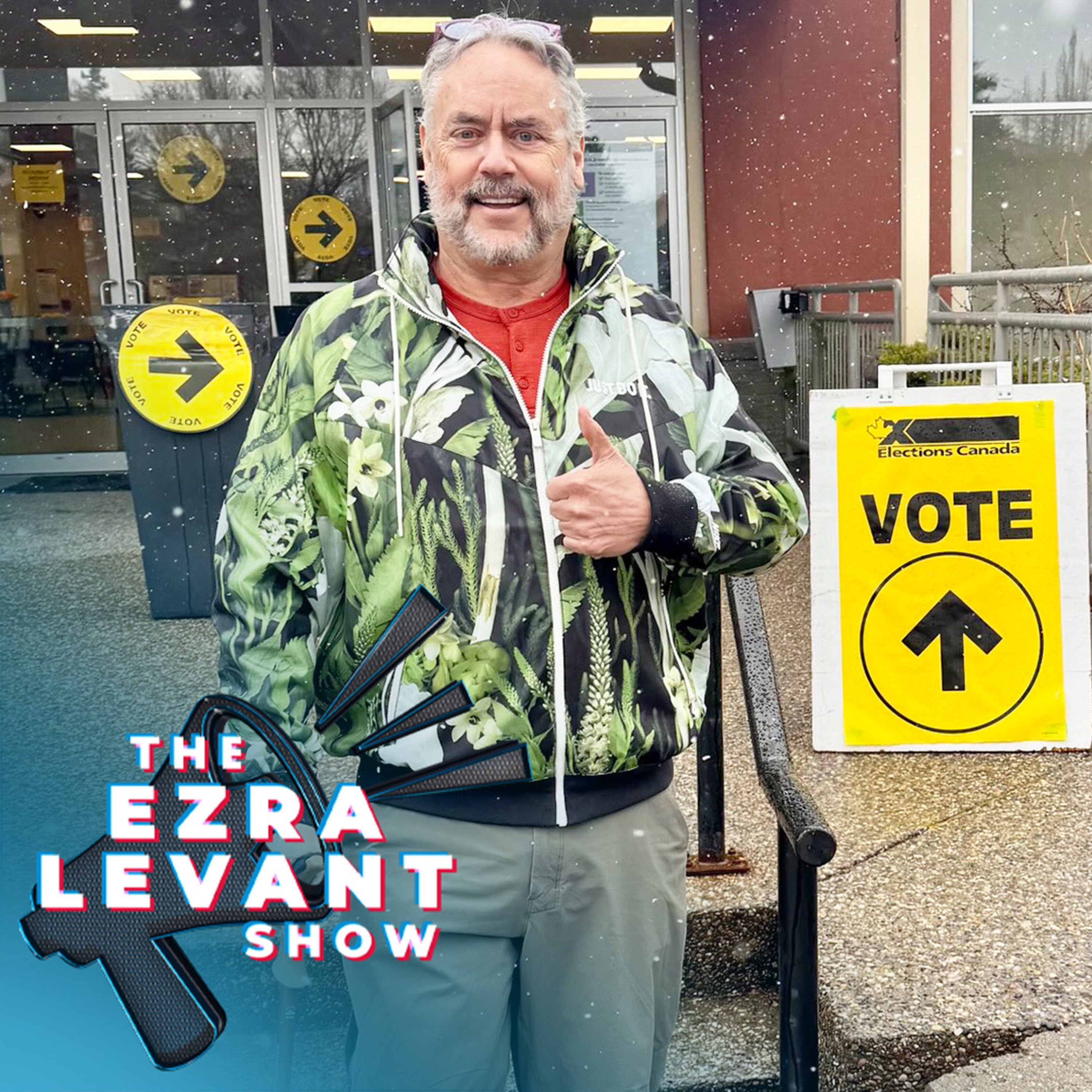
Rebel News Podcast
EZRA LEVANT | The future of Alberta: A special interview with Brett Wilson
00:28:55
Tonight on The Ezra Levant Show, a wide-ranging conversation with Calgary businessman and longtime Alberta booster Brett Wilson about the province’s political future. Listen to audio-only versions of RebelNews+ exclusive shows like the daily Ezra Levant Show, the Gunn Show, and audio versions of our DAILY livestreams along with other Rebel News long-form videos and interviews.
Loading summary
Transcript57 lines
- [00:00]
A
You know, Brett Wilson is one of my favorite guys. He's such a great Albertan. He's such a community man. He's a philanthropist. I got to know him when he was a leading investor and entrepreneur in Alberta, and he cares about Alberta and politics and charity. What a perfect guy to talk to about the future of Alberta and the independence referendum. Today, a feature interview with Brett Wilson. But before we get to that, please do yourself a favor and me a favor, please, by signing up for what we call Rebel News. Plus, that's the video version of this podcast. Just go to rebelnewsplus.com, click, subscribe. It's eight bucks a month, which might not sound like a lot to you, but it sure adds up for us. One more thing.
- [00:40]
B
How much longer is Alberta supposed to bankroll Ottawa's failures? How much longer are we going to be told to shut up and pay Equalization? Energy blockades, federal overreach. It's enough. Rebel News is taking the fight on the road with the Alberta Independents tour, live in person events all the province, featuring me, Sheila Gunn Reed, Freedom Convoy leader, Tamara Leach, and Western standards own Corey Morgan. No censorship, no mainstream media spin. Just hard facts and a real debate and conversation about Alberta's future. Seats are limited. Cities will sell out. If you care about this province, it's time to get off the sidelines. Go to independencetour.com right now. Grab your ticket before they're gone. This is Alberta's moment. Be in the room again. That's independent independence tour.com.
- [01:34]
A
Tonight, a heart to heart with Brett Wilson, an Alberta leader about the future of that province. It's February 16th. This is the Ezra Levant Show. Shame on you, you censorious. Well, I'm from Alberta originally and it's still in my veins even though I'm out here in Toronto. I'm very interested in Alberta things. It's always been a crucible, a laboratory for political ideas. It's where so many political parties are born. Well, right now, one of the ideas being chewed over in that province is that of independence. There is a petition drive for 177,000 signatures that if it's received, one will cause a referendum this October. While petition gatherers think they'll much exceed that, they could get as many as a million names on a petition. I recently reread the Citizen Initiative act and it's all in the law. The premier doesn't even have anything to say about it. If the number of petitions is exceeded, there must be a referendum and. And it must happen before the next election, folks, I think this is going to go. The question is, is it good for Alberta to seek independence and is it good for the rest of the country? I have my opinions, but I want to talk to a man who is probably more Albertan per cubic inch than almost anyone else I know. He is an Alberta booster who has lived the Alberta way. In fact, he was a great financier who invested and helped build that province's core industry of the energy. And he's joining us now from Calgary wearing very symbolically his beautiful Canada hoodie. Brett Wilson, welcome back to the program. Nice to see you again.
- [03:36]
C
By the way, in Saskatchewan, which is where I was born, this isn't a hoodie, it's a bunny hug.
- [03:41]
A
Ah, bunny hug. And you know, Alberta in Saskatchewan, I like to remind people were born on the same day in 1905. In fact, there was a movement to have them one big province called Buffalo. I get a chuckle out of that. That would be awesome.
- [03:54]
C
Yep. You know, I had the privilege of working with a Cree shaman about 30 years ago and he read my energy and he said, you are the plains bison or the buffalo. I have a dog lying below my desk right now, her name Buffalo. I am a big believer in the west and buffalo and Canada.
- [04:13]
A
If I ever had my energy read by a shaman, they'd say bull. That's a lot of bull. That's what they would say.
- [04:20]
C
To me, that's one form of bison though.
- [04:23]
A
That's right. You know, let's get ser. Because this referendum question, the premier I think is taking an interesting point of view. Like I say, it's not even up to her whether this thing goes on the ballot. The law is the law. And she was asked to condemn separatism and she said, I'm not gonna condemn 30 or so percent of my people. Let them vote. And I thought that was a high minded approach.
- [04:45]
C
When you look at the polls, they.
- [04:47]
B
Suggest as many as 30% of Albertans have lost hope. That's about a million people.
- [04:54]
C
And I'm not going to demonize or.
- [04:55]
B
Marginalize a million of my fellow citizens when they've got legitimate grievances.
- [05:00]
A
She wasn't getting into the trenches, but neither was she badmouthing anyone. Why don't we start with that? Is she taking the right approach the way she has?
- [05:09]
C
I think she's following the law, as you point out. And allowing people to have a voice is probably one of the most important things we can do for the people in our country, including Saskatchewan, Alberta, blah blah, blah. So her approach, which is to say, go ahead, run the recall campaign equivalent or the cause, the cause, the vote, which then takes us to a referendum. She's made it clear that in her heart she knows there's a million people who are frustrated. That doesn't mean the end game has to be separation. We'll talk about that. But the idea that we can raise the profile and thought conversation wrapped around what does it mean to be separated of how do we operate if we're independent of the rest of our nation. And the fact that she's open to the conversation, I think is incredibly professional on her part. Less misguided than almost any other leader in our country. I watch Rob Ford kiss federal liberal ass. I watch the government of Quebec incapable of finding a leader. We had Atlantic Canada bounces around. A couple of the premiers are very pro infrastructure resources. Others are not. Bit of confusion. And you know, Wab Canoe likes his crown royal, I get that. And E.B. is one of the most destructive elements of building our country. Again, this has got nothing to do with separation. This has got everything to do with where Canada is right now. And all I'm getting at is I'm a huge fan of two premiers in the middle, Scott Mo and Daniel Smith.
- [06:36]
A
Yeah. Well, Danielle Smith, I think is also being very constructive in her approach to dealing with Donald Trump. She hasn't been obedient or submissive or I mean, she hasn't humiliated herself before him. She has shown great self control and she's complimented the guy, which I think is part of diplomacy. Diplomacy. You don't go in with a wrecking ball. You think, what are my interests? I'm here to win the result, not win the argument. I think she's been the best for Canada, U.S. relations of all the premiers.
- [07:09]
C
No, absolutely. Because she knows at the end of the day. And again, I'm going to go back to Trump for a moment. I admire what Trump's trying to do. In other words, protect his country, grow his country, reduce the wars in the world, create natural resource and empowerment. Again, I appreciate what he's trying to do. I don't like how he's doing it. And that's the easy criticism to label, partly because on Monday it's this direction, Tuesday it's the next. And who knows exactly what his end game is. So that's frustrating. And that's where I think the ultimate patience and perseverity, perseverance is the ultimate goal. And that's what Danielle Smith has been doing.
- [07:47]
A
I can think of two main reasons to support independence. There's probably others. The first is to actually create a new country. But the second, and I think Quebec has been using this very well for really two generations, is to have an or else. Give us three seats on the ninth seat Supreme Court, or else we leave. Give us control over these jurisdictions like immigration, or else we're gone. Give us more money. Like it's the or else that gets the attention of Parliament right now Alberta wants something. There's no or else. People laugh because it's a small percentage of the Parliament. So putting aside for just the moment, the actually becoming a new country reason, isn't this referendum a great way of getting the attention of the rest of Canada? Letting them know Alberta is serious and making them actually try and woo the west instead of scoffing at it? Isn't it a good or else?
- [08:47]
C
I couldn't agree more. And again, I'm not anti separation, but when I say I'm not pro separation, it means I'm watching, I'm observing. And what am I proud I'm pro what I call collaboration. Let's get Alberta, Saskatchewan. Oh yeah, and Manitoba. And why not bc? And let's not forget the Yukon. I'm heavily invested in the Yukon and Northwest Territories. If those four provinces, two territories, were to work collaboratively, guess what? Quebec becomes less relevant, Ontario becomes less relevant. We have a more powerful voice. And again, I think the thing that's frustrated most Albertans most, again, everything you mentioned I agree with in terms of the, the courts and how the Judiciary is appointed, etc. But it's the, it's the goofiness in an inappropriateness of equalization, the fact that Quebec comes out 10, 12, $15 billion a year ahead because they refuse to acknowledge that they have hydro power. We make money off power. They don't. That's amazing. So there's just some work to be done. And that's why just my gut says collaboration gets us a better outcome than trying to separate.
- [09:56]
A
Yeah, you know Albertans, and I still consider myself a spiritual Albertan, even though I've been out here in Toronto for more than a decade. I think Albertans are generous by nature. And I don't think Albertans have really minded maybe lifting a little more than the fair share. But when it's met with condescension and attacks and humiliation, and no other industry in this country has the rug pulled out from under under it, every other industry in fact gets subsidies. And you know, there's something, the Jewish word, chutzpah comes to mind when I look at two particular voices. One is David Eby and the other is Elizabeth May, both of whom have said this is outrageous that Alberta would want to leave. But both those two people are responsible for a lot of the anti oil, anti pipeline risk and threats.
- [10:46]
B
We know foreign interference is a threat to Canadian democracy. It was confirmed by the commission. And we've taken steps at the federal level for federal elections to deal with the threat of foreign interference. So my question to the honorable Minister is, is there and what is being done now to consider the threat of foreign interference to provincial referenda that could break up this country when we know people in the White House are encouraging separatism? What are we doing to prepare?
- [11:13]
C
I just wanted to ask you a follow up on that question of those Albertans going to the to D.C. is this something you're going to raise with Premier Smith and do you think that she has any hand to play in trying to sort of quell that or stop that type of thing? Well, these are not Albertans. Albertans overwhelmingly want to stay in Canada. This is a small group of people that live in Alberta that don't want to be part of Canada, don't want to be part of Alberta. And I think that all of us, myself, Premier Smith, every premier has a role to play to say that this is unacceptable conduct.
- [11:44]
A
You can't bully Alberta and say you're not getting your oil through BC and then freak out when Alberta says, well, maybe we'll sell it through Montana. And by the way, the Treasury Secretary of the United States says he'd love that.
- [11:57]
C
Look, Alberta is a wealth of natural resources, but they won't let him build a pipeline to the Pacific. I think we should let them come down into the U.S. and Alberta is a natural partner for the U.S. they have great resources. The Albertans are very independent people. Rumors that they may have a referendum on whether they want to stay in Canada or not. Sounds like you may know something up there. Look, people are saying, people, people, people are talking. People are talking. People want sovereignty. They want what the US has got.
- [12:37]
A
I think a lot of what irritates Albertans, if I may, is the hypocrisy. Give us your money, but we're going to slander you and your industries. It's a lack of respect and that's not that important, I suppose, compared to dollars and cents issues. But it actually is sort of important, I think, to human beings. They need to feel respected.
- [13:01]
C
Let's speak for just a moment about a guy who wrote a song 22 years ago. And in the song, there's a line that says, I have independence in my veins and I'll be Albert bound until I die.
- [13:19]
A
It's a pride that's been passed down to me Deep as coal mines Wide as farmer's fields yeah, I've.
- [13:28]
C
Got independence in my vein Alberta bound yeah. Paul Brandt.
- [13:36]
A
Yeah.
- [13:37]
C
The government of Alberta allowed the Teachers association to punt Paul on the perception that he was a separatist. And they punted him from speaking about his program. Not in my city. And candidly, there is no artist, entertainer in Canada superior to the effort and initiative of Paul Brandt working against sex trafficking, bringing children into our country illegally, immorally, unethically, etc. But here we have a government agency, the Alberta Teachers association punts him because he has a song that says, I have independence in my veins. Paul hasn't talked about that at all. The fact is that we've got blood flowing and we are the west and we appreciate who we are. And it's just the fact, in my mind, the only thing that really needs to be solved is equalization payments. That then allows us a lot of flexibility. There's confusion over Canada pension plan. There's confusion over rcmp, there's confusion over the political appointees. All of that is real and all of that has to be solved. And that's in no small part. And you already talked about this. The noise that's created by the separatist movement can amplify the opportunity for us to properly negotiate a better outcome. I'm just asking, suggesting, encouraging to do it in the context of collaboration. Let's get the west working together. And I make fun of the fact that people forget that there's a group of small provinces on the east coast that work collaboratively. What do they call themselves? The Maritimes or Atlantic Canada. And all we want to be is Western Canada. And that's my pitch.
- [15:14]
A
You know, Brett, about 50 years ago, there was a radio host in Toronto, Gordon Sinclair, who made a beautiful love letter to Americans. Sort of, hey, everyone knocks America, but they're the first to help in a, you know, hurricane. And they're there. You know, it was.
- [15:30]
C
It.
- [15:31]
A
It went viral before that was sort of a phrase. It was pressed into records. It was a bestseller. And you know what it was? It was a guy showing gratitude. It was. It was a national thank you. And I think America really wanted to hear that because America was like the biggest dad, always taking care of things. And everyone could make fun of dad because he's Dad. I think there's some of that with Alberta too. I can't. I mean, even right now, I couldn't believe it when I heard Ontario is now a have not province. I'm not sure if that's the case in 2026, but that's crazy to me. I can't recall a time when the premier of Quebec or Ontario or any of the Maritime said, hey, Alberta, you know what? People give you a hard deal, but we're really grateful, you know, hey, we're Newfoundlanders. You really saved a lot of our jobs by hiring thousands of our guys. Hey, you really, like, when was the last. I know that sounds goofy, but it's been the opposite of thank you. It's you plundering stupid cowboy like, it's, you know, I think those things add up over 75 years, but you're absolutely right again.
- [16:43]
C
I just think about the three or four decades that you and I have both been involved with the businesses of Alberta and Canada. Our respect for the country. People were, again, Newfoundlanders would come out two weeks in, one week off. They'd come every week to pour in and work, and nobody ever questioned that. It was thoughtful, it was respectful. By the way, quick diversion. Today, Trump announced that he's going to spend bank the extremes of climate alarmism. I happen to be cynical about the impact of CO2, but if someone doesn't agree with me, that's fine. Just make sure you tell China. Don't tell me. Yeah, China doesn't care. And the fact that the United States has now acknowledged that we need to grow our economy, and the best way to do that is to, first of all, and this is where we, as Canadians, Albertans, we need electricity. Ignore everything else. We need electricity because everything we do, everything in your room, everything that's built behind me, everything requires electricity, number one. And number two is steel. How do you make steel? Metallurgical coal. We're one of the largest producers as a country of metallurgical coal in the world. And guess what? In Ontario, they make steel with Met coal that comes from the Appalachians. We're collaborating in so many bizarre ways, and yet we quietly go, oh, not quite right. And that's where I celebrate what Trump's doing. And again, if people disagree with how he's approaching it, just make sure China knows first, because he's not going to swing his stance right away.
- [18:16]
A
I was in Calgary a few weeks ago when Mark Carney visited Daniel Smith and they announced something they called the mou, the Memorandum of Understanding. And it dealt with a lot of things at Once. And Premier Smith says there were some real wins in there for Alberta, and I'm not going to deny that. But the whole payoff was supposed to be a pipeline. And there were so many front end loaded costs and risks and carbon capture and taxes. And the payoff in, if I remember the MOU from memory might not be till 2040. And I felt deflated because I wanted to win like I really did. Thought, well, maybe this is totally different than Justin Trudeau.
- [18:55]
B
As you know, I support a strong and sovereign Alberta within a united Canada.
- [18:59]
C
I know we might have a bit.
- [19:00]
B
Of a difference of opinion on that, but I hope people today feel a.
- [19:04]
C
Lot more confident than Canada works than.
- [19:06]
B
They did a couple of days ago.
- [19:13]
A
But let me ask you this, because you're actually in the industry. In the month or two since that MOU was announced, has there actually been an appetite from oil producers to say, hey, let's pursue that as opposed to oil and gas everywhere else in the world, including Venezuela, for heaven's sakes. Like, is it attractive enough that real guys are putting real money behind?
- [19:38]
C
Was yesterday that Alex Porvey, the executive chairman of Synovus, came out and said, until I can sell oil to the world, there's not much point in us increasing our capacity. So we're going to limit the size of our natural resource industry without a pipeline. Now, a little bit of background. I know a few people in the pipeline industry and are they dancing? Are they talking? Are they looking at where do we go? How do we do it? Absolutely. I mean, it's bizarre that the First Nation, this group called Coastal First Nation, who, Not first nations, they're an NGO funded by the Americans who are anti energy. It's just bullshit or it's nonsense that they exist. Carney met with them. I poked Carney over. Why would you meet with people who, who are opposed to the development of our country? And his note back was, Brett, I had to. It was part of the communication with the First Nations. Now, going back, I'm heavily invested in the Yukon, my Yukon partners, 55% of the business that I'm in are First Nation. And guess where we're going next from Whitehorse, our next investment portfolio, Prince Rupert. Why would we go to Prince Rupert as First nations if they didn't believe that the end game was ultimately to properly develop Prince Rupert? So there's thoughtful leadership inside the First Nation groups. There's thoughtful noise, irrational noise coming, pretending to be First Nation, which is frustrating. But there's no question several people who build pipelines are in Communication. The fact, by the way, one of the greatest celebrations is the fact that Stephen Guibot resigned when the MoU was imposed and there was something called clean energy regulations which, which he'd forced upon us. I just announced a week ago through Maxim Power we're building another power plant. 700, 600, $700 million investment. We wouldn't have made that investment with clean energy regulations because it forcibly punished us in terms of. Sorry, phone. They purposely punished us and we just, it was so frustrating in terms of that part of the process.
- [21:43]
A
And where's that power plant going to be?
- [21:45]
C
Right near Grand Cash or pardon me, Grand Prairie.
- [21:47]
A
Right. Well that's exciting.
- [21:49]
C
Yeah, Grand Prairie. And we are talking to the data center people, we are talking to all those things. But it goes back to the most important asset we have in Canada is our ability to produce electricity. Right. Think back, just go back to the big picture. Watch what China's been doing. You know, the alarmists will say it's all about solar and wind, but the reality is they've got gas fired turbines everywhere and they've got coal fired power plants as well. They need, and know they need electricity as they grow their economy. We are getting sloppy. We're sloppy with our grid, we're sloppy with the production of power. Do I believe in nuclear? Absolutely. Problem is, on a per megawatt basis, it's 10 times the cost of what it would cost to make a gas fired power plant. Do we have enough gas? Yeah, we do. So that's where it all gets kind of confusing. But I'm a huge fan of advancing electricity across Canada.
- [22:43]
A
Hey, I want to ask you something. This is just a hunch I have and I wonder what your reaction is. Alberta has its list of issues from the Senate being lopsided to underrepresentation in the House, to government bilingualism keeping out Albertans from some jobs to access. I could list 20 of them that we all know about. But I think that there's something else that's happened in the last year. Mark Carney promised he would be the Trump whisperer and get her done and he hasn't. In fact, he's sort of been poking Trump. That works for him in the polls, obviously. Ontario and Quebec love it. How much of the strength of the independents petition gathering, because it looks really strong to me, is Albertan saying, you know what, it's not just our historic grievances. Look at what Mark Carney is promising us as the carrot as opposed to the stick. A new world order. He literally used that phrase when he was in China. He's hanging out with Qatar and the World Economic Forum and wants to triangulate against America and like it. He's, he's doing things that I don't think he has a mandate for. And I think Albertans are thinking independence gets us to solve old problems, but it also lets. If Carney wants to muck about on his own, let's just like, I just think he's actually driving some Albertans away with some of his more radical moves.
- [24:09]
C
It's frustrating. And by the way, when I talk to some of the separatists, and I mean this to be funny, I ask, and I've been on stage with small groups to talk about this, do you want a wall like Trump built against the United States or Mexico, or do you just want a chain link fence? They're looking at me going, why would we need a wall or a fence? All right, fine. If you don't want a wall or a fence, why don't we just dig a moat so that nobody can come across? And the point is that it's not physical separation. We're not going to radically change how we get in and out. And imagine trying to have border crossings at every quarter section of farmland up and down the Saskatchewan Alberta border. How do we stop that? And my point is we become a better region, a better province, a better area if we collaborate. And that's. I just make fun of. Separation isn't physical. It's only paperwork. If it's only paperwork, why don't we work collaboratively so that we can grow a nation within a nation, Not a province, but a nation?
- [25:09]
A
Yeah. Let me ask you one last question. You've been very generous with your time. Thank you for that. I think something is cooking out there, and I think it's rather leaderless. I mean, there's Jeffrey Rath and a few other people who have been thrust to the front of it. And I'm not knocking anyone for their hard work. The Alberta Prosperity Project has done some hard work, but there's. It's a massive parade that is mustering and there's no, you know, seasoned politician at the head of it. There's no official guy. And that's very rare in politics to have a parade without a parade marshal. Do you think someone's going to emerge and say, you know what? This is the moment the parade wants to march, I'm going to start leading the march. Because no disrespect to the current team, many of whom I know and like, they're not household names, they don't have the gravitas. Like when Preston Manning emerged to lead the Reform Party, people sort of knew him and they knew his dad and they knew his thinking. He had some. You've got some gravitas. You've got name recognition. Is there someone like you or Preston who might step forward? Not Preston this time, but step forward and say, all right, I'm going to take this seriously. Whether it's to get independence or a strong. Or else. Is a man about to enter the arena or a woman?
- [26:26]
C
I haven't heard of anyone. I got poked a couple of years ago at playing a role. My health journey stopped me from doing anything. And then as I thought about it, my belief, as I share with you, I'm not anti separation. I am pro collaboration because I believe in, if we work together, we can create an entire nation within a nation. Alberta alone, we're not really connected to the ports. We're not really connected. And again, there's noise over how the first nations would want to be involved or not involved, et cetera. But no, I've not seen or heard of anybody with existing high political profile looking to migrate over to and play an active role. So you're right, there isn't an active leader. But the influencers, social media influencers, are creating lots of noise. I know a few of them and we've spoke, again, not anti separation and pro collaboration. So we've had some great conversations. I just don't think there's anybody that I'm aware of that's ready to step up and play an active role.
- [27:26]
A
Well, I mean, I suppose it's not even necessary because it's not a political party with a leader, but it would be quite something if a Rennie Levesque emerged from somewhere to be the keeper of the foot, like. Like Tamara Leach emerged during the trucker convoy. You never know who's going to come out of the woodwork. Brett, I get the feeling that you will have a role one way or another in the future of Alberta. You've certainly had a role in creating its present. Great to see you. Thanks for taking the time. Go ahead.
- [27:53]
C
A quick compliment for landing Tamara on your team. I just. I'm a huge fan of what she tried to do. I'm a huge opponent of how they were treated and I admire that she stayed the course.
- [28:05]
A
Thank you for that. I'll make sure she sees your comment. And I think she's one of the best people I've ever met. I mean, other people would have turned sour the way she was treated, she's become even more compassionate. Enthused. Any. I'm a super fan too, but thank you for. For the compliment.
- [28:21]
C
And she can play guitar.
- [28:23]
A
That's right, she sure can. But great to see you. Thanks so much for your time.
- [28:26]
C
Thanks, Ezra.
- [28:27]
A
All right, there he is. Brett Wilson, a super Albertan. That's our show for today. Until next time, on behalf of all of us here at Rebel World Headquarters, to you at home, good night and keep fighting for freedom.