← Rebel News Podcast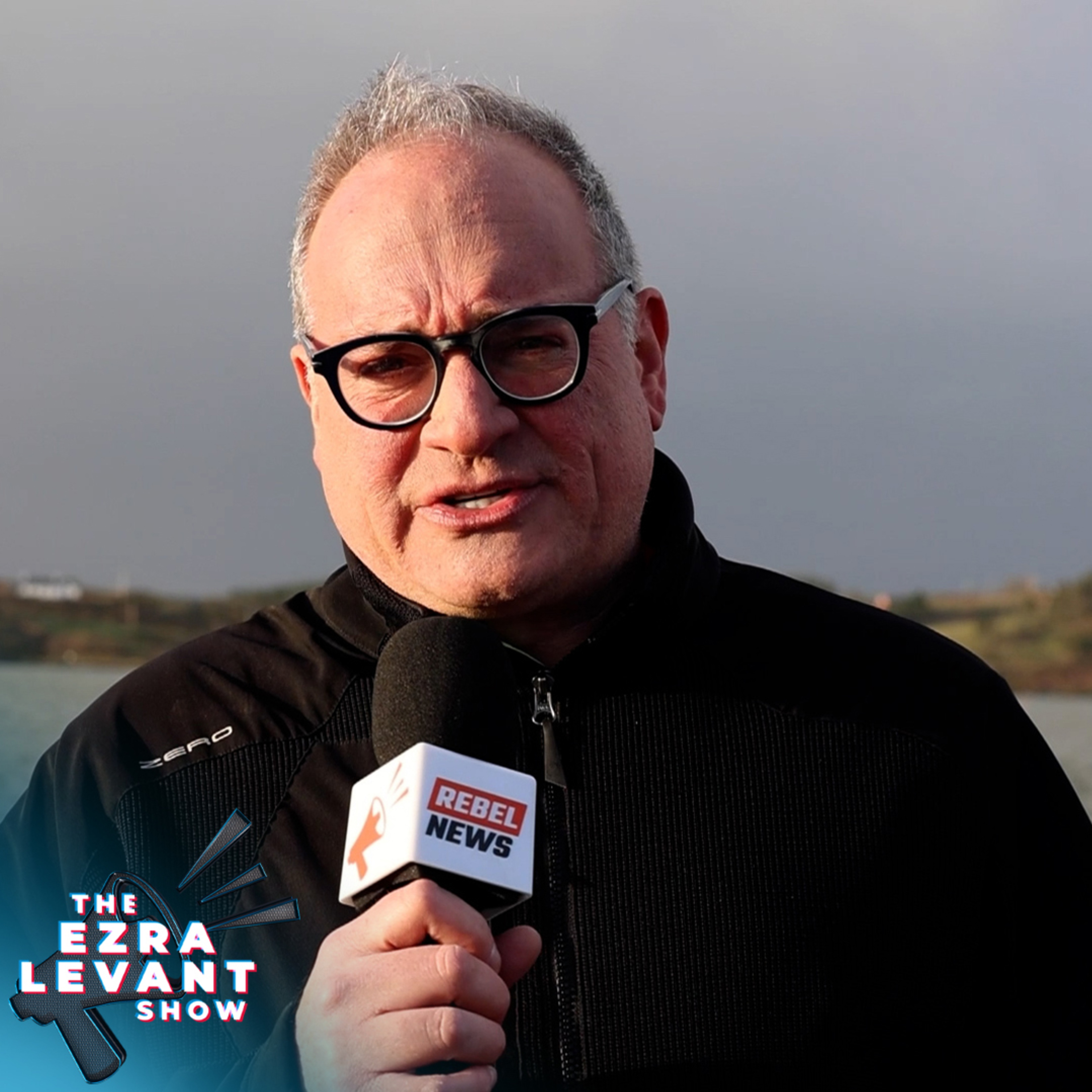
Rebel News Podcast
EZRA LEVANT | The night Irish villagers vanished Into Muslim slavery
00:27:25
A quiet Irish harbour holds a violent story most have never been told about ... because it doesn't fit the modern slave narrative. Listen to audio-only versions of RebelNews+ exclusive shows like the daily Ezra Levant Show, the Gunn Show, and audio versions of our DAILY livestreams along with other Rebel News long-form videos and interviews.
Loading summary
Transcript4 lines
- [00:00]
A
Hello, my friends. A really crazy story today, but you absolutely have to see it with your eyes. I went to a place called Baltimore. Not Baltimore, Maryland, Baltimore, Ireland. A little fishing village in County Cork on the southwest of Ireland that a few hundred years ago, two Muslim slave trading pirate ships sneaked into the harbor and kidnapped every man, woman, child and baby and took them back down to, to Algiers to be soulless slaves. I went to Baltimore, which is reborn. There are people living there again now after it, lying empty for decades. And I tell the story on the ground of the, of the captured village. Every one of them kidnapped. It's, it's. I think it's an interesting story. So you want to get the video version of this podcast, just go to Rebel News plus click subscribe. It's eight bucks a month. Not only do you get great content like this Baltimore story, but the satisfaction of helping Rebel News stay strong. Tonight, the the shocking story of Baltimore, Ireland, the little village that was entirely kidnapped by Muslim slave traders. It's February 26th. This is the Ezra Levant show you fighting for freedom. Shame on you, you sensorious thug. The million plus slaves that were stolen from Ireland, England, Iceland, even all the way up to Scandinavia. Is there any talk of reparations for them? These are ancient battles and the jihad has been going on for centuries. Some say it still is. I'm in Baltimore. Not Baltimore, Maryland, Baltimore, Ireland. A small village of fewer than 500 people. But actually in the dead of night, pirates raided this village on June 20, 1631. More than 200 Muslim pirates, jihadists really came up these choppy waters and they sneaked ashore and they kidnapped every man, woman and child and took them on ships back to Algiers, a slave trading city in North Africa. From there, the men were sent to hard labor, sometimes rowing in ships or other manual work, most of them to have an early death. The women, depending on their age and frankly if they were virgins, were sold into harems for a life of sex, slavery or other work as slaves. Many of them tried to keep their Christianity. Others turned Turk, as they said, and converted to Islam for an easier life as captives. In the end, only a handful were ransomed and never returned, and Baltimore was completely depopulated. Here we are almost four centuries later, and the town is back. But the lessons of the sack of Baltimore should stay with us. It's a story that most people have never heard of, but most people should, because it's part of an untold history of more than 1 million white sacrifices. Slaves captured by Arab slave traders and taken to Africa and Asia. We'll tell the story a little bit as we walk through Baltimore. I think it would shock people to learn that Muslim pirates, really the terrorists of their day, raided Ireland and took slaves, took hostages, took them down to Algeria. But it wasn't just Ireland. They also raided the United Kingdom itself, England, United States. You may have heard of the Gilbert and Sullivan comical musical called Pirates of Penzance. There were Muslim pirate raids on Penzance and they took hostages too, to Algiers. In fact, the same pirate raider who came here to Baltimore raided all over northern Europe. They even raided into Iceland, taking hostages, killing hundreds and desecrating the churches there. There was an Islamic component to this that was very strong. When the pirates raided Baltimore, they shouted Allah Akbar and they took their booty back to Algeria. What's interesting is that the pirate who led the attack, and it was really a military style terrorist attack, we would call it today, he was a convert to Islam. He was born in the Netherlands, Jan Jansen. He took the name Morat Reis. And he led other renegades, which was the old fashioned term for someone who renounced or reneged on their Christianity because of his skill as a Dutch sailor. And along with other renegades, they gave that seagoing technology to the Barbary pirates who wouldn't have had it. Even the intimate knowledge of where the houses were and how to come in the inlets, it was all by people who were doing deals with the pirates, who were giving information to them, who had switched sides. More than 1 million white slaves were captured and sold into these slave markets, which, if you're counting, is more than the number of black African slaves that were taken to America. Both of them were horrific, of course, both violated the dignity of man. But one of them seems to be forgotten in the sands of time. Here in Cork, there's tourism, there's fisheries. It is an active port. Life has returned to Baltimore and they have a museum style plaque that tells the story. And they point out that the people who were kidnapped in 1631 and sold as slaves in Algiers were actually ethnic. It was what the Irish would call a plantation. And there was some domestic politics, for sure. Remember, at that time, Ireland was part of the United Kingdom and the King was in London. There was other rivalries too, and questions about where was the Royal Navy, why were they not quick to respond. There was questions of corruption and all other details, all of those are important things, but it shows the internal dissension happening in Baltimore and Ireland and the UK in general was a sort of weakness that allowed the terrorist raid to happen. I think the ethnicity of the people who were captured and sold as slaves is interesting politically and it speaks to the long history of Ireland and England. But at the end of the day, those were more than 100 souls who were taken into captivity and were really tortured for the rest of their lives. You know, we look at the news today. Israel, Gaza, Iran and Islam is all over the news. It's in the news in the United Kingdom, Ireland, Canada, the United States too, because of mass immigration. But these issues of Islam go back centuries, even before the 1631 sack of Baltimore. Remember that Muslim Moors conquered Spain and they were only driven out in 1492. The sack of Baltimore was in 1631. But the Ottoman Empire was continuing to march through Europe. It was only stopped at the siege of Vienna in 1683. These are ancient battles and the jihad has been going on for centuries. Some say it still is. You know, we forget our history, don't we? I think most people forget that Islam was on the march and that Europe mustered all of its strength. Heck, the Crusades were to go and recapture the Holy Land from Muslim invaders. I wonder what the men and women from 1631 would think of Ireland today in 2026, there's about 5 million people on this Emerald Isle, but 4 million of them are ethnic Irish. But there's been a mass immigration to Ireland, including mass Islamic immigration. And it's not a military invasion. It's a decision by Irish governments to bring in people from all around the world. I wonder what those souls from 1631 would say and if they might have any warning. I've been interested in this story about Baltimore, but never had the chance to come here. And in preparation, I read this very scholarly book called the Stolen Baltimore and the Barbary Pirates. I learned shocking details, like for example, there was one family where a man and his son, seven sons, were kidnapped and taken to Algiers. And it was so interesting to read about life in Algiers 400 years ago. The slave market there was very similar to the slave market in New Orleans. Families would be broken up. The physical strength or beauty of slaves would be assessed by groping hands. It really was barbaric. The hundred plus people who were stolen, stolen from this village, almost all of them never to be heard from again. There were a handful who paid a ransom. There's no talk of reparations for that, is there? I mean, I'm from Canada. And even in Canada, which never did have slavery, the woke politics is talking about reparations for the descendants of slaves. There was no slavery in Canada, but what about the million plus slaves? Slaves that were stolen from Ireland, England, Iceland, even all the way up to Scandinavia. Is there any talk of reparations for them? When you think about the 1 million-plus white slaves that were sold into slavery in Arabia and further parts east, it makes you think what happens to their genetic heritage? Is that why they're people of lighter skin or red hair in Arabia? I've never been to Algeria, but I met an Algerian man in Marseille, France a few years ago when there were race riots. Marseille is about half Muslim and half French and the demographics are changing more every year. And there were riots and I went there just to talk to the Muslims and say, what is life like as a Muslim person in Marseille? And I came across a man who looked very modern but was clearly Muslim. And I asked him a few questions, including, if it's so racist here, why are you here? Here's what he. Said to me, that France had colonized Algeria for 132 years and now he and his fellow Algerians were in France to return the favor. Maybe the same anti Western instinct that led to the piracy and terrorism here almost 400 years ago, maybe it's still alive and well in Europe and around the world, strictly by the number of souls who were taken. The attack on Ireland in 1631 was the most shocking terrorist attack in Ireland, or for that matter, England to date. Even the 77 bombings of the London subway stations, they killed 52 and injured hundreds more. But in terms of actual lives lost, the hostages, the. The slaves that were taken from here outnumber them. It was such a shock to the system and there was an immediate demand for, I suppose, someone to blame. There were different local barons and lords who blamed each other. There were questions about the navy. Why weren't their patrol ships ready? Why weren't they ready to set sail and give chase after the fact? There were recriminations. In the end, they hanged one man, a fisherman who guided Morat reis and his 200 jihadists right to Baltimore. Because how on earth would someone from Algeria or Turkey know exactly where to go and exactly which houses to take on? They actually did an intelligence walk through the village before they raided it. Morant Reis himself did. So how did they know exactly where to go and to avoid shoals or shallows? Well, there was a fisherman who assisted and he was later put on trial, convicted and executed. And I think there's a bit of a parable there. Ireland itself, like so many proud nations of the west has gates, and those gates cannot easily be penetrated from the outside. It's only when someone on the inside opens the gates that the invaders can come in. Morat Reis himself was a renegade born a Christian in the Netherlands. The fisherman who guided him in here was a Christian born here. I think there's a lot to learn about that and how we have to defend ourselves and not welcome the enemy into our gates. It's nightfall here in Baltimore. We had dinner at the Algiers pub, which is sort of a nod to the terrible destination. That pub's been here since about 1890, the owner says. And that's the thing about Ireland is that whereas in North America, we talk about decades, here they talk about centuries and even millennia. 1631 might sound like it's a very, very long time ago, but not really. Remember the Nina, the Pinta and the Santa Maria? Christopher Columbus discovered the new world in 1492. By 1631, the Americas, well, the colonies were already active there, including Virginia. There was a lot of trade with the New World. Shakespeare had finished his great works, the New King James. The King James version of the Bible was complaint. It was a lot closer to our time now than maybe some realize. And I think that the lessons of that echo on today, even if we've forgotten them. I read in this book the Stolen Village about some of the places that were raided by these Barbary pirates. I was shocked to see Newfoundland on the list. Now, this was before Canada was an independent country, but imagine that, the Barbary pirates going all the way to Newfoundland. You might have heard the Battle Hymn of the Republic in the United States. It goes from the Halls of Montezuma to the shores of Tripoli. It's a military anthem. What was the US military doing on the shores of Tripoli 200 plus years ago? Well, the new United States of America was being marauded by Barbary pirates. So they sent a naval excursion to Tripoli, Libya, to fight back against these pirates. It's been a scourge for centuries. What was valued by the Ottoman Empire? What was important to the Sultan in Constantinople, now known as Istanbul? What was important to the Pasha of Algiers? If you were to ask me what's important about the Roman or the Greek empires, I would say civilization, the rule of law, architecture. And you can see that when you go to Athens or Rome today, you can see the great works of the Roman Empire all around Europe and even into the Middle East. Aqueducts and coliseums. We still practice a system of law rooted in Roman law. What was the British empire about? It was about prosperity and international trade and bureaucracy and bringing in some liberal norms. But what was the highest value of the Ottoman Empire, if this book is any guide? And if the efforts of that empire, what did they do with their talent? Who did they put up on a pedestal? Well, in the case of Marat Reis, a renegade who renounced his Christianity, converted to Islam, became a terrorist pirate, and who did it all for wealth and to rape women. And when they brought back the slaves, it was a time of great celebration in Algiers. And as they would pick over the human cargo and squeeze and test the women to see how much each would get paid to join a harem, the highest heights in that society was plunder and rape. Not to build anything lasting, not to ennoble people, not to lift people up. No industry of its own. Sneaking into a village thousands of miles away in the dead of night, burning their homes and terrorizing them and bringing them to a life of indentured servitude. That was the highest calling of the Ottoman Empire. And the sultan himself would profit by getting the prettiest of the girls to rape as a rape slave. Compare that to our Western society. Now, who do we put at the top of the pyramid? Industrialists? People like Elon Musk, People who develop new ideas, lift people out of poverty. I think that this book is a condemnation of the Ottoman Empire, obviously, but it shows that the attack on the west, the undermining of the west, the sneak attacks, the hidden means for undoing the west, it's been around for a long time, and I hate to say it, but I think it's still with us.
- [17:51]
B
David Menzies for Rebel News here at the Ontario Superior Court of Justice in downtown Toronto. And day two of Adam Skelly's constitutional challenge has just wrapped. Skelly is, of course, the restaurateur who, back in November 2020, orchestrated the great Barbecue Rebellion. Maybe rebellion is too harsh a word. I mean, all Mr. Skelly wanted to do was open his restaurant, make a living, serve up meals to appreciative customers, employ his staff, you know, to do the exact same thing that Walmart and Costco and Home Depot and the LCBO were doing back then. But for having the temerity to do so, the authorities threw the book at him. He was charged, he was fined, he was criminally arrested, and, well, eventually he was put into bankruptcy. Mr. Skelly no longer operates the Adamson Barbecue chain of restaurants, which is a shame. They were fantastic. He now lives in Alberta as a matter of Fact, He's a hero. This is a hero. Now, the respondents in his constitutional challenge regarding the COVID lockdown mandates that would include the Province of Ontario, the City of Toronto, Toronto's Board of Health, and the former chief medical health officer, that would be Eileen Davila. Today, Skelly's lawyer, Ian Perry, he wrapped up his arguments. This included that Skelly's barbecue restaurants were simply not fiscally viable without the indoor dining option. As well, Mr. Perry noted that no hard evidence by the authorities was ever provided linking indoor dining and the spread of COVID transmissions. As well, Perry focused on Dr. Matthew Hodge. He's the doctor that the Province of Ontario relied on as their single public health expert. But I think the most stunning testimony today was indeed made by Mr. Perry, who noted that when he previously crossed Dr. Hodge, Hodge stated that he had no idea how decisions were made, nor was he given access to evidence or people who were responsible for those decisions. Here's a direct attribution by Dr. Hodge. Quote, I am a minnow. The sharks do as they wish. End quote. Wow. No wonder so many of us felt so pissed in back during the dark days of COVID But kidding aside, this is an astonishing statement from someone the province said was their chief medical health expert. Incredible. Now, Pak Ryan, the lawyer for the Province of Ontario, basically took the position that, well, the law is the law or the law was the law at the time, and, well, essentially nobody is above the law as well. Ryan rejected the argument that Skelly's constitutional rights to protest were ever violated. Ryan cited how a pharmacist in another lawsuit wanted to sell tobacco, which is verboten in Ontario, and as a way of protesting the law, well, he went ahead and sold the tobacco anyways. The pharmacist was found in violation of the law. And Ryan mentioned he could have put up a sign saying, I hate the government, I love tobacco. That would be a legitimate form of protest. But breaking the law by selling tobacco, that is not legitimate. Ryan also gave the hypothetical example of someone who doesn't like the idea of speed limits, and to protest the idea of speed limits, he goes around the city speeding. This would not be a valid excuse, he said, to get out of a speeding ticket. He also stated that going back to the pandemic days of 2020, losing the right to travel, to go to restaurants, to gather for protests was something that had to be outweighed given the potential harm to society as a whole. But again, I asked folks, if that is indeed the case, then why did the authorities more than five years ago turn a blind eye to protests conducted by the Black Lives Matter demonstrators. Doesn't make any scientific sense. Also, Ryan stated there was never a blanket ban preventing restaurants from operating. He said restaurants could offer drive through service, they could offer pickup service, and they could make deliveries. But as noted in day one by Mr. Perry, indoor dining at Adamson Barbecue was an essential part of his business formula. Without it, those restaurants simply weren't viable. And riddle me this again. I asked why was it that a Costco superstore located just 500 meters from Adamson Barbecue was allowed to fully operate? And I'm including, yes, its food service facility. I'll tell you, if you can explain the logic there, folks, there's a steak dinner in it for you. Next up was Penelope Ma. She was the lawyer representing the City of Toronto, the city's Board of Health, and Dr. Eileen Davila, the city's former medical officer of Haluk. For starters, Ma said she simply wants to see this constitutional challenge dismissed. She spoke about the long timeline. And she furthermore said that Dr. De Villa was simply exercising her powers under the Health Protection and Promotion act of Ontario, that she did nothing wrong, even when it came to changing the locks on Adamson barbecue, essentially locking Mr. Skelly out of his own property, as well as later having him trespassed and arrested. Shame on these places. Look at where they've started now.
- [25:21]
A
I love you guys.
- [25:27]
B
Small business. Small business. Small business. Small business. And in the final analysis, folks, I should point out that both Ma and Ryan stated that the environment was completely different in 2020 compared to today. Little was really known about the COVID 19 virus and there was no vaccine on the horizon. In fact, Ryan stated the following, quote, if we held the government to the gold standard for every law, we would never get anything done. End quote. Well, I find that a little astonishing, folks. And I would respond to it by a statement Perry made yesterday in court. It was from a court of appeal decision pertaining to another case. And it's simply this. The Constitution does not fade from view in times of crisis. End quote. For Rebel News, I'm David the Menzoid Menzies. Hey, folks, I know you love it when Rebel News tells you the other side of the story. And in the case of the Adam Skelly matter, I can tell you, with the exception of the Toronto Star, I have seen zero mainstream media coverage about this. I wonder why that would be. In any event, can you do me a favor? Could you go to bbqtrial.com that's bbqtrial.com you can see all our coverage regarding Adamson Barbecue. And hey, while you're there, if you're able to kindly make a donation so that we can continue to bring you the kind of journalism you've grown accustomed to. Sam.