← Rebel News Podcast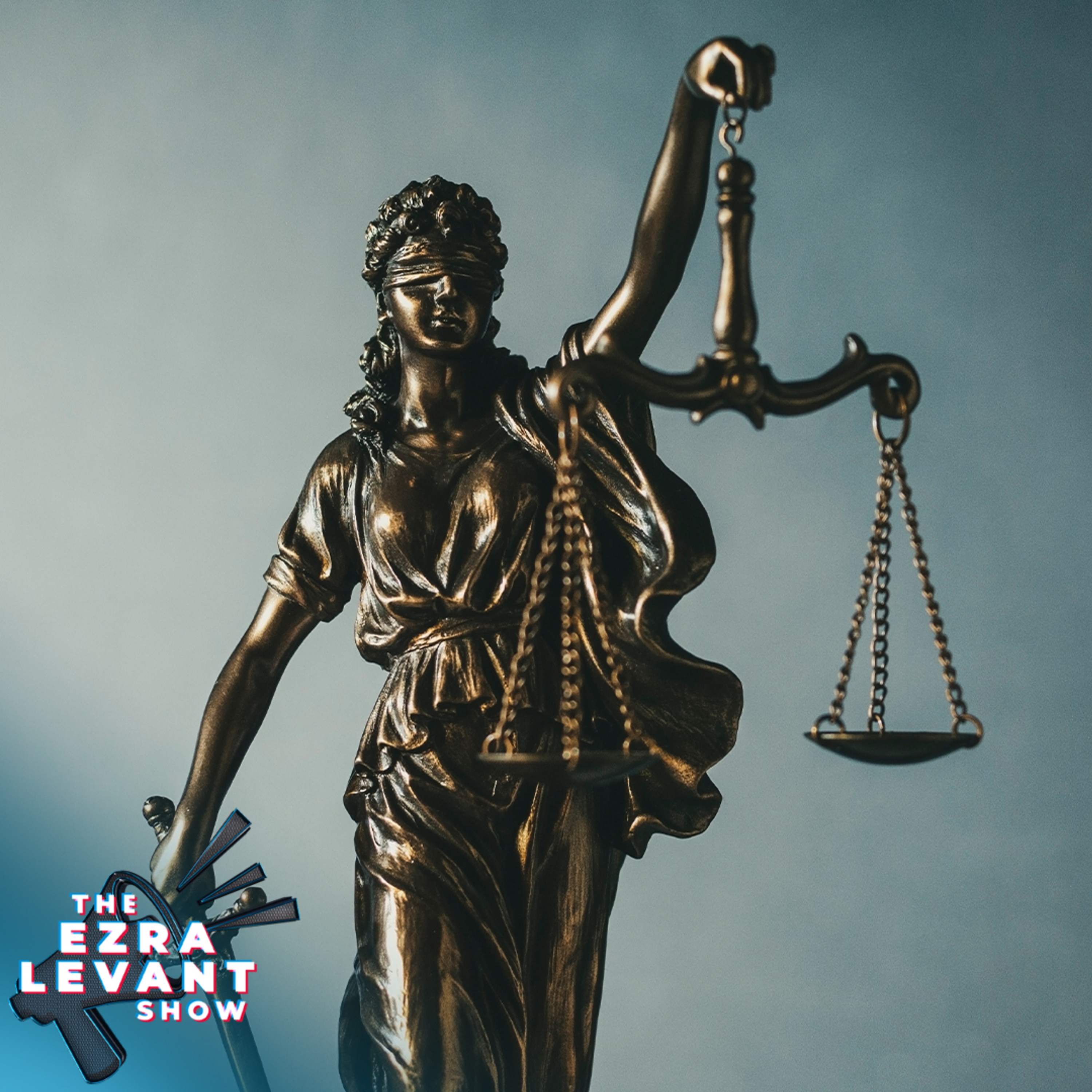
Rebel News Podcast
EZRA LEVANT | The racism of low expectations heralds a new era of woke justice
00:41:40
Consider the iconic image of Lady Justice. She holds scales to weigh evidence and a sword to represent the finality of the law. Crucially, she wears a blindfold, symbolizing that justice is administered without favor or bias regarding status or race. However, a recent case in a Toronto courtroom suggests that in 2026, Lady Justice has traded her blindfold for X-ray glasses. Listen to audio-only versions of RebelNews+ exclusive shows like the daily Ezra Levant Show, the Gunn Show, and audio versions of our DAILY livestreams along with other Rebel News long-form videos and interviews.
Loading summary
Transcript17 lines
- [00:00]
A
Foreign.
- [00:16]
B
Say folks, if you have the misfortune of being in criminal court but you're seeking to get a reduced sentence, well, simply claim that you are racialized and indigenous and, well, Bob's your uncle. It's Wednesday, February 4th, 2026. I'm David Menzies and this is the Ezra Levent Show. Shame on you, you censorious thug. Consider the iconic image of Lady Justice. To begin with, she is holding a set of scales. The scales symbolize the careful balancing of evidence, arguments and opposing sides in a dispute to determine truth. Lady justice is also brandishing a sword. This represents the authority, power and finality of the law, as well as the ability to punish. And finally, there is the blindfold. The blindfold represents impartiality and objectivity, indicating that justice is administered without fear, favor or bias regarding wealth, power or status. Allow me to repeat that last sentence. Justice is administered without fear, favor or bias regarding wealth, power or status. I make mention of the iconic lady justice and all that she represents or is supposed to represent regarding a staggering court decision that was rendered in Toronto recently. It is a decision that goes against everything the justice system should embrace when it comes to fairness and impartiality. Here's the skinny According to a story published in the National Post headlined quote Judge Grant's leniency for for Toronto crack dealer because of his nine children and his race. End quote. Here's the lead paragraph. Quote A Toronto crack cocaine dealer caught back in business three times over the course of 10 months managed to convince a judge that he deserves some leniency because putting him behind bars would mean hardship for his nine children, but not because he's addicted to to the drugs he was caught peddling. Lloyd Williams pleaded guilty in Ontario's Court of Justice to three counts of possession of cocaine for the purpose of trafficking in what Justice Andre Chamberlain described as the deeply troubled neighborhood surrounding the intersection at Dundas and Sherburne streets for arrests on March 3, 2024, October 25, 2024 and January 4, 2025. Williams, who was released after each arrest twice on bail and a third time on the promise he wear a GPS tracking device, also pleaded guilty to one count of possession of proceeds of crime over $5,000 and two counts for under that amount and failing to comply with a release order on February 15, 2025, the Crown recommended a six and a half year prison sentence. Williams lawyer argued for two years less a day in jail, end quote. So folks, to recap, here's what we know about the illustrious Mr. Williams. He has Been nabbed numerous times peddling crack cocaine. He, he has breached his bail conditions. He has nine kids from multiple mothers. The youngest child is just 10 months old, one is 22 months old and another is three. Williams also has nine year old twins, two 10 year olds and a 16 year old. It should be noted that one of his nine year olds is on the autism spectrum. You know, that's a lot of dependence, that's a lot of responsibility. So thank God Williams has a stable and high paying career as a, well, drug dealing scumbag. Anyway, as the saying goes, what's the use of having kids if you can't exploit them? Because here's what Judge Andre Chamberlain stated in his decision. Williams states that he provides support as a father to his children and that any lengthy absence would have a significant impact on their health and well being. End quote. Yep, that's right. The genetic jackhammer that is Lloyd Williams is truly father of the year material. But seriously, how are these poor children benefiting from being raised by a drug dealer? And come on, nine kids, Multiple mothers? Seriously, this is the height of irresponsibility and it's downright selfish. Oh, but wait, there's more. Williams identifies as being both black and Micmac. So what does that have to do with the price of tea in China, you ask? Race and skin color should be irrelevant in a court of law, right? Well, not in 2026. Not in Canada. Apparently not when a woke judge is on the bench. At this point, the story gets a tad surreal. You see, Williams was unable to actually prove that he is a Micmac Native. Oh, but never mind. He gave it the good old college try. And indeed, Judge Chamberlain said he was, quote, satisfied. Williams has established a connection to Indigenous ancestry. End quote. Forgive me folks, because I remain in a state of profound confusion right now. Williams could not, I repeat, he could not prove he was Indigenous. Yet the judge seems to be saying that. Since Williams identifies as being Indigenous, well then who are we to say otherwise? Holy Elizabeth Warren Batman. Then again, society is infested with men, their penises still attached, claiming to be chicks. And to call BS on that scam is tantamount to committing a hate crime in Canada these days. Predictably, Judge Chamberlain delivered a sanctimonious sermon for everyone in the courtroom to hear. Who here goes Quote. It is not unusual for indigenous people who have struggled under the yoke of colonialism in this country and its intergenerational impact to have lost connections to their roots and community. Further markers of the effects of intergenerational trauma including poverty, familial addiction, struggles with education and mental health, and overrepresentation within the criminal justice and child welfare system are often present when indigenous identity is confirmed. Again with the colonialism. And sorry to be such a nitpicker here, folks, but I want to remind everyone, including Judge Chamberlain himself, that Williams could not confirm that he was indigenous. But again, never mind. Still, when did courtrooms turn into classrooms teaching revisionist history? I thought a court of law was all about evidence and facts. Apparently not. These days it's about how you feel, I guess. Indeed, based on the Lloyd Williams case, if you're a black crack dealer with nine kids on, all you have to say is, I'm a Micmac pinky swear, and that's good enough. Well, at least it's good enough for Judge Chamberlain because Chamberlain also had this to say, quote, williams deserves consideration for the reduced moral blameworthiness associated with these challenges, end quote. Again, I'm somewhat unclear what the judge is saying here regarding those challenges. Is Williams challenged because he is black? Is he challenged because he is indigenous? Well, maybe. Is he challenged because he has a fast pace and high stress career as a crack cocaine dealer? Or maybe his challenge results in juggling the schedules of all those nine kids he has, you know, getting, getting them all to soccer and hockey practice and whatnot for. Forget about a minivan. I hope Williams has access to a minibus. Assuming that the guy has a driver's license, that is. The lawyer for Williams argued, quote, there are two legal considerations that should mitigate his sentence, bringing it down to an upper reformatory range, namely, the impact and harm a lengthy prison sentence will have on his family. And secondly, that Mr. Williams is addicted to. To the very drugs he sells. And as an addict trafficker, he is entitled to significant mitigation. End quote. Folks, I'm not making this up. Are we living in the bizarro Superman world in which irresponsibility and criminality are rewarded, not condemned? And by all accounts, the attorney for Mr. Williams delivered this statement with a straight face. Consider that Williams is not only a drug dealer, but a drug addict too. Yet that's exactly the sort of father I want to see heading up a household with nine young children. In any event, Chamberlain sentenced Williams, who shockers already has a long criminal history to just four and a half years in prison, which means, by my calculation, he'll be out of the joint in about two years. Oh, I would be negligent if I did not report that in 2021 and in 2024, part of that long criminal record entailed Williams being convicted of serious domestic assault charges, including assault by choking. Forgive me for being a tad insensitive here, but can we cut to the chase? Which is to say, why wasn't this reprobate not occupying a prison cell going back to the odious crime he committed in 2021 or in 2024? Yet the judge recognized, quote, that his further incarceration was will have a negative impact on Williams family, end quote. I have a headache right now. Or is my brain melting? Given that Williams has this nasty little habit of committing physical domestic assault, including, you know, choking, I would argue that Williams being separated from his several spouses and several children would be a very poor positive thing indeed. But no. In any event, what have we learned here regarding the odious case of Lloyd Williams? Well, I think it is this should one ever end up in a criminal court, you might just want to play the race card, especially since these days you apparently do not have to actually prove that you are racialized. Also claim that you're addicted to illegal substances and make sure you have multiple dependents or at least, you know, say you do and presto, if you have someone like Chamberlain on the bench, you will most likely get a reduced sentence. By the way, the Williams case is by no means a one off. The unholy trinity of diversity, equity and inclusion has been embraced in other court decisions of late. Here's a headline from December 9, 2025, quote, Inuit man gets reduced sentence for attempted murder due to his indigenous status and mental illness. End quote. And here's another Whopper headline from January 3, 2025, quote, prison sentence cut in half for for men who identifies as Metis, end quote. And again folks, the devil is in the details, isn't it? The sentence reduction was due to a man identifying as Metis, which means he might not actually be Metis. By the way, I'm currently identifying as Miss America. Where's my bouquet? But seriously folks, and the final analysis isn't giving racialized offenders, that is Non white people I get out of jail free card inherently racist. Which is to say the underlining mindset seems to be because you are black or brown or indigenous or etc. Etc. Etc. Then society can't possibly hold you to the same standard as Caucasians. I believe this is what's called the racism of low expectations. And when you think about it, that's really just another form of bigotry. Bottom line, this idea of race and indigenous status being used as a means of gaming the system to get a reduced prison sentence even when caught committing a very serious crime is both despicable and disturbing. Wokeness and political correctness and DEI has no place in a court of law. But in Canada this appears to be increasingly par for the course. This nonsense has the end. Judges should not be biased due to identity politics. Finally, allow me to hearken back to that iconic rendering of Lady Justice. As previously noted, she dons a blindfold to guarantee that justice is administered without fear, favor or bias regarding wealth, power or status. Alas, as the saying goes, that was then and this is now. Because in 2026 Canada, Lady justice isn't wearing a blindfold anymore. Rather she's sporting a pair of of X ray glasses.
- [16:04]
C
Hi everyone, I'm Alexa Lavoie with Rebel News and today we are tackling a topic that's steering debate once more in Quebec, the real prospect of another sovereignty referendum. The Parti Quebecois is leading in the polls, heading to the next provincial election, keeping the independence question alive in many minds. Yet support for actually voting yes to sovereignty remains low. Recent surveys show it dipping as low as 30% with clear majorities still firmly opposed. What makes this conversation especially compelling? We are examining the growing Alberta independent movement to through a pure Quebec lens and doing it with a guest who is a committed Quebec sovereigntist, but one who rejects the current path being pushed by the Parti Quebecois. Joining me is Joey Aube, podcaster and sharp voice on the yannifran podcast, delivering straight shooting takes on politics and economics. Now let's listen. What do you have to say? So Joey, you are an outspoken conservative and you defend your ideas, notably through the podcast Yanni Frank, how do you see the upcoming election, especially with two new party leaders who seems to turn into a center right?
- [17:41]
A
Yeah, center right is pretty much the new like virtue signaling buzzword politically speaking in Quebec these last few months, which doesn't mean anything anymore. It's no longer like a political specification, so to speak. It's like racism or phobia of any kind or racist. It's become part of this category pretty much now. The only qualification for being center right is being anything but Quebec Solidaire, which is the really like really left leaning political party here in Quebec for the next election. Premature election in Quebec, I'll say. Everything is possible at this point. And that's what's actually both funny and at at the same time exciting about it. Because we always say like politics is a two edged, two edged blade. You have the negative and the positive. But right now everything is possible. We know that Charlemagne is going to be crowned leader of the plq because Mario Roy, the other candidate doesn't seem to finish his debt from the last campaign. So he probably won't be able to run even if he really, really, really wants to. He's almost begging to do it actually. It's kind of depressing. On the parts Quebecois, we have Paul St Pierre PlasmaLondon, which is well implemented, is technically the oldest leader so far in terms of mandate inside his own party. So that's going to be him. Eric Duhem with the Quebec Conservative Party is going to be there. Obviously he's going to change. We're not going to change leadership before the election as part for the cac, the Quebec, the leaving government. It all depends. We have Christine Frechette and Bernard Renville and I say from both perspectives we have two different visions. I think even as Monsieur Drainville has pretty much copy pasted the entire program from the PCQ the last weekend, even though he's always been like an outspoken social democrat left leaning Quebec politician, now he's supposedly center right and does a huge critic of the model Quebecois of the Providence states and the nanny states of Quebec. He wants to challenge the high instances of the unions. He wants to get more private in healthcare. He wants. We also get maybe like more private sector and more private collaboration within public school, public school system and stuff like, stuff like that. I hope not a lot of people believe him since I prefer someone who's always had those ideas from the beginning. It's always been like part of their true conviction instead of someone who just changed the ideas because you understand which way the wind turn and the wind is blowing. So yeah, we'll see. And from Christian, from Christine Frechette perspective, she's definitely from the outspoken conservative commentators, she's most certainly the establishment candidate. Martin Caskinen, the former chef de cabinet, cabinet secretary of Francois Lapime, Premier Francois Legault, he has his full support and so far she has more MPs to her side than Bernard Revill. Of course the members will have to vote, so we'll see. She seems like to be a more corporatist beige, you know, like gray, like establishment candidate. Like I'm not against, I'm not in favor, I'm in between, you know what I'm saying? And Bernard Ravin seems to have a more approach of a center right approach with maybe like a touch of Quebec like nationalism from his PQ pass. So we'll see.
- [21:06]
C
But one of my questions is how do you explain the fact that the PQ is mainly leading in the polls. Their first promise is to lead a referendum on Quebec sovereignty. But when we look at the poll for a potential referendum and the appetite of the people is as low as what, 30%? How do you explain that?
- [21:31]
A
I mean, for almost three years now, the PQ has been like kind of a vote refuge for many Quebec electors. Mainly like a parking spot because of the really down in the polls and the cac. The appreciation of the Lago government has been down spiral since the end of the pandemic. You went from the most liked premier, provincial premier in the country to almost the lowest ones right now. And it seems to be much of a grudge, like anti Lego votes. So they looked at the other parties and since the Quebec Liberal party has been mostly reduced to Montreal centric English community party with almost no vote and almost no circumscription from the Francophone vote. The electorate went from the CAC in 2018 and in 2022 now goes back to their whole habits, which is the blue against the red. So it's the Bats Quebecois which has a very charismatic leader and a talented one. I won't say the otherwise for Paul St Pierre Plaumondon, but at the same time I think the Quebec people, I mean Quebec electorate, the part of it at least, doesn't truly understand what a vote for the PQ is. Their main logic is, yeah, we'll vote for him to get rid of Legault and govern Quebec, but if he pulls up his referendum on sovereignty, we'll just vote against it. Yes, but you could do that, but at the same time there's consequences by saying no a third time. Like in 1980, we got the constitution in Canada brought back from England and Pierre Trudeau, Justin's father, signed it without Quebec's signature in 1995. After the loss, almost the win of Quebec in 1995, we got the law for referendum clarity in Quebec. Lost a lot of power in these following years. And it's been like, even culturally, like inside the people, there's been like a scar that never truly healed for us after that, after that time. And now it's like opening the scars all over again, opening the wound and let it fester for another time, just for old time's sake. And to be fair, I'm not against the idea of independence as principle. I consider myself somewhat of a right wing person economically. I think the ultimate expression of freedom of liberty, which is my principal value, is the emancipation of one's people to independence, pretty much. But right now, especially since the CAC government came along, we have a deficit of almost like 14 billion in debt. The cost of life, especially not only in Quebec, but also across Canada. The housing market has been a total nightmare for young people from my age and from the younger generation to actually afford a home. And there's like a generational clash between two generations. The baby boomers, mostly 60 years plus. And I'm not saying every one of the baby boomers, like mostly, if you watch, if you see the statistics, but most of them seem to have a great time. They don't think like contrary to what, for example, Pierre probably have said that Canada is broken because of course their house value has increased like 4, 4, 5, 6 to 7 times in the last couple of years. But the down effect from this is of course the young people cannot afford a home. So now there's young people who want a more conservative leaning government, more fiscally responsible. And the Bibi boomers want more security, want more laws, want more restrictions. They are afraid of Trump. Fear has engulfed them in many cases. That's why they reelected, they elected Mark Carney and gave the Liberals in Ottawa a fifth mandate consecutively. So yeah, we'll see. And pretty much for the next election, I'll say everything is possible, including referendum. But at the same time, yeah, they need to think twice before even thinking voting for the pq.
- [25:30]
C
Because you say it yourself, you are the kind of person that you will want Quebec to be a country, but you're not adhering to the vision of the PQ at this moment.
- [25:44]
A
Yeah, because I mean, I'm not the only one. There's other or sovereignists or independentists at art, at heart that the approach of the referendum has never been, has always been the only possibility. Some of them will just make a unification like an independence declaration and wait for the backing up from France and other countries, something like that. Some will mean a total vote, some want other methods. And also because the quote unquote coalition that the participants says he wants to create doesn't seem to be quite a coalition pretty much. Of course there's been a lot more Angouma, I don't know what's the word in English this means like some kind of trend to be. Of course the independence seems to be more, I mean from the media's perspective it seems to be more on the rise. But from the statistic it doesn't move like there's not like a huge amount, maybe like a slight increase in young people vote in favor of sovereignty. But at the same time we don't See it quite enough in the perspective and from the party Quebecois perspective in terms of coalition. They said like they want to unite people from the right, people from the left, people at the center to unite to get for the only one goal which is independence. But so far even them, they were the first to start this I'm center right kind of mentality with Alex Boissonau, which was their candidate in the by election of Artabas Khalerab, which was a former far left activist who went to the almost 20 years ago and got arrested. He didn't kill anybody, but he passed sometime in prison, at least in detention and was complaining to pretty much breach the perimeter in that conference and maybe like protest and attack some people. Of course that didn't happen and were pretty glad for that. But at the same time he said he's changed. He said he's now center right, but every time you heard him speak he's always have this kind of left leaning tangent about him. He's quoting like from the irs, which is like an, a left wing economic think tank from Montreal. He's been like, there's like several like media posts for many years from like seven to ten years ago. Was, was apparently making his change from left from left far left to center, which was like defending the Hugo Chavez government in Venezuela. He was praising Fidel Castro when he died. So there's a lot of question to understand if someone is center left or center right or whatever. There's a political encompass for it. But for now we just need to take their words at face value and don't ask any questions. And that's a real problem. And for now and every so far, every. Because for those who don't know, there's been several by election like a record number in the last couple of years in Quebec. There's admin in Terrbonne, there's now, right now in Chicoutimi, there's been one, I said in. There's been one in Jean Talon in Quebec City and almost all the candidate that the put there for their election and they won. All of them so far has been mostly social democrat left wing people mostly. Maybe they're more right. It's like in France with the Rassemblemen as maybe they're more right leaning in terms of social policies, more on the nationalistic side perhaps. And I will not be, I will not think otherwise. But globally speaking there's classic pq, Social Democrat left eating like Quebec interventionism, interventionist people. So in terms of coalition of truly right wing or economically right wing People, I'm still waiting to see.
- [29:20]
C
And it's not because you are critics about immigration that make you automatically a right wing or center right.
- [29:28]
A
Yeah, for some media, it is for some media, whether you can be left wing for all the other subjects, socially, economically and everything. But if you criticize immigration numbers or if you say, for example, systemic racism doesn't exist, then you're automatically right wing, which is preposterous to me.
- [29:44]
C
So Quebec, when Quebec wants to push for independence, generally it's accepted and normalized. But what we are seeing with Alberta now, we are seeing people labeling them as extremists and far right. And some of them are saying that there is some foreign money being involved or foreign help. Why we are seeing such a double standard there?
- [30:12]
A
I mean, that river, you know better than me, Alexa, that's. That's the freedom convoy method right there. Like when, when they came in, they called them extremists, they called them conspiracy theorists. They thought, they talk about like aid from the United States, aid from Russia and foreign sources and everything. And they thought they had, they brought weapons and stuff like that. And that's the same method that's been happening all over again. And I think they, they're launching all the, they're putting all the, their artillery to the separatist movement in Alberta because contrary to Quebec, even though it will be a great loss, the money is in Alberta. Alberta is the money machine of the country. If Alberta leaves, Canada is pretty much done from Alberta's perspective. First of all, you seem to be more, it seems to be more easy from your part because you have money in your pockets and you have like a huge leverage in that term. And also you want to do it mostly for economic reason and freedom of enterprise, freedom of expression, protect your laws and your way of life. And Quebec is the same thing, but it's more of a cultural reason because, of course, because of the pre equation and the payments received from the other provinces. We've always been kind of a lower. We have resources, we have the potential. I think my people have a great potential to become one of the richest countries in North America. But at the same time, right now, we've been beggars for many, many years from the other provinces to give us extra money from the federal government and from the other provinces as well. So for us, it's more of a cultural issue in terms of our own language, our own unique culture that we want to protect and we want to pretty much keep safe. And that's totally fine. You know, I totally agree with that. But at the same time, people. People don't. Most people. Because like since the. The earlier debates around sovereignty, there always been like two camps, the yes and the no's, like the blues versus the reds. But at the same time now it's more. It's more nuanced and we're pretty much. I don't want to make a joke, but more like in the 50 shades of gray kind of thing, you know, like there's people who would want to say yes, but at the same time, they don't trust people anymore. Not just the partique be quoi, but the entire political class entirely. And they saw what's happening in Quebec economically, and they don't trust the government, even though independence will give us more freedom in many aspects, but at the same time more responsibilities. And since the government of Quebec even authorized it has its own problems. The they have too many more bureaucrats, they have taxes too much the multiculturalism, the wokeness and stuff. I'm all against it and most Quebecers. But at the same time, the Quebec government has got its own problem in terms of ultra centralizations. The state have an answer for everything and needs to put their hand on everything from electricity production to the selling of alcohol and selling of marijuana and the daycare of our youth and our elderly people. And many times it's monopolies, it's not like a liberalized market. So for many of them it's like, okay, if we separate, even though we'll be free, but at the same time, will it be the freedom for the Quebec government to do now everything they want because Grandpa Federal is no longer there to stop them, or it will be a real freedom from the Quebec people itself. And that's the real question, I think. And there's a huge question mark for many people that are not really sure because they think pretty much we'll be jailed with our own jailers in many cases, in terms of governance, if we became independent, of course, at the same time, if I take an argument from my great friend economist Vincentre Lazeau, which is a senior economist at the Montreal Economic Institute and is also economic professor at George Mason University in Virginia, said that he's also a sovereignist. But at the same time, one of his great arguments is that because of independence, because of the new weight of responsibilities that the government of Quebec will have to do in terms of the budget, because of the part of this debt that will inherit from Canada because of its independence, the new programs, the new, the frontier, the army and all the foreign relations and everything, even the most centralized or left leaning centralized government in place will have no choice but to cut deeply. Heavier melee style, chainsaw kind of style cuts to maintain the governments in of itself for nothing to collapse pretty much. So the independence could force massive cut and going back to, to a more center in terms of governance, less centralized, more decentralization, more private sector, more liberalized economy. So that's the bet. Some people trust it, some don't, some are in between. So yeah, that's pretty complicated.
- [35:11]
C
I want to hear your thought on Alberta separatism and as well like the possible impact that this movement can have on Quebec.
- [35:21]
D
Well, I'm going to repeat a little bit what I said in French, but we see that the separatist movement in Quebec and in Alberta goes up when we have a centralist party in Ottawa. And that's the problem right now with the federal Liberals. Every time you have a liberal government in Ottawa, and especially when they're very close to the ndp, they're both centralist parties that are feeding the separatist movement in Quebec, Quebec and in Alberta. The best way to make sure we have a united Canada is to decentralize is to listen to people like Daniel Smith, Alberta's premier, and the Quebec Conservatives and it's to have, you know, a very decentralist agenda for our provinces and our regions.
- [35:59]
C
Do you think that Quebec should prepare for potential impacts stemming from Alberta separation? Because we have a lot of social program and we need the equalization money in order to pay those program. Even though Alberta is not separating, there will be an impact because they will have a leverage to deal with the equalization payment. Do you think Quebec should prepare this themselves?
- [36:35]
A
Yes, but at the same time, I mean everything could happen pretty much. It could be the referendum could go majorly yes, yes or majorly no. At both times I think it could give some leverage to Daniel Smith to get some concession from Otawa, depending on what's happening with the pipeline, maybe like more sovereignty laws and no pushback from certain federal programs perhaps. But yeah, I think it's the best thing to do for Quebec. But at the same time I don't think we have our eyes on the, on what's in front of us right now. We are too occupied with what's happening with our own elections. We, we, we have what many call as the dome around our own province sometimes, except when Ottawa is speaking to us or Trump, mostly news. The rest seems to be pretty much irrelevant to our own mainstream media. So even the Quebec people, except those who inform themselves Inside alternative media or podcasts like mine, or media like yours, they don't get the full picture. And that's such a shame. The best, the best idea should probably prepare, but at the same time, there's like a huge amount of. Of pretty much unknown that's in front of us. So we can prepare for the worst or the best, but at the same time, you know, pretty much everything could happen. So. Yeah.
- [38:01]
B
Well, folks, on Groundhog Day, cameraman Lincoln J. And I ventured up to Wingham, Ontario. We were there to attend a council meeting put on by the township of North Huron. And, well, the reason is, talk about censorious thuggery. This council will not allow its proceedings to be videotaped or even allow for audio taping. And the question arises why? This is a public council meeting taking place in the Dominion of Canada, not the Democratic People's Republic of Korea. So what gives? Well, as expected, tons of feedback as a result of that video which saw two constituents, Buck and Brad, actually frog marched out of the council meeting by the Ontario Provincial Police. It was crazy. Some of the letters include dust bagger writes, one of the most corrupt areas of Ontario. I was there for a couple of years and it's atrocious. Well, I got to be honest, we were only there for a couple of hours, but what we saw we did not like. At the end of the day, what this council is doing is, is unconstitutional. I suggest they drop the no recording bylaw, but they probably won't. So I guess they're going to have to learn the hard way in a court of law. Evelyn got 2056 writes, these town councilors seem to forget who they are working for and who is paying their salaries and perks. Oh, I totally agree. And really, if there's nothing to hide in these council meetings, why ban recording? It makes no sense. Unless of course, there is something to hide. And Finally, Richard B. 1280 writes, the Marxist land acknowledgement speak volumes. Over the past few years, several of the Wingham councillors seem to have been involved in some highly questionable business dealings and they should be investigated for that. Also, why do so many people in this country continually vote for trashy politicians? Well, I can't speak to your first point, but as for why people continually vote for the worst of the worst, I would say a lack of engagement in the political process. Maybe they're spending too much time watching Netflix and not enough time investigating the news. And by investigating the news, I don't mean taking your news from the mainstream media. The bought and paid for train seals at CBC, CTV, Global, etc. I mean, independent media. That's the only answer I have because it makes no sense to me to continually reward bad behavior. Well, folks, that wraps up tonight's show of the Ezrel event show. Thank you so much for tuning in. EZREL will be back tomorrow. In the meantime, as always, stay safe and stay sane.