← Rebel News Podcast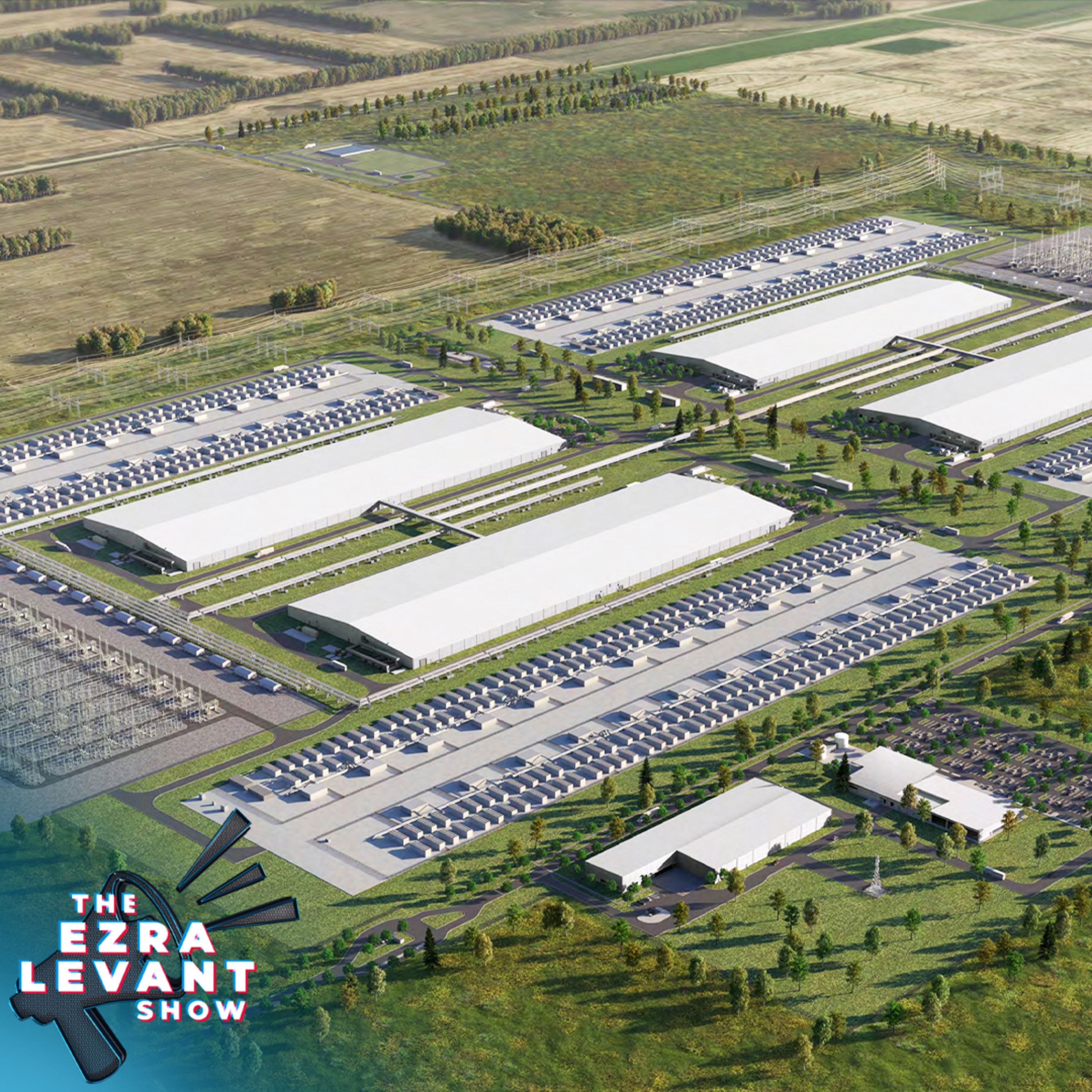
Rebel News Podcast
EZRA LEVANT | While Alberta embraces data centres, New York’s moratorium hands China the advantage
00:39:21
Tonight on The Ezra Levant Show: New York’s tech ban, China’s gain and Meta’s $13 billion bet on Alberta. Also constitutional lawyer Darren Leung of Charter Advocates Canada on the major victory for free expression as court strikes down Ontario Ministry of Transportation’s political billboard ban.
Loading summary
Transcript38 lines
- [00:00]
Ezra Levant
Hello, my friends, today I'm going to try and make the case for AI data centers. And I know that's a risky thing to do because it's easy to dislike big tech titans. And I have my healthy skepticism of them, too, especially Facebook, which is engaged in censorship for a decade. But I have some questions I want to put to you about the opposition to AI data centers. And is that opposition really a Canadian opposition, or is it more, oh, I don't know, a Chinese opposition? I'll take you through it, but first, let me invite you to become a subscriber to Rebel News. Plus, it's the video version of this podcast. Just go to rebelnewsplus.com. Tonight, the case for Data Centers. It's July 14th, and this is the Ezra Levant Show. Shame on you, you censorious. Today, the governor of New York put a moratorium on new data centers, a ban from for at least a year. Here's her announcement.
- [01:23]
Kathy Hochul
These hyperscale AI data centers consume enormous amounts of power, truly threatening to outpace our grids capacity. And they drive up costs for local ratepayers. And I refuse to let those costs be passed on to New Yorkers who already paid too much for their utility bills. These data centers require millions of gallons of water, straining the local supplies. And when powered by fossil fuels, they drive up our carbon footprint. They occupy massive amounts of land, potentially displacing agricultural space and open spaces. The bottom line is progress shouldn't arrive with a higher utility bill, deleted water supply, or noise pollution. So we have no choice but to address these challenges created by these massive facilities. That is why today I'll be signing the nation's first ever statewide moratorium on hyperscale data centers.
- [02:32]
Ezra Levant
A data center is basically a giant computer center, kind of a factory, really, with thousands of processors handling the computer demands of everyone with a cell phone or a Netflix account. If you're watching this video now, it's through a data center. So New York needs data centers because New Yorkers use data. You might not think about it, but you use data centers every day for ordinary activities like streaming a movie or listening to a song on Spotify. If you save anything to the cloud, like the photos on your phone, for browsing the Internet, for social media, for online gaming, online banking, zoom calls, all of that stuff needs computing power. And imagine what a big company would use. Think about ebay or Amazon. Think about government agencies or any company that uses big databases, from a hospital to the tax department. Basically everything that runs on a computer, your laptop or Your cell phone or your smartwatch doesn't have the capacity to do all that. That part's handled by the data centers. Then there's the big news. Artificial intelligence is going to need an enormous amount of computing power. So back to Kathy Hochul's ban. She may be stopping new data centers from being built in New York, it's true, but it would pretty much be impossible to stop New Yorkers from using data. And the data centers that comes from everything you do that involves technology uses them. They're this generation's equivalent to the steam engine during the Industrial Revolution. As soon as New York announced its ban, other left wing politicians got on the bandwagon. Here is left wing Senator Bernie Sanders. He wants you to know that even though Governor Hochul actually banned them, he thought of the idea months ago. Months ago, my AI data center moratorium bill was called a radical idea. Today, New York became the first state to enact a moratorium. And a majority, majority of voters nationwide support it. AI must benefit all of humanity, not just a handful of big tech billionaires. You know, Bernie Sanders is himself a multimillionaire with three homes, but he wants to make this a class envy thing. Except for the obvious point. No one needs to do all the things I just listed, from watching a Netflix show to doing a Google search. You can still use a paper map instead of using GPS on your phone. You can still hail a cab on the street rather than ordering an Uber. It's just that many people choose to do these things and the data centers are there to provide that. Everyone is free to go off the grid. It would be tough to do, but it's still possible. I think another senator made a good point. This isn't really about whether or not we're all going to use computers. It's about who is going to provide that computing power to you, America or China. Here's the last sane Democrat, John Fetterman, looking at the New York man and saying, China wins. I think people are worried about artificial intelligence. I am. How can you not be? How can it not be terrifying to think of machines that are stronger and smarter than us and that increasingly resemble us? What will happen when driverless taxis are cheaper and safer than taxis with drivers? Well, we're starting to see that. Here's one man physically beating up a driverless taxi. I don't think that's going to stop it, but you can tell he's stressed by them. Imagine a world where trucks are driven by AI, not truck drivers. What will those drivers do? Those are real Questions that we have to answer. What do we do with the millions of workers who will be replaced? It's a question the horse and carriage industry had to deal with when the car was invented. It's a question that countless craftsmen had to deal with when the steam engine was invented. I mean, here's an optimist answer. 250 years ago, 90% of people in North America worked on a farm. It took that many people to feed everyone. Now it's around 2% who are in farming, fishing, forestry. The other, I don't know, 88% of the 90% who were on a farm, they went on to do other things that weren't even imaginable at the time. So you've got to be a techno optimist. I mean, even if you're worried, even if you want to make sure that you're not being spied on by companies and governments. And the reason for that, I think, is John Fetterman's point. We will have smartphones whether or not you like it. They're going to be everywhere. The question is, will you have an American made iPhone or, or a Chinese made Huawei? We will have AI whether you like it or not. The question is whether we'll have AI run by ChatGPT or Grok or run by the People's Liberation Army. What's your choice? I look at the world's tech giants right now and they're overwhelmingly American, from Nvidia to Apple to SpaceX. Would you rather those be Chinese companies? How about high tech weapons like drones? I don't think you can put that genie back in the bottle. So who do you want dominating that? Iran and China or America? This is an American debate because that's the center of the world's tech. But just last week, Meta, which owns Facebook, announced that it's building its first enormous data center outside the U.S. in Alberta. They have some elsewhere in the world, but they're first in Canada.
- [08:03]
Meta Representative
Today we are thrilled to announce that Sturgeon County, Alberta will be home to Meta's newest data center. Our first in Canada, our largest outside the U.S. this 2.9 million square foot facility will represent an investment of more than 13 billion Canadian dollars. We are also making strategic network infrastructure improvements to ensure the region can accommodate future large scale developments. And this fall, we will launch our annual Data Center Community Action Grants program, which provides direct funding for local nonprofits that support the community. Like all of our data centers, we're proud that the Sturgeon Data Center's electricity use will be matched with 100% clean and renewable energy. In other words, we'll add enough clean energy to the grid to cover the entire data center's electricity consumption. Importantly, Meta pays the full cost of our data center's energy use so those costs are not passed on to consumers. Here in Alberta, we are fully funding new generation and grid infrastructure to support our data center, which will improve reliability across the entire Alberta grid and benefit all consumers.
- [09:27]
Ezra Levant
Now what's interesting is who wasn't there. Mark Carney's AI Cabinet minister, Evan Solomon. He wasn't there and I haven't seen him say a peep about this online. A $13 billion investment, huge. But because Carney can't take the credit for it because there's no tax dollars involved, the liberals haven't said a word about it. Not congratulations or wow or this is a great day for Canada, seemingly like AI, when they get to stand at the podium and announce a government investment where the payoff goes to their connected cronies. Really wouldn't surprise me if Alberta starts getting a lot more of these data centers if Carney comes out against them and applies some sort of tax to them just because Alberta would be excelling again. What a difference between Alberta and the welfare province of Manitoba. Here's Manitoba's premier, Wab Kanu, announcing just out of the blue, this was an ambush. I understand. Announcing he's scrapping a proposed data center for his province.
- [10:28]
Wab Kinew
We're not going to move ahead with the data center in Ill Dashane because there's a big threat to the environment and not much benefit to the economy. I reject the idea that we have to be slaves to surveillance capitalism in order to participate in the modern economy. And so the message to any company out there should be if you want to have a thoughtful, human centered approach to technology, come to Manitoba, because that's what we're interested in.
- [10:58]
Ezra Levant
Total surprise to the company that was planning to build a huge data center there. And so weird and conspiratorial, a data center itself was somehow going to spy on people. I mean, it's true. Computers can certainly spy on you. When you're, you know, going to a website, there are cookies that track you. When you upload a photo to Instagram, you sign an agreement to let Instagram use your photo for all sorts of their own purposes. And every website is like that. It's called the Terms of Service. Same with everything you do online. Shutting down a data center, which is just a place where the processors are, isn't going to change any of that. If you're worried about privacy, for example. Solve that problem. Blaming the processors in a factory would be like blaming a farm because the steak you ordered at a restaurant was undercooked. That said, I'm glad Wabkano is coming around on surveillance. You know, he was Manitoba's opposition leader during COVID lockdowns, and he kept pressing the government of the day to go harder against citizens, to enforce the lockdowns, to spy on people. It's a bit weird to hear him suddenly come out against surveillance capitalism, but not about surveillance government, which he supports. Now, I mentioned before that you could just opt out of high tech if you really wanted to, but that's not quite true, is it, when the government is involved. I mean, if you didn't download the Arrive can app during COVID for example, you got a $5,000 fine every time you returned to Canada. But back to the criticisms of data centers. There are some real concerns, as there would be with any industrial project like a car factory or a steel mill. You wouldn't want to put one right next to a school or your house because of noise, for example. But that's easily handled with zoning laws. This new metadata center is not going in the heart of the city. And here's where the criticism fall apart. Here's where you can see why Wabkanu had to throw in a conspiracy theory about AI data centers spying on you. Because what's the case against them otherwise? Well, mostly it's just the same as any opposition to large industry, except they're not really as noisy as, say, a regular factory.
- [13:05]
Jen (Product Development Scientist for Cargill Canada)
Right?
- [13:06]
Ezra Levant
They're not really smelly like a giant pig farm might be. I'm just coming up with examples of other things in our modern life. I mean, they don't need a ton of parking like an office tower won't would, because they don't cause traffic jams. The construction of the Alberta metadata center will employ about 3,000 workers, it's true. And it'll have permanent workforce, about 300. And you better believe those workers are going to be making a pretty penny building this thing. I mean, $13 billion just to make it. I mean, sure, a lot of that is the computer chips they're buying, but just imagine all the. All the electrical. I mean, these things do generate heat, as many factories do. So how to cool them is an issue. Water is how we cool most hot things. It's how many mines deal with tailings. Pretty much every factory, every power plant, every facility uses water. They're often built by a lake or a river. I mean, welcome to industrial life for the last 250 years. By the way, Meta says it has a newer high tech cooling system that will not require it to use as much water as others. It's a closed loop, they say. Another criticism of data centers, again, the same as you'd hear about, say a steel smelter, is that it uses energy. I mean, you're right. And again, this data center will be building its own natural gas fired power plant to give it electricity. So it's not going to tap into the existing system as it would without that. And what a great customer for Alberta natural gas. I mean, if Mark Carney and before him Justin Trudeau and the environmentalists won't let Canada export our fossil fuels. Remember that fool Trudeau saying there was no market for our natural gas? He was lying. But fine. So maybe Alberta can use its natural gas itself to make cheap, clean energy to power this new industrial revolution. I've read Meta's plans for the data center. You can find them online. They say they plan to spend, quote $60 million in local infrastructure improvements that will benefit the local community and provide grants and funding to local nonprofits. I'm sure they will. They say they'll provide their own energy, they'll be net zero on water. As a company, they'll do all sorts of social benefits. But you know what stood out for me from their website announcing the Alberta deal? The fact that they have 33 of these data centers around the world. This is the first in Canada and on that same website you could see links to other stories. Just, just a few months ago they announced they're building a new one in Indiana. And just a few months before that they announced one in Texas. They've done 33 of these because you, if you use Instagram or Facebook or WhatsApp, those are all owned by Meta. You are using a Meta data data center. Do you want the money spent in Indiana and Texas or in Canada? Your choice, I suppose. They have an artist's sketch on their page of what the plant will look like when it's done and it'll take up some space for sure. And some locals claim to be upset by that. They want a pristine environment. They say, yeah, sure they do. The same environmentalists who want to blight the landscape with thousands of wind turbines or massive solar panel installations, suddenly they don't like factories like this a fraction of the size. I've read the objections to this data center. I think they fall into three categories. First, I think there are the anti everything people. They're anti Oil. They're anti pipeline, anti natural gas, anti development. They oppose any industry, just like they've always blocked pipelines and oil sands tankers. Luckily, Alberta didn't need Ottawa's permission to make this data center happen. So let's call this first group the Stephen Gilbeaux. The Greenpeace kooks. They'll be against anything. Just ignore them. The second group are people who are a little bit nervous, wary, skeptical. They're wary, frankly, of Facebook itself, a company that has had a mixed record when it comes to community relations. When it comes to privacy, they were part of the big government propaganda campaign during COVID Their censors, to this day, meddling with political speech. Bernie Sanders is counting on this. The essential scariness of a company worth nearly $2 trillion commanded by a billionaire tech bro. It's easy to hate Facebook and any negative feeling you've ever had about Facebook or about Mark Zuckerberg, it's easy to lean into that. I mean, opposing their data center is a rare opportunity to punch back at them. How could you ever get even with them in any other way? But I call this second group, I call them natural skeptics who are worried that a big company will get its way and run roughshod over other concerns. And frankly, even if they don't fully believe Wab Canoe, they'll hear extremists like him talk about surveillance capitalism and wonder if there's not something else going on here. There might be something to it. I mean, what's really going on in that factory? The second group needs to be answered, needs to have their questions dealt with straight up. More transparency, not less. Answering the questions, even kooky questions. You know, it reminds me of the questions that McDonald's restaurant gets sometimes. I love the series of McDonald's YouTube videos answering the most insane conspiracy theories about McDonald's. And if you watch one of these through, it will absolutely cure you of your wob canoeism. Here's one they did on Pink Goop.
- [18:51]
McDonald's Representative
What are legitimately in McNuggets. Is there pink Goop? Ahmaud. I'm guessing this is the image that you're referring to. It's an image that often gets associated with McDonald's. And it's a question that we get a lot. We don't know what it is or where it came from, but it has nothing to do with our Chicken McNuggets. But I want you to see for yourself. So that's why we're here today at Cargill Canada, to see how our Chicken McNuggets are made. With me, I've got Jen, who's a product development scientist for Cargo Canada and she's going to walk us through the process.
- [19:17]
Jen (Product Development Scientist for Cargill Canada)
That's right. Let's start in the deboning department. And as you can see, the process starts with whole chickens. We separate all of the chicken cuts and set aside the chicken breast meat for Chicken McNuggets. So on this part of the line, the chicken breast that's been separated is being collected into this bin. And this is the chicken breast that we use in the chicken McNuggets. So next to the bin of chicken breast meats are pushed to the blending room and we're lifting it up and dumping it into the grinder and adding the ground chicken breast meat to the blender with some seasonings and some chicken skin. And then we'll take the mixed chicken meat out of the blender.
- [19:55]
McDonald's Representative
So we can see here, here's what it is. Refer back to the image for Armand. Here's the Piku image. And here's what we actually we have. So it's very different.
- [20:03]
Ezra Levant
I'm not gonna play all those videos for you all the way through, but you get my meaning. They take on these wob Canoe style conspiracy theories and they just answer them completely straight up. And I think they did a heck of a job. Obviously millions of people have watched them. I think Facebook ought to answer the most insane questions and not let the Wabkanoes and the Bernie Sanders of the world get away unchecked. But the third group is the worst. These are people who oppose Mehta's data center, as Senator Fenneran pointed out, because they're against the west, they're against America, they're against Canada. We know that China and Iran and other foreign countries have an information operation going on in Canada right now. CSIS has confirmed it multiple times. Money and messages, activists, spies, even, even have some of that in parliament. They're not against AI, they're not against high tech. They just don't want America to be the leaders of AI. They're against Palantir, but not against the Chinese version of Palantir. They're against social media apps, they want them censored, but only American ones. It's like we've seen for years the opposition to Canadian ethical oil but not a peep from Greenpeace about OPEC conflict oil. This last group is the whole point to me, my friends. I often wish for the simpler days before cell phones were around. Most teenagers I know today wish they were born in an earlier era, before cell phones, before everything they said and did was recorded forever, before everyone was distracted, when people were real back in the day and got out of the house and were social creatures. Listen, I wish for that too, but wishing won't make it happen. The real question is, if you're going to have a phone, is it iPhone or Huawei? I mean, if you want to stop using a cell phone or stop using AI, I commend you. I really do take back control of your life. But trying to stop a data center in Canada? Don't make the Chinese Embassy's day. I'm going to look into this issue a lot more in the months ahead. I'm setting up a website if you agree with me. And if you disagree with me, put your points there too. Are you disagreeing with me because of group A? You're just against big industry. All right, well then say so. Are you against data centers because you're genuinely worried and people like Wap Canoe and Bernie Sanders are exacerbating your worries? Okay, well let's deal with it. Or you against these data centers because really you want the west to fall behind places like China? Let me know and go to our website. Don't let China win.com.
- [22:49]
Wab Kinew
Foreign.
- [22:53]
Ezra Levant
Sometimes I think we're winning the war for freedom of speech. That's mainly due to Elon Musk and his liberalization of Twitter and ending the thought police who used to dominate that shop. And I see that it has had a knock on effect to other US based social media platforms. Part of this is because the US government, in particular the State Department, has decided to raise censorship issues around the world whenever foreign companies try to censor American companies. Canada is making that decision right now. I hope that when the State Department smacks back, it doesn't hurt our country too hard. But at the same time, in the real world, I think wokeness has become acceptable in too many institutions. Over the last few weeks we've watched astonishingly as the small town of Tabor, Alberta, theoretically the most conservative place in the world, has had a war against anyone who puts up a pro independence political lawn sign, even though there's a campaign afoot. I'm familiar with other cases in small town Alberta that are just shocking. And it tells me that the cohort of people who have marched through the universities and have learned censorship and learned wokeness are in fact populating every institution in society. It may be that the mighty social media platforms are free for now, but that doesn't mean that there aren't millions of little Bureaucrats entering into institutions around the world. They're going to have their own little domain of censorship. One such censorious place is the Ontario Ministry of Transportation. They saw the following billboard and ordered it taken down. Take a look at it here. It's rather homemade and it says it has pictures of different politicians. You can probably recognize Anthony Fauci in the middle. He was an American. He was. Actually. He presided over some of the virus research in Wuhan, if you can believe him. There's Justin Trudeau, Doug Ford, Christian Freeland there. They knowingly lie about safety and stopping transmission. If you saw this when you were driving on a highway, you might have a reaction to it. You might say, that's true. You might say that's not true. You might say that's an unacceptable opinion. But can the government itself order that taken down? Because they don't like it. Well, the answer until about five minutes ago was yes, they can and they would. But when they did, the justice center for Constitutional Freedoms got involved and they became the advocates for George Katberg taking the Ministry of Transportation to court. And I am so delighted to tell you that the result is the policy has been struck down as unconstitutional and illegal. Joining us now to talk about it, it's one of the lawyers on that case. It's a pleasure to have you on the show. Thanks very much and congratulations to you, Darren. Tell us about how this story came about, because it actually had a lot of twists and turns. The the advertiser, George Katterberg, tried repeatedly to come into compliance with the government's ever changing rules. Tell me a little bit about the saga that preceded this case.
- [26:18]
Darren Leung
Thanks for having me on, Ezra. Yeah. So as you alluded to my client, he originally put up that sign which you showed your viewers. He put that up around two years ago almost in 2024. And originally, the Ministry of Transportation raised an issue with the logo at the center of his sign there. They're two crossed hammers. So my client's a big Pink Floyd fan, if you know anything about Pink Floyd. The two crossed hammers are from the album the Wall. And my client says that that relates to the oppression of government and what he viewed as the oppressive policies during COVID So that's why he wanted to put that as part of his logo. So originally, the Ministry said that that was a symbol of white supremacy. My client has no idea, and I have no idea how that could be related to white supremacy. But the Ministry of Transportation bureaucrats told us that it was some obscure 1980s ban from Texas that used.
- [27:14]
Ezra Levant
It sounds like they're really reaching here. Let's put that on the screen just for a second again to show people what you're talking about. So I don't, I don't even see it. Oh, those two, that, those two hammers there at the top. You know, to, to claim that that's a racist symbol is, is laughable. And it sounds like your client had no idea what they were talking about, Darren. So what did your client do when some bureaucrat says, I found some obscure reference to this symbol in Texas and therefore we're going to restrict your freedoms here in Ontario, what did your client do?
- [27:47]
Darren Leung
Well, my client thought the message was much more important than just fighting about a symbol. So he agreed, okay, we'll just take down the symbol. He doesn't agree that it's a white supremacy symbol. That was never the intention. Like I said, it's a very obscure symbol to obscure reference to suggest it's white supremacy. But anyways, my client thought the message was much more important. So he thought, well, the ministry takes issue with the crossed hammers. I'll just change the sign to just have a cropped Canadian flag there and put up the same sign. So he submitted to the ministry that we'll just have the sign without the symbol on it. And then the ministry came back and said that, well, now this promotes hatred or contempt towards these individuals on the board there. And as you can imagine, if that's the standard showing contempt to individuals, then no political sign could ever be posted anywhere on government property, at least as most political signs do show some level of contempt towards certain politicians or government policies.
- [28:45]
Ezra Levant
There's a phrase in law to incite hatred or contempt towards someone based on their certain characteristics, like based on the fact that they're black or Muslim or Christian. There are some human rights laws that talk about stirring up hatred, but it has to be attached to some characteristic like I hate black people and having pictures of black people that could be considered hatred, but just I hate these politicians. By the way, he doesn't even say that. It sounds like a real stretch by the bureaucrats. What did your client say in response?
- [29:24]
Darren Leung
Well, my, my client didn't really get a chance to say any response because he was simply. The sign was simply rejected. So he retained us and we filed a judicial review against the ministry's decision.
- [29:36]
Jen (Product Development Scientist for Cargill Canada)
Decision.
- [29:36]
Darren Leung
So that's kind of what happened after the second sign was rejected by the ministry.
- [29:41]
Ezra Levant
So let me jump in for a second. Who's. Who owned the sign? I mentioned a moment ago that In Tabor, Alberta, there was some lawn signs, and then there was a billboard. So it was. There are some outdoor advertising companies that have hundreds or even thousands of billboards up around the country, and you rent space from them. And in this case in Tabor, they were threatening the billboard company. Who exactly owned the platform that Mr. Katterberg was using because it looked sort of homemade there. It looked like it might have been him himself. Who, like, who did they. Who did the Ministry of Transportation lean on? Who did they threaten or pressure?
- [30:24]
Darren Leung
Well, they leaned on my client specifically saying that he had to remove the sign. But the sign was owned by a. Another individual near the town. He, he. He owns a permit from the ministry to put up that sign, and he rents it to people. So as you can imagine, there are many advertising companies that he said along the highway that owns billboards, and you can rent them for a pretty, pretty modest fee. Right. So that's kind of how. How that sign came about. But the. The land itself is actually owned by the Ministry of Transportation. So the ministry licenses people to put up billboards along the highway in this particular case because it's in Northern Ontario, so they are called bush highways there. There's not enough setback from the roadway because of all the trees and bushes up in Northern Ontario. So in order to have billboards, the ministry has created this licensing system where you can purchase a permit to put up a billboard along the side of the highway.
- [31:19]
Ezra Levant
Got it. And, and that's something. I just read the Justice Center's press release on it. The government changed the policy to, like, they kept changing the reason why Mr. Katterberg couldn't have the sign up. And one of them, and correct me if I'm misstating it, is that they said that the political signs weren't allowed, but commercial signs were. Am I getting that right? So they were saying they were basically going to weigh the actual content of the message. Did I get that?
- [31:52]
Darren Leung
Yeah, that's correct. Because originally they said that his sign was hateful, and then eventually the ministry backed down on that when we sued them the first time. Because we, as you recall, I. We originally filed a judicial review last year on the initial sign that we submitted to the ministry. So the ministry, they took a look at our. At our lawsuit, and they realized that they were probably going to lose on that front because my client sign clearly does not promote hatred towards an identifiable group. Perhaps it promotes a disdain towards politicians,
- [32:23]
Ezra Levant
but they deserve it, let's be honest. Listen, I'm joking around, as you correctly point out. We have the right to have feelings of contempt for our politicians. That's actually a right you have in a free society. You don't have to love. It's not like North Korea, where everyone has to love Kim Jong Un. We can have contempt for our leaders. We don't believe in violence. We don't believe in threats. But we're allowed to criticize and condemn our leaders. That's what makes us free.
- [32:53]
Darren Leung
Absolutely. Absolutely. So after the Ministry went back to the drawing board, and then, as you alluded to, Ezra, they sent us a second decision. And then they said that they created the manual. They edited the manual guiding the Ministry on how to issue permits. They said that political advertisements are not allowed on any of these billboards. So they tried to make it look like it wasn't. It was a content neutral in the sense that nobody could put up any political billboards. But we argue that that's unconstitutional because the government can't just decide that commercial advertisement is okay, but political ones are not. And obviously you are correct, because the court agreed with us.
- [33:37]
Ezra Levant
Yeah, well, I'm really glad to hear it. So what exactly did the court do besides allowing Mr. Catterberg to continue? Did it strike down this new policy? Did it order the Ministry of Transportation to change its rulebook?
- [33:52]
Darren Leung
Yeah, so the. The impugned measures inside the manual, the government's highway management manual that was struck down. But it was only one provision, actually, of the manual that was struck down. The provision that said that there's no political advertisements allowed under that section. There is other categories, such as not promoting. I think this is promoting disdain or towards certain people, and it must be in accordance with the ad standards. So the court decision was that the Ministry has to take another stab at it and reconsider the decision again. So who knows? We might be back in court again next year arguing another section of the provisions. So stay tuned.
- [34:35]
Ezra Levant
I sure will. Hey, I got one last question for you. Do we know where the complaint originated? Was it some officious intermeddler, some busybody? Was it someone in the ministry? Was. Was there someone? Or was it a professional complaining group, of which there are many? Who was on the other side of this?
- [34:55]
Darren Leung
We're not sure. The initial decision for the first sign, the order to take down the first sign came from a ministry official in Sault Ste. Marie. So my client lives between Sudbury and Sault Ste. Marie. So that's about an hour's drive from in each direction. So it must. I highly doubt that the ministry is sending officials back and forth along the highway every day. So my suspicion is that some officious busy body did report it to the ministry, which decided to take action because the ministry's affiant, their representative, who's the manager of the Highway Corridors Department or something like that, he basically admitted that he hasn't even really driven up there in the last few years. So I don't suspect the bureaucrats are driving along the Northern Ontario highways on a daily basis, inspecting these things.
- [35:47]
Ezra Levant
Well, during the lockdowns, during the COVID mania, it became a sort of religion for some people. It was a belief system more than a scientific theory. So I think to have someone call out the. The different high priests of this, you know, I'm not even going to call it a religion or a cult or a superstition. I mean, there's people to this day who wear Covid masks. They deeply believe in it. Their lives were changed. It wouldn't surprise me if someone saw that sign and actually did feel deeply emotionally troubled by it, because Covidism became a cult. And I have no doubt that there was someone who was a cult believer, was shocked by that sign. But I'm glad you guys were there. I'm glad George Katerberg is allowed to have his point of view, even if it's sort of in a homemade way. And that's what the judge said, didn't he? The judge said that. The judge wasn't saying the sign was right or wrong. The judge was just saying the sign was allowed. And that's all we need from the government, isn't it?
- [36:50]
Darren Leung
Absolutely, yes, because the judge definitely agreed, stated that the point of this whole case is not about whether or not George's sign was correct or not. We're not here to debate these policies. We're simply saying that asking the question, are we even allowed to have these debates in public? And the court correctly agreed with us that yes, the answer is yes, you can have your political debates on billboards. That's a natural place to have it. So we're very happy with this decision. And obviously my client's very happy that he'll hopefully get a chance to put up a sign now.
- [37:23]
Ezra Levant
Well, that's great. Darren Leung from the justice center, thanks so much for taking the time with us. Congratulations again. And if the ministry comes back, I know you guys will be there to stand on guard. So thanks for that.
- [37:34]
Darren Leung
Thanks for having me, Ezra.
- [37:36]
Kathy Hochul
Right on.
- [37:37]
Ezra Levant
Stay with us. Your letters to me next. Hey, welcome back. Your letters to me about Northern Ireland and those bonfires. Robin Kleinstuber says funny how the radical judges will arrest some folks who have displayed a specific degree of hatred, but not arrest others who have absolutely shown a similar degree of hatred. And again, I'm, listen, I'm not here to meddle in their traditions in Northern Ireland. I find them fascinating. I find them actually visually arresting. They're staggering. These are as tall as skyscrapers. And I think it's fascinating to murder things in effigy. All I'm saying is the Catholics take punches, the Protestants take punches, but a mosque goes up there and the person who made it is arrested that day. I don't think that's, that's right to have a two tier justice system. On the Trump administration pushing back against radical environmentalists. Carl Gerhardt says the only reason for MOUs is to try to trick Alberta into not leaving Canada. I think you're right. I think that Mark Carney wants to put the Alberta separatism on ice. He wants to reduce that risk. Sure he does. But he doesn't want to actually solve the systemic problems that are leading to Alberta independence. I think you've got his mou. I think you understand what's going on there. That's our show for the day. Until tomorrow, on behalf of all of us here at Rebel World headquarters, to you at home, good night and keep fighting for freedom.