← Rebel News Podcast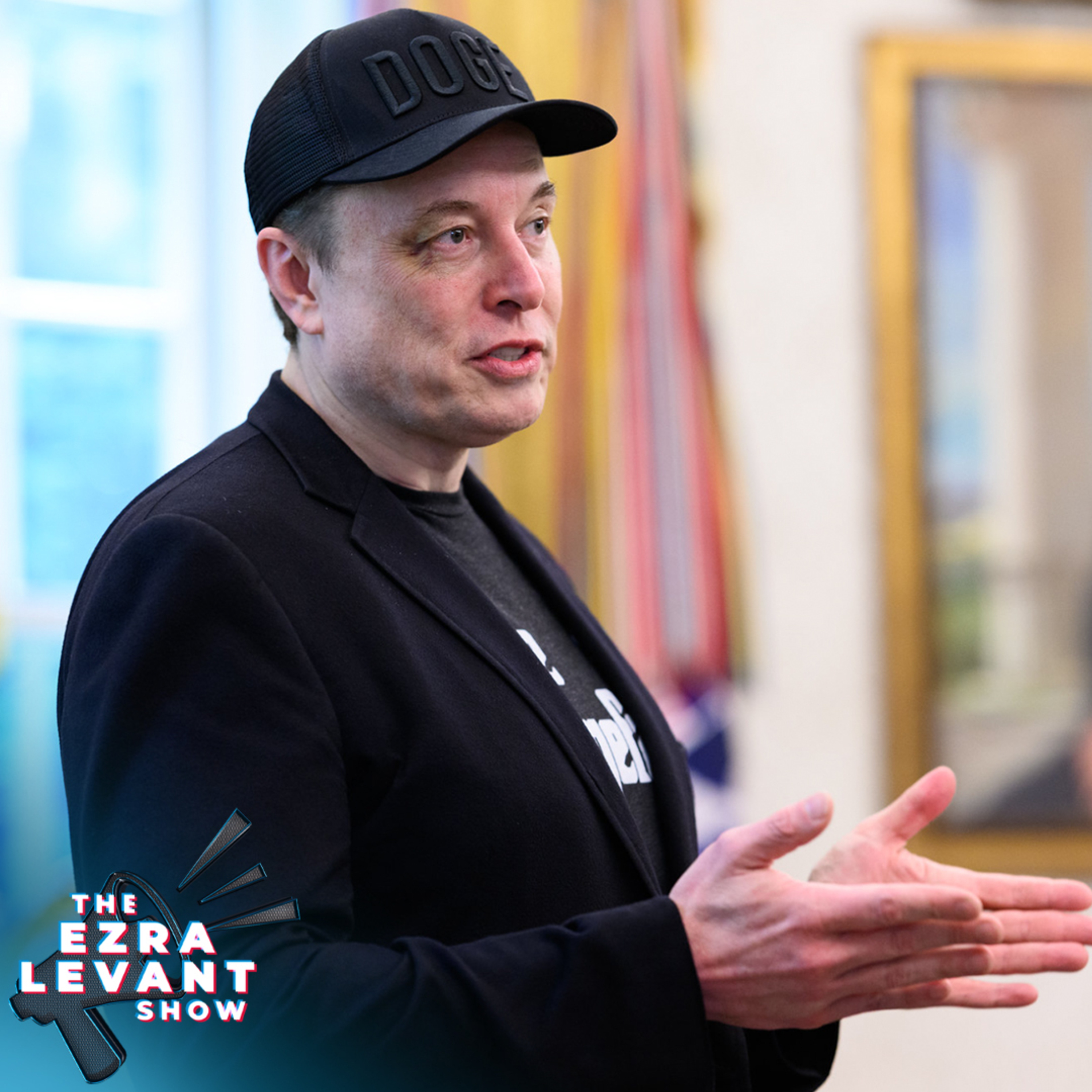
Rebel News Podcast
EZRA LEVANT | Why would Elon Musk invest $20 billion into Mississippi instead of Canada?
00:34:14
Tonight, Ezra examines a striking economic development that highlights Canada's competitive challenges: Why has Elon Musk chosen to invest $20 billion in U.S. dollars—through his company xAI—in Mississippi, the poorest state in the United States, rather than in Canada?
Loading summary
Transcript31 lines
- [00:00]
A
Hello, my friends. I think we got a good show for you today. If I may, I got something interesting to tell you about the state of Mississippi. How does Mississippi compare to Canada in terms of prosperity and attracting jobs and building megaprojects? I think you'll find this one a good one. And then we talk to a firearms expert about Mark Carney's stance. And I'll show you a sneak preview of our quick visit to York University where, where we went to prove that free speech is still alive. But first, let me invite you to become a subscriber to Rebel News Plus. That's our video version of this podcast. It's eight bucks a month and I really want you to see our little truck we were driving around the university. Go to rebelnewsplus.com, click subscribe, and not only do you get the video stuff, you support Rebel News and we need it because we take no money from the government. We rely on you. You're listening to rebel news podc. Tonight. Why would elon Musk invest $20 billion into Mississippi instead of into Canada? It's January 9th and this is the Ezra Levant Show. Shame on you, you censorious. Elon Musk just put $20 billion, and I mean US dollars, not Canadian mini dollars, into Mississippi.
- [01:38]
B
Today we are here to announce the largest private investment in Mississippi history. A 20 billion plus dollar investment by XAI in South Haven, Mississippi. They are going to create hundreds of of permanent jobs and thousands of indirect subcontracting jobs and help us further grow the economy of Mississippi. My friends, as you've heard me say before, Mississippi is not just making news, we're making history. Today we are breaking another record that some thought would never be possible. Xai's investment of up to $20 billion again is the largest private sector investment in Mississippi history. And it's twice the size of the largest previous largest investment. The tax revenue generated here as a result of this record breaking investment will help support vital programs and services like infrastructure, public safety, health and human services, educators, firefighters, police.
- [02:52]
A
You know Mississippi, right? I don't know much about it. I've never been there. I know that it is sometimes considered a caricature of the South. I think the movie Mississippi Burning about the civil rights era might be what a lot of people think of. I mean, it's a small state and it's far away from Canada, so I doubt many Canadians have ever been there. It's less than 3 million people too, so it's pretty small. Can you name a city in it? Maybe you can, but we don't know a lot about it up here in Canada. Mississippi is the poorest state in the union. That probably won't surprise you now. It's also pretty cheap to live there compared to, say, New York City or San Francisco or Toronto or Vancouver. Economists have a concept called purchasing power parity. You sometimes see the letters PPP to take that into account. As in, if you earn $50,000 a year, but you live in a place where rent is really cheap and food is really cheap and gas is really cheap, you may actually be wealthier in terms of your purchasing power than someone earning $100,000 in an expensive place. I saw this chart prepared by the Hub a few months ago that compares the purchasing power of people in all 50 US states and all 10 Canadian provinces. Very interesting chart. So you can see that New York is the wealthiest jurisdiction in North America, even though it's probably the most expensive city to be in. They earn so much more too. So they're purchasing power is well over $100,000 US. That's another thing to know about this chart. It converts everything to US dollars. So you can compare Canadian provinces to it, apples to apples. So look at that. The second richest state is Massachusetts. California is up there too. North Dakota is also. That's likely because of all their oil production. Unlike their northern neighbor, Saskatchewan, North Dakotans have never heard of the concept of their federal government blocking pipelines. To them, they'd probably consider it an act of war, maybe a cause for a secession. So they're rich. In fact, you have to go down to the 20th place before the first Canadian province makes its debut. That's Alberta. No surprise. Saskatchewan is at 25. Newfoundland surprised me. It's next for the Canadians. It's ahead of Ontario and B.C. but I think that's partly because of purchasing power parity. They don't earn as much in St. John's perhaps as they do in Toronto. But they're housing. I checked it. The average house cost $450,000 in St. John's compared to more than $1 million in Toronto. That's the purchasing power, I mean. And Newfoundland actually has a bit of an oil industry, which helps too. So Ontario is actually way down there at 48th place. Isn't that incredible? Mississippi is at 57th place, but that means it's still ahead of Prince Edward Island, Nova Scotia, New Brunswick. There's natural gas in New Brunswick too, by the way. They could be very rich if they wanted to be. But their government bans developing natural gas, so they're literally the poorest people on the continent with an income of less than $50,000 each converted into US dollars purchasing power parity. By the way, Mississippi is about 37% black. Now, I checked a statistic that I probably wasn't supposed to and the average US Black income on the same purchasing power basis is just under $60,000 for the average African American in the United States. So let me tell you that amazing statistic. The average African American family is doing better economically than the average family in New Brunswick, Nova Scotia or pei. For all of our Canadian snobbery and condescension and moral superiority and all of our focus on race relations in the States, the Canadian media is obsessed with it. African Americans are actually doing better than many Canadians economically. So let me ask my first question again a bit differently. Why would Elon Musk invest $20 billion in Mississippi rather than in Canada? Put aside the Atlantic provinces but say Toronto or Vancouver or Calgary? Well, first of all, when was the last time you saw any company actually invest 10, $20 billion in Canada at all? Anywhere? That actually used to be fairly common in Alberta during the oil sands boom, but the horrendous provincial NDP government in Alberta that one time and the last 10 years of federal liberals pretty much ended that. And though the government shoveling subsidies at huge foreign carmakers in Ontario to build electric vehicle batteries in Canada doesn't count. And by the way, have you seen just this week General motors took a $6 billion write down on their electric vehicles. Let me read from the Globe and Mail article. Many automakers, including GM's crosstown rival Ford, have been dialing back factory work on EVs electric vehicles since last summer, when US President Donald Trump's massive tax and spending package darkened the outlook for the EV market, sales of battery powered vehicles have cratered following the elimination on September 30th of a $7,500 federal tax credit for electric vehicle buyers. Ford in December said it would take a $19.5 billion write down over several quarters as it canceled several EV programs, including the fully electric version of the F150 Lightning truck and additional electric truck and van. Just canceling it. No one really wanted it without government subsidies. So yeah, Canada forced taxpayers to invest in that fake industry, thinking Americans would be forced to buy electric vehicles. But Trump isn't into that. He's more into real jobs, I think. Hey, I'll answer the question in a moment about Mississippi, but can I show you a very expensive tweet? I think the most expensive tweet in history was when Justin Trudeau said, hey, anyone can come into Canada. And then 50,000 people crossed over at Wroxham Road. But in terms of sheer business, this tweet is probably more expensive. It was during the lockdowns. And as you may know, Elon Musk has a big factory in California. And the local public health police in that area were putting so many demands, insane, crazy Covid restrictions on Elon Musk's factories. And Musk was opposed to all that and he was being quite vocal about that. So Lorena Gonzalez, the head of a labor union in California, who used to be a state assembly woman herself, was pretty plain about, I'm going to swear now, I hope I don't offend your ears. You know, here's Elon Musk, the leading citizen, leading investor, leading job creator. And she just wrote, fuck Elon Musk. That's what she wrote. She didn't quite have the courage to spell it out fully, as if it's better to not have the U in there. And then she went on, she kept talking, actually. She said California has highly subsidized a company that has always disregarded workers safety and well being, has engaged in union busting and bullies public servants. I probably could have expressed my frustration in a less aggressive way. Of course, no one would have cared if I tweeted that. So she's making excuses. Obviously she got some blowback. And then she said the deaths from COVID 19 in California are disproportionately Latino. Our communities have been the hardest hit by far. Maybe that's why we take the public health officials warning and direction so seriously. So she's playing a race card now. So Elon Musk just tweeted back, two words. She said, fuck Elon Musk. He said, message received. And then he moved the corporate headquarters of Tesla from California to Texas. And Texas is where he's expanding, where he's investing, where he's growing, where he's hiring. It's where SpaceX is. All his new work is in Texas. He has taken Ms. Gonzalez's advice to heart. Now he didn't shut down his California factory, but like he said, message received. So right there, do you think for a second that Elon Musk, who would have operated in almost any country in the world, I mean, he's got a factory in China. Do you think he would choose to come to Canada where the governments are anti business to begin with, where so many politicians are just as spiteful as that Gonzalez woman, Like Doug Ford scrapping a Rural Internet program that used Starlink just to get even with Elon Musk because Musk is friends with Donald Trump or something. Imagine canceling a government contract, just ripping it up, canceling a service to hundreds of thousands of Ontarians. It was supposed to be an important thing to give Internet to people in the country. But you're going to punish Elon Musk. So you've shown that you don't put the public interest first. You put your personal vendettas first. Here's Doug Ford on that.
- [11:45]
C
Yeah, Starlings is done. And are we, are we surprised that they're. They're not seeing eye to eye? I predicted that as soon as that marriage happened, I thought there'd be a divorce real quick and just canceled.
- [11:58]
D
Ripped up.
- [11:58]
C
Yeah, we're done.
- [11:59]
A
A cancellation fee is reserved.
- [12:01]
C
Well, we're working on that right now. We're sitting down with a company. I don't, I don't want to deal with someone that's attacking our country. And he was one of the number one culprits, Elon Musk. And that's unacceptable. I can't do business with someone that's doing that.
- [12:17]
A
Yeah. If you could open a company and spend $20 billion US anywhere, would you seriously choose a place run by Doug Ford or Mark Carney, where if you do something they don't like, they'll just tear up a contract with you? Maybe if your business was about getting subsidies, you would, but not if you were a real company. So let me show you who beat us. Mississippi. I'm going to read to you the entire story from ABC News. Musk's X AI. So this is his artificial intelligence company to build $20 billion data center in Mississippi. Elon Musk's AI company, XAI, plans to spend $20 billion on a data center in South Haven, Mississippi. I'll read the story. Elon Musk's artificial agents intelligence company Xai, is set to spend $20 billion to build a data center in South Haven, Mississippi Governor Tate Reeves announced Thursday, calling it the largest private investment in the state's history. The data center, called Macro Harder, is being built in Mississippi's DeSoto county near Memphis, Tennessee. Now that's a riff on Microsoft. Elon Musk is calling it Macro Hard. I think Elon Musk sort of hates Bill Gates. Anyways, let me get back to the news story. It will be the company's third data center in the greater Memphis area. XAI CFO Anthony Armstrong said the cluster of data centers will house the world's largest supercomputer with 2 gigawatts of computing power. Just by the way, on the map. South Haven, Mississippi is just across the border from Memphis, Tennessee. So it's very close by. The announcement comes as XAI faces scrutiny over its data center projects in the Memphis area. The naacp, that's a black lobby group, and the Southern Environmental Law center, that's a socialist lobby group, have raised questions over air pollution generated by xai's supercomputer facility located near predominantly black communities in Memphis. Of course they did. They're left wing agitators, the kind who rule Canada. They get paid six figures to complain, but many of the actual people working in the factory building the factory will likely be black. I mean, it's Mississippi and the governor isn't about to let some race hucksters stop it. Whereas in Canada, we absolutely would. I mean, look at why we can't build pipelines. We have given a racial veto now, apparently to Indian bans, even though the Constitution doesn't allow it. There will be no oil pipeline built to the west. A petition by the Safe and Sound Coalition, a South haven Group opposing Xai's developments, calls for shutting down Xai's operations in the area and has received more than 900 signatures as of Thursday afternoon. Oh, wow, 900 signatures on a petition online. That's hard to do. Yeah. No. The state will take its $20 billion in investment in jobs. Thanks, but can you see what's going on here? This is supposed to be a news story about the biggest investment in Mississippi history. And they did say a few lines about it, but the bulk of their reporting is attacking the industry, attacking Elon Musk, attacking the company. Now this is the media, but in Canada, that's the politicians too. Let me keep reading. XAI did not immediately respond when asked for comment about environmental concerns. A fact sheet released by the Mississippi Governor's office said environmental responsibility is a core commitment for xai. During the announcement, Reeves personally thanked Musk. Reeves predicted the investment would bring hundreds of permanent jobs to the community, thousands of indirect subcontracting jobs and tax revenue to support public services. And then here they go with an attack again. Under the incentives for data Centers passed in 2024, the state will waive all sales, corporate Inc. Income and franchise taxes on the XAI development savings sales taxes on the computing power that xai's purchasing would likely be worth a substantial amount of money. But the Mississippi Development Authority did not immediately respond to the Associated Press's questions about how many tax revenue Mississippi will give up. DeSoto county and the city of South Haven have also agreed to allow substantially reduced property taxes. XAI is expected to begin data center operations in South Haven next month. So this wasn't even a news report, was it? It was an attack. It emphasized the complainers, it tried to graft a racist element onto it and tried to make the case that agreeing to give up some tax revenue, this is not a good deal for Mississippi. Even though $20 billion is coming in, at least in Mississippi. Their only offer is to reduce taxes, not to actually shovel 50 billion tax dollars into the company like Canada did with electric vehicle batteries. You'd think that story was written by the CBC or something. Anyways, back to reality. $20 billion in a factory and it sounds like more could come. Pretty awesome. Why don't we ever get offers like that? Well, that plant needs electricity more than anything. Electricity in Ontario is about 50% more expensive than in Mississippi for industrial users. And that's because we thought that solar panels and windmills was a good idea for the environment. So you've got cheap energy, you've got located to other XAI data centers already. And look at this. Some banter between Musk and the governor of Mississippi. Let me show you on Twitter. Here's the governor who says, why invest in Mississippi? Elon Musk said it best. Insane execution speed. We can get you from spending money to making money faster than any state in America and that's our competitive advantage. And then Musk replied to that saying excited to invest in Mississippi. And the government wrote back, maybe this was pre scripted. Probably. He said, why is Mississippi in the conversation for virtually every major industrial project in America right now? This sentence sums it up. Insane execution speed by XAI in the state of Mississippi, Mississippi's open for business. So they're talking about how quickly things can move, how quickly the government can get out of the way, how fast do we operate in Canada for $20 billion projects? Well, the MOU, the memorandum of Understanding that Mark Carney grudgingly side with Alberta, suggests that a new pipeline will be built. If you read it, and I read it sometime before the year 2040. I'm serious. Read it for yourself. It jumped out at me right when I saw it. The year 2040 is in. 14 years from now, Alberta might get that oil pipeline. Don't give up, guys. Yeah, it's fun to make fun of Mississippi, but they're richer than many Canadians. And after today, I think they might actually move up a few rungs. But hey, in Canada, we've got our elbows up, don't we? Stay with us for more. Well, there's certain policies that the liberals announce and re announce and re announce. They don't really do anything about it, but they love the announcement. Of course, taking guns off our streets is one of them. They don't actually succeed in taking guns off our streets because the guns that are used by criminals are impervious to announcements by politicians. Isn't that funny? I mean, they go after legitimate gun owners, including hunters, farmers, ranchers, sportsmen, but they never seem to quench or to put out the fire of the crime wave across this country, especially in the big cities. I note that the federal government had an idea to buy back the guns. And you know, I suppose there's a germ of an idea there. If gangsters are trying to get rich by using their guns to rob places, maybe they would accept money for their weapons. Well, their entire project in Cape Breton, where they had a pilot project, yielded a grand total, get this, of 25 guns. Not 2,500 or 25,000, but 25. Like a dozen and a baker's dozen. Like I've probably eaten that many donuts on a bad day. 25. And by the way, they spent an average of $7,000 managing this program per gun. And yet they've set up a new program. They've agreed to fund the province of Quebec, $12.4 million to do the same again. Now, I don't know if they're going to pull in more than 25 firearms, but that would be half a million dollars per gun. I remember there was a movie, a James Bond movie called the man with a Golden Gun. Maybe they're thinking they're going to buy a few of those for half a million. I don't know. I think that guns are a whipping boy for the Liberals. They don't actually solve the problem, but they like to distract. But joining me now is someone who follows this file closely. His name is Daniel Fritter and it's a delight to join him again. Daniel, great to see you again.
- [20:49]
D
Thanks for having me.
- [20:51]
A
We were just talking before the camera went on about how firearms policy looks in 2026. Is that something that Mark Carney has focused on or is it sort of a going still on the inertia from the Justin Trudeau years? I mean, Carney is basically at his one year anniversary. Now. Has he done anything himself or is it just sort of what was left over from the previous administration?
- [21:18]
D
He hasn't done anything per se, but he did mention specifically during his campaign that he was going to maintain the quote, unquote buyback program and that he was going to efficiently and in a cost effective manner buy them back. He hasn't made any new policy announcements. It feels like there's inertia and there, there is inertia because within public safety, through the department where all of this is kind of emanating from, the buyback program has been the single largest source of new hires. So there's a ton of people, there's 153 of them to be specific, whose jobs are managing this program. They obviously want to remain employed. So it's in their interest to keep pushing this thing forward. So whatever Mark Carney wants. I think I, like many gun owners, was surprised that he reiterated, you know, doing this cancel the carbon tax but keep this going. Kind of seems weird, but there is a lot of inertia with within public safety to keep this thing going. And I think that's what we're seeing with Quebec specifically now.
- [22:25]
A
Well, 153 hires is insane. And again, if you apportion that to Cape Breton, that's six government employees per gun that was bought back. Now I know that they're doing other things and they weren't all focused on that, but it's sort of laughable. I remember when Alan Rock brought in the gun registry, this would be about 30 years ago now, and the prices just absolutely ballooned. What was supposed to be in the tens of millions soon was in the billions. I, I don't know, maybe that's the actual purpose of Canadian gun control. Not to take criminal guns off the streets, but to provide a unlimited employment for anti gun activists. I mean, I suppose the anti gun industry doesn't have to succeed to make money. In fact, I suppose like a lot of other industries like the welfare industry or the, the drug rehabilitation industry, if they were actually to succeed in Canadian public policy, that a lot of do gooders and NGOs would be out of work. Maybe they fail on purpose.
- [23:27]
D
Well, I think, you know, to refer back to what you were saying earlier, the government loves the announcements and guns are a very popular whipping boy, especially these days where they can pitch guns as largely an American sort of thing, where a lot of Canadians are feeling anti American sentiment, it leverages that sort of specific issue. And it's frustrating because as a gun owner and as someone who has been in this industry for 15 years now, you know, I used to do media interviews like this and they would largely be predicated on the notion of how are we doing it? Right. There'd be a massive thing in the states where a bunch of people got killed. And then I would do an interview where the journalists would go, why doesn't that happen in Canada? And I would explain, because we had previously a very resilient system of controlling who is allowed to own a gun because we don't have the second Amendment. You got to get a license. It's rigorous. You get checked every day. But we don't, we don't say what kinds of gun you can specifically own. We control who owns them. But that seems to have been abandoned. And it's, it's broken the trust, I think, between gun owners and the government and in some ways the public. Because as gun owners, we're watching the public vote for a government who continues to not seem to care. That that makes the announcement the key. Instead of actually trying to keep people safe, like you said, they spent $2 billion on the long gun registry. It saves. They spent hundreds of millions of dollars on the gun bans that have occurred since 2025 or 2020. And no one is safer for it. It's, it's a shame.
- [25:08]
A
You know, I saw something very. That has a strong counter narrative. A few weeks ago, the top brass at the Canadian Armed Forces had this idea of sort of a, I don't know, not really a reserve, but of turning. That's right, Bureaucrats.
- [25:28]
D
I know where you're going.
- [25:30]
A
Where, you know, I mean, I just imagine these just in my mind, these middle aged lifer government sector union workers who are used to working like as a clerk somewhere. Sort of the kind of people you meet at the Department of Motor Vehicles who are not in a rush to anything, who say, oh, I'm still on my break for 90 seconds. I won't answer your question. They want to recruit, I think they said, hundreds of thousands of them to be this like militia or something, I'm guessing to defend against some American invasion that in their fever dreams, they think is imminent. So all of a sudden having a gun and shooting a gun is cool and necessary and patriotic. It's a way to keep out the evil Donald Trump and his Greenland Brigades. What, did you make it? Did you pay attention to that at all? Like, I think they sort of dropped that, but I thought they, it was pretty weird from people who like to ban guns.
- [26:26]
D
It. But it's, I saw it, I thought it was pretty laughable. Obviously I'm laughing because I, I'd forgotten that even was a thing. But it, it also harkens back to the notion that when they announced these Bans. It was around the same time as, you know, the government was getting elected on largely a we need to oppose this 51st state rhetoric. And they were saying we're going to send the guns to Ukraine. And it's the same logic of, you know, Ukraine's being invaded by Russia, which is bad, so let's send guns there. But also we need to take the guns away from Canadians because we might be getting invaded by America. It was a very strange thing that also died because it was a similarly laughable notion. But this notion of, you know, the civil service becoming an armed militia at the same time as they're, they can't even figure out how to take the guns away from people that have them is just a, you know, you talk about skill gaps, that's a pretty big one for a government that can't figure out how to take guns away from people who legally own them. To say we're going to arm the entire government with guns, I mean, it's, yeah, I can imagine them so silly. It's, this doesn't even feel like a real country thing to be talking about.
- [27:45]
A
I would be afraid they would use those guns against Canadian citizen customers who were a little too eager in saying, how come I'm still waiting in line. Like I could imagine if you armed every public sector bureaucrat in Canada, the chief destination of any gunfire would be at customers who are a little impatient. I just think it would be like it's psychologically the absolute worst people in the world you would want to give guns to. I forgot about the point. You said that the Liberals had said they were going to seize guns from ordinary farmers, ranchers, hunters, and give them to Ukraine, which is in the middle of the toughest war in memory, where, you know, they don't have little plink, plink, blink guns. They don't. They're using horrific machines of war. I mean, it's a lot of drone warfare. But they're not using the kind of guns that Canadian farmers using. They're using war guns. And I think that the Canadian government has fooled itself because they talk about we're going to ban assault style weapons. And they don't even know what that means. They just think if something is black and has a plastic stock and looks scary, that's an assault style weapon. So obviously that's how we defend Ukraine against Russia. And I think the, I think what that reveals is that the people making firearms policy in Canada probably have never seen a firearm, touched a firearm, know anything about firearms. They just, like you said, like I said before, it's just about the press release. And that was, you know what's cool right now? Ukraine. Okay, we're going to seize the guns and give them to Ukraine. That's so cool. That's going to go crazy viral on Twitter. I think that's the level of policy depth of our liberal government.
- [29:30]
D
It's government by TikTok is what it feels like. And I mean, I don't know if this is still the case because not surprisingly, no one within the Department of Public Safety has opened a good channel of communication with me for some time. But that wasn't always the case. And even going back to while the liberals were still in government, there was a staffer in Public Safety who worked for Ralph Goodale, who would call me and talk to me about gun policy because working in the gun industry, and he freely admitted he was the only person in the entire office that had a gun license and he no longer works there. So I would hazard a guess that no one there has a gun license. And I think that you are absolutely correct and that these people, they don't know guns. They've hired 153 people. These are new hires. It also has notably shifted the entire demographic of public safety staff to a younger age. They are young people who don't have a gun license, who don't basically nothing about guns, who have gotten a job in the government dictating gun policy. And it's. It's kind of insane when you actually think about it, because this is a key component of public safety, like national defense. Guns are an important thing. You cannot have a bunch of people making policy about them who have no experience and no knowledge about it. It'd be like saying the Minister of Transportation is a guy who's never driven a car.
- [30:57]
A
Yeah.
- [30:58]
D
Or the Minister of the Environment is a guy who was a Greenpeace activist, which is based where we're at. So, you know, we're on the other side of that. That glass, I guess.
- [31:07]
A
Yeah. It's crazy. Well, listen, it's great to catch up with you, Daniel Fritter. What's the best way for people to follow you and your work?
- [31:14]
D
Twitter, Instagram, we're doing more Facebook, Caliber Mag CA is our website. And all those social media handles, it's all just Caliber magazine.
- [31:23]
A
That's great. Daniel Fritter of Caliber Mag. Thanks for taking the time with us.
- [31:27]
D
Thank you for having me.
- [31:28]
A
Right on. Stay with us. Your letters to me next. Hey, welcome back. Your letters to me. Ungarna Genuis. And I hope I Wasn't too tough on the guy, but he needs a bit of a, you know, splash of cold water in the face or something. Tom Vandervoort says. Agreed. Garnet is normally awesome and holds the government to account, but this is bending over and taking him. Yeah. And Garnet can. Let me say one thing about Garnet. He is a very polite man. You can be firm and polite once in a while. I manage that combination. You don't have to be rude to be firm. To assert your rights, you don't have to be rude. I think Garnet can stay in his emotional space of being a reasonable young man and not allow himself to be pushed around by some woke radical at York University. Ghostbird says if York doesn't want to abide by Canada's freedom of speech and assembly laws, go after the funds they receive from taxpayers. Yeah, I mean, exactly. That's how Donald Trump is doing in the States. If universities are too radical, he says, I'll cut you off if you don't follow the law. Surprise, Baby Turtle says, I wish Canadians weren't so wishy washy. China is slowly taking us over and hardly anyone seems to care. Go, Donald. Thanks, Rebel News. Well, you know what we did today, and I don't want to give anything away, we're editing the video right now. We sent six people to York University. That's the university where Garnet Genuis was going to. We sent six people there, two teams, and the beautiful billboard truck. And we did what Garnet Genuis was banned from doing. We talked to students inside the university, outside the university. We had the big free speech truck, as I'm calling it. And no problem at all. No one kicked us out. Not even campus security or the police. Sometimes you can just do things instead of being afraid of your shadow. Here's a quick, very quick clip of that that our videographer Lincoln shared with me today. Take a look at this.
- [33:26]
E
I feel like everyone's held to the right of free speech. Everyone has a right to speak to how they want to speak, even if it's an opinion you disagree with. I think it's very important to have conversations and dialogue as its university campus. And that's what it's meant for.
- [33:38]
D
Exactly. Is it not part of the university experience to hear other people's ideas? Or do you think that people's feelings should be protected first?
- [33:46]
E
I don't think feelings should be protected. I think everyone has a right to free speech. I think it's important for everyone.
- [33:50]
A
Just a little teaser. We'll have the full video maybe tonight or tomorrow. I'm not sure. But, you know, you don't have to be afraid. Sometimes a little bit of courage can be contagious. That's our show for today. Until tomorrow. On behalf of all of us here at Rebel World headquarters. To you at home, good night. And keep fighting for freedom.