← Rebel News Podcast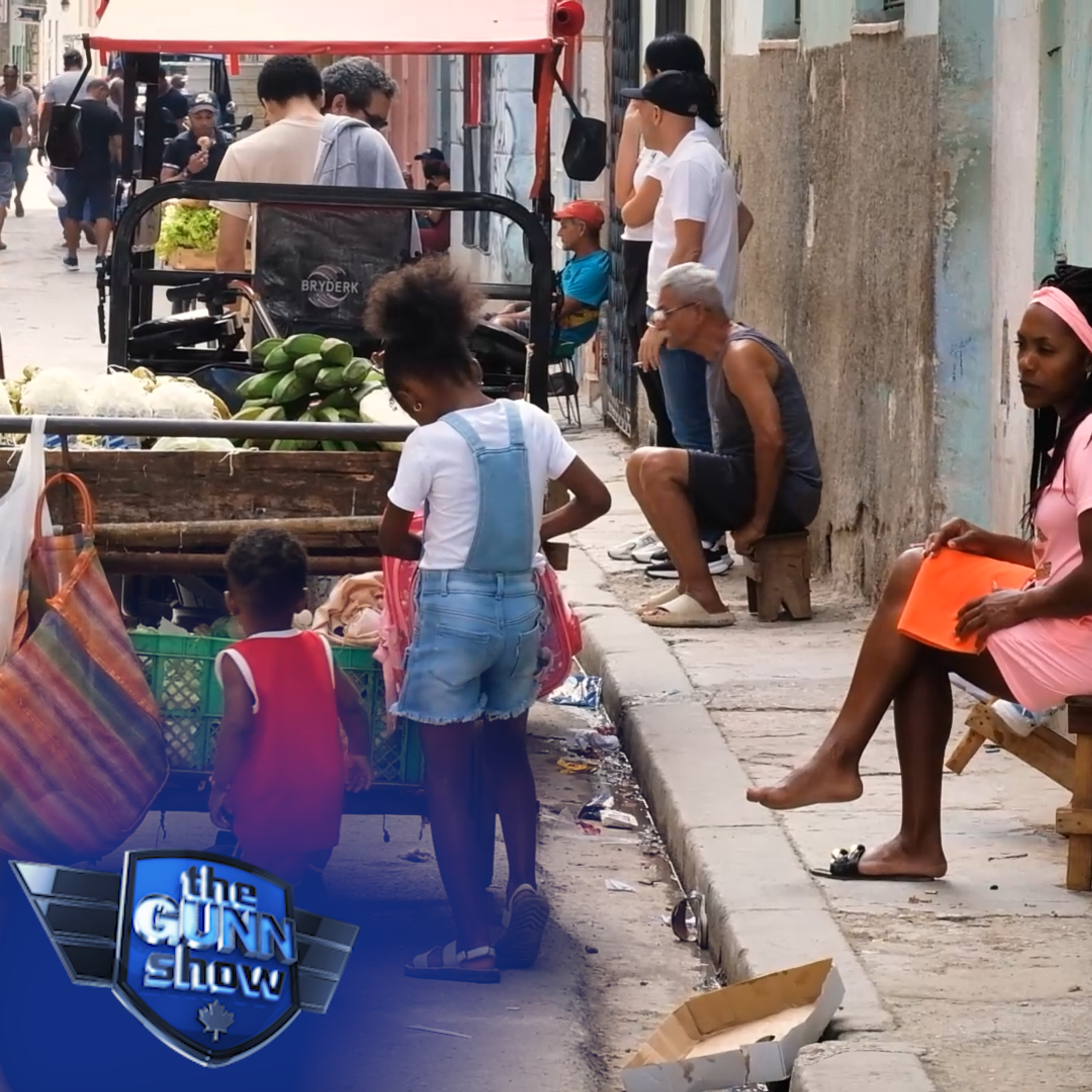
Rebel News Podcast
SHEILA GUNN REID | Alexa Lavoie on Cuba, Caracas and Quebec conservatives
00:31:59
This week on The Gunn Show, I sit down with Rebel News journalist Alexa Lavoie, fresh off a rare reporting trip to Cuba and straight from the Conservative Party of Quebec convention. In Cuba, Alexa and Rebel News' Efrain Monsanto went past the tourist postcards and into real conversations with ordinary Cubans on what they think about the authoritarian regime they live under and how the arrest of Venezuelan dictator Nicholas Maduro by the Americans may change their futures. Stay tuned for Rebel News' long-form journalism on the real Cuba. Listen to audio-only versions of RebelNews+ exclusive shows like the daily Ezra Levant Show, the Gunn Show, and audio versions of our DAILY livestreams along with other Rebel News long-form videos and interviews.
Loading summary
Transcript25 lines
- [00:00]
A
Foreign. Our super secret trip to Cuba. I'm Sheila Gunn Reed and you're watching the gun.
- [00:32]
B
You want to hurt but you know, one day.
- [00:52]
A
Cuba is a failing nation and you have to feel badly for Cuba. Rebel News sent two journalists to Cuba to talk to Cubans about how they feel about what happened in Venezuela, what they feel about communism and how they feel about the American president and especially Marco Rubio. Joining me today is Alexa Lavoie, one of the journalists we sent and she shares her thoughts and gives us some sneak peeks into her long form journalism about the struggles and strife in Cuba. Take a listen. So joining me now is my friend and colleague Alexa Lavoie. And couple of weeks ago, maybe two weeks ago, she was on a very secret mission that we didn't tell anybody about. In fact, most of us at the company didn't know what was going on. She went to Cuba. Alexa, tell us about your trip, why you went and then we'll get into some of the details of what you learned on the ground.
- [02:19]
B
Yeah, it was following what happened in Venezuela when Donald Trump and the military capture Nicolas Maduro. We knew that this will impact directly Cuba because of the oil. And we knew that Donald Trump was looking into Cuba because Cuba is the place where most of the dictator have actually learned about how communism works. And Maduro, Chavez, they all went to Cuba to be teached about how implement communism. And so when we went to Miami there were a lot of people talking about how they would love Cuba to be the next domino. So it's why we, we kind of talked about it but we also talked about the, the consequences that we could face going over there. We knew that some YouTuber in the past have been jailed, detained and also deported with all their camera and equipment seized by the regime for just trying to talk and expose what the regime was doing to their own people. So we were really careful. We went over there with no communication from the world. I had a really old iPhone. I didn't have any, any social media on this. We were warned as well that in the hotel they had some microphone so they were actually listening if someone were talking against the regime. We went over there because we wanted to give a voice to the people and also we wanted to learn if they wanted a US intervention if they actually like Donald Trump or Marco Rubio. And we wanted also to see like in which kind of condition they live under. It's how we went over them. It was really hard. When we actually landed it took almost an hour and a half to just pass through Custom. We can see that everything is not working well. They have power outage happening many times during the day. We can see that they are not collecting the garbage. If you walk into the street, it's just pile of garbage just piling up. And there is mice, there is like all kind of flies. And it smell not really great. And you can see like you, you go into the shop, pharmacy, grocery, it's all empty shelves. And if you see a grocery or where there is food, the people were actually telling us that this is not grocery for them. They can't afford that. It's only for people who actually work in hotels or the people who work for the regime or for the government works jobs. So you can see that for them it's peanuts. They have almost nothing. They have like literally a booklet where they have like durations that they can actually get when they go to the grocery. They have the rights to have a certain amount of rice, certain amount of oil, cooking oil. And when you actually walk through those building, those building are crumbling down. You can see the crack concrete. I was kind of worried, I was like, those building will collapse soon. It's really dangerous. But they have no choice. They live all together. There is like a family of like five, six living in one bedroom, all sleeping in the same bed. You go into the kitchen and what I was able to see is like a mother of five cooking a soup, but only with water, bones and spice, nothing else. Also, they don't use any salt because they say that they can't actually get sick. So they all watch what they are eating because if they get sick, they go to the hospital, they have a coupon for having medication, but the pharmacy is empty. They can't actually buy the prescription that the, the, the hospital is giving them. So it's really sad to see, but it's really revealing what we were able to get from the people. Because they didn't know we were filming them. Most of them, we hid their faces because we don't want them to go into prison. It's 5 to 10 years in prison. And you can also result to 20 years in prison. Because the last protest that they had in 2021, about the COVID protest, almost all of them have been sent to jail. They say that there is many, many jail in the island and most of them is political prisoner.
- [07:33]
A
Yeah. Now, you know, it's funny that you talk about the conditions there because the Canadian left, they love Cuba, they love going there and spending their money there and propping up this evil regime. That's why it was easier for you as a Canadian to go there and be an undercover journalist. You'll probably never be allowed back. I wouldn't send you there than an American because the Americans have an embargo against Cuba. But Canadian tourists go down there all the time and spend their money there and keep this evil regime afloat. And the Canadian left will brag about the universal health care in Cuba. But you're telling me that the residents there are too scared to consume salt, which is not bad for you by the way, because they're scared of getting sick because really there is no health care whatsoever.
- [08:28]
B
Yeah, exactly. What they are saying is if they get sick, it's almost the end because first of all they go to the hospital, but there is no medication. There is no medicine. I went to many, many different pharmacists drugstore and it's all empty, empty shelves and it's all run by the government. And also you have a prescription. So you have like a piece of paper that say that you can have the amount of pills but you need to buy it, it's not free. So some of them, they don't have the money to buy the prescription. So it's like an infinite just, you know, loop that you don't have money but you can't purchase. You, you dig into, into the garbages. So they are roaming into the garbages to try to find some stuff that it can reused at home. And I'm telling you, I passed by those garbages. I was horrified and I find like really, really sad because you know, I look at all the people and they are so tiny. It's, it's, it's not fat people, they look like all skeleton walking into the street. Like they, they know, they are aware that something is wrong. Why? Because before the regime was controlling and is still controlling media and advertisement, education. But the thing, when social media came, it opened a whole door for these people to see outside what was happening. And another narrative, it's why in Cuba using social media is really dangerous because if the regime actually see that you are using social media, they can actually jail you. It's why they all do this like discreetly. They don't actually show to anybody that they are using this. And by the way, also there is not many religious freedom. What I was actually able to see, I was talking with someone in Quebec who is Cuban himself and he was talking to me about concentration camp. Obviously it's not concentration camp, but it was a forced working camp. And I actually did some research on this. And yes, on the Fidel Castro, there were forced camp where they were sending homosexual religious people to force them to work and to convert them, to remove them from their religious freedom, to try to convert them if they were homosexual, to try to, to turn them into being straight. And because it was a threat for the regime. Being religious, you believe on your faith and you're not believing on the regime as well as for the homosexual. They didn't believe that it was a rights and it was unnormal for them. So yes, that existed under Fidel Castro. Today I don't think it exists anymore. But this regime is an oppressive, repressive regime. And everybody was scared to talk and everybody actually mentioned that they can risk prison and they were always doing that to us. But the vast majority are for the American to come and intervene. Why? Because they say that if they are not coming and they are not intervening, nothing will change because they can't rise up, they can't do anything. And the fact that there is now power outage, they are scared that now when dark comes, there will be violence and people will actually rise during the dark times. So there is a lot of uncertainties over there. And as I say, they hope, they hope for something happening over there because they can't actually survive like that.
- [12:49]
A
Now I don't want to give too much away because you are working on, I think it's probably. Well, it is documentary length, very long, full of information, video over the coming days on this. You've been working on it in the background for weeks now. But just give us a sneak peek about what you heard from the people, about what they think about President Trump, what happened in Venezuela. Marco Rubio, who is of Cuban descent. Tell us what they say about this.
- [13:24]
B
Yeah, some people say that the hope that Marco Rubio will be their next president. They would love to see him to be the next president. Why? Because his family is from Cuba. Obviously he is born in the US but his whole family live under the communist regime. And he knows what he's talking about. So a lot of people love Marco Rubio. A lot of people love Donald Trump. Some of them say, you know, he's not God, he's not a stupid person, but he know when he's talking about Cuba, he knows what is all the ramification of Cuba in Latin America with terrorism. They talked about also some secret about drugs dealing, the drugs being hidden in Cuba for the Venezuela regime. They talk also about the cooperation with Venezuela and Cuba. The talked about so many different things. They talk about also how life is really hard for them. They actually opened their door to their home, to where they live, to show us. And they. They actually begged us, please show the world. Show the world our condition. Show what actually tourists don't see. Because this is true. When you go into the tourist places, it's clean. And when you rent a car, you know, those beautiful vintage cars, they don't bring you where the garbages are. They don't bring you where the real people lived. They will bring you at the tourist spot. So you can actually see the beautiful Havana, the beautiful Cuba. But this is not reality. It's actually just certain places that are being kept clean, but the rest is just collapsing. It's just falling apart. And we wanted to see the real Cuba. And when we mentioned we want to see the reality, your reality, we want to see the. The truth. You. You could see their face saying, you really want to see the reality. You really want to see it. And I. We were like, yes. And they were like, right away, like, come with us. And they open up, like, right away. And also the fact that me and Efron, we actually can speak Spanish, it helped a lot because those people cannot speak another language and Spanish, so they were more open to share their thoughts with us.
- [16:09]
A
So I know you're still working on it, still not finished, but I think that what you've done is. I've. I've seen what you've worked on already. I think it's such an important piece of journalist journalism that could only be done by rebel news because you're Canadian and because you believe in freedom. So I can't wait for people to see what comes out of your work because it was very secretive, and you did put yourself at. At great risk to tell the stories of the people on the ground that the Canadian tourists look away from. So I'm. I'm just so proud of the work that you and Efron did down there. Moving on from that over the weekend. Last weekend, I was at the Federal Conservative Party convention in Calgary. You were at the Quebec Conservative Party convention. And I. I think we were all talking about the same things, you know, freedom, firearms rights, government overreach, being left alone. It just. In brief, because, well, you know, we've got about five or six minutes left. Tell us what the key points, the key themes of the Conservative Party convention in Quebec.
- [17:39]
B
Yeah, the. By the way, the Conservative Party of Quebec did their convention in, like, in the same time that the federal one, but they didn't know. They didn't know that. They were like.
- [17:53]
A
They weren't like, Doug Ford.
- [17:55]
B
Yeah, exactly. They didn't know because I asked and they say if we knew we would probably like do it another time. But they didn't know. But the key theme were mainly economy, housing, education. They were a part on nationalism, being proud of our heritage. They bring back also the question about crucifix and all the Christian heritage that they want to keep and not removed. They also talked about the justice system and also the public safety. We talked about also like some stats about incarceration, the jail time and recidivism. They also spoke about. I'm trying to remember everything. They didn't actually really touch a lot about immigration. I was kind of surprised and I actually asked a question about it and what they say to us. They say that they don't want to fall into talking about numbers or how many immigrants we want per year. They want to table bill that will actually mention the needs of the region in terms of immigrant and that will come later. So it's why they didn't actually include too much of immigration on this portion. But mainly how to extract our natural resources. They also talked about the federal buyback program and the confiscation of the firearm. They are all against it. They believe on the autonomy of a province that the federal should not actually teach and tell us how to deal with their fire harm or with their natural resources. They believe on the full autonomy of province. And that was actually really interesting to see. And they were the. So at this moment probably people are aware that our premier have resigned. Now they are searching for someone to replace. But they were one of the minister who actually resigned now she sitting as an independent, but she was there during the conservative convention. She actually spoke about the need of the region and the autonomy of the region. So they will actually him and the four, the minister who sit as an independent, they will table a project of law, a bill together about immigration and the region, the need of the region. So that was another interesting part. About 300 people were there. They actually discussed so many propositions. Some were adopted, Most of them were adopted and some of them got rejected, obviously.
- [21:11]
A
Well, it sounds like a very Alberta style convention actually.
- [21:17]
B
They spoke about Alberta and how we. We should actually take Alberta as a model how to be more autonom and how to extract our natural resources and how we should decentralize everything to give more power to the region. Because in Quebec everything is centralized. Everything is run by the government in Quebec. And it's why we are seeing so many problems. And they talk about how the health care system need also to be decentralized and how we need to add private sector with the public sector. Because in Quebec, unfortunately, it's all about public. And the union is pressuring the government to remove completely the private sector. That would be terrible for Quebec, right?
- [22:15]
A
Yeah, it is true. And I mean, we talk about resource extraction, but Quebec has its own natural gas fields, but you've banned fracking there for some reason. And so your premier, your newly resigned premiere, he's against fracking, but he's perfectly fine to take the money generated by fracking out here in Alberta and take it by way of equalization payment. So he's not against fracking, he's just against fracking jobs in Quebec?
- [22:44]
B
No, our premier is like. Like that. As Eric DM say, he is actually governing with the wave of the wind. So if people are against something, it's just following everything. Because Francois Legault wrote a book about how to extract our natural resources, and it was not against fracking. It was actually to how we will actually get equalization payment to zero. How to be prosperous. And look at what he did. He actually betrayed all of his promise.
- [23:25]
A
He did none of it.
- [23:26]
B
None of it. But he wrote the book about it.
- [23:28]
A
Well, that's good. Good for him. Alexa, thanks so much for coming on the show today, giving us an update on your important work in Cuba and giving a voice to conservatives in Quebec. Because sometimes it feels like we forget they exist in the rest of the country. And I think on certain issues, there's a lot more that unites us then divides us. We both have very busy days. You've got to get back to your Cuba work, because I think it's such important work. People need to see it. I'm just so proud of all the things that you do at Rebel News. And I have to tell you, at the Conservative Party convention in Calgary, I heard constantly, where's Alexa? We love her work. Where's Alexa? We love her work. And so I just wanted to pass along those regards because you've got fans all across this country. Yeah.
- [24:21]
B
And thank you very much. It's very touching. And I would say I love my fellow Albertan. I think we are more in common. Quebec and Alberta. I think we are really different in a way, but really similar in another.
- [24:40]
A
For sure. I'm learning that more every day. Alexa, let's both get back to work. I'll talk to you later.
- [24:46]
B
Bye bye.
- [24:53]
A
Well, the last segment of the show always belongs to you, our beloved viewer, because without you, there's just no Rebel News. We don't take any money from the government. And how could we, if we plan to hold the government to account? We certainly can't be on the government dole. Even if we were able to fully maintain our journalistic independence, the perception of contamination by government money would always be there. You'd have some doubts. Heck, I'd have some doubts. So that's why we rely on your support. And because we rely on your support, we let you have your say. So if you want to write me an email about the show today, sheilaebelnews.com put gun show letters in the subject line so I know exactly why you're emailing me. Or leave comments on YouTube, on Rumble, on any of the clips of the show, or on any of our content. I do go looking at those comments, not just on my own work, but on all the work that we do here at Rebel News. That's part of my job, is to take the temperature of the viewer feedback. Now, today's email doesn't come to us by way of any of our content per se, but it does give me an opportunity to answer a question that I think some of you might have. And this comes to me from a viewer named Scott. And it came in response to one of our fundraising emails that we send out. And it says, hey, Rebel News, first of all, thanks for your work. It is appreciated. Secondly, if you want people to donate, then you should specify on the donation pitch, like the one below, that you can provide tax receipts for donations or $50 or more or something like that. If you do this, many more people will send in money. The other thing you can do is set up a structure to receive the donations, like the Rebel News foundation or something like that. You need a friendly lawyer or accountant to help you with this. All the best, Scott. Well, Scott, I'm glad that you sent this email because it allows me the opportunity to explain why we can't do that. Now, we do have a, a charitable arm, a fully independent charitable arm of Rebel News. And it's not, I should clarify, it's not of Rebel News. It's a charity that we work closely with. It was created during COVID to help people fight their fines. We used to have an initiative called Fight the Fines. If you got a fine for having Christmas or protesting or opening your restaurant or opening your church, you could rely on the Democracy Fund, which is a CRA compliant Canadian charity, to help you with that. And any donations to the Democracy Fund are charitable donations which will provide you with a tax receipt. And Rebel News covers the journalistic side of that we tell those stories and then you donate to the Democracy Fund. Rebel News cannot issue directly tax receipts for your donations to us because we are not a charity, nor can we do what many other journalistic outlets are in this country do, and that is issue a tax receipt. Because we were denied. The qcjo, that's the acronym for Qualified Canadian Journalistic Organization that was.
- [28:38]
B
A.
- [28:38]
A
A tier in the tax code that the Liberals created, so that if you were a media outlet and they decided that you were a media outlet that they liked, or maybe not even so much that they liked, but maybe didn't, weren't quite as hard on the Liberals as we are, that even though you're not a charity, you could issue a tax receipt and the subscribers then could claim that on their taxes as a deduction. We applied for that. Not because we need permission from the government to be a qualified Canadian journalistic organization. We are a journalistic organization. We do journalism. Alexa is doing great journalism. I think her work from Cuba is exceptional journalism. I think her work on the ground from the Conservative convention in Quebec is absolutely journalism. But we did not qualify for that. We fought for it, we appealed, we did our best, but we were still denied. And we weren't specifically fighting for that for ourselves because our viewers donate to us anyway. We were fighting for that for you, for our viewers. We were willing to spend the money and hire lawyers to fight for your fair treatment under the tax code. You see, if you choose to subscribe to Rebel News, you are being discriminated against because of your choice of journalistic organization that you support with your money. So if you subscribe to the National Post, you'll get a tax receipt. You can claim the subscription on your taxes. If you subscribe to us, you can't. Even though we frequently cover many of the same stories, or in some instances, they cover the stories that we broke. And yet their subscribers get fair treatment under the tax code and ours don't. So as much as I would love to have us provide to you a tax receipt, the government, because of, I think, how aggressive we are with them, rightfully aggressive, by the way. They deserve every little bit of it. You are the victims of tax code discrimination. I hope that answers your question. If you have any other questions like that, viewers that are not pertaining to the work, but you would like me to address them on air, send them Sheila. Rebelnews.com that's the show for today. Thank you so much for tuning in. Thanks to everybody who works behind the scenes at Rebel News to put the show together. And as always, don't let the government tell you that you've had too much to think.