← Rebel News Podcast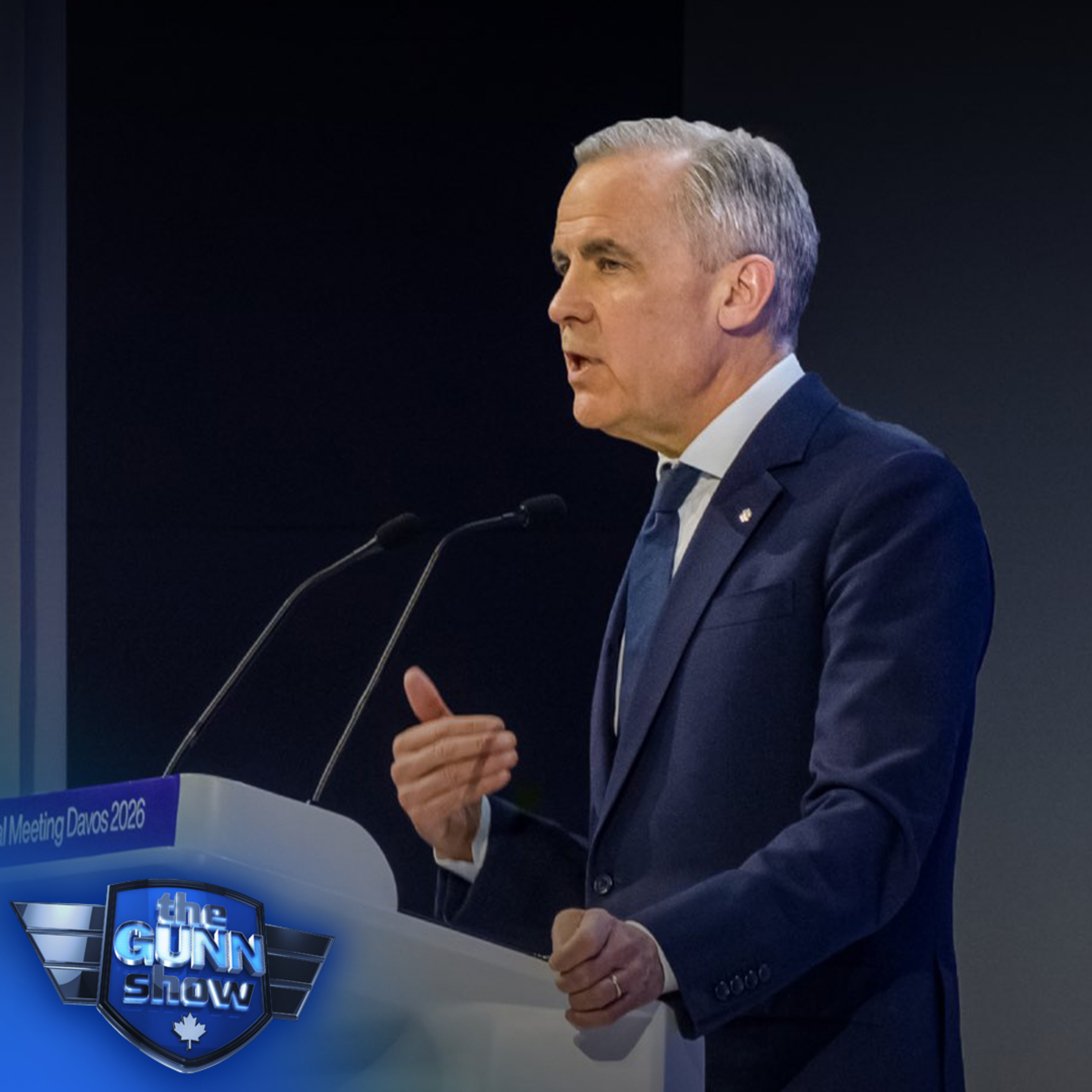
Rebel News Podcast
SHEILA GUNN REID | Davos dreams, taxpayer nightmares: Kris Sims breaks down climate cash grabs and Carney’s costly gun grab
00:30:20
On tonight's Gunn Show, I sit down with Kris Sims of the Canadian Taxpayers Federation to talk about the things politicians hope you are too busy paying bills to notice. Listen to audio-only versions of RebelNews+ exclusive shows like the daily Ezra Levant Show, the Gunn Show, and audio versions of our DAILY livestreams along with other Rebel News long-form videos and interviews.
Loading summary
Transcript48 lines
- [00:00]
A
Foreign.
- [00:15]
B
Taxpayer nightmares. Chris Sims of the Canadian Taxpayers Federation breaks down climate cash grabs and Carney's costly gun grab. I'm Sheila Gunn Reed, and you're watching the Gun show.
- [00:44]
A
Tonight.
- [00:44]
B
I'm sitting down with Chris Sims of the Canadian Taxpayers Federation to talk about the things politicians hope you're too busy working hard, paying your bills, even notice. First up, of course, is Davos. While globalist elites fly private jets and lecture ordinary Canadians about sacrifice and new world orders, Canadian taxpayers are left holding the bill for climate schemes cooked up at the World Economic Forum. These plans are not theoretical. They show up in your heating bill, your grocery receipt, and your fuel costs, whether you agreed to them or not. Chris explains how the federal clean fuel standards quietly add up to potentially thousands of dollars in extra costs in your daily commute. Higher fuel prices push up the cost of everything, though, from food and transportation to housing and basic goods. It's a hidden tax dressed up in green language and taxpayers are the one paying for it. We also dig into the failure of Mark Carney's gun grab. It's collapsing under its own weight. Not success collecting so few firearms while burning through millions of taxpayer dollars. This program targets lawful gun own. Violent crime continues to rise, leaving ordinary Canadians feeling less safe and of course, significantly poorer. But like everything the government does, it's expensive, ideological, and completely disconnected from reality. Chris joins me to walk me through the numbers they would rather you never see in an interview we recorded yesterday morning. Take a listen. So joining me now is my very good friend and good friend of the show, Chris Sims. She's the Alberta Director of the Canadian Taxpayers Federation. And we were going to record this about 12 minutes ago, but both she and I were paying intense attention to Prime Minister Mark Carney talking at the World Economic Forum. Now, the world will watch, of course, today as we're recording this Macron and Carney talk, but the real scary business actually happens in the side sessions where they talk about global carbon taxes. And we know that Mark Carney has talked about a New World Order. And a lot of that New World Order means abandoning Canadian policy for a much broader one. And they're not even hiding it at this thing.
- [03:15]
A
No, big, big time. Again, I wanted to. I know a lot of people watch our shows, Sheila, and they say, they tell me things like, I don't feel alone anymore when I'm watching your show. So I just wanted to assure folks watching that, yeah, some of the stuff you can be hearing from those podiums are kind of scary, like talking about putting signs in windows and green grocer illusions, all that stuff. Those of us who've been around the block and remember the Cold War and stuff, yeah, it can get frightening. But I wanted to remind people that when it comes to the nitty gritty day to day life, things like banning vehicles that you want to purchase, things like your gasoline and diesel powered vehicles and your pickup trucks, carbon taxing you for the sin of heating your home, carbon taxing you because you're actually buying food from that green grocer. All of that really matters to you. And that is actually what's being discussed in all of those breakout rooms. And can I just stop for a moment and say thank you to Rebel, to Ezra, to the entire team that are there on the ground. That is real on the ground journalism. Thank you for covering it like this, straight up.
- [04:26]
B
Well, you know, it's, I think one of Ezra's most favorite things that he does all year. Just to see his little ruddy cheeks when he jumps on our morning staff meeting from the streets of Davos to tell us the vvips that he was finally able to talk to. Because that's one thing that is very ironic in all of this is that our team has to leave our country, go to Switzerland to get access to our own V VIPs, very, very important people like Justin Trudeau and Katy Perry. And you know, he, he ran into another former cabinet minister. I'm gonna just sort of leave that as a surprise. And another cabinet minister. So what we do know is that the ability for the free press to do its job is a lot stronger in Switzerland than it is in Canada. And yeah, it's just crazy. It's just crazy. And I guess there's no parliamentary press gallery gatekeepers over there.
- [05:36]
A
No, he's just Ezra running down the street with a microphone in his hand. I haven't watched the Trudeau Perry video yet. I'm saving it as my cookie for the end of the day when I'm done. But I wanted to, to stress for folks who are like, for example, we just got rid of the consumer carbon tax, but there's still two that we're dealing with now. And there's two more. Okay, that carney really, really wants all of this nonsense. I wanted to just reach out especially to some of the younger people who are influencers who are watching right now who might be wondering, why did they keep talking about the carbon tax? Oh, why is Pierre Polyev talking about the carbon tax? That was last elections issue. No, it's not right. This is, to borrow a Phrase, the carbon tax is the OG tool, okay? For unelected bureaucrats around the world, globalists as we could call them, to control your life and punish you for heating your home and eating food and having the freedom to drive around, okay? That is their ultimate, original tool of control, okay? It was first proposed, as far as I can tell back. I'm old enough to remember, the Earth Summit that was held in Rio, okay, Back. Back in the early 90s, okay? It was the first Bush that was there that said no to carbon taxes. Then they literally typed out the minutes on a typewriter and faxed it in. It's the craziest thing. So it has been a thing now. And this is where, frankly, like, Carney wrote this book, guys. He wrote this book in the coffee lounge of these meetings, okay? Right, where he's talking about things like carbon taxes. And so is it okay if I get into the details of the two we're dealing with right now?
- [07:16]
B
Absolutely, please.
- [07:17]
A
Okay. So the Parliamentary budget office, okay, wonderful work. Okay. They are an independent watchdog that basically keeps an eye on the. The abacus, okay? There in Ottawa, they're saying that the. What we would call the second carbon tax, the low carbon fuel standard, the one that British Columbia has been living under for about 10 years, that second carbon tax right now is costing you around $0.07 extra per liter of gasoline and diesel. Okay, here's the catch. It's going to go up every single year. Within the next four years, folks, it's going to be up to 17 cents per liter of gasoline and diesel. We're right back in the same pot we just jumped out of with the consumer carbon tax. That's number one. Number two, there is this hidden industrial carbon tax. Remember during the election when Mark Carney said, oh, it's not ax the tax, and he used that as a laugh line to change the tax. This is the changey part, okay?
- [08:25]
B
Hide it.
- [08:27]
A
Hide it. Exactly. Because us tax fighters got wise to them real fast because we're looking at our power bills here in Alberta and our heating bills in most of the rest of the country, and we could see it broken out even on propane tickets. I was seeing people sending them in to me, they could see the federal carbon tax as a line item and how much it was costing, folks. But Carney realized that, you know, the peasants get uppity right, when we start realizing how much we're being screwed over by carbon taxes.
- [08:55]
B
So he's hiding it.
- [08:57]
A
Unfortunately. It reminds me of, you know, that Grim Reaper, where it's going Door to door. And it's used as a meme for, like, everything. Unfortunately, Alberta was the first one up on the platter, the dinner platter. And they signed that memorandum of understanding, which I understand, I understand why the government wanted to do that. They want pipelines, they want to get rid of the production cap, blah, blah, blah. But darn it, those details are devilish, Sheila. And immediately after, remember, Carney came out and bragged to the mainstream media that his carbon tax is now six times higher. So these are the two carbon tax we're warning people about. And the reason I'm bringing up WEF is because that's where carbon taxes are dreamed up, okay? That's where they're incubated. And we gotta pay really close attention to what's being happening in those breakout rooms right now.
- [09:45]
B
Well, and you know, I think this is Franco.
- [09:48]
A
Yeah.
- [09:48]
B
Franco Tarazano did such a. He did such a great job. All of you do, actually, a great job explaining what these hidden taxes actually mean to you, how much they're gobbling up out of your family. So he notes the hidden carbon tax will cost $0.07 a liter, as you said, in 2026, it will go up to $0.17 per liter of gasoline. When the regulations are fully implemented in 2030. What is that, 250%? It's going to go up. Yep, about that. Imagine any tax going up 250% and you not having a revolution over it.
- [10:22]
A
I know.
- [10:23]
B
Time to throw the tea in the harbor. And then he notes that it will cost the average household between 384 and $1157 a year in 2030, depending on the province and also depending on your lifestyle. This costs us rural people a heck of a lot more. And then it gets into everything, because this isn't just filling up your vehicle. Transportation costs get tacked into the cost of your food because the groceries just don't magically appear in the store. And so that's a, you know, a, A price input, as they call it. And that drives food inflation. And right now in Canada, we have the highest food inflation in the G7Y. And this is a good reason why. Yeah.
- [11:15]
A
Bingo. The food professor, he called it an input. He does such a good job explaining this stuff, but I'll put it more bluntly, okay? If you are carbon taxing something like diesel. Diesel is what makes stuff go okay. All of the supplies we use, the building materials we have shipped to us, the food we have shipped to us. Yeah, the. The like. It's incomprehensible, truly. How Important this fuel is to us. If our government is carbon taxing that stuff, it is making everything more expensive multiple times over. Because, of course, you know, I don't just fill up my pickup truck every day, drive directly to the farmer's field, and do a U Pick. No. Right. There's several trucks and truckers involved. And how do I get my groceries back into my fridge? Okay. Every layer of that is being carbon taxed now twice. We've got the hidden carbon tax, like we just explained. And we have this weird fuel regulation, which, by the way, Trudeau, when he flew out to B.C. a couple of years ago, he looked around and saw, like, you know, gasoline was like two bucks a liter. It was crazy. He's like, oh, that's awesome. I want that for the whole country. And he used BC as his template for the rest of Canada. And you better believe it that Mark Carney loves it because he gets to hide it.
- [12:39]
B
Right.
- [12:39]
A
And it just makes, you know, living more expensive. And it is part of why groceries are more expensive. We're also dealing with the long hangover of the inflation problem that really cranked up during the lockdowns. I will be very brief. Sorry. I know I can run on about this.
- [12:56]
B
It's okay.
- [12:57]
A
During the lockdowns, the federal government especially did the dumbest things possible. They lo. Economically speaking, they locked down the production of stuff. So widgets actually being made that would absorb money when they're purchased. And they cranked up the printing press of money. Yeah. So it's as if, you know, when you're mopping your floor and you accidentally knock the bucket over. That's what happened with our money supply. It went everywhere. Now, imagine not having one towel in your whole house. You can't throw anything on it. That's what happened during the inflation issue. Okay? And we're still dealing with that right now. And when you hear mainstream media say something like, oh, inflation's going down. No, it's not. No, it. It's just not going up as fast and hard. I'll give you an example, Sheila. Imagine, God forbid, that you lost control of your senses and you gained 25 pounds a year for three years. Oh, my goodness. You are 75 pounds overweight. You're in a massive health crisis. This next year, you only gained five. Well, that's good. But you're still 80 pounds overweight. Right. This is where we are with inflation right now. And a lot of it, again, keeps coming back to meetings that Mark Carney's having right now in Davos. A lot of these dumb policies come from there. Yep.
- [14:20]
B
It's all those side meetings. It's all the high level, faceless bureaucrats that are making all the decisions. And you can't unelect those people.
- [14:31]
A
Nope.
- [14:31]
B
Nobody elected them to start with. You can't unelect them. But somehow they have control over every aspect of your life. You can't hold them accountable for any of it. Just quickly changing topics. Yeah, yeah, I see this new Leger poll that more Ontarians want Ottawa to focus on policing and not gun confiscations. We look around us, we see crime out of control. We see a mental health crisis happening all around us. I, I saw last week Toronto basically saying that they have devolved into a massive mental health crisis. And you can sort of see it actually they plotted it on a graph where people's happiness and, and mental well being just fell off a cliff in 2020. I wonder what happened then. Weird. Weird. But you know, the people of Ontario are looking around them and seeing the millions and of course it's obviously going to be billions of money spent on gun confiscations from law abiding firearms owners who have not done anything wrong. That money could be better spent somewhere else. So the CTF commissioned a poll, a Leger poll, and it found that 44% agree with the Toronto Police association that the money would be better spent on law enforcement. 26% agree with the federal agree with the federal government that the money could be better spent on a program confiscating guns from licensed owners. So it's only 1/4 y and 30% are unsure. And we know that the Toronto Police associ Or the Toronto Police. I think it was tps. Toronto Police Service is. We're not going along with this. Yeah, we have bigger fish to fry in Toronto than bothering the people who are following the laws.
- [16:24]
A
Yeah, big time. So a, we're going after this because we're the Taxpayers Federation and we've seen this movie before. The whole long gun registry thing was a huge boondoggle. It was supposed to cost 2 million, it wound up costing 2 billion. So what's times a thousand between friends and taxpayers? So that was a huge problem. And so now we're seeing this rerun and again the issue is not law abiding licensed firearms owners. The issue is gang bangers who are using illegal handguns, largely which are smuggled across the border. So if people want to go get this out of their system, getting mad at the Americans, why don't they focus on that? Focus on our border security okay. And that's why we did the Leger poll. Turns out the majority of Ontarians, even if I would hazard to say they may not know a lot about this topic, but their instinct is still correct, their common sense is still kicking in, where they're like, you know what? I don't think it's Bob that's doing duck hunting or the folks who are outside of, you know, let's say Wawa, Ontario, who are trying to keep the coyotes and gophers down. Like, that isn't the problem. Okay. The problem is the gangsters, the criminals who are already criminals using illegal guns. And this is why it's so frustrating, because we even have the really on the ground, I mean, frontline experts. You get the Toronto police coming out and saying, no, this isn't the solution. And then we have provincial governments, in some cases, for example, in Saskatchewan and Alberta especially, who are saying, no, this is dumb. We're not doing this. It's a waste of money. It's not going to help. This is where it gets frustrating, Sheila, because then it just really starts feeling ideological. It truly does. Yeah. Because we've got pointing it out that the money is a huge waste. Then we have cops and experts and criminologists, by the way, saying, this ain't gonna solve crime. And yet. And yet the federal government still presses on, even though they did their little pilot program in Cape Breton and it was terrible. I think they collected like two 21 1/2 guns or something. Yeah, probably from a grandma.
- [18:33]
B
Like, it was from 16 people. So, yeah, it was widows and grandmas who were like, I don't know what to do with this. Pappy's gone.
- [18:39]
A
Like, God bless Martha. She brought them down to the police station. Yes. But, like, that's. That's a huge waste. Okay. This is not getting the guns off the street from the right people. And so this is why we're conditioning, continuing to point this out. Huge waste of money. And all of the experts who know best, who are, are saying, I mean, real experts, like cops, frontline cops, saying, could you not. This is not helping us whatsoever. They definitely need to put their money back into frontline police. And exactly what you were saying, too, to the mental health crisis, if that's what they're worried about.
- [19:11]
B
Right. I mean, it feels as though there's one way that we could spend some money and get some sort of effect, and that would be to tighten up the border. Because across that porous border comes guns, comes drugs and bad people, human traffickers.
- [19:30]
A
All sorts of stuff. I'm here in Lethbridge, so it's making a lot of news right now. Again, whenever you ask people and like within the Taxpayers Federation scope, when we ask them, where would you like to spend your money? They always say on things like tightening up the border, on making sure cops can do their job, on actually reducing crime. They never say, go after Gary, who is getting ready to go hunting. It's dumb, right?
- [19:55]
B
Yeah. I mean, we're approaching six years of us still having these prohibited firearms in our hands, and yet. And yet we seem to not be committing crimes with them. It's all.
- [20:08]
A
It's weird.
- [20:08]
B
It's almost like we weren't committing the crimes in the first place.
- [20:11]
A
I have to stress, it's typically. Typically, typically, it's the licensed gun owners who are the most meticulous and uptight when it comes to rules. We have to be. We absolutely have to be. Yeah, they've been staying in gun safes all this time. But again, this is just. And you know what, Gary? Anna Disangri, the public safety minister, he did admit it out loud. He didn't mean to have it recorded, but it was true when he basically said, if I had to do this all over again, I wouldn't do this because it's dumb and it doesn't work. I'm paraphrasing. Yeah, that's true.
- [20:42]
B
And it drives a unity crisis in this country.
- [20:46]
A
It does. And that's the last thing we need right now because it's not exactly warm and toasty right now, to put it nicely. I'll put it this way. What's frustrating to me, especially with this issue, is that Carney has got room here. He has room to climb down out of this tree to say, you know what? That was the last guy's silly problem. It's a huge waste of money going to divert the resources and. Or save them into something actually functional. But they're just plowing ahead and it just seems to make any sense.
- [21:14]
B
Again, it's ideological. When you have. And, and it's pretty clear that now Manitoba, when you lose the NDP in Manitoba, you might be getting this wrong as a progressive, but the Manitoba government has said this is a bad idea. Alberta in Saskatchewan and the Yukon have said they're going to actively oppose it. They've got. I mean, that looks like the chunk of the country that you want to hang on to. And they're getting ready to say maybe we don't belong here anymore.
- [21:46]
A
How did Wab Canoe put it? I actually was. I missed the news for the last little while. Did he actually call it dumb? He had. He called it something. I can't remember what it was. Yeah, yeah.
- [21:55]
B
I mean, it was very plain spoken. But it is true. I mean, it is true. But before I let you go, Chris, by the way, thank you for doing my show today. Let people know how they can get involved in the Canadian Taxpayers Federation, because you do a lot of that work that has such a positive psychological effect on people where they feel like they're not alone. But not only are they not alone, they can do something to get involved because so often you feel helpless against the behemoth of government.
- [22:26]
A
Oh. Means so much to me. Thank you for having me on your show, Sheila. Yeah. If folks go where we've been around since 1990, we're nonpartisan. If the blue team does something dumb, we call them out there, too. Okay? So it's a really fun way to speak truth to power in a real way and to hold government to account. So if you go to our website, taxpayer.com pull down the petitions tab, we've got everything there for you. A near and dear to Sheila and I's little hearts. It's taking the PST off of thrift shop items because the government actually screws you on used items, if you can believe it.
- [22:58]
B
Terrible.
- [22:59]
A
It's awful. They target poor people. It's gross. So sign that one up. Sign up to get rid of all carbon taxes forever. Sign up to defund the cbc. That's a really great one. There's all sorts of groups that you can join, whatever your flavor is. And then the best part. Exactly what Sheila was just mentioning. You're on our email list then. And it isn't just a whole bunch of stuff. It is actual action. Phone the minister now. Call your MP now. I know everybody come out to a pub night like it's a form of fellowship. Okay. And you know you're not alone, so just head to our website and sign up. It's free.
- [23:31]
B
And. And you're effective. We don't have that consumer carbon tax in no small part because of the work of the Canadian Taxpayers Federation and your army of supporters.
- [23:41]
A
Yeah. And they're happy warriors. And they did get done. It got done. And, like, Franco wrote his book on it and we put out the call, and I got to give credit to the tax fighters. They would not let up. They would not let up. And they actually cried uncle on it, and now they're pretending it was their idea, so.
- [23:57]
B
Right, Right. Chris, thanks so much for coming on the show and taking the Time. And thank you for the work that you do on behalf of normal, everyday Canadians while the global elites are working to scheme to control our lives. Right now, you're just fighting on behalf of the normals as hard as ever. So thank you so much.
- [24:17]
A
Thanks, dear.
- [24:25]
B
Well, as always, you know, this last segment of the show belongs to you, our beloved viewers, because without you, we couldn't do any of this. You know, we'll never take a penny from the government to do the work that we do. There's a shrinking number of outlets that are still fully, truly independent in their financial plan and in their minds, we're one of them. But that requires me to listen to the people who keep us alive and fighting every day. That's you. It's why I give up my email address right now. It's Sheila. Rebel news.com put gun show letters in the subject line. So I know exactly why you're emailing me. As you are probably well aware, I get like, some days it's hundreds of emails a day. So every little bit of information that you can provide to me helps me sort of leaf through those to get to why you're emailing me. And the other day on the daily livestream that we do here at Rebel News is called Rebel Roundup. It airs at 11am Mountain at 1pm Eastern 12 in Saskatchewan. I told you guys that I had just completed a book. It's going through its final edit. And I'll, I'll give you a little hint because you are, of course, premium subscribers. It is about what we can learn from Quebec because they did a lot of the work that the independence movement in Alberta, if they are successful, that they will have to do. And so I got my hands on the 1995 Commission documents that the government of Quebec convened to deal with issues relating to sovereignty. You know, what would insurance look like? What would happen to interest rates in the first little bit and then in the long term and, and property values and continuity of services, which was a really big issue for people back then. They were, in fact, concerned about brain drain. I think we have the opposite happening here. We have a lot of people moving to the west in the hopes that the west chooses a different path forward outside of Canadian confederation. But anyway, I don't know what to call the book. That's the hardest part of writing a book is coming up with a title, catchy title, that's good for SEO search engine optimization, so that if people are looking for information, my book pops up. That helps with sales, but it helps provide the Information, which is really to me the most important point of all of this. So I put out a call on the live stream. It's another reason why you guys should watch it, asking people to help me with title. So I'll read one to you that came to me by way of a regular viewer and it is from Paul Schofield and he says, hey Miss Sheila, how about this as a title for your upcoming book, Prairie Schism, Alberta and the Promise of an Independent West. Cheers, Paul. I like that title, I do. But I don't think it quite hits on the point of the book because the point of the book is what we can learn as Westerners about the work Quebec has already done, how it would apply to us, how we've already considered it, you know, because I look at Western independence as just more work that we're already doing, more consequences where consequences already exist, more working hard where we already work hard and the rest is just paperwork. But there were some things about, you know, as I said, market shocks, markets love stability, even if that stability is a constant state of badness. So anyway, the point of the book is what we can learn from the work that Quebec already did. Anyway, if you guys have ideas, send them to me to sheilaebelnews.com and again, the crux of the book, I'm crowdsourcing this now. Like everything we do here at Rebel News, the theme of the book is drawing on the 1995 experience and the civil society engagement that the government of Quebec did, what we as Westerners can learn from that process. And they really did consider everything they called in academia, bankers, insurance agents, what they thought about what they would do at the border, what they would do with the military in the barracks literally on the day of separation. And, and I think we're in a much better position because as if the Americans are going to let anything happen to their beloved strategic asset Alberta. So like we're in a better place. You know, they thought about currency, they thought about passports. And so the point is a lot of the thinking and the figuring is done already. I don't want to be able to tell Albertans about that. And it was a real personal journey for me to set aside my anti liberal Quebec, secular Quebec bias and actually learn something from people who had thought about the issues we are currently thinking about now. So anyway, I, I evolved over the course of writing this book and hopefully I can add something to the independence conversation. So anyways, Sheila, rebelnews.com if you have an idea for a book, a book title, thanks Okay. I think that's a show for tonight. Thank you so much for tuning in. We'll see everybody back here in the same time in the same place next weekend. As always, don't let the government tell you that you've had too much to think.