← Rebel News Podcast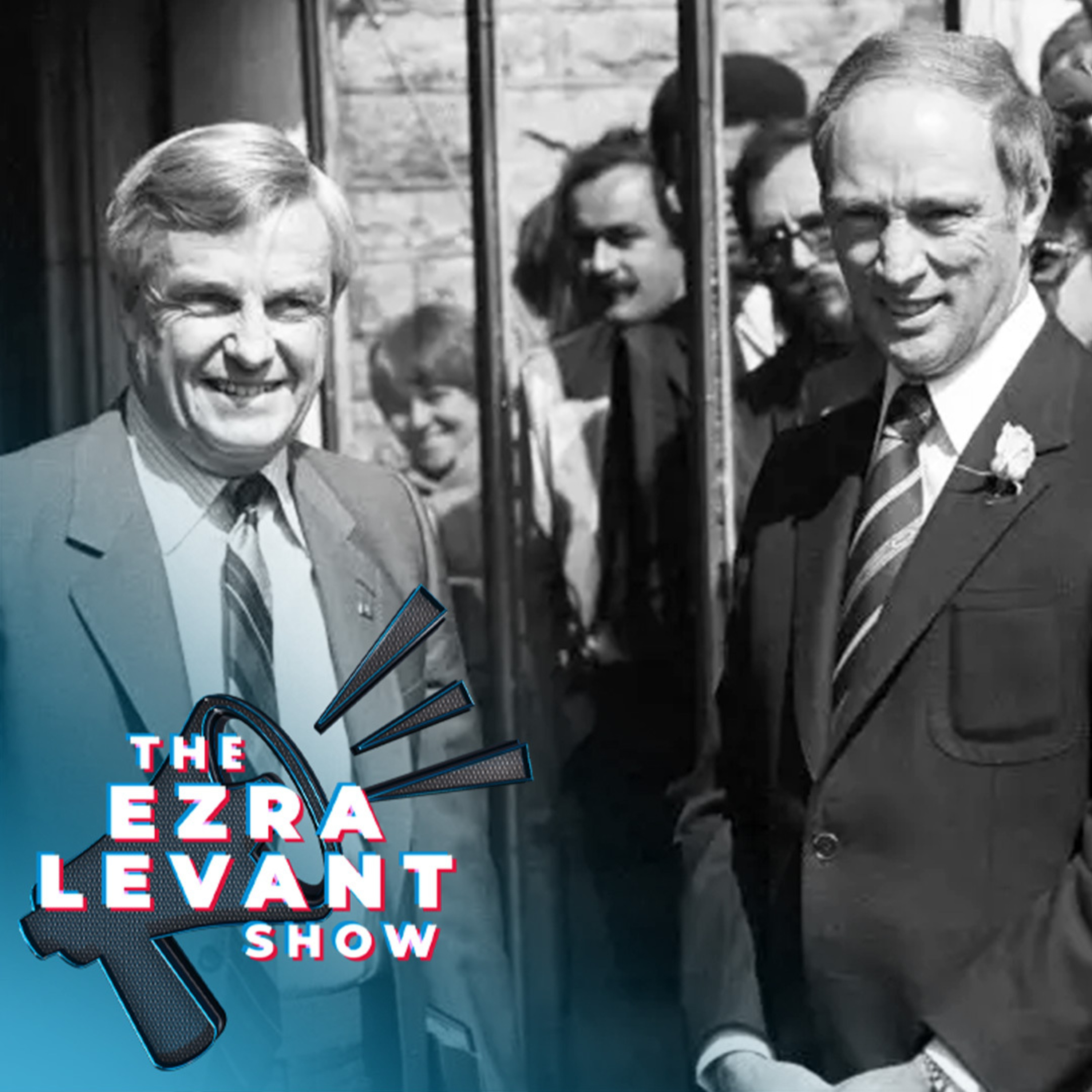
Rebel News Podcast
SHEILA GUNN REID | RCMP secretly feared Alberta could break away — decades on, the warning still echoes
00:38:13
Listen to audio-only versions of RebelNews+ exclusive shows like the daily Ezra Levant Show, the Gunn Show, and audio versions of our DAILY livestreams along with other Rebel News long-form videos and interviews.
Loading summary
Transcript55 lines
- [00:00]
Sheila Gunn Reed
An RCMP memo reported by Blacklocks shows Ottawa once feared Alberta's premier could trigger Western separation. It is January 26, 2026. I'm Sheila Gunn Reed, but you're watching the Ezra Levant show.
- [00:18]
Keith Wilson
Shame on you, you censorious.
- [00:30]
Sheila Gunn Reed
In 1981, the RCMP WR secret memo warning that Alberta Premier Peter Lougheed could potentially lead Western Canada out of confederation. The memo came from the RCMP's counterterrorism unit and was later released through access to information. Partly censored and first reported by Blacklock's reporter. The RCMP said Western separatism did not yet have a dynamic leader, but argued it could succeed if one emerged. They identified Lougheed as that possible leader. An individual who is considered a potential leader is the Premier of Alberta, Peter Lougheed, the memo said. The Mounties noted that Lougheed had publicly rejected separatism and described himself as a Canadian first. But they added that his actions in oil pricing negotiations during the National Energy Program suggested he harbors latent thoughts of independence. So they did a terrorism assessment. The memo said Western separatism lacked a Rene Levesque type figure, but warned that if Lougheed or someone similar began advocating for independence, it could become a reality. The RCMP linked rising Western alienation to long standing grievances, discriminatory freight rates between east and west, feelings of political alienation from Ottawa, exploitation of Western natural resources for Eastern industry and the belief that the west received less from Ottawa than it contributed. Honestly, nothing has changed. The memo also pointed to the Partique Bacloa victory in 1976 as proof that a well organized and well funded party could potentially lead a province out of confederation. But they didn't. However, I think we just might. Groups named in the document included the Alberta Farmers Union, Canada West Federation, Saskatchewan Taxpayers association and the Western Canada Concept, an independence party that elected one MLA in Alberta in 1982. In old, the RCMP wrote that separatist activity increased after the 1979 federal election driven by feelings of political alienation from Ottawa and of course that age old exploitation by Eastern Canada. The memo concluded that Alberta was the most likely province to agitate for separation. Still is. The memo read that indications are that Western alienation could grow stronger, especially in Alberta. Yeah, I know. Footnotes attached to the memo showed RCMP monitoring of Western independence movements dated back to 1946 with the founding of the Western Canada Federation in Saskatoon by a local tax protester. The RCMP's assessment was that Western discontent was long standing, still is organized, getting better and centered most strongly In Alberta, some things never change. And that without a leader like Lougheed, it had stalled but not disappeared. However, now the movement is larger than ever. It's totally grassroots, outside of party infrastructure. There are no official spokespeople and I think closer to leading Alberta out of confederation and than ever before. So maybe the RCMP were wrong. They should not have feared one man, but rather many, maybe the majority of people in Alberta. Joining the show tonight to discuss all this and more is convoy lawyer and separatist influencer Keith Wilson. Up after the break.
- [04:15]
Keith Wilson
You got all.
- [04:15]
Sheila Gunn Reed
Your news from the mainstream media. You honestly wouldn't know a single thing about what's happening at town halls, in small towns and big cities all across this beautiful province. There is something afoot. I've witnessed it with my own eyes. And although I'm recording this on Monday morning when this goes live on our website, the I believe single largest independence rally occurring indoors in our nation's history will be taking place in Calgary at the Big four building. Joining me now is independence influencer, but you know him as a convoy lawyer too, Keith Wilson, to talk about the independence movement and what is happening in this province because I've been to these petition signings where they're attempting to gather 177,000 signatures in the statutory 120 days. I think we're about nearing a month into it. It's not the old miserable, angry white men that the mainstream media would have us all believe. I've gone out there to talk to them, unlike the mainstream media. Keith, thanks for coming on the show. What is your sense of who, who are the proponents of Alberta independence?
- [05:34]
Keith Wilson
Well, I think it's Albertans who are very much alive to what's going on in Canada and alive to what's going on in the world around them and that are acutely concerned about the future for themselves, but more importantly their children and their grandchildren. They're concerned about some of them if they're at a retirement or close to retirement age. They're concerned about what the cost of living, continual increases are under the liberals with their failed policies and they're concerned about what's going to happen to their investments. So they're invested in this problem and they're invested in the solution. You know, one of the things that you may have encountered, Sheila, when you, when you go to one of these signing events and see the long lines and the people in it is the energy, the camaraderie, the hope, but also the steely determination. So you know, Albertans are, are, are very Much alive to the problems that the federal government has created, the growing dysfunction, the growing divide within our country, both culturally, economically, and they're prepared to embrace a very significant change, which is to become an independent country, not the 51st state, as Trump may want, but rather an independent country.
- [07:02]
Sheila Gunn Reed
You know, it's. It's a complete cross section of who and what Alberta is. When you go to these things, you've got young families, you've got guys who are racing there after work in their coveralls. You've got new Canadians and boomers. Because I think our boomers are drastically different than the boomers in eastern and central Canada. The ones I talked to at these independent signings are saying to me, sheila, I may never see the fruits of what we're trying to achieve here, but we have to do it for our grandchildren. And then I think of the Eastern boomers and that guy that gave the young people the finger because they wanted a different version of Canada. It's. You can really see the stark cultural divide when you go to these petition signings between what is happening in the west and what's happening in the East.
- [07:55]
Keith Wilson
Absolutely. And I think. And you can see it in the legacy media. You know, it's just remarkable. The distortions, they're really creating a fiction that they're feeding, and it's. I mean, come on, why would I. Why would that even be surprising? I'm catching myself here. It's not like they get their revenue from actually selling a newspaper or advertising in it or commercials on television anymore. I mean, they get a little bit of that, but the point is, a little bit, they get huge, hundreds of millions of dollars worth of funding from the federal government. So they are effectively, and they behave as such a propaganda arm of the state. They have more similarities to a news reader in North Korea than they do to what a journalist is supposed to be coming out of journalism school. I don't even know why we have journalism schools in Canada anymore, because the only journalists left are. Are folks like you and the crew at Rebel and other independent media outlets. So we're seeing the effects of that and what it's doing because so many Albertans, and I think those in the west and Saskatchewan as well, are awake to what's going on. You know, once. Once the. Once you see the emperor without his clothes, you can't unsee that. You don't magically paint clothes back on this naked person. And I've tried to watch a couple times, CBC and other things, and the first thing I say to myself, When I watch the, the news reader is, I say to myself, that's not how you talk in the real world.
- [09:53]
Sheila Gunn Reed
Right?
- [09:53]
Keith Wilson
In other words, I've met you in person, Sheila. How you're talking to me in the audience is how you speak. Right? Whereas these news readers, they put on this and breaking news today and that's not how they talk. They don't sit around the kitchen table and say to their, one of their children, please pass the ketchup. Right, right. It's, it's fake right down to that level. And I think so many people are seeing through it. But, but, but so many aren't. When we get into other parts of the country, they buy everything. You know, Carney's great even though he hasn't achieved a thing other than, you know, more air miles points than any other sitting prime minister.
- [10:38]
Sheila Gunn Reed
You know, I'm glad you brought up the lies of the mainstream media. You know, and I shouldn't complain too much because as long as they lie, I'll always have a job. But they are lying to people who know that the mainstream media lies now. And as you say, you can't paint the clothes back on the emperor. They aren't even trying anything new these days. You see the exact same lies directed at the independence movement that we saw directed at the convoy movement. Nobody believed it then. They're sure as heck not going to believe it the second time around. They're using, you know, that this is Russian funded. They're saying it's foreign interference. Anything but the grassroots movement of severely normal people who are tired of having the boot of the federal government on their back.
- [11:29]
Keith Wilson
Well, they can't. They have a hard time believing. I guess if you're a liberal and a federalist, you'll only do something if you're paid, right? You won't do something for free and volunteer your time because you think it's important. I guess I don't know why they keep having to put these propositions forward. The amount of volunteer time that I've put in, that I know everybody around me that I interact with on a regular basis has put in is, is astronomical. Because we believe we're at an existential turning point. You know, we have, we're either going to create this place called Alberta that's livable and prosperous and a place where our children can achieve their potential, or we're all getting out. You know, we'll, we'll be like so many who've left the country and go elsewhere. So we're motivated, we don't need money. We don't need the Russians or anybody else to fund anything. And it's just simply not what's happening at all. The, the, the legacy media is doing the handiwork for, for their paymaster. Their employer, which is the, the head of their employer is a fellow by the name of Mark Carney, a short little fellow, and he's the head of the federal government. And they pay these guys salaries and they make sure that they're paymaster. A perfect example of the extreme of this is the Federal Court of Appeal ruling almost two weeks ago now by a unanimous ruling by three justices of the Federal Court of Appeals, so all appointed probably all by liberals, a stinging rebuke of excesses of government power, of excesses of government decision making, of abuse of power, of breach of charter rights of Canadians on a scale that is probably unprecedented. And traditionally, under the Westminster system, we have the principle of ministerial responsibility. Where, you know, what happened years ago in a previous era, Minister Bevoda spent too much money on a glass of orange juice and she had to resign. In other words, if you do something, you're responsible for a policy failure or you're involved in a decision that's unlawful or results in breach of charter rights. Traditionally the concept of being a right honorable minister. Right honorable right, that implies a high ethical standard that you would resign. Not only have there been no resignations, there's been no calls for resignations short of me and a few other people calling for it on, on Twitter, on X. And the legacy media hasn't at a single point scrummed. In the old days, I was interviewed by Brian Lilly and he used to be, you know, a reporter in those scrums, both federally and provincially or no, sorry, it was Rick Bell who was provincial, but Brian Lilly, he was federal. And you know, they would hound when the ministers came out of some meeting, they would say, you know, Mr. Minister, what's your response to the court's ruling? Are you going to resign? You know, what do you say to Canadians in few of the courts saying that you broke the law. Right. And nothing. It's like, oh, Prime Minister, where are we traveling to next, sir? So, yeah, Canada's. So the Canada that we, we dream about, we romanticize does not exist.
- [15:21]
Sheila Gunn Reed
Yeah. And you know, if we want to hold these people to account by we, I mean independent media, we have to fly to Davos to get anywhere near them, to ask them questions, as was the case with Ezra asking Freeland about her role in the illegal invocation of the Emergencies Act. I'm Glad you brought up Bev Oda because the difference between bev Oda and her 16 orange juice and the rest of these unethical liberal liars is the pressure for Bev Oda to really resign came from fellow Conservatives who didn't appreciate the optics of it all. Meaning that there, there are values that Conservatives have that they hold their leaders and their mps to. And the Liberals have just this tribalist loyalty to power at all costs, no matter what. And so they can't, they won't call for the resignation of their own if a gem if it jeopardizes that stranglehold that they have on power, because that is really their only ideology.
- [16:22]
Keith Wilson
Well, and the net result of that, and I've seen that before here provincially at a. Under the still during the Stelmac era was people were rewarded for their loyalty, not for their competence. And then right policies and the administration that was occurring started to fail. So. And we've seen that on scale. Think back to 2015, when Justin Trudeau, the drama teacher, became the leader of, of the country of Canada, and how badly things have gone. There's no expectation for competency. It's all about loyalty.
- [17:00]
Sheila Gunn Reed
Yeah, I, I mean, what could possibly go wrong? Justin Trudeau's biggest portfolio that his own party trusted him with before he became the prime minister was, I think, the official critic for amateur sport. Like, they're like, you know, you should be in charge of this place. Yeah. Not, not a great plan I want to ask you about because I know you probably have a very busy day today. The BQ leader, Blanchette, he is being treated with the utmost respect by the mainstream media. He's an avowed separatist. For some reason, he gets treated like his ideas are reasonable and that separatism is a constant and even achievable thing for the people of Quebec. But Alberta separatism is constantly written off as some sort of regional arrogance. And what are your reasons for this? For me, I think, well, it's because the Liberals need Quebec to win.
- [18:08]
Keith Wilson
Well, there's that, but there's a, there's a, you know, if you, if you map out from the start of confederation each federal election and go, you know, was it liberal? Was it conservative? It'll be like, Liberal, Liberal, Liberal, Conservative. Liberal. Liberal. Conservative. Liberal. Liberal. Liberal. Conservative. Liberal. Conservative. Liberal. You quickly realize that the natural governing party of, of Canada is the Liberal Party.
- [18:35]
Sheila Gunn Reed
Sure.
- [18:35]
Keith Wilson
Because of the electoral math. And part of the electoral math is skewed by Quebec and Ontario, heavily influenced by the, you know, the common phrase of the Laurentian elite. So the Venn diagram would put the separatists in an overlap. The Quebec separatists would have put them in an overlap with the Laurentian elite. Whereas the Venn diagram overlay of Alberta. Albertan seeking independence is circle is far, far away.
- [19:12]
Sheila Gunn Reed
We're on the other page.
- [19:15]
Keith Wilson
Yeah, yeah. There's not enough room on the page to get even a little bit of the circle. So that's why, I mean this, it's part of, part of who the media now believes it needs to serve in order. Look, when, when, when people get a job and they work for an employer, the natural right thing to do is to want to please your employer.
- [19:42]
Sheila Gunn Reed
Sure.
- [19:43]
Keith Wilson
And the employer of the reporters in the legacy media is the federal government headed by Mark Carney. So anything and, and, and his whole, his whole look at his cabinet and it's skewed towards Quebec. It's remarkable. And not only that, when I compared the list of cabinet ministers who are in Carney's cabinet today with the list of cabinet ministers who were in Trudeau's cabinet in February 2022 in the invocation of the Emergencies act occurred unlawfully and thousands of Canadians had their charter rights breached. There's seven cabinet ministers, most of whom are from Quebec, that were in both cabinets. Right. So it's a cabal.
- [20:35]
Sheila Gunn Reed
Yep. It's a big party and we're not in it. And I'm not sure I even want to be invited to it. I'm glad you brought up the Quebec issue because one of the things that I hear at the these town halls is that people are really angry about and I think it is a cultural issue, the gun grab, you know, that we are being scapegoated for the failings of progressive cities and liberal policies in other parts of the country. But moreover, to your point about constantly appeasing Quebec, Quebec appears to be the only province who thinks this is a good idea. And yet the liberals are going to expend so much political capital to try to push this thing down the rest of our throats.
- [21:20]
Keith Wilson
Well, I, I was been puzzled by this gun grab thing, so I did some research. Like why are they doing this? It just, it's obvious on its face. You know, the driver for whether or not, whether or not a gun is allowed to still be legally used by trained, licensed and vetted gun owners is whether or not it has blast black plastic features or black metal features is largely the test. Right? Yeah, it's so it's, it's the scary looking gun law. If you replace Them with some nice mahogany or oak, I guess it would be okay, but. So what's driving this? I was puzzled and remarkably my research indicated that over 80% of Quebec and some polls, 86% of Quebecers fully support this.
- [22:18]
Sheila Gunn Reed
Yep.
- [22:18]
Keith Wilson
And it could be for a number of reasons, the, the more left lean socialist type thinking that pervades Quebec. But it's also because of the tragedies they had with some of the mass shootings, I believe. Well, then make the law for Quebec.
- [22:35]
Sheila Gunn Reed
Yeah.
- [22:36]
Keith Wilson
You know, but it illustrates another point and I. This point is becoming more clear in my mind as each month and each week goes by, which is Canada is not the optimal unit for a country. It's too big, it's too diverse culturally. The gun grab's a perfect example. And it's too diverse regionally, economically. Example there would be the trade off that China forced the government into with auto manufacturing versus prairie farmers. Right. If Alberta was a country and Saskatchewan was a country, the and. And Ontario decided to put a tariff on evs, it wouldn't have an impact on canola because we don't make EVs and we don't want to make EV.
- [23:29]
Sheila Gunn Reed
Right.
- [23:30]
Keith Wilson
Electric vehicles. And, and the analogy I came up with, I'm still trying to come up with a better one, is this whole concept of Canada being too big to be optimal and even governable. We're seeing that Polyev's always got to pivot to the center. Those of us on out here in the prairies lose our mind. It's like Pierre get speak truth to power and then it gets all watered down because it's got a cell in Quebec and eastern Canada. And far eastern Canada. So here's an analogy. Edmonton has 1.1 million people and I'm going to guess probably has this silly analogy, but I think I'll make the point. Probably has 25 McDonald's restaurants. Okay, well, why not just have one? Why not just have one big, huge McDonald's somewhere in Edmonton to service 1.1 million people? Because it's not optimal. It's not optimal, it's not efficient, it's not peak performance. They've determined over years what the optimal size is and what the optimal market distance is around each one to maximize the convenience and efficiency for the customer and for the business. Right. Well, I really believe the optimal size for people in Alberta to be governed by is the province of Alberta. In other words, make the province a country. We have sufficient land mass. We have the third largest reserve of oil and gas in the world. We have an Abundance of resources. We'll be one of the richest countries in the world. We have the know how, we have the drive, we have the entrepreneurial spirit, we have the, the infrastructure, we have the leading edge technology in all areas and all of these things going for us. It gives us leverage to deal with current landlocked barriers that are policy locks such as B.C. through the federal government. And so I think the optimal size for at least for Alberta to be governed is actually commensurate with the boundaries of Alberta. Canada's too big. Our views, our culture are too diverse. Our economies are too regional in nature where, where the government's forced to trade one against the other. It's a suboptimal situation and we're witnessing the effects of it. Our decline is spectacular. The only thing that's increasing is lineup at food banks and poverty and despair.
- [26:02]
Sheila Gunn Reed
Yeah, we had the, we had a far wealthier middle class under Stephen Harper than we do right now. The decline of the middle class has been catastrophic in this country. And the liberals keep saying, you know, we got to do something about it. Well, I hope you guys find the people in charge and responsible for what's happened to this country in the last 10 years. They, they pretend like they are passive bystanders in this mess and the people in the east keep voting that way.
- [26:34]
Keith Wilson
Well, look at what, you know, I was occasionally about once a week maybe I do a post on X when Prime Minister's like, I'm traveling to so and so and you know, we're going to build the Canadian economy, build it back, we're high paying jobs, blah blah, blah, blah, blah blah. I'm like, if, if you really believe that, if that's really your goal, the first thing you will do, like today is announce that you're going to repeal the amendments to the Environmental Assessment act, which are often referred to as Bill C69 or the no More Pipelines Act. That law doesn't just apply to pipelines, it applies to any big project.
- [27:11]
Sheila Gunn Reed
Right.
- [27:11]
Keith Wilson
And it has ridiculous features in it. They could simply repeal those ridiculous features they added to it and go back to the law that existed prior to 2016. And that would make it easier for investors to make the decision to make the investment decisions in Canada that have driven them away. Right. So he's traveling to these different places and I could just imagine him sitting down with some investors, whoever they might be, and they say, well, yeah, but are we still. So one of the things that Bill C69 did is it requires someone proposing to do a major project to assess the impact of the project on the intersection of gender, sex, gender and other minority identity factors.
- [28:08]
Sheila Gunn Reed
Yes, the gba.
- [28:09]
Keith Wilson
No lawyer.
- [28:10]
Sheila Gunn Reed
Yeah.
- [28:11]
Keith Wilson
No expert, no bureaucrat can agree on what even the phrase intersection means there and how it's to be applied other than agreeing. It's not a thing with a stoplight at it. Right. And so, so the investor could easily look across at him if they're sophisticated and did look at investing in Canada. Maybe we're about to and pulled out. It could say, you know, Prime Minister, we, no one can meet this test. It's a, it's, it's an impossible test to meet. It brings incredible risk and cost. Are you going to remove that? And he's obviously going to say no. When you look at all of the barriers and policies they've put in place that have driven investment away, what's the point in accumulating all these air miles and going to all of these other countries and trying to do trade deals if we can't build the plants, the facilities, the mines, the processing facilities in the first place because of your stupid policies? So I really think that these trips are about his ego. He just wants to show off, you know, show himself off. You know, when you, you know, you know when a 20 year old gets a new car, they want to drive it to their friends and say, hey, look at my new car. And they drive over to their other friend's house. Right. Look at my new car. Him, his, his new car is him as Prime Minister with his security detail and flying in our Canadian jet. And I think he just wants to fly around and he, and I love these action shots. Like they always have these put together, these highly produced clips and he's always moving or he's walking around and pointing and he, I just have this Kim Eel, whatever is there, North Korea vibe, you know, the Dear Leader. Next thing you know we're gonna have, we're gonna have people around him with little, little notepads so they can write down everything the Dear Carney says. I mean that's where it feels like we're going.
- [30:17]
Sheila Gunn Reed
Yeah. We're this far away from him on a mountaintop on a white horse. Kim Jong Un. Yeah.
- [30:25]
Keith Wilson
And they'll make sure it's a, they'll make sure it's a really small white horse. So he looks big.
- [30:29]
Sheila Gunn Reed
Exactly. So he looks big instead of like a frail little old lady like he does. Yeah. I, I don't think a lot of people know, you know, if you're in the know, you know, but a lot of People are aware that for these major companies to invest in a major project in Canada, they basically have to ask the local feminist busy bodies how the project makes them feel. And if you are a multinational oil company, look at that. Or you just say, well, maybe I can just flip a few bucks to. To the local Algerian warlord and my project gets done. Why would you invest here? Why would you. It's crazy.
- [31:07]
Keith Wilson
You wouldn't, you won't. And, and, and they're not.
- [31:09]
Sheila Gunn Reed
They aren't.
- [31:10]
Keith Wilson
We don't have to be hypothetical about it. I take your point. It's. It's happening. The, you know, it's hundreds of millions of do or billions of dollars of investment of flat. And, and the head offices are leaving. I mean, he moved Brookfield out, right. His company. Right.
- [31:26]
Sheila Gunn Reed
And his family.
- [31:27]
Keith Wilson
So it's just terrible what these liberals have done to the country. Alberta has a path forward. We don't have to stay on this crazy train. And more and more Albertans are realizing that.
- [31:39]
Sheila Gunn Reed
I agree. Now, Keith, I wanted to ask you about treaties, but I, I realize we're. I'm up against the clock, but I know you are. You frequently answer questions like this on your YouTube channel and on your social media account. So tell people, if they don't already know how they can find you.
- [31:59]
Keith Wilson
Sure, I. A couple months ago I started a YouTube channel to try and provide accurate, balanced legal and other information on what's happening with independence in Alberta. And you can just simply search my name and YouTube. Keith Wilson. Casey. And then I'm on X at I I K Wilson, and I'm very prolific there in terms of providing information as well.
- [32:26]
Sheila Gunn Reed
Great. Keith, thanks so much for coming on the show. Are you going to be in Calgary tonight?
- [32:32]
Keith Wilson
I can't. I have client meetings all afternoon today, so I'll be watching with great enthusiasm.
- [32:40]
Sheila Gunn Reed
Well, we're sending a rebel news team. We wouldn't miss it for anything in the world. Keith, thanks so much for coming on the show and speaking up for Albertans who just want a better way.
- [32:50]
Keith Wilson
Thank you very much.
- [32:51]
Sheila Gunn Reed
Thanks. Stay with us. Your letters to Ezra unceremoniously read by me up after the break. Last portion of the show is always yours. We turn the show over to you because without you there is no rebel news. So these are our rebel news plus content commentators, your thoughts on Ezra's wrap up. I have, I think his highly successful 2026 Davos mission. Frangie writes, the work you are all doing looks very exhausting, but also exhilarating and extremely rewarding. If I was younger, I Would love to work for Rebel News. That's funny. You don't have to be young to work for us, but you have to be able to think on your feet. Feet. I think Ezra was very motivated and very excited to be able to scrum people that he is unable to scrum in Canada thanks to the Liberal government's censorship and control policies. Randy Nori writes, after watching the Christian Freeland Davos walk, I was so inspired I immediately subscribed to Rebel News and made a 500 donation. Your team put her on the spot like no others can. She looked like a rat that was trying to find something to hide under. Now that four judges have deemed her convoy actions illegal, we need to pressure the RCMP to lay charges like they would against any other illegal act. I would like to see Ezra interview the RCMP to find out when this will all happen. Thanks for the hard work in Davos. Without you guys, there is nobody in our corner. Randy. Well, Randy, I think there are a few people in your corner. But it is true that we are not scared to put the tough questions to politicians. And now those politicians know that there's no safe place to hide in the entire world. They may be able to hide from our questions in Canada thanks to their censorship and control regulations by hiding on the parliamentary precinct because the cabal of our competitors, the Parliamentary Press Gallery, doesn't allow us access to Parliament Hill. But if they're traveling around the world to places with more regard for journalistic freedom than here in Canada, we're going to find them and we're going to ask them tough questions like Ezra and the team did. Freeland has never been questioned on her illegal actions when she cackled at the thought of freezing innocent people's bank accounts. And now, as you say, four judges have determined that to be illegal. She should at the very least have some contrition, apologize for the people's lives that she could have ruined, but at the very least, seriously disrupted. And never forget they used a hacked list to get Those names from GoFundMe to go after those innocent people whose only crime was having the wrong politics. In a normal country, these people would be in jail. But this is Canada. We're not a normal country. And that is why so many Albertans, as you learned today on the show, want to leave now. Bruce Atchison, regular viewer of my show the Gun show on Wednesday, writes, interesting mix of attitudes tonight from Davos. I'm glad the police weren't officious and understood scrumming. That's been a tradition of journalists for the past two centuries. It's too bad people don't educate themselves in what matters. It's true politicians, as public figures are supposed to be accountable to the people. But since the people can't scrum them because the people are living their lives to work hard to give the politicians money to spend. Journalists, it has always been our job to speak truth to power, and so frequently these days it is exactly the opposite.
- [37:10]
Keith Wilson
But.
- [37:12]
Sheila Gunn Reed
I guess again, it's a sad state of affairs that our team has to go to Switzerland to do the job we are unable to do at home. Well, everybody, that's the show for tonight. I hope that you didn't miss Ezra badly. Thanks to everybody in the Toronto studio who puts the show together in these little files. As I send it in, it's a little more chaotic when I do the show than when Ezra does. And I'm not sure who's hosting the show tomorrow. Could be me, could be David, could be. Well, basically just me and David. I think it's David. Thanks for tuning in. And as Ezra says on the show here, keep fighting for freedom.