← Rebel News Podcast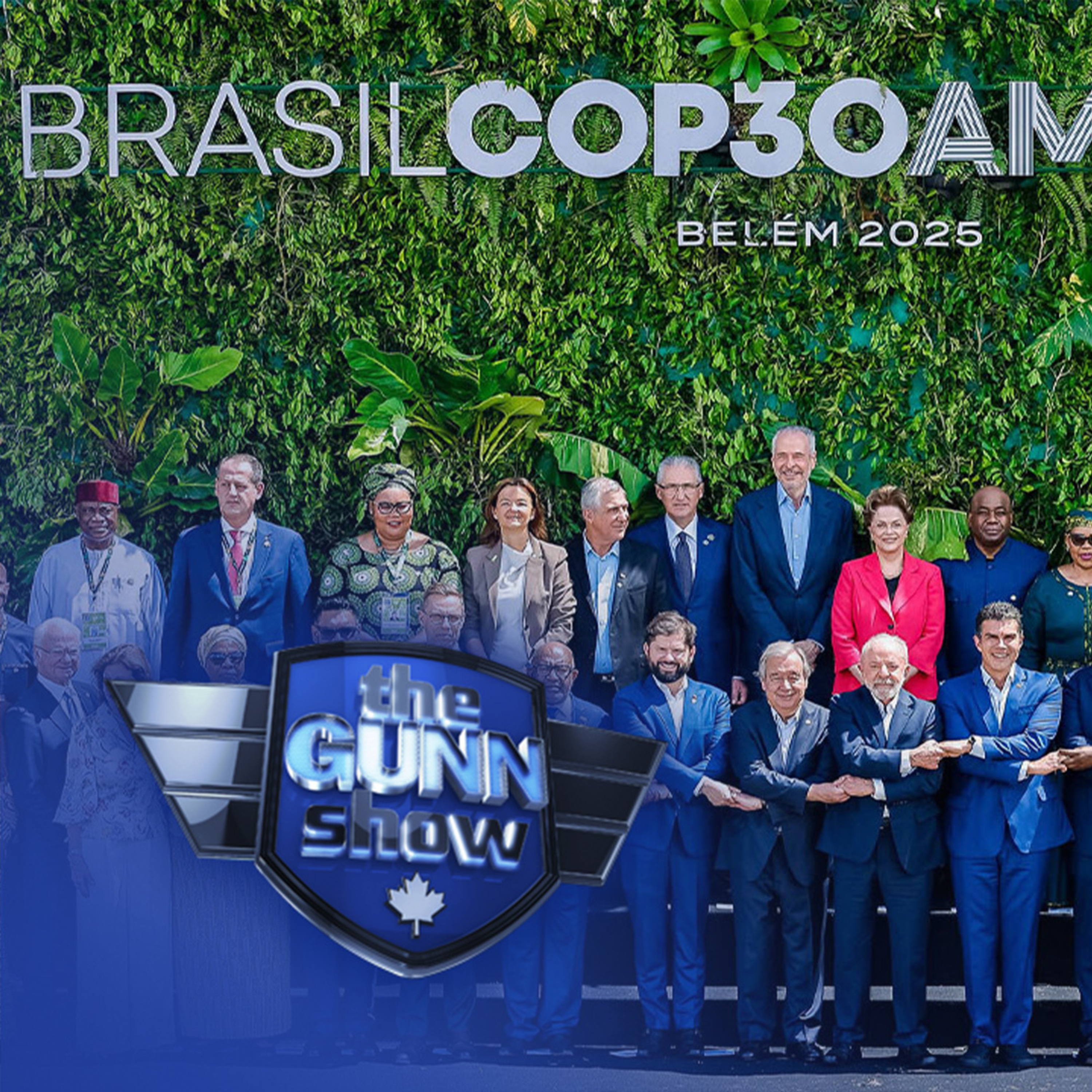
Rebel News Podcast
SHEILA GUNN REID | What really happened at the United Nations climate change conference
00:44:54
This week on The Gunn Show, I’m joined by Tom Harris of the International Climate Science Coalition Canada for a straight-shooting post-mortem on what the United Nations actually accomplished at this year’s climate conference, COP30, in Belém, Brazil — and what it worked very hard to hide.
Loading summary
Transcript57 lines
- [00:00]
A
55,000 people attended the United Nations Climate Change Conference in Belem, Brazil. And the good news is regular people don't care anymore. I'm Sheila Gun Reid and you're watching the Gun show. I hope I don't come across as someone who's scared of hard work, because I'm not. But I will tell you that my trip to Belem, Brazil was one of the most difficult travel schedules that I've ever had for work in 10 years of doing this job. And I'm including like the 3am Wake up calls in Winnipeg in the winter, working on a documentary to catch a flight. Like, I, I cannot even explain how difficult the travel is to get from Western Canada on a budget to Belem, Brazil. And then to get back when 55,000 delegates and official types, plus, you know, another 20,000, 25,000 climate activist tourist types are all trying to leave a city at the exact same time and get back to the Western world. Anyways, it was, it was hell to try to do it on a budget. I wasn't going to spend the amount of money it would take for it to be even remotely comfortable. But I think it was all worth it in the end to expose what the United nations was doing in Belem and how hypocritical they were that they descended on a city where 60% of the people live in abject poverty to lecture us about how we all need to do more to protect the rainforest. When, as I explained in my interview, those delegates could have made a real difference in the health and welfare of the rainforest if they went more one hour a day with a garbage bag and just picked up some trash in the streets of Belen, Brazil. It's the mouth of the Amazon. And if you want to see all of my work from there, you can go to rebelun.com if you're so inclined. You can throw in a couple of bucks to help offset our costs, which I still think are accumulating. But the good news is for me is that I got home and while I was adjusting to jet lag and the Amazonian virus that I picked up while I was there, I saw the most comforting pull come out of abacus data, and that was that 13% of people actually even care about climate change. Now for me, I feel like that's still too high. But you know, those are 13% of the people who are brainwashed by their teachers, brainwashed by the cbc, still pick up their local newspaper and don't realize that the people writing there are funded to write about certain things. But I'm grateful because I feel like my work has made an impact on that. And so I think maybe, maybe we might be seeing the end of the climate scare. I mean, we saw the end of the carbon tax over the last year, and now people aren't even caring about climate change. And I think the people who say they care about climate change only, I even feel like the number is probably lower because I think a lot of people say they care about climate change because they're told they should care about climate change, but they actually don't. They more care about the cost of living. So all that is to say, I think. I think nature is healing. Now to discuss what happened in Belem, Brazil, from the inside, like, what policy decisions were coming out of Belem, Brazil, today is my friend Tom Harris from the International Climate Science Coalition in an interview we recorded just moments ago. Take a listen. So joining me now is good friend of the show, my friend and good friend to reality everywhere, Tom Harris from the International Climate Science Coalition, Canada. Tom, I wanted to have you on the show to digest what happened at the United Nations Climate Change Conference in Belem, Brazil. It's known as COP 30, the Conference of the Parties, but it really is the international gathering of the climate hypocrites. And it was in a difficult place to get to, but also to work in Belem, Brazil. And I say work in, if you are a real journalist trying to expose the truth. It was actually probably quite comfortable to the world's journalists who got to be inside in the air conditioning, but that wasn't the case for me. Tom, tell us what we need to know. What are the big takeaways from the climate change conference?
- [05:15]
B
Yeah, I think the main thing is that for the very first time, they're addressing what they call information integrity. In other words, the information is only valuable in their eyes if it agrees with them. This is the first time that a UN conference actually addressed this. And in particular, they're now blaming the lack of progress on climate change, you know, in their particular sphere of influence on disinformation. And they're saying it threatens to derail fragile progress on emissions reduction. So somehow you and I are part of that. We're actually responsible.
- [05:51]
A
You know, I'm happy about that.
- [05:53]
B
I am.
- [05:54]
A
I'm glad.
- [05:55]
B
Yeah. In particular, it's called the Declaration on Information Integrity on Climate Change. And you have to look at. Who was it put together by? Well, it's put together by the government of Brazil, UNESCO, and the Reporters Sans Frontiere, which means Reporters Without Border. Now, they all explicitly support a climate emergency. Okay. So right away, the thing is obviously pretty, pretty biased, and I was hoping to read just a few excerpts from it because it's pretty draconian, actually. It's saying, oh, and keeping into consideration freedom of expression. But then they go on. But then they go on to say some things that are certainly not.
- [06:35]
A
How despicable, by the way, for Reporters Without Borders to get involved in any of this, because they're really calling on censorship of people like you and I. And I saw it, I experienced it firsthand when I was there. I was accredited, and then all of a sudden I wasn't. Which I think is. Is it Article 19 of the United Nations Declaration on Human Rights? That's the one that respects the free speech, free press, free thought, and your ability to transmit those ideas on the platform that you see fit.
- [07:04]
B
Oh, yeah, for sure. So here's some excerpts. And they say concerned by the growing impact of disinformation, misinformation, denialism, deliberate attacks on environmental journalists, defenders, scientists, researchers, and other public voices. Well, hey, you know, that actually applies to what happens to us. And this is a point that Terry Corcoran made in his article, which I'll quote from in a bit, because it was a very good article in the National Post, the Financial Post part, and in particular, they're saying, we affirm our commitment to promote and support the sustainability of a diverse and resilient media ecosystem, unless it disagrees with them. But here's what they call on governments to do. Ensure the safety of environmental journalists, defenders, scientists, researchers and other public voices. Well, no, we're the ones that need to have the safety, but they're trying to make it look like we are attacking them personally and they're in danger. Now, here's something that may affect Rebel News significantly. It says we call on governments to call on technology companies to assess whether and how platform architecture contributes to the undermining of climate information ecosystem integrity. In other words, they want to actually change the algorithm so that we won't be noticed.
- [08:22]
A
Right. And we've already seen a little bit of this in practice with the climate change warnings on videos that are critical. If you go and look at any of Friends of Science's videos, they've got a warning on them, like a cigarette package that, you know that. And it's kind of coming directly from the United Nations. So this is Alphabet. That's the. The parent company of Google and YouTube already doing this in practice.
- [08:49]
B
Well, yeah, exactly. YouTube does that with my videos, too. They say, oh, you know, there really is a climate emergency. And this video, you know, they essentially say, yeah, that's right. Now, it's interesting because this declaration didn't actually happen in isolation. There was a little bit of a pretty activity that led to it. And I think it's important to look at that. There's a report that came out in January of this year by the center for Media, Technology and Democracy, okay? And the report is called Climate Obstruction on the State and Spread of Climate Disinformation in Canada. Now this actually, you know, you have to realize that not only does this media center in McGill strongly support the climate scare, so they're biased investigators. In fact, talking to Copilot last night, it said, you know, they're not neutral. They're not neutral investigators. They want to actually make it so that, you know, the only people being heard are the people who agree with them. But they're actually, they're funders. The Max Bell Foundation, Canadian Internet Register, Register Registration Authority. They explicitly support action on climate change. And they, they actually frame climate change as a serious challenge requiring. And blah, blah, blah, it goes on. And this report analyzes how climate disinformation and what they called delayism, that's a new one. How it spread in Canada and how platforms like YouTube are reluctant to regulate our activities. And it says that climate disinformation is not only a social media problem, but is embedded in Canadian political culture and identity. Now, isn't that interesting? That's why Guibot was there as the Culture Minister. And you know, it's interesting, look, advocacy groups like Climate Citizens, Climate Lobby Canada, they then highlighted the report in early 2025 as evidence of systemic obstruction to climate action. Okay? So it's interesting because that's what occurred right afterwards. Now then it got into cabinet, clearly, because there was a cabinet reshuffle in the spring. Guibot moved to Canadian Identity and Culture and Julie Drambusen became the Environment Minister. So this report gave them ammunition to sign on to the United Nations Declaration on Information Integrity. And so the report has given them kind of domestic legitimacy to sign on to this thing because then they can point to it and say, oh, yes, and of course, this is why we're not getting more done on climate change is because of these darn Rebel News and ICS people. You know, Terry Corcoran had a really good quote, and I think it was quite cute because he said, basically, let me see if I can find it here. Well, what he's saying is it's not that the, you know, you always Talk about speaking truth to power. Okay, but what is happening here is it's speaking power to the public, that the actual people in power are deciding what is true in science and telling us and suppressing everybody else. So, you know, it's really worth looking at this in more detail. And I was talking to Microsoft copilot, who's my buddy, not always. Right. You got to check out the references. And yeah, and it could be that depending on how seriously the government takes this. And I think they're going to take it very seriously because they have this report to back them up. And they're, of course, among the main drivers of trying to suppress this information, as they call it. I think what we're going to see is a lot more censorship where YouTube and X and, you know, Twitter was. It is X. Actually all these media sources are going to start. Social media sources are going to start, not only demonetizing, but they're going to start actually not even allowing us to post. The government that will then point to this report and say. And you know, that's exactly why. So you have to take a step back and say, well, you know, what is driving all this? Well, I got to tell you, some of the numbers, the actual financial figures that are involved here. You might remember before COP 29, which was the previous one, there was $100 billion set aside to help developing countries adapt to climate change. Well, that wasn't enough, of course. And so in COP 29, they decided to make it 300 billion. Okay. And just this year, Canada announced a total investment of 392 million this year just to support it. And there's your $10 per Canadian, by the way. So we just gave that. Thank you very much, Mr. Carney. Canada actually has a pledge 2021 to 2026, to actually give $5.3 billion in total climate finance for developing countries. And they are allocating 40% of that to go to adaptation. And actually they've given pretty well all that at this point. Canada has. By late 2024, we've delivered 2.1 billion. It's incredible. Pumping it out of the country in adaptation projects. But what it means is that over the next 13 months, we have to put in another 2.6 to $2.7 billion. Yeah, that's right. To go to developing countries. And most of that will go to mitigation projects because we've already given most of our adaptation money. So Canada has to double the pace of disbursement, as they call it, in the next 13 months to meet Our target, you know, now this is only part of, part of a much bigger package when it comes to the international scene. You know, the 300 billion sounds like a lot of money, but it's actually now just part of a 1.3 trillion dollar package that they want actually going yearly, if you can believe that, yearly by 2035. And. But you know, a lot of groups are saying that's still not enough. So it's. And you have to ask yourself, well, how much have they given so far? Well, of the 300 billion, they've only given like this year, remember it's supposed to be 300 billion per year for adaptation. This year they'll have given 40 billion. So what it means is between now and 2035 they have to multiply what we're giving, which is already huge, by seven. Yeah. So we're pumping money out of the country at a furious rate. And of course all this is based on nonsense.
- [15:19]
A
And you know, normally I don't cheer for bureaucratic. Well, no, that's not true. I do cheer for bureaucratic failure a lot these days. But besides this declaration on censorship, not a lot came out of this conference. They thought that this would be the conference to end all conferences and we would hit a hard timeline to phase out fossil fuels. But that didn't happen. And a lot of the NGOs and, and activist types are pretty dejected and angry. In one of the notes he sent over to me, it says, oh, and it's from Sinead Loren, I think is how I say it, of the Irish NGO TroCare. And again, I'm sure it's Gaelic and I'm sure I said it wrong, but it said cop 30s outcome fails to even acknowledge the stark and devastating neglect of rich, historically high polluting states to deliver on their loss and damage finance obligations. The Fund for responding to loss and damage remains critically underfunded, resulting in denial of basic human rights. What an obnoxious thing for this person to say in a place like Belem. And I mean that with nothing but affection and respect for the people who are forced to live in Belem. But Belem lacks basic sanitation, like 4% of the wastewater in that city. Actually, I think it's anywhere between 2 and a half and 4% is even treated. Everything else is raw sewage outflows, medieval style gutters in the street. When you flush the toilet, it's not goodbye, it's see you later, it's down in the street. And these sewage outflows go right out either into the bay, which touches on the Atlantic or they wash back directly into the Amazon rainforest and I'm stuck over here in Canada being called the high polluting state. That's not doing enough. And I can't use a plastic straw in the meantime. When the rains come in the Amazon, the streets run brown.
- [17:22]
B
Oh wow. And this probably stinks to high heaven. I mean, it's a cesspool, you know, it's kind of amazing. They're talking about protecting the environment while they're sitting in the middle of a cesspool. You know, I think it was CFAC who made this particular quote and I think it's worth reading. For those who believe sound science and affordable energy should prevail over ideological crusades. COP's 30s collapse was not a tragedy, it was a hard won victory. And I thought yay, yay. Because I mean, everything went wrong. You know, the contracting wasn't done properly, you know, and you're right, because they have this declaration which is the official outcome of the COP30 agreement. I'll just, just tell you what it's called. And, and I saw your reports by the way, on the cesspool in Belem. I mean, if they spent even a fraction of that amount of money on helping the people, they could clean the city up. It could be the cleanest place in the world, you know. But anyway, the, the outcome document is called Global Muchijon is how you pronounce it in Portuguese. I looked it up, Global Muchihon, and it actually has something in there which is quite deceptive. They're saying they want to triple adaptation funding by 2035. But there's two problems there. First of all, you notice that the adaptation funding this year was 40 billion. Tripling that it would be 120 billion. But what's not told is that the actual target agreed to in the various documents starting from last year is 300 billion. So I asked Copilot, I said, well that doesn't quite add up. They're saying that they're tripling it, which is less than half of what they're actually committed to, which is 300 billion. I said, so how does that work? And Copilot is funny, you know, sometimes I think it has a sense of humor. It says, well, the tripling is a political statement because it sounds good in news releases, but it's not actually true. They don't want to actually tell people how much they're really spending because it's outrageous. So instead they give a statement that is actually less than half of what they're really planning to spend in the hopes that we won't be too upset. So in reality, that particular statement, tripling adaptation funding. No, actually we're multiplying it by seven. But the thing is that this document has no concrete mechanisms to raise and distribute adaptation and loss and damage fund, and there's no enforcement. Okay, so just like this fellow from CARE International, Marlene, actually, Lady Marlene Achoki, she said the outcome is a failure. There's no clarity on how much money is channeled to adaptation, where it will come from, its quality, or how progress would be measured.
- [20:03]
A
Perfect.
- [20:05]
B
So it's kind of like a wishful thing, a pie in the sky. And it's interesting because Vanutu's climate change minister, Ralph Raghu Vanu, or something like that, he said about 80 countries have put the red line on any mention of fossil fuels in the outcome of this meeting. And that's the other point. They were in the previous cops actually agreeing to gradually phase out fossil fuels in this cop. They couldn't even get agreement to that. So they've gone backwards, which is wonderful. I think it's great. And it's interesting to see the countries that objected, including China. You know, China, of course, took the leadership role at this because they're supposedly so green, even though, what, they're opening something like two coal stations a week. But, you know, they're green in their exports because they sell it to us. So all of These arrangements, the COP30 and everything else, is massively to the benefit of China because suckers in the west are buying green energy from China. You know, so the adaptation funding business is not, you know, it does make sense if you focused on all kinds of adaptation because, of course, cooling is much more dangerous than warming. But typically, you know, these groups only focus on warming. You know, Sheila, it's a little bit like going on a camping trip. I think I might have said this to you earlier. And you're told that there is black flies and black bears in a particular region. And you know, black bears can kill you. Black flies are a nuisance, but all you do is prepare for the black flies. Right? And that would be insane because, you know, and that's what's happening here. Because if it cools, we're in big trouble. And you can see that all through the historical record. When it was cold and it may get colder because the sun is going into a grand solar minimum around 2060. When it cools, society does really badly. Yeah. And yet, for example, the city of Ottawa, in their adaptation funding, only plans for warming. They're not even looking at the possibility of much more dangerous cooling for the black bears, you know?
- [22:08]
A
Well, yeah, I mean, Calgary is the same way. $90 million or $90 billion, excuse me, in their climate change program, but they can't manage to get the snow cleared down there.
- [22:20]
B
I know. So if it were true that they were adapting or preparing to adapt to the most dangerous kind of climate change, which is cooling, then some of this would make sense. But the trouble is they're only planning for the, for the black flies. They're only planning for the annoying warming, which is not dangerous. And historically, you know, you look through all the records, the Medieval Warm period, that's when they built the great cathedrals, the Roman, Roman Warm Period, you know, that's when they had the Pax Romana, you know, and you go through all history and you find that warming is good. So, you know, I've often said that. I've never seen a field where every single point they make is either wrong or hugely exaggerated. They're wrong. CO2 is good for the Earth, it's good for humanity. It causes more plant growth and more crop productivity. Boost it, we want to double it, we want to triple it. We're wrong there. Warming is good and yet they're focusing on it as being bad. So, I mean, the whole thing is based on a farce, really. They're taking everything that is real and turning it on its head.
- [23:20]
A
Do you know, I sort of figured out that the UN knows that the wheels are coming off the train right now. And actually, I think when they held the conference in Dubai two years ago and then in Azerbaijan last year, two countries that are exceedingly oil rich and who both said, yeah, we're not going to stop drilling for oil. We're happy that you're here. We'll take the tourism dollars, thank you very much. And I think even the United nations knows that people really don't care anymore. And I'll tell you how I know. Despite climate change being shoved down our throat everywhere we turn, in the mainstream media, in local print media, newspapers, because the government literally funds a guy at your local Fort Saskatchewan Record, in my case, to write about climate change, nobody cares anymore. Abacus data, latest poll, 13% of people actually have climate change as an issue they even care about. The number one issue is driven by climate change policies, and that's the cost of living. So I think we're nearing the end. I believe nature is healing.
- [24:43]
B
Yeah, Canada seems to be a little behind in this category. We're seeing countries all over the world that are going back to solid energy sources, like, quite frankly, coal.
- [24:52]
A
I wish.
- [24:54]
B
Yeah. And coal, using the latest technology is a very valuable source. But, you know, Sheila, I wanted to ask you a question. My impression is that most of the people arguing and, you know, going into protests and stuff, they don't really know what they're talking about.
- [25:07]
A
No.
- [25:08]
B
And I want. I wanted to bring you up to date on a really interesting story that was done. It was called the Denning Kruger Denning study. Okay. And they called it the Kruger Denning effect. Actually, it came out a little few years ago. What they found when they asked people questions about things to do with logic and things to do with language, they asked them questions and then they asked them how confident were they that their answer was right. And what they found was that the less a person knew about a field, the more confident they were that they were right.
- [25:41]
A
You're being kind in your assessment. My understanding of the Dunning Kruger effect is the dumber you are, the smarter you think you are.
- [25:49]
B
Yeah. And the smart people who actually understood the field that they were asking about actually underestimated their accuracy. And so it's actually turned upside down. So what you have is all these people painting things on their hands and their face and everything else. My dad used to say, look, if these people spend as much time in the library back in those days learning about the field, they probably wouldn't protest in the first place because they may find that the whole thing is bunk. And so. But what we've got here is like the city of Ottawa. They bring in this cafe group and students and all sorts of people who then tell the city, oh, we have to save the planet. Well, they don't tell them some basic facts. Like China puts out as much emissions in four and a half hours as the city of Ottawa does in a whole year. And China's not limiting anything, of course. So, I mean, the basic facts of the issue are not understood by these people. So according to the Danny Kruger effect, that's why they're so confident. You know, it's true. I mean, as you learn more about things in life, I think you find you become more humble because you recognize that life is complicated. You know, there's all kinds of ins and outs of why the greenhouse effect does or doesn't work. And it's very complicated. And many scientists say. Chris Essex, he's a great example. He was a applied mathematician at the University of Western Ontario. He's now retired. He said, not only do we not have a good ability to forecast Climate. But because it's so complicated, we may never be able to properly forecast climate, you know, so here we have one of the leading experts in the world being humble and saying this is an incredibly complex field. We may never be. And yet the activists turn around and they say in the year 2100, the temperature's gonna go through the roof and we'll have a climate catastrophe. They're so confident, and yet they don't have a clue what they're talking about. And that is a great example of the Kruger Denning effect. The less you know, the more you think you know.
- [27:53]
A
Yeah, my mom used to say that some people are too stupid to know they're stup. And I think that's her Farmer Colloquial way of explaining this. But I think there's a lot of it, and I know we're headed towards the philosophical now. A lot of it is I think that it's a lot easier to be an activist to say you guys need to do something than it is to actually tangibly do something. And by that I mean I must have said 10 times when I was in Brazil, there's 55,000 official delegates here, probably half as many again, climate change tourist types who are there for the activism. What a difference it would have made if each one of them went out for an hour every day with a black garbage bag. What a difference it would tangibly make for the real environment and to better the lives of the people who live in Belement.
- [28:50]
B
What?
- [28:51]
A
But that stuff actually requires effort and not preening. It requires you to physically do something instead of to scream at other people to do something.
- [29:04]
B
Yeah, yeah, exactly. And you know, during the Committee for Environment and Climate Change here in Ottawa, there was a teacher who actually spoke to them and she said, look, if a student came to me and said, I have a great new way of learning the first. And the student wanted the teacher to teach the whole class that way. The first thing I would say is, well, have you tried it yourself? And if the answer was no, the teacher said, well, I'd tell them to go away and try it yourself. So what she did, this speaker, Karen Bourdreau, actually her name is, she said to the council, she said, look, why don't you take either a part of the city or all of you true believers and live the way you want the whole city to live and see how it works, Come back in a year and tell if it works. So, you know, just in this week's interview on the America Out Loud, duck the other side of the story is our show there. We interviewed Francis Menton, who's with the Manhattan Contrarian, and he pointed out something really interesting. He said there is one place in the world that actually tried to live the way that climate activists want us to live. Powering the whole society on wind and solar power, only driving, you know, electric vehicles or things like that, that kind of thing. And it's an island in the Canary Islands, okay, as part of Spain. What they did is they decided they were going to run the whole society on wind and solar power. And it was a volcanic island, so they had a big crater, an extinct crater at the top of the hill, and they would pump water up the hill, store it until they needed the power and they'll let it drain down. So it was an ideal place to try and find out if you could really run a modern society on wind and solar power with battery or in this case, pump storage backup. And they totally failed. They were not able to provide the power. They. And it was only a few tens of thousands of people. So in the what. In the one place in the world that actually tried to do what they're trying to force Calgary to do, what they're trying to force Ottawa to do, it was an abject failure. And so, you know, if you're trying to do any big project, you have a pilot project, they do it with media before they commit to a full blown series. They have a pilot, they try it out and they see if the public are interested and if they're not, they don't do it. But in this case, they want to commit full cities to this climate dogma. Wind and solar power with battery backup. In the case of Ottawa, when nobody's ever tried it as a pilot study, in the one place in the world that did, it completely failed. So this is something that people have to bring up more and more and say, look, you want to change everything we're doing, but you can't demonstrate a pilot project where you ever did it.
- [31:44]
A
Right, right. And there's a reason we do things the way we do now, and that's because it was cold and miserable and people died the other way.
- [31:52]
B
Yeah, yeah, exactly. And that's what you see throughout history, is that the cold time periods had worse weather, failed crops. It was one of the things that led to the fall of the Roman Empire, the cooling, because no longer could the, you know, they say armies march on their stomach. Well, when the warmth was there and there was, you know, lots of crop bounty all over the empire, they could always guarantee that they could steal food from somebody. But after a while, it became harder for the Roman legions to get around because the countryside was starving, because it was cold, and there just wasn't as much food, you know, So, I mean, all through history, we have demonstrations of the opposite of what they're telling us. You know, it's just.
- [32:33]
A
Yeah, what was it, the volcanic winter of 1536 or so?
- [32:38]
B
Yeah, very Montinatubo and all kinds of ones.
- [32:41]
A
Yeah.
- [32:42]
B
And it's funny because different people you would think should be supporting the COP are not. Now they're saying that this was a total failure. You know, in fact, the previous. What was her name? Christine. Figures. She's saying that the COP is no longer fit for purpose. It can't actually accomplish what they're trying to do. It's interesting, this group, Javier Andalos Pierretro of Spain's Ecological action, he said COP30 has been one of the most opaque summits in history.
- [33:13]
A
I second that.
- [33:14]
B
Yeah. The Brazilian presidency has been incapable of moving towards a final, fair decision that would allow progress on climate change. To which I say, hooray, at last. The wheels are falling off this insane thing. And, you know, the fact that they now, sort of funny, you ask somebody for a $5 donation, they give you 50 cents. So next time you ask them for $50, they give you 10 cents. You know, I mean, that's what's happening here. They have a 1.3 trillion dollar target. Hey, we're not even hitting a tiny fraction of that at this point, but they charge ahead anyway.
- [33:48]
A
Well, I'm glad we can bury it. Yeah. Thank goodness.
- [33:54]
B
And what, 50, 56,000 people gobbling up airline fuel to get to a conference telling you not to fly.
- [34:03]
A
Right. And telling me to protect the rainforest while they redirected the sewage from the conference through a favela and then out into the bay. And they're telling me I got to protect the rainforest. Excuse me, you have to protect the rain. When you start protecting the rainforest, I'll start taking you people seriously. But it's not. It's not my problem.
- [34:30]
B
You laugh in here that someone who actually starts to agree with you, Sheila, because you did a whole lot on how that was a cesspool. And, hey, these people need help.
- [34:38]
A
They do.
- [34:39]
B
If that money had gone to helping them, they could have accomplished something real. You know who's actually starting to agree with you is Bill Gates. Bill Gates is now. Yeah, he's off the climate catastrophe thing and he says, look, there's a lot more important things than a tenth of A degree or even a degree. He's saying, let's help people in the real world today. So we're seeing even the left wing are starting to move over to a practical point of view. And I think that, yeah, we're going to have a couple more cops, but you know, people will report it on page 16. Lower in the right eye.
- [35:08]
A
Exactly.
- [35:09]
B
You know, and 100,000 people went to it. You know, the biggest one in history was 80,000 plus in Qatar. Right. I mean, it's just, it's just crazy, but when I went to the Copenhagen climate conference back in 2009, that was the biggest conference in the history of the world. It was 30,000. Now with the one, you know, just two cops ago, we're up to 80,000. So I think what's happening is left wingers are starting to wake up and say, hey, you know, if we're really interested in social justice, if we really want to protect the environment, let's not do this. This is insane.
- [35:46]
A
Yeah. You know what, though, it's funny because these cops have ballooned in size only thanks to the interconnectivity provided by our old friend fossil fuels.
- [35:55]
B
Yeah. You know, so this is a good day. You know, you had to go through torture to get there and then not get into the conference.
- [36:02]
A
It was worth it. You know, it was worth it to see the hypocrisy, glaring hypocrisy. For myself, I want. And I got to see the rainforest before they ruin it.
- [36:13]
B
Did you see that Austria decided not to go because they were saying, look for good rooms. We're going to have to pay $1,000 a night. And they said, it's just simply not worth the money. And I think what's going to happen is especially poorer nations are going to start saying, why would we spend all that money? And I wrote an article specifically on this. How much it costs millions and millions of dollars to send all these people all over the world. You know, it's going to fail and eventually it'll fail for practical reasons. Like it costs a lot of money and doesn't do anything.
- [36:43]
A
Right, right, exactly. And now that they're holding them in not so nice places, it's not quite the party than it used to be. Tom, before I let you go, tell people how they can find the work that you do and support the work that you do.
- [36:59]
B
Yeah, for sure. Well, first of all, Our homepage is icsc-canada.com We're a non profit and on our board we have people like Patrick Moore, you know, so we have some pretty heavyweights involved. And yeah, we'd love a donation. People can donate by clicking our big red donate button because we rely on people like you and others to support us. You can follow my work that I'm doing mostly with America Out Loud. It's americaoutloud News. And on there I have a radio show along with Todd Royal, who's an energy expert out of Dallas, Texas, in which we call it the Other side of the Story. And last week we interviewed Francis Minton, as I said earlier, because he's the one who got on and talked about, hey, the only time they ever tried to do what they're telling us all to do is it failed. So the Other side of the Story on America Out Loud News.
- [37:48]
A
Great. Tom, thanks so much for coming on the show and explaining to me what happened inside of the United Nations Climate Change Conference, because I went all the way there just to be on the outside. But that's okay because I found their highway.
- [38:02]
B
Right. And thank you for going and exposing what Belem is really like.
- [38:06]
A
Yeah.
- [38:07]
B
And you know where the target of our assistance should be? It should be on helping real people in the real world. So, you know when people say, oh, you're heartless, you don't care. No, that's the opposite. We want to see people helped adapting to climate change. People helped with poverty and sewage and everything else, not some fantasy about an invisible gas. You remember Patrick Moore's book, Fake Invisible Catastrophes? That was the beginning of his headline. And his point was that, you know, these things are things you can't see. How many people can go and count polar bears or see how much CO2 is in the atmosphere? We can't. So we have to rely on people to tell us, experts who in many cases have vested interests. Let's focus on real things that we can see.
- [38:49]
A
Right. Alleviating the suffering of real people in the world instead of lining the pockets of rich elites. Tom, thanks so much for coming on the show. We'll have you back on again very soon.
- [39:01]
B
Okay, thank you, Sheila.
- [39:02]
A
Thanks. All right, well, the last portion of the show goes directly to you. Without you, there's no Rebel News. So you are really the second guest of the show. If you want to write me an email, tell me what you thought about the Show. It's Sheila. Rebel news.com put gun show letters in the subject line so I know exactly why you're emailing me. If not, leave a comment wherever you find a free clip of the show. Share those free clips of the show with your friends. So that we can convert them into subscribers. You'll find them on YouTube, over on Rumble, too. And I frequently go looking for comments over there. So today's letter actually comes to me from a very special email I sent out when I was in Belem, Brazil. You see, I still had a show to film for our subscribers. I've never missed a show in 10 years of doing the show, and I'm not about to start now. In fact, the one time that I wasn't satisfied with the quality of the show that I did, and that was when I was at the Ostrich Farm. I filmed an extra one on the Friday just to make up for the sense of guilt that I had. So I never missed a show. But when I felt like the show wasn't quite what you folks have subscribed for, I even did an extra one. But when I am busy like that and I don't have time to book a guest and I'm dealing with time changes and things like that, I sometimes I have our email. People send out an email asking for your questions so that you become the guest for the entire show. And I just sit down and answer your questions to me. And that happened, and I answered some of those. But I saw there was one that came in a little bit late under the wire, and. And I thought I would. I would read that one today and react to it. And for those of you who did get that email, and if you want to reply to it, I'll still see those. So if there's, you know, if there's still something about Belem that you want to ask me about, and you have that email from me sitting in your inbox, the link should work still. And you can send the. The letter directly to me. This one comes from Deb, who says hello and thank you for your interesting work and for giving us out the box info. Okay, my question is, who gave the UN and WO power to dictate climate change and other directives? Well, we didn't. Our elected officials did. And they don't have to participate. As Tom said, a lot of countries are just pulling out. I mean, the Americans really had no presence at the climate change conference. I was kind of excited because I wanted to see what sort of trolley things Trump would do. You know, like when he was in his first term in, I think it was Bonn, Germany, he sent like, fracking companies and coal companies to the climate change conference and put them in the American Pavilion to showcase American innovation. And I thought, good, good, because the fracking renaissance has actually lowered Emissions in the United States, if you care about those sorts of things. I don't care about emissions. But if you do, you should be profracking. I'm profracking because I love cheap energy and cheap energy jobs. But if you care about emissions, you should be pro fracking, of course, the environmentalists or not. But to answer your question, the power that these organizations have over you is only bequeathed to them by your elected officials who say, okay, United nations, tell us what to do to our people. I know it's chilling. You ask, did we vote them in? Are they elected officials? No and no. How did they get their authority? And if they don't legally have it, then why are they the voice over countries? I don't understand. Thank you. Well, they only have authority over you insofar as Mark Carney, Justin Trudeau have decided to give them authority over you. So your only recourse as a Canadian is to unelect the people who keep giving authority over you to the United Nations. That has happened in the United States. In fact, it's even happened here in Alberta. Did you know that our government has passed a directive that we will not participate in treaties signed by the Canadian government without our agreement first? So if we don't want to participate in this stuff, we're just not going to. We're not just going to go along to get along because Mark Carney said we would. So I guess your ability to remove yourself from this as much as you can rests at the ballot box every four years and, you know, maybe a little bit more frequently than that, gotta elect yourself a provincial government that says we're gonna do what's best for the people of our respective province instead of just what Mark Carney says that we should do. All right, well, everybody, that's the show for today. Thank you so much for tuning in. I'll see everybody back here in the same time, maybe in the same place also. Maybe next week. And as always, remember, don't let the government tell you that you've had too much to think. Sam.