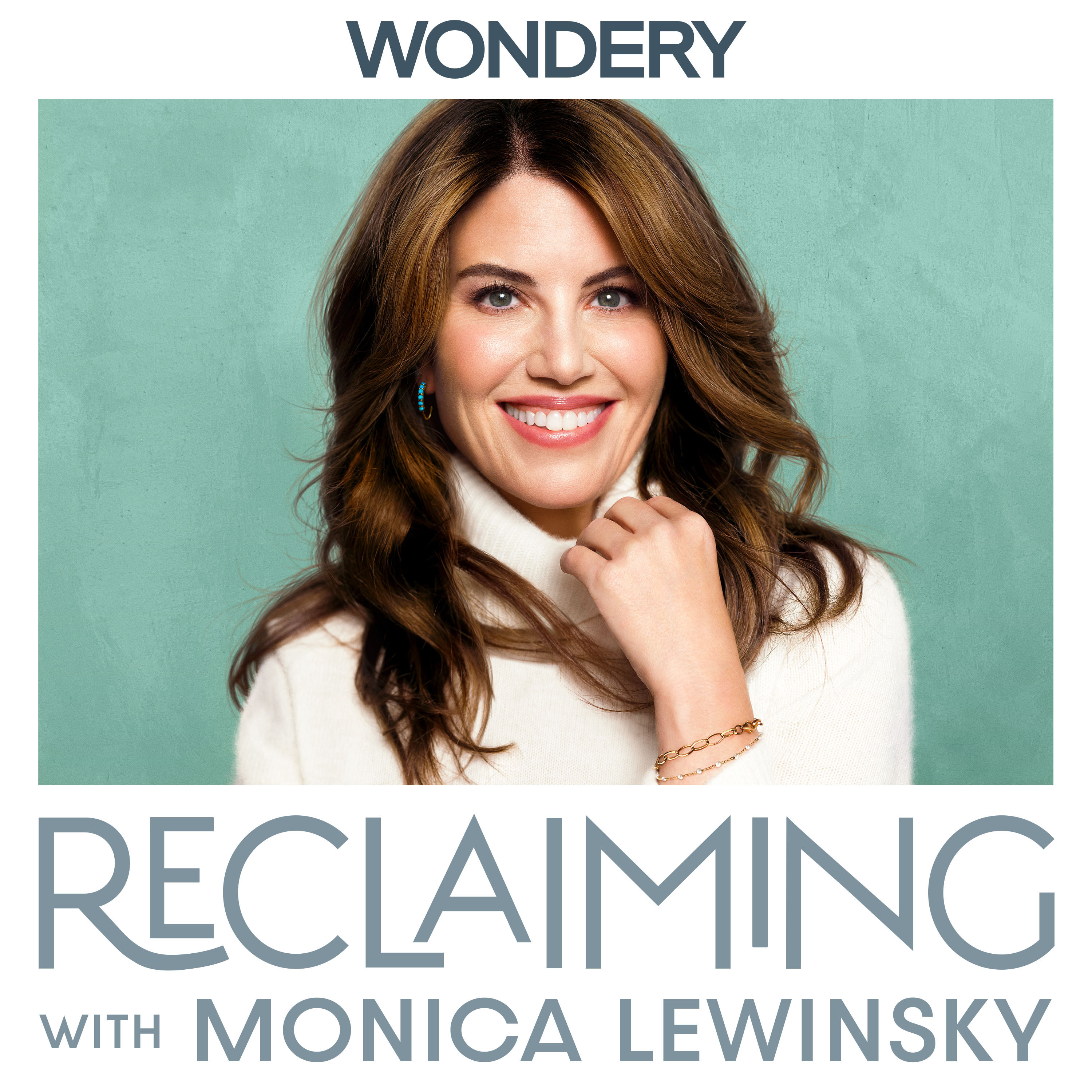
Loading summary
Transcript133 lines
- [00:00]
Monica Lewinsky
Wondery subscribers can listen to Reclaiming with Monica Lewinsky early and ad free right now. Join Wondery in the Wondery app or on Apple Podcasts. Or you can listen for free wherever you get your podcasts. Hello hello from Podcast Land. In today's episode I spoke with the brave and badass comedy pioneer Margaret Cheers Toe. Margaret has numerous comedy specials to her credit. TV appearances, movies and books. You name it. Margaret's been there and made us laugh. I expected to laugh, but I wasn't expecting to feel as much as I did when we went deep on what it's like to be a woman in the public eye and to have your body dissected on the world stage. But don't worry, she also gave us some classic Margaret Cho when she brought in her mom. Anyway, I hope you find something in our chat to connect to and thanks for joining us on Reclaiming Foreign. Thank you to our presenting sponsor, Audible. Love getting lost in heart pounding stories. Audible delivers thrills of every kind. Discover what lies beyond the edge of your seat today. Sign up for a free 30 day trial at audible.com reclaiming thank you to our exclusive fashion partner, Reformation. I honestly can't tell you how many of their pieces have become my go to favorites. Their sweaters have this incredible way of being both polished and comfortable. And in fact, when we recorded my own Reclaiming story for the podcast, I was wearing the same Reformation sweater as the producer interviewing me, but thankfully we had the Clara on in different colors. Their clothes work for all moments in my life. Whether it's a casual day out or a more formal occasion. I always find myself reaching for my Reformation pieces. Visit reformation.com to see why. They're one of my favorite brands for stylish and sustainable fashion. You are such a badass. I'm so excited to chat with you today.
- [02:04]
Margaret Cho
Oh, thank you. Yeah, yeah. I'm excited to meet you. I feel like we've met before, but I'm not sure.
- [02:09]
Monica Lewinsky
I imagine we've probably been in some of the same places. I had a sort of fascinating experience in getting ready to chat with you and I hadn't seen your. I don't know if I Is it Psycho or Psycho? How did you.
- [02:26]
Margaret Cho
I think it's both very clever.
- [02:29]
Monica Lewinsky
I hadn't seen that and I went to watch it and I realized in the process that I hadn't actually seen some of your other standup shows or your specials. And in large part because I haven't actually seen any in the last 27 years unless I knew the comedian personally. Right Right. Like, I think it was very conscious for me the first 10 years after 1998, of course, but I hadn't realized it had become this subconscious thing for me of kind of, you know, sphincter clenching in order to be special.
- [03:10]
Margaret Cho
Like, you don't feel safe.
- [03:12]
Monica Lewinsky
Yeah, exactly.
- [03:13]
Margaret Cho
Because your story was such a culturally defining moment for so many people. People and so many comedians. And that was, like, the one thing that was always brought up, you know, in whatever context. And so I'm sure you just didn't feel safe. It was outside of you as a person. It was. It became something totally different. Had nothing to do with you, you know, it was just a topic that had nothing to do with the actual incident itself and just became a symbol for, if we're going to talk about sexuality, if we're going to talk about sex, then your name would be brought up, and it was just not safe for you. I could imagine. I would imagine. Being a comedian at the time, I remember thinking, this is outside of being even attached to the incident. It's totally another thing. So I can imagine it'd be hard to watch comedy.
- [04:07]
Monica Lewinsky
Yeah. I mean, I often will refer to myself as a social canvas. So in the same way of exactly what you're saying, I was talking to some of the producers before our chat, and all of a sudden there was this moment like, oh, shit, what if Margaret has, like, made a joke about me? You know? And I thought, well, it's fine. I've, like, moved past all these things. But you didn't. And, in fact, you actually had said something incredibly astute and something that felt so powerful to me in talking about the expensive laugh. Well, you were talking about the Bill O'Reilly settlement and the woman who. One of the women whom he had sexually harassed, and I think it was like she got a $60 million settlement. You were talking about how people's names become part of the culture and the jokes that happen. And you said this great thing. It's an expensive laugh, charged to those who could not possibly afford it. And it was just a really. It just was really powerful. So thank you for. Thank you for saying that when you did that.
- [05:11]
Margaret Cho
Thank you, thank you. But it's just like, I think that for such a long time in comedy, people felt so emboldened to just say the most terrible things about women and not realize that there is a human being at the other side of that that has to hear it, you know? And it's just like, I always hope to have compassion in anything that I do, including my comedy Unless it's, like, really undeserved. When you're talking about somebody like Elon Musk or Donald Trump, you wanna say whatever, because they deserve it, whatever it is. But for people who are just everyday people, they don't deserve that. They don't deserve what comes at them. Is it also everybody doesn't know the whole story?
- [05:59]
Monica Lewinsky
I think also, too, especially with women, what is so complicated is that we're sort of all collateral damage, all women are collateral damage to what happens when we're, you know, degrading other women, making jokes about other women. It makes it easier and easier to engage in that kind of behavior, you know?
- [06:21]
Margaret Cho
Yeah.
- [06:22]
Monica Lewinsky
So I think I often think about what women our age were experiencing watching someone, you know, a young person in their early 20s, you know, or mid-20s, being excoriated on the world stage for her sexuality. I mean, among other things. Right. I just feel like you've brought so much feminism and intellect to your humor. And so I really appreciate that.
- [06:51]
Margaret Cho
Thank you. Thank you. Well, I love that you're here doing this and telling your story and being out there and, you know, making so much of what happened to you and then really, really, truly rising above. I mean, you are a phoenix. Like, it's really incredible. So, because, you know, like, that era, I think of the. It's like, also coincides with the birth of the Internet and the birth of this idea of, like, oh, finally we could actually bully people en masse. Well, we didn't have that ability before, you know, 1998. We didn't have this channel to do.
- [07:30]
Monica Lewinsky
So.
- [07:30]
Margaret Cho
And so it's very. It's really shocking that damage that some people didn't survive from it. People, I think, like, Anna Nicole Smith is a really big example of somebody who just couldn't survive the bullying that she received during that era. And so we have a lot to make up for. We have a lot to do and say about it.
- [07:51]
Monica Lewinsky
Well, I think also too, in that time period in the 90s, there was Kate Moss thin chicness, you know, this sort of thinness. And so I know you also experienced, but just, we didn't have a word for it then, but the fat shaming that happened. And so I think my complicated relationship with my body started from a very young age. Was that your experience too?
- [08:17]
Margaret Cho
Oh, yeah, totally. Like, I always felt insecure about my body because I was so much larger than the other Korean girls. Like, I was so large and so loud and so always getting in trouble for both of those things. Eating too much or talking too much or talking too fast or eating too fast. Those are the things that were my main crimes as a kid. And so I naturally gravitated to comedy because those things actually made me a better comedian or more easy, easier to listen to. But then when I went to do television, I was so offensively larger than anybody on camera. And also I was Asian. So the other thing, like, it was so different that I got a lot of. A lot of bullying, a lot of shaming, fat, shaming, race, you know, racism, all of the stuff that I just had to kind of take in as normal. And if I was angry about it, then I wasn't being a good sport, which was, you know, ridiculous.
- [09:24]
Monica Lewinsky
I think in my teens too, I really suffered in terms of. I was in an eating disorder unit for a month when I was. I think it was like 16 or 17. And I felt like it was a time in my life too that felt where you're really just trying to figure out who you are. And I know that around that age. Right? That's sort of when you started. Is that when you started your comedy?
- [09:53]
Margaret Cho
Yes, I started comedy in my teens and then I kind of felt. I felt a lot of acceptance. Like I was doing comedy as a young teenager and then started to become very successful around 18, 19. And then I didn't really get into problems with my image or body image. All that started when I was doing television. So that didn't start till I was 24 and. But it was such an onslaught of just opinions about what my body should look like.
- [10:25]
Monica Lewinsky
And just for context, could you tell me just a little bit what exactly happened with the. With the network and your weight?
- [10:33]
Margaret Cho
Well, they were having these meetings, you know, like, they were all like, super concerned. Like, the producers at everybody. They were like, super concerned. Like, what.
- [10:41]
Monica Lewinsky
What are we gonna do?
- [10:41]
Margaret Cho
Like, our face is just so large. Like, your face is so large. Your face is so large. We can't possibly. And it was like. I think it was just because I don't know if it was that it was. My face was that largest that I was Asian. And they'd never had an Asian person on television like that. So it was like, really hard for them to even, like, why is her face like that? Is she fat? Like, they couldn't actually, like, make that. And. And now I actually look back on. I. We were actually talking, like, numbers, weight wise. I'm like 130, which is not even fat. So it's like a weird. It was weird. So I was put on these, like, emergency diet. They had like, us paid for all this food to get, like, shipped to my house that I had to eat, like, from, like, little. You know, when, like, you have to lose weight, like, for real, they. You have to eat food in a bunch of little boxes. It's such a demoralizing thing when you're, like, just trying to eat out of a bunch of boxes. It's just a nightmare. And then I had a trainer come over who would, like, train with me. And then I just didn't sleep. Ate a bunch of little boxes and worked out like a crazy person. I lost, like, £30. I think it was, like, two weeks. Like, insane. Not right. It was not right. And I started urinating blood. And it was such a harrowing experience. Like, it didn't make any sense. And it was like. And I was just working on something that I. I couldn't fix, really, like, because I can't change the fact that I'm Asian by losing weight. It's just not going to change it. So it was, like, a lot of things. It was not just body shaming, but it was like, it was veiled racism because it was more than just my body. And then, you know, the way that it was, it was kind of presented. I felt really bad, too, because they had the woman who was in charge actually give me the news. And it was like, I felt bad because she was, like, my friend and, you know, like, I think she felt really bad about it, too. And it was all really terrible for everyone. And the fact is, is that I was sort of not focused on the comedy aspect of it. Like, I was just worried about my weight. So took my mind off the job, really, to make a funny show. So I think the show was definitely good. But also, I'm a crass nighttime comedian, and the show was supposed to be in the family hour on ABC in the 90s, which is, like, a very conservative time for TV. Television only had three channels, so it was a very hard fit. Like, I was a hard fit for that time slot and a hard fit for the idea of, like, race in general. So, you know, like, I look back and I think. I don't think I could have done anything better. I don't think I could have done anything. I think I did as. As well as I could. That's the other thing. Like, what, what, what, like, element of just, like, regret have anything to do with it? I don't think I have any because I don't think I could have done anything differently.
- [13:48]
Monica Lewinsky
Interesting. I tend to think with things that live or loom Large in the collective. I tend to think that they can only shift as much as the collective is ready. And so it's sort of. You broke that ceiling, however, glass ceiling, not ceiling, whatever. But I think it's. You got as far as the collective was ready, and then the next person gets to. They get to go a bit farther and a bit farther, and that's. It can be challenging if you're the one who wants to go a really long distance and the collective only lets you go a few inches. But that's how I think collective change happens.
- [14:32]
Margaret Cho
Yes, I agree. You know, I was supposed to be an ingenue in my television show and that people were just like, they couldn't possibly believe that I would be an ingenue or that I would be a romantic lead. And it's sad because, like, I really look back at photographs of that era and I'm like, wow, I was really great looking, but I just never appreciated, you know, I allowed society to tell me what I should feel about myself. And that was like my biggest mistake.
- [15:02]
Monica Lewinsky
When do you think that shifted for you, that you sort of put a stop to letting other people define you in how you were feeling about your body or yourself?
- [15:11]
Margaret Cho
I think it was like, maybe when I was in my 30s, then I realized I wasn't gonna get to a place of agreement with, I'm never gonna lose enough weight. I'm never going to be white. I'm never, you know, like, it was. It occurred to me, like, I'm never going to be any of these things that society would have me be. And so at that point, it was like, very conscious decision. But in a lot of ways, I never stop listening to society's opinion. Now the, the criticism has changed a bit because now I'm older, you know, I'm. That's, that's the other thing. Like, you have to kind of deal with age as well. So it's like I. Unfortunately, there's still a part of me that exists in that I'm not good enough. And that's, you know, it's like why I've been to therapy for such a long time. That's why I am in a number of recovery type movements. You know, there's a lot of healing that I still have to do because it's not over. You know, if you grow up that way, those feelings, they will eat you up. And so it's a lifelong struggle to hold them at bay.
- [16:22]
Monica Lewinsky
Yeah, no, I hear you on the lifelong therapy and all the different things. My stepmom always says that it always has the ing. Because it keeps going. It's like that healing process, all of the work I've done, and then that sort of intersecting with turning 50. I felt like I turned a corner for myself personally. So it's amazing to me that you had felt like you were starting to see some change in how you were feeling about your body and things in your 30s.
- [16:53]
Margaret Cho
Yeah.
- [16:54]
Monica Lewinsky
And what happened? There was an incident with the show, with All American Girl, where you're playing yourself, and yet they're telling you that you.
- [17:06]
Margaret Cho
I was too fat to play myself. Yeah, like that. I'm playing myself, but at the same time, I'm too fat to play myself. I didn't eat any food. I was exercising like a maniac. I took Fen phen. Remember Fen phen, that drug that was like, I've done.
- [17:24]
Monica Lewinsky
I've done everything.
- [17:25]
Margaret Cho
Yeah, I took. That made me really crazy. And I had kidney failure and I was hospitalized. I mean, it was a really terrifying experience. And then I. All of my energy was channeled into having a smaller body. So much that I couldn't even think about what is funny. Like, what. What is. You know, like, I was supposed to be a comedian, but I couldn't even think of anything funny because when you go on extreme crash diets like that, you can't think. Yeah, like, you can't. That's the one thing, like, your brain shuts down. And so I was really in a terrible place. And then the show was canceled. And I'm like, yeah, but I'm a size four. Like, how is it possible? How can you cancel my show? I'm a four.
- [18:14]
Monica Lewinsky
You're supposed to reward me.
- [18:15]
Margaret Cho
And it was really. And then you had Kate Moss. Kate Moss was like the beauty of the time.
- [18:22]
Monica Lewinsky
Yeah, she was the standard.
- [18:24]
Margaret Cho
I know she was the standard. And, you know, that we were all all sort of trying to emulate. And she didn't make things worse because she. All she did was talk about how much she ate, which is really another funny thing, which I don't believe that.
- [18:36]
Monica Lewinsky
I know. I don't believe her. I remember growing up in la, so of course, it was like I went on my first diet, I think, when I was 10. And at some point in high school, hearing that models would eat cotton balls so. To fill their stomach up. Right. So it was sort of that. I don't think I tried that one. But everything else in that sense of. And I did have some friends that were able to kind of eat whatever they wanted, but it was few and far between. And I was never that.
- [19:06]
Margaret Cho
I was never ever that. Also, makeup sponges. You could just ball up a makeup sponge and swallow it and. Okay, I had another one that was one where you could do a couple of shots of tequila on an MC stomach and it would upset your stomach so much that you didn't eat. That just turned me into an alcoholic. You know, all those things like to circumvent eating, like the most primal thing that we have to do. It's really. It's outrageous. I can't believe it.
- [19:36]
Monica Lewinsky
I felt like growing up in la, there was sort of this idea of you could be anything but fat. That was what it felt like for me growing up. And that I also had this idea that if I got down to the right weight, whatever that was, whatever weight that was, then I would be happy and sort of. Right. And then life would be perfect. That somehow everything would fall into place. And I've been so many different weights and sizes. And of course, it's like you then learn the thing that you don't really want to have to learn, which is that it all comes from the inside. It's all spiritual and energetic and, you know, chemical and your emotions and all those things.
- [20:20]
Margaret Cho
Well, like, I thought if I was thinner that I would be loved. And that never was the case. Like, then that didn't actually come into play. I mean, and the betrayal that I felt like when I got thin and not having those things, the disappointment of getting to that quote, unquote goal weight and not being happy was such a slap in the face of all that I had believed growing up. So it's just like. It's just a thing that society does on women to keep us distracted from being in our own power, to keep us distracted from attaining our own power and being powered by ourselves. So just another way that misogyny takes that out of us. And, you know, that doesn't mean it doesn't affect men too. But I think it.
- [21:13]
Monica Lewinsky
But the fucking patriarchy.
- [21:14]
Margaret Cho
Women a lot. Yeah, it's a patriarchy still. I feel like it's because in the 90s and in the 80s too, that women were emerging with a kind of social power that had never been seen, so that they had to hold us down somewhere. And there was that, you know, just a woman's body. Like the body was always going to be someplace where we could fight over, you know, this idea of beauty and desirability became politicized in size. And so you just couldn't win.
- [21:46]
Monica Lewinsky
Yeah, I mean, I remember in 98, I was somehow so fat and Ugly that I. But I was also somehow the temptress. I mean, it was just this kind of these two things that couldn't quite go together. It was always a really fascinating. I mean, painful, but also fascinating.
- [22:06]
Margaret Cho
Yeah. But the truth is, is that you are and were a beautiful girl. And the fact is, is that we just had such a narrow view of like, what body can we sexualize if it's not Kate Moss? It's not applicable. The perception was off. It's so. It's so crazy.
- [22:32]
Monica Lewinsky
Yeah.
- [22:32]
Margaret Cho
Did you ever hear what Courtney Love said about. She's like, I would have Monica. That's my type. Like, you don't. Like. I don't want. Like, she's like, that's. Of course, you know, she's like, I'm like almost 100% straight. But if I'm, you know, if I'm gonna go for a girl, it's gonna be a girl who eats. She's gonna, like, want to be part of. Part of it, you know, she's gonna, like, really tear you up. And that's like. I think that's what people really did feel like. We aren't all attracted to a Kate Moss, but that was the way that society was framing it.
- [23:07]
Monica Lewinsky
You're so fascinating. And, you know, I think for me, your dark humor is like, exactly my kind of humor.
- [23:17]
Margaret Cho
Yeah. Yeah.
- [23:18]
Monica Lewinsky
And so that I think there's. This feels so weird to say, but there's that great story about when you were gonna. Tried it when you tried to attempt suicide. Oh, yeah.
- [23:28]
Margaret Cho
I. This is what happened. Well, I tried to commit suicide, but I was like, I hung myself from my shower curtain rod, but then the rod started bending and I was like, oh, shit, I'm too fat to kill myself. So I got down and I'm like, okay, I'll try again when I reach my goal weight. Which means I'm never going to kill myself. But I mean, how depressing. Like, but that's so. That's what healing is like. When you can actually laugh at, like the most terrible thing. It's all true. That's all real.
- [23:59]
Monica Lewinsky
Yeah.
- [24:00]
Margaret Cho
When you can laugh at it, it's like, I'm gonna live. Like, laughing is an unexpected breath that you take that ensures your life for the next 15 seconds or whatever. So laughing is like longevity. Laughing is life affirming in a very, very granular, basic way.
- [24:18]
Monica Lewinsky
I mean, I laugh so hard when I heard, because that's a. That's the. That's the kind of thing. I mean, I had. I had laser eye surgery a Thousand years ago. And it was after Lasik had come out, but the eye doctor was like, oh, well, you have to have the old fashioned PRK because you have thin corneas. And I was like, so the only thin thing on my body is bad, you know, that way. But I survived. So even though it was terrorizing like Clockwork Orange, being able to see them, it was so bad. They didn't give me enough Xanax. So. Yeah.
- [24:54]
Margaret Cho
So scary.
- [24:55]
Monica Lewinsky
It was so bad. But, I mean, do you feel in many ways, because I am someone who, I think if you can't laugh in your worst moments, you're so fucked. And my family and I survived on gallows humor. Do you feel like humor has saved your life?
- [25:11]
Margaret Cho
And that's all the time, every day, and continues to, you know, and that's one of the things that I rely on, especially now. You know, I'm very disappointed in the way that the government is. I really wanted to. Kamala to be parent president, and I worked on that really hard and a lot of people did. And, you know, it's a nightmare if you pay attention to government and you're sort of a compassionate person. It's a real struggle. So we're gonna have to rely on humor for the next. May not even be four years, it might be eight, might be 16. We don't know what's gonna happen. So I'm very much gonna be relying on humor for the coming years.
- [25:56]
Monica Lewinsky
Have you found yourself trying to turn towards humor more in the last several months in particular?
- [26:03]
Margaret Cho
Yeah, throughout the campaign and through. I was part of, like, a group of comedians that we were writing jokes for surrogates on the campaign trail. And it was just so funny to look at the. Look at, like, all of the sort of the things that people were trying to write. And, you know, I think, yeah, comedians are the best. I always love all of my comedian friends and, you know, we were all trying something to do something good. So, yeah, we'll be really leaning on each other.
- [26:31]
Monica Lewinsky
I think what was so fascinating to me too, in watching Psycho was that you were talking about your sort of. I think you called her your mentor, but also another mother of Joan Rivers.
- [26:47]
Margaret Cho
Yes.
- [26:48]
Monica Lewinsky
And so it was really interesting to me because I don't have a positive mental association or, you know, kind of feelings about her from that time period. And yet listening to you talk about what she had been to you in your life forced me to kind of open up and find, like, this layer of compassion or light. It just was such an interesting experience for me to Have. And just such a good reminder of how dimensionalized we all are in different ways.
- [27:23]
Margaret Cho
The complexity of a person, you know, and I could see why you would have issues with her. She could be very mean and she could be really cutting and not. But the thing about her is that when you look back at her body of work, she would be that same way, but it's a different person. So for a long time it was Elizabeth Taylor and then it became. Then it became you, and then it became Kim Kardashian. So it was not necessarily personal. It had to do with a sort of iconographical view of the way that she would write about certain cultural figures. They would plug in to sort of the zeitgeist. So the woman of the moment. So if that helps a little bit to understand that, never personal. It only goes to like, well, if society's going to go this way and they're going to attach another name to this, I mean, it should attach another name as well. So that's kind of what it had to do with.
- [28:22]
Monica Lewinsky
Oh, that's so that's really interesting. Certainly felt. Felt personal, but I can see how women would have to kind of carve their own path in ways for that too.
- [28:34]
Margaret Cho
Yeah, yeah. And it's. I don't know. Do you feel like, if not individual comedians, but society has sufficiently apologized to you, as they should, do you feel like a sense of apology?
- [28:45]
Monica Lewinsky
You know, I guess apology feels like a loaded word to me, which is interesting. And that's something for me to explore whenever my next therapy session is. And I guess I say that about apology because I think what comes up for me is slightly complicated feelings around self worth. Some of the shame I still carry or some of the blame I still put on myself for what happened. When I step back out into the Public arena in 2014, what I started to find and I came up with this cockamamie little thing for myself was that every time someone said something positive to me or, you know, acknowledged that they wish they had behaved differently, that it erased two things, two negative things from the past. So, like in an energetic way, because I had, I think my very deep healing had started from sound healing resonance work and coming to understand how impacted my field had been from the negativity. I don't know if this is too woo woo for you.
- [29:57]
Margaret Cho
No, it's good. I like it. I do the same stuff. So. Yes.
- [29:59]
Monica Lewinsky
Oh, okay. Great. All right, good. I think for me that it was. That it was understanding that my energetic fields had been so damaged by what had been lobbed at me because I wasn't someone who was stepping into the public eye, kind of building up my, my energy field or my aura or my sense of self to be able to receive that kind of attention. And so I had to start working, working to heal my field before I could sort of grow and move forward. Have you done somatic therapy at all in all your different.
- [30:35]
Margaret Cho
I have done EMDR and talk therapy and group therapy, but I haven't done somatic therapy, not yet. So that's a new field.
- [30:42]
Monica Lewinsky
What has group therapy been like for you as a public person?
- [30:46]
Margaret Cho
I think it's been really helpful. I mean, it's also, you know, different recovery communities, different 12 step communities. So, you know, they're based on secrecy. You know, that's one of the, the founding notions of it, the anonymity of it. And you know, of course people violate that all the time, but at the same time I feel like in general it's held. Held me in good stead. So I, I find a great deal of healing and comfort from it, although I think I have to trust it all the time. You know, you just have to have faith.
- [31:22]
Monica Lewinsky
That feels very brave to me. I read that you had also had experiences when you were younger of being violated socially. And you've been very open about it, which I think is so powerful and helps so many people in meaningful ways. It made me think about how many of us who have experienced those boundaries being violated in different ways, whether it's an unwanted sexual experience or sexual assault or abuse, all of, all of the combination that some people end up pushing all of that pain outward and other of us, others of us sort of pull it onto ourselves. And do you see it that way at all? Does that feel familiar to you with what your experiences have been or.
- [32:15]
Margaret Cho
Yes, yes. And it's sort of how we process it and it's a constant processing and like because a lot of times when you're abused, you be, you internalize the abuse and then you start to abuse yourself in the same manner because of that. Like into order to even understand or deal with my own sexuality, like I had to do a lot of drinking and a lot of drugs. And so now like that, that sort of became the metaphor. So I was just in self abuse. I had like got rid of the abuser and became the abuser. And so that was really difficult to get over. And you know, I'm in, I'm in recovery, I'm sober for like a long time now and I'm really grateful for that. But it's It's a constant vigilance. That's why I have to be in therapy. That's why I have to do so much work on it to make sure I keep that abuser at bay. The shame of it, it's. When it happens to you when you're a child, the shame of it is just. It's almost hardwired into your psyche. So I was really moved by, you know, the Pellico case where in France where the husband had all of these men take advantage of his wife whilst he drugged her. Just, you know, and like, it's just horrible.
- [33:26]
Monica Lewinsky
It was like 60 plus men. Yeah, like over 60 men.
- [33:31]
Margaret Cho
And there's video of it and it's just horrible. And she was so cool. She came out of the courtroom and she just said, the shame is not ours to bear. And it was so powerful that she allowed herself to be photographed. You know, because in France, traditionally they don't photograph the. Or name the people in the court, you know, the trial, whatever. She's just like, it's not, it's not. Not my shame. And I'm. I'm proud to be here. And it was just so powerful. And it made me realize we've come so far. And I feel like that's the attitude. The shame is not ours to bear. The shame is not mine to bear. And I thought that was like, so healing. I mean, in a second you can be healed like that. And yeah, that was power.
- [34:20]
Monica Lewinsky
No, I agree. And I also. It felt so authentic and coming from her in a way. And I think exactly as you're saying, that it was able to heal so many people on a quantum level, really. I think because it came from her in that deep way. I was talking to a friend of mine about the case and I think the thing that while you're right about the strides forward, what felt a little sad to me was that it was kind of another incident along the lines of. I think what eventually came to move the Black Lives Matter movement forward was because of technology. Right. So I mean, I wonder, would she have been believed without the videos? But maybe as we have more and more moments of people seeing that there is the hardcore truth there, you know, that you then that we might start to doubt women a little less.
- [35:18]
Margaret Cho
I hope the truth is like what. I mean, what is technology is like helping us to understand ourselves more, but also technology is again finding new ways to abuse us. Whether that's, you know, sort of A.I. you know, that kind of stuff, like where it's just so it's so deviant, where you're actually like making things worse. But in a lot of ways it makes things better because we have undeniable proof too of what think what things are occurring. So that is, it's good and it's bad.
- [35:54]
Monica Lewinsky
There certainly is the abuse that's happened in the and the bots. You know, this idea that you can be bullied by a fucking computer of.
- [36:02]
Margaret Cho
Not even, not even a real person. Yeah, that's so crazy.
- [36:06]
Monica Lewinsky
It's bonkers. It is. And it's so, it's really with a lot of the anti bullying work I've done has been trying to focus on young people because I think in that sense you don't have a full sense of yourself yet. You haven't gone through enough cycles, right. Of like, oh, this fucked up thing happens. You don't think you're ever gonna get through it, that you'll ever move on. And then it does happen and you do move on. And the more that happens, the more you're able to kind of move through the next time something shitty happens. Right? Yeah.
- [36:40]
Margaret Cho
Yeah, yeah.
- [36:42]
Monica Lewinsky
Thanks so much to Audible, our presenting sponsor. Are you looking for your next big thrill? Audible's got you covered with all kinds of adventure right at your fingertips. Whether you're into heart racing mysteries, epic quests or fantasy, they've got stories that'll keep you hooked. You'll love diving into gripping titles that keep you guessing until the final moment. Experience exclusive captivating Audible originals you won't find anywhere else. Want to know what everyone will be talking about before they're talking about it? Be the first to hear anticipated new releases and discover must listen bestsellers that will grab your attention. Discover what lies beyond the edge of your seat on Audible. Start your adventure today. Sign up for a free 30 day trial at audible.com reclaiming that's audible.com/reclaiming. Thanks so much to our sponsor, Reformation. I want to take a second to talk about one of my favorite clothing brands, Reformation. You've probably seen Reformation on Instagram or at a wedding. They make the best guesting dresses. But if you're like me, you may have thought that's all they do. Well, you're in for a pleasant surprise. Last year they worked with Yours Truly and Vote.org on a campaign to empower voters to take part in the democratic process and show off their workwear. From doing the campaign and getting to know the brand even better, I love their sweaters, blouses, workwear, shoes and bags. But most important, I love how confident I feel in their Stuff. Plus, it really holds up since they make everything with super high quality, sustainable materials. Reformation is also a brand that uses their growing platform to do good in the world, and especially in the sustainable fashion space. As they say, being naked is the number one most sustainable option. Reformation is number two. If you're looking for clothes you want to feel great in and feel better about, head to reformation.com. you've danced off Broadway naked on stage, right? Okay, yes. Will you tell me about that? Because. And then we can. We can. We don't have to talk about body stuff the whole time, but I want to hear all about that.
- [38:49]
Margaret Cho
It's so fun. So I had a show called the Sensuous Woman. It was like a burlesque review. It was off Broadway, and it toured all over the place. It had started as a charity show in Los Angeles where we were raising money for different organizations every week. And then it started with Habitat for Humanity. And then, you know, we were, like, just doing all these different dance things. And then the show got really popular, and then we went to New York with it. And for me, it was this extremely, like, celebratory thing of, like, this body that I had so much problems with, you know, that I was at war with all the time with, like, not being the right size and the right color. And so finally doing a show that was just about celebrating and being naked, it was so fun. And it didn't really feel naked because I had, like, pasties and, like, you know, I had a fake. All this fake genitals. Like, it was, like, such a mad show.
- [39:47]
Monica Lewinsky
Isn't there a name for it? It's like a. Not a melvin, but like a merkin.
- [39:52]
Margaret Cho
A merkin, right. So everything was, like, covered. You know, essentially covered up, but also, like, parodied. Like, I parodied my own genitals, which I think is, like, the most ridiculous thing. And to me, it was so fun and so ridiculous. Like, not even sexy. Just, like, bizarre and surreal. So I think that if you have, like, some kind of feelings about your body, a great way to kind of work that out is dance. You know, like, get out there, go to a dance class and move. You know, when we can actually move all those parts that bother us. There's some healing in that. You know, when you can actually put that problem to a rhythm and pop it, it's quite healing.
- [40:44]
Monica Lewinsky
Oh, I'm gonna have to try that. I did Zumba for a little while. I'm a very bad dancer.
- [40:49]
Margaret Cho
Have you done Dancing with the Stars? Have you been asked?
- [40:54]
Monica Lewinsky
Yes. I was. And in fact, as no offense to Dancing with the Stars, but I played an April Fool's joke on my family. So it was a few weeks after I did my TED Talk, and I texted my family and said that I was gonna do Dancing with the Stars, and my dad flipped out. He's like, but your ankles. You're a terrible dancer. Like, and your ankles are always failing and the whole thing. So I fucked around with them because, you know, my brother's like, but you just did a TED Talk. How do you, you know, what are you doing? So did you do it?
- [41:27]
Margaret Cho
I did it. And it was. It was. It was actually very physically taxing, but it was a lot of fun. It's one of those shows that it's just like. Like, kind of like cultural, like, landmark. You sort of got to do it. But I had a good time, but it was physically very difficult.
- [41:42]
Monica Lewinsky
We were talking about All American Girl before and that you've been. You've been such a trailblazer in so many different ways, and just not only for women, but I also think in how you've, you know, straddled, like, one foot in Korean culture and one foot in sort of white American culture and how you've brought attention to that through. I think humor is one of the best forms of communication, ways of communicating that gets people to open up. And so do you see yourself that way, too?
- [42:16]
Margaret Cho
Yes. Yes, totally. I mean, I know that I am the inspiration for people like Ali Wong and Joel Kim, Booster and Bowen Yang and Sherry Cola and all of these wonderful Asian American comedians who saw me and realized, oh, I can do that. I can do that. I can do that. She's doing that. I can do that. And to me, that's my greatest achievement. You know, that I was visible at a time where people were vulnerable and needed somebody to look up to and aspire to. And so I'm so grateful. And I'm always. I'm riding on all of their coattails. I'm always asking them all for jobs constantly, and they have to give them to me because I make them. So it's great.
- [43:03]
Monica Lewinsky
Yeah. How did your parents respond when your show got picked up?
- [43:07]
Margaret Cho
Well, I called my mother, and it was my. It was Mother's Day. And she's like, oh, this is the best Mother's Day ever. I mean, I think, like, you know, it's like. Like, she was very excited. I mean, we're all excited, but it was, like, perfectly timed. You know, my parents couldn't imagine that, you know, their kid was like, Gonna be on television. Like, they just didn't want me to be a comedian because they didn't think that Asian Americans could possibly be anything in entertainment because they'd never seen it. So that was, like, very exciting for my mom. She's like this best Mother Day ever. And she's still like, I'm so famous because I Margaret, your mother. And I'm like, yeah, don't fucking forget it.
- [43:52]
Monica Lewinsky
I want to meet your mom.
- [43:53]
Margaret Cho
She's fun.
- [43:54]
Monica Lewinsky
Yeah, she's fun.
- [43:55]
Margaret Cho
She's 90. Almost 90. 89.
- [43:57]
Monica Lewinsky
Wow. Wow.
- [43:58]
Margaret Cho
She's old. She's having a good time.
- [44:00]
Monica Lewinsky
Oh, good. Oh, good. I know your parents were born in Korea and you were born here. And so my aunt was born in Tokyo, and my mom was raised in Tokyo. And so there were these different ways that the Asian culture would come into my family. Like we call flip flop zoris and, you know, different things like that. And so what was that like for you in San Francisco?
- [44:23]
Margaret Cho
Well, my. My parents were, like, so Americanized in their own way, and then also so Korean in their own way, because they were in San Francisco. They had a gay bookstore in the Polk. On Polk in California. So we had a gay bookstore from the seventies on. So my. I think because my dad loves male attention, he still does. He's very handsome. So it's like very, like, you know, I think male beauty is South Korea's greatest export. You know, they all are very, very handsome. So he was very appreciated by all the men there.
- [44:57]
Monica Lewinsky
That reminds me of the story of daddy's friend. Do you mind telling me that?
- [45:01]
Margaret Cho
That my dad has always been sort of like his sexuality is very thinly veiled. And so my mother tells her, you know, when daddy was young, he had friends. You know, you have such good friend, and you don't. You love your friend so much, you don't know what to do. And daddy had his friend. And then one day, daddy's friend tried to kiss daddy, and daddy punched his friend, and they never talk ever again. So when your friend tried to kiss you, don't punch. That was the story.
- [45:39]
Monica Lewinsky
Oh, my gosh. Wow. So when you say thinly veiled sexuality, though, about your dad, is that. Do you think if your dad had been born in a different time that he would be gay?
- [45:53]
Margaret Cho
I don't know. I think he just.
- [45:56]
Monica Lewinsky
Or bisexual.
- [45:57]
Margaret Cho
Yeah, probably. Like, I think he just loves male attention because he feels like women just don't know what's beautiful, but men really know. So I think it's the patriarchy part of that. But, yeah, very you know, little cheeky. I don't know. Never. Sure. My parents are very, like, Westernized in their own way, and so I was equally that and then removed from Korean culture because my parents were not, like, allowing us to speak Korean. We were, like, my brother and I were supposed to be very Americanized. That's like, the whole thing, like, my generation is we were not going to be Korean. We were going to be American. Now I've backtracked even more because now I speak Korean fluently and I'm a big K Drama fan, and I'm very into going to Korea, and I love it. So I think I've reclaimed a lot of my Koreanness.
- [46:47]
Monica Lewinsky
Wearing Korean. I've been to Seoul. That was.
- [46:49]
Margaret Cho
We're from Busan. We're like the bridge and tunnel people. Like, we're like the Jersey Shore people. Like, more working class. There are a lot of people who fish. There's a lot of fishing and gambling and alcoholism. So that's our. Our people.
- [47:06]
Monica Lewinsky
Has your brother done the same? Sort of, you know, found his. More of his Korean heritage?
- [47:13]
Margaret Cho
Yeah, I think he's. He doesn't speak it as. As much as I. He doesn't seek it out as much as I do. Like, I really try to study it and, like, I try to, like, speak it as much as I can. And, you know, he is a little bit less so, but he's very. He's still. I mean, he's an artist. He's an actor. He's really, really good. And he's, like, very much, like, you know, on sort of my side of, like, artistic kind of points of view. So. But, yeah, I think I'm more Korean than he is. I bet.
- [47:43]
Monica Lewinsky
Okay. Yeah, it's. I went in 1997 when I was working at the Pentagon. So my. My experience there was very skewed in that I think I had maybe three hours to really explore the city, and I went to Itaewon and spent all my overtime pay on knockoff bags, because I didn't. I was like, I'm getting a Chanel and a Louis Vuitton and this. And so. And because we're coming back on government plane, I knew I wasn't going to get stopped in customs.
- [48:19]
Margaret Cho
Nice.
- [48:20]
Monica Lewinsky
I know.
- [48:21]
Margaret Cho
Amazing.
- [48:23]
Monica Lewinsky
Breaking the law before I, you know, perjured myself.
- [48:27]
Margaret Cho
Do you still have bags from your line? Didn't you have. You had a. I do.
- [48:32]
Monica Lewinsky
I did have one. Do you want one? I do still have them. Okay. I'm gonna send you. I'm gonna send you a crystal because I give all My guests. A crystal.
- [48:40]
Margaret Cho
Perfect.
- [48:40]
Monica Lewinsky
Just because I feel like it's such. It's an exchange of energy and I appreciate, you know, I appreciate your time, but I'll. I'll schlep out to storage and I would love one.
- [48:52]
Margaret Cho
I would love one.
- [48:55]
Monica Lewinsky
Oh, thanks. You're sweet. What are you working on now? Might you do a new special?
- [49:01]
Margaret Cho
Yes.
- [49:01]
Monica Lewinsky
To help us through the next four years?
- [49:04]
Margaret Cho
Well, I have a show I'm on tour with now called Live and Living, which is all about this.
- [49:09]
Monica Lewinsky
Have you come to LA yet?
- [49:11]
Margaret Cho
Oh, yes, yes. But I'm always here. I'm always. Since I live here, I'm always here. So I have an album of music that comes out called Lucky Gift. So it's a music album that I've been working on for a long time. And I also make a lot of music, which is another form of healing for me. So the songs are really special and the album will be out soon.
- [49:29]
Monica Lewinsky
So I like to ask everybody at the end of the chat, you know, if they are kind of working on reclaiming anything. Something personal or a physical object. There's anything you're. You're looking at reclaiming right now.
- [49:47]
Margaret Cho
I think I'm really trying to reclaim like a childlike wonder all the time. Like, I want to be so, like, not jaded about things. I don't want to be cynical about things. I want to actually have like innocence and wonder again about whatever it is. You know, I think when I was really young, there was like so much wonder that I've lost over time and I'd like to get that back. So that's what I'm always trying to.
- [50:12]
Monica Lewinsky
Reclaim in the woo woo category. I had a reading with a channeler and she was talking about wonder and how reorienting your kind of your lens in how you see things and ask questions of yourself of. And using the word wonderful. Like, I wonder if. I wonder that as a way to try to bring it into your life more. Which I thought was really interesting. Which is really, you know, in the same way. She also talked about with abundance of like trying to, you know, notice the things. Noticing how many leaves are on a tree, the abundance of leaves, the abundance of grass, of just all those ways that abundance is all around us. But that's right. Yeah. I love that.
- [51:00]
Margaret Cho
Thank you.
- [51:01]
Monica Lewinsky
Thank you, Margaret. Thanks so much. Hope to see you soon. Reclaiming with Monica Lewinsky is hosted and executive produced by me, Monica Lewinsky Production Services by WTF Media Studios. Our theme song is by Ben Benjamin and our music supervisor is Scott Velasquez. Our story producer is Elna Baker and our senior producer is Megan Donis. For Wondery, Eliza Mills is the development producer. Our managing producer is Taylor Sniffin. Nick Ryan is our senior managing producer. Senior producers are Candace Manriquez, Wren and Emily Feldbrake, and executive producers are Dave Easton, Erin O'Flaherty and Marshall Louie.